Article

One-Season Polyethylene Mulching Reduces Cadmium Uptake in Rice but Disrupts Rhizosphere Microbial Community Stability: A Double-Edged Sword

1
Key Laboratory of Arable Land Improvement and Quality Improvement of Jiangxi Province, Jiangxi Institute of Red soil and Germplasm Resources, Nanchang 330046, China
2
Changsha Research Station for Agricultural & Environmental Monitoring, Institute of Subtropical Agriculture, Chinese Academy of Sciences, Changsha 410125, China
3
College of Resources and Environment, Zhongkai University of Agriculture and Engineering, Guangzhou 510225, China
4
College of Environmental Science and Engineering, Nankai University, Tianjin 300350, China
*
Authors to whom correspondence should be addressed.
These authors contributed equally to this work.
Agronomy 2026, 16(3), 329; https://doi.org/10.3390/agronomy16030329
Submission received: 1 December 2025 / Revised: 25 December 2025 / Accepted: 23 January 2026 / Published: 28 January 2026

Abstract

Polyethylene (PE) mulching has been widely practiced in agriculture for decades, but its short-term impacts on heavy metal dynamics and crop safety under field conditions remain poorly understood. In this study, a one-season field trial was carried out in Cd-contaminated paddy to evaluate how PE mulching influences rhizosphere microbial communities, soil physicochemical properties, and Cd accumulation in rice. Results showed that PE mulching improved rice performance, increasing dry grain weight by 14.47% and thousand-grain weight by 1.10 folds, while reducing grain Cd concentration from 0.2307 to 0.1727 mg/kg, below the national safety threshold of 0.2 mg/kg. These effects were closely linked to elevated soil pH, decreased redox potential, and the enrichment of metal-reducing (Geobacteraceae, Desulfuromonadia) and sulfate-reducing (Desulfosporosinus, Methanospirillum) taxa, which promoted Cd immobilization into less bioavailable forms. A structural equation model (SEM) further confirmed that microbial abundance and Cd speciation were key factors associated with Cd uptake by rice. However, PE mulching also reduced microbial diversity and functional redundancy, disrupted co-occurrence networks, and potentially weakened rhizosphere ecosystem stability and resilience in the short term. This study provides field-based evidence that PE mulching reduces food safety risks and improves yield but destabilizes soil microbial communities, highlighting its short-term double-edged ecological effects and the need for balanced management to sustain productivity and soil health.

1. Introduction

Traditional plastic film mulching has been applied in agriculture for more than half a century and remains widely used today across many regions. In China alone, the total mulching area covers approximately 25 million hectares (≈2.5 × 10⁸ mu) [1]. Although fully biodegradable films are being promoted as major alternatives, with the national application area projected to reach nearly 0.3 million hectares (≈3 × 10⁶ mu) every year, they still account for only about 1.2% of the total mulching area [2]. In typical rice agrocenoses, the adoption of polyethylene (PE) mulching is driven by distinct functional imperatives. Primarily, the film creates a physical barrier that reduces latent heat loss, significantly elevating soil temperature to protect seedlings from low-temperature stress during the early growing season. Secondly, the use of black PE film (as in this study) effectively inhibits weed photosynthesis, serving as a physical alternative to chemical herbicides. Thirdly, it alters the water balance by preventing surface evaporation and reducing nutrient leaching [1]. The widespread use of traditional PE mulching thus continues in most agricultural regions due to its low cost and favorable material strength compared with biodegradable substitutes. Despite increasing awareness of plastic residues and the long-term risks of microplastic pollution derived from degraded mulch films, previous studies on PE mulching have primarily emphasized its agronomic benefits, such as yield improvement and weed suppression [3], while relatively little attention has been paid to its environmental consequences. Although substantial research has recently focused on the ecological risks of microplastics [4,5], the short-term impacts of intact PE film during a single growing season on soil heavy metal dynamics remain poorly understood. Whether mulching alters soil properties and cadmium (Cd) bioavailability in ways that affect rice uptake has been largely overlooked. Addressing this knowledge gap is critical for a more comprehensive evaluation of the ecological risks associated with traditional mulching practices.
Cd contamination in agricultural soils represents a pressing food safety concern, especially in Asia where rice is a major dietary source of Cd exposure [6]. Rice is known to accumulate Cd more readily than many other staple crops, making the understanding of soil–plant Cd transfer particularly urgent [7]. Previous research has shown that soil pH, redox potential, and chemical fractionation strongly regulate Cd bioavailability, and agronomic practices such as water management and fertilization can further influence Cd uptake by rice [8]. However, the potential role of short-term PE mulching in modifying the rhizosphere environment—through altering soil physicochemical conditions and Cd speciation—remains largely unexplored. Most existing studies have focused on long-term plastic residues or microplastics [5], while the direct effects of the mulching process itself on Cd migration and accumulation during a single cropping cycle have been neglected.
Emerging evidence suggests that rhizosphere microbial communities play critical roles in governing Cd dynamics by mediating redox transformations, secreting metabolites, and influencing soil pH and nutrient availability [8,9]. These microbial processes can directly or indirectly affect Cd speciation and its subsequent uptake by plants [10]. For example, sulfate-reducing and iron/manganese-reducing bacteria alter Cd speciation by driving sulfide precipitation or oxide dissolution [11,12], whereas microbial secretion of organic acids, siderophores, and extracellular polymeric substances modulates Cd complexation and sorption dynamics [13]. These interlinked processes provide a mechanistic basis to hypothesize that short-term PE mulching, by restructuring rhizosphere microbial communities, may significantly alter soil Cd dynamics and rice Cd accumulation. However, evaluating these dynamics is critical not only for food safety but also for broader environmental sustainability. If agronomic interventions reduce Cd bioavailability at the cost of disrupting rhizosphere ecosystem stability, they may compromise long-term soil health. Yet little is known about how intact PE mulching reshapes rhizosphere microbial diversity, community assembly processes, and functional potentials and how these changes contribute to Cd accumulation in rice grains. Moreover, many studies on Cd–microbe interactions have been conducted under controlled pot conditions [14,15], which may not fully capture the complexity of field environments. To address this gap, we conducted a field experiment to investigate the impacts of short-term PE mulching on rice Cd uptake, rhizosphere soil properties, and microbial communities. Specifically, we tested three core hypotheses based on the barrier effect of PE films: (i) PE mulching will induce anoxic conditions (lowered Eh) and elevate pH, thereby driving the conversion of Cd from exchangeable to sulfide-bound fractions. (ii) This rigorous environmental filtering will increase the importance of deterministic assembly processes (homogeneous selection), resulting in reduced microbial diversity. (iii) The narrowing of the niche breadth will reduce functional redundancy, leading to a decrease in network robustness and ecosystem stability despite the enhanced Cd immobilization.

2. Materials and Methods

2.1. Field Site and Experimental Design

A field experiment was conducted in during the rice growing season in 2025 at the Yujiang experimental base, Jiangxi Province, China (116°55′30″ E, 28°15′20″ N). The site is in a subtropical monsoon climate zone with a long history of rice cultivation. The mean temperature during the rice growing season was 17.8 °C, and the total precipitation was 800 mm. A randomized block design was adopted to strictly control for any potential spatial variability, although the experimental site was selected for its high physiographic homogeneity. The plots were arranged contiguously in a leveled paddy field, where baseline soil analysis confirmed consistent fertility and physicochemical properties across the area. The field was divided into three blocks, and within each block, the two treatments—(i) control (CK, no mulching) and (ii) polyethylene (PE) mulching—were randomly assigned to the plots using a random number generator. Each treatment was replicated three times, resulting in a total of six plots. The area of each plot was approximately 60 m2, with a planting area of 30 m2, accommodating ~432 rice plants (6 rows × 72 hills). Rice seedlings (cultivar Zhuliangyou35) were transplanted at a spacing of 20 cm × 20 cm. For mulched plots, PE film was laid on the soil surface immediately after transplanting, and holes with a diameter of ~5 cm were manually punched to allow seedling establishment. Prior to transplanting, a compound slow-release fertilizer (Shandong Rundong Agricultural Science and Technology Co., Ltd., Jining, China) was applied uniformly across all plots at a rate of 525 kg ha−1, following local agronomic recommendations. Irrigation and field management practices were consistent with conventional rice cultivation in the region. Soil physical and chemical properties are listed in Supplementary Materials Table S1.

2.2. Soil Sampling and Analysis

At the rice maturity stage, rhizosphere soil samples were collected from each plot. Five sampling points were randomly selected within each plot, and ~250 g of surface soil (0–20 cm) was collected from each point. Subsamples were homogenized and combined, and a composite sample (~1 kg) was obtained using the quartering method. Fresh soil was immediately sieved (<2 mm) and divided into two portions: one stored at 4 °C for physicochemical analyses and the other frozen at −80 °C for DNA extraction and microbial community analysis. Soil pH was measured in a 1:2.5 soil-to-water suspension using a calibrated pH meter (PHBJ-261L, Yidiankeyi, Shanghai, China) [16]. Soil redox potential was measured directly using a platinum electrode and a calomel or Ag/AgCl reference electrode (Orion Star T920, ORION, MA, USA). The contents of NH4+-N and NO3-N were measured simultaneously using a continuous flow analyzer (Proxima, AMS lliance, Paris, France) after extracting fresh soil samples with a 2 M potassium chloride (KCl) solution [17]. Total Cd content was determined by acid digestion followed by ICP–MS (ICS 6000, Thermo Fisher, Massachusetts, USA). The BCR sequential extraction method was employed to assess the fractionation of Cd in soil, including four chemical forms: exchangeable, reducible, oxidizable, and residual fractions. Each fraction was extracted with appropriate reagents (0.11 M acetic acid, 0.5 M hydroxylamine hydrochloride, 8.8 M hydrogen peroxide, and nitric acid) and analyzed for Cd concentration using ICP–MS [18].

2.3. Plant Sampling and Analysis

At harvest, rice plants from a representative 1 m2 area in the center of each plot were collected to determine grain yield, thousand-grain weight, and Cd concentration in grains. The recorded weight was then converted to tons per hectare (t/ha). Grains were oven-dried at 65 °C to a constant weight, ground, and digested with a mixture of concentrated nitric acid (HNO3) and perchloric acid (HClO4) in a 4:1 volume ratio [19]. A 0.5 g sample of ground rice was placed in a digestion tube, and 7 mL of the acid mixture was added. The sample was heated on a digestion block at 120 °C until the solution became clear. After cooling, the digestate was filtered, and the final volume was adjusted to 25 mL with distilled water. Cd concentrations were quantified using ICP–MS [20].

2.4. DNA Extraction, Sequencing, and Microbial Analysis

Soil DNA was extracted from ~0.5 g of frozen soil using the E.Z.N.A.® Soil DNA Kit (Omega Bio-tek, Norcross, GA, USA) following the manufacturer’s instructions. The V3–V4 region of the bacterial 16S rRNA gene was amplified and sequenced on an Illumina MiSeq platform. Raw reads were processed using QIIME2. Low-quality reads (average quality score < 20) and primers were removed. After chimera detection using VSEARCH version 2.1.2, the remaining high-quality reads were clustered into operational taxonomic units (OTUs) were clustered at 97% similarity [21]. Samples were rarefied to 35,000 sequences per sample to account for differences in sequencing depth. Data analyses were performed with the R software (version 4.5.0). Microbial α-diversity (Shannon, Chao1 indices) and β-diversity (Bray–Curti’ dissimilarity) were calculated based on the rarefied OTU table using the ‘vegan’ package [6]. Neutral community model (NCM) and iCAMP analyses were performed to infer microbial community assembly processes using the ‘minpack.lm’ and ‘icamp’ package [22]. Co-occurrence networks were constructed using Spearman correlations (p < 0.05, r > 0.8) via the ‘igraph’ package [8]. Functional prediction of microbial communities was carried out with the ‘ggPICRUSt2’ package, annotated against the KEGG database [23]. Principal component analysis (PCA) was performed to visualize the variation in microbial functional pathways (KEGG Level 2) between treatments using the ‘vegan’ package. Linear discriminant analysis effect size (LEfSe) was employed to identify differentially abundant taxa (biomarkers) between treatments, with a logarithmic LDA score threshold of 2.0 and p < 0.05. Mantel tests were conducted to evaluate the correlations between microbial community structure and soil environmental factors using the ‘vegan’ package.

2.5. Statistical Analysis

Statistical analyses were performed using R software (version 4.5.0). Prior to comparison, data were tested for normality using the Shapiro–Wilk test and for homogeneity of variances using Levene’s test. For data satisfying these assumptions, differences between treatments were assessed using one-way analysis of variance (ANOVA). A preliminary analysis including the block factor showed no significant block effects (p > 0.05); thus, the block factor was removed to increase statistical power. Non-normal data were transformed or analyzed using the non-parametric Kruskal–Wallis test. Significance was defined at p < 0.05. To mechanistically disentangle these pathways, we constructed an a priori structural equation model (SEM) using the partial least squares path modeling (PLS-PM) based on the following agroecological conceptualization: (1) The ‘Soil physicochemical environment’ (represented by Eh, pH, and N-forms) was hypothesized as the exogenous driver altered by mulching. (2) This environmental shift drives changes in ‘Microbial community structure’ (diversity and functional genera). (3) These biotic and abiotic factors jointly regulate ‘Cd bioavailability’ (chemical fractions), which ultimately determines Cd accumulation in rice. This theoretical model was tested to verify whether microbial mediation is a significant pathway linking mulching to reduced Cd uptake. PLS-PM was conducted using the ‘plspm’ package in R. Model quality was evaluated using the Goodness of Fit (GOF) index, with a value > 0.36 indicating substantial predictive power.

3. Results and Discussion

3.1. PE Mulching Reshaped Soil Redox Conditions and Drove Cd Immobilization

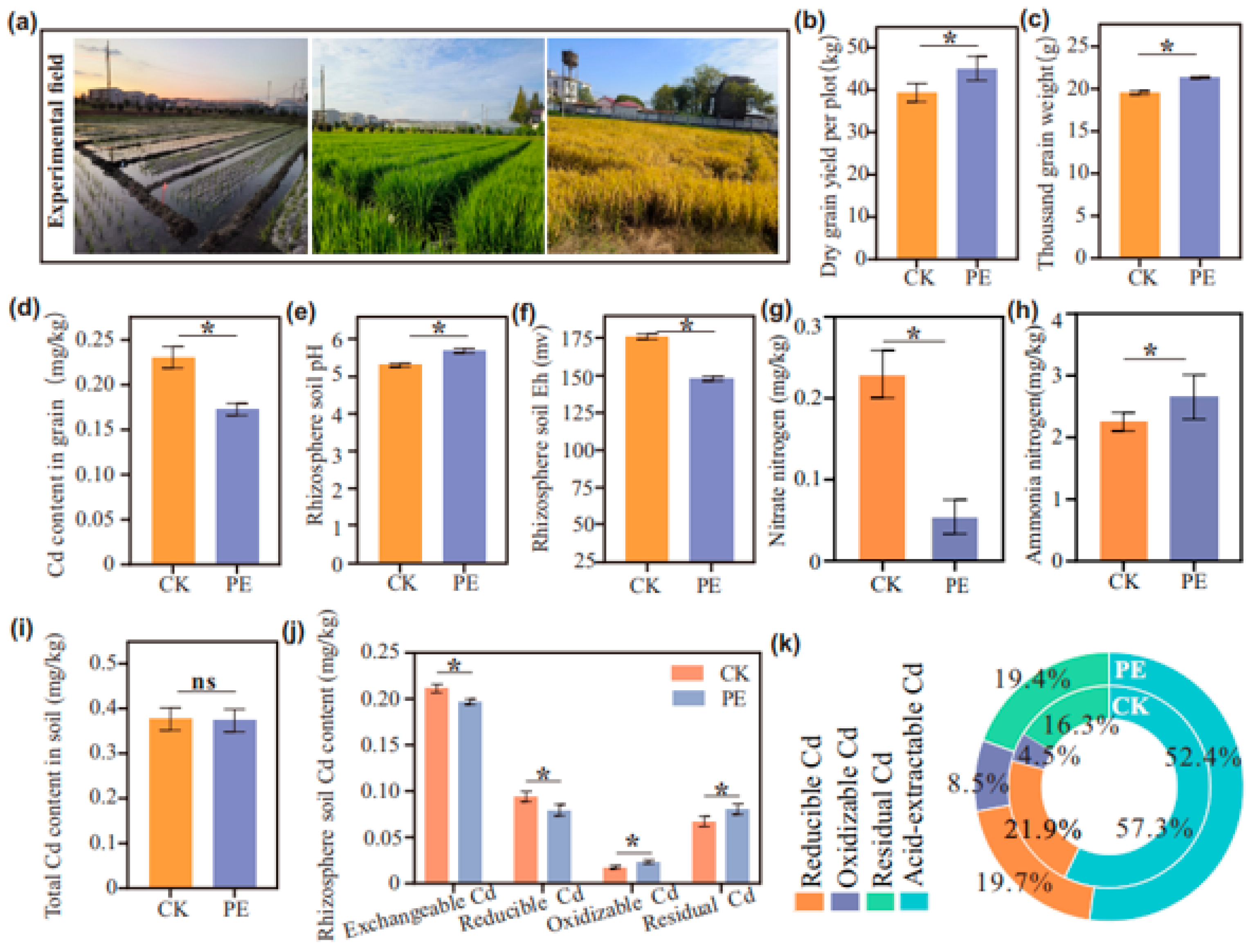
Our field experiment demonstrated that a single season of polyethylene (PE) mulching significantly enhanced rice performance, with dry grain yield increasing by 14.47% and thousand-grain weight rising 1.10-fold relative to the control (Figure 1b,c; p < 0.05). Strikingly, grain Cd concentrations declined from 0.2307 mg kg−1 in the control to 0.1727 mg kg−1 under mulching (Figure 1d; p < 0.05), below the Chinese national food safety threshold of 0.2 mg kg−1 (GB2762-2025 [24]). Importantly, total Cd in rhizosphere soil remained unchanged (Figure 1i), suggesting that the reduction in Cd uptake was driven by changes in its chemical speciation and bioavailability rather than by net Cd removal from the soil matrix. PE mulching profoundly altered the rhizosphere chemical environment. Soil pH increased slightly (5.31 → 5.44; Figure 1e), while redox potential (Eh) decreased sharply from 174.67 to 147.12 mV (Figure 1f; p < 0.05). Concomitantly, nitrate concentrations fell while ammonium accumulated (Figure 1g,h; p < 0.05), consistent with suppressed nitrification and enhanced nitrate reduction under oxygen-limited conditions. These shifts reflect the physical effect of mulching in restricting oxygen diffusion. In flooded paddy systems, the overlying water layer already restricts O2 entry; the addition of a PE film imposes an additional barrier (atmosphere → film → water → soil), thereby accelerating anoxia [25]. Oxygen is quickly depleted by root and microbial respiration, creating strongly reduced microsites in the rhizosphere.
Such changes in soil redox conditions and proton balance have direct implications for Cd speciation. First, the suppression of nitrification reduces H+ generation, while reductive dissolution of Fe/Mn oxides consumes protons, jointly driving the modest pH rise [26]. Even small increases in pH in acidic paddy soils substantially reduce free Cd2+ activity by enhancing sorption affinity to mineral/organic surfaces and shifting equilibria toward precipitation of Cd hydroxide and carbonate phases [27]. Second, the decline in Eh promotes sequential reduction processes: nitrate reduction (Eh +200 to −100 mV), followed by Mn (IV) and Fe (III) reduction, and ultimately sulfate reduction (Eh 0 to −150 mV) [21,28]. Reductive dissolution of Fe/Mn oxides releases previously adsorbed Cd, explaining the observed decrease in the reducible fraction (0.085 → 0.072 mg kg−1; Figure 1j). However, this release is transient, because concurrent sulfate reduction generates sulfide ions that rapidly precipitate Cd as cadmium sulfide (CdS), an extremely insoluble mineral phase (Cd2+ + S2− → CdS) [29]. As a result, Cd is transferred from exchangeable and reducible pools into more stable oxidizable and residual fractions, as reflected in our sequential extraction results (Figure 1j,k). This redistribution is the crux of why PE mulching reduced Cd bioavailability without altering total soil Cd. The exchangeable Cd pool, representing the fraction most accessible to plant uptake, declined significantly (0.2198 → 0.1896 mg kg−1; Figure 1j; p < 0.05), while oxidizable and residual fractions increased, indicating stabilization of Cd into less mobile pools. The simultaneous modest rise in pH reinforces this immobilization by further decreasing Cd solubility [6]. Together, the combined effects of restricted oxygen diffusion, accelerated redox reactions, proton consumption, and sulfide precipitation converge to markedly lower Cd bioavailability in the rhizosphere and thus Cd accumulation in rice grains.
It is worth noting that PE films may gradually release organic additives such as phthalates during aging. These compounds can complex with metal cations, potentially influencing Cd mobility, or serving as additional carbon substrates that stimulate sulfate reduction [30,31]. However, within the timeframe of a single growing season, the extent of plastic degradation is limited. While organic additives from PE films could theoretically influence metal mobility, this study did not quantify their release. Therefore, we propose this as a hypothesis for future investigation, aiming to disentangle the potential chemical effects of film aging from the dominant physical effects of mulching (i.e., the water–redox–chemical pathway). In summary, PE mulching creates a unique soil environment characterized by strengthened anoxia, suppressed nitrification, a modest pH increase, and intensified reductive processes. These physicochemical changes promote the conversion of Cd from exchangeable and reducible pools into sulfide-stabilized and residual phases, thereby lowering Cd bioavailability and reducing Cd accumulation in rice. These abiotic mechanisms establish the foundation for subsequent biological processes, particularly the role of rhizosphere microbial communities in mediating Cd transformations, which are addressed in the following section.

3.2. PE Mulching Restructured Rhizosphere Microbial Communities—Assembly, Taxonomy and Interaction Networks

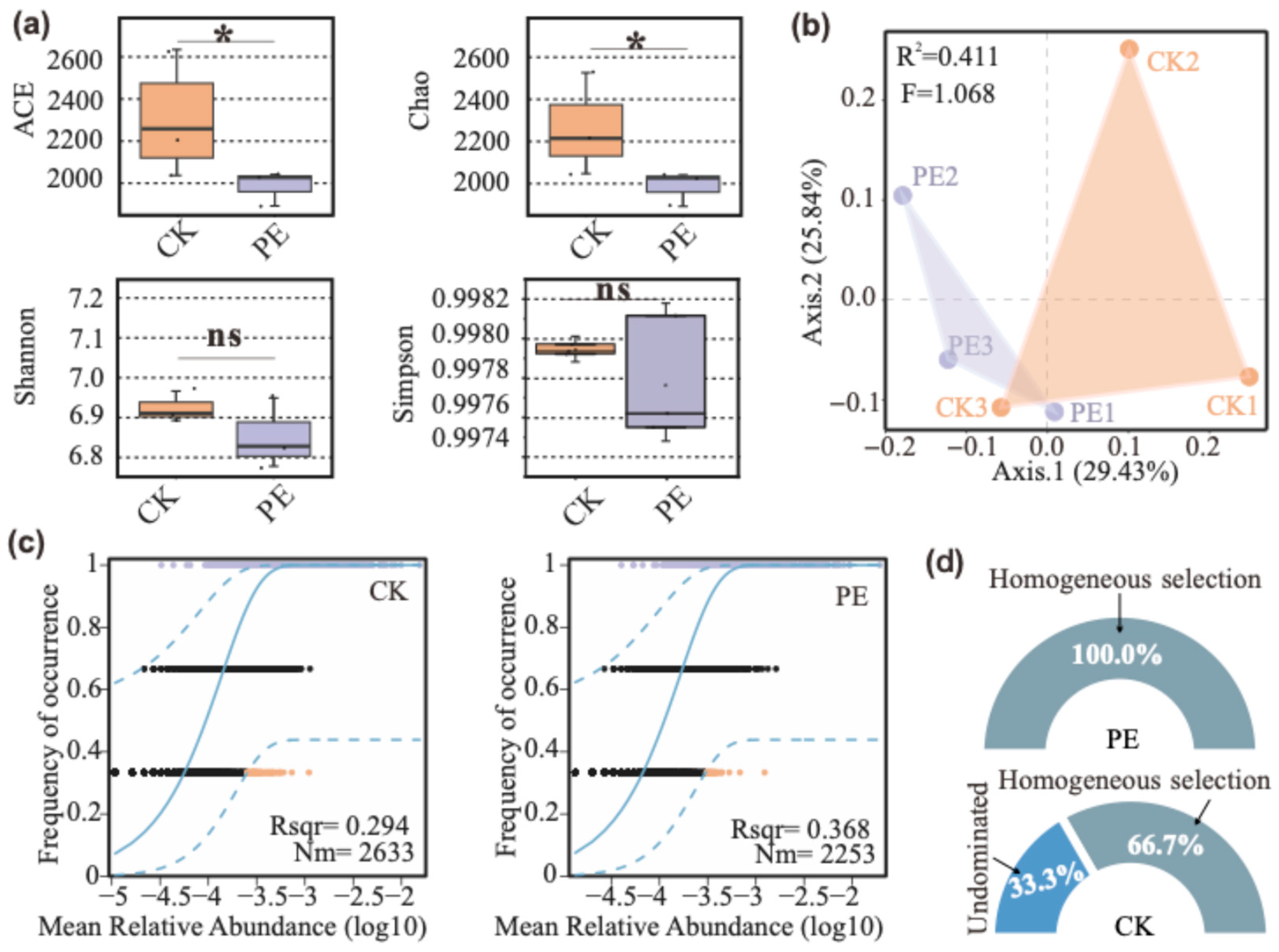
PE mulching produced a rapid and coherent re-shaping of the rhizosphere microbiome after a single cropping season. Compared with un-mulched controls, mulched plots exhibited a significant decline in α-diversity (ACE, Chao1; Figure 2a; p < 0.05) and a clear compositional separation in β-space (Bray–Curtis; Figure 2b), indicating both loss of within-sample richness and rearrangement of community composition [32]. Null-model analyses provide a mechanistic explanation for these patterns: iCAMP shown an increased contribution of homogeneous (deterministic) selection in mulched soils (Figure 2d), whereas the neutral community model (NCM) yielded a higher R2 and a lower estimated migration rate (m) for mulched communities (Figure 2c). Together these results indicate a two-stage assembly process under mulching: a strong, spatially consistent environmental filter (intensified anoxia, altered pH and N-forms, and stabilized moisture) reduces the pool of taxa able to persist across mulched plots (enhanced homogeneous selection), while reduced connectivity and dispersal among local patches (lower m) amplify local stochasticity in relative abundances (higher NCM R2) within that constrained taxonomic pool [33,34].
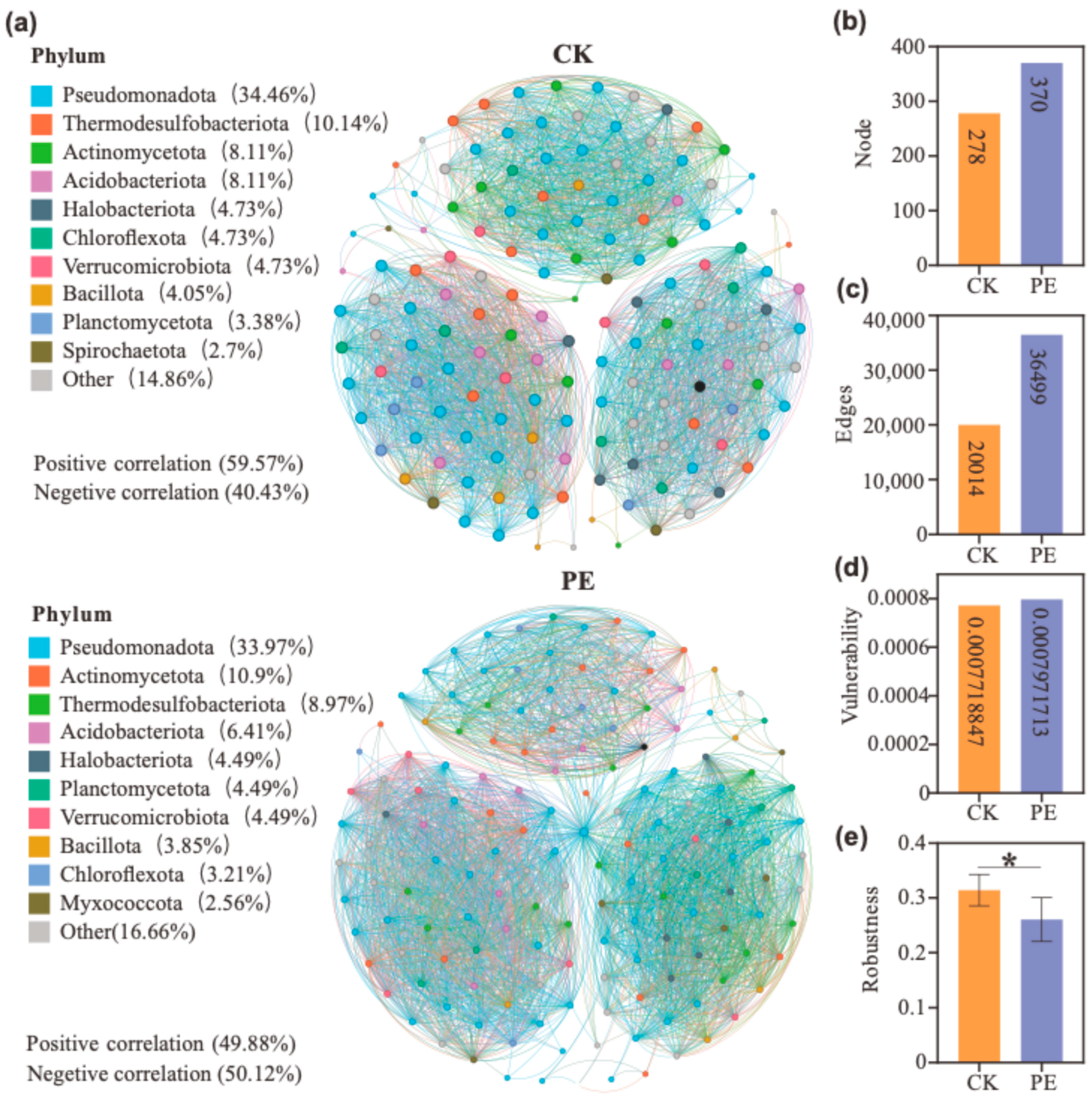
Dominant phyla remain Pseudomonadota, Actinomycetota, Thermodesulfobacteriota and Acidobacteriota, but their relative contributions shifted with mulching: Actinomycetota and Planctomycetota increased, while Thermodesulfobacteriota and Chloroflexota declined and Myxococcota became rarer (Figure 3a). This directional shifted match the altered soil chemistry (lower Eh, higher NH4+, lower NO3, modest pH rise): taxa that tolerate or exploit low-oxygen, ammonium-rich, and carbon-enriched microsites are selectively favored [35,36], whereas taxa dependent on oxic niches or nitrification pathways are disfavored [37]. Importantly, the taxonomic signature pointed to a community that was functionally reoriented toward anaerobic carbon and nitrogen transformations—a shift with direct geochemical consequences. Network analyses revealed how this compositional filtering translated into altered biotic interactions. Despite reduced α-diversity, the mulched co-occurrence network contained substantially more unique taxa and interconnections (nodes: 278 → 370; edges: 20,014 → 36,499), a greater proportion of negative associations and a pronounced decrease in network robustness (Figure 3a–e). Network robustness was assessed by simulating random node removal (attack robustness). This procedure, repeated with 100 permutations, verified the stability of the network structure against random fluctuations. Higher network density and negative associations do not necessarily equate to greater stability. These seemingly paradoxical observations were reconciled when one considers scale and heterogeneity: mulching increased among-plot compositional heterogeneity (greater β-diversity), so the aggregate network built across mulched samples includes more taxa overall (more nodes). Simultaneously, deterministic filtering compresses niches and increases niche overlap among the surviving taxa, producing stronger and more widespread covariation (hence more edges) and intensifying competition, predation or antagonistic interactions (manifest as more negative edges) [38]. The growing dominance of predatory/antagonistic groups (e.g., Myxococcota) plausibly contributes to negative links. A network densely linked by antagonistic relationships, with reduced taxonomic redundancy, will show lower robustness: removal or perturbation of a small set of taxa is more likely to disrupt key interactions and functional pathways, even if vulnerability metrics based on other definitions remain similar [39]. It remains to be seen whether this reduced robustness persists under repeated mulching or if the community adapts to a new stable state over subsequent season. We acknowledge that the co-occurrence networks were constructed based on limited biological replicates (n = 3). While strict thresholding and FDR correction were applied to ensure statistical rigor, these networks should be interpreted as models of potential ecological associations rather than definitive proofs of biotic interactions.
Crucially, these biotic reorganizations map directly onto the observed physicochemical shifts and the re-partitioning of Cd. Deterministic selection for taxa adapted to low-Eh, NH4+-rich, carbon-enhanced microsites concentrates the functional capacity for reductive processes (Fe/Mn reduction, sulfate reduction) that we infer from soil chemistry (Eh decline, NO3 loss, NH4+ accumulation). Such processes transiently mobilize oxide-associated Cd but rapidly re-sequester it as low-solubility sulfide or incorporate it into refractory phases—exactly the pattern seen in our sequential extraction (exchangeable ↓, oxidizable/residual ↑; Figure 1j,k). The community simplification and lower redundancy imply that a narrower set of microbial functional groups now disproportionately controls these redox transformations: this can accelerate specific immobilization reactions (benefitting short-term Cd sequestration) but also reduce ecosystem functional resilience in the short term [40]. In other words, mulching drives an abiotic–biotic feedback loop in which altered water–redox regimes select a specialized microbiome that catalyzes geochemical reactions stabilizing Cd, at the cost of reduced microbial diversity and network robustness. This synthesis explains how mulching-induced shifts in community assembly and interaction structure are mechanistically linked to soil physicochemistry and to reductions in Cd bioavailability. The next section examines functional gene markers and taxa-level activities to test these inferred links between selected microbial assemblages, redox processes and Cd transformation.

3.3. Genus-Level Reassembly of the Rhizosphere Microbiome Under PE Mulching and Mechanistic Links to Cd Speciation

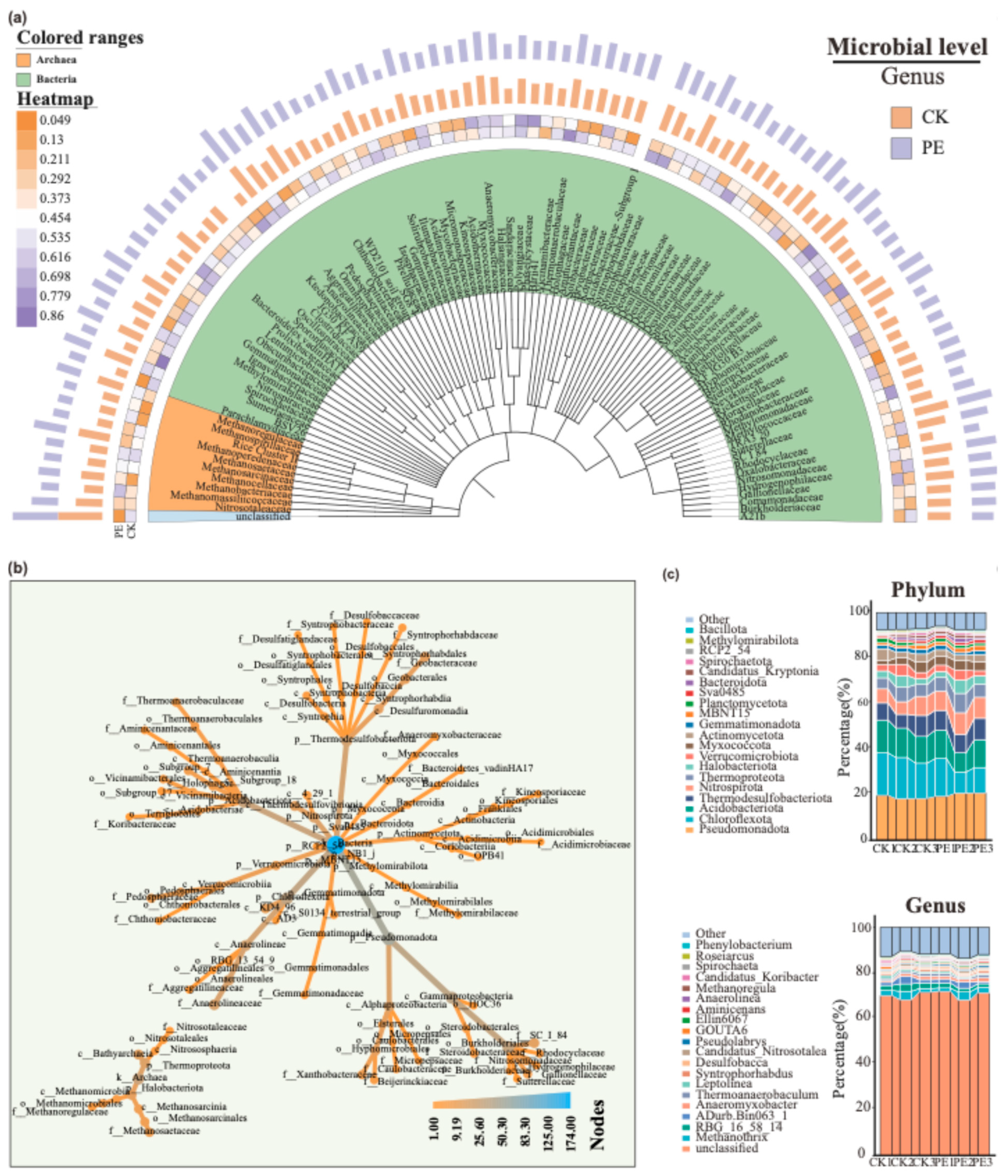
At the genus/family resolution, PE mulching induced a selective reassembly of the rhizosphere microbiome rather than a uniform suppression or enrichment of all taxa. Overall bacterial abundance showed a declining trend, but specific groups were consistently enriched, including Hyphomicrobiaceae, TRA3_20, Phaselicystaceae, Myxococcaceae, Solibacteraceae, Rhodocyclaceae, Hydrogenophilaceae, and Xanthobacteraceae (Figure 4a). Several archaeal lineages such as Methanomassiliicoccaceae, Methanoregulaceae, and Rice cluster II also increased significantly compared to the control (Figure 4a). By contrast, many taxa adapted to oxic or oligotrophic conditions (e.g., Parachlamydiaceae, Methylomirabilaceae, Gemmatimonadaceae, Sporomusaceae, Ktedonobacteraceae, Anaerolineaceae, Pedosphaeraceae, Chthoniobacteraceae, Acidothermaceae, Holophagaceae, Koribacteraceae, Desulfobaccaceae, and Rhodanobacteraceae) declined markedly (Figure 4b). These compositional changes are consistent with the mulching-driven soil environment characterized by lower Eh, a modest rise in pH, nitrate depletion, and ammonium accumulation (Figure 1e–h), suggesting that deterministic selection under anoxia reshaped the functional structure of the microbial community. While complex phylogenetic visualizations provide insight into community dynamics, we acknowledge that these patterns are based on a limited number of biological replicates. Future studies with larger cohorts are needed to validate the stability of these fine-scale taxonomic shifts.
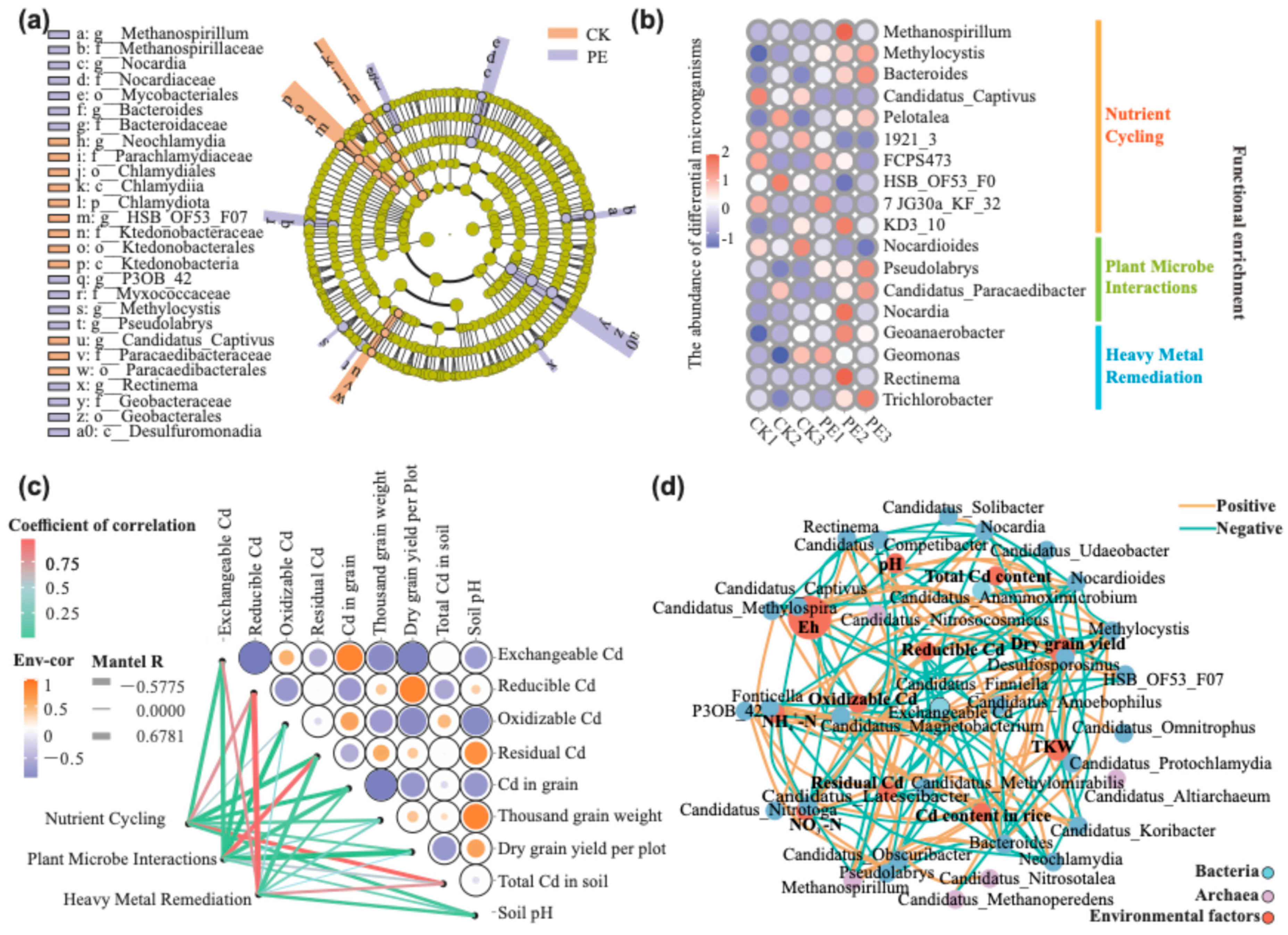
Taxonomic shifts also reflected clear functional specialization. LEfSe analysis identified the enrichment of Geobacterales and Geobacteraceae, known Fe-reducing taxa, along with Desulfuromonadia, Pseudolabrys, Methylocystis, Myxococcaceae, and methanogens such as Methanospirillum (Figure 5a). Functional annotation indicated that these differential taxa were mainly associated with nutrient cycling, plant–microbe interactions, and heavy metal remediation (Figure 5b). Mechanistically, Fe-reducing bacteria such as Geobacteraceae catalyze reductive dissolution of Fe/Mn (oxyhydr)oxides, transiently mobilizing oxide-bound Cd into porewater [41]. However, in the strongly reduced microsites promoted by mulching, sulfate reducers generate sulfide (S2−) that rapidly precipitates Cd as CdS [29], shifting mass into oxidizable and residual fractions (Figure 1j,k). The concurrent enrichment of methanogenic archaea (e.g., Methanoregulaceae, Methanospirillum) signals late-stage anoxia [42], ensuring persistently reducing conditions that stabilize Cd in low-solubility pools. Thus, the sequential mobilization–precipitation pathway driven by enriched microbial guilds provides a mechanistic explanation for the observed decline in exchangeable Cd and reduced Cd uptake by rice.
Other enriched taxa contribute complementary roles. Hyphomicrobiaceae and Xanthobacteraceae are associated with heterotrophic carbon metabolism and nitrogen cycling, potentially providing labile substrates that fuel reductive metabolisms [43]. Myxococcaceae, as bacterial predators, enhance microbial turnover and substrate release [44], indirectly stimulating anaerobic processes that promote Cd fixation. Conversely, the decline of aerobic decomposers and nitrifier-associated groups (e.g., Chloroflexota, Acidobacteriota) is consistent with suppressed nitrification (NO3 decline) and NH4+ accumulation, which reduces H+ production and contributes to the slight pH rise that further decreases Cd solubility. Genus–Cd correlations and functional associations provide further mechanistic signposts (Figure 5c,d; p < 0.05). For example, the negative correlation of Pseudolabrys with exchangeable and reducible Cd (Tables S2 and S3) suggests this taxon is associated with microhabitats or processes that promote Cd sequestration (e.g., facilitation of mineral reprecipitation or EPS-mediated sorption) [45,46]. Positive correlations of Candidatus Omnitrophus and Neochlamydia with exchangeable/reducible Cd (Figure 5d; p < 0.05)imply these taxa occupy niches where labile Cd persists (for instance, less reduced microsites or zones with active organic complexation that maintain soluble Cd) [47]. Associations of Methylocystis and Methanospirillum with oxidizable Cd fractions link methane-cycling and methanogenic activities to transformations of organo-bound Cd pools. Rectinema negatively correlated with reducible Cd, while Fonticella showed negative correlations with both exchangeable and reducible Cd (Figure 5d; p < 0.05), pointing to potential roles in promoting Cd stabilization [48].
In sum, PE mulching imposes an abiotic filter that selects for taxa with the metabolic capacity to mediate sequential redox processes (Fe/Mn reduction → sulfate reduction → methanogenesis) and carbon/nitrogen turnover. These selected taxa and their interaction structure may accelerate the conversion of labile, exchangeable Cd into sulfide-stabilized and residual forms, thereby reducing Cd bioavailability and grain uptake. At the same time, the restructured microbiome exhibits reduced diversity and functional redundancy, which has implications for longer-term ecosystem resilience and for the stability of Cd immobilization under changing environmental conditions. This implies a trade-off between enhanced Cd immobilization and lowered ecological resilience.

3.4. Microbial Functional Pathways Under PE Mulching and Their Impact on Cd Bioavailability in Paddy Soils

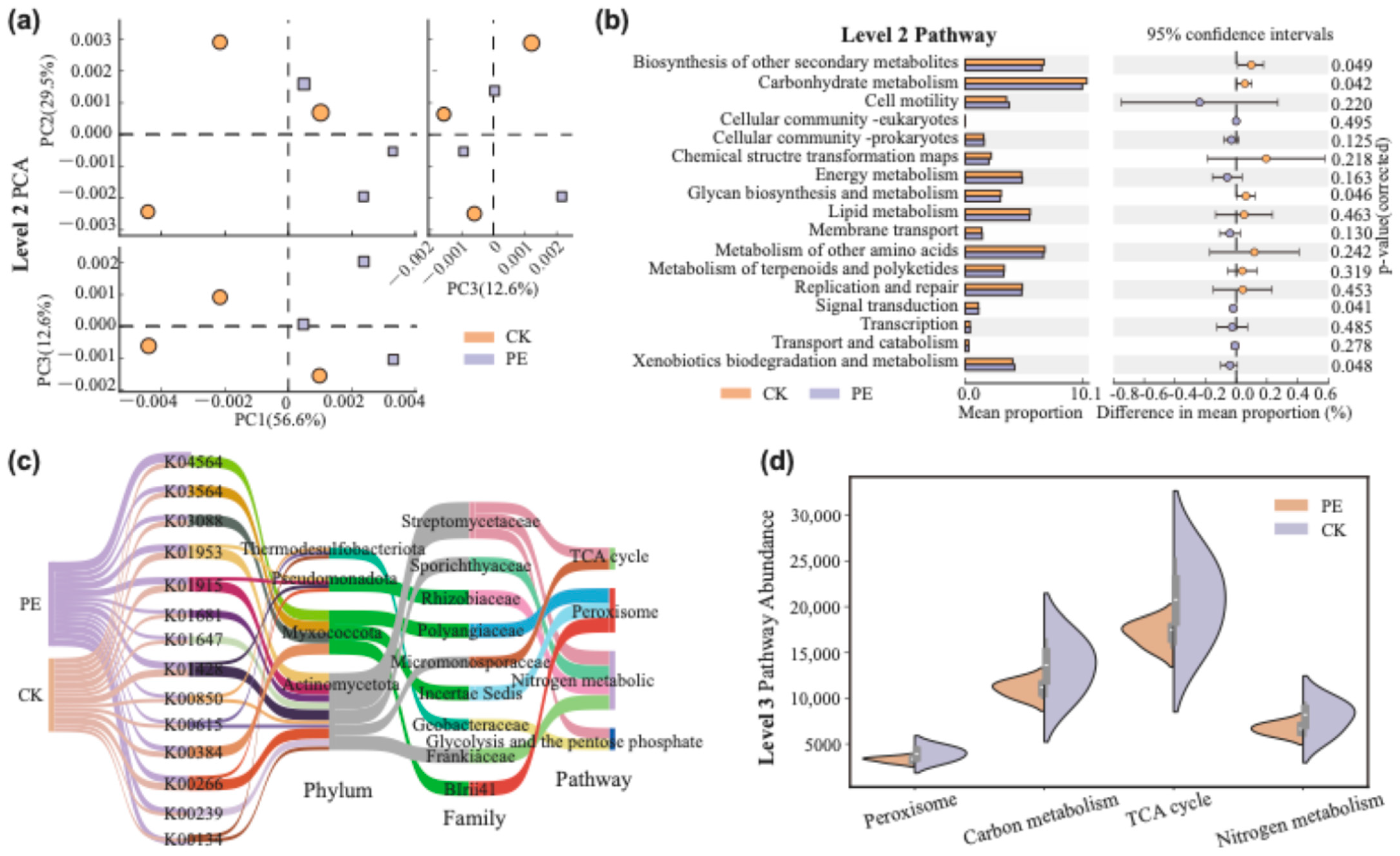
The application of PE mulching induced substantial changes in the microbial functional landscape of the rhizosphere, as evidenced by the PCA of KEGG functional pathways (Figure 6a). These changes in microbial functional expression were clearly distinct between the mulched and control treatments, reflecting the strong influence of PE mulching on microbial metabolism (Figure 6a). Notably, many key metabolic pathways, including biosynthesis of other secondary metabolites, carbohydrate metabolism, and glycan biosynthesis and metabolism, were significantly downregulated under PE mulching (Figure 6b; p < 0.05). In contrast, pathways involved in xenobiotics biodegradation and metabolism and signal transduction were upregulated, indicating that mulching induced a shift toward microbial functions involved in environmental stress response, detoxification, and signaling (Figure 6b; p < 0.05). These functional shifts were linked to the physicochemical changes induced by PE mulching, particularly in the redox environment, pH, and nitrogen forms. The downregulation of carbohydrate metabolism, TCA cycle, and nitrogen metabolism (Figure 6d) suggests that the microbial community under mulching was shifting from energy-intensive aerobic processes to more anaerobic processes typical of reduced environments [49]. These metabolic shifts are a direct consequence of the restricted oxygen diffusion caused by the PE film, which promotes the dominance of anaerobic microbial pathways, including sulfate reduction and methanogenesis [50,51]. The increased activity in xenobiotics biodegradation and signal transduction pathways supports the idea that mulching creates a stress-responsive microbial environment, where microbes are more active in detoxifying and adapting to altered soil conditions [52].
At the family and genus levels, several microbial taxa contributed significantly to these functional shifts. The TCA cycle, a central metabolic pathway involved in energy production, was primarily driven by Streptomycetaceae and Micromonosporaceae, indicating that these families are active under the anaerobic conditions fostered by PE mulching (Figure 6c). Additionally, Streptomycetaceae, Sporichthyaceae, Rhizobiaceae, and Frankiaceae were major contributors to nitrogen metabolism, which also showed significant downregulation in the mulched soils (Figure 6c). This downregulation of key energy and nitrogen metabolic pathways suggests a metabolic transition under PE mulching that favors more anaerobic, energy-conserving processes rather than aerobic energy production. The reduced expression of carbohydrate metabolism, TCA cycle, and nitrogen metabolic pathways in mulched soils has important implications for the biogeochemical behavior of Cd in the rhizosphere (Figure 6d). Anaerobic processes, particularly those mediated by sulfate-reducing bacteria and methanogens, likely facilitate the reduction of Cd and its immobilization into less bioavailable forms, such as Cd sulfide (CdS) [53]. Sulfate reduction produces sulfide ions (S2−), which readily react with Cd2+ to form highly insoluble CdS, effectively reducing the mobility and bioavailability of Cd in the soil [29,54]. Therefore, the downregulation of aerobic metabolic pathways under PE mulching aligns with the increased stabilization of Cd into less mobile and bioavailable forms, as seen in our analysis of Cd speciation (Figure 1j,k).
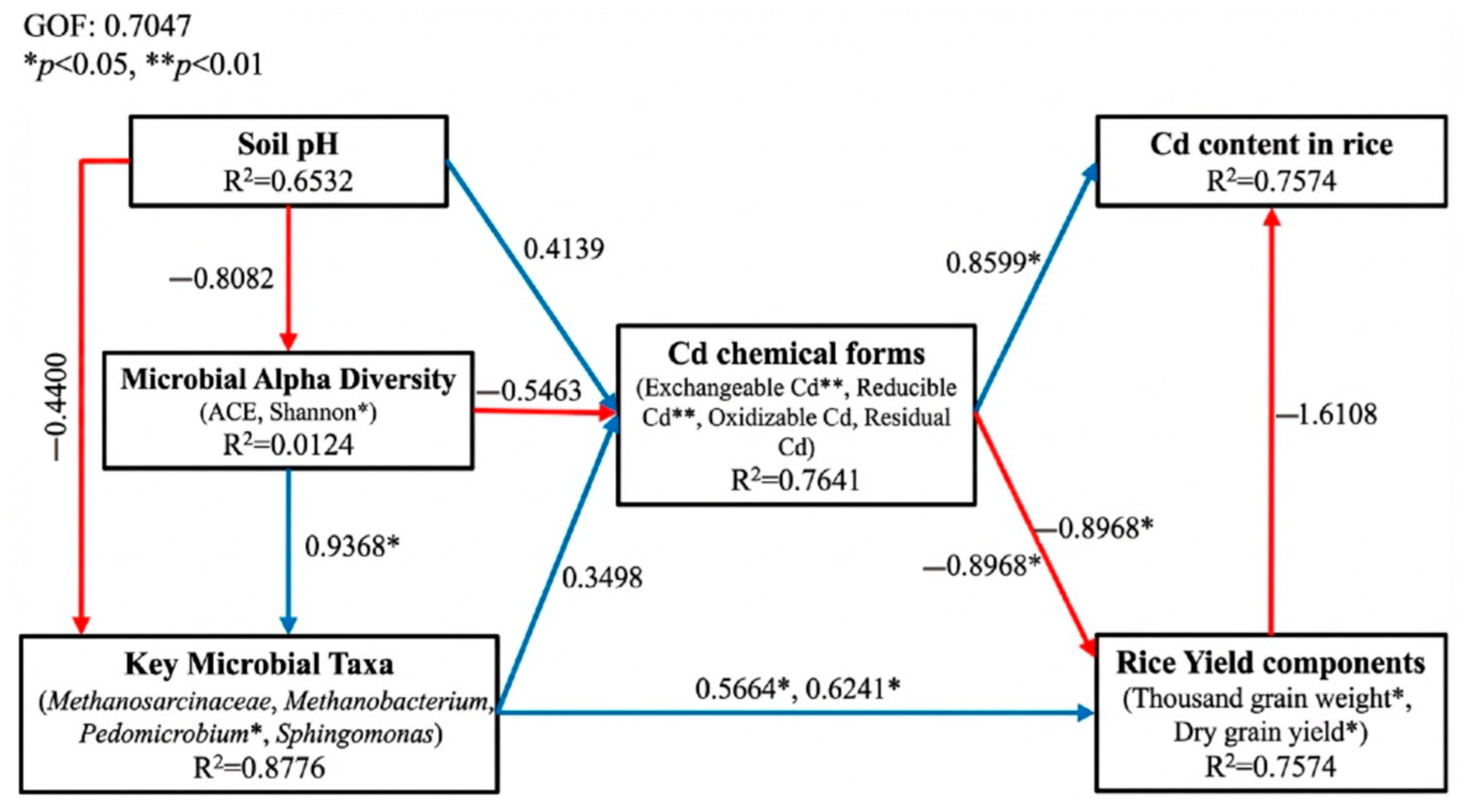
Further analysis using structural equation modeling (SEM) revealed that PE mulching led to significant changes in microbial diversity and composition, particularly influencing the abundance of key microbial taxa such as Pedomicrobium (Figure 7). These microbial taxa, particularly those associated with metal and nitrogen cycling, were found to significantly affect the chemical speciation of soil Cd (path coefficient = −0.8463, p < 0.05), which, in turn, likely influenced Cd accumulation in rice (path coefficient = 0.8599, p < 0.05). The altered chemical forms of Cd, especially the reduction of exchangeable and reducible Cd fractions, significantly impacted rice growth and yield (path coefficient = −0.8968, p < 0.05) (Figure 7), reinforcing the idea that microbial shifts driven by PE mulching likely influence Cd uptake by rice. Ecologically, PE mulching plays a dual role in shaping microbial community function and metal bioavailability. It drives microbial communities towards anaerobic, metal-reducing pathways that immobilize Cd into less bioavailable forms, while also influencing microbial diversity and function, with implications for soil health and agricultural productivity. The identified functional pathways, particularly those involved in nitrogen cycling, carbon metabolism, and xenobiotics biodegradation, demonstrate how PE mulching impacts microbial functions, subsequently altering Cd biogeochemical cycling.

3.5. Methodological Perspectives: Capabilities and Limitations

Beyond the specific findings on Cd dynamics, this study serves as a demonstration of the application of modern ecological analytics in typical agronomic field trials. Traditional agronomic approaches often treat the soil microbiome as a “black box.” By employing advanced tools like iCAMP and SEM (via PLS-PM), we were able to visualize potential mechanistic pathways—specifically, how abiotic stress (redox drop) translates into biological selection pressure (deterministic assembly)—which would remain invisible using standard univariate statistics. However, the application of these high-dimensional tools to field experiments with limited replication requires rigorous caution. For instance, while PLS-PM is robust for small samples, complex co-occurrence networks are sensitive to stochastic fluctuations. Therefore, the “stability” and “complexity” metrics reported here should be viewed as exploratory indicators of community stress response rather than definitive structural properties. We suggest that future research employing these tools should prioritize larger sample cohorts to validate the mechanistic hypotheses generated in this study.

4. Conclusions

This study demonstrates that PE mulching significantly alters the rhizosphere environment, microbial community, and Cd dynamics in paddy soils. PE mulching reduces Cd accumulation in rice by creating an anoxic environment that favors anaerobic, metal-reducing pathways, leading to the immobilization of Cd into less bioavailable forms. This process is driven by shifts in microbial communities, including the enrichment of metal-reducing bacteria (e.g., Geobacteraceae) and sulfate-reducing bacteria (e.g., Desulfosporosinus), which may contribute to the stabilization of Cd. While these changes benefit rice productivity by reducing Cd uptake, PE mulching also negatively impacts soil microbial α-diversity and significantly reduces co-occurrence network robustness. The reduced diversity and functional redundancy of the microbial community may decrease the resilience of the ecosystem, leaving it more vulnerable to future disturbances or environmental stressors. Therefore, while PE mulching offers short-term agronomic benefits, including improved rice yield and reduced Cd contamination, it also poses potential ecological risks by compromising the stability and functional capacity of the soil microbiome, although long-term studies are needed to determine if these effects persist or accumulate. Future research should further explore the trade-offs between the short-term benefits of PE mulching and its long-term impacts on soil health and ecosystem resilience.

Supplementary Materials

The following supporting information can be downloaded at: https://www.mdpi.com/article/10.3390/agronomy16030329/s1, Supporting Information contains 3 tables (Tables S1–S3). Table S1: The basic physical and chemical properties of the soil in the experimental field. Table S2: Correlation analysis of differential microorganisms and environmental factors. Table S3: Correlation analysis between key functional microorganisms and environmental factors.

Author Contributions

T.L. and R.H. Co-first authors. Writing, Review, and Editing: T.L. and R.H. Conceptualization: Z.L. Investigation and Writing: L.W. and J.W. Original Draft: C.G. and X.L. Data Visualization: S.X. and L.Z. Formal analysis: S.Z. and R.D. Funding Acquisition: H.D. and Z.X. All authors have read and agreed to the published version of the manuscript.

Funding

This work was funded by the Natural Science Foundation of Guangdong Province (2023A1515012532), the National Natural Science Foundation of China (42577473), the Natural Science Foundation of Changsha (kq2502110), the Key Laboratory of Arable Land Improvement and Quality Improvement of Jiangxi Province (2024SSY04223), the Special Projects in Key Fields of Ordinary Universities in Guangdong Province (2023ZDZX4016), the Guangdong Province Key Construction Discipline Research Capacity Enhancement Project (2022ZDJS019), and the National Key Research and Development Project of China (2024YFD1701304).

Data Availability Statement

The data that support the findings of this study are available on request from the corresponding author.

Conflicts of Interest

The authors declare no conflicts of interest.

References

  1. Dai, J.; Hu, C.; Flury, M.; Huang, Y.; Rillig, M.C.; Ji, D.; Peng, J.; Fei, J.; Huang, Q.; Xiong, Y. National Inventory of Plastic Mulch Residues in Chinese Croplands From 1993 to 2050. Glob. Change Biol. 2025, 31, e70297. [Google Scholar] [CrossRef]
  2. Sun, Y.; Yang, W.; Shi, H.; Tanveer, S.K.; Hai, J. Past, present, and future perspectives of biodegradable films for soil: A 30-year systematic review. Front. Bioeng. Biotechnol. 2022, 10, 1006388. [Google Scholar] [CrossRef]
  3. Iqbal, R.; Raza, M.A.S.; Valipour, M.; Saleem, M.F.; Zaheer, M.S.; Ahmad, S.; Toleikiene, M.; Haider, I.; Aslam, M.U.; Nazar, M.A. Potential agricultural and environmental benefits of mulches—A review. Bull. Natl. Res. Cent. 2020, 44, 75. [Google Scholar] [CrossRef]
  4. Baho, D.L.; Bundschuh, M.; Futter, M.N. Microplastics in terrestrial ecosystems: Moving beyond the state of the art to minimize the risk of ecological surprise. Glob. Change Biol. 2021, 27, 3969–3986. [Google Scholar] [CrossRef]
  5. Wu, X.; Lin, L.; Lin, Z.; Deng, X.; Li, W.; He, T.; Zhang, J.; Wang, Y.; Chen, L.; Lei, Z. Influencing mechanisms of microplastics existence on soil heavy metals accumulated by plants. Sci. Total Environ. 2024, 926, 171878. [Google Scholar] [CrossRef]
  6. Lin, L.; Wu, X.; Deng, X.; Lin, Z.; Liu, C.; Zhang, J.; He, T.; Yi, Y.; Liu, H.; Wang, Y. Mechanisms of low cadmium accumulation in crops: A comprehensive overview from rhizosphere soil to edible parts. Environ. Res. 2024, 245, 118054. [Google Scholar] [CrossRef]
  7. Li, X.; Peng, P.; Long, J.; Dong, X.; Jiang, K.; Hou, H. Plant-induced insoluble Cd mobilization and Cd redistribution among different rice cultivars. J. Clean. Prod. 2020, 256, 120494. [Google Scholar] [CrossRef]
  8. Gu, J.; Guo, F.; Lin, L.; Zhang, J.; Sun, W.; Muhammad, R.; Liang, H.; Duan, D.; Deng, X.; Lin, Z. Microbiological mechanism for “production while remediating” in Cd-contaminated paddy fields: A field experiment. Sci. Total Environ. 2023, 885, 163896. [Google Scholar] [CrossRef] [PubMed]
  9. Zhu, S.; Zhao, W.; Sun, S.; Yang, X.; Mao, H.; Sheng, L.; Chen, Z. Community metagenomics reveals the processes of cadmium resistance regulated by microbial functions in soils with Oryza sativa root exudate input. Sci. Total Environ. 2024, 949, 175015. [Google Scholar] [CrossRef]
  10. Xu, M.; Dai, W.; Zhao, Z.; Zheng, J.; Huang, F.; Mei, C.; Huang, S.; Liu, C.; Wang, P.; Xiao, R. Effect of rice straw biochar on three different levels of Cd-contaminated soils: Cd availability, soil properties, and microbial communities. Chemosphere 2022, 301, 134551. [Google Scholar] [CrossRef] [PubMed]
  11. Huang, H.; Lv, Y.; Tian, K.; Shen, Y.; Zhu, Y.; Lu, H.; Li, R.; Han, J. Influence of sulfate reducing bacteria cultured from the paddy soil on the solubility and redox behavior of Cd in a polymetallic system. Sci. Total Environ. 2023, 901, 166369. [Google Scholar] [CrossRef]
  12. Mikac, N.; Cosovic, B.; Ahel, M.; Andreis, S.; Toncic, Z. Assessment of groundwater contamination in the vicinity of a municipal solid waste landfill (Zagreb, Croatia). Water Sci. Technol. 1998, 37, 37–44. [Google Scholar] [CrossRef]
  13. Chen, H.; Min, F.; Hu, X.; Ma, D.; Huo, Z. Biochar assists phosphate solubilizing bacteria to resist combined Pb and Cd stress by promoting acid secretion and extracellular electron transfer. J. Hazard. Mater. 2023, 452, 131176. [Google Scholar] [CrossRef]
  14. Ali, Q.; Ayaz, M.; Yu, C.; Wang, Y.; Gu, Q.; Wu, H.; Gao, X. Cadmium tolerant microbial strains possess different mechanisms for cadmium biosorption and immobilization in rice seedlings. Chemosphere 2022, 303, 135206. [Google Scholar] [CrossRef]
  15. Liu, Y.; Tie, B.; Peng, O.; Luo, H.; Li, D.; Liu, S.; Lei, M.; Wei, X.; Liu, X.; Du, H. Inoculation of Cd-contaminated paddy soil with biochar-supported microbial cell composite: A novel approach to reducing cadmium accumulation in rice grains. Chemosphere 2020, 247, 125850. [Google Scholar] [CrossRef]
  16. Thunjai, T.; Boyd, C.E.; Dube, K. Poind soil pH measurement. J. World Aquac. Soc. 2001, 32, 141–152. [Google Scholar] [CrossRef]
  17. Yuan, Y.; Wang, S.; Zhao, J.; Li, Q.; Zhang, S.; Cao, C. Changes in soil carbon sequestration and mineralization driven by bacterial community structure and function across different ages in a restoration ecosystem. Plant Soil 2025, 513, 2059–2076. [Google Scholar] [CrossRef]
  18. Ali, J.; Tuzen, M.; Jatoi, W.B.; Feng, X.; Sun, G.; Saleh, T.A. A review of sequential extraction methods for fractionation analysis of toxic metals in solid environmental matrices. TrAC Trends Anal. Chem. 2024, 173, 117639. [Google Scholar] [CrossRef]
  19. AL-Huqail, A.A.; Alatawi, A.; Javed, S.; Anas, M.; Saleem, M.H.; Khalid, A.; Khan, K.A.; Ali, S. Combating Mercury Stress in Spinach (Spinacia oleracea L.) with Zinc Oxide and Providencia Vermicola, Assessing Changes in Defense Mechanism and Organic Acid Exudation Patterns. J. Soil Sci. Plant Nutr. 2025, 25, 1780–1798. [Google Scholar] [CrossRef]
  20. Akhtar, S.; Muneeb, A.; Khan, Z.I.; Saba, I.; Ahmad, K.; Faisal, M.; Alatar, A.A.; Hussain, M.I.; Zubair, R.M.; Nadeem, M. Long term urban wastewater irrigation drives zinc bioaccumulation and health risks in contaminated vegetables. Sci. Rep. 2025, 15, 21290. [Google Scholar] [CrossRef]
  21. Chang, Y.; Lin, L.; Shen, J.; Lin, Z.; Deng, X.; Sun, W.; Wu, X.; Wang, Y.; Li, Y.; Xu, Z. Enhanced nitrogen fixation and Cd passivation in rhizosphere soil by biochar-loaded nitrogen-fixing bacteria: Chemisorption and microbial mechanism. J. Hazard. Mater. 2025, 481, 136588. [Google Scholar] [CrossRef]
  22. Chao, S.; Sun, Y.; Zhang, Y.; Chen, Y.; Song, L.; Li, P.; Tang, X.; Liang, J.; Lv, B. The response of microbiome assembly within different niches across four stages to the cultivation of glyphosate-tolerant and conventional soybean varieties. Front. Microbiol. 2024, 15, 1439735. [Google Scholar] [CrossRef]
  23. Yang, C.; Mai, J.; Cao, X.; Burberry, A.; Cominelli, F.; Zhang, L. ggpicrust2: An R package for PICRUSt2 predicted functional profile analysis and visualization. Bioinformatics 2023, 39, btad470. [Google Scholar] [CrossRef] [PubMed]
  24. GB2762-2025; National Food Safety Standard Maximum Levels of Contaminants in Foods. National Health Commission of the People’s Republic of China: Beijing, China, 2025.
  25. Ethan, S. Effect of flooding on chemistry of paddy soils: A review. Int. J. Innov. Sci. Eng. Technol. 2015, 2, 414–420. [Google Scholar]
  26. Desireddy, S.; Pothanamkandathil Chacko, S. A review on metal oxide (FeOx/MnOx) mediated nitrogen removal processes and its application in wastewater treatment. Rev. Environ. Sci. Bio/Technol. 2021, 20, 697–728. [Google Scholar] [CrossRef]
  27. Lu, H.-L.; Li, K.-W.; Nkoh, J.N.; He, X.; Xu, R.-K.; Qian, W.; Shi, R.-Y.; Hong, Z.-N. Effects of pH variations caused by redox reactions and pH buffering capacity on Cd (II) speciation in paddy soils during submerging/draining alternation. Ecotoxicol. Environ. Saf. 2022, 234, 113409. [Google Scholar] [CrossRef]
  28. Mansfeldt, T. Redox potential of bulk soil and soil solution concentration of nitrate, manganese, iron, and sulfate in two Gleysols. J. Plant Nutr. Soil Sci. 2004, 167, 7–16. [Google Scholar] [CrossRef]
  29. Deng, Y.; Ke, C.; Ren, M.; Xu, Z.; Zhang, S.; Dang, Z.; Guo, C. Sulfidation of Cd-Sch during the microbial sulfate reduction: Nanoscale redistribution of Cd. Sci. Total Environ. 2024, 946, 174275. [Google Scholar] [CrossRef]
  30. Li, W.; Wang, J.; Chen, X.; Mosa, A.; Ling, W.; Gao, Y. Interaction and sorption mechanisms of phthalate plasticizers and Cd2+ on biochar. Environ. Pollut. 2025, 373, 126176. [Google Scholar] [CrossRef]
  31. Li, W.; Mao, P.; Chen, X.; Ling, W.; Qin, C.; Gao, Y. Co-sorption of phthalate esters and Cd2+ on biochar-sulfhydryl modified montmorillonite composites. J. Hazard. Mater. 2025, 494, 138526. [Google Scholar] [CrossRef]
  32. Li, K.; Chen, C.; Zeng, J.; Wen, Y.; Chen, W.; Zhao, J.; Wu, P. Interplay between bladder microbiota and overactive bladder symptom severity: A cross-sectional study. BMC Urol. 2022, 22, 39. [Google Scholar] [CrossRef] [PubMed]
  33. Varela, S.; Anderson, R.P.; García-Valdés, R.; Fernández-González, F. Environmental filters reduce the effects of sampling bias and improve predictions of ecological niche models. Ecography 2014, 37, 1084–1091. [Google Scholar] [CrossRef]
  34. Zhao, Y.; Zhang, N.; Chen, J.; Ran, W.; Zhao, Z.; Song, Y. Interpretation of bacterial composition patterns and community assembly processes in the rhizosphere soil of tea trees in karst areas. BMC Microbiol. 2024, 24, 492. [Google Scholar] [CrossRef]
  35. Khatri, A.; Kumar, K.; Thakur, I.S. Microbiome of caves for bioprospecting: A critical review. Syst. Microbiol. Biomanufacturing 2025, 5, 550–566. [Google Scholar] [CrossRef]
  36. Li-Hau, F.; Nakagawa, M.; Kakegawa, T.; Ueno, Y.; McGlynn, S.E. Metabolic Potential and Microbial Diversity of Late Archean to Early Proterozoic Ocean Analog Hot Springs of Japan. Microbes Environ. 2025, 40, ME24067. [Google Scholar] [CrossRef] [PubMed]
  37. Vuillemin, A. Nitrogen cycling activities during decreased stratification in the coastal oxygen minimum zone off Namibia. Front. Microbiol. 2023, 14, 1101902. [Google Scholar] [CrossRef]
  38. Carscadden, K.A.; Emery, N.C.; Arnillas, C.A.; Cadotte, M.W.; Afkhami, M.E.; Gravel, D.; Livingstone, S.W.; Wiens, J.J. Niche breadth: Causes and consequences for ecology, evolution, and conservation. Q. Rev. Biol. 2020, 95, 179–214. [Google Scholar] [CrossRef]
  39. Abuin-Denis, L.; Piloto-Sardiñas, E.; Maître, A.; Wu-Chuang, A.; Mateos-Hernández, L.; Obregon, D.; Corona-González, B.; Fogaça, A.C.; Palinauskas, V.; Aželytė, J. Exploring the impact of Anaplasma phagocytophilum on colonization resistance of Ixodes scapularis microbiota using network node manipulation. Curr. Res. Parasitol. Vector-Borne Dis. 2024, 5, 100177. [Google Scholar] [CrossRef]
  40. Galand, P.E.; Pereira, O.; Hochart, C.; Auguet, J.C.; Debroas, D. A strong link between marine microbial community composition and function challenges the idea of functional redundancy. ISME J. 2018, 12, 2470–2478. [Google Scholar] [CrossRef]
  41. Moberly, J.; D’Imperio, S.; Parker, A.; Peyton, B. Microbial community signature in Lake Coeur d’Alene: Association of environmental variables and toxic heavy metal phases. Appl. Geochem. 2016, 66, 174–183. [Google Scholar] [CrossRef]
  42. Medvedeva, S.; Borrel, G.; Gribaldo, S. Sheaths are diverse and abundant cell surface layers in archaea. ISME J. 2024, 18, wrae225. [Google Scholar] [CrossRef]
  43. Cao, W.; Cai, Y.; Bao, Z.; Wang, S.; Yan, X.; Jia, Z. Methanotrophy alleviates nitrogen constraint of carbon turnover by rice root-associated microbiomes. Front. Microbiol. 2022, 13, 885087. [Google Scholar] [CrossRef]
  44. Nguyen Khoi, N.; Kovacs, D.; Haydee, K.M.; Xa, L.T.; Morton, L.W.; Tecimen, H.B.; Robatjazif, J.; Sekar, J.; Lasar, H.G.W.; Nguyen, T.T. Bacterial diversity in longan orchard alluvial soil is influenced by cultivation time and soil properties. Front. Soil Sci. 2025, 5, 1610343. [Google Scholar] [CrossRef]
  45. Gao, W.; Tu, Z.; Yin, X.; Ming, S.; Cai, K. Effects of PBAT biodegradable mulch on lettuce (Lactuca sativa L.) physiology and soil microbial community: Based on a long-term degradation trial. Ecotoxicol. Environ. Saf. 2025, 302, 118734. [Google Scholar] [CrossRef]
  46. Xu, M.; Chen, A.; Pan, Y.; Zhao, T.; Chen, P. Microbially-Driven Mine Restoration via Functional Redundancy: Mechanisms Sustaining Rhizospheric Microbiome Homeostasis in Lianas. Rhizosphere 2025, 35, 101150. [Google Scholar] [CrossRef]
  47. Velianyk, V.; Palusak, M.; Nguyen, N.H.A.; Riha, J.; Sevcu, A.; Cernik, M.; Hlavackova, V. Microbial diversity at remediated former gold and copper mines and the metal tolerance of indigenous microbial strains. Appl. Environ. Microbiol. 2025, 91, e02555-24. [Google Scholar] [CrossRef]
  48. Cheng, L.; Li, Z.; Zhou, L.; Xie, J.; Zhou, Q.; Ding, M.; Wang, P.; Zhang, H.; Nie, M.; Huang, G. Rhizosphere microbiota modulate cadmium mobility dynamics and phytotoxicity in rice under differential Cd stress. Plant Soil 2025, 516, 1455–1469. [Google Scholar] [CrossRef]
  49. Hoehler, T.M.; Jørgensen, B.B. Microbial life under extreme energy limitation. Nat. Rev. Microbiol. 2013, 11, 83–94. [Google Scholar] [CrossRef] [PubMed]
  50. Ma, Y.; Wu, S.; Xu, Y.; Zhou, X.; Ruan, A. Degradation characteristics of polyethylene film by microorganisms from lake sediments. Environ. Pollut. 2023, 333, 122115. [Google Scholar] [CrossRef] [PubMed]
  51. Wang, S.; Wang, X.; Fessler, M.; Jin, B.; Su, Y.; Zhang, Y. Insights into the impact of polyethylene microplastics on methane recovery from wastewater via bioelectrochemical anaerobic digestion. Water Res. 2022, 221, 118844. [Google Scholar] [CrossRef]
  52. Semwal, P.; Dave, A.; Israr, J.; Misra, S.; Kumar, M.; Paul, D. Exploring Microbial Ecosystem Services for Environmental Stress Amelioration: A Review. Int. J. Mol. Sci. 2025, 26, 4515. [Google Scholar] [CrossRef] [PubMed]
  53. Xia, Q.; Chang, C.; Huang, F.; Feng, X.; Zhang, H. Sulfur-driven approaches to cadmium detoxification: From soil microbials to plant-based mechanisms. Crit. Rev. Environ. Sci. Technol. 2025, 55, 1383–1411. [Google Scholar] [CrossRef]
  54. Jiao, H.; Ge, X.; Wang, Q.; Rong, T.; Ruan, Z.; Li, G.; Xu, J.; Chang, X.; Lian, X.; Fang, Y. Solidification/Stabilization mechanisms of heavy metal ions in cemented paste backfill for green mine operations: A review. Int. J. Miner. Metall. Mater. 2025, 33, 382–400. [Google Scholar]
Figure 1. Effects of polyethylene (PE) mulching on rice growth and rhizosphere soil properties compared with the non-mulched control (CK). (a) Field view of experimental plots. (b) Grain yield. (c) Thousand-grain weight. (d) Grain Cd concentration. (e) Soil pH. (f) Soil Eh. (g) Soil NO3—N content. (h) Soil NH4+—N content. (i) Total Cd in soil. (j) Cd distribution in four chemical fractions (exchangeable, reducible, oxidizable, residual). (k) Proportion of Cd in different fractions. Values are mean ± SE (n = 3). Asterisks (*) denote significant differences at p < 0.05. ‘ns’ indicates no significant difference.
Agronomy 16 00329 g001
Figure 2. Impacts of PE mulching on soil microbial community diversity and assembly processes. (a) α—diversity indices of microbial communities. (b) β-diversity analysis based on Bray–Curtis dissimilarity. (c) Neutral community model (NCM) fitting results for microbial community assembly. (d) iCAMP (phylogenetic bin-based null model analysis) results illustrating the relative contributions of deterministic and stochastic processes in shaping microbial community structure. Asterisks (*) denote significant differences at p < 0.05. ‘ns’ indicates no significant difference.
Agronomy 16 00329 g002
Figure 3. Co-occurrence network analysis of soil microbial communities under CK and PE mulching. (a) Microbial co-occurrence network constructed with thresholds of p > 0.005 and r > 0.8, where nodes represent microbial taxa annotated at the phylum level and edges represent significant correlations. (be) Topological parameters of the networks, including number of nodes, number of edges, vulnerability, and robustness, showing differences in microbial network complexity and stability between treatments. Asterisks (*) denote significant differences at p < 0.05.
Agronomy 16 00329 g003
Figure 4. Taxonomic and phylogenetic shifts in soil microbial communities under CK and PE mulching. (a) Phylogenetic tree of microbial genera. (b) Heat tree illustrating differential taxa between treatments. (c) Stacked bar plots showing the relative abundances of the top 20 microbial taxa at both genus and phylum levels. Taxonomic trees display only those nodes showing statistically significant differences between treatments (Wilcoxon rank-sum test, p < 0.05).
Agronomy 16 00329 g004
Figure 5. Differential microbial taxa and their associations with soil environmental parameters under CK and PE mulching. (a) Linear discriminant analysis effect size (LEfSe) results identifying biomarker taxa at the genus level. (b) Heatmap of differential genera identified by LEfSe, combined with functional enrichment analysis of these taxa. (c) Mantel test illustrating correlations between soil microbial community composition and environmental variables. (d) Correlation network between differential microbial taxa and soil environmental factors, where orange edges indicate positive correlations and purple edges indicate negative correlations. Cladogram showing phylotypes with LDA scores > 2.0 (p < 0.05), identifying statistically consistent biomarkers.
Agronomy 16 00329 g005
Figure 6. Predicted functional profiles of soil microbial communities under CK and PE mulching based on PICRUSt2 analysis. (a) Principal component analysis (PCA) of microbial KEGG functional pathways at level 2. (b) Histogram showing significantly enriched KEGG level 2 pathways between treatments. (c) Sankey diagram illustrating relationships among microbial taxa, functional pathways, and KEGG categories. (d) Violin plots displaying the relative abundances of KEGG level 3 pathways in rhizosphere microbial communities.
Agronomy 16 00329 g006
Figure 7. Structural equation model (SEM) illustrating the mechanistic pathways by which polyethylene (PE) mulching influences Cd accumulation in rice grains. The model integrates soil physicochemical properties (e.g., pH and Cd fractions), microbial community attributes, and plant growth indices to disentangle their direct and indirect effects on grain Cd concentration. Blue arrows indicate positive pathways, red arrows denote negative pathways, and the value on the arrow reflects the strength of standardized path coefficients. Asterisks (*) denote significant differences at p < 0.05.
Agronomy 16 00329 g007
Disclaimer/Publisher’s Note: The statements, opinions and data contained in all publications are solely those of the individual author(s) and contributor(s) and not of MDPI and/or the editor(s). MDPI and/or the editor(s) disclaim responsibility for any injury to people or property resulting from any ideas, methods, instructions or products referred to in the content.