
Article

A One-Month-Delayed Secondary Harvest Induced by Pre-Flowering Shoot Tipping Improves Yield and Quality of ‘Chunguang’ Grape Under Protected Cultivation in Northern China


Changli Institute of Fruit Research, Hebei Academy of Agriculture and Forestry Sciences (HAAFS), Qinhuangdao 066000, China
*
Authors to whom correspondence should be addressed.
These authors contributed equally to this work.
Agronomy 2026, 16(1), 65; https://doi.org/10.3390/agronomy16010065
Submission received: 10 October 2025 / Revised: 11 December 2025 / Accepted: 24 December 2025 / Published: 25 December 2025

Abstract

Protected cultivation ensures stable conditions for premium table grape production but involves high initial costs. A double-cropping system enabling a delayed secondary harvest within a single season may increase yield and accelerate cost recovery, yet the characteristics of the secondary harvest remain poorly understood. In the paper, we compared the fruit quality of FH (first harvest) and SH (second harvest) of the early-ripening cultivar ‘Chunguang’ produced in northern China. The results showed that the SH contributed to a 23.9% increase in total yield. SH berries were smaller, with a mean weight of 6.7 g, and exhibited darker skins, higher anthocyanin content (11 mg g−1 fresh skin), higher seed number, higher accumulated sugar components, and 4.55 mg L−1 of titratable acids. This study provides the first evidence that a secondary harvesting system under protected cultivation can simultaneously enhance yield and fruit quality in northern grape-growing regions.

1. Introduction

Grapes (Vitis vinifera L.) are among the most economically important fruit crops worldwide. Increasing investment in protected cultivation as a key factor leads to improvements in grape yield and quality, as well as the expansion of cultivation areas [1]. Protected facilities offer advantages in standardizing irrigation, mitigating temperature fluctuations, and reducing pest and disease incidence [2,3,4]. The substantially higher costs in the construction and maintenance of protected facilities pose a significant challenge to the rapid return of the investment.
Achieving two or more crops in a year by enabling a second harvest is a promising strategy that speeds economic returns [5,6,7]. A double-cropping system consisting of two temporally distinct harvests—summer harvest and winter harvest—is commonly for subtropical and tropical regions, where environmental conditions remain conducive to growth throughout the winter season [8]. This grape cultivation model is not feasible in northern areas under cold greenhouses, which are constructed with supporting frames and plastic film, such as multi-span greenhouses, due to insufficient thermal insulation. Another double-harvest system involves two overlapping growing periods, with the second harvest delayed by one or more months. This strategy induces the sprouting of summer buds by pruning fruit-bearing shoots and necessitates cultivars with a high potential for floral differentiation, especially under low-light conditions like in a greenhouse [9]. Multiple studies have explored the use of winter dormancy-breaking techniques to achieve a second harvest in ‘Kyoho’, ‘Shine Muscat’, and ‘Muscat Hamburg’ under protected conditions in subtropical regions. Berries from the winter harvest of these cultivars have shown significant improvements in fruit-related attributes, and shifted environmental conditions were considered the main factors causing these changes [8,10,11]. Dormancy-breaking agents, such as hydrogen cyanamide, which should be carefully used, are necessary to induce winter buds to break in this mode [11,12,13]. Considering the potential toxic effects of hydrogen cyanamide and the legislative restrictions imposed by various countries, auxins and cytokinins have recently been explored as alternative agents [14].
In northern Spain, varying intensities of summer pruning have successfully enabled a second harvest of wine grape cultivars, including ‘Tempranillo’ and ‘Grenache’, with improvements in fruit quality observed to varying extents in the second harvest [15,16]. However, the use of the overlapping model for sequential harvest of fresh grapes in northern protected cultivation is rarely discussed, and the fruit characteristics still need further study.
We know that the delayed harvest, as the second harvest, occurs in a growing season completely different from that of the winter harvest. However, compared with the environmental conditions during the first harvest, both seem to share some similar features [15,17]. This raises the question of whether the berries produced under this cropping pattern might also exhibit characteristics resembling those of the winter harvest. Given that, we selected an early-ripening table grape cultivar, ‘Chunguang’, which has a strong ability for secondary flowering under protected conditions. This cultivar produces medium-sized clusters that are easy to manage. The berries develop a deep blue skin and a pleasant sweetness. In northern China, when grown in protected structures such as greenhouses or multi-span facilities, the fruit can ripen from early June to August, a period during which few other cultivars reach the market. As a result, this cultivar attains a notable market advantage and generates strong economic returns. Owing to its desirable agronomic traits and favorable flavor, the cultivar is well received by both local growers and consumers. Through summer shoot pruning before the first flowering, we harvested two crops, measured the physicochemical properties, and evaluated their yield, appearance, texture, and flavor characteristics. The objective was to characterize the fruit traits of the second harvest within the same season, providing an alternative for improving grape yield and quality.

2. Materials and Methods

2.1. Vine Material and Experimental Details

Own-rooted ‘Chunguang’ (V. vinifera × V. labrusca) was planted in 2014 in a multi-span greenhouse covering an area of 90 m × 80 m at the Shigezhuang experimental station of Changli Institute of Fruit Research (39°45′01′′ N, 119°12′34′′ E, altitude 25 m), Hebei Academy of Agriculture and Forestry Sciences (HAAFS), Qinhuangdao, China (Figure 1A). The multi-span greenhouse was equipped with systems designed to alleviate high temperatures during summer. Specifically, each individual shed was fitted with temperature-sensitive roll-up vents on the east side of the roof ridge, which automatically adjusted the opening size in response to ambient temperature. In addition, fans were installed beneath each shed to enhance air circulation and further reduce heat accumulation. The soil of the experimental site is sandy loam. The climate is a typical sub-humid continental monsoon climate.
Vines were established on a two-meter-high overhead trellis and trained to a single cordon extending eastward, with vine and row spacing of 0.8 m and 5 m, respectively, and a south–north row alignment (Figure 1B). The vines were spur-pruned to two buds per spur and 16–18 spurs per vine before winter. Pruned vines were untied from the trellis to the ground and covered with three layers of felt (8 mm thick, made of blended fibers) to get through the winter. The vineyard was equipped with a fertigation system. For the entire vineyard (0.7 ha), 20 kg of urea and 10 kg of KH2PO4 were applied once before budburst (E-L stage 1–2); 10 kg of urea were applied before flowering (E-L stage 16–17); and 35 kg of K2SO4 together with 10 kg of urea were applied every two weeks from 10 days after flowering (E-L stage 25–26) until the onset of veraison (E-L stage 35). Irrigation was applied through the drip system until the soil moisture at the 40 cm depth reached around 70%. These practices were implemented according to the normal harvest schedule (first harvest, FH), while no additional irrigation or fertilization measures were applied for the second harvest period (SH). Pest control was achieved by cluster bagging at the early stage and by hanging yellow sticky traps throughout the vineyard. Hourly records of air temperature and solar radiation were obtained using an automated weather monitoring system (Langwei-GPRS-NQ, Langwei Ltd., Shenyang, China). Other viticultural practices were based on the local standards as we described previously [18]. Briefly, these practices include regularly removing tendrils and tying up new shoots, promptly eliminating suckers emerging from the vine base, and removing rotted berries, among others.

2.2. Experimental Design and Sampling

In 2024, when vines reached the E-L 12 stage [19], at which inflorescences became visible, only one cluster was retained on each bearing shoot. One bearing shoot was retained on each spur; when two bearing shoots were present, only the lower (basal) shoot was kept. Based on phenological observations from the previous three growing seasons, all fruit-bearing shoots were tipped three to five days prior to flowering, with five to six leaves retained above each inflorescence. Following tipping, the lateral buds were induced to develop into axillary shoots, of which only the apical shoots were allowed to continue growing. The axillary shoots were managed as was performed with the primary shoots. Inflorescences on the primary shoots contributed to the first harvest (FH), while those on the axillary shoots accounted for the second harvest (SH). At the E-L 31 stage for the primary shoots, about a third of the berries on the cluster were evenly thinned to reduce bunch compactness and reach a standardized yield, while clusters on the secondary shoots were not treated. Clusters from both FH and SH were bagged with white paper bags after berries reached pea-size (E-L 31) and unbagged at veraison (E-L 35).
A total of 30 vines with uniform growth status and size were randomly assigned to the three replicates. Key phenological stages—flowering, veraison, and ripening—were recorded for both harvests based on the modified E-L system for grapevine development [19]. When the total soluble solids (TSSs) of randomly sampled berries reached approximately 21 °Brix, the first harvest (FH) was deemed mature and subsequently harvested. For each vine, three clusters—30 clusters per replicate—were randomly selected for further analysis. For the second harvest (SH), grapes were considered harvest-ready when the average TSS similarly reached around 21 °Brix, at which point sampling and analysis procedures identical to those used for the FH were applied. Berries intended for chemical analysis were rinsed with distilled water, blotted dry with tissue paper, flash-frozen in liquid nitrogen, and subsequently kept at −80 °C until use.

2.3. Measurements for Physical Parameters

The weight, length, and width of clusters as well as berries were assessed in accordance with the guidelines provided in the 2nd Edition of the OIV Descriptor List. Berry detachment force (in Newtons, N) was measured by using a mechanical force gauge (NK-50, Algol Instrument, Taiwan, China). Berry water content was assessed following the method described previously [18]. In brief, water content was assessed on a set of 10 berries by measuring their fresh and dry weights and expressing the result as a percentage. Yield per vine was calculated by multiplying the average cluster mass by the total number of clusters. The coefficient of variation (CV) was calculated for cluster and berry weights to assess their uniformity. The berry shape index was determined as the ratio of berry length to width. For seed analysis, twenty berries per replicate were longitudinally cut to count the number of seeds per berry. A total of thirty seeds were washed, blotted dry, and subsequently weighed. The frequency distribution of seed number per berry was analyzed using a total of 60 berries.

2.4. Measurements for Basic Chemical Parameters

For each replicate, 30 berries were squeezed to assess total soluble solids (TSSs), titratable acidity (TA), and pH value. TSSs (°Brix) were measured using a hand-held digital refractometer PAL-1 (Atago, Tokyo, Japan) equipped with automatic temperature compensation. Both TA and pH were assessed using an automatic titrator 888 Titrando (Metrohm, Herisau, Switzerland). For TA determination, a 5 mL juice sample was diluted with distilled water to a total volume of 30 mL, and the mixture was titrated with 0.1 M NaOH to an endpoint of pH 8.2 and expressed as mg tartaric acid per liter of juice. Total anthocyanin content in berry skins was quantified using a modified pH differential spectroscopic method, as described previously [18]. Briefly, 0.1 g of berry skin powder was extracted with 30 mL of HCl-methanol (1:99, v/v) in the dark for 24 h. Aliquots of the extract (1 mL) were mixed with potassium chloride buffer (0.025 mmol L−1, pH 1.0) and sodium acetate buffer (0.4 mmol L−1, pH 4.5) for 20 min, and absorbance was measured at 510 and 700 nm using a spectrophotometer (UV1901PC, Phenix, Shangrao, China). Total anthocyanins contents were calculated using the formula:
Total   anthocyanins = A × MW × DF × 1000 ε × L
Absorbance A was calculated as (A510–A700)pH 1.0 − (A510–A700)pH 4.5. The molecular weight of cyanidin-3-glucoside (MW) is 449.2, the dilution factor (DF) is 4, the molar absorptivity (ε) is 26,900 L mol−1 cm−1 in 1% HCl-methanol, and L (1 cm) is the cuvette path length. The final anthocyanin contents were expressed as g cyanidin-3-glucoside kg−1 fresh berry skin. Soluble sugars in the juice were quantified by the anthrone-based colorimetric assay [20].

2.5. Color Indexes of Berry Skin

Color indices were measured using a spectrophotometer (sph860, ColorLite, Katlenburg-Lindau, Germany) with a D65 illuminant and a 10° observer. For each harvest, measurements were taken at three random points on the surface of 30 berries (ten berries per replicate).

2.6. Texture Analysis

Texture profile analysis (TPA) was carried out using a CT3 texture analyzer (Brookfield, Middleboro, MA, USA) equipped with a 50.8 mm cylindrical TA25/1000 probe. Tests were performed with Texture Loader software (V1.2), using a trigger force of 0.05 N, 25% deformation, and a test speed of 2 mm·s−1. For each harvest, six berries per replicate (18 berries in total) were randomly selected, and each berry was subjected to two compression cycles at the equatorial position. Texture parameters—including hardness (N), cohesiveness, resilience, gumminess (N), springiness (mm), and chewiness (mJ)—were recorded from the software.

2.7. Determination of Mineral Elements

For mineral analysis, 20 deseeded berries were frozen in liquid nitrogen and ground into powder. Four grams of this powder were then digested with 10 mL concentrated HNO3 at 240 °C for 15 min in a Mars6 microwave digestion system (CEM, Matthews, NC, USA), following the method of [18]. The digest was evaporated with a thermostatic heater (BFGS-20A, Xinheda, BFGS-20A, Xinheda, Beijing, China), diluted with deionized water, filtered into a 50 mL volumetric flask, and brought to volume. Mineral concentrations were determined using an ICP-OES (Optima 8000, PerkinElmer, Shelton, CT, USA), and standard curves were generated from five concentrations of each element.

2.8. Determination of Sugar and Acid Constituents

Soluble sugars and organic acids were extracted and quantified as previously described [18]. Briefly, for sugar extraction, 1 g of berry powder was mixed with 10 mL of distilled water, whereas for acid extraction, 3 g of berry powder was minx with 3 mL of distilled water. The mixtures were then ultrasonicated at 37 °C for 30 min, and centrifuged at 10,000× g for 10 min. The supernatant was filtered (0.22 μm) and analyzed using an HPLC system (LC-10Avp, Shimadzu, Kyoto, Japan). Sugars were separated on an apHera™ NH2 column with 75% acetonitrile as the mobile phase and detected using a RID-10A refractive index detector (Shimadzu, Kyoto, Japan). Acids were separated on a Phenomenex Luna C18 column (Phenomenex, Torrance, CA, USA) with 18 mM KH2PO4 (pH 2.1) as the mobile phase and detected at 210 nm using an SPD-10Avp UV–Vis detector (Shimadzu, Kyoto, Japan). Compounds were quantified based on peak areas and standard curves, and results were expressed as g kg−1 fresh weight (FW).

2.9. Statistical Analysis

Statistical analyses were conducted in SPSS 26 (IBM Corp., Armonk, NY, USA). Data from the two harvests were compared using a two-tailed Student’s t-test (p ≤ 0.05), following an assessment of variance homogeneity with Levene’s test. A Mann–Whitney U test was used for comparison of seed numbers. Figures were constructed using OriginPro 2021 (OriginLab Corp., Northampton, MA, USA).

3. Results

3.1. Meteorological and Phenological Data

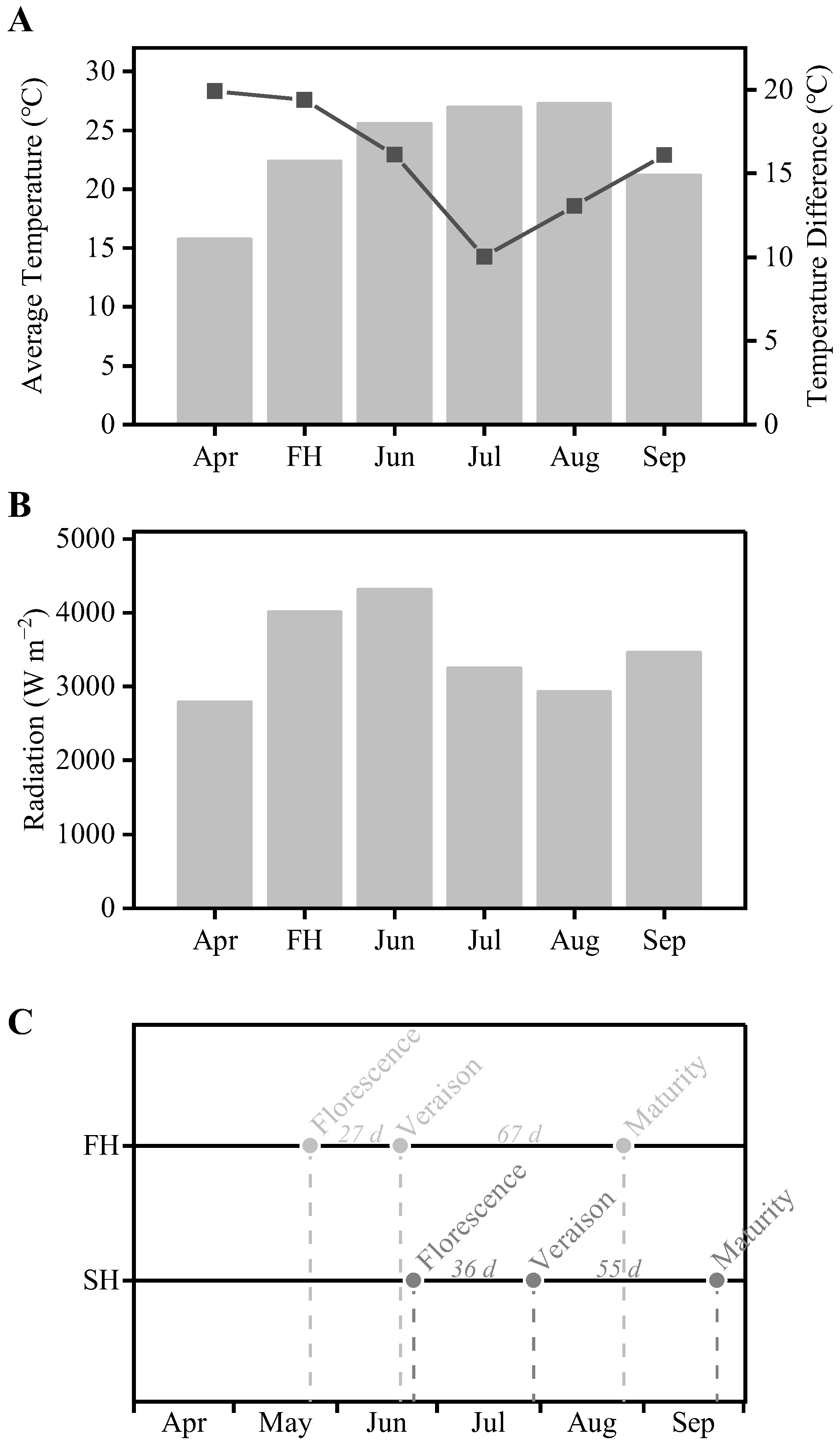
During the growing season in the multi-span greenhouse, the average daily temperature increased from 15.7 °C in April to a peak of 27.2 °C in August, before declining to 21.2 °C in September (Figure 2A and Figure S1). The daily temperature range narrowed from 19.9 °C in April to 10.0 °C in July, then widened again to 16.1 °C in September. The monthly solar radiation was 2787.5 W m−2 in April and rose to a peak of 4309.6 W m−2 in June. It subsequently declined to 3243.6 and 2926.3 W m−2 in July and August, respectively (Figure 2B). In September, solar radiation exhibited a slight rebound.
The initial flowering of FH occurred on 24 May, followed by veraison on 20 June, and maturity on 26 August. In contrast, SH flowered on 24 June, underwent veraison on 30 July, and reached maturity on 23 September (Figure 2C). The second harvest (SH) was delayed by nearly one month compared to the first harvest (FH). The total duration from flowering to maturity was 94 days for FH and 91 days for SH.

3.2. Physical and Chemical Parameters of the Grapes from Two Harvests

Clusters from SH were smaller in weight and width than those from FH (Table 1), with the mean cluster weight of SH being 68.9% of that from FH. The single berry weight in SH also decreased notably, accounting for 70% of that in FH. Berry size shrank in SH as berry weight did, whereas the berry shape index (the ratio of vertical to transverse diameter) increased. The coefficient of variation (CV) of cluster weight was much larger in SH, which is likely due to the absence of berry thinning. In contrast, the CV of berry weight in the two harvests was nearly identical. Water content in berries decreased by 1.6% in SH compared to FH. Seed weight remained similar between the two harvests. The peduncle diameter decreased in SH, and visually, not only the peduncle but also the rachis appeared thinner (Table 1). The fruit load per vine in SH accounted for 23.9% of that in FH.
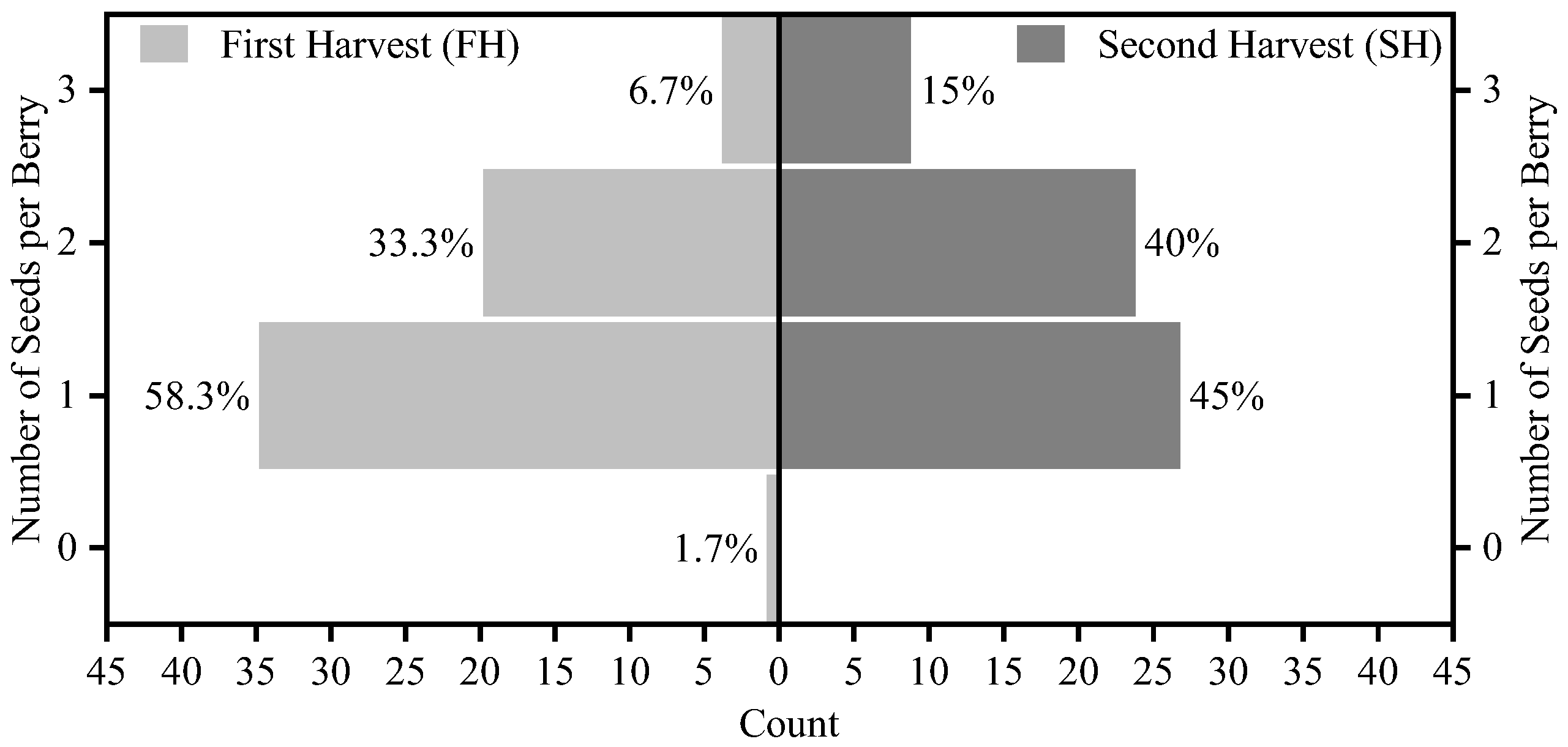
Based on the same harvest criteria (TSSs ≈ 21), no difference was detected in TSSs, as well as in TA, TSSs/TA, or the total soluble sugars between FH and SH; while the juice pH was lower in SH (Table 1). The seed number per berry was similar between FH and SH (p = 0.058, Figure 3). However, more than half of the SH berries contained two or three seeds, while more than half of the FH berries contained one seed. The probability of berries containing three seeds in SH was more than twice that observed in FH. Berries from SH are more likely to develop multiple seeds.

3.3. Color Indices of the Grapes from the Primary and Secondary Harvests

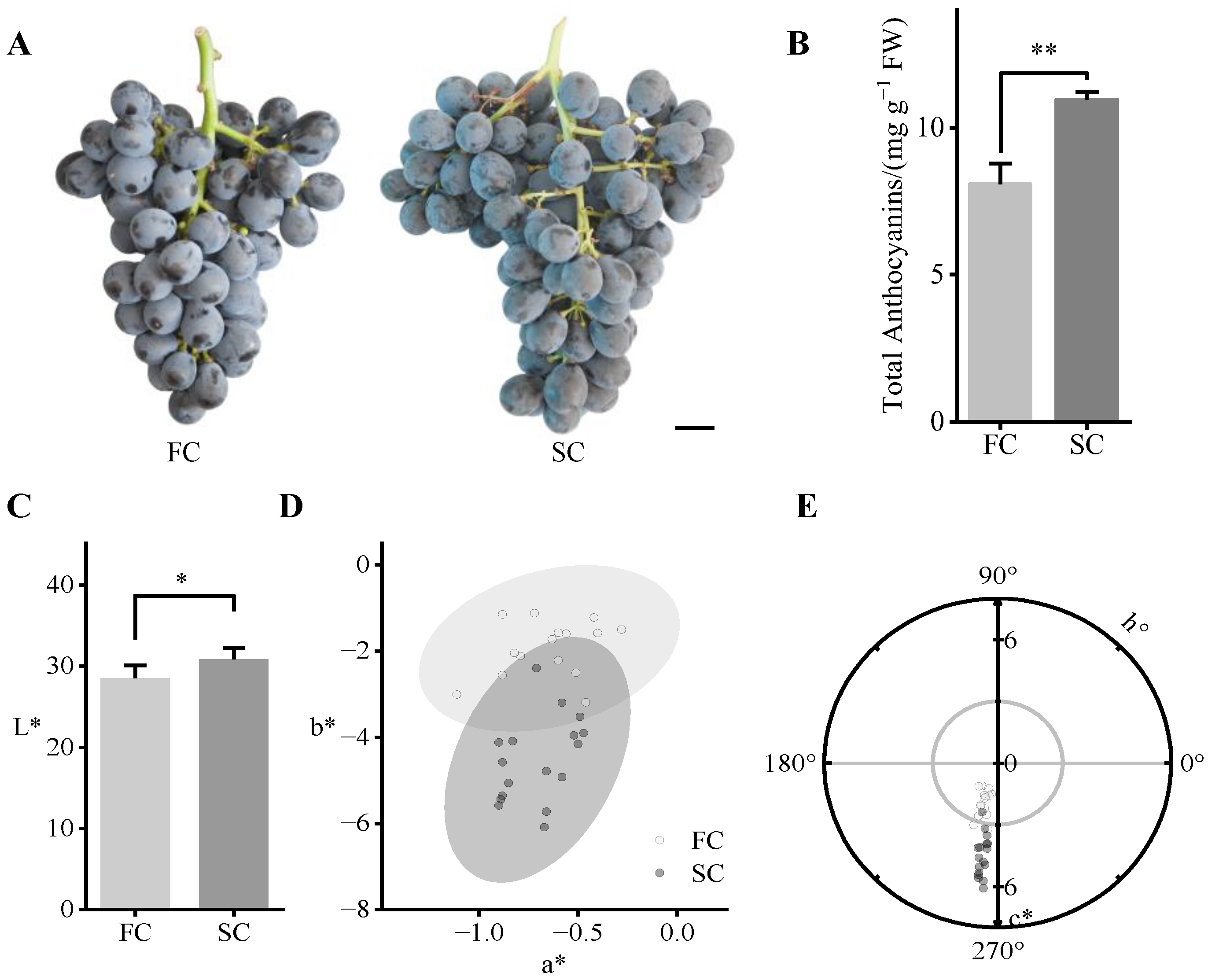
Variations were detected in most color-related indices (Figure 4). Berries from SH had larger L* values, with an average value of 30.9 compared to 28.5 for FH, indicating enhancements in brightness (Figure 4C). The means of a* and b* were both negative, and the latter was lower in SH (−4.5) than in FH (−1.9), indicating a bluer appearance of the SH berry (Figure 4D). The hue angle (h°) of berries from both SH and FH was close to 270°—the blue position; furthermore, the berry color of SH was also more saturated, indicated by its average c* value of 4.6 compared to 2.1 for FH (Figure 4E). Chemically, the anthocyanin contents of FH and SH were 8.1 and 11 mg g−1 fresh skin (Figure 4B), respectively, which were consistent with the color parameters.

3.4. Berry Texture Indices of the Grapes from the Primary and Secondary Harvests

Variations in texture attributes of SH berries tended to be smaller than those of FH (Table 2). Springiness and chewiness were decreased in SH berries, while others were not altered between the two harvests.

3.5. Mineral Composition of the Grapes from the Primary and Secondary Harvests

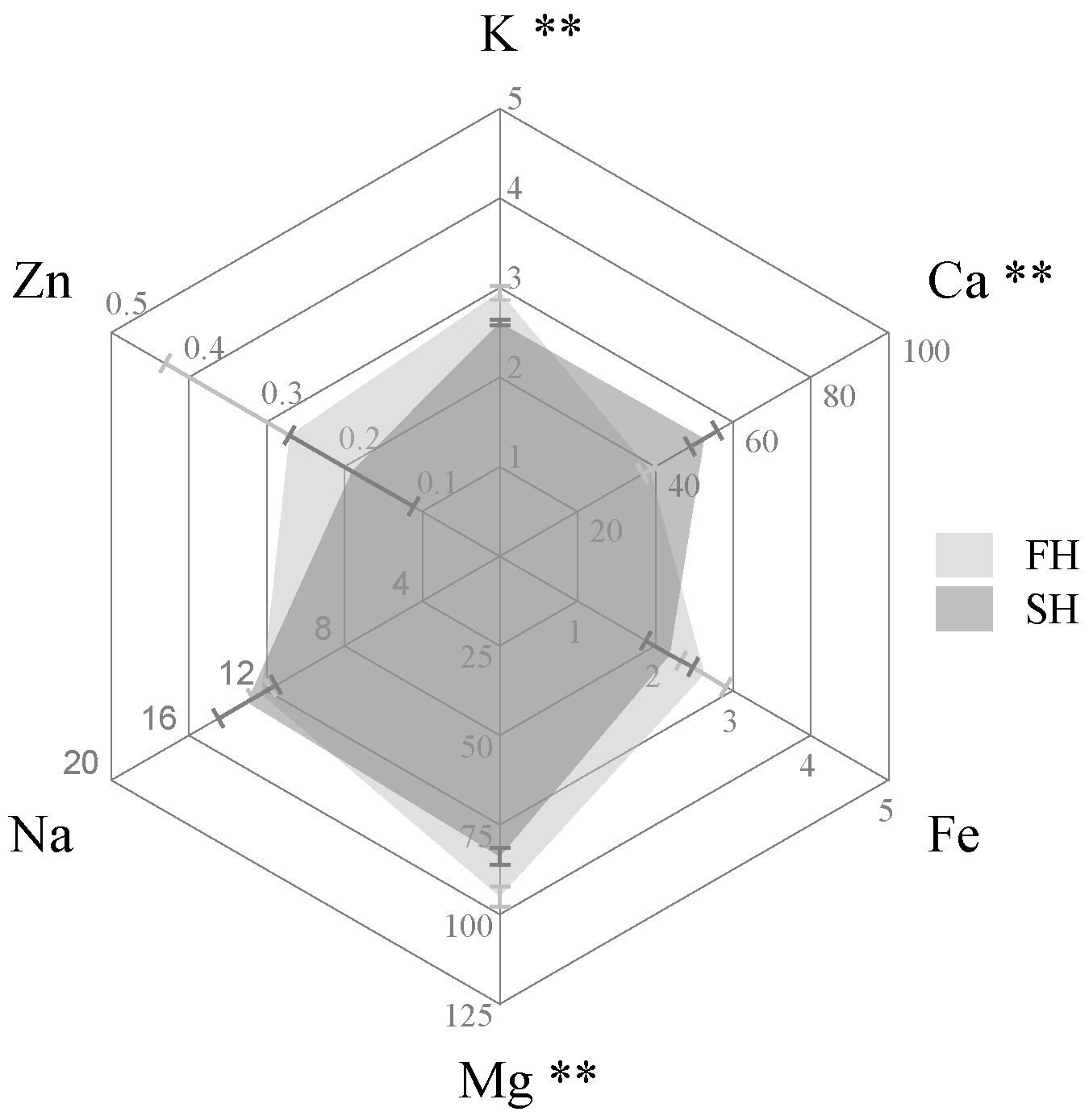
The K and Mg contents in SH berries were 2.61 mg g−1 and 83.6 mg kg−1, corresponding to decreases of 11.5% and 29.6%, respectively, relative to FH (Figure 5). In contrast, the Ca content in SH berries reached 52.5 mg kg−1, which was 36.5% higher than that in FH. No significant differences were observed for the other mineral elements between FH and SH.

3.6. Contents of Sugar and Acids of the Grapes from the Primary and Secondary Harvests

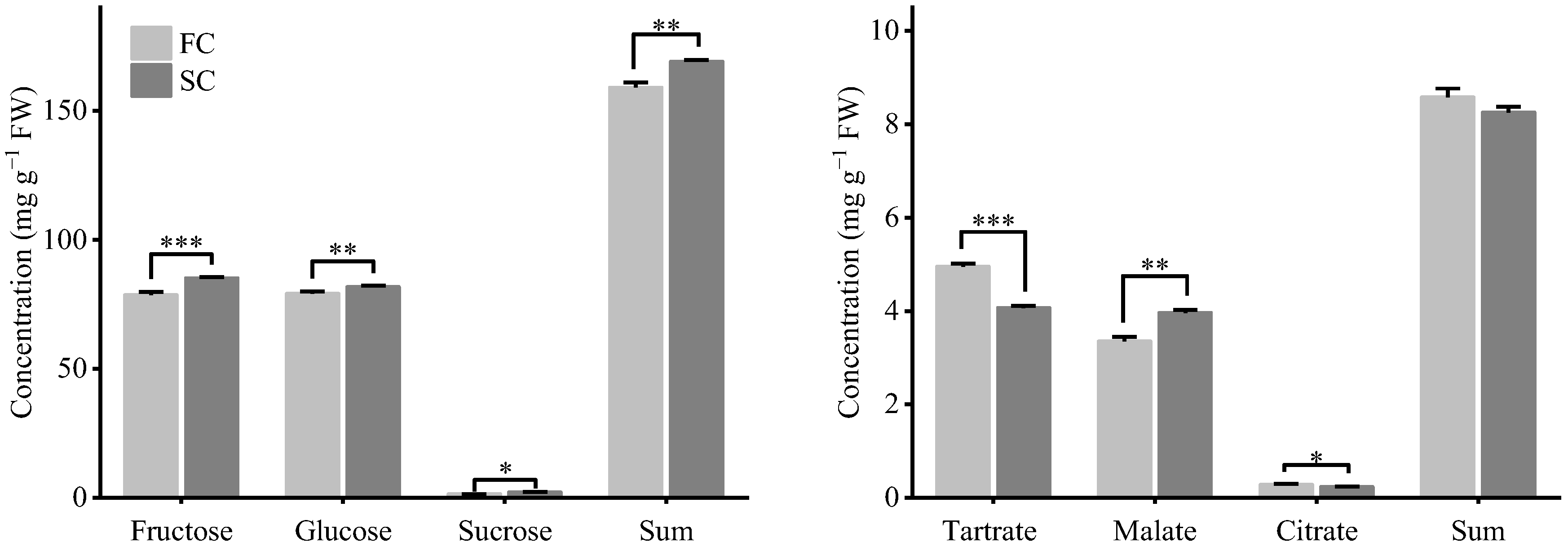
Fructose and glucose are the two dominant sugars in the berries. In berry samples from FH, their contents were 78.6 and 79.0 mg g−1, respectively, while in SH, the contents increased to 85.1 and 81.6 mg g−1. In contrast, sucrose content was very low, with only 1.4 mg g−1 in FH and 2.2 mg g−1 in SH. The contents of fructose, glucose and sucrose in SH increased by 8.3%, 3.4%, and 54.3%, respectively, leading to an average increase of 6.3% in total sugars (Figure 6).
The tartaric acid and malic acid were the main organic acids detected (Figure 6), with contents of 5.0 and 3.3 mg g−1 in FH berries and 4.1 and 4.0 mg g−1 in SH berries. The composition of organic acids varied between FH and SH. In FH berries, tartaric acid made up about 58% of the total acids, while malic acid accounted for approximately 39%. Conversely, in SH berries, the two acids contributed almost equally, with tartaric and malic acids comprising 49% and 48%, respectively. The levels of citric acid were low in both FH (0.28 mg g−1) and SH berries (0.23 mg g−1). Compared to FH, tartaric acid and citric acid decreased in SH berries by 18% and 17.9%, respectively, whereas malic acid increased by 18.3%, leading to an overall decline of 3.7% in total acids.

4. Discussion

Through shoot tipping, lateral shoot growth was stimulated, and a proportion of these shoots were able to set fruit, thereby contributing a considerable additional yield. Moreover, the berries from the secondary harvest exhibited improved quality to some extent, resembling the characteristics of “winter harvests” obtained in warm regions through the sprouting of dormant buds [17,21,22]. The key distinction lies in the mechanism of initiation: while winter crops originate from winter buds, our secondary harvest was produced by lateral shoots induced before flowering [10]. Nevertheless, in both cases, the berries developed and ripened under comparatively cooler temperatures and reduced solar radiation than those of the primary harvest [17,21,23], which is likely the primary factor shaping the distinctive attributes of the secondary harvest.
Shoot tipping is a routine vineyard management practice and is generally considered a relatively mild physiological stimulus. Therefore, not all lateral shoots are induced to form inflorescences, resulting in fewer clusters per vine in the secondary harvest compared with the first harvest. This is a major factor contributing to the yield difference between the two harvests. The reduction in berry weight appears to be the main contributor to the decrease in cluster weight observed in SH, given their nearly parallel decline. Because no berry thinning was performed, the variation in cluster weight was much greater in the second harvest than in the first harvest. In addition, we observed several consecutive days of lower temperature and reduced radiation in early June (Figure S1), which may have affected inflorescence development on the lateral shoots and contributed to the greater variability in cluster size observed in the secondary harvest.
The berry enlargement stage during the second fruiting period coincided with the hottest months (Figure 2), and extreme temperatures may have suppressed berry growth by restricting cell proliferation, thereby leading to reduced berry size [24,25]. Similarly, Cataldo et al. [26] reported that water deficit conditions and high temperatures negatively affected berry development, resulting in a significant reduction in berry weight. Toda reported that in northern Spain, global warming has enabled a second harvest 20–50 days after the first harvest in wine grape cultivars ‘Garnacha’, ‘Tempranillo’, and ‘Maturana Tinta’ [16]. The second harvest showed reduced cluster weight, berry weight, pH, and TSSs, but higher TA, which would be expected to lead to a lower pH. In contrast to our study, the region lies further north and relies on open-field cultivation of wine grapes. As a result, delayed harvests may subject berries to low temperatures unfavorable for grape development, restricting organic compound synthesis and sugar accumulation.
Since no additional management practices were applied beyond the first harvest, the second harvest may have experienced limited water supply, which in turn could have led to reduced water content in the berries. This issue may be mitigated through supplemental irrigation; however, it is not recommended, as the rapid growth stage of secondary clusters coincides with the veraison-to-ripening period of the primary clusters, increasing the risk of berry cracking in the primary harvest. We infer that the reduction in water content of SH berries may impact cell turgor and the structural integrity, leading to the decrease in the springiness of the berries. The number of seeds per berry is a rarely investigated trait in studies on double-cropping grapes. SH berries had a higher probability of containing two or three seeds compared with FH berries, which may indicate a higher pollination efficiency during the second harvest period, as the mean daily temperature of around 25 °C in June is particularly favorable for pollination [27].
The total anthocyanins increased in SH, as revealed in studies on some wine grape cultivars [16,28]. Low temperature during the maturation stage increases anthocyanin accumulation in grape skin, whereas elevated night temperatures suppress anthocyanin biosynthesis [29,30]. Temperatures around 15 °C during the winter harvest stage of ‘Summer Black’ grape in subtropical greenhouses were found to be associated with increased anthocyanin accumulation. In contrast, during the summer harvest stage, when temperatures reach approximately 30 °C, the berries exhibited a lower total anthocyanin content (1.6 mg g−1) compared with the winter harvest (2.0 mg g−1) [21]. Under field conditions in subtropical China, the total anthocyanin content of ‘Muscat Hamburg’ and ‘Kyoho’ berries from the winter harvest was 3–10 times higher than that of berries from the summer harvest [11]. The temperature decline in September, which coincided with the maturation stage of SH, supports this observation. The higher L* values of SH berries are likely attributable to their bloom, which gives them a distinctly whitish appearance (Figure 4). On the other side, the prolonged period of low radiation in mid-July could have negatively influenced anthocyanin biosynthesis in berries from the first harvest (Figure S1). Higher anthocyanin concentrations were consistent with the corresponding color parameters. Berries from the secondary harvest exhibited lower b* values, indicating a deeper blue appearance. Their h° values were similar to those of the primary harvest, whereas the c* values were higher, reflecting a more saturated color.
When the maturation of FH berries overlaps with the rapid growth phase of SH berries, competition for mineral nutrients may become pronounced between FH and SH berries. During this period, higher temperatures might result in strong transpiration, which enhances xylem-driven Ca transport toward the vigorously expanding SH berries [31]. In contrast, FH berries at the maturation stage exhibit reduced growth rates and weaker transpiration activity, accompanied by a lower physiological demand for Ca. K was also found to be substantially lower in the secondary harvest of the ‘Ortrugo’ grape [14], as for the present study, the lack of fertilization for SH could be one possible explanation.
Total soluble solids (TSSs), owing to their ease of measurement, are commonly used as rapid indicators of grape maturity or eating quality. In the present study, since the same TSS level was set as the harvest standard for both FH and SH berries, no significant difference in TSSs was observed. The total soluble sugars, the predominant constituents of TSSs, exhibited no difference between SH and FH berries, in agreement with the lack of difference in TSSs (Table 1). Nevertheless, clear differences were observed in the major sugar constituents of the berries (Figure 6). Natural sweeteners, including these quantified sugar components, provide the most basic sweet taste for human diet [32]. The increased sugars, especially fructose, which is a key contributor to sweetness [33], can give SH berries a sweeter taste. It should be noted that the content of total soluble sugars in FH and SH berries was 208.5 and 198.3 mg g−1, respectively (Table 1), exceeding the sum of these quantified sugar components: 159.0 mg g−1 for FH and 168.9 mg g−1 for SH. This suggests that, besides glucose, fructose, and sucrose, other soluble carbohydrates, such as sorbitol and maltose, may be present at higher levels in FH berries; on the other hand, the determination of total soluble sugars is generally less precise than the quantification of individual sugar components, which may partly explain the observed inconsistencies. Malic acid is considered to provide a mild sour flavor [34], and its increase may enhance the refreshing taste in SH berries. Grapes grown under cooler maturation conditions typically exhibit higher malic acid levels, as temperature strongly influences malate degradation rates during ripening [35]. This explained why the content of malic acid was higher in SH berries, which ripened under cooler conditions. However, the cause of tartaric acid reduction remains uncertain. A similar trend was reported by Poni et al. in Pinot Noir, where SH clusters generated by post-flowering pruning exhibited an increase in malic acid and a decrease in tartaric acid, resulting in similar concentrations of the two acids [23]. Another study by Del Zozzo et al. reported that both malic acid and tartaric acid increased in the SH berries of the cultivar ‘Ortrugo’ [14]. The consistent behavior of malic acid across studies suggests that its accumulation in SH clusters may represent a reproducible physiological response. In contrast, the variation observed in tartaric acid among different cultivars and experimental conditions indicates that its regulation in SH clusters is more complex and warrants further investigation.
Compared with the first harvest, the second harvest required minimal inputs, as it only involved bagging and picking. Meanwhile, this delayed harvest allows growers to target a later market window with potentially higher prices. Therefore, the secondary harvest can increase economic returns by at least 24%, based on the yield increase. Although the double-harvesting system has improved both the annual yield and fruit quality, it may also lead to excessive depletion of vine reserves and a potential decline in long-term productivity. These issues necessitate further investigation. Beyond that, the differences in secondary metabolites between the fruits from the two harvests are also of considerable interest; therefore, further studies are needed to investigate this aspect.

5. Conclusions

Pre-flowering shoot tipping of ‘Chunguang’ grapes during summer enabled a second harvest approximately one month after the first. This secondary harvest increased the annual yield by nearly 24%. When harvested at comparable total soluble solid (TSS) levels, berries from the second harvest (SH) were smaller and had darker skins, higher anthocyanin contents, lower water content, slightly more seeds, and elevated concentrations of glucose, fructose, and sucrose. SH berries showed higher malic acid content but lower tartaric acid, while the total acidity remained unchanged. In addition, the pedicels became thinner, the berry shape was more elongated, and berry springiness decreased. The contents of K and Mg were reduced, whereas the Ca content increased. Overall, under greenhouse conditions in northern regions, the delayed harvest experienced environmental changes similar to those occurring during winter harvest in southern areas, which may explain why the resulting berries exhibited comparable characteristics. This dual-harvest system may thus serve as a promising strategy to enhance grape production efficiency.

Supplementary Materials

The following supporting information can be downloaded at: https://www.mdpi.com/article/10.3390/agronomy16010065/s1. Figure S1: Daily average air temperature and radiation during the growing season of ‘Chunguang’ grapevine.

Author Contributions

Conceptualization, Y.Y. and N.J.; methodology, Y.Y. and M.L.; software, B.H.; validation, C.L. and Y.S.; formal analysis, Y.Y. and Y.S.; investigation, N.J. and X.W.; data curation, S.H. and X.W.; writing—original draft preparation, Y.Y. and S.H.; writing—review and editing, Y.Y. and N.J.; visualization, M.L. and C.L.; supervision, N.J.; project administration, N.J.; funding acquisition, Y.Y., M.L. and B.H. All authors have read and agreed to the published version of the manuscript.

Funding

This research was funded by the Natural Science Foundation of Hebei Province (grant no. C2025301079), HAAFS Science and Technology Innovation Special Project (grant no. 2022KJCXZX-CGS-1), and the China Agriculture Research System of MOF and MARA (grant no. CARS-29-yc-8).

Data Availability Statement

The original contributions presented in this study are included in the article/Supplementary Material. Further inquiries can be directed to the corresponding author(s).

Acknowledgments

We thank the support of the Domestic Training Program for the Young Researchers (Y.Y.) by Hebei Academy of Agriculture and Forestry Sciences (HAAFS).

Conflicts of Interest

The authors declare no conflicts of interest.

References

  1. Feng, J.; Wang, J.; Zhang, X.; Zhao, F.; Kanianska, R.; Tian, D. Design and implementation of emergy-based sustainability decision assessment system for protected grape cultivation. Sustainability 2015, 7, 14002–14025. [Google Scholar] [CrossRef]
  2. Kamiloglu, O.; Polat, A.A.; Durgac, C. Comparison of open field and protected cultivation of five early table grape cultivars under Mediterranean conditions. Turk. J. Agric. For. 2011, 35, 491–499. [Google Scholar] [CrossRef]
  3. Rajiv; Kumari, M. Protected cultivation of high-value vegetable crops under changing climate. In Advances in Research on Vegetable Production Under a Changing Climate Vol. 2; Solankey, S.S., Kumari, M., Eds.; Springer International Publishing: Cham, Switzerland, 2023; pp. 229–266. [Google Scholar] [CrossRef]
  4. Hussain, B.; Sabir, A. Protected viticulture for sustainable grape production to cope with the adverse effects of climate change. J. Plant Sci. Crop Prot. 2024, 7, 101. [Google Scholar]
  5. Lu, G.; Zhang, K.; Que, Y.; Li, Y. Grapevine double cropping: A magic technology. Front. Plant Sci. 2023, 14, 1173985. [Google Scholar] [CrossRef]
  6. Graff, E.; Montague, T.; Kar, S. Secondary bud growth and fruitfulness of Vitis vinifera L. ‘Grenache’ grafted to three different rootstocks and grown within the Texas High Plains AVA. Int. J. Fruit Sci. 2022, 22, 64–77. [Google Scholar] [CrossRef]
  7. Da Silva Padilha, C.V.; dos Santos Lima, M.; Toaldo, I.M.; Pereira, G.E.; Bordignon-Luiz, M.T. Effects of successive harvesting in the same year on quality and bioactive compounds of grapes and juices in semi-arid tropical viticulture. Food Chem. 2019, 301, 125170. [Google Scholar] [CrossRef]
  8. Cheng, G.; Zhou, S.; Liu, J.; Feng, Q.; Wei, R.; Yu, H.; Wang, B.; Zhang, Y.; Bai, X. Widely targeted metabolomics provides new insights into the flavonoid metabolism in ‘Kyoho’ grapes under a two-crop-a-year cultivation system. Horticulturae 2023, 9, 154. [Google Scholar] [CrossRef]
  9. Guo, R.; Wang, B.; Lin, L.; Cheng, G.; Zhou, S.; Xie, S.; Shi, X.; Cao, M.; Zhang, Y.; Bai, X. Evolutionary, interaction and expression analysis of floral meristem identity genes in inflorescence induction of the second crop in two-crop-a-year grape culture system. J. Genet. 2018, 97, 439–451. [Google Scholar] [CrossRef]
  10. Wang, B.; Qin, F.; Deng, F.; Luo, H.; Chen, X.; Cheng, G.; Bai, Y.; Huang, X.; Han, J.; Cao, X.; et al. Difference in flavonoid composition and content between summer and winter grape berries of Shine Muscat under two-crop-a-year cultivation. Sci. Agric. Sin. 2022, 55, 4473–4486. [Google Scholar] [CrossRef]
  11. Zhu, L.; Huang, Y.; Zhang, Y.; Xu, C.; Lu, J.; Wang, Y. The growing season impacts the accumulation and composition of flavonoids in grape skins in two-crop-a-year viticulture. J. Food Sci. Technol. 2017, 54, 2861–2870. [Google Scholar] [CrossRef]
  12. Ahmed, S.; Roberto, S.R.; Shahab, M.; Colombo, R.C.; Silvestre, J.P.; Koyama, R.; de Souza, R.T. Proposal of double-cropping system for ‘BRS Isis’ seedless grape grown in subtropical area. Sci. Hortic. 2019, 251, 118–126. [Google Scholar] [CrossRef]
  13. Pedro Júnior, M.J.; Hernandes, J.L.; Bardin-Camparotto, L.; Blain, G.C. Plant parameters and must composition of ‘Syrah’ grapevine cultivated under sequential summer and winter growing seasons. Bragantia 2017, 76, 345–351. [Google Scholar] [CrossRef]
  14. Del Zozzo, F.; Tiwari, H.; Canavera, G.; Frioni, T.; Poni, S. Exogenous cytokinins and auxins affect double cropping in Vitis vinifera L. cv. ‘Ortrugo’ grown in a temperate climate: Preliminary results. Horticulturae 2025, 11, 346. [Google Scholar] [CrossRef]
  15. Martínez-Moreno, A.; Sanz, F.; Yeves, A.; Gil-Muñoz, R.; Martínez, V.; Intrigliolo, D.S.; Buesa, I. Forcing bud growth by double-pruning as a technique to improve grape composition of Vitis vinifera L. cv. Tempranillo in a semi-arid Mediterranean climate. Sci. Hortic. 2019, 256, 108614. [Google Scholar] [CrossRef]
  16. De Toda, F.M. Global warming allows two grape crops a year, with about two months apart in ripening dates and with very different grape composition—The forcing vine regrowth to obtain two crops a year. Vitis 2021, 60, 119–124. [Google Scholar] [CrossRef]
  17. Yu, H.; Guo, R.; Liu, J.; Shi, X.; Huang, G.; Zhang, Y.; Lin, L. Metabolome provides new insights into the volatile substances in ‘Ruidu Kemei’ grapes under the two-crop-a-year cultivation system. Fruit Res. 2024, 4, e035. [Google Scholar] [CrossRef]
  18. Yin, Y.; Li, M.; Jia, N.; Sun, Y.; Han, B.; Liu, C.; Liu, S.; Zhao, S.; Guo, Z. Effects of trellis system and berry thinning intensity on vine performance and quality composition of two table grape cultivars under protected cultivation in northern China. Sci. Hortic. 2022, 299, 111045. [Google Scholar] [CrossRef]
  19. Coombe, B.G. Growth stages of the grapevine: Adoption of a system for identifying grapevine growth stages. Aust. J. Grape Wine Res. 1995, 1, 104–110. [Google Scholar] [CrossRef]
  20. Scott, T.A., Jr.; Melvin, E.H. Determination of dextran with anthrone. Anal. Chem. 1953, 25, 1656–1661. [Google Scholar] [CrossRef]
  21. Wang, C.; Li, C.; Li, Y.; Zeng, Y.; Jiang, J.; Wu, L.; Yang, S.; Yuan, D.; Chen, L.; Pei, Z.; et al. Transcriptomic insights into higher anthocyanin accumulation in ‘Summer Black’ table grapes in winter crop under double-cropping viticulture system. Plants 2025, 14, 26. [Google Scholar] [CrossRef]
  22. Qiu, Z.; Chen, G.; Qiu, D. Pruning and dormancy breaking make two sustainable grape-cropping productions in a protected environment possible without overlap in a single year. PeerJ 2019, 7, e7412. [Google Scholar] [CrossRef]
  23. Poni, S.; Gatti, M.; Tombesi, S.; Squeri, C.; Sabbatini, P.; Lavado Rodas, N.; Frioni, T. Double cropping in Vitis vinifera L. Pinot Noir: Myth or reality? Agronomy 2020, 10, 799. [Google Scholar] [CrossRef]
  24. Hulands, S.; Greer, D.H.; Harper, J.D.I. The interactive effects of temperature and light intensity on Vitis vinifera cv. ‘Semillon’ grapevines. II. Berry ripening and susceptibility to sunburn at harvest. Eur. J. Hortic. Sci. 2014, 79, 1–7. [Google Scholar] [CrossRef]
  25. Ni, P.; Yang, S.; Yuan, Y.; Zhang, C.; Zhu, H.; Ma, J.; Li, S.; Yang, G.; Bai, M. Transcriptome analysis provides new insights into the berry size in ‘Summer Black’ grape under a two-crop-a-year cultivation system. Hortic. Plant J. 2025, 11, 1469–1482. [Google Scholar] [CrossRef]
  26. Cataldo, E.; Fucile, M.; Manzi, D.; Peruzzi, E.; Mattii, G.B. Effects of Zeowine and compost on leaf functionality and berry composition in Sangiovese grapevines. J. Agric. Sci. 2023, 161, 412–427. [Google Scholar] [CrossRef]
  27. Sarooshi, R.A.; Bevington, K.B.; Coote, B.G. Performance and compatibility of ‘Muscat Gordo Blanco’ grape on eight rootstocks. Sci. Hortic. 1982, 16, 367–374. [Google Scholar] [CrossRef]
  28. Poni, S.; Del Zozzo, F.; Santelli, S.; Gatti, M.; Magnanini, E.; Sabbatini, P.; Frioni, T. Double cropping in Vitis vinifera L. cv. Pinot Noir: Agronomical and physiological validation. Aust. J. Grape Wine Res. 2021, 27, 508–518. [Google Scholar] [CrossRef]
  29. Azuma, A. Genetic and environmental impacts on the biosynthesis of anthocyanins in grapes. Hortic. J. 2018, 87, 1–17. [Google Scholar] [CrossRef]
  30. Mori, K.; Sugaya, S.; Gemma, H. Decreased anthocyanin biosynthesis in grape berries grown under elevated night temperature condition. Sci. Hortic. 2005, 105, 319–330. [Google Scholar] [CrossRef]
  31. White, P.J.; Broadley, M.R. Calcium in Plants. Ann. Bot. 2003, 92, 487–511. [Google Scholar] [CrossRef] [PubMed]
  32. Garneau, N.L.; Nuessle, T.M.; Mendelsberg, B.J.; Shepard, S.; Tucker, R.M. Sweet liker status in children and adults: Consequences for beverage intake in adults. Food Qual. Prefer. 2018, 65, 175–180. [Google Scholar] [CrossRef] [PubMed]
  33. Mao, Y.; Tian, S.; Qin, Y.; Han, J. A new sensory sweetness definition and sweetness conversion method of five natural sugars, based on the Weber-Fechner Law. Food Chem. 2019, 281, 78–84. [Google Scholar] [CrossRef]
  34. Baccichet, I.; Chiozzotto, R.; Bassi, D.; Gardana, C.; Cirilli, M.; Spinardi, A. Characterization of fruit quality traits for organic acids content and profile in a large peach germplasm collection. Sci. Hortic. 2021, 278, 109865. [Google Scholar] [CrossRef]
  35. Cataldo, E.; Puccioni, S.; Eichmeier, A.; Storchi, P. Prevention of drought damage through zeolite treatments on Vitis vinifera: A promising sustainable solution for soil management. Soil Use Manag. 2024, 40, e13036. [Google Scholar] [CrossRef]
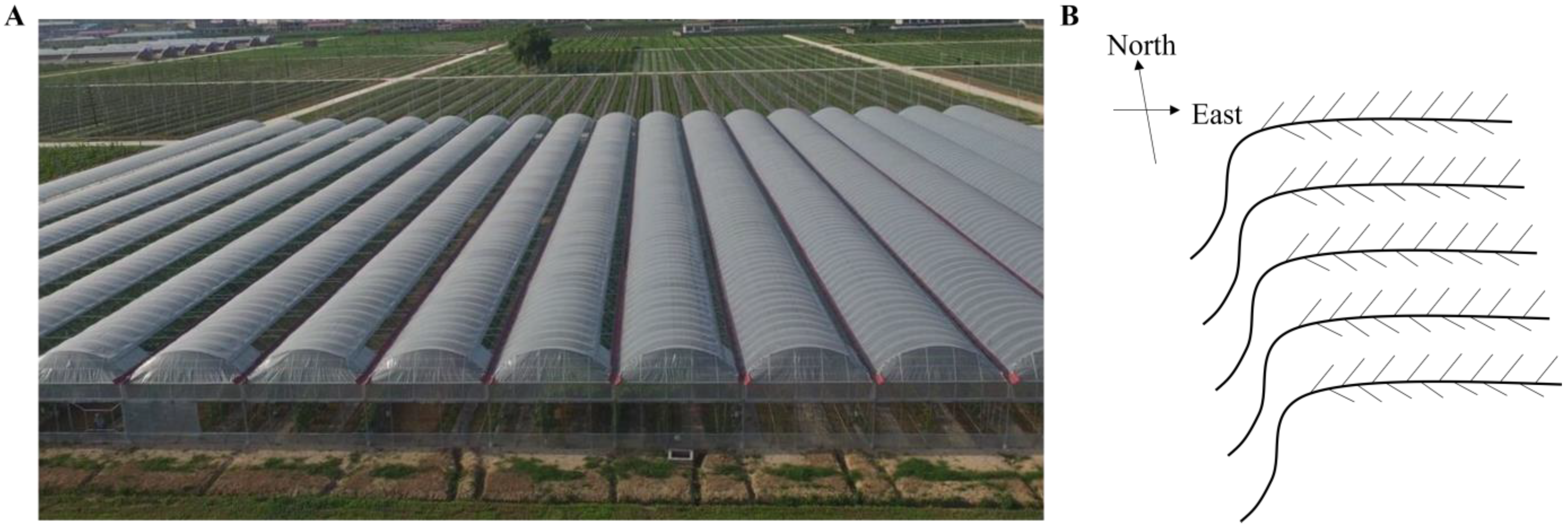
Figure 1. Aerial view of the multi-span greenhouse (A), and the sketch map of row orientation and vine structure (B).
Agronomy 16 00065 g001
Figure 2. Environmental conditions and phenological stages of ‘Chunguang’ grapevine during the growing season. (A) Average daily temperature (gray bars, left y-axis) and temperature differences (dark gray points, right y-axis). (B) Monthly solar radiation. (C) Key phenological events of FH and SH, including flowering, veraison, and maturity. FH, first harvest; SH, second harvest.
Agronomy 16 00065 g002
Figure 3. Comparison of the number of seeds per berry between the first (FH) and second (SH) harvests of ‘Chunguang’ grapes.
Agronomy 16 00065 g003
Figure 4. Appearance (A), total anthocyanin content (B), color index L* (C), a* and b* values (D), and c* and h° values (E) of ‘Chunguang’ grape berries from the first harvest (FH) and the second harvest (SH). Scale bar = 2 cm. *, p < 0.05, **, p < 0.01. L*, lightness, from 0 (black) to 100 (white); a*, red or green levels, indicates the redness when a* > 0 and the greenness when a* < 0; b*, yellow or blue levels, indicates the yellowness when b* > 0 and blueness when b* < 0.
Agronomy 16 00065 g004
Figure 5. Mineral element content of berries from the first (FH) and second (SH) harvests of ‘Chunguang’ grape. Units: K, mg g−1 fresh weight; others, mg kg−1 fresh weight. **, p < 0.01.
Agronomy 16 00065 g005
Figure 6. Sugar and organic acid composition of berries from the first (FH) and second (SH) harvests of ‘Chunguang’ grape. *, p < 0.05, **, p < 0.01, ***, p < 0.001.
Agronomy 16 00065 g006
Table 1. Comparison of cluster and berry physical traits between the first (FH) and second (SH) harvests of ‘Chunguang’ grape.
First Harvest (FH)Second Harvest (SH)p
Cluster Weight (g)577.88 ± 104.96397.85 ± 150.96<0.001
CV of Cluster Weight0.180.38
Cluster Length (cm)19.27 ± 2.4319.07 ± 1.760.7638
Cluster Width (cm)15.86 ± 1.7812.93 ± 1.28<0.001
Number of Clusters per Vine15.33 ± 1.515.33 ± 0.82<0.001
Yield per Vine (kg)8.86 ± 0.792.12 ± 0.3
Single Berry Weight (g)9.57 ± 0.476.69 ± 0.3<0.001
CV of Berry Weight0.0490.045
Berry Vertical Diameter (mm)28.47 ± 1.824.43 ± 1.8<0.001
Berry Horizontal Diameter (mm)23.90 ± 1.2220.03 ± 1.09<0.001
Berry Shape Index1.18 ± 0.11.23 ± 0.070.0363
Total Water Content (%)80.35 ± 0.1578.76 ± 0.540.0077
Thirty-seed Weight (g)2.68 ± 0.082.69 ± 0.090.8178
Pulling Resistance (N)4.16 ± 0.984.21 ± 1.290.8576
Peduncle Length (mm)8.99 ± 1.38.86 ± 0.90.66
Peduncle Diameter (mm)2.07 ± 0.371.86 ± 0.360.0303
TSSs (°Brix)20.9 ± 0.3521.23 ± 0.060.1755
TA (g L−1)4.2 ± 0.084.55 ± 0.230.0739
TSSs/TA4.97 ± 0.184.67 ± 0.260.181
pH4.25 ± 0.064.06 ± 0.030.0079
Total Soluble Sugar (mg g−1 FW)208.5 ± 4.45198.3 ± 20.830.4534
Data are presented as mean ± SD (n = 3). CV, Coefficient of variation.
Table 2. Texture profiles of ‘Chunguang’ grape berries from two harvests.
First Harvest (FH)Second Harvest (SH)p
Hardness (N)11.11 ± 2.5210.3 ± 1.140.1946
Resilience0.27 ± 0.050.28 ± 0.040.4388
Cohesiveness0.46 ± 0.060.47 ± 0.040.577
Springiness (mm)4.53 ± 0.24.21 ± 0.15<0.001
Gumminess (N)5.01 ± 0.714.82 ± 0.510.35
Chewiness (mJ)22.71 ± 3.5720.29 ± 2.240.018
Disclaimer/Publisher’s Note: The statements, opinions and data contained in all publications are solely those of the individual author(s) and contributor(s) and not of MDPI and/or the editor(s). MDPI and/or the editor(s) disclaim responsibility for any injury to people or property resulting from any ideas, methods, instructions or products referred to in the content.