Article

Evaluation of Agronomic Parameters and Aboveground Biomass Production of Cannabis sativa Cultivated During Early and Late Planting Seasons in Bela-Bela, South Africa


by
Tumisho Ntsoane
1,
Ndivho Nemukondeni
2 and
Lufuno Ethel Nemadodzi
1,*
1
Department of Agriculture and Animal Health, University of South Africa, Science Campus, Florida 1709, South Africa
2
Department of Animal Sciences, Tshwane University of Technology, Pretoria 0001, South Africa
*
Author to whom correspondence should be addressed.
Agronomy 2025, 15(12), 2844; https://doi.org/10.3390/agronomy15122844
Submission received: 17 September 2025 / Revised: 28 October 2025 / Accepted: 9 December 2025 / Published: 11 December 2025
(This article belongs to the Section Farming Sustainability)

Abstract

Inadequate livestock production among smallholder farmers is mostly linked to insufficient supply and poor feed quality. To enhance livestock production, improving both the quantity and quality of feed supplements is important. Therefore, alternative fodder resources, such as Cannabis sativa, should be evaluated as a feed supplement for ruminants such as Dorper sheep. Cannabis sativa is an herbaceous crop commonly grown for industrial and medicinal purposes. This plant is reported to have an excellent nutritional profile and biomass production. The current study aimed to determine the agronomic parameters and biomass production of C. sativa. The experiment was conducted at the Towoomba Research Station, in Bela-Bela Municipality, Limpopo province, South Africa. The trial’s experimental design was a split-plot within a Randomized Complete Block Design (RCBD), and it was replicated three times. The findings of the study showed a significant difference (p < 0.05) between the agronomic parameters during the early (December 2023–April 2024) and late planting seasons (April 2024–July 2024). Plant height (77.3 cm), number of leaves (144 leaves), leaf area (60.18 cm2), canopy cover (31.65 cm), number of branches (25), and biomass production (5, 48 t h−1) were higher at maturity in the early planting season whilst chlorophyll content was higher (38.62 nm) during early planting season at flowering stage. The study suggests that smallholder farmers should plant C. sativa during the early planting season to ensure high biomass production.

1. Introduction

Recently, Cannabis sativa has become an important crop for its agronomic parameters [1], such as plant height, tillering capacity, and biomass production [2]. This multifunctional crop provides the raw material for many traditional and innovative industrial uses [3], including ruminant feed supplements. According to Crini et al. [4], C. sativa is an industrial crop that can provide diverse raw materials for several uses, such as textile, biofuel, and ruminant feed supplement. Despite the controversy, the use of C. sativa for medicinal and industrial purposes represents the revival of the crop with historical importance [5].
Photoperiod sensitivity is a crucial feature of C. sativa adaptation to a particular region [1]. A recent study by Konvalina et al. [6] indicated that the increase in light intensity increases the biomass production of C. sativa. The study demonstrates that planting early in summer, when photoperiods are longer, increases biomass production, and planting early in the season maximizes vegetative growth of C. sativa [7]. Furthermore, a study conducted by Sandhu et al. [8] indicated that the agronomic parameters, such as plant height, canopy cover, and chlorophyll, were significantly affected by variety and planting season.
Agronomic parameters such as plant height are influenced by different levels of nitrogen fertilization as well as the planting season [9]. A study by Tang et al. [10] stated that fertilization rates above 300 kg ha−1 had a limited effect on the biomass yields of C. sativa; however, it resulted in a decrease in bark content. In addition, their results highlighted that the Nitrogen, Phosphorus, and Potassium (NPK) ratio of the fertilizer had a significant effect on the biomass yields; the yields at 3:1:2 were higher than those at 4:1:2. Furthermore, the study indicated that over-fertilization led to economic losses as the output was lower than the input costs associated with fertilizers. In addition, a review by Ahmadi et al. [11] demonstrated that the amount of light, nutrients, and water received, groundwater availability, photoperiod, and day/night temperatures are crucial factors that influence the growth, development, and yield of different Cannabis varieties.
A study by Blandinières et al. [12] indicated that in recent years, C. sativa has received attention and has been cultivated in various countries after having been restricted in many countries in the past, as a crop with great potential [1]. Furthermore, there was an increase in the biomass production (tonnes) and area harvested (ha) between 2015 and 2020 of Cannabis grown as reported by Blandinières et al. [12].
The novelty of C. sativa is due to several factors, such as favorable agronomic characteristics and biomass production [12]. This crop has been in discreet for a long time, hence the lack of literature on in-depth knowledge of its cultivation. Additionally, there is a lack of research regarding the relationship between individual agronomic parameters such as plant height, leaf area, tillering capacity, and environmental conditions [12]. The lack of scientific knowledge in South Africa is a limiting factor for C. sativa cultivation, which affects the yield and quality of biomass produced. Furthermore, previous legislative restrictions in South Africa on the cultivation of C. sativa contributed to creating limitations on Cannabis Research and Development (Cannabis R & D) by restricting the procurement of C. sativa seeds for academic purposes [13]. Legislation governing the use of C. sativa continues to evolve rapidly throughout the world [5]. Moreover, planting C. sativa without a permit from the Department of Health (DoH) is still restricted in South Africa [14]. The study aimed to compare and explore the effect of planting season and growth stage on agronomic parameters and biomass production of C. sativa. The initial hypothesis of the current study was that agronomic parameters and aboveground biomass production would not be impacted by the planting season and growth stage.

2. Materials and Methods

2.1. Study Site

The experiment was conducted in the open field, at the Towoomba Research Station (see Figure 1), on the southern part of the Springbok flats, approximately 3 km south-east of Bela-Bela in the Limpopo Province, South Africa, with coordinates of 28°21′ E, 24°25′ S; 1184 m above sea level. The study area has two distinctive seasons: the dry season (May to November) and the rainy season (December to April), with warm, humid climatic conditions in summer, while winter is dry, cold, and sunny. The long-term average annual rainfall is 630 mm per annum, and the daily average maximum and minimum temperatures range between 17.6 °C and 30.2 °C in December and 3.0 °C and 21.0 °C in July, respectively [15]. The study area is dominated by two soil types, which are Hutton and Arcadia soils [16]. However, the current experiment was conducted on Hutton soils.

2.2. Soil Sampling

Soil samples were collected before planting at depths of 0–15 cm and 15–30 cm using a random sampling technique [18]. The soil composite from two sampling depths was formed to represent each plot and was analyzed for physical and chemical properties. The soil samples were sieved to pass through a 2 mm sieve for chemical analysis. Soil pH was determined by potassium chloride (KCl) [19]. Phosphorus (P), potassium (K), calcium (Ca), magnesium (Mg), zinc (Zn), manganese (Mn), and copper (Cu) were extracted following the procedure of the Mehlich-III multi-nutrient extraction method. Soil bulk density was measured using a metal ring at each soil depth, following the procedure of Prikner et al. [20]. Available mineral nitrogen (N) was determined using the colorimetric method for ammonium and nitrate. The Bray-1 method was used to determine available phosphorus (P) and cation exchange capacity (CEC) following the procedure as prescribed by Rayment and Higginson [21]. The Walkley and Black method (1934) was used to determine organic carbon (C), and the soil particle size was determined using the hydrometer method [22].

2.3. Weather Conditions During the Experimentation

Monthly weather data for the duration of the experiment were acquired from the South African Weather Services (SAWS) through a micro-meteorological/mini-weather station located at the farm; the data were accessed at the end of the experiment.

2.4. Experimental Design and Layout

The planting experiment was conducted between December 2023 and April 2024 (early planting season) and April 2024 and July 2024 (late planting season). The experiment was laid out in a split-plot in a Randomized Complete Block Design (RCBD), and it was replicated three times. Treatments were planting dates (early planting date (December), late planting date (April), four growing stages (early and late vegetative stage, flowering, and maturity), and four biomass harvesting stages (early and late vegetative stage, flowering, and maturity) as prescribed by Motshekga [23]. The seeds of C. sativa, variety Bubba Island Kush, commonly known in South Africa as “Durban poison,” with a laboratory germination range of 80–90%, were obtained from a reputable local seed company, Canna Kingdom Glenhazel.
A total of 12 plots, wherein each plot was 5 × 2 m with an inter-row spacing of 0.4 m and intra-row spacing of 0.11 m as prescribed by Stringer [24], and the seeding rate was 67.2 kg/ha with the targeted sowing depth of 0.006 m as prescribed by Islam et al. [25] to achieve the seedling density of 28 plants m−2.
Before sowing, the seedbeds were prepared using a rotary harrow to a depth of 8 cm. Fertilizers were applied six weeks after planting at 224 kg/ha N, 56 kg/ha P, and 336 kg/ha K as prescribed by Stringer [24] and Jeff and Williams [26]. All the plants were uniformly irrigated with 100 mL of tap water using an Addis watering can, (Live stainable Ecofficient living, Pretoria, South Africa) every second day and/or as and when the need arises. A hand hoe was used to remove weeds, reducing competition for nutrients, water, and light with seedlings.

2.5. Data Collection

The phenological parameter that was recorded was germination percentage using the formula below, as prescribed by Khanal et al. [27]:
Germination   % = No .   of   stotal   germinated   seed No .   of   total   seeds   sown × 100
Growth parameter data that was recorded includes plant height using a tape measure [28], and canopy cover was recorded by measuring the widest canopy diameter with a tape measure weekly; tillering capacity was determined by counting new branches from five randomly selected plants per plot as prescribed by Mpanza [29]. The leaf area of five randomly selected plants was calculated by measuring the leaf length and leaf width using a tape measure, using the linear equation by following the formula below [30,31]:
Leaf area (cm2) = 0.654 × (L × W)
where 0.654 = leaf shape coefficient; L = length of leaf (cm); W = width of the leaf (cm) measured at half-length.
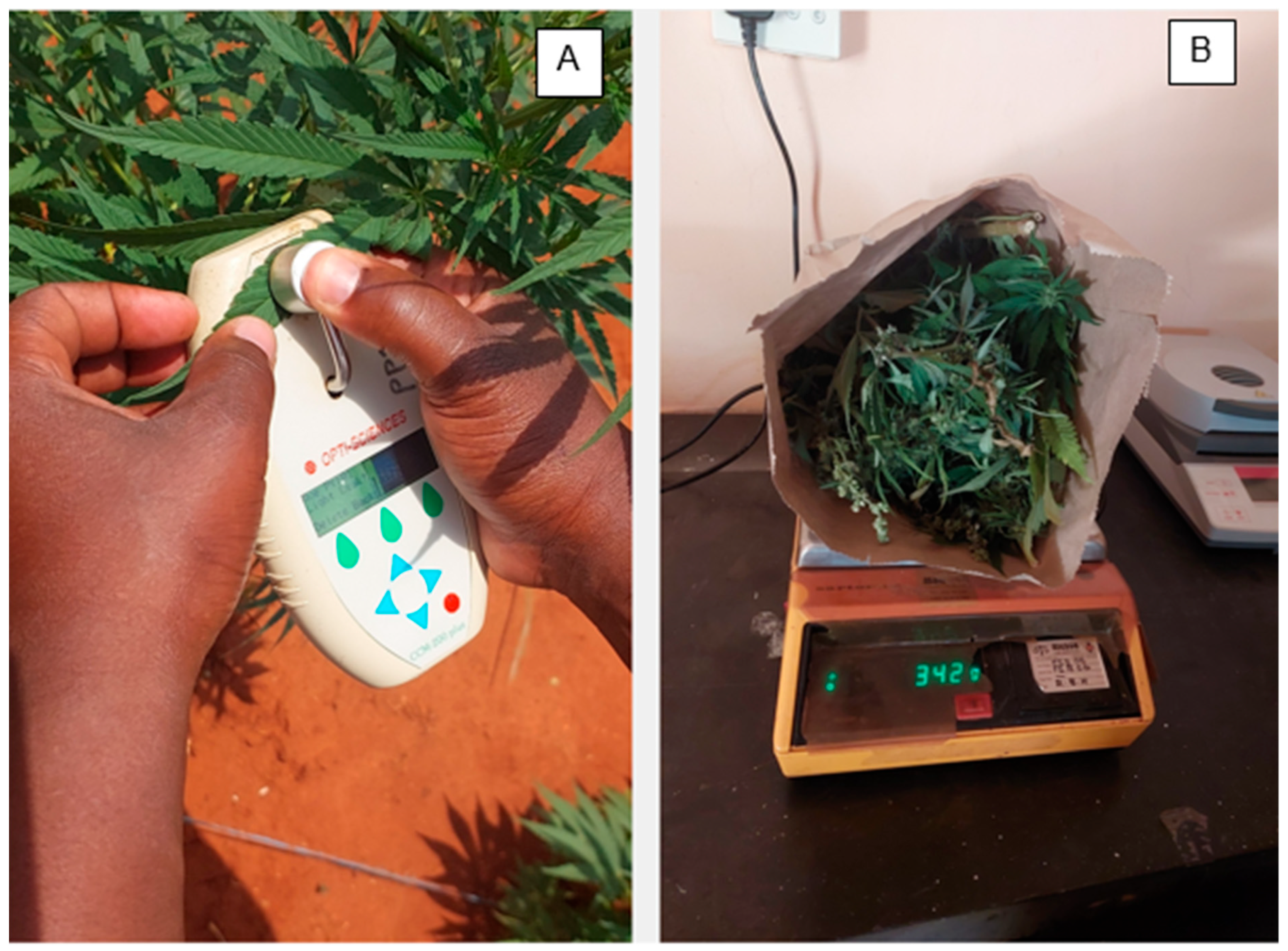
The leaf chlorophyll content on the middle leaves found between the bottom and top leaves of five randomly selected plants per plot was measured using a non-destructive method with a Spad 502 chlorophyll meter, KONIKA MINOLTA, Tokyo, Japan, as described by Managa and Nemadodzi [31], as shown in Figure 2A.
To estimate the biomass production, plots were harvested during each growing stage by randomly placing a one-square-meter quadrant in a plot. Biomass within the quadrant was harvested to a residual height of 10 cm. Wet mass was recorded immediately (see Figure 2B) after harvesting [32] and oven-dried at 60 °C to a consistent weight for 72 h to estimate dry matter yield [33].

2.6. Statistical Analysis

The collected data on yield performances of early and late planting seasons of the study were subjected to two-way analysis of variance (ANOVA) using the general linear model JMP Statistical Discovery LLC 2024, version Pro 18, and the differences between means were compared using least significant difference (LSD) at p < 0.05 significance level.

3. Results

3.1. Climatic Attributes at the Towoomba Research Station

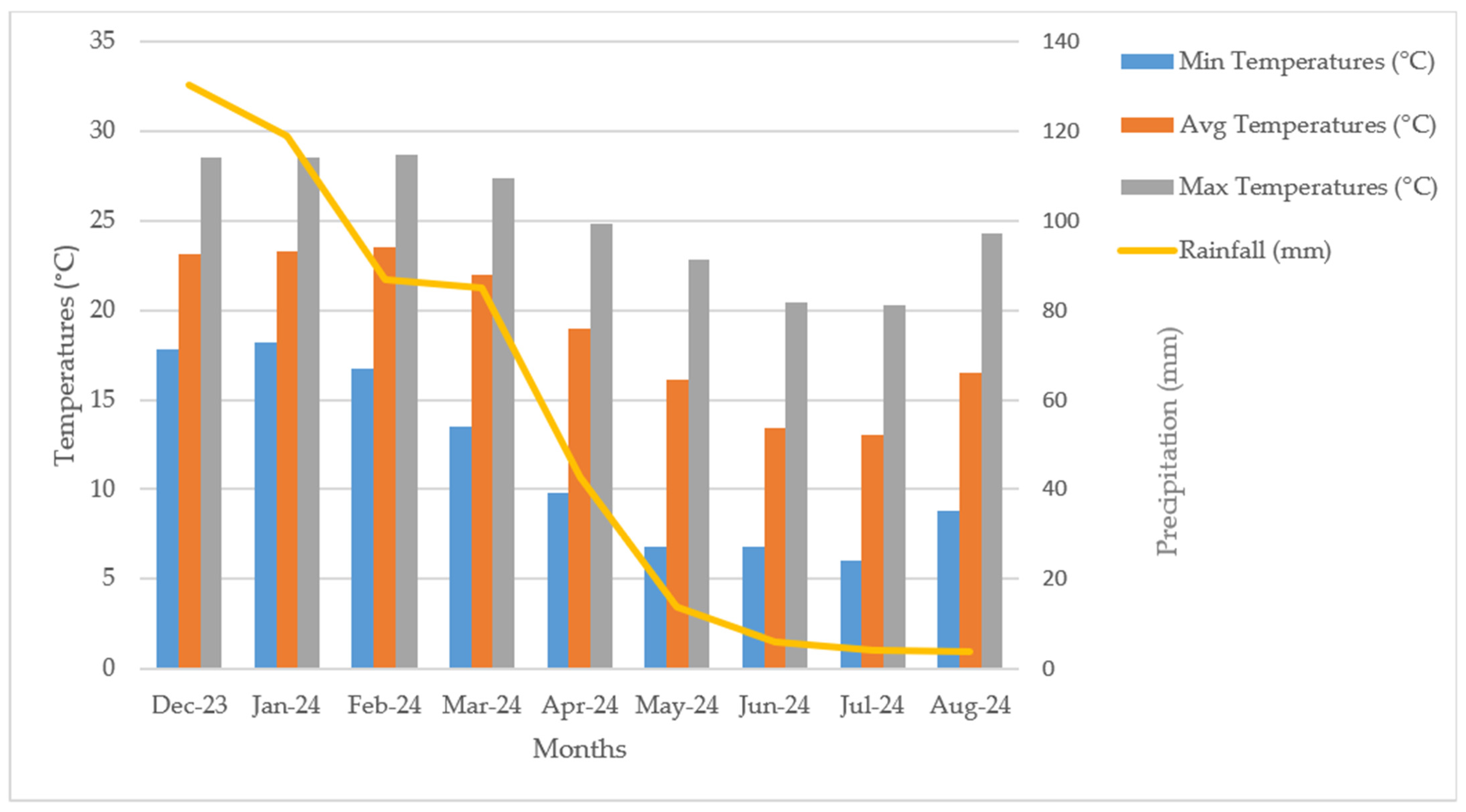
The micro-meteorological/mini-weather station was used to measure various weather parameters, including minimum, maximum, and average temperatures and precipitation. Figure 3 illustrates the weather conditions during the study period at Towoomba Research Station. The highest rainfall (130 mm) was experienced in December 2023, at the start of the experiment, whilst the lowest rainfall was observed in June 2024 (6.1 mm), July 2024 (4.2 mm), and August 2024 (4 mm). Furthermore, the maximum temperatures (28.7 °C) were observed during February 2024. Additionally, the lowest minimum temperatures were observed during July 2024 (6 °C), followed by May and June, both at 6.8 °C.

3.2. Soil Composition Analysis

The soil at the experimental plot is classified as belonging to the Ventersdorp family of the Hutton form [16]. Table 1 summarizes the results of soil properties at the study site. The results show medium soil density and low (<0.05%) nitrogen levels. Additionally, very high (221 mg/L) potassium levels were observed; however, low (3 mg/L) phosphorus levels were also observed. Furthermore, magnesium (173 mg/L) and calcium (447 mg/L) levels were very high; nonetheless, low (1.2 mg/L) zinc levels were observed.

3.3. Germination Percentage of C. sativa During Early and Late Planting Seasons

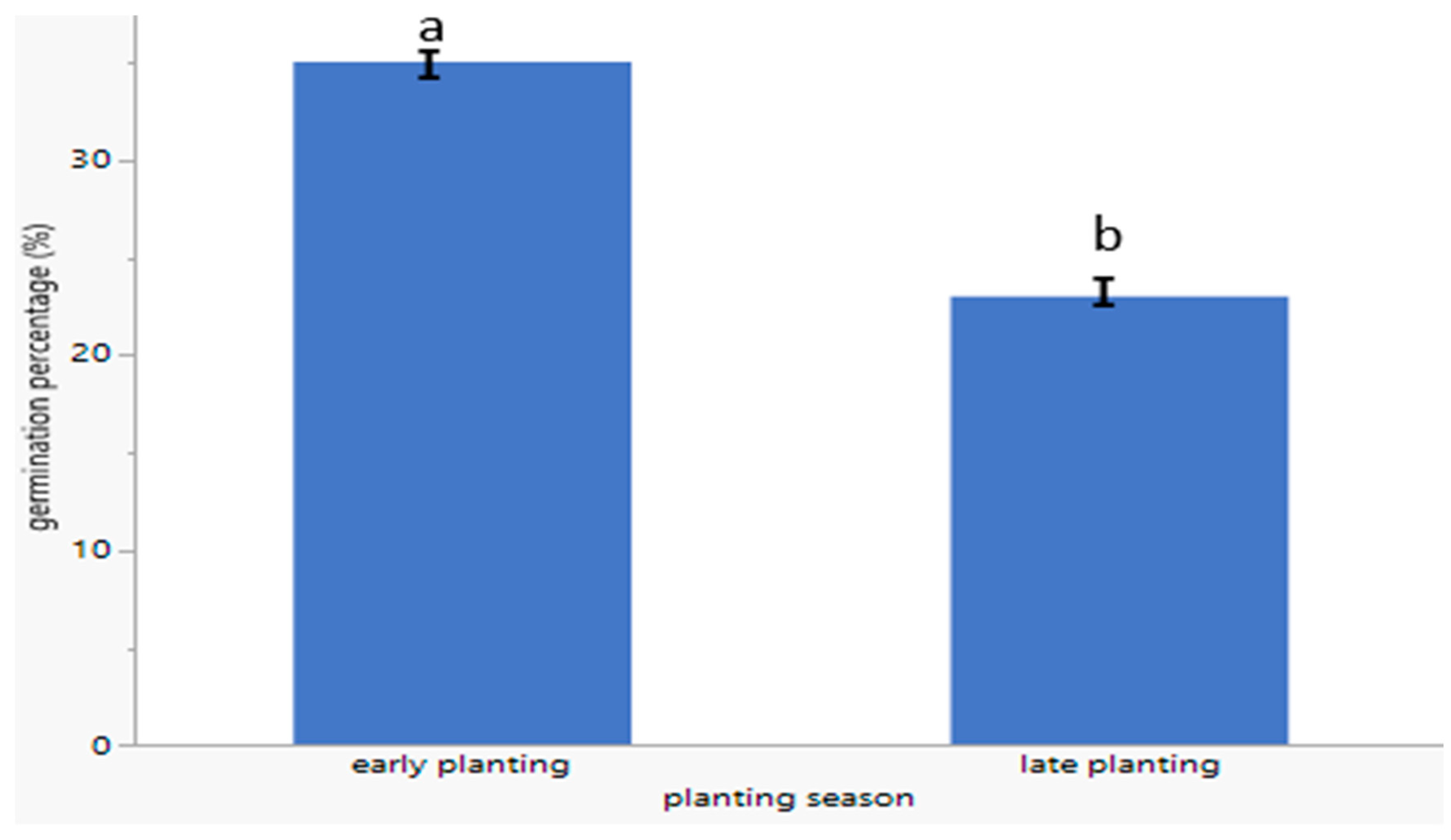
The germination percentage of C. sativa varied significantly (p < 0.05) at early and late planting seasons, ranging from 36% and 23% as presented in Figure 4. The highest germination percentage was during the early planting season, whilst the lowest germination percentage was during the late planting season.

3.4. The Response of Plant Height to Early and Late Planting Seasons

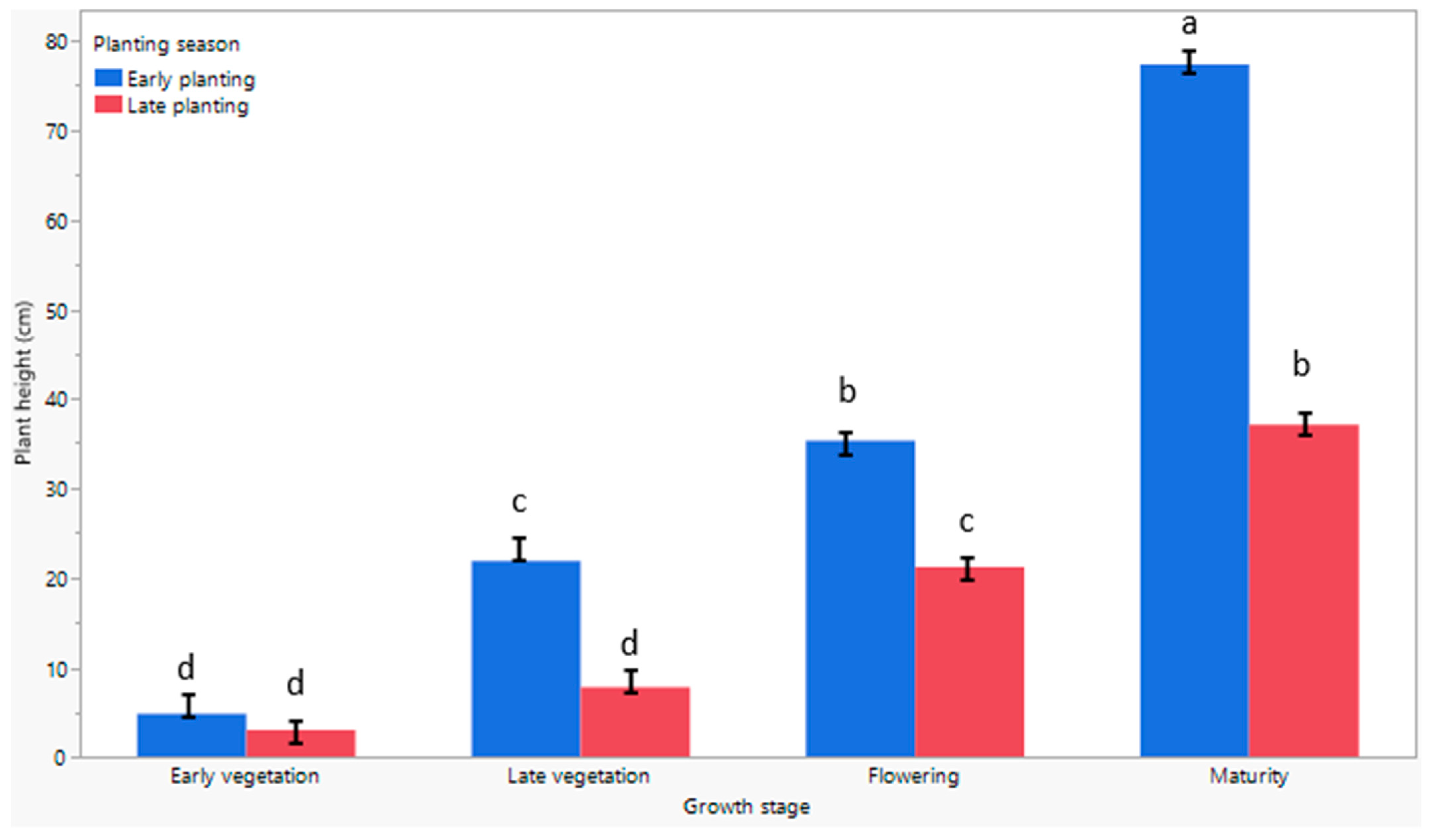
Plant height of C. sativa varied significantly (p < 0.05) among different growth stages. For instance, at the early planting season, plant height was highest across the following growth stages: late vegetation (21.92 cm), flowering (35.34 cm), and with 77.31 cm at maturity, which was significantly (p < 0.05) different from the plant height at maturity during the late planting season (37.10 cm), as shown in Figure 5. However, there was no significant difference (p > 0.05) in plant height between late and early planting seasons at the early vegetation stage.

3.5. The Number of Leaves of C. sativa Responds to Early and Late Planting Seasons

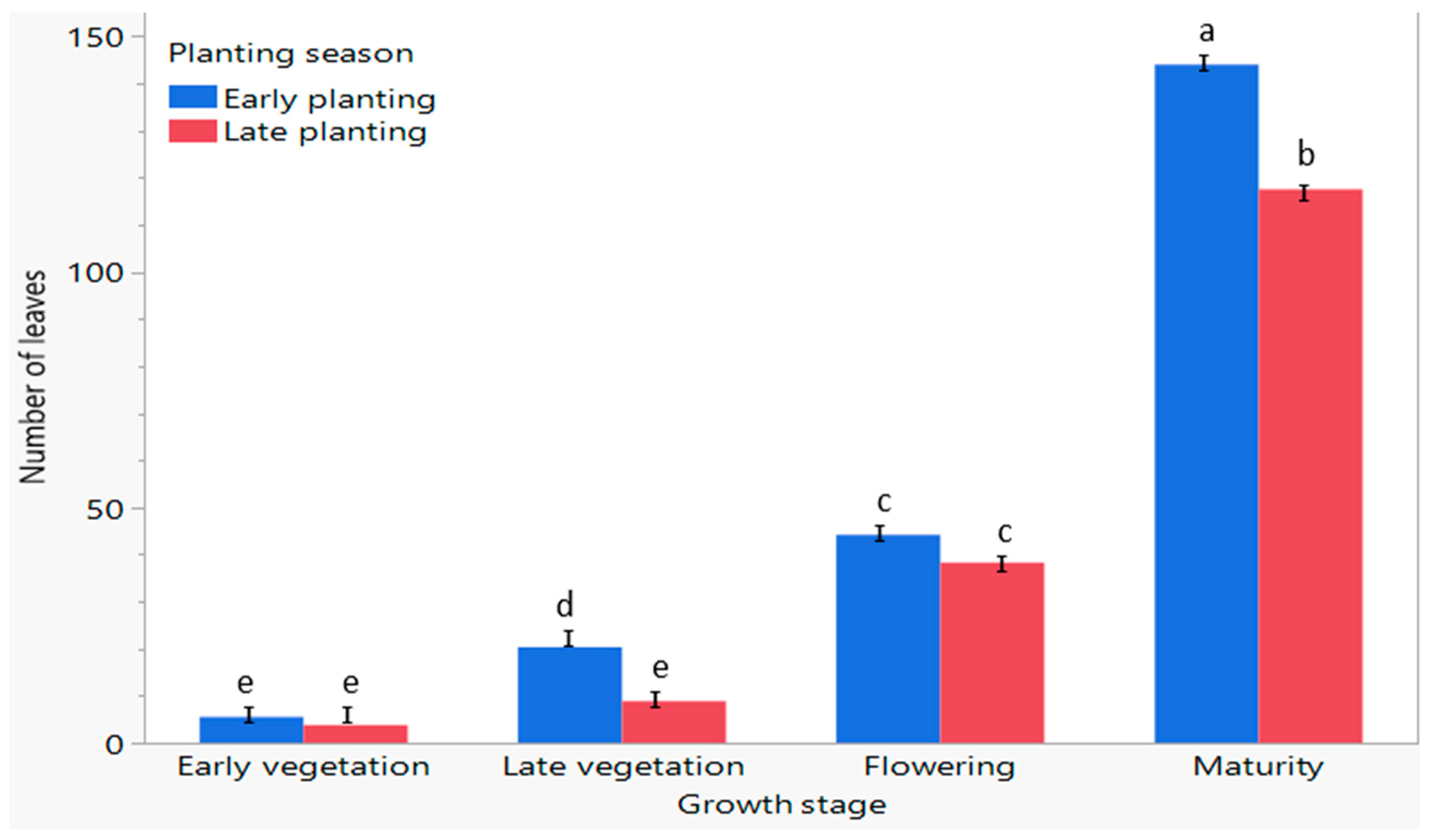
There was a significant difference (p < 0.05) in the number of leaves at various growth stages during early and late planting seasons. In total, 144 leaves were recorded at the maturity growing stage during early summer, followed by 118 leaves at the maturity stage in the late planting season. There was a significant difference (p < 0.05) in the number of leaves during the late vegetative stage; early planting season had a higher number of leaves (20) compared to late planting (9). Furthermore, there was no significant difference (p > 0.05) in the number of leaves at the early vegetative stage and flowering stages during the early and late planting stages (see Figure 6).

3.6. The Influence of Planting Season on the Leaf Area of C. sativa at Different Growth Stages

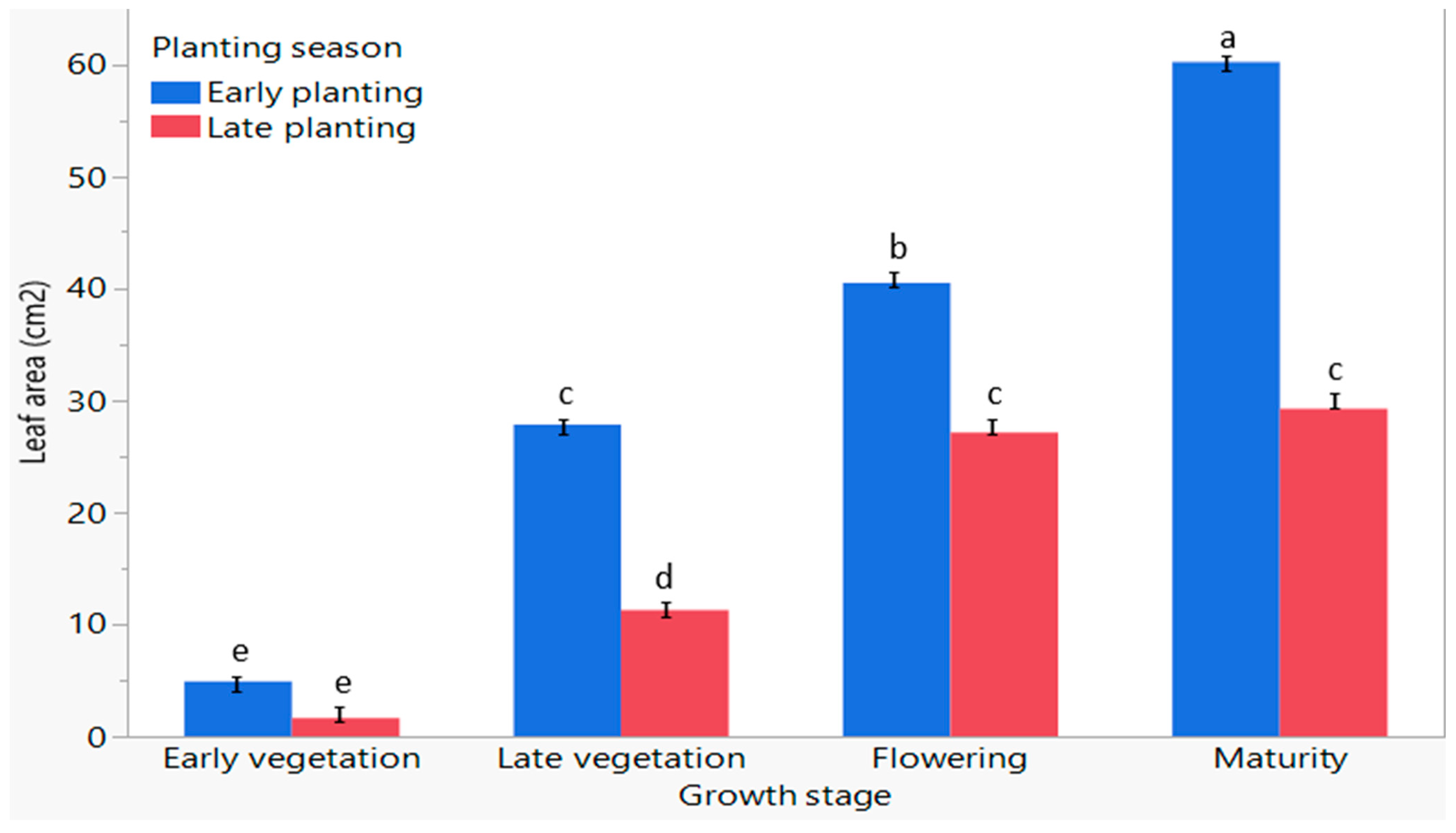
Leaf area varied significantly (p < 0.05) among growth stages at early and late planting seasons. For instance, the lowest (1.69 cm2) was recorded on early vegetation, followed by 40.49 cm2 at the flowering stage, while the highest (60.18 cm2) was during maturity at late planting season. On the contrary, there was no significant difference between leaf area at maturity during the late planting season and flowering during the early planting season, as indicated in Figure 7.

3.7. The Response of the Canopy Cover of the C. sativa Plant to Early and Late Planting Seasons at Different Growth Stages

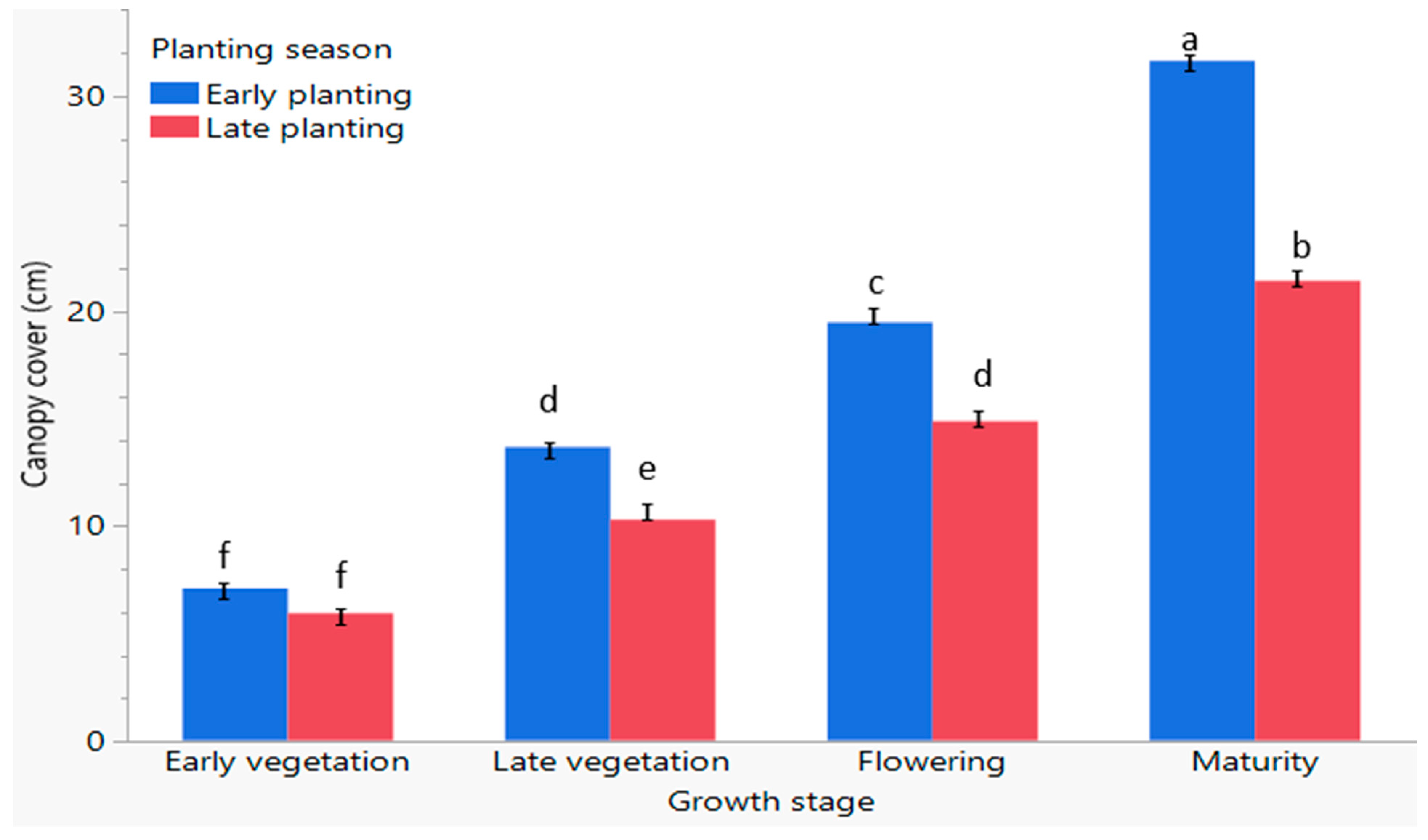
There was a significant difference (p < 0.05) between canopy cover at late vegetation, flowering, and maturity at early and late planting seasons. The widest (31.65 cm) canopy cover was observed at the maturity growing stage in the early planting season, whilst 21.41 cm was recorded at the late planting season. The least (5.92 cm) canopy cover was observed at the early vegetation stage during the late planting season (see Figure 8).

3.8. The Influence of Planting Season on the Number of Branches of C. sativa at Different Growth Stages

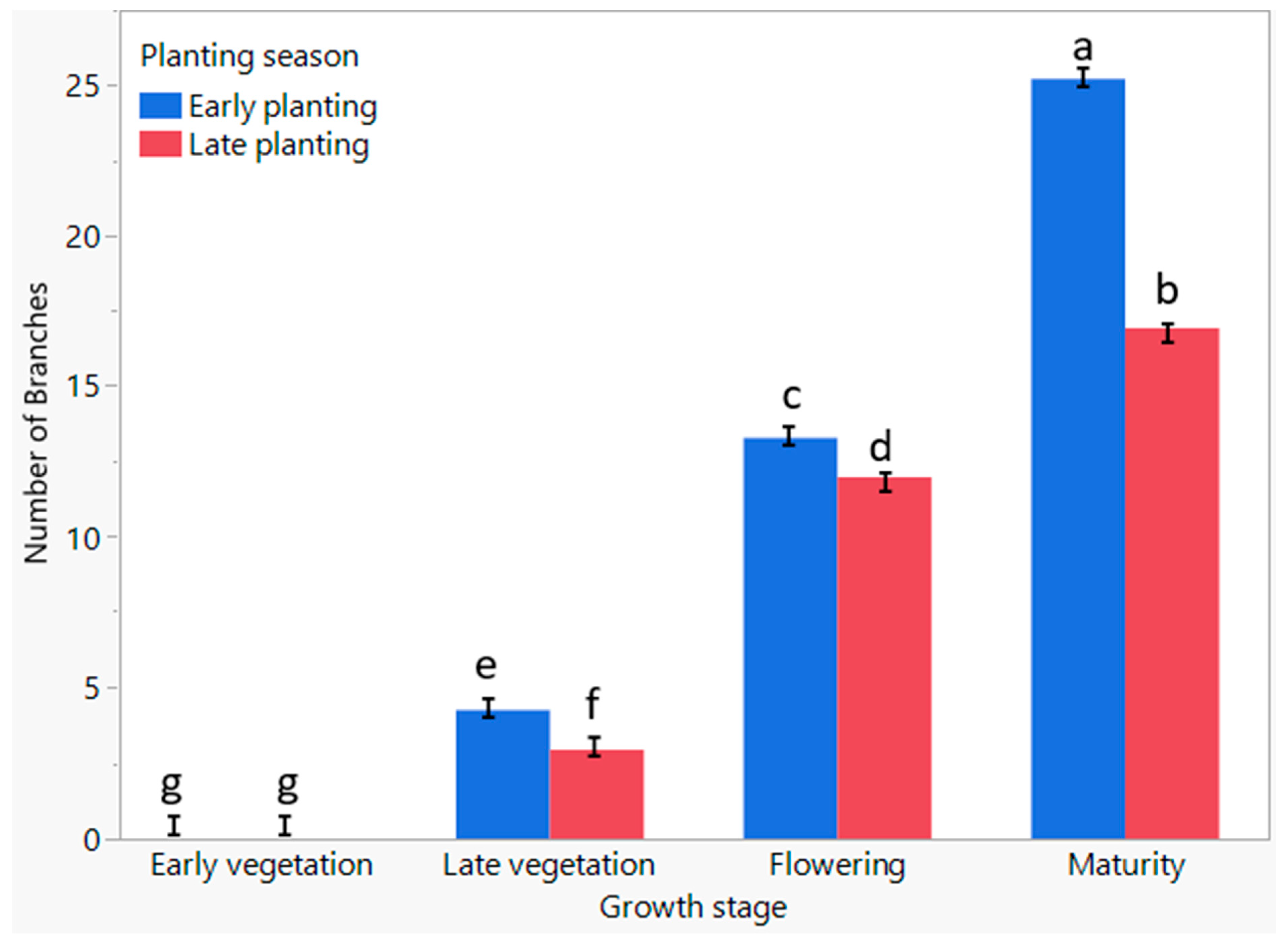
Figure 9 shows the data on the influence of planting season on the number of branches of C. sativa at various growth stages. There was no development of branches at the early vegetative stage during early and late planting. The highest (25) number of branches was observed at maturity during the early planting season, followed by maturity at late planting season (16.90 branches). However, branches developed at the late vegetative stage in both early and late planting seasons. Furthermore, there was a significant (p < 0.05) difference in the number of branches at the late vegetative stage.

3.9. Assessment of the Influence of Planting Season on Chlorophyll Content of C. sativa at Different Growth Stages

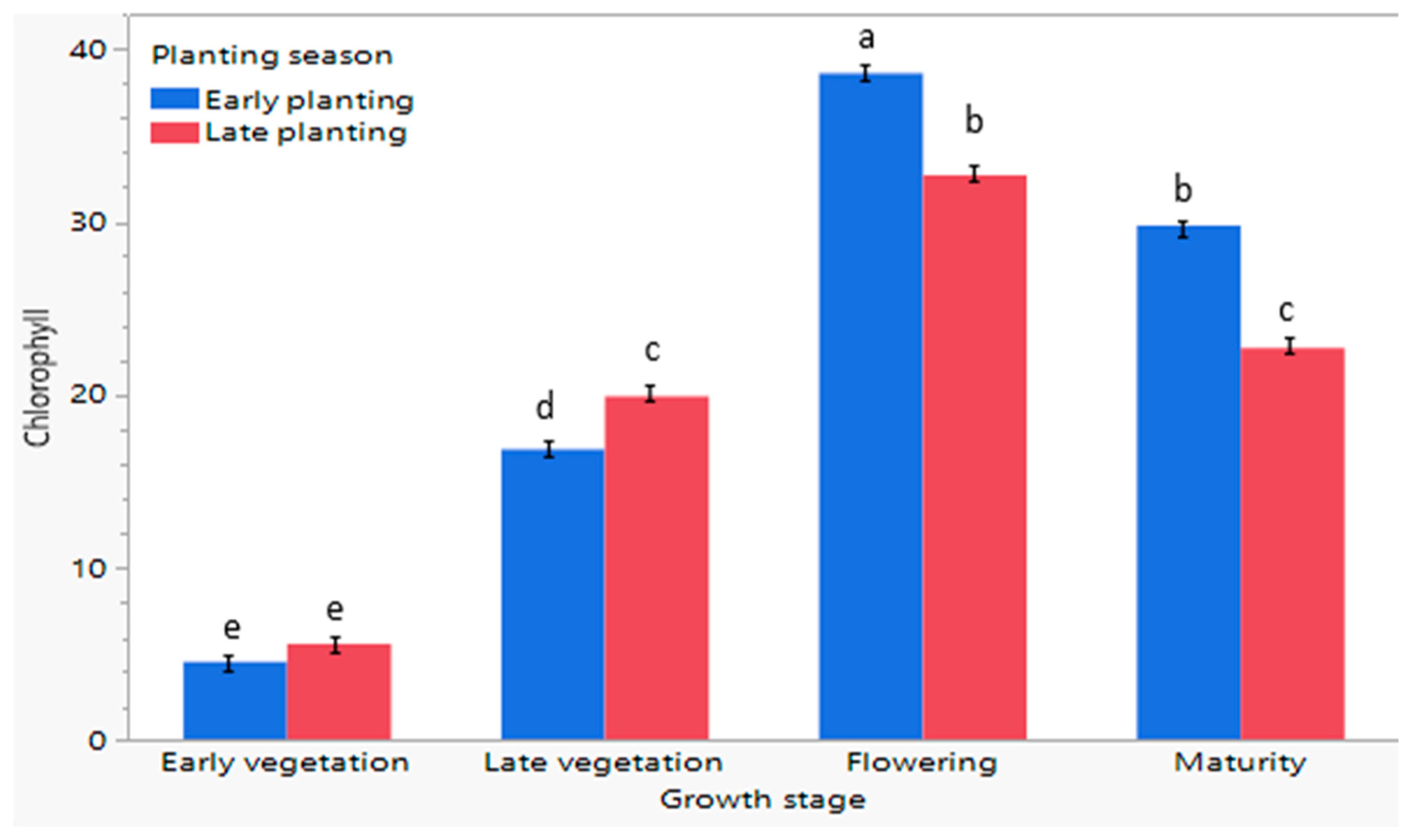
The data on the chlorophyll content in C. sativa leaves during early and late planting seasons at various growth stages are presented in Figure 10. The chlorophyll content was highest (38.62 nm) at the flowering stage during the early planting season. Furthermore, there was a significant difference (p < 0.05) in the chlorophyll content at the flowering stage during early and late planting seasons. The lowest (4.59 nm) chlorophyll content was observed during the early vegetative growth stage; moreover, there was no significant difference (p < 0.05) between late and early planting seasons.

3.10. Evaluation of the Influence of Planting Season on Aboveground Biomass Production of C. sativa at Flowering and Maturity Growth Stages at Different Planting Dates

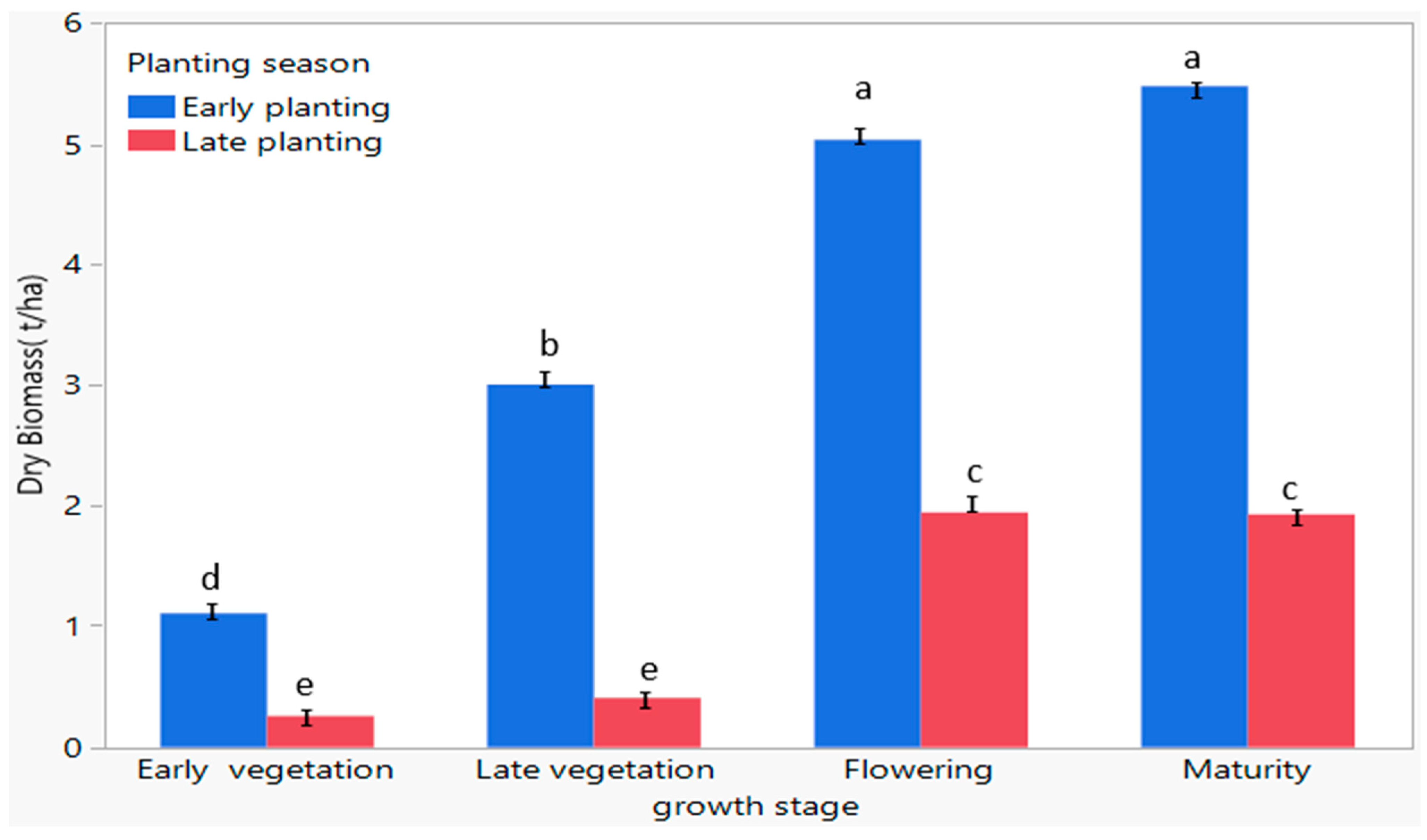
The aboveground biomass production over two planting seasons of C. sativa at various planting seasons is presented in Figure 11. The highest biomass production (5.48 t ha−1) was observed at early planting season, followed by early planting at the flowering stage (5.03 t ha−1). There was a significant difference (p < 0.05) in aboveground biomass production at early and late planting seasons at the maturity growth stage. The lowest aboveground biomass production was observed at late planting during early vegetation (0.26 t ha−1), followed by late planting season during late vegetation (0.4 t ha−1). Furthermore, there is a significant difference (p < 0.05) between biomass production at early vegetation during early and late planting.

4. Discussion

Nutrients are the fundamental elemental soil constituents necessary for plant growth and development. A shortage of certain nutrients, such as N, P, and K, causes specific and recognizable symptoms in plants, such as chlorosis, purplish colorization, stunted growth, and browning of leaf edges [24]. These nutrients are frequently found in the soil as the respective minerals as macronutrients and micronutrients, based on the essential requirements of plants [34,35,36]. Additionally, according to Kumari et al. [37], the quantities of micronutrients in plants can fluctuate significantly based on various factors, including plant species, genotype, growing conditions, and the different organs and tissues within the same plant species.
The results of the current study showed that Hutton soils exhibit low nutrient levels. These findings are consistent with findings of the study of Ntalo et al. [15], which was performed in the same locality of Bela-Bela Municipality (see Figure 1), indicating that macro and micronutrients such as N, P, Zn, and Cu found in the Hutton soils are deficient to support plant growth. Furthermore, the results are in agreement with the findings by Mokgolo and Mzezelwa [38] that South African soils are phosphorus deficient, with levels that are less than 8 mg/L across different regions in the country. Additionally, the current study had adequate potassium levels, which are within the range of 109–340 mg/L as previously recorded by Van Biljon et al. [39]. According to Shrivastav et al. [36], the availability of these soil nutrients depends on soil pH; the current study observed soil pH of 4, 03 which was slightly acidic. The slight acidity of the soil could be a result of the leaching of nutrients over time and tillage practices that oxidize soil organic matter. Moreover, the slight acidity could be attributed to the high drainage of Hutton soils. Attention should be given to soil pH to ensure the availability and absorption of nutrients, ensuring adequate plant growth and development.
There was a significant difference (p < 0.05) between germination percentage during early and late planting seasons; however, it was observed that both germination percentages were low, which could be associated with foraging by wild birds, as well as soil-related factors such as poor drainage. According to Geneve et al. [40], the germination percentage of C. sativa ranges from 89.5 to 91.5% within 7 days of planting. In addition, the study area is characterized by low soil carbon and low nitrogen concentration and is slightly acidic (see Table 1). However, studies conducted observed that slightly acidic soils do not negatively influence the germination percentage of seeds [41,42]. More studies on the influence of soil pH on the germination of C. sativa seeds require further investigation.
A study by Naim-Feil et al. [43] indicated that genetic variations influence the plant height, and the increase in plant height subsequently leads to an increase in other agronomic parameters of C. sativa. The current study observed the highest plant height of 77.31 cm, which was low compared to findings from the C. sativa study conducted by Papastylianou et al. [44] in Greece. However, the findings from this study are consistent with a recent study conducted by Zenani [45] in the Eastern Cape, South Africa, which indicated that the height of the C. sativa plant planted in an open field can reach up to 80 cm during the early planting season. The discrepancies in the plant height can be attributed to differences in the location, temperature, annual rainfall, and the genetic make-up of C. sativa [46]. The increased plant height can be attributed to high rainfall (Figure 5) during the early growing season, which confirms that C. sativa thrives when there is adequate availability of water.
Simultaneously, the current study observed the number of leaves and leaf area of C. sativa over two planting seasons. A study by Islam et al. [25] indicated that a higher number of leaves and branches will make the hemp plants shorter in size with narrow leaves and vice versa. On the contrary, the results of the current study showed that the highest mean number of leaves of C. sativa was 144, and the leaf area was 60.18 cm2, which was consistent with the plant height. The increase in the number of leaves and leaf area can be attributed to long photoperiods during the early planting season as well as overall plant health. According to Bhatia et al. [47], the number of leaves and leaf area can be closely associated with essential physiological functions, including water and nutrient absorption, carbon assimilation, and stress responses. Additionally, a recent study by Balant et al. [48] reported that leaf characteristics frequently serve as indications of plant health, growth vigor, and production in agricultural and horticultural applications. The findings of the current study indicate that C. sativa can be planted during the early planting season for the maximum number of leaves and leaf area.
The results of the response of canopy cover and the number of branches of C. sativa planting season at various growth stages exhibit comparable patterns. The widest canopy cover was 31.65 cm, while the highest number of branches was 25, which were observed at early planting season during the maturity stages. The steady increase in the number of branches and canopy cover was consistent with the plant height, number of leaves, and leaf area. The findings are in agreement with those of Linder et al. [7] that the early planting season results in wider canopy cover in C. sativa.
Chlorophyll content is critical for measuring the quality of C. sativa leaves since it influences photosynthetic ability and plant growth [49]. According to Ahsan et al. [50], the chlorophyll content of C. sativa is generally influenced by photoperiod, age of the plant, and temperature. The results from the current study showed that the chlorophyll content was highest (38.62 nm) during the flowering stage during the early planting season. On the contrary, a previous study by Saastamoinen et al. [51], which was conducted in Finland, reported that chlorophyll content was high (58.82 nm) during late maturity.
The results from the current study indicated that C. sativa produced biomass of 5.48 t ha−1 during the early planting season, which is consistent with the plant height, number of leaves, canopy cover, and number of branches. The current findings are consistent with the biomass production of 3.88 t ha−1 reported in the recent study by Kołodziej et al. [52]. Furthermore, the findings are in agreement with the findings of Linder et al. [7] that planting early in summer, when photoperiods are longer, increases C. sativa biomass production. The current study confirms the findings of Sandhu et al. [8] that agronomic parameters are impacted by the planting season and the variety of C. sativa plant; however, due to the stringent restrictions on the C. sativa plant in South Africa, scientific studies on agronomic parameters of C. sativa are still lagging. The findings from the current study lay the groundwork and foundation for future investigations to advance Cannabis R&D in South Africa and the African continent.

5. Conclusions

The present study showed that with C. sativa, agronomic parameters such as the plant height, number of leaves, leaf area, canopy cover, the number of branches, chlorophyll content, and biomass production performed better at maturity, in the early planting season. However, the study showed poor germination of C. sativa at both planting seasons. For this reason, agronomic parameters and biomass production are influenced by growth stage and planting season. The study recommends that C. sativa be planted during the early planting season for greater agronomic performance and biomass production. Further research on the viability of C. sativa seeds, to ensure higher seed germination percentage and/or rate and seedling development in the open field, is required. Consideration of germinating C. sativa seeds first, preferably under a controlled environment such as a greenhouse, then transplanting them to the field when seedlings are vigorous, is recommended. Additionally, further studies are required to determine how best C. sativa could be integrated into the feeding and supplementation program of target farmers to improve their sheep production.

Author Contributions

Conceptualization, L.E.N., N.N. and T.N.; methodology, L.E.N.; validation, L.E.N. and N.N.; investigation, T.N.; resources, L.E.N.; data curation, T.N.; writing—original draft preparation, T.N.; writing—review and editing, L.E.N., N.N. and T.N.; visualization, L.E.N. and N.N.; supervision, L.E.N. and N.N.; project administration, L.E.N.; funding acquisition, T.N. All authors have read and agreed to the published version of the manuscript.

Funding

The study was funded by the Unisa M and D bursary, Reference#58547444.

Data Availability Statement

The data generated for this study are available from the corresponding author upon formal request.

Acknowledgments

The authors want to express their sincere gratitude to the UNISA M &D Bursary for the financial support. We would like to thank Mantlo Richard Ngwepe for his assistance with soil analysis. We acknowledge the assistance of Dominique Matemane, Charles Talane, and Ondwela Welawela during data collection. We also acknowledge the use of the Grammarly app, which helps with punctuation and spelling.

Conflicts of Interest

The authors declare no conflicts of interest.

References

  1. Visković, J.; Zheljazkov, V.D.; Sikora, V.; Noller, J.; Latković, D.; Ocamb, C.M.; Koren, A. Industrial hemp (Cannabis sativa L.) agronomy and utilization: A review. Agronomy 2023, 13, 931. [Google Scholar] [CrossRef]
  2. Ćaćić, M.; Perčin, A.; Zgorelec, Ž.; Kisić, I. Evaluation of heavy metals accumulation potential of hemp (Cannabis sativa L.). J. Cent. Eur. Agric. 2019, 20, 700–711. [Google Scholar] [CrossRef]
  3. Amaducci, S.; Scordia, D.; Liu, F.H.; Zhang, Q.; Guo, H.; Testa, G.; Cosentino, S.L. Key cultivation techniques for hemp in Europe and China. Ind. Crops Prod. 2015, 68, 2–16. [Google Scholar] [CrossRef]
  4. Crini, G.; Lichtfouse, E.; Chanet, G.; Morin-Crini, N. Traditional and new applications of hemp. In Sustainable Agriculture Reviews 42: Hemp Production and Applications; Springer: Cham, Switzerland, 2020; pp. 37–87. [Google Scholar]
  5. Bridgeman, M.B.; Abazia, D.T. Medicinal Cannabis: History, pharmacology, and implications for the acute care setting. Phar. Ther. 2017, 42, 180. [Google Scholar]
  6. Konvalina, P.; Neumann, J.; Hoang, T.N.; Bernas, J.; Trojan, V.; Kuchař, M.; Lošák, T.; Varga, L. Effect of Light Intensity and Two Different Nutrient Solutions on the Yield of Flowers and Cannabinoids in Cannabis sativa L. Grown in Controlled Environment. Agronomy 2024, 14, 2960. [Google Scholar] [CrossRef]
  7. Linder, E.R.; Young, S.; Li, X.; Henriquez Inoa, S.; Suchoff, D.H. The effect of transplant date and plant spacing on biomass production for floral hemp (Cannabis sativa L.). Agronomy 2023, 12, 1856. [Google Scholar] [CrossRef]
  8. Sandhu, S.S.; Chiluwal, A.; Brym, Z.T.; Irey, M.; McCray, J.M.; Odero, D.C.; Daroub, S.H.; Sandhu, H.S. Evaluating growth, biomass, and cannabinoid profiles of floral hemp varieties under different planting dates in organic soils of Florida. Agronomy 2022, 12, 2845. [Google Scholar] [CrossRef]
  9. Kakabouki, I.; Kousta, A.; Folina, A.; Karydogianni, S.; Zisi, C.; Kouneli, V.; Papastylianou, P. Effect of fertilization with urea and inhibitors on growth, yield, and CBD concentration of hemp (Cannabis sativa L.). Sustainability 2021, 13, 2157. [Google Scholar] [CrossRef]
  10. Tang, K.; Wang, J.; Yang, Y.; Deng, G.; Yu, J.; Hu, W.; Guo, L.; Du, G.; Liu, F. Fiber hemp (Cannabis sativa L.) yield and its response to fertilization and planting density in China. Ind. Crops Prod. 2022, 177, 114542. [Google Scholar] [CrossRef]
  11. Ahmadi, F.; Kallinger, D.; Starzinger, A.; Lackner, M. Hemp (Cannabis sativa L.) Cultivation: Chemical Fertilizers or Organic Technologies, a Comprehensive Review. Nitrogen 2024, 5, 624–654. [Google Scholar] [CrossRef]
  12. Blandinières, H.; Amaducci, S. Agronomy and ecophysiology of hemp cultivation. In Cannabis/Hemp for Sustainable Agriculture and Materials; Springer: Singapore, 2022; pp. 89–125. [Google Scholar]
  13. Monyela, S.; Kayoka, P.N.; Ngezimana, W.; Nemadodzi, L.E. Evaluating the metabolomic profile and anti-pathogenic properties of Cannabis species. Metabolites 2024, 14, 253. [Google Scholar] [CrossRef]
  14. Ntsoane, T.; Nemukondeni, N.; Nemadodzi, L.E. A Systematic Review: Assessment of the Metabolomic Profile and Anti-Nutritional Factors of Cannabis sativa as a Feed Additive for Ruminants. Metabolites 2024, 14, 712. [Google Scholar] [CrossRef]
  15. Ntalo, M.; Ravhuhali, K.E.; Moyo, B.; Mmbi, N.E.; Mokoboki, K.H. Physical and chemical properties of the soils in selected communal property associations of South Africa. PeerJ 2022, 10, 13960. [Google Scholar] [CrossRef]
  16. Soil Classification Working Group. Memoirs of the Natural Agricultural Resources of South Africa 15; Department of Agricultural Development: Pretoria, South Africa, 1991. [Google Scholar]
  17. Mpati, T.M. Satellite-Based Long-Term Evaluation of Bush Encroachment on Sourish-Mixed Veld at the Towoomba Research Station in Bela-Bela, Limpopo Province. Ph.D. Dissertation, University of Limpopo, Limpopo, South Africa, 2015. [Google Scholar]
  18. Mthimunye, L.M.; Managa, G.M.; Nemadodzi, L.E. The influence of Lablab Purpureus growth on nitrogen availability and mineral composition concentration in nutrient-poor savanna soils. Agronomy 2023, 13, 622. [Google Scholar] [CrossRef]
  19. van Reeuwijk, L.P. Procedures for Soil Analysis, 6th ed.; Technical Paper 9; ISRIC: Wageningen, The Netherlands, 2002; p. 81. [Google Scholar]
  20. Prikner, P.; Lachnit, F.; Dvorak, F. A new soil core sampler for the determination of bulk density in soil profile. Plant Soil Environ. 2004, 50, 250–256. [Google Scholar] [CrossRef]
  21. Rayment, G.E.; Higginson, F.R. Australian Laboratory Handbook of Soil and Water Chemical Methods; Inkata Press Pty Ltd.: Victoria, Australia, 1992. [Google Scholar]
  22. Anderson, J.M.; Ingram, J.S.I. Microbial biomass. In Tropical Soil Biology and Fertility: A Handbook of Methods, 2nd ed.; Anderson, J.M., Ingram, J.S.I., Eds.; CAB International: Wallingford, UK, 1993; pp. 68–70. ISBN 0-85198-821-0. [Google Scholar]
  23. Motshekga, L.M. Productivity and Physiological Responses of Winter Annual Forage Legumes to Planting Date and Short-Term Rotation with Forage Sorghum for Sheep Production Under a No-Till System in Limpopo Province. Ph.D. Dissertation, University of Limpopo, Limpopo, South Africa, 2022. [Google Scholar]
  24. Stringer, C.E. Evaluating Hemp (Cannabis sativa) as a Forage Based on Yield, Nutritive Analysis, and Morphological Composition. Master’s Thesis, University of Kentucky, Lexington, KY, USA, 2018; p. 104. [Google Scholar]
  25. Islam, M.J.; Ryu, B.R.; Azad, M.O.K.; Rahman, M.H.; Rana, M.S.; Kang, C.W.; Lim, J.D.; Lim, Y.S. Comparative growth, photosynthetic pigments, and osmolytes analysis of hemp (Cannabis sativa L.) seedlings under an aeroponics system with different LED light sources. Horticulture 2021, 7, 239. [Google Scholar] [CrossRef]
  26. Jeff, K.; Williams, D.W. Hemp agronomy-grain and fiber production. In Industrial Hemp as a Modern Commodity Crop; American Society of Anesthesiologists: Schaumburg, IL, USA, 2019; pp. 58–72. [Google Scholar]
  27. Khanal, S.; Khanal, S.; Koirala, S.; Katel, S.; Mandal, H.R. The effectiveness of seed priming in improving Okra germination and seedling growth. Asian J. Adv. Agric. Res. 2022, 18, 29–34. [Google Scholar] [CrossRef]
  28. Chadha, A.; Florentine, S.K.; Chauhan, B.S.; Long, B.; Jayasundera, M. Influence of soil moisture regimes on growth, photosynthetic capacity, leaf biochemistry, and reproductive capabilities of the invasive agronomic weed, Lactuca serriola. PLoS ONE 2019, 14, e0218191. [Google Scholar] [CrossRef]
  29. Mpanza, T.D.E. Biomass Yield and Nutritive Value of Stylosanthes scabra Accessions as a Forage Source for Goats; University of Pretoria: Pretoria, South Africa, 2015. [Google Scholar]
  30. Ribeiro, F.N.S.; de Assis, R.M.A.; Leite, J.J.F.; Miranda, T.F.; Alves, E.; Bertolucci, S.K.V.; Pinto, J.E.B.P. The cultivation of Lippia dulcis under ChromatiNet induces changes in vegetative growth, anatomy, and essential oil chemical composition. S. Afr. J. Bot. 2024, 174, 393–404. [Google Scholar] [CrossRef]
  31. Managa, G.M.; Nemadodzi, L.E. Comparison of Agronomic Parameters and Nutritional Composition on Red and Green Amaranth Species Grown in Open Field Versus Greenhouse Environment. Agriculture 2023, 13, 685. [Google Scholar] [CrossRef]
  32. Bazzo, C.O.G.; Kamali, B.; Hütt, C.; Bareth, G.; Gaiser, T. A Review of Estimation Methods for Aboveground Biomass in Grasslands Using UAV. Remote Sens. 2023, 15, 639. [Google Scholar] [CrossRef]
  33. Marabesi, A.O. Influence of Cadmium Exposure on Industrial Hemp Grown for Cannabinoid Production (Cannabis sativa L.). Ph.D. Dissertation, University of Georgia, Athens, GA, USA, 2023. [Google Scholar]
  34. Ghimirey, V.; Chaurasia, J.; Marahatta, S. Plant Nutrition Disorders: Insights from Clinic Analyses and Their Impact on Plant Health. Agric. Ext. Dev. Ctries. 2024, 2, 9–17. [Google Scholar] [CrossRef]
  35. Rao, I.M. Essential plant nutrients and their functions. Cent. Int. Agric. Trop. 2009, 209, 36. [Google Scholar]
  36. Shrivastav, P.; Prasad, M.; Singh, T.B.; Yadav, A.; Goyal, D.; Al, A.; Dantu, P.K. Role of nutrients in plant growth and development. In Contaminants in Agriculture: Sources, Impacts and Management; Springer International Publishing: Cham, Switzerland, 2020; pp. 43–59. [Google Scholar]
  37. Kumari, A.; Sharma, B.; Singh, B.N.; Hidangmayum, A.; Jatav, H.S.; Chandra, K.; Singhal, R.K.; Sathyanarayana, E.; Patra, A.; Mohapatra, K.K. Physiological mechanisms and adaptation strategies of plants under nutrient deficiency and toxicity conditions. In Plant Perspectives on Global Climate Change; Academic Press: London, UK, 2022; pp. 173–194. [Google Scholar]
  38. Mokgolo, M.J.; Mzezewa, J. Baseline study of soil nutrient status in smallholder farms in Limpopo province of South Africa. S. Afr. J. Agric. Ext. 2022, 50, 51–65. [Google Scholar] [CrossRef]
  39. Van Biljon, J.J.; Fouche, D.S.; Botha, A.D.P. Threshold values and sufficiency levels for potassium in maize producing sandy soils of South Africa. S. Afr. J. Plant Soil 2008, 25, 65–70. [Google Scholar] [CrossRef]
  40. Geneve, R.L.; Janes, E.W.; Kester, S.T.; Hildebrand, D.F.; Davis, D. Temperature limits for seed germination in industrial hemp (Cannabis sativa L.). Crops 2022, 2, 415–427. [Google Scholar] [CrossRef]
  41. Basto, S.; Thompson, K.; Rees, M. The effect of soil pH on the persistence of seeds of grassland species in soil. Plant Ecol. 2015, 216, 1163–1175. [Google Scholar] [CrossRef]
  42. Prabhudev, S.H.; Ravindra, K.N.; Supreetha, B.H.; Nithyanandha, K.R.; Dharmappa, K.K.; Giresha, A.S. Effect of soil pH on plant growth, phytochemical contents, and their antioxidant activity. J. Adv. Appl. Sci. Res. 2023, 5, 718. [Google Scholar]
  43. Naim-Feil, E.; Pembleton, L.W.; Spooner, L.E.; Malthouse, A.L.; Miner, A.; Quinn, M.; Polotnianka, R.M.; Baillie, R.C.; Spangenberg, G.C.; Cogan, N.O. The characterization of key physiological traits of medicinal cannabis (Cannabis sativa L.) as a tool for precision breeding. BMC Plant Biol. 2021, 21, 294. [Google Scholar] [CrossRef]
  44. Papastylianou, P.; Kakabouki, I.; Travlos, I. Effect of nitrogen fertilization on growth and yield of industrial hemp (Cannabis sativa L.). Not. Bot. Horti Agrobot. Cluj-Napoca 2018, 46, 197–201. [Google Scholar] [CrossRef]
  45. Zenani, K.T.S. Aspects of the Water Use of Cannabis sativa L. Under Dryland Cultivation in the Eastern Cape. Ph.D. Dissertation, Rhodes University, Makhanda, South Africa, 2024. [Google Scholar]
  46. Abdollahi, M.; Sefidkon, F.; Peirovi, A.; Calagari, M.; Mousavi, A. Assessment of the cannabinoid content from different varieties of Cannabis sativa L. during the growth stages in three regions. Chem. Biodivers. 2021, 18, 2100247. [Google Scholar] [CrossRef]
  47. Bhatia, N.; Runions, A.; Tsiantis, M. Leaf shape diversity: From genetic modules to computational models. Annu. Rev. Plant Biol. 2021, 72, 325–356. [Google Scholar] [CrossRef]
  48. Balant, M.; Garnatje, T.; Vitales, D.; Hidalgo, O.; Chitwood, D.H. Intra-leaf modeling of Cannabis leaflet shape produces leaf models that predict genetic and developmental identities. New Phytol. 2024, 243, 781–796. [Google Scholar] [CrossRef]
  49. Manggala, B.; Chaichana, C.; Kornievsky, M.; Fitriyah, N.S.; Wanison, R.; Syahputra, W.N.H. Chlorophyll content detection using a low-cost hyperspectral imaging in Cannabis sativa L. In Proceedings of the AIP Conference Proceedings, Rome, Italy, 28 December 2024; p. 3086. [Google Scholar]
  50. Ahsan, S.M.; Injamum-Ul-Hoque, M.; Shaffique, S.; Ayoobi, A.; Rahman, M.A.; Rahman, M.M.; Choi, H.W. Illuminating Cannabis sativa L.: The power of light in enhancing C. sativa growth and secondary metabolite production. Plants 2024, 13, 2774. [Google Scholar] [CrossRef] [PubMed]
  51. Saastamoinen, M.; Eurola, M.; Hietaniemi, V. Oil, protein, chlorophyll, cadmium, and lead contents of seeds in oil and fiber flax (Linum usitatissimum L.) cultivars and in oil hemp (Cannabis sativa L.) cultivar Finola cultivated in the south-western part of Finland. J. Food Chem. Nanotechnol. 2016, 2, 73–76. [Google Scholar] [CrossRef]
  52. Kołodziej, J.; Pudełko, K.; Mańkowski, J. Energy and biomass yield of industrial hemp (Cannabis sativa L.) as influenced by seeding rate and harvest time in Polish agro-climatic conditions. J. Nat. Fibers 2023, 20, 2159609. [Google Scholar] [CrossRef]
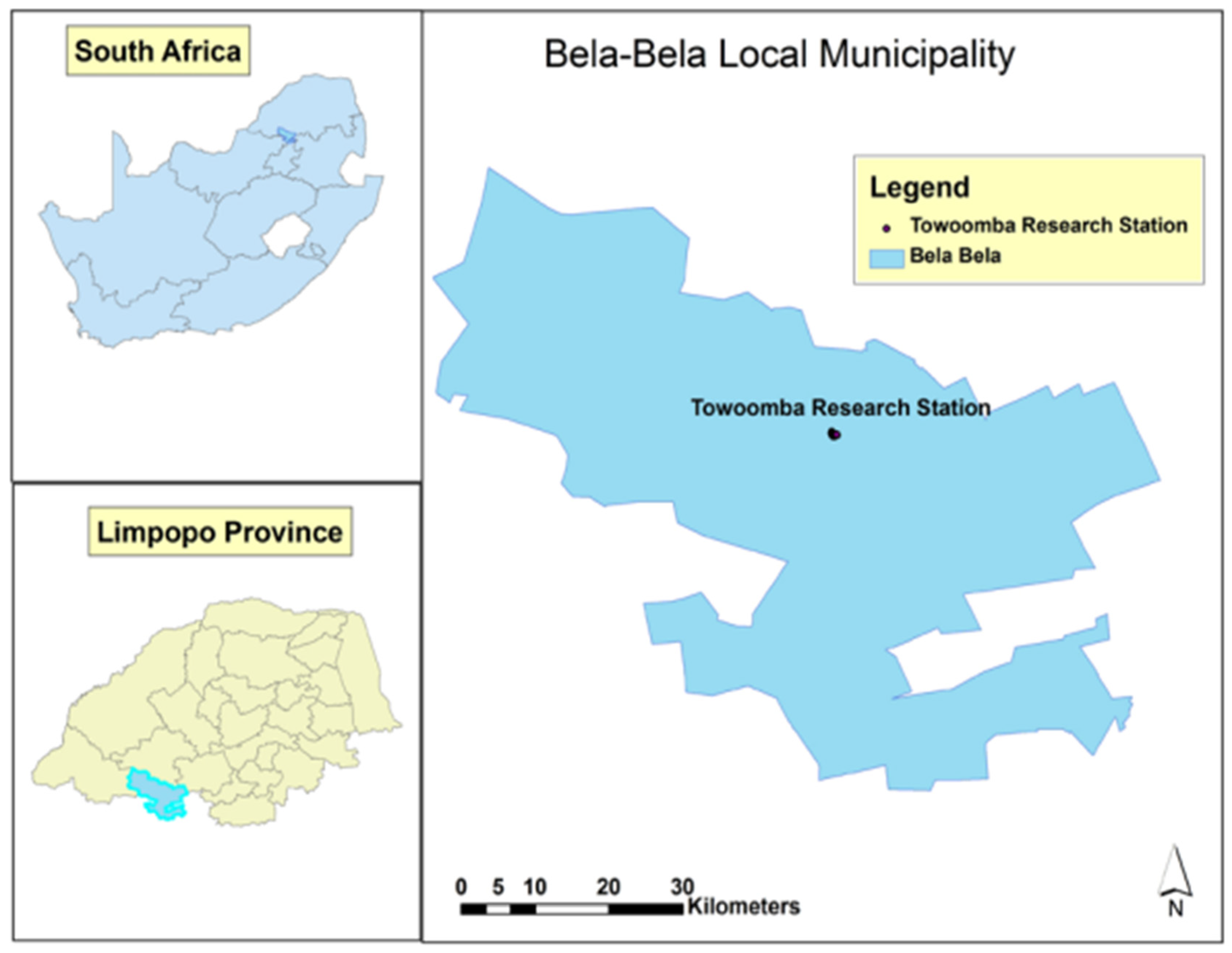
Figure 1. The locality map of Towoomba Research Station [17].
Agronomy 15 02844 g001
Figure 2. (A). Recording of Chlorophyll content. (B). Weighing of wet biomass data.
Agronomy 15 02844 g002
Figure 3. Meteorological data during the experiment at Towoomba Research Station.
Agronomy 15 02844 g003
Figure 4. Germination percentage of C. sativa seeds during different planting seasons. Means with different letters differ significantly (p < 0.05).
Agronomy 15 02844 g004
Figure 5. A graph showing the plant height response to planting season at different growth stages. Means with different letters differ significantly (p < 0.05).
Agronomy 15 02844 g005
Figure 6. A graph showing the number of leaves in response to the planting season at different growth stages. Means with different letters differ significantly (p < 0.05).
Agronomy 15 02844 g006
Figure 7. A graph showing the leaf area response to planting season at different growth stages. Means with different letters differ significantly (p < 0.05).
Agronomy 15 02844 g007
Figure 8. A graph showing the canopy cover response to planting season at different growth stages. Means with different letters differ significantly (p < 0.05).
Agronomy 15 02844 g008
Figure 9. A graph showing the number of branches in response to the planting season at different growth stages. Means with different letters differ significantly (p < 0.05).
Agronomy 15 02844 g009
Figure 10. A graph showing the chlorophyll response to the planting season at different growth stages. Means with different letters differ significantly (p < 0.05).
Agronomy 15 02844 g010
Figure 11. A graph showing the aboveground biomass to planting season at different growth stages. Means with different letters differ significantly (p < 0.05).
Agronomy 15 02844 g011
Table 1. Descriptive characteristics and properties of the soils at Towoomba Research Station.
Soil CharacteristicsHutton Soils
Sample density g/mL1.25
Nitrogen %˂0.05
Phosphorous mg/L 3
Potassium mg/L 221
Calcium mg/L 447
Magnesium mg/L 173
Zinc mg/L 1.2
Manganese mg/L 25
Copper mg/L 6
Exchange Acidity cmol/L 0.26
Total Cations cmol/L 4.48
Acid saturation6
pH (KCL)4.03
Organic Carbon %˂0.05
Clay %29
Disclaimer/Publisher’s Note: The statements, opinions and data contained in all publications are solely those of the individual author(s) and contributor(s) and not of MDPI and/or the editor(s). MDPI and/or the editor(s) disclaim responsibility for any injury to people or property resulting from any ideas, methods, instructions or products referred to in the content.