3.1. Tensile Test
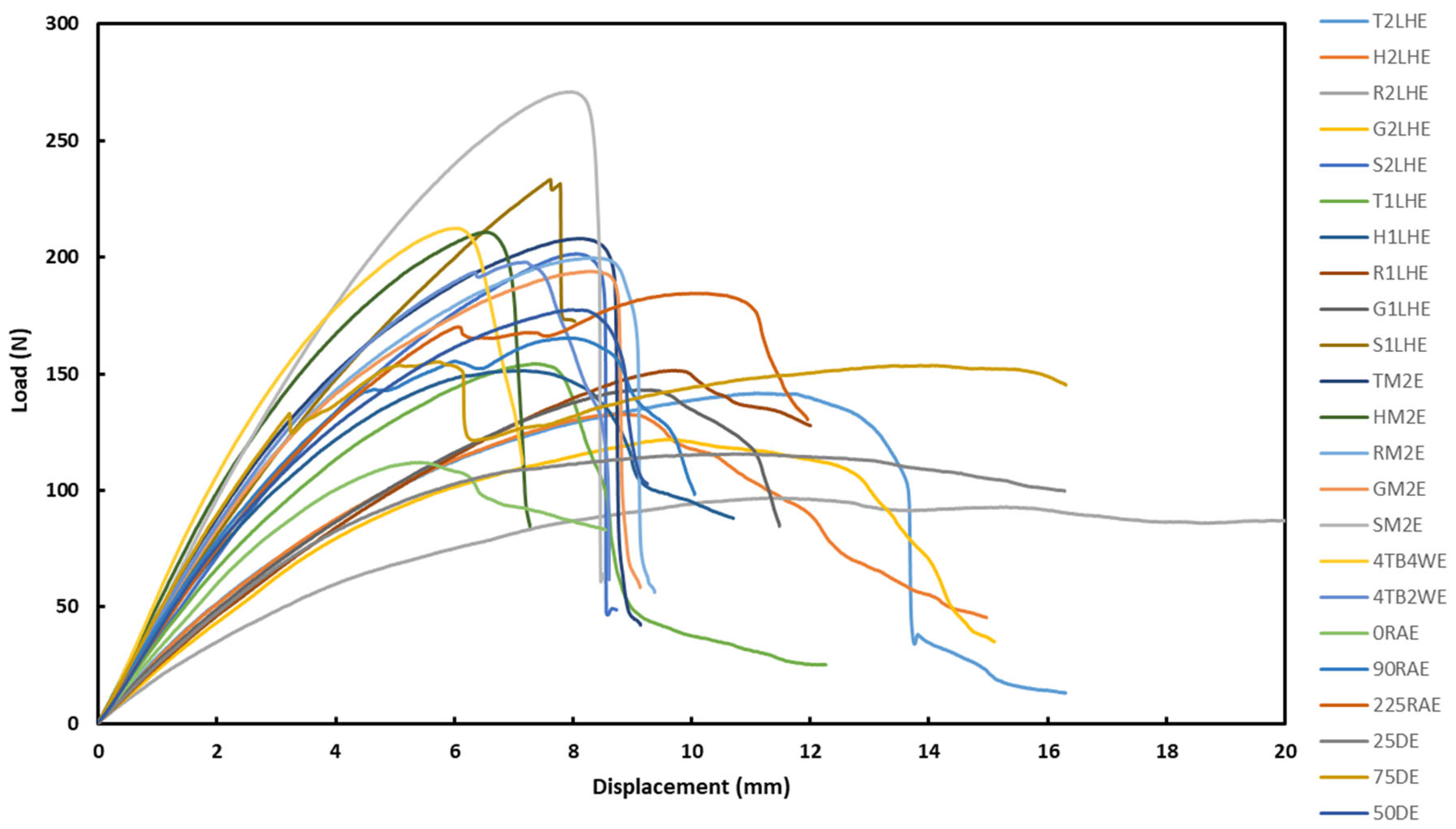
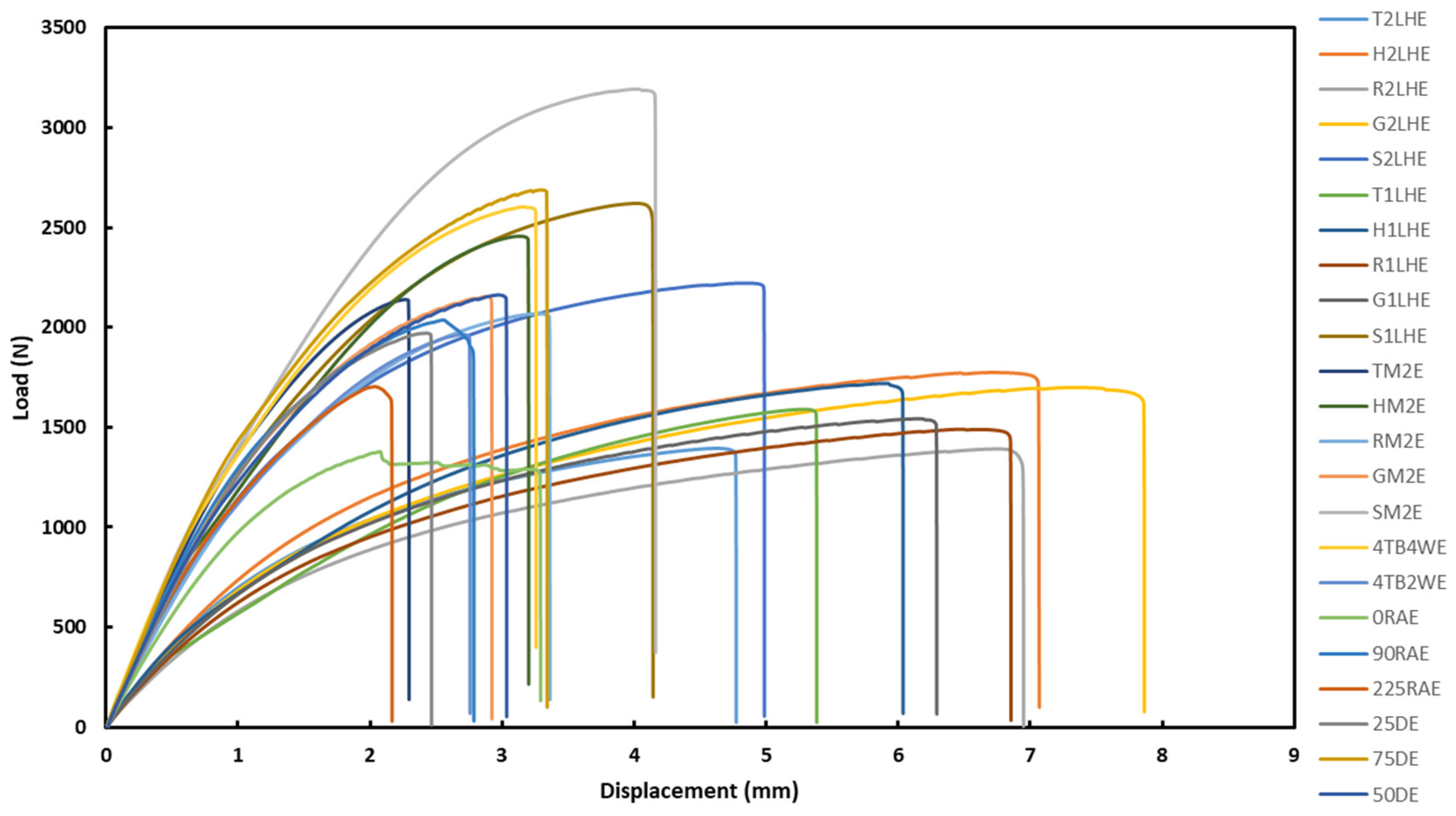
The load–displacement curves of all the specimens from the tensile test are depicted in
Figure 1. At first glance, the striking feature was high load accommodation (~3000 N) with limited displacement (<4.5 mm) for some specimens, whereas for others, it was high displacement (>5 mm) under a relatively low load (<1500 N). For better visualization and understanding on the trend, a load-displacement graph was further split into two, based on their respective displacement nature, as presented in the
Supplementary Materials section, as
Figures S2a and S2b. The role of the specimen characteristics (printing parameters) in that is analysed further in the following sections.
The graphs in
Figure 1 were used to calculate (by the software integrated with the tensile testing equipment) the ultimate tensile strength (UTS), Young’s modulus (YM), and break in strain, as reported in
Table 2.
For a better understanding on the role of printing parameters on the tensile properties of the specimens, the data of
Table 2 is broken down in several sections and presented in the form of graphs for result interpretation.
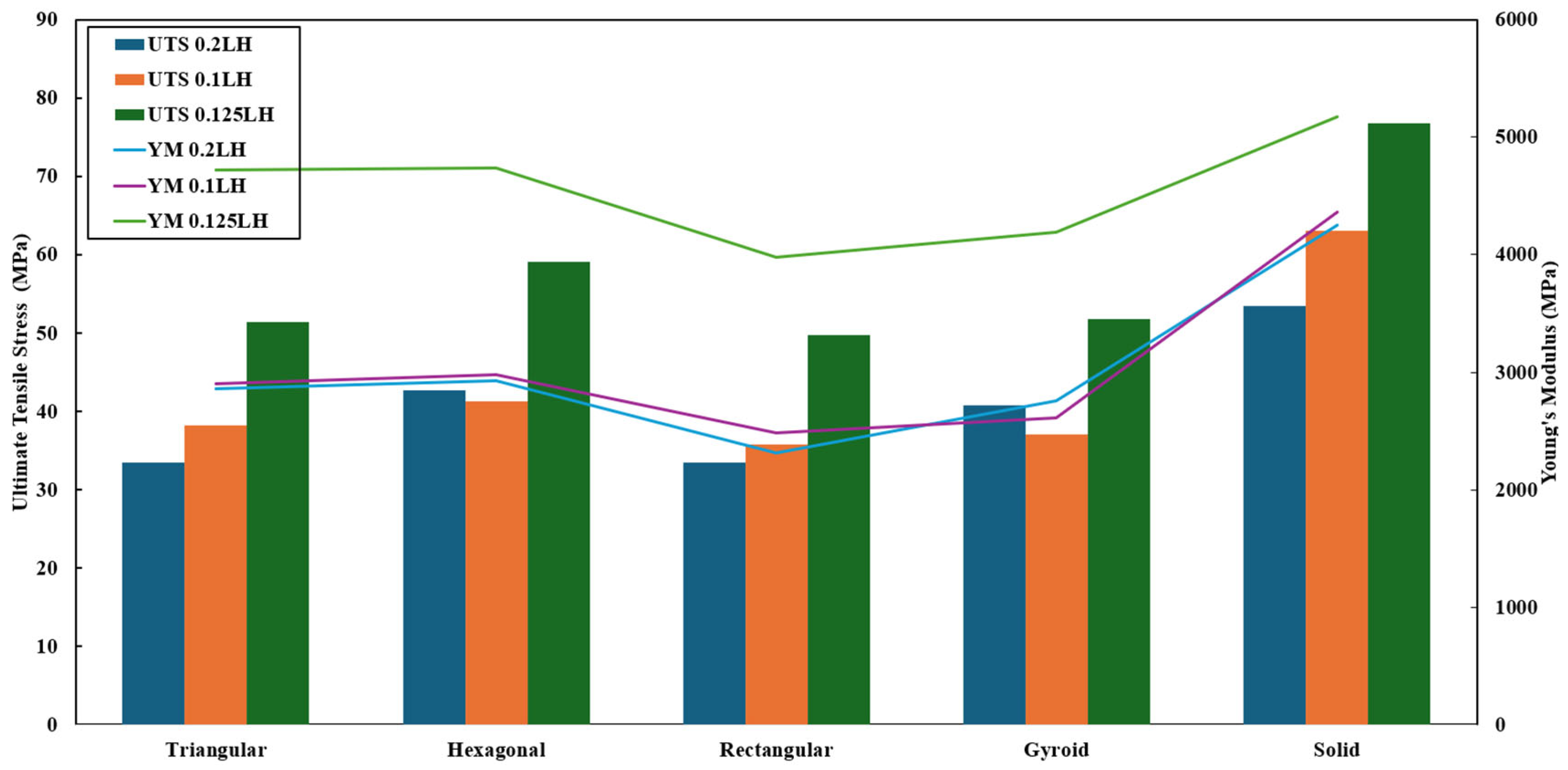
Figure 2 depicts the role of layer height (0.1/0.125/0.2 mm) and infill patterns on UTS and YM. The best combination of UTS and YM was obtained for the solid infill pattern with a 0.125 mm layer height. However, among the non-solid patterns, the hexagonal infill pattern exhibited the highest UTS. This observation also holds true for the YM of the specimens.
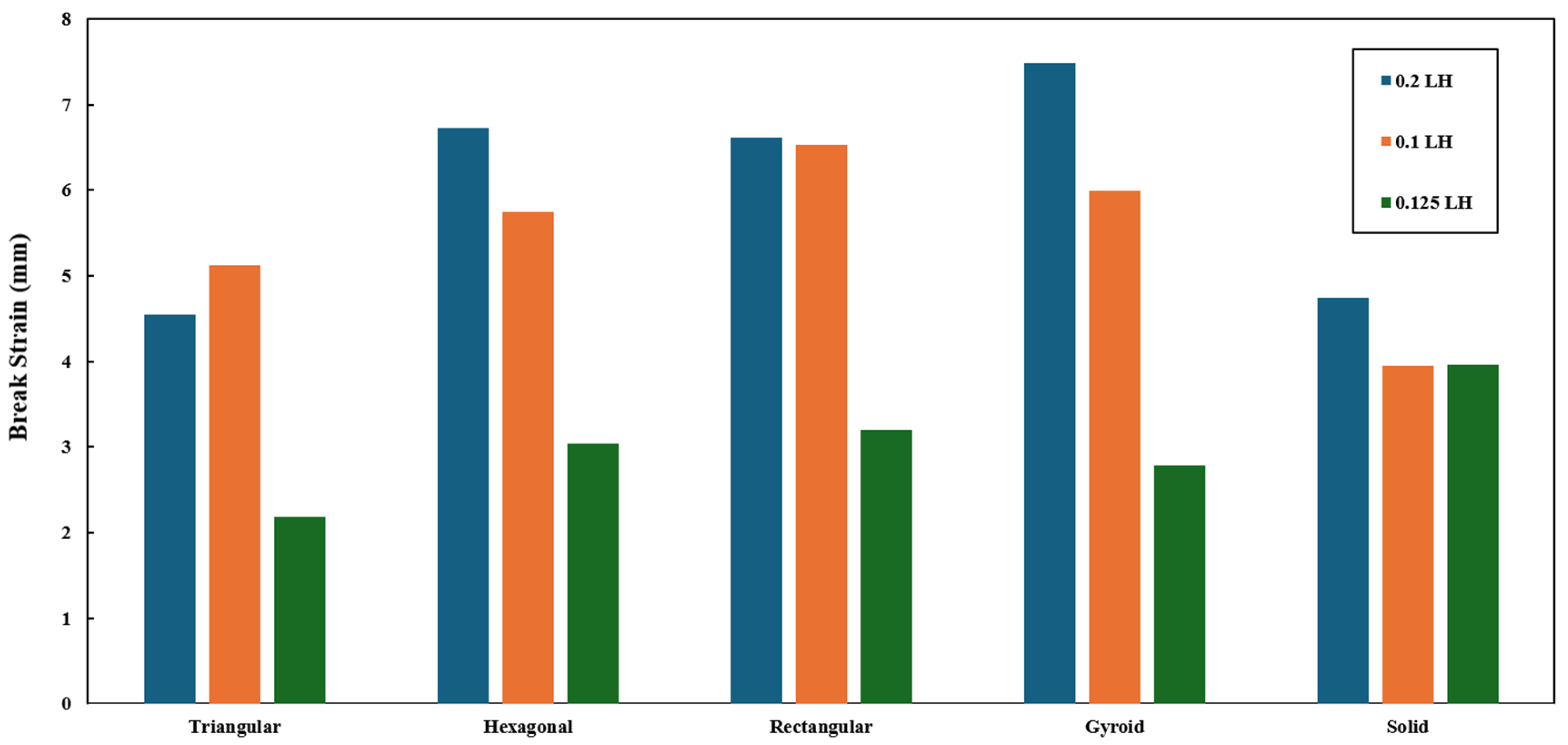
Similarly, the role of layer height (0.1/0.125/0.2 mm) and infill patterns in break strain is depicted in
Figure 3. In this case, the gyroid pattern exhibited the longest displacement before the breaking of the specimens. Undoubtedly, the 0.2 mm layer height outperformed the rest of the specimens (0.1 and 0.125 mm).
There were multiple factors to look into for evaluation before ranking the specimens against their respective printing parameters. The ideal specimen would have a high UTS, a high YM, and a moderately high break strain, as these represent strength, stiffness and ductility, respectively. The five specimens that reflected the highest combined performance (as highlighted in
Table 1) were SM2E, 4TB4WE, 75DE, S1LHE, and S2LHE. These five specimens were selected for comparative analysis of the tensile test results in terms of key printing parameters such as infill patterns, layer height, shell configuration, raster angle, and infill density. The default infill pattern in the printer was a “grid” pattern; hence it was used as the baseline for comparison purposes. The role of infill patterns in the comparison and change among similar specimens is shown in
Table 3.
As can be observed from
Table 3, infill patterns that facilitate oriented paths of filaments along with minimized successive layer gaps exhibit improved tensile performance. Rectilinear (grid) and triangular infill geometries were examples that consistently showed higher tensile strengths compared with the others [
21]. The triangular infill, in particular, provides continuous diagonal struts that allow for plastic deformation along with energy absorption. The orthogonality of the grid pattern, on the other hand, restricts deformation, as exemplified by the decrease in ductility in addition to premature failure [
22]. As reported in the literature, triangular, grid, and hexagonal infills of PLA samples gave ultimate tensile strengths between 56 and 72 MPa, but the more complicated 3D lattice geometries such as the quarter-cubic infill had significantly lower tensile strengths of ~27 MPa as a consequence of geometry-induced layer-by-layer discontinuities [
22]. The staggered nature of such infill patterns creates unsupported regions between neighbouring layers that acted as regions of stress concentrators under tensile load-bearing service. Such discontinuities act in an equivalent manner to the action of micro-notches or cantilevers that facilitate crack initiation and propagation. Because of this, infill shapes with continuous layer-to-layer support such as rectilinear or triangular shapes were optimal for tensile service, particularly in those circumstances where the infills’ structural continuity was paramount [
23]. This was further verified and supported by the fractographs of the failed specimens shown in the later sections.
The hexagonal infill pattern was selected from the five different patterns for the comparison of layer height, as shown in
Table 4. At decreasing layer heights, the deposited filaments increase bonding thickness, facilitating better interdiffusion with the underlying layer—a key pair of processes sustaining mechanical cohesion. As reported in the literature, PLA samples contained optimal UTS at a 0.1 mm layer height [
24]. Another report claimed that the tensile strength in PLA increased with reducing the layer height from 0.3 mm to 0.1 mm due to better interfacial wetting and fusion [
25]. In discontinuous fibre-reinforced polymers, thinner layers can facilitate more uniform distribution of fibres as well as better interaction of the fibres with the matrix by reducing inter-bead voids.
The role of shell configurations, raster angles, and infill densities in the comparison and change among similar specimens is shown in
Table 5,
Table 6 and
Table 7. Under tensile loading, the additional shell layers would mean an increase in the dimensional stability and even load distribution throughout the structure, ultimately leading to an increase in the ultimate tensile strength and stiffness of the overall specimen. Furthermore, the shells facilitate the role of stress transfer within the structure, added to the role of interlayer bonding. The increase in layers brings better interlayer adhesion and also reinforces the overall structure. However, excessive number of layers would lead to higher material usage and rigidity, which could cause brittleness. Hence, it is important to optimise and customise the configuration of shell layers to ensure the best mechanical performance, material costs, and print time with efficiency.
In composite materials such as those based on fibre-reinforced filaments, raster angle controls fibre orientation and thus directly impacts load transfer efficiency. The printing raster in the tensile axis thus significantly enhances the strength. Misoriented fibres such as 90° raster did not contribute to load resistance whatsoever, in addition to potentially acting as stress concentrators. As evident in the literature, when the raster angle strays from the load orientation (for example, 45°, 60°, or 90°), effective tensile strength is compromised through increased dependence on polymer adhesion between consecutive roads or layers. For instance, the tensile strength of ABS specimens degrades when the raster angle is altered from 0° to 90°, with tensile strength decreasing from 24 to 15 MPa [
26]. Similarly, the UTS monotonically decreased with an increasing raster angle including short carbon fibre-reinforcing material. As suggested by Ziemian et al. [
27], with replacement of the raster angle of 0° with 15°, the strength reduced by as much as 30% and tensile strength increased by over half at 45° due to sub-ideal alignment of the fibres with the load axis. Though the 0° orientation was best in achieving maximum UTS in general, other infills such as 45° or 0°/90° offer balanced tensile properties and improved ductility. A shift from 0° to 45° can be used in cases where the truss-like nature of 45° filament orientation can be efficient in tensile load redistribution. Such an increment was minimal and dependent upon some specific conditions. The overall consensus in the literature remains that 0° rasters offer maximum tensile strength in terms of direct load-bearing orientation [
28]. In summary, raster angle was one of the most critical tensile optimization parameters of printing. To achieve optimal uniaxial tensile strength in use, an optimal 90° raster was usually ideal for systems of fibre reinforcement.
Infill orientation in raster mode may impact load distribution as well. A 0°/90° grid infill oriented strictly along the bending axis has the possibility of forming unbalanced load paths—where one filament set is in tension while its orthogonal set is in compression. This inconsistency in poor interlayer bonding will lead to delamination. Angled interwoven infill patterns such as triangles or concentric rings counteract this by distributing loads in multiple load paths in different directions, improving shear as well as delamination resistance [
29]. Infill density and geometry control the fibre volume fraction and alignment that, in turn, influence overall flexure modulus and strength. Densified or aligned patterns maximize load-bearing performance through fibre contribution. It means that a 100% infill resulted in tensile strengths significantly higher than 50% infill in PLA samples [
3]. As an example, infilling from 20 to 100% increased the tensile stiffness from approximately 2.0 to 2.5 GPa [
30].
The mechanical properties data obtained through tensile testing were further analysed by the main effect method [
31] as tabulated in
Table 8.
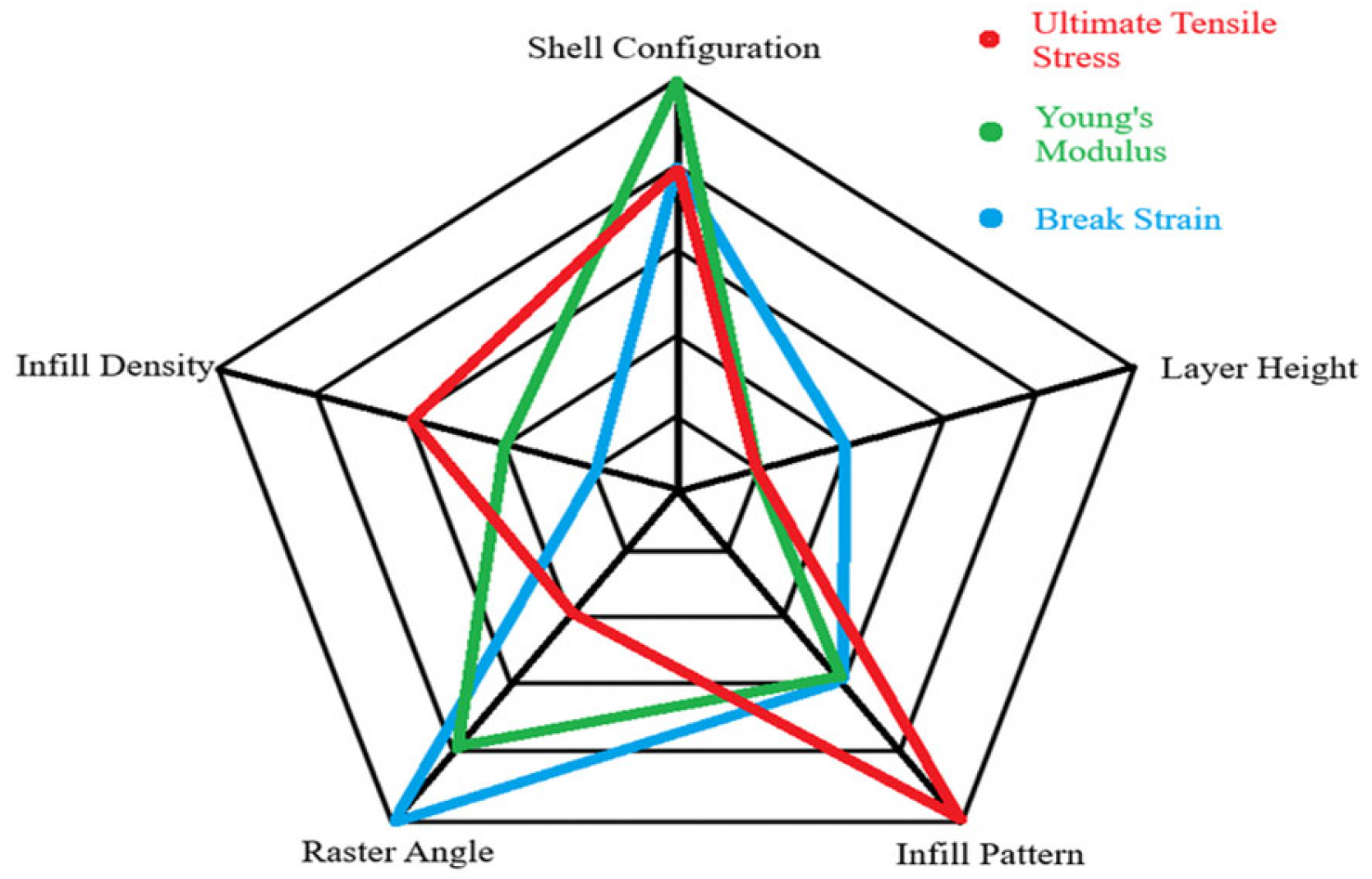
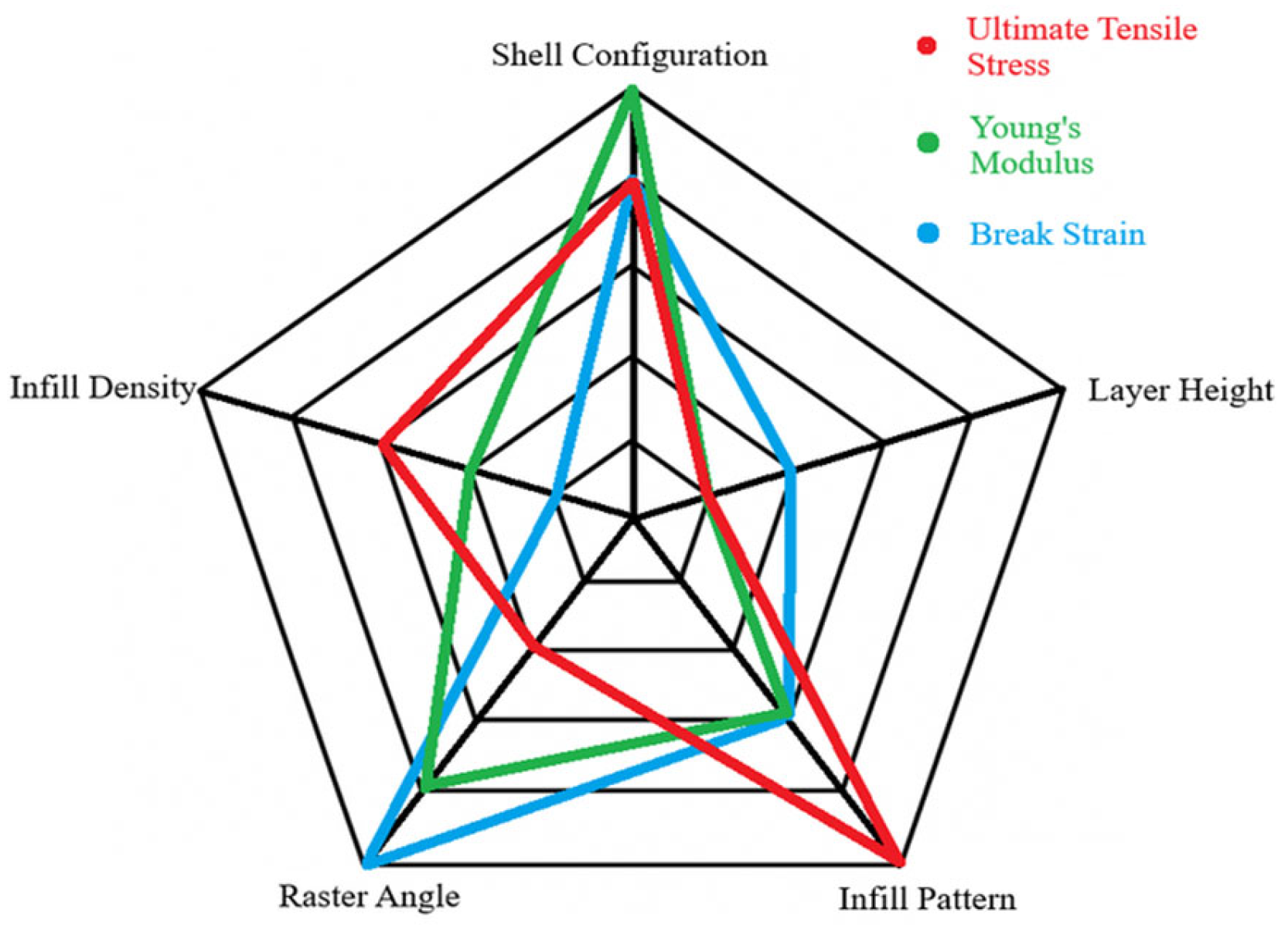
The tensile-based data obtained from the method above reflects a higher ranking for the shell configuration, infill pattern, and raster angle, while in contrast, the layer height exhibited the lowest rank with the least amount of significant value difference produced by changing each parameter. The UTS data show that changing the infill patterns reflect an extremely high change (50%), while shell configuration, density, and angles show decent changes. The stiffness-related modulus data show that shell configuration also achieved close to a 50% increment while the other properties showed rather similar increases except for layer height, which had less than 1% change. The angle change and shell increase can cause an increase in the achievable strain change of more than 150% of the minimum value. The infill pattern and density showed good increases that range from 50% to 100% improvement, while layer height showed a small percent increase. For better visualization of the role of printing parameters on tensile mechanical properties, the corresponding radar chart is depicted in
Figure 4. According to
Figure 4, the best average rank was the shell configuration with 1.67, followed by raster angle with 2.33, infill pattern with 3.33, infill density with 4, and lastly the layer height with 4.67. This showed that tensile-based data would be largely affected by the change in the shell configuration of the specimens, while changing the layer height would do little to no difference. This observation was in line with the reports in literature. It is found that in carbon fibre-reinforced PA12, tensile strength increased from around 56 MPa at 25% infill to around 91 MPa at 100% infill with highly steep increases between 50% and 100% [
32]. There was minimal variation in strength between 25% and 50% infill, indicating that once structural minimality was established, further increases depended on dense reinforcement and favourable skin–shell interaction. In these situations, outer perimeters can take a high proportion of load, with loose infill arrangements bringing an acceptable tensile performance without adding excessive weight.
3.2. Bending Test
The load–displacement curves of all the specimens from the bending test are depicted in
Figure 5. Similar to what was observed in the case of tensile loading, some of the specimens exhibit relatively higher load absorption with limited displacement before failure. In contrast, other specimens show relatively longer displacement at the expense of lower load absorption. For better visualization and understanding on the trend, load-displacement graphs from the bending test were split into two, based on their respective displace-ment nature, as presented in the
Supplementary Materials section as
Figure S3a,b.
These curves were used to calculate the flexural strength, flexural modulus, maximum load, and maximum deflection, as given in
Table 9, for a comprehensive assessment of the specimens’ performance under flexural loading. Flexural strength indicates the maximum stress the specimen can withstand before it failed, thus showing the bend-load capacity. Flexural modulus shows the material’s stiffness or resistance to deformation during bending, which is important for the rigidity of a structure.
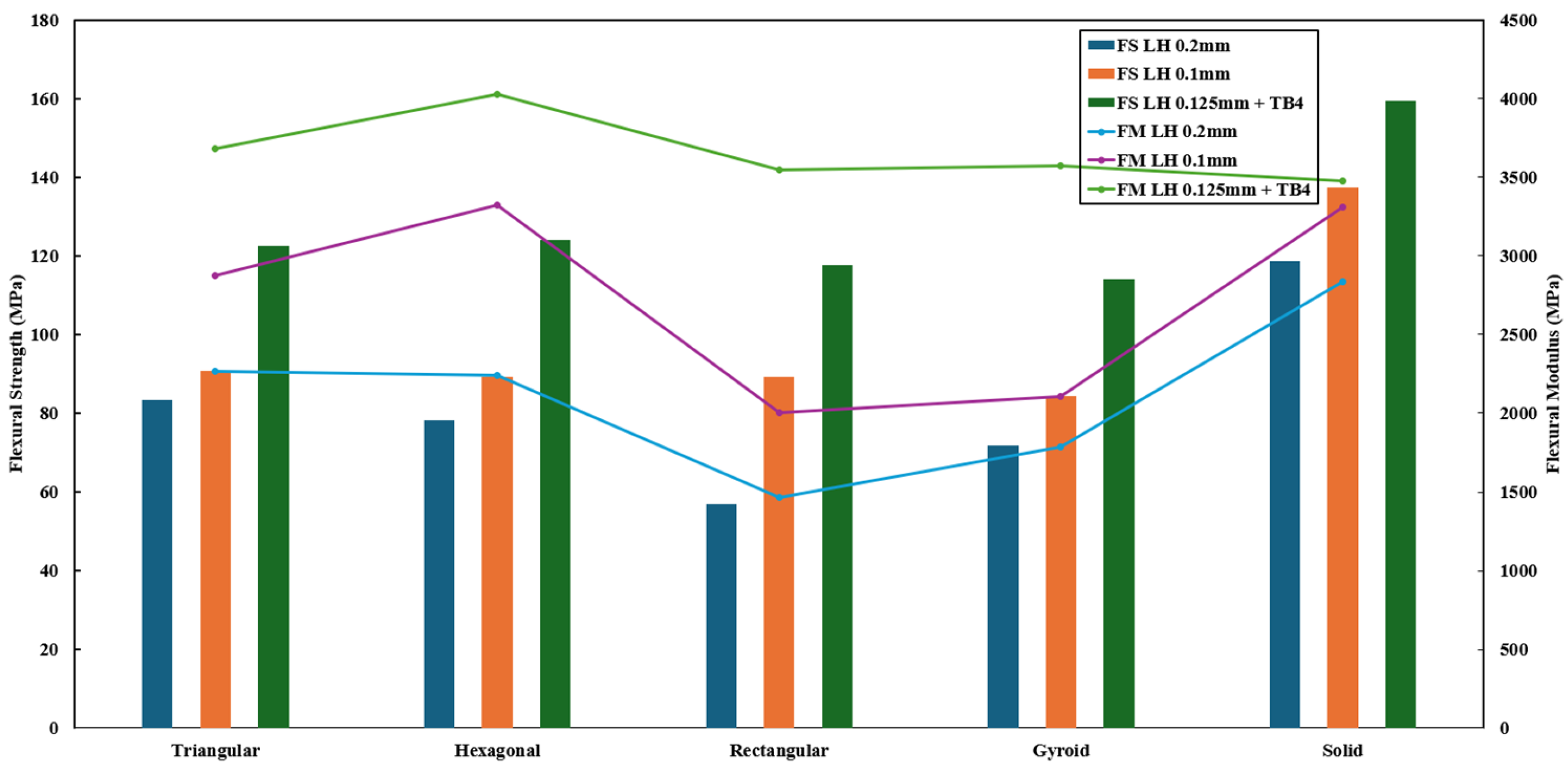
The effect of layer height (0.1/0.125/0.2 mm) and infill patterns on flexural strength (FS) and flexural modulus (FM) is depicted in
Figure 6. The best combination of FS and FM was obtained for the solid infill pattern with the 0.125 mm layer height. However, among the non-solid patterns, there were minor differences among FS.
Out of all the specimens, the five best (as highlighted in
Table 9), reflected a mix of solid densities, extra configuration of shells, and good overall combination. Specimens SM2E and S1LHE locked in nearly 100% of the material, maximizing section modulus; 4TB4WE showed that simply added shells enhance mechanical properties close to the full-density specimens in stiffness. Both HM2E and TM2E had a good overall bending data that was balanced because of the combination of parameters of good layer height, shells, and a decent pattern. This was further analysed in terms of the comparative changes among similar specimens (in terms of infill pattern), as shown in
Table 10.
Triangular infill with the greatest flexure strength was recorded in the order of rectilinear (grid), followed by honeycomb infill patterns [
21]. This was due to the presence of the triangular infill’s struts in the direction of the diagonal, which ensure filament continuity and evenly distributed stress. But other evidence supports that the optimal infill pattern for bending performance was not always the same as that of tensile strength. Complex infills such as gyroid or well-tuned honeycomb infills can sometimes reach higher performances in bending tests than grid patterns. The gyroid lattice is one such triply periodic minimal surface in three-dimensional space whose open network of interlocking curves gives constant curvature without discrete planes of weakness for maximal distribution of stresses in space. Rectangular grids with long parallel rasters, by contrast, can become pseudo-beam elements that buckle or break along the joints of junctions. Honeycomb infills do not occur with principal stresses in nature but can instead offer the required in-plane isotropy of flexure if optimized adequately in void ratio and in wall thickness [
33].
Notwithstanding this overall trend, flexural strength was less affected by layer height variation and shell configuration, as shown in
Table 11 and
Table 12. The reason was that the flexural load did not impose uniform tension on the entire cross-section but imposed maximum tensile and compressive stresses to the extreme surfaces. Mechanical behaviour was controlled by the perimeter walls. Consequently, given that well-bonded perimeters were precisely printed with constant layer heights, core layers contribute less to ultimate flexural performance. It was found that while layer height affected flexural modulus, its statistical influence was less compared with infill density or raster orientation [
34]. This shows that layer height had an important but supportive role in flexural strength optimization. Decreasing layer thickness tends to improve flexure performance in most cases and for most materials, where high interlayer bonding was required in order to counteract transverse load and shear failure.
The role of raster angle in the bending mechanical properties of the specimens is shown in
Table 13. As stated in the literature [
28], 0° raster orientation produced the strongest PLA samples in terms of flexural strength, besting ±45° and alternating 0 or 90° configurations. Consistently declining flexural performance with increasing deviations from 0° orientation was additionally reported, attributing it to compromised axial load transfer capability [
27]. Moderate raster angles could additionally reduce cumulative residual stress by avoiding directional stiffness, thus avoiding warping, a common defect of thermoplastic printing. These findings emphasize the material-specific nature of angle optimization of rastering.
In the case of fibre-reinforced thermoplastics, infill density was again an important variable of interest. The role of infill density in the bending mechanical properties of the specimens is shown in
Table 14. An investigation of PA-12 with the addition of 15% short carbon fibres (PA12-CF15) reported that flexural strength increased from 62 MPa for 2 5% infill to 114 MPa for 100% infill [
32]. Notably, the 75% infill’s flexural strength of 108 MPa was close to that for full infill solids, suggesting there was some form of performance level-off beyond some critical level of infill material density in the component. Although overall flexural performance was enhanced with infill, certain flexural attributes such as stiffness or unit mass-strength will level off. It was demonstrated that 20%, 50%, and 100% infill PLA specimens had comparable specific flexural moduli, which suggests that performance per unit weight does not scale linearly with infill density [
34]. This is particularly relevant in aerospace and automotive use, where stiffness per unit weight is desired over tensile peak value in isolation. In such cases, the compromise in design was achieved with loose infill with efficiency. Secondly, with ultralow infill density values, the outer shell or boundary walls control load-bearing performance. Like the flanges of an I-beam, these perimeters carry loads which cause them to bend while the loose interior provides a stabilizing web that allows for shear transfer but not axial strength. Their results proved that 100% solids withstood higher loads before failure, with 20% infills deforming earlier along with compromised overall stiffness.
The mechanical properties data obtained through bending testing were further analysed by the main effect method, as tabulated in
Table 15.
The bending based data suggest that both infill pattern and infill density had the best ranking. The flexural strength and the maximum load showed that infill patterns and raster angle had the highest approximate contribution to increase the strength. Meanwhile, the infill density and shell configuration provided a decent increase in the strength. The layer height yields very low change that approximates to less than 20%. Unfortunately for infill pattern, it yielded the least amount of change, which was miniscule. Lastly, the deflection-based data produced from the main effect method showed that density and raster angles would govern ductility within a sample, while the infill pattern, layer height, and layer height mattered the least. This is better visualized by the radar chat as shown in
Figure 7.
For strength and load optimization, infill pattern was most critical, followed by raster angle and density. For stiffness optimization, density dominates, but layer height and shell count also had large effects. In addition, density and raster angle govern ductility, whereas pattern and layer height matter less.
3.3. Charpy Impact Test
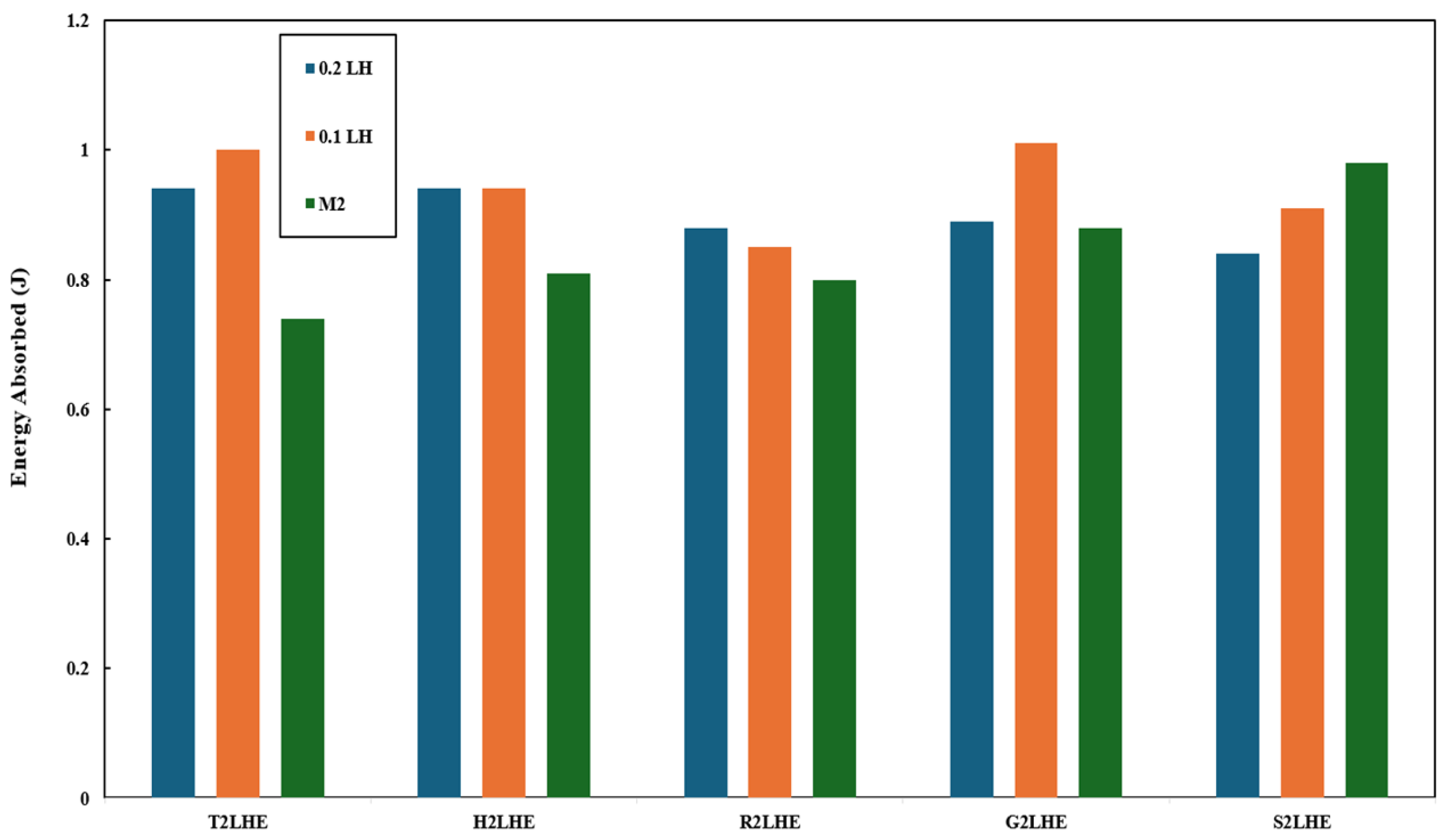
The Charpy impact test evaluates the toughness of the specimens in terms of absorbed energy during a high-speed impact. The energy absorbed explains the energy that the specimen can handle during the impact before it can fracture. The value correlates to the specimen’s resistance to brittle failure and how well it absorbs dynamic loading. Higher energy reflects a tougher and more impact-resistant material that can be used to quantify the forces expected. The role of infill patterns and layer heights in the specimens’ absorbed energy is depicted in
Figure 8. It can be observed that the effect of printing parameters on the specimens’ absorbed energy was minimal, and this is analysed further in subsequent sections.
The effect of different infill patterns on the specimens’ absorbed energy is reported in
Table 16. It was found that triangular infill produced the best impact performance among the infill patterns considered, which surpassed the rectilinear infill with largely linear brittle failure modes [
22]. Triangular and hexagonal infills feature obliquely oriented struts which will be able to plastically and elastically deform upon impact, hindering the propagation of fractures. Having said that, such geometries are known to compromise some static uniaxial strength in favour of a gain in toughness—a design compromise between maximization of strength and enhancement of energy absorption capability [
35]. Hexagonal honeycomb infill produced higher toughness in terms of introducing angular wall shapes that resulted in crack deflection and branch divergence to enable increased energy absorption in the process of fracture.
Ultimately, infill pattern selection is an essential design variable that has to balance the mutually conflicting mechanical demands of tensile and flexural strength against impact toughness and mass efficiency. While grid (aligned) and triangular infills were best suited for unidirectional loading, optimal impact resistance was realized with non-aligned or isotropic infills in terms of honeycombs and gyroids. Emerging algorithmically tailored or bioinspired infills like Schwartz lattices, Poisson disk point distributions, and Hilbert curve paths are just over the horizon, with the promise of improving interfacial bonding while achieving the capability of greater toughness without sacrificing structural integrity in the process. Notably, infilling with Hilbert curves has improved specific tensile strength by reducing raster length while enhancing interfacial bonding time and therefore toughness without unduly sacrificing structural integrity [
36].
The role of layer height in impact energy absorption is reported in
Table 17. As reported in the literature, PLA samples with larger layer heights were stronger in terms of impact compared with those produced using 0.1 mm layer heights, agreeing with an observation consolidated which reported that impact toughness decreases with diminishing layer thickness [
37]. The reason was found in the mechanics of crack propagation: there were multiple interfacial boundaries in multiple thinner layers that were sites of concentration of stresses that can offer paths for fractures. Thick layers, on the other hand, can minimize such planes of weakness, with the implication that an advancing crack will be required to travel through the bulk of the filament and thus will be compelled to expend more energy, with the overall toughness increased accordingly.
Shell thickness will play an important role in low-infill scenarios, as shown in
Table 18. Parts with less than 20% infill will be thin-walled in impact scenarios, with most of the impact energy being consumed in deforming or denting of the surface shell. Coupled with proper geometry such as gyroid or honeycomb lattices, these low-density components can be highly efficient impact energy absorbers and be used in sacrificial or protection applications. Where optimum impact toughness is needed instead—particularly to prevent failure rather than managing impact—a higher infill density is nevertheless optimal [
38].
The influence of raster angle on impact resistance becomes an important driver of dynamic load-induced fractures, as reported in
Table 19. Of the configurations tested, a ±45° staggered raster orientation was always found to exhibit enhanced impact toughness. It was reported via an ANOVA of PLA samples that the influence of the raster angle on impact strength was significantly greater than on tensile strength, with the maximal impact-resistant samples produced by ±45° orientations [
28]. This was largely because the oblique orientation of filaments causes propagating cracks to repeatedly shift direction in interlayers, dissipating greater energy in the process and postponing catastrophic failure. Rectangular infills such as 0/90° will also lead to less ductile fractures due to regions of undisturbed raster that represents zones of stress concentration [
39]. By contrast, the use of ±45° or crisscross infill motifs results in quasi-isotropic behaviour so that the component can absorb impact from any angle with improved performance in that it is more even.
In discontinuous fibre-filled filaments, fibre orientation was controlled by raster angle control, while off-axis rasters enhance the possibility of fibres intersecting and bridging cracks to increase toughness in fractures. While 0° works well for tensile strength in one dimension, and 0/90° works for structural bending, ±45° works best for dissipating stresses in regions of high local stresses as well as for fracture initiation and propagation resistance. Further tests in PL samples using ±45° rasters achieved an order of magnitude increase in the absorption of energy in impact tests compared with those with unidirectional raster printing [
28]. Greater utilization of randomized or gyroid raster patterns in slicing software was motivated by the same reasoning, as they close the preferred paths of failure in fracture and thus deliver greater impact resistance but with a trade-off in directional stiffness [
27,
28,
39].
Notably, maximum impact resistance was sometimes not realized with maximum infill percentages, as shown in
Table 20. This resulted from semi-dense structure deformation behaviours such as the occurrence of localized buckling, cell collapses, and absorption of energy in the form of bending of walls. At extremely high infills, an object could be more brittle in nature because of the absence of space within it for strain accommodation, while a moderate infill gives controlled failure modes that are energetically costly. Light infills could again gain deceivingly high absorption of energy if the total energy—in preference over peak force—is considered along with the surface shell progressively bending but without catastrophically breaking apart [
38]. It was reported that some 70% infill PLA samples possessed almost as high an impact energy as its 100% counterpart but with less material volume in the structure [
3].
In composite materials, the positive correlation of increased infill density with impact resistance is compounded by the reinforcing fibres within them. Discontinuous fibre-reinforced filaments are fitted with denser internal packing to their advantage, which increases concentrations of bridging fibres that arrest crack development and fractures. In summary, infill density remains the overarching factor in impact performance irrespective of the infilling strategy or polymer material. Even with greater infill density contributing to strengthening an application in toughness, design demands will impose an intermediate or low infill density in energy absorption-optimized applications.
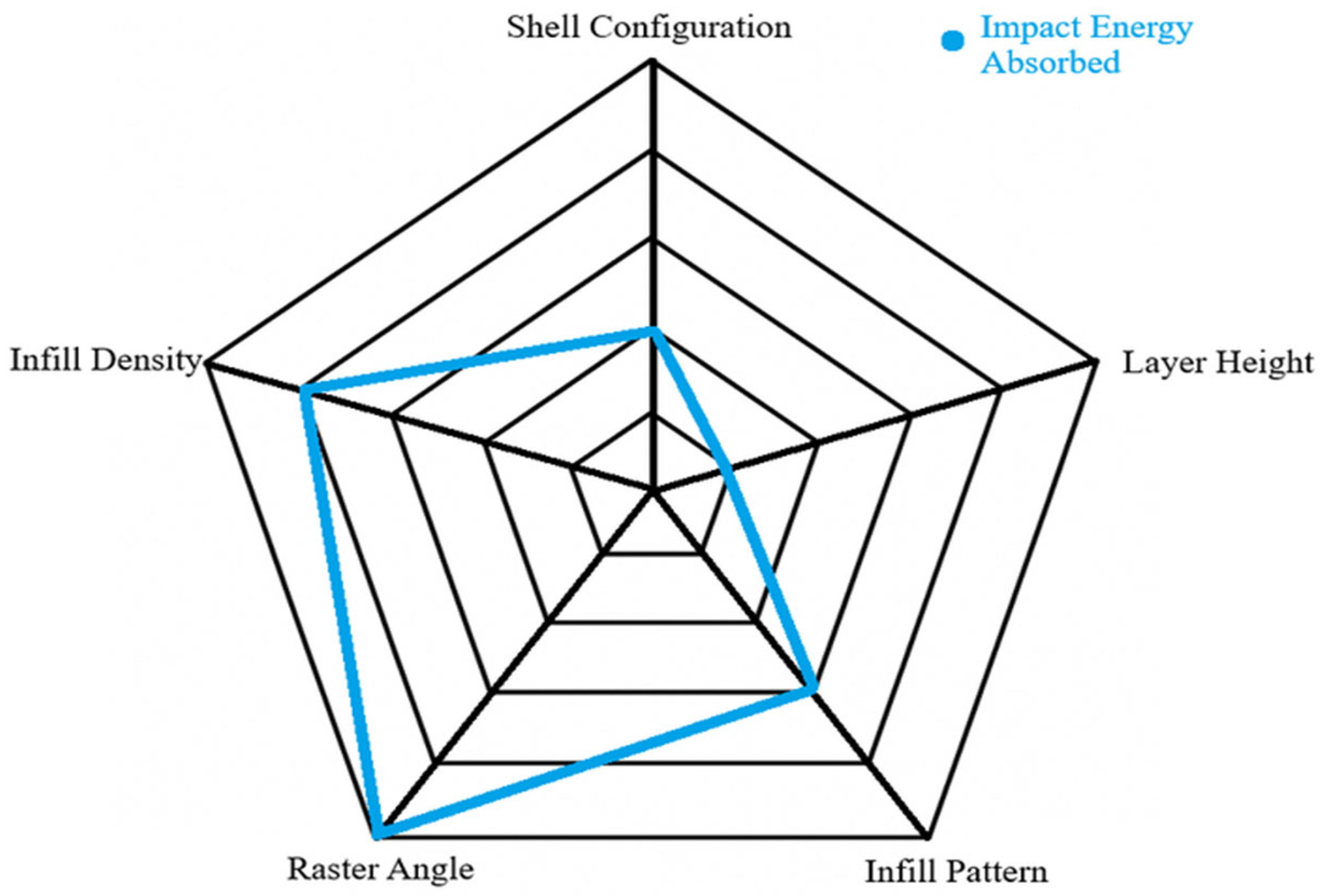
The impact-based data (
Table 21) obtained from the method above show that the infill pattern had the highest ranking, followed closely by raster angle and infill density. The shell configuration produced a decent change that helped in improving the impact results. Lastly, the layer height produced no measurable change whatsoever for improvement.
This was better represented by radar chat of ease of understand in
Figure 9.