1. Introduction
Chirality is a property of molecular asymmetry, defined by the inability of a molecule to be superimposed on its mirror image [
1,
2]. This phenomenon is widely observed in nature and plays a fundamental role in many biological macromolecules such as proteins, polysaccharides, nucleic acids and enzymes [
3].
Chirality is a fundamental feature in molecular recognition processes; thus, understanding it is highly significant in many disciplines including medicine, biology, and chemistry [
4,
5]. Efficiently producing and separating chiral compounds is crucial for pharmaceutical development since enantiomers of the same molecule may exhibit significantly different pharmacological activity, metabolic behavior or toxicological effects [
6].
Despite the significance progress in asymmetric synthesis, many pharmaceutical compounds are still manufactured as racemic mixtures, requiring efficient techniques of chiral resolution [
7]. Enantioselective membrane-based separation has emerged as a promising alternative, providing high throughput, scalability, low energy requirements, and cost-effectiveness [
8,
9]. Enantioselective membrane-based separation can be performed using a variety of materials, including traditional polymer membranes, composite membranes with chiral selectors (e.g., CD, MOF, graphene) [
10,
11], and molecularly imprinted membranes (MIMs) [
12,
13], which are widely used for the separation of racemic mixtures [
14]. Despite the growing number of new types of enantioselective membranes, many suffer from low stability, challenging manufacture, or the restricted accessibility of chiral recognition sites within the membrane matrix. In contrast, membranes with chiral surface coatings can improve enantioselective performance by exposing stereospecific functional groups directly on the membrane surface, while the underlying support provides excellent mechanical stability and scalability for practical separation processes [
15,
16]. Wang et al. suggested an innovative method by introducing layers of chiral super-cross-linked polymers (CHCPs on porous SiO
2 substrates), producing chiral covalent organic polymer composite membranes. These membranes attained a remarkable ee of 91.2% for phenylalanine separation [
17]. Other fascinating membranes were developed by Wang et al., who employed the phase inversion method to fabricate poly(vinylidene fluoride) (PVDF) membranes blended with chiral mesoporous SiO
2 and β-CD, significantly enhancing hydrophilicity and enantioselectivity, achieving 55%
ee for DL-tryptophan [
18]. Chiral nano-polymeric particles have great potential in enantioselective membrane design due to their large surface area and flexible functional groups, which improve the accessibility of chiral recognition sites [
19]. Over the past decade, there has been abundant discussion and research on nanoparticle-based enantiomeric recognition and chiral separation. Studies demonstrate chiral-modified nanomaterials for catalysis [
20], drug separation [
21], and sensing [
22]. Our group developed chiral polymeric nanoparticles with controlled size distribution and modified characteristics by synthesizing a range of chiral functional polymers based on amino acids by precipitation or miniemulsion [
23,
24,
25,
26]. Here, we report the development of novel membranes functionalized with two distinct types of chiral polymeric nanoparticles based on N-acryloyl-L/D-Phe-OMe [
19] (protected) and N-acryloyl-L/D-Phe-OH (unprotected) derivatives; the incorporation of these chiral polymers imparts enantioselective properties to the inherently nonselective PVDF matrix, effectively creating chiral recognition sites within the membrane structure. A sonochemical-assisted technique [
27,
28,
29,
30] was used to deposit the nanoparticles onto commercial hydrophilic PVDF membranes, which induces uniform distribution and robust adherence on the membrane surface. By integrating their superior mechanical stability, chemical resistance, and scalability [
31,
32] with the high density and accessibility of stereospecific sites offered by the chiral polymeric beads, these membranes present a promising platform for enantiomeric separation applications. The sonochemical-assisted technique makes the fabrication process easy and cost-effective [
33]. Notably, the Phe-based nanoparticles reported here serve as a compelling proof of concept for a highly versatile functionalization platform. The modular nature of this approach facilitates the incorporation of a diverse array of chiral nanoparticles, paving the way for next-generation membranes tailored for diverse molecular recognition and selective separation challenges. The morphology of the membranes was characterized along with their chiral separation performance of racemic mixtures by enantioselective membrane transport and crystallization experiments.
2. Materials and Methods
2.1. Materials
All analytical-grade chemicals were purchased from Sigma-Aldrich (St. Louis, MO, USA) and used without further purification, including D/L-Phe methyl ester hydrochloride, triethylamine, acryloyl chloride, ethanol absolute, ethyl acetate, n-hexane (99%), azobis-isobutyronitrile (AIBN, 98%), dichloromethane (DCM), sodium bisulfate, sodium carbonate, sodium chloride, isopropanol (IPA), polyvinylpyrrolidone (PVP, 60 kDa), magnesium sulfate, DL-Tyr, DL-Leu, and tetrahydrofuran (THF). Deionized water was purified by passage through an elastane spectrum reverse osmosis system (Elga, High Wycombe, UK).
2.2. Synthesis of D/L-Phe-OMe Monomers
The monomers were obtained following our previously reported procedure [
25]. L/D-Phe methyl ester hydrochloride (20 mmol) was placed in a 250 L round-bottom flask. DCM (90 mL) and 2.2 eq of triethylamine (4.44 g, 6.1 mL) were added, and the mixture was stirred to full dissolution and allowed to cool in an ice bath (to 0–5 °C). Acryloyl chloride (1.8 mL, 1.1 eq) was dissolved in 15 mL of DCM and added dropwise over 1 h while keeping the temperature at 0–5 °C. The mixture was stirred overnight at RT, and the clear DCM solvent was evaporated to dryness, giving a white crude product. Ethyl acetate (100 mL) was added, and after the solution was shaken thoroughly, the mixture was filtered under vacuum, and the obtained solid (HCl salts) was washed with ethyl acetate (20 mL). The ethyl acetate phase was washed with 20 mL of 1 M NaHSO
4 (three times), 5% NaHCO
3 and saturated NaCl (twice each). After washing, the solution was dried with MgSO
4 and filtered. The solvent was removed under vacuum by rotary evaporation to produce the monomers (70% yield).
2.3. Synthesis of Protected Polymers
In a typical procedure, a solution containing PVP surfactant (0.1 g), AIBN initiator (20 mg), monomer (4 mmol, 0.8 g), and solvent (10 mL, water/2-propanol) was prepared in a 20 mL vial and deoxygenated by nitrogen purging. The sealed vial was transferred to a shaking incubator preheated to 73 °C, and polymerization continued for 24 h, after which the reaction was quenched by cooling to room temperature (RT). The formed insoluble nanospheres were separated by centrifugation and washed extensively with water and ethanol. Residual ethanol was removed by repeated centrifugation [
34].
2.4. Hydrolysis Procedure
Protected N-acryloyl-L/D-Phe nanospheres (170 mg) were suspended in 15 mL of 1 M NaOH, followed by the addition of 2 mL THF. The mixture was sonicated for 60 s and then heated to 70 °C for ca. 4 h. The resulting clear solution was dialyzed extensively (3.5 kDa dialysis membrane) against water for 24–48 h until the pH stabilized near 7.0. The polymer solution was subsequently acidified to pH 2.0 by adding 1 M HCl, inducing the precipitation of the hydrolyzed polymers. The precipitate was washed thoroughly with water and lyophilized.
2.5. Polymer Deposition onto the Membrane Surface
A total of 350 mg (150 mg of unprotected polymers after hydrolysis) of poly(N-acryloyl-L/D-Phe) particles (~600 nm) was dispersed in 60 mL deionized water using bath sonication at 40 °C for 1 h, followed by probe ultrasonication for 4 min at 40% amplitude to disaggregate the particles. PVDF membranes (Durapore® hydrophilic PVDF membrane, Burlington, MA, USA, 0.45 µm pore size, 47 mm diameter) were fixed in the vessel containing the polymer dispersion and irradiated for 20 min at 30% amplitude with an ultrasonic horn in an ice bath. The membranes were then washed with deionized water and dried at RT.
2.6. Enantioselective Membrane Transport
A stainless steel membrane filter holder (Millipore, Bedford, MA, USA and Catalog number XX3001200) with a 13 mm diameter was employed, equipped with one inlet and one outlet. An effective membrane area composed of three membrane layers (1.0 cm2 each) was placed inside the holder. A total of 20 mL of a 38 mM racemic leucine solution was placed in a 20 mL syringe and connected to the inlet port with a silicon tube. The syringe was placed in a syringe pump. The racemic solution was injected into the filter unit at a rate of 1 mL per hour. Samples (1 mL) were taken every hour from the vial, which was connected to the outlet port with a silicon tube. All filtration experiments were performed under identical conditions and were repeated independently twice (n = 2). All experiments were done at RT. D and L isomers were determined by High-Performance Liquid Chromatography (HPLC) measurements (Jasco PU1580, Easton, MD, USA), equipped with a UV detector (Jasco UV1570) employing a chirobiotic TAG column.
2.7. Enantioselective Crystallization Experiments
A solution of DL-tyrosine (30 mg/50 mL) was prepared by heating it to 65 °C until fully dissolved, cooled to RT and filtered through a 0.22 μm membrane. Two crystallization experiments were conducted, each using 15 mL of the solution. In one experiment, small pieces (~4 × 4 mm) of a chiral membrane coated with L-Phe-OMe beads were added, and in the other, small pieces of a D-Phe-OMe bead-coated membrane were used. Both setups were shaken in an ice bath (0–5 °C) for 24 h to induce crystallization. The crystallization solutions were filtered with a 0.22 μm filter, and the optical rotations of the filtrated solutions were measured by a Jasco P-2000 polarimeter using a sodium lamp light source at 589 nm passed through an 8 mm aperture. The enantiomeric excess was calculated according to the following:
where ee is the enantiomeric excess, and [R] and [S] are the enantiomer concentrations.
2.8. Characterization Techniques
Nuclear Magnetic Resonance (NMR) spectra were obtained by a Bruker DZH 400/54,400 MHz spectrometer (Bremen, Germany), and Fourier Transform Infrared (FTIR) Spectroscopy was conducted using a Thermo Scientific Nicolet 1S10 FTIR spectrometer (Hemel Hempstead, UK) equipped with a Smart iTR attenuated total reflectance sampler containing a single-bounce diamond crystal. Dynamic Light Scattering (DLS) measurements were carried out using a Zetasizer 3000 HAS (Malvern Instruments Ltd., Malvern, UK) equipped with a 4 mW He–Ne laser (λ = 632.8 nm), a detector set at a scattering angle of 173°, and a temperature-controlled cuvette holder. Scanning Electron Microscopy (SEM) was performed with a LEO Gemini 1530 Zeiss microscope (Oberkochen, Germany) operated at 0.6 kV. Differential Scanning Calorimetry (DSC) measurements were performed with a Mettler Toledo DSC 822e (Greifensee, Switzerland) equipped with a liquid nitrogen cooling accessory and calibrated with indium; samples were heated from 25 to 380 °C at 4 °C/min under N2 flow. High-Resolution Scanning Electron Microscopy (HR-SEM) images were taken using a field-emission FEI Helios 600 instrument (Hillsboro, OR, USA). The samples were coated with a 3 nm layer of iridium to decrease charging effects. HPLC and optical rotation measurements were carried out as described above. Measurements were conducted using Jasco PU1580, equipped with a UV detector (Jasco UV1570) employing a Chirobiotic TAG column. Optical rotation measurements were performed by using a Jasco P-2000 polarimeter with a sodium lamp light source at 589 nm passed through an 8 mm aperture.
3. Results
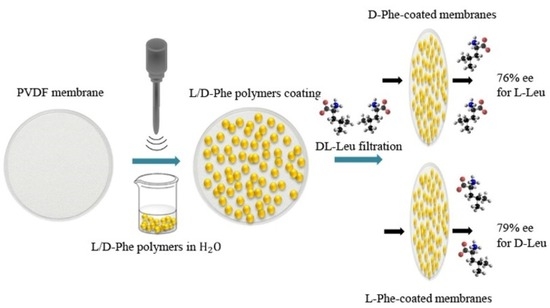
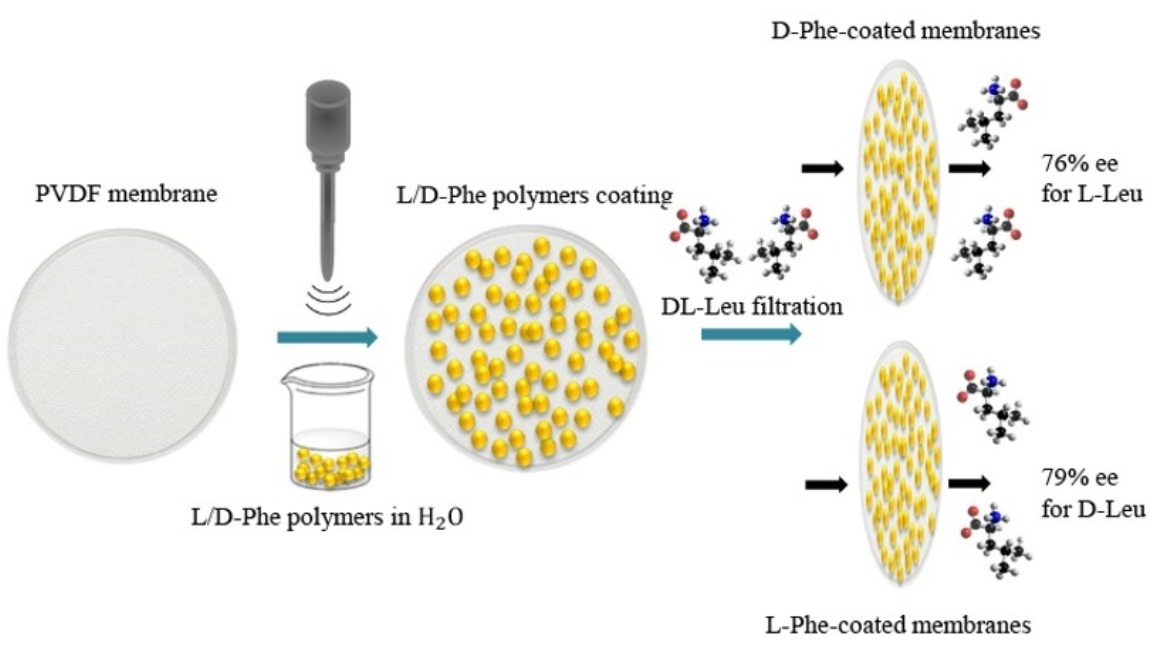
N-acryloyl-L/D-Phe methyl ester beads were synthesized by dispersion polymerization, yielding exclusively methyl ester-protected nanospheres. The unprotected N-acryloyl-L/D-Phe particles were subsequently obtained by basic hydrolysis. Each type of particle (i.e., the protected and unprotected variants) was, in a following step, dispersed in water for membrane modification. Commercial hydrophilic PVDF membranes were immersed in the chiral polymer suspensions, and ultrasonic treatment facilitated the deposition and attachment of the polymeric particles onto the membrane surface. The resulting coated membranes exhibit stable polymer coverage, allowing for the further study of their enantioselective separation performance.
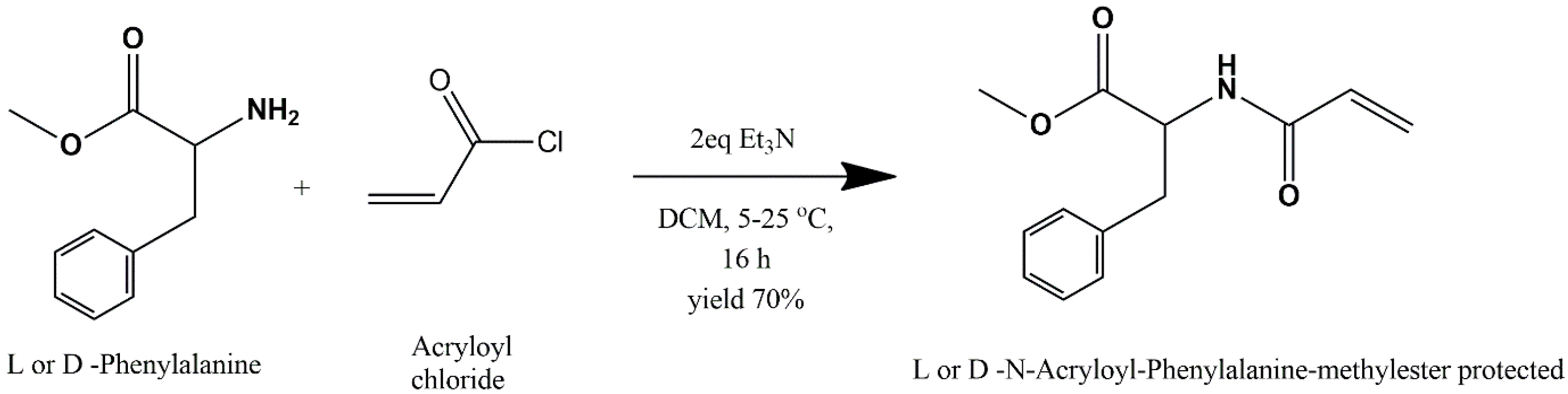
Monomer synthesis: N-acryloyl-L/D-Phe methyl ester monomers (methyl ester protective group) were synthesized in 70% yield (
Scheme 1). Monomers were characterized by Mass Spectrometry (MS), 13C and 1H NMR and FTIR spectroscopy (see
Supporting Information—the characterization of the monomers).
The
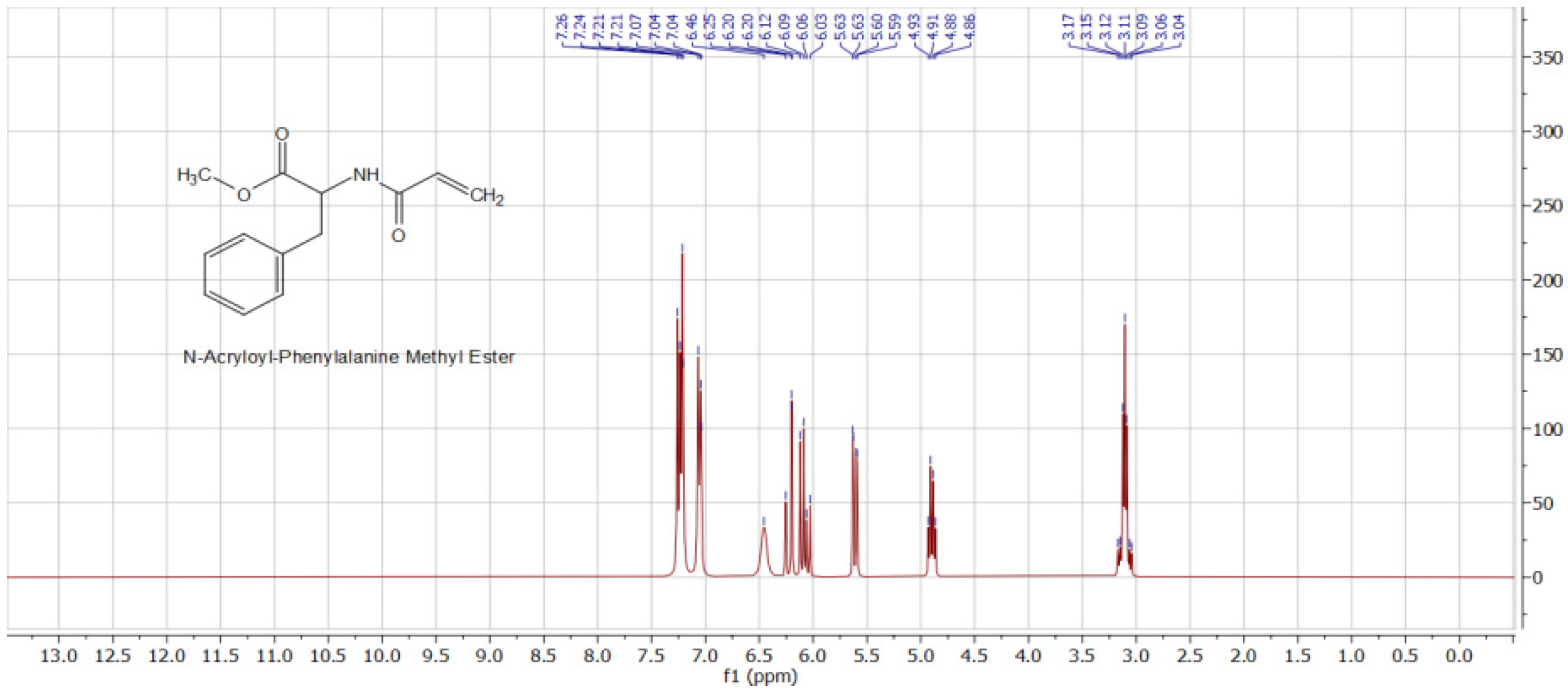
1H-NMR spectrum (
Figure 1) shows the transformation of primary amine to secondary amide: peaks of amide at δ 6.09 (dd, J = 18, 10 Hz,
1H), terminal ethylene at 5.71 (dd, J = 10, 2 Hz,
1H, CH
2), 6.02 (brd, J = 8 Hz,
1H, CH
2) and 6.29 (dd, J = 18, 2 Hz,
1H, CH) and methyl ester (δ 3.74, s, 3H). Aromatic peaks are present at δ 7.33–7.19 (m, 3H) and 7.14–7.03 (m, 2H).
The
13C NMR spectrum (
Figure S3) further confirms the structure of the produced monomers. Characteristic carbonyl signals are observed at δ 171.9 and 164.9, corresponding to the ester and amide carbonyl carbons, respectively. The peaks of aromatic carbon appear between δ 127 and 136, while the
-carbon of the amino acid backbone appears at δ 53 and the methylene carbon at δ 38. The peak of methoxy carbon (methyl ester group) appears at δ 52.
The FTIR spectrum (
Figure S4) displays specific absorption peaks at 3100–3300 and 1650 cm
−1 corresponding to amide C=O and broad amide N-H stretching bands and 1750 and 1250 cm
−1 (ester C=O and stretching bands). Terminal alkene stretching bond =C-H peaks are shown around 3000 cm
−1, and aromatic C-H stretching bands are exhibited around 3300 and 2000 cm
−1 with an evident override. The MS spectrum indicates
m/
z values equivalent to phenylalanine (
Figure S1).
Polymerization: Nanospheres were synthesized by the precipitation of the dispersion polymerization of poly(N-acryloyl-L/D-Phe) in a mixture of water/2-propanol [
34]. The diameter distribution of the polymer is dependent on the water/2-propanol ratio; increasing the water/2-propanol ratio leads to the higher polarity of the reaction medium and reduces the solubility of the growing poly(N-acryloyl-L/D-Phe) chains. Consequently, oligomeric radicals attain a critical precipitation length and start to nucleate to form polymeric nanospheres, resulting in a higher yield of insoluble particles [
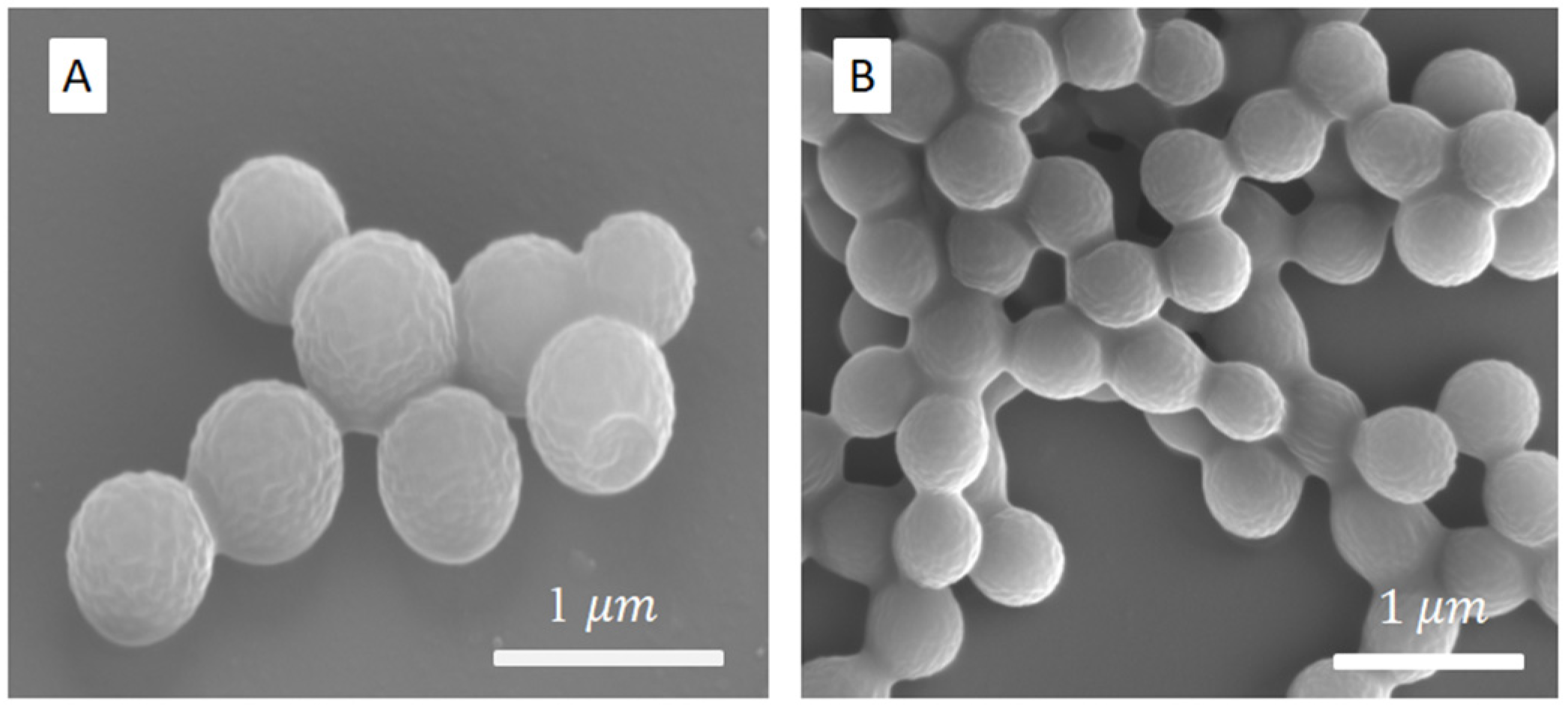
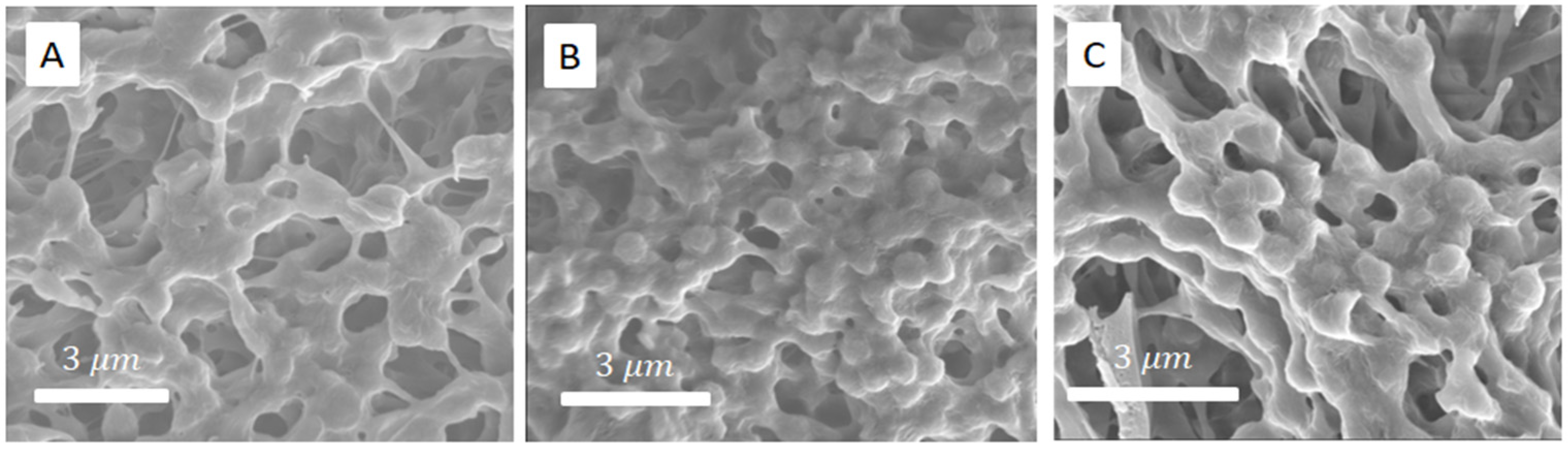
35]. A SEM image of poly (N-acryloyl-D-Phe) particles produced with a water/2-propanol ratio of 1.2 is shown in
Figure 2A. Spherical polymeric particles were obtained with an average diameter of 600 nm (DLS PDI = 0.448) with a rough surface texture.
Hydrolysis: Unprotected polymers were obtained by subjecting the protected nanospheres to basic hydrolysis under alkaline aqueous conditions [
36]. The THF and excess base were removed by dialysis, followed by acidification to induce polymer precipitation, forming the carboxylic acid form of the N-acryloyl-L/D-Phe nanoparticles. The particles retained their spherical morphology with an average diameter of 500 nm, as evidenced by the SEM image (
Figure 2B).
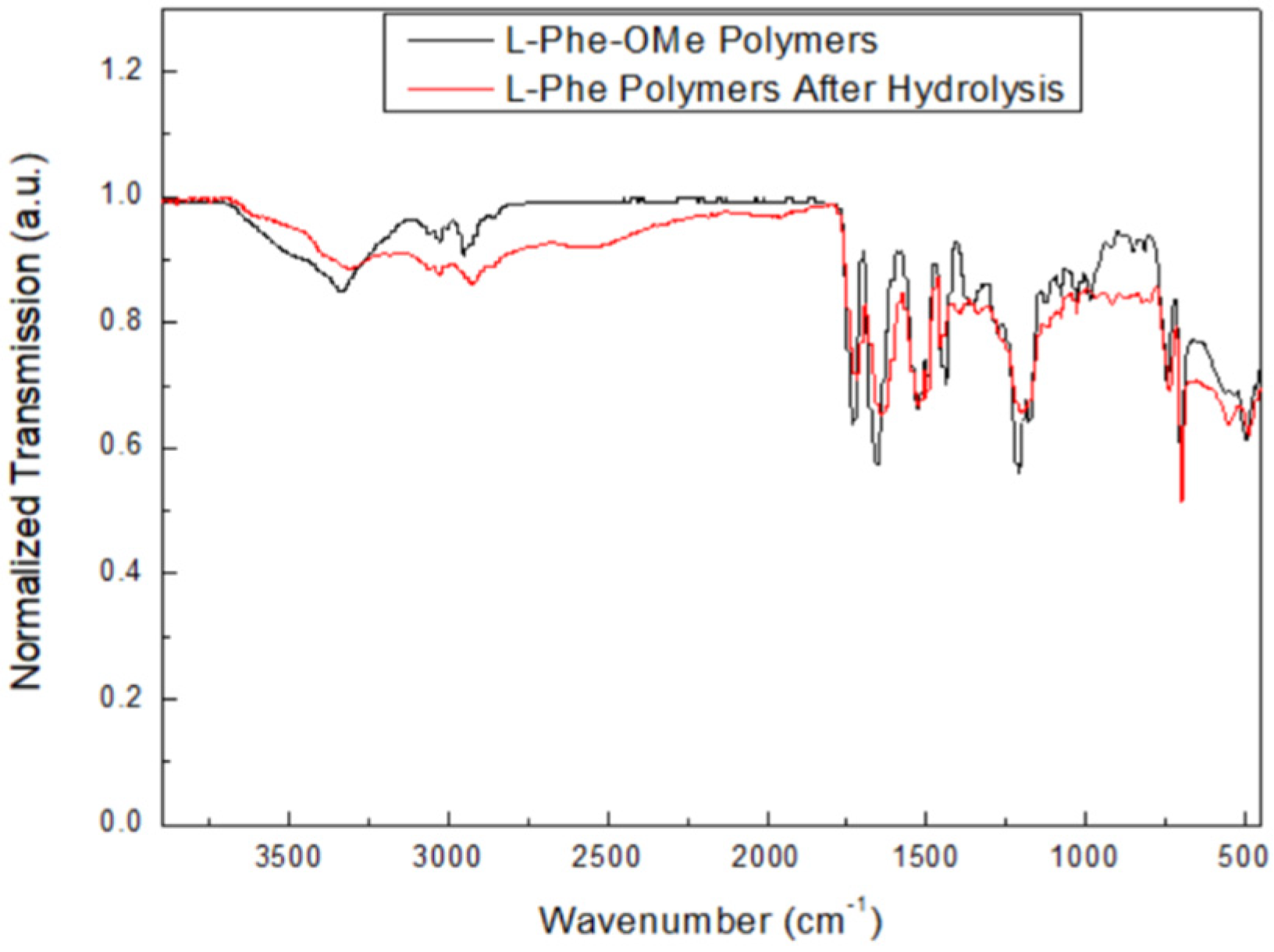
The FTIR spectrum of L-Phe-OMe polymers (black spectrum in
Figure 3) reveals transmission peaks at ca. 1000–1300 and 1736 cm
−1 corresponding to ester carbonyl stretching bands. Amide stretching bands are present at 1670 and 1530 cm
−1. The peaks at 2800–3100 cm
−1 correspond to aromatic and aliphatic CH, CH
2, and CH
3 stretching bands and that at ca. 3300 cm
−1 to the N-H stretching band. The FTIR spectrum of the hydrolyzed polymers (red spectrum in
Figure 3) displays a diminution in ester-related peaks at 1000–1300 and 1736 cm
−1, indicating the hydrolysis of the methyl-ester protecting group. The band at ~1600 cm
−1 was reduced relatively to the protected polymer, consistent with the formation of carboxylate groups upon hydrolysis. A clear change is also observed within the broad band peak at 2500–3300 cm
−1, demonstrating the altered hydrogen-bonding environment in the unprotected polymer.
Polymer deposition onto the membrane: Protected and unprotected poly(N-acryloyl-L/D-Phe) particles were deposited onto commercial hydrophilic PVDF membranes using a similar sonochemical procedure. Polymer suspensions prepared in 60 mL of deionized water were subjected to ultrasonic-assisted deposition onto the membrane, followed by rinsing with deionized water and drying.
Figure 4 presents HR-SEM images depicting the surface morphology of the membranes before and after polymer deposition.
Figure 4A shows the pristine membranes, characterized by a polymeric fibrous network with heterogeneous pore size.
Figure 4B displays membranes with deposited unprotected poly-L-Phe beads, exhibiting a notably high density of particles on the membrane surface. The beads appear firmly attached on the surface and exhibit a broadly dispersed distribution, suggesting efficient deposition.
Figure 4C shows PVDF membranes with deposited poly-L-Phe-OMe particles, presenting a robust particle loading that is slightly lower relatively to the unprotected polymer-coated membranes.
Chiral separation performance: The enantioselective transport properties of the chiral PVDF membranes were evaluated by a chiral HPLC analysis of DL-leucine filtration. The solution was permeated through the membranes, and the enantiomeric composition of the resulting permeates was determined by HPLC and enantioselective performance
[
37]. We studied the
of DL-Leu solutions filtered through PVDF membranes coated with unprotected poly-L/D-Phe beads using chiral HPLC. The remaining solutions were analyzed directly on a chiral column.
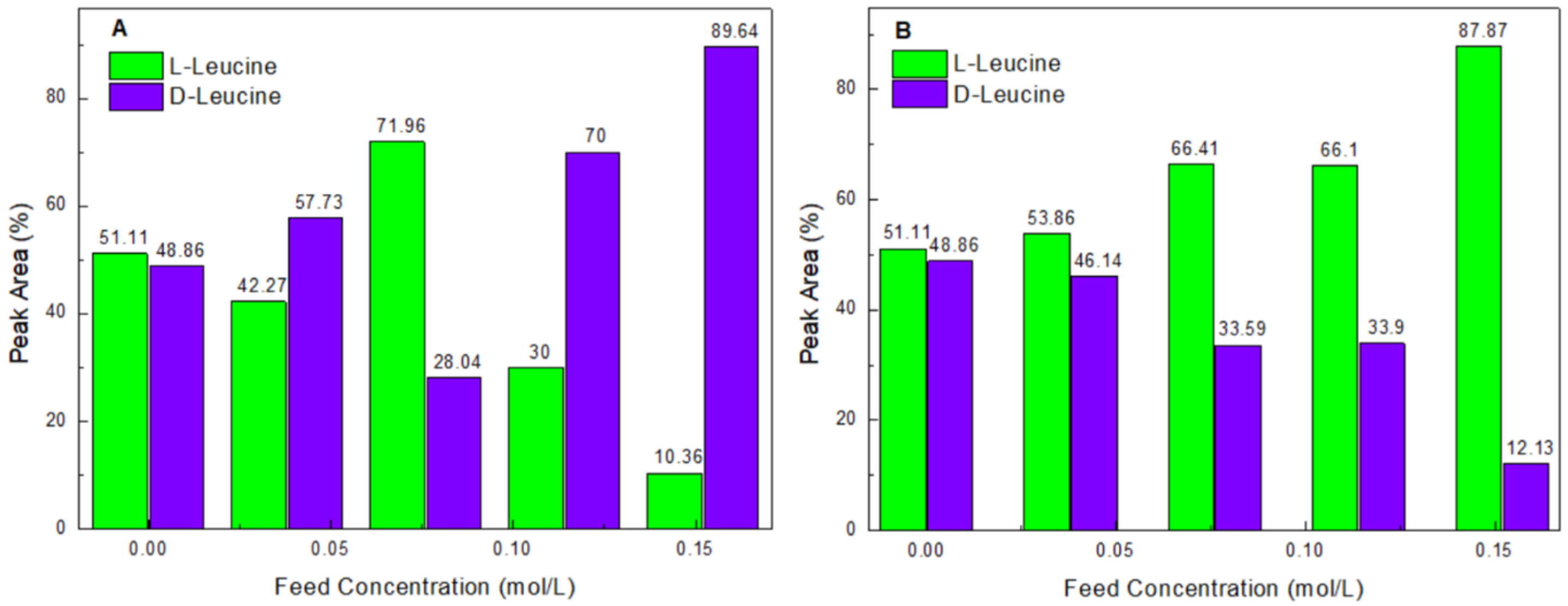
was calculated relative to the initial feed, revealing the enantiomer selectivity transported by each membrane. As a reference, uncoated (commercial) PVDF membranes were used in the identical filtration experiment. An HPLC analysis of filtration through these reference membranes shows stable L/D-Leu peak areas of ca. 54/46% (±2%), corresponding to an
of L-Leu of approximately 8%. The slight deviation from the expected 50/50 enantiomeric ratio observed for pristine PVDF membranes (54/46% ± 2%) is attributed to minor experimental uncertainties associated with the filtration procedure and HPLC analysis rather than intrinsic enantioselectivity. Since PVDF itself is an achiral polymer, no preferential interaction with either enantiomer is expected, and the observed variation falls within the typical analytical uncertainty of the measurement. Selected filtration measurements were independently repeated under identical experimental conditions (n = 2) to verify the reproducibility of the enantioselective transport studies. The reported values represent the average of independent measurements, and error bars correspond to the standard deviation of the replicates. The variability between measurements was typically within ±3%. The HPLC results for filtration through unprotected L-Phe-coated membranes (
Figure 5A) exhibit a clear enantioselective transport behavior, with higher
values in favor of D-Leu as feed concentration increased, reaching a maximum of ca. 79%. One data point at 0.076 M deviates from this general trend, showing ca. 43%
for L-Leu. Conversely, filtration through unprotected D-Phe-coated membranes (
Figure 5B) resulted in enantioselective transport favoring L-Leu, with
values increasing up to ca. 76% at a feed concentration of 0.15M. Overall, the unprotected L-Phe-coated membranes exhibit a preferential retention of L-Leu, leading to enantioselective transport in favor of D-Leu in the permeate solution. In contrast, unprotected D-Phe-coated membranes favorably retain D-Leu, resulting in an enrichment in L-Leu in the permeate solution.
The observed enantioselective transport is likely governed by preferential interactions between the chiral nanoparticle-modified membrane surface and the enantiomers. These interactions may involve hydrogen bonding, interactions, and other weak noncovalent forces, leading to the preferential adsorption of one enantiomer at the membrane interface followed by selective transport. Further mechanism studies, such as adsorption isotherms or calorimetric measurements, would be required to quantitatively elucidate the interaction mechanism.
Enantioselective crystallization: To demonstrate the chiral discrimination performance of the L/D-Phe-OMe-coated membranes, a model system based on chiral crystallization was employed. Chiral molecules typically crystallize in one of three forms: racemic compounds, in which equal amounts of left- and right-handed enantiomers are incorporated into a single crystal lattice; conglomerates, composed of physically separate crystals of each pure enantiomer; and solid solutions, where both enantiomers are randomly distributed within the crystal lattice over a defined composition range. In racemic compounds, the enantiomers share the same crystalline structure, making their separation by conventional crystallization methods more challenging than in conglomerate systems [
38]. Supersaturated DL-tyrosine was chosen as an appropriate model system for enantiomeric separation by crystallization under controlled conditions. The stereoselective behavior of the protected L/D-Phe-coated membranes was demonstrated through enantioselective crystallization on their surface. Two crystallization experiments of DL-Tyr (30 mg/50 mL) were performed in the presence of either L- or D-Phe-OMe-coated membranes. Solutions were shaken in an ice bath for 24 h, after which the formed crystals were collected, dissolved in 1M HCl, and analyzed by polarimetry. Optical rotation measurements revealed enantiomeric enrichment: crystals obtained in the presence of L-Phe-OMe-coated membranes exhibited a negative optical rotation (
), corresponding to an
of 60% in favor of L-Tyr, whereas crystallization on D-Phe-OMe-coated membranes yielded crystals with a positive optical rotation (
), corresponding to a 67.5%
in favor of D-Tyr. The polarimetry of the dissolved crystals and
analysis of the crystallization solutions consistently indicate membrane-induced enantioselective crystallization.
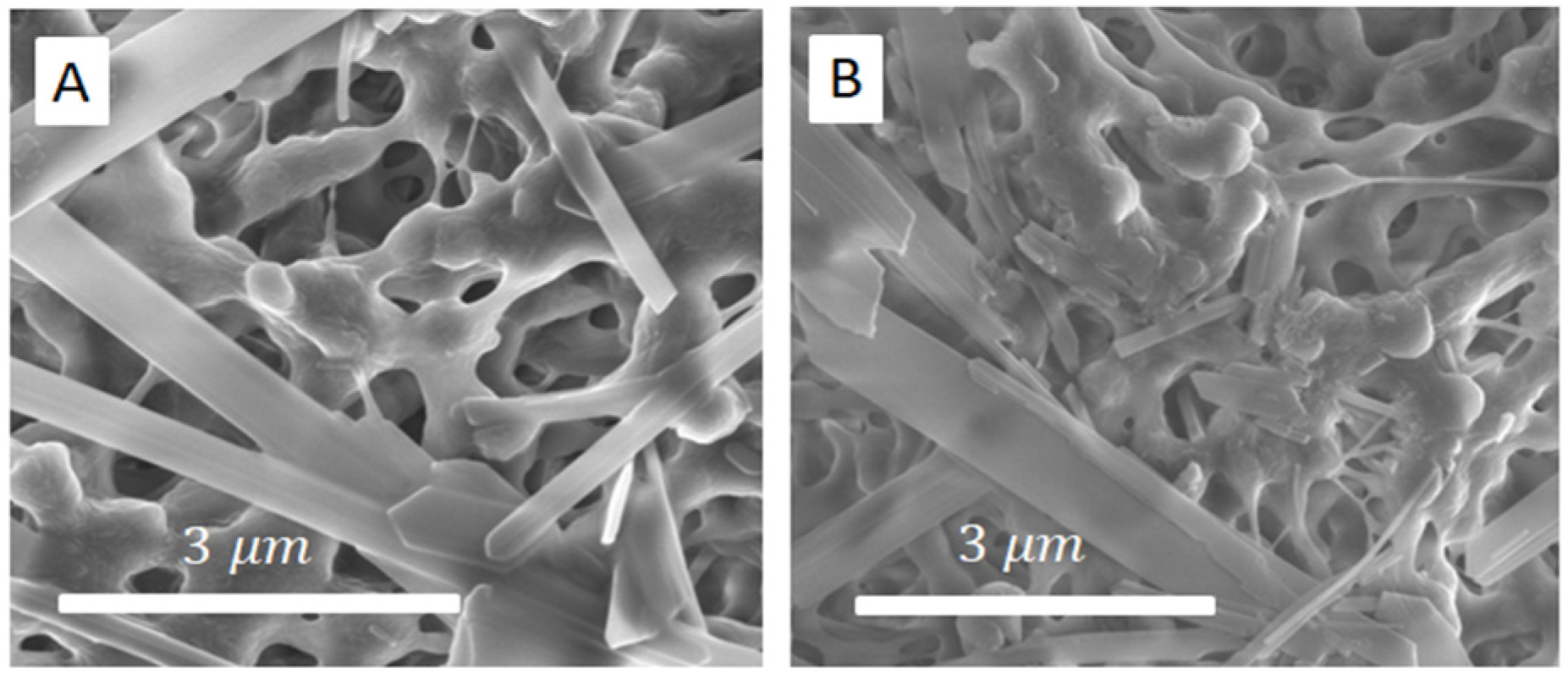
Figure 6 displays SEM images of membranes coated with poly-D-Phe-OMe particles after 24 h in the DL-Tyr crystallization solution. These images present needle-like tyrosine crystals on the surface of the chiral membranes (
Figure 6A,B).
Figure 6 demonstrates the extensive nucleation and growth of tyrosine crystals on the chiral membrane surface, accompanied by crystal formation within the solution. The control crystallization experiment performed in the absence of chiral membranes yielded DL-Tyr crystals with the characteristic racemic morphology, as confirmed in the HR-SEM image (
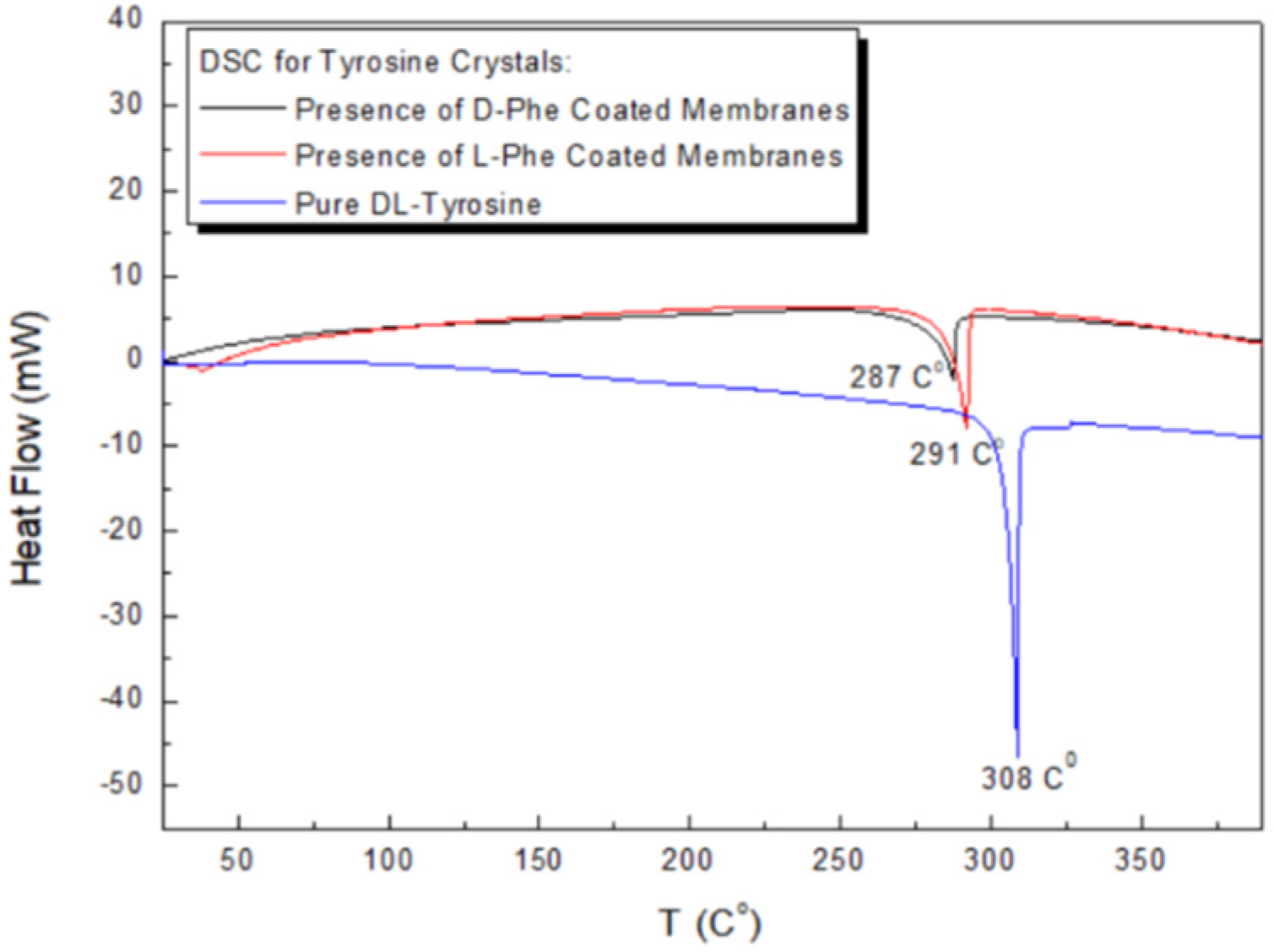
Figure S6). No significant differences in crystal shape or surface features were observed, indicating that the chiral membranes influence enantioselective nucleation rather than crystal morphology. To examine enantioselective crystallization on the chiral membranes, we utilized DSC, as racemates and pure enantiomers differ in thermal behavior. Here, we demonstrate that the obtained tyrosine crystals exhibit properties characteristic of enantiomerically enriched crystals rather than a racemic phase [
39]. For instance, previous DSC studies on histidine revealed a shift in the melting peak between racemic crystals and enantiomerically pure forms [
40]. The solid samples obtained from the crystallization experiments were analyzed by DSC, revealing the chiral characteristics of the crystals. The presence of a small fraction of pure enantiomers can reduce the melting point of racemic compounds.
Figure 7 shows the DSC curves of pure DL-Tyr crystals and DL-Tyr obtained from crystallization on L/D-Phe-OMe-coated membranes. DSC analysis reveals that pure racemic DL-Tyr melts at 308 °C (blue curve), whereas crystallization on chiral membranes shifts the melting point. The DSC results of DL-Tyr crystallized on L-Phe-OMe-coated membranes indicate a melting point of 291 °C (red curve), while D-Phe-OMe-coated membranes yield a melting point of 287 °C (black curve). The observed shifts in the melting point indicate enantiomeric enrichment induced by the chiral membrane’s surface.
Figure S7 displays the XRD patterns of the crystals obtained using the functionalized membranes (pink and blue), which overlap with the diffraction profile of the racemic DL-Tyr reference (black). The observed decrease in melting temperature relative to racemic DL-tyrosine may indicate partial enantiomeric enrichment or preferential nucleation induced by the chiral membrane surface, while the overall crystal structure remains largely consistent with the racemic phase, as indicated by XRD. This behavior is consistent with a conglomerate-like crystallization pathway induced by the stereospecific surface, where the membrane templates the separation of the L and D phases during the early stages of crystal growth. These results collectively demonstrate that the integration of chiral polymeric beads into the PVDF matrix imparts robust enantioselective recognition, effectively guiding the crystallization of a preferred enantiomer from racemic solutions.