3.1. Shear Creep Behavior of Polyethylene with Different Molecular Weights
To investigate the effect of weight-average molecular weights (M
w) on shear creep, polyethylene homopolymer samples PE14, PE19, PE22, PE25 and PE32 with different M
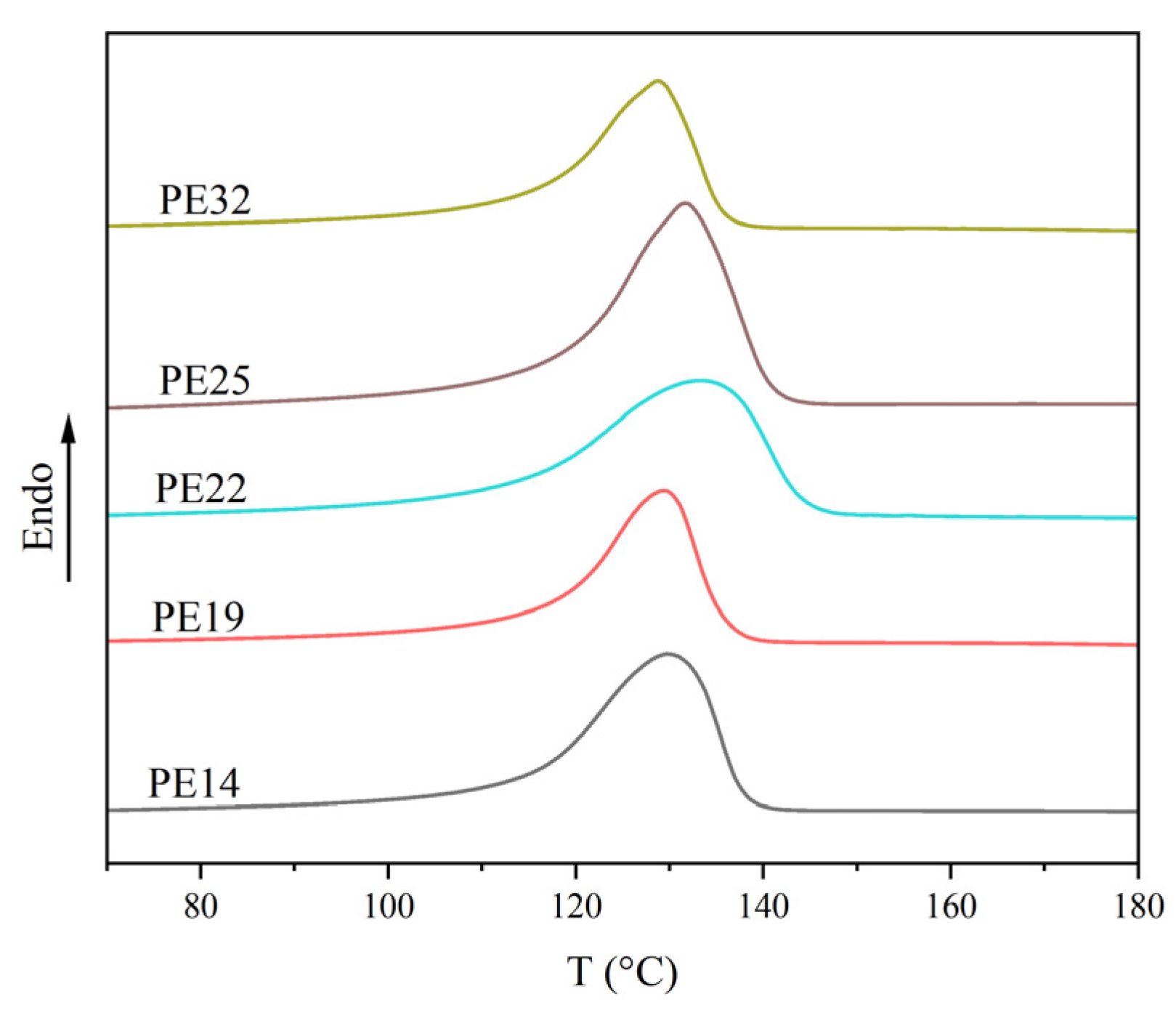
w were selected for testing. To determine the appropriate temperatures for subsequent creep tests, the melting behavior of the samples with different M
w was examined. The melting curves for the five samples are presented in
Figure 1.
Based on the melting parameters of the samples, two experimental temperatures were selected: 90 °C (below the Tm) and 210 °C (above the Tm). This temperature selection was intended to ensure good resolution and low measurement error in the creep behavior within the low-temperature region while preventing thermal decomposition of the samples in the high-temperature region.
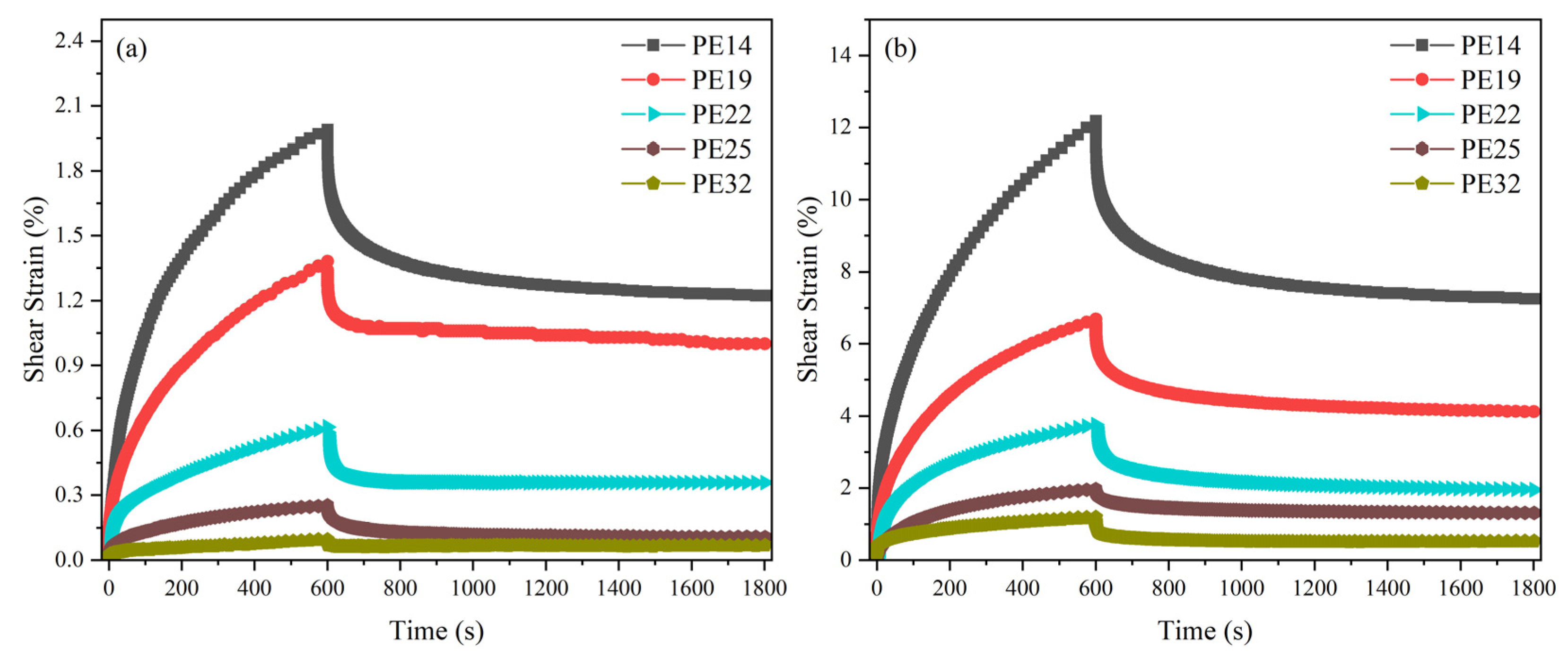
The shear creep test results at two selected temperatures are shown in
Figure 2.
As shown in
Figure 2, during the shear creep process at two temperatures, all samples underwent a transition from the deceleration creep stage to the steady-state creep stage. In the deceleration creep stage, the strain rate rapidly reached its maximum value immediately after load application and then gradually decreased with time. In the steady-state creep stage, the strain rate stabilized and remained relatively constant. At 90 °C, compared with the initial state, the maximum shear strains of PE14, PE19, PE22, PE25, and PE32 were 2.0%, 1.4%, 0.6%, 0.3%, and 0.1%, respectively (
Figure 2a). Compared with the initial state at 210 °C, the maximum shear strains of PE14, PE19, PE22, PE25, and PE32 were 12.2%, 6.7%, 3.8%, 2.0%, and 1.2%, respectively (
Figure 2b). In the experiments at both temperatures, PE14 exhibited the highest creep strain, whereas PE32 showed the lowest, meaning that the maximum creep strain decreased with increasing molecular weight. Due to the negative correlation between creep strain and creep resistance, these results indicate that PE32 has the best shear creep resistance performance among the tested materials. This trend demonstrates that for these ethylene homopolymer samples, creep resistance improves with increasing M
w. At two experimental temperatures below and above T
m, the order of creep resistance among polyethylenes with different M
w remained consistent, indicating that the amorphous region dominates the shear creep behavior. In terms of creep recovery behavior, all samples underwent recovery at both temperatures, characterized by both instantaneous and delayed recovery. Notably, PE14 exhibited the highest residual permanent deformation, while PE32 showed the lowest.
3.2. Analysis of Shear Creep Mechanism of Polyethylene with Different Molecular Weight
In order to explain the influence mechanism of M
w on the shear creep behavior of polyethylene, dynamic mechanical analysis (DMA) was performed on five selected samples.
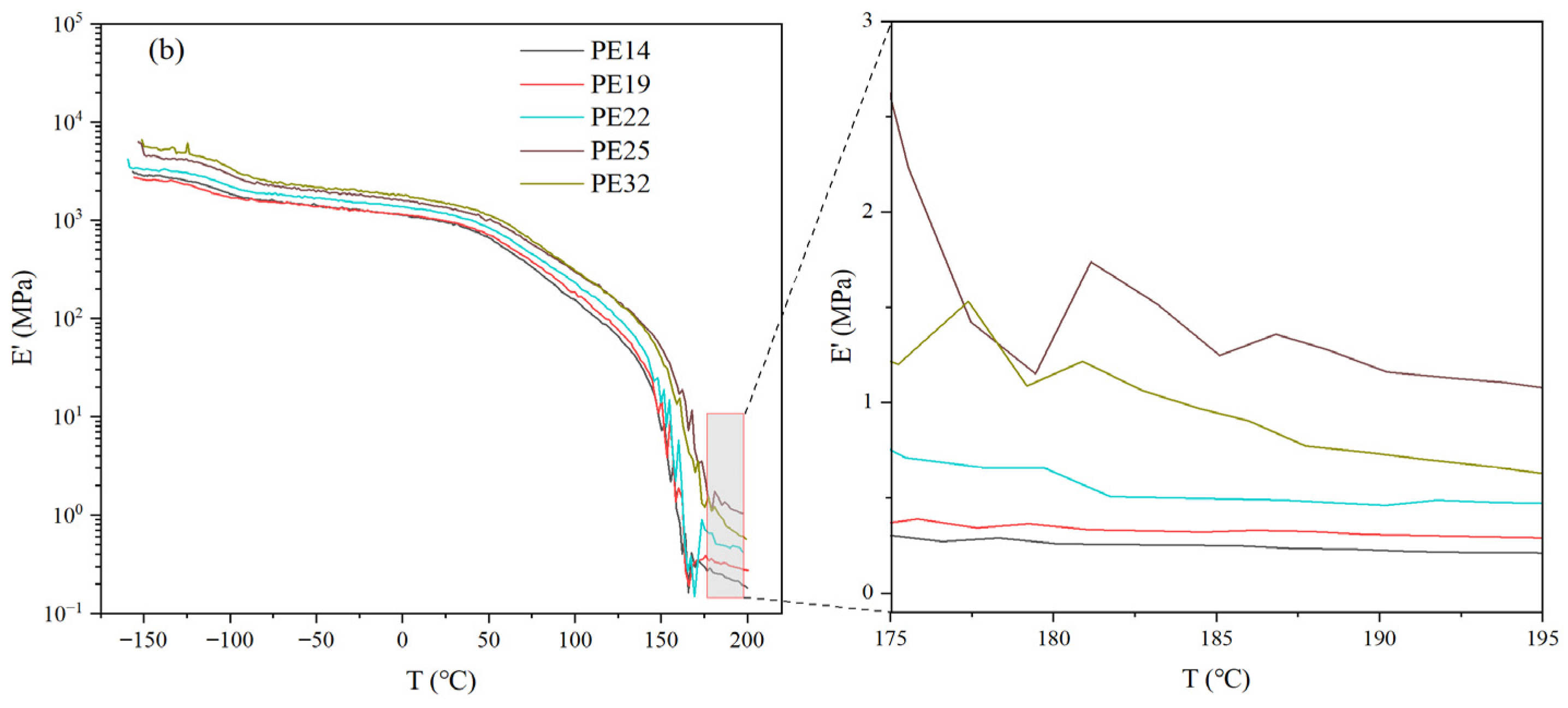
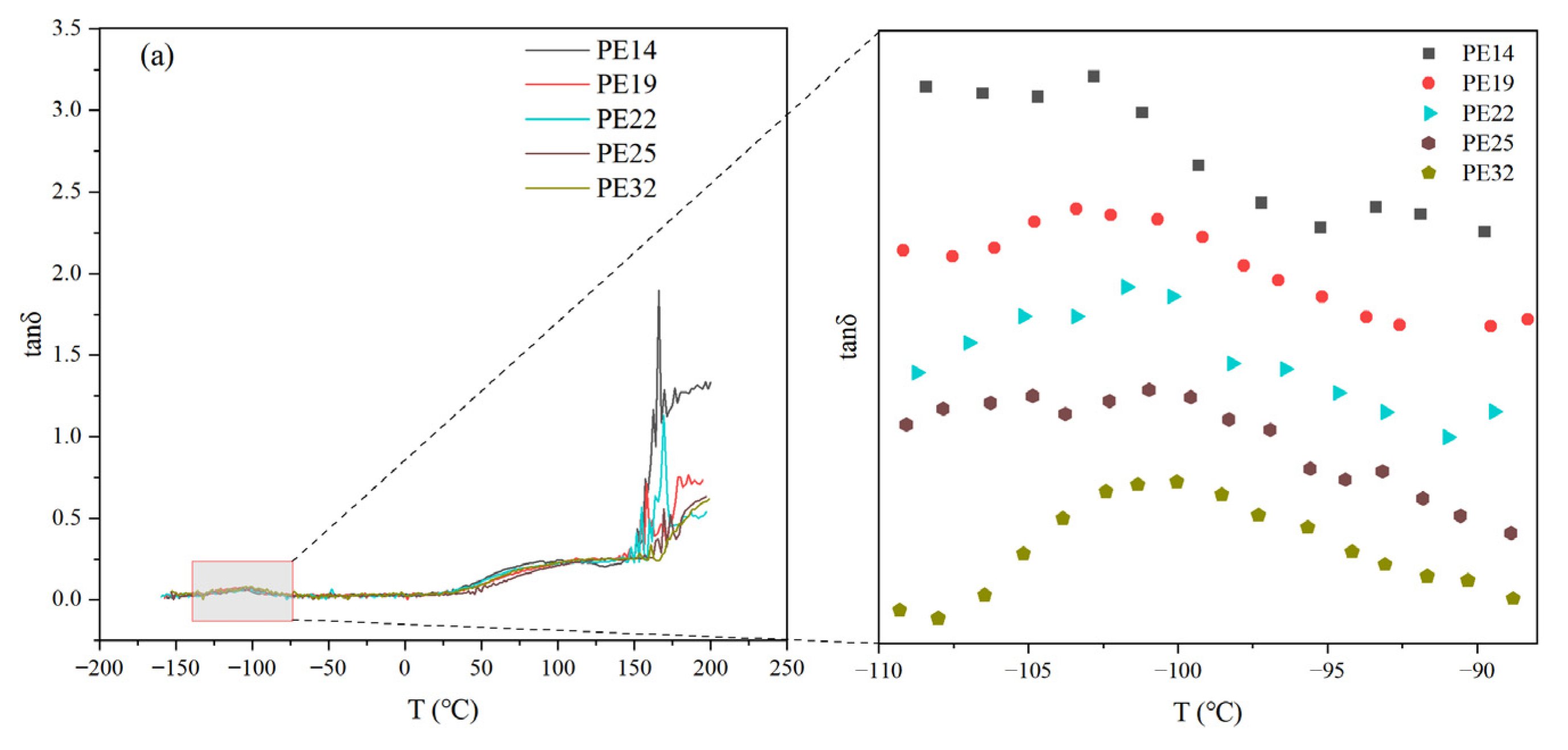
Figure 3a,b show the change curves of the loss factor tanδ and the storage modulus (E’) with temperature at fixed frequency for PE14, PE19, PE22, PE25 and PE32, respectively.
The glass transition temperature (T
g) is the temperature at which an amorphous polymer transitions from a glassy state to a highly elastic state. T
g directly influences the flexibility of polymer chains—generally, a lower T
g corresponds to greater material flexibility. The flexibility of these molecular chains is an important factor governing their shear creep behavior. In this analysis, the temperature corresponding to the tanδ peak was selected as the glass transition temperature T
g of the sample [
22]. According to
Figure 3a, the values of T
g of the five samples have been compiled in
Table 2. The T
g values of PE14, PE19, PE22, PE25, and PE32 samples are −103.0 °C, −102.2 °C, −101.3 °C, −100.7 °C and −100.1 °C, respectively.
In the case of linear polymers, T
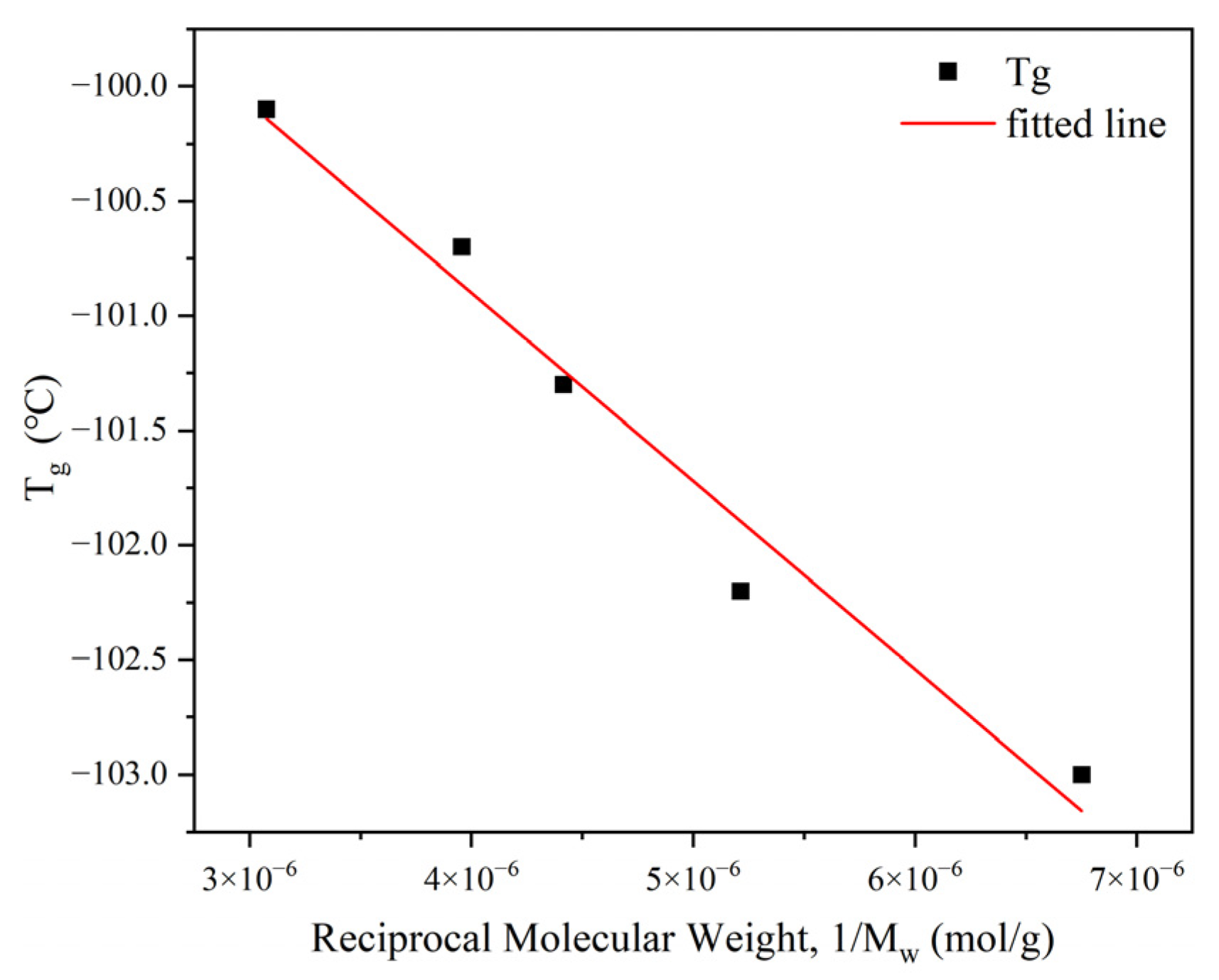
g exhibits a positive dependence on molar mass, varying linearly with the reciprocal of the molecular weight [
23]. This phenomenon is attributed to the effect of the movement of molecular end chains. To verify the reliability of the T
g test results for polyethylene with different molecular weights, the Fox–Flory equation [
23] was used to fit T
g and the reciprocal of the molecular weight (
Figure 4). The R
2 value for the fitted data exceeded 0.97, demonstrating an excellent goodness of fit and a highly significant linear relationship. This confirms that the temperature corresponding to the tanδ peak accurately reflected the Tg of the sample.
Among the five samples, PE32 exhibits the lowest Tg, whereas PE14 shows the highest. A lower Tg indicates greater material flexibility and lower internal rotation resistance of its molecular chains. The positive correlation between Tg and Mw indicates that increasing molecular weight restricts segmental chain mobility, thereby elevating Tg. This restriction on molecular motion simultaneously reduces deformation under shear creep conditions, thus effectively improving the creep resistance of the material.
The influence of molecular weight on the shear creep behavior of HDPE is primarily mediated by the entanglement density, which can be quantified by the entanglement molecular weight (M
e). The M
e is the average value of the molecular weight between two adjacent entanglement points, which can be calculated from the plateau modulus (
). As illustrated in
Figure 3b, the E’ of the samples decreases with increasing temperature and eventually reaches a stable value. This stabilized plateau region corresponds to the
, which is used to calculate the entanglement molecular weight. Using Formula (1) [
24], the entanglement molecular weights for all samples were calculated, and the results are summarized in
Table 2.
The Me can reflect the entanglement density of the polymer chain, with the two exhibiting an inverse relationship. A lower Me value indicates a higher entanglement density. Among the five samples, PE32 exhibits the lowest Me, indicating the highest entanglement density, whereas PE14 shows the opposite behavior. The higher molecular weight of PE32 promotes the formation of a greater number of entanglement points, thereby resulting in the highest entanglement density among the samples. This enhanced entanglement strengthens intermolecular interactions and constraints, consequently improving the resistance of PE32 to external shear stress. As a result, PE32 exhibits the smallest deformation and superior creep resistance during shear creep tests. In contrast, PE14 demonstrates the poorest creep performance.
In order to further analyze the mechanism of M
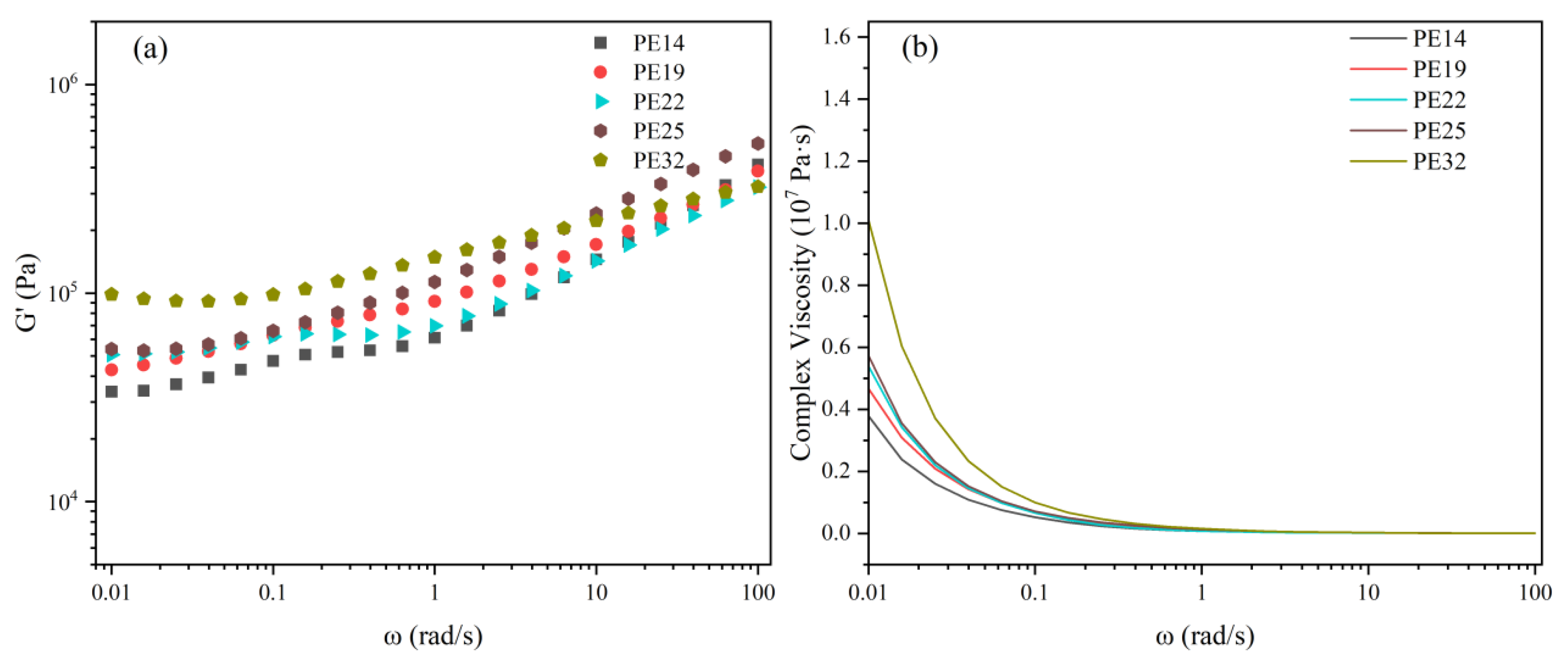
w affecting shear creep, rheological tests were conducted on the five samples PE14, PE19, PE22, PE25, and PE32, as shown in
Figure 5a,b.
The storage modulus (G’) serves as a key indicator for characterizing the viscoelastic behavior of polymers.
Figure 5a shows the variation of G’ with frequency for the five samples. As observed, G’ increases with increasing frequency for all materials. The rise in G’ at high angular frequencies can be attributed to the delayed response of chain segments to rapid external loading [
25]. Thus, the low-frequency G’ is more relevant and representative of the material behavior under the shear creep conditions examined in this experiment. At low angular frequencies, PE32 exhibits the highest G’ values, indicating its superior elasticity. This enhanced elasticity, stemming from its high entanglement density, enables PE32 to effectively resist deformation, thereby resulting in its improved creep resistance.
Relaxation time is a fundamental parameter that characterizes the viscoelastic behavior of materials, defined as the duration required for a material to return to its equilibrium state following the removal of an external force that induced deformation. The relaxation time of each sample can be calculated using the Cross formula (Formula (2)) [
26].
Figure 5b shows the curves of the composite viscosity of five samples as a function of frequency, and the corresponding relaxation times are 162 s, 180 s, 203 s, 225 s, and 263 s, respectively. Among them, PE14 exhibits the shortest relaxation time, while PE32 has the longest relaxation time. The longer relaxation time can be attributed to the more stable polyethylene chain structure formed by high entanglement density. This more stable structure reduces the creep deformation of HDPE under sustained shear stress and improves the shear creep resistance of PE32.
Based on the above analysis, it is evident that the M
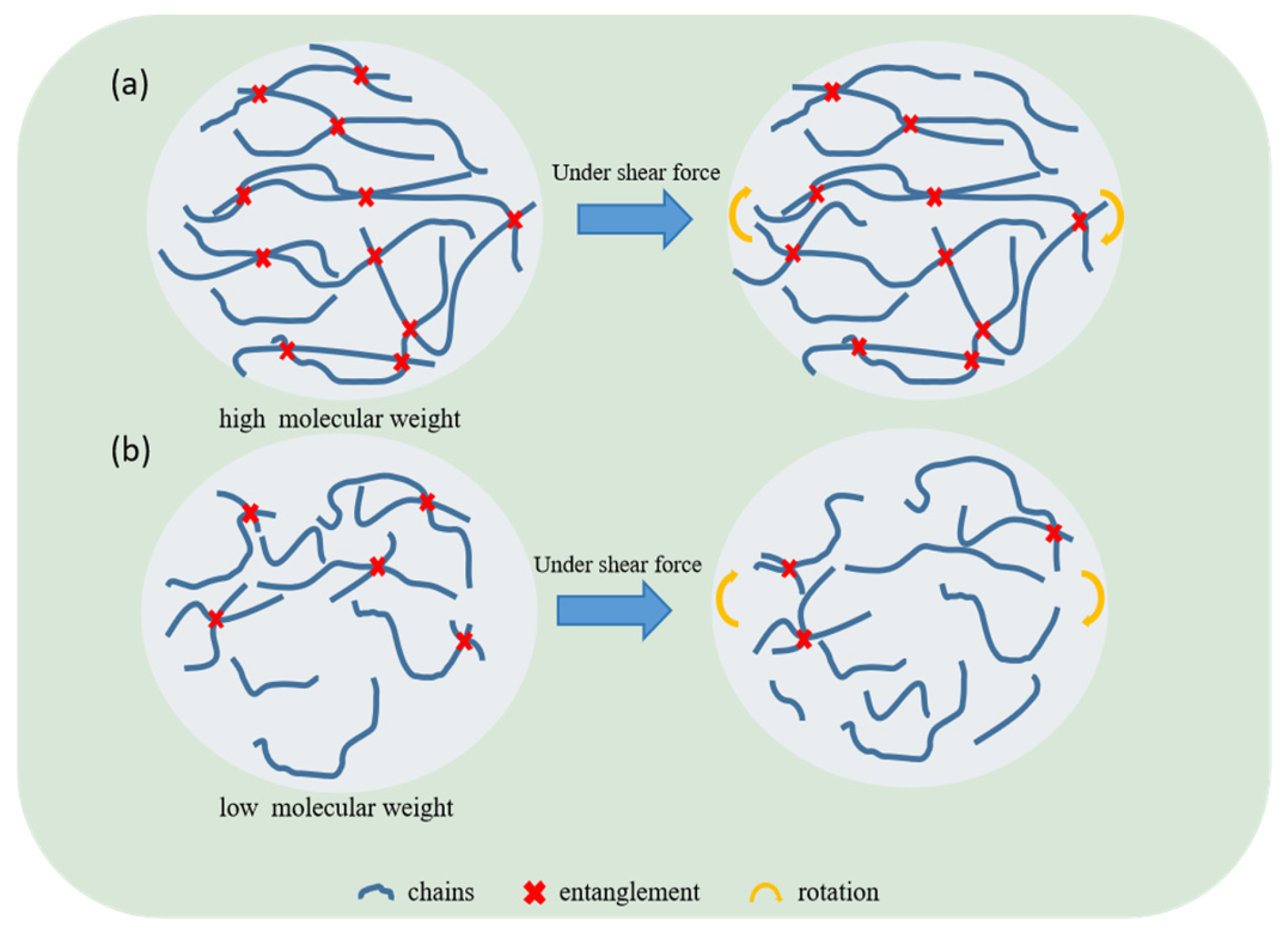
w influences the viscoelastic properties of polyethylene by governing its entanglement density. The specific mechanism is shown in
Figure 6. During shear creep, polyethylene deforms primarily through the gradual extension of chain segments and the relative slip between molecular chains. Polyethylenes with higher M
w possess longer polymer chains that promote the formation of more entanglement points, leading to a higher entanglement density. This molecular structure with high entanglement density contributes to greater elasticity and substantially improves creep resistance. In contrast, polyethylene with lower M
w exhibits reduced entanglement density, which offers less resistance to chain slippage and thus results in inferior creep resistance. These findings demonstrate that under identical shear stress conditions, higher M
w polyethylene features higher entanglement density, which effectively restricts chain mobility and thereby strengthens the material’s resistance to shear creep.
3.3. Shear Creep Behavior of Polyethylene with Different Comonomer
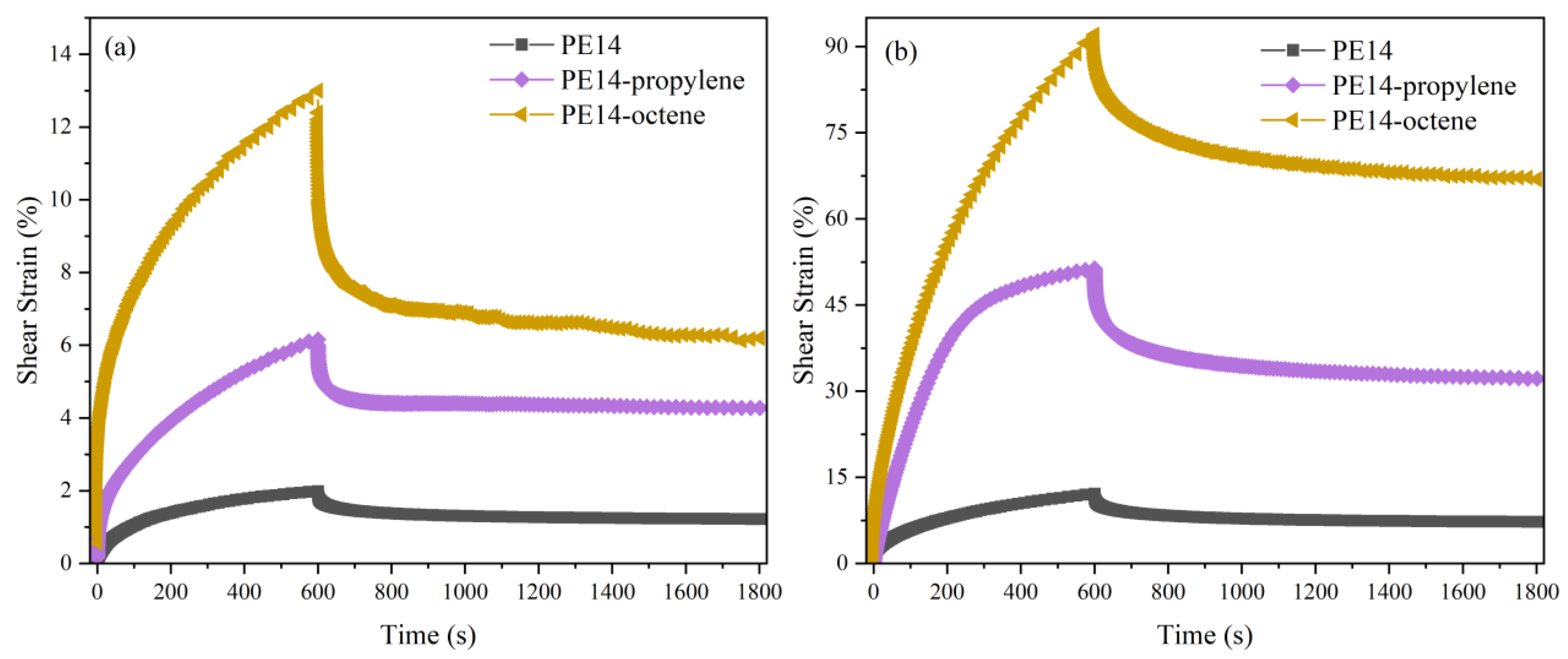
In order to determine the effect of different comonomers on the shear creep resistance of polyethylene, three polyethylene samples with similar molecular weight and number of comonomers but different types of comonomers were subjected to shear creep testing. These three samples are ethylene homopolymer PE14, ethylene propylene copolymer PE14-propylene, and ethylene–octene copolymer PE14-octene. The shear creep test results at 90 °C and 210 °C are shown in
Figure 7.
During the shear creep process at 90 °C, compared with the initial state, the maximum shear deformation of PE14, PE14-propylene and PE14-octene is 2.0%, 6.2%, and 13.0%, respectively. At 210 °C, the corresponding shear deformation values of PE14, PE14-propylene and PE14-octene are 12.2%, 51.4%, and 92.1%, respectively. This trend can be attributed to the presence of branched chains. The branched chains expand the free volume of polymer molecules, thereby reducing intermolecular interactions. Therefore, in contrast to homopolymer polyethylene, copolymer polyethylene with branched chains is more prone to creep deformation under shear stress and exhibits lower shear creep resistance. Regarding creep recovery, significant permanent deformations still occur in polyethylene with different comonomers after both instantaneous and delayed recovery.
3.4. Analysis of Shear Creep Mechanism of Polyethylene with Different Comonomers
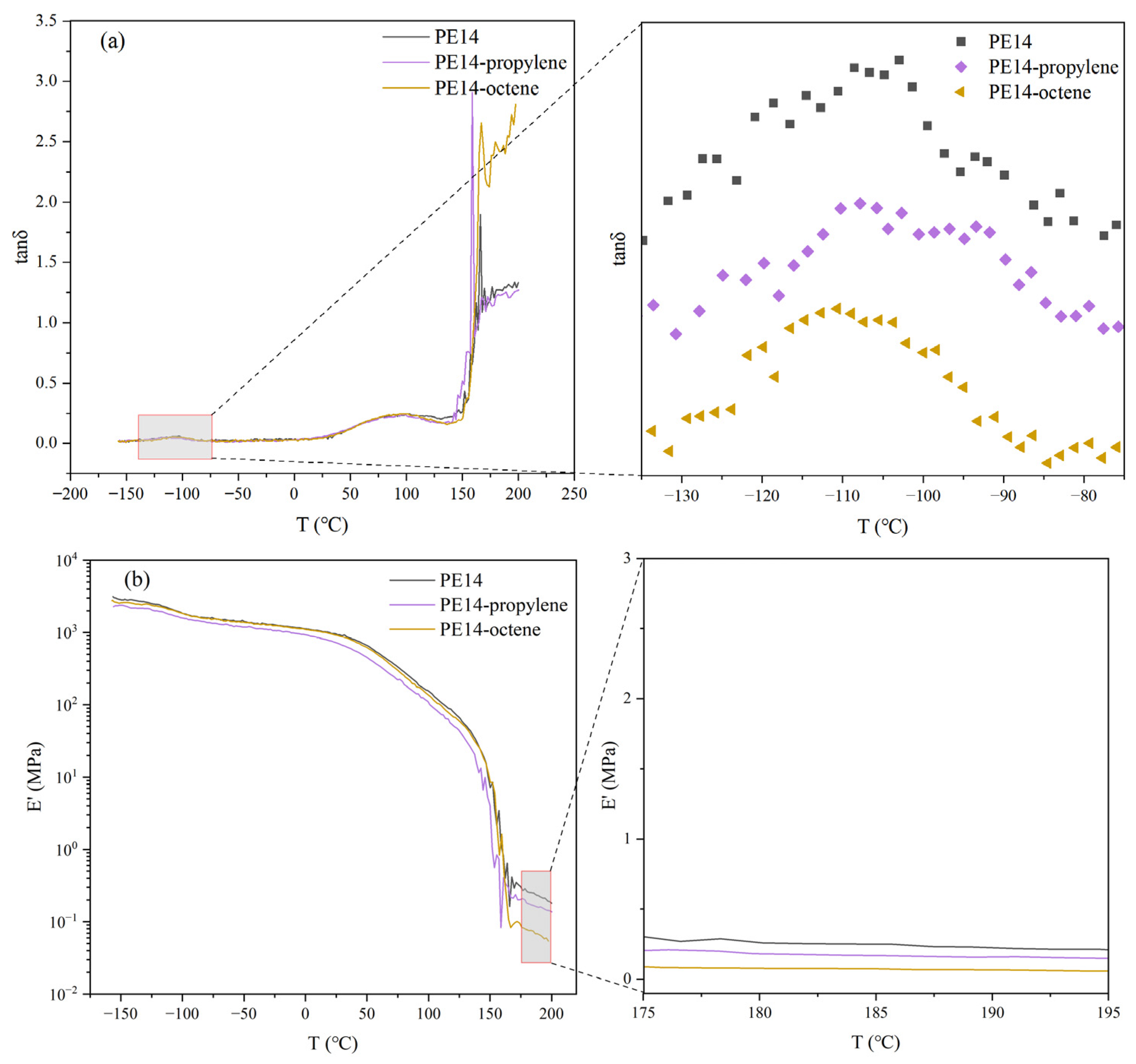
In order to determine the influence mechanism of different comonomers on the shear creep of polyethylene, DMA tests were conducted on the samples.
Figure 8a,b show the variation of the storage modulus E’ and the loss factor tan δ with temperature obtained from temperature scanning of the samples at a fixed frequency.
As mentioned earlier, the shear creep resistance of polyethylene diminishes with decreasing T
g. Based on the test results shown in
Figure 8a, the T
g of the three samples is summarized in
Table 3. The T
g for PE14, PE14-propylene and PE14-octene is −103.0 °C, −107.1 °C and −112.1 °C, respectively. Among the three samples, PE14 exhibits the highest T
g, whereas PE14-octene shows the lowest. Therefore, PE14 shows the highest creep resistance, whereas PE14-octene exhibits the opposite behavior. This finding is consistent with the results of previous studies on shear creep. The reduction in T
g after adding comonomers can be attributed to the introduction of branched chains, which expand the molecular free volume and enhance chain mobility.
As previously discussed, the entanglement density calculated by the
serves as an effective parameter for analyzing the influence of comonomers on the shear creep behavior of materials. As shown in
Figure 8b, the
of PE14, PE14-propylene and PE14-octene is 0.213 MPa, 0.149 MPa, and 0.058 MPa, respectively. The entangled molecular weights of the samples calculated according to Formula (1) are summarized in
Table 3. PE14 exhibits the lowest entanglement molecular weight and the highest entanglement density, whereas PE14-octene shows the highest entanglement molecular weight and the lowest entanglement density. This result can be attributed to the branched structure of PE14-octene, which increases the free volume of molecular chains and thereby reduces the entanglement density. Under an applied stress, low entanglement density allows for easier chain slippage and deformation, leading to its poor resistance to shear creep. Due to its high entanglement density, PE14 strengthens the intermolecular forces, effectively restricts segmental motion, and thereby gives rise to a significantly improved shear creep resistance.
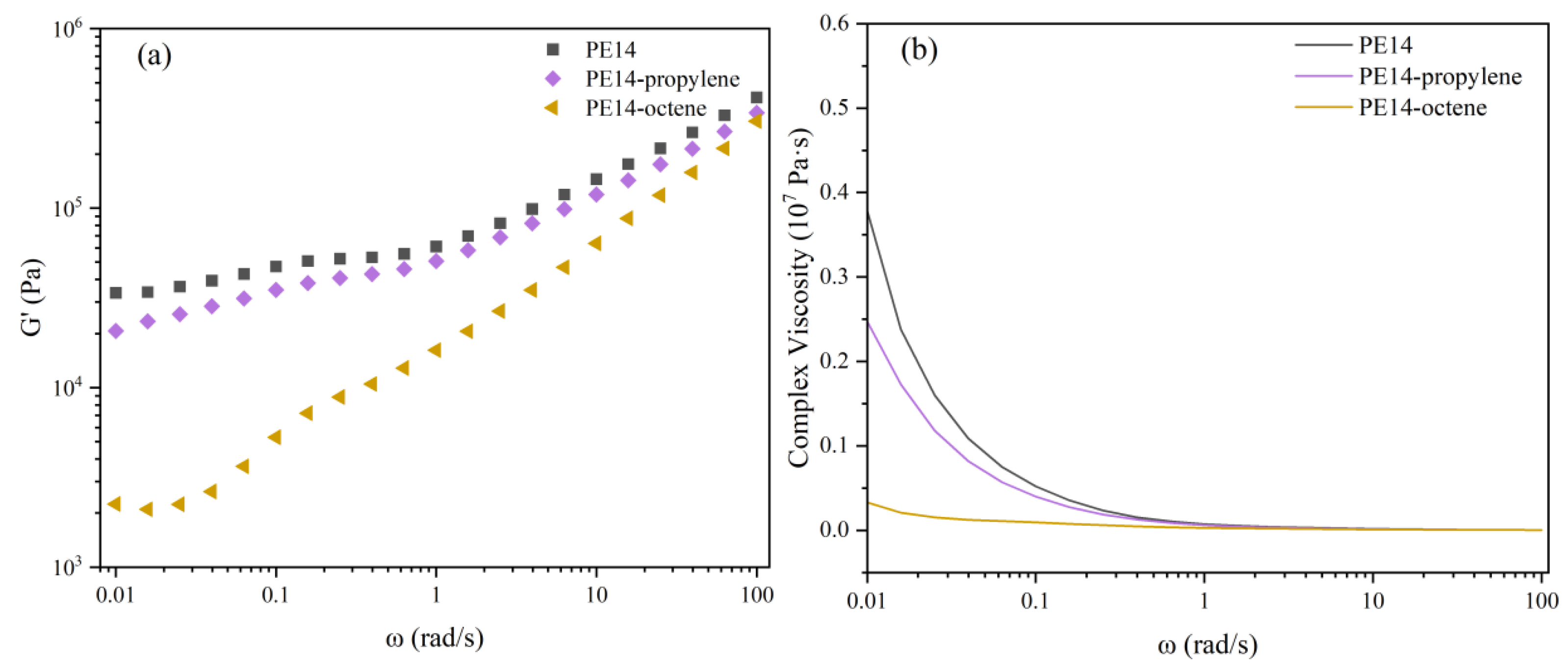
In order to further analyze the influence mechanism of different comonomers on shear creep, rheological tests were conducted on the three samples—PE14, PE14-propylene, and PE14-octene—from the perspectives of modulus and relaxation time. The results are shown in
Figure 9a,b.
Figure 9a shows the storage modulus variation curves of three samples with scanning frequency. The G’ of the three materials decreases with the decline in frequency. At low angular frequencies, PE14 exhibits the highest G’ values, indicating its superior elasticity. In contrast, PE14-octene shows the lowest G’ values, reflecting its poorest elasticity. The decrease in G’ can be attributed to the reduction in chain entanglement density. The lower entanglement density is insufficient to effectively restrict the motion of molecular chains, resulting in greater deformation of the material under shear stress. Consequently, PE14-octene exhibits the poorest resistance to shear creep.
Figure 9b presents the complex viscosity-frequency curves of the three samples. The relaxation time of each sample was calculated from composite viscosity using Formula (2). The relaxation times of PE14, PE14-propylene and PE14-octene are 162 s, 113 s, and 49 s, respectively. PE14 exhibits the longest relaxation time, while PE14-octene shows the shortest. The shorter relaxation time is attributed to a lower entanglement density, which reduces intermolecular interactions and makes the material more prone to deformation. In contrast, PE14 has the longest relaxation time and exhibits a lower deformation tendency, thus having a stronger resistance to shear creep.
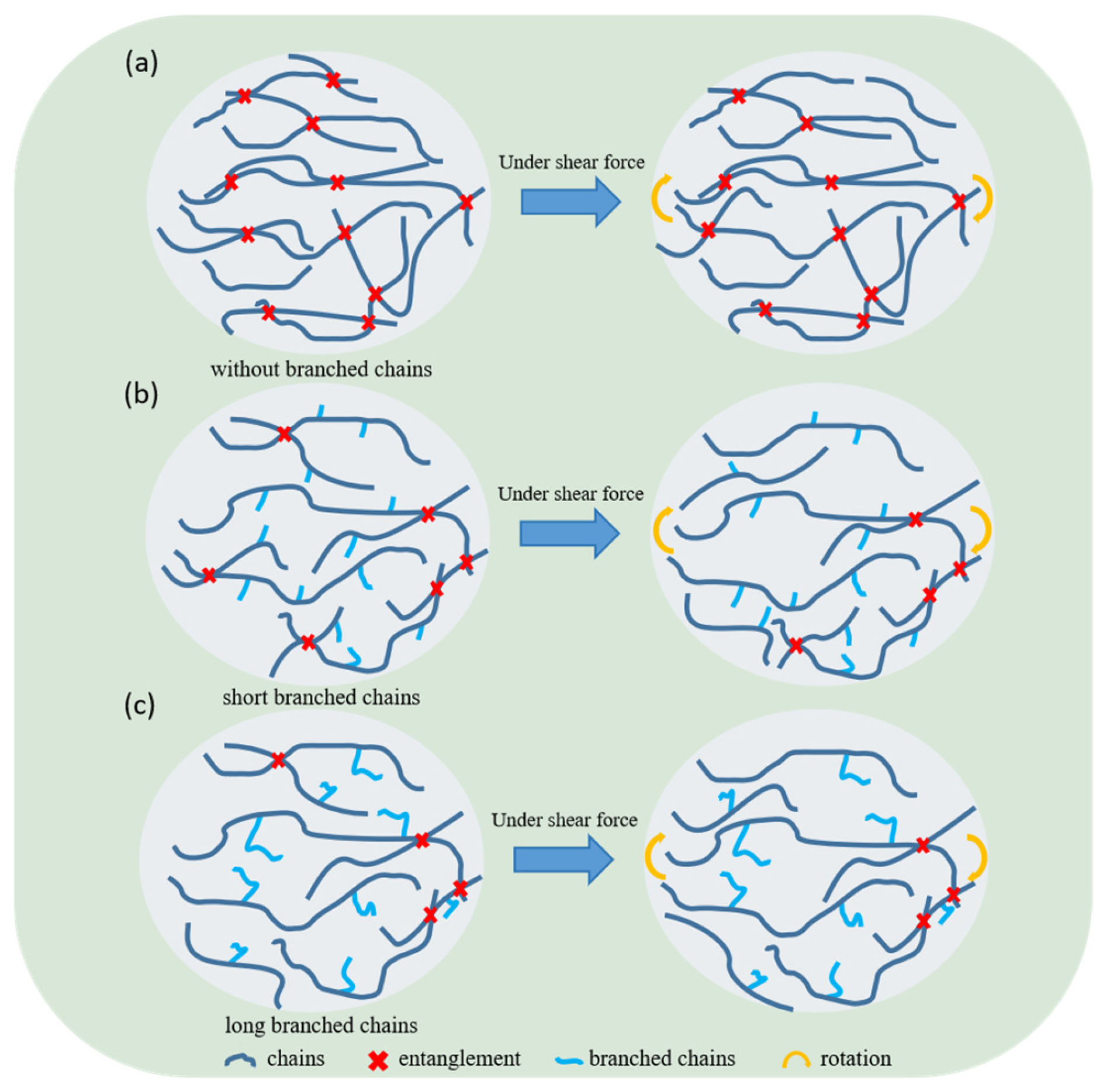
Based on the above analysis, the influence of different comonomers on the shear creep of polyethylene is illustrated in
Figure 10. Compared to homopolymer polyethylene without branched chains, the introduction of comonomers leads to the formation of branched chains, which increase the free volume of the system. The increased free volume reduces entanglement density and weakens intermolecular interactions. With lower entanglement density, the constraints on molecular chain motion become insufficient, allowing the chains to slide past each other more readily. Consequently, the presence of branched chains diminishes the material’s creep resistance. On the other hand, copolymers prepared with different comonomers exhibit varying branch lengths, which also influence creep resistance. Longer branched chains further expand the free volume, leading to an even lower entanglement density. Under shear stress, a lower entanglement density facilitates easier relative sliding between molecular chains. As a result, polyethylene with longer branched chains exhibits the weakest creep resistance. In summary, the presence of branched chains increases molecular free volume, reduces entanglement density, and weakens interchain interactions, thereby lowering the material’s resistance to shear creep. This detrimental effect becomes more pronounced with increasing branch length.