A Process Systems Engineering Approach to Model and Optimize Cr6+-Free and Pd-Free Plating on Plastics Technologies

 , , ,
, , ,  ,
,
Abstract
1. Introduction
2. Materials and Methods
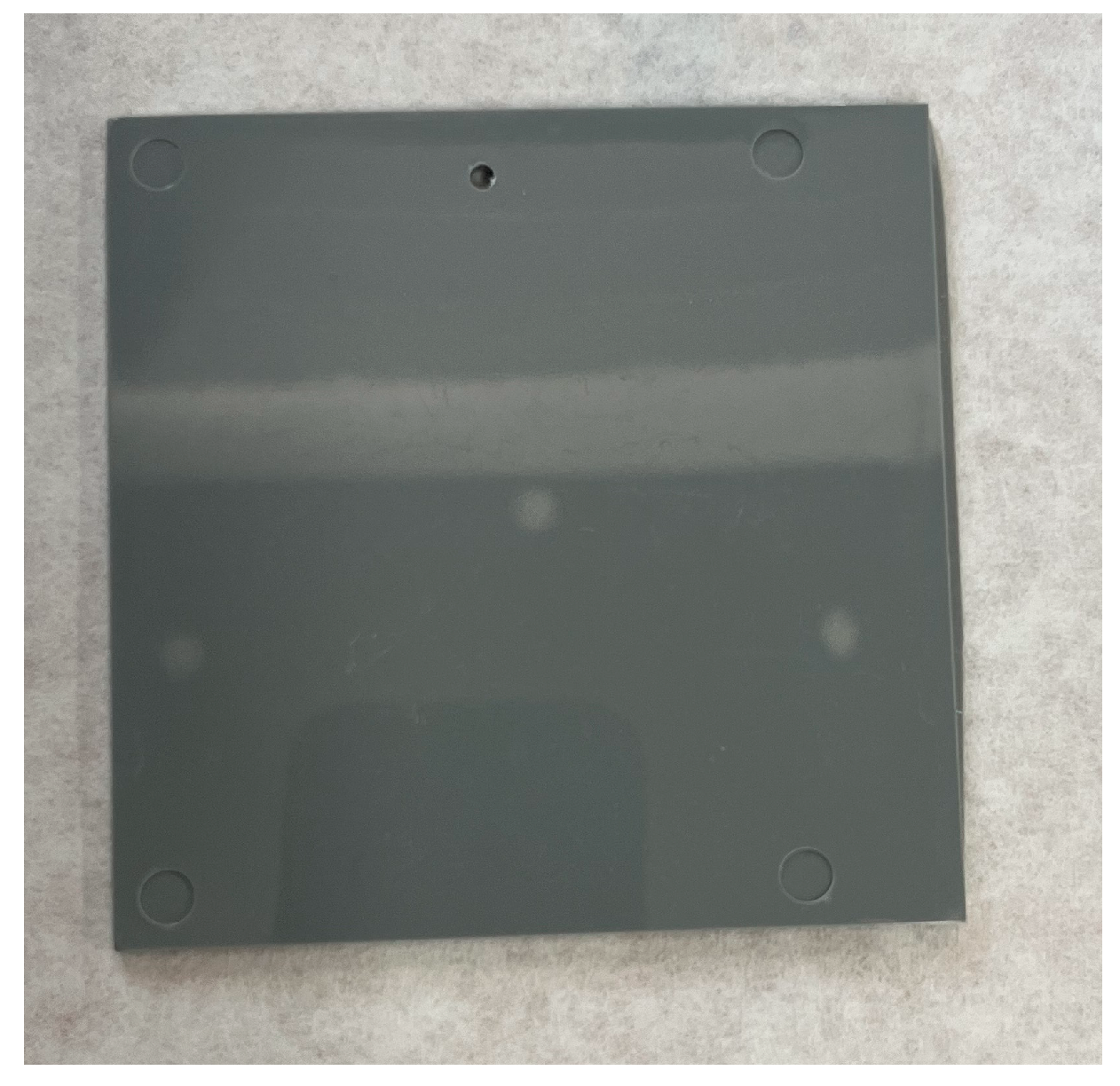
2.1. Plastic Substrates Used in the Study
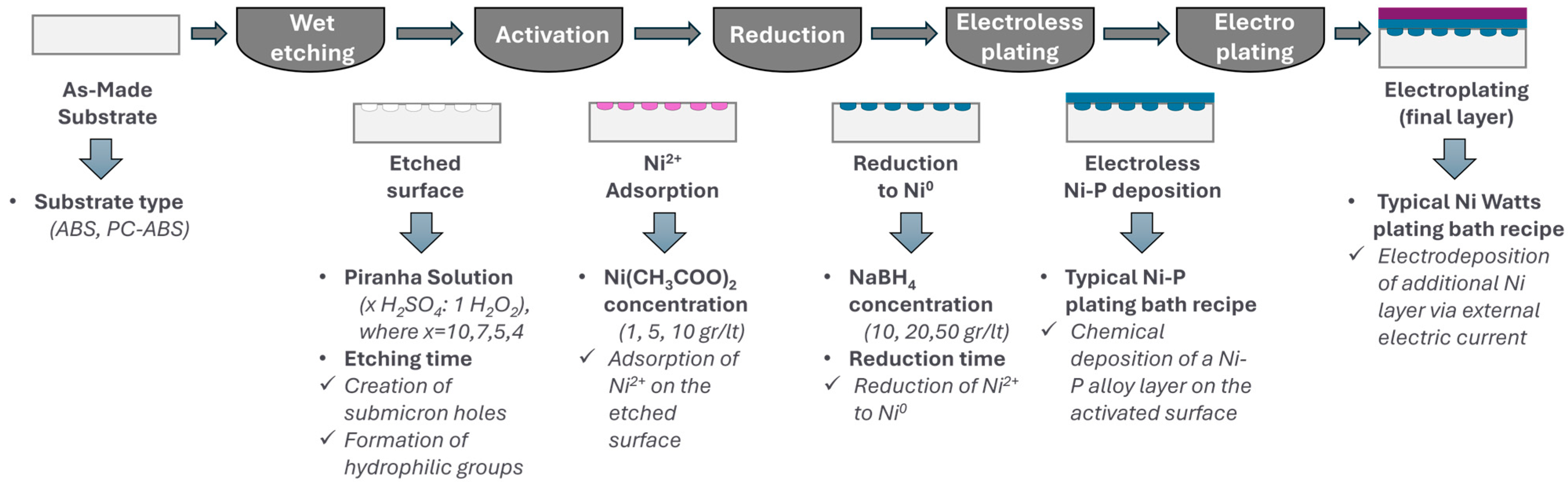
2.2. Overview of Novel PoP Technology
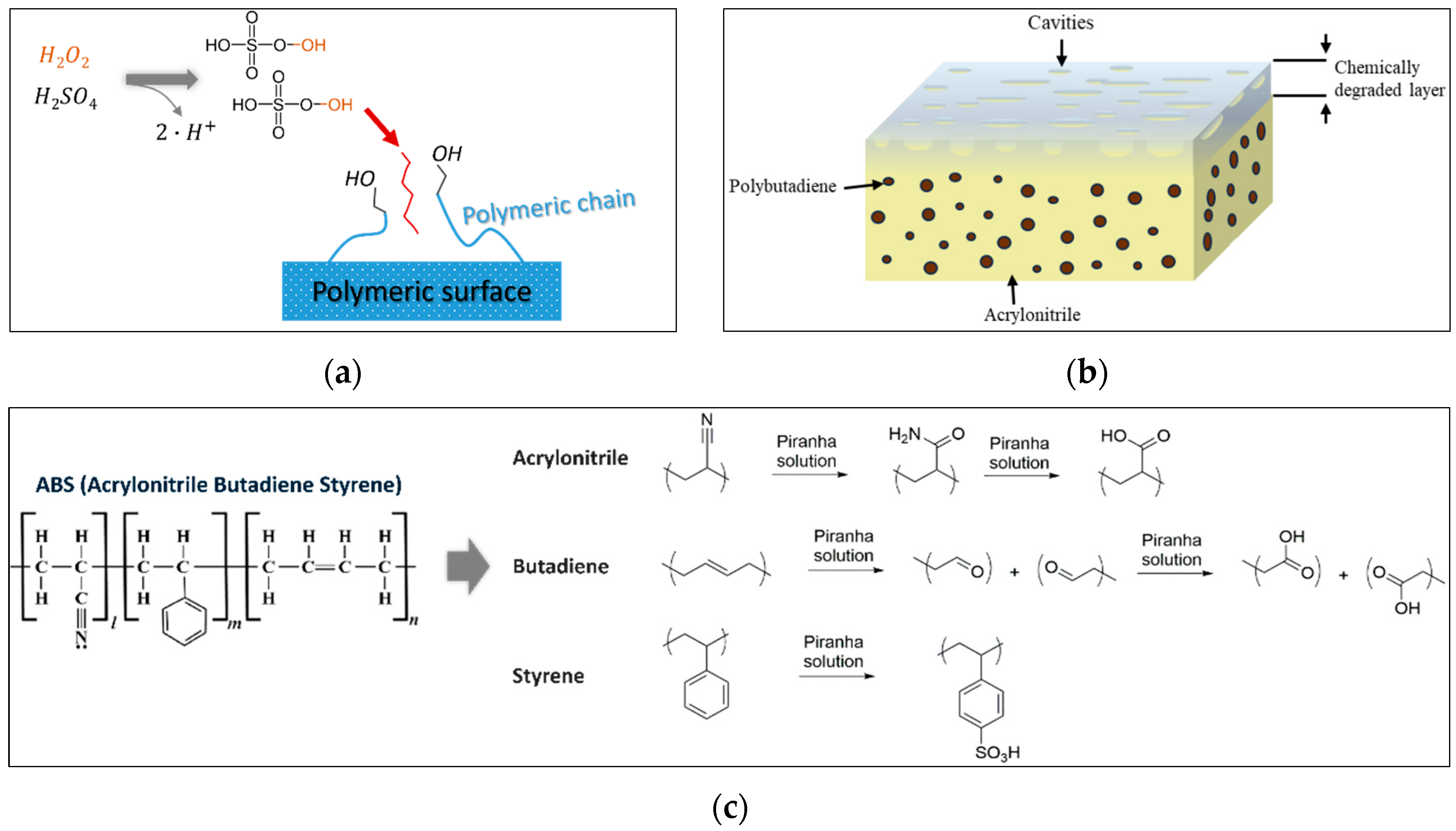
2.3. Etching Processing Stage
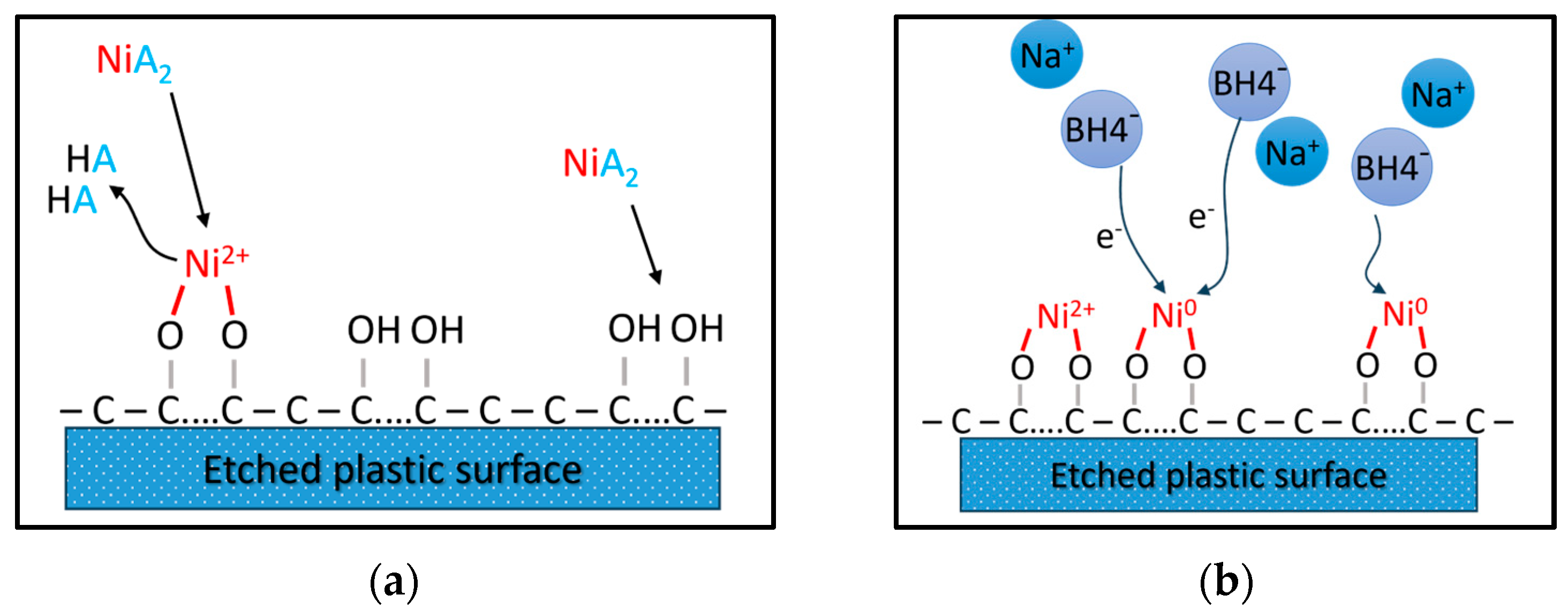
2.4. Activation Processing Stage
2.5. Reduction Processing Stage
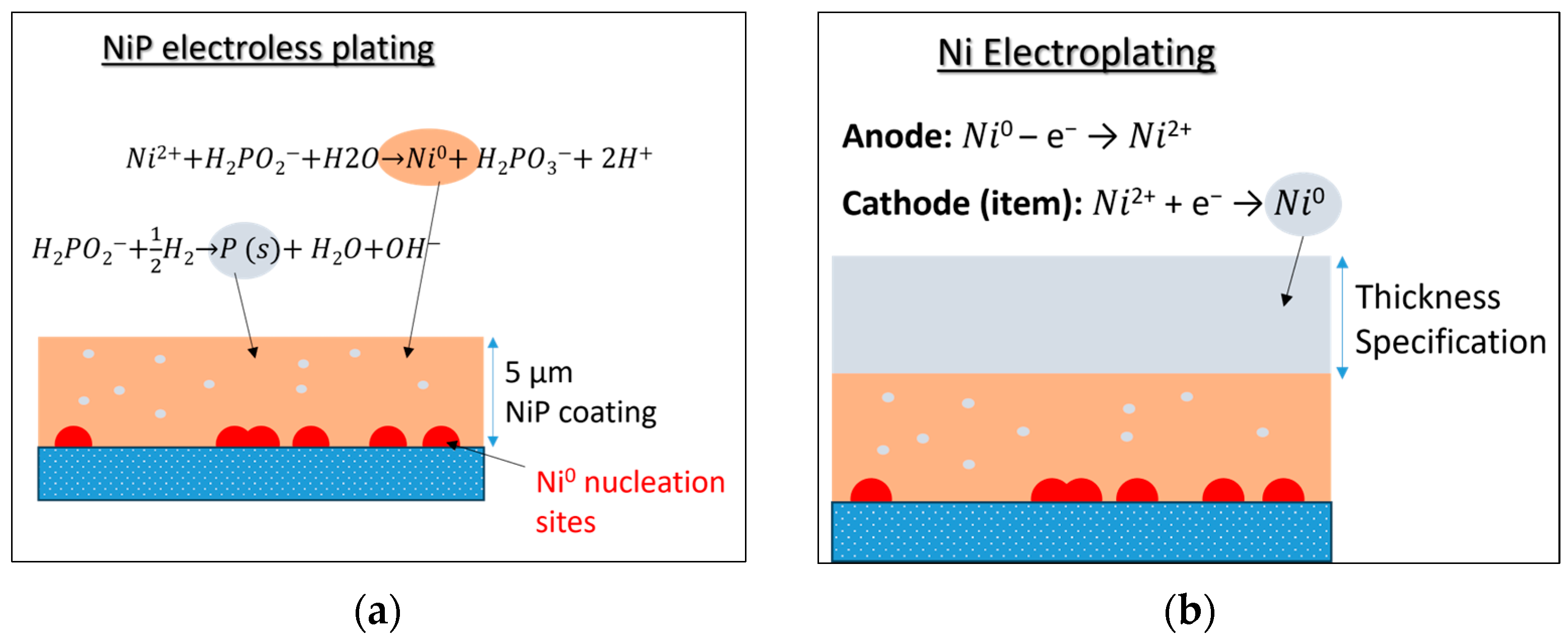
2.6. Electroless Plating
2.7. Electroplating
2.8. Safety Considerations
3. Results
3.1. Property and Unit Operation Models
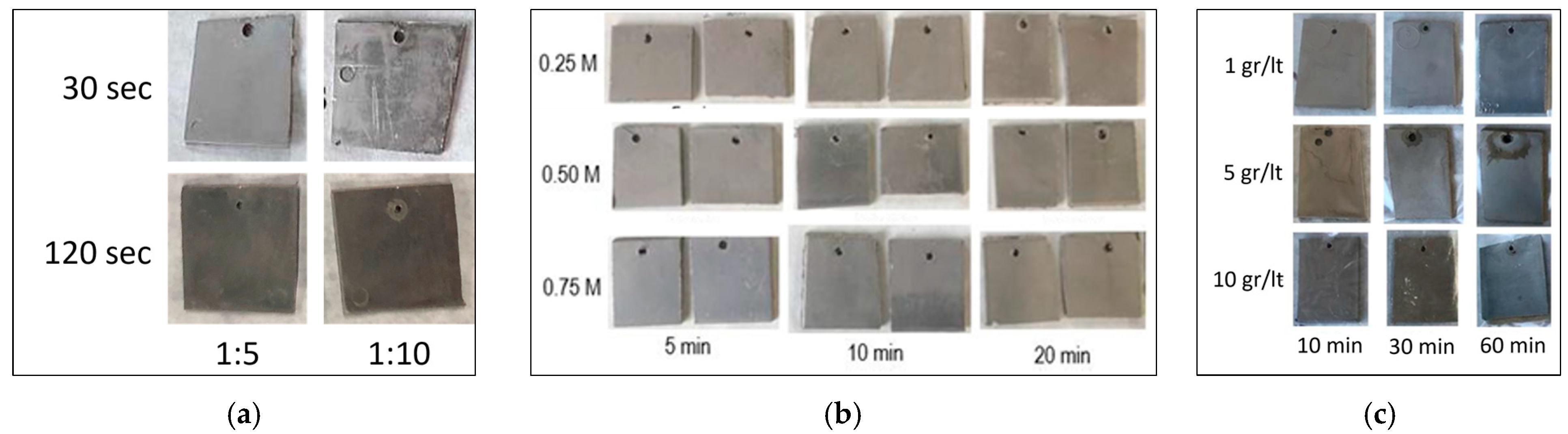
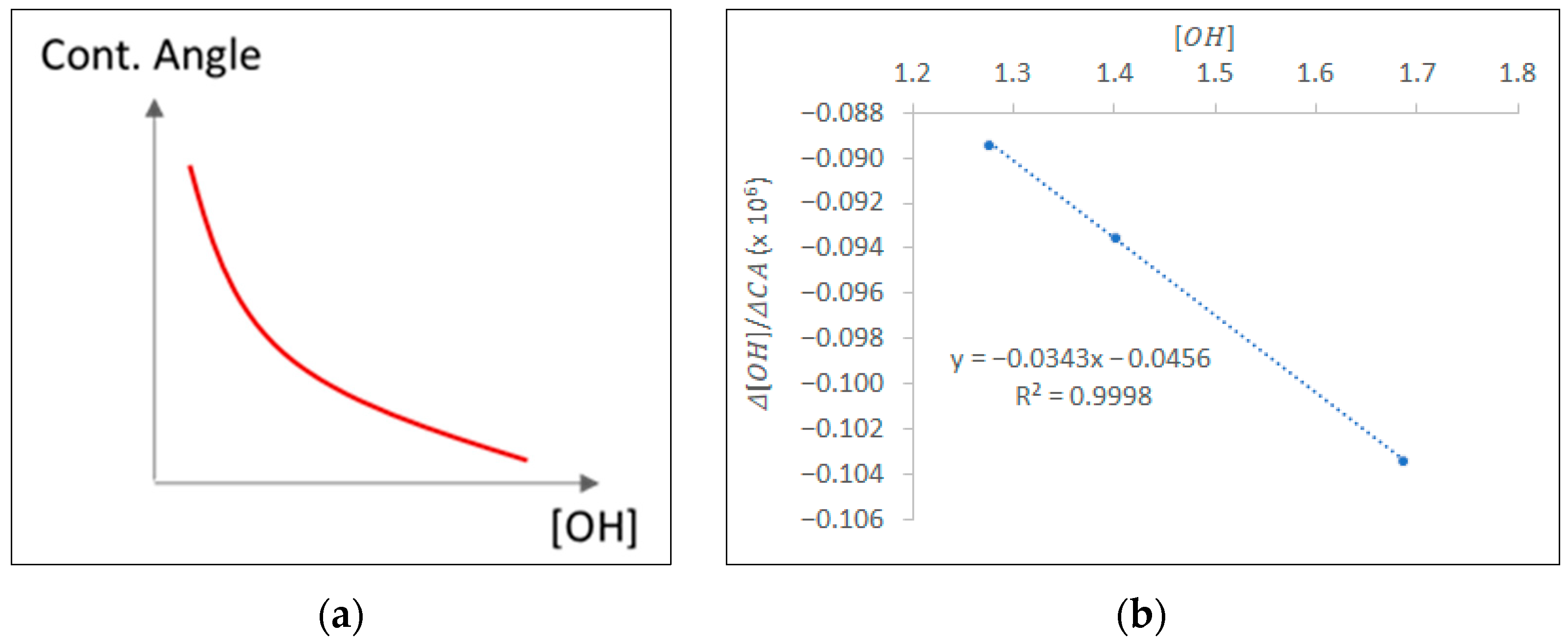
3.1.1. Contact Angle Property Prediction
3.1.2. Surface Concentration
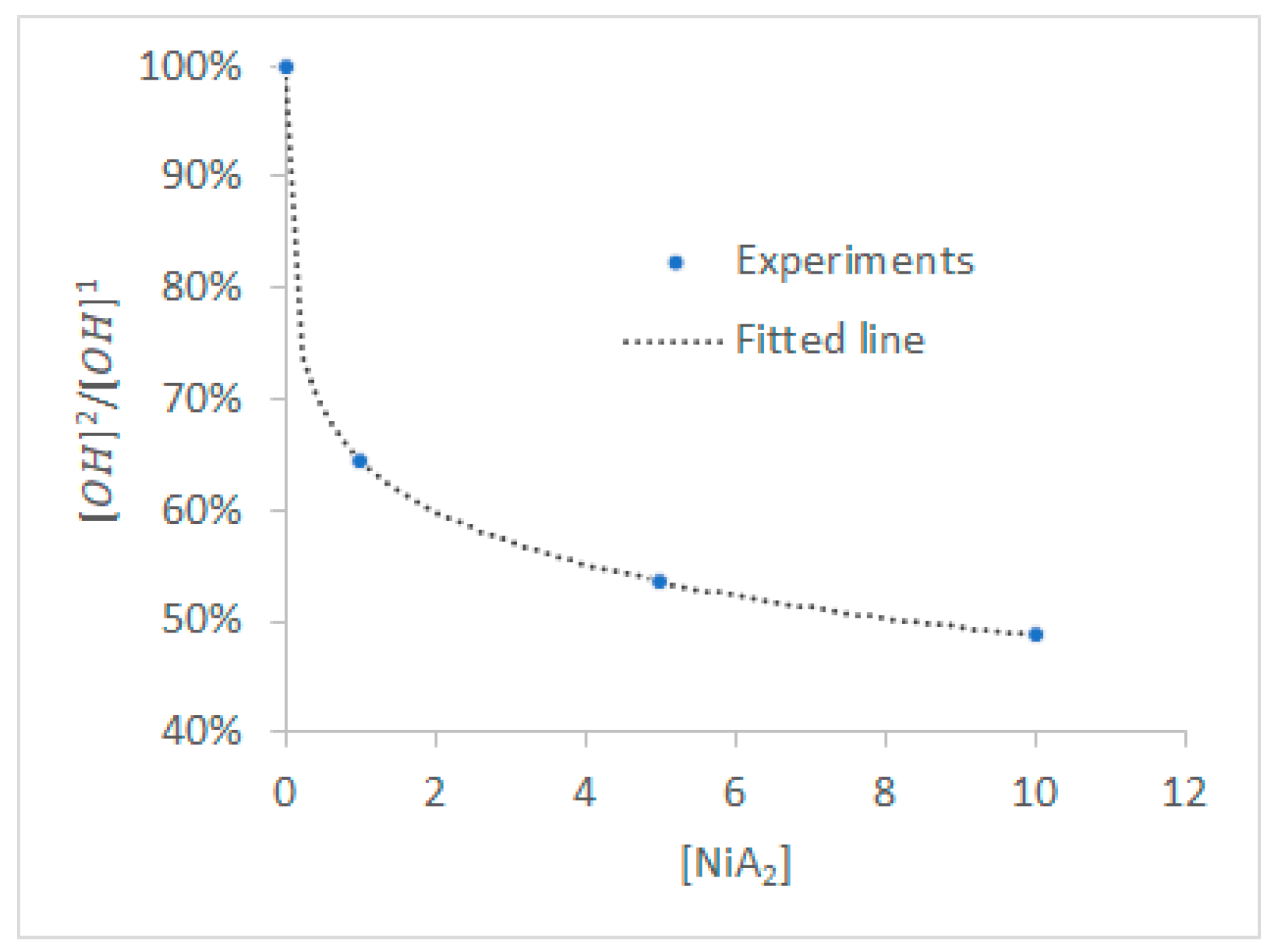
3.1.3. Activation Process Models
3.1.4. Reduction Process Kinetics
3.1.5. Coating Thickness
3.2. Optimization Framework
- The number of items and surface [cm2] per item for processing;
- The baths’ volume [lt] considering the same volume for all processing steps (etching, activation, reduction, electroless plating and electroplating); and
- The adhesion [MPa] and thickness [μm] specifications of the plated items.
3.3. Sensitivity Analysis of Key Variables
3.4. Desktop Software for PoP Industry
3.5. Case Study
4. Discussion
5. Conclusions
- ▪
- A new data-driven contact angle prediction model as a function of piranha solution and etching time, serving as an equivalent of an etching kinetic model;
- ▪
- A new data-driven modeling approach that relates surface concentration of hydrophilic groups with contact angle;
- ▪
- A new regression model to estimate the extent of activation as a function of applied nickel salts concentration;
- ▪
- A new reduction kinetics model based on state-of-the-art principles;
- ▪
- A new regression adhesion prediction model as a function of surface concentration of reduced nickel sites; and
- ▪
- A coating thickness estimation model based on state-of-the-art principles.
Author Contributions
Funding
Institutional Review Board Statement
Data Availability Statement
Conflicts of Interest
Abbreviations
| PoP | Plating on Plastics |
| SSbD | Safe and Sustainable by Design |
| ABS | acrylonitrile–butadiene–styrene |
| DST | Decision Support Tool |
| NiA2 | nickel acetate |
| CA | contact angle |
| CA0; CA1; CAmin | contact angle of untreated polymer; at state 1; and minimum observed |
| AD; ADmax | adhesion; and maximum observed |
| TH | thickness |
| gr | growth rate of the electroplating process |
| t | time |
| calc | calculated |
| I | current |
| S | surface |
| MW | molecular weight |
| n | number of electrons |
| F | Faraday constant |
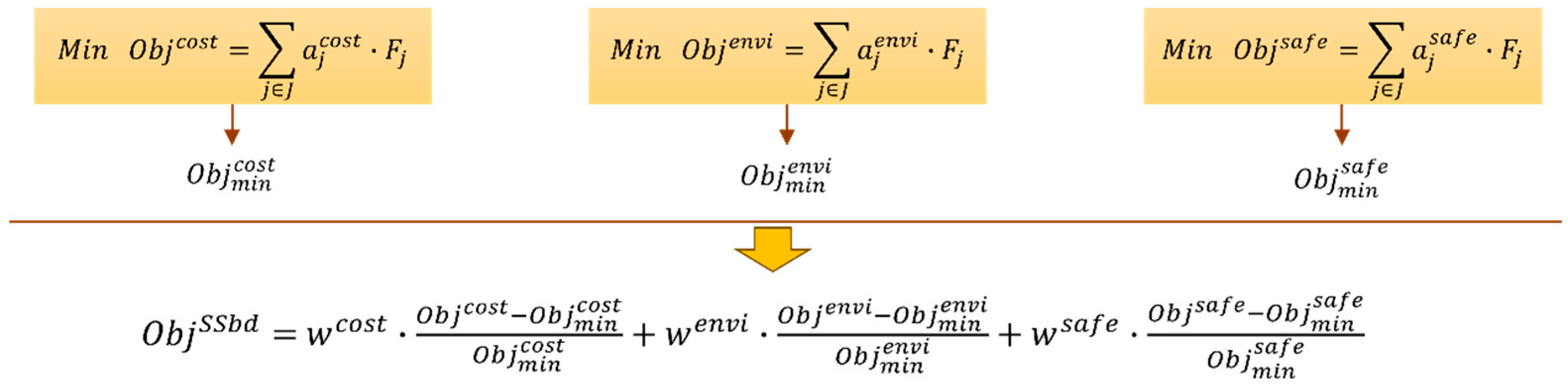
| J | set of considered flows affecting the objective function (including elements j) |
| Objcost; Objenvi; Objsafe | objective function estimating cost; environmental; and safety indexes |
References
- Equbal, A.; Sood, A.K. Investigations on metallization in FDM build ABS part using electroless deposition method. J. Manuf. Process. 2015, 19, 22–31. [Google Scholar] [CrossRef]
- Luo, L.; Li, P.; Liu, X.; Zeng, W.; Zhang, Y.; Liu, M.; Yao, S. Synthesis of carbon-based Ag–Pd bimetallic nanocomposite and the application in electroless copper deposition. Electrochim. Acta 2023, 439, 141679. [Google Scholar] [CrossRef]
- Hexavalent Chromium. Available online: https://www.osha.gov/hexavalent-chromium (accessed on 15 February 2026).
- European Chemicals Agency (ECHA). Final Report for Hexavalent Chromium; ECHA/2011/01–SR-11; European Chemicals Agency: Helsinki, Finland, 2013; Available online: https://fde-prod-shared0-bng4e3axevdaf4ae.z02.azurefd.net/proportadapintegral_pi/sites/default/files/noticia/38308/field_adjuntos/carcinogenicitydoseresponsecrvireporten.pdf (accessed on 15 February 2026).
- European Commission. Critical Raw Materials Resilience: Charting a Path Towards Greater Security and Sustainability; COM(2020) 474 Final; European Commission: Brussels, Belgium, 2020; Available online: https://eur-lex.europa.eu/legal-content/EN/TXT/?uri=celex:52020DC0474 (accessed on 15 February 2026).
- Shu, Z.; Wang, X. Environment-friendly Pd free surface activation technics for ABS surface. Appl. Surf. Sci. 2012, 258, 5328–5331. [Google Scholar] [CrossRef]
- Chen, S.; Zhu, Q.; Zhao, Y.; He, J.; Wang, G. KMnO4-system etching process and electroless nickel plating on ABS. Mater. Corros. 2019, 70, 720–725. [Google Scholar] [CrossRef]
- Restrepo, S.; Duque, M.P.; Bello, S.; Tirado, L.M.; Echeverria, F.; Zuleta, A.A.; Castano, J.G.; Correa, E. Antibacterial evaluation of electroless Ni–P coating with ZnO nanoparticles on 3D printed ABS. Int. J. Adv. Manuf. Technol. 2023, 128, 209–220. [Google Scholar] [CrossRef]
- Georgieva, M.; Lazarova, D.; Petrova, M.; Dobreva, E. Selection of a suitable environmentally friendly (non-toxic) etching solution in the electroless metallisation of ABS polymers. Trans. IMF 2023, 101, 301–307. [Google Scholar] [CrossRef]
- Zhao, W.; Ding, Y.; Wang, Z. Improvement in the etching performance of the acrylonitrile–butadiene–styrene resin by MnO2–H3PO4–H2SO4 colloid. Langmuir 2013, 29, 8604–8610. [Google Scholar] [CrossRef]
- Yeow, X.; Allen, S.A.B.; Kohl, P.A. Electroless deposition of copper on organic and inorganic substrates using a Sn/Ag catalyst. J. Electrochem. Soc. 2012, 159, D386. [Google Scholar] [CrossRef]
- Bhushan, B. Introduction to Biomimetics and Bioinspiration: Materials and Surfaces for Green Science and Technology; Springer: Cham, Switzerland, 2024. [Google Scholar] [CrossRef]
- Jiang, M.; Zhou, B.; Wang, X. Comparisons and validations of contact angle models. Int. J. Hydrogen Energy 2018, 43, 6364–6378. [Google Scholar] [CrossRef]
- Sato, T.; Ooyama, T.; Koumura, K.; Ito, T.; Tsuji, Y. Modeling the dynamic contact angle and the pinning effect of water droplets in shear flow. Langmuir 2025, 41, 33234–33244. [Google Scholar] [CrossRef]
- Shen, Y.; Li, B.Q. Comparison of contact angle models in two-phase flow simulations using a conservative phase-field equation. Int. J. Numer. Methods Fluids 2024, 97, 315–328. [Google Scholar] [CrossRef]
- Luthfianto, S.; Pujiyanto, E.; Rosyidi, C.N.; Laksono, P.W. Multi-objective optimization of the dip-coating parameters for polylactic acid plus bone screws using Taguchi method, response surface methodology, and NSGA-II. Processes 2025, 13, 1690. [Google Scholar] [CrossRef]
- Zheng, W.; Sun, C.; Bai, B. Molecular dynamics study on the effect of surface hydroxyl groups on three-phase wettability in oil–water–graphite systems. Polymers 2017, 9, 370. [Google Scholar] [CrossRef] [PubMed]
- Wang, X.; Zhang, Q. Role of surface roughness in the wettability, surface energy and flotation kinetics of calcite. Powder Technol. 2020, 371, 55–63. [Google Scholar] [CrossRef]
- FREE-ME Project. Available online: https://www.freeme-project.eu/ (accessed on 15 February 2026).
- Suman, R.; Nandan, D.; Haleem, A.; Bahl, S.; Javaid, M. Experimental study of electroless plating on acrylonitrile butadiene styrene polymer for obtaining new eco-friendly chromium-free processed. Mater. Today Proc. 2020, 28, 1575–1579. [Google Scholar] [CrossRef]
- Han, X.; Wang, G.; He, J.; Guan, J.; He, Y. Influence of temperature on the surface property of ABS resin in KMnO4 etching solution. Surf. Interface Anal. 2019, 51, 177–183. [Google Scholar] [CrossRef]
- Tang, X.; Bi, C.; Han, C.; Zhang, B. A new palladium-free surface activation process for Ni electroless plating on ABS plastic. Mater. Lett. 2009, 63, 840–842. [Google Scholar] [CrossRef]
- Dechasit, P.; Trakarnpruk, W. Ni electroless plating of ABS polymer by palladium- and tin-free process. Met. Mater. Miner. 2011, 12, 19–27. [Google Scholar]
- Walter, G.; Zangari, G.; Gambinossi, F.; Passaponti, M.; Salvietti, E.; Di Benedetto, F.; Caporali, S.; Innocenti, M. Electroplating for decorative applications: Recent trends in research and development. Coatings 2018, 8, 260. [Google Scholar] [CrossRef]
- Liao, Y.; Chen, X.; Jiang, Y.; Qu, C.; Liu, X.; Zhao, A.; Yang, P.; Huang, N.; Chen, J. Piranha solution treatment: A facile method for improving the antithrombotic ability and regulating smooth muscle cell growth on blood contact materials. Front. Bioeng. Biotechnol. 2023, 11, 1166334. [Google Scholar] [CrossRef]
- Li, T.; Li, Y.; Zhang, F.; Liang, N.; Yin, J.; Zhao, H.; Yang, Y.; Chen, B.; Yang, L. Piranha solution-assisted surface engineering enables silicon nanocrystals with superior wettability and lithium storage. Crystals 2023, 13, 1127. [Google Scholar] [CrossRef]
- Al-Gharabli, S.; Kujawa, J.; Mavukkandy, M.O.; Arafat, H.A. Functional groups docking on PVDF membranes: Novel approach of piranha reagent for PVDF activation at mild conditions. Appl. Surf. Sci. 2017, 96, 414–428. [Google Scholar]
- Bannwarth, M.B.; Klein, R.; Kurch, S.; Frey, H.; Landfester, K.; Wurm, F.R. Processing and adjusting the hydrophilicity of poly(oxymethylene) (co)polymers: Nanoparticle preparation and film formation. Polym. Chem. 2016, 7, 184–190. [Google Scholar] [CrossRef]
- Chen, C.; Zhang, N.; Li, W.; Song, Y. Water Contact Angle Dependence with Hydroxyl Functional Groups on Silica Surfaces Under CO2 Sequestration Conditions. Environ. Sci. Technol. 2015, 49, 14680−14687. [Google Scholar] [CrossRef]
- REACH QSAR Models. Available online: https://echa.europa.eu/guidance-documents/guidance-on-information-requirements-and-chemical-safety-assessment (accessed on 4 January 2026).



| Compound | Concentration (g/L) |
|---|---|
| NiSO4·6H2O (≥98%) | 32 |
| Na3C6H5O7·2H2O (≥99%) (sodium citrate dihydrate) | 20 |
| NaPO2H2 (≥98%) | 28 |
| NH4Cl (≥99.5%) | 25 |
| NH4OH (25% aqueous solution) | Until pH = 9 |
| Operating Conditions | |
| Temperature | 45 °C |
| pH | 9 (adjusted with NH4OH) |
| Compound | Concentration (g/L) |
|---|---|
| NiSO4·6H2O (≥98%) | 300 |
| NiCl2·6H2O (≥99%) | 35 |
| H3BO3 (≥95%) | 40 |
| Saccharin (C7H5NO3S) (≥%) | 2 |
| Sodium dodecyl sulphate, SDS (NaC12H25SO4) | 2.5 |
| NH4OH (25% aqueous solution) | Until pH = 4.4 |
| Operating Conditions | |
| Temperature | 50–60 °C |
| pH | 4.4 (adjusted with NH4OH) |
| Piranha H2O2-H2SO4 [v/v] | Etching Time [s] | Average Contact Angle [°] | Standard Deviation Contact Angle [°] |
|---|---|---|---|
| 1:5 | 15 | 47.6 | 2.8 |
| 1:5 | 30 | 40.9 | 2.7 |
| 1:5 | 60 | 37.5 | 3.9 |
| 1:5 | 120 | 34.9 | 2.1 |
| 1:5 | 180 | 28.1 | 2.2 |
| 1:7 | 30 | 48.2 | 6.5 |
| 1:7 | 60 | 41.4 | 2.2 |
| 1:7 | 120 | 40.3 | 2.2 |
| 1:10 | 30 | 38.7 | 2.4 |
| 1:10 | 120 | 35.9 | 1.5 |
| Before Activation | After Activation | |||
|---|---|---|---|---|
| [NiA2] [g/L] | CA1 [°] | [OH]1 (calc) [mol/cm2] | CA2 [°] | [OH]2 (calc) [mol/cm2] |
| 1 | 38.7 (std = 2.4) | 2.62 × 10⁻⁶ | 48 (std = 5.3) | 1.69 × 10⁻⁶ |
| 5 | 52 (std = 4.2) | 1.40 × 10⁻⁶ | ||
| 10 | 54 (std = 5.2) | 1.28 × 10⁻⁶ | ||
| Before Activation | After Activation | |||
|---|---|---|---|---|
| Element | Atomic % | Weight % | Atomic % | Weight % |
| Carbon | 80.6 | 69.4 | 73.2 | 59.2 |
| Nickel | 2.7 | 11.4 | 3.5 | 13.9 |
| Oxygen | 16.7 | 19.2 | 19.6 | 21.2 |
| Sodium | 3.7 | 5.7 | ||
| [NaBH4] [g/L] | Reduction Time [min] | Average of Adhesion [MPa] | Standard Deviation of Adhesion [MPa] |
|---|---|---|---|
| 10 | 1 | 2.44 | 0.54 |
| 10 | 5 | 8.85 | 0.88 |
| 10 | 10 | 6.89 | 4.29 |
| 20 | 1 | 1.71 | 0.46 |
| 20 | 5 | 1.36 | 0.17 |
| 20 | 10 | 2.48 | 1.19 |
| 50 | 1 | 1.33 | 0.29 |
| 50 | 5 | 1.2 | 0.14 |
| 50 | 10 | 1.6 | 0.36 |
| Surface [dm2] | Current Density [A/dm2] | Average Real Mass [g] | Time [h] | Theor. Mass [g] | Growth Rate [1/s] |
|---|---|---|---|---|---|
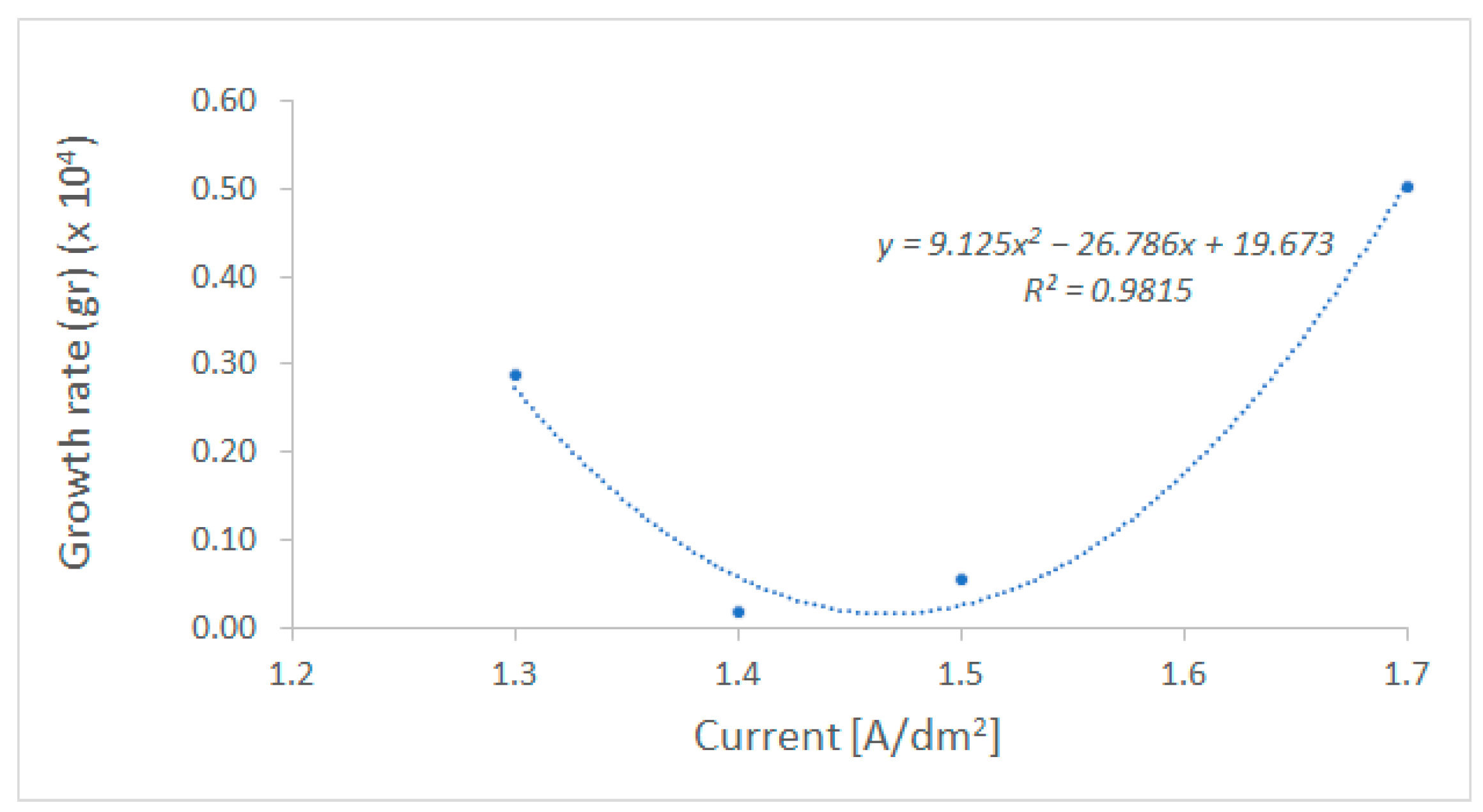
| 0.3 | 1.3 | 0.086 (std = 0.016) | 0.5 | 0.214 | 2.88 × 10⁻⁴ |
| 0.3 | 1.4 | 0.107 (std = 0.005) | 2 | 0.920 | 1.71 × 10⁻⁵ |
| 0.3 | 1.5 | 0.326 (std = 0.023) | 2 | 0.985 | 5.58 × 10⁻⁵ |
| 0.3 | 1.7 | 0.166 (std = 0.018) | 0.5 | 0.279 | 5.03 × 10⁻⁴ |
| s.t. | |
| Etching stage—Contact angle and hydrophilic groups surface concentration |
| Activation stage—Surface concentration of formed Ni2+ sites |
| Reduction stage—Surface concentration of Ni0 nucleation sites |
| Plating stage—Achieved adhesion and thickness specifications |
| User-defined specifications—Additional constraints |
| Variable Name | Optimization Variable | Lower-Upper Bounds of Model Variables |
|---|---|---|
| Etching process | ||
| 1: ratio of H2O2:H2SO4 | = [4, 10] | |
| Piranha bath dilution | parts of H2O per part of piranha | = [0, U] * |
| s | = [15, 120] | |
| Activation process | ||
| [] | g/L of NiA2 | = [1, 10] |
| Reduction process | ||
| [NaBH4] | g/L of NaBH4 | = [1, 50] |
| s | = [1, 300] | |
| Electroless plating | ||
| Fixed recipe and conditions | ||
| Electroplating | ||
| Current () | A/cm2 ** | ≥ 0 |
| h | ≥ 0 | |
| PoP specifications and goals | ||
| Adhesion achieved | MPa | ≥ adhesion spec |
| Thickness achieved | μm | = thickness spec |
| Objective | Index | |
| Process Variable | Run1 | Run2 | |
|---|---|---|---|
| H2O2:H2SO4 (Piranha) [v/v] | 1:8.3 | 1:5.4 | |
| Piranha:Water [v/v] | 1:0.1 | 1:0.7 | |
| Etching time [s] | 15 | 15 | |
| Contact angle (°) | 43.1 | 38.6 | −10% |
| [OH]1 [mol/cm2] | 4.59 × 10⁻⁶ | 5.58 × 10⁻⁶ | +21% |
| [NiA2] [g/L] | 10.0 | 6.8 | −32% |
| [Ni2+] [mol/cm2] | 1.26 × 10⁻⁶ | 1.26 × 10⁻⁶ | |
| [NaBH4] [g/L] | 10.0 | 10.0 | |
| Reduction time [s] | 300 | 300 | |
| [Ni0] [mol/cm2] | 1.8 × 10⁻¹⁰ | 1.8 × 10⁻¹⁰ | |
| Adhesion [MPa] | 2.50 | 2.50 | 0% |
| Objective (economic) | 4 × 10⁻² | 4 × 10⁻² | 0% |
| Objective | Economic | Environmental | Safety | SSbD |
|---|---|---|---|---|
| H2O2:H2SO4 (Piranha) [v/v] | 1:6.1 [1:4.0, 1:9.4] | 1:7.3 [1:4.0, 1:9.8] | 1:6.7 [1:4.3, 1:9.1] | 1:6.8 [1:4.0, 1:9.0] |
| Piranha:Water [v/v] | 1:0.3 [1:0.0, 1:0.8] | 1:0.2 [1:0.0, 1:0.5] | 1:0.2 [1:0.0, 1:0.6] | 1:0.1 [1:0.0, 1:0.3] |
| Etching time [s] | 65 [15, 116] | 84 [18, 120] | 40 [15, 98] | 37 [15, 94] |
| [NiA2] [g/L] | 7.5 [5.9, 10.0] | 8.1 [6.0, 10.0] | 9.2 [6.2, 10.0] | 9.6 [6.0, 10.0] |
| [NaBH4] [g/L] | 10.0 [10.0, 10.0] | 10.4 [10.0, 12.3] | 10.0 [10.0, 10.0] | 10.0 [10.0, 10.0] |
| Reduction time [s] | 300 [300, 300] | 300 [300, 300] | 300 [300, 300] | 300 [300, 300] |
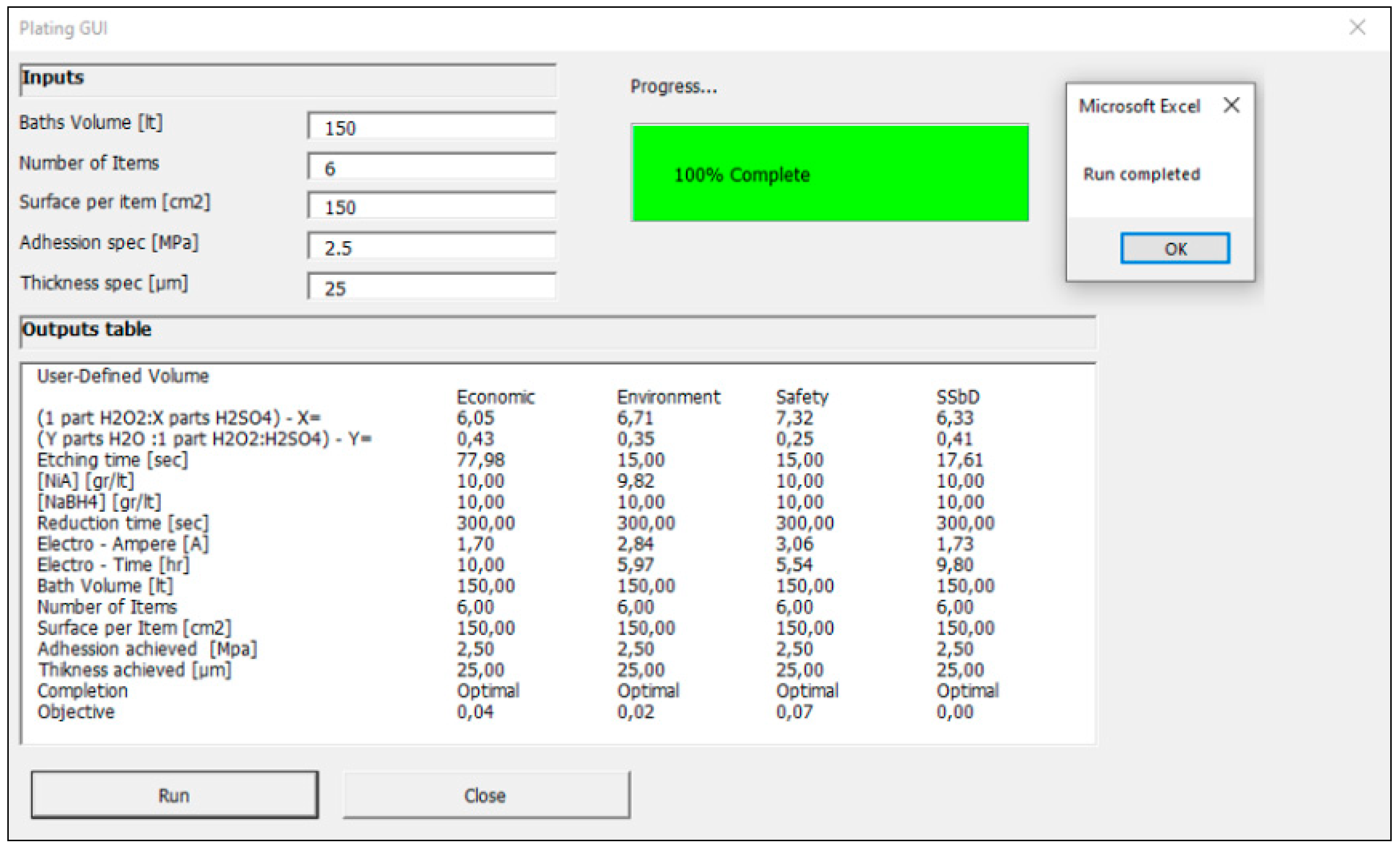
| Current [A] | 2.21 [1.70, 3.06] | 2.11 [1.70, 3.06] | 2.50 [1.70, 3.06] | 1.98 [1.70, 3.06] |
| Electroplating time [h] | 8.03 [5.54, 10.00] | 8.47 [5.54, 10.00] | 7.28 [5.54, 10.00] | 9.02 [5.54, 10.00] |
| Adhesion [MPa] | 2.5 | 2.5 | 2.5 | 2.5 |
| Thickness [μm] | 25.0 | 25.0 | 25.0 | 25.0 |
Disclaimer/Publisher’s Note: The statements, opinions and data contained in all publications are solely those of the individual author(s) and contributor(s) and not of MDPI and/or the editor(s). MDPI and/or the editor(s) disclaim responsibility for any injury to people or property resulting from any ideas, methods, instructions or products referred to in the content. |
© 2026 by the authors. Licensee MDPI, Basel, Switzerland. This article is an open access article distributed under the terms and conditions of the Creative Commons Attribution (CC BY) license.
Share and Cite
Pyrgakis, K.A.; Poupaki, E.; Kartsinis, M.; Psycha, M.; Grigoropoulos, A.; Zoikis-Karathanasis, D.; Zoikis-Karathanasis, A. A Process Systems Engineering Approach to Model and Optimize Cr6+-Free and Pd-Free Plating on Plastics Technologies. Polymers 2026, 18, 919. https://doi.org/10.3390/polym18080919
Pyrgakis KA, Poupaki E, Kartsinis M, Psycha M, Grigoropoulos A, Zoikis-Karathanasis D, Zoikis-Karathanasis A. A Process Systems Engineering Approach to Model and Optimize Cr6+-Free and Pd-Free Plating on Plastics Technologies. Polymers. 2026; 18(8):919. https://doi.org/10.3390/polym18080919
Chicago/Turabian StylePyrgakis, Konstantinos A., Eleni Poupaki, Michalis Kartsinis, Melina Psycha, Alexios Grigoropoulos, Dimitrios Zoikis-Karathanasis, and Alexandros Zoikis-Karathanasis. 2026. "A Process Systems Engineering Approach to Model and Optimize Cr6+-Free and Pd-Free Plating on Plastics Technologies" Polymers 18, no. 8: 919. https://doi.org/10.3390/polym18080919
APA StylePyrgakis, K. A., Poupaki, E., Kartsinis, M., Psycha, M., Grigoropoulos, A., Zoikis-Karathanasis, D., & Zoikis-Karathanasis, A. (2026). A Process Systems Engineering Approach to Model and Optimize Cr6+-Free and Pd-Free Plating on Plastics Technologies. Polymers, 18(8), 919. https://doi.org/10.3390/polym18080919