Article

Decoding Polyether–Cation Interactions: Computational Strategies for Agricultural Applications

by
João Vitor de Jesus Damante
,
Enzo Ernani da Silva
,
Felipe Breda Alves
,
Bruno Andrade Fico
,
Renato Luis Tame Parreira
,
Eduardo Ferreira Molina
* and
Renato Pereira Orenha
*
Núcleo de Pesquisas em Ciências Exatas e Tecnológicas, Universidade de Franca, Franca 14404-600, SP, Brazil
*
Authors to whom correspondence should be addressed.
Polymers 2026, 18(7), 877; https://doi.org/10.3390/polym18070877
Submission received: 28 January 2026 / Revised: 26 March 2026 / Accepted: 31 March 2026 / Published: 2 April 2026
(This article belongs to the Special Issue Modeling of Polymer Composites and Nanocomposites (2nd Edition))

Abstract

Zinc and iron are essential micronutrients in crop nutrition, and polymer-based nanogels have emerged as promising carriers to modulate their availability in sustainable agricultural systems. Here, a polymeric model receptor was designed to investigate how the nature and position of electron-donating (–NH2) and electron-withdrawing (–NO2) substituents control the recognition of Zn2+ and Fe2+ cations. Using a combination of density functional theory calculations, energy decomposition analysis with natural orbitals for chemical valence (EDA–NOCV), electrostatic potential (ESP) mapping, and quantum theory of atoms in molecules (QTAIM) method, the receptor–cation interactions are dissected into electrostatic, Pauli repulsion, orbital, and dispersion contributions. The results show that complex stability is governed mainly by orbital and electrostatic terms, with Fe2+ forming the most stable complex (−393.57 kcal mol−1) with regard to a Zn2+ similar complex (−288.80 kcal mol−1). Zn2+ complexes exhibit a broad tunability with substituent pattern. Electron-donating groups systematically strengthen both electrostatic and orbital components, whereas nitro substituents display a pronounced positional effect, ranging from strong destabilization to significant stabilization of Zn2+ binding. These findings establish molecular-level guidelines for engineering polymeric nanogels with tunable affinity and selectivity toward micronutrient cations in agricultural applications.

1. Introduction

Zinc is an essential micronutrient for plants, acting as a structural, catalytic, and regulatory cofactor in a wide range of enzymes and transcription factors. Adequate Zn(II) levels are crucial for processes such as auxin metabolism, protein synthesis, membrane integrity, and defense against oxidative stress. Zinc deficiency is one of the most widespread micronutrient disorders in crops, severely limiting yield and nutritional quality, particularly in cereals cultivated in calcareous or alkaline soils. To overcome this challenge, plants have evolved specific transport systems to take up and distribute Zn(II) within roots, shoots, and seeds, ensuring proper growth and reproduction [1,2,3].
Iron is another essential micronutrient for plant growth, being required for key processes such as photosynthesis, respiration, and chlorophyll biosynthesis [4,5]. Although iron is abundant in soils, it is often present in the form of insoluble Fe(III) oxides and hydroxides, which limits its bioavailability [6]. Most plants have therefore evolved strategies to acquire iron either by reducing Fe(III) to the more soluble Fe(II) at the root surface (Strategy I, used by dicotyledonous and non-graminaceous monocots), or by releasing phytosiderophores that chelate Fe(III) and facilitate its uptake (Strategy II, used by graminaceous species) [7]. Consequently, Fe(II) represents the main form absorbed and metabolized within plant tissues, while Fe(III) acts primarily as a reservoir in soils that must be chemically transformed before uptake [8].
Previous studies have investigated the interaction between polymers (or biopolymers) and cations through ionic complexation and cross-linking networks [9]. For instance, cation-induced gelation in alginate has been extensively studied, where metal ions such as Ca2+, Ba2+, Cu2+, Sr2+, Fe2+/Fe3+, and Al3+ promote the formation of “egg–box” structures that stabilize the polymer matrix [10]. The concentration of these metal ions strongly influences the gel properties, including density, thermal stability, diffusion resistance, and membrane-forming ability [11]. Furthermore, the affinity of alginate for different cations varies: Ca2+, Ba2+, Cd2+, Cu2+, Fe3+, and Al3+ exhibit higher binding affinities, while Mn2+, Co2+, Zn2+, and Ni2+ show weaker interactions [12]. These characteristics enable applications in tissue engineering, controlled drug delivery, and other biotechnology-related fields [9].
Atomistic molecular dynamics simulations of short poly(acrylate) chains in water revealed specific “site–binding” of Ca2+ to carboxylate groups and quantified how chain length/pH modulate coordination, offering a molecular picture of ion–polymer complexation that complements experimental trends [13]. In addition, density functional theory (DFT) modeling of aluminosilicate oligomers interacting with various cations—including Zn2+ and Fe2+—demonstrated that binding energies strongly correlate with ionic properties such as potential and radius, offering a promising pathway for the rational design of materials selective for specific ions [14].
The development of polymers capable of interacting selectively with nutrient cations derived from metals, such as zinc and iron, has attracted growing interest, particularly in the context of sustainable agriculture, where these materials can act as controlled vectors or modulators of micronutrient availability in plants [15,16]. Despite their relevance, the mechanistic bases of these interactions remain poorly understood, especially regarding the structural modulation of the polymer to enhance its affinity for these ions. In this context, theoretical approaches emerge as essential tools for the rational design of such materials [17]. In this sense, the present polyether-based model, structurally derived from the nanogel system investigated in Ref. [17], is conceived as a simplified and chemically representative platform to isolate and rationalize fundamental ion–polymer interactions at the electronic level, while exploring interactions with different cations, emphasizing Zn(II) and Fe(II), essential nutrients for plant growth (Figure 1). In particular, we investigate how structural modifications replacing −H atoms with (i) electron-donating –NH2; or (ii) electron-withdrawing –NO2 groups in the molecular model modulate these interactions, aiming to enhance affinity and selectivity for Zn(II) or Fe(II) (Figure 1). The bonding interactions are examined through energy decomposition analysis (EDA) combined with the natural orbitals for chemical valence (NOCV) approach. The dominant electrostatic contributions are assessed by means of electrostatic potential (ESP) surface mapping, whereas the electron density distribution is further characterized via a topological study based on the quantum theory of atoms in molecules (QTAIM).
From a molecular perspective, ion recognition is increasingly understood as a multifactorial phenomenon in which binding strength and selectivity arise from the interplay between electrostatic attraction, polarization, and electronic structure effects. Computational investigations have shown that even subtle changes in the electronic environment of the binding site can lead to pronounced differences in ion affinity, highlighting the importance of electronic tuning as a general design principle for selective ion-binding systems [18,19,20].

2. Computational Methods

The molecular geometries were optimized without any structural constraints, and vibrational frequency calculations were carried out at the BP86 level [21,22] incorporating Grimme’s dispersion corrections with Becke–Johnson damping [D3(BJ)] [23] and the Def2–TZVP basis set [24]. To accelerate computations, the RIJCOSX approximation was applied [25,26], while Coulomb integrals were evaluated using the RI–J scheme [26] with the Def2/J auxiliary basis set [27]. Vibrational analyses were performed to confirm that all optimized structures correspond to true minima on the potential energy surface (absence of imaginary frequencies) at the chosen theoretical level. These calculations were conducted using the ORCA 6.0.0 package [28].
ESP surfaces and wavefunctions for QTAIM analysis were generated at the BP86–D3(BJ)/Def2–TZVP level employing Gaussian 16 (Revision A.03) [29]. The topological analysis of electron density was carried out with the QTAIM formalism [30] using AIMAll (Version 17.01.25) [31].
Chemical bonding interactions were further explored through the EDA [32]–NOCV [33,34] scheme, as implemented in the Amsterdam Density Functional (ADF) 2021 software [35,36] adopting the ZORA–BP86–D3(BJ) method together with the TZ2P basis set [37]. This theoretical framework (ZORA–BP86–D3(BJ)/TZ2P) proved suitable for elucidating the bonding mechanisms underlying noncovalent interactions [38,39].
Such an approach has been widely employed to provide qualitative and quantitative insight into the electronic factors underlying ion–ligand interactions, particularly when subtle energetic differences are responsible for observed trends in stability and selectivity [40].
For consistency, Fe2+ was treated in the low-spin configuration to allow a more direct comparison with the closed-shell Zn2+ complex, ensuring a balanced analysis of the electronic structure and bonding interactions within the same spin framework.

3. Results and Discussion

3.1. Cation Nature

Energy Decomposition Analysis was applied to clarify the bonding mechanism between, for instance, conformer 1A and Zn2+. The interaction energy, ΔEint, is divided into four major contributions [32].
ΔEint = ΔVelstat + ΔEPauli + ΔEoi + ΔEdisp
The electrostatic contribution (ΔVelstat) describes the classical interaction between the charge distributions of the fragments before bond formation, reflecting the ionic or polar character of the interaction. The Pauli repulsion (ΔEPauli) corresponds to the destabilizing term associated with the Pauli exclusion principle, which prevents the overlap of occupied orbitals and ensures the antisymmetry of the wavefunction. The orbital interaction (ΔEoi) includes both charge transfer and electronic polarization between the fragments, representing the covalent or partially covalent component of the bond. Finally, the ΔEdisp energy represents the dispersion corrections, following the approach proposed by Grimme and co-workers [23,41]. In this energy decomposition scheme, ΔVelstat may be either attractive (negative energy values) or repulsive (positive energy values), depending on the charge distribution between the fragments. The ΔEoi and ΔEdisp terms are intrinsically stabilizing and therefore always negative, whereas ΔEPauli is always positive, representing the destabilizing repulsion between occupied orbitals.
The EDA data for the interactions between the 1A–I conformers and cations (Zn2+ or Fe2+) are organized in Table 1. This method revealed that all complexes formed between the polymeric fragment and the Fe2+ or Zn2+ ions are stabilized by partially covalent bonds due to ΔEoi (47–62%), ΔVelstat (36–50%) and ΔEdisp (1–3%) contribution ranges in ΔEoi + ΔVelstat + ΔEdisp = 100%. Exceptionally, in the 1E….Zn2+ interaction, there is a more than 100% contribution of ΔEoi (107%) concerning to ΔEoi + ΔVelstat + ΔEdisp because of the repulsive ΔVelstat energy (22.70 kcal mol−1).
The calculated interaction energies indicate that ion binding is not governed by a single dominant contribution, but rather by a combination of stabilizing factors whose relative importance depends on the chemical nature of the binding site. This observation is consistent with previous computational studies showing that ion–ligand interactions often deviate from a purely electrostatic description [42].
The Fe2+ ion establishes a more attractive interaction with the 1A receptor concerning to Zn2+ cation, as can be visualized from the values of the ΔEint energy in the 1A….Fe2+ and 1A….Zn2+ complexes (Table 1). It is supported from the more favorable ΔVelstat and ΔEoi energetic terms in the 1A….Fe2+ interaction regarding the 1A….Zn2+ bond. A more detailed analysis of the ΔVelstat trends will be carried out through examination of the ESP surfaces. Moreover, the role of ΔEoi will be assessed using the NOCV and QTAIM approaches.
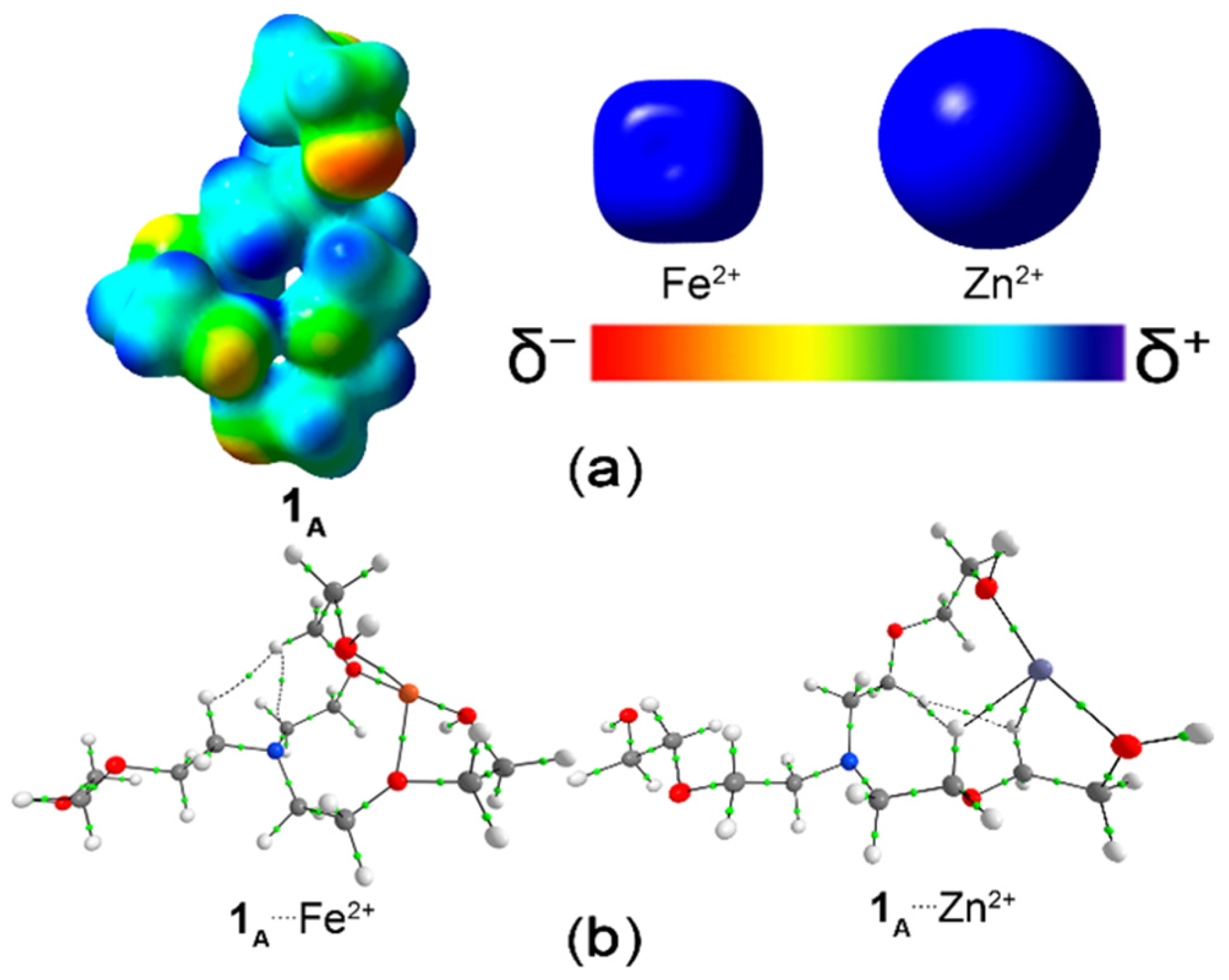
To rationalize the tendencies visualized in ΔVelstat, ESP maps of the isolated molecules 1AI and the cations (Zn2+ and Fe2+) were obtained (Figure 2 and Figure S1). On these surfaces, red regions denote areas of high electron density (e.g., around nitrogen or oxygen atoms), whereas blue regions typically near hydrogen atoms indicate low electron density. The high electron density at the nitrogen or oxygen atoms of the isolated 1AI structures suggest their propensity to interact with regions of low electron density in the isolated cations (Zn2+ or Fe2+). For a more quantitative assessment of the electrostatic interactions between 1AI and the cations (Zn2+ or Fe2+) the minimum and maximum ESP values for the N/O atoms and the transition-metal cations, corresponding to the (N or O)….(Zn2+ or Fe2+) interactions, are compiled in Table 2.
The Fe2+ ion shows a more attractive electrostatic interaction with the 1A compound regarding to Zn2+ cation. It occurs despite the lower ESP maximum value in Fe2+ concerning Zn2+. As shown in Figure 2, Fe2+ exhibits a more compact positive charge distribution in terms of its electronic density profile, which favors stronger electrostatic attraction with the oxygen donor atoms. This more localized charge distribution facilitates the formation of multiple O···cation interactions, as will be further confirmed by the QTAIM analysis.
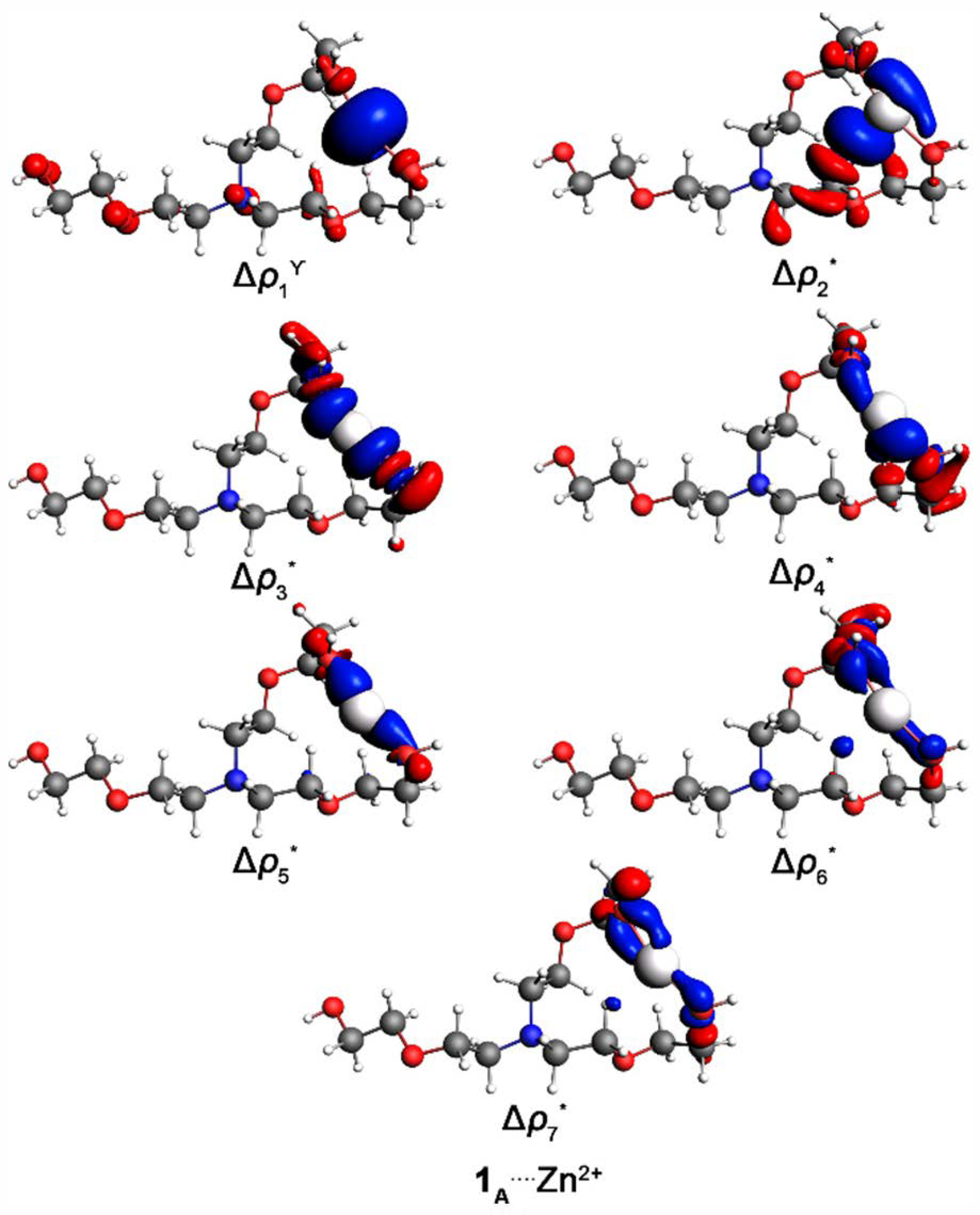
The NOCV approach offers detailed insight into key orbital interactions, such as those occurring between 1A and Zn2+, by decomposing the overall interaction into pairwise contributions from the most relevant molecular orbitals. Each pairwise orbital interaction associated with a given chemical bond can be visualized using deformation density channels, Δρk(r), in which red regions indicate electron density depletion and blue regions indicate electron density accumulation. In addition, the NOCV method quantifies the energetic contribution (ΔEoi,k) of each density deformation channel (Δρk) to the total orbital interaction energy (ΔEoi) [33,34].
The principal density deformation channels for the 1AI….(Zn2+ or Fe2+) complexes are shown in Figure 3 and Figures S2–S10, and the corresponding ΔEoi,1–7 values are summarized in Table 1. These channels reveal that the dominant orbital interactions in the 1AI….(Zn2+ or Fe2+) bonds are π interactions and, more predominantly, σ–type interactions involving (H, C, N or, chiefly, O)….(Zn2+ or Fe2+). Although the first two density deformation channels are repulsive in the 1A….Fe2+ complex (Table 1), the remaining orbital interaction channels are significantly more stabilizing when compared to 1A….Zn2+, indicating that the initial positive contributions arise from polarization-induced density rearrangements rather than genuine destabilizing interactions, and are effectively compensated by stronger donor–acceptor orbital interactions in subsequent channels. These stronger (N and especially O)….Fe2+ orbital interactions account for the overall more favorable ΔEoi value observed for Fe2+ relative to Zn2+.
Additionally, a topological analysis of the electron density using the QTAIM approach identified bond critical points (BCPs) [43] between the 1AI receptors and the cations (Zn2+ or Fe2+), as illustrated in Figure 2b and Figure S11 and summarized in Table S1. The ratio between the kinetic energy density (Gb) and the potential energy density (Vb), expressed as –Gb/Vb, at the BCPs associated with the (H, N or, predominantly O)….(Zn2+ or Fe2+) interactions falls within 0.5–1.0, supporting the partial covalent character of these bonds [44]. The sum of the electron density related to O….cation BCPs in the 1A….Fe2+ complex is larger, in agreement with the more attractive ΔEoi energy, than in the 1A….Zn2+ structure (Table 1 and Table S1).

3.2. Modulation of the Ionic Recognition from Chemical Substitutions

Here, we propose electronic variations induced by substituents, such as, donor or withdrawing groups aiming modulate the strength of the receptor….cation bond (Figure 1). Donor substituents (−NH2) markedly enhance the overall stabilization, strengthening the electrostatic, orbital and dispersion components and yielding the most stable complexes in the series (1B, D, F or G….Zn2+ compared to 1A….Zn2+). In addition, the presence of withdrawing groups (−NO2) also can contribute to a more favorable receptor….ion interaction. The −H → −NO2 substitutions in the −R1 or −R3 positions (1A1C or 1G, respectively) improve the Zn2+ recognition due to more attractive ΔVelstat, ΔEoi and ΔEdisp energies, while that in the −R4 position (1A → 1I), it occurs from more favorable ΔEoi energy and a less repulsive ΔEPauli component. On the other hand, the −H → −NO2 substitution in the −R2 position (1A1E) disfavor the receptor–cation interaction because of a less attractive ΔEdisp energy term and chiefly from a repulsive ΔVelstat energy.
Structural modifications can modulate the electrostatic interactions. Donor substituents (–NH2) tend to provide N coordinating sites containing minimum ESP values, and so intensify the electrostatic attraction in the 1(B, D, F or H)….Zn2+ complexes in relation to 1A….Zn2+ molecule (Figure 2 and Figure S1, and Table 2). Electron-withdrawing substituents (–NO2) generate new O-coordinating sites containing minimum ESP values, and it promotes a more attractive electrostatic interactions in 1(C or G)….Zn2+ compared to 1A….Zn2+ with the –H → –NO2 substitutions in –R1 and –R3 positions. On the other hand, the –H → –NO2 substitutions in –R2 and –R4 positions (generating 1A1E and 1I molecules, respectively) are not followed by more favorable electrostatic 1(E or I)….Zn2+ in relation to 1A….Zn2+. It can be explained from the larger ESP average values in the oxygen atoms associated with the ether group in O–cation interactions (Table 2). Additionally, in the 1E….Zn2+ complex, the electrostatic repulsion (ΔVelstat > 0) can also be partially attributed to the short spatial proximity between hydrogen atoms of the ligand and the Zn2+ cation, since both regions exhibit positive ESP values (Table 2). Importantly, this effect does not prevent complex stabilization, because electrostatic interactions represent only one component of the total interaction energy, which is strongly governed by attractive dispersion and, mainly, orbital contributions. It should be noted that the 1E….Zn2+ structure may be further optimized toward a more stable geometry, potentially corresponding to a global minimum with a more typical coordination mode.
The NOCV analysis shows that the overall ΔEoi term is not simply the sum of the individual orbital interaction contributions (ΔEoi,1–7) associated with the most significant density deformation channels (Δρ1–7) in the 1(BH)….Zn2+ substituted complexes relative to the 1A….Zn2+ reference system. There is a more attractive ΔEoi energy, but a less favorable ΔEoi,1–7 energy in the 1(BD or FH)….Zn2+ structures regarding the 1A….Zn2+ molecule. It evidences that minority orbital interaction contributions are responsible for defining the more stable ΔEoi energetic term in 1(BD or FH)….Zn2+ compared to 1A….Zn2+. Exceptionally, in the –H → –NO2 substitutions in the –R2 and –R4 positions (1A1E and 1I, respectively), there are more attractive ΔEoi along with ΔEoi,1–7 energies in the 1(E or I)….Zn2+ compounds than in the 1A….Zn2+ complex. It appears in 1E….Zn2+ concerning 1A….Zn2+ due to π (C, N or chiefly O)….Zn2+ orbital interactions. These contributions, exhibiting π–type symmetry in the NOCV analysis, arise mainly from polarization and electrostatic effects associated with the Zn2+ cation, rather than genuine π–type covalent interactions, with possible minor cation–π contributions. Together, these effects constitute the main stabilizing component responsible for maintaining a favorable interaction in the 1E….Zn2+ complex, even in the presence of localized electrostatic repulsion. In addition, it occurs in 1I….Zn2+ regarding to 1A….Zn2+ from π and, mainly, σ ONO….Zn2+ orbital interactions.
The QTAIM method shows that, in general, the sum of the electron density in the (H, N or principally O)….Zn2+ BCPs in the substituted complexes 1(BH)….Zn2+ is larger, so as the more attractive ΔEoi energy, compared to reference structure: 1A….Zn2+ (Table 1 and Table S1). As an exception, in the 1E….Zn2+ molecule, there are only two H….Zn2+ BCPs, which shows a sum of the electron density relevantly lower regarding to (H or O)….Zn2+ BCPs associated to 1A….Zn2+ compound. It can be explained by considering that the orbital interaction term (ΔEoi) in the 1E….Zn2+ molecule is supported by enhanced long-range and π-type (C, N, and especially O)….Zn2+ contributions induced by the −NO2 substituent.

4. Conclusions

The integrated analysis of the EDA–NOCV, ESP, and QTAIM methods demonstrated that ionic recognition by the polymeric fragment is predominantly governed by orbital and electrostatic effects, which are modulated both by the nature of the cation and by the electronic substituents present on the ligand. The complex containing Fe2+ shows the most stable interaction in the series, supported by significantly more attractive orbital and electrostatic components, as well as a higher electron density in the bonding region compared with Zn2+. Among the Zn2+ derivatives, electron-donating substituents simultaneously enhance ΔVelstat and ΔEoi, leading to more stable complexes. In contrast, electron-withdrawing substituents display strong positional dependence: while –NO2 groups at –R1, –R3, and –R4 reinforce stabilization, their insertion at –R2 induces pronounced electrostatic depolarization and increased repulsion, making the 1E….Zn2+ complex the least favorable in the series. The NOCV channels confirm that structural changes adjust the balance between σ and π interactions, modulating receptor–cation orbital interaction. From a materials design perspective, these results indicate that the electronic nature and positional distribution of substituents along the polymer backbone can be strategically tuned to control cation affinity and selectivity. In practical terms, increasing electron-donating character near coordination sites may enhance nutrient retention, whereas careful positional placement of electron-withdrawing groups can prevent unfavorable electrostatic repulsion.

Supplementary Materials

The following supporting information can be downloaded at: https://www.mdpi.com/article/10.3390/polym18070877/s1, EDA–ESP–NOCV–QTAIM detailed analysis. ESP surfaces, density deformation channels (obtained from NOCV methodology), and QTAIM results to selected structures. Cartesian coordinates related to optimized geometry of all molecules investigated.

Author Contributions

R.P.O. and E.F.M. conceptualized this research. R.P.O. guided the data analysis/interpretation. J.V.d.J.D., E.E.d.S., F.B.A. and B.A.F. performed the calculations and preliminary formal analysis. R.P.O. and R.L.T.P. reviewed earlier drafts to produce the paper’s final version. R.L.T.P. and E.F.M. also were responsible for funding acquisition and project administration. All authors have read and agreed to the published version of the manuscript.

Funding

This study was financed in part by the Coordenação de Aperfeiçoamento de Pessoal de Nível Superior—Brasil (CAPES) Finance Code 001. R.L.T.P. thanks grant 2011/07623–8 São Paulo Research Foundation (FAPESP) for the financial support. R.L.T.P. thanks the National Council for Scientific and Technological Development (CNPq, grants 311122/2021–3 and 312596/2025–1) for the financial support. E.F.M. thanks grant 2024/11041-4, 2024/01903-9 and 2021/06552-1 São Paulo Research Foundation (FAPESP) for the financial support. E.F.M. thanks the National Council for Scientific and Technological Development (CNPq, grant 302242/2025-2) for the financial support.

Institutional Review Board Statement

Not applicable.

Data Availability Statement

The original contributions presented in this study are included in the article/Supplementary Materials. Further inquiries can be directed to the corresponding authors.

Conflicts of Interest

The authors declare no conflicts of interest.

Abbreviations

The following abbreviations are used in this manuscript:
EDA–NOCVEnergy Decomposition Analysis with Natural Orbitals for Chemical Valence
EDAEnergy Decomposition Analysis
NOCVNatural Orbitals for Chemical Valence
ESPElectrostatic Potential
QTAIMQuantum Theory of Atoms in Molecules
DFTDensity Functional Theory
ADFAmsterdam Density Functional
BCPsBond Critical Points

References

  1. Sinclair, S.A.; Krämer, U. The Zinc Homeostasis Network of Land Plants. Biochim. Biophys. Acta 2012, 1823, 1553–1567. [Google Scholar] [CrossRef] [PubMed]
  2. Milner, M.J.; Seamon, J.; Craft, E.; Kochian, L.V. Transport Properties of Members of the ZIP Family in Plants and Their Role in Zn and Mn Homeostasis. J. Exp. Bot. 2013, 64, 369–381. [Google Scholar] [CrossRef] [PubMed]
  3. Sadeghzadeh, B.; Rengel, Z. Zinc in Soils and Crop Nutrition. In The Molecular and Physiological Basis of Nutrient Use Efficiency in Crops; Hawkesford, M.J., Barraclough, P., Eds.; Wiley: Chichester, UK, 2011. [Google Scholar] [CrossRef]
  4. Briat, J.F.; Dubos, C.; Gaymard, F. Iron Nutrition, Biomass Production, and Plant Product Quality. Trends Plant Sci. 2015, 20, 33–40. [Google Scholar] [CrossRef] [PubMed]
  5. Kobayashi, T.; Nishizawa, N.K. Iron Uptake, Translocation, and Regulation in Higher Plants. Annu. Rev. Plant Biol. 2012, 63, 131–152. [Google Scholar] [CrossRef]
  6. Dudwal, B.L.; Sunita Koodi, S.K.; Dudwal, S.K.; Choudhary, S.; Choudhary, M. Iron Dynamics in the Soil and its Importance for Plant health. J. Pharm. Innov. 2022, 11, 1342–1344. [Google Scholar]
  7. Martín-Barranco, A.; Thomine, S.; Vert, G.; Zelazny, E. A quick Journey into the Diversity of Iron uptake Strategies in Photosynthetic Organisms. Plant Signal. Behav. 2021, 16, 1975088. [Google Scholar] [CrossRef]
  8. Brumbarova, T.; Bauer, P.; Ivanov, R. Molecular Mechanisms governing Arabidopsis Iron Uptake. Trends Plant Sci. 2015, 20, 124–133. [Google Scholar] [CrossRef]
  9. Wang, Y.; Shen, Z.; Wang, H.; Song, Z.; Yu, D.; Li, G.; Liu, X.; Liu, W. Progress in Research on Metal Ion Crosslinking Alginate–Based Gels. Gels 2025, 11, 16. [Google Scholar] [CrossRef]
  10. Makarova, A.O.; Derkach, S.R.; Khair, T.; Kazantseva, M.A.; Zuev, Y.F.; Zueva, O.S. Ion-Induced Polysaccharide Gelation: Peculiarities of Alginate Egg-Box Association with Different Divalent Cations. Polymers 2023, 15, 1243. [Google Scholar] [CrossRef]
  11. Xu, J.-T.; Wen, H.-Y.; Huang, S.-P.; Pan, S.-Y.; Liu, X.-N.; Xu, N.-X.; Jia, Z.; Xue, W.-M. Effects of Metal Ionic Crosslinkers on Structure and Performance of Alginate Gels. J. Chem. Eng. Univ. 2018, 32, 1194–1202. [Google Scholar]
  12. Wang, J.; Song, T.; Chen, H.; Ming, W.; Cheng, Z.; Liu, J.; Liang, B.; Wang, Y.; Wang, G. Bioinspired High–Strength Montmorillonite-Alginate Hybrid Film: The Effect of Different Divalent Metal Cation Crosslinking. Polymers 2022, 14, 2433. [Google Scholar] [CrossRef]
  13. Tolmachev, D.; Lukasheva, N.; Mamistvalov, G.; Karttunen, M. Influence of Calcium Binding on Conformations and Motions of Anionic Polyamino Acids. Effect of Side Chain Length. Polymers 2020, 12, 1279. [Google Scholar] [CrossRef]
  14. Gong, K.; Kengran, Y.; White, C.E. Density Functional Modeling of the Binding Energies between Aluminosilicate Oligomers and Different Metal Cations. Front. Mater. 2023, 10, 1089216. [Google Scholar] [CrossRef]
  15. Ardali, T.R.; Ma’mani, L.; Chorom, M.; Motamedi, E.; Gharebaba, M.F. A Biocompatible NPK+Fe+Zn Slow Release Fertilizer: Synthesis and its Evaluation in Tomato Plant Growth Improvement. Sci. Rep. 2024, 14, 4640. [Google Scholar] [CrossRef]
  16. Dutta, S.; Pal, S.; Panwar, P.; Sharma, R.K.; Bhutia, P.L. Biopolymeric Nanocarriers for Nutrient Delivery and Crop Biofortification. ACS Omega 2022, 7, 25909–25920. [Google Scholar] [CrossRef]
  17. Orenha, R.P.; Molina, E.F.; Alves, F.B.; Fico, B.A.; Albuquerque, M.; Parreira, R.L.T.; Costa, L.T. Solvation–Driven Self–Assembly of Polyetheramine-Epoxide Gels: Insights from Molecular Simulations. ACS Polym. Au 2026, 6, 405–414. [Google Scholar] [CrossRef] [PubMed]
  18. Galembeck, S.E.; Caramori, G.F.; Misturini, A.; Garcia, L.C.; Orenha, R.P. Metal–Ligand Bonding Situation in Ruthenophanes Containing Multibridged Cyclophanes. Organometallics 2017, 36, 3465–3470. [Google Scholar] [CrossRef]
  19. Orenha, R.P.; Tfouni, E.; Galembeck, S.E. How does the Total Charge and Isomerism Influence the Ru–NO Ammine Complexes? Phys. Chem. Chem. Phys. 2018, 20, 13348–13356. [Google Scholar] [CrossRef] [PubMed]
  20. Orenha, R.P.; Rocha, M.V.J.; Poater, J.; Galembeck, S.E.; Bickelhaupt, F.M. Nature of the Ru–NO Coordination Bond: Kohn–Sham Molecular Orbital and Energy Decomposition Analysis. ChemistryOpen 2017, 6, 410–416. [Google Scholar] [CrossRef]
  21. Becke, A.D. Density–Functional Exchange–Energy Approximation with Correct Asymptotic Behavior. Phys. Rev. A 1988, 38, 3098–3100. [Google Scholar] [CrossRef]
  22. Perdew, J.P. Density–Functional Approximation for the Correlation Energy of the Inhomogeneous Electron Gas. Phys. Rev. B 1986, 33, 8822–8824. [Google Scholar] [CrossRef]
  23. Grimme, S.; Antony, J.; Ehrlich, S.; Krieg, H. A Consistent and Accurate Ab Initio Parametrization of Density Functional Dispersion Correction (DFT–D) For The 94 Elements H–Pu. J. Chem. Phys. 2010, 132, 154104. [Google Scholar] [CrossRef] [PubMed]
  24. Weigend, F.; Ahlrichs, R. Balanced Basis Sets of Split Valence, Triple Zeta Valence and Quadruple Zeta Valence Quality for H to Rn: Design and Assessment of Accuracy. Phys. Chem. Chem. Phys. 2005, 7, 3297–3305. [Google Scholar] [CrossRef] [PubMed]
  25. Neese, F. An Improvement of the Resolution of the Identity Approximation for the Formation of the Coulomb Matrix. J. Comput. Chem. 2003, 24, 1740–1747. [Google Scholar] [CrossRef] [PubMed]
  26. Neese, F.; Wennmohs, F.; Hansen, A.; Becker, U. Efficient, Approximate and Parallel Hartree–Fock and Hybrid DFT Calculations. A ‘Chain-Of-Spheres’ Algorithm for the Hartree–Fock Exchange. Chem. Phys. 2009, 356, 98–109. [Google Scholar] [CrossRef]
  27. Weigend, F. Accurate Coulomb–Fitting Basis Sets for H to Rn. Phys. Chem. Chem. Phys. 2006, 8, 1057–1065. [Google Scholar] [CrossRef]
  28. Neese, F. The ORCA program system. WIREs Comput. Mol. Sci. 2012, 2, 73–78. [Google Scholar] [CrossRef]
  29. Frisch, M.J.; Trucks, G.W.; Schlegel, H.B.; Scuseria, G.E.; Robb, M.A.; Cheeseman, J.R.; Scalmani, G.; Barone, V.; Petersson, G.A.; Nakatsuji, H.; et al. Gaussian 16, Revision A.03; Gaussian, Inc.: Wallingford, CT, USA, 2016.
  30. Caramori, G.F.; Parreira, R.L.T.; da Costa Ferreira, A.M. Isatin-Schiff Base Copper(II) Complexes—A DFT Study of The Metal-Ligand Bonding Situation. Int. J. Quantum Chem. 2012, 112, 625–646. [Google Scholar] [CrossRef]
  31. Keith, T.A. AIMAll, Revision 17.01.25; TK Gristmill Software: Overland Park, KS, USA, 2017.
  32. Bickelhaupt, F.M.; Baerends, E.J. Kohn-Sham Density Functional Theory: Predicting and Understanding Chemistry. In Reviews in Computational Chemistry; Lipkowitz, K.B., Boyd, D.B., Eds.; Wiley: Chichester, UK, 2000. [Google Scholar] [CrossRef]
  33. Mitoraj, M.; Michalak, A. Natural Orbitals for Chemical Valence as Descriptors of Chemical Bonding in Transition Metal Complexes. J. Mol. Mod. 2007, 13, 347–355. [Google Scholar] [CrossRef]
  34. Mitoraj, M.P.; Michalak, A.; Ziegler, T. A Combined Charge and Energy Decomposition Scheme for Bond Analysis. J. Chem. Theory Comput. 2009, 5, 962–975. [Google Scholar] [CrossRef]
  35. Baerends, E.J.; Ziegler, T.; Atkins, A.J.; Autschbach, J.; Baseggio, O.; Bashford, D.; Bérces, A.; Bickelhaupt, F.M.; Bo, C.; Boerrigter, P.M.; et al. ADF 2021, 2021, SCM, Theoretical Chemistry, Vrije Universiteit, Amsterdam, The Netherlands. Available online: https://www.scm.com/amsterdam-modeling-suite/adf/ (accessed on 30 March 2026).
  36. te Velde, G.; Bickelhaupt, F.M.; Baerends, E.J.; Fonseca Guerra, C.; van Gisbergen, S.J.A.; Snijders, J.G.; Ziegler, T. Chemistry with ADF. J. Comput. Chem. 2001, 22, 931–967. [Google Scholar] [CrossRef]
  37. van Lenthe, E.; Baerends, E.J. Optimized Slater-Type Basis Sets for the Elements 1–118. J. Comput. Chem. 2003, 24, 1142–1156. [Google Scholar] [CrossRef] [PubMed]
  38. Petelski, A.N.; Guerra, C.F. Why Ammeline is a Superior Building Block to Melamine. ChemistryOpen 2019, 8, 135–142. [Google Scholar] [CrossRef] [PubMed]
  39. Zaccaria, F.; van der Lubbe, S.C.C.; Nieuwland, C.; Hamlin, T.A.; Guerra, C.F. How Divalent Cations Interact with the Internal Channel Site of Guanine Quadruplexes. ChemPhysChem 2021, 22, 2286–2296. [Google Scholar] [CrossRef]
  40. Orenha, R.P.; da Silva, V.B.; Caramori, G.F.; Piotrowski, M.J.; Nagurniak, G.R.; Parreira, R.L.T. The Design of Anion–π Interactions and Hydrogen Bonds for the Recognition of Chloride, Bromide and Nitrate Anions. Phys. Chem. Chem. Phys. 2021, 23, 11455–11465. [Google Scholar] [CrossRef]
  41. Grimme, S.; Ehrlich, S.; Goerigk, L. Effect of the Damping Function in Dispersion Corrected Density Functional Theory. J. Comput. Chem. 2011, 32, 1456. [Google Scholar] [CrossRef]
  42. Orenha, R.P.; da Silva, V.B.; Caramori, G.F.; Schneider, F.S.S.; Piotrowski, M.J.; Contreras-Garcia, J.; Cardenas, C.; Gonçalves, M.B.; Mendizabal, F.; Parreira, R.L.T. On the Recognition of Chloride, Bromide and Nitrate Anions by Anthracene–Squaramide Conjugated Compounds: A Computational Perspective. New J. Chem. 2020, 44, 17831–17839. [Google Scholar] [CrossRef]
  43. Bader, F.W. Atoms and Molecules: A Quantum Theory; Claredon Press: Oxford, UK; New York, NY, USA, 1994. [Google Scholar]
  44. Ziółkowski, M.; Grabowski, S.J.; Leszczynski, J. Cooperativity in hydrogen–bonded interactions: Ab initio and “atoms in molecules” analyses. J. Phys. Chem. A 2006, 110, 6514. [Google Scholar] [CrossRef]
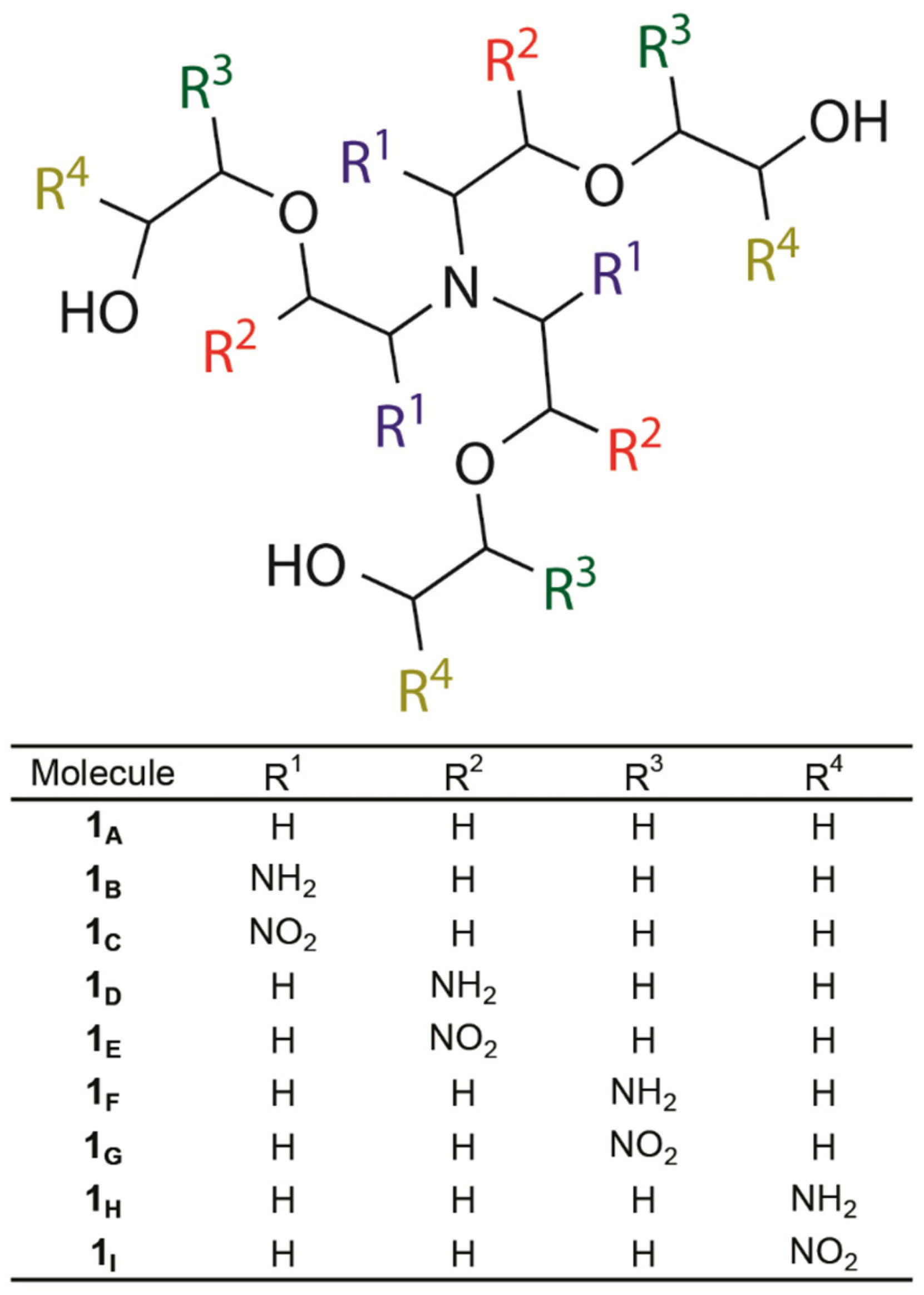
Figure 1. Structures of the substituted conformers: 1A−I.
Polymers 18 00877 g001
Figure 2. (a) Electrostatic potential surfaces mapped onto electronic densities of (i) 0.010 au [ranging from −0.010 au (red) to 0.010 au (blue)] for the 1A receptor, and (ii) 0.020 au [ranging from 0.000 au (red) to 0.600 au (blue)] for Zn2+ and Fe2+ cations. (b) Topological map showing bond paths (continuous or dashed lines connecting the cores) and bond critical points (small light green points) for the 1A….(Zn2+ or Fe2+) complexes. Color code for atoms: H = white, C = gray, N = blue, O = red, Fe = orange, and Zn = medium dark blue.
Polymers 18 00877 g002
Figure 3. Surface plots of the first density deformation channels, Δρ1–7, with isovalues of * = 0.0010 and Υ = 0.0050 a.u. The red and blue regions represent electron density outflow and inflow, respectively, for the 1A….Zn2+ complex.
Polymers 18 00877 g003
Table 1. Analysis of the bonding situations between the polymeric fragments (1A–I) with the metal ions Zn2+ or Fe2+, obtained using the EDA–NOCV methodology a–c.
ComplexEintVelstatEPauliEoiEdispEoi,1Eoi,2Eoi,3Eoi,4Eoi,5Eoi,6Eoi,7
1A….Fe2+−393.57−244.23 (37)266.38−406.33 (62)−9.40 (1)132.89154.15−234.94−90.46−80.06−56.69−28.72
1A….Zn2+−288.80−154.33 (39)107.21−232.56 (59)−9.12 (2)−94.33−22.06−27.30−13.71−12.25−8.84−7.57
1B….Zn2+−412.76−265.18 (49)126.86−259.70 (48)−14.73 (3)−67.39−27.63−23.49−22.47−10.35−8.67−7.03
1C….Zn2+−365.61−215.39 (45)113.48−252.71 (53)−10.98 (2)−59.84−25.76−21.48−21.12−12.89−10.68−9.60
1D….Zn2+−356.33−243.84 (50)135.73−238.42 (48)−9.79 (2)−72.40−31.62−24.91−13.37−11.26−9.80−8.21
1E….Zn2+−248.5122.70 (−9)3.94−271.17 (107)−3.98 (2)−256.11−4.96−1.29−0.45−1.77−0.43−0.24
1F….Zn2+−412.81−271.40 (50)129.05−256.67 (47)−13.79 (3)−68.84−30.03−25.83−21.41−10.98−6.79−7.20
1G….Zn2+−335.63−187.86 (41)122.35−256.14 (56)−13.99 (3)−68.84−27.89−22.26−18.58−11.56−9.60−7.25
1H….Zn2+−410.77−263.66 (50)120.87−254.79 (48)−13.18 (2)−71.35−33.82−24.33−17.97−11.55−7.40−6.42
1I….Zn2+−324.23−143.71 (36)80.51−251.68 (62)−9.35 (2)−102.35−26.57−26.67−13.99−12.12−7.41−6.79
a The energy unit is kcal mol−1; b ΔEint = ΔVelstat + ΔEPauli + ΔEoi + ΔEdisp; c Values in parentheses represent the percentage of each stabilizing contribution (ΔVelstat + ΔEoi + ΔEdisp = 100%).
Table 2. Selected ESP values (kcal mol−1) for the isolated receptor structures (1AI) and cations (Zn2+ and Fe2+).
StructureESPO aESPOOH bESPONO2 cESPNNH2 dESPH eESPNcentral fESPCation g
1A−21.08−31.6714.49
1B−20.20−31.49−28.3812.15
1C0.77−22.85−31.4421.21
1D−24.50−36.26−29.368.90
1E−18.18−23.61−23.17
1F−14.25−42.07−30.403.36−18.94
1G−7.46−24.95−23.77−7.46
1H−20.20−25.46−25.40−21.02
1I−6.36−27.92−28.45
Zn2+428.39
Fe2+377.22
a Average of the minimum ESP values present in the oxygen atoms associated with the ether group in O….cation. interaction; b Average of the minimum ESP values present in the oxygen atoms correlated to the HO….cation. interaction; c Average of the minimum ESP values present in oxygen atoms of the ONO….cation interaction; d Average of the minimum ESP values located in nitrogen of the −NH2 group related to the H2N….cation interaction; e Average minimum ESP values regarding to the hydrogen in H….cation interaction; f Average of the minimum ESP value belonging to nitrogen central atom, present in N….cation interaction; g Maximum ESP value located in the isolated cation.
Disclaimer/Publisher’s Note: The statements, opinions and data contained in all publications are solely those of the individual author(s) and contributor(s) and not of MDPI and/or the editor(s). MDPI and/or the editor(s) disclaim responsibility for any injury to people or property resulting from any ideas, methods, instructions or products referred to in the content.