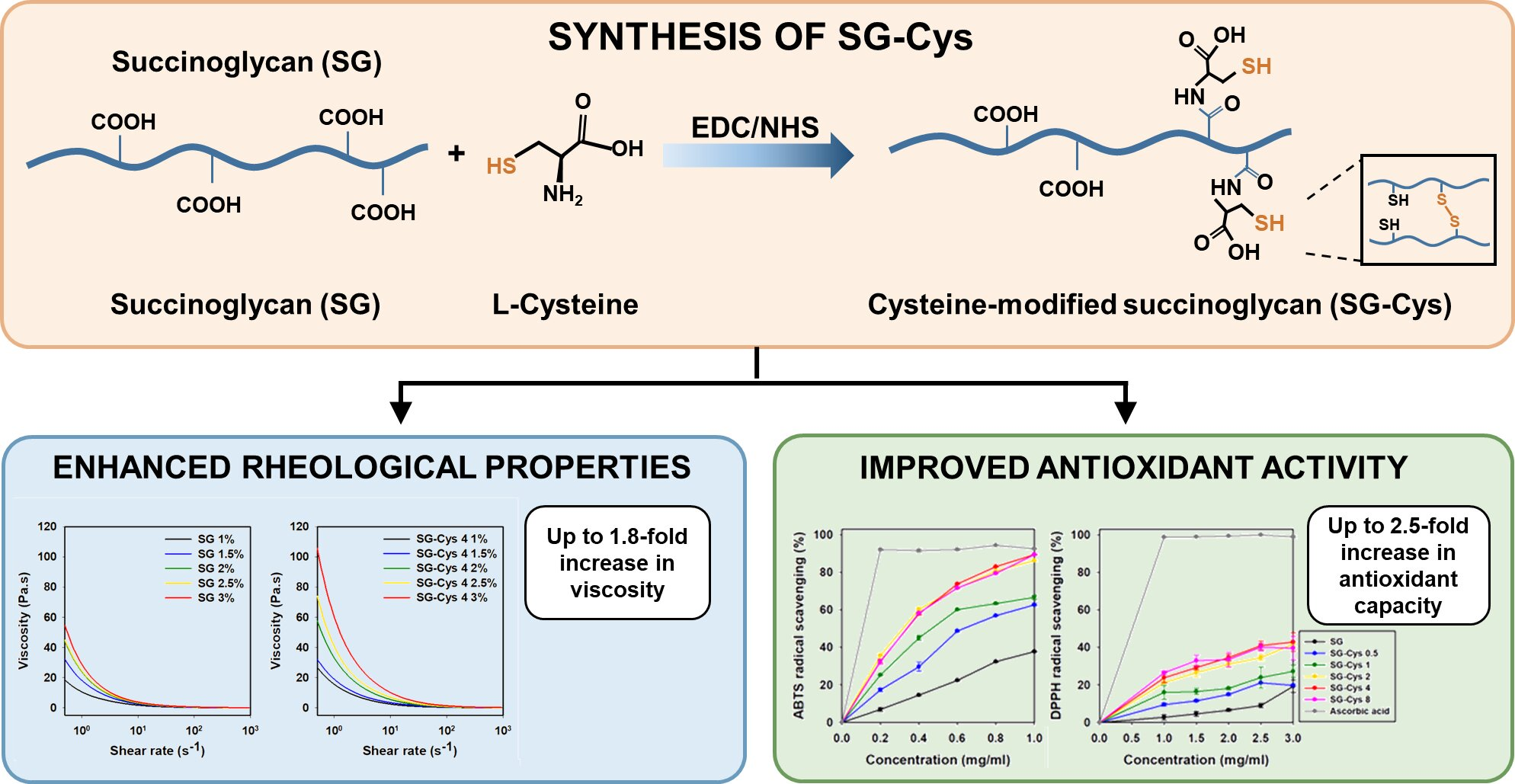
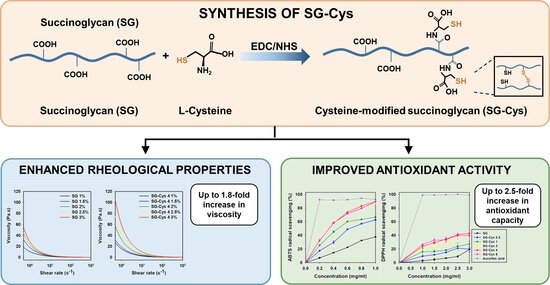
Thiol-Functionalized Succinoglycan via Cysteine Grafting: Enhanced Rheological Properties and Antioxidant Activity



Abstract
1. Introduction
2. Materials and Methods
2.1. Materials
2.2. Culture Conditions and Isolation of Succinoglycan (SG)
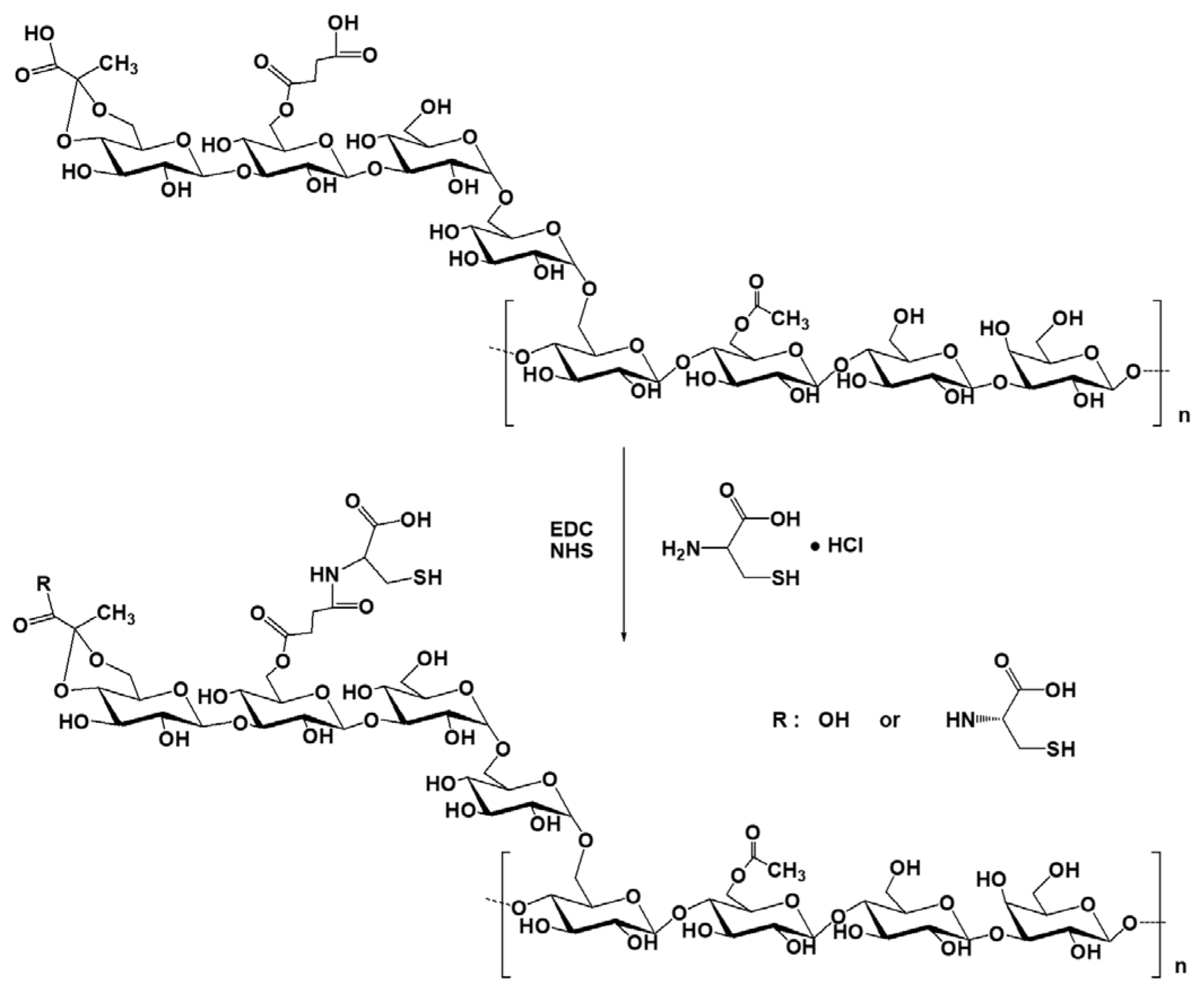
2.3. Thiol Modification of SG (SG-Cys)
2.4. Determination of Thiol and Disulfide Bond Content
2.5. Structural Characterization of SG-Cys
2.5.1. Fourier Transform Infrared (FTIR) Spectroscopy
2.5.2. Nuclear Magnetic Resonance (NMR) Spectroscopy
2.5.3. X-Ray Diffraction (XRD)
2.5.4. Scanning Electron Microscope (SEM) Imaging
2.6. Thermogravimetric Analysis (TGA)
2.7. Rheological Property Measurements
2.8. Antioxidant Activities
2.8.1. ABTS Radical Scavenging Activity
2.8.2. DPPH Radical Scavenging Activity
2.9. Cytotoxicity Assay
3. Results and Discussion
3.1. Characterization of SG-Cys
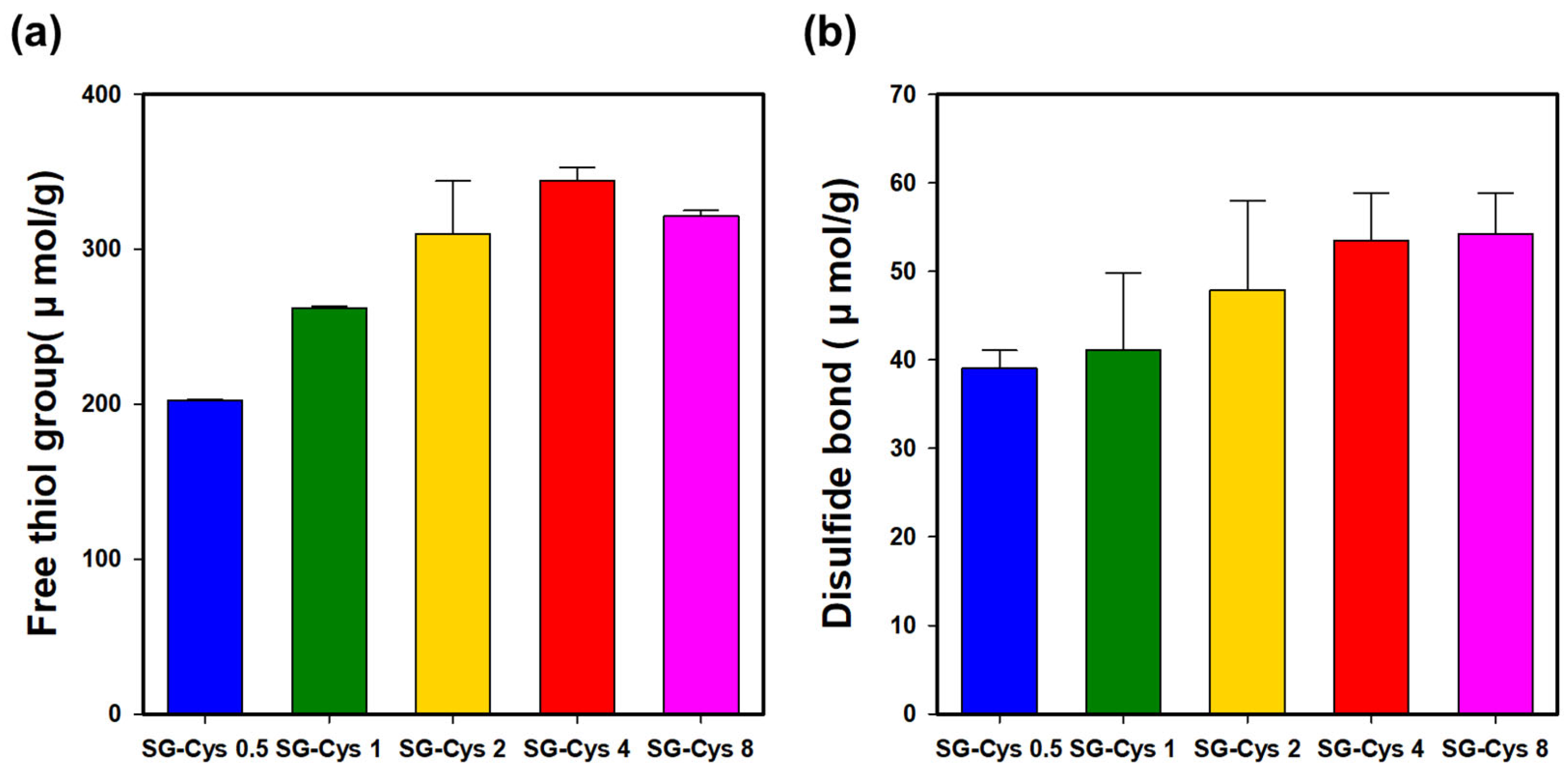
3.1.1. Thiol Group and Disulfide Bond Content Determination
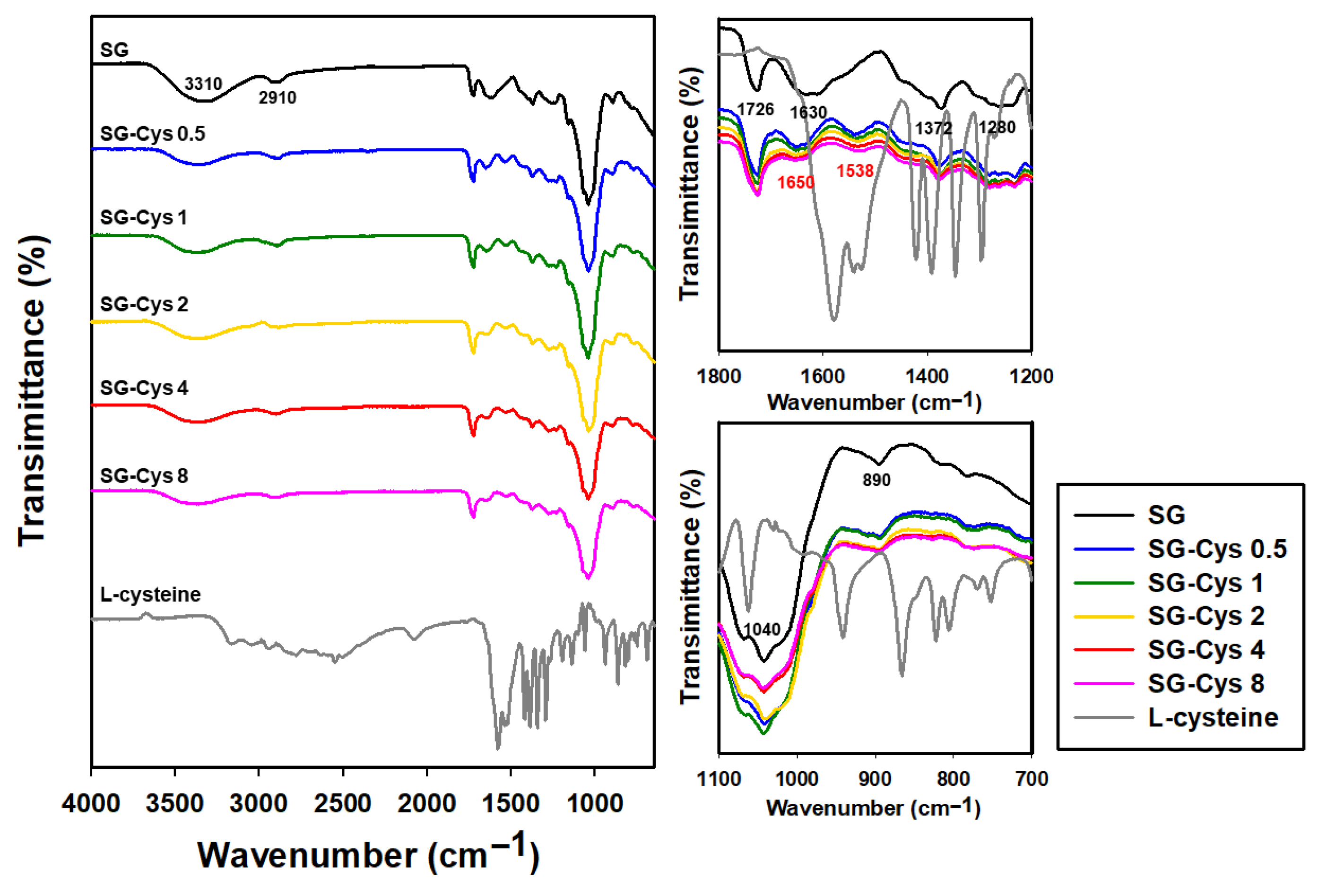
3.1.2. Fourier Transform Infrared (FTIR) Spectroscopy Analysis
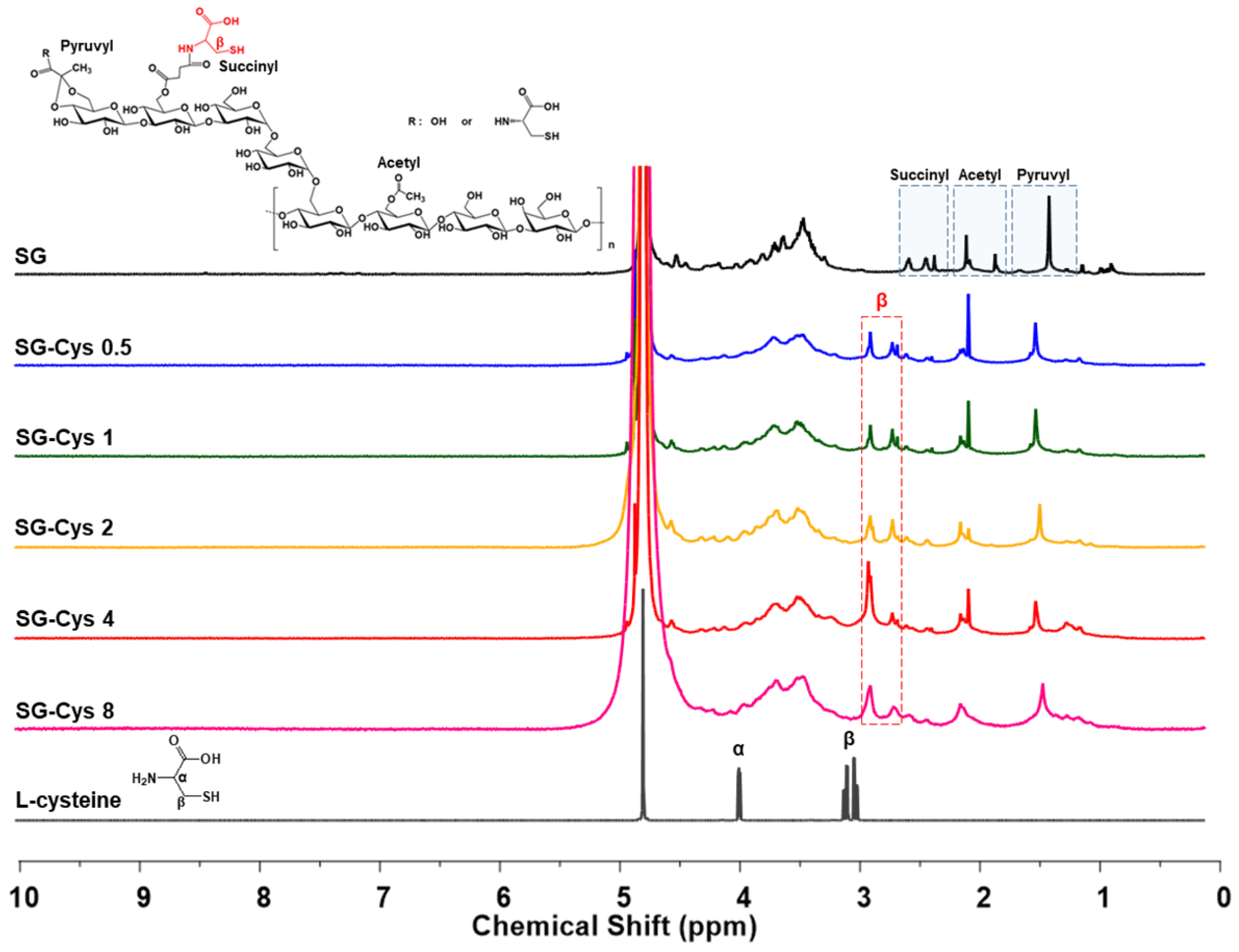
3.1.3. Nuclear Magnetic Resonance (NMR) Spectroscopy Analysis
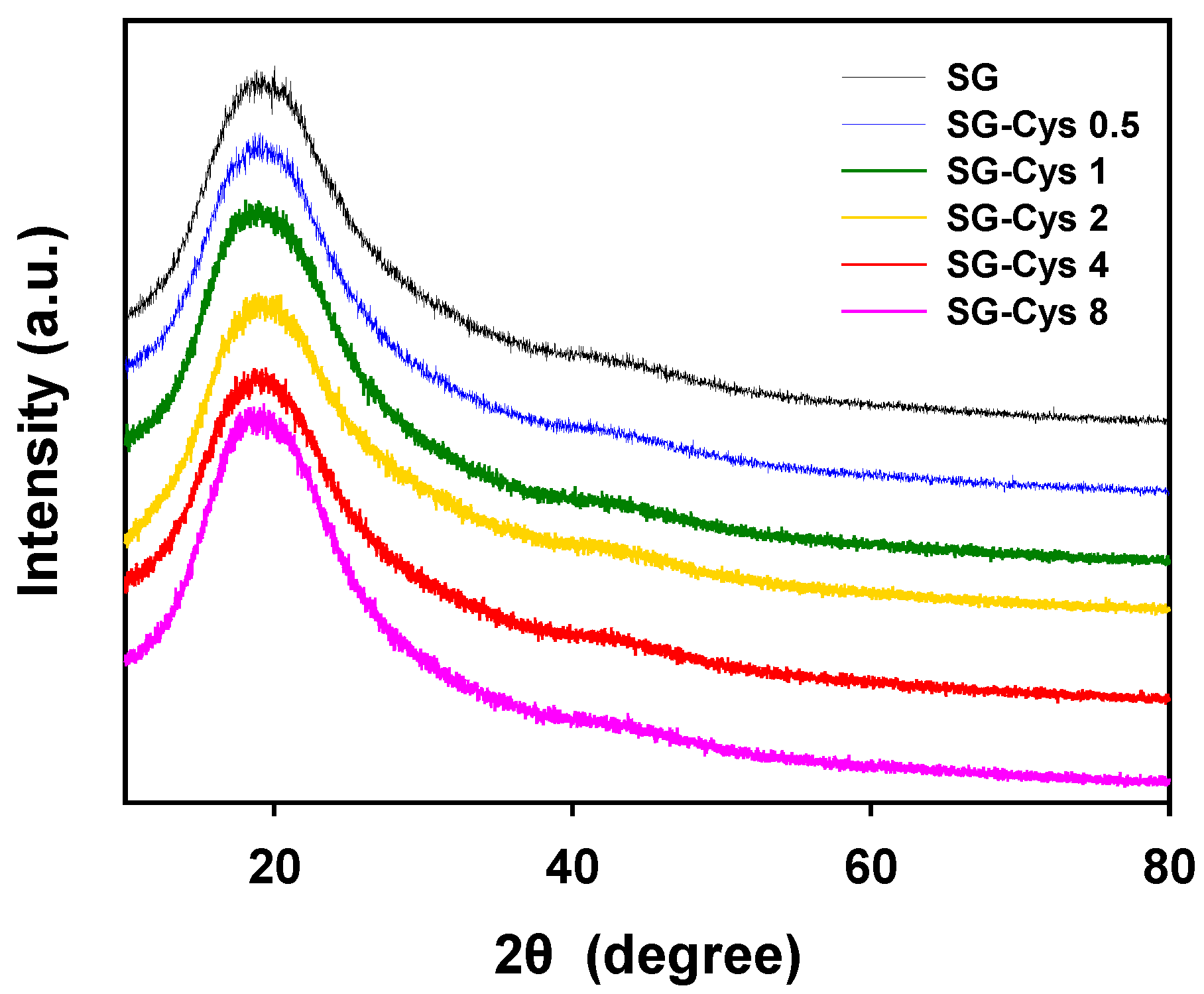
3.1.4. X-Ray Diffraction (XRD) Analysis
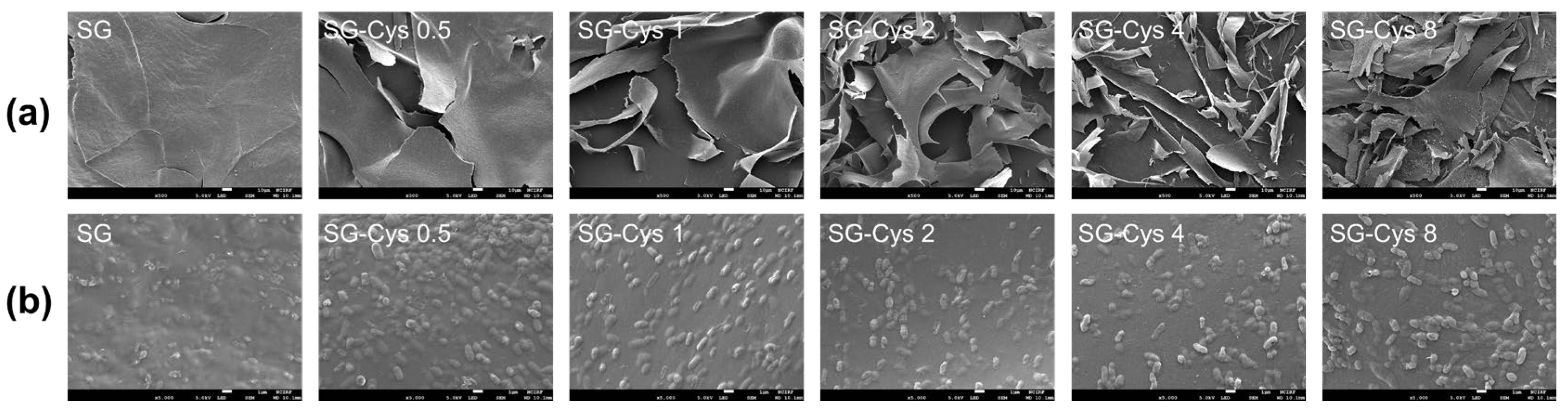
3.1.5. Morphological Analysis of SG-Cys
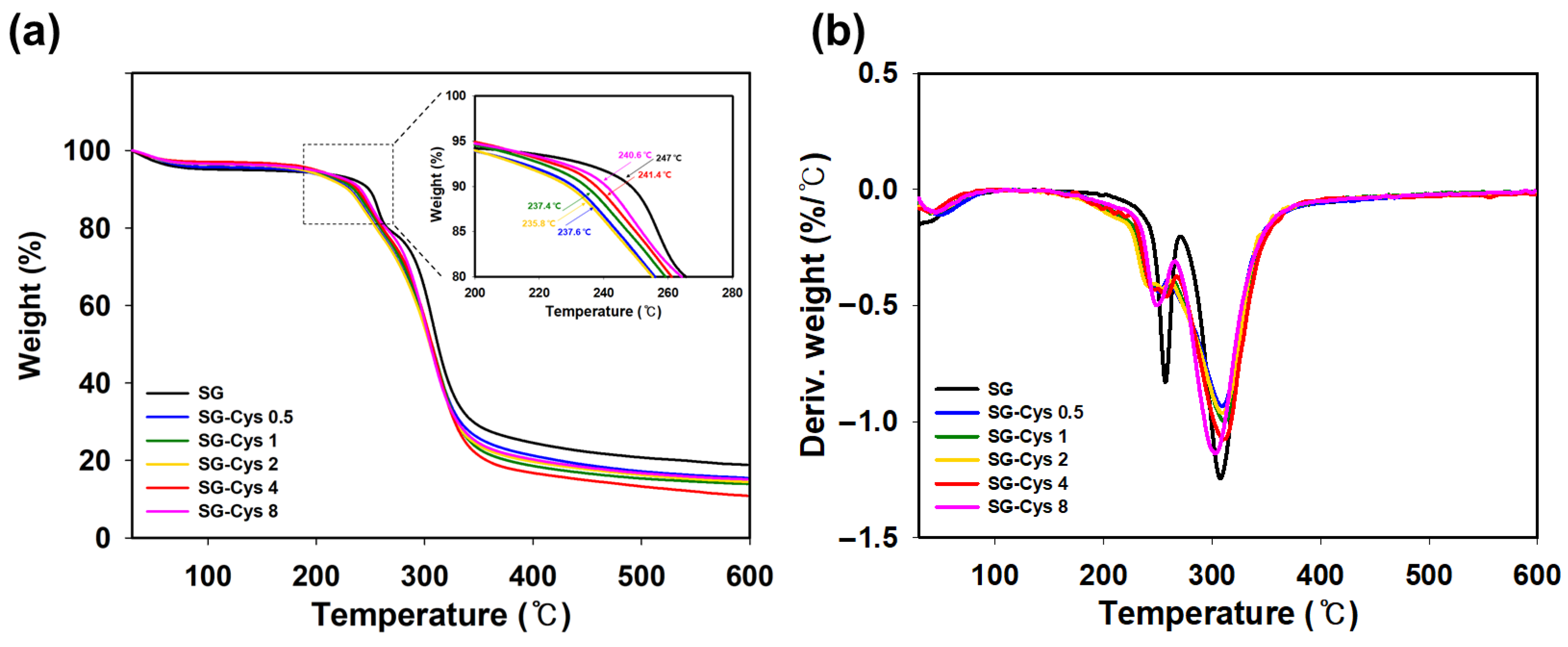
3.2. Thermal Properties Analysis
3.3. Rheological Property Measurement
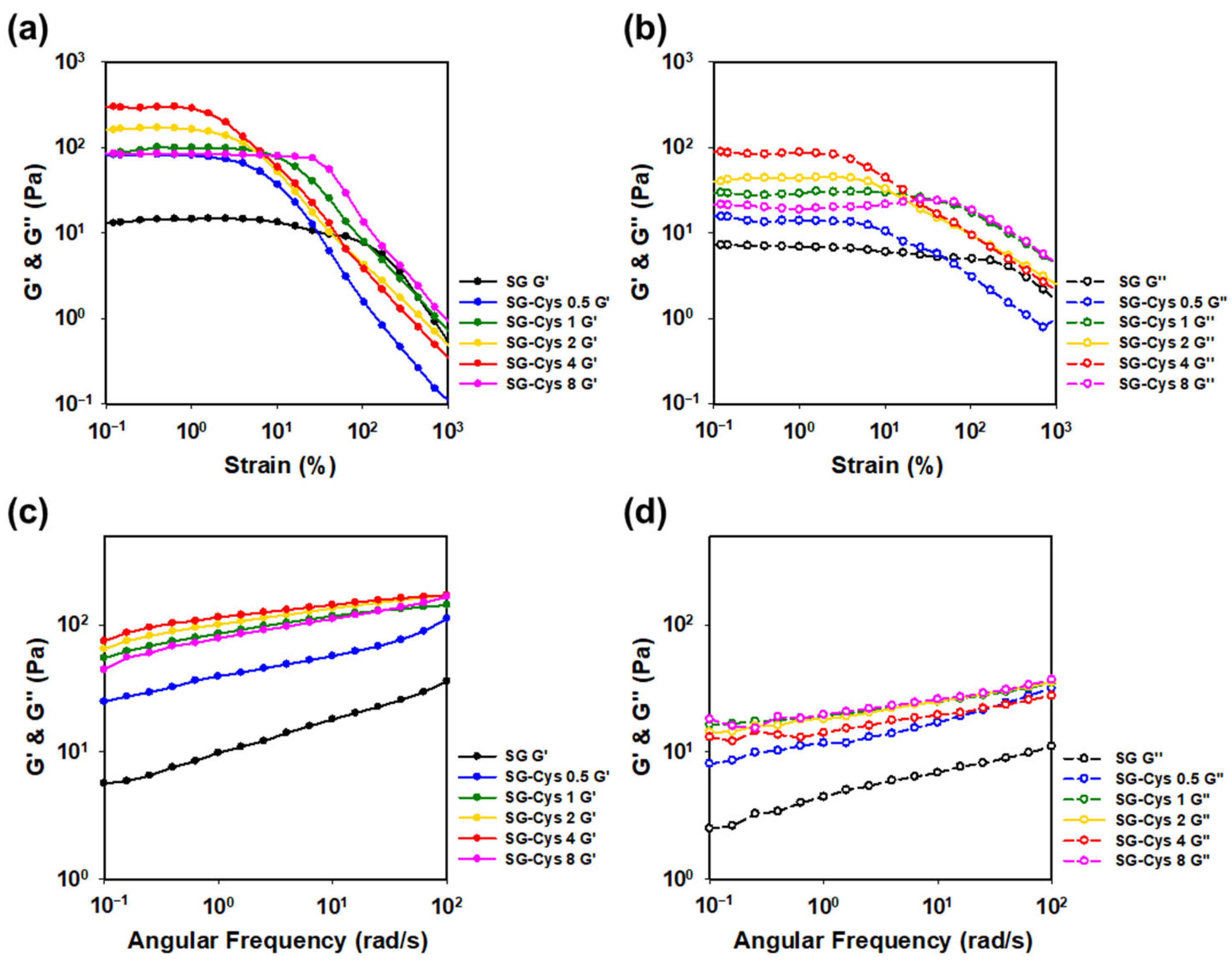
3.3.1. Oscillatory Shear Rheology
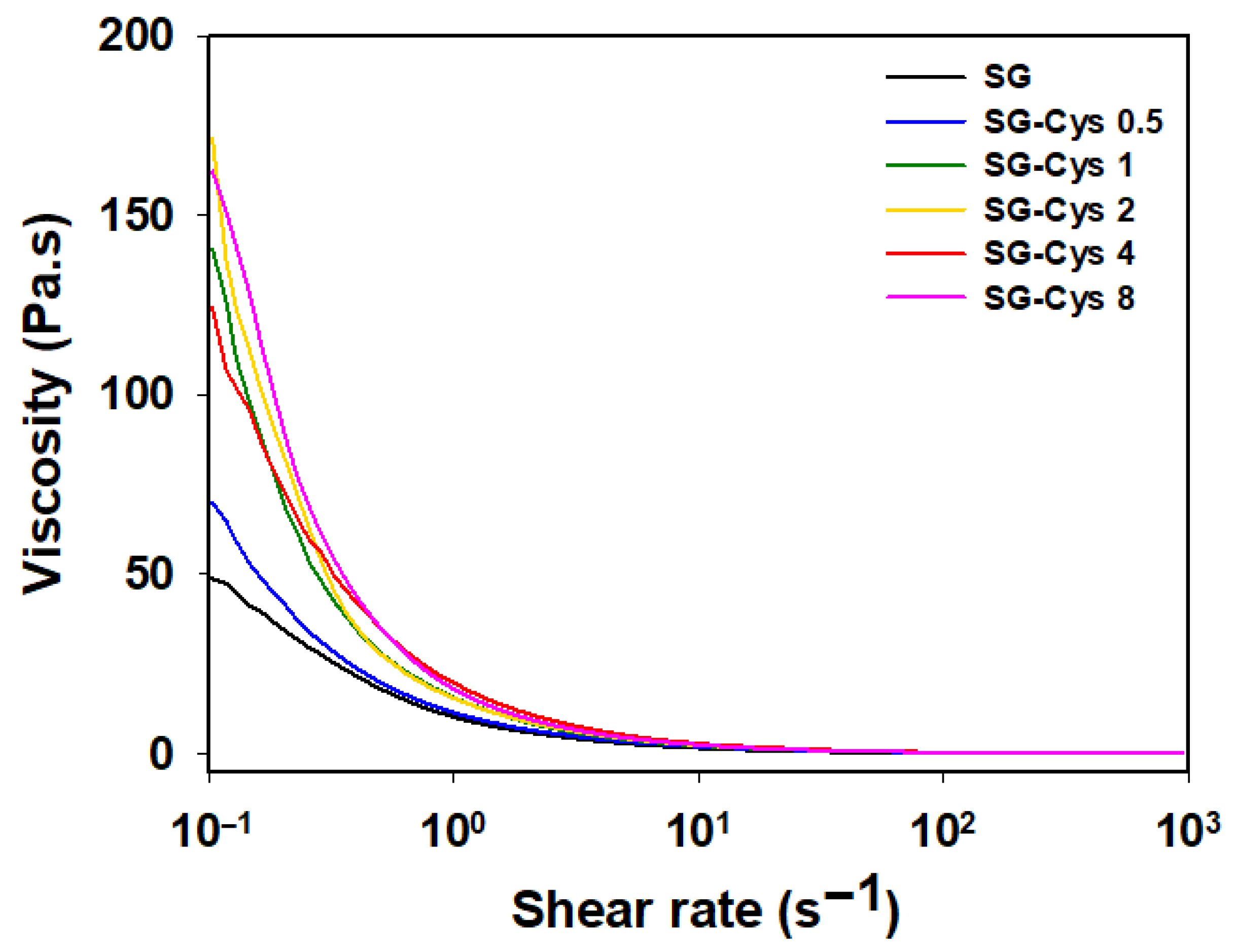
3.3.2. Steady-Shear Flow Behavior
3.3.3. Viscosity Characterization Across Concentration and External Conditions
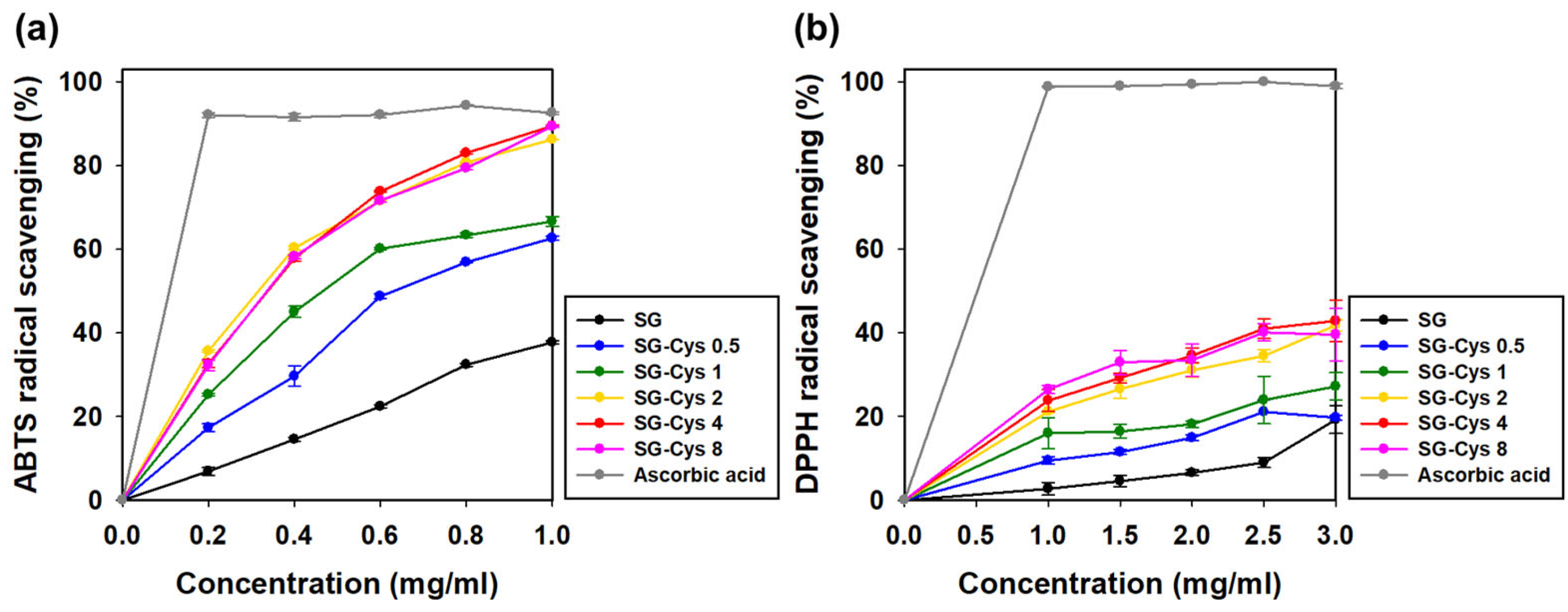
3.4. Antioxidant Activity
3.5. Cell Cytotoxicity
4. Conclusions
Author Contributions
Funding
Institutional Review Board Statement
Data Availability Statement
Conflicts of Interest
Abbreviations
| ABTS | 2,2′-azinobis(3-ethylbenzothiazoline-6-sulfonic acid) |
| Cys | L-cysteine |
| DMSO | dimethyl sulfoxide |
| DPPH | 2,2-diphenyl-1-picrylhydrazyl |
| DTG | derivative thermogravimetry |
| DTNB | 5,5′-dithiobis(2-nitrobenzoic acid) (Ellman’s reagent) |
| EDC | 1-ethyl-3-(3-dimethylaminopropyl)carbodiimide |
| ET | electron transfer |
| FTIR | Fourier transform infrared (spectroscopy) |
| G′ | storage modulus |
| G″ | loss modulus |
| GPC | gel permeation chromatography |
| HAT | hydrogen atom transfer |
| HEK-293 | human embryonic kidney 293 cells |
| LVE | linear viscoelasticity |
| MTT | 3-(4,5-dimethylthiazol-2-yl)-2,5-diphenyltetrazolium bromide |
| MWCO | molecular weight cut-off |
| Mw | weight-average molecular weight |
| NHS | N-hydroxysuccinimide |
| NMR | nuclear magnetic resonance |
| PBS | phosphate-buffered saline |
| PDI | polydispersity index |
| RI | refractive index |
| SEM | scanning electron microscopy |
| SG | succinoglycan |
| SG-Cys | cysteine-modified succinoglycan |
| TGA | thermogravimetric analysis |
| XRD | X-ray diffraction |
References
- Chrószcz-Porębska, M.; Gadomska-Gajadhur, A. Cysteine conjugation: An approach to obtain polymers with enhanced muco-and tissue adhesion. Int. J. Mol. Sci. 2024, 25, 12177. [Google Scholar] [CrossRef] [PubMed]
- Thompson, M.; Scholz, C. Highly branched polymers based on poly (amino acid) s for biomedical application. Nanomaterials 2021, 11, 1119. [Google Scholar] [CrossRef] [PubMed]
- Paglia, E.B.; de Freitas, G.P.; Baldin, E.K.K.; Pacheco, J.E.C.; Carvalho, H.F.; Beppu, M.M. Innovative approaches in alginate grafting: Amino acids of RGD peptide composition for biomimetic and biocompatible biomaterial. Int. J. Biol. Macromol. 2025, 322, 147080. [Google Scholar] [CrossRef] [PubMed]
- Zhang, Q.-F.; Luan, C.-R.; Yin, D.-X.; Zhang, J.; Liu, Y.-H.; Peng, Q.; Xu, Y.; Yu, X.-Q. Amino acid-modified polyethylenimines with enhanced gene delivery efficiency and biocompatibility. Polymers 2015, 7, 2316–2331. [Google Scholar] [CrossRef]
- Gavriel, K.; Neumann, K. Toward Precision Bioconjugation: Chemical Strategies for Site-Selective Cysteine Conjugation. Precis. Chem. 2026. [Google Scholar] [CrossRef]
- Choi, H.; Kim, M.; Jang, J.; Hong, S. Visible-Light-Induced Cysteine-Specific Bioconjugation: Biocompatible Thiol–Ene Click Chemistry. Angew. Chem. Int. Ed. 2020, 59, 22514–22522. [Google Scholar] [CrossRef]
- Altinbasak, I.; Kocak, S.; Sanyal, R.; Sanyal, A. Fast-forming dissolvable redox-responsive hydrogels: Exploiting the orthogonality of thiol–maleimide and thiol–disulfide exchange chemistry. Biomacromolecules 2022, 23, 3525–3534. [Google Scholar] [CrossRef]
- Ranamalla, S.R.; Tavakoli, S.; Porfire, A.S.; Tefas, L.R.; Banciu, M.; Tomuța, I.; Varghese, O.P. A quality by design approach to optimise disulfide-linked hyaluronic acid hydrogels. Carbohydr. Polym. 2024, 339, 122251. [Google Scholar] [CrossRef]
- Kali, G.; Ozkahraman, B.; Laffleur, F.; Knoll, P.; Wibel, R.; Zoller, K.; Bernkop-Schnurch, A. Thiolated cellulose: A dual-acting mucoadhesive and permeation-enhancing polymer. Biomacromolecules 2023, 24, 4880–4889. [Google Scholar] [CrossRef]
- Bernkop-Schnürch, A. Thiomers: A new generation of mucoadhesive polymers. Adv. Drug Delivery Rev. 2005, 57, 1569–1582. [Google Scholar] [CrossRef]
- Nair, D.P.; Podgórski, M.; Chatani, S.; Gong, T.; Xi, W.; Fenoli, C.R.; Bowman, C.N. The thiol-Michael addition click reaction: A powerful and widely used tool in materials chemistry. Chem. Mater. 2014, 26, 724–744. [Google Scholar] [CrossRef]
- Jansen, L.E.; Negrón-Piñeiro, L.J.; Galarza, S.; Peyton, S.R. Control of thiol-maleimide reaction kinetics in PEG hydrogel networks. Acta Biomater. 2018, 70, 120–128. [Google Scholar] [CrossRef] [PubMed]
- Budai-Szűcs, M.; Horvát, G.; Gyarmati, B.; Szilágyi, B.Á.; Szilágyi, A.; Berkó, S.; Ambrus, R.; Szabó-Révész, P.; Sandri, G.; Bonferoni, M.C. The effect of the antioxidant on the properties of thiolated poly (aspartic acid) polymers in aqueous ocular formulations. Eur. J. Pharm. Biopharm. 2017, 113, 178–187. [Google Scholar] [CrossRef] [PubMed]
- Bolanta, S.O.; Malijauskaite, S.; McGourty, K.; O’Reilly, E.J. Synthesis of poly (acrylic acid)-cysteine-based hydrogels with highly customizable mechanical properties for advanced cell culture applications. ACS Omega 2022, 7, 9108–9117. [Google Scholar] [CrossRef] [PubMed]
- Park, H.W.; Kim, J.-D. Mucoadhesive interaction of cysteine grafted poly (2-hydroxyethyl aspartamide) with pig mucin layer of surface plasmon resonance biosensor. J. Ind. Eng. Chem. 2009, 15, 578–583. [Google Scholar] [CrossRef]
- Summonte, S.; Racaniello, G.F.; Lopedota, A.; Denora, N.; Bernkop-Schnürch, A. Thiolated polymeric hydrogels for biomedical application: Cross-linking mechanisms. J. Control. Release 2021, 330, 470–482. [Google Scholar] [CrossRef]
- Huang, Z.-J.; Ye, M.-N.; Peng, X.-H.; Gui, P.; Cheng, F.; Wang, G.-H. Thiolated chitosan hydrogel combining nitric oxide and silver nanoparticles for the effective treatment of diabetic wound healing. Int. J. Biol. Macromol. 2025, 311, 143730. [Google Scholar] [CrossRef]
- Taghizadeh, F.; Mehryab, F.; Mortazavi, S.A.; Rabbani, S.; Haeri, A. Thiolated chitosan hydrogel-embedded niosomes: A promising crocin delivery system toward the management of aphthous stomatitis. Carbohydr. Polym. 2023, 318, 121068. [Google Scholar] [CrossRef]
- Rumon, M.M.H.; Akib, A.A.; Sarkar, S.D.; Khan, M.A.R.; Uddin, M.M.; Nasrin, D.; Roy, C.K. Polysaccharide-based hydrogels for advanced biomedical engineering applications. ACS Polym. Au 2024, 4, 463–486. [Google Scholar] [CrossRef]
- Sousa, V.; Monteiro, L.P.; Rocha, D.H.; Rodrigues, J.M.; Borges, J.; Mano, J.F. Marine-Origin Polysaccharides and Their Chemically Modified Derivatives as Sources of Advanced Biofunctional Materials for Biomedical Applications. Biomacromolecules 2025, 26, 4735–4772. [Google Scholar] [CrossRef]
- Sharma, R.; Ahuja, M. Thiolated pectin: Synthesis, characterization and evaluation as a mucoadhesive polymer. Carbohydr. Polym. 2011, 85, 658–663. [Google Scholar] [CrossRef]
- Chen, T.C.; Tang, R.C.; Lin, J.N.; Kuo, W.T.; Yang, I.H.; Liang, Y.J.; Lin, F.H. The synthesis and evaluation of thiolated alginate as the barrier to block nutrient absorption on small intestine for body-weight control. Bioeng. Transl. Med. 2023, 8, e10382. [Google Scholar] [CrossRef] [PubMed]
- Abedini, E.; Shajari, G.; Barzegari, A.; Mahdipour, M.; Fathi, M.; Erfan-Niya, H. Thiolated gellan gum/polyethylene glycol diacrylate hydrogel containing secretome as a wound dressing: In vitro and in vivo studies. Mater. Today Commun. 2026, 51, 114785. [Google Scholar] [CrossRef]
- Shu, X.Z.; Liu, Y.; Luo, Y.; Roberts, M.C.; Prestwich, G.D. Disulfide cross-linked hyaluronan hydrogels. Biomacromolecules 2002, 3, 1304–1311. [Google Scholar] [CrossRef]
- Kim, J.; Jeong, J.-P.; Kim, Y.; Jung, S. Physicochemical and rheological properties of succinoglycan overproduced by Sinorhizobium meliloti 1021 mutant. Polymers 2024, 16, 244. [Google Scholar] [CrossRef] [PubMed]
- Jeong, J.-P.; Kim, Y.; Hu, Y.; Jung, S. Bacterial succinoglycans: Structure, physical properties, and applications. Polymers 2022, 14, 276. [Google Scholar] [CrossRef]
- Yang, Y.; Zhang, H.; Zhang, X.; Shen, S.; Wu, B.; Peng, D.; Yin, J.; Wang, Y. A Succinoglycan-riclin-zinc-phthalocyanine-based composite hydrogel with enhanced photosensitive and antibacterial activity targeting biofilms. Gels 2025, 11, 672. [Google Scholar] [CrossRef]
- Shin, Y.; Hu, Y.; Park, S.; Jung, S. Novel succinoglycan dialdehyde/aminoethylcarbamoyl-β-cyclodextrin hydrogels for pH-responsive delivery of hydrophobic drugs. Carbohydr. Polym. 2023, 305, 120568. [Google Scholar] [CrossRef]
- Jeong, J.-P.; Kim, K.; Yoon, I.; Jang, S.; Jung, S. Multifunctional biodegradable films of caffeic acid–grafted succinoglycan and polyvinyl alcohol with enhanced antioxidant, antibacterial, and UV-shielding properties. Int. J. Biol. Macromol. 2025, 321, 146327. [Google Scholar] [CrossRef]
- Sun, K.; Wang, Z.; Jiang, J.; Li, Z.; Ye, S. Thiol-functionalized dual network polysaccharide microgels for synergistic Patulin adsorption and gut-liver axis protection via delivery and controlled release of Ginkgo Biloba extract. Chem. Eng. J. 2025, 525, 170674. [Google Scholar] [CrossRef]
- Chesneau, C.; Pelletier, A.; Dubot, P.; Leroy, E.; Goffin, A.; Jørgensen, L.; Hamadi, S.; Modjinou, T.; Houppe, C.; Wickramanayaka, M.D. Synthesis and physico-chemical investigation of thiolated dextran derivative: Design and application of a redox-responsive drug delivery system. Int. J. Biol. Macromol. 2025, 297, 139861. [Google Scholar] [CrossRef] [PubMed]
- Pariguana, M.; Gonzalez, L.; de Loubens, C.; Vargas, E.; Marican, A.; Castro, R.; Cabrera-Barjas, G.; Durán-Lara, E.F. Development of a Thiolated Carboxymethyl tara gum derivative with enhanced mucoadhesive and rheological behavior. Carbohydr. Polym. Technol. Appl. 2025, 12, 101050. [Google Scholar] [CrossRef]
- Wang, L.-X.; Wang, Y.; Pellock, B.; Walker, G.C. Structural characterization of the symbiotically important low-molecular-weight succinoglycan of Sinorhizobium meliloti. J. Bacteriol. 1999, 181, 6788–6796. [Google Scholar] [CrossRef] [PubMed]
- Xiao, Y.; Lu, C.; Liu, Y.; Kong, L.; Bai, H.; Mu, H.; Li, Z.; Geng, H.; Duan, J. Encapsulation of Lactobacillus rhamnosus in hyaluronic acid-based hydrogel for pathogen-targeted delivery to ameliorate enteritis. ACS Appl. Mater. Interfaces 2020, 12, 36967–36977. [Google Scholar] [CrossRef]
- de Sousa, I.P.; Suchaoin, W.; Zupančič, O.; Leichner, C.; Bernkop-Schnürch, A. Totally S-protected hyaluronic acid: Evaluation of stability and mucoadhesive properties as liquid dosage form. Carbohydr. Polym. 2016, 152, 632–638. [Google Scholar] [CrossRef]
- Bahulkar, S.S.; Munot, N.M.; Surwase, S.S. Synthesis, characterization of thiolated karaya gum and evaluation of effect of pH on its mucoadhesive and sustained release properties. Carbohydr. Polym. 2015, 130, 183–190. [Google Scholar] [CrossRef]
- Lian, H.; Zhang, T.; Sun, J.; Pu, X.; Tang, Y.; Zhang, Y.; He, Z. Enhanced paracellular and transcellular paclitaxel permeation by chitosan–vitamin E succinate–N-acetyl-l-cysteine copolymer on Caco-2 cell monolayer. J. Nanopart. Res. 2014, 16, 2355. [Google Scholar] [CrossRef]
- Yang, N.; Jike, X.; Zhang, M.; Jiang, T.; Lei, H. Synthesis, characterization of thiolated hyaluronic acid and evaluation of its encapsulation effects on Limosilactobacillus reuteri HR7. Int. J. Biol. Macromol. 2025, 310, 143486. [Google Scholar] [CrossRef]
- Han, X.; Tian, L.; Chen, Q.; Wang, L.; Mi, Y.; Li, Q.; Guo, Z.; Dong, F. Preparation of novel thiolated chitosan with significant antioxidant activity. Int. J. Biol. Macromol. 2025, 308, 142536. [Google Scholar] [CrossRef]
- Yalcintas, E.P.; Ackerman, D.S.; Korkmaz, E.; Telmer, C.A.; Jarvik, J.W.; Campbell, P.G.; Bruchez, M.P.; Ozdoganlar, O.B. Analysis of In Vitro Cytotoxicity of Carbohydrate-Based Materials Used for Dissolvable Microneedle Arrays. Pharm. Res. 2020, 37, 33. [Google Scholar] [CrossRef]
- Zhang, F.; Chen, Y.; Lü, J.; Liu, R.; Han, H.; Ma, Y.; Ma, X.; Yang, J.; Wang, X.; Lü, X. Thiolated modified pectin for the efficient encapsulation of Companilactobacillus crustorum MN047. Food Hydrocoll. 2024, 147, 109421. [Google Scholar] [CrossRef]
- Santhanam, S.; Liang, J.; Baid, R.; Ravi, N. Investigating thiol-modification on hyaluronan via carbodiimide chemistry using response surface methodology. J. Biomed. Mater. Res. Part A 2015, 103, 2300–2308. [Google Scholar] [CrossRef] [PubMed]
- Chen, J.; Ye, F.; Zhou, Y.; Zhao, G. Thiolated citrus low-methoxyl pectin: Synthesis, characterization and rheological and oxidation-responsive gelling properties. Carbohydr. Polym. 2018, 181, 964–973. [Google Scholar] [CrossRef] [PubMed]
- Hou, L.; Yu, C.; Zhang, L.; Zhang, F.; Linhardt, R.J.; Chen, S.; Ye, X.; Hou, Z. Structure and microbial-modulating evaluation of a sulfhydryl-modified pectin. Food Hydrocoll. 2023, 144, 108977. [Google Scholar] [CrossRef]
- Bakhtiyari, M.; Moosavi-Nasab, M.; Askari, H. Optimization of succinoglycan hydrocolloid production by Agrobacterium radiobacter grown in sugar beet molasses and investigation of its physicochemical characteristics. Food Hydrocoll. 2015, 45, 18–29. [Google Scholar] [CrossRef]
- Moosavi-Nasab, M.; Taherian, A.R.; Bakhtiyari, M.; Farahnaky, A.; Askari, H. Structural and rheological properties of succinoglycan biogums made from low-quality date syrup or sucrose using agrobacterium radiobacter inoculation. Food Bioprocess Technol. 2012, 5, 638–647. [Google Scholar] [CrossRef]
- Staroszczyk, H.; Sztuka, K.; Wolska, J.; Wojtasz-Pająk, A.; Kołodziejska, I. Interactions of fish gelatin and chitosan in uncrosslinked and crosslinked with EDC films: FT-IR study. Spectrochim. Acta Part A 2014, 117, 707–712. [Google Scholar] [CrossRef]
- Yu, Y.; Peng, Y.; Zhong, Y.; Su, Z.; Vijayakumar, S.; Chen, Y.; Mao, Y.; Wang, L.; Xin, M.; Li, M. Innovative pH-responsive chitosan hydrogel: A systematic study on VB12 controlled release and multifunctional biological effects via synergistic grafting of cysteine and arginine. Int. J. Biol. Macromol. 2025, 322, 146718. [Google Scholar] [CrossRef]
- Chouly, C.; Colquhoun, I.J.; Jodelet, A.; York, G.; Walker, G.C. NMR studies of succinoglycan repeating-unit octasaccharides from Rhizobium meliloti and Agrobacterium radiobacter. Int. J. Biol. Macromol. 1995, 17, 357–363. [Google Scholar] [CrossRef]
- Carvalho, I.C.; Mansur, A.A.; Carvalho, S.M.; Florentino, R.M.; Mansur, H.S. L-cysteine and poly-L-arginine grafted carboxymethyl cellulose/Ag-In-S quantum dot fluorescent nanohybrids for in vitro bioimaging of brain cancer cells. Int. J. Biol. Macromol. 2019, 133, 739–753. [Google Scholar] [CrossRef]
- Zhang, X.; Ma, J.; Zheng, B.; Du, Z.; Zhang, Y.; Zhao, G.; Zhang, L.; Zang, J. A disulfide-crosslinked pectin-glutenin hydrogel with advanced reversibility and toughness for cell culture. Int. J. Biol. Macromol. 2025, 322, 146606. [Google Scholar] [CrossRef] [PubMed]
- Gao, H.; Yang, L.; Tian, J.; Huang, L.; Huang, D.; Zhang, W.; Xie, F.; Niu, Y.; Jin, M.; Jia, C. Characterization and rheological properties analysis of the succinoglycan produced by a high-yield mutant of Rhizobium radiobacter ATCC 19358. Int. J. Biol. Macromol. 2021, 166, 61–70. [Google Scholar] [CrossRef] [PubMed]
- Nanaki, S.G.; Spyrou, K.; Veneti, P.; Karouta, N.; Gournis, D.; Baroud, T.N.; Barmpalexis, P.; Bikiaris, D.N. L-cysteine modified chitosan nanoparticles and carbon-based nanostructures for the intranasal delivery of Galantamine. Polymers 2022, 14, 4004. [Google Scholar] [CrossRef] [PubMed]
- Zhang, Z.; Mu, L.; Li, J.; Zhao, H.; Hou, H.-M.; Zhang, G.-l.; Hao, H.; Bi, J. A double cross-linked film based on carboxymethyl chitosan binding with L-cysteine/oxidized konjac glucomannan with slow-release of nisin for food preservation. Food Chem. 2025, 472, 142876. [Google Scholar] [CrossRef]
- Kaur, H.; Yadav, S.; Ahuja, M.; Dilbaghi, N. Synthesis, characterization and evaluation of thiolated tamarind seed polysaccharide as a mucoadhesive polymer. Carbohydr. Polym. 2012, 90, 1543–1549. [Google Scholar] [CrossRef]
- Luo, Q.; Han, Q.; Wang, Y.; Zhang, H.; Fei, Z.; Wang, Y. The thiolated chitosan: Synthesis, gelling and antibacterial capability. Int. J. Biol. Macromol. 2019, 139, 521–530. [Google Scholar] [CrossRef]
- Grewal, P.; Mundlia, J.; Ahuja, M. Thiol modified Moringa gum—A potential bioadhesive polymer. Carbohydr. Polym. 2019, 209, 400–408. [Google Scholar] [CrossRef]
- Shen, J.; Li, B.; Zhan, X.; Wang, L. A one pot method for preparing an antibacterial superabsorbent hydrogel with a Semi-IPN structure based on tara gum and polyquaternium-7. Polymers 2018, 10, 696. [Google Scholar] [CrossRef]
- Li, X.; Zhang, X.; Zhao, W.; Tian, P.; Tulugan, K. Preparation of hirudin-loaded chitosan/polycaprolactone bowl-shaped particles and an application for a drug delivery system. Appl. Sci. 2024, 14, 1939. [Google Scholar] [CrossRef]
- Leitner, V.M.; Walker, G.F.; Bernkop-Schnürch, A. Thiolated polymers: Evidence for the formation of disulphide bonds with mucus glycoproteins. Eur. J. Pharm. Biopharm. 2003, 56, 207–214. [Google Scholar] [CrossRef]
- Yang, J.; Wang, S. Polysaccharide-based multifunctional hydrogel bio-adhesives for wound healing: A review. Gels 2023, 9, 138. [Google Scholar] [CrossRef]
- Davoudi, Z.; Kali, G.; Braun, D.; Azizi, M.H.; Bernkop-Schnürch, A. Highly thiolated corn starch for enhanced mucoadhesion and permeation. Int. J. Pharm. 2025, 680, 125798. [Google Scholar] [CrossRef] [PubMed]
- Bai, L.; Liu, F.; Xu, X.; Huan, S.; Gu, J.; McClements, D.J. Impact of polysaccharide molecular characteristics on viscosity enhancement and depletion flocculation. J. Food Eng. 2017, 207, 35–45. [Google Scholar] [CrossRef]
- Bamigbade, G.; Ali, A.H.; Subhash, A.; Tamiello-Rosa, C.; Al Qudsi, F.R.; Esposito, G.; Hamed, F.; Liu, S.-Q.; Gan, R.-Y.; Abu-Jdayil, B. Structural characterization, biofunctionality, and environmental factors impacting rheological properties of exopolysaccharide produced by probiotic Lactococcus lactis C15. Sci. Rep. 2023, 13, 17888. [Google Scholar] [CrossRef]
- Meng, Q.; Wang, Q.; Chen, L.; Li, J.; Fan, L.; Gu, Z.; Shi, G.; Ding, Z. Rheological properties and thickening effect of high molecular weight exopolysaccharide and intracellular polysaccharide from Schizophyllum commune. Food Hydrocoll. 2023, 144, 108920. [Google Scholar] [CrossRef]
- Kopač, T.; Ručigaj, A.; Krajnc, M. Effect of polymer-polymer interactions on the flow behavior of some polysaccharide-based hydrogel blends. Carbohydr. Polym. 2022, 287, 119352. [Google Scholar] [CrossRef]
- Rana, S.; Upadhyay, L.S.B. Microbial exopolysaccharides: Synthesis pathways, types and their commercial applications. Int. J. Biol. Macromol. 2020, 157, 577–583. [Google Scholar] [CrossRef]
- Andhare, P.; Delattre, C.; Pierre, G.; Michaud, P.; Pathak, H. Characterization and rheological behaviour analysis of the succinoglycan produced by Rhizobium radiobacter strain CAS from curd sample. Food Hydrocoll. 2017, 64, 1–8. [Google Scholar] [CrossRef]
- Zhong, L.; Oostrom, M.; Truex, M.J.; Vermeul, V.R.; Szecsody, J.E. Rheological behavior of xanthan gum solution related to shear thinning fluid delivery for subsurface remediation. J. Hazard. Mater. 2013, 244, 160–170. [Google Scholar] [CrossRef]
- Wyatt, N.B.; Gunther, C.M.; Liberatore, M.W. Increasing viscosity in entangled polyelectrolyte solutions by the addition of salt. Polymer 2011, 52, 2437–2444. [Google Scholar] [CrossRef]
- Ni, Q.; Ye, W.; Du, M.; Shan, G.; Song, Y.; Zheng, Q. Effect of hydrogen bonding on dynamic rheological behavior of PVA aqueous solution. Gels 2022, 8, 518. [Google Scholar] [CrossRef]
- Bi, H.; Zhang, X.; Wang, Q.; Yong, Q.; Xu, W.; Xu, M.; Xu, C.; Wang, X. Dynamic reversible disulfide bonds hydrogel of thiolated galactoglucomannan/cellulose nanofibril with self-healing property for protein release. Ind. Crops Prod. 2023, 206, 117615. [Google Scholar] [CrossRef]
- Sui, Y.; Jiang, R.; Niimi, M.; Hong, J.; Yan, Q.; Shi, Z.; Yao, J. Development of dietary thiol antioxidant via reductive modification of whey protein and its application in the treatment of ischemic kidney injury. Antioxidants 2023, 12, 193. [Google Scholar] [CrossRef]
- Charlton, N.C.; Mastyugin, M.; Török, B.; Török, M. Structural features of small molecule antioxidants and strategic modifications to improve potential bioactivity. Molecules 2023, 28, 1057. [Google Scholar] [CrossRef] [PubMed]
- Ulrich, K.; Jakob, U. The role of thiols in antioxidant systems. Free Radical Biol. Med. 2019, 140, 14–27. [Google Scholar] [CrossRef] [PubMed]
- Knoll, P.; Le, N.-M.N.; Wibel, R.; Baus, R.A.; Kali, G.; Asim, M.H.; Bernkop-Schnürch, A. Thiolated pectins: In vitro and ex vivo evaluation of three generations of thiomers. Acta Biomater. 2021, 135, 139–149. [Google Scholar] [CrossRef]
- Rahmat, D.; Sakloetsakun, D.; Shahnaz, G.; Perera, G.; Kaindl, R.; Bernkop-Schnürch, A. Design and synthesis of a novel cationic thiolated polymer. Int. J. Pharm. 2011, 411, 10–17. [Google Scholar] [CrossRef]



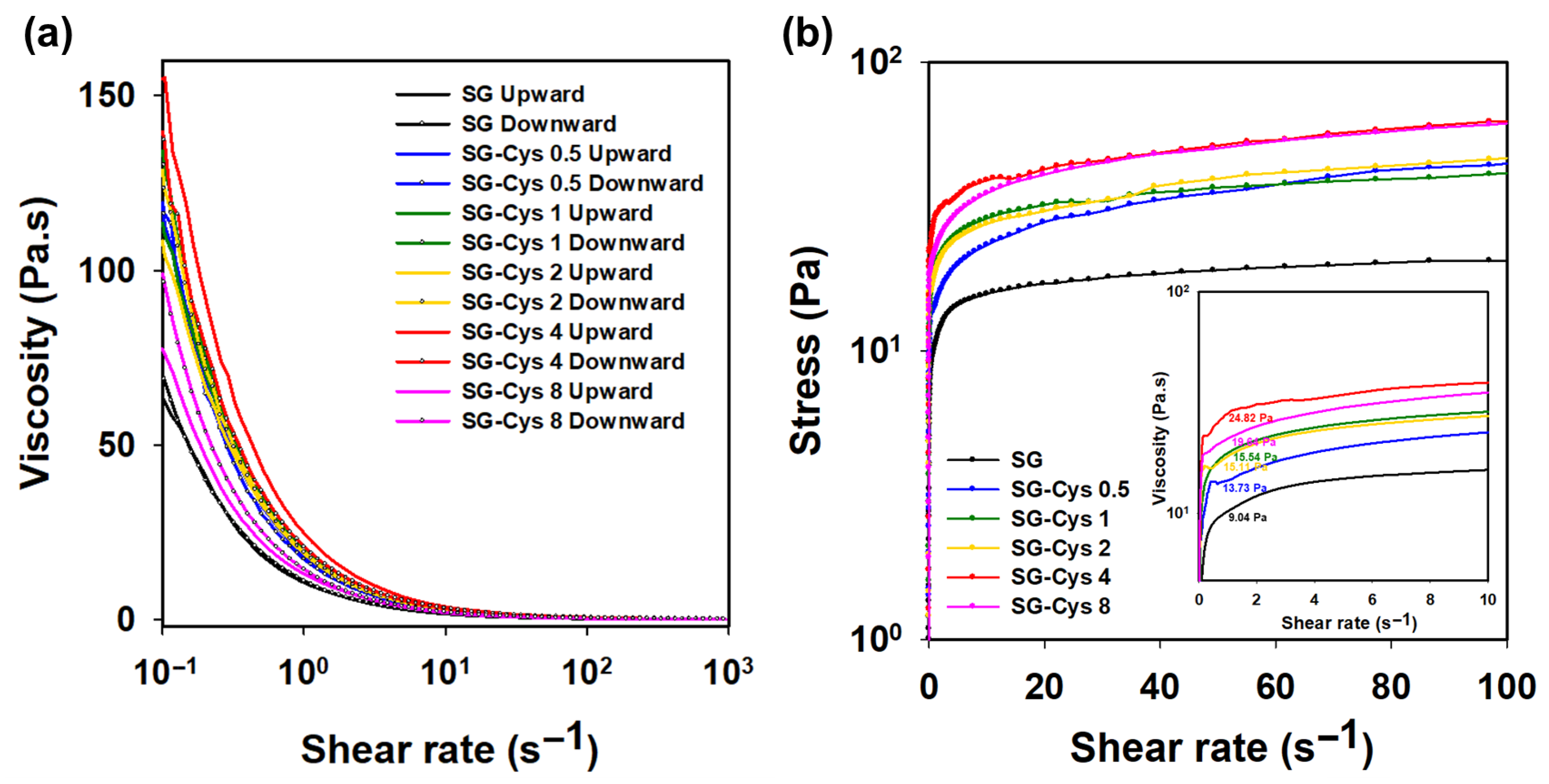
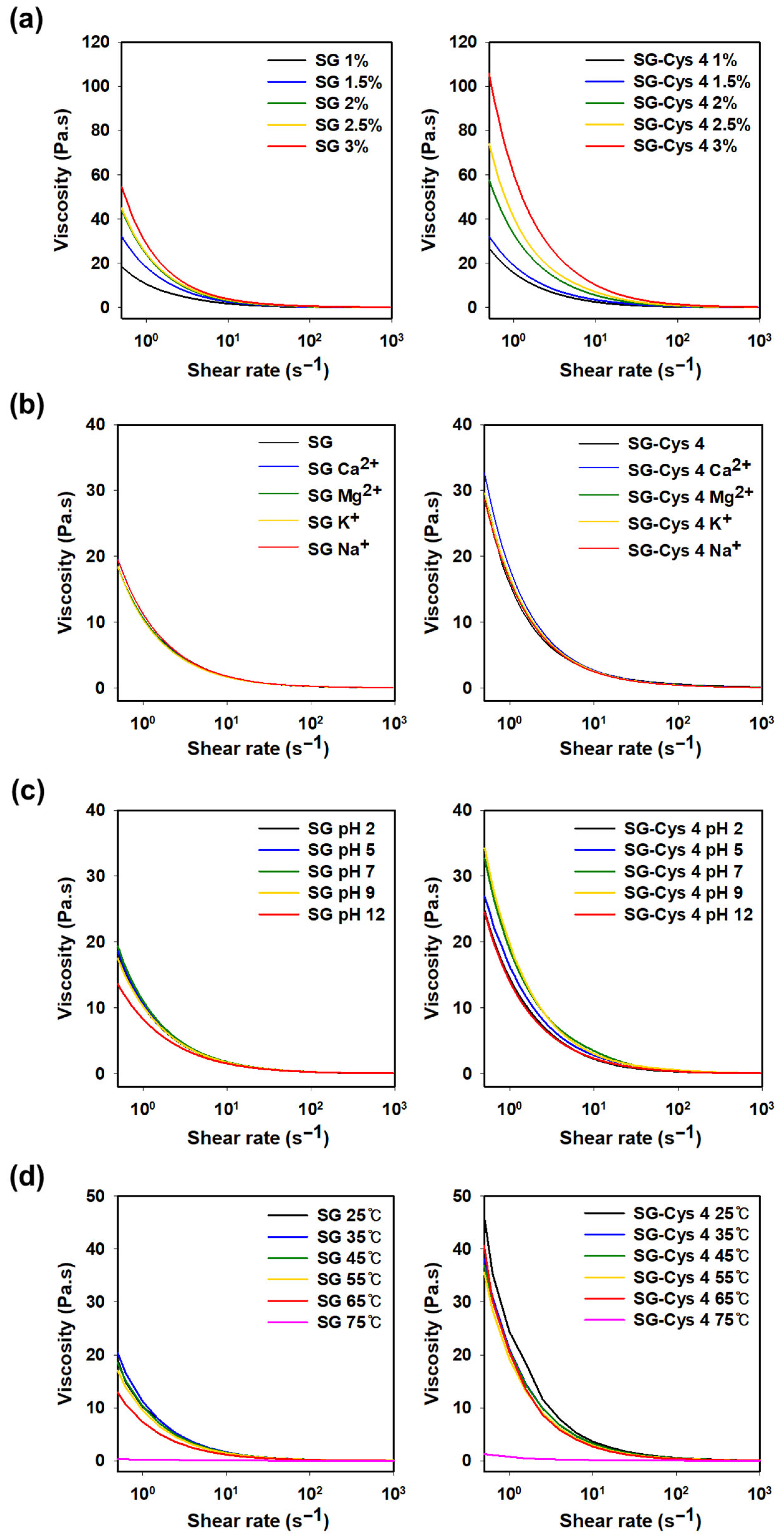
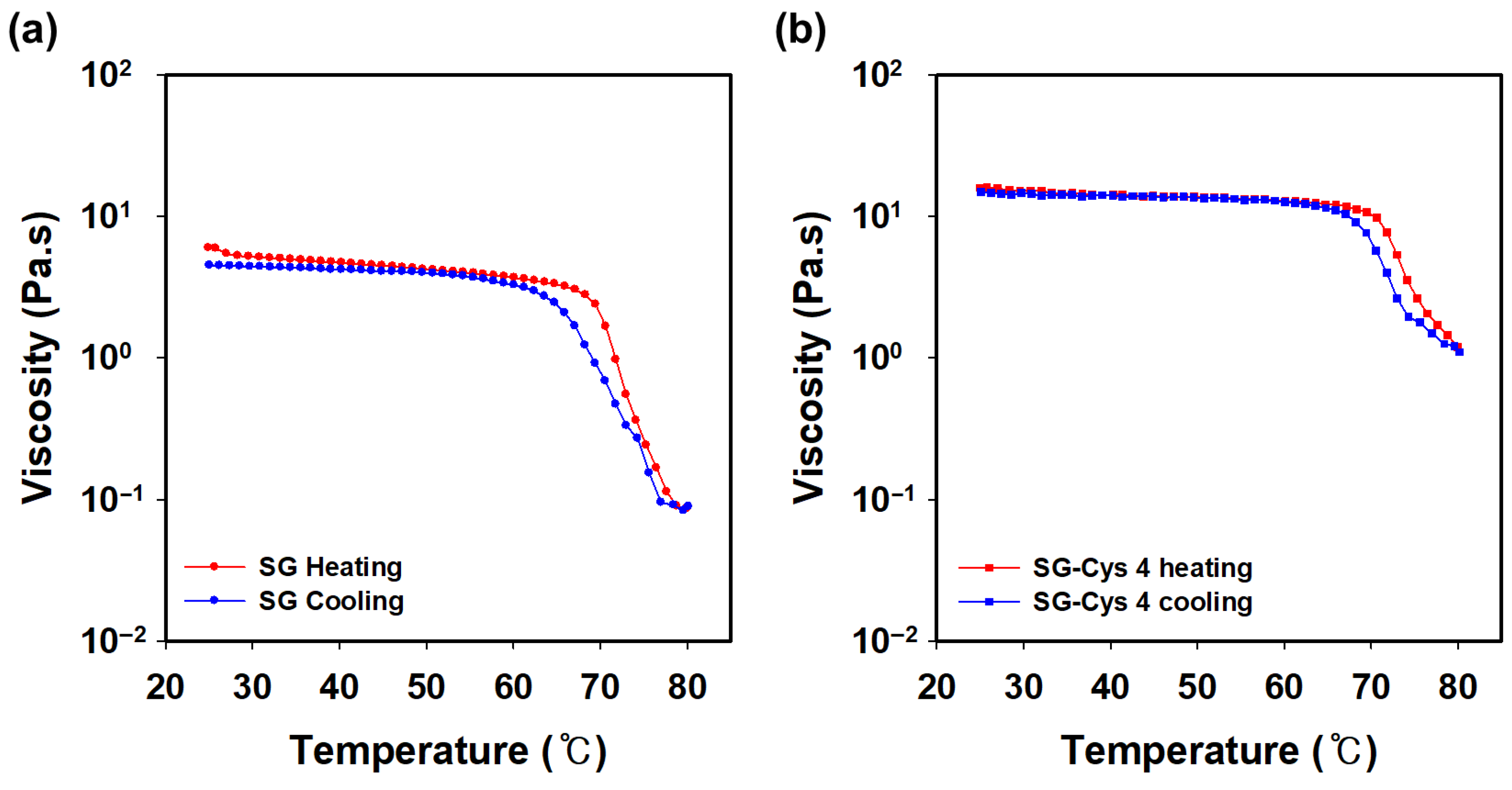

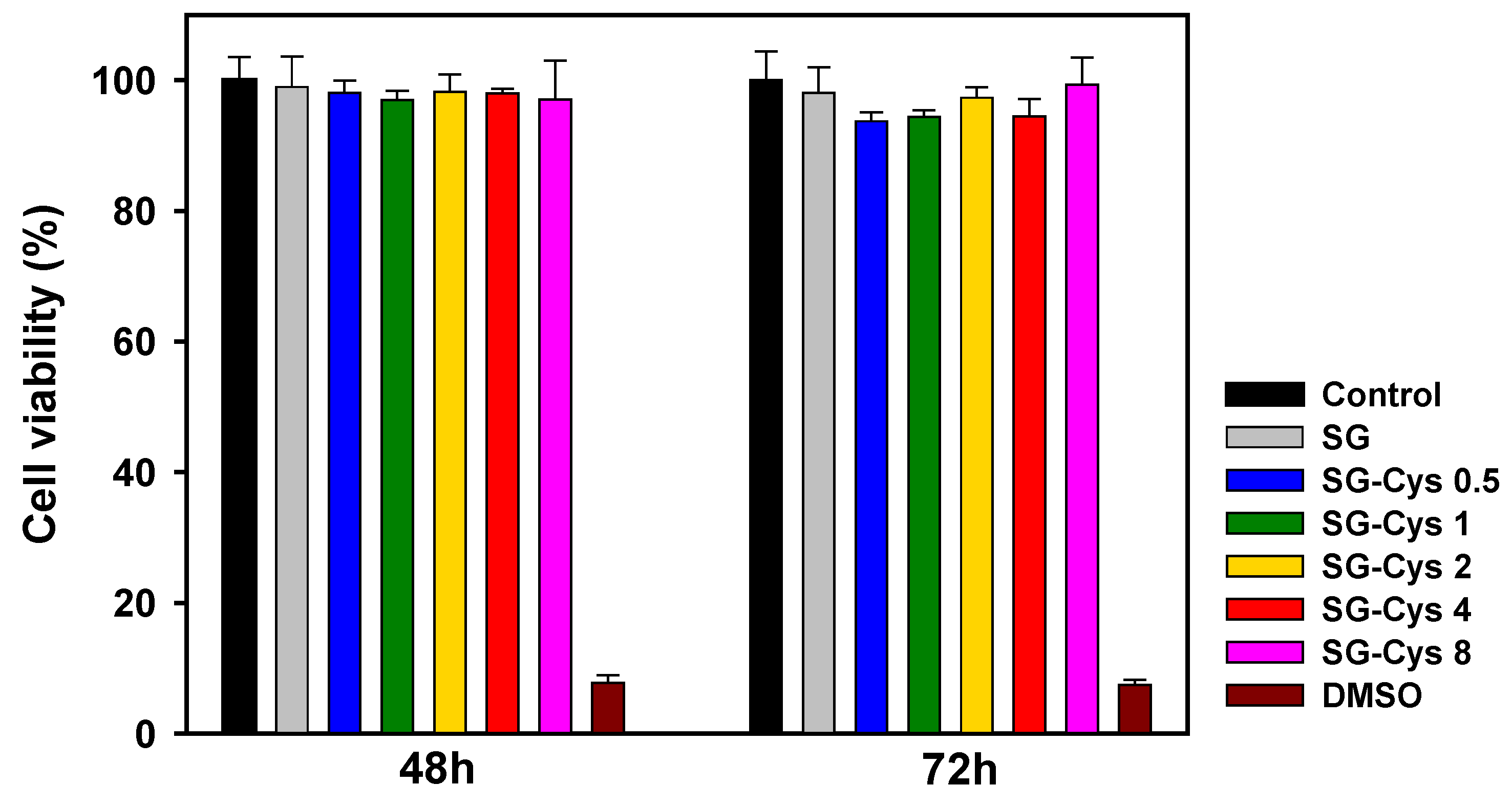

| Sample | Ratio of SG(–COOH)/L-Cysteine(-NH2) | Molecular Weight (g/mol) | Polydispersity | Yield (%) |
|---|---|---|---|---|
| SG | Control | 330,800 | 1.459 | - |
| SG-Cys 0.5 | 1:0.5 | 273,200 | 1.468 | 96.6 |
| SG-Cys 1 | 1:1 | 268,300 | 1.458 | 95.8 |
| SG-Cys 2 | 1:2 | 283,200 | 1.425 | 95.0 |
| SG-Cys 4 | 1:4 | 260,400 | 1.395 | 94.6 |
| SG-Cys 8 | 1:8 | 265,900 | 1.402 | 91.6 |
| Polymer | ||||||
|---|---|---|---|---|---|---|
| SG | SG-Cys 0.5 | SG-Cys 1 | SG-Cys 2 | SG-Cys 4 | SG-Cys 8 | |
| Free thiol group (μmol/g) | - | 202.4 ± 0.9 | 262.0 ± 1.2 | 310 ± 34 | 344.4 ± 8.4 | 321.5 ± 3.5 |
| Disulfide bond (μmol/g) | - | 39.0 ± 2.0 | 41.1 ± 8.7 | 48 ± 10 | 53.5 ± 5.3 | 54 ± 4.5 |
Disclaimer/Publisher’s Note: The statements, opinions and data contained in all publications are solely those of the individual author(s) and contributor(s) and not of MDPI and/or the editor(s). MDPI and/or the editor(s) disclaim responsibility for any injury to people or property resulting from any ideas, methods, instructions or products referred to in the content. |
© 2026 by the authors. Licensee MDPI, Basel, Switzerland. This article is an open access article distributed under the terms and conditions of the Creative Commons Attribution (CC BY) license.
Share and Cite
Jeon, S.; Kim, K.; Oh, E.; Jin, H.; Jung, S. Thiol-Functionalized Succinoglycan via Cysteine Grafting: Enhanced Rheological Properties and Antioxidant Activity. Polymers 2026, 18, 849. https://doi.org/10.3390/polym18070849
Jeon S, Kim K, Oh E, Jin H, Jung S. Thiol-Functionalized Succinoglycan via Cysteine Grafting: Enhanced Rheological Properties and Antioxidant Activity. Polymers. 2026; 18(7):849. https://doi.org/10.3390/polym18070849
Chicago/Turabian StyleJeon, Sobin, Kyungho Kim, Eunkyung Oh, Haemin Jin, and Seunho Jung. 2026. "Thiol-Functionalized Succinoglycan via Cysteine Grafting: Enhanced Rheological Properties and Antioxidant Activity" Polymers 18, no. 7: 849. https://doi.org/10.3390/polym18070849
APA StyleJeon, S., Kim, K., Oh, E., Jin, H., & Jung, S. (2026). Thiol-Functionalized Succinoglycan via Cysteine Grafting: Enhanced Rheological Properties and Antioxidant Activity. Polymers, 18(7), 849. https://doi.org/10.3390/polym18070849