Navigating the Bio-Composite Landscape: A Strategic Reconstruction of Electrospun Starch–Zein Nanofibers



Abstract
1. Introduction
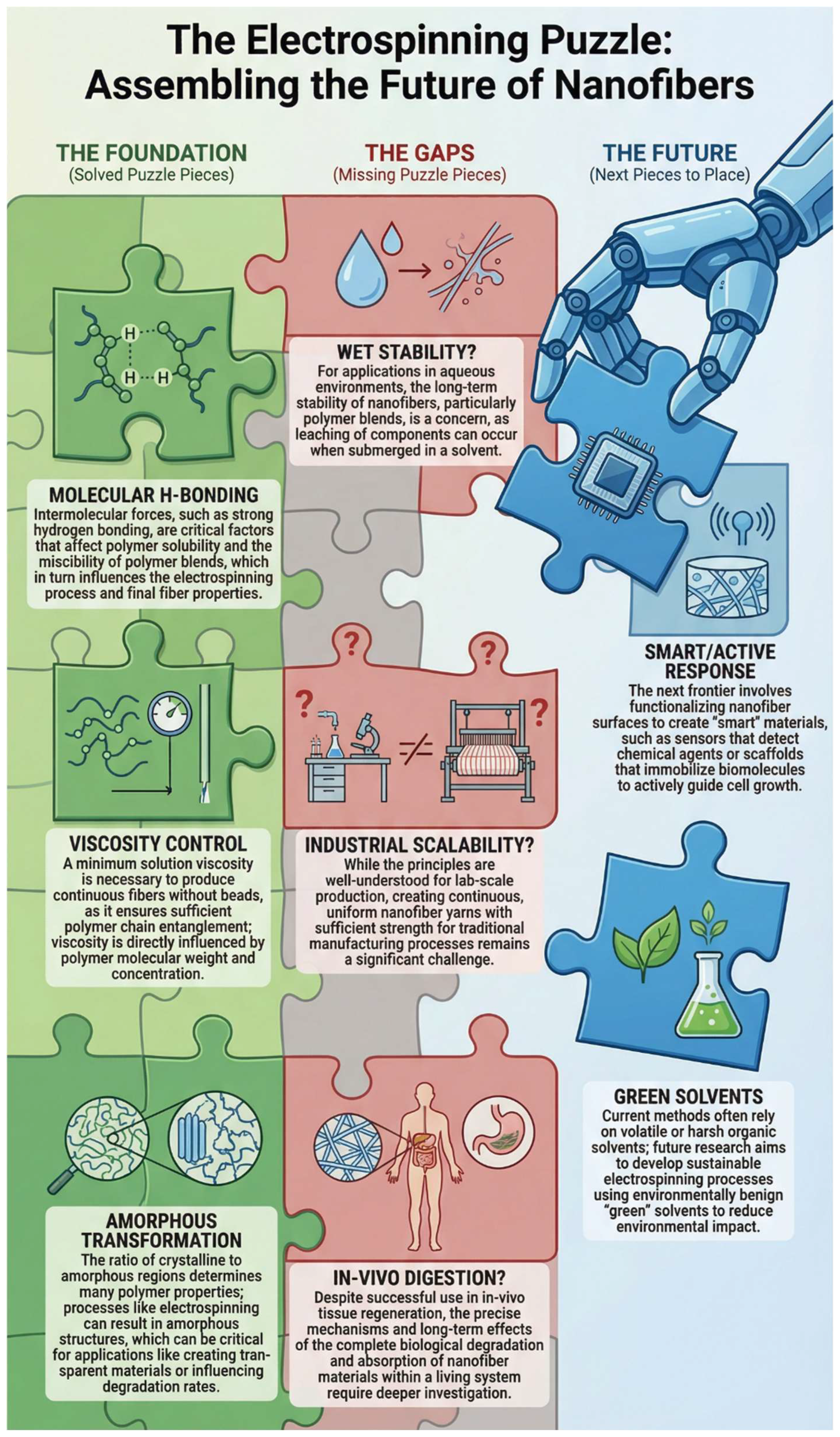
1.1. The Paradigm Shift: From Bulk Materials to Functional Interfaces
1.2. The Challenge of Compatibility
1.3. Electrospinning as the Technological Key
- Uniaxial (Single-Fluid) Electrospinning: This represents the baseline approach where starch and zein are pre-mixed into a single ‘blend’ solution (e.g., [2]). While effective for inducing amorphous transformation and suppressing starch retrogradation, uniaxial fibers often suffer from ‘burst release’ of encapsulated actives and potential phase separation during the drying jet [3].
- Coaxial (Core–Shell) Electrospinning: By utilizing a concentric needle setup, this method fabricates fibers with a distinct functional layering. Strategically, the hydrophilic starch phase is positioned in the ‘core’, while the hydrophobic zein forms a protective ‘shell’ [9]. This architecture is paramount for active packaging, as the zein shell shields labile payloads and provides a physical barrier that modulates the release of bioactive, transitioning from a burst-release to a controlled, near-linear profile.
- Emulsion Electrospinning: This modality enables the encapsulation of liquid, hydrophobic bioactive (e.g., essential oils) by dispersing oil droplets within the polymer solution. Rapid solvent evaporation during spinning traps these droplets within the solidified matrix. Recent research has demonstrated that starch–zein nanocomposites produced via emulsion spinning can exhibit unique pH-responsive behavior, where the interaction between the two polymers stabilizes the cargo and prevents premature release or digestion [10].
- Double Emulsion (W/O/W) Electrospinning: Theoretically, this technique allows for complex hierarchical structures (encapsulating aqueous bioactive within oil-in-polymer structures). However, a systematic review of the starch–zein evidence base (Table 1) indicates that this modality remains largely unreported for this specific polymer pair, representing a significant technological gap and a fertile ground for future process engineering.
1.4. Data Sources and Review Methodology
1.5. Scope and Strategy of This Review
2. The Filled Pieces: Established Structural and Process Paradigms
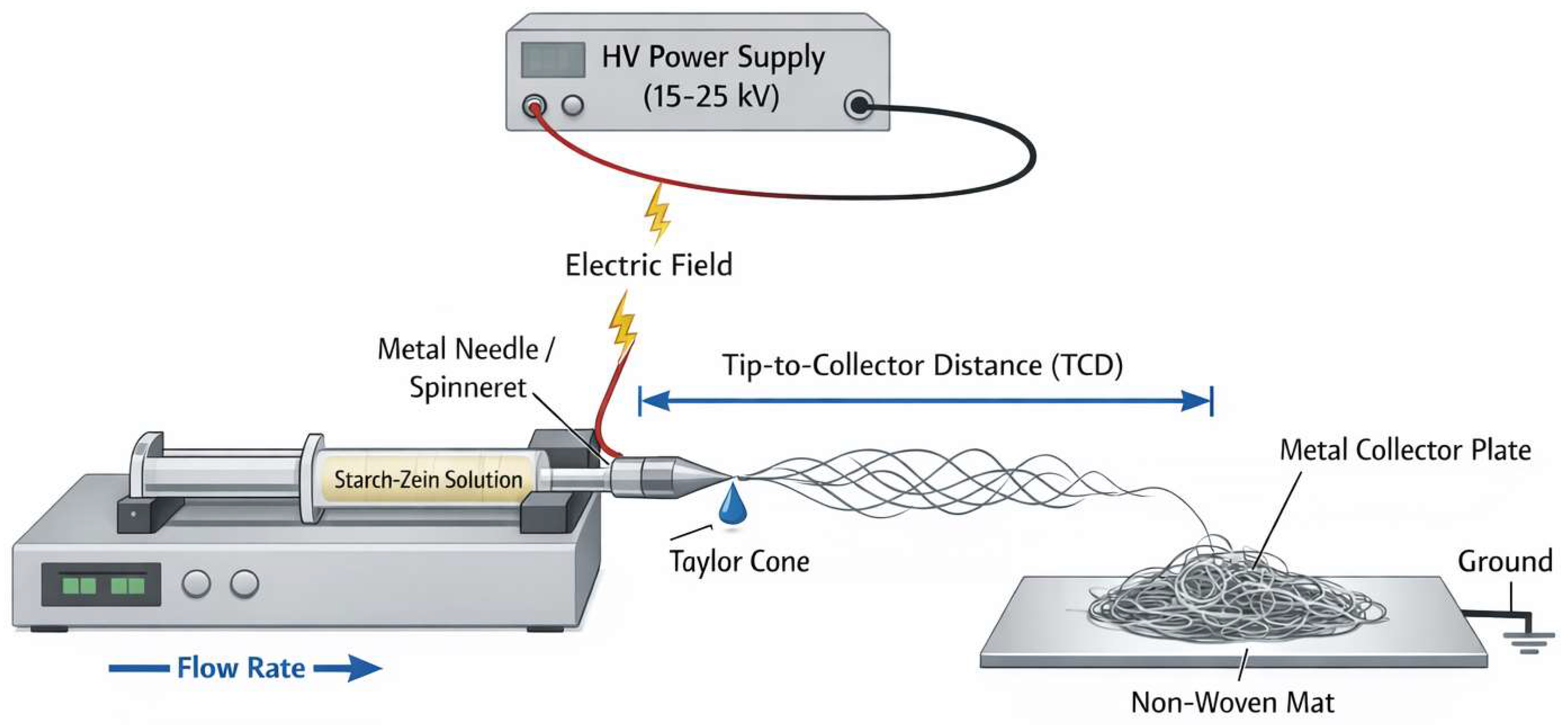
2.1. Electrospinning Fundamentals: The Entanglement Hypothesis and Governing Parameters
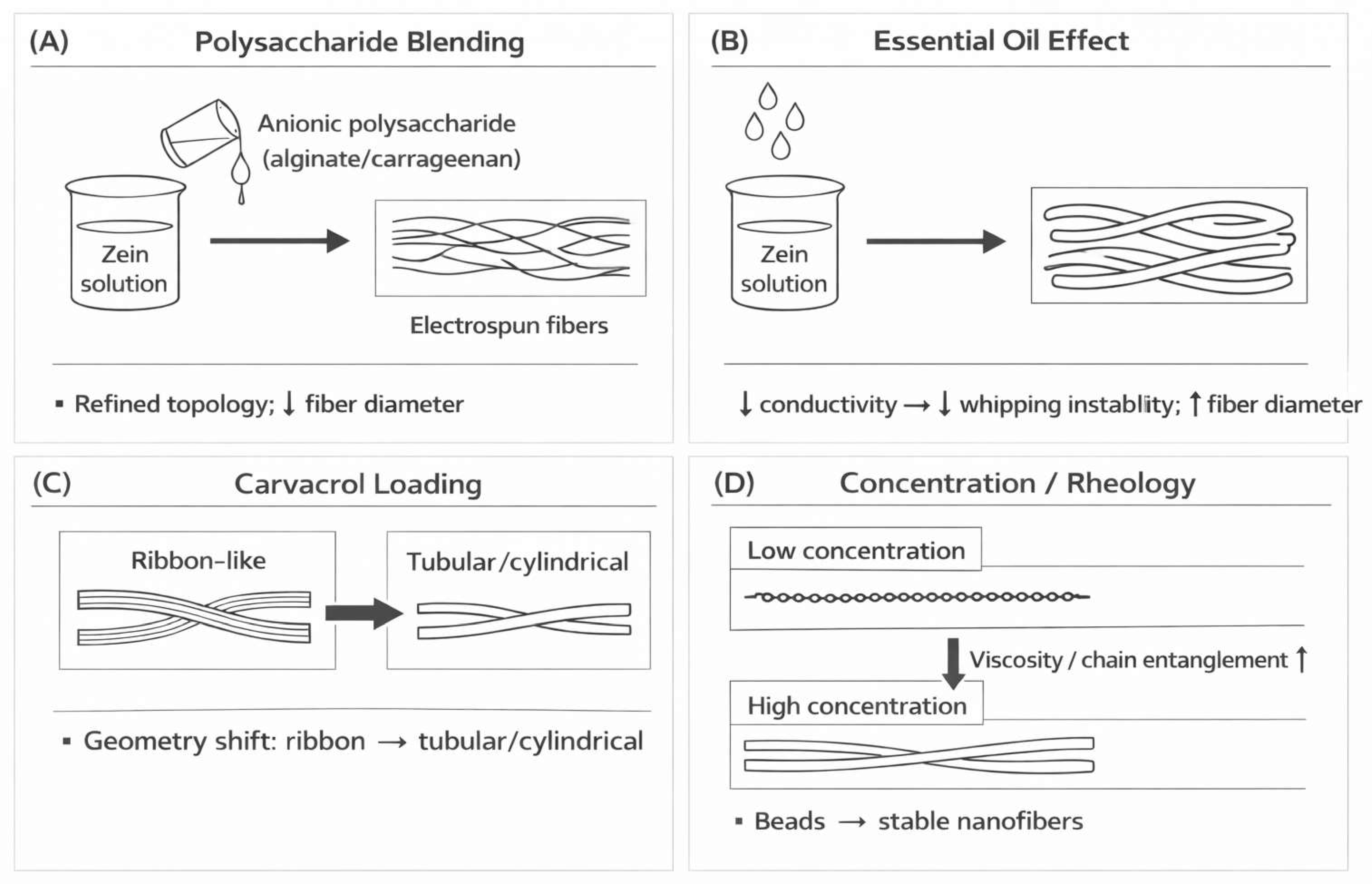
- Zein as the “Spinnable” Scaffolding: Zein acts as the primary vehicle due to its ability to reach the Critical Entanglement Concentration (Ce) in aqueous ethanol [2]. Successful fiber formation occurs only when the polymer concentration is sufficient to suppress Rayleigh instability (which favors droplet formation) and promote bending instability, stretching the jet into continuous filaments [11,15].
- Starch as the “Passenger” Modifier: Unlike zein, native starches often lack the solubility and chain entanglement density required for independent spinning. They function as rheological modifiers that alter the solution’s texture and viscosity [15]. The stability of the composite jet depends on the interfacial compatibility between the hydrophobic zein prolamins and the hydrophilic starch branches; improper ratios result in jet rupture or massive bead defects [8,15].
- Voltage (Applied Potential): Standard operating windows range from 15 kV to 26 kV. While increasing voltage enhances the stretching force, it also accelerates jet velocity. Excessive potential (e.g., >24 kV) can lead to premature jet discharge and the formation of ribbon-like or flattened morphologies due to insufficient flight time for cylindrical solidification [11,12].
- Flow Rate: While standard lab-scale spinning often operates at 0.1–1.0 mL/h to ensure total solvent evaporation [2,11], high-throughput dopes—particularly those with pH-adjusted zein—can accommodate rates as high as 6.0 mL/h [8]. However, higher flow rates increase the risk of residual solvent retention, which causes fibers to merge (conglutinate) upon deposition, potentially increasing mechanical strength at the cost of porosity [8,15].
- Tip-to-Collector Distance (TCD): A distance of 12–20 cm is required to facilitate the solvent’s phase separation. Shorter distances often lead to “wet” deposition and film formation, while excessive distances may result in non-uniform fiber distribution due to the dissipation of the electric field [11,15].
- Solution Conductivity and Viscosity: These are the dominant intrinsic parameters. Viscosity must be high enough to allow for chain entanglement but low enough to prevent spinneret clogging. Conductivity dictates the charge density; the inclusion of ionic polysaccharides or bioactive essential oils can significantly alter the net charge, leading to either ultra-fine fibers (high conductivity) or thickened, “swollen” architectures (low conductivity/high oil load) [14,15].
2.2. Molecular Synergy and Amorphous Transformation
2.3. Morphological Control via Solution Engineering
2.4. Quantitative Impact of Parameters on Fiber Features
2.4.1. Diameter Dynamics: Rheological vs. Electrostatic Balances
2.4.2. Surface Topology and pH-Induced Conformational Shifts
2.4.3. Tunable Wettability and Amorphous Stabilization
2.5. Structural Architectures: From Monolithic to Multi-Axial Systems
2.5.1. Monolithic (Single-Phase) Nanofibers
2.5.2. Co-Axial and Core–Shell Architectures
2.5.3. Active Bilayer and Multilayer Systems
2.5.4. Side-by-Side (Janus) Nanofibers
2.5.5. The Double Emulsion Paradox: Technical Barriers
- Anti-Solvent Precipitation: Zein dissolution typically requires aqueous ethanol (70–90%), which acts as a potent anti-solvent for polysaccharides. As indicated by the separation strategies employed in co-axial systems [28], direct contact between ethanol-rich zein solutions and aqueous starch phases often triggers premature precipitation or gelation. This disrupts the delicate phase equilibrium required for stable double emulsions, leading to nozzle clogging rather than fiber formation.
- Interfacial Instability: Maintaining two distinct interfaces (inner W/O and outer O/W) requires precise rheological control. However, studies on multiphase electrospinning highlight that high interfacial tension between incompatible polymer solutions often leads to phase agglomeration and bead formation rather than continuous core–shell structures [14,31].
- The Co-axial Preference: Consequently, to bypass these instability issues while achieving core–shell encapsulation, researchers have predominantly shifted toward co-axial electrospinning. As demonstrated by Huang et al. (2022) [29], this technique mechanically separates the incompatible solvents until the moment of jet formation, effectively achieving “zero-order” release profiles without the thermodynamic limitations of the double emulsion approach.
3. The Missing Pieces: Critical Gaps in Functional Application
3.1. The Hydro-Stability Paradox
3.2. The Bio-Interface Blind Spot
3.2.1. Food Matrix Interactions
- Meat and Dairy Systems: Shahbazi et al. (2024) [20] applied zein nanofibers directly to ground beef, achieving a 2–4 log reduction in L. monocytogenes over 10 days. Similarly, Gökşen et al. (2020) [18] demonstrated efficacy on cheese slices. However, both studies note that high lipid/protein content in food can sequester active agents, often require higher loading rates than suggested by agar tests.
- Fruit Preservation: Ansarifar & Moradinezhad (2022) [14] utilized zein/thyme oil fibers for strawberry packaging, proving that the nanofibrous mat effectively reduces weight loss and maintains firmness by regulating gas exchange at the fruit surface.
- Migration Risks: Interaction with the food matrix also risks unintended migration. Aytac et al. (2020) [2] reported that while zein fibers are stable in aqueous environments, active agent release accelerates significantly in fatty food simulants (50% ethanol), suggesting a potential risk of rapid cargo dumping when in contact with lipid-rich foods.
3.2.2. Safety and Digestion
- Cytotoxicity Validation: Specific nanotoxicological data is sparse. A notable exception is Jiang et al. (2010) [34], who validated the safety of citric-acid crosslinked zein fibers, showing that they support cell adhesion and proliferation without cytotoxic effects, establishing a rare benchmark for engineered safety.
- Digestive Fate: The high surface area of nanofibers alters digestion kinetics. Bisharat et al. (2019) [9] demonstrated that zein-starch matrices can function as gastro-retentive systems; zein protects the payload from acidic gastric fluids (0–10% release), while starch degradation triggers release in the colonic environment. Conversely, Fonseca et al. (2024) [38] highlights that without such structural engineering, rapid enzymatic hydrolysis in the stomach can lead to premature loss of functionality.
3.3. Emerging Frontiers: Textural Scaffolding for Meat Analogs
- Muscle Mimicry and Morphology: In a pioneering 2024 study, da Trindade et al. [15] utilized electrospinning to create aligned zein-polysaccharide scaffolds. They demonstrated that blending zein with polysaccharides (carrageenan or alginate) at a 90:10 ratio significantly refined fiber diameter (down to ~1.33 µm) and improved structural homogeneity, creating a fibrous network capable of mimicking muscle bundles.
- Juiciness and Hydrophilicity: A critical sensory attribute for meat analogs is “juiciness,” which correlates with water retention. Pure zein fibers are inherently hydrophobic (contact angle ~97°), often leading to a dry mouthfeel. The study revealed that incorporating carrageenan reduced the contact angle to ~65.8°, transforming the scaffold into a hydrophilic matrix capable of retaining moisture during cooking.
- Thermal Stability: TGA analysis confirmed that these composite fibers maintain physical integrity at high temperatures, suggesting they can withstand standard cooking processes prerequisite for functional food ingredients.
4. The Strategic Roadmap: Priorities for Future Research
4.1. Priority 1: From Passive Barriers to ‘Smart Response’ Systems
4.2. Priority 2: The ‘Green Manufacturing’ Mandate
- The “Quality-First” Approach (Multi-Needle): For high-value applications like active food packaging, maintaining fiber morphology is non-negotiable. Aytac et al. (2020) [2] demonstrated that scaling from a single needle to a 20-needle injector system increased production from 0.12 g/h to 1.0 g/h without compromising quality. Remarkably, the fiber diameter remained statistically invariant (165 ± 35 nm vs. 160 ± 40 nm), proving that “Coulomb interference”—the primary challenge of multi-needle setups—can be managed through optimized voltage (35 kV) and spacing.
- The “Volume-First” Approach (Needleless): While free-surface (needleless) technologies offer superior throughput (>10 g/h), they pose specific risks for zein-starch systems. As noted by Dziemidowicz et al. (2021) [32], the large, exposed surface area leads to rapid evaporation of volatile solvents (ethanol/acetic acid), altering solution viscosity mid-process and creating safety hazards (toxicity/flammability). Furthermore, the uncontrolled jet initiation often results in broader diameter distributions, making this method less suitable for applications requiring precise release kinetics.
4.3. Benchmarking the Future: Concrete Experimental Targets
- The “Handleability” Threshold (Wet Strength > 1 MPa): Unlike synthetic plastics (e.g., LDPE) which retain >15 MPa wet strength, biopolymer nanofibers often suffer from moisture-induced plasticization. For a nanofibrous mat to be processable on packaging lines or serve as an effective inner liner, it must maintain a minimum wet tensile strength of >1 MPa. This value is widely accepted as the threshold for ‘handleability’ in edible films to prevent disintegration upon contact with food exudates. Recent studies utilizing bilayer architecture have demonstrated that exceeding this threshold is achievable through rational design [21].
- The Regulatory Safety Limit (<50 ppm Solvent Residue): “Green” electrospinning using acetic acid or ethanol is advantageous, but not exempt from regulation. According to FDA (Guidance Q3C) [48] and EFSA standards [49] for impurities in food additives, Class III solvents (including ethanol and acetic acid) must be removed to levels below 50 mg/kg (50 ppm) or 0.5% w/w to be considered safe for consumption. Future studies must routinely report Headspace GC-MS data to prove compliance with these toxicity limits.
- The Economic Viability Ratio (Starch Inclusion > 50%): A techno-economic reality check reveals a stark cost disparity: industrial-grade Zein costs approximately 20–40/kg, whereas bulk starch trades at ~0.50/kg. To compete with commodity plastics, starch–zein composites must maximize starch content. We propose a target formulation ratio where starch constitutes >50% of the polymer matrix to ensure economic feasibility, distinguishing commercially viable formulations from expensive, pure-zein lab prototypes.
- The Scalability Threshold (>10 mL/h): To prove industrial relevance, fabrication protocols must demonstrate stability at higher flow rates. As reviewed by Dziemidowicz et al. (2021) [32], shifting from single-needle lab setups (typically <1 mL/h) to multi-needle or needleless industrial systems requires protocols that can sustain a throughput of >10 mL/h per emitter without compromising fiber morphology.
5. Conclusions: Redefining the Big Picture
Supplementary Materials
Author Contributions
Funding
Institutional Review Board Statement
Data Availability Statement
Acknowledgments
Conflicts of Interest
Abbreviations
| EHDP | Electrohydrodynamic Processing |
| SEM | Scanning Electron Microscopy |
| XRD | X-ray Diffraction |
| FTIR | Fourier Transform Infrared Spectroscopy |
| RH | Relative Humidity |
| GRAS | Generally Recognized As Safe |
| WVP | Water Vapor Permeability |
| CA | Citric Acid |
| W/O/W | Water-in-Oil-in-Water |
| TRL | Technology Readiness Level |
| CEO | Cumin Essential Oil |
| TEO | Thyme Essential Oil |
References
- Nilsen-Nygaard, J.; Fernández, E.N.; Radusin, T.; Rotabakk, B.T.; Sarfraz, J.; Sharmin, N.; Sivertsvik, M.; Sone, I.; Pettersen, M.K. Current status of biobased and biodegradable food packaging materials: Impact on food quality and effect of innovative processing technologies. Compr. Rev. Food Sci. Food Saf. 2021, 20, 1333–1380. [Google Scholar] [CrossRef] [PubMed]
- Aytac, Z.; Huang, R.; Vaze, N.; Xu, T.; Eitzer, B.D.; Krol, W.; MacQueen, L.A.; Chang, H.; Bousfield, D.W.; Chan-Park, M.B.; et al. Development of biodegradable and antimicrobial electrospun zein fibers for food packaging. ACS Sustain. Chem. Eng. 2020, 8, 15354–15365. [Google Scholar] [CrossRef]
- Topuz, F.; Uyar, T. Electrospinning of sustainable polymers from biomass for active food packaging. Sustain. Food Technol. 2024, 2, 1266–1296. [Google Scholar] [CrossRef]
- Bonakdar, M.A.; Rodrigue, D. Electrospinning: Processes, Structures, and Materials. Macromolecules 2024, 4, 58–103. [Google Scholar] [CrossRef]
- Torres-Giner, S.; Gimenez, E.; Lagaron, J.M. Characterization of the morphology and thermal properties of zein prolamine nanostructures obtained by electrospinning. Food Hydrocoll. 2008, 22, 601–614. [Google Scholar] [CrossRef]
- Evangelho, J.A.D.; Crizel, R.L.; Chaves, F.C.; Prietto, L.; Pinto, V.Z.; de Miranda, M.Z.; Dias, A.R.G.; Zavareze, E.d.R. Thermal and irradiation resistance of folic acid encapsulated in zein ultrafine fibers or nanocapsules produced by electrospinning and electrospraying. Food Res. Int. 2019, 124, 137–146. [Google Scholar] [CrossRef]
- Zhao, L.; Duan, G.; Zhang, G.; Yang, H.; He, S.; Jiang, S. Electrospun functional materials toward food packaging applications: A review. Nanomaterials 2020, 10, 150. [Google Scholar] [CrossRef]
- Wu, Y.; Du, J.; Zhang, J.; Li, Y.; Gao, Z. pH effect on the structure, rheology, and electrospinning of maize zein. Foods 2023, 12, 1395. [Google Scholar] [CrossRef]
- Bisharat, L.; AlKhatib, H.S.; Al-Omari, M.M. In vitro drug release from acetylated high amylose starch-zein films for oral colon-specific drug delivery. Int. J. Pharm. 2019, 556, 311–319. [Google Scholar] [CrossRef] [PubMed]
- Li, S.; Kong, L.; Ziegler, G.R. Electrospinning of octenylsuccinylated starch-pullulan nanofibers from aqueous dispersions. Carbohydr. Polym. 2021, 258, 116933. [Google Scholar] [CrossRef] [PubMed]
- Aliakbari, F.S.; Kashiri, M.; Ghorani, B.; Khomeiri, M.; Jafari, S.M. Development of halochromic electrospun labels for non-invasive shelf life assessment of rainbow trout (Oncorhynchus mykiss): Incorporation of barberry anthocyanin extract in protein-based smart packaging. Food Sci. Technol. Int. 2024, 31, 583–592. [Google Scholar] [CrossRef]
- Altan, A.; Aytac, Z.; Uyar, T. Carvacrol loaded electrospun fibrous films from zein and poly(lactic acid) for active food packaging. Food Hydrocoll. 2018, 81, 48–59. [Google Scholar] [CrossRef]
- Aytac, Z.; Ipek, S.; Durgun, E.; Tekinay, T.; Uyar, T. Antibacterial electrospun zein nanofibrous web encapsulating thymol/cyclodextrin-inclusion complex for food packaging. Food Chem. 2017, 233, 117–124. [Google Scholar] [CrossRef]
- Ansarifar, E.; Moradinezhad, F. Encapsulation of thyme essential oil using electrospun zein fiber for strawberry preservation. Chem. Biol. Technol. Agric. 2022, 9, 2. [Google Scholar] [CrossRef]
- da Trindade, L.G.; Zanchet, L.; Bonsanto, F.P.; Braga, A.R.C. Spinning a sustainable future: Electrospun polysaccharide–protein fibers for plant-based meat innovation. Foods 2024, 13, 2962. [Google Scholar] [CrossRef]
- Ghasemi, M.; Miri, M.A.; Najafi, M.A.; Tavakoli, M.; Hadadi, T. Encapsulation of Cumin essential oil in zein electrospun fibers: Characterization and antibacterial effect. Food Meas. Charact. 2022, 16, 1613–1624. [Google Scholar] [CrossRef]
- Gomez-Caturla, J.; Ivorra-Martinez, J.; Lascano, D.; Balart, R.; García-García, D.; Dominici, F.; Puglia, D.; Torre, L. Development and evaluation of novel nanofibers based on mango kernel starch obtained by electrospinning. Polym. Test. 2022, 106, 107462. [Google Scholar] [CrossRef]
- Gökşen, G.; Fabra, M.J.; Pérez-Cataluña, A.; Ekiz, H.I.; Sanchez, G.; López-Rubio, A. Phytochemical-loaded electrospun nanofibers as novel active edible films: Characterization and antibacterial efficiency in cheese slices. Food Control 2020, 112, 107133. [Google Scholar] [CrossRef]
- Li, Q.; Zhou, W.; Yu, X.; Cui, F.; Tan, X.; Sun, T.; Li, J. Preparation and characterization of zein/gelatin electrospun film loaded with ε-polylysine and gallic acid as tuna packaging system. J. Sci. Food Agric. 2023, 104, 1942–1952. [Google Scholar] [CrossRef]
- Shahbazi, Y.; Shavisi, N.; Daraei, P. Characterization of zein nanofiber mats encapsulated with Foeniculum vulgare and Carum carvi essential oils as active packaging materials. LWT–Food Sci. Technol. 2024, 206, 116615. [Google Scholar] [CrossRef]
- Vitoria, J.S.; Fonseca, L.M.; Siebeneichler, T.J.; Campos, D.; Poças, F.; Pintado, M.M.E.; Zavareze, E.d.R.; Gandra, E.A. Active bilayer material formed by starch film and thyme essential oil encapsulated into zein electrospun fibers. Food Bioprocess Technol. 2025, 18, 9438–9460. [Google Scholar] [CrossRef]
- Jarić, A.; Domazet Jurašin, D.; Petrović, P.; Kuzmić, S.; Nižić Nodilo, L.; Vojvodić Cebin, A.; Šeremet, D.; Komes, D. Development and structural characterization of pullulan/lecithin/zein composite nanofibers loaded with Mountain Germander (Teucrium montanum) polyphenolic extract. Foods 2025, 14, 3619. [Google Scholar] [CrossRef]
- Ali, S.; Khatri, Z.; Oh, K.W.; Kim, I.-S.; Kim, S.H. Zein/cellulose acetate hybrid nanofibers: Electrospinning and characterization. Macromol. Res. 2014, 22, 971–977. [Google Scholar] [CrossRef]
- Dome, K.; Podgorbunskikh, E.; Bychkov, A.; Lomovsky, O. Changes in the crystallinity degree of starch having different types of crystal structure after mechanical pretreatment. Polymers 2020, 12, 641. [Google Scholar] [CrossRef]
- Selling, G.W.; Biswas, A.; Patel, A.; Walls, D.J.; Dunlap, C.; Wei, Y. Impact of Solvent on Electrospinning of Zein and Analysis of Resulting Fibers. Macromol. Chem. Phys. 2007, 208, 1002–1010. [Google Scholar] [CrossRef]
- Sawitri, A.; Luthfianti, H.R.; Hapidin, D.A.; Edikresnha, D.; Palar, P.S.; Surtiyeni, N.; Wibowo, A.; Khairurrijal, K. Synthesis and characterization of novel electrospun nanofibers based on taro starch: Influence of solvent and isolation agent on morphology and diameter. Polym. Int. 2024, 74, 217–230. [Google Scholar] [CrossRef]
- de Souza, E.J.D.; dos Santos, F.N.; Pires, J.B.; Kringel, D.H.; da Silva, W.M.F.; Meinhart, A.D.; Dias, A.R.G.; Zavareze, E.d.R. Production and optimization of ultrafine fiber from yam starch by electrospinning method using multivariate analysis. Starch-Stärke 2020, 73, 2000174. [Google Scholar] [CrossRef]
- Komur, B.; Bayrak, F.; Ekren, N.; Eroglu, M.S.; Oktar, F.N.; Sinirlioglu, Z.A.; Yucel, S.; Guler, O.; Gunduz, O. Starch/PCL composite nanofibers by co-axial electrospinning technique for biomedical applications. BioMed. Eng. OnLine 2017, 16, 40. [Google Scholar] [CrossRef]
- Huang, X.; Jiang, W.; Zhou, J.; Yu, D.G.; Liu, H. The applications of ferulic-acid-loaded fibrous films for fruit preservation. Polymers 2022, 14, 4947. [Google Scholar] [CrossRef]
- Li, D.; Wang, M.; Song, W.-L.; Yu, D.-G.; Bligh, S.W.A. Electrospun Janus Beads-On-A-String Structures for Different Types of Controlled Release Profiles of Double Drugs. Biomolecules 2021, 11, 635. [Google Scholar] [CrossRef] [PubMed]
- Wang, M.; Yu, D.-G.; Williams, G.R.; Bligh, S.W.A. Co-Loading of Inorganic Nanoparticles and Natural Oil in the Electrospun Janus Nanofibers for a Synergetic Antibacterial Effect. Pharmaceutics 2022, 14, 1208. [Google Scholar] [CrossRef]
- Dziemidowicz, K.; Sang, Q.; Wu, J.; Zhang, Z.; Zhou, F.; Lagaron, J.M.; Mo, X.; Parker, G.J.M.; Yu, D.-G.; Zhu, L.-M.; et al. Electrospinning for healthcare: Recent advancements. J. Mater. Chem. B 2021, 9, 939–974. [Google Scholar] [CrossRef] [PubMed]
- Fonseca, L.M.; Gonçalves, S.; Cruz, M.M.; Sabadini, E. Development of antimicrobial and antioxidant electrospun soluble potato starch nanofibers loaded with carvacrol. Int. J. Biol. Macromol. 2019, 139, 1182–1190. [Google Scholar] [CrossRef] [PubMed]
- Jiang, Q.; Reddy, N.; Yang, Y. Cytocompatible cross-linking of electrospun zein fibers for the development of water-stable tissue engineering scaffolds. Acta Biomater. 2010, 6, 4042–4051. [Google Scholar] [CrossRef] [PubMed]
- Masanabo, M.A.; Ray, S.S.; Emmambux, M.N. Properties of thermoplastic maize starch-zein composite films prepared by extrusion process under alkaline conditions. Int. J. Biol. Macromol. 2022, 208, 443–452. [Google Scholar] [CrossRef]
- Yang, S.B.; Rabbani, M.M.; Ji, B.C.; Han, D.W.; Lee, J.S.; Kim, J.W.; Yeum, J.H. Optimum conditions for the fabrication of zein/Ag composite nanoparticles from ethanol/H2O co-solvents using electrospinning. Nanomaterials 2016, 6, 230. [Google Scholar] [CrossRef]
- Torres-Giner, S.; Wilkanowicz, S.; Meléndez-Rodríguez, B.; Lagarón, J.M. Nanoencapsulation of Aloe vera in synthetic and naturally occurring polymers by electrohydrodynamic processing of interest in food technology and bioactive packaging. J. Agric. Food Chem. 2017, 65, 4439–4448. [Google Scholar] [CrossRef]
- Fonseca, L.M.; da Cruz, E.P.; Crizel, R.L.; Jansen-Alves, C.; Dias, A.R.G.; da Rosa Zavareze, E. New advances of electrospun starch fibers, encapsulation, and food applications: A review. Trends Food Sci. Technol. 2024, 147, 104467. [Google Scholar] [CrossRef]
- Bouman, J.; Belton, P.; Venema, P.; van der Linden, E.; de Vries, R.; Qi, S. Controlled release from zein matrices: Interplay of drug hydrophobicity and pH. Pharm. Res. 2016, 33, 673–685. [Google Scholar] [CrossRef]
- Liu, S.; Luo, S.; Li, Y.; Zhang, H.; Yuan, Z.; Shang, L.; Deng, L. Influence of the Maillard reaction on properties of air-assisted electrospun gelatin/zein/glucose nanofibers. Foods 2023, 12, 451. [Google Scholar] [CrossRef]
- Hosseini, F.; Miri, M.A.; Najafi, M.A.; Soleimanifard, S.; Aran, M. Encapsulation of rosemary essential oil in zein by electrospinning technique. J. Food Sci. 2021, 86, 4070–4086. [Google Scholar] [CrossRef] [PubMed]
- da Cruz, E.P.; Pires, J.B.; Jansen, E.T.; dos Santos, F.N.; Fonseca, L.M.; Hackbart, H.C.d.S.; Radünz, M.; Zavareze, E.d.R.; Dias, A.R.G. Electrospun nanofibers based on zein and red onion bulb extract (Allium cepa L.): Volatile compounds, hydrophilicity, and antioxidant activity. J. Food Sci. 2024, 89, 1373–1386. [Google Scholar] [CrossRef]
- Topuz, F.; Uyar, T. Antioxidant, antibacterial and antifungal electrospun nanofibers for food packaging applications. Food Res. Int. 2020, 130, 108927. [Google Scholar] [CrossRef]
- Moradinezhad, F.; Aliabadi, M.; Ansarifar, E. Zein multilayer electrospun nanofibers contain essential oil: Release kinetic, functional effectiveness, and application to fruit preservation. Foods 2024, 13, 700. [Google Scholar] [CrossRef]
- Figueroa-López, K.J.; Cabedo, L.; Lagarón, J.M.; Torres-Giner, S. Development of electrospun poly(3-hydroxybutyrate-co-3-hydroxyvalerate) monolayers containing eugenol and their application in multilayer antimicrobial food packaging. Front. Nutr. 2020, 7, 140. [Google Scholar] [CrossRef] [PubMed]
- Tang, Y.; Zhou, Y.; Lan, X.; Huang, D.; Luo, T.; Ji, J.; Mafang, Z.; Miao, X.; Wang, H.; Wang, W. Electrospun gelatin nanofibers encapsulated with peppermint and chamomile essential oils as potential edible packaging. J. Agric. Food Chem. 2019, 67, 2227–2234. [Google Scholar] [CrossRef] [PubMed]
- Aytac, Z.; Xu, J.; Pillai, S.K.R.; Eitzer, B.D.; Xu, T.; Vaze, N.; Ng, K.W.; White, J.C.; Chan-Park, M.B.; Luo, Y.; et al. Enzyme- and relative humidity-responsive antimicrobial fibers for active food packaging. ACS Appl. Mater. Interfaces 2021, 13, 50298–50308. [Google Scholar] [CrossRef]
- FDA. Guidance for Industry: Q3C—Impurities: Residual Solvents; U.S. Department of Health and Human Services, Food and Drug Administration: Silver Spring, MD, USA, 2020.
- EFSA. Commission Regulation (EU) No 10/2011 on Plastic Materials and Articles Intended to Come into Contact with Food. Official Journal of the European Union. 2011. Available online: https://www.legislation.gov.uk/eur/2011/10/introduction (accessed on 15 January 2025).



| Reference | Study Context | Material System | Solvent System | Fabrication Method | Spinning/Processing Parameters | Characterization & Test Conditions | Quantitative Outcomes (Key Results) | Key Finding (Author’s Claim) | Identified Limitation/Critical Gap |
|---|---|---|---|---|---|---|---|---|---|
| Aliakbari et al., 2024 [11] | Development of halochromic zein/barberry anthocyanin labels for monitoring rainbow trout freshness | Zein (16, 18, 20% w/w); Active Agent: Barberry Anthocyanin-Rich Powder (BARP) (16, 18, 20% w/w relative to polymer); Optimized: 18% Zein/20% BARP | Ethanol/Water (80:20 v/v) | Electrospinning (Horizontal, Yflow Starter Kit) | Flow rate: 0.1 mL/h; Distance: 15 cm; Needle: 0.8 mm (stainless steel); Voltage: 20–24 kV (Optimized/Constant: 24 kV) | Rheology (Viscosity, Surface Tension); SEM; FTIR; DSC; Colorimetry (L*, a*); Fish Freshness (TVB-N, pH) | Fiber Diameter: 239.27–348.05 nm (Optimized sample: ~298 nm); Viscosity: 39.71–71.13 mPa·s; Surface Tension: 26.12–26.48 mN/m; TVB-N (Storage): Increased from 15.39 to 25.5 mg N/100 g (Day 10); Color Change: Pink → Light Yellow | Electrospun labels serve as visual freshness indicators; the color change from pink to yellow correlates with the fish reaching the TVB-N rejection threshold (25 mg N/100 g) | Processability: Polymer concentrations >20% caused syringe clogging and loss of electrical charge; red anthocyanin color showed a tendency to fade during the electrospinning process |
| Altan et al., 2018 [12] | Active food packaging (antioxidant/antimicrobial) using carvacrol-loaded zein and PLA nanofibers | Polymers: Zein (30% w/v), Poly(lactic acid) (PLA) (10% w/v); Active Agent: Carvacrol (5, 10, 20% w/w relative to polymer) | Zein: Ethanol/Water (80:20 v/v); PLA: Chloroform/DMF (9:1 v/v) | Electrospinning | Flow rate: 1 mL/h; Voltage: 15 kV; Distance: 20 cm; Needle: 0.7 mm (outer diameter) | SEM (Morphology); Rheology (Viscosity); FTIR; TGA; Headspace GC-MS (Release); DPPH (Antioxidant); Bread shelf-life (visual & fungal count) | Zein Fiber Diameter: 604 ± 120 nm (Pure) decreasing to 539 ± 103 nm (with 10% Carvacrol); PLA Fiber Diameter: 1822–2268 nm; DPPH Activity: 62–75% (Zein fibers), 53–65% (PLA fibers); Mold Inhibition: 99.6% reduction on bread | Encapsulation of carvacrol in Zein/PLA fibers provided sustained release and high antioxidant activity, effectively extending the shelf life of whole wheat bread by delaying mold growth | NR—Mechanical properties (tensile strength, elongation) and barrier properties (WVP) were not evaluated in this study; impact on organoleptic properties requires further study |
| Aytac et al., 2017 [13] | Antibacterial zein nanofibers containing thymol/cyclodextrin inclusion complexes | Polymer: Zein (50% w/v); Active Agent: Thymol (THY) (4% w/w relative to polymer); Complexing Agent: Gamma-cyclodextrin (CD); Molar Ratios (THY:CD): 1:1 and 2:1 | Dimethylformamide (DMF) | Electrospinning | Voltage: 17 kV; Distance: 17 cm; Flow Rate: 0.5 mL/h; Temperature: 25 °C; Relative Humidity: 18% | XRD; TGA; 1H-NMR; SEM; Molecular Modeling (DFT); Release (HS GC-MS at 37, 50, 75 °C); Antibacterial Activity (E. coli, S. aureus on meat samples) | Fiber Diameter: Pure Zein 155 ± 30 nm, Zein-THY 205 ± 50 nm, Zein-THY/CD-IC (2:1) 415 ± 100 nm; Complexation Energy (Ecomp in water): −29.2 kcal/mol (1:1), −35.2 kcal/mol (2:1); Thymol Retention (TGA): 99.5% (2:1 complex) vs. 89.7% (1:1 complex) Production Rate (Yield): ~0.6 g/h (single nozzle) | Encapsulation of Thymol/gamma-CD complex (2:1 molar ratio) in zein fibers provided the highest thermal stability, controlled release, and effective antibacterial performance on meat samples | Processing: Addition of inclusion complexes (IC) increased solution viscosity and decreased conductivity, causing a significant increase in fiber diameter (from 155 nm to 415 nm) Low production throughput (~0.6 g/h) limits industrial adoption without multi-nozzle scale-up |
| Aytac et al., 2020 [2] | Biodegradable and antimicrobial electrospun zein fibers for food packaging (“Green” synthesis) | Polymer: Zein (from maize, Z3625) (30% w/v for pure, 37% w/v for antimicrobial); Active Cocktail: 1. Thyme oil (1% w/v), 2. Citric acid (5% w/v), 3. Nisin (0.005% w/v pure nisin) | Acetic acid (Glacial) | Electrospinning (One-step synthesis) | Flow Rate: 0.7 mL/h (Pure), 0.5 mL/h (Antimicrobial); Voltage: 26 kV (+25 kV needle, −1 kV collector); Distance: 15 cm; Needle: 0.6 mm (90° blunt end) | SEM (Morphology, ImageJ); BET (Surface Area); XRD; ATR-FTIR; Antimicrobial activity (Disk diffusion, Direct contact); Release kinetics (LC/HRMS in Water, 3% Acetic acid, 50% Ethanol) | Fiber Diameter: Zein (ZF) 140 ± 40 nm, Antimicrobial Zein (AZF) 165 ± 35 nm; Specific Surface Area (BET): 21.91 m2/g (AZF); Antimicrobial Reduction: ~5 log (E. coli, 24 h), ~5 log (L. innocua, 1 h); Active Loading: 2.50 mg/cm2; Yield: Up to 1 g/h | Zein fibers containing naturally derived antimicrobials (thyme oil, citric acid, nisin) effectively inactivated food pathogens (~5 log reduction) and represent a sustainable packaging material produced using non-toxic solvents | Analysis: Nisin release could not be reliably measured in 50% ethanol simulant due to matrix effects; Scalability: Electrospinning scalability remains a general challenge (addressed here via multi-needle, but noted as a hurdle) |
| Ansarifar & Moradinezhad, 2022 [14] | Encapsulation of thyme essential oil (TEO) in zein fibers for strawberry preservation | Polymer: Zein (30% w/v); Active Agent: Thyme Essential Oil (TEO) (4% v/w relative to polymer) | Glacial acetic acid | Electrospinning | Voltage: 16 kV; Distance: 15 cm; Flow Rate: 0.2 mL/h; Solvent System: Glacial acetic acid. | SEM (Morphology, 20 kV); UV-Vis (Encapsulation Efficiency at 278 nm, Release profile); Disc diffusion (MIC); Fruit Quality (Weight loss, Firmness, TSS, Anthocyanin, Color) | Fiber Diameter: Pure Zein 195.0 ± 32.1 nm, Zein/TEO 402.3 ± 26.6 nm; Encapsulation Efficiency: 75.23 ± 16.4%; Release: ~65% at 180 h; MIC: E. coli 4.35 ± 0.15 mg/mL, B. cereus 3.42 ± 0.25 mg/mL; Strawberry Weight Loss (15 days): 7.35% (Zein/TEO) vs. 12.39% (Control); Firmness (15 days): 1.34 N (Zein/TEO, highest value) | Zein/TEO fiber packaging provided controlled release of TEO, significantly reducing weight loss (by ~15%) and maintaining firmness and anthocyanin content in strawberries during cold storage | Processing: Addition of TEO decreased electrical conductivity, causing a significant increase in fiber diameter (~2-fold increase) |
| da Trindade et al., 2024 [15] | Electrospun polysaccharide-protein fibers for plant-based meat analogs | Zein Solution: 23 wt%; Polysaccharide Solutions: 1 wt% (Sodium Alginate, kappa-Carrageenan, HM-Pectin, or LM-Pectin); PEO Solution: 4 wt%; Blends (Zein:Polysaccharide): 80:20, 85:15, 90:10; Additive: PEO (0.3 wt% or 1 wt% added to blend) | Zein: 80% Ethanol (aqueous); Polysaccharides/PEO: Deionized Water | Electrospinning | Voltage: 18–24 kV (Optimized ~22–24 kV); Flow Rate: 1800–3000 µL/h; Distance: 12–15 cm; Needle: 1.03 mm ID; Temperature: 20–25 °C; RH: 50–60% | Rheology; SEM (Morphology); ATR-FTIR; TGA; Water Contact Angle (WCA, 25 °C) | Fiber Diameter (Zein/Carrageenan 90:10, 1% PEO): 8.86 ± 3.48 µm; WCA: Zein/PEO (97.3°), Zein/Carrageenan (90:10, 1% PEO) (65.8°), Zein/LM Pectin (15.22°); Thermal Degradation (Tonset): ~280 °C (Zein/Carrageenan) | The Zein/kappa-Carrageenan (90:10) fiber with 1% PEO offered the optimal balance of homogeneous structure, thermal stability, and surface hydrophilicity for simulating plant-based meat textures | Processing: Pure polysaccharide solutions and Alginate/PEO blends failed to form fibers (dripping); higher polysaccharide concentrations in zein blends often reduced fiber formation or homogeneity |
| Ghasemi et al., 2022 [16] | Encapsulation of cumin essential oil (CEO) in zein electrospun fibers for active food packaging | Polymer: Zein (27% w/v solution); Active Agent: Cumin Essential Oil (CEO) (0, 2.5, 5, 10, 20% v/v relative to solution) | Ethanol | Electrospinning | Polymer Concentration: 27% w/v; Voltage: 20 kV; Distance: 15 cm; Flow Rate: 0.4 mL/h; Solvent System: Ethanol (80% v/v) aqueous solution. | SEM (Morphology); AFM; XRD; DSC; FTIR; BET (Pore size); Mechanical testing (Tensile strength); Antibacterial (Disc diffusion against S. aureus, E. coli, B. cereus, S. enterica) | Fiber Diameter: Increased from 459 nm (Pure Zein) to 855 nm (20% CEO); Tensile Strength: Increased from 0.28 MPa (Pure) to 3.55 MPa (20% CEO); Pore Size (BET): Increased from 7 nm (Pure) to 13 nm (20% CEO) | Encapsulation of cumin essential oil significantly improved the mechanical strength (tensile) and thermal properties of zein fibers while imparting antibacterial activity against multiple food pathogens | Environmental conditions (RH/temperature) and collector details are not specified in the extracted text |
| Gomez-Caturla et al., 2022 [17] | Development of Mango Kernel Starch (MKS) based nanofibers | Polymers: Mango Kernel Starch (MKS) (0, 2, 3, 4, 5 wt%); Polyvinyl alcohol (PVA) (10, 8, 7, 6, 5 wt%) OR Polyvinylpyrrolidone (PVP) (10, 8, 7, 6, 5 wt%); Total Concentration: 10 wt% | MKS/PVA: Distilled Water; MKS/PVP: Methoxyethanol | Electrospinning | Voltage: 18–36 kV (Variable); Flow Rate: 0.05–0.75 mL/h; Distance: 13–18 cm | FESEM (Morphology); AFM (Topography, Roughness); ATR-FTIR | Fiber Diameter (MKS/PVA): 0.146 µm (thinnest)–0.315 µm; Fiber Diameter (MKS/PVP): 0.080–0.339 µm; Roughness: 80–343 nm | MKS was successfully electrospun into nanofibers when blended with synthetic polymers (PVA or PVP); for PVA blends, 3% MKS was identified as the “smooth fiber concentration threshold” | Material: At 5 wt% MKS concentration (for PVP blends), beaded fibers formed due to excessive starch content |
| Göksen et al., 2020 [18] | Antimicrobial zein nanofiber coatings loaded with essential oils for cheese slices | Matrix: Zein (25% w/v); Active Agents: Laurus nobilis essential oil (LEO) (1, 5, 10% w/w) OR Rosmarinus officinalis essential oil (REO) (1, 5, 10% w/w); Main Component: 1,8-cineole (69.87% in LEO, 55.80% in REO) | Glacial acetic acid/Ethanol (30:70 v/v) | Electrospinning | Voltage: 18 kV; Distance: 11 cm; Flow Rate: 0.04 mL/h; Temperature: Room temperature | SEM (ImageJ); Viscosity; Conductivity; FTIR; TGA; Encapsulation Efficiency (EE); Antimicrobial Test (L. monocytogenes, S. aureus on cheese, 4 °C, 28 days) | Fiber Diameter: Pure Zein (201.78 ± 52.24 nm), Zein/LEO 10% (118.63 ± 43.8 nm), Zein/REO 10% (127.72 ± 44.3 nm); Encapsulation Efficiency: LEO 1% (83.06%), REO 1% (81.92%); Antimicrobial Effect (Day 28): ~2 log reduction in L. monocytogenes and S. aureus vs. control | Electrospun zein nanofibers containing 1,8-cineole rich LEO and REO provided effective protection against pathogens on cheese for 28 days, offering more sustainable release compared to cast films | Material: As essential oil concentration increased (from 1% to 10%), encapsulation efficiency showed a statistically significant decrease (dropping from ~83% to ~74%) |
| Li et al., 2023 [19] | Electrospinnability of commercial OS starches (waxy maize origin) blended with Pullulan | Polymers: OS starches (PGU, PG2000, HC100); Pullulan (PUL); Blends: PGU-PUL (e.g., PGU 12–20% w/v with PUL 12% w/v; PGU 15% with PUL 8–13%) | Deionized water (aqueous dispersions) | Electrospinning | General Range: Feed 0.1–0.4 mL/h, Distance 5–10 cm, Voltage 5–15 kV; Optimized (30% PGU): Voltage 24 kV, Distance 9 cm, Flow rate 0.2 mL/h; Needle: 22 G blunt; Dope Heating: Boiling water bath (1 h), cooled to ~20 °C | SEM (5 keV, ImageJ); Rheology (ARES); Surface tension (Pendant drop); Conductivity | Fiber Diameter: 150 ± 34 nm → 250 ± 41 nm (PGU 12% → 20%, PUL fixed); 147 ± 26 nm → 209 ± 57 nm (PGU fixed, PUL 8% → 13%); Viscosity: 1.52–9.76 Pa·s (Electrospinnable range); Lowest Viscosity Required: 1.52 Pa·s (PGU 12%) | Additions of a relatively small amount of Pullulan to food-grade starch allow for the creation of continuous, smooth, and bead-free nanofibers via a “green” aqueous process | Analysis: Further studies are suggested to focus on the physicochemical properties of the starch-based nanofibers and their utilization |
| Shahbazi et al., 2024 [20] | Essential oil loaded zein nanofibers for minced meat packaging | Polymer: Zein (26 g/100 mL); Active Agents: Foeniculum vulgare essential oil (FVO) (1 mL/100 mL), Carum carvi essential oil (CCO) (1 mL/100 mL); Combination: Zein + FVO + CCO | Ethanol: Distilled water (80:20, v/v) | Electrospinning | Voltage: 18 kV; Flow Rate: 0.80 mL/h; Distance: 22 cm; Rotation Speed: 0.50 × g (Collector); Temperature: 25 ± 1 °C | SEM (Morphology, ImageJ); FTIR; Mechanical Test (TS, EAB); Water Vapor Permeability (WVP); Antimicrobial (Minced meat, S. aureus, L. monocytogenes, Y. enterocolitica, 10 days, 4 °C) | Thickness: 0.20–0.22 mm; Tensile Strength (TS): 6.01–9.22 MPa; Elongation at Break (EAB): 5.57–10.78%; WVP: 1.05–2.72 × 10⁻¹⁴ kg m/m2 s Pa; Bacterial Reduction (Day 10): Combined fibers reduced S. aureus to <1.00 log CFU/g (from 5 log start) | Zein nanofibers loaded with FVO and CCO significantly delayed bacterial growth in minced meat during cold storage, showing potential for antimicrobial food packaging | NR—No specific limitations or missing experiments were explicitly highlighted in the snippet |
| Vitoria et al., 2025 [21] | Active bilayer food packaging (Starch film + Zein fibers) | Layer 1 (Film): Sweet potato starch (4.0% w/v); Layer 2 (Fibers): Zein (30% w/v) loaded with Thyme Essential Oil (TEO) (60% v/w) | Starch: Water; Zein: Ethanol | Hybrid (Electrospinning on Cast Film) | Zein Concentration: 30% w/v; Voltage: NR | SEM; FTIR; TGA; Water vapor permeability (WVP); Mechanical strength; Antioxidant activity | Loading Capacity: 33.2%; Encapsulation Efficiency: 91.0%; Thickness: 0.194 mm; Active Component: p-cymene (36.4% in TEO) | The bilayer design integrates the structural properties of starch film with the bioactive functions (antioxidant, controlled release) of zein fibers, preserving biodegradability | Gap: Real food storage performance and long-term stability were not tested in this study (suggested for future work) |
| Wu et al., 2023 [8] | Context (zein-only) Effect of pH on the structure, rheology, and electrospinning of maize zein | Polymer: Maize Zein (10–32.5% w/v); pH Adjustment: pH 4, 5, 6, 7, 8 (adjusted with 0.01 mol/L HCl and NaOH) | 80% (v/v) Ethanol aqueous solution | Electrospinning | Voltage: 15 kV; Flow Rate: 6 mL/h; Distance: 15 cm; Needle: 21 G (0.5 mm ID); Temp: 25 ± 2 °C; RH: 50 ± 5% | Rheology (0.01–1000 s−1); Conductivity; SEM (ImageJ); FT-IR; XRD; Water Contact Angle (2 µL); AFM (Roughness) | Critical Entanglement Conc. (Ce): 17.6% (pH 4), 20.1% (pH 5/6), 17.1% (pH 7), 19.5% (pH 8); Fiber Diameter (30% w/v): 321 nm (pH 5, Min), 0.476 µm (pH 8, Max); Secondary Structure (pH 6): β-sheet 45.47% (Highest), α-helix 18.58% (Lowest) | Zein solutions can be stabilized to form electrospun fibers at a variety of pH levels (4–8); while pH had less effect on spinnability, it significantly influenced the chemical/physical properties (roughness, secondary structure) | Processing: At pH 6 (near isoelectric point), the viscosity increase was caused by protein aggregation rather than molecular entanglement, preventing perfect bead-free fiber formation at the inflection point |
| Solvent System Category | Studies Analyzed (n) | Avg. Fiber Diameter (nm) | Fiber Range (nm) | “Green” Status |
|---|---|---|---|---|
| Acetic Acid/Acidic | 3 | 228 ± 152 | 118–402 | Caution (Corrosive/Smell) |
| Ethanol/Aqueous | 6 | 341 ± 132 | 200–539 | High (Food Grade) |
| Toxic/Organic (e.g., DMF) | 1 | 415 | 415 | Low (Restricted) |
| Parameter Change | Primary Feature Affected | Quantitative Observation/Trend | Source |
|---|---|---|---|
| ↑ Viscosity (TEO Loading) | Fiber Diameter | Increase from 195 nm to 402 nm | [14] |
| ↑ Conductivity (Carvacrol) | Fiber Diameter | Decrease from 604 nm to 539 nm | [12] |
| pH Shift (4 to 6) | Protein Structure | β-sheet increase (36% to 45%); Rq decrease | [15] |
| Electrospinning vs. Casting | Wettability | WCA increase from <60° to >100° | [15] |
| Bioactive Loading | Crystallinity | Complete amorphization (loss of XRD peaks) | [11,14] |
| Architecture | Polymer Composition | Active Agent Strategy | Functional Advantage | Reference |
|---|---|---|---|---|
| Monolithic | Zein + TEO (Emulsion) | Homogeneous dispersion | Reducing weight loss in fruit (Strawberry) | [14] |
| Monolithic | Zein + Polysaccharides | Structural blend (No active) | Textural modification for meat analogs | [15] |
| Core–Shell | Shell: Zein/Core: PEO | Ferulic Acid (in Core) | Zero-order sustained release profile | [29] |
| Core–Shell | Shell: PCL/Core: Starch | None (Scaffold focus) | Mechanical support for starch fiber formation | [28] |
| Bilayer | Starch Film + Zein Fiber | TEO (in Fiber layer) | Combined gas barrier and antioxidant activity | [21] |
| Janus | PCL side/CA side | Lavender Oil + AgNPs | Synergistic dual-agent delivery | [31] |
| Janus | PVP side/EC side | Ketoprofen + Dye | Biphasic (Fast + Slow) release kinetics | [30] |
| Research Metric | Frequency in Core Corpus | The “Why” (Diagnosis) |
|---|---|---|
| Dry Morphology (SEM) | ~100% | Easy to perform; produces publication-ready images. |
| Active Release (Buffer) | ~75% | Standardized lab protocols exist; low complexity. |
| Wet-State Mechanics | <10% | Difficult to handle plasticized/weak fibers; requires specialized environmental chambers. |
| Solvent Residue Analysis | <5% | Often ignored in academic labs; critical for FDA/EFSA compliance. |
| Real Food Interaction | ~25% | Requires complex biological handling (e.g., meat/fish) vs. simple disk diffusion. |
| Reference | Active Agent | Concentration | Effect on Diameter | Proposed Mechanism (Author’s Claim) |
|---|---|---|---|---|
| [14] | Thyme Essential Oil | 4% v/w | Increase (↑ 2-Fold) (195 nm → 402 nm) | Reduced conductivity prevents jet stretching |
| [16] | Cumin Essential Oil | 20% v/v | Increase (↑ 85%) (459 nm → 855 nm) | Increased viscosity dominates the process |
| [12] | Carvacrol | 10% w/w | Decrease (↓ 10%) (604 nm → 539 nm) | Plasticization effect reduces solution viscosity |
| [18] | Laurus nobilis Oil | 10% w/w | Decrease (↓ 40%) (201 nm → 118 nm) | Conductivity changes favored stretching |
| [20] | Fennel & Caraway Essential Oils | 5–20% (w/v) | Increase (272 nm → 614 nm) | Increased solution viscosity and total solids content led to thicker fiber formation |
| Study | Matrix System | Active Agent | Tensile Strength (MPa) | Outcome |
|---|---|---|---|---|
| [16] | Pure Zein | None | 0.28 MPa | Reference (Weak) |
| [16] | Zein + CEO | Cumin Oil (20%) | 3.55 MPa | 12× Reinforcement (Strong intermolecular interaction) |
| [16] | Zein + Oils | Fennel + Caraway | 6.01–9.22 MPa | High mechanical integrity despite oil load |
| General Trend | Starch/Zein | Various | >80% of studies fail to report this metric |
| Development Stage | Focus Era | Key Characteristic | Representative Approach | Limitation |
|---|---|---|---|---|
| Gen 1: Morphology | 2014–2018 | Fiber Diameter Optimization | Solvent selection (e.g., Acetic acid vs. Ethanol) [26] | Non-functional; pure structural focus. |
| Gen 2: Encapsulation | 2018–2022 | Passive Loading of Actives | Loading Essential Oils, Vitamins (B9), Phenolics [6,13,41] | “Burst release” or uncontrolled diffusion. |
| Gen 3: Architecture | 2020–2023 | Multilayer & Hybrid Systems | Sequential electrospinning (Layer-by-Layer) [44,45] | Complex manufacturing; delamination risks. |
| Gen 4: Intelligence | 2023–Future | Stimuli-Responsive Systems | Air-assisted scaling; Responsive release [19] | Current research frontier. |
| Representative Study | Throughput (g/h) | Product Uniformity | Operational Challenge | Cost & Safety Risk | Readiness Level (TRL) | |
|---|---|---|---|---|---|---|
| Single Needle (Lab Standard) | Baseline | ~0.12 | High (165 ± 35 nm) | Low | Low Cost/High Safety | Academic Only |
| Multi-Needle (20-Emitter) | [2] | ~1.00 | High (160 ± 40 nm) | High (Field Interference & Clogging) | Medium Cost/High Safety | Pilot Scale |
| Needleless (Free Surface) | [32] | >10.0 | Low/Medium (Variable Dia.) | Low (No clogging) | High Cost/Solvent Vapor Risk | Mass Production |
Disclaimer/Publisher’s Note: The statements, opinions and data contained in all publications are solely those of the individual author(s) and contributor(s) and not of MDPI and/or the editor(s). MDPI and/or the editor(s) disclaim responsibility for any injury to people or property resulting from any ideas, methods, instructions or products referred to in the content. |
© 2026 by the authors. Licensee MDPI, Basel, Switzerland. This article is an open access article distributed under the terms and conditions of the Creative Commons Attribution (CC BY) license.
Share and Cite
Ufuk, Z.; Balcı, F.; Altay, F. Navigating the Bio-Composite Landscape: A Strategic Reconstruction of Electrospun Starch–Zein Nanofibers. Polymers 2026, 18, 823. https://doi.org/10.3390/polym18070823
Ufuk Z, Balcı F, Altay F. Navigating the Bio-Composite Landscape: A Strategic Reconstruction of Electrospun Starch–Zein Nanofibers. Polymers. 2026; 18(7):823. https://doi.org/10.3390/polym18070823
Chicago/Turabian StyleUfuk, Zehra, Fatih Balcı, and Filiz Altay. 2026. "Navigating the Bio-Composite Landscape: A Strategic Reconstruction of Electrospun Starch–Zein Nanofibers" Polymers 18, no. 7: 823. https://doi.org/10.3390/polym18070823
APA StyleUfuk, Z., Balcı, F., & Altay, F. (2026). Navigating the Bio-Composite Landscape: A Strategic Reconstruction of Electrospun Starch–Zein Nanofibers. Polymers, 18(7), 823. https://doi.org/10.3390/polym18070823