Chitosan-Entrapped TiO2 Nanoparticles Synthesized Using Calendula officinalis Flower Extract—Photophysical Characterization, Biocompatibility, and Textile Dye Remediation
 ,
,
Abstract
1. Introduction
2. Materials and Methods
2.1. Materials
2.2. Preparation of Calendula Flower Extract and Analysis
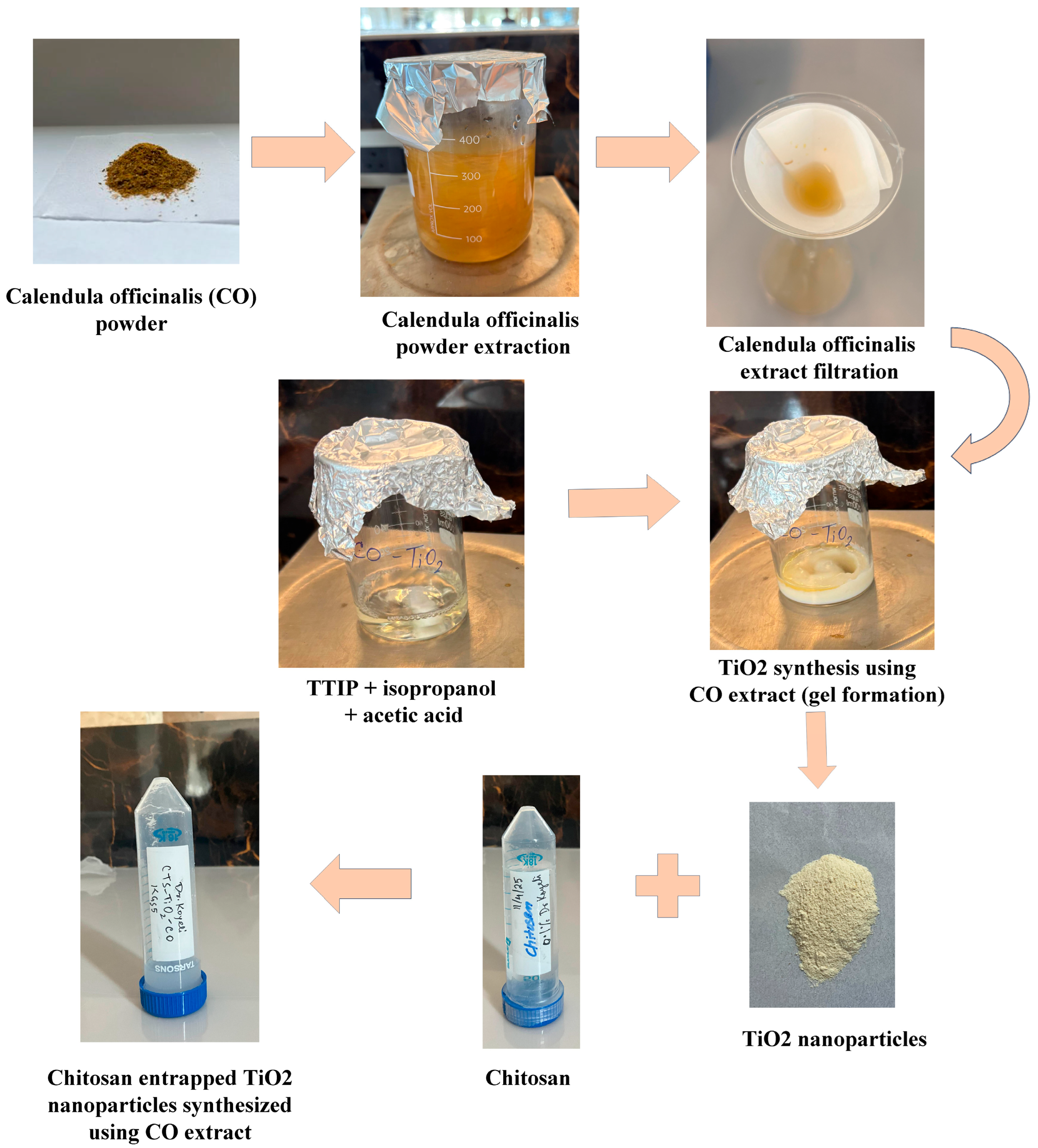
2.3. Green Synthesis of TiO2 Nanoparticles via Sol–Gel Method
2.4. Preparation of Chitosan Solution
2.5. Characterization of Nanoparticles
2.6. In Vitro and In Vivo Biocompatibility Assessment
2.7. Textile Dye Remediation Study
2.8. Statistical Analysis
3. Results and Discussion
3.1. Composition of Calendula officinalis Flower Extract
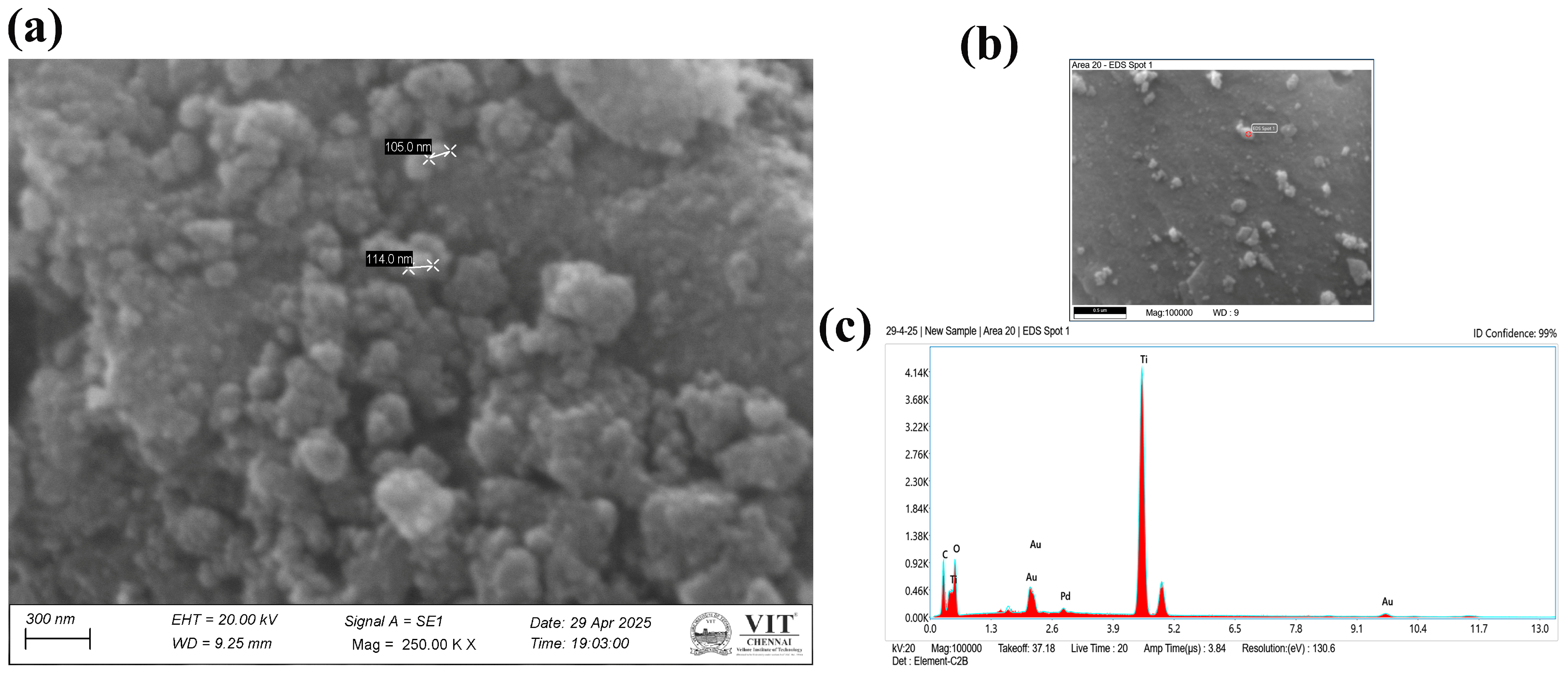
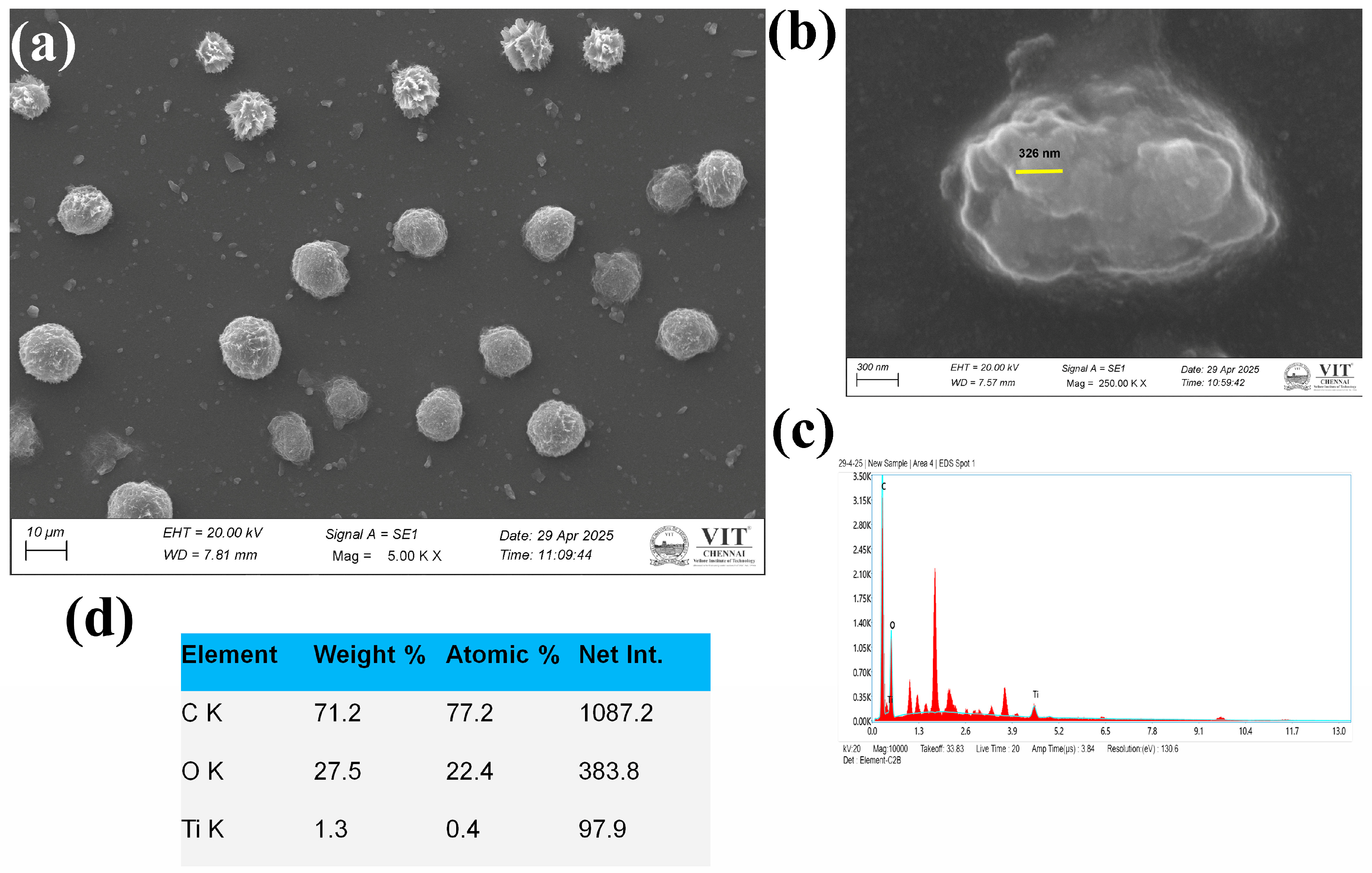
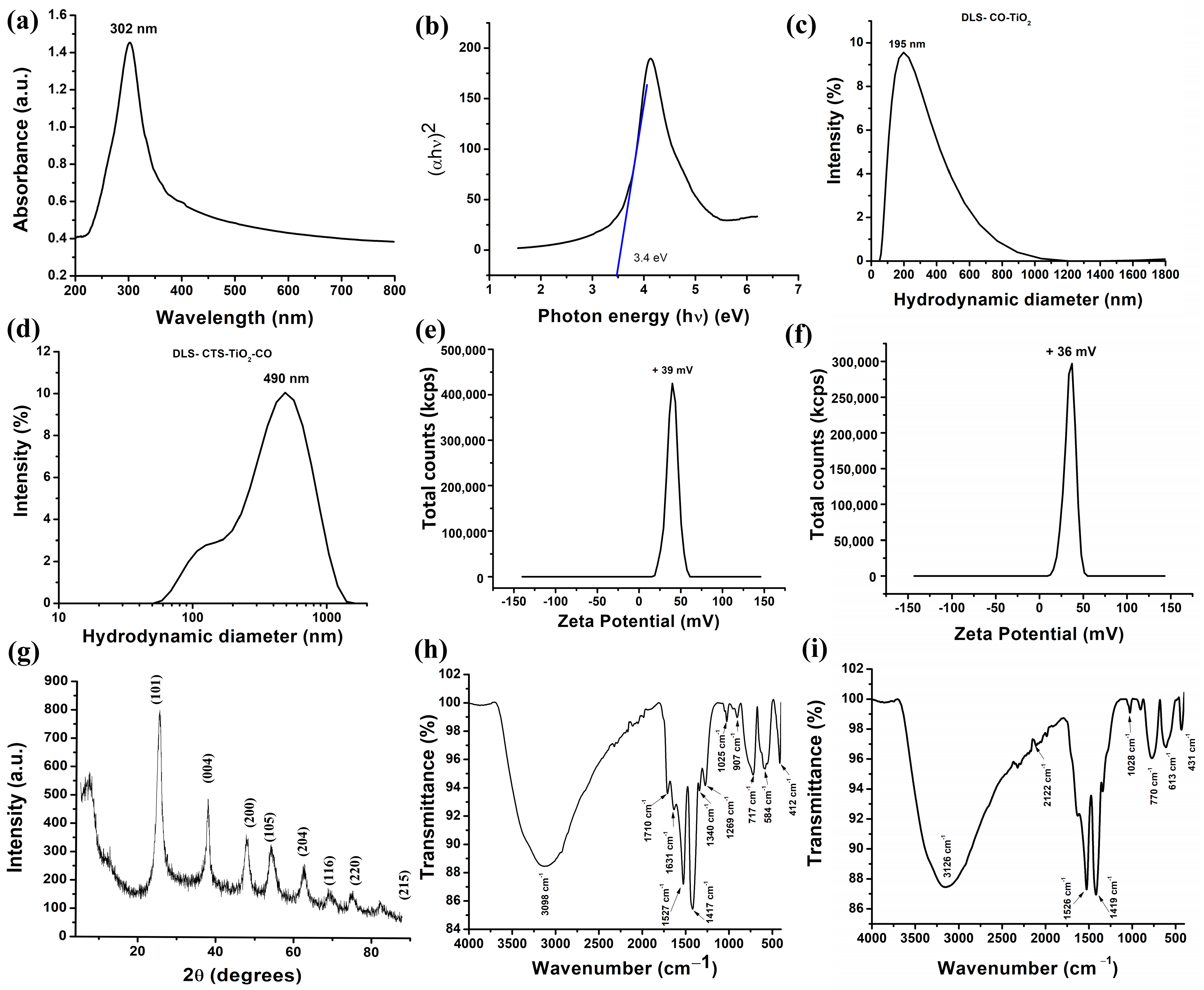
3.2. Characterization of the Synthesized CTS-TiO2-CO Nanocomposite
3.3. Biological Effect In Vitro and In Vivo
3.4. Textile Dye Remediation Using CTS-TiO2-CO Nanocomposite
4. Conclusions
Supplementary Materials
Author Contributions
Funding
Institutional Review Board Statement
Informed Consent Statement
Data Availability Statement
Acknowledgments
Conflicts of Interest
References
- Islam, T.; Repon, M.R.; Islam, T.; Sarwar, Z.; Rahman, M.M. Impact of textile dyes on health and ecosystem: A review of structure, causes, and potential solutions. Environ. Sci. Pollut. Res. 2023, 30, 9207–9242. [Google Scholar] [CrossRef]
- Satyam, S.; Patra, S. Innovations and challenges in adsorption-based wastewater remediation: A comprehensive review. Heliyon 2024, 10, e29573. [Google Scholar] [CrossRef] [PubMed]
- Akhtar, M.S.; Ali, S.; Zaman, W. Innovative adsorbents for pollutant removal: Exploring the latest research and applications. Molecules 2024, 29, 4317. [Google Scholar] [CrossRef] [PubMed]
- Sangamnere, R.; Misra, T.; Bherwani, H.; Kapley, A.; Kumar, R. A critical review of conventional and emerging wastewater treatment technologies. Sustain. Water Resour. Manag. 2023, 9, 58. [Google Scholar] [CrossRef]
- Ge, J.; Zhang, Y.; Heo, Y.-J.; Park, S.-J. Advanced design and synthesis of composite photocatalysts for the remediation of wastewater: A review. Catalysts 2019, 9, 122. [Google Scholar] [CrossRef]
- Biswas, K.; Kumar, A.; Girigoswami, A.; Girigoswami, K. Evaluating the role of functionalized graphene systems in achieving wastewater treatment: A paradigm for sustainable development. Next Mater. 2026, 10, 101397. [Google Scholar] [CrossRef]
- Ayyappan, B.; Palani, B.; Jayakodi, S.; Shanmugam, R. Comparative In Vitro Evaluation of Antidiabetic and Antioxidant Activities of Alginate, Tannic Acid, and Their Nanoformulation. Biomed. Mater. Devices 2025, 1–16. [Google Scholar] [CrossRef]
- Sarno, M. Nanotechnology in energy storage: The supercapacitors. In Studies in Surface Science and Catalysis; Elsevier: Amsterdam, The Netherlands, 2020; Volume 179, pp. 431–458. [Google Scholar]
- Nagarajan, R. Nanoparticles: Building blocks for nanotechnology. In Nanoparticles: Synthesis, Stabilization, Passivation, and Functionalization; Nagarajan, R.T.A.H., Ed.; ACS Publications: Washington, DC, USA, 2008; Volume 996, pp. 2–14. [Google Scholar]
- Sharma, J.N.; Pattadar, D.K.; Mainali, B.P.; Zamborini, F.P. Size determination of metal nanoparticles based on electrochemically measured surface-area-to-volume ratios. Anal. Chem. 2018, 90, 9308–9314. [Google Scholar] [CrossRef]
- Keerthana, V.; Girigoswami, A.; Jothika, S.; Kavitha, D.; Gopikrishna, A.; Somanathan, T.; Girigoswami, K. Synthesis, Characterization and Applications of GO–TiO2 Nanocomposites in Textile Dye Remediation. Iran. J. Sci. Technol. Trans. A Sci. 2022, 46, 1149–1161. [Google Scholar] [CrossRef]
- Munien, C.; Rathilal, S.; Tetteh, E.K. Challenges and prospects of TiO2-based photocatalysis for wastewater treatment: Keyword analysis. Catalysts 2025, 15, 801. [Google Scholar] [CrossRef]
- Mohadesi, M.; Sanavi Fard, M.; Shokri, A. The application of modified nano-TiO2 photocatalyst for wastewater treatment: A review. Int. J. Environ. Anal. Chem. 2024, 104, 2571–2592. [Google Scholar] [CrossRef]
- El Mchaouri, M.; Mallah, S.; Abouhajjoub, D.; Boumya, W.; Elmoubarki, R.; Essadki, A.; Barka, N.; Elhalil, A. Engineering TiO2 photocatalysts for enhanced visible-light activity in wastewater treatment applications. Tetrahedron Green Chem 2025, 6, 100084. [Google Scholar] [CrossRef]
- Bathula, C.; Rabani, I.; Sekar, S.; Youi, H.-K.; Choy, J.-Y.; Kadam, A.; Shretha, N.K.; Seo, Y.-S.; Kim, H.-S. Enhanced removal of organic dye by activated carbon decorated TiO2 nanoparticles from Mentha Aquatica leaves via ultrasonic approach. Ceram. Int. 2021, 47, 8732–8739. [Google Scholar] [CrossRef]
- Balakrishnan, A.; Appunni, S.; Chinthala, M.; Vo, D.-V.N. Biopolymer-supported TiO2 as a sustainable photocatalyst for wastewater treatment: A review. Environ. Chem. Lett. 2022, 20, 3071–3098. [Google Scholar] [CrossRef]
- Hachem, K.; Ansari, M.J.; Saleh, R.O.; Kzar, H.H.; Al-Gazally, M.E.; Altimari, U.S.; Hussein, S.A.; Mohammed, H.T.; Hammid, A.T.; Kianfar, E. Methods of chemical synthesis in the synthesis of nanomaterial and nanoparticles by the chemical deposition method: A review. BioNanoScience 2022, 12, 1032–1057. [Google Scholar] [CrossRef]
- Kulkarni, A.G.; De Britto, S.; Jogaiah, S. Economic considerations and limitations of green synthesis vs chemical synthesis of nanomaterials. In Advances in Nano-Fertilizers and Nano-Pesticides in Agriculture; Elsevier: Amsterdam, The Netherlands, 2021; pp. 459–468. [Google Scholar]
- Szczyglewska, P.; Feliczak-Guzik, A.; Nowak, I. Nanotechnology–general aspects: A chemical reduction approach to the synthesis of nanoparticles. Molecules 2023, 28, 4932. [Google Scholar] [CrossRef]
- Ramanathan, S.; Gopinath, S.C.; Arshad, M.M.; Poopalan, P.; Perumal, V. Nanoparticle synthetic methods: Strength and limitations. In Nanoparticles in Analytical and Medical Devices; Elsevier: Amsterdam, The Netherlands, 2021; pp. 31–43. [Google Scholar]
- Sakthi Devi, R.; Girigoswami, A.; Meenakshi, S.; Deepika, B.; Harini, K.; Gowtham, P.; Pallavi, P.; Girigoswami, K. Beneficial effects of bioinspired silver nanoparticles on zebrafish embryos including a gene expression study. ADMET DMPK 2024, 12, 177–192. [Google Scholar] [CrossRef]
- Rajkumar, M.; Davis Presley, S.; Thiyagarajulu, N.; Girigoswami, K.; Janani, G.; Kamaraj, C.; Madheswaran, B.; Prajapati, B.; Ali, N.; Khan, M.R. Gelatin/PLA-loaded gold nanocomposites synthesis using Syzygium cumini fruit extract and their antioxidant, antibacterial, anti-inflammatory, antidiabetic and anti-Alzheimer’s activities. Sci. Rep. 2025, 15, 2110. [Google Scholar] [CrossRef] [PubMed]
- Rajkumar, M.; Presley, S.D.; Begum, M.Y.; Alamri, A.; Al Fatease, A.; Girigoswami, K.; Govindaraj, P.; Sampath, S.; Madhan, R.; Deepak, P. Biogenic Synthesis of CuO-TiO2 Nanocomposites from Senna auriculata (L.) Roxb. Plant Extract and its Evaluation of Antioxidant, Antibacterial and Anticancer Activity of HepG2 Cell lines. Biocatal. Agric. Biotechnol. 2025, 69, 103787. [Google Scholar] [CrossRef]
- Zournatzis, I.; Liakos, V.; Papadopoulos, S.; Wogiatzi, E. Calendula officinalis—A comprehensive review. Pharmacol. Res.-Nat. Prod. 2025, 6, 100140. [Google Scholar] [CrossRef]
- Golubova, D.; Salmon, M.; Su, H.; Tansley, C.; Kaithakottil, G.; Linsmith, G.; Schudoma, S.; Swarbreck, D.; O’Connell, M.; Patron, N. Biosynthesis and Bioactivity of Anti-Inflammatory Triterpenoids in Calendula officinalis (Pot marigold). Nat. Commun. 2025, 16, 6941. [Google Scholar] [CrossRef]
- Sapkota, B.; Kunwar, P. A review on traditional uses, phytochemistry and pharmacological activities of Calendula officinalis Linn. Nat. Prod. Commun. 2024, 19, 1934578X241259021. [Google Scholar] [CrossRef]
- Dey, H.; Tarannum, M.; Kumar, P.; Agarwal, V.; Parvez, E.; Ali, N.; Shafieq, S.; Sharma, V. Calendula officinalis—A crucial and promising antifungal agent with cytotoxic biological attributes. J. Pharm. 2024, 13, 30–36. [Google Scholar] [CrossRef]
- Tsele-Tebakang, T. Antibacterial effects of Calendula officinalis preparations on South African ESKAPE pathogens. Infect. Epidemiol. Microbiol. 2024, 10, 193–202. [Google Scholar] [CrossRef]
- Shahane, K.; Kshirsagar, M.; Tambe, S.; Jain, D.; Rout, S.; Ferreira, M.K.M.; Mali, S.; Amin, P.; Srivastav, P.P.; Cruz, J.; et al. An updated review on the multifaceted therapeutic potential of Calendula officinalis L. Pharmaceuticals 2023, 16, 611. [Google Scholar] [CrossRef]
- Patil, K.; Sanjay, C.; DoggALLI, N.; Devi, K.R.; Harshitha, N. A Review of Calendula officinalis-Magic in Science. J. Clin. Diagn. Res. 2022, 16, ZE23–ZE27. [Google Scholar]
- Silva, D.; Ferreira, M.S.; Sousa-Lobo, J.M.; Cruz, M.T.; Almeida, I.F. Anti-inflammatory activity of Calendula officinalis L. flower extract. Cosmetics 2021, 8, 31. [Google Scholar] [CrossRef]
- Ak, G.; Zengin, G.; Sinan, K.I.; Mahomoodally, M.F.; Picot-Allain, M.C.N.; Cakır, O.; Bensari, S.; Yılmaz, M.A.; Gallo, M.; Montesano, D. A comparative bio-evaluation and chemical profiles of Calendula officinalis L. extracts prepared via different extraction techniques. Appl. Sci. 2020, 10, 5920. [Google Scholar] [CrossRef]
- Zhao, P.; Lu, Y.; Li, L.; Wang, J.; El-kott, A.F.; Alshehri, M.A.; Morsy, K. Biopreparation of titanium dioxide nanoparticles mediated by Calendula officinalis flower extract for catalytic reduction of 4-nitrophenol and treatment of allergic conjunctivitis. J. Organomet. Chem. 2024, 1016, 123260. [Google Scholar] [CrossRef]
- Kus-Liśkiewicz, M.; Fickers, P.; Ben Tahar, I. Biocompatibility and cytotoxicity of gold nanoparticles: Recent advances in methodologies and regulations. Int. J. Mol. Sci. 2021, 22, 10952. [Google Scholar] [CrossRef]
- Lee, J.; Lee, J.-H.; Lee, S.-Y.; Park, S.A.; Kim, J.H.; Hwang, D.; Kim, K.A.; Kim, H.S. Antioxidant iron oxide nanoparticles: Their biocompatibility and bioactive properties. Int. J. Mol. Sci. 2023, 24, 15901. [Google Scholar] [CrossRef]
- Najafipour, I.; Emami, N.; Sadeh, P.; Amoli, A.; Mosleh-Shirazi, S.; Amani, A.M.; Kamyab, H.; Chelliapan, S.; Kasaee, S.R.; Vafa, E. Synthesis of Fe3O4@ MIL-101-OH/Chitosan for adsorption and release of doxorubicin. Polym. Test. 2025, 142, 108659. [Google Scholar] [CrossRef]
- Barkat, H.; Barkat, M.A.; Ali, R.; Hadi, H. Nanotechnological Advances in Burn Wound Care: Silver Sulfadiazine-Loaded Nanosuspension-Based Chitosan-Incorporated Nanogel for Partial Thickness Burns. Int. J. Low. Extrem. Wounds 2025, 15347346241309425. [Google Scholar] [CrossRef]
- Manoharan, S.; Balakrishnan, P.; Sellappan, L.K.; Sanmugam, A. Green synthesized cerium oxide nanoparticles incorporated chitosan-alginate based nanobiopatch for enhanced antibacterial wound dressing applications. J. Drug Deliv. Sci. Technol. 2025, 108, 106892. [Google Scholar] [CrossRef]
- Garg, P.; Garg, R. Qualitative and quantitative analysis of leaves and stem of Tinospora cordifolia in different solvent extract. J. Drug Deliv. Ther. 2018, 8, 259–264. [Google Scholar] [CrossRef]
- Deepika, B.; Pallavi, P.; Gowtham, P.; Girigoswami, A.; Girigoswami, K. Anticancer potential of nanoformulated extract of Passiflora incarnata leaves. Biocatal. Agric. Biotechnol. 2024, 57, 103109. [Google Scholar] [CrossRef]
- Deepika, B.; Gowtham, P.; Raghavan, V.; Isaac, J.B.; Devi, S.; Kiran, V.; Mercy, D.J.; Sofini, P.S.S.; Harini, A.; Girigoswami, A.; et al. Harmony in nature’s elixir: A comprehensive exploration of ethanol and nano-formulated extracts from Passiflora incarnata leaves: Unveiling in vitro cytotoxicity, acute and sub-acute toxicity profiles in Swiss albino mice. J. Mol. Histol. 2024, 55, 977–994. [Google Scholar] [CrossRef] [PubMed]
- Janani, G.; Girigoswami, A.; Deepika, B.; Udayakumar, S.; Girigoswami, K. Unveiling the Role of Nano-Formulated Red Algae Extract in Cancer Management. Molecules 2024, 29, 2077. [Google Scholar] [CrossRef] [PubMed]
- Girigoswami, A.; Deepika, B.; Pandurangan, A.K.; Girigoswami, K. Preparation of titanium dioxide nanoparticles from Solanum Tuberosum peel extract and its applications. Artif. Cells Nanomed. Biotechnol. 2024, 52, 59–68. [Google Scholar] [CrossRef]
- Pandiarajan, S.; Udayakumar, S.; Janani, G.; Mercy, D.J.; Deepika, B.; Thirumalai, A.; Girigoswami, A.; Jeyaraj, P.; Girigoswami, K. Anticancer effects of biomimetic green-synthesized silver nanoparticles coated lactobacilli species against various cancer cell lines. 3 Biotech 2025, 15, 233. [Google Scholar] [CrossRef]
- Udayakumar, S.; Metkar, S.K.; Girigoswami, A.; Deepika, B.; Janani, G.; Kanakaraj, L.; Girigoswami, K. Exploring the amyloid degradation potential of nanoformulated carrageenan-bridging in vitro and in vivo perspectives. Int. J. Biol. Macromol. 2024, 279, 134814. [Google Scholar] [CrossRef]
- Girigoswami, A.; Deepika, B.; Udayakumar, S.; Janani, G.; Mercy, D.J.; Girigoswami, K. Peony-shaped zinc oxide nanoflower synthesized via hydrothermal route exhibits promising anticancer and anti-amyloid activity. BMC Pharmacol. Toxicol. 2024, 25, 101. [Google Scholar] [CrossRef]
- Sajeevan, K.; Vijayakumar, S.; Vasantha, S.; Prathipkumar, S.; Al-Ansari, M.M.; Srinivasan, P.; Vidhya, E. Fabrication of Luminescent Titanium Dioxide Nanoparticles in a Biocompatible Approach: Its Potential for Photodecomposition and Germicidal Effects. Luminescence 2024, 39, e70015. [Google Scholar] [CrossRef]
- Gutiérrez-López, E.; Domínguez, D.; Ortiz-Dominguez, C.; Caudillo-Flores, U.; Guzmán-Cruz, M.; Fuentes-Moyado, S.; de la Garza, L.M.; de León, J.D. Direct obtaining of pure anatase TiO2 nanostructures, characterization, size-tuning, and applications. Nano-Struct. Nano-Objects 2024, 39, 101215. [Google Scholar] [CrossRef]
- Landi, S., Jr.; Segundo, I.R.; Afonso, C.; Lima, O., Jr.; Costa, M.F.; Freitas, E.; Carneiro, J. Evaluation of band gap energy of TiO2 precipitated from titanium sulphate. Phys. B Condens. Matter 2022, 639, 414008. [Google Scholar] [CrossRef]
- Jubu, P.R.; Obaseki, O.; Nathan-Abutu, A.; Yam, F.; Yusof, Y.; Ochang, M. Dispensability of the conventional Tauc’s plot for accurate bandgap determination from UV–vis optical diffuse reflectance data. Results Opt. 2022, 9, 100273. [Google Scholar] [CrossRef]
- Arun, V.; Priyadharsan, A.; Sivakumar, S.; Ranjith, R.; Handayani, M.; Muqoyyanah; Redhyka, G.G.; Wadaan, M.A.; Mythili, R.; Rahmayanti, Y.D. Enhanced Photocatalytic Degradation of Reactive Dyes Under Visible Light Using ZnO/CdS/Co Nanocomposites: A Step Toward Advanced Environmental Remediation. Luminescence 2024, 39, e70053. [Google Scholar] [CrossRef] [PubMed]
- Armaković, S.J.; Savanović, M.M.; Armaković, S. Titanium dioxide as the most used photocatalyst for water purification: An overview. Catalysts 2022, 13, 26. [Google Scholar] [CrossRef]
- Babick, F. Dynamic light scattering (DLS). In Characterization of Nanoparticles; Elsevier: Amsterdam, The Netherlands, 2020; pp. 137–172. [Google Scholar]
- Bhattacharjee, S. DLS and zeta potential–what they are and what they are not? J. Control. Release 2016, 235, 337–351. [Google Scholar] [CrossRef]
- Sharifiaghdam, M.; Shaabani, E.; Asghari, F.; Faridi-Majidi, R. Chitosan coated metallic nanoparticles with stability, antioxidant, and antibacterial properties: Potential for wound healing application. J. Appl. Polym. Sci. 2022, 139, 51766. [Google Scholar] [CrossRef]
- Ahmed, F.; Awada, C.; Ansari, S.A.; Aljaafari, A.; Alshoaibi, A. Photocatalytic inactivation of Escherichia coli under UV light irradiation using large surface area anatase TiO2 quantum dots. R. Soc. Open Sci. 2019, 6, 191444. [Google Scholar] [CrossRef]
- Larkin, P. Infrared and Raman Spectroscopy: Principles and Spectral Interpretation; Elsevier: Amsterdam, The Netherlands, 2017. [Google Scholar]
- Venkov, T.; Hadjiivanov, K. FTIR study of CO interaction with Cu/TiO2. Catal. Commun. 2003, 4, 209–213. [Google Scholar] [CrossRef]
- Queiroz, M.F.; Teodosio Melo, K.R.; Sabry, D.A.; Sassaki, G.L.; Rocha, H.A.O. Does the use of chitosan contribute to oxalate kidney stone formation? Mar. Drugs 2014, 13, 141–158. [Google Scholar] [CrossRef] [PubMed]
- Huseynov, E.M.; Huseynova, E.A. Infrared spectroscopy of nanocrystalline anatase (TiO2) particles under the neutron irradiation. Opt. Mater. 2023, 144, 114351. [Google Scholar] [CrossRef]
- Hadi, A.J.; Nayef, U.M.; Jabir, M.S.; Mutlak, F.A. Titanium dioxide nanoparticles prepared via laser ablation: Evaluation of their antibacterial and anticancer activity. Surf. Rev. Lett. 2023, 30, 2350066. [Google Scholar] [CrossRef]
- Mani, S.; Bharagava, R.N. Exposure to crystal violet, its toxic, genotoxic and carcinogenic effects on environment and its degradation and detoxification for environmental safety. Rev. Environ. Contam. Toxicol. 2016, 237, 71–104. [Google Scholar]
- Khera, N.; Pethaiyan, J. Fabrication of TiO2@SnS2 core–shell nanocomposites via a thermal decomposition approach for sunlight-driven photodegradation of crystal violet. Nanoscale Adv. 2025, 7, 6032–6048. [Google Scholar] [CrossRef]
- Ju, Y.; Fang, J.; Liu, X.; Xu, Z.; Ren, X.; Sun, C.; Yang, S.; Ren, Q.; Ding, Y.; Yu, K. Photodegradation of crystal violet in TiO2 suspensions using UV–vis irradiation from two microwave-powered electrodeless discharge lamps (EDL-2): Products, mechanism and feasibility. J. Hazard. Mater. 2011, 185, 1489–1498. [Google Scholar] [CrossRef]
- Rescigno, R.; Sacco, O.; Venditto, V.; Fusco, A.; Donnarumma, G.; Lettieri, M.; Fittipaldi, R.; Vaiano, V. Photocatalytic activity of P-doped TiO2 photocatalyst. Photochem. Photobiol. Sci. 2023, 22, 1223–1231. [Google Scholar] [CrossRef]




| Peak (cm−1) for CTS-TiO2-CO Nanocomposite | Peak (cm−1) for CO-TiO2 Nanoparticles | Representing Bonds | Reference(s) |
|---|---|---|---|
| 3126 | 3098 | O-H stretching | [57] |
| 2122 | - | C-O mono-carbonyl | [57,58] |
| 1526 | 1527 | N-H bending of amide II | [59] |
| 1419 | 1417 | CH2 bending | [59] |
| 1028 | 1025 | C-O stretching | [59] |
| 770, 613, 431 | 717, 584, 412 | Ti-O-Ti | [60] |
Disclaimer/Publisher’s Note: The statements, opinions and data contained in all publications are solely those of the individual author(s) and contributor(s) and not of MDPI and/or the editor(s). MDPI and/or the editor(s) disclaim responsibility for any injury to people or property resulting from any ideas, methods, instructions or products referred to in the content. |
© 2026 by the authors. Licensee MDPI, Basel, Switzerland. This article is an open access article distributed under the terms and conditions of the Creative Commons Attribution (CC BY) license.
Share and Cite
Sundarraj, S.; Shreethar, S.M.; Chandrasekaran, N.S.; Girigoswami, K. Chitosan-Entrapped TiO2 Nanoparticles Synthesized Using Calendula officinalis Flower Extract—Photophysical Characterization, Biocompatibility, and Textile Dye Remediation. Polymers 2026, 18, 745. https://doi.org/10.3390/polym18060745
Sundarraj S, Shreethar SM, Chandrasekaran NS, Girigoswami K. Chitosan-Entrapped TiO2 Nanoparticles Synthesized Using Calendula officinalis Flower Extract—Photophysical Characterization, Biocompatibility, and Textile Dye Remediation. Polymers. 2026; 18(6):745. https://doi.org/10.3390/polym18060745
Chicago/Turabian StyleSundarraj, Sushmitha, Sridhanya Mysore Shreethar, Nivitha Shri Chandrasekaran, and Koyeli Girigoswami. 2026. "Chitosan-Entrapped TiO2 Nanoparticles Synthesized Using Calendula officinalis Flower Extract—Photophysical Characterization, Biocompatibility, and Textile Dye Remediation" Polymers 18, no. 6: 745. https://doi.org/10.3390/polym18060745
APA StyleSundarraj, S., Shreethar, S. M., Chandrasekaran, N. S., & Girigoswami, K. (2026). Chitosan-Entrapped TiO2 Nanoparticles Synthesized Using Calendula officinalis Flower Extract—Photophysical Characterization, Biocompatibility, and Textile Dye Remediation. Polymers, 18(6), 745. https://doi.org/10.3390/polym18060745