Article

Ground Tire Rubber in the Sustainable Development of Flexible and Conductive Thermoplastic Polyurethane/Carbon Black Composites


by
Krzysztof Formela
1,2,* and
Mateusz Cieślik
2,3
1
Department of Polymer Technology, Faculty of Chemistry, Gdańsk University of Technology, Gabriela Narutowicza 11/12, 80-233 Gdańsk, Poland
2
Advanced Materials Center, Gdańsk University of Technology, Gabriela Narutowicza 11/12, 80-233 Gdańsk, Poland
3
Institute of Nanotechnology and Materials Engineering, Faculty of Applied Physics and Mathematics, Gdańsk University of Technology, Gabriela Narutowicza 11/12, 80-233 Gdańsk, Poland
*
Author to whom correspondence should be addressed.
Polymers 2026, 18(6), 741; https://doi.org/10.3390/polym18060741
Submission received: 11 February 2026 / Revised: 2 March 2026 / Accepted: 9 March 2026 / Published: 18 March 2026
(This article belongs to the Special Issue Advances in Rubber Composites and Recovered Waste Rubber)

Abstract

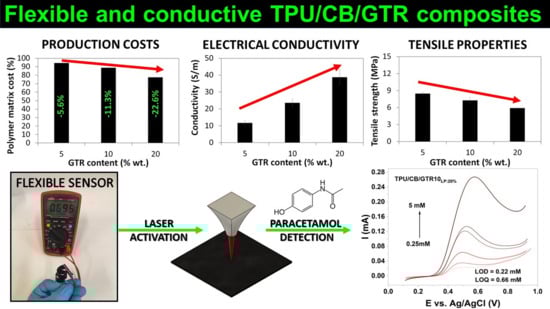
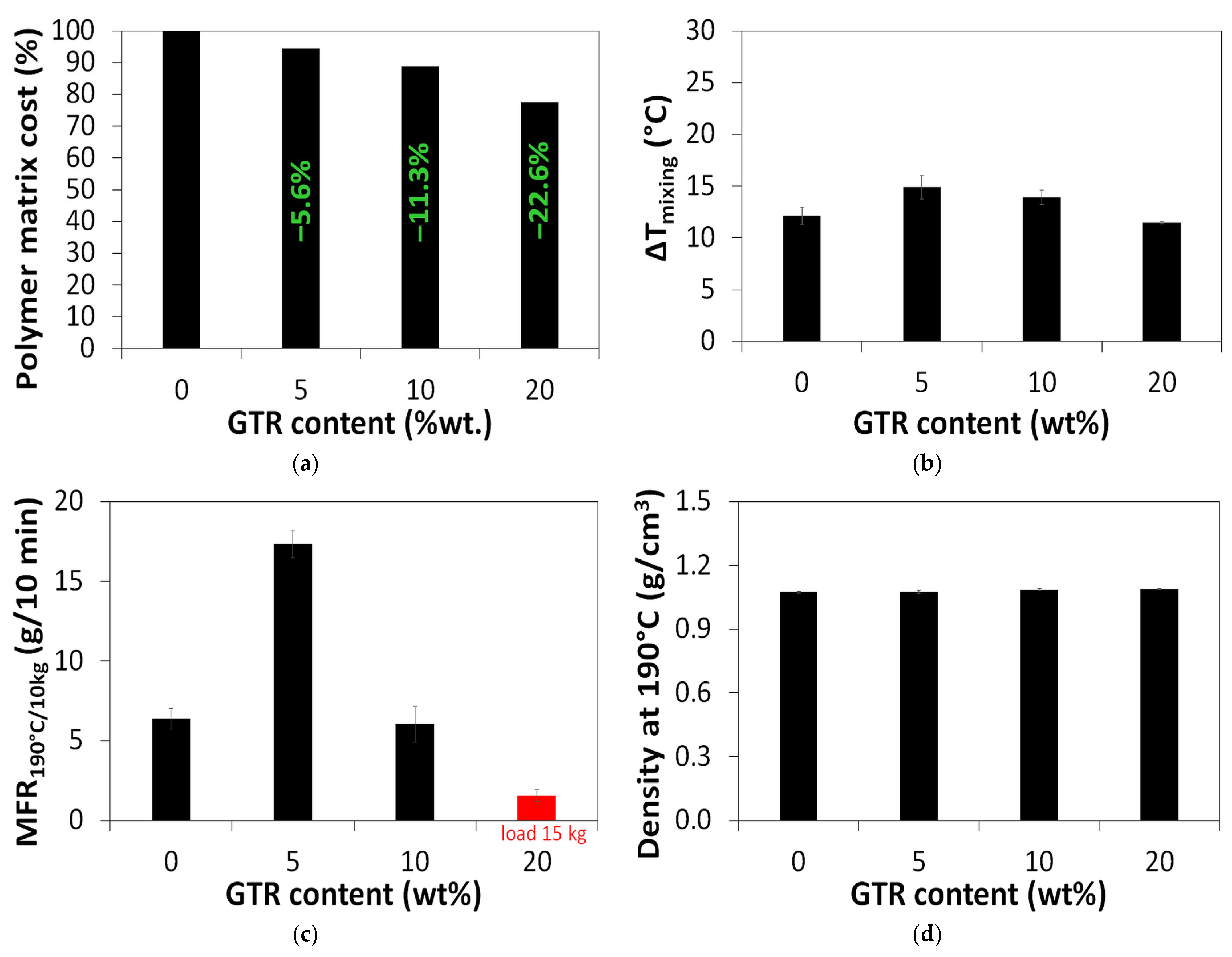
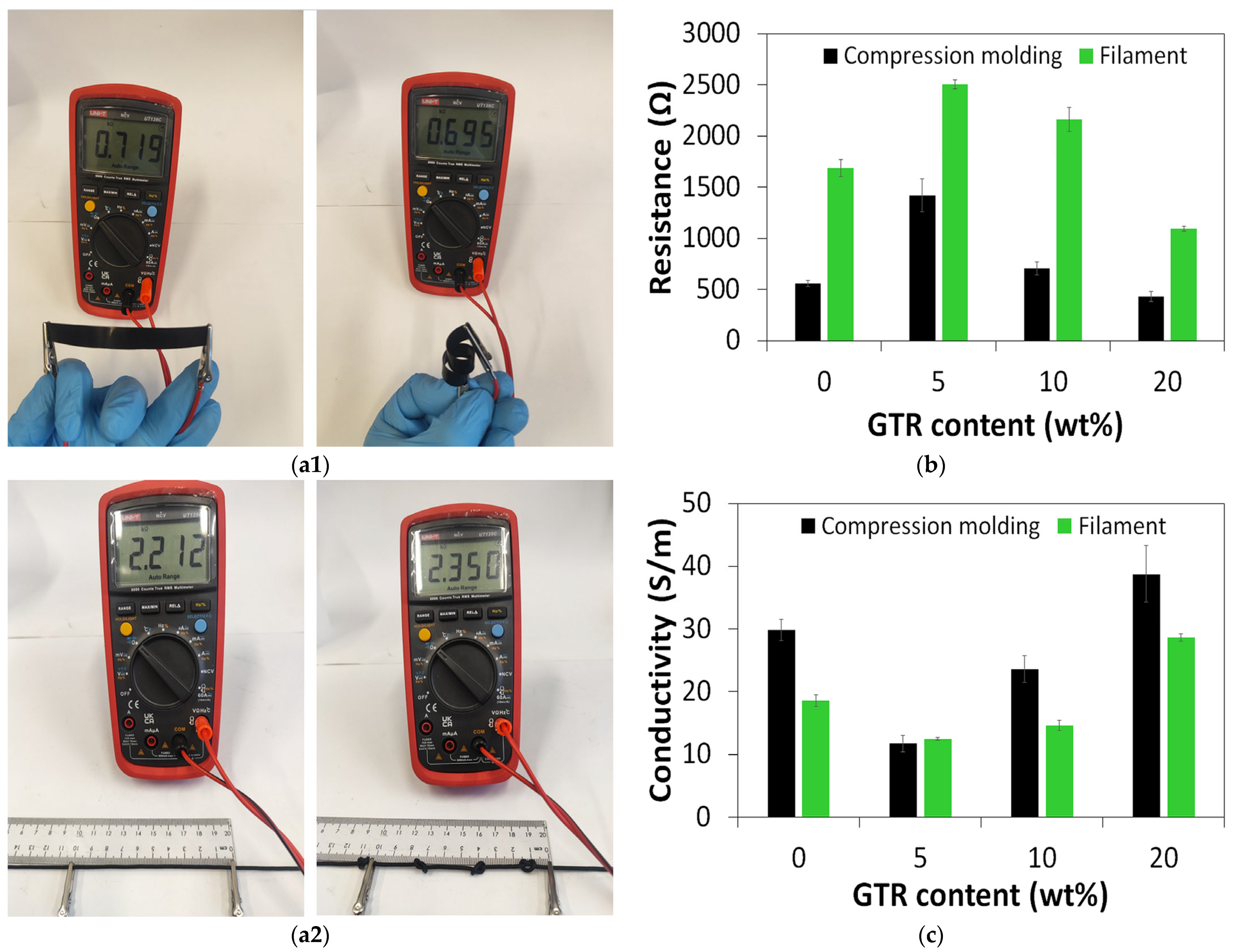
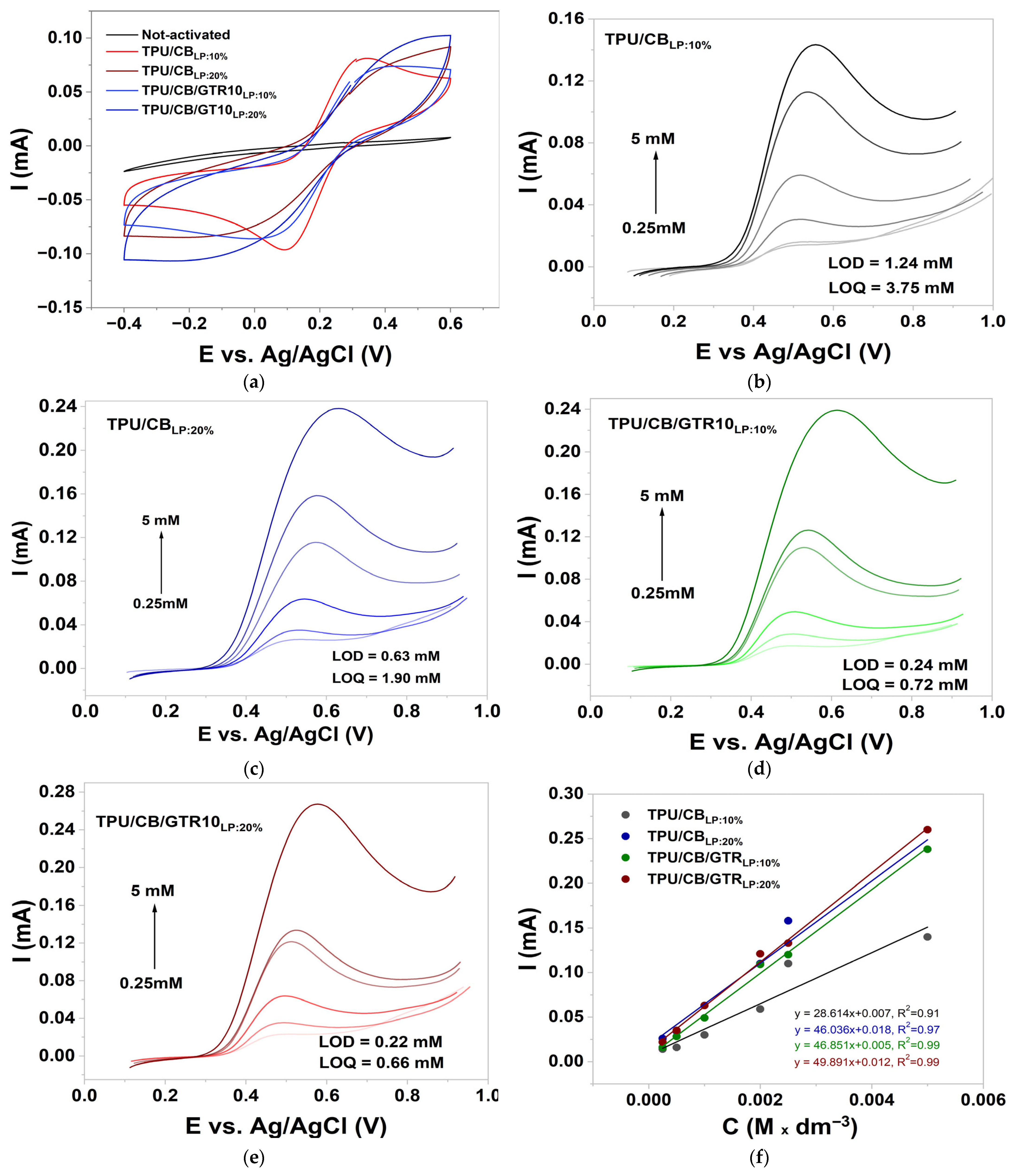
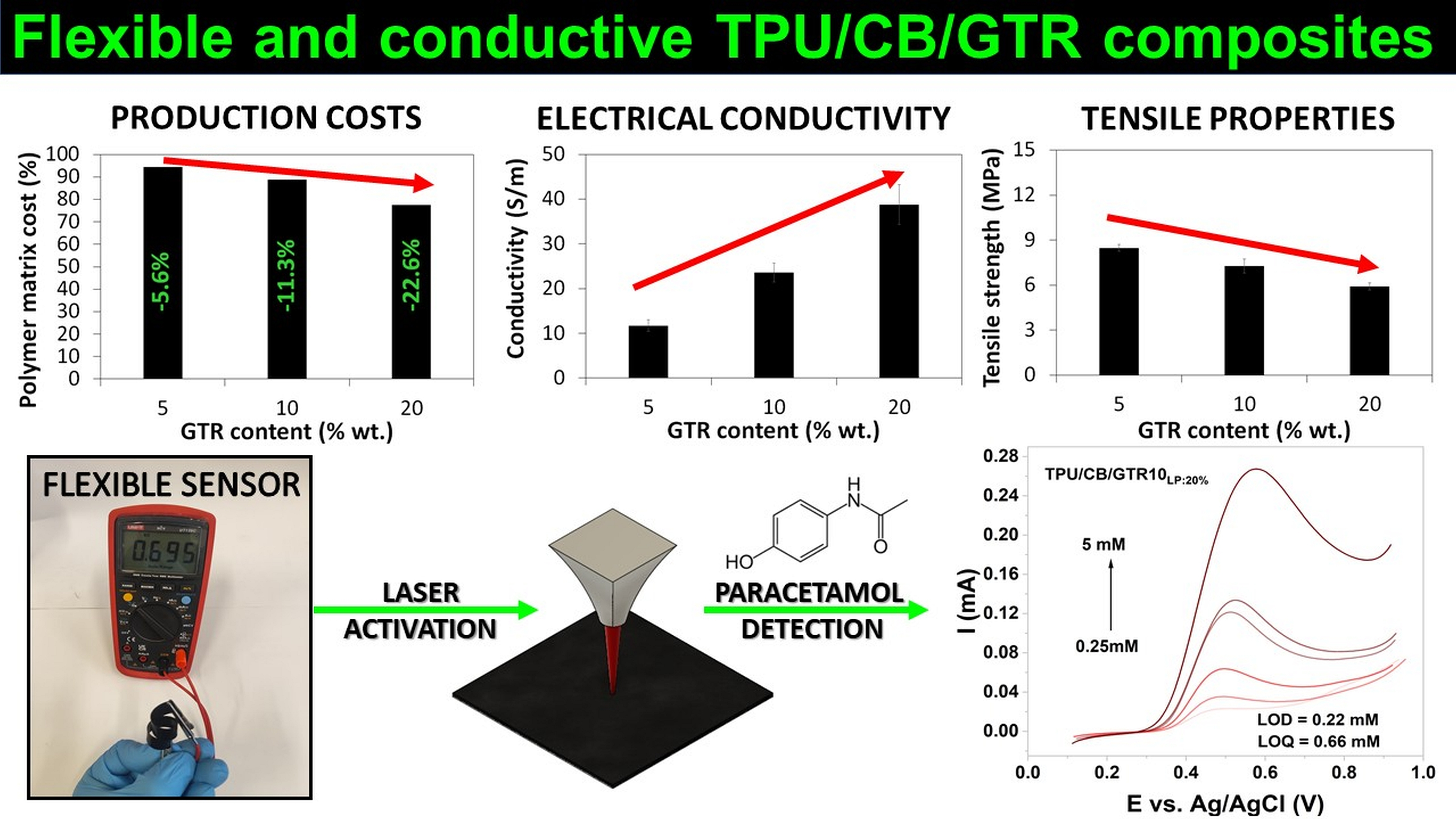
Ground tire rubber (GTR) is composed of high-quality components; therefore, searching for new technologies for GTR recycling and upcycling is fully justified. In this work, the effect of micronized ground tire rubber content on the rheological, mechanical, thermal, and morphological properties, electrical conductivity, and electrochemical behavior of thermoplastic polyurethane/carbon black was investigated. The application of micronized ground tire rubber in the range of 5–20 wt% reduces the manufacturing cost by 5.6–22.6% and improves the electrical conductivity and electrochemical properties of composites. The results showed that higher contents of ground tire rubber increased the electrical conductivity of the studied materials from 11.7 to 33.8 S/m. This phenomenon is due to two factors: (i) additional carbon black present in GTR and (ii) phase separation that promotes local carbon-rich domains and facilitates conductive pathway formation. Electrochemical analysis revealed that the studied composites after laser activation can be used as flexible sensors. This research work confirms that using a ground tire rubber as a low-cost and valuable source of raw materials is a promising approach for the sustainable development of soft electronics.
Keywords: ground tire rubber; conductive polymer composites; structure-property relationships ground tire rubber; conductive polymer composites; structure-property relationships
Graphical Abstract