An SiO2-Filled Matrix to Improve the Thermal Behavior and Surface Integrity of Fiber-Reinforced Polymers Under Dry Milling

 , , , ,
Abstract
1. Introduction
2. Materials and Methods
2.1. Materials
2.2. Specimen Preparation
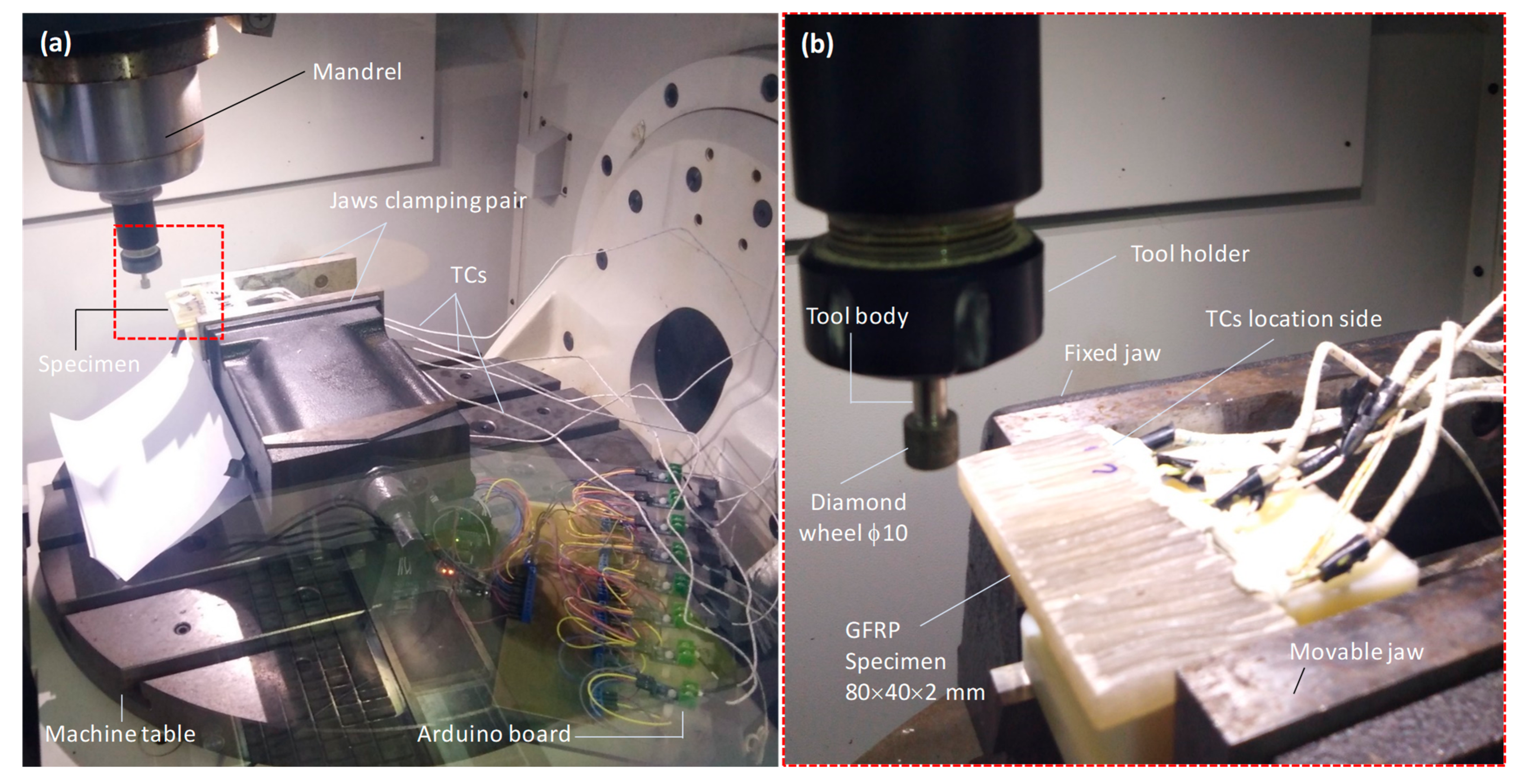
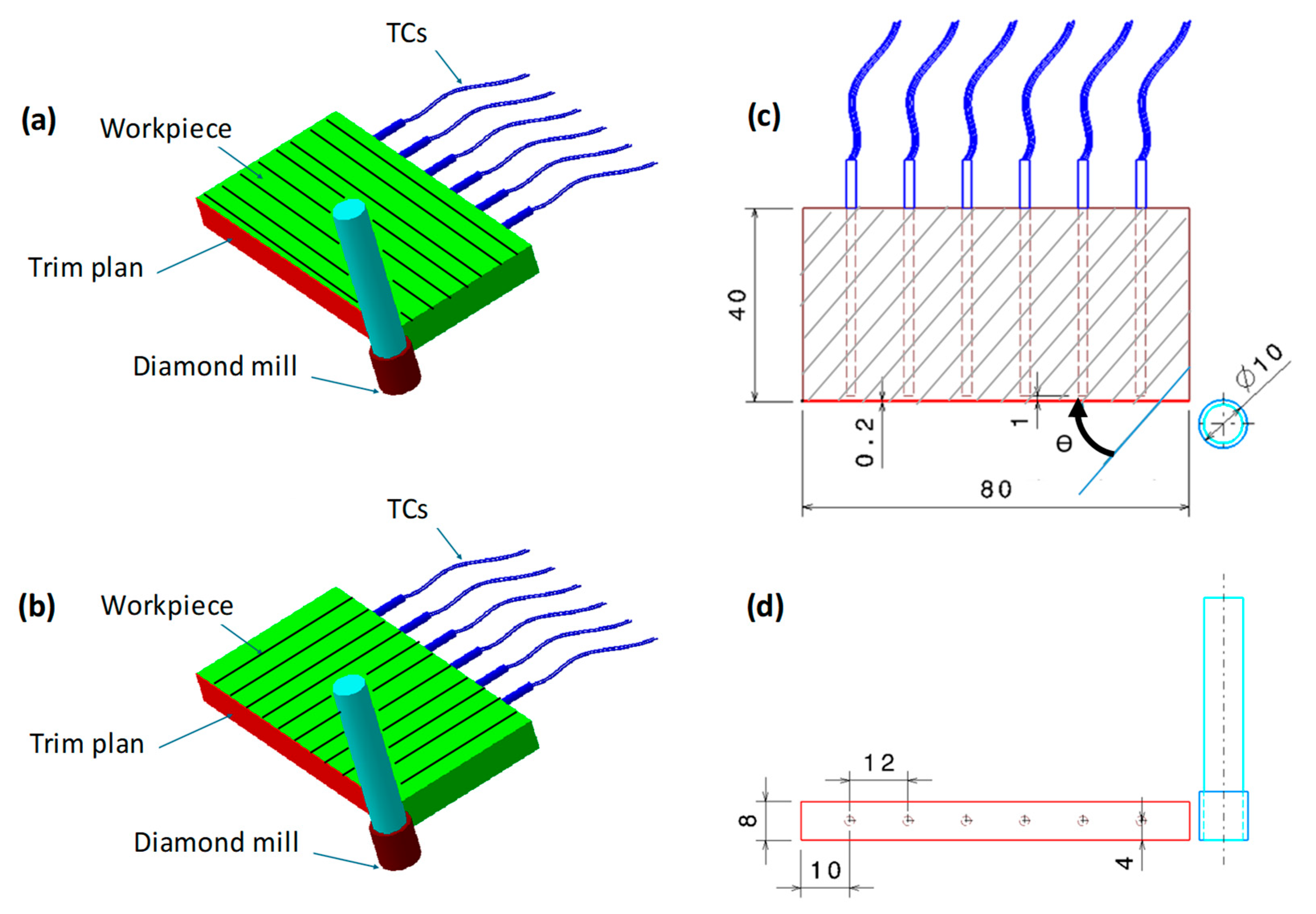
2.3. Temperature Acquisition System
2.4. Physical Model and Heat-Generation Framework
2.5. Milling Tests Spinner U-620 5-axis
2.6. SEM Analyzes
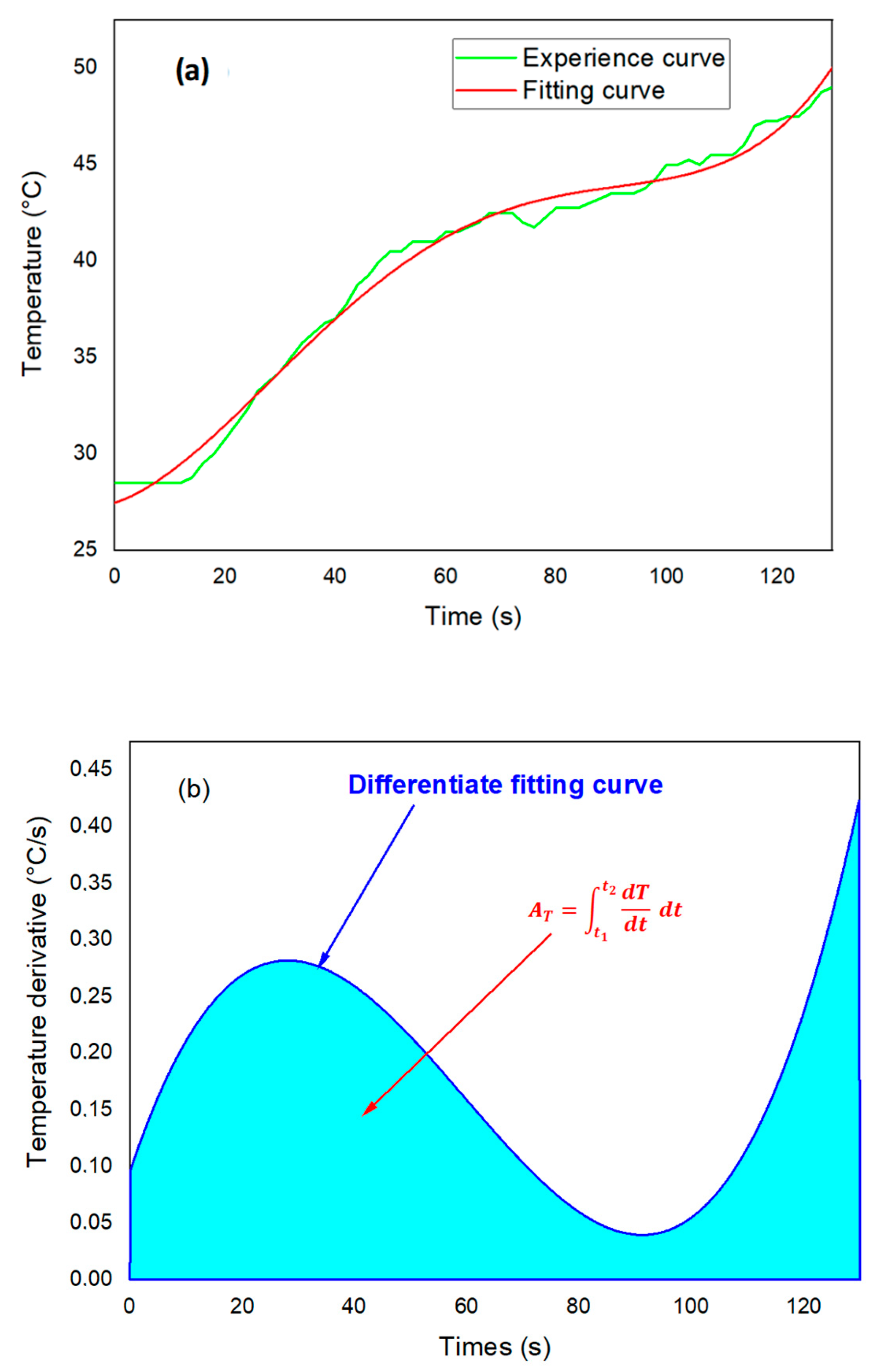
2.7. Estimation of Heat Energy
3. Results and Discussion
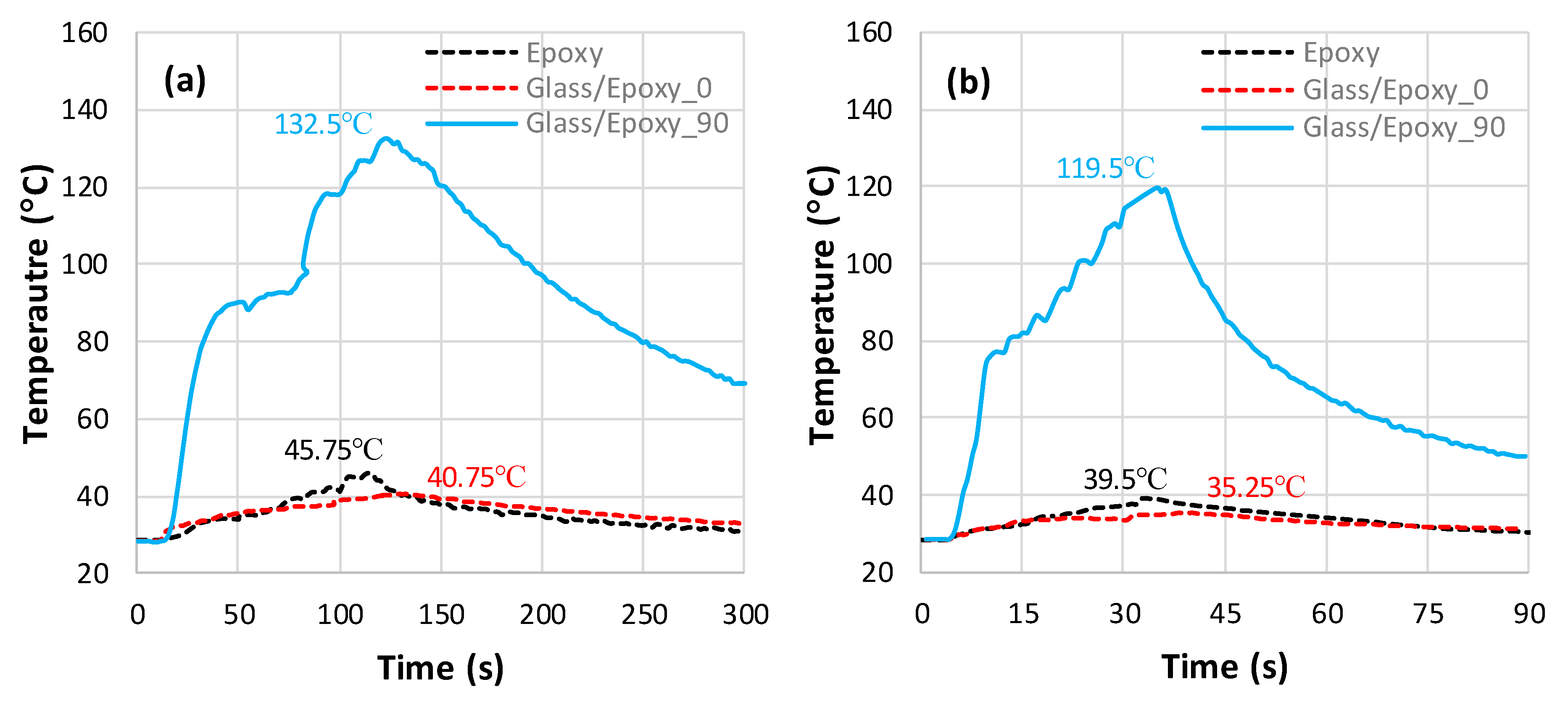
3.1. Temperature Overlap When Milling Glass/Epoxy
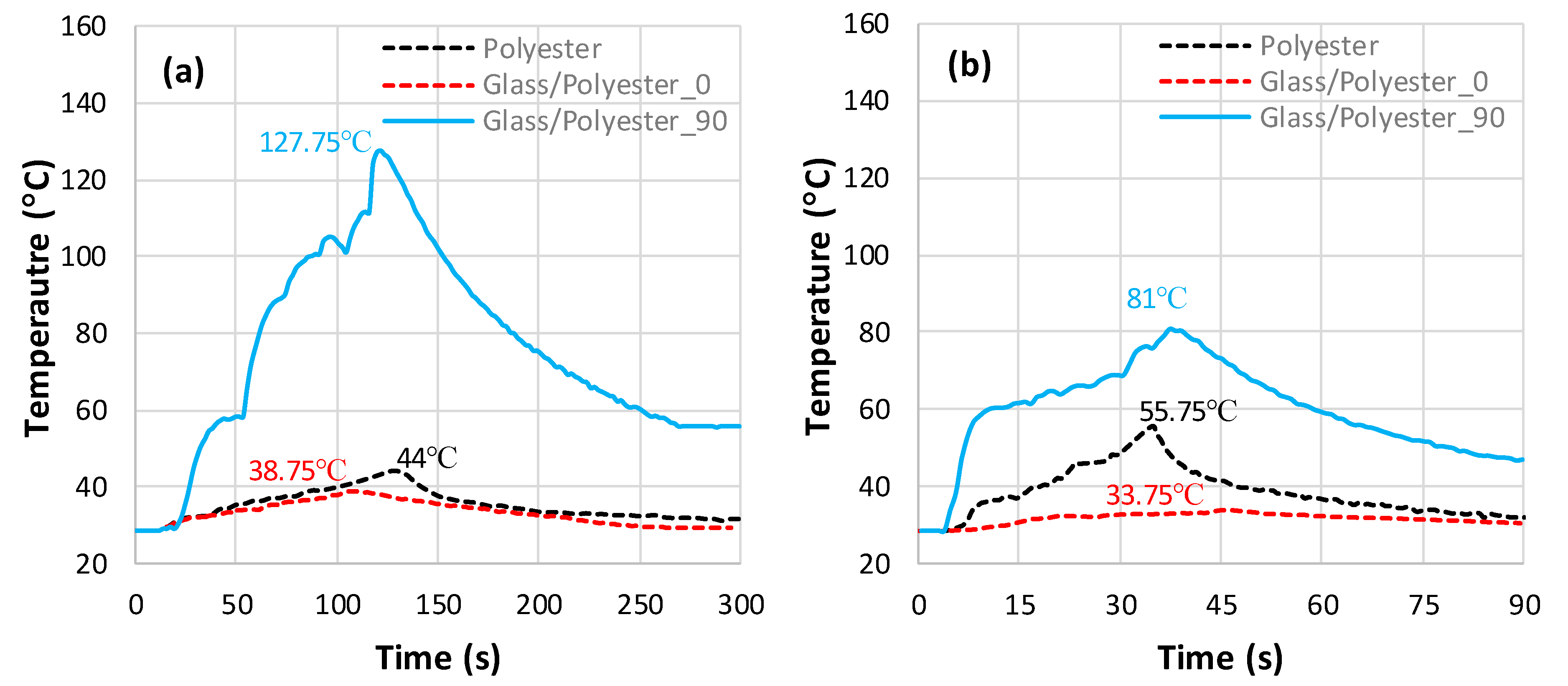
3.2. Temperature Overlap When Milling Glass/Polyester
3.3. Temperature Overlap When Milling SiO2-Filled GFRP
3.3.1. Glass/(Epoxy+SiO2)
3.3.2. Glass/(Polyester+SiO2)
3.4. Analysis of Heat Energy
3.5. Analysis of Surface Integrity
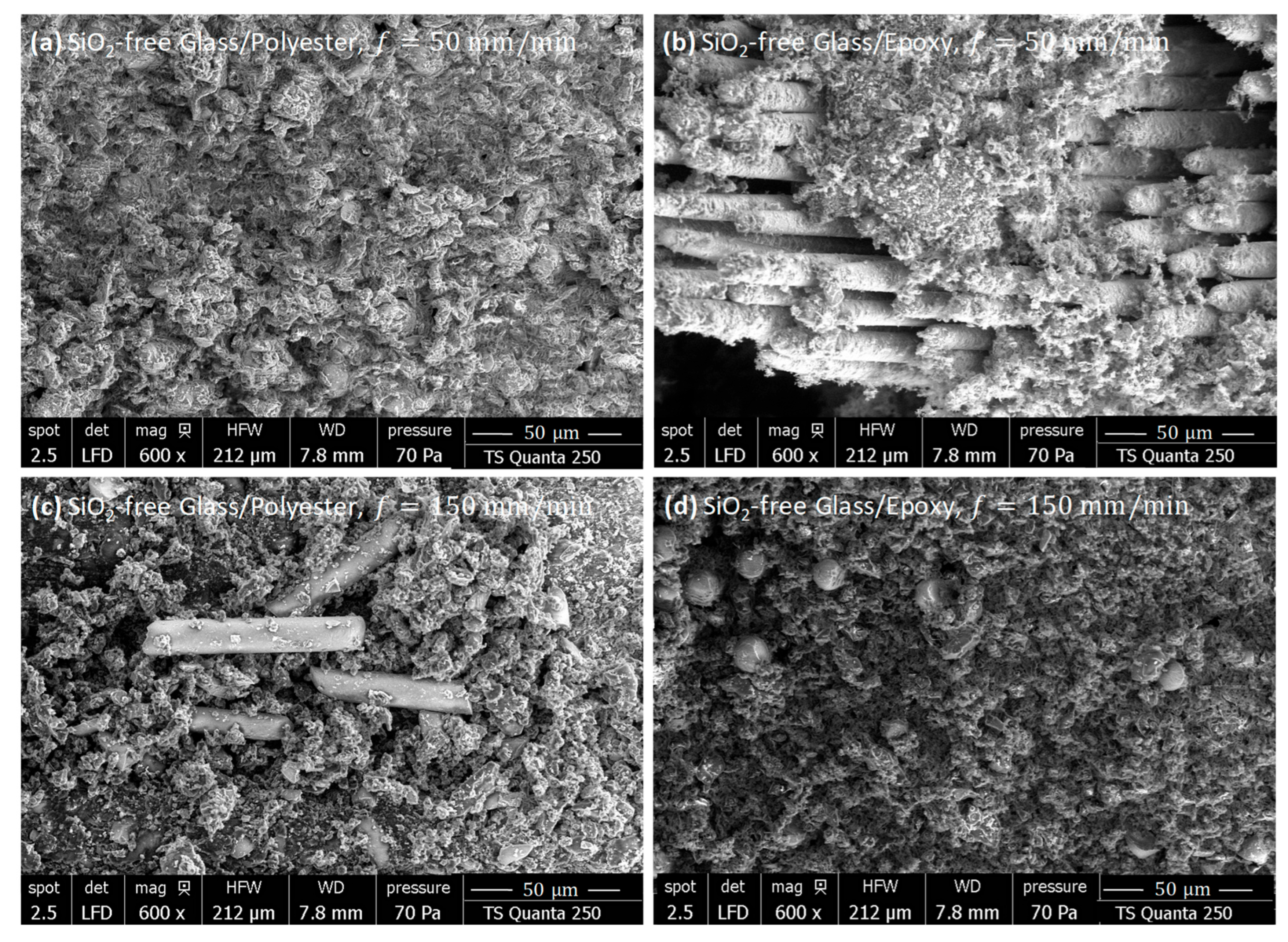
3.5.1. SiO2-Free Specimens
- As-Molded Matrix
- As-Machined Matrix
- SiO2-Free Composites As-Machined Parallel to Fiber
- SiO2-Free Composites As-Machined Perpendicular to Fiber
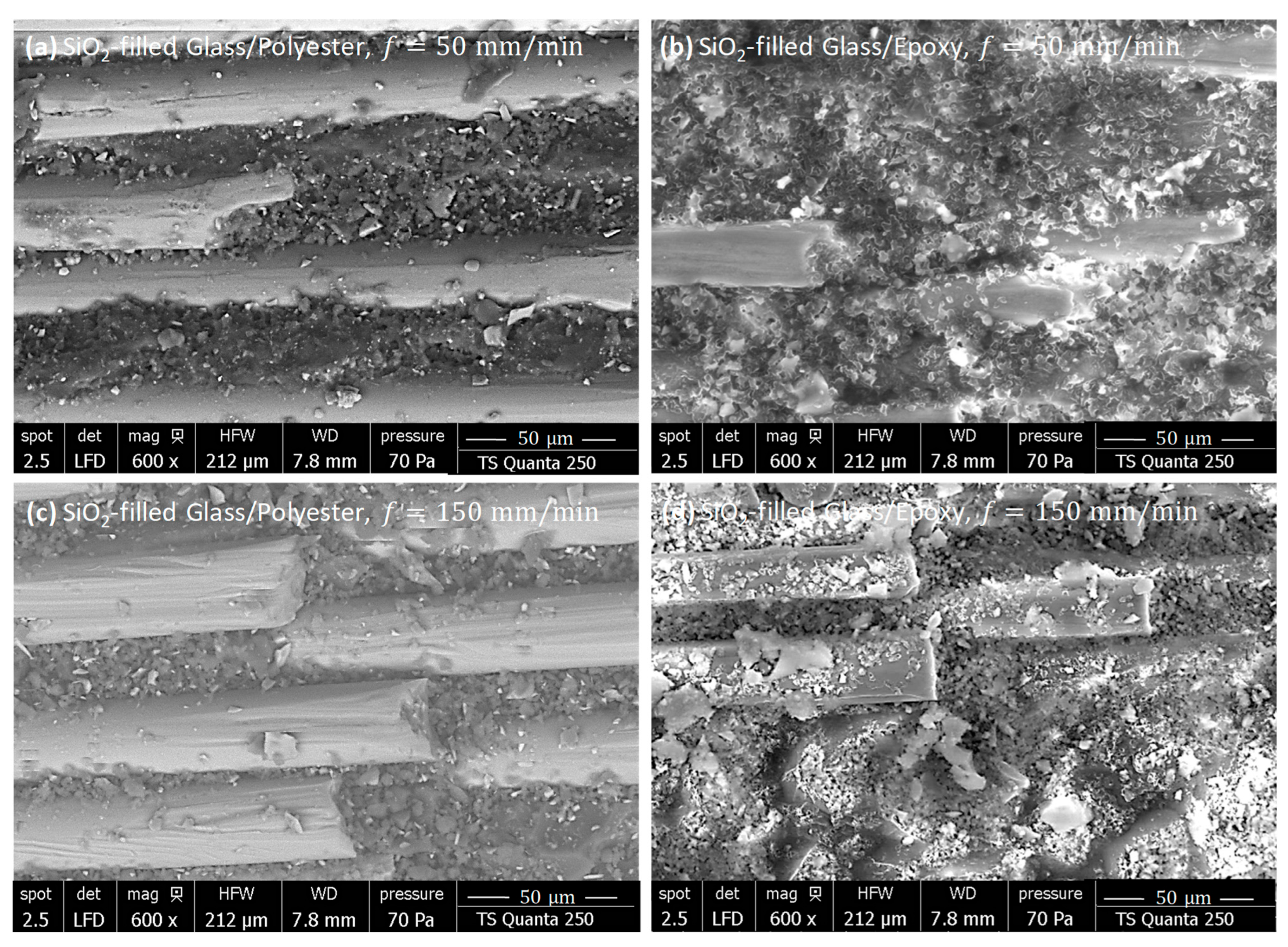
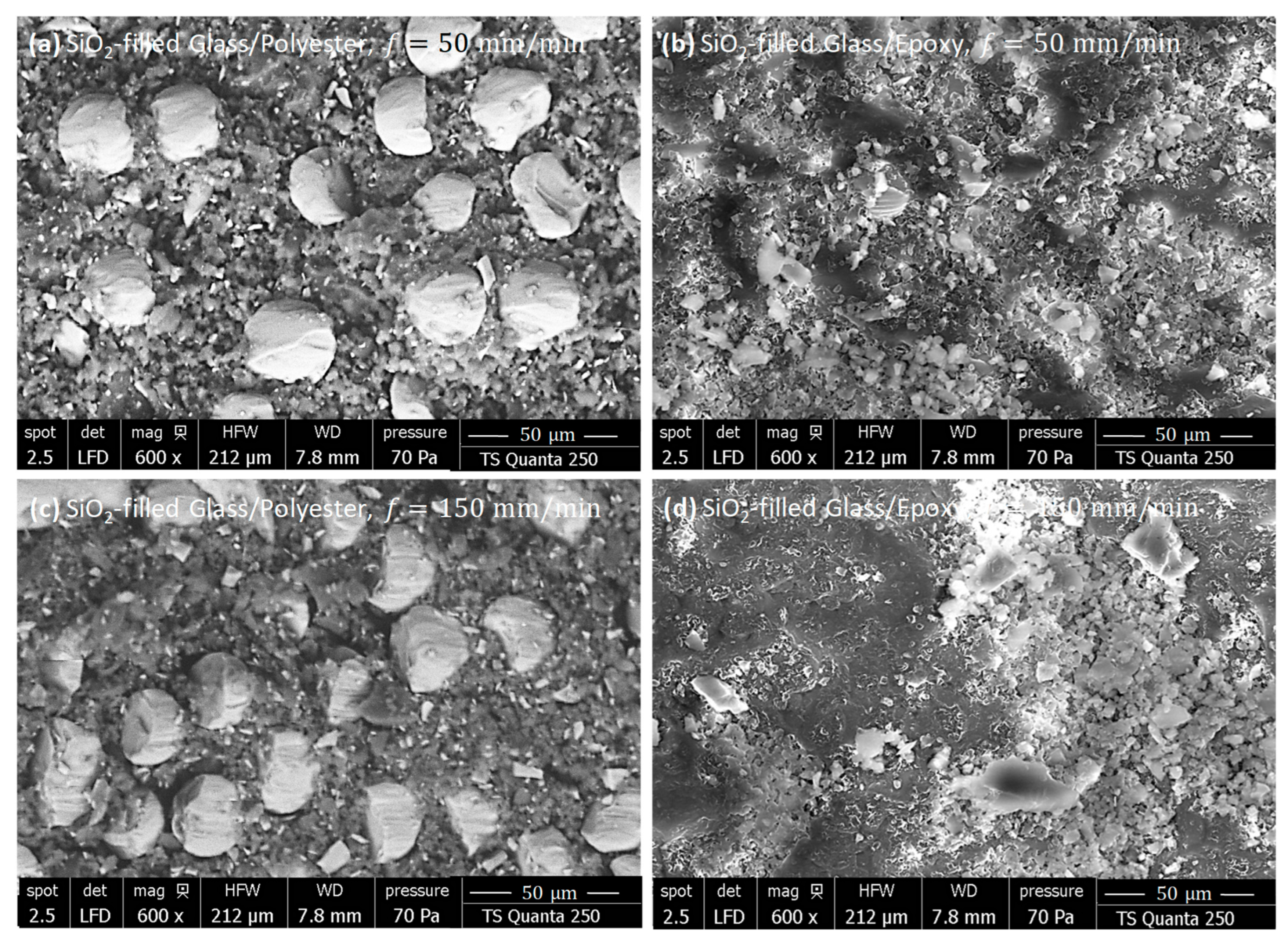
3.5.2. SiO2-Filled Composites
- SiO2-Filled Composites As-Milled Parallel to Fiber
- SiO2-Filled Composites As-Milled Perpendicular to Fiber
4. Conclusions
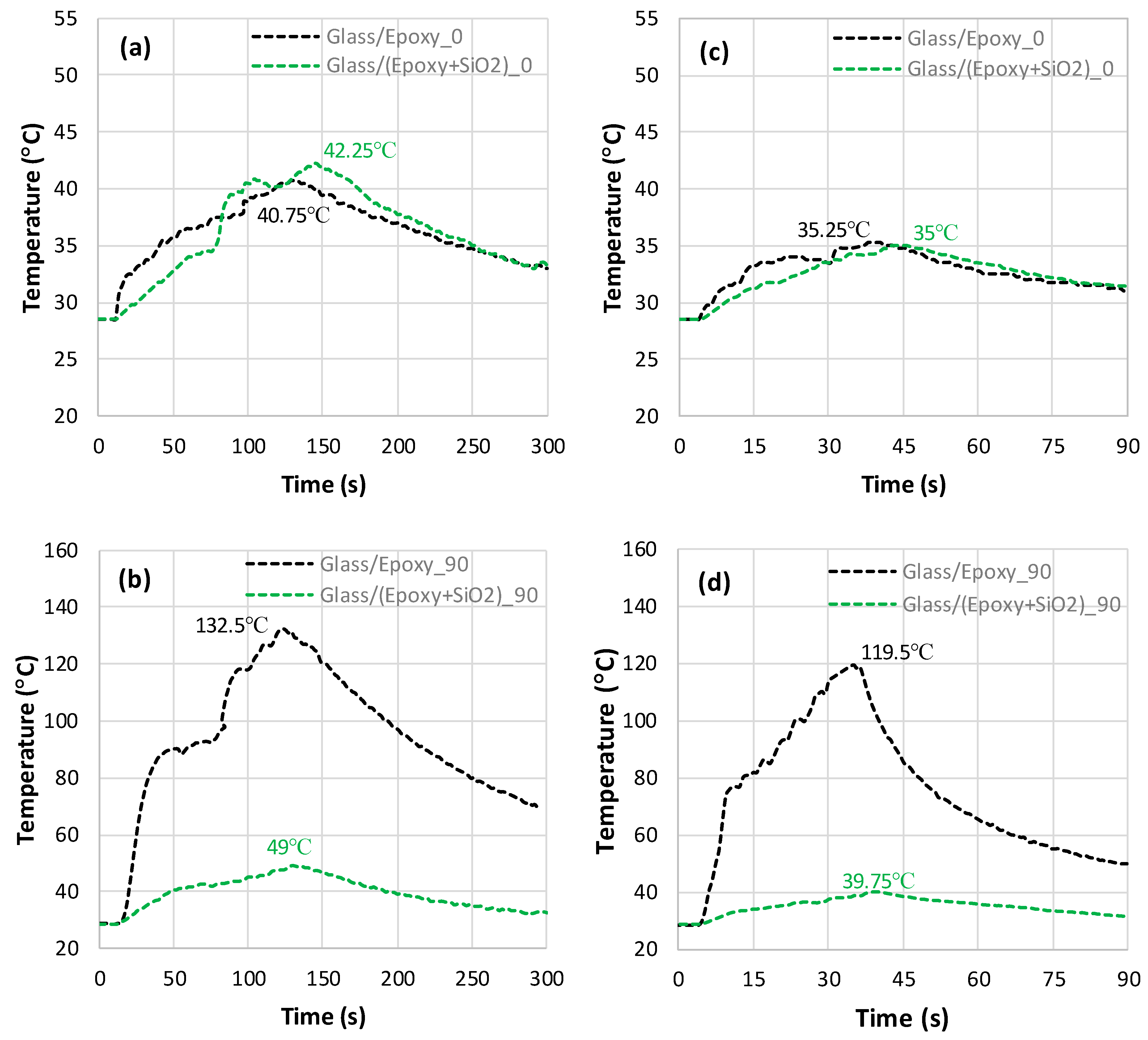
- Fiber orientation significantly affects the temperature and heat generated during the milling. Severe temperatures, exceeding the glass transition point of the matrix, are typically recorded in SiO2-free specimens when milling perpendicular to the fiber orientation.
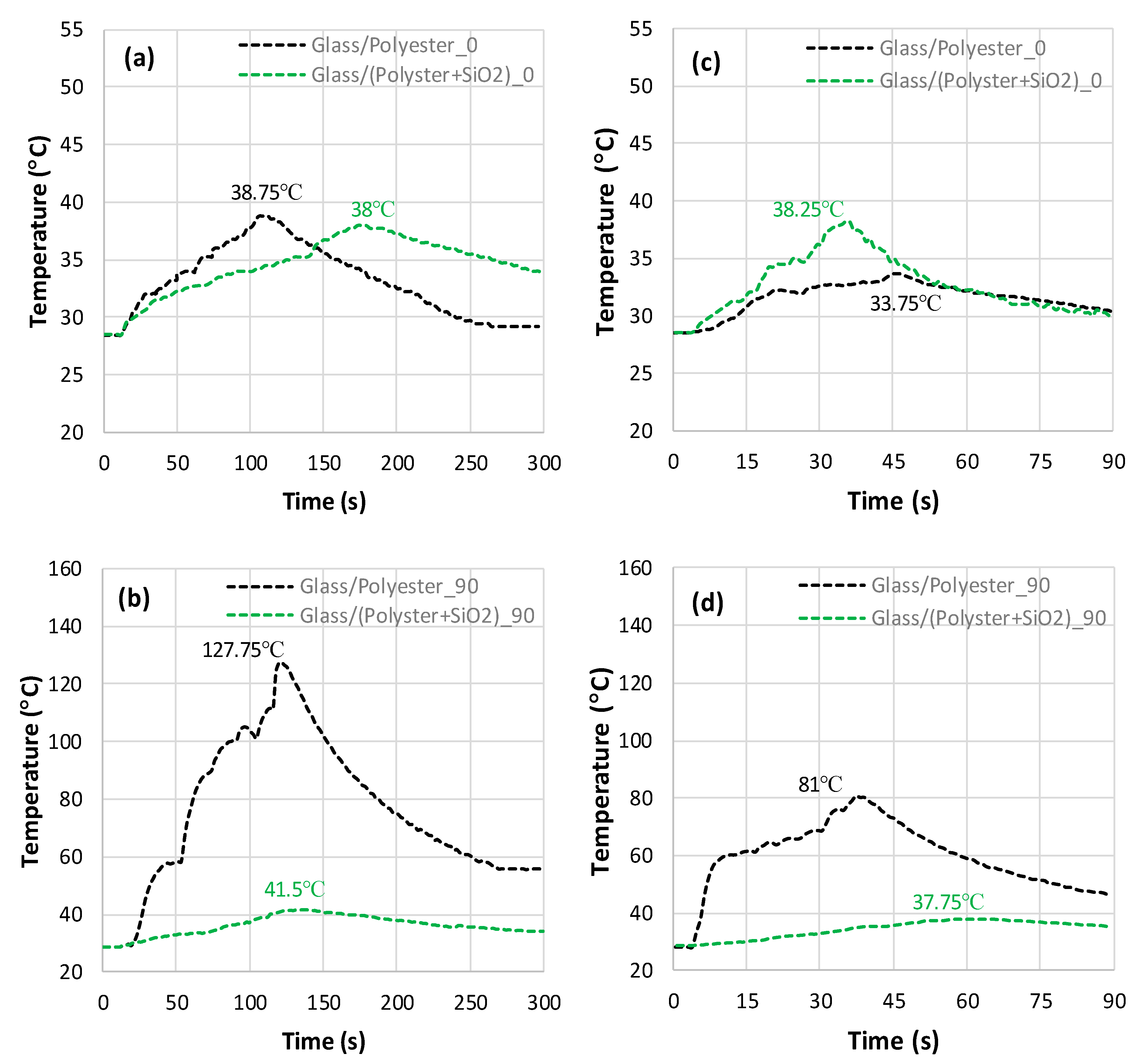
- SiO2-filled matrices effectively reduce peak temperatures (by about 67%) and limit heat accumulation, supporting improved surface integrity under dry milling, particularly under the most severe cutting conditions, i.e., − . The SiO2 particles promote better heat management that keeps the temperatures sufficiently low relative to the glass transition point.
- Increasing the feed rate—that is, from 50 to 150 mm/min—causes the temperature to drop. The higher feed rate limited the heat buildup due to the short contact time between the tool and the specimen.
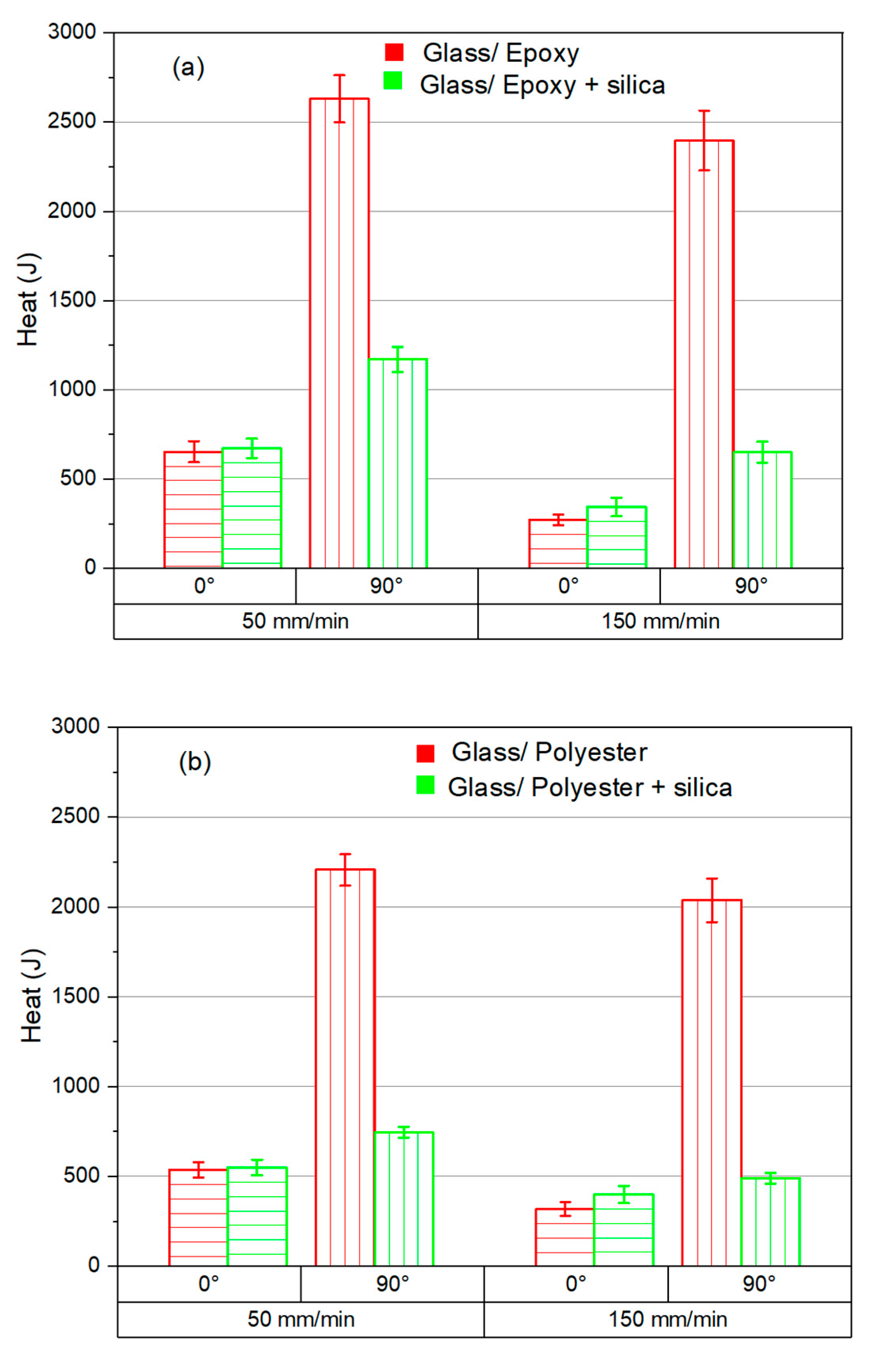
- Energy-based heat metrics complement peak temperature and provide a more physically representative measure of thermal severity.
- Under similar conditions, cutting Glass/Polyester composites yields lower heat compared to Glass/Epoxy composites since polyester possesses specific heat at a significantly higher rate than epoxy.
- Ultimately, the reduction in peak temperatures below the glass transition point of the matrix by the addition of SiO2 fillers is an important practical outcome for emergent applications where temperature has sensitive effects on the behavior of FRP structures.
Author Contributions
Funding
Data Availability Statement
Acknowledgments
Conflicts of Interest
References
- Slamani, M.; Chatelain, J.F. A review on the machining of polymer composites reinforced with carbon (CFRP), glass (GFRP), and natural fibers (NFRP). Discov. Mech. Eng. 2023, 2, 4. [Google Scholar] [CrossRef]
- Khashaba, U.A.; Abd-Elwahed, M.S.; Najjar, I.; Melaibari, A.; Ahmed, K.; Zitoune, R.; Eltaher, M.A. Heat-affected zone and mechanical analysis of GFRP composites with different thicknesses in drilling processes. Polymers 2021, 13, 2246. [Google Scholar] [CrossRef]
- Ahmad, J. Machining of Polymer Composites; Springer: Boston, MA, USA, 2009. [Google Scholar] [CrossRef]
- Erturk, A.T.; Vatansever, F.; Yarar, E.; Guven, E.A.; Sinmazcelik, T. Effects of cutting temperature and process optimization in drilling of GFRP composites. J. Compos. Mater. 2021, 55, 235–249. [Google Scholar] [CrossRef]
- Salem, B.; Mkaddem, A.; Ghazali, S.; Habak, M.; Felemban, B.F.; Jarraya, A. Towards an advanced modeling of hybrid com-posite cutting: Heat discontinuity at interface region. Polymers 2023, 15, 1955. [Google Scholar] [CrossRef]
- Selver, E.; Öztaş, B.; Uçar, M.; Uçar, N.; Baydoğan, M.; Altay, P.; Geygel, B. Mechanical and thermal properties of glass/epoxy composites filled with silica aerogels. Plast. Rubber Compos. 2021, 50, 371–383. [Google Scholar] [CrossRef]
- Mahato, B.; Lomov, S.V.; Shiverskii, A.; Owais, M.; Abaimov, S.G. A Review of Electrospun Nanofiber Interleaves for Interlaminar Toughening of Composite Laminates. Polymers 2023, 15, 1380. [Google Scholar] [CrossRef]
- Mahato, B.; Lomov, S.V.; Jafarypouria, M.; Owais, M.; Abaimov, S.G. Hierarchical toughening and self-diagnostic interleave for composite laminates manufactured from industrial carbon nanotube masterbatch. Compos. Sci. Technol. 2023, 243, 110241. [Google Scholar] [CrossRef]
- Mahato, B.; Lomov, S.V.; Abaimov, S.G. Quality Control and Cure Status Monitoring Sensor based on Industrial Carbon Nanotube Masterbatch. In Proceedings of the 2023 IEEE 23rd International Conference on Nanotechnology (NANO), Jeju City, Republic of Korea, 2–5 July 2023. [Google Scholar] [CrossRef]
- Prasanth, I.S.N.V.R.; Ravishankar, D.V.; Hussain, M.M.; Badiganti, C.M.; Sharma, V.K.; Pathak, S. Investigations on performance characteristics of GFRP composites in milling. Int. J. Adv. Manuf. Technol. 2018, 99, 1351–1360. [Google Scholar] [CrossRef]
- Chandra, A.; Yadav, A.; Singh, S.; Arora, P.K. Optimisation of machining parameters for CNC milling of fibre reinforced polymers. Evergreen 2023, 10, 765–773. [Google Scholar] [CrossRef]
- Hocheng, H.; Puw, H.Y.; Huang, Y. Preliminary study on milling of unidirectional carbon fibre-reinforced plastics. Compos. Manuf. 1993, 4, 103–108. [Google Scholar] [CrossRef]
- Kumar, A.L.; Prakash, M. The effect of fiber orientation on mechanical properties and machinability of GFRP composites by end milling using cutting force analysis. Polym. Compos. 2021, 29, S178–S187. [Google Scholar] [CrossRef]
- Su, Y.; Jia, Z.; Niu, B.; Bi, G. Size effect of depth of cut on chip formation mechanism in machining of CFRP. Compos. Struct. 2017, 14, 316–327. [Google Scholar] [CrossRef]
- Geier, N. Influence of fibre orientation on cutting force in up and down milling of UD-CFRP composites. Int. J. Adv. Manuf. Technol. 2020, 111, 881–893. [Google Scholar] [CrossRef]
- Voss, R.; Seeholzer, L.; Kuster, F.; Wegener, K. Influence of fibre orientation, tool geometry and process parameters on sur-face quality in milling of CFRP. CIRP J. Manuf. Sci. Technol. 2017, 18, 75–91. [Google Scholar] [CrossRef]
- Nguyen, D.; Bin Abdullah, M.S.; Khawarizmi, R.; Kim, D.; Kwon, P. The effect of fiber orientation on tool wear in edge-trimming of carbon fiber reinforced plastics (CFRP) laminates. Wear 2020, 450, 203213. [Google Scholar] [CrossRef]
- Yashiro, T.; Ogawa, T.; Sasahara, H. Cutting Temperature Measurement on Milling Process of CFRP. Int. J. Mach. Tools Manuf. 2013, 70, 63–69. [Google Scholar] [CrossRef]
- Nor Khairusshima, M.K.; Che Hassan, C.H.; Jaharah, A.G.; Amin, A.K.M.; Md Idriss, A.N. Effect of chilled air on tool wear and workpiece quality during milling of carbon fibre-reinforced plastic. Wear 2013, 302, 1113–1123. [Google Scholar] [CrossRef]
- Wang, H.; Sun, J.; Li, J.; Lu, L.; Li, N. Evaluation of cutting force and cutting temperature in milling carbon fiber-reinforced polymer composites. Int. J. Adv. Manuf. Technol. 2016, 82, 1517–1525. [Google Scholar] [CrossRef]
- Salem, B.; Mkaddem, A.; Habak, M.; Doubah, Y.; Elfarhani, M.; Jarraya, A. Investigation of Temperature at Al/Glass Fiber-Reinforced Polymer Interfaces When Drilling Composites of Different Stacking Arrangements. Polymers 2024, 16, 2823. [Google Scholar] [CrossRef]
- Bondioli, F.; Cannillo, V.; Fabbri, E.; Messori, M. Epoxy-silica nanocomposites: Preparation, experimental characterization, and modeling. J. Appl. Polym. Sci. 2005, 97, 2382–2386. [Google Scholar] [CrossRef]
- Owais, M.; Shiverskii, A.; Sulimov, A.; Ostrizhiniy, D.; Popov, Y.; Mahato, B.; Abaimov, S.G. Scalable fabrication of thermally conductive layered Nacre-like self-assembled 3D BN-based PVA aerogel framework nanocomposites. Polymers 2022, 14, 3316. [Google Scholar] [CrossRef]
- Owais, M.; Shiverskii, A.; Pal, A.K.; Mahato, B.; Abaimov, S.G. Recent studies on thermally conductive 3D aerogels/foams with the segregated nanofiller framework. Polymers 2022, 14, 4796. [Google Scholar] [CrossRef]
- Ilangovan, S.; Kumaran, S.S.; Vasudevan, A.; Naresh, K. Effect of silica nanoparticles on mechanical and thermal properties of neat epoxy and filament wounded E-glass/epoxy and basalt/epoxy composite tubes. Mater. Res. Express 2019, 6, 0850e2. [Google Scholar] [CrossRef]
- Zeng, Y.; Liu, H.Y.; Mai, Y.W.; Du, X.S. Improving interlaminar fracture toughness of carbon fibre/epoxy laminates by in-corporation of nanoparticles. Compos. Part B Eng. 2012, 43, 90–94. [Google Scholar] [CrossRef]
- Guesmi, F.; Elfarhani, M.; Mkaddem, A.; Ghazali, S.; Bin Mahfouz, A.S.; Jarraya, A. Heat analysis of thermal conductive poly-mer composites: Reference temperature history in pure polymers matrices. Polymers 2022, 14, 2084. [Google Scholar] [CrossRef]
- Aadmi, M.; Karkri, M.; El Hammouti, M. Heat transfer characteristics of thermal energy storage of a composite phase change materials: Numerical and experimental investigations. Energy 2014, 72, 381–392. [Google Scholar] [CrossRef]
- Aadmi, M.; Karkri, M.; Ibos, L. Effective thermal conductivity of random two-phase composites. J. Reinf. Plast. Compos. 2014, 33, 69–80. [Google Scholar] [CrossRef]
- Swain, S. Synthesis and characterization of graphene based unsaturated polyester resin composites. Trans. Electr. Electron. Mater. 2013, 14, 53–58. [Google Scholar] [CrossRef]
- Bastiurea, M.; Rodeanu Bastiurea, M.S.; Andrei, G.; Dima, D.; Murarescu, M.; Ripa, M.; Circiumaru, A. Determination of specific heat of polyester composite with graphene and graphite by differential scanning calorimetry. Tribol. Ind. 2014, 36, 419–427. [Google Scholar]
- Wang, H.; Dinwiddie, R.B.; Wilkes, K.E. Thermal conductivity measurements of fiberglass. In Oak Ridge National Laboratory Report: ORNL/TM-2003/98; Owens Corning Inc.: Toledo, OH, USA, 2003; pp. 1–15. [Google Scholar]
- Chen, J.; Gao, X.; Song, W. Effect of various carbon nanofillers and different filler aspect ratios on the thermal conductivity of epoxy matrix nanocomposites. Results Phys. 2019, 15, 102771. [Google Scholar] [CrossRef]
- Idicula, M.; Boudenne, A.; Umadevi, L.; Ibos, L.; Candau, Y.; Thomas, S. Thermophysical properties of natural fibre reinforced polyester composites. Compos. Sci. Technol. 2006, 66, 2719–2725. [Google Scholar] [CrossRef]
- Pech-May, N.W.; Vales-Pinzón, C.; Vega-Flick, A.; Cifuentes, Á.; Oleaga, A.; Salazar, A.; Alvarado-Gil, J.J. Study of the thermal properties of polyester composites loaded with oriented carbon nanofibers using the front face flash method. Polym. Test. 2016, 50, 255–261. [Google Scholar] [CrossRef]
- Malathy, R.; Sentilkumar, S.R.R.; Prakash, A.R.R.; Das, B.B.; Chung, I.M.; Kim, S.H.; Prabakaran, M. Use of industrial silica sand as a fine aggregate in concrete—An explorative study. Buildings 2022, 12, 1273. [Google Scholar] [CrossRef]
- Elfarhani, M.; Guesmi, F.; Mkaddem, A.; Ghazali, S.; Rubaiee, S.; Jarraya, A. Thermal Aspects in Edge Trimming of Bio-Filled GFRP: Influence of fiber orientation and silica sand filler in heat generation. Materials 2022, 15, 4792. [Google Scholar] [CrossRef] [PubMed]
- Bogdanov, B.; Markovska, I.; Hristov, Y.; Georgiev, D. Synthesis and properties of glass ceramics of the system Li2O–Al2O3–SiO2–B2O3–P2O5. J. Balkan Tribol. Assoc. 2011, 17, 48–55. [Google Scholar]
- Bergman, T.L.; Incropera, F.P.; De Witt, D.P.; Lavine, A.S. Fundamentals of Heat and Mass Transfer, 990; John Wiley & Sons Inc.: Hoboken, NJ, USA, 2011. [Google Scholar]
- Jeon, J.; Muliana, A.; La Saponara, V. Thermal stress and deformation analyses in fiber reinforced polymer composites undergoing heat conduction and mechanical loading. Compos. Struct. 2014, 111, 31–44. [Google Scholar] [CrossRef]
- Pramanik, A.; Basak, A.K.; Dong, Y.; Shankar, S.; Littlefair, G. Milling of nanoparticles reinforced al-based metal matrix composites. J. Compos. Sci. 2018, 2, 13. [Google Scholar] [CrossRef]





| Properties | Epoxy 1050 | Polyester TP280 |
|---|---|---|
| Appearance | Opalescent | Clear blue |
| 1.27 ± 0.05 [27] | 1.10 ± 0.05 [27] | |
| ) | 1300 [28,29] | 1870–1930 [30,31] |
| 0.2–0.22 [29,32,33] | 0.181 ± 0.003 [34,35] | |
| 77 [27] | 87 [27] | |
| 1.043 [27] | 0.647 [27] | |
| Dry extract (% volume) | 33% [27] | 31% [27] |
| Gel time, at 23 °C (min) | 210 (23 °C with 30% of 1055S) | 30 (25 °C with 2% of MEKP) |
| Properties | SiO2 | Glass Fiber |
|---|---|---|
| Density | 1.73–2.65 [36,37] | 2.48 [38] |
| Specific heat ) | 680–730 | 835–840 [39,40] |
| Thermal conductivity | 1.3–1.5 | 0.019–0.026 [32,39] |
| Thermal expansion | 0.55–0.75 | 4.73–6.52 [38] |
| Average sub-angular size | 300 [37] | |
| Average diameter | 19.27–24.70 [27] |
| Composite | Volume Fraction | ||
|---|---|---|---|
| Glass/Epoxy | 0.182 ± 0.009 | 0.093 ± 0.007 | |
| Glass/(Epoxy+SiO2) | 0.515 ± 0.066 | 0.104 ± 0.013 | |
| Glass/Polyester | 0.156 ± 0.003 | 0.088 ± 0.004 | |
| Glass/(Polyester+SiO2) | 0.498 ± 0.030 | 0.100 ± 0.010 |
| Feed (mm/min) | Material | Cutting Test | SD | RMSE | MAE | R2 |
|---|---|---|---|---|---|---|
| 50 | Epoxy | Pure Epoxy | 0.5514 | 0.5496 | 0.3595 | 0.9827 |
| Glass/Epoxy_0° | 0.2162 | 0.2154 | 0.1426 | 0.9945 | ||
| Glass/Epoxy_90° | 1.6416 | 1.6365 | 1.0430 | 0.9958 | ||
| Glass/(Epoxy+SiO2)_0° | 0.3775 | 0.3762 | 0.2758 | 0.9908 | ||
| Glass/(Epoxy+SiO2)_90° | 0.2739 | 0.2730 | 0.2143 | 0.9976 | ||
| Polyester | Pure Polyester | 0.4459 | 0.4426 | 0.3439 | 0.9852 | |
| Glass/Polyester_0° | 0.2039 | 0.2033 | 0.1551 | 0.9955 | ||
| Glass/Polyester_90° | 2.7865 | 2.7777 | 2.0978 | 0.9882 | ||
| Glass/(Polyester+SiO2)_0° | 0.1159 | 0.1154 | 0.0899 | 0.9978 | ||
| Glass/(Polyester+SiO2)_90° | 0.1832 | 0.1827 | 0.1361 | 0.9973 | ||
| 150 | Epoxy | Pure Epoxy | 0.4583 | 0.4265 | 0.3947 | 0.9949 |
| Glass/Epoxy_0° | 0.1645 | 0.1639 | 0.1191 | 0.9909 | ||
| Glass/Epoxy_90° | 1.6284 | 1.6226 | 1.0048 | 0.9948 | ||
| Glass/(Epoxy+SiO2)_0° | 0.0906 | 0.0902 | 0.0695 | 0.9974 | ||
| Glass/(Epoxy+SiO2)_90° | 0.1909 | 0.1902 | 0.1536 | 0.9956 | ||
| Polyester | Pure Polyester | 0.8580 | 0.8553 | 0.5538 | 0.9789 | |
| Glass/Polyester_0° | 0.1154 | 0.1151 | 0.0758 | 0.9938 | ||
| Glass/Polyester_90° | 1.5199 | 1.5152 | 1.0142 | 0.9888 | ||
| Glass/(Polyester+SiO2)_0° | 0.2881 | 0.2867 | 0.2231 | 0.9877 | ||
| Glass/(Polyester+SiO2)_90° | 0.1292 | 0.1285 | 0.0992 | 0.9983 |
Disclaimer/Publisher’s Note: The statements, opinions and data contained in all publications are solely those of the individual author(s) and contributor(s) and not of MDPI and/or the editor(s). MDPI and/or the editor(s) disclaim responsibility for any injury to people or property resulting from any ideas, methods, instructions or products referred to in the content. |
© 2026 by the authors. Licensee MDPI, Basel, Switzerland. This article is an open access article distributed under the terms and conditions of the Creative Commons Attribution (CC BY) license.
Share and Cite
Mkaddem, A.; Elfarhani, M.; Salem, B.; Dobah, Y.; Ghazzawi, Y.; Jarraya, A. An SiO2-Filled Matrix to Improve the Thermal Behavior and Surface Integrity of Fiber-Reinforced Polymers Under Dry Milling. Polymers 2026, 18, 698. https://doi.org/10.3390/polym18060698
Mkaddem A, Elfarhani M, Salem B, Dobah Y, Ghazzawi Y, Jarraya A. An SiO2-Filled Matrix to Improve the Thermal Behavior and Surface Integrity of Fiber-Reinforced Polymers Under Dry Milling. Polymers. 2026; 18(6):698. https://doi.org/10.3390/polym18060698
Chicago/Turabian StyleMkaddem, Ali, Makram Elfarhani, Brahim Salem, Yousef Dobah, Yousof Ghazzawi, and Abdessalem Jarraya. 2026. "An SiO2-Filled Matrix to Improve the Thermal Behavior and Surface Integrity of Fiber-Reinforced Polymers Under Dry Milling" Polymers 18, no. 6: 698. https://doi.org/10.3390/polym18060698
APA StyleMkaddem, A., Elfarhani, M., Salem, B., Dobah, Y., Ghazzawi, Y., & Jarraya, A. (2026). An SiO2-Filled Matrix to Improve the Thermal Behavior and Surface Integrity of Fiber-Reinforced Polymers Under Dry Milling. Polymers, 18(6), 698. https://doi.org/10.3390/polym18060698