Optimizing Mechanical and Thermal Properties of Slag-Based Geopolymer Fiber Boards via Fiber Pretreatment and Reinforcement Type


Abstract

1. Introduction
2. Materials and Methods
2.1. Binder and Chemical Activators
2.2. Reinforcement Fibers and Characterization
2.3. Fiber Surface Pretreatments
- -
- Hydrothermal Treatment: Fibers were immersed in distilled water at 80 °C for 24 h to solubilize starch and water-soluble extractives.
- -
- Alkaline Treatment: Fibers were subjected to a 1% NaOH solution at room temperature for 24 h (mercerization). Hemicellulose is highly sensitive to alkaline environments; its removal is intended to increase the cellulose content and roughness of the surface, but excessive removal can weaken the fiber structure.
2.4. Preparation of Composite Panels
2.4.1. Mix Design and Proportions
2.4.2. Fabrication Process
2.4.3. Molding and Curing
2.5. Microstructural and Chemical Characterization Methods
2.5.1. Physical Property Tests
- -
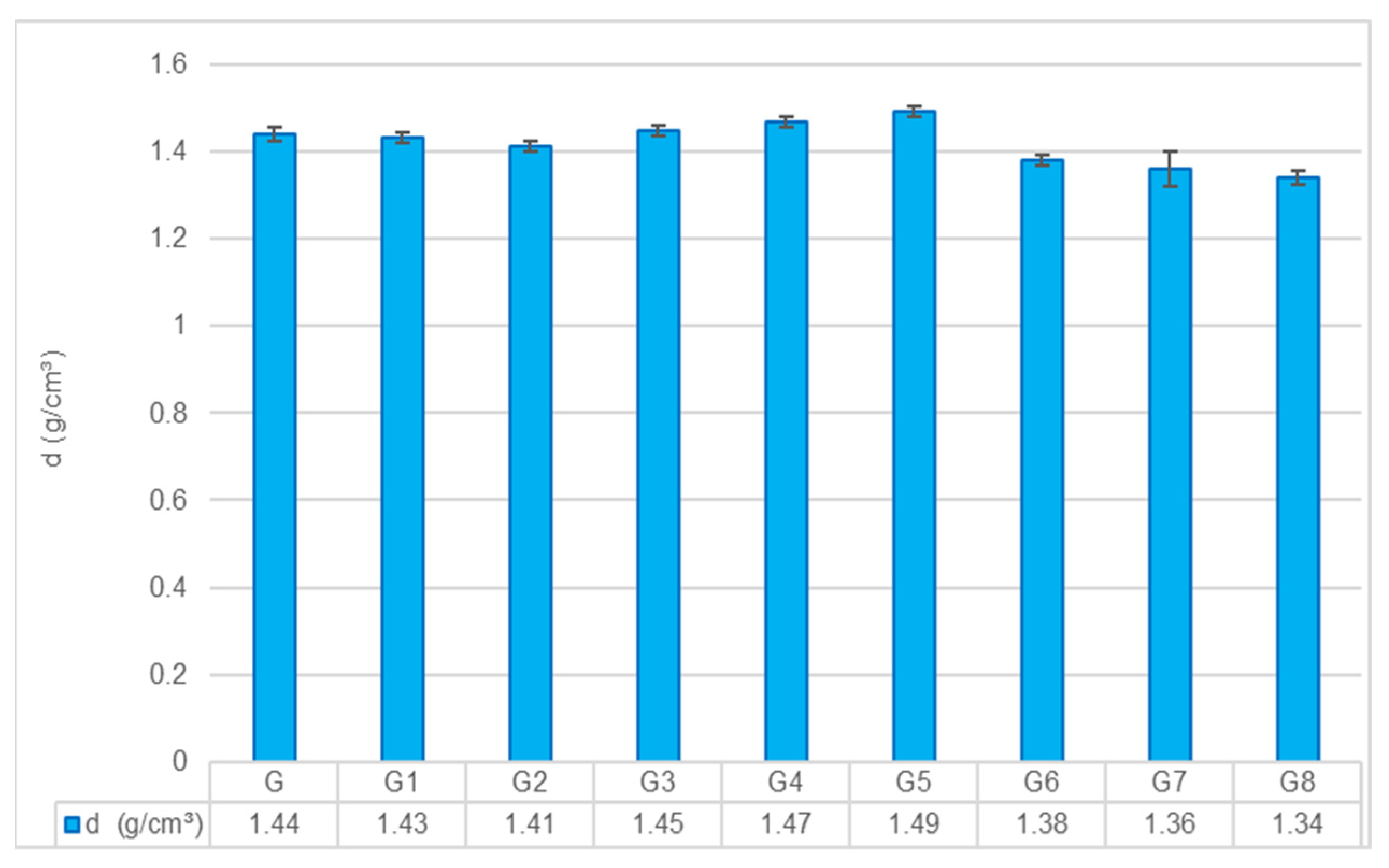
- Density (d): The density of the composite panels was determined in accordance with the TS EN 323 [15] standard. The mass of each specimen was measured using an analytical balance (±0.001 g precision), while volumes were calculated from dimensions taken with a digital caliper (±0.01 mm). The reported density represents the average of three specimens per panel group.
- -
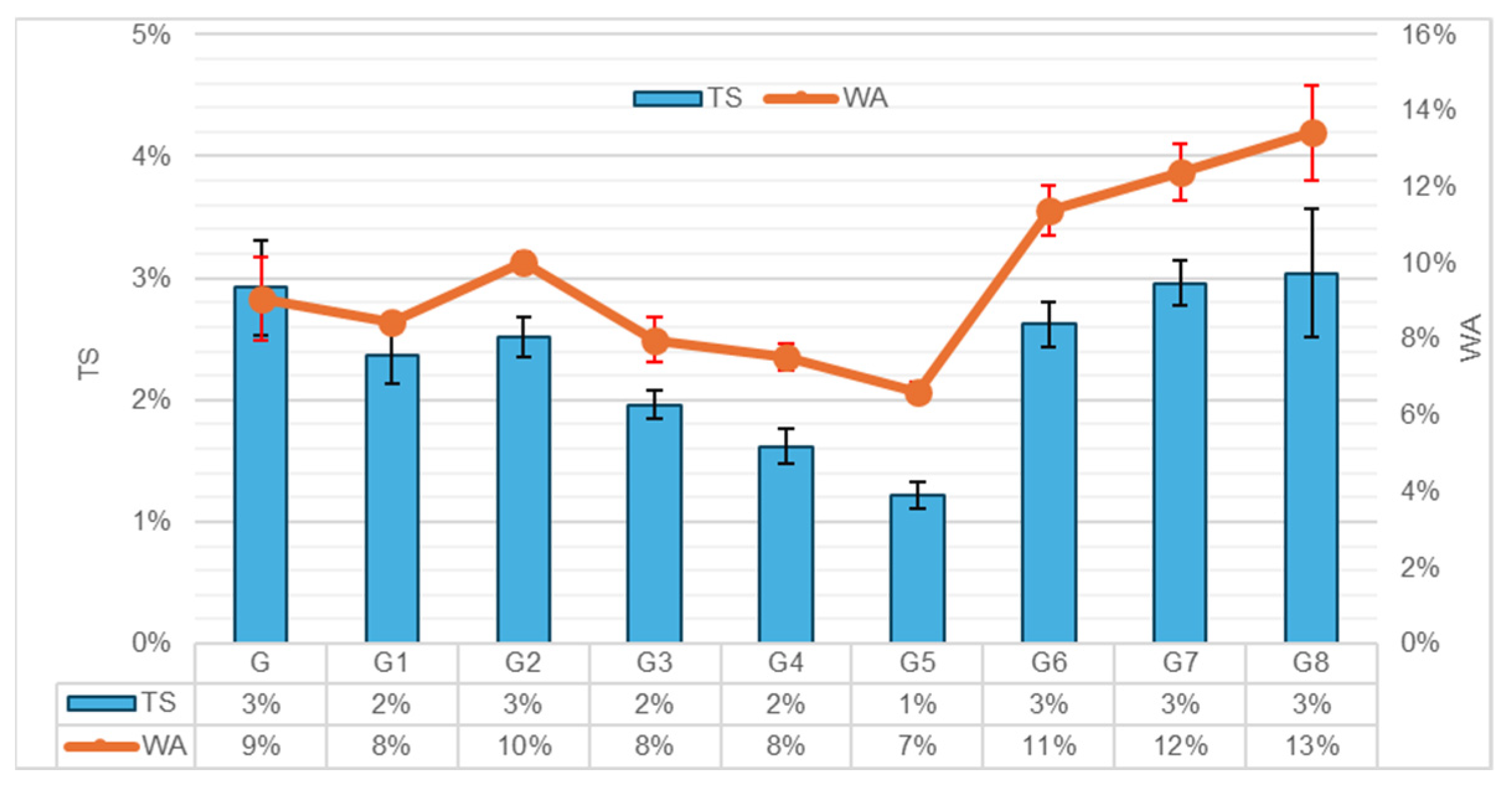
- Water Absorption (WA) and Thickness Swelling (TS): Dimensional stability was evaluated based on the TS EN 317 [16] standard following 24 h of water immersion. Prior to testing, eight replicate samples were conditioned at 20 ± 2 °C and 65 ± 5% relative humidity. Changes in mass and thickness were recorded to calculate WA and TS, respectively. Results are presented as the arithmetic mean of the eight replicates.
- -
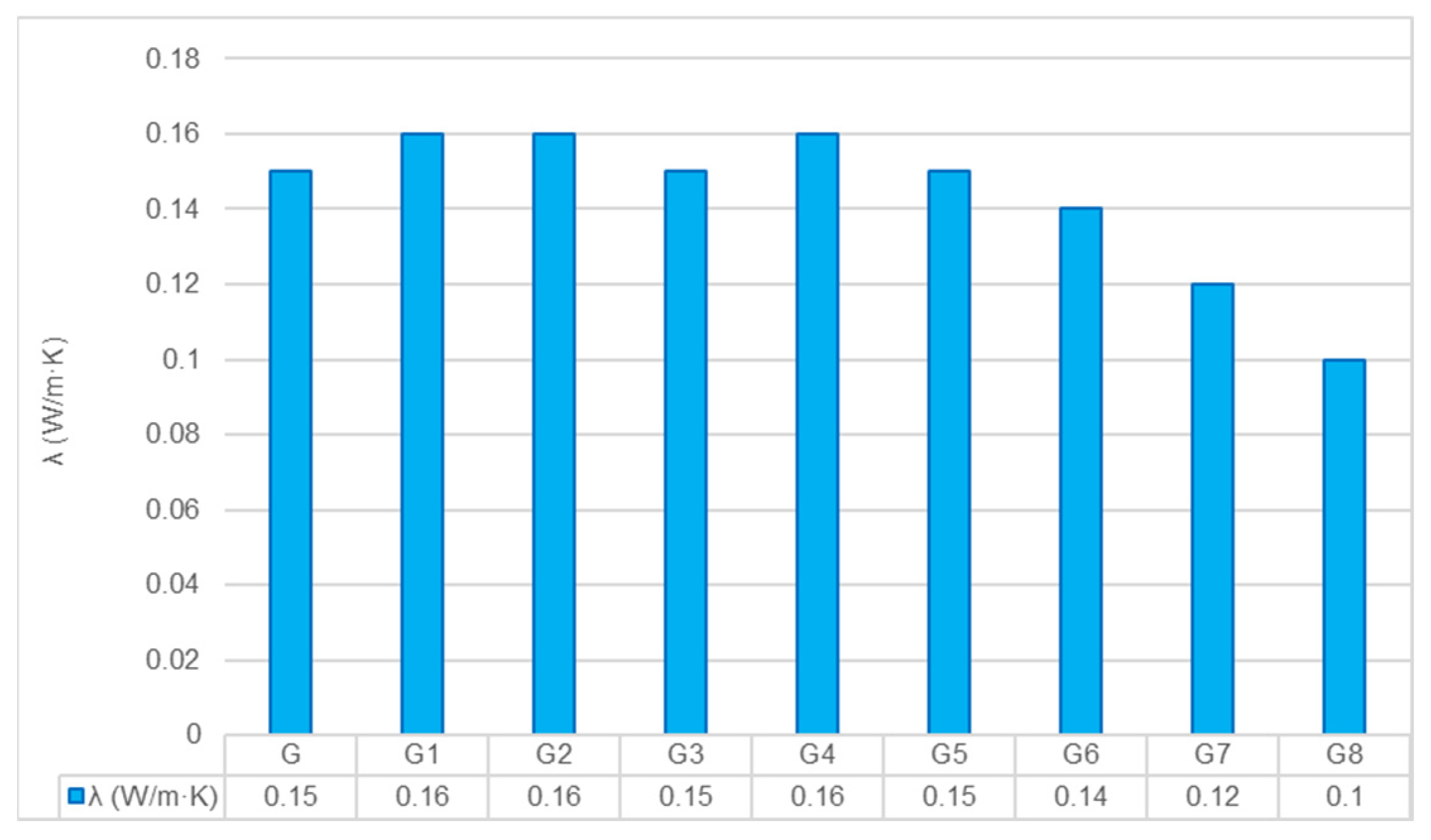
- Thermal Conductivity: Thermal conductivity coefficients were measured using a FOX 314 Heat Flow Meter in accordance with ASTM C-518 [17]. A constant temperature gradient was established by setting the cold and hot plates to 10 °C and 30 °C, respectively. Specimens (100 × 100 × 10 mm) were tested within an insulated guard area to minimize edge heat losses.
2.5.2. Mechanical Testing Procedures
- -
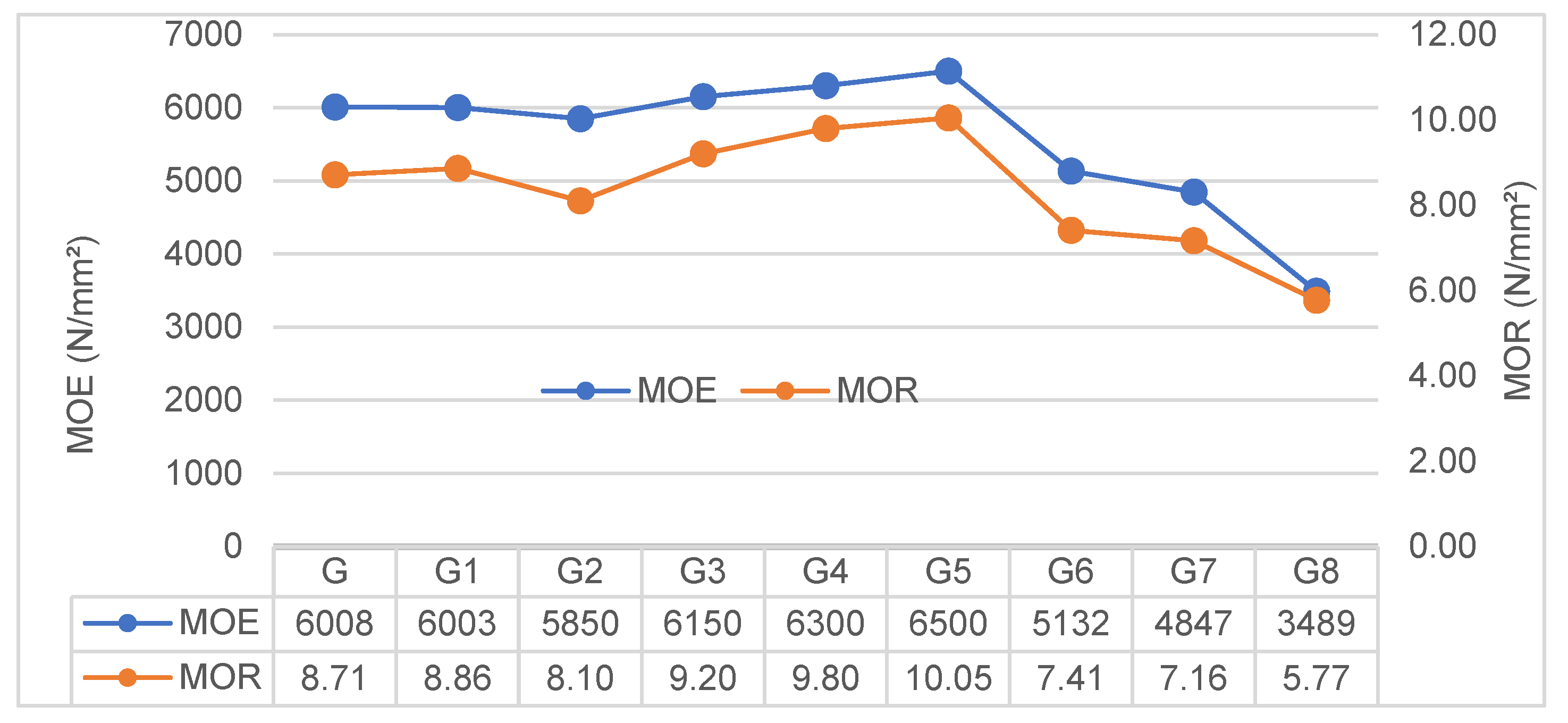
- Modulus of Rupture (MOR) and Modulus of Elasticity (MOE): Three-point bending tests were performed according to TS EN 310 [18]. The support span was set to 20 times the specimen thickness. A loading rate of approximately 4 mm/min was applied to ensure failure occurred within 60 ± 30 s. The MOR was calculated based on the maximum load recorded at failure, while the MOE was determined from the slope of the linear elastic region of the load-deflection curve. Eight specimens were tested for each group.
- -
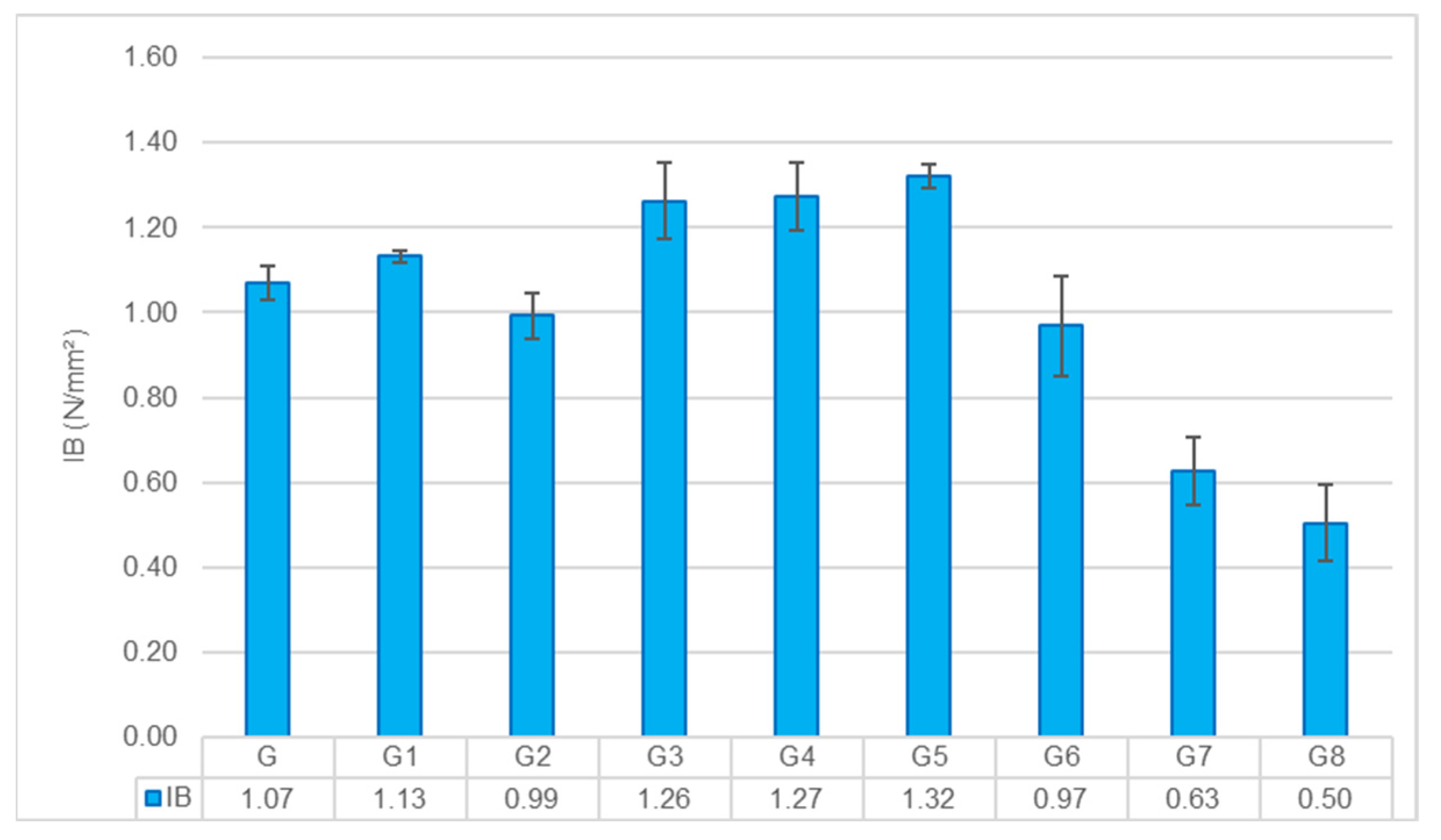
- Internal Bond (IB) Strength: Tensile strength perpendicular to the board plane was assessed using 50 × 50 mm specimens in accordance with TS EN 319 [18]. The tensile load was applied at a rate of 0.6 mm/min until failure. The maximum force was recorded, and the average of eight replicates was reported
2.5.3. Microstructural and Chemical Analyses
2.5.4. Statistical Analysis
3. Results and Discussion
3.1. Chemical Characterization of Raw Materials
3.2. Physical Properties
3.2.1. Density
3.2.2. Dimensional Stability (Water Absorption and Thickness Swelling)
3.2.3. Thermal Conductivity (λ)
3.2.4. Mechanical Properties (MOE, MOR, and IB)
3.2.5. Flexural Performance (MOR and MOE)
Internal Bond (IB) Strength
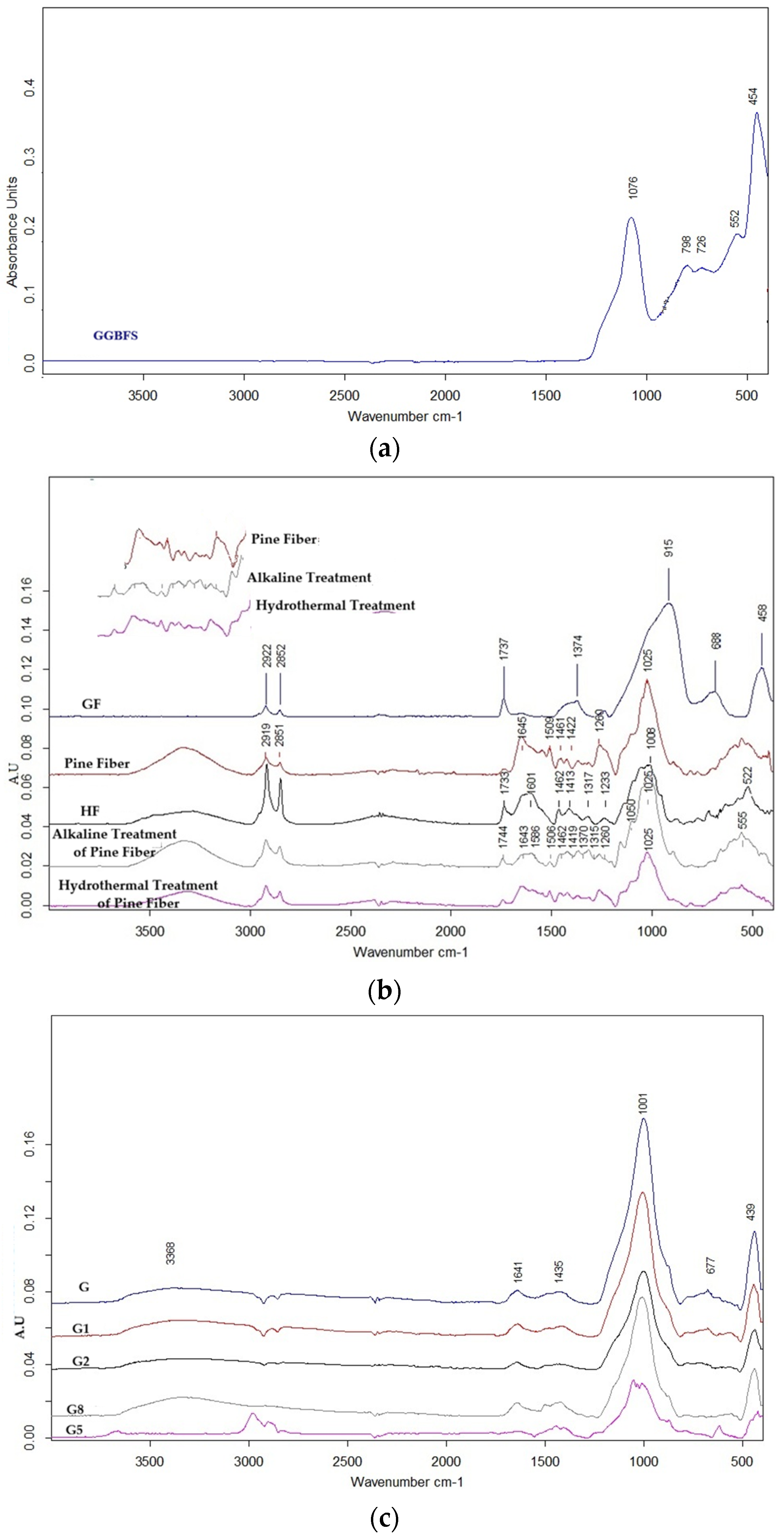
3.3. Microstructural Characterization: FTIR Analysis
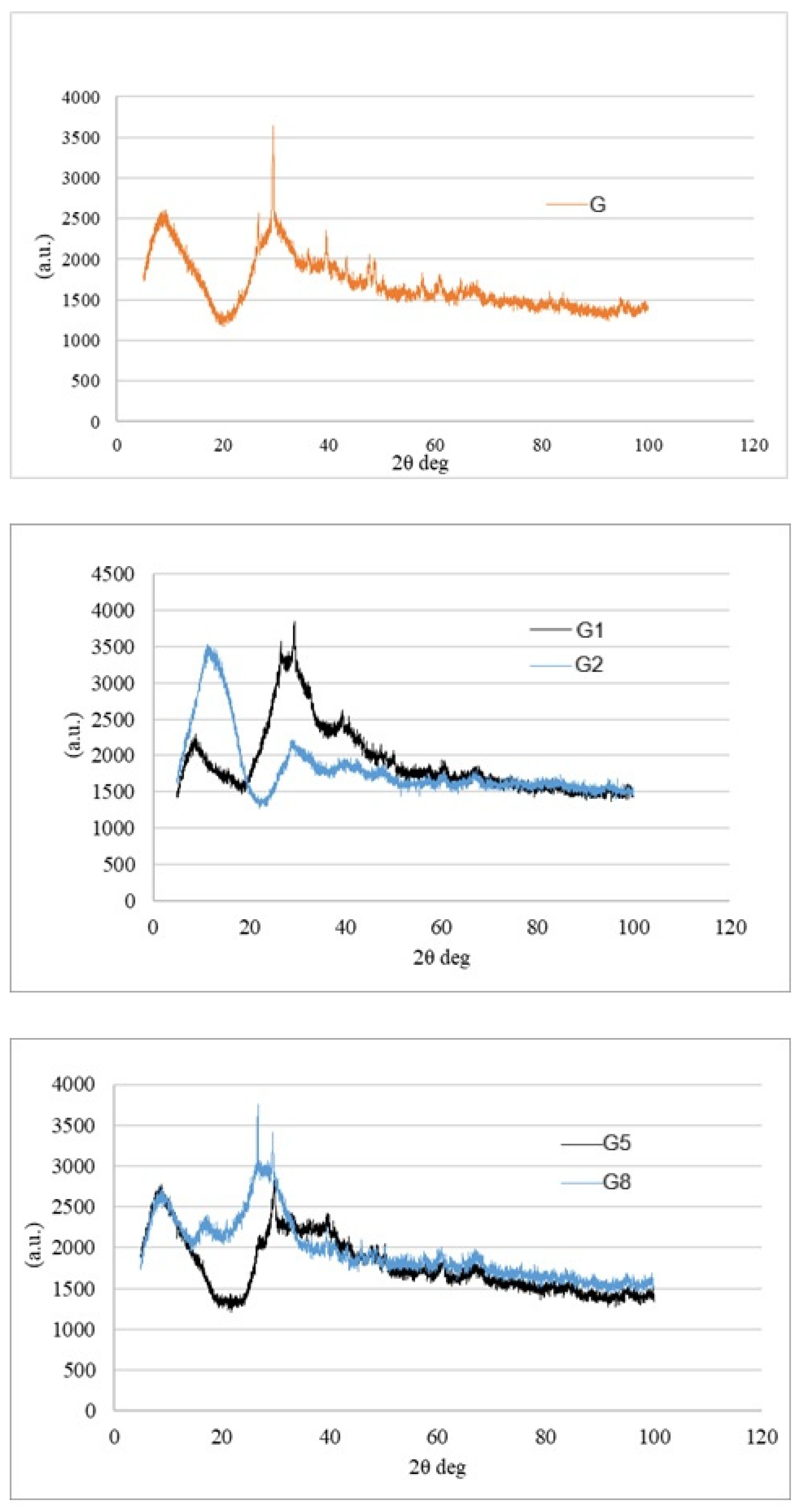
3.4. Mineralogical Characterization: XRD Analysis
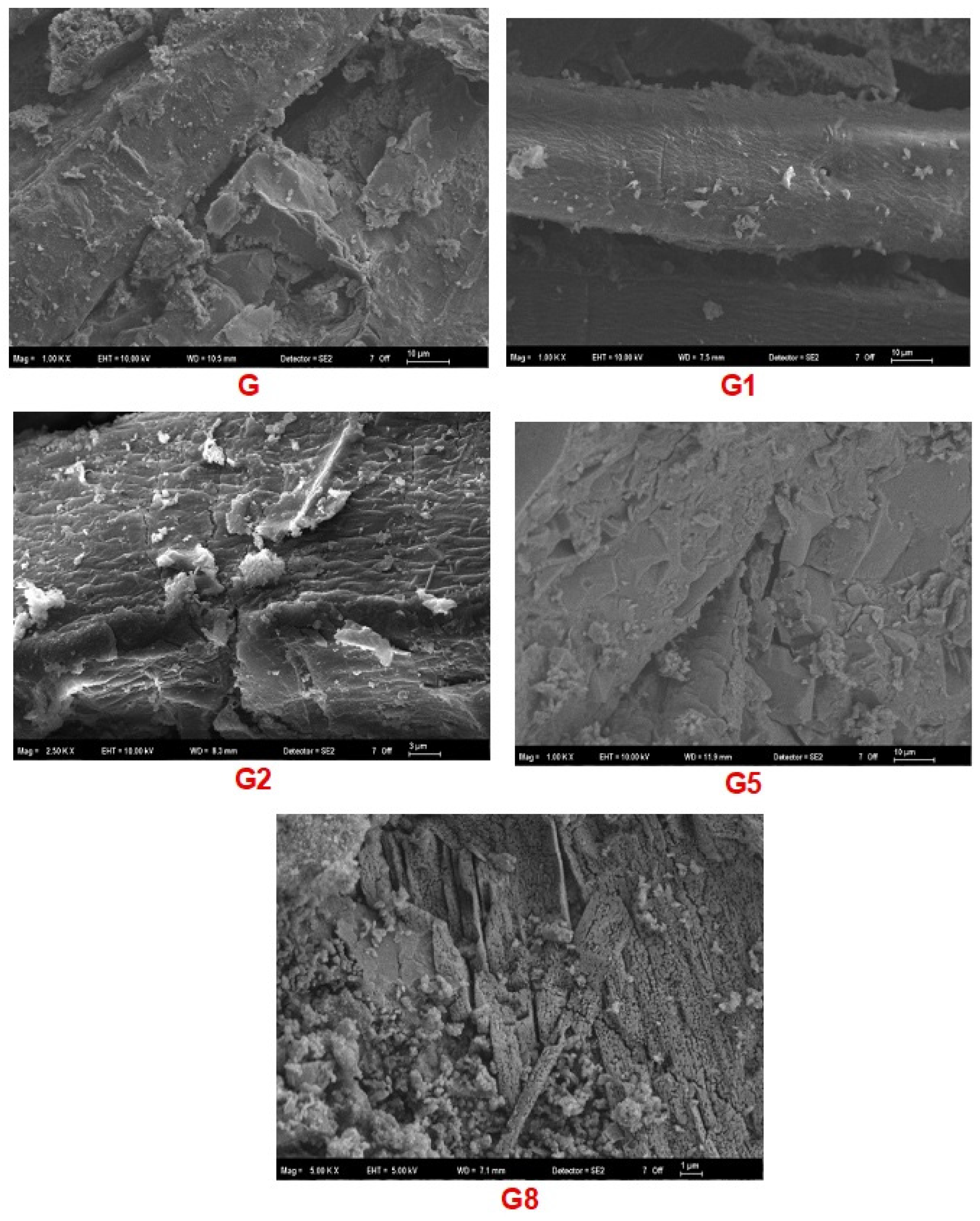
3.5. Morphological Analysis: SEM
4. Conclusions
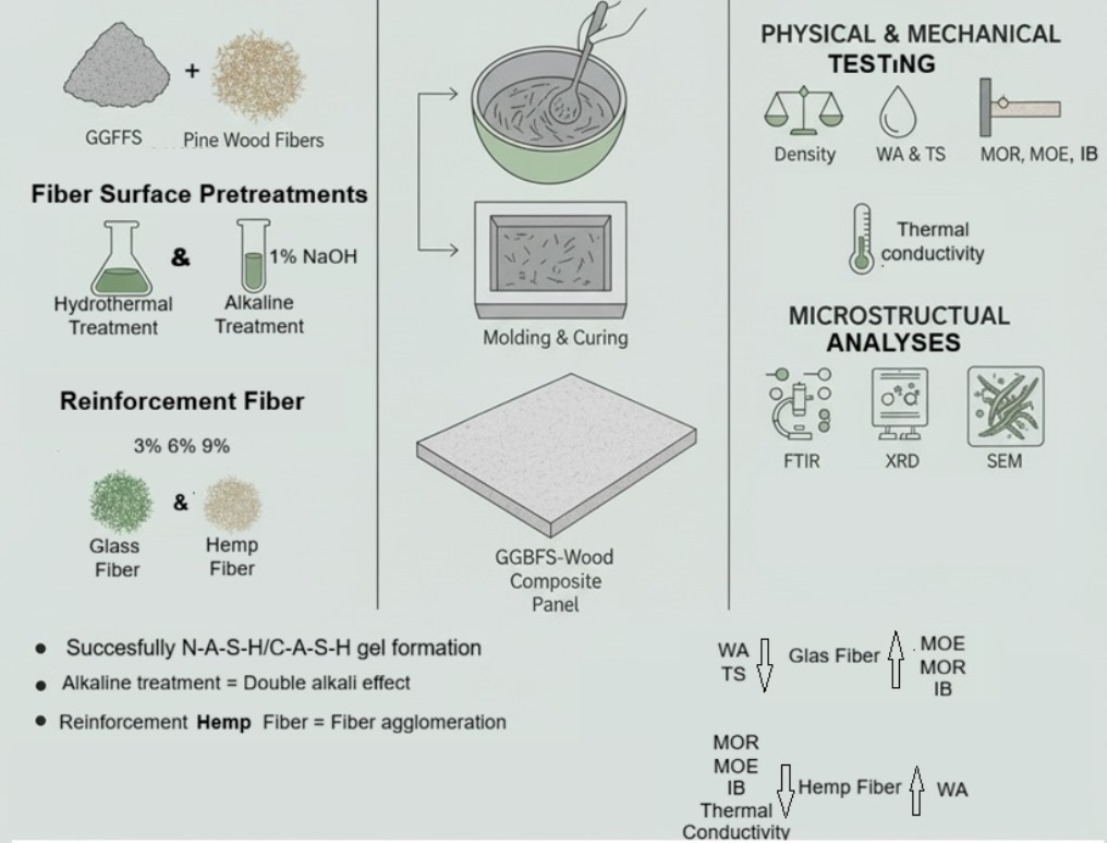
- Pretreatment Threshold: Contrary to conventional polymer composites, aggressive alkaline pretreatment (1% NaOH) proved detrimental in the high-pH geopolymer matrix. The cumulative alkali attack degraded the pine fiber structure, reducing MOR by approximately 7% compared to the control. Mild hot water treatment is recommended as it cleans surface impurities without compromising fiber integrity.
- Reinforcement Trade-off: A clear performance dichotomy was observed. Glass fibers (9%) maximized structural integrity (MOR: 10.05 N/mm2) due to their chemical compatibility. In contrast, Hemp fibers (9%) functioned as effective insulating fillers (λ: 0.10 W/m·K) but significantly reduced mechanical strength due to agglomeration.
- Future Directions: The results suggest that while 100% GGBFS is a viable matrix, the alkalinity of the activator solution must be carefully balanced. Future research should focus on optimizing the activator concentration to mitigate fiber degradation and exploring hydrophobic coatings for natural fibers to resolve the water absorption issues observed in hemp-reinforced series.
Author Contributions
Funding
Data Availability Statement
Acknowledgments
Conflicts of Interest
Abbreviations
| GGBFS | Ground Granulated Blast Furnace Slag |
| GF | Glass Fiber |
| HF | Hemp Fiber |
| NaOH | Sodium Hydroxide |
| Ms | Silica Modulus |
| D | Density |
| WA | Water Absorption |
| TS | Thickness Swelling |
| MOR | Modulus of Rupture |
| MOE | Modulus of Elasticity |
| IB | Internal Bond |
| SEM | Scanning Electron Microscopy |
| XRD | X-ray Diffraction |
| XRF | X-ray Fluorescence |
| FTIR | Fourier Transform Infrared Spectroscopy |
References
- IPCC. Climate Change 2022: Mitigation of Climate Change. In Contribution of Working Group III to the Sixth Assessment Report of the Intergovernmental Panel on Climate Change; Cambridge University Press: Cambridge, UK, 2022. [Google Scholar]
- Lehne, J.; Preston, F. Making Concrete Change: Innovation in Low-Carbon Cement and Concrete; Chatham House Report; The Royal Institute of International Affairs: London, UK, 2018. [Google Scholar]
- Andrew, R.M. Global CO2 emissions from cement production. Earth Syst. Sci. Data 2018, 10, 195–217. [Google Scholar] [CrossRef]
- Mehta, P.K.; Monteiro, P.J. Concrete Microstructure, Properties, and Materials; McGraw-Hill: New York, NY, USA, 2006. [Google Scholar]
- Provis, J.L. Alkali-activated materials. Cem. Concr. Res. 2018, 114, 40–48. [Google Scholar] [CrossRef]
- Davidovits, J.; Cordi, S.A. Synthesis of New High Temperature Geo-Polymers for Reinforced Plastics/Composites; PACTEC’79; Society of Plastics Engineers: Costa Mesa, CA, USA, 1979; Volume 79, pp. 151–154. [Google Scholar]
- Provis, J.L.; Bernal, S.A. Geopolymers and related alkali-activated materials. Annu. Rev. Mater. Res. 2014, 44, 299–327. [Google Scholar] [CrossRef]
- Ranjbar, N.; Zhang, M. Fiber-reinforced geopolymer composites: A review. Cem. Concr. Compos. 2020, 107, 103498. [Google Scholar] [CrossRef]
- Ladaci, N.; Saadia, A.; Belaadi, A.; Boumaaza, M.; Chai, B.X.; Abdullah, M.M.; Al-Khawlani, A.; Ghernaout, D. ANN and RSM prediction of water uptake of recycled HDPE biocomposite reinforced with treated palm waste W. filifera. J. Nat. Fibers 2024, 21, 2356697. [Google Scholar] [CrossRef]
- Furtos, G.; Silaghi-Dumitrescu, L.; Pascuta, P.; Sarosi, C.; Korniejenko, K. Mechanical properties of wood fiber reinforced geopolymer composites with sand addition. J. Nat. Fibers 2021, 18, 285–296. [Google Scholar] [CrossRef]
- Davidovits, J. Geopolymer Chemistry and Applications, 2nd ed.; Institut Géopolymère: Saint-Quentin, France, 2008. [Google Scholar]
- Sneha, S.; Blanco, I. An application review of fiber-reinforced geopolymer composite. Fibers 2021, 9, 23. [Google Scholar] [CrossRef]
- TAPPI. Alpha-, Beta- and Gamma-Cellulose in Pulp; TAPPI Test Methods T 203 cm-99; TAPPI Press: Atlanta, GA, USA, 2009. [Google Scholar]
- Pan, D.; Zhang, N.; Li, J.; Ye, H.; Yu, Z.; Zhang, Y. CaCl2-induced interfacial deposition for the preparation of high-strength and flame-retardant plywood using geopolymer-based adhesive. Ceram. Int. 2021, 47, 33678–33686. [Google Scholar] [CrossRef]
- TS EN 323; Wood–Based Panels–Determination of Density. TSE: Ankara, Turkey, 1999.
- TS EN 317; Particleboards and Fibreboards—Determination of Swelling in Thickness After Immersion in Water. TSE: Ankara, Turkey, 1999.
- ASTM C518-17; Standard Test Method for Steady-State Thermal Transmission Properties by Means of the Heat Flow Meter Apparatus. ASTM International: West Conshohocken, PA, USA, 2017.
- TS EN 310; Wood-Based Panels—Determination of Modulus of Elasticity in Bending and of Bending Strength. TSE: Ankara, Turkey, 1999.
- Garcia-Lodeiro, I.; Palomo, A.; Fernández-Jiménez, A. An overview of the chemistry of alkali-activated cement-based binders. In Handbook of Alkali-Activated Cements, Mortars and Concretes; Elsevier: Amsterdam, The Netherlands, 2015; pp. 19–47. [Google Scholar]
- Zhang, P.; Zheng, Y.; Wang, K.; Zhang, J. A review on properties of fresh and hardened geopolymer mortar. Compos. Part B Eng. 2018, 152, 79–95. [Google Scholar] [CrossRef]
- Alomayri, T.; Shaikh, F.U.A.; Low, I.M. Synthesis and mechanical properties of cotton fabric reinforced geopolymer composites. Compos. Part B Eng. 2014, 60, 36–42. [Google Scholar] [CrossRef]
- Ku, H.; Wang, H.; Pattarachaiyakoop, N.; Trada, M. A review on the tensile properties of natural fiber reinforced polymer composites. Compos. Part B Eng. 2011, 42, 856–873. [Google Scholar] [CrossRef]
- Suwan, T.; Maichin, P.; Fan, M.; Jitsangiam, P.; Tangchirapat, W.; Chindaprasirt, P. Influence of alkalinity on self-treatment process of natural fiber and properties of its geopolymeric composites. Constr. Build. Mater. 2022, 316, 125817. [Google Scholar] [CrossRef]
- Duan, P.; Yan, C.; Zhou, W.; Luo, W. Fresh properties, mechanical strength and microstructure of fly ash geopolymer paste reinforced with sawdust. Constr. Build. Mater. 2016, 111, 600–610. [Google Scholar] [CrossRef]
- Duan, P.; Song, L.; Yan, C.; Ren, D.; Li, Z. Novel thermal insulating and lightweight composites from metakaolin geopolymer and polystyrene particles. Ceram. Int. 2017, 43, 5115–5120. [Google Scholar] [CrossRef]
- Burger, N.; Laachachi, A.; Ferriol, M.; Lutz, M.; Toniazzo, V.; Ruch, D. Review of thermal conductivity in composites: Mechanisms, parameters and theory. Prog. Polym. Sci. 2016, 61, 1–28. [Google Scholar] [CrossRef]
- Mohr, B.J.; Nanko, H.; Kurtis, K.E. Durability of kraft pulp fiber–cement composites to wet/dry cycling. Cem. Concr. Compos. 2005, 27, 435–448. [Google Scholar] [CrossRef]
- Agarwal, B.D.; Broutman, L.J.; Chandrashekhara, K. Analysis and Performance of Fiber Composites; John Wiley & Sons: Hoboken, NJ, USA, 2017. [Google Scholar]
- Assaedi, H.; Shaikh, F.U.A.; Low, I.M. Characterizations of flax fabric reinforced nanoclay-geopolymer composites. Compos. Part B Eng. 2016, 95, 412–422. [Google Scholar]
- Bledzki, A.K.; Gassan, J. Composites reinforced with cellulose based fibres. Prog. Polym. Sci. 1999, 24, 221–274. [Google Scholar] [CrossRef]
- Savastano, H., Jr.; Santos, S.F.D.; Radonjic, M.; Soboyejo, W.O. Fracture and fatigue of natural fiber-reinforced cementitious composites. Cem. Concr. Compos. 2009, 31, 232–243. [Google Scholar] [CrossRef]
- Bernal, S.A.; De Gutiérrez, R.M.; Provis, J.L. Engineering and durability properties of concretes based on alkali-activated granulated blast furnace slag/metakaolin blends. Constr. Build. Mater. 2012, 33, 99–108. [Google Scholar]
- Alzeer, M.; MacKenzie, K. Synthesis and mechanical properties of novel composites of inorganic polymers (geopolymers) with unidirectional natural flax fibres (Phormium tenax). Appl. Clay Sci. 2013, 75, 148–152. [Google Scholar] [CrossRef]
- Thakur, V.K.; Singha, A.S. Physico-chemical and mechanical characterization of natural fibre reinforced polymer composites. Mater. Phys. Mech. 2010, 10, 3–10. [Google Scholar]
- Mwaikambo, L.Y.; Ansell, M.P. Chemical modification of hemp, sisal, jute, and kapok fibers by alkalization. J. Appl. Polym. Sci. 2002, 84, 2222–2234. [Google Scholar] [CrossRef]
- Tome, S.; Nana, A.; Tchakouté, H.K.; Temuujin, J.; Rüscher, C.H. Mineralogical evolution of raw materials transformed to geopolymer materials: A review. Ceram. Int. 2024, 50, 35855–35868. [Google Scholar] [CrossRef]
- Bernal, S.A.; Provis, J.L.; Rose, V.; De Gutierrez, R.M. Evolution of binder structure in sodium silicate-activated slag-metakaolin blends. Cem. Concr. Compos. 2011, 33, 46–54. [Google Scholar] [CrossRef]
- Kabir, M.M.; Wang, H.; Lau, K.T.; Cardona, F. Chemical treatments on plant-based natural fibre reinforced polymer composites: An overview. Compos. Part B Eng. 2012, 43, 2883–2892. [Google Scholar] [CrossRef]
- Haha, M.B.; Le Saout, G.; Winnefeld, F.; Lothenbach, B. Influence of activator type on hydration kinetics, hydrate assemblage and microstructural development of alkali activated blast-furnace slags. Cem. Concr. Res. 2011, 41, 301–310. [Google Scholar] [CrossRef]
- Lazorenko, G.; Kasprzhitskii, A.; Kruglikov, A.; Mischinenko, V.; Yavna, V. Sustainable geopolymer composites reinforced with flax tows. Ceram. Int. 2020, 46, 12870–12875. [Google Scholar] [CrossRef]
- Pickering, K.L.; Efendy, M.A.; Le, T.M. A review of recent developments in natural fibre composites and their mechanical performance. Compos. Part A Appl. Sci. Manuf. 2016, 83, 98–112. [Google Scholar] [CrossRef]
- Korniejenko, K.; Frączek, E.; Pytlak, E.; Adamski, M. Mechanical properties of geopolymer composites reinforced with natural fibers. Procedia Eng. 2016, 151, 388–393. [Google Scholar] [CrossRef]
- Wongsa, A.; Sata, V.; Nematollahi, B.; Sanjayan, J.; Chindaprasirt, P. Mechanical and thermal properties of lightweight geopolymer mortar incorporating crumb rubber. J. Clean. Prod. 2018, 195, 1069–1080. [Google Scholar] [CrossRef]



| Board Code | Fiber Pretreatment | Additive Fiber | Additive Ratio (%) | Fiber/Binder Ratio |
|---|---|---|---|---|
| G (Control) | None (Raw Pine) | – | – | 1/9 |
| G1 | Hot Water | – | – | 1/9 |
| G2 | 1% NaOH | – | – | 1/9 |
| G3 | None | Glass Fiber | 3 | 1/9 |
| G4 | None | Glass Fiber | 6 | 1/9 |
| G5 | None | Glass Fiber | 9 | 1/9 |
| G6 | None | Hemp Fiber | 3 | 1/9 |
| G7 | None | Hemp Fiber | 6 | 1/9 |
| G8 | None | Hemp Fiber | 9 | 1/9 |
| Component | CaO | SiO2 | Al2O3 | MgO | SO3 | Fe2O3 | Others |
|---|---|---|---|---|---|---|---|
| GGBFS | 38.5 | 36.5 | 12.9 | 4.45 | 1.89 | 0.86 | 4.90 |
| Fiber Type | Cellulose (%) | Hemicellulose (%) | Lignin (%) | Ash/Extractives (%) |
|---|---|---|---|---|
| Pine | 45.2 | 25.4 | 27.9 | 1.5 |
| Hemp | 67.5 | 21.8 | 4.2 | 6.5 |
| Group Name | Code | d (g/cm3) | TS (%) | WA (%) | Thermal Conductivity (W/m·K) |
|---|---|---|---|---|---|
| Control | G | 1.44 ± 0.02 | 3.0 ± 0.2 | 9.0 ± 1.2 | 0.15 |
| Hot Water | G1 | 1.43 ± 0.01 | 2.0 ± 0.1 | 8.0 ± 0.5 | 0.16 |
| NaOH Treated | G2 | 1.41 ± 0.01 | 3.0 ± 0.3 | 10.0 ± 0.8 | 0.18 |
| 3% Glass Fiber | G3 | 1.45 ± 0.01 | 2.0 ± 0.1 | 8.0 ± 1.0 | 0.15 |
| 6% Glass Fiber | G4 | 1.47 ± 0.01 | 2.0 ± 0.1 | 8.0 ± 0.6 | 0.16 |
| 9% Glass Fiber | G5 | 1.49 ± 0.01 | 1.0 ± 0.1 | 7.0 ± 0.4 | 0.15 |
| 3% Hemp Fiber | G6 | 1.38 ± 0.01 | 3.0 ± 0.4 | 11.0 ± 1.1 | 0.14 |
| 6% Hemp Fiber | G7 | 1.36 ± 0.04 | 3.0 ± 0.5 | 12.0 ± 1.3 | 0.12 |
| 9% Hemp Fiber | G8 | 1.34 ± 0.02 | 3.0 ± 0.8 | 13.0 ± 1.4 | 0.10 |
| Code | MOE (N/mm2) | MOR (N/mm2) | IB (N/mm2) |
|---|---|---|---|
| G | 6008.40 ± 192.37 | 8.71 ± 0.25 | 1.07 ± 0.04 |
| G1 | 6002.80 ± 71.36 | 8.86 ± 0.53 | 1.13 ± 0.01 |
| G2 | 5850.40 ± 138.74 | 8.10 ± 0.06 | 0.99 ± 0.05 |
| G3 | 6149.80 ± 170.23 | 9.20 ± 0.18 | 1.26 ± 0.09 |
| G4 | 6300.00 ± 171.39 | 9.80 ± 0.08 | 1.27 ± 0.08 |
| G5 | 6499.80 ± 304.97 | 10.05 ± 0.23 | 1.32 ± 0.03 |
| G6 | 5132.00 ± 170.16 | 7.41 ± 0.28 | 0.97 ± 0.12 |
| G7 | 4846.80 ± 74.19 | 7.16 ± 0.74 | 0.63 ± 0.08 |
| G8 | 3489.40 ± 297.67 | 5.77 ± 0.53 | 0.50 ± 0.09 |
Disclaimer/Publisher’s Note: The statements, opinions and data contained in all publications are solely those of the individual author(s) and contributor(s) and not of MDPI and/or the editor(s). MDPI and/or the editor(s) disclaim responsibility for any injury to people or property resulting from any ideas, methods, instructions or products referred to in the content. |
© 2026 by the authors. Licensee MDPI, Basel, Switzerland. This article is an open access article distributed under the terms and conditions of the Creative Commons Attribution (CC BY) license.
Share and Cite
Arpaci, S.S.; Guntekin, E. Optimizing Mechanical and Thermal Properties of Slag-Based Geopolymer Fiber Boards via Fiber Pretreatment and Reinforcement Type. Polymers 2026, 18, 423. https://doi.org/10.3390/polym18030423
Arpaci SS, Guntekin E. Optimizing Mechanical and Thermal Properties of Slag-Based Geopolymer Fiber Boards via Fiber Pretreatment and Reinforcement Type. Polymers. 2026; 18(3):423. https://doi.org/10.3390/polym18030423
Chicago/Turabian StyleArpaci, Sebnem Sevil, and Ergun Guntekin. 2026. "Optimizing Mechanical and Thermal Properties of Slag-Based Geopolymer Fiber Boards via Fiber Pretreatment and Reinforcement Type" Polymers 18, no. 3: 423. https://doi.org/10.3390/polym18030423
APA StyleArpaci, S. S., & Guntekin, E. (2026). Optimizing Mechanical and Thermal Properties of Slag-Based Geopolymer Fiber Boards via Fiber Pretreatment and Reinforcement Type. Polymers, 18(3), 423. https://doi.org/10.3390/polym18030423