Article

Mechanical Properties of Granite Residual Soil Reinforced by Permeable Water-Reactive Polyurethane


1
Fujian Provincial Center for Transportation Construction Quality and Safety, Fuzhou 350001, China
2
Nanping Wusha Expressway Co., Ltd., Jianyang, Nanping 354200, China
3
A State Key Laboratory for Tunnel Engineering, School of Civil Engineering, Sun Yat-sen University, Zhuhai 519082, China
*
Authors to whom correspondence should be addressed.
Polymers 2026, 18(3), 381; https://doi.org/10.3390/polym18030381
Submission received: 9 January 2026 / Revised: 27 January 2026 / Accepted: 27 January 2026 / Published: 30 January 2026
(This article belongs to the Section Polymer Processing and Engineering)

Abstract

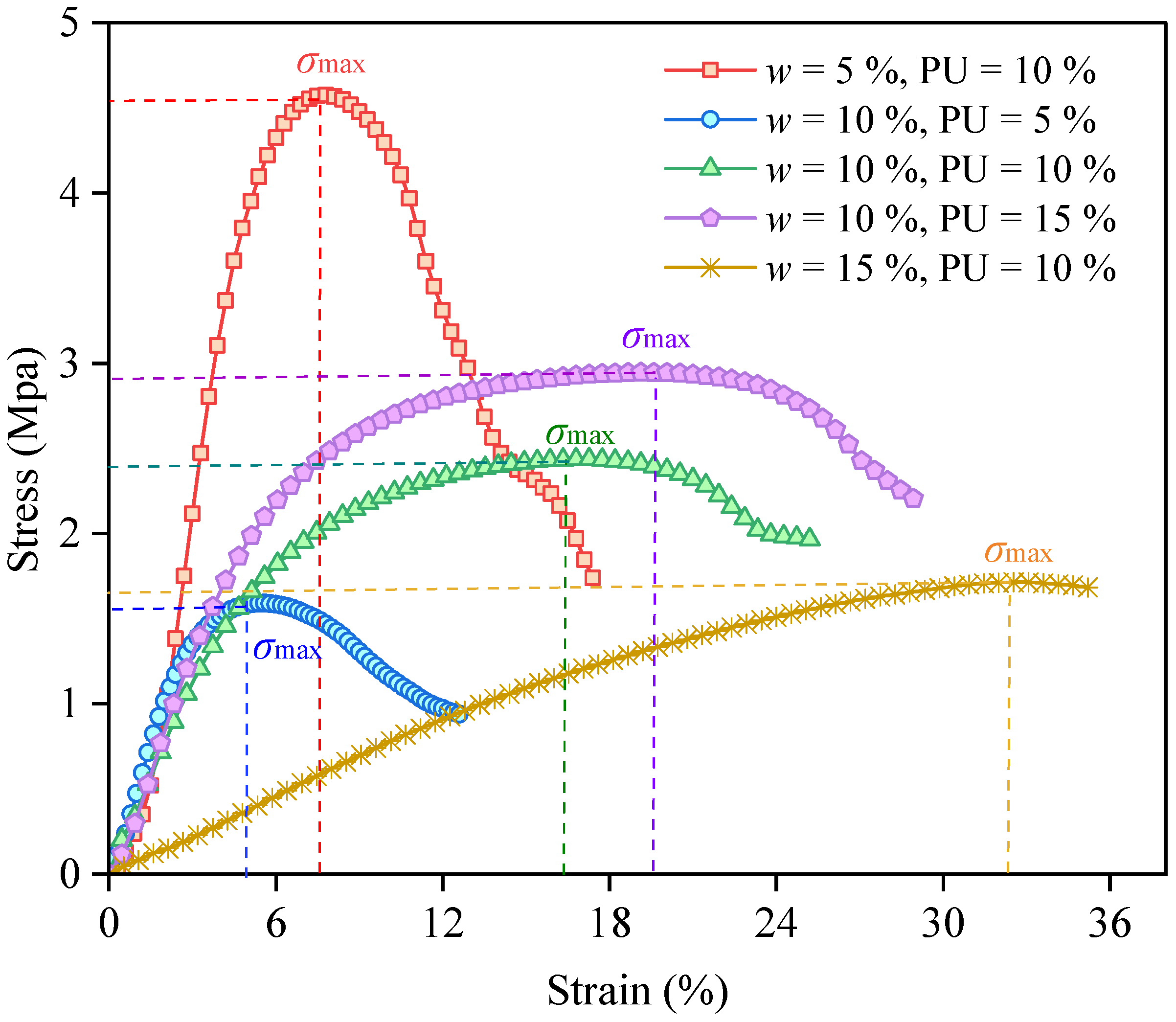
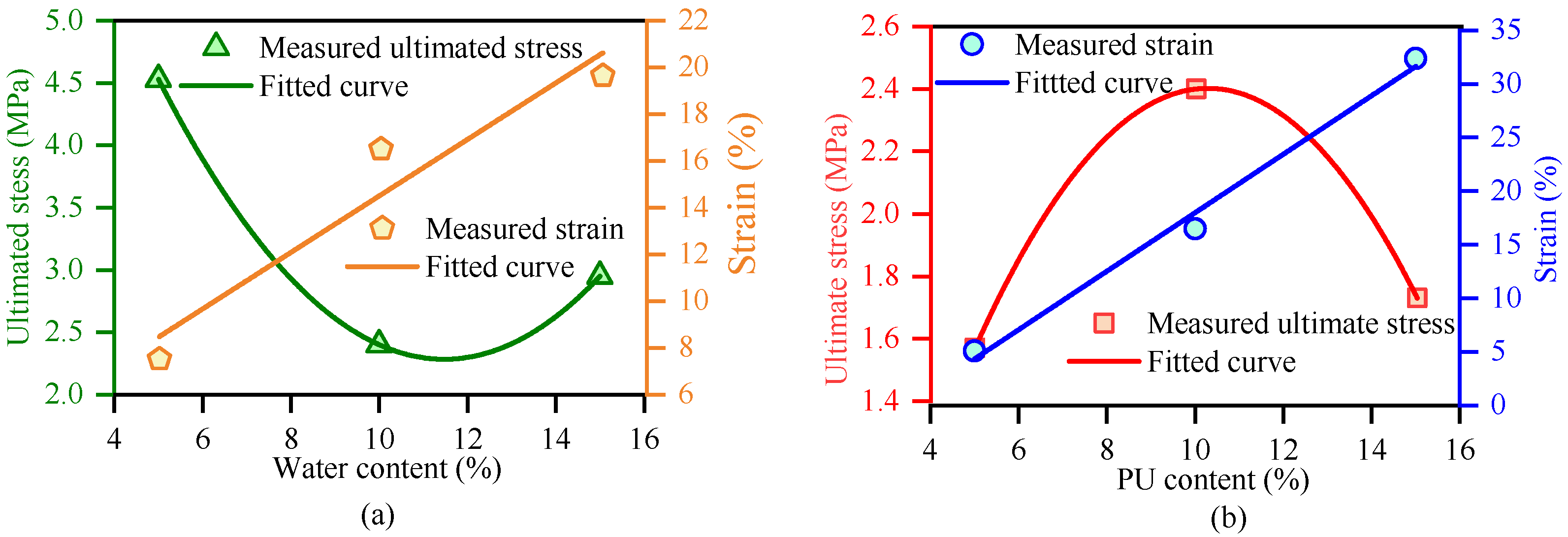
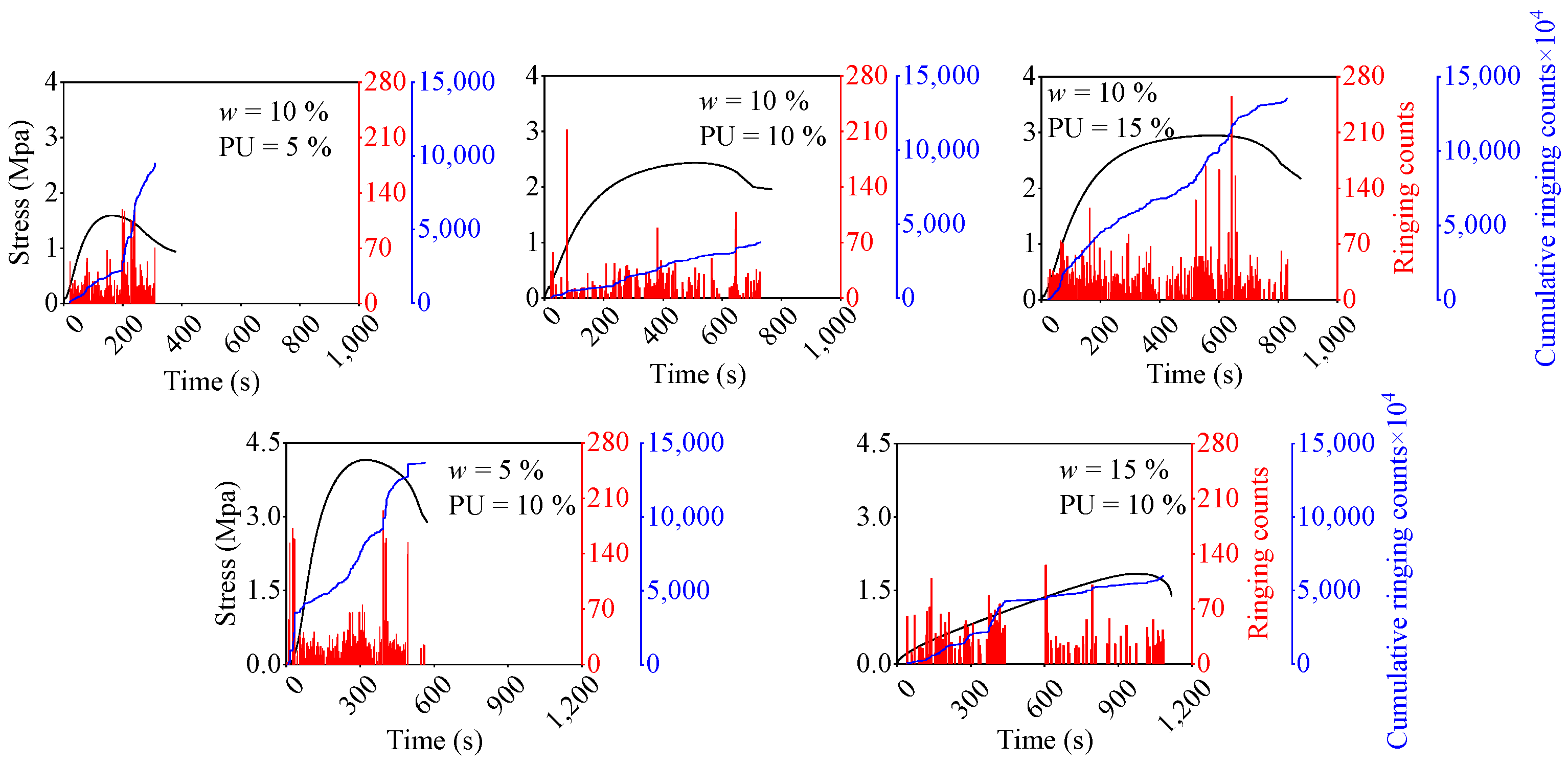
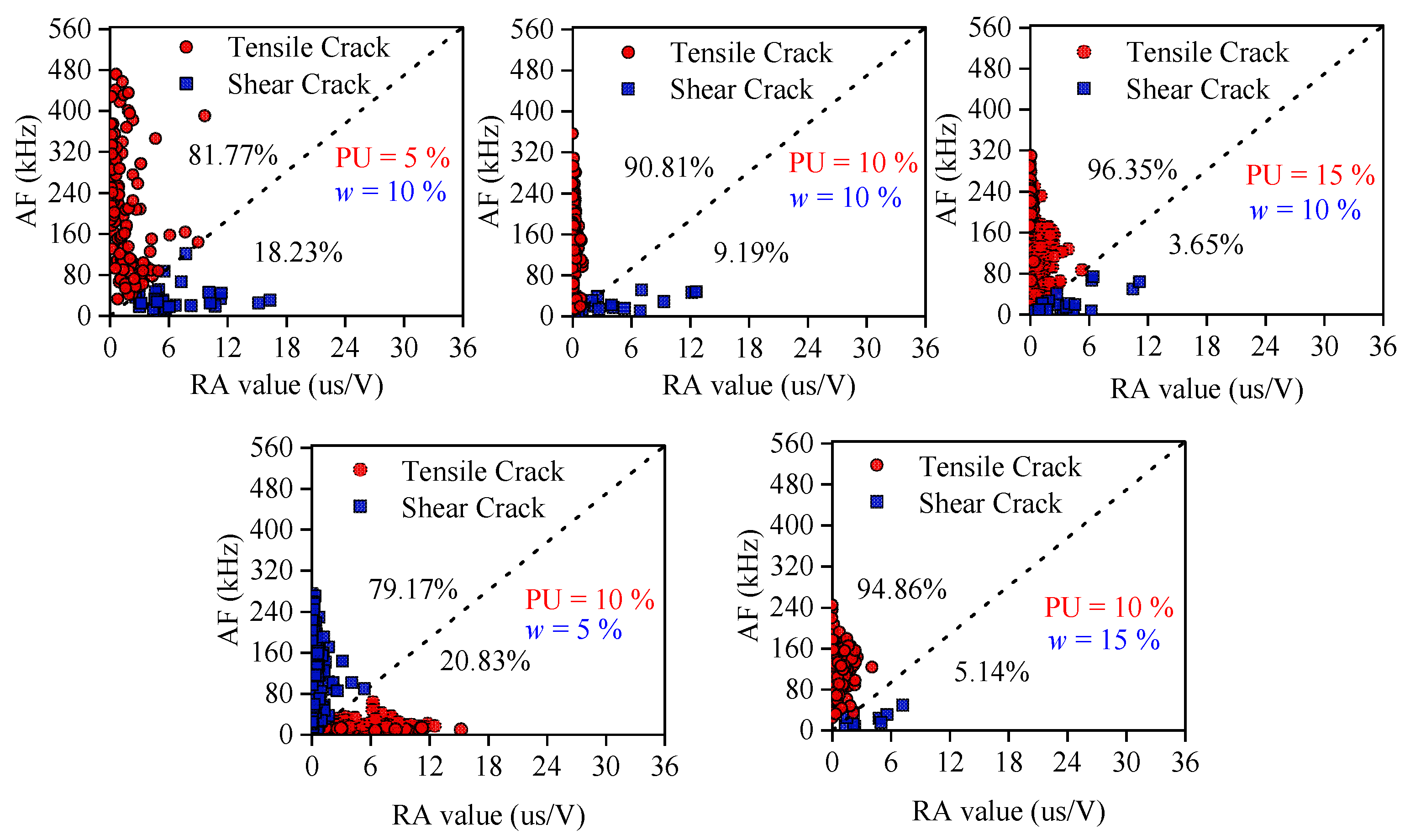
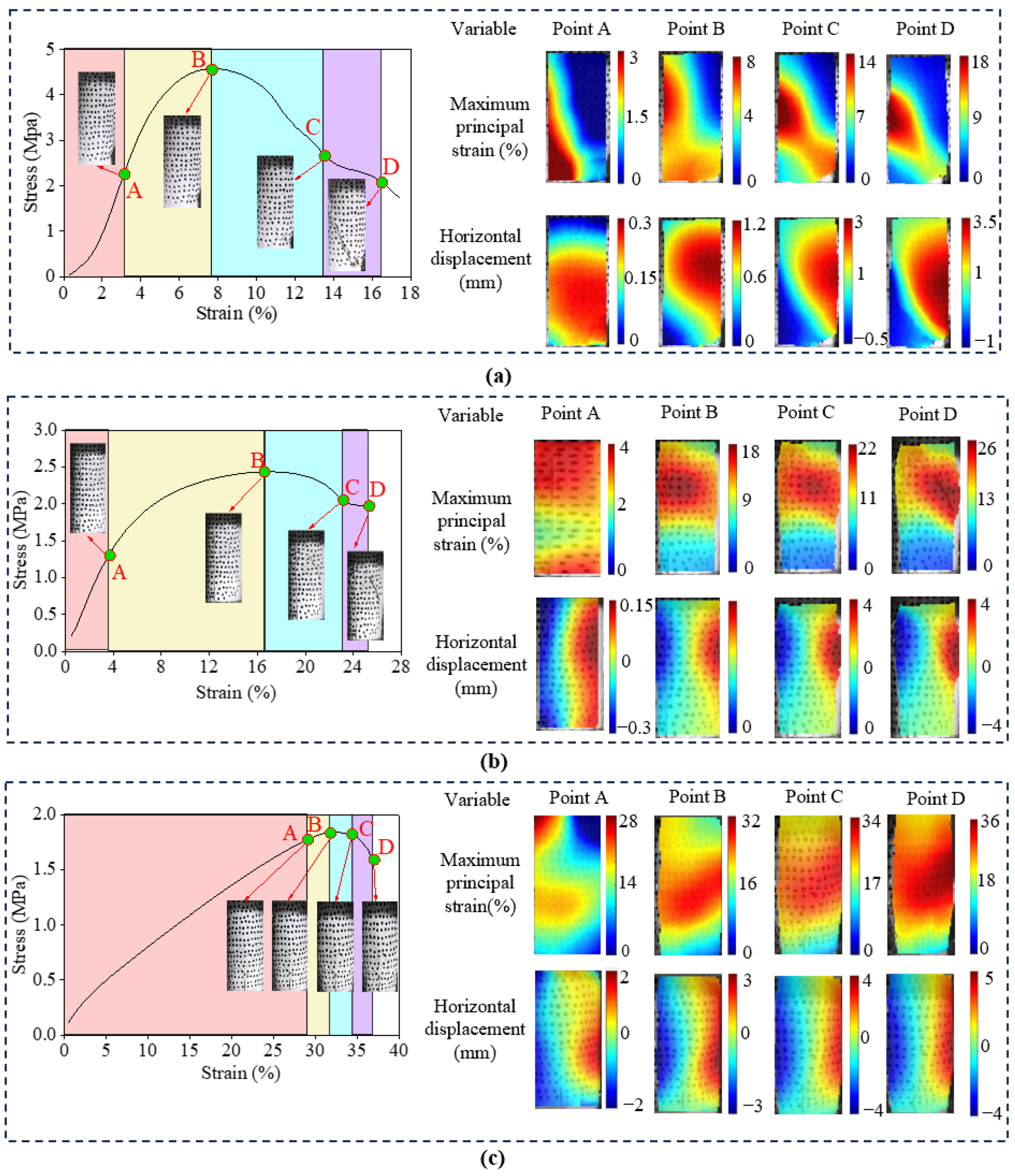
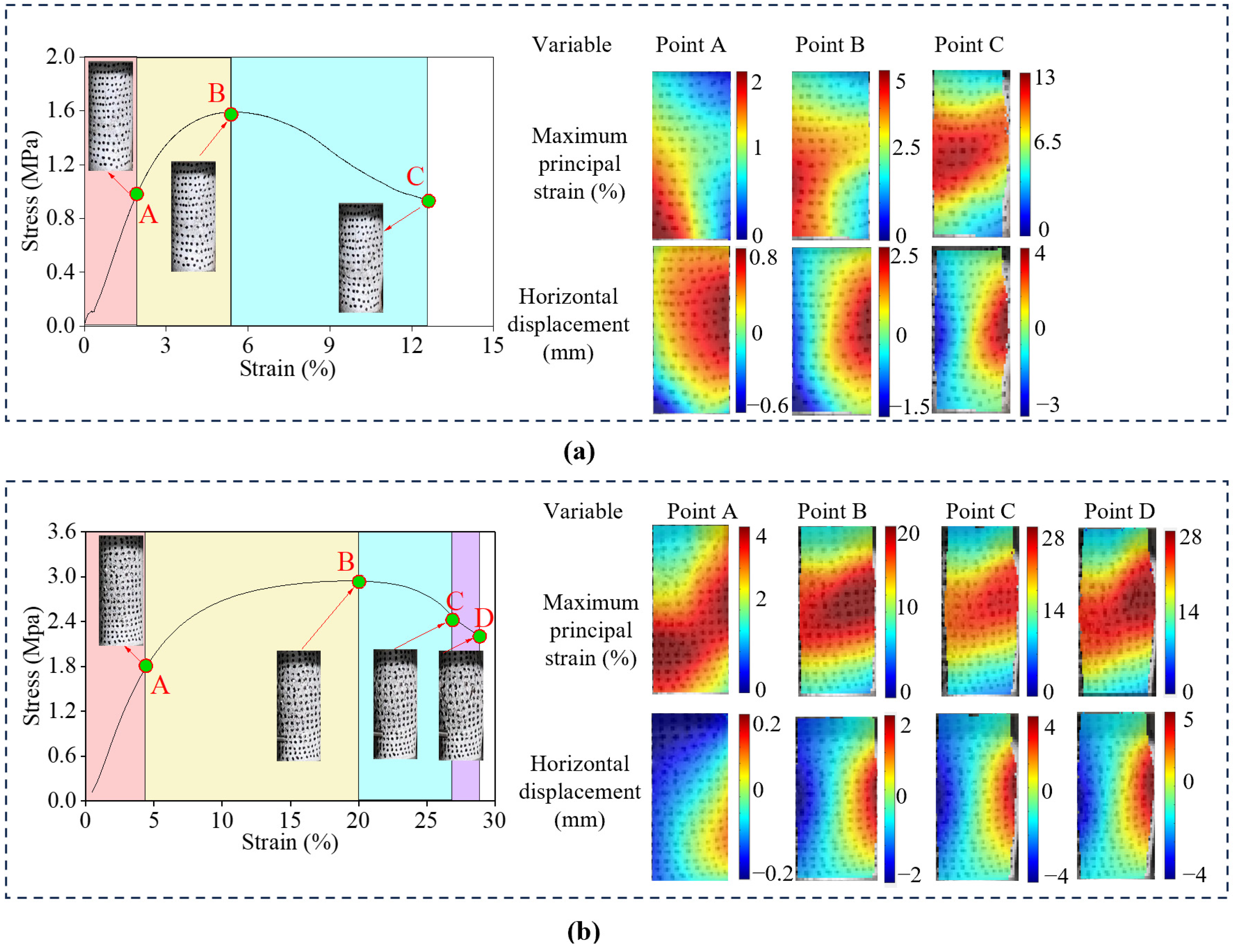
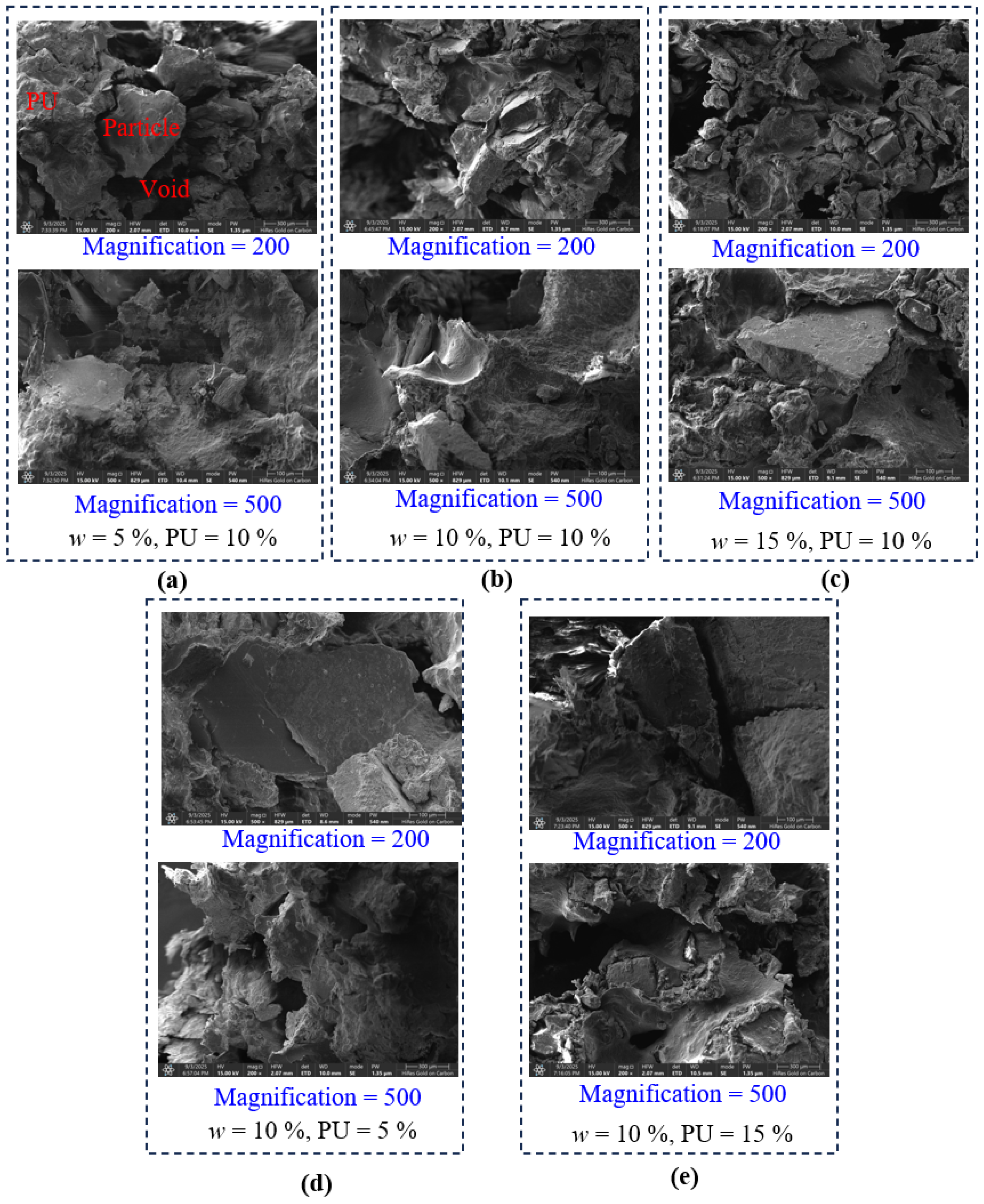
Granite residual soil (GRS) is highly susceptible to water-induced softening, posing significant risks of slope instability and collapse. Conventional impermeable grouting often exacerbates these hazards by blocking groundwater drainage. This study investigates the efficacy of a permeable water-reactive polyurethane (PWPU) in stabilizing GRS, aiming to resolve the conflict between mechanical reinforcement and hydraulic conductivity. Uniaxial compression tests were conducted on specimens with varying initial water contents (5%, 10%, and 15%) and PWPU contents (5%, 10%, and 15%). To reveal the multi-scale failure mechanism, synchronous acoustic emission (AE) monitoring and digital image correlation (DIC) were employed, complemented by scanning electron microscopy (SEM) for microstructural characterization. Results indicate that PWPU treatment significantly enhances soil ductility, shifting the failure mode from brittle fracturing to strain-hardening, particularly at higher moisture levels where failure strains exceeded 30%. This enhancement is attributed to the formation of a flexible polymer network that acts as a micro-reinforcement system to restrict particle sliding and dissipate strain energy. An optimal PWPU content of 10% yielded a maximum compressive strength of 4.5 MPa, while failure strain increased linearly with polymer dosage. SEM analysis confirmed the formation of a porous, reticulated polymer network that effectively bonds soil particles while preserving permeability. The synchronous monitoring quantitatively bridged the gap between internal micro-crack evolution and macroscopic strain localization, with AE analysis revealing that tensile cracking accounted for 79.17% to 96.35% of the total failure events.
Keywords: granite residual soil (GRS); permeable water-reactive polyurethane (PWPU); acoustic emission (AE); digital image correlation (DIC); uniaxial compressive strength (UCS); micromechanism granite residual soil (GRS); permeable water-reactive polyurethane (PWPU); acoustic emission (AE); digital image correlation (DIC); uniaxial compressive strength (UCS); micromechanism