Effect of Monomer Feeding Strategy on the Sequence and Properties of Fluorine-Containing Polyarylates via Interfacial Polycondensation

Abstract
1. Introduction
2. Materials and Methods
2.1. Materials
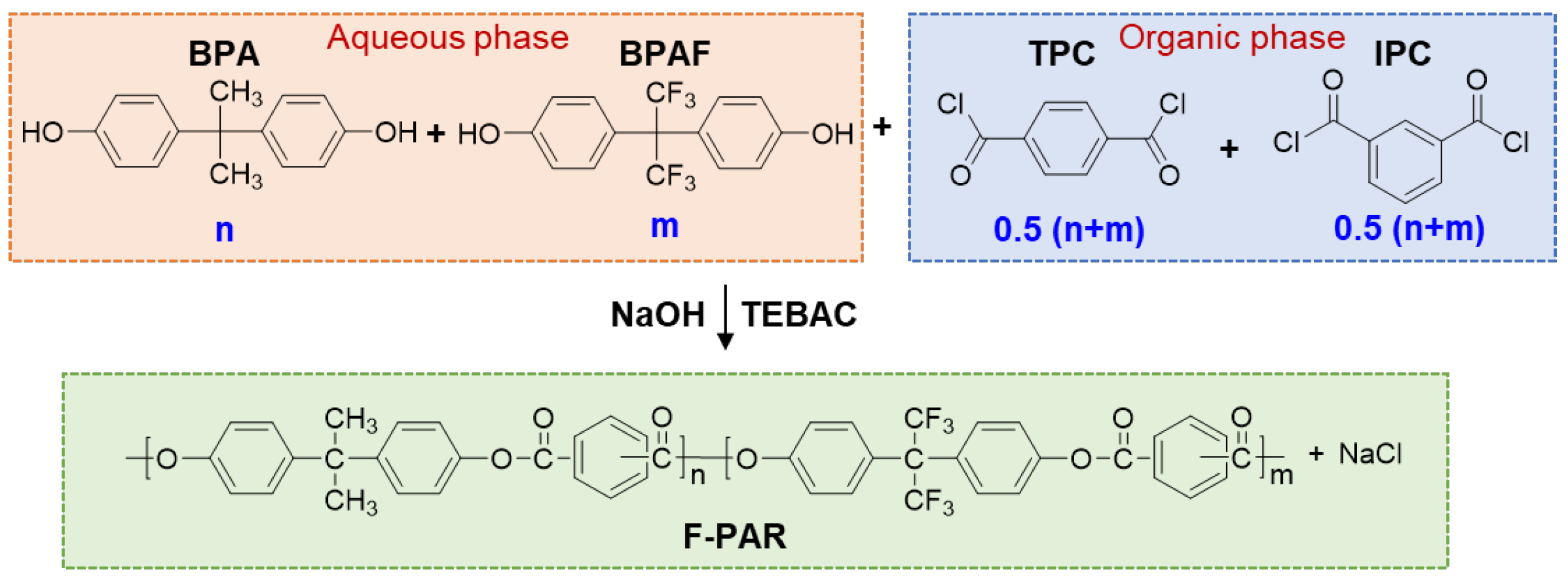
2.2. Synthesis of F-PARs via IP
2.3. Specific Monomer Feeding Methodologies
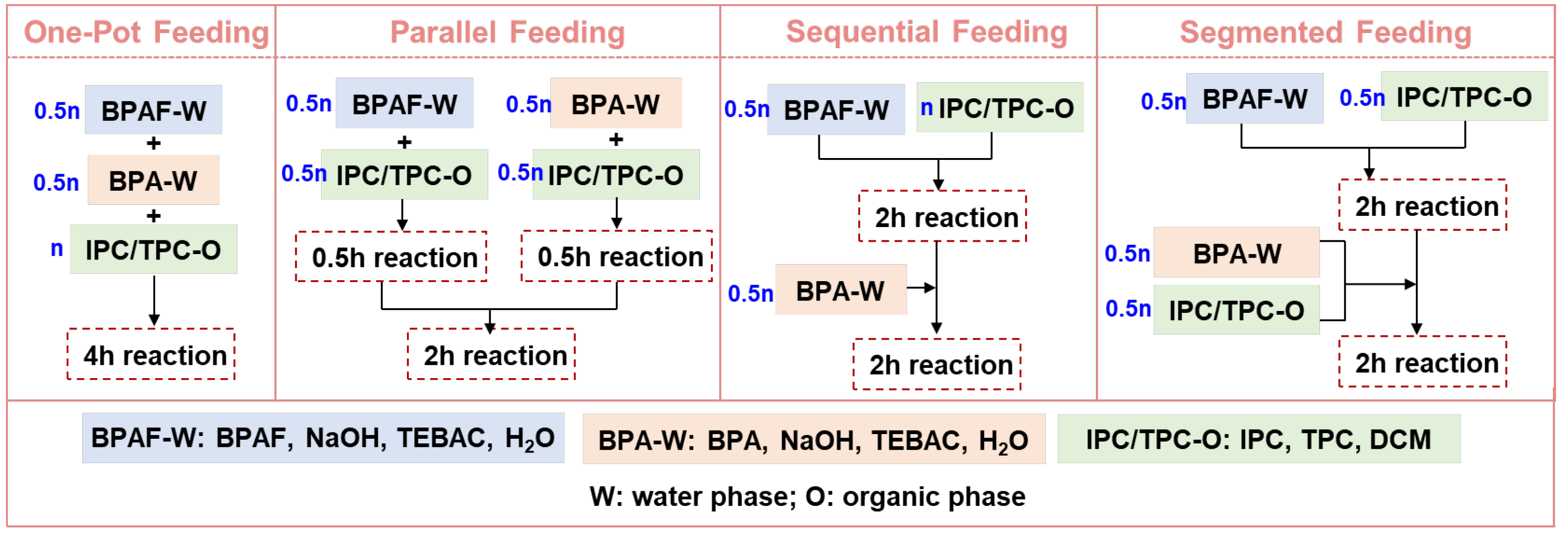
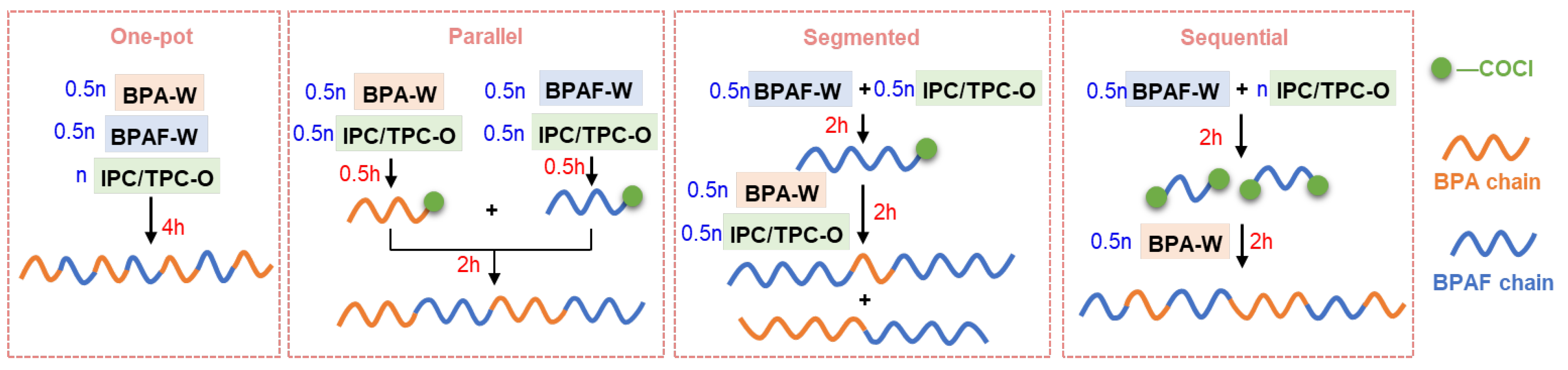
2.3.1. One-Pot Feeding
2.3.2. Parallel Feeding
2.3.3. Sequential Feeding
2.3.4. Segmented Feeding
2.4. Characterization
2.4.1. Gel Permeation Chromatography (GPC)
2.4.2. 1H Nuclear Magnetic Resonance (NMR) Spectroscopy
2.4.3. Differential Scanning Calorimetry (DSC)
2.4.4. Thermo Gravimetric Analysis (TGA)
2.4.5. Transmittance Analysis
2.4.6. Mechanical Tensile Testing
3. Results and Discussion
3.1. Effect of Feeding Method
3.1.1. Molecular Chain Structure Characterization
3.1.2. Structure–Property Relationships Governed by Feeding Methods
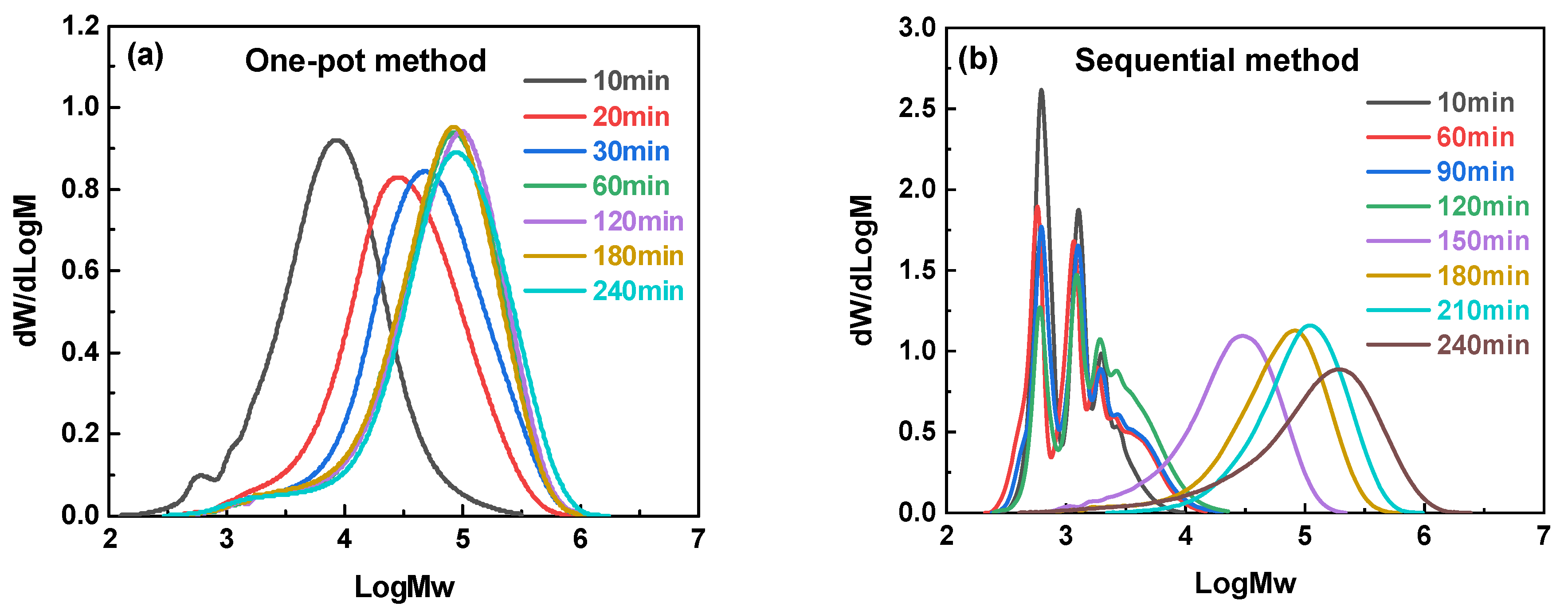
3.2. Kinetic Superiority of Sequential Feeding: A Time-Resolved Study
3.3. Effect of BPAF/BPA Ratios via Sequential Method
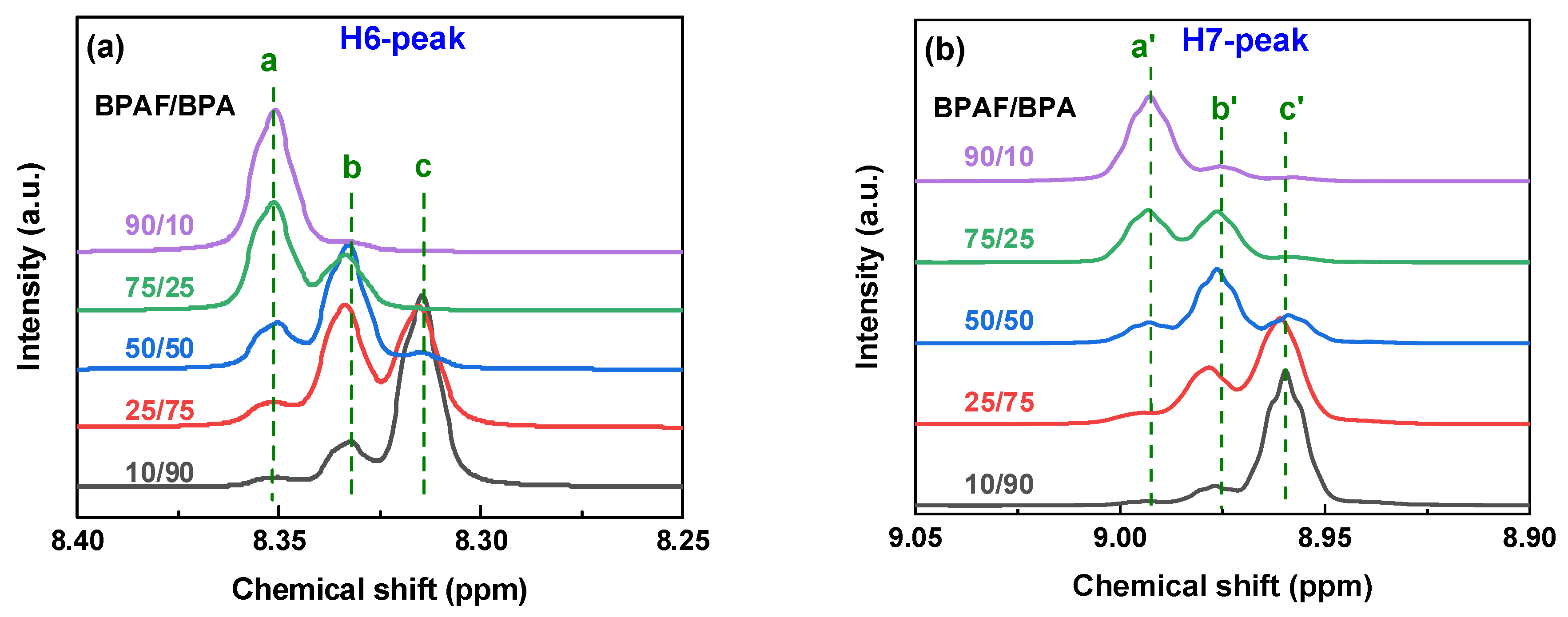
3.3.1. Molecular Chain Structure Characterization
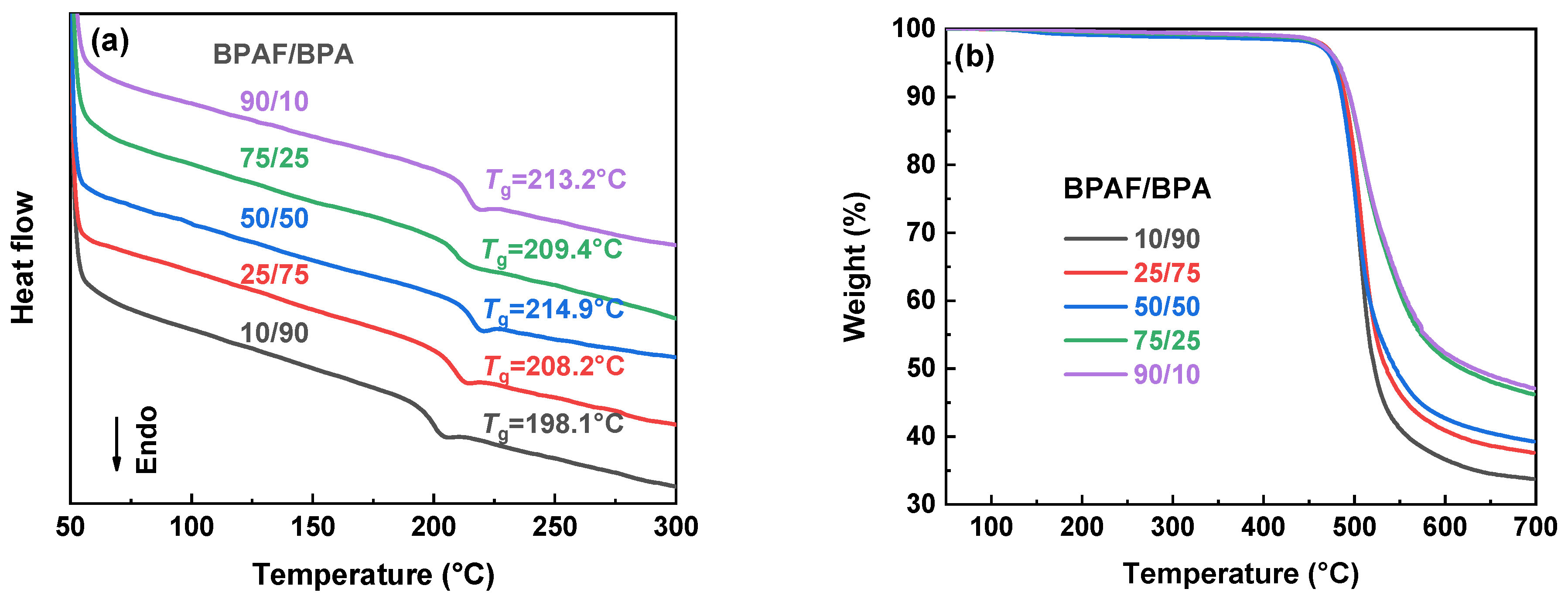
3.3.2. Properties as a Function of Chain Architecture
4. Conclusions
Supplementary Materials
Author Contributions
Funding
Institutional Review Board Statement
Data Availability Statement
Conflicts of Interest
References
- Zhang, Y.; Yan, G.-M.; Yang, J.; Zhang, G. Synthesis and properties of novel polyarylates containing furan pendent groups and reversibly crosslinked structure. Polymer 2025, 319, 128018. [Google Scholar] [CrossRef]
- Wang, Z.; Long, X.; Yao, W.; Zhang, W.; Yang, J. Study on the kinetics and mechanism of thermal decomposition of bisphenol A-type polyarylates. J. Anal. Appl. Pyrolysis 2025, 188, 107040. [Google Scholar] [CrossRef]
- Wang, Z.; Liu, Y.; Wang, B.; Long, X.; Hu, J. Study on the synthesis of soluble copolymer polyarylate from asymmetric bisphenol A derivative (2,2-bis(4-hydroxyphenyl)butane/9,9-bis(4-hydroxyphenyl)fluorene) monomer. J. Appl. Polym. Sci. 2023, 140, e54044. [Google Scholar] [CrossRef]
- Fang, H.; Huang, H.; Ji, C.; Wu, F.; Chen, X. Synthesis and properties of silicon-doped polyarylates with high heat resistance and low dielectric constant. Mater. Lett. 2025, 384, 138131. [Google Scholar] [CrossRef]
- Liu, P.; Wu, T.; Ye, G.; Xu, J. Novel Polyarylates Containing Aryl Ether Units: Synthesis, Characterization and Properties. Polym. Int. 2013, 130, 751–758. [Google Scholar] [CrossRef]
- Ghodke, S.D.; Diwate, A.V.; Bhale, P.S.; Patil, M.P.; Maldar, N.N. Design and synthesis of pendant naphthalene-based aromatic polyesters: Structure-property relationship, solubility, and thermal behavior. Pure Appl. Chem. 2025; early access. [Google Scholar] [CrossRef]
- Liu, C.; Zhu, C.-Y.; Zhang, C.; Yang, H.-C.; Xu, Z.-K. Thermodynamic and kinetic understanding for managing the controllability of interfacial polymerization. Prog. Polym. Sci. 2024, 152, 101815. [Google Scholar] [CrossRef]
- Tsai, H.B.; Lee, Y.D. Polyarylates. 3. Kinetic studies of interfacial polycondensation. J. Polym. Sci. Part A Polym. Chem. 1987, 25, 2195–2206. [Google Scholar] [CrossRef]
- Tsai, H.B.; Lee, Y.D. Polyarylates. 4. Synthesis of block copolymers via 2-step interfacial polycondensation. J. Polym. Sci. Part A Polym. Chem. 1987, 25, 3405–3412. [Google Scholar] [CrossRef]
- Xu, P.Q.; Zhang, S.H.; Liu, Q.; Wu, K.W.; Wang, D.H.; Wang, Z.Q.; Liu, Z.Y.; Zhang, Y.N.; Jian, X.G. Polyarylates containing phthalazinone moieties with excellent thermal resistance. High Perform. Polym. 2023, 35, 571–580. [Google Scholar] [CrossRef]
- Wang, Z.F.; Liu, Y.Y.; Wang, B.L.; Long, X.B.; Yao, W.L. Synthesis and properties of novel block-structured polyarylates containing fluorene: A two-step interface polymerization. New J. Chem. 2024, 48, 10497–10506. [Google Scholar] [CrossRef]
- Wang, L.; Wang, Z.; Qu, M.; Zhou, G. Characterization of fluorinated poly(aryl ether) with low dielectric constant synthesized by nucleophilic polycondensation. J. Polym. Res. 2023, 30, 348. [Google Scholar] [CrossRef]
- Kimura, K.; Tabuchi, Y.; Nishichi, A.; Yamashita, Y.; Okumura, Y.; Omote, K.; Morita, Y.; Kudo, H. Influence of electron beam irradiation on properties of fluorine-containing poly(aryl ether ketone)s. J. Appl. Polym. Sci. 2004, 91, 157–166. [Google Scholar] [CrossRef]
- Hsiao, S.H.; Chiang, H.W. Synthesis and structure-property study of polyarylates derived from bisphenols with different connector groups. J. Polym. Res. 2005, 12, 211–218. [Google Scholar] [CrossRef]
- Wang, Z.; Long, X.; Wang, B.; Cheng, G.; Ding, G.; Liu, Y.; Yao, W. Study on the synthesis and properties of a new fluorine-containing copolyarylate. J. Appl. Polym. Sci. 2024, 141, e55891. [Google Scholar] [CrossRef]
- He, B.; Chen, Y.; Liang, Y.; Wan, H.; Liu, W.; Xu, Z.; Dong, S.; Chen, Y.; Wei, P.; Huang, S.; et al. Synthesis and properties of low dielectric thermotropic liquid crystal polyarylates. Polymer 2024, 312, 127626. [Google Scholar] [CrossRef]
- Liu, H.; Zhu, Y.L.; Lu, Z.Y. Kinetics of interfacial polymerization: Progress on computer simulation studies. Acta Polym. Sin. 2021, 52, 565–577. [Google Scholar]
- Wang, Z.F.; Wang, B.L.; Liu, Y.Y.; Long, X.B.; Yao, W.L. Reaction strategies of bisphenol A derivatives to regulate the microstructure of polyarylates: Synthesis of bisphenol S/bisphenol A random polyarylates and block polyarylates. New J. Chem. 2024, 48, 16107–16118. [Google Scholar] [CrossRef]
- Tsai, H.B.; Lee, Y.D. Polyarylates (I): Investigation of the interfacial polycondensation reaction by UV. J. Polym. Sci. Part A Polym. Chem. 1987, 25, 1505–1515. [Google Scholar] [CrossRef]
- Li, L.L.; Li, T.T.; Chen, S.Y.; Duan, J.T.; Zhang, C.L.; Gu, X.P.; Feng, L.F. Mechanistic and kinetic insights into the interfacial polymerization of fluorine-containing polyarylate. Polymers 2026, 18, 31. [Google Scholar] [CrossRef]
- GB/T 528-2009; Vulcanized Rubber or Thermoplastic Rubber—Determination of Tensile Stress-Strain Properties. Standards Press of China: Beijing, China, 2009.
- Deng, X.; Huang, B.; Fang, Y.; Chen, D.; Cheng, Y.; Chen, S.; Zhang, J.; Zhang, L.; Jeong, S.; Wu, F. High-Performance Terpolymers with Well-Defined Structures Facilitate PCE Over 19% for Polymer Solar Cells. Adv. Funct. Mater. 2024, 34, 2315476. [Google Scholar] [CrossRef]
- Bai, R.; Zhao, Z.-H.; Liu, M.; Ma, W.; Lin, J.; An, S.; He, J.; Liu, Z.; Zhang, L.; Mei, H.; et al. Strong electron-withdrawing effect activates metal-free carboxylate anion into efficient active sites for electrocatalytic acetylene semihydrogenation. J. Am. Chem. Soc. 2025, 147, 6880–6885. [Google Scholar] [CrossRef]
- Janeta, M.; Heidlas, J.X.; Daugulis, O.; Brookhart, M. 2,4,6-Triphenylpyridinium: A bulky, highly electron-withdrawing substituent that enhances properties of nickel(II) ethylene polymerization catalysts. Angew. Chem. Int. Ed. 2021, 60, 4566–4569. [Google Scholar] [CrossRef]
- Zhang, Z.H.; Yan, J.Y.; Zhang, Z.; Yuan, H.; Ouyang, S.X. Trifluoromethyl-functionalized covalent organic frameworks for efficient photosynthesis of hydrogen peroxide in pure water. Adv. Synth. Catal. 2025; early access. [Google Scholar] [CrossRef]
- Lv, J.; Chen, S.; Xu, Z.; Zhang, S.; Li, Y.; Zhao, Y. Synthesis and Characterization of Diastereoisomeric Polyesters Derived from Bisphenols Bearing Vicinal Trifluoromethyl Groups. Macromolecules 2021, 54, 3716–3724. [Google Scholar] [CrossRef]
- Huang, H.; Prasetyo, N.; Kajiwara, T.; Gu, Y.; Jia, T.; Otake, K.; Kitagawa, S.; Li, F. Engineering Trifluoromethyl Groups in Porous Coordination Polymers to Enhance Stability and Regulate Pore Window for Hexane Isomers Separation. Chem. Asian J. 2025, 20, e202400899. [Google Scholar] [CrossRef]
- Liu, Y.; Peng, C.; Fan, R.; Wu, Z. Trifluoromethyl-containing phthalonitrile modified epoxy thermoset with improved flame retardancy and thermal stability. Polym. Degrad. Stab. 2025, 241, 111591. [Google Scholar] [CrossRef]





| Properties | Feeding Method | |||
|---|---|---|---|---|
| One-Pot | Parallel | Sequential | Segmented | |
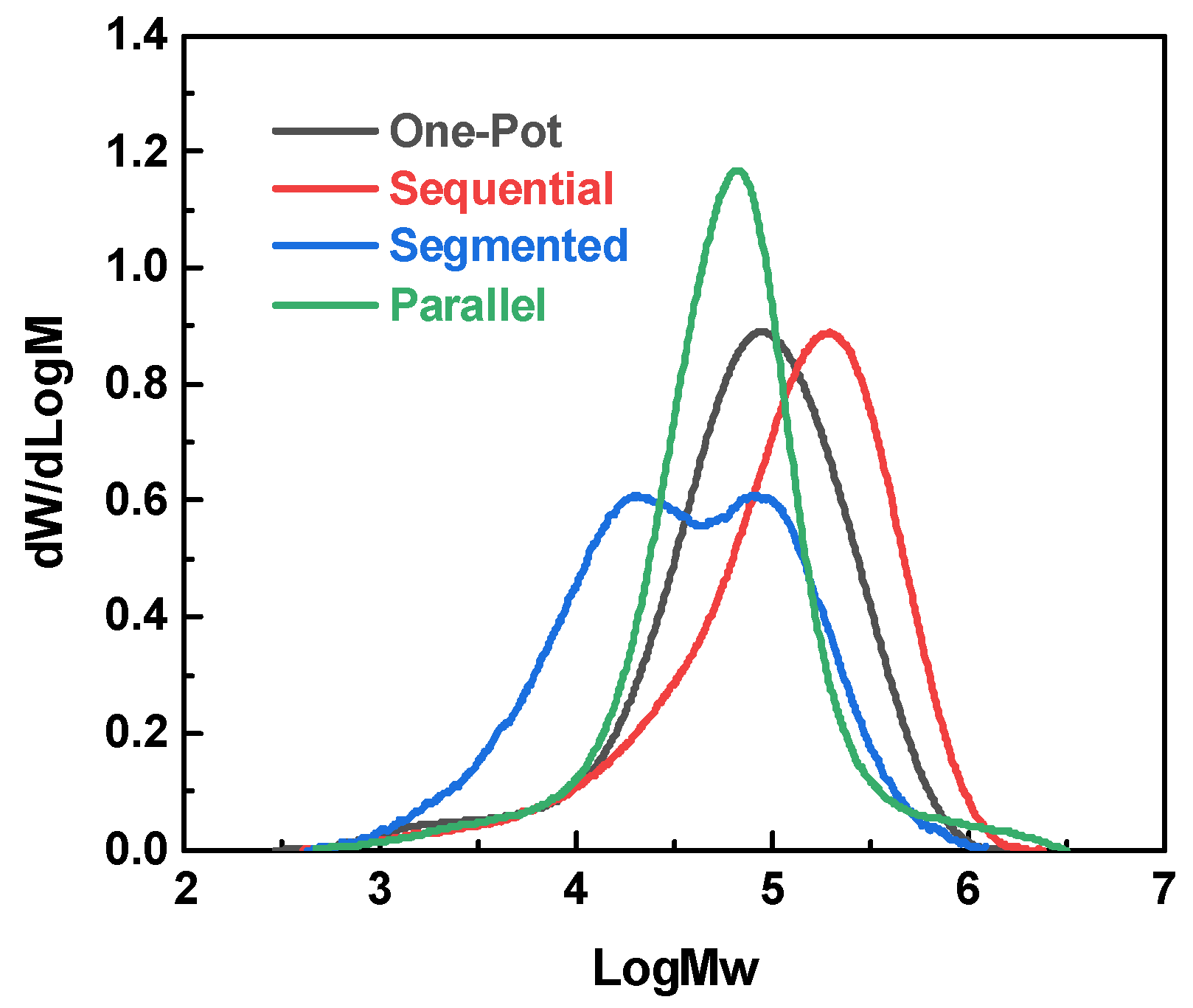
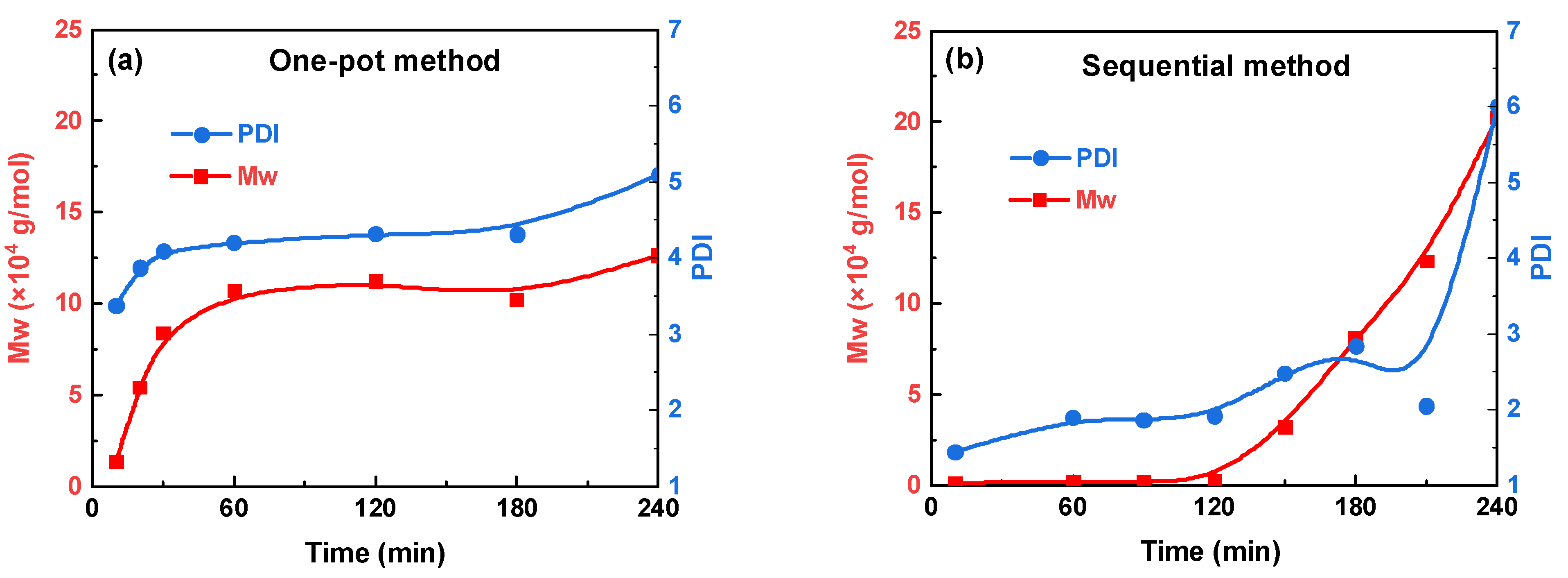
| Mw (104 g/mol) | 12.7 | 10.5 | 20.3 | 7.4 |
| Mn (104 g/mol) | 2.5 | 2.7 | 3.4 | 1.4 |
| PDI | 5.09 | 3.88 | 6.00 | 5.40 |
| Triad Type | Triad Content (%) | |||
|---|---|---|---|---|
| One-Pot | Parallel | Sequential | Segmented | |
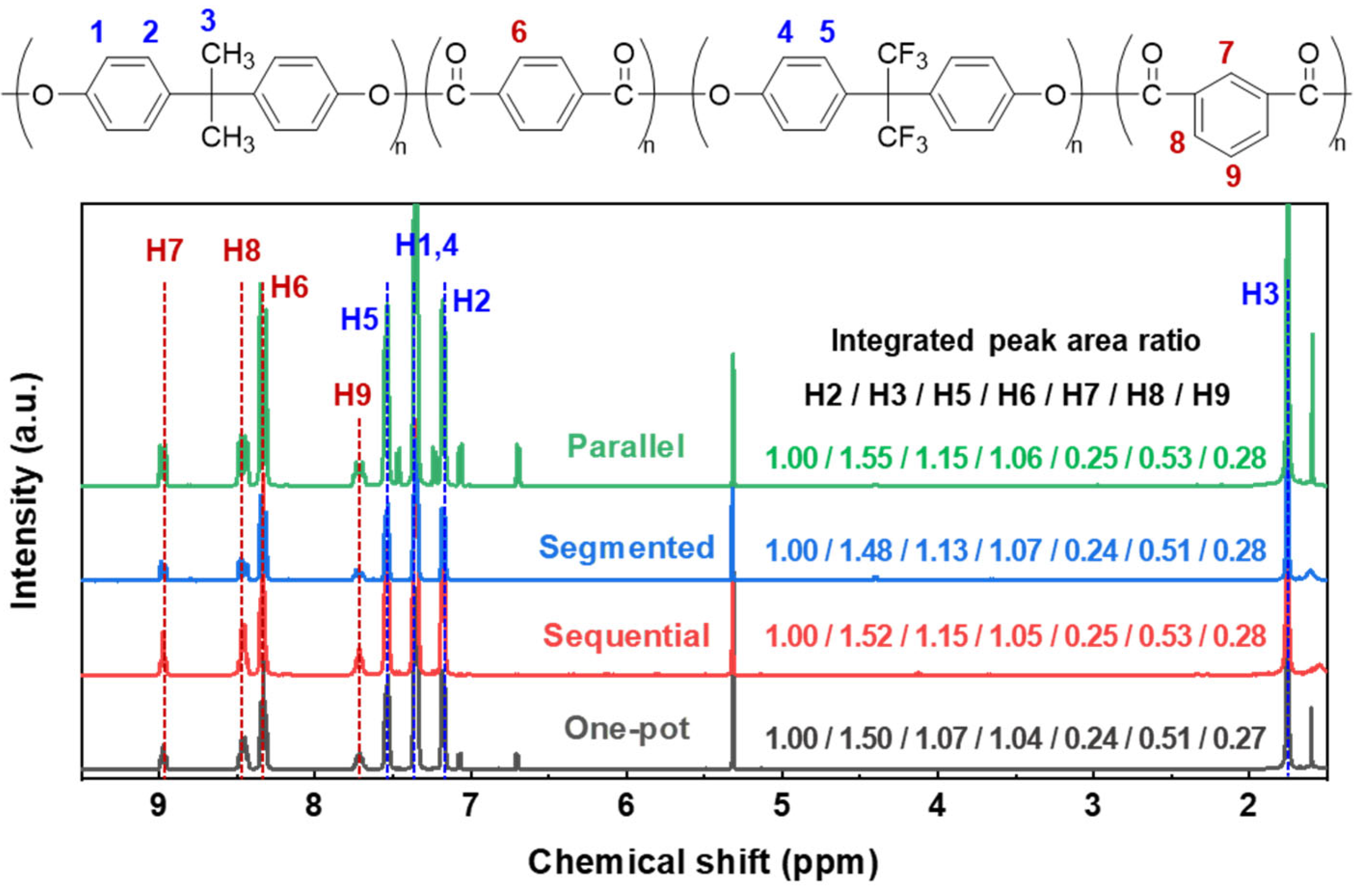
| BPAF-IPC-BPAF | 12.0 | 21.7 | 8.4 | 24.3 |
| BPAF-IPC-BPA | 23.4 | 5.9 | 29.5 | 3.2 |
| BPA-IPC-BPA | 12.5 | 20.6 | 11.1 | 19.9 |
| BPAF-TPC-BPAF | 15.3 | 26.7 | 13.7 | 25.3 |
| BPAF-TPC-BPA | 24.1 | 3.5 | 32.5 | 5.6 |
| BPA-TPC-BPA | 12.7 | 21.7 | 4.8 | 21.8 |
| Properties | Feeding Method | |||
|---|---|---|---|---|
| One-Pot | Parallel | Sequential | Segmented | |
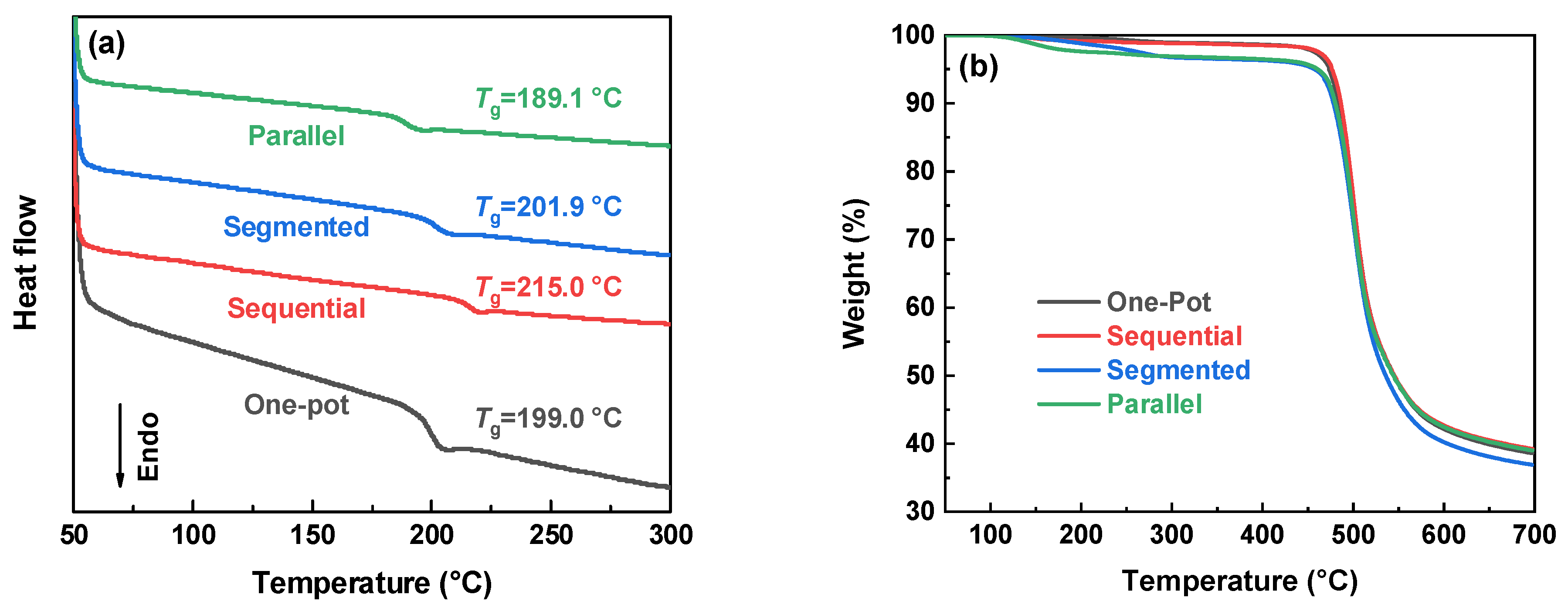
| Tg (°C) | 199.0 | 189.1 | 214.9 | 201.9 |
| Td,5%(°C) 1 | 473.2 | 459.7 | 476.1 | 456.2 |
| Td,10%(°C) 2 | 483.9 | 480.0 | 486.3 | 477.9 |
| Td,max (°C) 3 | 502.7 | 500.2 | 501.5 | 501.4 |
| Residual char yield at 700 °C (%) | 38.6 | 39.0 | 39.3 | 36.9 |
| T400 (%) 4 | 82.6 | 77.1 | 79.8 | 71.0 |
| T450 (%) 5 | 85.5 | 80.6 | 82.6 | 78.1 |
| λcut-off (nm) 6 | 321 | 322 | 315 | 321 |
| Tensile strength (MPa) | 60.9 ± 1.5 | 63.0 ± 0.5 | 61.2 ± 1.3 | 62.7 ± 1.7 |
| Modulus of elasticity (GPa) | 2.30 ± 0.07 | 2.24 ± 0.09 | 2.51 ± 0.08 | 2.37 ± 0.05 |
| BPAF/BPA | Triad Content (%) | |||||
|---|---|---|---|---|---|---|
| Triad Type | 90/10 | 75/25 | 50/50 | 25/75 | 10/90 | |
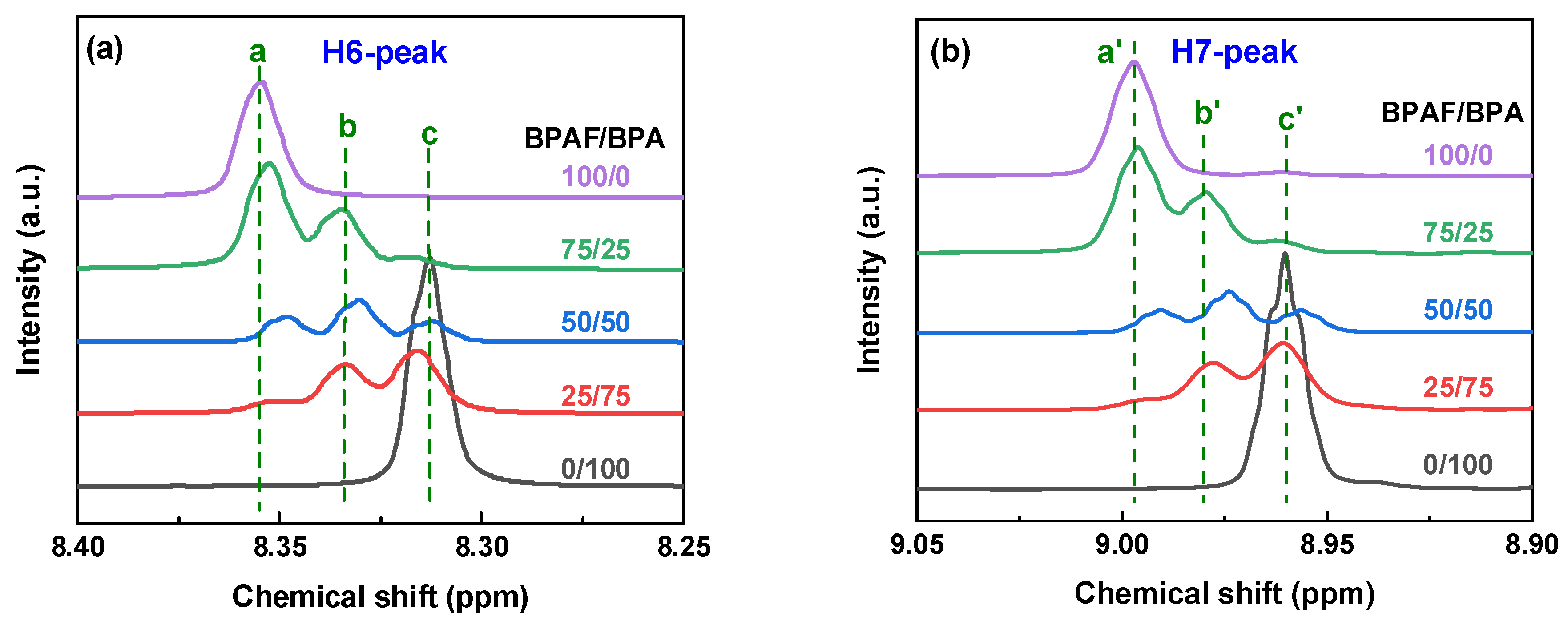
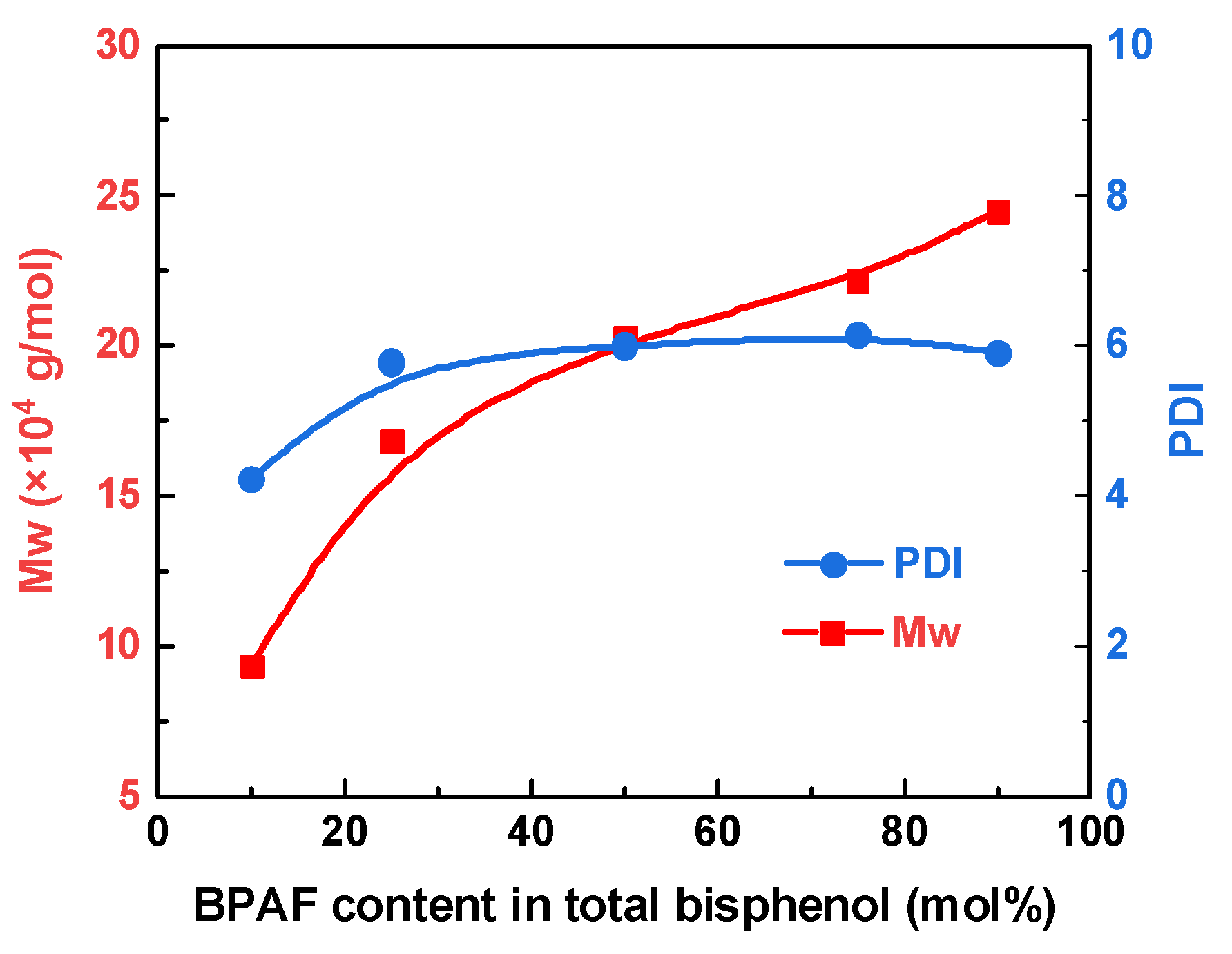
| BPAF-IPC-BPAF | 41.5 | 23.3 | 8.5 | 3.4 | 1.6 | |
| BPAF-IPC-BPA | 6.2 | 22.1 | 29.9 | 15.1 | 5.8 | |
| BPA-IPC-BPA | 2.1 | 2.8 | 10.7 | 30.1 | 41.0 | |
| BPAF-TPC-BPAF | 46.5 | 33.9 | 13.9 | 5.5 | 2.5 | |
| BPAF-TPC-BPA | 3.3 | 16.6 | 32.3 | 22.5 | 9.2 | |
| BPA-TPC-BPA | 0.5 | 1.4 | 4.6 | 23.3 | 39.9 | |
| Properties | BPAF/BPA Molar Ratio | ||||
|---|---|---|---|---|---|
| 90/10 | 75/25 | 50/50 | 25/75 | 10/90 | |
| Tg (°C) | 213.2 | 209.4 | 214.9 | 208.2 | 198.1 |
| Td,5% (°C) | 481.8 | 481.0 | 476.1 | 478.7 | 477.7 |
| Td,10% (°C) | 495.4 | 494.9 | 486.3 | 489.6 | 487.4 |
| Td,max (°C) | 506.6 | 507.7 | 501.5 | 507.5 | 500.3 |
| Residual char yield (%) | 47.1 | 46.2 | 39.3 | 37.6 | 33.7 |
| T400 (%) | 79.7 | 76.4 | 79.8 | 67.0 | 65.1 |
| T450 (%) | 82.6 | 81.1 | 82.6 | 74.8 | 73.7 |
| λcut-off (nm) | 311 | 317 | 315 | 326 | 327 |
| Tensile strength (MPa) | 43.8 ± 1.9 | 52.1 ± 1.4 | 61.2 ± 1.3 | 62.3 ± 2.2 | 63.7 ± 1.4 |
| Modulus of elasticity (GPa) | 1.70 ± 0.12 | 2.08 ± 0.08 | 2.51 ± 0.08 | 2.45 ± 0.09 | 2.50 ± 0.01 |
Disclaimer/Publisher’s Note: The statements, opinions and data contained in all publications are solely those of the individual author(s) and contributor(s) and not of MDPI and/or the editor(s). MDPI and/or the editor(s) disclaim responsibility for any injury to people or property resulting from any ideas, methods, instructions or products referred to in the content. |
© 2026 by the authors. Licensee MDPI, Basel, Switzerland. This article is an open access article distributed under the terms and conditions of the Creative Commons Attribution (CC BY) license.
Share and Cite
Li, L.; Li, T.; Chen, S.; Duan, J.; Zhang, C.; Gu, X.; Feng, L. Effect of Monomer Feeding Strategy on the Sequence and Properties of Fluorine-Containing Polyarylates via Interfacial Polycondensation. Polymers 2026, 18, 267. https://doi.org/10.3390/polym18020267
Li L, Li T, Chen S, Duan J, Zhang C, Gu X, Feng L. Effect of Monomer Feeding Strategy on the Sequence and Properties of Fluorine-Containing Polyarylates via Interfacial Polycondensation. Polymers. 2026; 18(2):267. https://doi.org/10.3390/polym18020267
Chicago/Turabian StyleLi, Lingli, Tiantian Li, Siyu Chen, Jintang Duan, Cailiang Zhang, Xueping Gu, and Lianfang Feng. 2026. "Effect of Monomer Feeding Strategy on the Sequence and Properties of Fluorine-Containing Polyarylates via Interfacial Polycondensation" Polymers 18, no. 2: 267. https://doi.org/10.3390/polym18020267
APA StyleLi, L., Li, T., Chen, S., Duan, J., Zhang, C., Gu, X., & Feng, L. (2026). Effect of Monomer Feeding Strategy on the Sequence and Properties of Fluorine-Containing Polyarylates via Interfacial Polycondensation. Polymers, 18(2), 267. https://doi.org/10.3390/polym18020267