Novel Bioinspired Quercetin-Based Polymers for the Sustained Release of Donepezil in Alzheimer’s Disease Therapy

 ,
,  , ,
, ,  and
and 
Abstract
1. Introduction
2. Materials and Methods
2.1. General Conditions
2.2. Synthesis of Functional Monomer Based on Quercetin
2.2.1. Synthesis of 3-Hydroxy-3′,4′,5,7-Tetramethylquercetin 2
2.2.2. Synthesis of 3-Acryloxy-3′,4′,5,7-Tetramethylquercetin 1
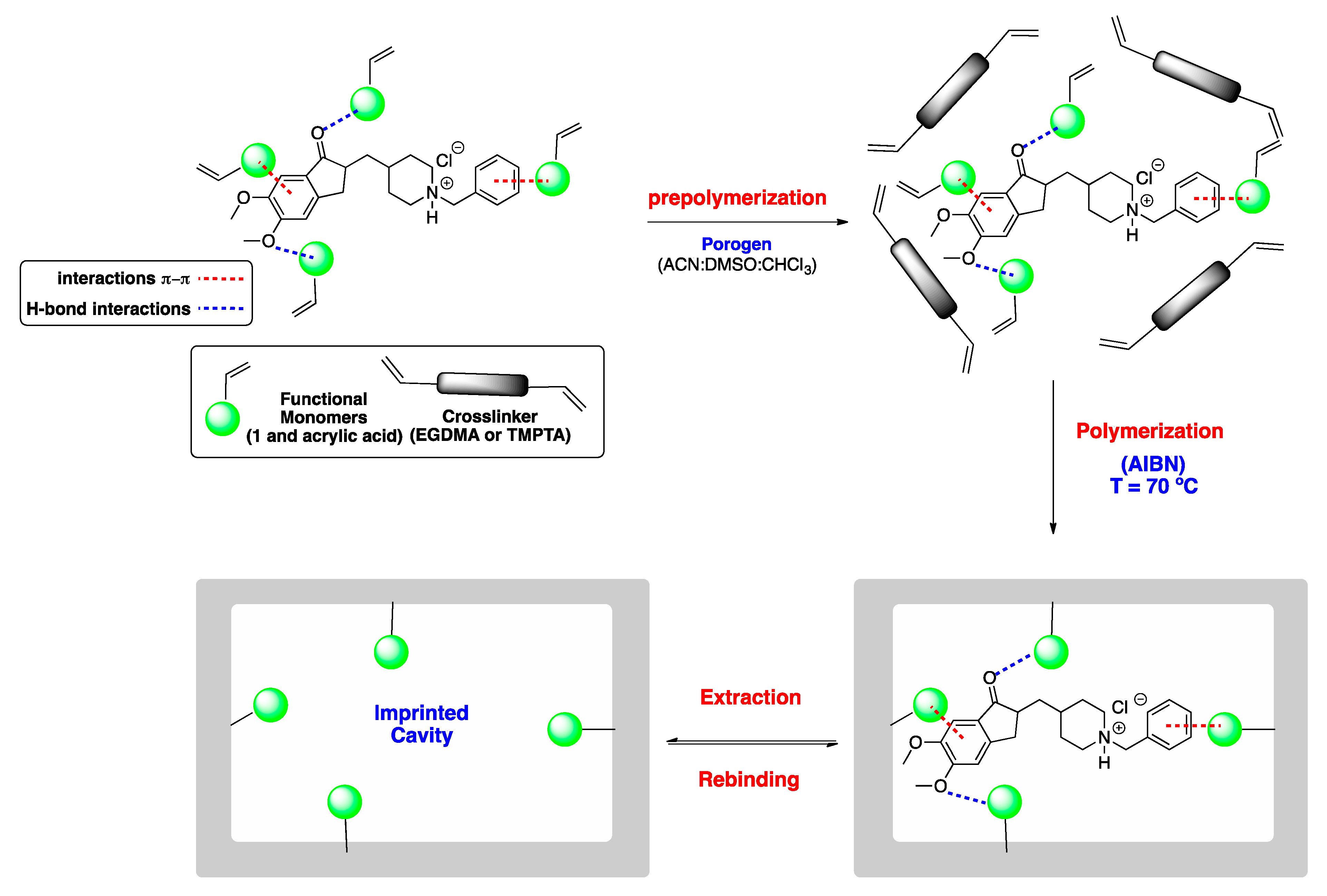
2.3. Synthesis of Molecularly Imprinted Polymers Selective to Donepezil
2.4. Molecular Recognition Assays
2.4.1. Preparation of Donepezil and MIP/NIP Solutions at Different Concentrations
2.4.2. Determination of Adsorption Capacity
2.4.3. Adsorption Isotherms of Donepezil
2.5. Cell Viability Assays
2.5.1. Maintenance of MCF-7 Cells
2.5.2. Preparation of MIP/NIP Solutions
2.5.3. Exposure of Cells to MIPs and NIPs
2.5.4. WST-8 Assay
2.5.5. Fluorescein Diacetate (FDA) Exposure
2.6. In Vitro Drug Release
2.6.1. Preparation of Donepezil Solutions at Different pH Values (3.0, 5.5, and 7.0)
2.6.2. Loading of Polymers with Donepezil
2.6.3. In Vitro Release of Donepezil·HCl
2.7. In Vitro Cholinesterases Inhibitory Assays
2.8. Ferric Reducing Antioxidant Power (FRAP) Assay
2.9. Statistical Analysis
3. Results and Discussion
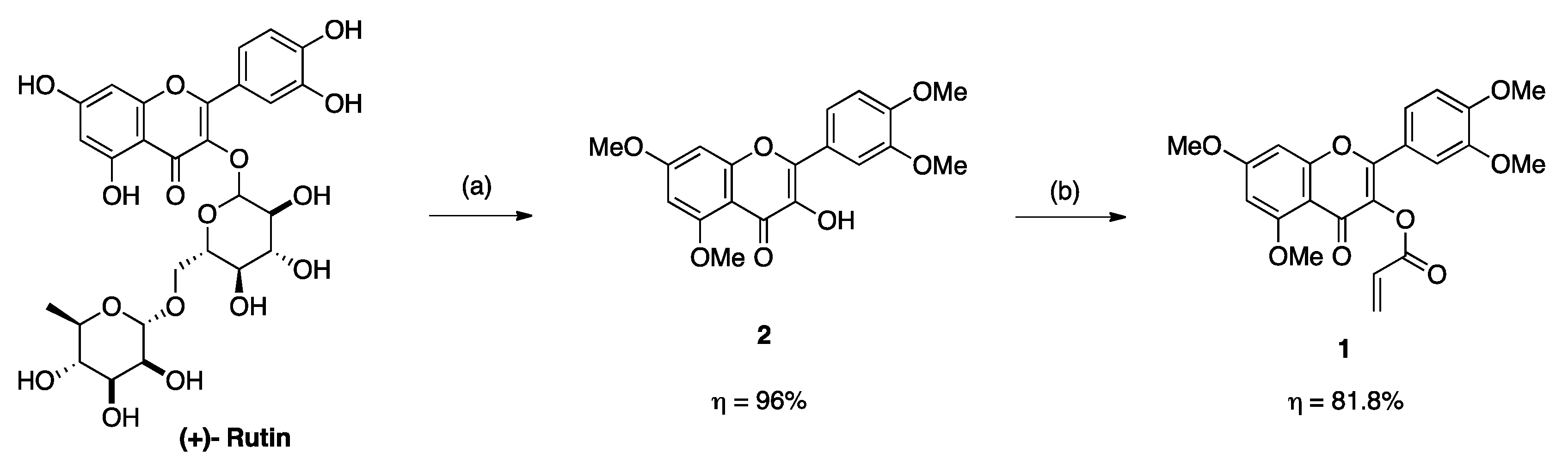
3.1. Synthesis of Functional Monomer Derived from Quercetin
3.2. Synthesis of the Molecularly Imprinted Polymer Selective to Donepezil
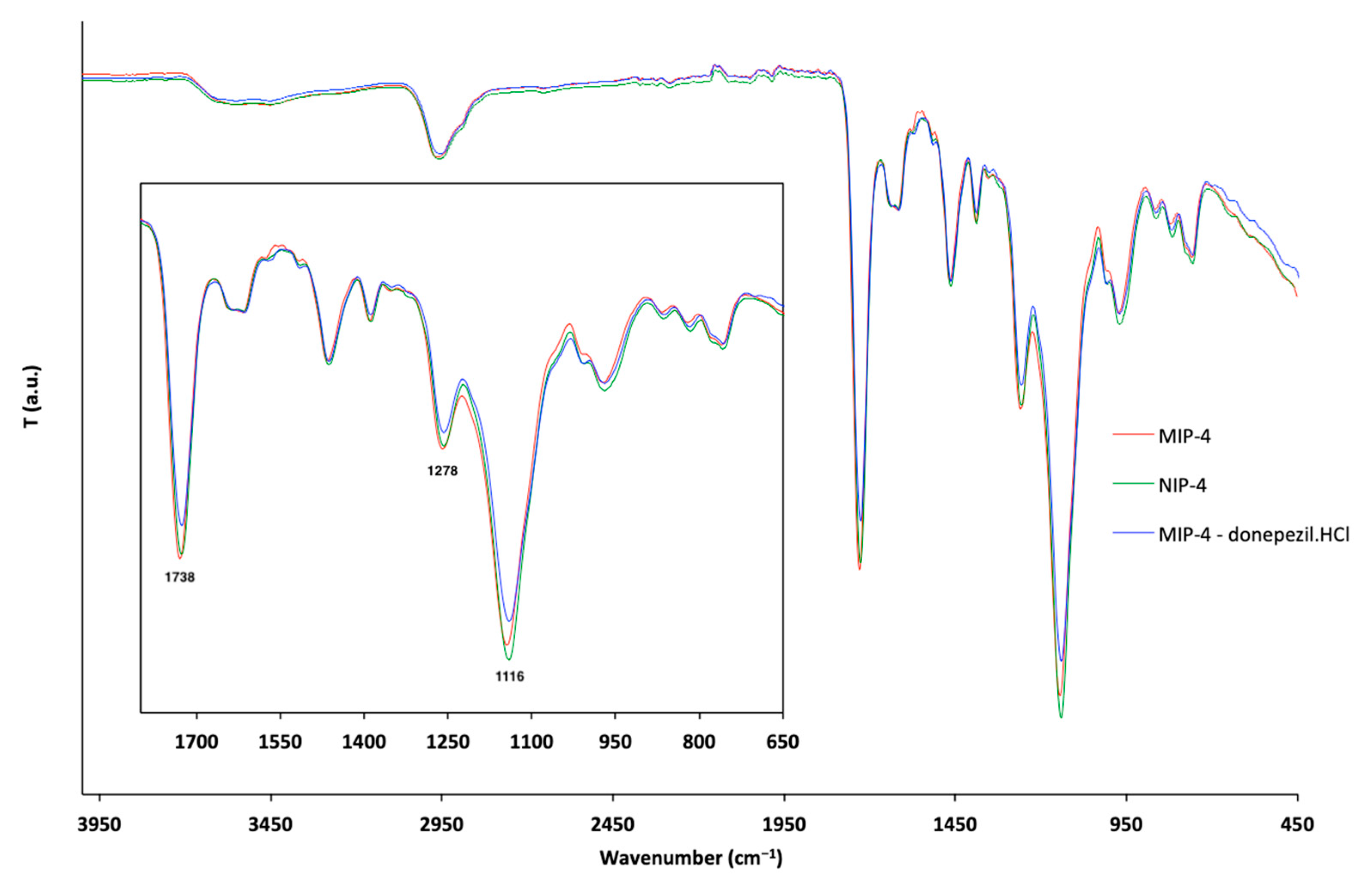
3.3. Physicochemical Characterization—Chemical Composition (FTIR-ATR)
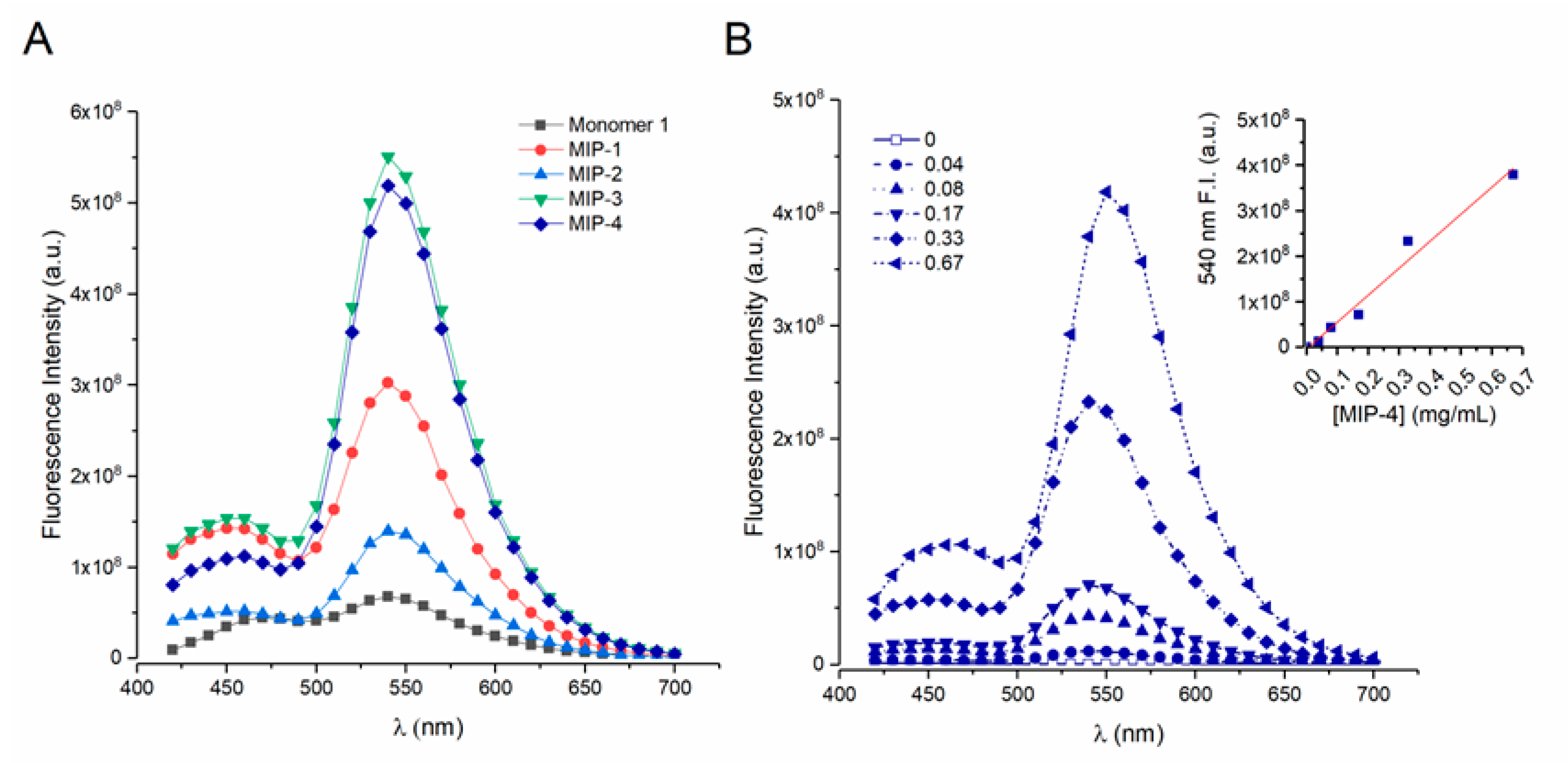
3.4. Fluorescence of Quercetin-Derived Monomer 1 and Polymers
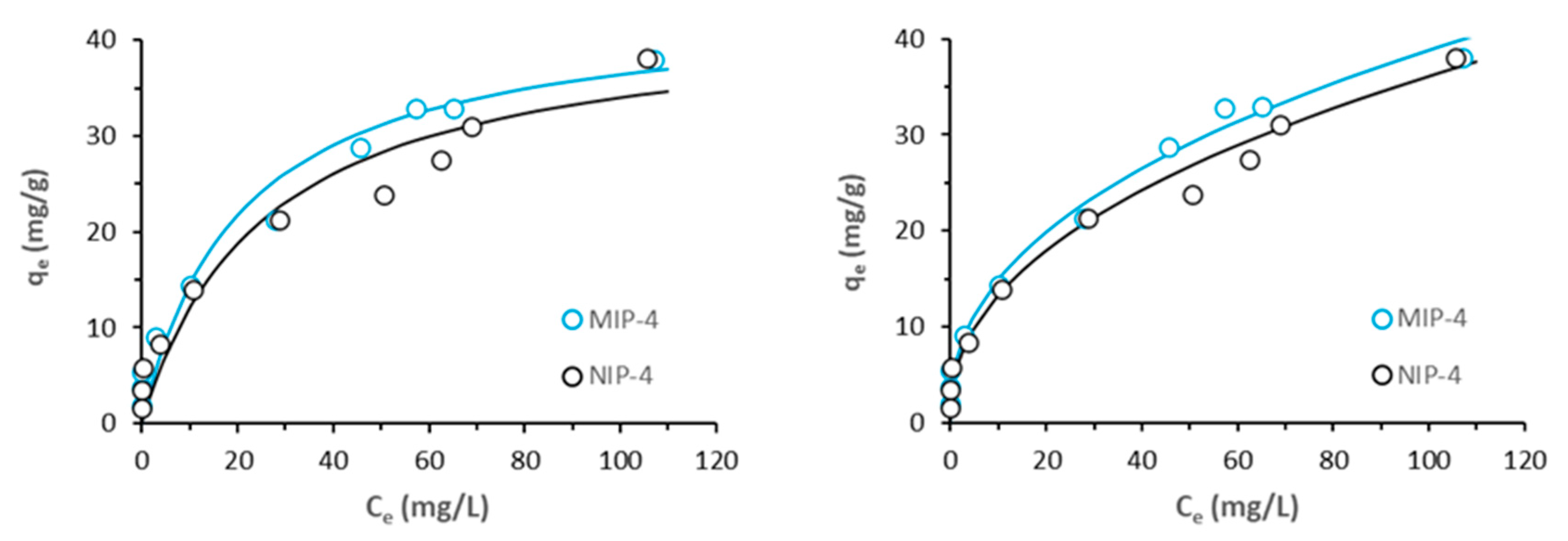
3.5. Recognition Capacity of the Polymers
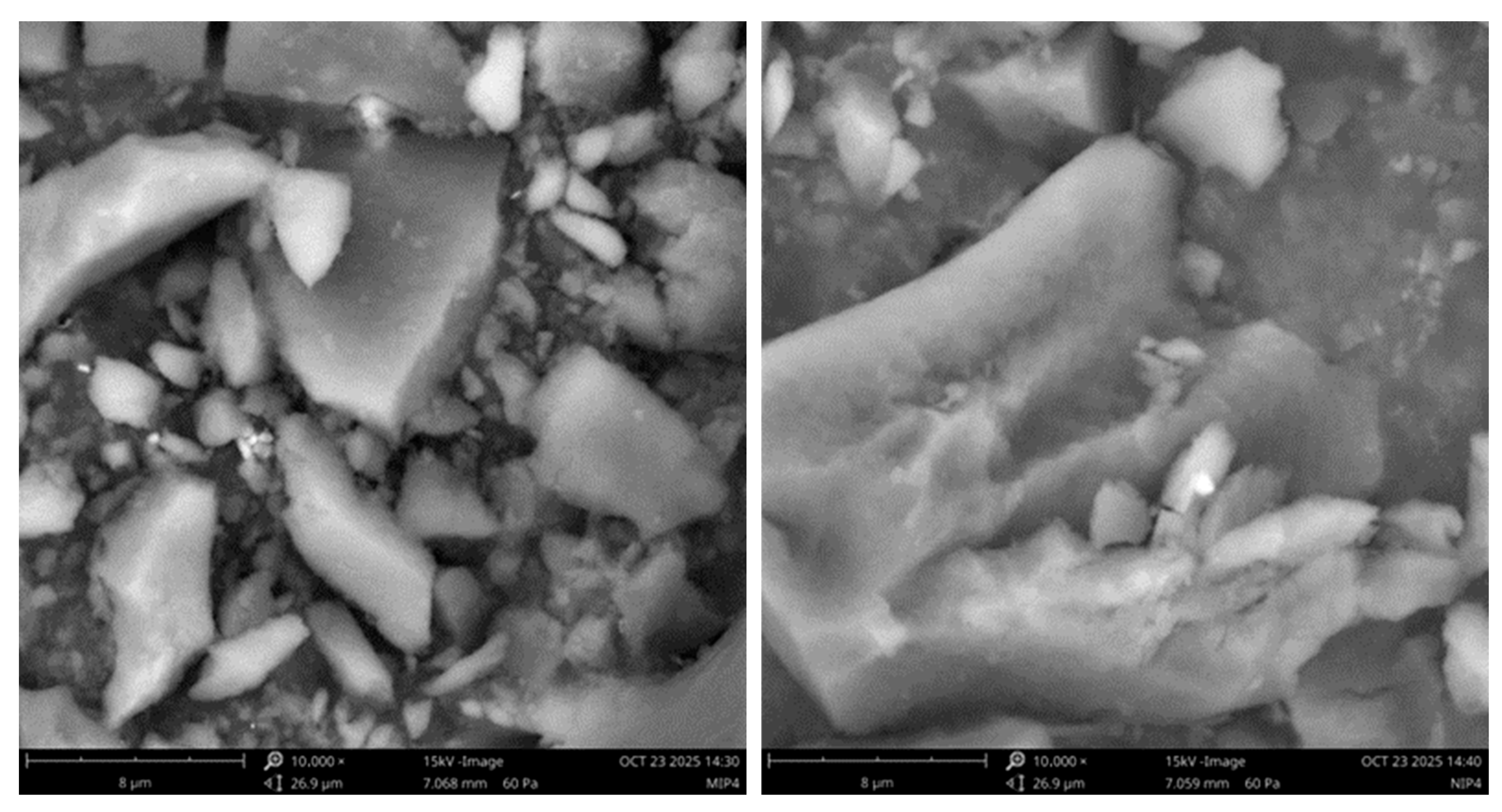
3.6. Morphology (SEM) and Elemental Analysis (SEM-EDX)
3.7. Hydrodynamic Diameter and Zeta Potential
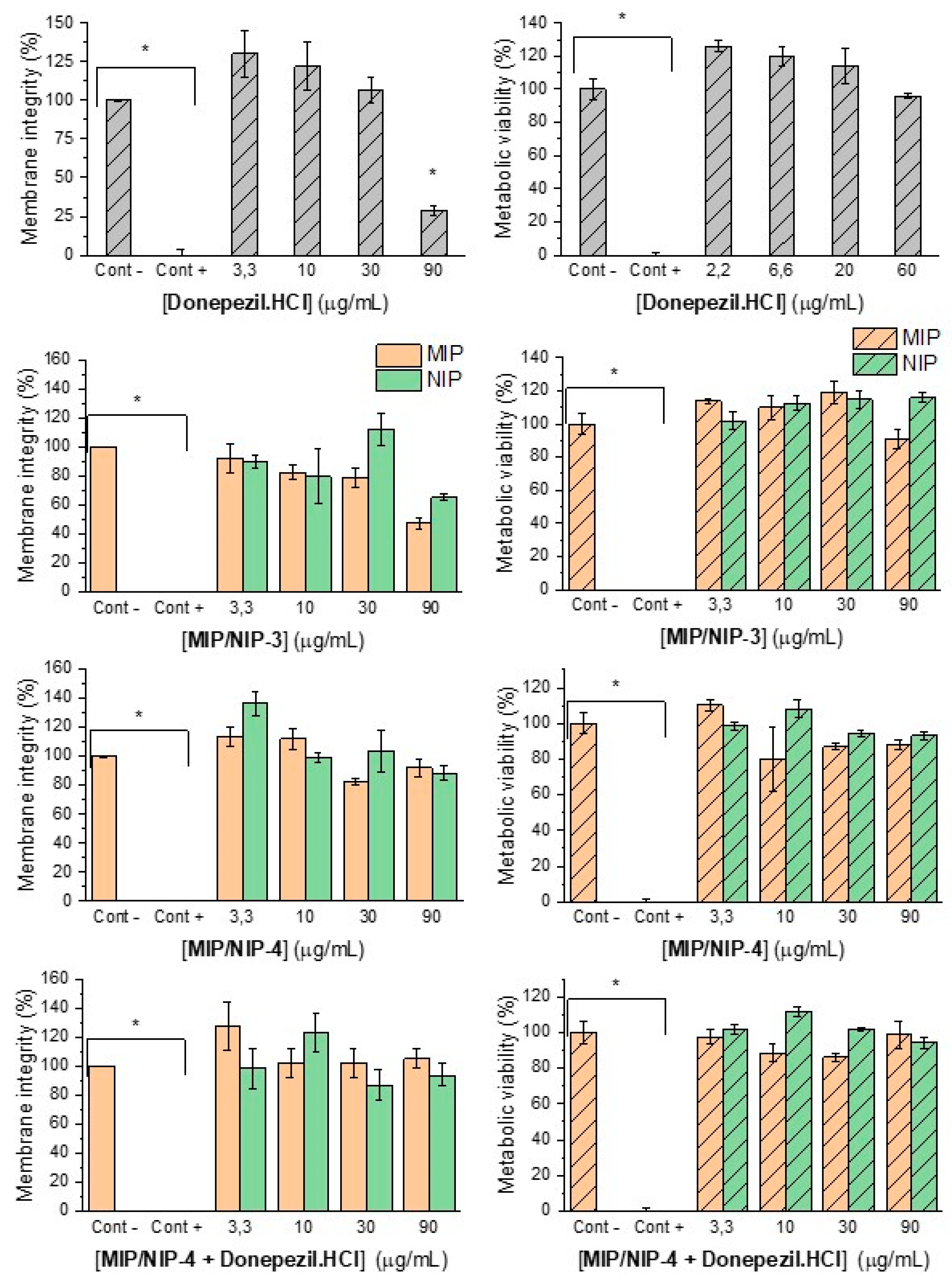
3.8. Evaluation of the Effect of MIPs and NIPs on Cellular Viability
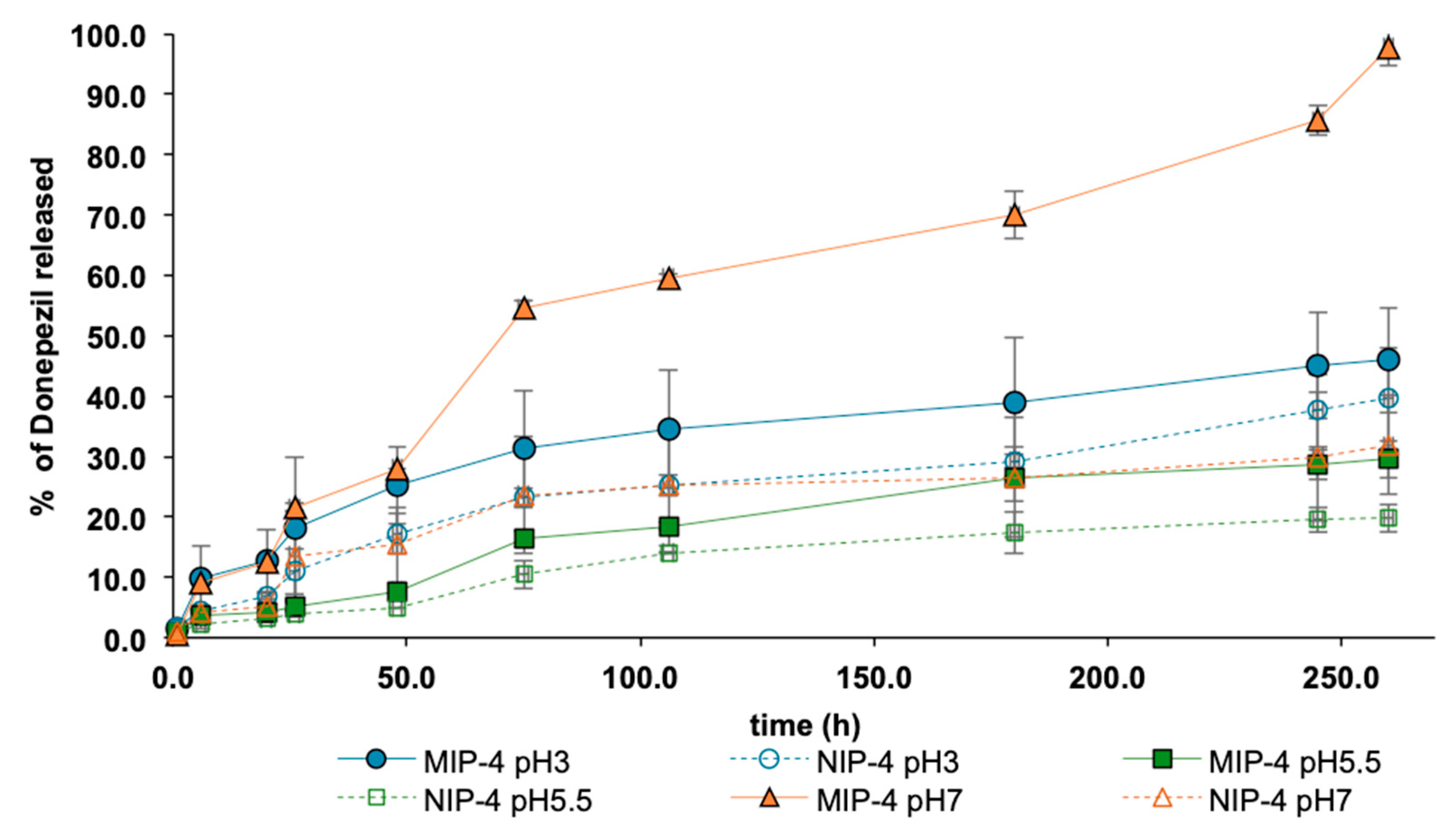
3.9. Effect of pH on the In Vitro Release of Donepezil
3.10. Evaluation of Cholinesterase Inhibition
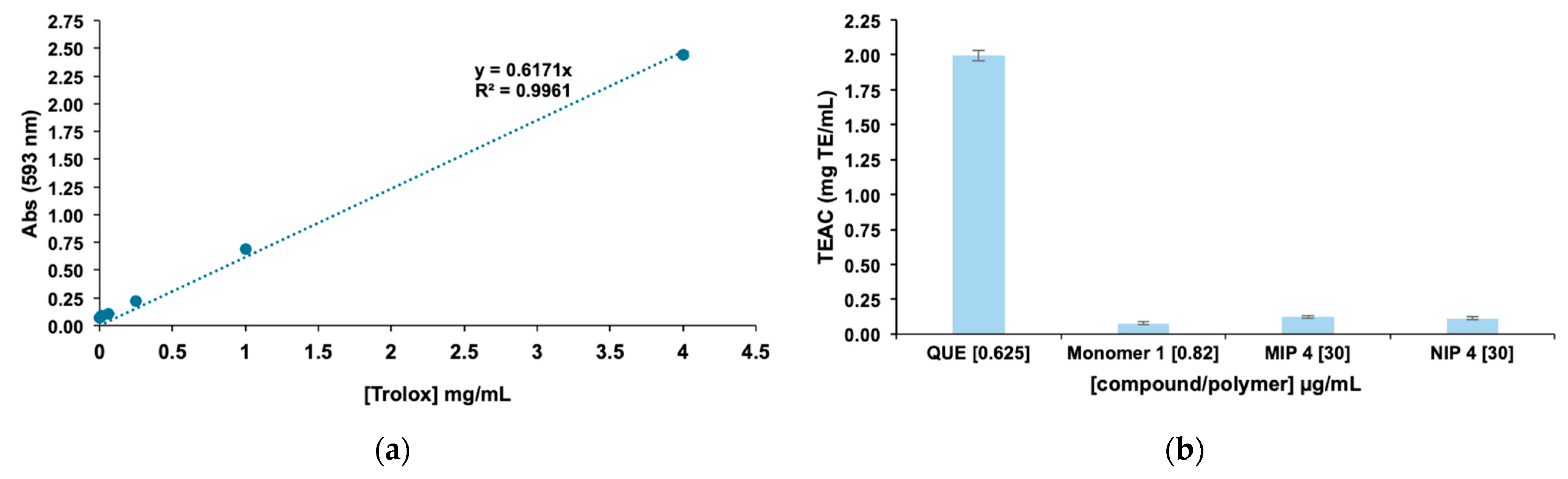
3.11. Antioxidant Capacity by the Ferric Reducing Antioxidant Power (FRAP) Assay
4. Conclusions
Supplementary Materials
Author Contributions
Funding
Institutional Review Board Statement
Data Availability Statement
Acknowledgments
Conflicts of Interest
References
- WHO. A Blueprint for Dementia Research; World Health Organization: Geneva, Switzerland, 2022.
- Zhang, J.; Zhang, Y.; Wang, J.; Xia, Y.; Zhang, J.; Chen, L. Recent advances in Alzheimer’s disease: Mechanisms, clinical trials and new drug development strategies. Signal Transduct. Target. Ther. 2024, 9, 211. [Google Scholar] [CrossRef] [Scilit]
- Alkhalifa, A.E.; Alkhalifa, O.; Durdanovic, I.; Ibrahim, D.R.; Maragkou, S. Oxidative Stress and Mitochondrial Dysfunction in Alzheimer’s Disease: Insights into Pathophysiology and Treatment. J. Dement. Alzheimers Dis. 2025, 2, 17. [Google Scholar] [CrossRef] [Scilit]
- Kamatham, P.T.; Shukla, R.; Khatri, D.K.; Vora, L.K. Pathogenesis, diagnostics, and therapeutics for Alzheimer’s disease: Breaking the memory barrier. Ageing Res. Rev. 2024, 101, 102481. [Google Scholar] [CrossRef] [Scilit] [PubMed]
- Jann, M.W.; Shirley, K.L.; Small, G.W. Clinical pharmacokinetics and pharmacodynamics of cholinesterase inhibitors. Clin. Pharmacokinet. 2002, 41, 719–739. [Google Scholar] [CrossRef] [Scilit] [PubMed]
- Zhao, Z.Q.; Chen, B.Z.; Zhang, X.P.; Zheng, H.; Guo, X.D. An Update on the Routes for the Delivery of Donepezil. Mol. Pharm. 2021, 18, 2482–2494. [Google Scholar] [CrossRef] [Scilit] [PubMed]
- Silva-Pinto, P.A.; Costa de Pontes, J.T.; Aguilar-Morón, B.; Canales, C.S.C.; Pavan, F.R.; Roque-Borda, C.A. Phytochemical insights into flavonoids in cancer: Mechanisms, therapeutic potential, and the case of quercetin. Heliyon 2025, 11, e42682. [Google Scholar] [CrossRef] [Scilit]
- Fideles, S.O.M.; de Cássia Ortiz, A.; Buchaim, D.V.; de Souza Bastos Mazuqueli Pereira, E.; Parreira, M.J.B.M.; de Oliveira Rossi, J.; da Cunha, M.R.; de Souza, A.T.; Soares, W.C.; Buchaim, R.L. Influence of the Neuroprotective Properties of Quercetin on Regeneration and Functional Recovery of the Nervous System. Antioxidants 2023, 12, 149. [Google Scholar] [CrossRef] [Scilit]
- Russo, M.; Spagnuolo, C.; Tedesco, I.; Bilotto, S.; Russo, G.L. The flavonoid quercetin in disease prevention and therapy: Facts and fancies. Biochem. Pharmacol. 2012, 83, 6–15. [Google Scholar] [CrossRef] [Scilit]
- Pei, J.; Kumarasamy, R.V.; Jayaraman, S.; Kanniappan, G.V.; Long, Q.; Palanisamy, C.P. Quercetin-functionalized nanomaterials: Innovative therapeutic avenues for Alzheimer’s disease management. Ageing Res. Rev. 2025, 104, 102665. [Google Scholar] [CrossRef] [Scilit]
- Tomou, E.-M.; Papakyriakopoulou, P.; Saitani, E.-M.; Valsami, G.; Pippa, N.; Skaltsa, H. Recent Advances in Nanoformulations for Quercetin Delivery. Pharmaceutics 2023, 15, 1656. [Google Scholar] [CrossRef] [Scilit]
- Satpathy, B.; Rajwar, T.K.; Mishra, A.; Saha, I.; Rai, V.K.; Sahoo, R.K.; Halder, J.; Mahanty, R.; Manoharadas, S.; Al-Tamimi, J.; et al. Intra-nasal Delivery of Quercetin-Loaded Nanostructured Lipid Carriers (NLCs) in the Management of Alzheimer’s Disease: Formulation, In Vitro and In Vivo Assessment. Mol. Neurobiol. 2025, 62, 13182–13209. [Google Scholar] [CrossRef] [Scilit]
- Sharma, H.; Chandra, P. Quercetin-loaded Nanoliposomes as a Novel Neuroprotective Strategy for Alzheimer’s Disease. Micro Nanosyst. 2025, in press. [Google Scholar] [CrossRef] [Scilit]
- Shi, J.; Zhu, M.; Luo, Y.; Zhou, Y.; Ning, X.; Zhang, B.; Jiang, J.; Zhang, Y.; Xu, C.; Huang, Y. Adding Chinese Herbal Medicine to Conventional Therapy Brings Cognitive Benefits to Patients with Alzheimer’s Disease: A Retrospective Analysis. BMC Complement. Med. Ther. 2017, 17, 533. [Google Scholar] [CrossRef] [Scilit]
- Liu, L.; Zhang, C.S.; Zhang, A.L.; Cai, Y.; Xue, C.C. Oral Chinese herbal medicine combined with donepezil for mild cognitive impairment: A systematic review and meta-analysis. J. Am. Geriatr. Soc. 2024, 72, 3890–3902. [Google Scholar] [CrossRef] [Scilit] [PubMed]
- Akinyemi, A.J.; Oboh, G.; Oyeleye, S.I.; Ogunsuyi, O. Anti-amnestic Effect of Curcumin in Combination with Donepezil, an Anti-cholinesterase Drug: Involvement of Cholinergic System. Neurotox. Res. 2017, 31, 560–569. [Google Scholar] [CrossRef] [Scilit] [PubMed]
- Topal, F.; Ertas, B.; Guler, E.; Gurbuz, F.; Ozcan, G.S.; Aydemir, O.; Bocekci, V.G.; Duruksu, G.; Sahin Cam, C.; Yazir, Y.; et al. A Novel Multi-Target Strategy for Alzheimer’s Disease Treatment via Sublingual Route: Donepezil/Memantine/Curcumin-Loaded Nanofibers. Biomater. Adv. 2022, 138, 212870. [Google Scholar] [CrossRef] [Scilit]
- Asnaashari, S.; Amjad, E.; Sokouti, B. Synergistic Effects of Flavonoids and Paclitaxel in Cancer Treatment: A Systematic Review. Cancer Cell Int. 2023, 23, 211. [Google Scholar] [CrossRef] [Scilit]
- BelBruno, J.J. Molecularly Imprinted Polymers. Chem. Rev. 2019, 119, 94–119. [Google Scholar] [CrossRef] [Scilit]
- Kupai, J.; Razali, M.; Buyuktiryaki, S.; Kecili, R.; Szekely, G. Long-term Stability and Reusability of Molecularly Imprinted Polymers. Polym. Chem. 2017, 8, 666–673. [Google Scholar] [CrossRef] [Scilit]
- Martins, N.; Carreiro, E.P.; Simões, M.; Cabrita, M.J.; Burke, A.J.; Garcia, R. An emerging approach for the targeted analysis of dimethoate in olive oil: The role of molecularly imprinted polymers based on photo-iniferter-induced “living” radical polymerization. React. Funct. Polym. 2015, 86, 37–46. [Google Scholar] [CrossRef] [Scilit]
- Garcia, R.; Martins, N.; Carreiro, E.P.; Simões, M.; Ribeiro Carrott, M.M.L.; Carrott, P.J.M.; Burke, A.J.; Cabrita, M.J. Development of a selective sorbent for solid-phase extraction of terbuthylazine in olive oil samples: A molecular imprinting strategy. J. Sep. Sci. 2015, 38, 1204–1212. [Google Scholar] [CrossRef] [Scilit]
- Martins, N.; Carreiro, E.P.; Locati, A.; Ramalho, J.P.P.; Cabrita, M.J.; Burke, A.J.; Garcia, R. Design and development of molecularly imprinted polymers for the selective extraction of deltamethrin in olive oil: An integrated computational-assisted approach. J. Chromatogr. A 2015, 1409, 1–10. [Google Scholar] [CrossRef] [Scilit]
- Garcia, R.; Carreiro, E.P.; Ramalho, J.P.P.; Burke, A.J.; Lima, J.C.; Gomes da Silva, M.D.R.; Freitas, A.M.C.; Cabrita, M.J. A photoswitchable “host–guest” approach for the selective enrichment of dimethoate from olive oil. Anal. Chim. Acta 2018, 1035, 60–69. [Google Scholar] [CrossRef] [Scilit] [PubMed]
- Garcia, R.; Carreiro, E.P.; Ramalho, J.P.P.; Burke, A.J.; Mirão, J.; Gomes da Silva, M.D.R.; Freitas, A.M.C.; Cabrita, M.J. A magnetically controllable tool for the selective enrichment of dimethoate from olive oil samples: A responsive molecular imprinting-based approach. Food Chem. 2018, 254, 309–316. [Google Scholar] [CrossRef] [Scilit] [PubMed]
- Cegłowski, M.; Marien, Y.W.; Smeets, S.; De Smet, L.; D’hooge, D.R.; Schroeder, G.; Hoogenboom, R. Molecularly imprinted polymers with enhanced selectivity based on 4-(aminomethyl) pyridine-functionalized poly (2-oxazoline) s for detecting hazardous herbicide contaminants. Chem. Mater. 2022, 34, 84–96. [Google Scholar] [CrossRef] [Scilit]
- González-Fernández, L.A.; Mizaikoff, B.; Medellín-Castillo, N.A.; Vilasó-Cadre, J.E.; Reyes-Domínguez, I.A.; Díaz de León-Martínez, L.; Huber, A.; Sánchez-Polo, M. Molecularly Imprinted Polymers for Pollutant Capture and Degradation: A Snapshot Review. Processes 2025, 13, 1086. [Google Scholar] [CrossRef] [Scilit]
- Ricci, A.; Stefanuto, L.; Del Galdo, S.; Fardelli, E.; Pepi, S.; Casciardi, S.; Capone, B.; Rossi, C.; Tofani, D.; Capellini, G.; et al. Molecularly Imprinted Poly(2-(3-(amino)propyl)-2-oxazoline) for the Selective Removal of Ibuprofen from Aqueous Solutions. ACS Appl. Polym. Mater. 2025, 7, 42–53. [Google Scholar] [CrossRef] [Scilit]
- Lowdon, J.W.; Diliën, H.; Singla, P.; Peeters, M.; Cleij, T.J.; van Grinsven, B.; Eersels, K. MIPs for Commercial Application in Low-Cost Sensors and Assays—An Overview of the Current Status Quo. Sens. Actuators B Chem. 2020, 325, 128973. [Google Scholar] [CrossRef] [Scilit]
- Shekari, M.; Moghari, S.; Dawi, E.A.; Khonakdar, H.A. Molecularly imprinted polymers for diagnosis and medical applications: Recent advances and progress. Polym. Adv. Technol. 2025, 36, e70293. [Google Scholar] [CrossRef] [Scilit]
- Zaidi, S.A. Molecular Imprinting: A Useful Approach for Drug Delivery. Mater. Sci. Energy Technol. 2020, 3, 72–77. [Google Scholar] [CrossRef] [Scilit]
- Liu, R.; Poma, A. Advances in Molecularly Imprinted Polymers as Drug Delivery Systems. Molecules 2021, 26, 3589. [Google Scholar] [CrossRef] [Scilit]
- Büyüktiryaki, S. Molecularly Imprinted Polymer Nanoparticles for Pharmaceutical Applications: Sample Preparation, Sensor-Based Detection, and Controlled Drug Release. Polymers 2025, 17, 2283. [Google Scholar] [CrossRef] [Scilit]
- Figueiredo, E.C.; Seabra, C.L.; Mendes, T.V.; Rosa, M.A.; Pinho, C.D.L.N.; de Oliveira Figueiredo, D.M.; Boralli, V.B.; Junior, M.K.A.; de Lima, M.E.T.; Reis, S. Molecularly imprinted nanoparticles as drug carriers to the brain. J. Mater. Sci. 2023, 58, 17578–17593. [Google Scholar] [CrossRef] [Scilit]
- Al Harthi, S.; Alavi, S.E.; Radwan, M.A.; El Khatib, M.M.; AlSarra, I.A. Nasal delivery of donepezil HCl-loaded hydrogels for the treatment of Alzheimer’s disease. Sci. Rep. 2019, 9, 9563. [Google Scholar] [CrossRef] [Scilit]
- Ruela, A.L.M.; de Figueiredo, E.C.; de Araújo, M.B.; Carvalho, F.C.; Pereira, G.R. Molecularly Imprinted Microparticles in Lipid-Based Formulations for Sustained Release of Donepezil. Eur. J. Pharm. Sci. 2016, 93, 114–122. [Google Scholar] [CrossRef] [Scilit]
- Galván-Romero, V.; Gonzalez-Salazar, F.; Vargas-Berrones, K.; Alcantara-Quintana, L.E.; Martinez-Gutierrez, F.; Zarazua-Guzman, S.; Flores-Ramírez, R. Development and evaluation of ciprofloxacin local controlled release materials based on molecularly imprinted polymers. Eur. J. Pharm. Biopharm. 2024, 195, 114178. [Google Scholar] [CrossRef] [Scilit]
- Benzie, I.F.F.; Strain, J.J. The ferric reducing ability of plasma (FRAP) as a measure of “antioxidant power”: The FRAP assay. Anal. Biochem. 1996, 239, 70–76. [Google Scholar] [CrossRef] [Scilit] [PubMed]
- Kajjout, M.; Rolando, C. Regiospecific Synthesis of Quercetin O-β-d-Glucosylated and O-β-d-Glucuronidated Isomers. Tetrahedron 2011, 67, 4731–4741. [Google Scholar] [CrossRef] [Scilit]
- Lu, K.; Yang, K.; Jia, X.; Gao, X.; Zhao, X.; Pan, G.; Ma, Y.; Huang, Q.; Yu, P. Total Synthesis of I3,II8-Biapigenin and Ridiculuflavone A. Org. Chem. Front. 2017, 4, 578–586. [Google Scholar] [CrossRef] [Scilit]
- Madhukar, M.; Sawraj, S.; Sharma, P.D. Design, synthesis and evaluation of a mutual prodrug of 4-biphenylacetic acid and quercetin tetramethyl ether (BPA–QTME) as a gastrosparing NSAID. Eur. J. Med. Chem. 2010, 45, 2591–2596. [Google Scholar] [CrossRef] [Scilit] [PubMed]
- Carreiro, E.P.; Gastalho, C.M.; Ernesto, S.; Costa, A.R.; Antunes, C.M.; Burke, A.J. Synthesis and Antiproliferative Activity of Novel Quercetin-1,2,3-Triazole Hybrids Using the 1,3-Dipolar Cycloaddition (Click) Reaction. Synthesis 2022, 54, 4272–4284. [Google Scholar] [CrossRef] [Scilit]
- Garcia, R.; Carreiro, E.P.; Nunes, J.; da Silva, M.G.; Burke, A.J.; Cabrita, M.J. Dual-Layer Solid-Phase Extraction Based on Molecular Imprinting Technology: Seeking a Route to Enhance Selectivity for Trace Analysis of Pesticide Residues in Olive Oil. Electrophoresis 2016, 37, 1916–1922. [Google Scholar] [CrossRef] [Scilit]
- Sahu, A.K.; Mishra, A.K. Photophysical Behavior of Plant Flavonols Galangin, Kaempferol, Quercetin, and Myricetin in Homogeneous Media and the DMPC Model Membrane: Unveiling the Influence of the B-Ring Hydroxylation of Flavonols. J. Phys. Chem. B 2022, 126, 2863–2875. [Google Scholar] [CrossRef] [Scilit]
- Schmitt, S.; Nuhn, L.; Barz, M.; Butt, H.J.; Koynov, K. Shining Light on Polymeric Drug Nanocarriers with Fluorescence Correlation Spectroscopy. Macromol. Rapid Commun. 2022, 43, e2100892. [Google Scholar] [CrossRef] [Scilit]
- Wiśniewska, M.; Urban, T.; Grządka, E.; Zarko, V.I.; Gun’ko, V.M. Comparison of Adsorption Affinity of Polyacrylic Acid for Surfaces of Mixed Silica–Alumina. Colloid Polym. Sci. 2014, 292, 699–705. [Google Scholar] [CrossRef] [Scilit]
- Zhang, L.-P.; Tan, X.-X.; Huang, Y.-P.; Liu, Z.-S. Floating liquid crystalline molecularly imprinted polymer coated carbon nanotubes for levofloxacin delivery. Eur. J. Pharm. Biopharm. 2018, 127, 150–158. [Google Scholar] [CrossRef] [Scilit] [PubMed]
- Carreiro, E.P.; Costa, A.R.; Antunes, C.M.; Ernesto, S.; Pinto, F.; Rodrigues, B.; Burke, A.J. Quercetin-1,2,3-Triazole Hybrids as Multifunctional Anti-Alzheimer’s Agents. Molecules 2023, 28, 7495. [Google Scholar] [CrossRef] [Scilit] [PubMed]



| MIP/NIP | Monomer 1 (eq.; mmol; mg) | Acrylic Acid (eq.; mmol; µL) | Crosslinker (eq.; mmol; mL) |
|---|---|---|---|
| MIP/NIP-1 | (1; 0.0791; 32.6) | (3; 0.237; 16.3) | EGDMA (14; 1.1; 0.21) |
| MIP/NIP-2 | (2; 0.158; 65.2) | (2; 0.158; 11) | EGDMA (14; 1.1; 0.21) |
| MIP/NIP-3 | (1; 0.0791; 32.6) | (3; 0.237; 16.3) | TMPTA (14; 1.1; 0.35) |
| MIP/NIP-4 | (2; 0.158; 65.2) | (2; 0.158; 11) | TMPTA (14; 1.1; 0.35) |
| Polymer | qe (mg/g) | RR (%) | Polymer | qe (mg/g) | RR (%) |
|---|---|---|---|---|---|
| MIP-1 | 26.48 ± 0.67 | 29.42 ± 0.80 | NIP-1 | 25.85 ± 1.54 | 28.72 ± 1.71 |
| MIP-2 | 17.24 ± 0.80 | 19.15 ± 0.89 | NIP-2 | 17.76 ± 0.45 | 19.73 ± 0.50 |
| MIP-3 | 34.54 ± 1.40 * | 38.37 ± 1.56 | NIP-3 | 30.84 ± 1.38 | 34.27 ± 1.53 |
| MIP-4 | 32.90 ± 0.50 ** | 36.56 ± 0.56 | NIP-4 | 27.50 ± 0.40 | 30.56 ± 0.44 |
| Langmuir | Freundlich | |||||
|---|---|---|---|---|---|---|
| Polymer | qmL (mg/g) | KL (L/mg) | R2 | KF ((mg/g)/(mg/L)1/nF) | nF | R2 |
| MIP-4 | 43.86 | 0.049 | 0.975 | 5.70 | 2.4 | 0.992 |
| NIP-4 | 42.74 | 0.039 | 0.929 | 4.87 | 2.3 | 0.989 |
| Dispersant | Polymer | Average Size (nm) | PDI | Zeta Potential (mV) |
|---|---|---|---|---|
| H2O | MIP-4 NIP-4 | 255.9 ± 8.6 466.3 ± 12.2 | 0.428 0.916 | −29.0 ± 0.7 −28.1 ± 1.1 |
| Trisodium Citrate buffer pH3 | MIP-4 NIP-4 | 2441 ± 587.0 892.2 ± 209.0 | 0.314 0.859 | −2.57 ± 0.3 −3.32 ± 1.0 |
| Phosphate buffer pH5.5 | MIP-4 NIP-4 | 1408.0 ± 192.2 439.4 ± 29.2 | 0.868 0.700 | −13.4 ± 0.5 −10.3 ± 0.5 |
| Phosphate buffer pH7 | MIP-4 NIP-4 | 4843.0 ± 109.2 978.9 ± 109.2 | 0.113 0.739 | −16.9 ± 0.4 −12.7 ± 0.8 |
| Parameters | pH3 | pH5.5 | pH7 | |||
|---|---|---|---|---|---|---|
| MIP-4 | NIP-4 | MIP-4 | NIP-4 | MIP-4 | NIP-4 | |
| n | 0.51 ± 0.003 | 0.52 ± 0.032 | 0.62 ± 0.102 | 0.65 ± 0.229 | 0.70 ± 0.103 | 0.52 ± 0.022 |
| k | 0.062 ± 0.001 | 0.05 ± 0.005 | 0.03 ± 0.016 | 0.03 ± 0.030 | 0.02 ± 0.013 | 0.06 ± 0.002 |
| R2 | 0.90 ± 0.108 | 0.97 ± 0.001 | 0.91 ± 0.037 | 0.89 ± 0.094 | 0.93 ± 0.055 | 0.94 ± 0.043 |
| Compounds/Polymers | Concentration | Inhibition (%) | |
|---|---|---|---|
| eeAChE | eqBuChE | ||
| Donepezil·HCl | 100.0 µM | 100.0 ± 0.6 | 100.0 ± 5.8 |
| Monomer 1 | 200.0 µM | 15.5 ± 3.2 | 25.1 ± 5.8 |
| MIP-4 | 30.0 µg/mL | 13.5 ± 1.5 | NI |
| NIP-4 | 30.0 µg/mL | 5.1 ± 3.3 | NI |
| MIP-4+ Donepezil·HCl (0.7 µg) | 30.0 µg/mL | 52.2 ± 0.7 | NI |
| NIP-4+ Donepezil·HCl (0.6 µg) | 30.0 µg/mL | 51.7 ± 1.8 | NI |
Disclaimer/Publisher’s Note: The statements, opinions and data contained in all publications are solely those of the individual author(s) and contributor(s) and not of MDPI and/or the editor(s). MDPI and/or the editor(s) disclaim responsibility for any injury to people or property resulting from any ideas, methods, instructions or products referred to in the content. |
© 2026 by the authors. Licensee MDPI, Basel, Switzerland. This article is an open access article distributed under the terms and conditions of the Creative Commons Attribution (CC BY) license.
Share and Cite
Carreiro, E.P.; Múria, P.; Velez, D.; Carrott, M.R.; Burke, A.J.; Costa, A.R. Novel Bioinspired Quercetin-Based Polymers for the Sustained Release of Donepezil in Alzheimer’s Disease Therapy. Polymers 2026, 18, 234. https://doi.org/10.3390/polym18020234
Carreiro EP, Múria P, Velez D, Carrott MR, Burke AJ, Costa AR. Novel Bioinspired Quercetin-Based Polymers for the Sustained Release of Donepezil in Alzheimer’s Disease Therapy. Polymers. 2026; 18(2):234. https://doi.org/10.3390/polym18020234
Chicago/Turabian StyleCarreiro, Elisabete P., Pedro Múria, Diogo Velez, Manuela R. Carrott, Anthony J. Burke, and Ana R. Costa. 2026. "Novel Bioinspired Quercetin-Based Polymers for the Sustained Release of Donepezil in Alzheimer’s Disease Therapy" Polymers 18, no. 2: 234. https://doi.org/10.3390/polym18020234
APA StyleCarreiro, E. P., Múria, P., Velez, D., Carrott, M. R., Burke, A. J., & Costa, A. R. (2026). Novel Bioinspired Quercetin-Based Polymers for the Sustained Release of Donepezil in Alzheimer’s Disease Therapy. Polymers, 18(2), 234. https://doi.org/10.3390/polym18020234