Mechanical Reinforcement of Ethylene Vinyl Acetate (EVA) Nanocomposites Prepared from Masterbatch of Cellulose Nanofibers Wrapped with Ethylene Vinyl Alcohol (EVOH)



Abstract
1. Introduction
2. Materials and Methods
2.1. Materials
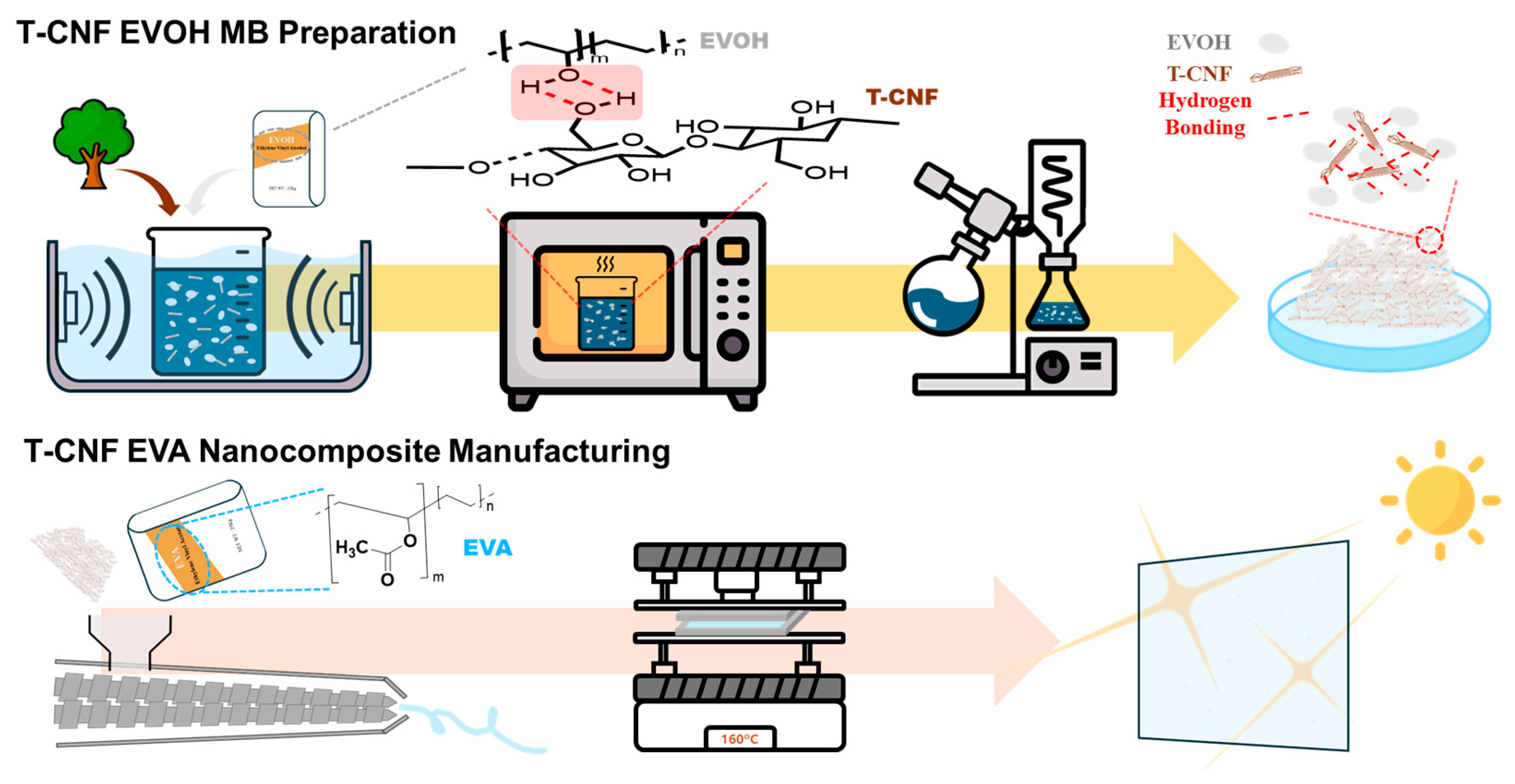
2.2. Preparation of EVOH/T-CNF Masterbatch
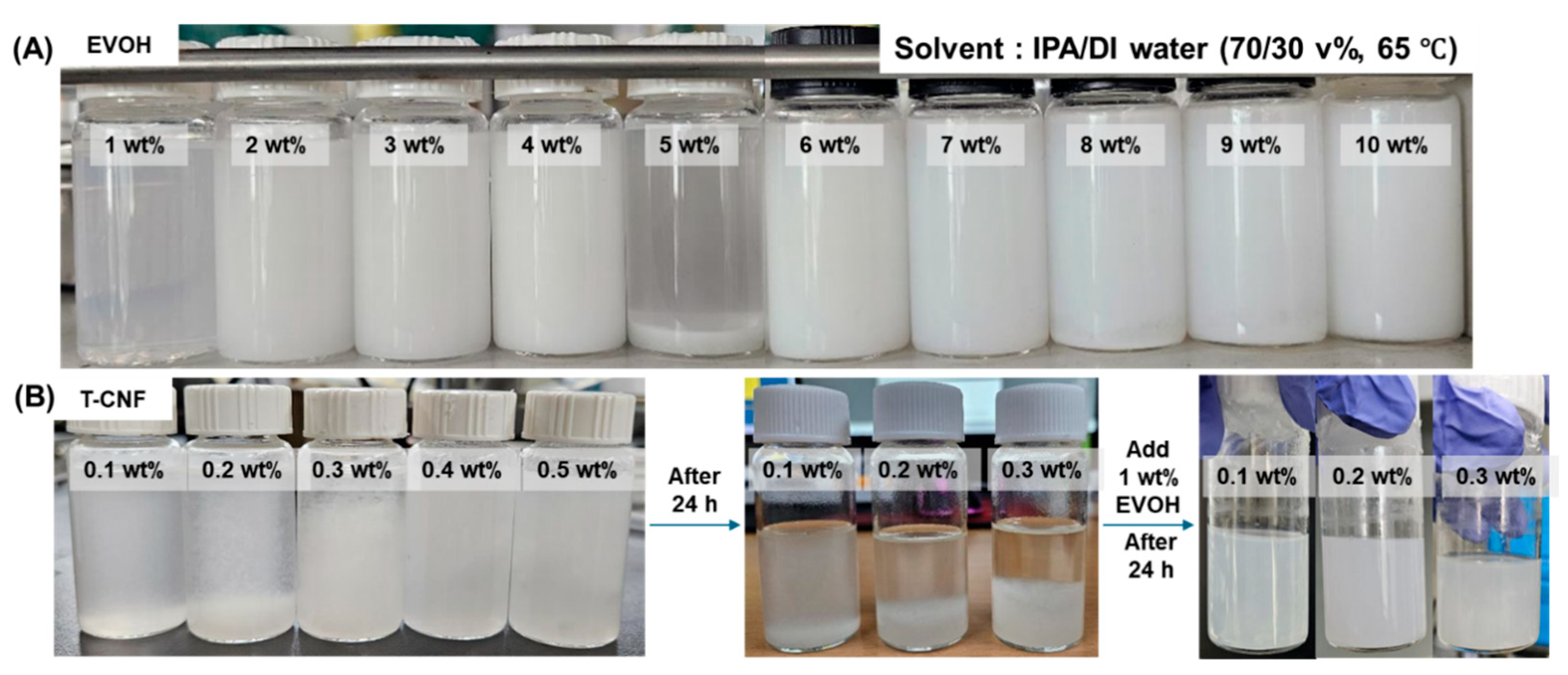
2.2.1. Evaluation of T-CNF and EVOH Dispersibility
2.2.2. Physical Modification and Recovery of T-CNF/EVOH Masterbatch
2.3. Melt Blending of T-CNF/EVOH Masterbatch with EVA Using Twin-Screw Extrusion
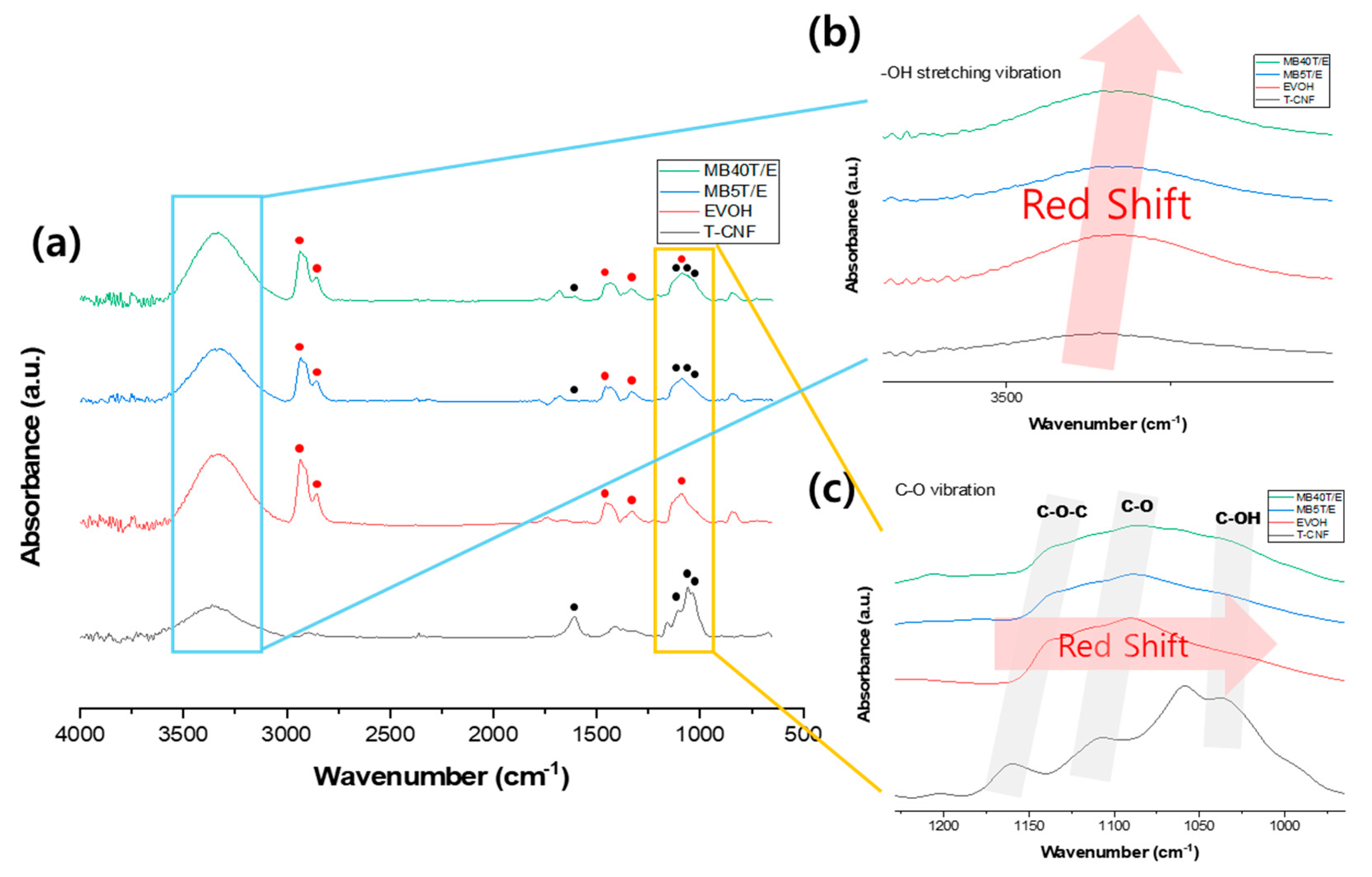
2.4. FTIR-Based Analysis of Hydrogen Bonding Between T-CNF and EVOH in the Masterbatch
2.5. Morphological Analysis
2.6. Thermal Analysis
2.7. Mechanical Properties
3. Results
3.1. Preparation of Masterbatch and Evaluation of Physical Compatibility
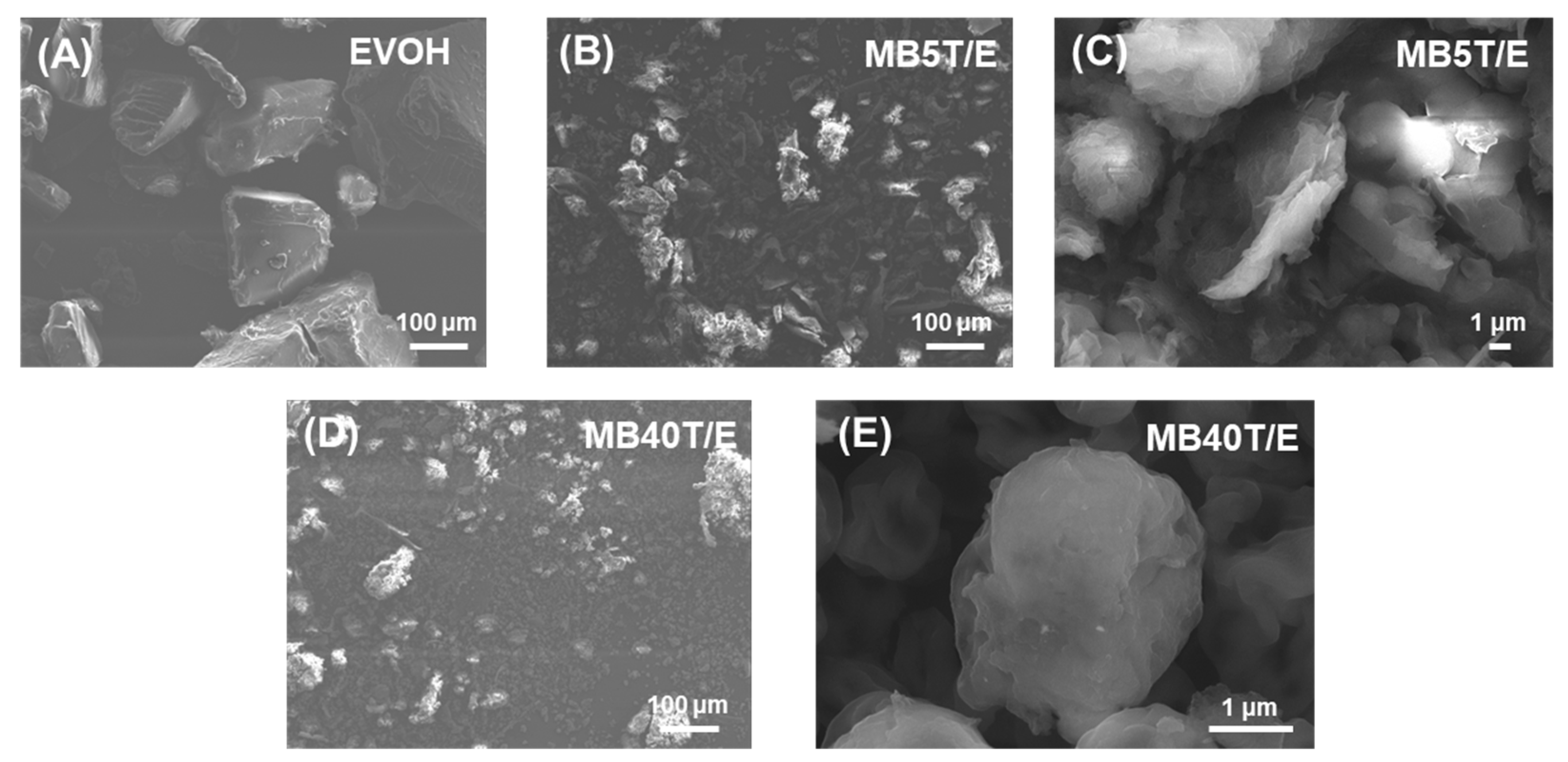
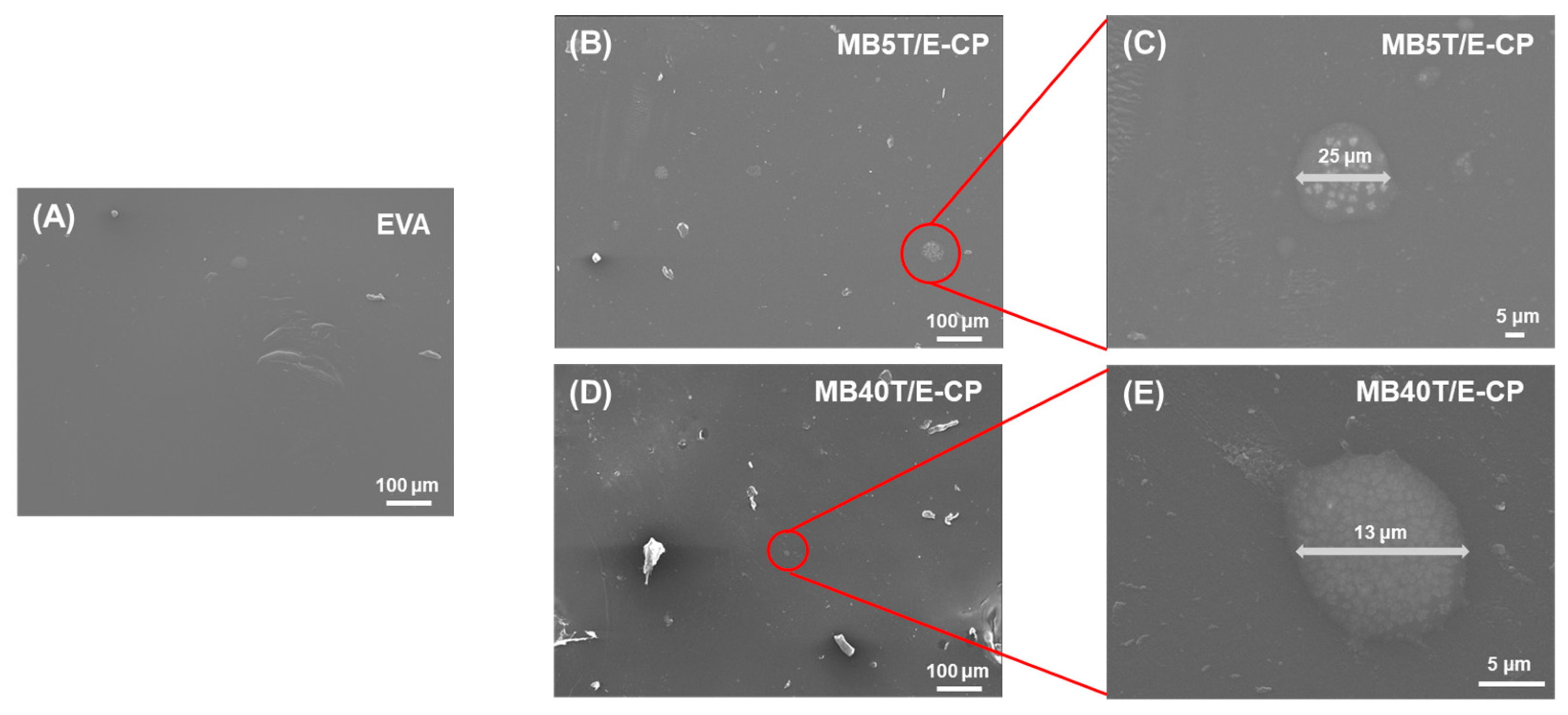
3.2. Morphological Analysis of T-CNF/EVOH Masterbatches and EVA Composites
3.3. Thermal Stability Enhancement Through T-CNF/EVOH Masterbatch Integration
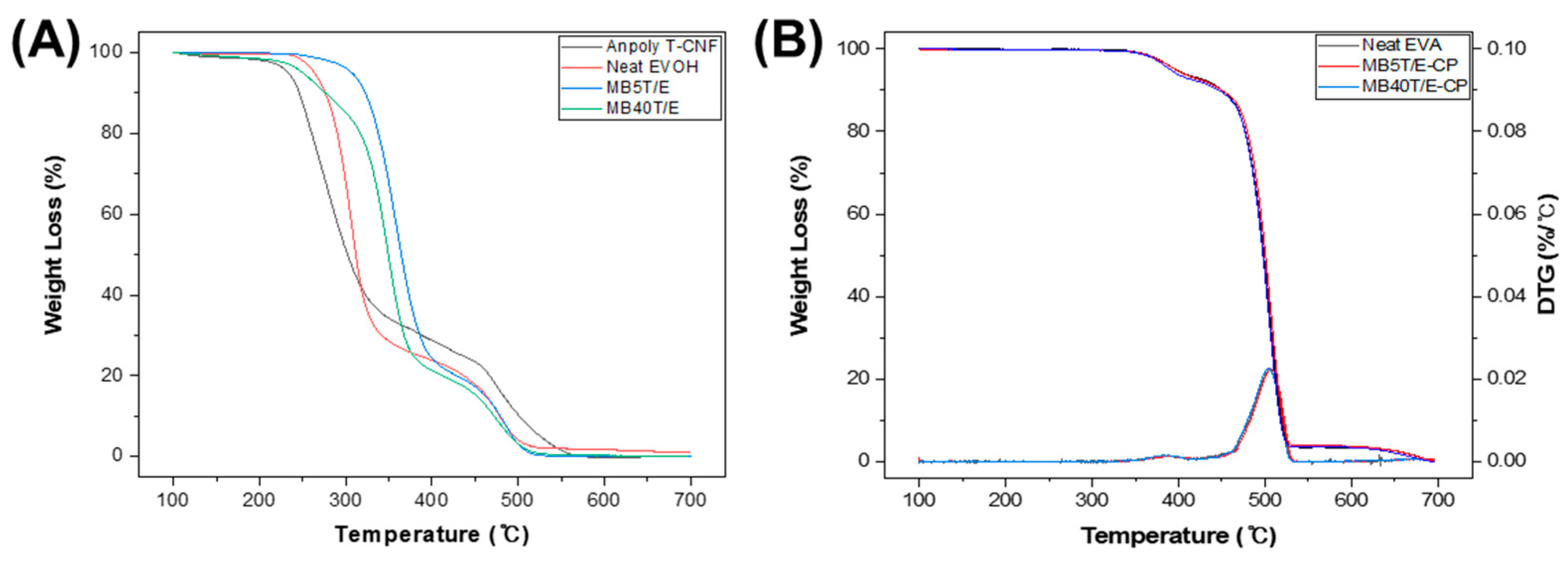
3.3.1. Improved Thermal Stability of T-CNF/EVOH Masterbatches via Hydrogen Bonding
3.3.2. Thermal Stability of EVA Composites Reinforced with T-CNF/EVOH Masterbatches
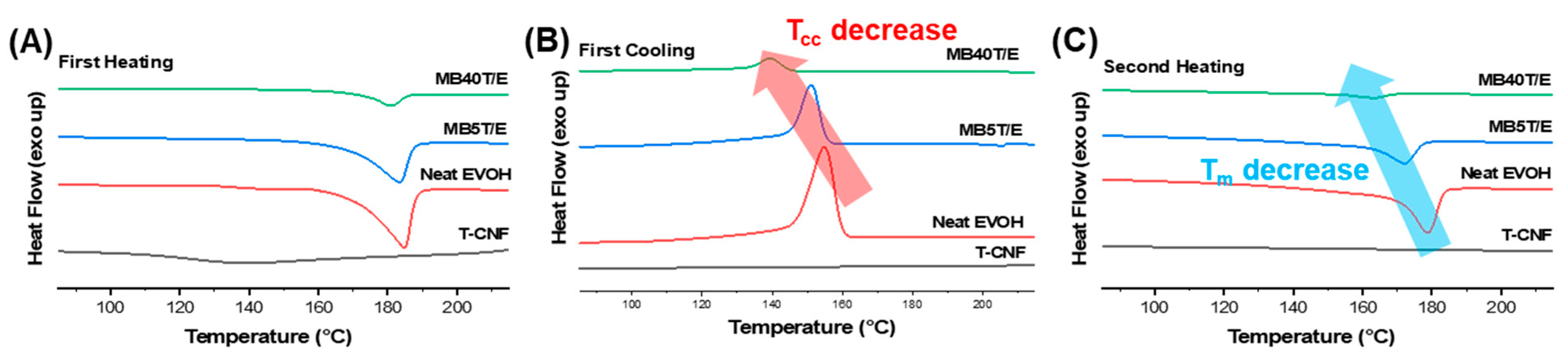
3.3.3. Crystalline Behavior and Thermal Transitions via DSC Analysis
3.4. Mechanical Properties of Melt-Compounded EVA Composites Reinforced with T-CNF/EVOH Masterbatches
4. Discussion
5. Conclusions
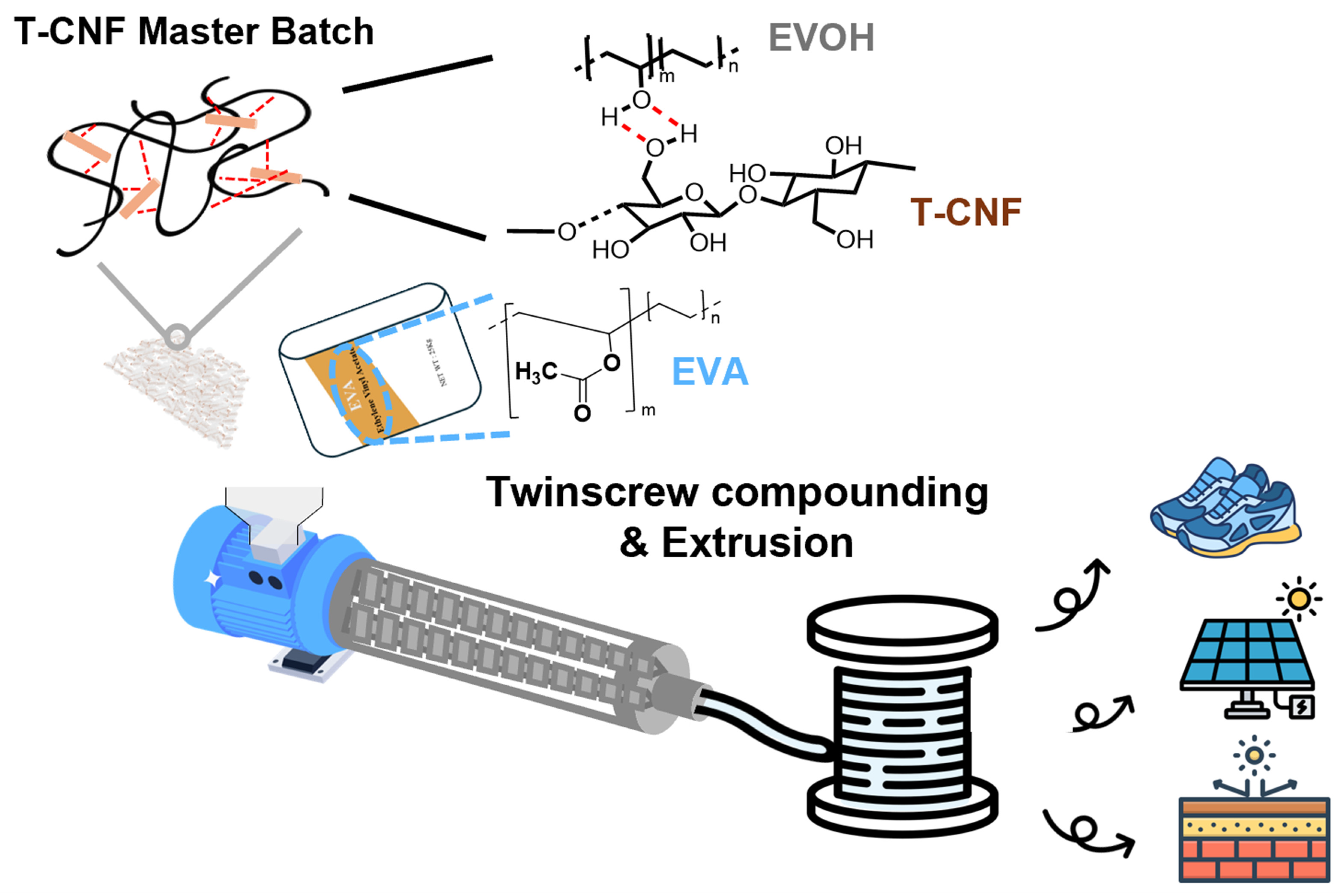
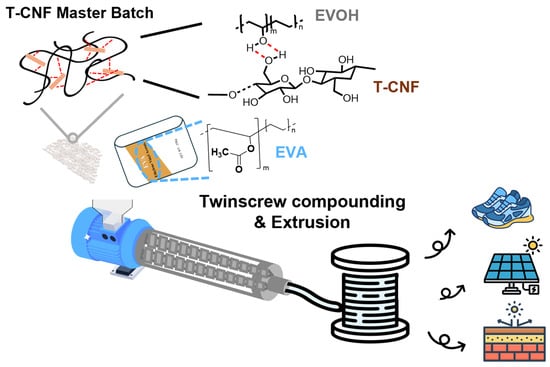
- T-CNFs were pre-encapsulated in EVOH to create a high-concentration masterbatch, preventing fiber aggregation during melt-processing.
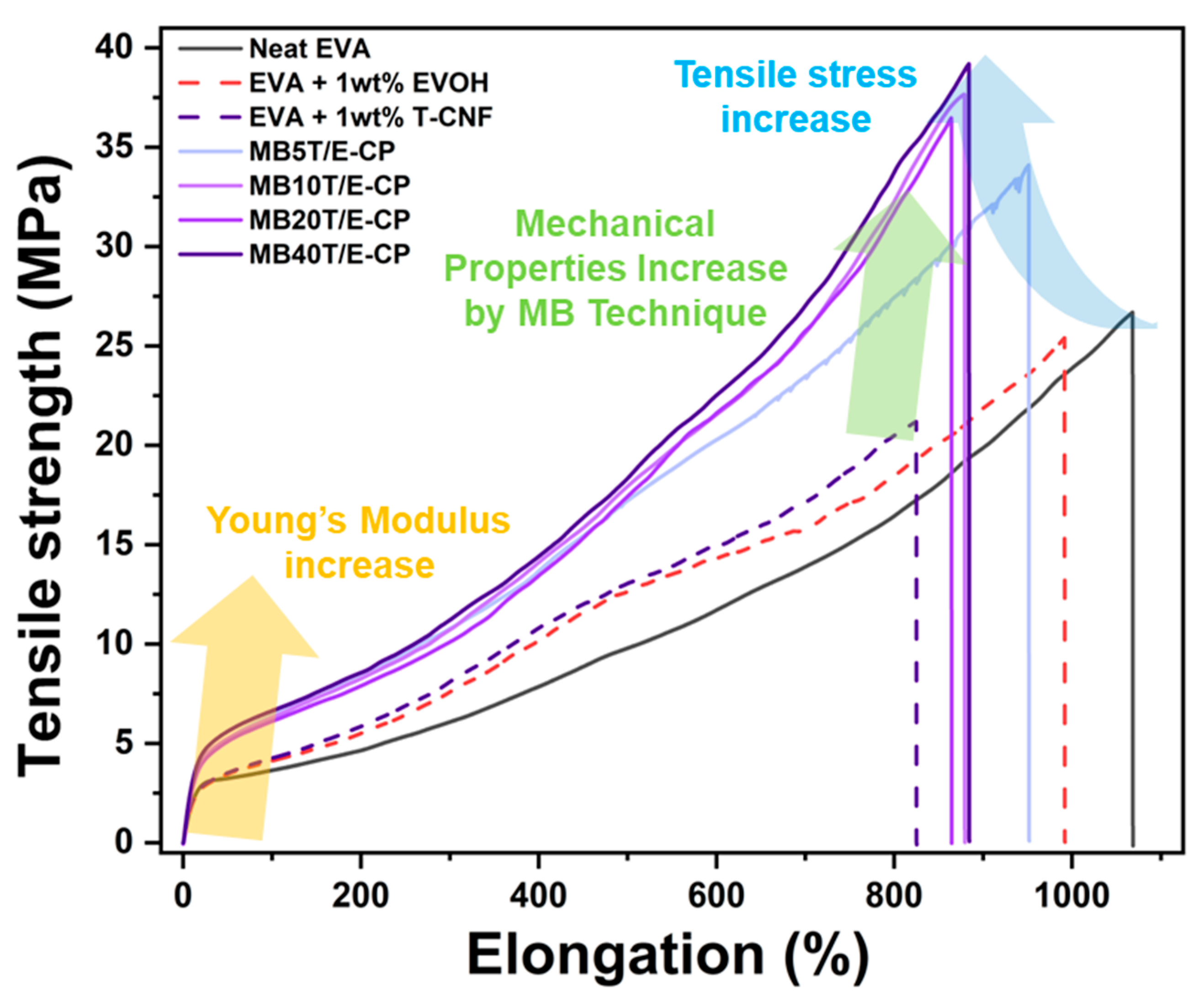
- Even at an ultra-low loading of 0.05 wt%, the composites achieved a 1.42-fold increase in Young’s modulus and a 1.54-fold increase in tensile strength.
- The structural similarity between EVA and EVOH ensured strong interfacial adhesion, transforming masterbatch particles into effective reinforcing nodes.
- This physical modification approach offers a scalable and sustainable route for high-performance industrial applications like solar cell encapsulation.
Supplementary Materials
Author Contributions
Funding
Institutional Review Board Statement
Data Availability Statement
Conflicts of Interest
References
- Kang, K.H.; Kim, H.R.; Park, S.; Park, J.S.; Hwang, D.; Lee, B.M.; Choi, J.H. Effect of intumescent flame retardants on the properties of poly (ethylene-co-vinyl acetate)/high-density polyethylene blends. J. Vinyl Addit. Technol. 2025, 31, 356–366. [Google Scholar] [CrossRef]
- Henderson, A.M. Ethylene-vinyl acetate (EVA) copolymers: A general review. IEEE Electr. Insul. Mag. 1993, 9, 30–38. [Google Scholar] [CrossRef]
- Chang, B.P.; Kashcheev, A.; Veksha, A.; Lisak, G.; Goei, R.; Leong, K.F.; Tok, A.l.Y.; Lipik, V. Nanocomposite foams with balanced mechanical properties and energy return from EVA and CNT for the midsole of sports footwear application. Polymers 2023, 15, 948. [Google Scholar] [CrossRef] [PubMed]
- Ahmed, J.; Mushtaq, S. Bridging the future: Unveiling the latest innovations in ethylene vinyl acetate blends and composites through electron beam irradiation—A comprehensive review. Macromol. Res. 2024, 32, 1049–1063. [Google Scholar] [CrossRef]
- Yin, J.; Zhang, J.; Yao, Y. Melt grafting of poly (ethylene-vinyl acetate) copolymer with maleic anhydride. J. Appl. Polym. Sci. 2006, 102, 841–846. [Google Scholar] [CrossRef]
- Subiela, J.R.; López, J.; Balart, R.; García-Jareño, J.J.; Vicente, F. Electrical properties of EVA filled by zinc powder. J. Mater. Sci. 2006, 41, 6396–6402. [Google Scholar] [CrossRef]
- Zhang, Z.-X.; Qi, X.-D.; Li, S.-T.; Yang, J.-H.; Zhang, N.; Huang, T.; Wang, Y. Water-actuated shape-memory and mechanically-adaptive poly(ethylene vinyl acetate) achieved by adding hydrophilic poly (vinyl alcohol). Eur. Polym. J. 2018, 98, 237–245. [Google Scholar] [CrossRef]
- Fortunati, E.; Puglia, D.; Kenny, J.M.; Haque, M.M.-U.; Pracella, M. Effect of ethylene-co-vinyl acetate-glycidylmethacrylate and cellulose microfibers on the thermal, rheological and biodegradation properties of poly(lactic acid) based systems. Polym. Degrad. Stab. 2013, 98, 2742–2751. [Google Scholar] [CrossRef]
- Samper, M.D.; Bertomeu, D.; Arrieta, M.P.; Ferri, J.M.; López-Martínez, J. Interference of biodegradable plastics in the polypropylene recycling process. Materials 2018, 11, 1886. [Google Scholar] [CrossRef] [PubMed]
- Chandran, A.J.; Rangappa, S.M.; Suyambulingam, I.; Siengchin, S. Micro/nano fillers for value-added polymer composites: A comprehensive review. J. Vinyl Addit. Technol. 2024, 30, 1083–1123. [Google Scholar] [CrossRef]
- Edo, G.I.; Mafe, A.N.; Ali, A.B.M.; Akpoghelie, P.O.; Yousif, E.; Isoje, E.F.; Igbuku, U.A.; Zainulabdeen, K.; Owheruo, J.O.; Essaghah, A.E.A.; et al. Advancing Sustainable Food Packaging: The Role of Green Nanomaterials in Enhancing Barrier Properties. Food Eng. Rev. 2025, 17, 573–607. [Google Scholar] [CrossRef]
- Dufresne, A. Cellulose nanomaterials as green nanoreinforcements for polymer nanocomposites. Philos. Trans. R. Soc. A 2018, 376, 20170040. [Google Scholar] [CrossRef]
- Isogai, A.; Saito, T.; Fukuzumi, H. TEMPO-oxidized cellulose nanofibers. Nanoscale 2011, 3, 71–85. [Google Scholar] [CrossRef]
- Hanif, Z.; Jeon, H.; Tran, T.H.; Jegal, J.; Park, S.-A.; Kim, S.-M.; Park, J.; Hwang, S.Y.; Oh, D.X. Butanol-mediated oven-drying of nanocellulose with enhanced dehydration rate and aqueous re-dispersion. J. Polym. Res. 2017, 25, 191. [Google Scholar] [CrossRef]
- Jeon, H.; Son, J.H.; Lee, J.; Park, S.B.; Ju, S.; Oh, D.X.; Koo, J.M.; Park, J. Preparation of a nanocellulose/nanochitin coating on a poly(lactic acid) film for improved hydrolysis resistance. Int. J. Biol. Macromol. 2024, 254, 127790. [Google Scholar] [CrossRef] [PubMed]
- Rayón, E.; Santiago, F.; Isabel, R.M.; Juan, L.; Arrieta, M.P. Microstructure, Mechanical, and Thermogravimetric Characterization of Cellulosic By-Products Obtained from Biomass Seeds. Int. J. Food Prop. 2015, 18, 1211–1222. [Google Scholar] [CrossRef]
- Brinchi, L.; Cotana, F.; Fortunati, E.; Kenny, J.M. Production of nanocrystalline cellulose from lignocellulosic biomass: Technology and applications. Carbohydr. Polym. 2013, 94, 154–169. [Google Scholar] [CrossRef]
- Hao, L.T.; Kim, S.; Lee, M.; Park, S.B.; Koo, J.M.; Jeon, H.; Park, J.; Oh, D.X. Next-generation all-organic composites: A sustainable successor to organic–inorganic hybrid materials. Int. J. Biol. Macromol. 2024, 269, 132129. [Google Scholar] [CrossRef]
- Xu, P.; Zhao, X.; Ma, P.; Chen, M.; Dong, W.; Hoch, M.; Lemstra, P.J. Design of nano-starch-reinforced ethyl-co-vinyl acetate elastomers by simultaneously constructing interfacial bonding and novel reversible matrix crosslinking. Chem. Eng. J. 2018, 346, 497–505. [Google Scholar] [CrossRef]
- Hubbe, M.A.; Ferrer, A.; Tyagi, P.; Yin, Y.; Salas, C.; Pal, L.; Rojas, O.J. Nanocellulose in thin films, coatings, and plies for packaging applications: A review. BioResources 2017, 12, 2143–2233. [Google Scholar] [CrossRef]
- Ma, L.; Zhang, Y.; Wang, S. Modified treatment for carbonized cellulose nanofiber application in composites. Compos. Part A Appl. Sci. Manuf. 2016, 90, 786–793. [Google Scholar] [CrossRef]
- Mishra, R.K.; Sabu, A.; Tiwari, S.K. Materials chemistry and the futurist eco-friendly applications of nanocellulose: Status and prospect. J. Saudi Chem. Soc. 2018, 22, 949–978. [Google Scholar] [CrossRef]
- Wang, L.; Okada, K.; Hikima, Y.; Ohshima, M.; Sekiguchi, T.; Yano, H. Effect of Cellulose Nanofiber (CNF) Surface Treatment on Cellular Structures and Mechanical Properties of Polypropylene/CNF Nanocomposite Foams via Core-Back Foam Injection Molding. Polymers 2019, 11, 249. [Google Scholar] [CrossRef] [PubMed]
- Zinge, C.; Kandasubramanian, B. Nanocellulose based biodegradable polymers. Eur. Polym. J. 2020, 133, 109758. [Google Scholar] [CrossRef]
- Spagnuolo, L.; D’Orsi, R.; Operamolla, A. Nanocellulose for paper and textile coating: The importance of surface chemistry. ChemPlusChem 2022, 87, e202200204. [Google Scholar] [CrossRef]
- Girija, B.G.; Sailaja, R.R.N.; Biswas, S.; Deepthi, M.V. Mechanical and Thermal Properties of Eva Blended with Biodegradable Ethyl Cellulose. J. Appl. Polym. Sci. 2010, 116, 821–829. [Google Scholar] [CrossRef]
- Saito, T.; Kimura, S.; Nishiyama, Y.; Isogai, A. Cellulose Nanofibers Prepared by TEMPO-Mediated Oxidation of Native Cellulose. Biomacromolecules 2007, 8, 2485–2491. [Google Scholar] [CrossRef]
- Martínez-Sanz, M.; Olsson, R.T.; Lopez-Rubio, A.; Lagaron, J.M. Development of bacterial cellulose nanowhiskers reinforced EVOH composites by electrospinning. J. Appl. Polym. Sci. 2012, 124, 1398–1408. [Google Scholar] [CrossRef]
- Du, J.; Guo, J.; Zhu, Q.; Guo, J.; Gu, J.; Wu, Y.; Ren, L.; Yang, S.; Jiang, J. Enhancement of Polyvinyl Alcohol-Based Films by Chemically Modified Lignocellulosic Nanofibers Derived from Bamboo Shoot Shells. Polymers 2025, 17, 1571. [Google Scholar] [CrossRef]
- Sun, J.; Yang, X.; Bai, Y.; Fang, Z.; Zhang, S.; Wang, X.; Yang, Y.; Guo, Y. Recent Advances in Cellulose Nanofiber Modification and Characterization and Cellulose Nanofiber-Based Films for Eco-Friendly Active Food Packaging. Foods 2024, 13, 3999. [Google Scholar] [CrossRef]
- Keulder, L. The Preparation of Polyolefin Nanofibres by Solution Electrospinning. Doctoral Dissertation, Stellenbosch University, Stellenbosch, South Africa, 2013. [Google Scholar]
- ASTM D638-14; Standard Test Method for Tensile Properties of Plastics. ASTM International: West Conshohocken, PA, USA, 2014.
- Cheng, Q.; Wang, S.; Rials, T.G. Poly (vinyl alcohol) nanocomposites reinforced with cellulose fibrils isolated by high intensity ultrasonication. Compos. Part A Appl. Sci. Manuf. 2009, 40, 218–224. [Google Scholar] [CrossRef]
- Kanaya, T.; Ohkura, M.; Takeshita, H.; Kaji, K.; Furusaka, M.; Yamaoka, H.; Wignall, G. Gelation process of poly (vinyl alcohol) as studied by small-angle neutron and light scattering. Macromolecules 1995, 28, 3168–3174. [Google Scholar] [CrossRef]
- Mokwena, K.K.; Tang, J. Ethylene vinyl alcohol: A review of barrier properties for packaging shelf stable foods. Crit. Rev. Food Sci. Nutr. 2012, 52, 640–650. [Google Scholar] [CrossRef]
- Jin, S.B.; Hao, L.T.; Hwang, S.Y.; Oh, D.X.; Koo, J.M.; Jeon, H.; Park, S.B.; Park, J. Masterbatch of Chitosan Nanowhiskers for Preparation of Nylon 6,10 Nanocomposite by Melt Blending. Polymers 2022, 14, 5488. [Google Scholar] [CrossRef]
- Wang, Y.; Shi, Y.; Shao, W.; Ren, Y.; Dong, W.; Zhang, F.; Liu, L.-Z. Crystallization, structures, and properties of different polyolefins with similar grafting degree of maleic anhydride. Polymers 2020, 12, 675. [Google Scholar] [CrossRef]
- Van Duin, M. Grafting of polyolefins with maleic anhydride: Alchemy or technology? Macromol. Symp. 2003, 202, 1–10. [Google Scholar] [CrossRef]
- He, L.; Ye, D.; Weng, S.; Jiang, X. A high-strength, environmentally stable, self-healable, and recyclable starch/PVA organohydrogel for strain sensor. Eur. Polym. J. 2022, 181, 111650. [Google Scholar] [CrossRef]
- Poletto, M.; Ornaghi Junior, H.L.; Zattera, A.J. Native cellulose: Structure, characterization and thermal properties. Materials 2014, 7, 6105–6119. [Google Scholar] [CrossRef]
- Colom, X.; Carrillo, F.; Nogués, F.; Garriga, P. Structural analysis of photodegraded wood by means of FTIR spectroscopy. Polym. Degrad. Stab. 2003, 80, 543–549. [Google Scholar] [CrossRef]
- Mandal, A.; Chakrabarty, D. Isolation of nanocellulose from waste sugarcane bagasse (SCB) and its characterization. Carbohydr. Polym. 2011, 86, 1291–1299. [Google Scholar] [CrossRef]
- Lu, J.; Wang, T.; Drzal, L.T. Preparation and properties of microfibrillated cellulose polyvinyl alcohol composite materials. Compos. Part A Appl. Sci. Manuf. 2008, 39, 738–746. [Google Scholar] [CrossRef]
- Shelenkov, P.G.; Pantyukhov, P.V.; Aleshinskaya, S.V.; Maltsev, A.A.; Abushakhmanova, Z.R.; Popov, A.A.; Saavedra-Arias, J.J.; Poletto, M. Thermal Stability of Highly Filled Cellulosic Biocomposites Based on Ethylene–Vinyl Acetate Copolymer. Polymers 2024, 16, 2103. [Google Scholar] [CrossRef]
- Sclavons, M.; Franquinet, P.; Carlier, V.; Verfaillie, G.; Fallais, I.; Legras, R.; Laurent, M.; Thyrion, F. Quantification of the maleic anhydride grafted onto polypropylene by chemical and viscosimetric titrations, and FTIR spectroscopy. Polymer 2000, 41, 1989–1999. [Google Scholar] [CrossRef]
- Sclavons, M.; Laurent, M.; Devaux, J.; Carlier, V. Maleic anhydride-grafted polypropylene: FTIR study of a model polymer grafted by ene-reaction. Polymer 2005, 46, 8062–8067. [Google Scholar] [CrossRef]
- Yang, L.; Zhang, F.; Endo, T.; Hirotsu, T. Microstructure of maleic anhydride grafted polyethylene by high-resolution solution-state NMR and FTIR spectroscopy. Macromolecules 2003, 36, 4709–4718. [Google Scholar] [CrossRef]
- Kuperkar, K.; Patel, D.; Atanase, L.I.; Bahadur, P. Amphiphilic Block Copolymers: Their Structures, and Self-Assembly to Polymeric Micelles and Polymersomes as Drug Delivery Vehicles. Polymers 2022, 14, 4702. [Google Scholar] [CrossRef]
- Obata, M.; Masuda, S.; Takahashi, M.; Yazaki, K.; Hirohara, S. Effect of the hydrophobic segment of an amphiphilic block copolymer on micelle formation, zinc phthalocyanine loading, and photodynamic activity. Eur. Polym. J. 2021, 147, 110325. [Google Scholar] [CrossRef]
- Norizan, M.N.; Shazleen, S.S.; Alias, A.H.; Sabaruddin, F.A.; Asyraf, M.R.M.; Zainudin, E.S.; Abdullah, N.; Samsudin, M.S.; Kamarudin, S.H.; Norrrahim, M.N.F. Nanocellulose-based nanocomposites for sustainable applications: A review. Nanomaterials 2022, 12, 3483. [Google Scholar] [CrossRef]
- Lee, M.; Kwak, H.; Eom, Y.; Park, S.-A.; Sakai, T.; Jeon, H.; Koo, J.M.; Kim, D.; Cha, C.; Hwang, S.Y. Network of cyano-p-aramid nanofibres creates ultrastiff and water-rich hydrospongels. Nat. Mater. 2024, 23, 414–423. [Google Scholar] [CrossRef]
- Bikiaris, N.D.; Koumentakou, I.; Samiotaki, C.; Meimaroglou, D.; Varytimidou, D.; Karatza, A.; Kalantzis, Z.; Roussou, M.; Bikiaris, R.D.; Papageorgiou, G.Z. Recent advances in the investigation of poly (lactic acid)(PLA) nanocomposites: Incorporation of various nanofillers and their properties and applications. Polymers 2023, 15, 1196. [Google Scholar] [CrossRef]
- Park, S.-A.; Eom, Y.; Jeon, H.; Koo, J.M.; Lee, E.S.; Jegal, J.; Hwang, S.Y.; Oh, D.X.; Park, J. Preparation of synergistically reinforced transparent bio-polycarbonate nanocomposites with highly dispersed cellulose nanocrystals. Green Chem. 2019, 21, 5212–5221. [Google Scholar] [CrossRef]
- Sangeetha, V.H.; Varghese, T.O.; Nayak, S.K. Value Addition of Waste Cotton: Effect of Nanofibrillated Cellulose on EVA/EVOH Toughened Polylactic Acid System. Waste Biomass Valorization 2020, 11, 4119–4128. [Google Scholar] [CrossRef]
- Graninger, G. Cellulose as a Functional Additive to Develop Composite Materials. Ph.D. Thesis, Queen’s University Belfast, Belfast, UK, 2024. [Google Scholar]
- Nishiyama, Y.; Langan, P.; Chanzy, H. Crystal Structure and Hydrogen-Bonding System in Cellulose Iβ from Synchrotron X-ray and Neutron Fiber Diffraction. J. Am. Chem. Soc. 2002, 124, 9074–9082. [Google Scholar] [CrossRef]
- Melo, A.R.A.; da Silva, E.O.; Menezes, L.R.; Tavares, M.I.B. The effect of modified cellulose particles on morphology and properties ethylene vinyl acetate copolymer. Polym. Test. 2018, 68, 333–339. [Google Scholar] [CrossRef]
- Ma, P.; Jiang, L.; Hoch, M.; Dong, W.; Chen, M. Reinforcement of transparent ethylene-co-vinyl acetate rubber by nanocrystalline cellulose. Eur. Polym. J. 2015, 66, 47–56. [Google Scholar] [CrossRef]
- Yuwawech, K.; Wootthikanokkhan, J.; Tanpichai, S. Enhancement of thermal, mechanical and barrier properties of EVA solar cell encapsulating films by reinforcing with esterified cellulose nanofibres. Polym. Test. 2015, 48, 12–22. [Google Scholar] [CrossRef]
- Thanh, T.V.; Hao, L.T.; Cho, H.-Y.; Kim, H.; Park, S.-A.; Lee, M.; Kim, H.J.; Jeon, H.; Hwang, S.Y.; Park, J. Sustainable poly (butylene adipate-co-furanoate) composites with sulfated chitin nanowhiskers: Synergy leading to superior robustness and improved biodegradation. ACS Sustain. Chem. Eng. 2022, 10, 8411–8422. [Google Scholar] [CrossRef]
- Park, S.-A.; Eom, Y.; Jeon, H.; Koo, J.M.; Kim, T.; Jeon, J.; Park, M.J.; Hwang, S.Y.; Kim, B.-S.; Oh, D.X. Aramid nanofiber templated in situ SNAr polymerization for maximizing the performance of all-organic nanocomposites. ACS Macro Lett. 2020, 9, 558–564. [Google Scholar] [CrossRef] [PubMed]
- Luzi, F.; Torre, L.; Kenny, J.M.; Puglia, D. Bio-and fossil-based polymeric blends and nanocomposites for packaging: Structure–property relationship. Materials 2019, 12, 471. [Google Scholar] [CrossRef]
- Park, S.-A.; Jeon, H.; Kwak, H.; Koo, J.M.; Oh, D.X.; Park, J. High-performance transparent polysulfone nanocomposites enhanced with masterbatch-based aramid nanofibers for improved toughness and flame retardancy. Adv. Compos. Hybrid Mater. 2025, 8, 307. [Google Scholar] [CrossRef]



| MB5T/E | MB40T/E | EVOH | T-CNF | |
|---|---|---|---|---|
| Vibration Mode | Wavenumber (cm−1) | |||
| –OH stretching | 3329 | 3321 | 3335 | 3360 |
| C–O–C asymmetric stretching | 1136 | 1137 | - | 1160 |
| C–O stretching | 1090 | 1087 | 1090 | 1108 |
| C–OH stretching and bending | 1029 | 1033 | - | 1035 |
| HBI a | 6.30 | 8.23 | 3.01 | 8.41 |
| T-CNF Loading in MB Used (w/w%) | T-CNF Loading in MB (wt%) | T-CNF Loading in Composite (wt%) | |
|---|---|---|---|
| Neat EVA | - | - | - |
| MB5T/E-CP a | 5 | 4.76 | 0.05 |
| MB10T/E-CP | 10 | 9.09 | 0.091 |
| MB20T/E-CP | 20 | 16.67 | 0.167 |
| MB40T/E-CP | 40 | 28.57 | 0.286 |
| Td5 (°C) | |
|---|---|
| T-CNF | 233 |
| MB5T/E | 307 (+74) a |
| MB40T/E | 250 (+17) |
| Td3 (°C) | Td5 (°C) | Td10 (°C) | Tmax (°C) | |
|---|---|---|---|---|
| Neat EVA | 381 | 397 | 450 | 510 |
| MB5T/E-CP | 379 (−2) a | 395 (−2) | 449 (−1) | 509 (−1) |
| MB40T/E-CP | 377 (−4) | 391 (−6) | 447 (−3) | 503 (−7) |
| Tcc (°C) | Tm (°C) | ΔHm (J g−1) | |
|---|---|---|---|
| Neat EVOH | 158 | 183 | 29.03 |
| MB5T/E | 151 (−7) a | 176 (−7) | 9.13 |
| MB40T/E | 141 (−17) | 171 (−12) | 0.52 |
| Tensile Strength at Break (MPa) | Young’s Modulus (MPa) | |
|---|---|---|
| Neat EVA | 26 | 26 |
| EVA + EVOH | 25 (0.95-fold) a | 27 (1.04-fold) |
| EVA + T-CNF | 21 (0.81-fold) | 30 (1.15-fold) |
| MB5T/E-CP | 34 (1.31-fold) | 37 (1.42-fold) |
| MB10T/E-CP | 37 (1.42-fold) | 33 (1.26-fold) |
| MB20T/E-CP | 37 (1.42-fold) | 32 (1.23-fold) |
| MB40T/E-CP | 40 (1.54-fold) | 34 (1.31-fold) |
Disclaimer/Publisher’s Note: The statements, opinions and data contained in all publications are solely those of the individual author(s) and contributor(s) and not of MDPI and/or the editor(s). MDPI and/or the editor(s) disclaim responsibility for any injury to people or property resulting from any ideas, methods, instructions or products referred to in the content. |
© 2026 by the authors. Licensee MDPI, Basel, Switzerland. This article is an open access article distributed under the terms and conditions of the Creative Commons Attribution (CC BY) license.
Share and Cite
Kim, H.; Lee, H.; Seo, S.; Jang, H.; Park, J. Mechanical Reinforcement of Ethylene Vinyl Acetate (EVA) Nanocomposites Prepared from Masterbatch of Cellulose Nanofibers Wrapped with Ethylene Vinyl Alcohol (EVOH). Polymers 2026, 18, 167. https://doi.org/10.3390/polym18020167
Kim H, Lee H, Seo S, Jang H, Park J. Mechanical Reinforcement of Ethylene Vinyl Acetate (EVA) Nanocomposites Prepared from Masterbatch of Cellulose Nanofibers Wrapped with Ethylene Vinyl Alcohol (EVOH). Polymers. 2026; 18(2):167. https://doi.org/10.3390/polym18020167
Chicago/Turabian StyleKim, Hyungrai, Hyewon Lee, Seokkyoo Seo, Heejung Jang, and Jeyoung Park. 2026. "Mechanical Reinforcement of Ethylene Vinyl Acetate (EVA) Nanocomposites Prepared from Masterbatch of Cellulose Nanofibers Wrapped with Ethylene Vinyl Alcohol (EVOH)" Polymers 18, no. 2: 167. https://doi.org/10.3390/polym18020167
APA StyleKim, H., Lee, H., Seo, S., Jang, H., & Park, J. (2026). Mechanical Reinforcement of Ethylene Vinyl Acetate (EVA) Nanocomposites Prepared from Masterbatch of Cellulose Nanofibers Wrapped with Ethylene Vinyl Alcohol (EVOH). Polymers, 18(2), 167. https://doi.org/10.3390/polym18020167