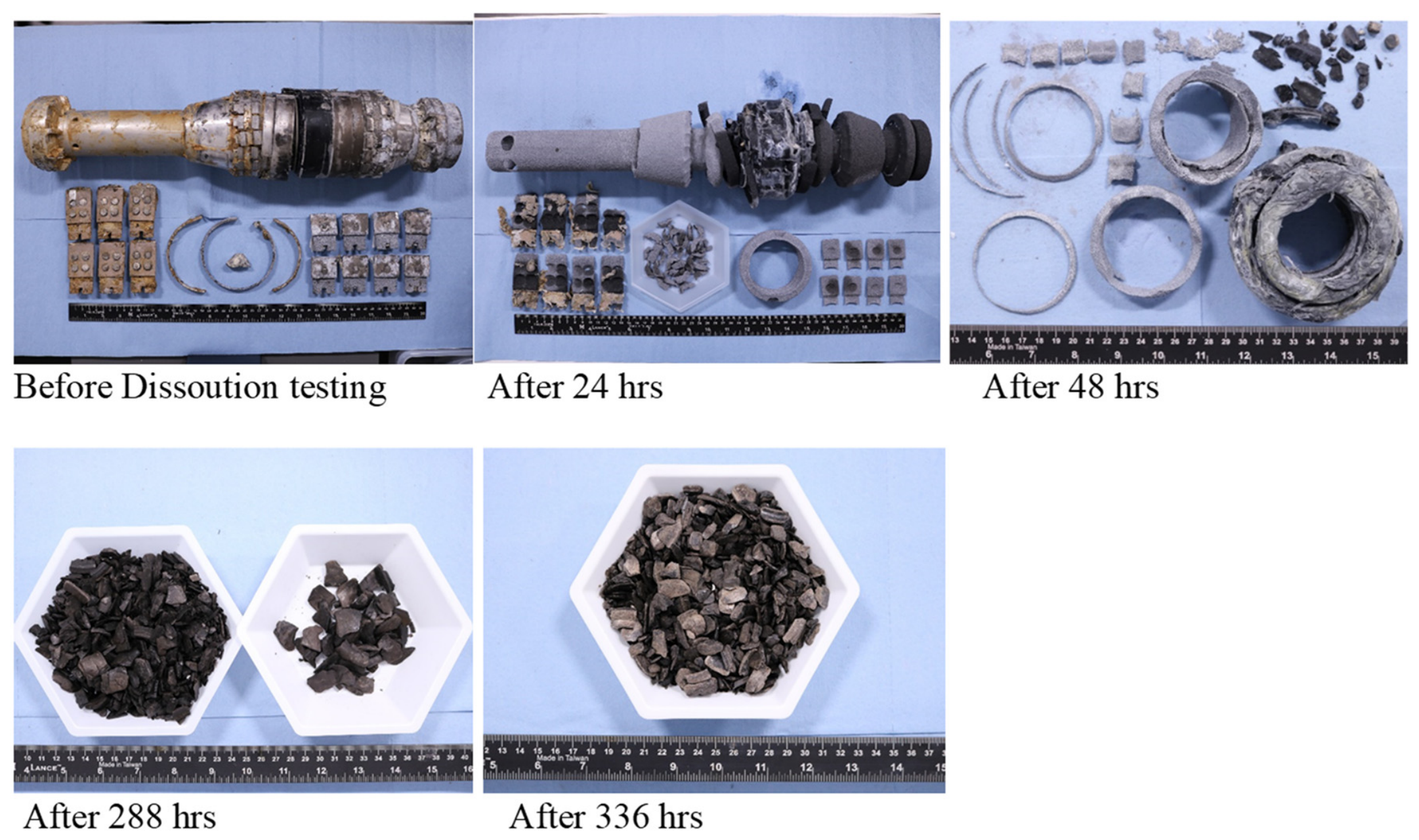
Advances in Dissolvable Polymers and Composites for the Oil and Gas Industry


Abstract
1. Introduction
2. Dissolvable/Degradable Materials Fundamentals
2.1. Polymer Degradation Process
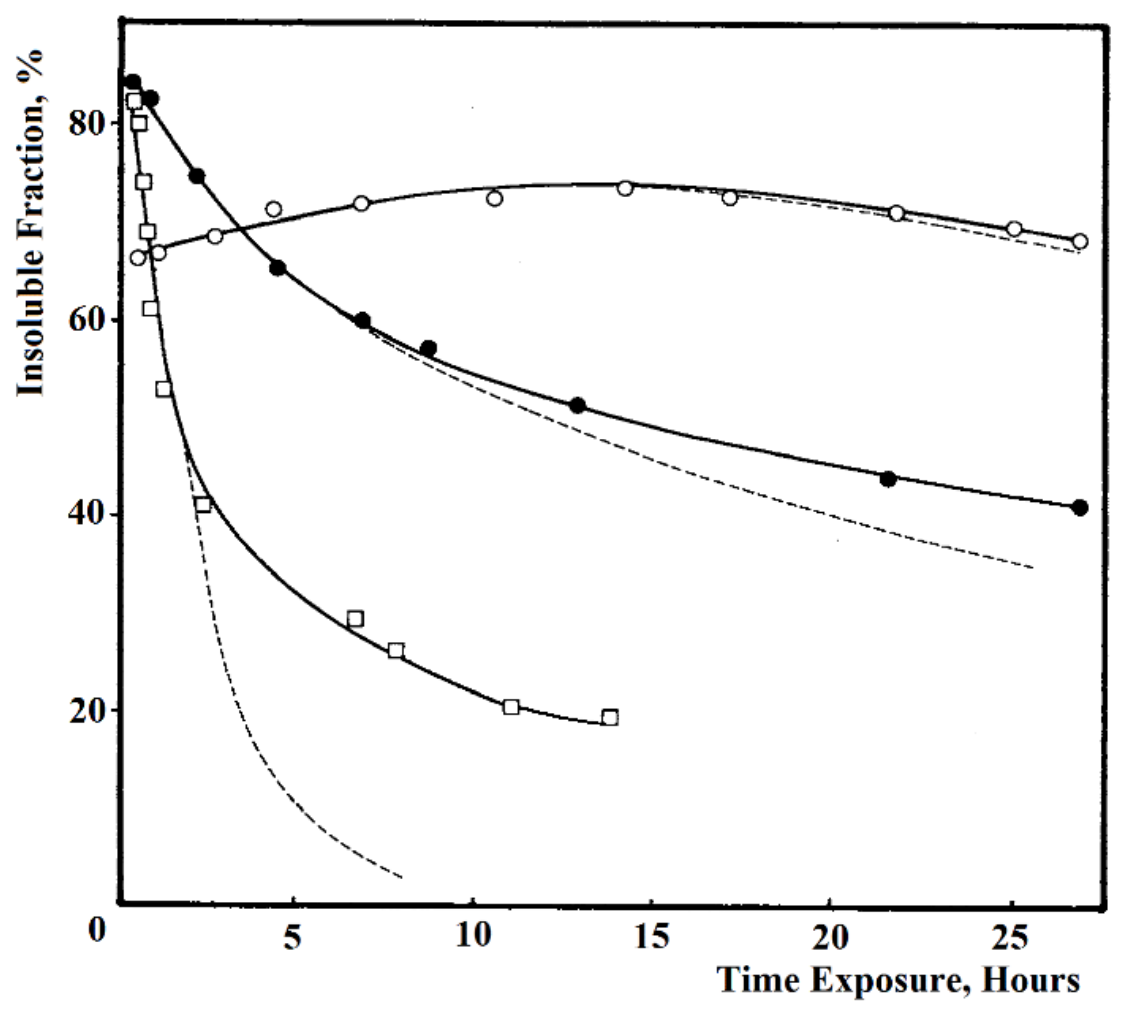
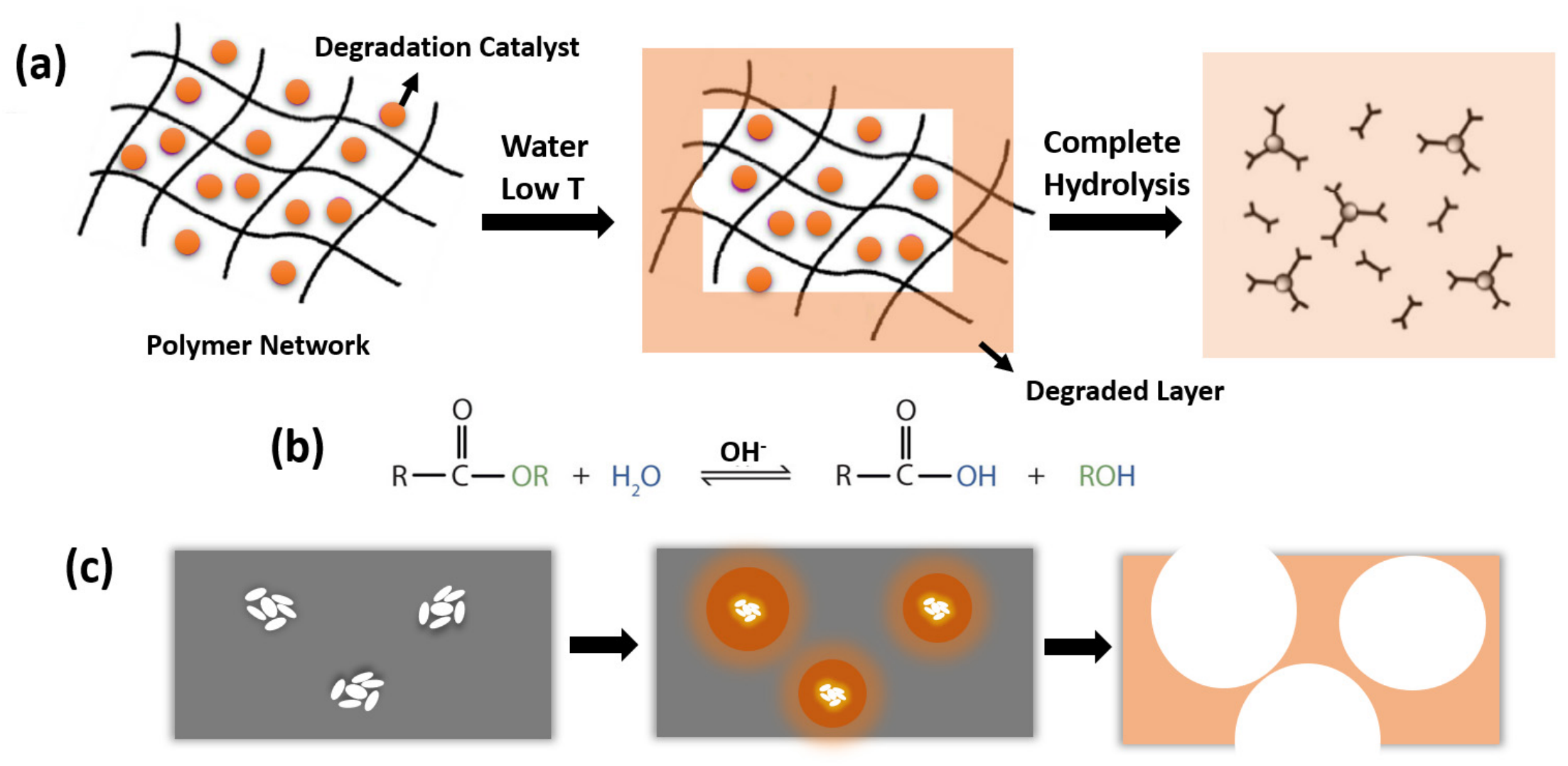
- Type 1: Surface-Reaction Type
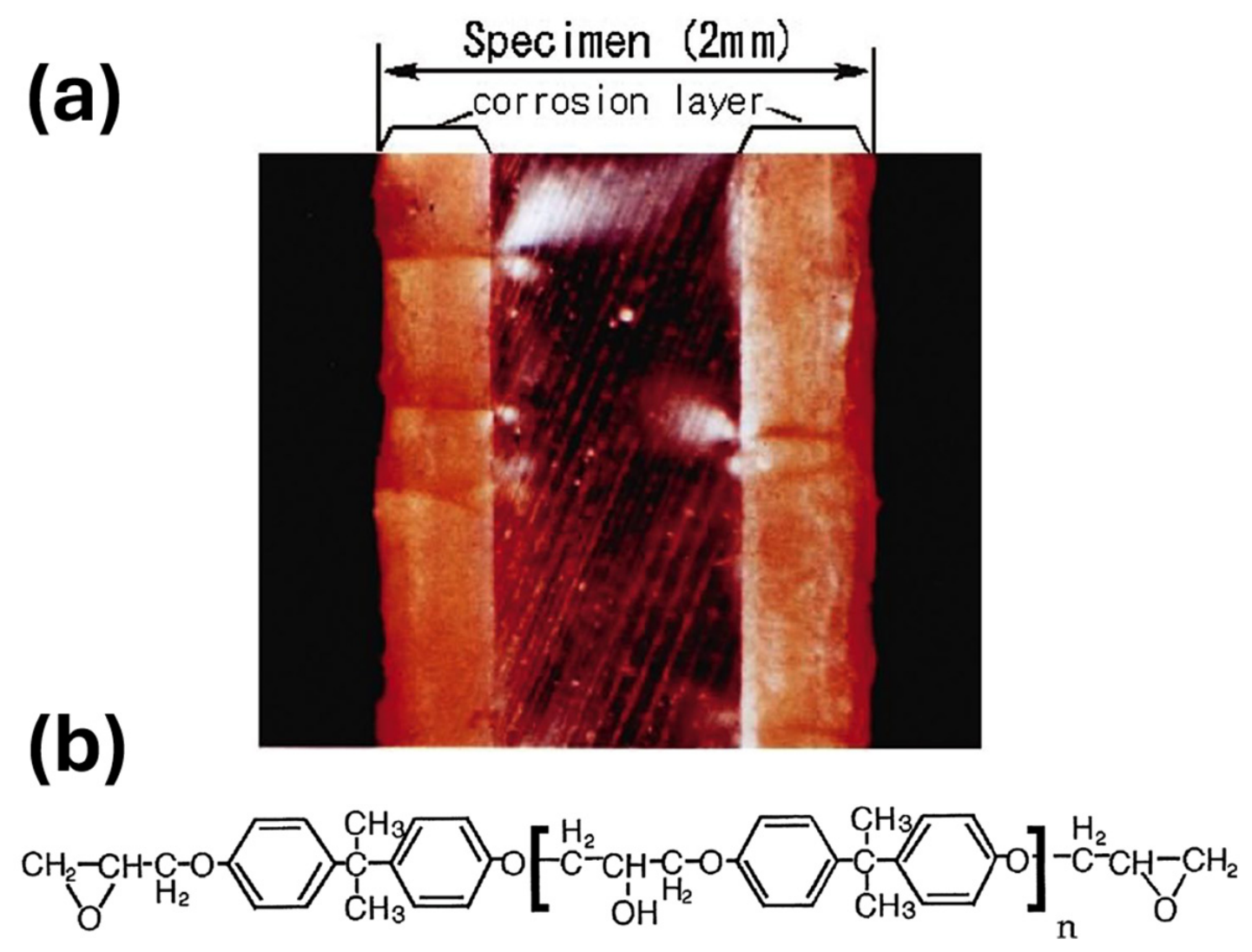
- Type 2: Corrosion-Layer-Forming Type
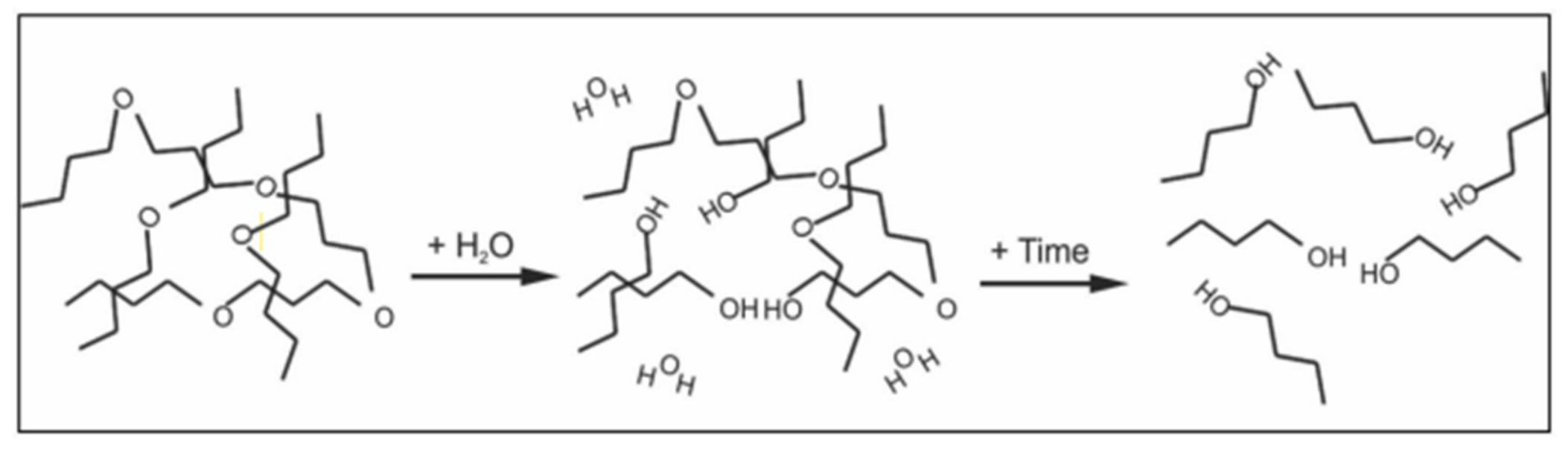
- Type 3: Penetration Type
2.2. Unique Requirements from the Oil and Gas Industry
- Biodegradable Materials: These materials are designed to operate at low temperatures, typically below 60 °C, to align with human body compatibility or natural environmental conditions [15]. Additionally, their mechanical strength is relatively low. Common examples include thermoplastic materials such as PGA and certain thermoset materials with glass transition temperatures below 60 °C, which limit the materials’ application for high-temperature wells.
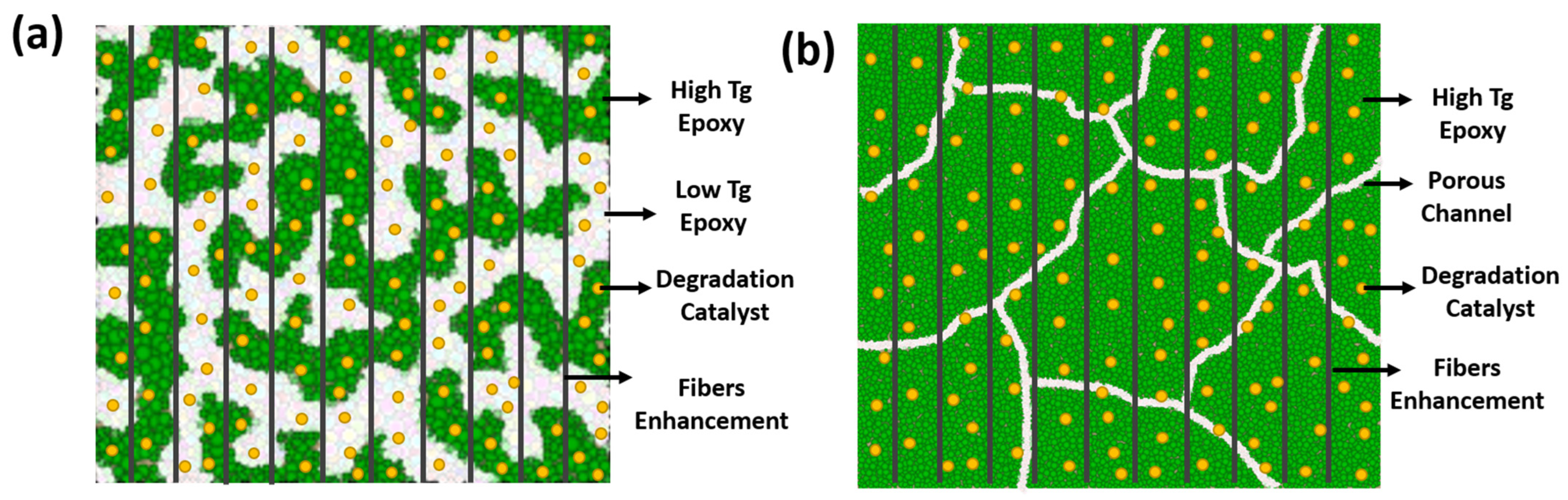
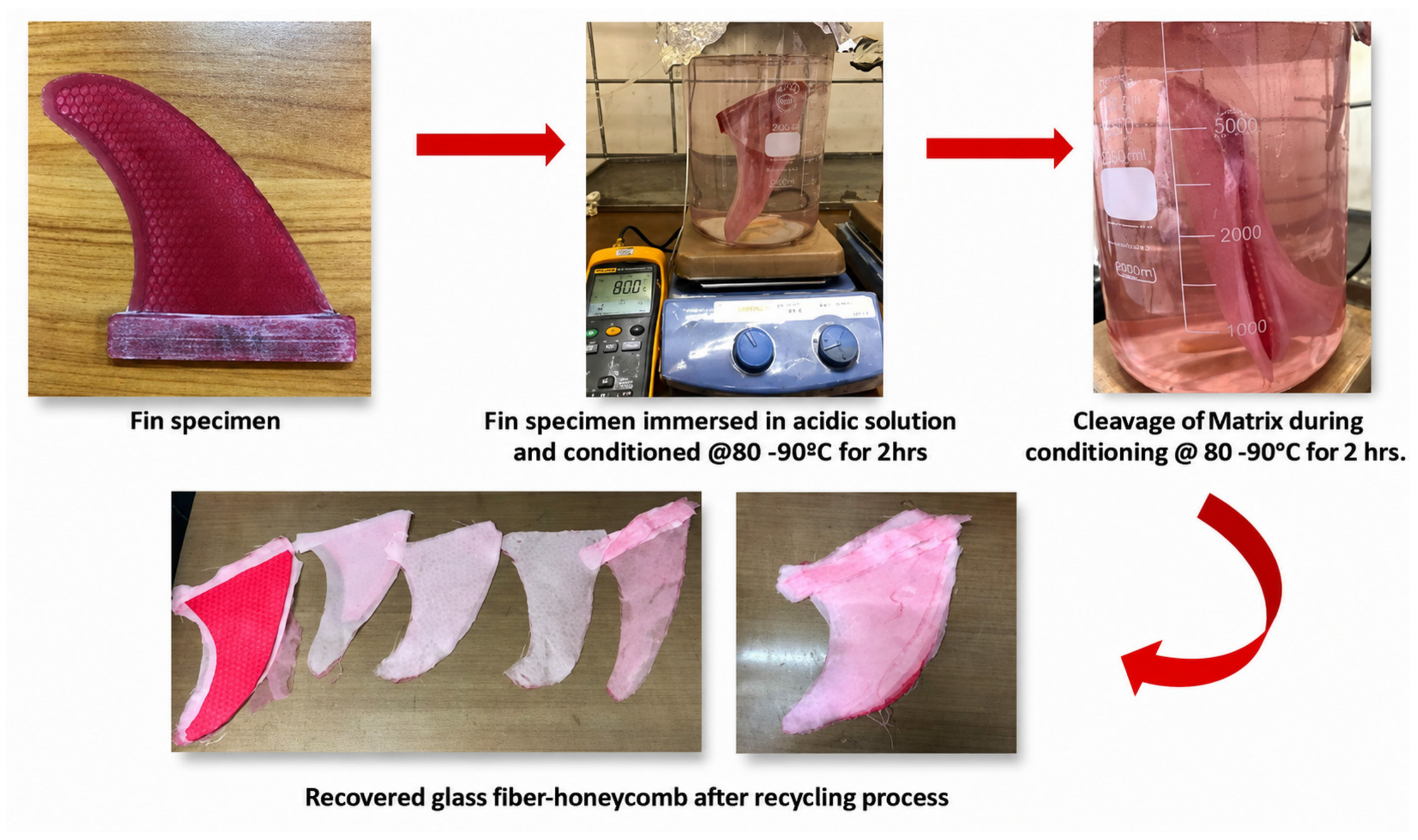
- Sustainable Materials: High-Tg thermoset materials (typically > 100 °C) are widely used in civil applications such as wind turbines, pipes, and storage tanks, often in fiber-reinforced composite forms. These materials are designed to degrade for recycling purposes, such as recovering expensive fiber reinforcements or reducing waste disposal issues. While their mechanical strength and temperature performance can meet oil and gas requirements, their degradation typically requires highly aggressive environments—such as high temperature and pressure, strong acids/bases, toxic solvents, or supercritical fluids [13,16]. These conditions are not typically present in downhole environments.
2.3. Degradable Polymer Matrix
2.3.1. Dissolvable Polymers
2.3.2. Fundamentals of Hydrolysis
2.4. Dissolvable/Degradable Fibers for Reinforcement
2.5. Catalyst for Hydrolysis Process
- The catalyst must not react with the polymer or prepolymer during mixing and processing.
- It must not catalyze hydrolysis during the mixing or processing stages.
- The catalyst must withstand processing conditions, including high temperatures, without degradation, vaporization, or loss of effectiveness.
- The catalyst should be water-free to avoid premature activation.
3. Degradable Thermoplastic Polymers
4. Degradable Thermosetting Polymers
4.1. Cyanate Ester
4.2. Epoxy
4.3. Polyester
4.4. Acetal Linkages

4.5. Other Potential Chemistries
4.5.1. Urea–Formaldehyde Resins
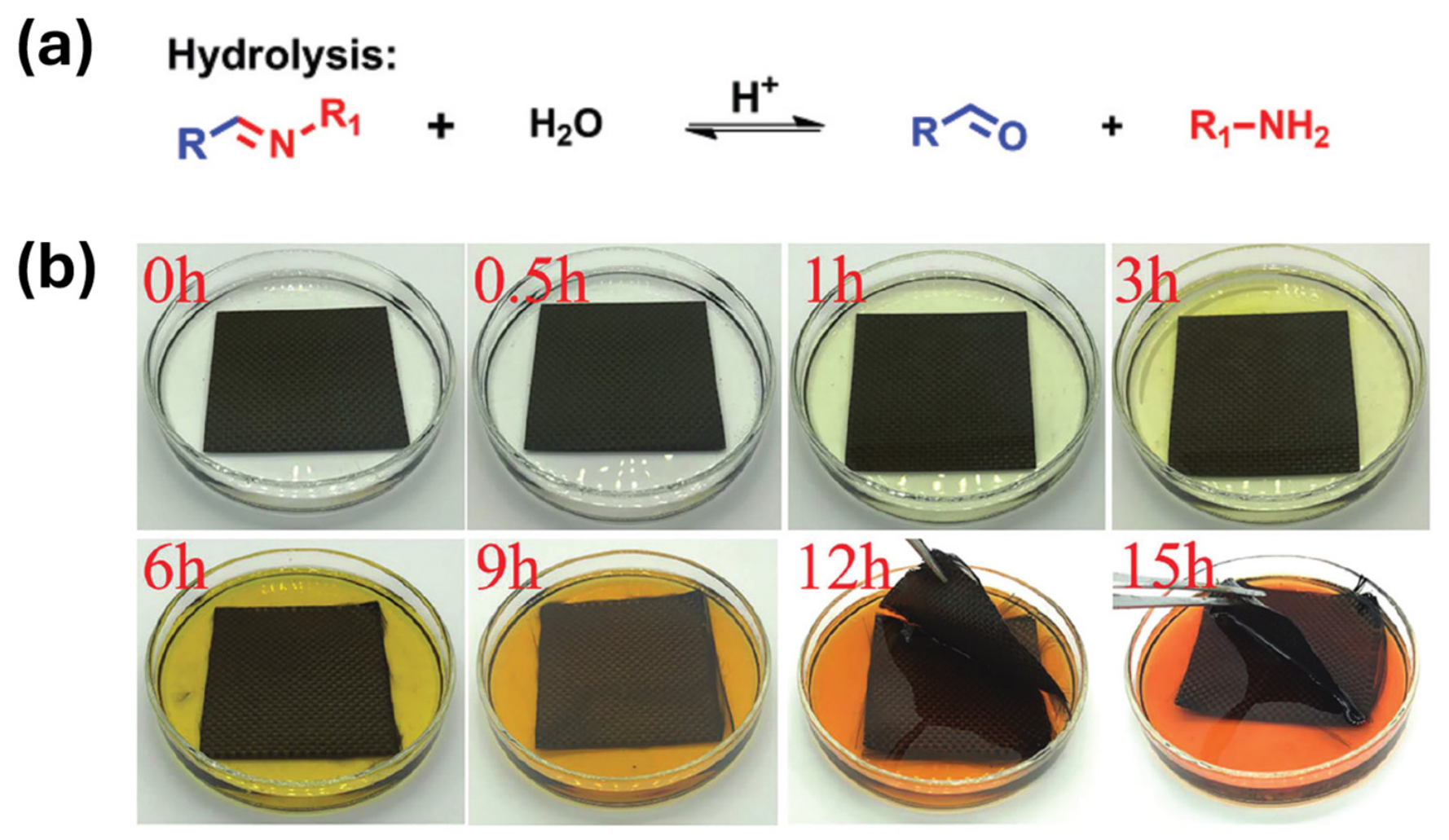
4.5.2. Schiff Base Bonds
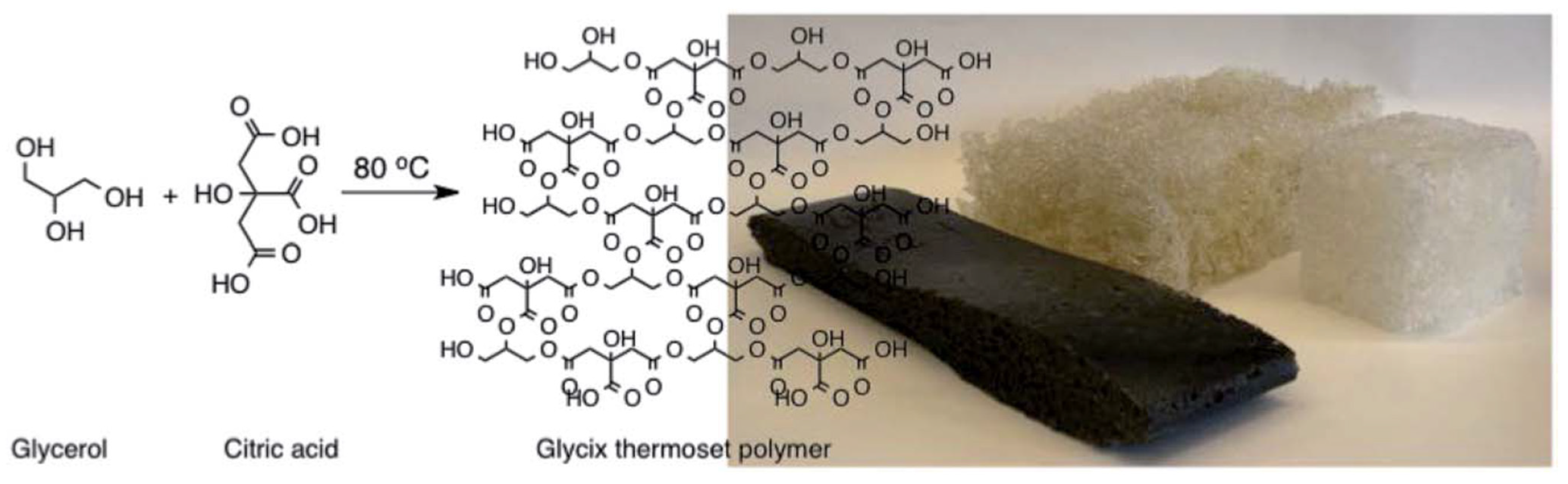
4.5.3. Glycerol-Based Thermosetting Polymers
5. Dissolvable/Degradable Rubbers
5.1. Development of Dissolvable Rubbers
5.2. Low-Temperature Dissolvable Rubbers
5.3. Medium-Temperature Dissolvable Rubbers
5.4. High-Temperature Dissolvable Rubbers
6. Conclusions and Outlook
Funding
Institutional Review Board Statement
Data Availability Statement
Acknowledgments
Conflicts of Interest
References
- Case, R.; Zhao, L.; Ding, Y.; Ren, J.; Dunne, T. Susceptibility to Localized Corrosion Attack and Application Service Envelopes for Ni Based Corrosion Resistant Alloys in Oil & Gas Production Service Conditions, a Literature Review. In Proceedings of the AMPP Annual Conference + Expo, New Orleans, LA, USA, 3–7 March 2024. [Google Scholar]
- Yuan, Y.; Goodson, J. Hot-wet Downhole Conditions Affect Composite Selection. Oil Gas J. 2007, 105, 52–63. [Google Scholar]
- Zhang, P.; Pu, C.; Pu, J.; Wang, Z. Study and Field Trials on Dissolvable Frac Plugs for Slightly Deformed Casing Horizontal Well Volume Fracturing. ACS Omega 2022, 7, 10292–10303. [Google Scholar] [CrossRef] [Scilit] [PubMed]
- Walton, Z.; Fripp, M.; Porter, J.; Vargus, G. Evolution of Frac Plug Technologies—Cast Iron to Composites to Dissolvable. In Proceedings of the SPE Middle East Oil and Gas Show and Conference, Manama, Bahrain, 18–21 March 2019. [Google Scholar]
- Zhao, L.; Dunne, T.R.; Ren, J.; Cheng, P. Dissolvable Magnesium Alloys in Oil and Gas Industry. In Magnesium Alloys—Processing, Potential and Applications; IntechOpen: London, UK, 2023. [Google Scholar]
- Zhao, L.; Ren, J.X.; Yuan, M.; Liu, Y.; Liu, H.L.; Zhou, C.J.; Wang, S.W.; Ren, G.F.; Cheng, P. Novel Hybrid Degradable Plugs to Enable Acid Fracturing at High Temperature High Pressure Conditions. In Proceedings of the SPE Annual Technical Conference and Exhibition, San Antonio, TX, USA, 16–18 October 2023. [Google Scholar]
- Zhao, L.; Ren, J.; Dunne, T.; Cheng, P. Technical Route to Develop High-Tg Epoxy Composite That Is Water Degradable at Low Temperature. In Proceedings of the TMS Annual Meeting & Exhibition, Orlando, FL, USA, 3–7 March 2024. [Google Scholar]
- Nair, L.S.; Laurencin, C.T. Biodegradable polymers as biomaterials. Prog. Polym. Sci. 2007, 32, 762–798. [Google Scholar] [CrossRef] [Scilit]
- Post, W.; Susa, A.; Blaauw, R.; Molenveld, K.; Knoop, R.J. A Review on the Potential and Limitations of Recyclable Thermosets for Structural Applications. Polym. Rev. 2020, 60, 359–388. [Google Scholar] [CrossRef] [Scilit]
- Göpferich, A. Mechanisms of polymer degradation and erosion. Biomaterials 1996, 17, 103–114. [Google Scholar] [CrossRef] [Scilit] [PubMed]
- Tsuda, K. Behavior and Mechanisms of Degradation of Thermosetting Plastics in Liquid Environments. J. Jpn. Pet. Inst. 2007, 50, 240–248. [Google Scholar] [CrossRef] [Scilit]
- Vaidya, A.; Spoo, K. Performance and Cost Comparison of Stainless-steel and E-CR-FRP Composites in Corrosive Environments. In Proceedings of the Corrosion 2014, San Antonio, TX, USA, 9–13 March 2014. [Google Scholar]
- Oliveux, G.; Dandy, L.O.; Leeke, G.A. Current status of recycling of fibre reinforced polymers: Review of technologies, reuse and resulting properties. Prog. Mater. Sci. 2015, 72, 61–99. [Google Scholar] [CrossRef] [Scilit]
- Xu, Z.; Agrawal, G.; Salinas, B.J. Smart Nanostructured Materials Deliver High Reliability Completion Tools for Gas Shale Fracturing. In Proceedings of the SPE Annual Technical Conference and Exhibition, Denver, CO, USA, 30 October–2 November 2011. [Google Scholar]
- Shen, M.; Almallahi, R.; Rizvi, Z.; Gonzalez-Martinez, E.; Yang, G.; Robertson, M.L. Accelerated hydrolytic degradation of ester-containing biobased epoxy resins. Polym. Chem. 2019, 10, 3217–3229. [Google Scholar] [CrossRef] [Scilit]
- Liu, T.; Guo, X.; Liu, W.; Hao, C.; Wang, L.; Hiscox, W.C.; Liu, C.; Jin, C.; Xin, J.; Zhang, J. Selective cleavage of ester linkages of anhydride-cured epoxy using a benign method and reuse of the decomposed polymer in new epoxy preparation. Green Chem. 2017, 19, 4364–4372. [Google Scholar] [CrossRef] [Scilit]
- Chiu, T.T.; Thill, B.P.; Fairchok, W.J. Poly(2-ethyl-2-oxazoline): A New Water and Organic-Soluble Adhesive. Adv. Chem. 1986, 213, 425–433. [Google Scholar] [CrossRef] [Scilit]
- Wang, B.; Wang, Q.; Li, L. Morphology and properties of highly talc- and CaCO3-filled poly(vinyl alcohol) composites prepared by melt processing. J. Appl. Polym. Sci. 2013, 130, 3050–3057. [Google Scholar] [CrossRef] [Scilit]
- Polymer Properties Database. Hydrolysis of Condensation Polymers. 2015. Available online: https://polydatabase.com/ (accessed on 1 January 2015).
- Hassan, C.M.; Trakampan, P.; Peppas, N.A. Water Solubility Characteristics of Poly(vinyl alcohol) and Gels Prepared by Freezing/Thawing Processes. In Water Soluble Polymers; Springer Nature: New York, NY, USA, 2002; pp. 31–40. [Google Scholar]
- Nishino, T.; Kani, S.; Gotoh, K.; Nakamae, K. Melt processing of poly(vinyl alcohol) through blending with sugar pendant polymer. Polymer 2002, 43, 2869–2873. [Google Scholar] [CrossRef] [Scilit]
- Agrawal, A.K.; Bhalla, R. Advances in the Production of Poly(Lactic Acid) Fibers—A Review. J. Macromol. Sci. Part C Polym. Rev. 2003, 43, 479–503. [Google Scholar] [CrossRef] [Scilit]
- Kuraray. KURALON K-II. 2015. Available online: https://www.kuraray.com/products/k2 (accessed on 1 January 2015).
- Kureha. Mechanical Properties. 2015. Available online: https://www.kuredux.com/en/about/properties.html (accessed on 1 January 2015).
- Wyatt, T.P.; Chien, A.-T.; Kumar, S.; Yao, D. Development of a gel spinning process for high-strength poly(ethylene oxide) fibers. Polym. Eng. Sci. 2014, 54, 2839–2847. [Google Scholar] [CrossRef] [Scilit]
- ISO 2062:2009; Textiles—Yarns from Packages—Determination of Single-End Breaking Force and Elongation at Break Using Constant Rate of Extension (CRE) Tester. International Organization for Standardization: Geneva, Switzerland, 2009.
- Li, Y.; Chen, J.; Han, W.; Yi, H.; Wang, J.; Xing, P.; Ren, J.; Yao, D. Toward Making Poly(ethylene terephthalate) Degradable in Aqueous Environment. Macromol. Mater. Eng. 2022, 307, 2100832. [Google Scholar] [CrossRef] [Scilit]
- Palme, A.; Peterson, A.; de la Motte, H.; Theliander, H.; Brelid, H. Development of an efficient route for combined recycling of PET and cotton from mixed fabrics. Text. Cloth. Sustain. 2017, 3, 4. [Google Scholar] [CrossRef] [Scilit]
- Rydz, J.; Sikorska, W.; Kyulavska, M.; Christova, D. Polyester-Based (Bio)degradable Polymers as Environmentally Friendly Materials for Sustainable Development. Int. J. Mol. Sci. 2015, 16, 564–596. [Google Scholar] [CrossRef] [Scilit] [PubMed]
- Oliver-Cuenca, V.; Salaris, V.; Muñoz-Gimena, P.F.; Agüero, Á.; Peltzer, M.A.; Montero, V.A.; Arrieta, M.P.; Sempere-Torregrosa, J.; Pavon, C.; Samper, M.D.; et al. Bio-Based and Biodegradable Polymeric Materials for a Circular Economy. Polymers 2024, 16, 3015. [Google Scholar] [CrossRef] [Scilit] [PubMed]
- Asri, N.A.; Sezali, N.A.A.; Ong, H.L.; Pisal, M.H.M.; Lim, Y.H.; Fang, J. Review on Biodegradable Aliphatic Polyesters: Development and Challenges. Macromol. Rapid Commun. 2024, 45, 2400475. [Google Scholar] [CrossRef] [Scilit] [PubMed]
- McCarthy, A. Metabolix, Inc. and Tepha, Inc.—Bioplastics for Industry and Medical Devices. Chem. Biol. 2003, 10, 893–894. [Google Scholar] [CrossRef] [Scilit]
- Barham, P.J.; Keller, A.; Otun, E.L.; Holmes, P.A. Crystallization and morphology of a bacterial thermoplastic: Poly-3-hydroxybutyrate. J. Mater. Sci. 1984, 19, 2781–2794. [Google Scholar] [CrossRef] [Scilit]
- Xing, P.; Dong, L.; An, Y.; Feng, Z.; Avella, M.; Martuscelli, E. Miscibility and Crystallization of Poly(β-hydroxybutyrate) and Poly(p-vinylphenol) Blends. Macromolecules 1997, 30, 2726–2733. [Google Scholar] [CrossRef] [Scilit]
- Xing, P.; Ai, X.; Dong, L.; Feng, Z. Miscibility and Crystallization of Poly(beta-hydroxybutyrate) and Poly(vinyl acetate-co-vinyl alcohol) Blends. Macromolecules 1998, 31, 6898–6907. [Google Scholar] [CrossRef] [Scilit]
- Roohi; Zaheer, M.R.; Kuddus, M. PHB (poly-β-hydroxybutyrate) and its enzymatic degradation. Polym. Adv. Technol. 2018, 29, 30–40. [Google Scholar] [CrossRef] [Scilit]
- NatureWorks, LLC. Available online: https://www.natureworksllc.com/ (accessed on 1 January 2018).
- Malikmammadov, E.; Tanir, T.E.; Kiziltay, A.; Hasirc, V.; Hasirci, N. PCL and PCL-based materials in biomedical applications. J. Biomater. Sci. Polym. Ed. 2018, 29, 863–893. [Google Scholar] [CrossRef] [Scilit] [PubMed]
- Cho, K.; Lee, J.; Xing, P. Enzymatic degradation of blends of poly(ε-caprolactone) and poly(styrene-co-acrylonitrile) by Pseudomonas lipase. J. Appl. Polym. Sci. 2002, 83, 868–879. [Google Scholar] [CrossRef] [Scilit]
- Kureha Inc. Available online: https://www.kureha.co.jp/ (accessed on 1 January 2024).
- Yamane, K.; Sato, H.; Ichikawa, Y.; Sunagawa, K.; Shigaki, Y. Development of an industrial production technology for high-molecular-weight polyglycolic acid. Polym. J. 2014, 46, 769–775. [Google Scholar] [CrossRef] [Scilit]
- ISO 1183-1:2019; Plastics—Methods for determining the density of non-cellular plastics—Part 1: Immersion method, liquid pyknometer method and titration method. International Organization for Standardization: Geneva, Switzerland, 2019.
- ISO 527-1:2019; Plastics—Determination of Tensile Properties—Part 1: General Principles. International Organization for Standardization: Geneva, Switzerland, 2019.
- ISO 527-2:2012; Plastics—Determination of Tensile Properties—Part 2: Test Conditions for Moulding and Extrusion Plastics. International Organization for Standardization: Geneva, Switzerland, 2012.
- ISO 178:2019; Plastics—Determination of Flexural Properties. International Organization for Standardization: Geneva, Switzerland, 2019.
- ISO 179-1:2023; Plastics—Determination of Charpy Impact Properties—Part 1: Non-Instrumented Impact Test. International Organization for Standardization: Geneva, Switzerland, 2023.
- ISO 180:2023; Plastics—Determination of Izod Impact Strength. International Organization for Standardization: Geneva, Switzerland, 2023.
- ISO 2039-2:1987; Plastics—Determination of Hardness—Part 2: Rockwell Hardness. International Organization for Standardization: Geneva, Switzerland, 1987.
- Okura, M.; Takahashi, S.; Kobayashi, T.; Saijo, H.; Takahashi, T. Improvement of Impact Strength of Polyglycolic Acid for Self-Degradable Tools for Low-Temperature Wells. In Proceedings of the SPE Middle East Unconventional Resources Conference and Exhibition, SPE-172969-MS, Muscat, Oman, 26–28 January 2015. [Google Scholar]
- Kureha Energy Solutions. Available online: https://kurehadegradableplug.com/ (accessed on 1 January 2024).
- Takahashi, S.; Shitsukawa, A.; Okura, M. Degradation Study on Materials for Dissolvable Frac Plugs. In Proceedings of the Unconventional Resources Technology Conference URTeC: 2901283, Houston, TX, USA, 23–25 July 2018. [Google Scholar]
- Xing, P.; Zheng, W.; Lindemann, R.; Wellman, D.; Halling, J.; Ren, J.; Cheng, P.; Yuan, M.; Chen, J.; Yao, D. Study of the Properties of Hydrolytic Degradable Polyglycolic Acid and Its Blends with Polylactic Acid, and Its Application in the Dissolvable Plug. In Proceedings of the SPE’s Annual Technical Conference, ANTEC 2024, St. Louis, MO, USA, 4–7 March 2024. [Google Scholar]
- Wang, B.; Ma, S.; Yan, S.; Zhu, J. Readily recyclable carbon fiber reinforced composites based on degradable thermosets: A review. Green Chem. 2019, 21, 5781–5796. [Google Scholar] [CrossRef] [Scilit]
- Hamerton, I. Chemistry and Technology of Cyanate Ester Resins; Springer Nature: London, UK, 1994. [Google Scholar]
- Khatiwada, S.; Duan, P.; Garza, R.; Sadana, A.K. Degradable Thermoset Polymer Composite for Intervention-Less Downhole Tools. In Proceedings of the Offshore Technology Conference, Houston, TX, USA, 1–4 May 2017. [Google Scholar]
- Kasehagen, L.J.; Haury, I.; Macosko, C.W.; Shimp, D.A. Hydrolysis and blistering of cyanate ester networks. J. Appl. Polym. Sci. 1997, 64, 107–113. [Google Scholar] [CrossRef]
- Garza, R.; Sadana, A.; Khatiwada, S.; Duan, P. Novel Degradable Polymeric Composite Balls for Hydraulic Fracturing. In Proceedings of the Offshore Technology Conference, Houston, TX, USA, 1–4 May 2017. [Google Scholar]
- Takahashi, A.; Ohishi, T.; Goseki, R.; Otsuka, H. Degradable epoxy resins prepared from diepoxide monomer with dynamic covalent disulfide linkage. Polymer 2016, 82, 319–326. [Google Scholar] [CrossRef] [Scilit]
- Gandini, A. The furan/maleimide Diels–Alder reaction: A versatile click–unclick tool in macromolecular synthesis. Prog. Polym. Sci. 2013, 38, 1–29. [Google Scholar] [CrossRef] [Scilit]
- Yao, Y.; Zhao, F.; Wang, B.; Hu, Z.; Huang, Y. The designing of degradable unsaturated polyester based on selective cleavage activated hydrolysis and its application in recyclable carbon fiber composites. Compos. Sci. Technol. 2022, 229, 109692. [Google Scholar] [CrossRef] [Scilit]
- Buchwalter, S.L.; Kosbar, L.L. Cleavable epoxy resins: Design for disassembly of a thermoset. J. Polym. Sci. Part A Polym. Chem. 1996, 34, 249–260. [Google Scholar] [CrossRef] [Scilit]
- Pastine, S.J. Sterically Hindered Aliphatic Polyamine Cross-Linking Agents, Compositions Containing Them and Uses Thereof. USA Patent US9862797B2, 9 January 2018. [Google Scholar]
- Dubey, P.K.; Mahanth, S.K.; Dixit, A. Recyclamine®—Novel Amine Building Blocks for a Sustainable World. In Proceedings of the SAMPE neXus Proceedings, Virtual, 29 June–1 July 2021. [Google Scholar]
- Dutkiewicz, J. Hydrolytic degradation of cured urea–formaldehyde resin. J. Appl. Polym. Sci. 1983, 28, 3313–3320. [Google Scholar] [CrossRef] [Scilit]
- Nuryawan, A.; Risnasari, I.; Sucipto, T.; Iswanto, A.H.; Dewi, R.R. Urea-formaldehyde resins: Production, application, and testing. IOP Conf. Ser. Mater. Sci. Eng. 2016, 223, 012053. [Google Scholar] [CrossRef] [Scilit]
- Wang, S.; Ma, S.; Li, Q.; Xu, X.; Wang, B.; Yuan, W.; Zhou, S.; You, S.; Zhu, J. Facile in situ preparation of high-performance epoxy vitrimer from renewable resources and its application in nondestructive recyclable carbon fiber composite. Green Chem. 2019, 21, 1484–1497. [Google Scholar] [CrossRef] [Scilit]
- Kasetaite, S.; Ostrauskaite, J.; Grazuleviciene, V.; Bridziuviene, D.; Rainosalo, E. Biodegradable glycerol-based polymeric composites filled with industrial waste materials. J. Compos. Mater. 2017, 51, 4029–4039. [Google Scholar] [CrossRef] [Scilit]
- Alberts, A.H.; Rothenberg, G. Composite Material Comprising Bio-Filler and Specific Polymer. US Patent US10036122B2, 31 July 2018. [Google Scholar]
- Alberts, A.H.; Rothenberg, G. Plantics-GX: A biodegradable and cost-effective thermoset plastic that is 100% plant-based. Faraday Discuss. 2017, 202, 111–120. [Google Scholar] [CrossRef] [Scilit] [PubMed]
- OECD-FAO. OECD-FAO Agricultural Outlook 2024–2033: Biofuels; OECD Publishing: Paris, France; Food and Agriculture Organization of the United Nations: Rome, Italy, 2024. [Google Scholar]
- Yuan, Y.; Sun, Y.; Yan, S.; Zhao, J.; Liu, S.; Zhang, M.; Zheng, X.; Jia, L. Multiply fully recyclable carbon fibre reinforced heat-resistant covalent thermosetting advanced composites. Nat. Commun. 2017, 8, 14657. [Google Scholar] [CrossRef] [Scilit] [PubMed]
- Wang, S.; Xing, X.; Zhang, X.; Wang, X.; Jing, X. Room-temperature fully recyclable carbon fibre reinforced phenolic composites through dynamic covalent boronic ester bonds. J. Mater. Chem. A 2018, 6, 10868–10878. [Google Scholar] [CrossRef] [Scilit]
- Luzuriaga, A.R.; Martin, R.; Markaide, N.; Rekondo, A.; Cabañero, G.; Rodríguez, J.; Odriozola, I. Epoxy resin with exchangeable disulfide crosslinks to obtain reprocessable, repairable and recyclable fiber-reinforced thermoset composites. Mater. Horiz. 2016, 3, 241–247. [Google Scholar] [CrossRef] [Scilit]
- Takahashi, T.; Takahashi, S.; Okura, M. Development of Degradable Seal Elements for Fully Degradable Frac Plugs. In Proceedings of the Offshore Technology Conference Asia, Kuala Lumpur, Malaysia, 22–25 March 2016. [Google Scholar]
- Sherman, A.J.; Doud, B. Dissolvable Rubber. US Patent 10,544, 304, B2, 28 January 2020. [Google Scholar]
- Cheng, K.; Shang, L.; Li, H.; Peng, B.; Lo, Z. A novel degradable sealing material for the preparation of dissolvable packer. J. Macromol. Sci. Part A 2023, 60, 207–216. [Google Scholar] [CrossRef] [Scilit]
- Cheng, K.; Yuan, M.; Zhang, Y.; Sun, N.; Peng, B. Application and Properties of Polyglycolic Acid as a Degradation Agent in MPU/HNBR Degradable Elastomer Composites for Dissolvable Frac Plugs. Polymers 2024, 16, 181. [Google Scholar] [CrossRef] [Scilit] [PubMed]
- Zhang, Z.; Zheng, J.; Chen, X.; Yang, M. A Water-Soluble Rubber and Its Preparation Method. China Patent 109810451 B, 22 October 2021. [Google Scholar]
- Zheng, J.; Zhang, Z.; Chen, X.; Yang, H.; Zhu, M.; Yang, M. A Water-Soluble Rubber Material and Its Preparation Method. China Patent 109762322, 17 May 2019. [Google Scholar]
- Duan, P.; Sadana, A.; Xu, Y.; Deng, G.; Pratt, B. Degradable Packing Element for Low-Temperature Fracturing Applications. In Proceedings of the Offshore Technology Conference, Houston, TX, USA, 30 April–3 May 2018. [Google Scholar]
- Fripp, M.; Walton, Z.; Norman, T. Fully Dissolvable Fracturing Plug for Low-Temperature Wellbores. In Proceedings of the SPE Annual Technical Conference and Exhibition, San Antonio, TX, USA, 9–11 October 2017. [Google Scholar]
- Burdzy, M.P. Aqueous Degradable Polyurethane Elastomers for Oil & Gas Applications. In Proceedings of the Offshore Technology Conference, Houston, TX, USA, 16–19 August 2021. [Google Scholar]
- Xu, D.; Wang, F.; Lin, Z.; Sun, J.; Ren, J.; Li, Q.; Zheng, B.; Wang, Q. Experimental Study on a Water-Soluble Rubber Cylinder Based on Thermosetting Polyester Polyurethane Copolymer. In Proceedings of the International Field Exploration and Development Conference 2020, Chengdu, China, 23–25 September 2020; Springer Nature: Singapore, 2021; pp. 1783–1792. [Google Scholar]
- Ren, J.; Cheng, P.; Wang, X. Dissolvable Rubbers Development and its Applications in Downhole Tools. In Proceedings of the SPE Middle East Oil & Gas Show and Conference, Manama, Bahrain, 24–27 May 2021. [Google Scholar]
- Notman, T.; Waltron, Z.; Fripp, M. Full Dissolvable Frac Plug for High-Temperature Wellbores. In Proceedings of the Offshore Technology Conference, Houston, TX, USA, 30 April–3 May 2018. [Google Scholar]
- Yue, W.; Ren, J.; Yue, J.; Cheng, P.; Dunne, T.; Zhao, L.; Patsy, M.; Nettles, D.; Liu, Y.; Liu, H. High Temperature Dissolvable Materials Development for High Temperature Dissolvable Plug Applications. In Proceedings of the SPE Annual Technical Conference and Exhibition, Houston, TX, USA, 3–5 October 2022. [Google Scholar]
- Ren, J.; Cheng, P.; Zhao, L.; Liu, Y.; Liu, H.; Cui, X.; Zhu, B.; Wang, Q.; Ma, W. Coating Development for High Temperature Dissolvable Rubber Element in Dissolvable Plug Applications. In Proceedings of the Minerals, Metals & Materials Society (TMS), Orlando, FL, USA, 3–7 March 2024. [Google Scholar]








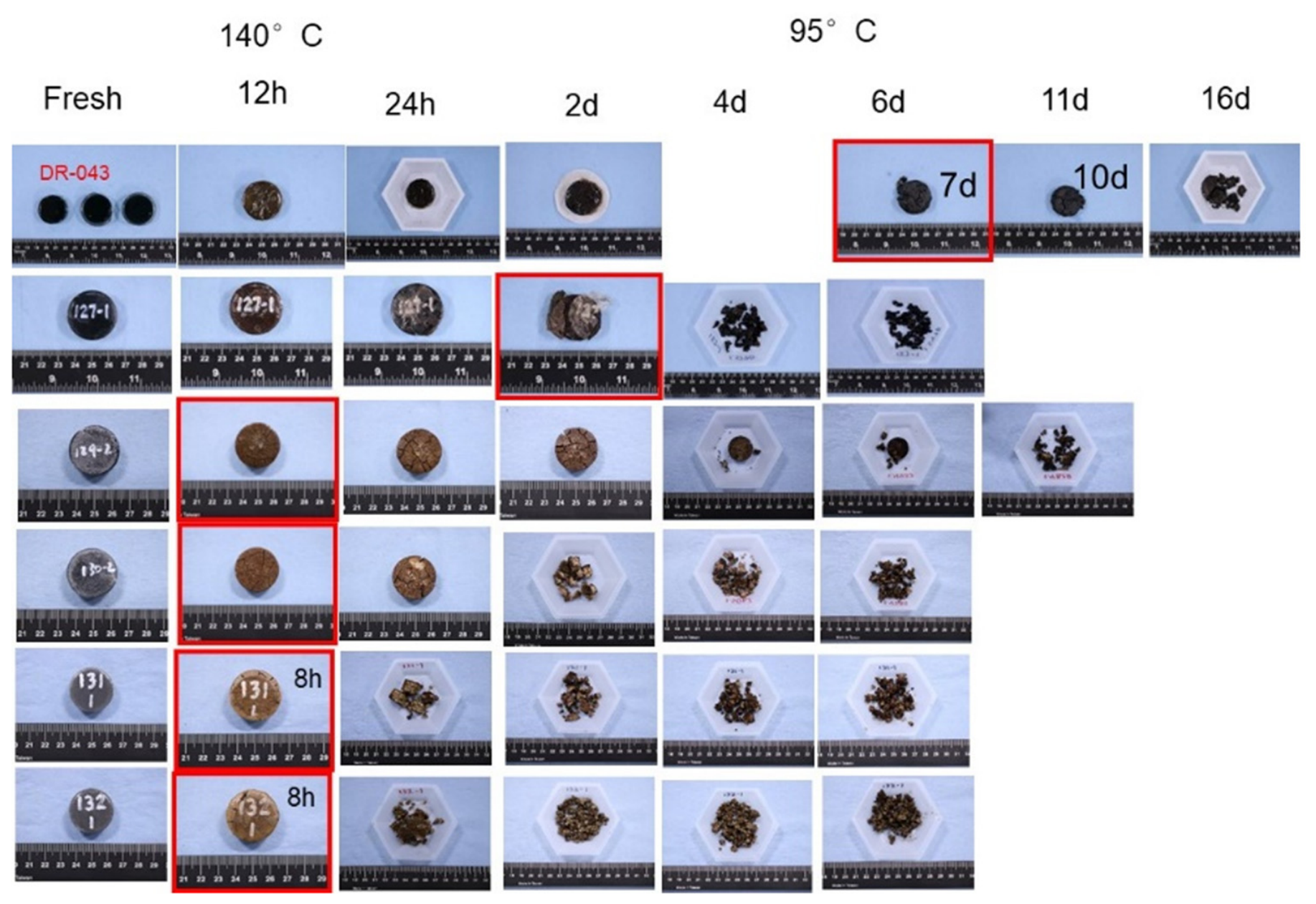



| Performance | High Strength | High Thermal Stability | Controllable Dissolvability |
|---|---|---|---|
| Property |
|
|
|
| Structure |
|
|
|
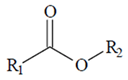 Rate Constants and Half-Lives at pH 7 for Hydrolysis of Some Carboxylic Acid Esters at 25 °C Rate Constants and Half-Lives at pH 7 for Hydrolysis of Some Carboxylic Acid Esters at 25 °C | |||||
|---|---|---|---|---|---|
| R1 | R2 | KA (M−1·s−1) | KN (s−1) | KB (M−1·s−1) | T1/2 (pH 7) |
| methyl | ethyl | 1.1 × 10⁻⁴ | 1.5 × 10⁻¹⁰ | 0.11 | 2 year |
| methyl | ter-butyl | 1.3 × 10⁻⁴ | 1.5 × 10⁻³ | 140 year | |
| methyl | vinyl | 1.4 × 10⁻⁴ | 1.1 × 10⁻⁷ | 10 | 7 day |
| methyl | phenyl | 7.8 × 10⁻⁵ | 6.6 × 10⁻⁸ | 1.4 | 38 day |
| chloromethyl | methyl | 8.5 × 10⁻⁵ | 2.1 × 10⁻⁷ | 140 | 14 h |
| dichloromethyl | methyl | 2.3 × 10⁻⁴ | 1.5 × 10⁻¹⁰ | 2.8 × 10³ | 40 min |
| dichloromethyl | phenyl | 1.8 × 10⁻³ | 1.3 × 10⁴ | 4 min | |
| Kuralon | PET | Nylon 6 | Aramid | Vectran | |||
|---|---|---|---|---|---|---|---|
| Type | 1239 | 5501 | 5516-1 | Regular | HT | ||
| Thickness (dtex) | 1330 | 20,000 | 2000 | 1110 | 930 | 1670 | 1670 |
| Number of filaments | 200 | 1000 | 1000 | 250 | 96 | 1000 | 300 |
| Tensile strength (cN/dtex) | 8.2 | 9.8 | 11.9 | 8.1 | 8.1 | 19.4 | 22.9 |
| Elongation at break (%) | 7.7 | 6.6 | 6.4 | 10.7 | 19.4 | 3.9 | 3.8 |
| Young’s modulus (cN/dtex) | 177 | 203 | 260 | 110 | 34 | 493 | 530 |
| Dry heat shrinkage (%) | 0.8 | 0.6 | 0.4 | 11.2 | 6.5 | ||
| Boiling shrinkage (%) | 4.5 | 2.5 | 2.2 | 5.4 | 11.8 | ||
| Specific gravity | 1.30 | 1.38 | 1.14 | 1.41 | 1.44 | ||
| Moisture regain (%) | 5.0 | 0.4 | 4.5 | 7.0 | 0.0 | ||
| Test Method | Unit | Measured Value | |
|---|---|---|---|
| Tensile modulus | ISO 2062 [26] | GPa | 29 |
| Tensile strength | GPa | 1.1 | |
| Tensile elongation | % | 20 | |
| Single-end breaking force | GPa | 1.1 | |
| Single-end breaking elongation | % | 14 |
| Sources | Biodegradable Aliphatic Polyester | Mw (a) [gmol−1] | Tm (b) [°C] | Tg (c) [°C] | Ts (d) [MPa] |
|---|---|---|---|---|---|
| Fossil fuel | Poly(glycolic acid) (PGA) | 51,750 | 230 | 40 | 117 |
| Poly(ethylene succinate) (PES) | 70,000 | 104 | −10 | 23 | |
| Poly(ε-caprolactone) (PCL) | 80,921 | 65 | −61 | 15 | |
| Poly(propylene fumarate) (PPF) | - | - | 23 | - | |
| Microbial fermentation | Poly(hydroxyalkanoate) (PHA) | - | 166 | 29 | 40 |
| i. Poly(3-hydroxybutyrate) (PHB) | 176,800 | 177 | 4 | 43 | |
| i. Poly(3-hydroxybutyrate-co-3-hydroxyhexanoate) (PHBHHX) | 500,000 | 130 | - | 20 | |
| i. Poly(3-hydroxybutyrate-co-3-hydroxyvalerate) (PHBV) | 163,000 | 170 | - | - | |
| Poly(β-L-malic acid) (PLMA) | - | - | 50 | - | |
| Plants | Poly(glycerol succinate) (PGSu) | - | - | −17 | 31 |
| Poly(glycerol sebacate) (PGS) | - | - | - | 1 | |
| Poly(butylene succcinate) (PBS) | 88,400 | 114 | −34 | 33 | |
| Poly(lactic acid) (PLA) | - | 173 | 63 | 70 | |
| Poly(w-pentadecalactone) (PPDL) | 150,200 | 104 | - | 29 | |
| Poly(ethylene brassylate) (PEB) | - | 70 | 30 | - |
| Test Method | Unit | Measured Value | ||
|---|---|---|---|---|
| Specific Gravity | ISO 1183-1 [42] | - | 1.50~1.60 | |
| Mechanical Properties | ||||
| Injection Molding | Tensile Modulus | ISO 527-1,2 [43,44] | GPa | 7.4 |
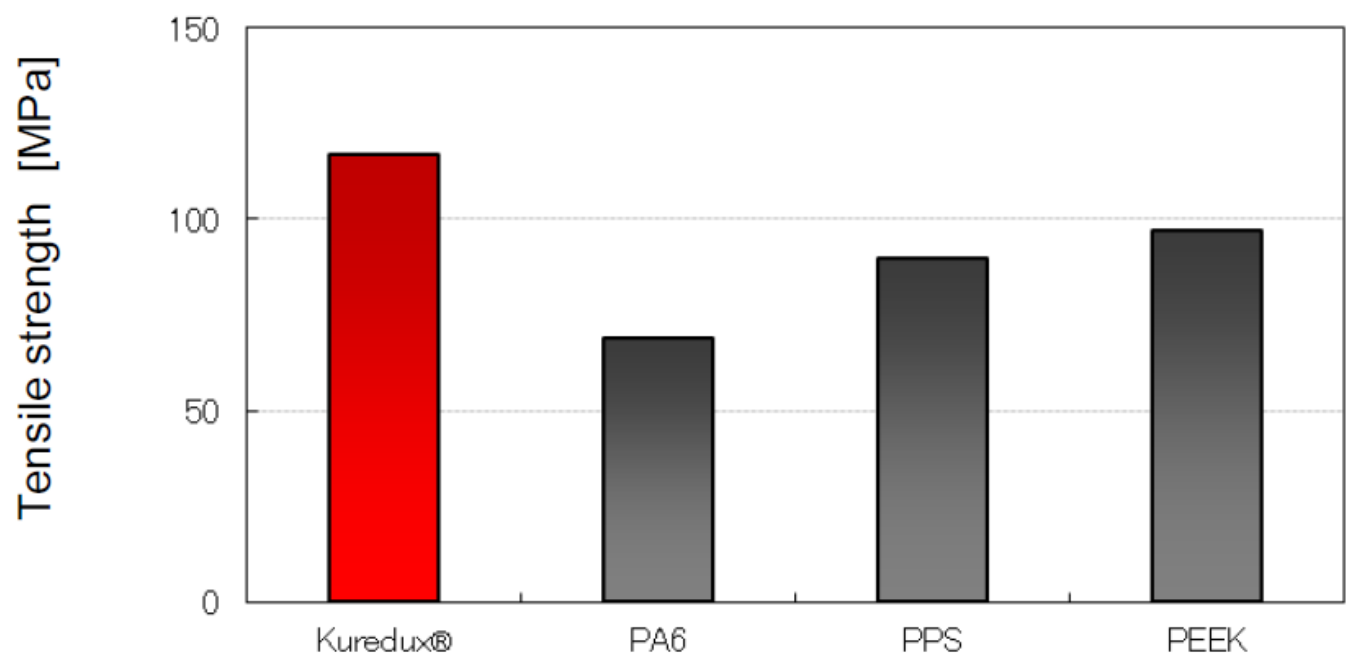
| Tensile Strength | ISO 527-1,2 | MPa | 117 | |
| Tensile Elongation | ISO 527-1,2 | % | 13 | |
| Flexural Modulus | ISO 178 [45] | GPa | 7.6 | |
| Flexural Strength | ISO 178 | MPa | 195 | |
| Charpy Impact Strength | ISO 179 [46] Notched | KJ/m2 | 2.2 | |
| Izod Impact Strength | ISO 180 [47] Notched | KJ/m2 | 2.9 | |
| Rockwell Hardness | ISO 2039-2 [48] M-scale | - | 111 | |
| Properties | M(MPUR)/m(HNBR) | ||||
|---|---|---|---|---|---|
| 100/0 | 80/20 | 70/30 | 60/40 | 0/100 | |
| Tensile Strength/MPa | 27.3 | 29.0 | 26.4 | 24.0 | 21.9 |
| 100% modulus/MPa | 11.3 | 15.3 | 15.1 | 14.2 | 6.8 |
| Elongation at break/% | 220 | 232 | 199 | 194 | 385 |
| Tear strength/(kN·m−1) | 28.8 | 35.9 | 35.5 | 32.0 | 71.0 |
| Hardness/Shore A | 89 | 93 | 91 | 92 | 82 |
Disclaimer/Publisher’s Note: The statements, opinions and data contained in all publications are solely those of the individual author(s) and contributor(s) and not of MDPI and/or the editor(s). MDPI and/or the editor(s) disclaim responsibility for any injury to people or property resulting from any ideas, methods, instructions or products referred to in the content. |
© 2026 by the authors. Licensee MDPI, Basel, Switzerland. This article is an open access article distributed under the terms and conditions of the Creative Commons Attribution (CC BY) license.
Share and Cite
Zhao, L.; Ren, J.; Xing, P.; Yao, D.; Lu, M.; Cheng, P. Advances in Dissolvable Polymers and Composites for the Oil and Gas Industry. Polymers 2026, 18, 2181. https://doi.org/10.3390/polym18172181
Zhao L, Ren J, Xing P, Yao D, Lu M, Cheng P. Advances in Dissolvable Polymers and Composites for the Oil and Gas Industry. Polymers. 2026; 18(17):2181. https://doi.org/10.3390/polym18172181
Chicago/Turabian StyleZhao, Lei, Jiaxiang Ren, Peixiang Xing, Donggang Yao, Meng Lu, and Peng Cheng. 2026. "Advances in Dissolvable Polymers and Composites for the Oil and Gas Industry" Polymers 18, no. 17: 2181. https://doi.org/10.3390/polym18172181
APA StyleZhao, L., Ren, J., Xing, P., Yao, D., Lu, M., & Cheng, P. (2026). Advances in Dissolvable Polymers and Composites for the Oil and Gas Industry. Polymers, 18(17), 2181. https://doi.org/10.3390/polym18172181