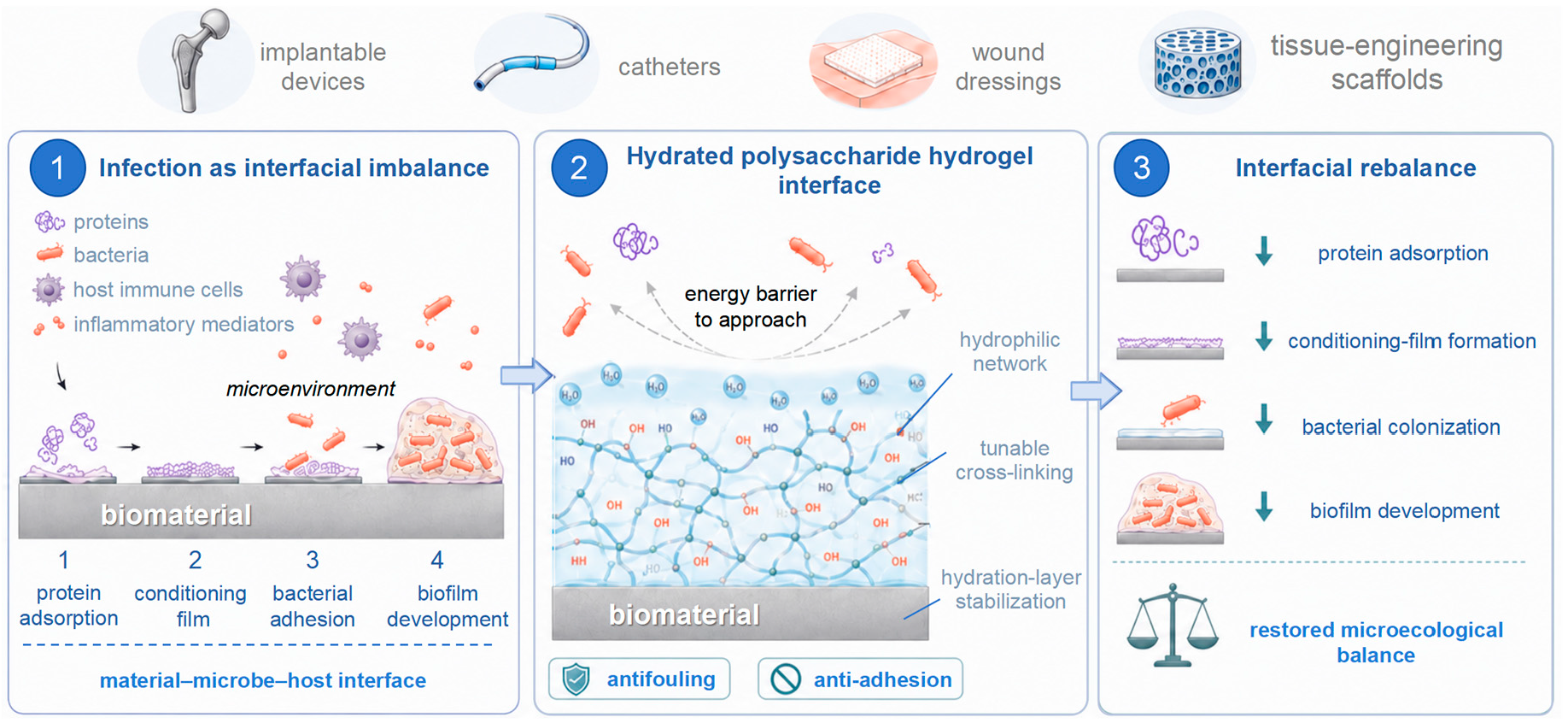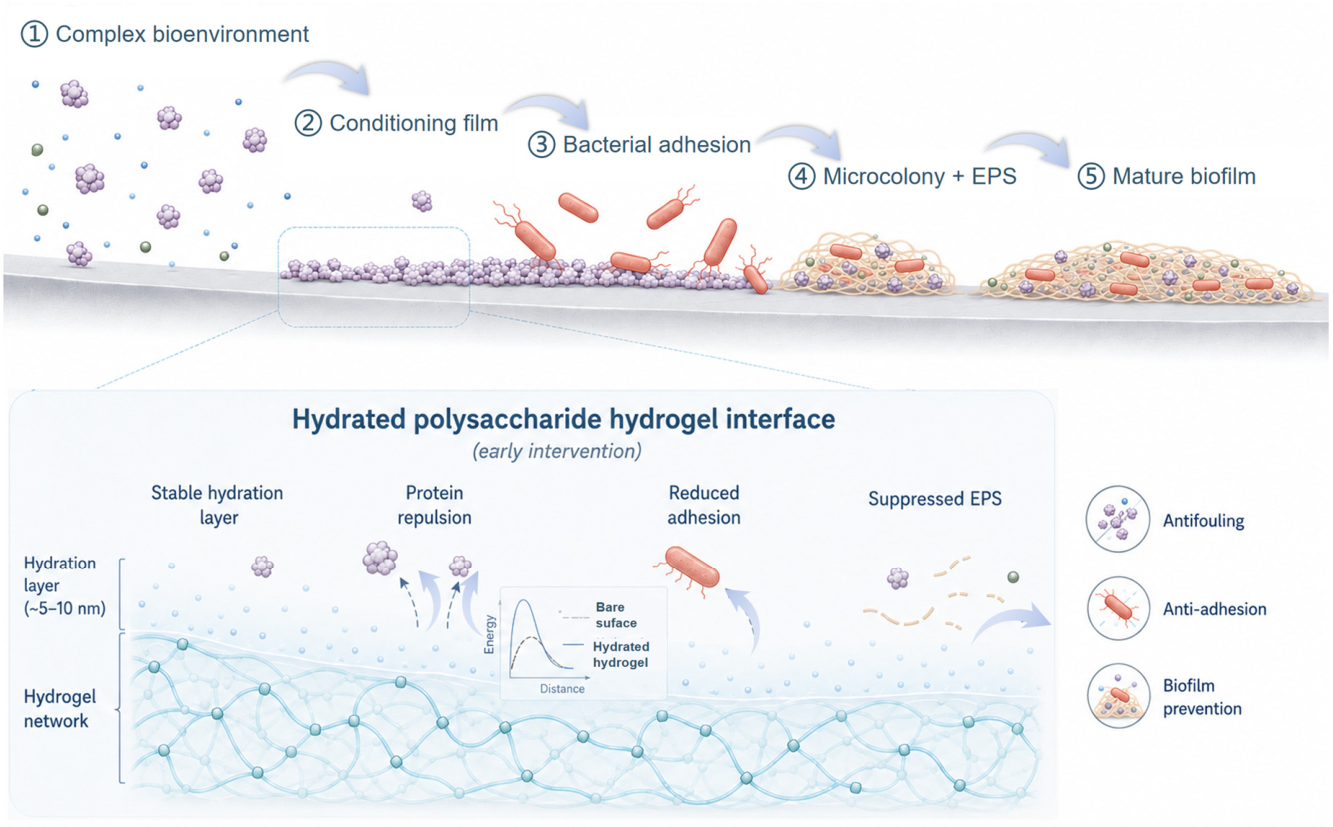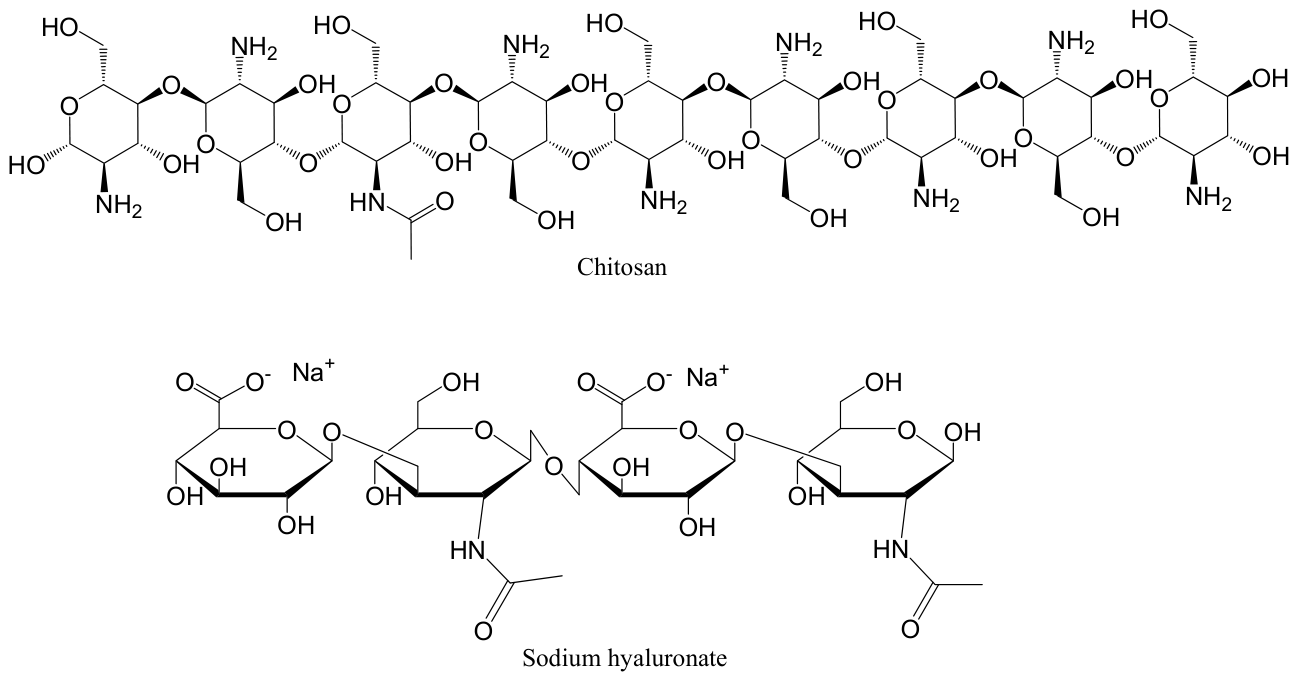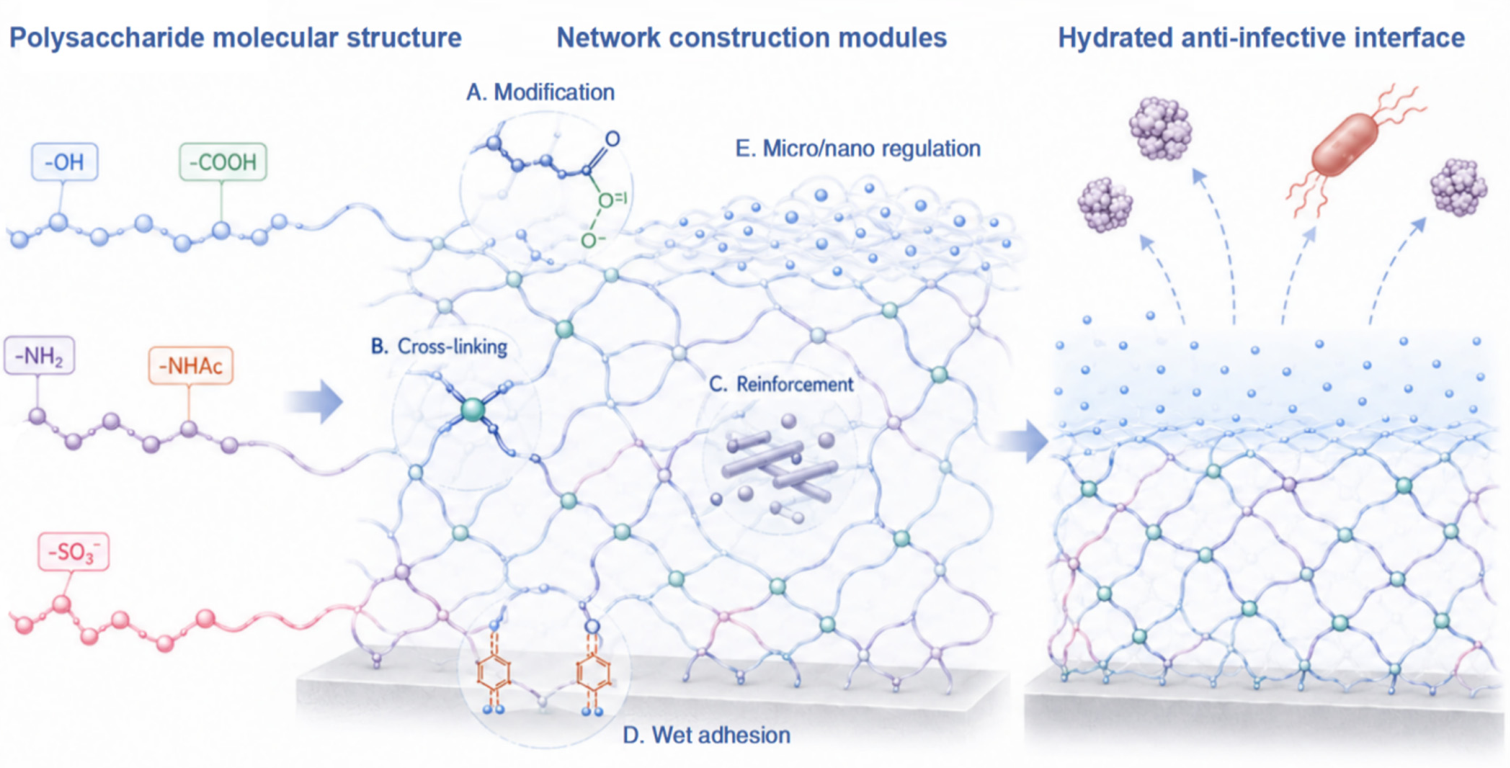



Biomimetic Superwetting Polysaccharide-Based Composite Hydrogel Interfaces from an Eco-Dialectical Perspective: Polymer Network Design, Hydration-Layer Stabilization, and Structure–Performance Relationships



Abstract
1. Introduction
2. Literature Search and Review Methodology
2.1. Review Scope and Literature Selection Strategy
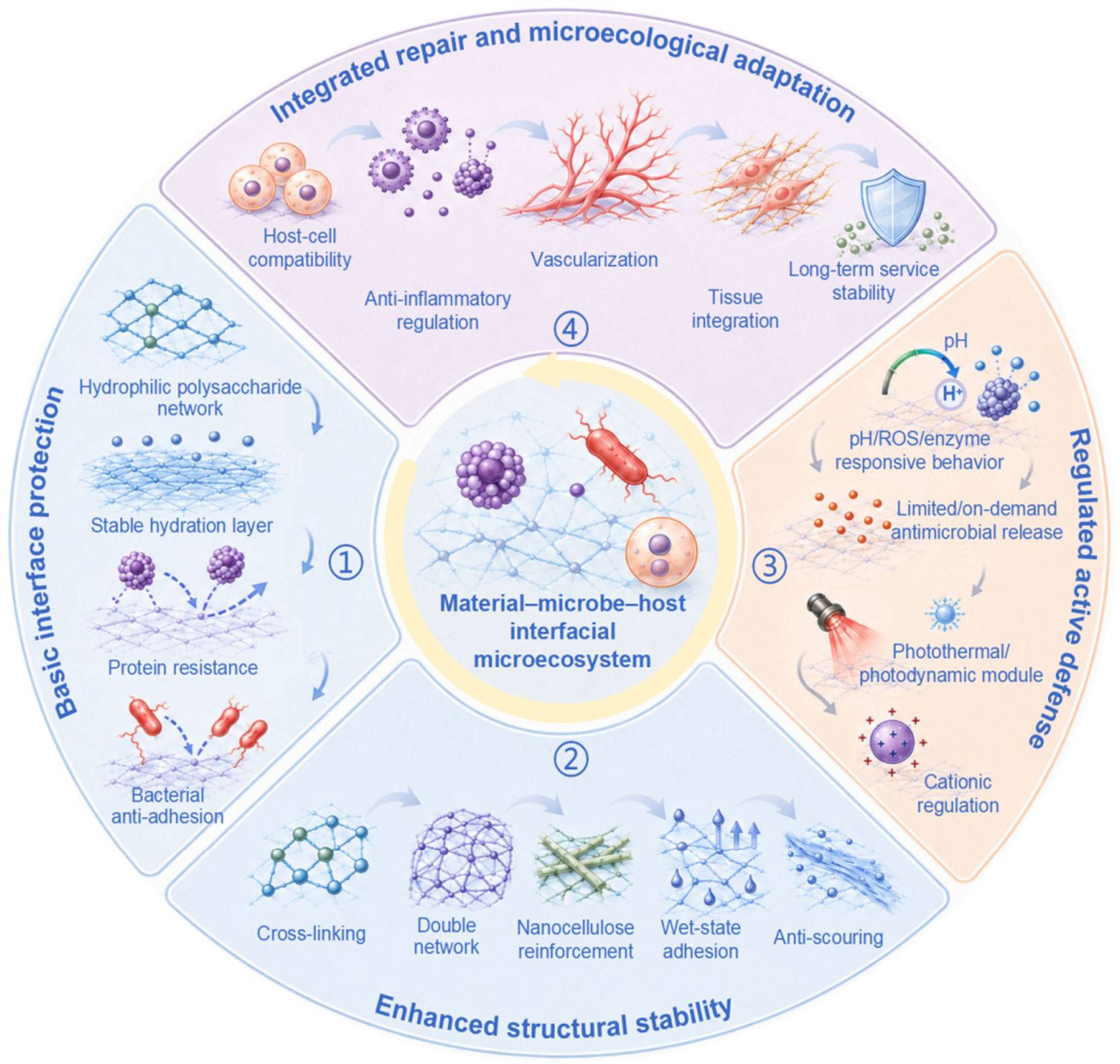
2.2. Four-Layer Interface Framework
3. Polymer Network Design of Polysaccharide-Based Composite Hydrogels
3.1. Polysaccharide Molecular Structure and Interfacial Hydration Capacity
3.2. Structural Differences and Functional Boundaries of Typical Polysaccharide Materials
3.3. Coupling of Cross-Linked Networks, Swelling Behavior, and Mechanical Stability
4. Structure–Performance Relationships: Network Design, Porosity, Mechanics, and Interfacial Function
4.1. Molecular Modification and Interfacial Hydration
4.2. Cross-Linking Strategies and Dynamic Network Stability
4.3. Double and Multiple Networks: Addressing the Trade-Off Between High Hydration and High Strength
4.4. Mussel-Inspired Adhesion: Addressing Wet-State Fixation
4.5. Micro-/Nanostructures: Enhancing Superwetting or Creating Bacterial Niches?
4.6. Nanocomposites: From Functional Stacking to Functional Coupling
4.7. Balanced Design Window for Structural Parameters
5. Hydration-Layer Stabilization and Antifouling/Anti-Adhesion Mechanisms
5.1. Origins of the Hydration Layer: Free, Bound, and Confined Water
5.2. How the Hydration Layer Resists Protein Adsorption: Energetic Penalty of Interfacial Water Replacement
5.3. How Hydration Layers Resist Bacteria: Contact Probability, Surface Morphology, and Active Bacterial Disruption
5.4. Antibiofilm Formation: Early Blocking Rather than Late Removal
5.5. Failure Mechanisms of the Hydration Layer
5.6. Correspondence Between Hydration-Layer Mechanisms and Evaluation Metrics
5.7. Study-Level Quantitative Comparison
6. Active Antibacterial Functions, Responsive Regulation, and Repair Integration: Interface Synergy Beyond Passive Antifouling
7. Application-Specific Design Requirements
7.1. Wound Dressings: From Drug-Release Dressings to Wet-State Interfacial Regulation
7.2. Catheters and Long-Term Indwelling Devices: Antifouling, Low Friction, and Secure Coating Attachment
7.3. Implant Surfaces: Trade-Off Between Resistance to Bacterial Adhesion and Tissue Integration
7.4. Tissue-Engineering Scaffolds: Porous Architecture as Both a Regenerative Advantage and an Infection Risk
7.5. Flexible Medical Interfaces and Wearable Materials: Low-Fouling Stability Under Long-Term Attachment
8. Characterization of Dynamic Interfacial Processes and Minimum Evidence Standards
9. Clinical Translation Bottlenecks and Future Perspectives
9.1. Short-Term Performance Does Not Necessarily Predict Long-Term Effectiveness
9.2. Trade-Off Between Hydrophilic Antifouling and Mechanical Stability
9.3. Trade-Off Between Anti-Adhesion and Tissue Integration
9.4. Trade-Off Between Multifunctionalization and Manufacturability
9.5. Sterilization, Storage, and Large-Scale Preparation
9.6. Product Attributes and Regulatory Pathways
9.7. Standardized Evaluation and Cross-Study Comparability
10. Conclusions
Author Contributions
Funding
Institutional Review Board Statement
Data Availability Statement
Conflicts of Interest
References
- Busscher, H.J.; van der Mei, H.C.; Subbiahdoss, G.; Jutte, P.C.; van den Dungen, J.J.A.M.; Zaat, S.A.J.; Schultz, M.J.; Grainger, D.W. Biomaterial-Associated Infection: Locating the Finish Line in the Race for the Surface. Sci. Transl. Med. 2012, 4, 153rv10. [Google Scholar] [CrossRef] [PubMed]
- Anderson, J.M.; Rodriguez, A.; Chang, D.T. Foreign body reaction to biomaterials. Semin. Immunol. 2008, 20, 86–100. [Google Scholar] [CrossRef] [PubMed]
- Donlan, R.M. Biofilms and Device-Associated Infections. Emerg. Infect. Dis. 2001, 7, 277–281. [Google Scholar] [CrossRef] [PubMed]
- Arciola, C.R.; Campoccia, D.; Montanaro, L. Implant infections: Adhesion, biofilm formation and immune evasion. Nat. Rev. Microbiol. 2018, 16, 397–409. [Google Scholar] [CrossRef] [PubMed]
- Wi, Y.M.; Patel, R. Understanding Biofilms and Novel Approaches to the Diagnosis, Prevention, and Treatment of Medical Device-Associated Infections. Infect. Dis. Clin. N. Am. 2018, 32, 915–929. [Google Scholar] [CrossRef] [PubMed]
- Hall-Stoodley, L.; Costerton, J.W.; Stoodley, P. Bacterial biofilms: From the Natural environment to infectious diseases. Nat. Rev. Microbiol. 2004, 2, 95–108. [Google Scholar] [CrossRef] [PubMed]
- Mancuso, G.; Trinchera, M.; Midiri, A.; Zummo, S.; Vitale, G.; Biondo, C. Novel Antimicrobial Approaches to Combat Bacterial Biofilms Associated with Urinary Tract Infections. Antibiotics 2024, 13, 154. [Google Scholar] [CrossRef] [PubMed]
- Li, W.; Thian, E.S.; Wang, M.; Wang, Z.; Ren, L. Surface design for antibacterial materials: From fundamentals to advanced strategies. Adv. Sci. 2021, 8, 2100368. [Google Scholar] [CrossRef] [PubMed]
- Campoccia, D.; Montanaro, L.; Arciola, C.R. A review of the biomaterials technologies for infection-resistant surfaces. Biomaterials 2013, 34, 8533–8554. [Google Scholar] [CrossRef] [PubMed]
- Harding, J.L.; Reynolds, M.M. Combating medical device fouling. Trends Biotechnol. 2014, 32, 140–146. [Google Scholar] [CrossRef] [PubMed]
- Banerjee, I.; Pangule, R.C.; Kane, R.S. Antifouling Coatings: Recent Developments in the Design of Surfaces That Prevent Fouling by Proteins, Bacteria, and Marine Organisms. Adv. Mater. 2011, 23, 690–718. [Google Scholar] [CrossRef] [PubMed]
- Xu, L.C.; Siedlecki, C.A. Protein adsorption, platelet adhesion, and bacterial adhesion to polyethylene-glycol-textured polyurethane biomaterial surfaces. J. Biomed. Mater. Res. B Appl. Biomater. 2017, 105, 668–678. [Google Scholar] [CrossRef] [PubMed]
- Li, P.; Yin, R.; Cheng, J.; Lin, J. Bacterial Biofilm Formation on Biomaterials and Approaches to Its Treatment and Prevention. Int. J. Mol. Sci. 2023, 24, 11680. [Google Scholar] [CrossRef] [PubMed]
- Chen, S.; Li, L.; Zhao, C.; Zheng, J. Surface hydration: Principles and applications toward low-fouling/nonfouling biomaterials. Polymer 2010, 51, 5283–5293. [Google Scholar] [CrossRef]
- Engels, F. Dialectics of Nature; Progress Publishers: Moscow, Russia, 1964. [Google Scholar]
- Caló, E.; Khutoryanskiy, V.V. Biomedical applications of hydrogels: A review of patents and commercial products. Eur. Polym. J. 2015, 65, 252–267. [Google Scholar] [CrossRef]
- Hoffman, A.S. Hydrogels for biomedical applications. Adv. Drug Deliv. Rev. 2012, 64, 18–23. [Google Scholar] [CrossRef]
- Drury, J.L.; Mooney, D.J. Hydrogels for tissue engineering: Scaffold design variables and applications. Biomaterials 2003, 24, 4337–4351. [Google Scholar] [CrossRef] [PubMed]
- Lee, K.Y.; Mooney, D.J. Alginate: Properties and biomedical applications. Prog. Polym. Sci. 2012, 37, 106–126. [Google Scholar] [CrossRef] [PubMed]
- Li, J.; Mooney, D.J. Designing hydrogels for controlled drug delivery. Nat. Rev. Mater. 2016, 1, 16071. [Google Scholar] [CrossRef] [PubMed]
- Yan, Z.; Ma, X.; Yu, H.; Li, C.; Xia, C.; Yang, X.; Li, B.; Zhang, D. A review of polysaccharide-based antifreeze hydrogel for wound dressings: Strategy, properties and biological application. Int. J. Biol. Macromol. 2026, 353, 151324. [Google Scholar] [CrossRef] [PubMed]
- Pavithra, B.; Singh, P.; Kumar, V.R.; Durairaj, S.; Hassan, S. Advances in polymeric nanoparticles and hydrogels in 3D bioprinting: Enhancing bioinks for tissue engineering and regenerative medicine. Bioprinting 2025, 51, e00438. [Google Scholar] [CrossRef]
- Rinaudo, M. Chitin and chitosan: Properties and applications. Prog. Polym. Sci. 2006, 31, 603–632. [Google Scholar] [CrossRef]
- Croisier, F.; Jérôme, C. Chitosan-based biomaterials for tissue engineering. Eur. Polym. J. 2013, 49, 780–792. [Google Scholar] [CrossRef]
- Muzzarelli, R.A. Chitins and chitosans for the repair of wounded skin, nerve, cartilage and bone. Carbohydr. Polym. 2009, 76, 167–182. [Google Scholar] [CrossRef]
- Kumawat, V.S.; Bandyopadhyay-Ghosh, S.; Ghosh, S.B. Bioinspired Fabrication Strategies of Biomaterials for Bone Tissue Repair and Regeneration. Regen. Eng. Transl. Med. 2026. [Google Scholar] [CrossRef]
- Tan, H.; Ma, R.; Lin, C.; Liu, Z.; Tang, T. Quaternized Chitosan as an Antimicrobial Agent: Antimicrobial Activity, Mechanism of Action and Biomedical Applications in Orthopedics. Int. J. Mol. Sci. 2013, 14, 1854–1869. [Google Scholar] [CrossRef] [PubMed]
- Fattahi, N.; Linh, N.V.; Khan, F.; Kim, Y.M.; Kim, T.H.; Jung, W.K. Alginate and hyaluronic acid-based prodrugs: Synthesis, properties, and biomedical applications. React. Funct. Polym. 2026, 223, 106734. [Google Scholar] [CrossRef]
- Dumville, J.C.; Keogh, S.J.; Liu, Z.; Stubbs, N.; Walker, R.M.; Fortnam, M. Alginate dressings for treating pressure ulcers. Sao Paulo Med. J. 2015, 133, 455. [Google Scholar] [CrossRef] [PubMed]
- Kikani, T.; Dave, S.; Thakore, S. Functionalization of hyaluronic acid for development of self-healing hydrogels for biomedical applications: A review. Int. J. Biol. Macromol. 2023, 242, 124950. [Google Scholar] [CrossRef] [PubMed]
- Xu, X.; Jha, A.K.; Harrington, D.A.; Farach-Carson, M.C.; Jia, X. Hyaluronic acid-based hydrogels: From a natural polysaccharide to complex networks. Soft Matter 2012, 8, 3280–3294. [Google Scholar] [CrossRef] [PubMed]
- Guamba, E.; Vispo, N.S.; Whitehead, D.C.; Singh, A.K.; Santos-Oliveira, R.; Niebieskikwiat, D.; Zamora-Ledezma, C.; Alexis, F. Cellulose-based hydrogels towards an antibacterial wound dressing. Biomater. Sci. 2023, 11, 3461–3468. [Google Scholar] [CrossRef] [PubMed]
- Li, W.; Yu, J.; Li, Q.; Wang, H.; Liu, X.; Li, P.; Jiang, X.; Yang, J. Bacterial cellulose nanofiber reinforced self-healing hydrogel to construct a theranostic platform of antibacterial and enhanced wound healing. Int. J. Biol. Macromol. 2024, 281, 136336. [Google Scholar] [CrossRef] [PubMed]
- Schöbel, L.; Artes, J.; Lorke, M.; Boccaccini, A.R. Injectable in Situ Cross-linked Oxidized Alginate-Gelatin-Based Hydrogels for Cartilage Tissue Engineering. ACS Biomater. Sci. Eng. 2026, 12, 1440–1445. [Google Scholar] [CrossRef] [PubMed]
- Yan, Y.; Lv, S.; Qiang, Y.; Cao, X.; He, T.; Liu, L. From preparation to application: Functional carrageenan-based hydrogels for biomedical and sensing uses. Mater. Today Chem. 2025, 45, 102668. [Google Scholar] [CrossRef]
- Deng, L.; Li, F.; Han, Z.; Qu, X.; Li, J.; Zhou, Z.; Chen, S.; Wang, H.; Lv, X. Bacterial cellulose-based hydrogel with regulated rehydration and enhanced antibacterial activity for wound healing. Int. J. Biol. Macromol. 2024, 267, 131291. [Google Scholar] [CrossRef] [PubMed]
- Liu, R.; Cai, J.; Qin, N.; Zhang, K.; Li, T.; Luo, H.; Guo, D. Nontoxic chemical crosslinked bacterial cellulose-heparin-gelatin composite hydrogel as antibacterial dressing. J. Mater. Sci. Technol. 2024, 178, 29–38. [Google Scholar] [CrossRef]
- Deng, L.; Huang, Y.; Chen, S.; Han, Z.; Han, Z.; Jin, M.; Qu, X.; Wang, B.; Wang, H.; Gu, S. Bacterial cellulose-based hydrogel with antibacterial activity and vascularization for wound healing. Carbohydr. Polym. 2023, 308, 120647. [Google Scholar] [CrossRef] [PubMed]
- Zhang, S.; Ding, F.; Liu, Y.; Ren, X. Glucose-responsive biomimetic nanoreactor in bacterial cellulose hydrogel for antibacterial and hemostatic therapies. Carbohydr. Polym. 2022, 292, 119615. [Google Scholar] [CrossRef] [PubMed]
- Klemm, D.; Kramer, F.; Moritz, S.; Lindström, T.; Ankerfors, M.; Gray, D.; Dorris, A. Nanocelluloses: A New Family of Nature-Based Materials. Angew. Chem. Int. Ed. 2011, 50, 5438–5466. [Google Scholar] [CrossRef] [PubMed]
- Siqueira, G.; Bras, J.; Dufresne, A. Cellulosic Bionanocomposites: A Review of Preparation, Properties and Applications. Polymers 2010, 2, 728–765. [Google Scholar] [CrossRef]
- Peppas, N.A.; Hilt, J.Z.; Khademhosseini, A.; Langer, R. Hydrogels in Biology and Medicine: From Molecular Principles to Bionanotechnology. Adv. Mater. 2006, 18, 1345–1360. [Google Scholar] [CrossRef]
- Ganji, F.; Vasheghani-Farahani, S.; Vasheghani-Farahani, E. Theoretical Description of Hydrogel Swelling: A Review. Iran. Polym. J. 2010, 19, 375–398. [Google Scholar]
- Gombotz, W.R.; Wee, S.F. Protein release from alginate matrices. Adv. Drug Deliv. Rev. 1998, 31, 267–285. [Google Scholar] [CrossRef] [PubMed]
- Varol, H.S.; Kaya, D.; Contini, E.; Gualandi, C.; Genovese, D. Fluorescence methods to probe mass transport and sensing in solid-state nanoporous membranes. Mater. Adv. 2024, 5, 8351–8384. [Google Scholar] [CrossRef]
- Shariatinia, Z. Carboxymethyl chitosan: Properties and biomedical applications. Int. J. Biol. Macromol. 2018, 120, 1406–1419. [Google Scholar] [CrossRef] [PubMed]
- Santoro, O.; Izzo, L. Antimicrobial Polymer Surfaces Containing Quaternary Ammonium Centers (QACs): Synthesis and Mechanism of Action. Int. J. Mol. Sci. 2024, 25, 7587. [Google Scholar] [CrossRef] [PubMed]
- Wei, T.; Cao, Y.; Yang, S.; Song, Y.; Liu, Y.; Hou, H.; Xu, J.; Xue, C. Multiple-Dynamic-Bond Cross-Linked Injectable Antibacterial Hydrogel Sealants with Self-Healing for Wound Healing. Gels 2026, 12, 340. [Google Scholar] [CrossRef] [PubMed]
- Kim, T.; Kwon, S.; Lee, J.; Lee, J.S.; Kang, S. A metallic anti-biofouling surface with a hierarchical topography containing nanostructures on curved micro-riblets. Microsyst. Nanoeng. 2022, 8, 6. [Google Scholar] [CrossRef] [PubMed]
- Carniello, V.; Peterson, B.W.; van der Mei, H.C.; Busscher, H.J. Physico-chemistry from initial bacterial adhesion to surface-programmed biofilm growth. Adv. Colloid Interface Sci. 2018, 261, 1–14. [Google Scholar] [CrossRef] [PubMed]
- Xu, H.; Chen, X.; Jia, Y.; Gao, X.; Guo, S.; Jia, D.; Zhang, Y.; Yu, Q. A trifunctional coating for biofilm prevention: Integrating antifouling, photothermal killing, and quorum sensing interference. J. Colloid Interface Sci. 2026, 701, 138628. [Google Scholar] [CrossRef] [PubMed]
- Lee, H.; Dellatore, S.M.; Miller, W.M.; Messersmith, P.B. Mussel-Inspired Surface Chemistry for Multifunctional Coatings. Science 2007, 318, 426–430. [Google Scholar] [CrossRef] [PubMed]
- Li, J.; Celiz, A.D.; Yang, J.; Yang, Q.; Wamala, I.; Whyte, W.; Seo, B.R.; Vasilyev, N.V.; Vlassak, J.J.; Suo, Z.; et al. Tough adhesives for diverse wet surfaces. Science 2017, 357, 378–381. [Google Scholar] [CrossRef] [PubMed]
- Yang, J.; Bai, R.; Chen, B.; Suo, Z. Hydrogel Adhesion: A Supramolecular Synergy of Chemistry, Topology, and Mechanics. Adv. Funct. Mater. 2020, 30, 1901693. [Google Scholar] [CrossRef]
- Lee, S.B.; González-Cabezas, C.; Kim, K.M.; Kim, K.N.; Kuroda, K. Catechol-Functionalized Synthetic Polymer as a Dental Adhesive to Contaminated Dentin Surface for a Composite Restoration. Biomacromolecules 2015, 16, 2265–2275. [Google Scholar] [CrossRef] [PubMed]
- Wu, S.; Zhang, B.; Liu, Y.; Suo, X.; Li, H. Influence of surface topography on bacterial adhesion: A review (Review). Biointerphases 2018, 13, 060801. [Google Scholar] [CrossRef] [PubMed]
- Singh, A.V.; Vyas, V.; Patil, R.; Sharma, V.; Scopelliti, P.E.; Bongiorno, G.; Podestà, A.; Lenardi, C.; Gade, W.N.; Milani, P. Quantitative Characterization of the Influence of the Nanoscale Morphology of Nanostructured Surfaces on Bacterial Adhesion and Biofilm Formation. PLoS ONE 2011, 6, e25029. [Google Scholar] [CrossRef] [PubMed]
- Shahzad, K.; Raza, M.A.; Hussain, A.; Purohit, S.D.; Ko, K.C.; Han, S.S.; Park, S.H. Integration of two-dimensional MXene into polymeric-based nanocomposite hydrogels for various biomedical applications: Recent advances and future prospects. Eur. Polym. J. 2024, 221, 113512. [Google Scholar] [CrossRef]
- Qiu, J.; Zhang, Y.; Shen, Y.; Zhang, Y.; Zhang, H.; Liu, J. Hydrophilic modification of microporous polysulfone membrane via surface-initiated atom transfer radical polymerization of acrylamide. Appl. Surf. Sci. 2010, 256, 3274–3280. [Google Scholar] [CrossRef]
- Li, Q.; Wen, C.; Yang, J.; Zhou, X.; Zhu, Y.; Zheng, J.; Cheng, G.; Bai, J.; Xu, T.; Ji, J.; et al. Zwitterionic Biomaterials. Chem. Rev. 2022, 122, 17073–17154. [Google Scholar] [CrossRef] [PubMed]
- Priks, H.; Zadin, V.; Talgre, I.R.; Zekker, I.; Tamm, T. Linking physical properties of micellar hydrogels to engineered living material performance. Mater. Des. 2025, 256, 114347. [Google Scholar] [CrossRef]
- Al-Ahmad, A.; Schubert, C.; Carvalho, C.; Thoman, Y.; Wittmer, A.; Metzger, M.; Hellwig, E.; Swieszkowski, W.; Wiedmann-Al-Ahmad, M. Comparison of bacterial adhesion and cellular proliferation on newly developed three-dimensional scaffolds manufactured by rapid prototyping technology. J. Biomed. Mater. Res. A 2011, 98A, 303–311. [Google Scholar] [CrossRef] [PubMed]
- Yang, C.; Gao, C.; Wan, Y.; Tang, T.; Zhang, S.; Dai, K. Preparation and characterization of three-dimensional nanostructured macroporous bacterial cellulose/agarose scaffold for tissue engineering. J. Porous Mater. 2011, 18, 545–552. [Google Scholar] [CrossRef]
- Castillo, J.; Ramos-Moore, E.; Castañeda, E.; Droguett, D.; Adell, J.F.; Vargas, I.; Pizarro, G.E. Hierarchical surface texturing increases the contact-killing effect of marine bacteria Pseudomonas sp. on 316 L stainless steel. Surf. Interfaces 2025, 76, 107868. [Google Scholar] [CrossRef]
- Sui, J.; Pragnere, S.; Kurniawan, N.A. Revisiting the biophysical aspects of extracellular-matrix-mimicking hydrogels: What cells see vs. what cells feel. Biomater. Sci. 2025, 13, 5297–5324. [Google Scholar] [CrossRef] [PubMed]
- Wu, C.; Cheng, Y.; Wang, K.; Ni, Y.; Wang, W.; Wu, R.; Huang, J.; Lai, Y. Temperature-Mediated Controllable Adhesive Hydrogels with Remarkable Wet Adhesion Properties Based on Dynamic Interchain Interactions. Adv. Funct. Mater. 2025, 35, 2423099. [Google Scholar] [CrossRef]
- Gnanaprakasam Thankam, F.; Muthu, J. Influence of plasma protein-hydrogel interaction moderated by absorption of water on long-term cell viability in amphiphilic biosynthetic hydrogels. RSC Adv. 2013, 3, 24509. [Google Scholar] [CrossRef]
- Moayedi, S.; Xia, W.; Lundergan, L.; Yuan, H.; Xu, J. Zwitterionic Polymers for Biomedical Applications: Antimicrobial and Antifouling Strategies toward Implantable Medical Devices and Drug Delivery. Langmuir 2024, 40, 23125–23145. [Google Scholar] [CrossRef] [PubMed]
- Marsh, J.R.; Jones, R.A.L.; Sferrazza, M. Adsorption and displacement of a globular protein on hydrophilic and hydrophobic surfaces. Colloids Surf. B Biointerfaces 2002, 23, 31–42. [Google Scholar] [CrossRef]
- Latour, R.A. Fundamental Principles of the Thermodynamics and Kinetics of Protein Adsorption to Material Surfaces. Colloids Surf. B Biointerfaces 2020, 191, 110992. [Google Scholar] [CrossRef] [PubMed]
- Xiong, Z.; Liu, J.; Yang, Y.; Lai, Q.; Wu, X.; Yang, J.; Zeng, Q.; Zhang, G.; Zhao, S. Reinforcing hydration layer on membrane surface via nano-capturing and hydrothermal crosslinking for fouling reduction. J. Membr. Sci. 2022, 644, 120076. [Google Scholar] [CrossRef]
- Wang, M.; Sarma, M.; Lounder, S.J.; Mondal, A.N.; Muthusamy, L.; Koley, G.; Asatekin, A.; Rodrigues, D.F. Organic Fouling on Zwitterionic Amphiphilic Copolymers: Implications in Biofouling. ACS Appl. Mater. Interfaces 2025, 17, 30149–30160. [Google Scholar] [CrossRef] [PubMed]
- Pilipenco, A.; Subbiahdoss, G.; Forinová, M.; Romanyuk, O.; Houska, M.; Spasovová, M.; Covato, C.; Scheberl, A.; Reimhult, E.; Vaisocherová-Lísalová, H. Fine-Tuned Functionalizable Terpolymer Brush Nanocoating Resists Protein Adsorption and Bacterial Adhesion while Promoting Macrophage Activity and Osteoblast Proliferation. ACS Appl. Mater. Interfaces 2025, 17, 65399–65410. [Google Scholar] [CrossRef] [PubMed]
- Zheng, S.; Bawazir, M.; Dhall, A.; Kim, H.E.; He, L.; Heo, J.; Hwang, G. Implication of Surface Properties, Bacterial Motility, and Hydrodynamic Conditions on Bacterial Surface Sensing and Their Initial Adhesion. Front. Bioeng. Biotechnol. 2021, 9, 643722. [Google Scholar] [CrossRef] [PubMed]
- Zou, Y.; Qu, Y.; Zhang, Y.; Yu, Q. Multifunctional antibiofilm materials: Surface engineering and nanotherapeutic strategies for biofilm prevention and eradication. Acta Biomater. 2025, 203, 155–180. [Google Scholar] [CrossRef] [PubMed]
- Mengel, S.D.; DeStefano, A.J.; Webber, T.; Semerdjiev, A.; Han, S.; Segalman, R.A. Salt-Screened Transition toward Bulk-Like Water Dynamics near Polymeric Zwitterions. ACS Macro Lett. 2024, 13, 928–934. [Google Scholar] [CrossRef] [PubMed]
- Zhang, J.; Wu, M.; Peng, P.; Liu, J.; Lu, J.; Qian, S.; Feng, J. “Self-Defensive” Antifouling Zwitterionic Hydrogel Coatings on Polymeric Substrates. ACS Appl. Mater. Interfaces 2022, 14, 56097–56109. [Google Scholar] [CrossRef] [PubMed]
- Mao, Y.; Guo, Y.; Xi, Y.; Yan, D.; Xu, L.; Zhou, Y.; Sun, Y.; Yang, C. Spirulina protein isolate/carboxymethyl chitosan based emulsion gel with pH/enzyme-responsive release of curcumin for enhanced infected wound healing. Int. J. Biol. Macromol. 2025, 331, 148456. [Google Scholar] [CrossRef] [PubMed]
- Wang, L.; Wang, M.; Zhang, R.; Wang, W.; Wu, J.; Tang, C. Multifunctional thermosensitive hydrogel for synergistic antibacterial, anti-inflammatory and osteogenic effects to promote periodontal regeneration in periodontitis treatment. Regen. Biomater. 2026, 13, rbag098. [Google Scholar] [CrossRef] [PubMed]
- He, G.; Xu, H.; Liu, X.; Wang, Y.; Dou, Y.; Dong, L.; Yu, L. An “active-passive” antifouling strategy: Designing hydrogel-zinc acrylate hybrid coatings with enhanced mechanical, antibacterial and antifouling performance. Chem. Eng. J. 2026, 529, 173244. [Google Scholar] [CrossRef]
- Peng, J.; Liu, C.; Mo, M.; Huang, Y.; Lu, Y.; Xiao, M.; Zhao, X.; Ruan, Q.; Ti, H. Construction of multifunctional hydrogel containing pH-responsive gold nanozyme for bacteria-infected wound healing. Int. J. Biol. Macromol. 2024, 283, 137746. [Google Scholar] [CrossRef] [PubMed]
- Boateng, J.S.; Matthews, K.H.; Stevens, H.N.; Eccleston, G.M. Wound Healing Dressings and Drug Delivery Systems: A Review. J. Pharm. Sci. 2008, 97, 2892–2923. [Google Scholar] [CrossRef] [PubMed]
- Dhivya, S.; Padma, V.V.; Santhini, E. Wound dressings—A review. Biomedicine 2015, 5, 22. [Google Scholar] [CrossRef] [PubMed]
- Liang, B.; Zhou, S.; Xue, L.; Wang, Q.; Li, Q.; Zheng, Z.; Ma, X.; Li, J.; Sun, L.; Xing, K.; et al. Synchronous bacterial barrier and exudate absorption: A novel dual-function dressing strategy for pin-site infection prevention. Mater. Today Bio 2025, 32, 101833. [Google Scholar] [CrossRef] [PubMed]
- Wu, Y.; Li, Z.; Wen, X.; Zhong, Y.; Chen, H.; Qian, L.; Li, J.; Yan, S.; Yu, P.; Tian, Y.; et al. Zwitterionic multifunctional coatings with strong hydration for ureteral stents to inhibit infectious encrustation. Bioact. Mater. 2026, 55, 57–73. [Google Scholar] [CrossRef] [PubMed]
- Fraioli, R.; Tsimbouri, P.M.; Fisher, L.E.; Nobbs, A.H.; Su, B.; Neubauer, S.; Rechenmacher, F.; Kessler, H.; Ginebra, M.P.; Dalby, M.J.; et al. Towards the cell-instructive bactericidal substrate: Exploring the combination of nanotopographical features and integrin selective synthetic ligands. Sci. Rep. 2017, 7, 16363. [Google Scholar] [CrossRef] [PubMed]
- Li, Y.; Xuan, X.; Pan, Z.; Li, Y.; Do, T.Q.; Phan, V.G.; Chen, H.; Thambi, T. A robust and multifunctional conductive double-network hydrogel exhibiting self-healing, anti-freezing, antibacterial, and electromagnetic shielding properties for advanced wearable sensors and biofabrication. Chem. Eng. J. 2025, 522, 167264. [Google Scholar] [CrossRef]
- Wang, W.; Ma, Y.; Deng, N.; Chen, S.; Ling, Z.; Wang, Y.; Zhao, W.; Zhao, C. Antifouling and antimicrobial coating with intelligent pH-responsive charge-switching capability prevents catheter-associated obstructions and infection. Bioact. Mater. 2026, 61, 56–71. [Google Scholar] [CrossRef] [PubMed]
- Turner, A.B.; Giraldo-Osorno, P.M.; Douest, Y.; Morales-Laverde, L.A.; Bokinge, C.A.; Asa’ad, F.; Courtois, N.; Palmquist, A.; Trobos, M. Race for the surface between THP-1 macrophages and Staphylococcus aureus on various titanium implants with well-defined topography and wettability. Acta Biomater. 2025, 191, 113–139. [Google Scholar] [CrossRef] [PubMed]
- Li, J.; Yang, C.; Ma, C.; Yang, J.; Zhou, S.; Wang, H.; Wen, L. A self-adhesive breathable Janus fibrous membrane for electronic skins with long-term comfort and reliability. Chem. Eng. J. 2025, 522, 166859. [Google Scholar] [CrossRef]
- Rahman, M.M.; Zahir, M.H.; Haq, M.B.; Madhan Kumar, A.; Arafat, M.E.; Rabbani, M.M. Silicone-enriched surface of immersed polyurethane-POSS antifouling coating. Int. J. Polym. Anal. Charact. 2020, 25, 385–395. [Google Scholar] [CrossRef]
- Schilp, S.; Rosenhahn, A.; Pettitt, M.E.; Bowen, J.; Callow, M.E.; Callow, J.A.; Grunze, M. Physicochemical Properties of (Ethylene Glycol)-Containing Self-Assembled Monolayers Relevant for Protein and Algal Cell Resistance. Langmuir 2009, 25, 10077–10082. [Google Scholar] [CrossRef] [PubMed]
- Nance, W.C.; Dowd, S.E.; Samarian, D.; Chludzinski, J.; Delli, J.; Battista, J.; Rickard, A.H. A high-throughput microfluidic dental plaque biofilm system to visualize and quantify the effect of antimicrobials. J. Antimicrob. Chemother. 2013, 68, 2550–2560. [Google Scholar] [CrossRef] [PubMed]
- Spiller, D.; Mirtelli, C.; Losi, P.; Briganti, E.; Sbrana, S.; Counoupas, C.; Kull, S.; Tonlorenzi, S.; Soldani, G. In vitro evaluation of the PEtU-PDMS material immunocompatibility: The influence of surface topography and PDMS content. J. Mater. Sci. Mater. Med. 2009, 20, 2511–2520. [Google Scholar] [CrossRef] [PubMed]
- Bento, C.S.A.; Gaspar, M.C.; Coimbra, P.; de Sousa, H.C.; Braga, M.E.M. A review of conventional and emerging technologies for hydrogels sterilization. Int. J. Pharm. 2023, 634, 122671. [Google Scholar] [CrossRef] [PubMed]
- Varol, H.S.; Seeger, S. Fluorescent Staining of Silicone Micro- and Nanopatterns for Their Optical Imaging. Langmuir 2022, 38, 231–243. [Google Scholar] [CrossRef] [PubMed]
- Zhang, L.; Cao, Z.; Bai, T.; Carr, L.; Ella-Menye, J.R.; Irvin, C.; Ratner, B.D.; Jiang, S. Zwitterionic hydrogels implanted in mice resist the foreign-body reaction. Nat. Biotechnol. 2013, 31, 553–556. [Google Scholar] [CrossRef] [PubMed]



| Polysaccharide Type | Main Structural Characteristics | Main Advantages | Main Limitations | Application Scenarios and Core Trade-Offs | Ref. |
|---|---|---|---|---|---|
| Chitosan | Rich in amino groups; cationizable under acidic conditions | Interacts with bacterial membranes; readily supports quaternization, carboxymethylation, or graft modification | Solubility affected by pH; strong cationization may increase protein adsorption, cytotoxicity, and blood compatibility risks | Wound dressings, antibacterial coatings, responsive hydrogels; need to balance antibacterial activity and biocompatibility | [26,27] |
| Alginate | Rich in carboxyl groups; forms mildly cross-linked networks with Ca2+ ions | Mild gelation, good fluid absorption and moisture retention; suitable for wet environments | Ion exchange may loosen the network, cause uncontrolled swelling, and reduce mechanical performance | Wound dressings, injectable gels, wet barriers; need to balance rapid gelation and long-term stability | [28,29] |
| Hyaluronic Acid | High water retention, lubricity, and tissue compatibility | Suitable for soft-tissue repair, lubrication interfaces, and wound materials | Degrades readily; limited mechanical strength and insufficient long-term fixation | Wound repair, soft-tissue interfaces, lubricating coatings; need to balance tissue friendliness and structural durability | [30,31] |
| Cellulose/Nanocellulose | Hydroxyl-rich fibrillar framework; nanocellulose provides high-aspect-ratio reinforcement | Renewable reinforcing phase; supports water retention and network toughness | Limited intrinsic antibacterial activity; aggregation and pore densification require control | Reinforced wound hydrogels and scaffolds; balance reinforcement, swelling, transport, and active component dose | [32,33] |
| Dextran/ Oxidized Dextran | Rich in hydroxyl groups, can be oxidized to introduce aldehyde groups and form dynamic Schiff base networks | Suitable for constructing self-healing, injectable, and dynamically responsive hydrogels | Limited standalone mechanical properties; composite reinforcement is usually required | Injectable hydrogels, wound dressings; need to balance dynamic reversibility and service stability | [34] |
| Agarose/ Carrageenan | Thermoresponsive or sulfate-containing structure with favorable gelation | Simple gelation; can form hydrophilic networks and composite matrices | Limited functional sites, weak intrinsic antibacterial ability | Basic hydrogel network, composite carrier; need to balance gelation stability and functional tunability | [35] |
| Bacterial Cellulose | Interconnected nanofiber network with high water content and modifiable hydroxyl groups | Wet-state scaffold, reinforcement, and high fluid uptake | Native BC is not intrinsically bactericidal; active agents or cationic modification can add toxicity or alter transport | Wound dressings and tissue scaffolds; balance swelling, mechanics, mass transport, and antibacterial loading | [36,37,38,39] |
| Structural Parameter | Beneficial Effect | Excessive or Imbalance Risk | Recommended Evaluation Index | Corresponding Design Principle | Ref. |
|---|---|---|---|---|---|
| Hydrophilic Functional-Group Density | Enhances hydrogen-bonded hydration, improves interfacial hydrophilicity, and reduces the probability of protein approach | Excessive density may alter degradation, mechanical properties, and cell adhesion | FTIR, XPS, contact angle, and bound water fraction | Prioritize stable hydration rather than initial hydrophilicity | [59] |
| Charge State/Charge Density | Cationic charge enhances bacterial membrane interactions; anionic and zwitterionic charge enhances hydration and antifouling | Excessive cationic charge may increase protein adsorption and cytotoxicity; excessive anti-adhesion may impair tissue integration | Zeta potential, XPS, ionic strength response, and protein adsorption | Establish a charge window that balances antibacterial activity, antifouling, and compatibility | [60] |
| Cross-Linking Density | Improves mechanical strength, limits swelling and flow-induced erosion, and supports service stability | Excessive density restricts segmental mobility and hydration-layer formation; insufficient density causes network loosening and delamination | Swelling ratio, gel fraction, rheology, and compression/tensile modulus | Balance hydration capacity and structural stability | [61] |
| Pore Size/Pore Structure | Supports fluid absorption, mass transfer, tissue adaptation, and cell migration | Oversized pores may become bacterial niches and biofilm formation sites | SEM, pore size distribution, fluid absorption rate, and bacterial retention testing | Match pore architecture to bacterial dimensions and the intended application | [62,63] |
| Surface Roughness/Micro-/Nanostructure | Amplifies hydrophilicity, enhances water capture, and promotes superwetting | Rough depressions may promote bacterial, mechanical interlocking and extracellular polymeric substance accumulation | AFM, SEM, contact angle hysteresis, and bacterial adhesion quantification | Avoid bacterial niches while stabilizing the hydration layer | [64] |
| Modulus/Mechanical Properties | Maintain coating integrity, improve friction resistance and anti-falling off | An excessively high modulus may cause tissue mismatch. An excessively low modulus promotes deformation and structural instability | Compression/tensile test, rheology, fatigue test | Match mechanical properties to wounds, catheters, implants, and other intended uses | [65] |
| Wet-state Adhesion Strength | Improves coating fixation, resistance to fluid shear, and long-term service stability | Excessive adhesion may cause injury during dressing changes or intensify interfacial reactions | Lap-shear and peel strength, wet-state friction, and fatigue testing | Optimize adhesion for long-term stability | [66] |
| Hydration-Layer Stability | Inhibits protein adsorption and initial bacterial adhesion; provides the basis for antifouling | Weak hydration layers are readily disrupted by proteins, salts, fluid shear, and bacterial extracellular polymeric substances | Bound/free-water ratio and dynamic contact angle | Shift from initial hydrophilicity to long-term hydration maintenance | [67] |
| Study/System | Network or Cross-Linking Strategy | Pore Structure and Swelling | Mechanical/Wetting Metric | Antibacterial or Antibiofilm Test/Result | Ref. |
|---|---|---|---|---|---|
| Zhang et al. [77], 2022; HAMA/OHA/PSBMA–gentamicin coating | Interpenetration with polymer substrate; enzyme/pH-responsive self-renewal | NR | PBS durability reported to 30 d; quantitative modulus/wetting NR | E. coli and S. aureus; 24 h assays; quantitative reduction NR in accessible report | [77] |
| Mao et al. [78], 2025; spirulina protein isolate/carboxymethyl chitosan emulsion gel | pH/enzyme-responsive curcumin release network | NR | NR | Infected-wound model; quantitative antibacterial value NR | [78] |
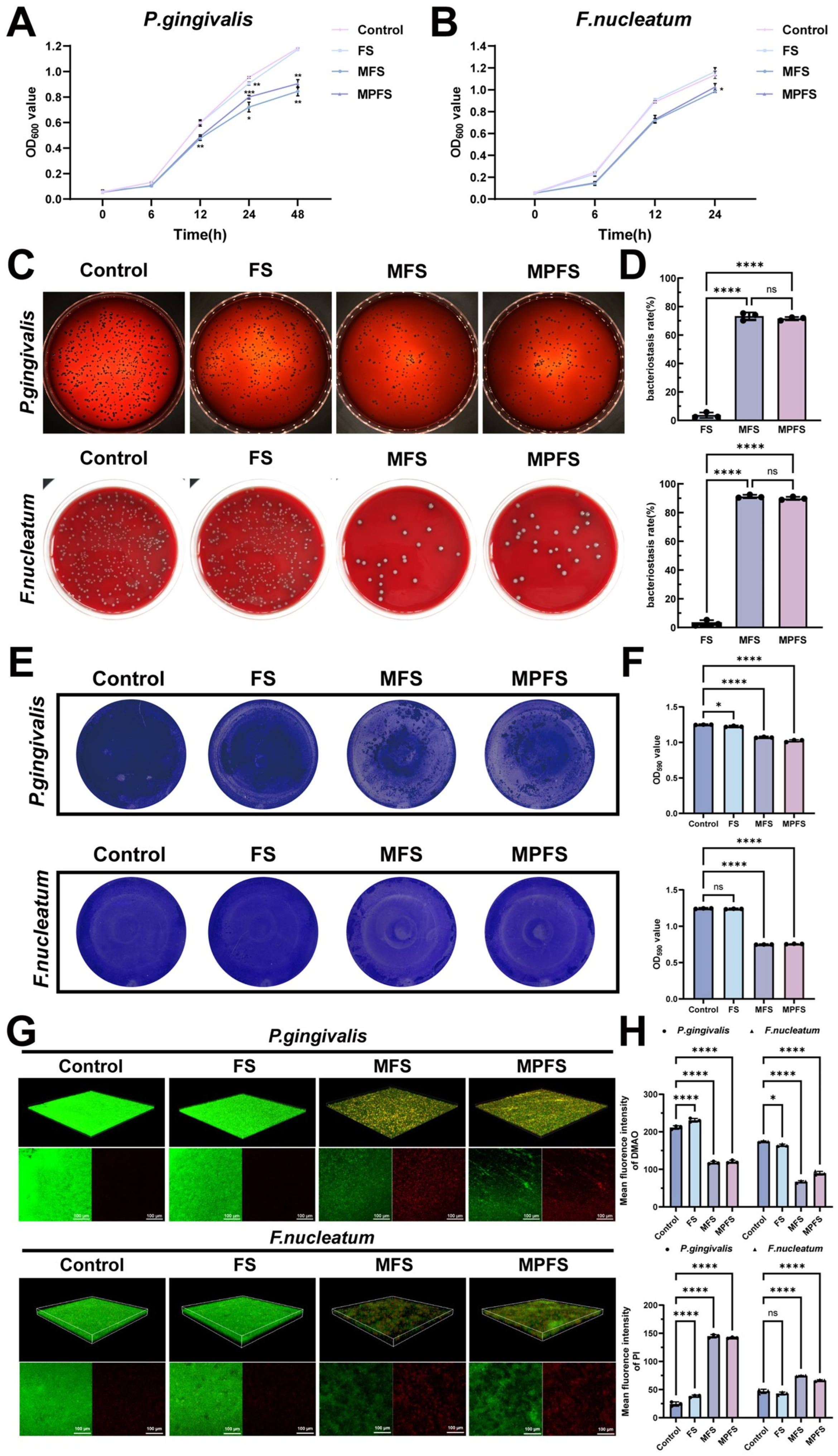
| Wang et al. [79], 2026; MgO2@PDA/F127–alginate | Thermosensitive F127–SA matrix containing 1% (w/v) MgO2@PDA | MPFS denser and less porous than FS; absolute pore size NR | Sol–gel transition 35.6 °C; gelation within 135 s at 37 °C | P. gingivalis and F. nucleatum, 24–48 h; bacteriostasis about 70–90%; live bacteria fluorescence reduced about 50% and 60% | [79] |
| Deng et al. [36], 2024; dialdehyde BC/quaternized chitosan | Covalent DBC/QCS network with repeatable rehydration | Repeated swelling reported; ratio NR | NR | Antibacterial activity reported; organism-specific value NR | [36] |
| Li et al. [33], 2024; Ag–BC nanofiber/Res/CND hydrogel | BC-nanofiber reinforcement in a self-healing multifunctional network | NR | Mechanical strength increased sixfold | S. aureus 99.99% and E. coli 99.68% antibacterial efficiency; infected wound healing shortened from 21 to 14 d | [33] |
| Liu et al. [37], 2024; QBC/heparin/gelatin | EDC/NHS cross-linking of quaternized BC with heparin/gelatin | 3D porous mesh; swelling 1476%; water retention >90% at 120 h | Water vapor transmission 3296 g m−2 24 h−1; modulus NR | S. aureus inhibition zone 3 cm; test duration NR | [37] |
| Deng et al. [38], 2023; BC/PDA/ZIF-8/Ag | BC network loaded with PDA/ZIF-8/Ag | Swelling > 3000% | Tensile strength >1 MPa; 50 °C reached in 5 min under NIR | E. coli and S. aureus survival 0.85% and 0.39%, respectively | [38] |
| Guamba et al. [32], 2023; cellulose wound hydrogel | Cellulose-derived hydrogel network | NR | NR | Gram-negative bacteria; in vitro/ex vivo antimicrobial effect reported; numeric value NR | [32] |
| Zhang et al. [39], 2022; GOx/MOF–BC hydrogel | BC-reinforced self-healing gel carrying a glucose-responsive catalytic nanoreactor | NR | NR | Glucose-triggered catalytic antibacterial and hemostatic activity; numeric value NR | [39] |
| Application Scenario | Main Microenvironment Characteristics | Key Performance Requirements | Main Failure Risks | Design Focus | Ref. |
|---|---|---|---|---|---|
| Wound Dressings | Coexistence of exudate, inflammation, bacterial contamination, and tissue repair | Fluid absorption, moisture retention, softness, antibacterial activity, low irritation, and atraumatic removal | Excessive swelling, injury during dressing removal, and inhibition of repair-related proteins or cells | Limit harmful biological contamination while permitting repair-related biological interactions | [84] |
| Catheters/Long-Term Indwelling Devices | Fluid shear, protein fouling, salt deposition, and ascending-infection risk | Protein-fouling resistance, low friction, resistance to fluid shear, firm coating, long-term stability | Coating delamination, friction injury, and attenuation of antifouling performance | Wet-state adhesion, covalent fixation, wear-resistant network, and dynamic fluid evaluation | [88] |
| Implant Surfaces | Competitive adhesion between bacteria and host cells, accompanied by immune response and tissue integration | Resist early bacterial colonization while allowing host-cell adhesion and tissue integration | Excessive antifouling inhibits cell adhesion; strong bactericidal activity causes toxicity or inflammation | Selective regulation, temporally programmed responses, and spatially partitioned functionalization | [89] |
| Tissue-Engineering Scaffolds | Porous architecture and high specific surface area are required for 3D cell growth and mass transfer | Support cell entry, mass transfer, and tissue regeneration; reduce bacterial colonization | Pores become bacterial niches and biofilm formation sites | Control pore size and roughness while promoting differential responses of host cells and bacteria | [63] |
| Wearable/Flexible Interfaces | Sweat, sebum, skin flora, repeated attachment, and long-term wet contact | Soft, breathable, low irritation, antifouling, reversible adhesion, stable after repeated use | Water loss, declining adhesion, and skin barrier damage | Moisture retention, reversible adhesion, low irritation, and antifouling retention after repeated attachment | [90] |
| Claimed Function | Minimum Evidence Required | Insufficient Evidence to Prove Alone | Recommended Test Conditions | Ref. |
|---|---|---|---|---|
| Successful Material Structure Construction | Functional-group modification, cross-linked networks, nanocomponent distribution, micro-/nanostructures, and adhesion units are present as designed | Gel appearance, a single FTIR peak, or a single SEM image | FTIR, XPS, NMR, SEM/AFM, rheology, element mapping | [91] |
| Stable Hydration Layer | Increased bound water fraction and retained hydration after exposure to serum, salts, or fluid shear | Low contact angle, high swelling ratio, or short-term wetting image | Dynamic contact angle, DSC/TGA, QCM-D, and wettability retention after serum exposure | [92] |
| Protein-fouling Resistance | Reduced protein adsorption in mixed-protein or serum environments and retention after dynamic-flow exposure | Single reduction in BSA adsorption | BSA, fibrinogen, fibronectin, or serum protein adsorption under dynamic flow | [92] |
| Resistance to Bacterial Adhesion | Reduced surface-adherent bacteria with distinction among nonadherent, dead, and detached cells | 24 h colony decrease, single viable count | CLSM, SEM, live/dead staining, and bacterial adhesion testing after exposure to fluid shear | [49,73] |
| Antibiofilm Formation | Reduced early adhesion, extracellular polymeric substance abundance, or biofilm thickness across multiple time points | Planktonic bacteria inhibition, inhibition zone, or short-term bactericidal rate | Crystal violet, CLSM, biofilm thickness, EPS staining, multi-strain model | [93] |
| Long-term Service Stability | Maintained wettability, mechanical and antifouling performance after immersion, shear, friction, bending | One-time test of fresh samples | Long-term immersion, dynamic-flow testing, friction and wear, and fatigue testing | [91] |
| Biological Safety | Acceptable cell compatibility, blood compatibility, inflammatory response | Single cell-viability measurement | Multi-cell model, hemolysis, coagulation, inflammatory factors | [94] |
| Translational Feasibility | Performance retention after sterilization, storage, and scale-up | Performance of freshly prepared laboratory samples | Performance after sterilization and freeze-drying/rehydration; batch consistency; coating adhesion strength | [95] |
Disclaimer/Publisher’s Note: The statements, opinions and data contained in all publications are solely those of the individual author(s) and contributor(s) and not of MDPI and/or the editor(s). MDPI and/or the editor(s) disclaim responsibility for any injury to people or property resulting from any ideas, methods, instructions or products referred to in the content. |
© 2026 by the authors. Licensee MDPI, Basel, Switzerland. This article is an open access article distributed under the terms and conditions of the Creative Commons Attribution (CC BY) license.
Share and Cite
Hou, L.; Huang, S. Biomimetic Superwetting Polysaccharide-Based Composite Hydrogel Interfaces from an Eco-Dialectical Perspective: Polymer Network Design, Hydration-Layer Stabilization, and Structure–Performance Relationships. Polymers 2026, 18, 1952. https://doi.org/10.3390/polym18161952
Hou L, Huang S. Biomimetic Superwetting Polysaccharide-Based Composite Hydrogel Interfaces from an Eco-Dialectical Perspective: Polymer Network Design, Hydration-Layer Stabilization, and Structure–Performance Relationships. Polymers. 2026; 18(16):1952. https://doi.org/10.3390/polym18161952
Chicago/Turabian StyleHou, Lisha, and Shiyu Huang. 2026. "Biomimetic Superwetting Polysaccharide-Based Composite Hydrogel Interfaces from an Eco-Dialectical Perspective: Polymer Network Design, Hydration-Layer Stabilization, and Structure–Performance Relationships" Polymers 18, no. 16: 1952. https://doi.org/10.3390/polym18161952
APA StyleHou, L., & Huang, S. (2026). Biomimetic Superwetting Polysaccharide-Based Composite Hydrogel Interfaces from an Eco-Dialectical Perspective: Polymer Network Design, Hydration-Layer Stabilization, and Structure–Performance Relationships. Polymers, 18(16), 1952. https://doi.org/10.3390/polym18161952