


Transient Thermal Conductivity Minimum in Phenolic Foam Insulation: Closed-Cell Structural Dependence and Long-Term Aging Behavior

Abstract
1. Introduction
2. Materials and Methods
2.1. Materials
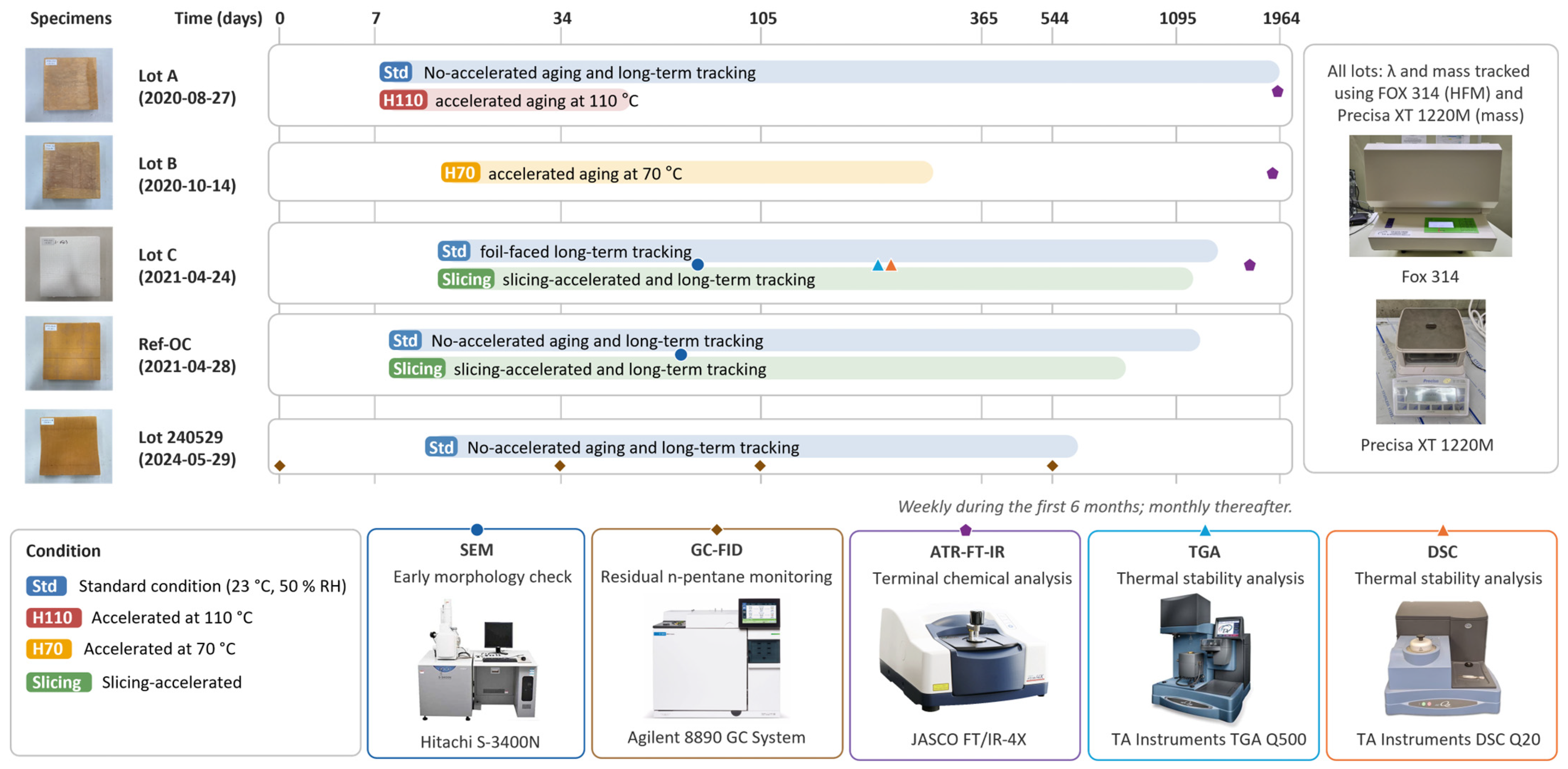
2.1.1. Closed-Cell PF Insulation Specimens
2.1.2. Reference PF Specimens
2.2. Accelerated and Standard Aging Conditions
2.3. Thermal Conductivity and Mass Tracking
2.4. Chemical and Structural Analysis
2.4.1. GC-FID Blowing Agent Analysis
2.4.2. ATR-FT-IR Resin Structural Analysis
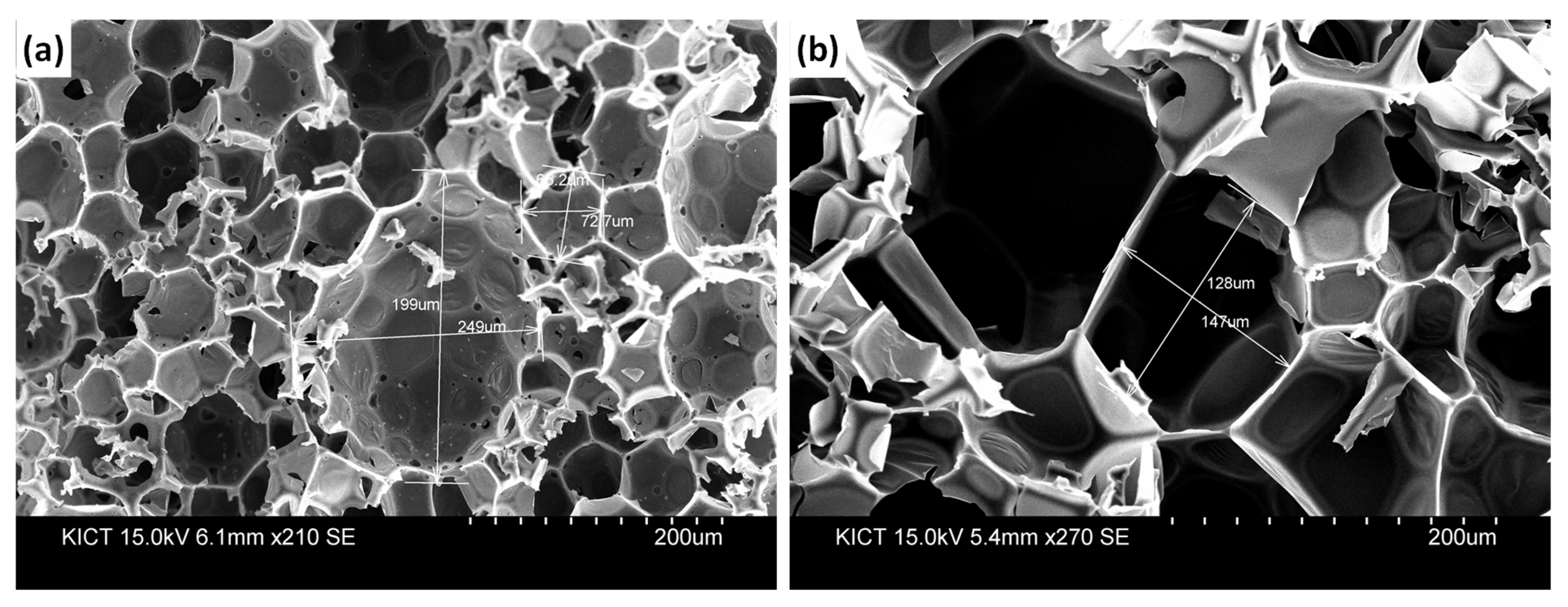
2.4.3. Cell Morphology Observation
3. Results and Discussion
3.1. Transient Thermal Conductivity Minimum (TTCM)
3.1.1. TTCM Quantification and Instrumental Artifact Exclusion
3.1.2. Closed-Cell Structural Integrity and Governing Factor Analysis
3.2. Blowing Agent Release and Long-Term Thermal Conductivity Rise
3.2.1. Weight and Thermal Conductivity Analysis in the Post-TTCM Phase
3.2.2. Release Path Dependence
3.3. Thickness-Direction Position Dependence
3.3.1. Through-Thickness Blowing Agent Distribution and Chemical Aging Indicators
3.3.2. Position-Dependent Thermal Conductivity Evolution
4. Limitations
5. Conclusions
Author Contributions
Funding
Data Availability Statement
Conflicts of Interest
References
- Berardi, U. The impact of aging and environmental conditions on the effective thermal conductivity of several foam materials. Energy 2019, 182, 777–794. [Google Scholar] [CrossRef]
- BS EN 13166:2012+A2:2016; Thermal Insulation Products for Buildings—Factory Made Phenolic Foam (PF) Products—Specification. CEN: Brussels, Belgium, 2016.
- Glicksman, L.R. Gas diffusion in closed cell foams. In Low Density Cellular Plastics: Physical Basis of Behaviour; Hilyard, N.C., Cunningham, A., Eds.; Chapman & Hall: London, UK, 2000; pp. 460–490. [Google Scholar]
- Stovall, T.K. Closed Cell Foam Insulation: A Review of Long Term Thermal Performance Research; Oak Ridge National Laboratory Report ORNL/TM-2012/583; Oak Ridge National Laboratory: Oak Ridge, TN, USA, 2012.
- Alsoy Altinkaya, S. Modeling of diffusion in closed cell polymeric foams. J. Cell. Plast. 2001, 37, 247–271. [Google Scholar] [CrossRef]
- Schumacher, D.; Guevara-Carrion, G.; Kasper, T.; Paul, A.; Elsner, A.; Peters, B.; Wollny, W.; Bluemel, M.; Hoelscher, H.; Brzoska-Steinhaus, N.; et al. Aging of polyurethane foam: Experimental analysis and modeling of cell gas composition and thermal conductivity. Appl. Therm. Eng. 2026, 289, 129850. [Google Scholar] [CrossRef]
- Tarik, F.; Shang, Y.; Molleti, S. Thermal performance of flat roof insulation materials: A review of temperature, moisture and aging effects. J. Build. Eng. 2023, 76, 107142. [Google Scholar] [CrossRef]
- Mukhopadhyaya, P.; Bomberg, M.T.; Kumaran, M.K.; Drouin, M.; Lackey, J.; van Reenen, D.; Normandin, N. Long-term thermal resistance of polyisocyanurate foam insulation with impermeable facers. ASTM Spec. Tech. Publ. 2002, 1426, 351–365. [Google Scholar] [CrossRef]
- Mukhopadhyaya, P.; Kumaran, M.K.; Drouin, M.; Lackey, J.; van Reenen, D.; Normandin, N. Long-term thermal resistance of polyisocyanurate foam insulation with gas barrier. In Proceedings of the IX International Conference on Performance of Exterior Envelopes of Whole Buildings, Clearwater Beach, FL, USA, 5–10 December 2004. [Google Scholar]
- Andersons, J.; Modniks, J.; Kirpluks, M. Estimation of the effective diffusivity of blowing agents in closed-cell low-density polyurethane foams based on thermal aging data. J. Build. Eng. 2021, 44, 103365. [Google Scholar] [CrossRef]
- Berardi, U.; Madzarevic, J. Microstructural analysis and blowing agent concentration in aged polyurethane and polyisocyanurate foams. Appl. Therm. Eng. 2020, 164, 114440. [Google Scholar] [CrossRef]
- Hong, S.U.; Albouy, A.; Duda, J.L. Transport of blowing agents in polyurethane. J. Appl. Polym. Sci. 2001, 79, 696–702. [Google Scholar]
- Dohrn, R.; Fonseca, J.M.; Albers, R.; Kusan-Bindels, J.; Marrucho, I.M. Thermal conductivity of polyurethane foam cell gases: Improved transient hot wire cell—Data of isopentane + n-pentane mixtures—Extended Wassiljewa-model. Fluid Phase Equilib. 2007, 261, 41–49. [Google Scholar] [CrossRef]
- Mougel, C.; Garnier, T.; Cassagnau, P.; Sintes-Zydowicz, N. Phenolic foams: A review of mechanical properties, fire resistance and new trends in phenol substitution. Polymer 2019, 164, 86–104. [Google Scholar] [CrossRef]
- Park, B.D.; Riedl, B.; Kim, Y.S.; So, W.K. Effect of synthesis parameters on thermal behavior of phenol–formaldehyde resol resin. J. Appl. Polym. Sci. 2001, 81, 2389–2399. [Google Scholar] [CrossRef]
- El Assaad, M.; Plantec, Y.; Colinart, T.; Lecompte, T. Influence of moisture transfer on thermal conductivity measurement by HFM: Measurement accuracy on insulation materials and consequences on building energy assessments. Energy Build. 2024, 320, 114635. [Google Scholar] [CrossRef]
- Pilon, L.; Fedorov, A.G.; Viskanta, R. Gas diffusion in closed-cell foams. J. Cell. Plast. 2000, 36, 451–474. [Google Scholar] [CrossRef]
- Chen, Y.; Chen, Z.; Xiao, S.; Liu, H. A novel thermal degradation mechanism of phenol–formaldehyde type resins. Thermochim. Acta 2008, 476, 39–43. [Google Scholar] [CrossRef]
- Costa, L.; Rossi di Montelera, L.; Camino, G.; Weil, E.D.; Pearce, E.M. Structure-charring relationship in phenol-formaldehyde type resins. Polym. Degrad. Stab. 1997, 56, 23–35. [Google Scholar] [CrossRef]
- Pintus, V.; Piccolo, A.; Vetter, W.; Moretto, L.M.; Sterflinger, K.; Schreiner, M. What about phenol formaldehyde (PF) foam in modern-contemporary art? Insights into the unaged and naturally aged material by a multi-analytical approach. Polymers 2021, 13, 1964. [Google Scholar] [CrossRef] [PubMed]
- Yu, Y.; Li, C.; Jiang, C.; Chang, J.; Shen, D. Aging behaviors of phenol-formaldehyde resin modified by bio-oil under five aging conditions. Polymers 2022, 14, 1352. [Google Scholar] [CrossRef] [PubMed]
- Leem, Y.; Kitagaki, R.; Ishida, T.; Hagihara, H. Long-term stability and water vapor induced degradation of physico-chemical properties of XPS and PF. Dev. Built Environ. 2024, 18, 100429. [Google Scholar] [CrossRef]
- Bae, M.; Ahn, H.; Kang, J.; Choi, G.; Choi, H. Determination of the long-term thermal performance of foam insulation materials through heat and slicing acceleration. Polymers 2022, 14, 4926. [Google Scholar] [CrossRef] [PubMed]
- Choi, H.J.; Kang, J.S.; Huh, J.H. A study on variation of thermal characteristics of insulation materials for buildings according to actual long-term annual aging variation. Int. J. Thermophys. 2018, 39, 2. [Google Scholar] [CrossRef]
- KS M ISO 11561:1999; Ageing of Thermal Insulation Materials—Determination of the Long-Term Change in Thermal Resistance of Closed-Cell Plastics. Korean Standards Association: Seoul, Republic of Korea, 1999.
- Reignier, J.; Méchín, F.; Sarbu, A. Chemical gradients in PIR foams as probed by ATR-FTIR analysis and consequences on fire resistance. Polym. Test. 2021, 93, 106972. [Google Scholar] [CrossRef]
- ASTM D6226-15; Standard Test Method for Open Cell Content of Rigid Cellular Plastics. ASTM International: West Conshohocken, PA, USA, 2015.
- KS L 9016:2010; Test Methods for Thermal Transmission Properties of Thermal Insulations. Korean Standards Association: Seoul, Republic of Korea, 2010.
- Holopainen, T.; Alvila, L.; Rainio, J.; Pakkanen, T.T. IR spectroscopy as a quantitative and predictive analysis method of phenol–formaldehyde resol resins. J. Appl. Polym. Sci. 1998, 69, 2175–2185. [Google Scholar]
- Poljanšek, I.; Šebenik, U.; Krajnc, M. Characterization of phenol-urea-formaldehyde resin by inline FTIR spectroscopy. J. Appl. Polym. Sci. 2006, 99, 2016–2028. [Google Scholar]
- Grigoriev, B.A.; Aleksandrov, I.S.; Gerasimov, A.A. Thermal conductivity of n-pentane in the temperature range from the triple point to 700 K at a pressure of up to 100 MPa. High Temp. 2024, 62, 837–841. [Google Scholar] [CrossRef]
- Sengers, J.V.; Watson, J.T.R.; Basu, R.S.; Kamgar-Parsi, B.; Hendricks, R.C. Representative equations for the thermal conductivity of water substance. J. Phys. Chem. Ref. Data 1984, 13, 893–933. [Google Scholar] [CrossRef]

| Specimen | Production Date (Lot) | Aging Condition | Facing Status | Thickness (mm) | Mass Tracking | Analysis |
|---|---|---|---|---|---|---|
| Lot-A-Std | 2020-08-27 (A) | Standard (23 °C) | Removed | 66 | Yes | λ, Mass |
| Lot-A-H110-1 | 110 °C Accelerated | Removed | 66 | Yes | λ, Mass | |
| Lot-A-H110-2 | 110 °C Accelerated | Removed | 66 | Yes | λ, Mass | |
| A-Core | Standard—core region | Removed | — | — | ATR-FT-IR | |
| Lot-B-H70-1 | 2020-10-14 (B) | 70 °C Accelerated | Removed | 65 | Yes | λ, Mass |
| Lot-B-H70-2 | 70 °C Accelerated | Removed | 65 | Yes | λ, Mass | |
| B-Surf | Standard—surface region | Removed | — | — | ATR-FT-IR | |
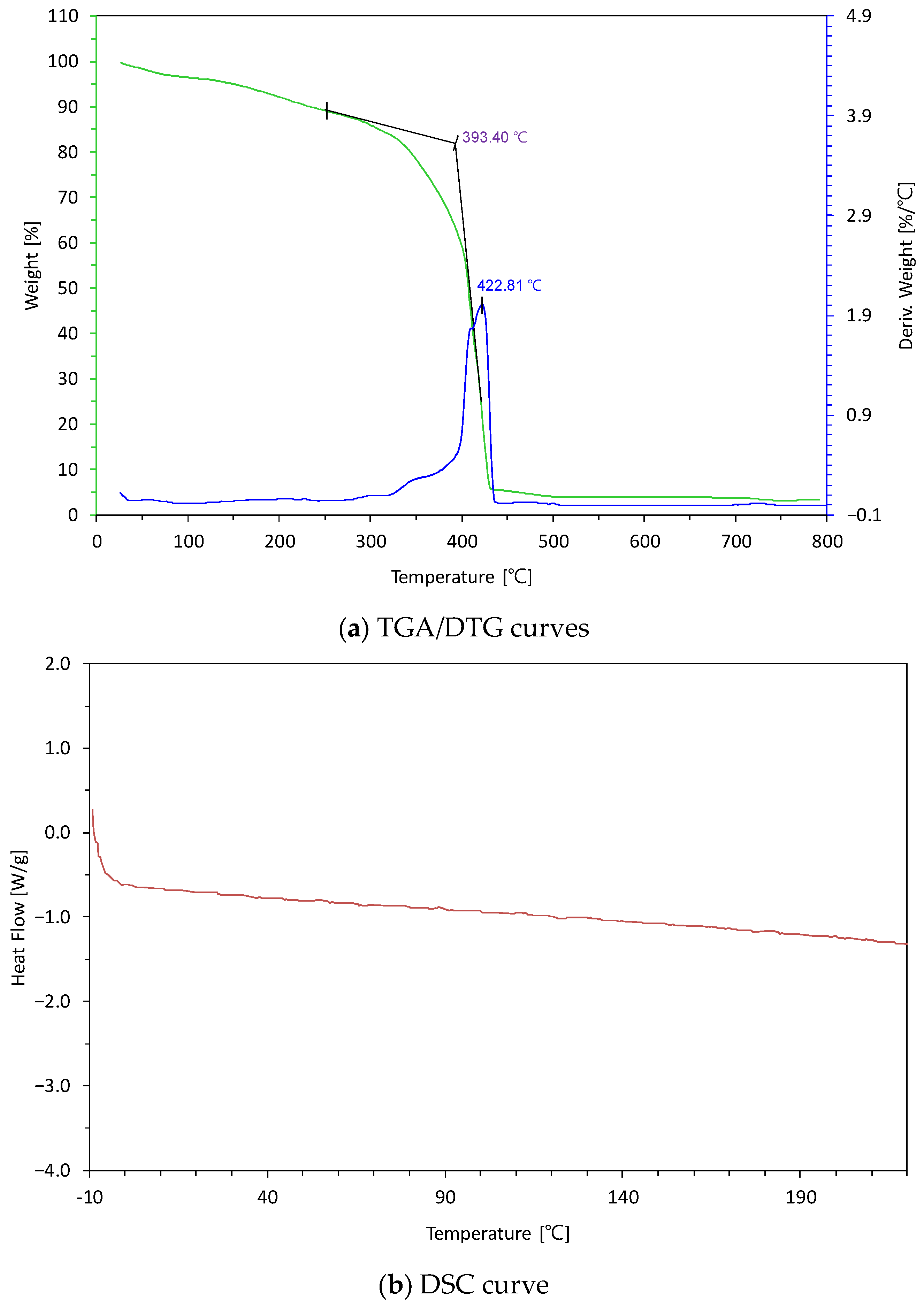
| Lot-C-Std | 2021-04-24 (C) | Standard (23 °C) | Retained | 62 | Yes | λ, Mass, TGA, DSC |
| Lot-C-Slicing | Slicing (KS M ISO 11561) | Removed | ~66 (sliced; restacked from 72 mm) | Yes | λ, Mass | |
| C-Surf | Standard—surface region | Removed | — | — | ATR-FT-IR |
| Specimen | Sampling Location | Facing Status | Sealed Storage Prior to Cutting (Days) | Analysis |
|---|---|---|---|---|
| Core | Central region | Removed | 0 | λ, Mass |
| Surf | Foil-faced surface region | Removed | 0 | λ, Mass |
| Board | Full board | Retained | 544 | λ, Mass |
| CP-0 | Full board, thickness- direction sectioning | Retained | 0 | GC-FID |
| CP-34 | Full board, thickness- direction sectioning | Retained | 34 | GC-FID |
| CP-105 | Full board, thickness- direction sectioning | Retained | 105 | GC-FID |
| CP-544 | Full board, thickness- direction sectioning | Retained | 544 | GC-FID |
| Specimen | Aging Condition | Facing Status | Thickness (mm) | Mass Tracking | Analysis |
|---|---|---|---|---|---|
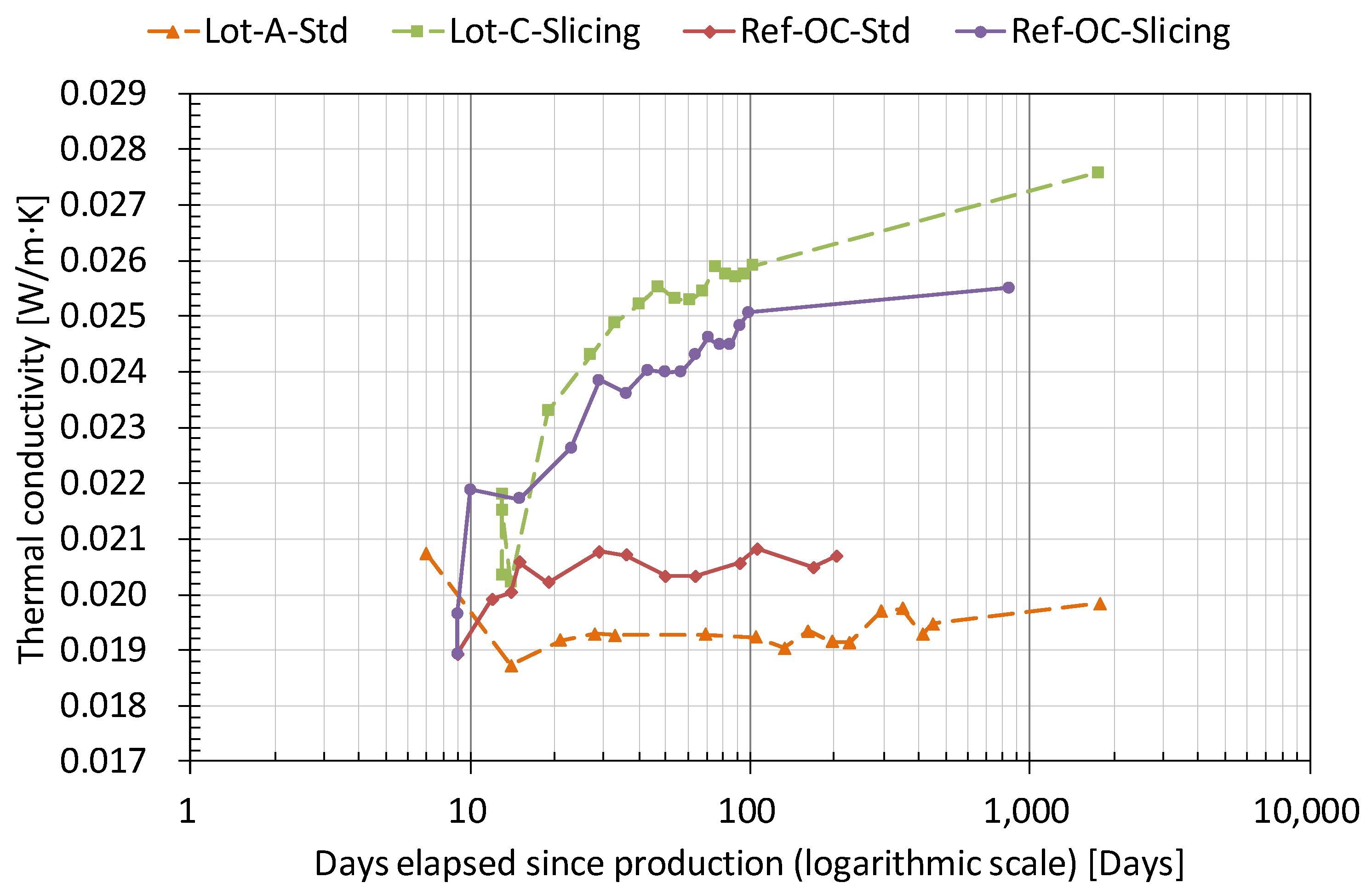
| Ref-OC-Std | Standard (23 °C) | Removed | 50 | Yes | λ, Mass, SEM |
| Ref-OC-Slicing | Slicing (KS M ISO 11561) | Removed | ~56 (sliced; restacked from 61.2 mm) | Yes | λ, Mass |
| Specimen | Thickness [mm] | Initial Thermal Conductivity [W/(m·K)] (a) | Min. Thermal Conductivity [W/(m·K)] (b) | Reduction ((b)/(a) − 1) [%] | Days to Min. [Day Since Prod.] |
|---|---|---|---|---|---|
| Board | 80 | 0.0207 (Day 544) | 0.0199 (Day 558) | −3.9 | 558 (14) |
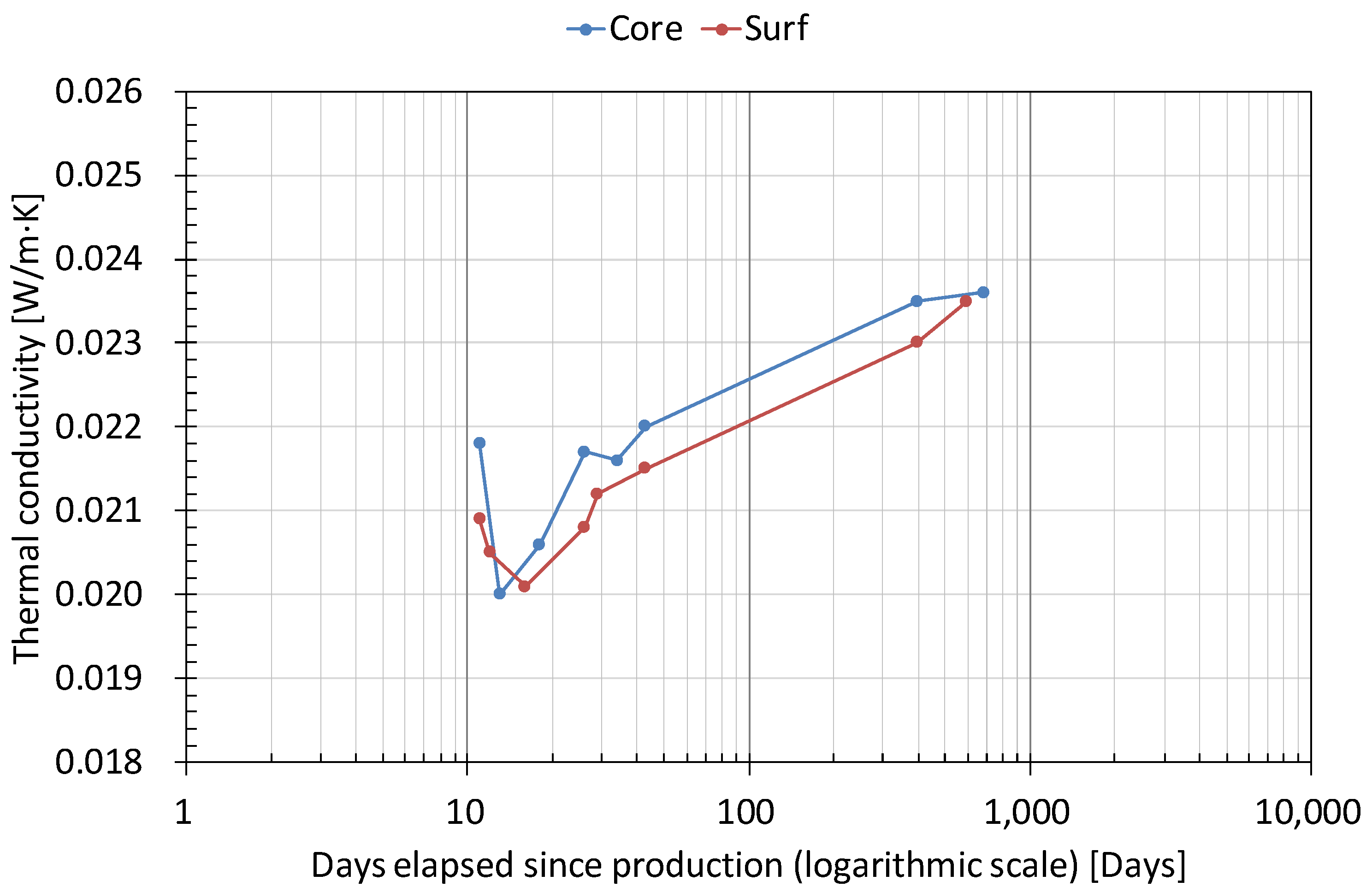
| Surf | 50 | 0.0209 (Day 11) | 0.0201 (Day 16) | −3.8 | 16 |
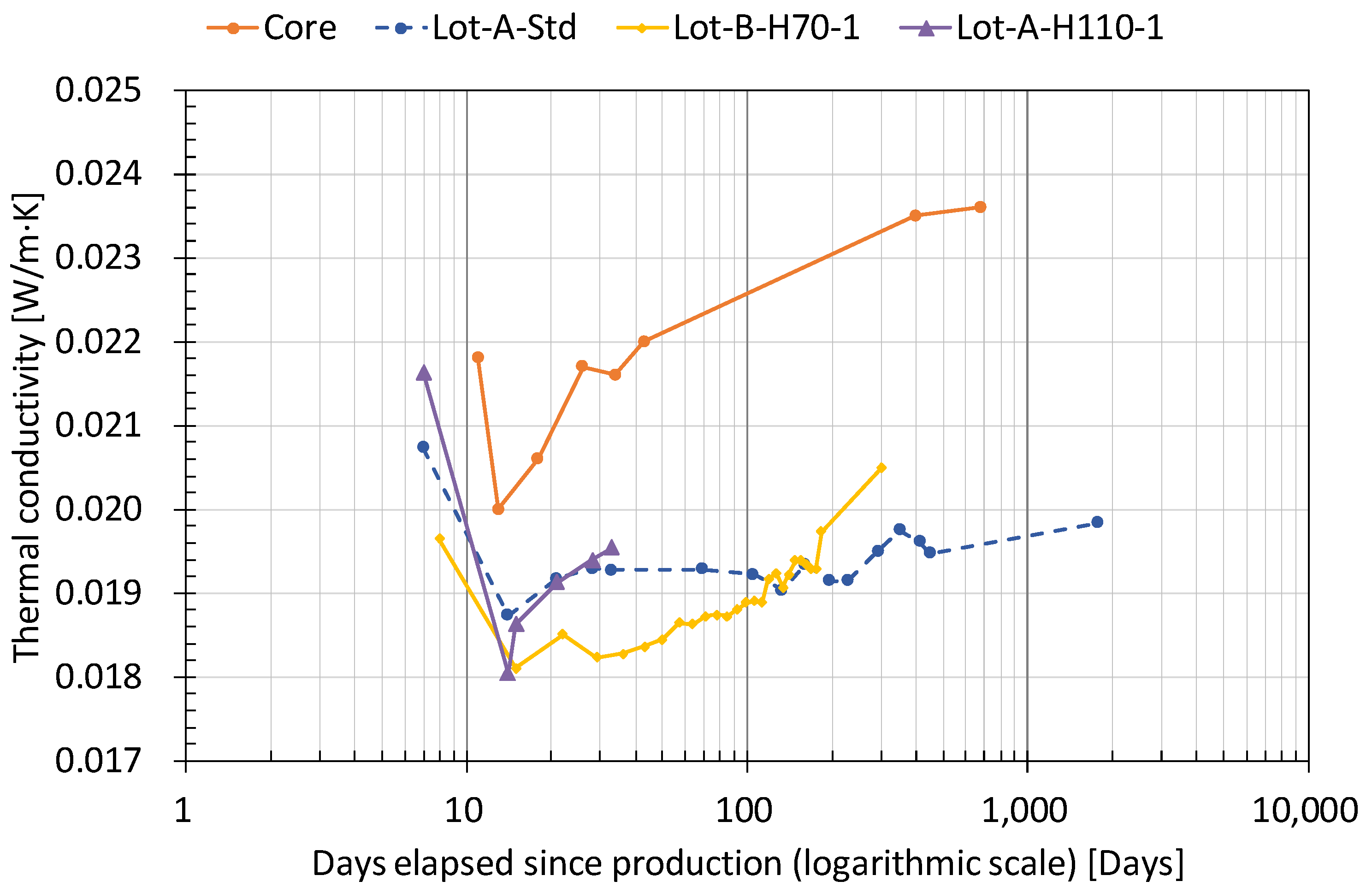
| Core | 50 | 0.0218 (Day 11) | 0.0200 (Day 13) | −8.3 | 13 |
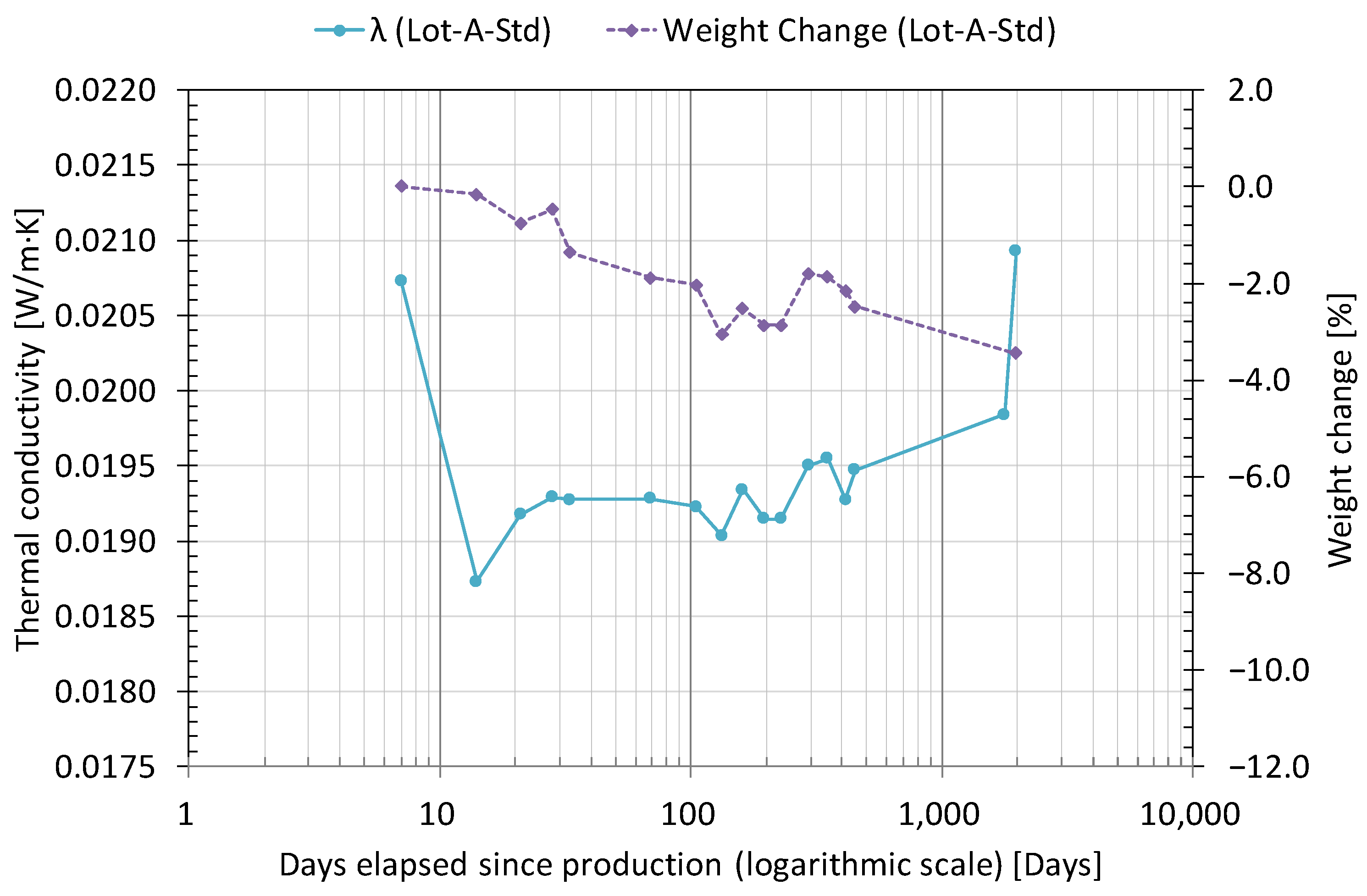
| Lot-A-Std | 66 | 0.0207 (Day 7) | 0.0187 (Day 14) | −9.7 | 14 |
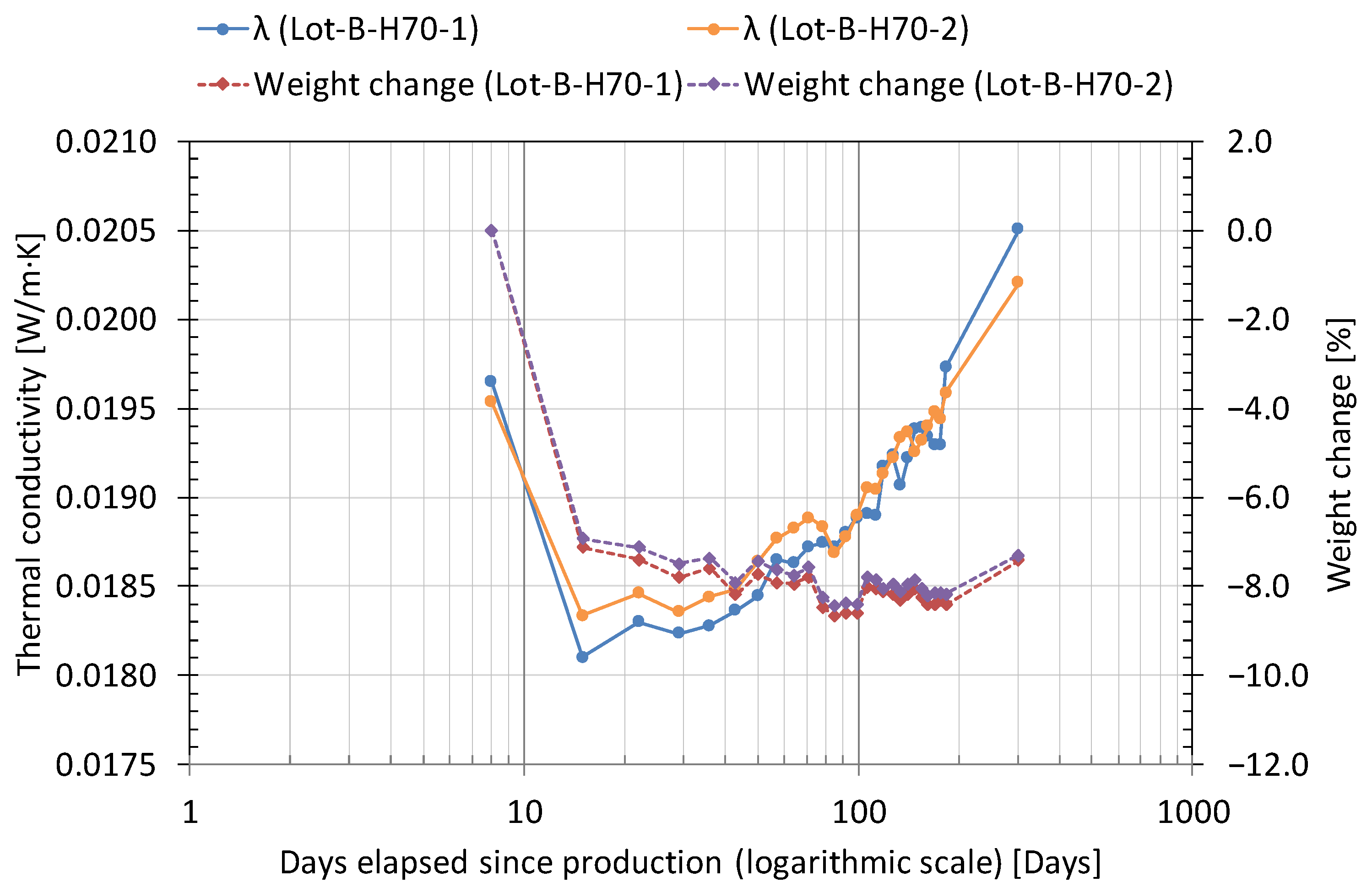
| Lot-B-H70-1 | 65 | 0.0197 (Day 8) | 0.0181 (Day 15) | −8.1 | 15 |
| Lot-B-H70-2 | 65 | 0.0195 (Day 8) | 0.0183 (Day 15) | −6.2 | 15 |
| Lot-A-H110-1 | 66 | 0.0216 (Day 7) | 0.0180 (Day 14) | −16.7 | 14 |
| Lot-A-H110-2 | 66 | 0.0212 (Day 7) | 0.0180 (Day 14) | −15.1 | 14 |
| Specimen | Initial λ [W/(m·K)] | Min. λ [W/(m·K)] | λ Change [%] | Initial Weight [g] | Weight at Min. λ [g] | Weight Change [%] | Days to Min. λ |
|---|---|---|---|---|---|---|---|
| Lot-A-Std | 0.0207 (Day 7) | 0.0187 (Day 14) | −9.7 | 214.4 | 214.1 | −0.2 | 14 |
| Lot-B-H70-1 | 0.0196 (Day 8) | 0.0181 (Day 15) | −7.7 | 208.0 | 193.2 | −7.1 | 15 |
| Lot-B-H70-2 | 0.0195 (Day 8) | 0.0183 (Day 15) | −6.2 | 216.1 | 201.2 | −6.9 | 15 |
| Lot-A-H110-1 | 0.0216 (Day 7) | 0.0180 (Day 14) | −16.7 | 217.6 | 192.2 | −11.7 | 14 |
| Lot-A-H110-2 | 0.0212 (Day 7) | 0.0180 (Day 14) | −15.1 | 222.9 | 191.1 | −14.2 | 14 |
| Specimen | Phase | Period | Duration [Days] | Weight Change [%] | λ Change [%] |
|---|---|---|---|---|---|
| Lot-B-H70-1 | TTCM | Day 8 → Day 15 | 7 | −7.1 | −7.7 |
| Lot-B-H70-1 | Post-TTCM | Day 15 → Day 302 | 287 | −0.3 | +13.3 |
| Lot-B-H70-2 | TTCM | Day 8 → Day 15 | 7 | −6.9 | −6.2 |
| Lot-B-H70-2 | Post-TTCM | Day 15 → Day 302 | 287 | −0.4 | +10.4 |
| Specimen | Release Path Condition | TTCM Min. λ [W/(m·K)] | Post-TTCM λ Change |
|---|---|---|---|
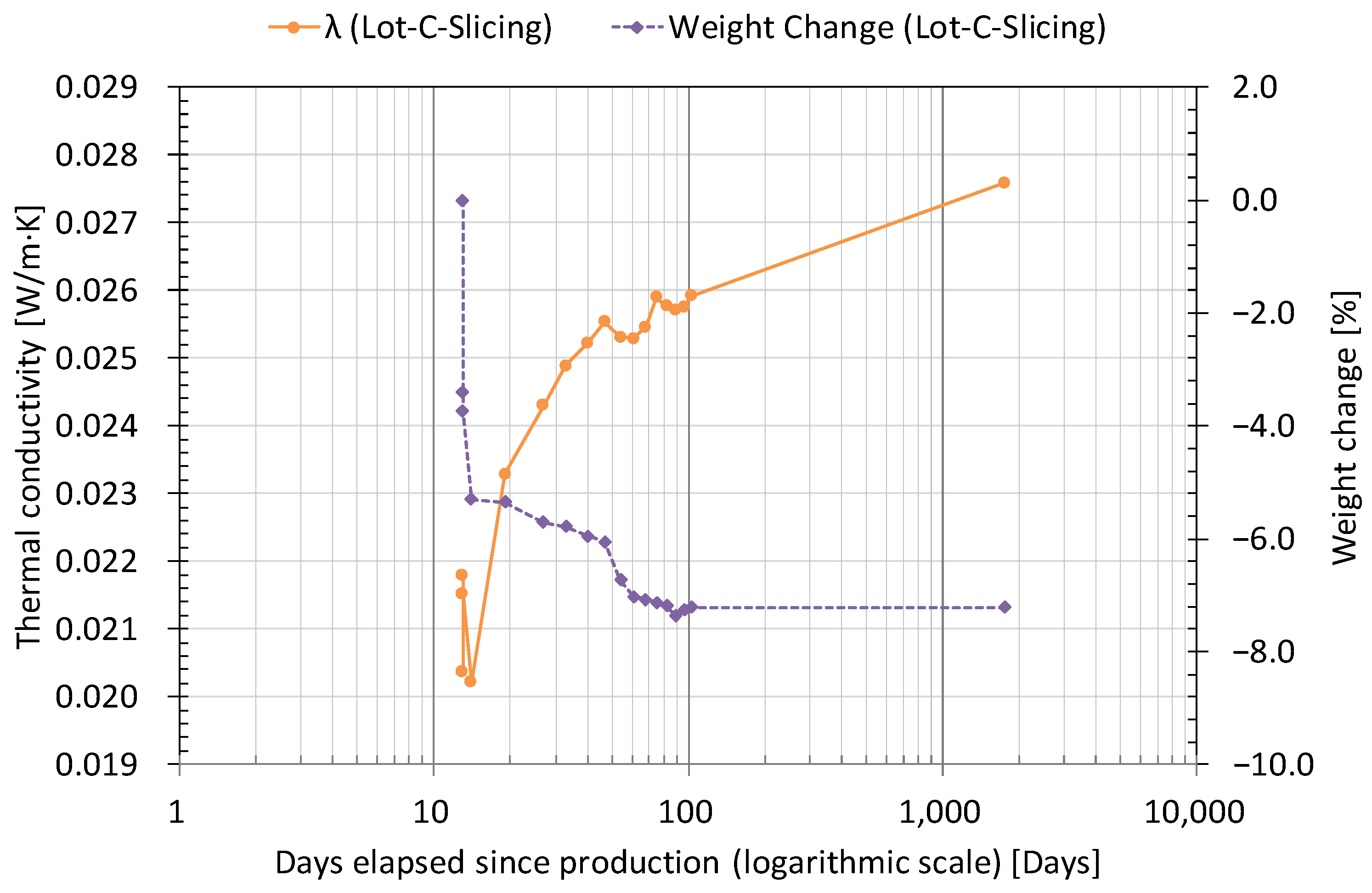
| Lot-C-Slicing | Shortened (~10 mm; facers removed) | 0.0202 (Day 14) | +28.2% (Day 14 → 103) |
| Lot-C-Std | Blocked (Al foil facer intact) | 0.0204 (Day 13) | 0.0% (Day 13 → 1811) |
| Specimen | Production Date | Age (Days) | Sampling Position | I815 | I1650 | I1475 |
|---|---|---|---|---|---|---|
| CP-544 | 2024-05-29 | 544 | Core (sealed reference) | 0.917 | 0.936 | 2.143 |
| A-Core | 2020-08-27 | 1932 | Core | 0.879 | 1.085 | 2.608 |
| B-Surf | 2020-10-14 | 1889 | Surface | 0.407 | 1.327 | 1.708 |
| C-Surf | 2021-04-24 | 1697 | Surface | 0.559 | 1.087 | 2.247 |
Disclaimer/Publisher’s Note: The statements, opinions and data contained in all publications are solely those of the individual author(s) and contributor(s) and not of MDPI and/or the editor(s). MDPI and/or the editor(s) disclaim responsibility for any injury to people or property resulting from any ideas, methods, instructions or products referred to in the content. |
© 2026 by the authors. Licensee MDPI, Basel, Switzerland. This article is an open access article distributed under the terms and conditions of the Creative Commons Attribution (CC BY) license.
Share and Cite
Bae, M.; Kang, J.; Ahn, H. Transient Thermal Conductivity Minimum in Phenolic Foam Insulation: Closed-Cell Structural Dependence and Long-Term Aging Behavior. Polymers 2026, 18, 1862. https://doi.org/10.3390/polym18151862
Bae M, Kang J, Ahn H. Transient Thermal Conductivity Minimum in Phenolic Foam Insulation: Closed-Cell Structural Dependence and Long-Term Aging Behavior. Polymers. 2026; 18(15):1862. https://doi.org/10.3390/polym18151862
Chicago/Turabian StyleBae, Minjung, Jaesik Kang, and Hosang Ahn. 2026. "Transient Thermal Conductivity Minimum in Phenolic Foam Insulation: Closed-Cell Structural Dependence and Long-Term Aging Behavior" Polymers 18, no. 15: 1862. https://doi.org/10.3390/polym18151862
APA StyleBae, M., Kang, J., & Ahn, H. (2026). Transient Thermal Conductivity Minimum in Phenolic Foam Insulation: Closed-Cell Structural Dependence and Long-Term Aging Behavior. Polymers, 18(15), 1862. https://doi.org/10.3390/polym18151862

