1. Introduction
Hydrophobicity and superhydrophobicity are key properties governing surface–liquid interactions in functional materials. The concept of superhydrophobicity is commonly associated with the Lotus effect, where hierarchical surface structures lead to extreme water repellence [
1,
2,
3,
4]. Recent studies have further emphasised the importance of durability and multifunctionality in practical applications [
5].
Superhydrophobic surfaces are defined by contact angles exceeding 150°, low roll-off angles, and minimal contact angle hysteresis [
6,
7]. Acrylic resins used in vat photopolymerisation exhibit moderate surface energy, requiring structural or functional surface modification to achieve hydrophobic or superhydrophobic behaviour. Such modifications typically involve the introduction of micro- or nano-scale surface features inspired by natural superhydrophobic systems. Superhydrophobic behaviour in polymeric systems is typically achieved through a combination of surface chemistry modification and hierarchical structuring [
8].
Due to their benefits, including self-cleaning, reduced corrosion and wear (in case of metals), anti-icing performance, improved fluid flow, and enhanced hygiene, hydrophobic and superhydrophobic surfaces remain an active area of research across multiple technological sectors.
Additive manufacturing (AM), defined by ISO/ASTM 52900:2021 [
9], has emerged as a key enabling technology for producing complex geometries and customised components, facilitating the integration of functional surface properties [
10,
11]. The possibility of enhancing AM-produced components through post-processing surface modification has motivated extensive research in recent years. Among these methods, femtosecond laser modification is one of the most widely explored techniques for generating hydrophobic and superhydrophobic surfaces. By recreating hierarchical roughness similar to that of natural non-wetting surfaces, femtosecond laser modification enables improvements in water repellence and self-cleaning behaviour [
12]. On the other hand, metallic coatings obtained by physical vapour deposition (PVD) represent a relevant strategy for tailoring surface properties. The PVD process is based on the physical vaporisation of a solid material, typically metals or alloys, using techniques such as sputtering or cathodic arc evaporation, followed by the condensation of the vapour onto a substrate under vacuum conditions. This approach enables the production of thin, dense coatings with high adhesion, while offering precise control over chemical composition and microstructure. Due to the relatively high energies of the arriving species, PVD-deposited metallic coatings exhibit refined microstructures and superior properties compared to those produced by conventional thermal or electrochemical techniques [
13,
14,
15,
16].
On the other hand, sandblasting is a high-intensity treatment that uses an abrasive material, α-aluminium oxide (corundum) (Al
2O
3). This process can create both very rough and finely polished surfaces, depending on the grain size of the corundum used. It is also used as a combined pretreatment with coatings on steels and metals to prevent corrosion [
17,
18], but it has been considered that the microetching or the wear it produces on polymeric surfaces [
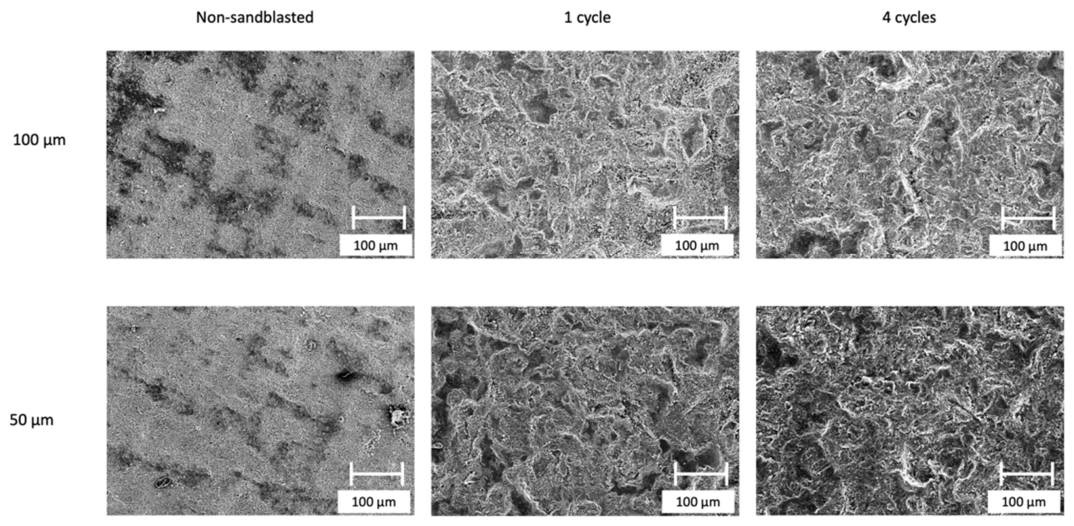
19] can also contribute to the hydrophobicity.
Within this framework, VPP technologies have emerged as highly promising approaches for the fabrication of complex, customised, and high-resolution polymer components. VPP technology is widely recognised for its high resolution and excellent surface finish compared to other additive manufacturing techniques [
20]. Recent advances in photopolymer chemistry have enabled the development of engineering-grade resins, such as Rigid 10K, which exhibit enhanced stiffness, thermal resistance, and dimensional stability compared to other conventional photopolymers [
21,
22].
This is particularly relevant for sectors requiring low-to-medium production volumes, high geometrical complexity, and rapid design adaptation. The optimisation of process parameters, such as exposure time, layer thickness, and manufacturing orientation, plays a critical role in determining the final mechanical performance of VPP-fabricated parts [
23,
24].
Beyond mechanical performance, recent developments in additive manufacturing have increasingly focused on the integration of functional surface properties, such as hydrophobicity, directly into printed components. Hydrophobicity in VPP components can be achieved through material-driven approaches (e.g., incorporation of hydrophobic moieties) or structure-driven approaches based on micro- and nano-scale surface texturing [
24,
25,
26,
27]. Recent studies have demonstrated that the design of microstructures in VPP, such as pillar geometries, has a direct impact on contact angle values, highlighting the importance of geometrical design in wettability control [
28,
29]. Furthermore, the final geometry of these structures is strongly dependent on the capabilities and limitations of the manufacturing process, establishing a direct relationship between fabrication technology, surface design, and wettability performance [
29,
30]. However, despite these promising strategies, the implementation of hydrophobicity in high-performance VPP materials remains limited. In particular, there is scarce literature addressing the combination of high mechanical stiffness (as provided by Rigid 10K-like resins), dimensional accuracy, and durable hydrophobic behaviour under real operating conditions. Establishing quantitative relationships between fabrication parameters, surface topology, and wettability remains a critical challenge for the scalable design of functional surfaces [
27,
31].
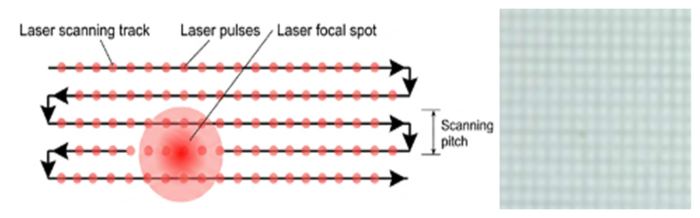
Laser microtexturing represents another particularly attractive post-processing method to produce hydrophobicity, due to the high dimensional accuracy and surface quality of printed parts. In this context, laser processing parameters determine key design characteristics, such as texture depth, feature spacing, and surface roughness, which in turn govern the wetting response of the modified surface. Although studies have demonstrated that laser-textured polymer surfaces can achieve water contact angles exceeding 150°, particularly when combined with low-surface-energy surface chemistry or post-treatment [
32,
33,
34], most of these studies have focused on conventional polymers (with limited attention given to photopolymers and parts produced via VPP) [
35].
Therefore, the development of hydrophobic surfaces cannot be considered solely as a material selection problem, but also as a design and manufacturing challenge in which the final functionality depends on the interaction between fabrication technology, surface architecture, and post-processing strategy. Understanding these interactions is essential for the effective design of functional surfaces produced by additive manufacturing.
In this context, the present research focuses on the additive manufacturing of test specimens using vat photopolymerisation, followed by surface modification through different microstructuring and coating techniques, with the goal of achieving hydrophobic or superhydrophobic behaviour in acrylic resin parts. The study evaluates how these modifications influence surface energy and contact angles, comparing the effectiveness of various treatments.
4. Conclusions
This study systematically evaluated the relative influence of VPP processing parameters and post-processing treatments on the wettability of an acrylic resin, establishing a clear hierarchy of effects.
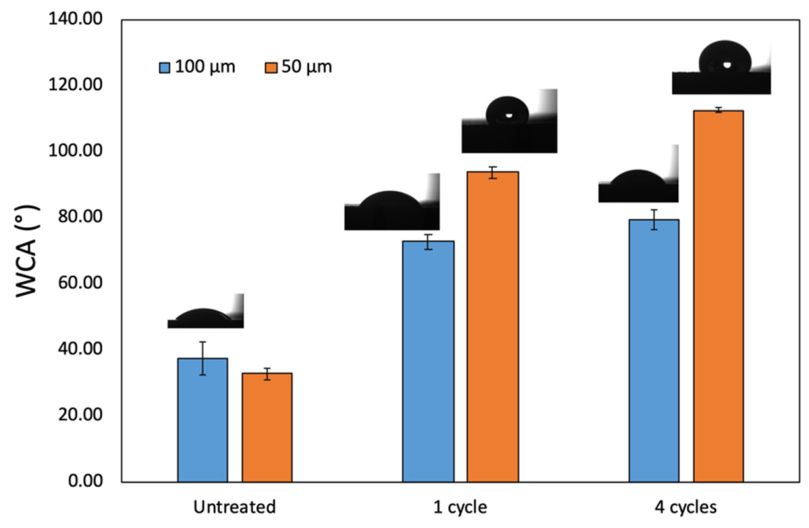
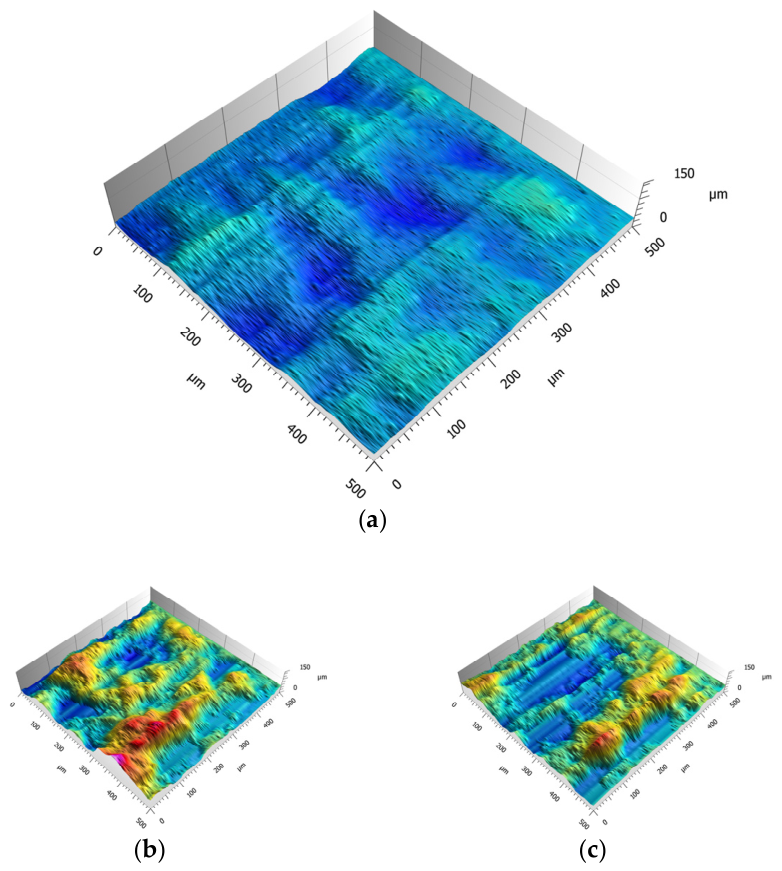
The as-printed surfaces exhibited hydrophilic behaviour in all cases (WCA < 52°). Among the manufacturing parameters, build orientation showed a stronger influence on wettability than layer thickness, with WCA reductions of approximately 43–47% from 0° to 90°. In contrast, layer thickness produced more moderate variations in wettability (typically below 10°), although it significantly affected roughness, increasing Ra from 1.19 μm (50 μm layer thickness) to 5.40 μm (100 μm layer thickness). However, this increase in roughness did not directly translate into proportional changes in wettability, indicating that roughness parameters alone are insufficient to explain the wetting response. Post-processing treatments induced substantially greater modifications than printing parameters, becoming the dominant factor governing the final surface behaviour.
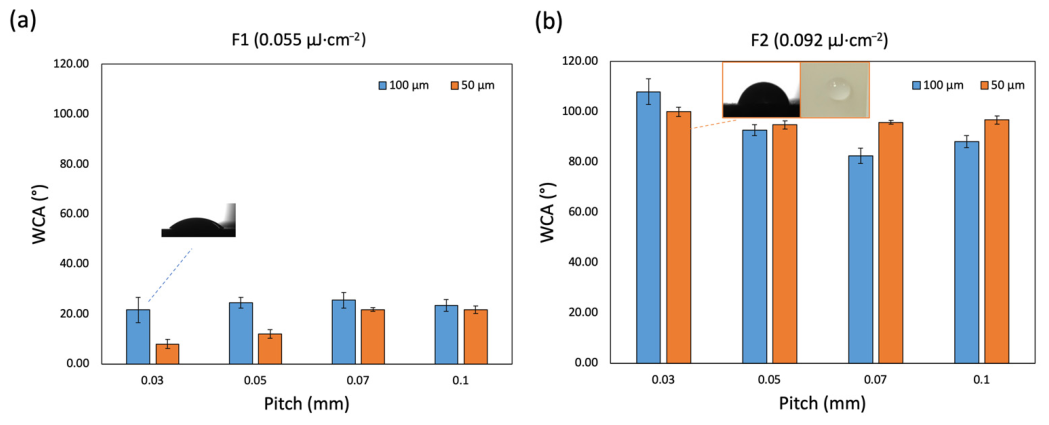
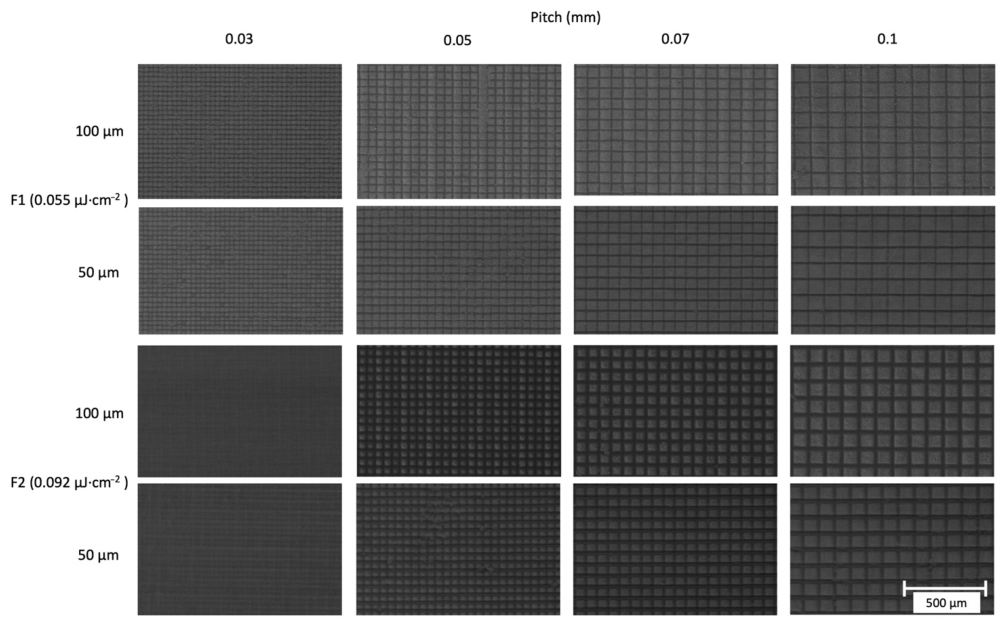
Femtosecond laser texturing enabled controlled tuning of wettability over a broad range. At low fluence (F1), the surface became more hydrophilic, with contact angles decreasing to 8–25°, consistent with a Wenzel-like wetting regime. At higher fluence (F2), the behaviour reversed, with WCA values increasing up to 100–108°, corresponding to relative increases of approximately 200%.
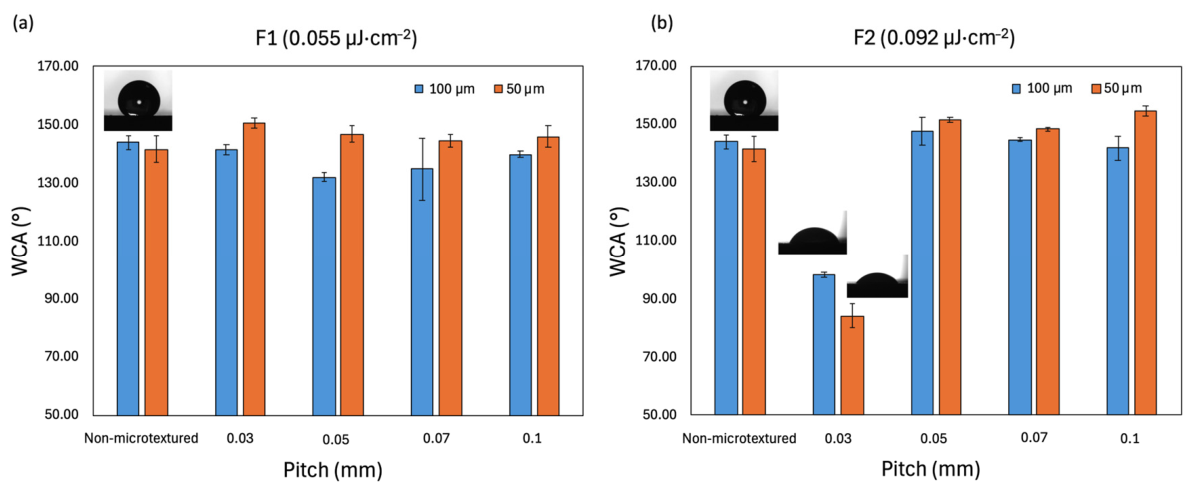
The influence of pitch was secondary and did not follow a clear trend, as no direct correlation was observed between pitch (or the associated roughness parameters) and the resulting contact angle. Notably, the highest WCA values were obtained under conditions with relatively low roughness, whereas increasing pitch led to higher roughness without a proportional increase in wettability. This behaviour, together with the strong wettability changes induced by PVD coating despite minimal variations in roughness, indicates that wettability is not governed solely by roughness magnitude, but rather by a combined effect of surface morphology (feature geometry and spatial distribution) and physicochemical surface modifications. The combination of laser texturing and TiN PVD coating resulted in the most significant enhancement in wettability. The coating introduced a strong chemical contribution, increasing WCA values up to 142–154°. Superhydrophobic behaviour (WCA > 150°) was achieved only under specific conditions, namely high laser fluence (F2) combined with pitches ≥ 0.05 mm. Smaller pitches (0.03 mm) resulted in lower WCA values due to partial coalescence of surface features, highlighting the importance of well-defined and spaced microstructures. The PVD coating had only a minor influence on surface roughness, whereas laser-generated topography remained the primary factor governing morphological control. Based on these findings, the optimal conditions for maximising hydrophobicity in this system involve VPP printing at a 45° build orientation, followed by femtosecond laser texturing at a fluence of F2 (0.092 J·cm−2) with a pitch ≥ 0.05 mm, and subsequent application of a TiN PVD coating. Under these conditions, WCA values of up to 150–154° were achieved. From a practical standpoint, sandblasting represents a simple and cost-effective method for obtaining moderately hydrophobic surfaces, whereas the combination of laser texturing and PVD coating enables higher-performance and tuneable wettability, suitable for advanced applications, such as self-cleaning surfaces, fluid management, or mould fabrication of hydrophobic parts.
In summary, this work demonstrates that surface engineering strategies can effectively overcome the intrinsic wettability associated with the as-printed state, providing a versatile route to tailor surface behaviour in VPP-manufactured parts. Furthermore, the study identifies the key process parameters required to achieve both hydrophobic and near-superhydrophobic surfaces.
The combined experimental and statistical analysis highlights that the apparent hierarchy of influencing parameters depends on the level of observation and the nature of the evaluated response. From a purely experimental standpoint, layer thickness primarily affects surface roughness but induces only limited direct changes in contact angle. However, when statistical significance is assessed through ANOVA, the relative contribution of this factor is weighted by variability and effect dispersion across the dataset, which explains why certain parameters, such as layer thickness, appear significant despite producing smaller absolute variations.
A similar behaviour is observed for post-processing treatments, where femtosecond laser fluence governs the main wetting transition, while pitch and manufacturing parameters act as secondary modulators depending on the surface state. In this context, statistical significance reflects the consistency and robustness of each effect across all experimental conditions, whereas the experimental trends highlight the magnitude of local changes in wettability. Consequently, both perspectives are complementary: experimental results capture the physical intensity of the wetting modifications, whereas statistical analysis identifies the parameters that most consistently control the overall response. This dual interpretation confirms that wettability is governed by a hierarchical and multi-scale interplay between fabrication conditions, laser-induced surface structuring, and chemical modification induced by PVD coating.





 ,
,