1. Introduction
Polymer networks provide a versatile framework for designing functional materials, they allow for the incorporation of nanoparticles, fillers, or molecular components to tailor their physical, mechanical, and thermal properties [
1]. Among the different types of polymer networks, hydrogels constitute a particularly relevant subclass, defined as three-dimensional hydrophilic networks capable of absorbing and retaining large amounts of water while maintaining their structural integrity due to the presence of crosslinks [
2,
3]. Owing to their high water content, soft structure, and tunable physicochemical properties, hydrogels have attracted considerable attention in areas ranging from biomedical applications to sensors and food packaging [
1,
4,
5,
6].
In recent decades, poly(vinyl alcohol) (PVA) hydrogels have demonstrated outstanding properties which make them versatile polymeric materials. Among others, their good biocompatibility, tunable mechanical properties, optical transparency, biodegradability, and high-water retention capacity are remarkable features that have positioned PVA as a material of choice for applications in biomedicine, sensors, wound dressings, and functional coatings [
7,
8]. Nevertheless, several crosslinking methods reported in the literature present notable drawbacks, including reliance on organic solvents, toxic crosslinker agents, and environmentally unfavorable synthetic routes, which constrain their broader applicability [
9,
10]. In this regard, citric acid (CA) has emerged as a promising green crosslinking agent, owing to its low toxicity, low cost, and capacity to form ester bonds with the hydroxyl groups of PVA chains, providing structural stability to the polymer network while preserving its biocompatibility [
11,
12,
13].
The incorporation of nanoparticles into hydrogel matrices has become a powerful and widely adopted strategy to overcome the intrinsic limitations of neat polymer networks and expand their functional scope. Depending on the nature of the nanofiller, nanocomposite hydrogels can exhibit enhanced mechanical properties, improved thermal stability, and tailored responsiveness to external stimuli such as light, pH, temperature, or electric fields [
14,
15]. Beyond property enhancement, functional nanoparticles enable the design of application-specific platforms by imparting functionalities absent in the pristine hydrogel matrix, including electrical conductivity, optical activity, antimicrobial behavior, or photothermal response [
16,
17,
18,
19]. To this end, a wide variety of nanofillers has been explored, including inorganic nanoparticles such as gold, silver, and iron oxide, carbon-based materials such as graphene and carbon nanotubes, and organic conducting nanoparticles based on electroactive polymers, among others [
20,
21,
22,
23]. In all cases, the degree to which these nanofillers effectively interact with the polymer network at the nanoscale remains a key factor governing the ultimate material performance.
Within this context, conducting polymer-based nanofillers offer a particularly attractive alternative due to their intrinsic electroactivity and tunable physicochemical properties. Among the different electroactive nanofillers, polyaniline (PANI) has attracted considerable attention due to its unique combination of properties [
24]. PANI can exist in different oxidation and protonation forms, including the fully reduced leucoemeraldine, the half-oxidized emeraldine base and its protonated form (emeraldine salt), and the fully oxidized pernigraniline. Of these, the emeraldine salt state (PANI-ES) is the most chemically stable form and therefore it is the most relevant for practical applications. Interconversion among these states is reversible and responds to both redox and pH stimuli, conferring PANI with electrochromic and stimuli-responsive behavior [
25,
26,
27]. Furthermore, PANI-ES exhibits a broad absorption band in the near-infrared (NIR) region associated with polaron transitions, which enables efficient conversion of NIR radiation into heat, making it a promising organic photothermal agent. These properties are preserved when PANI is processed in nanoparticulate form (PANI-NP), which additionally offers advantages in terms of colloidal stability, aqueous dispersibility, and compatibility with polymeric matrices [
28]. In this context, PANI-NP have been previously synthesized, characterized, and evaluated as photothermal agents and electroactive nanofillers by our group, providing a well-defined nanomaterial platform for incorporation into functional hydrogel composites [
18,
24].
Photothermal materials capable of converting NIR light into heat have gained increasing interest as promising functional platforms for light-responsive systems [
29,
30,
31]. Although some approaches combining electroactive nanoparticles with polymeric matrices have been reported, most studies on conductive PVA/PANI composites have employed PANI polymerized in situ within the matrix or in fiber form rather than as discrete preformed nanoparticles. In the few cases where PANI-NP have been incorporated into hydrogel matrices, alternative polymer matrices or crosslinking strategies relying on e-beam irradiation or toxic reagents such as glutaraldehyde have been employed [
32,
33]. Moreover, the photothermal performance under low-power NIR irradiation and the nanoscale mechanical characterization via AFM/PF-QNM of PVA/PANI-NP composite hydrogels have been largely unexplored, even in previous work from our group focusing on related systems [
18]. In this context, herein we report a straightforward and reproducible aqueous method to fabricate citric acid-crosslinked PVA composite hydrogels incorporating PANI-NP as electroactive and photothermal nanofillers. The developed composites were systematically characterized in terms of morphology, spectroscopic, thermal, and nanomechanical properties, surface behavior, and swelling capacity. Furthermore, their photothermal performance under low-power NIR LED irradiation was evaluated, demonstrating their potential as structurally robust, stable, and photothermally active platforms for light-responsive systems and smart material applications.
3. Results
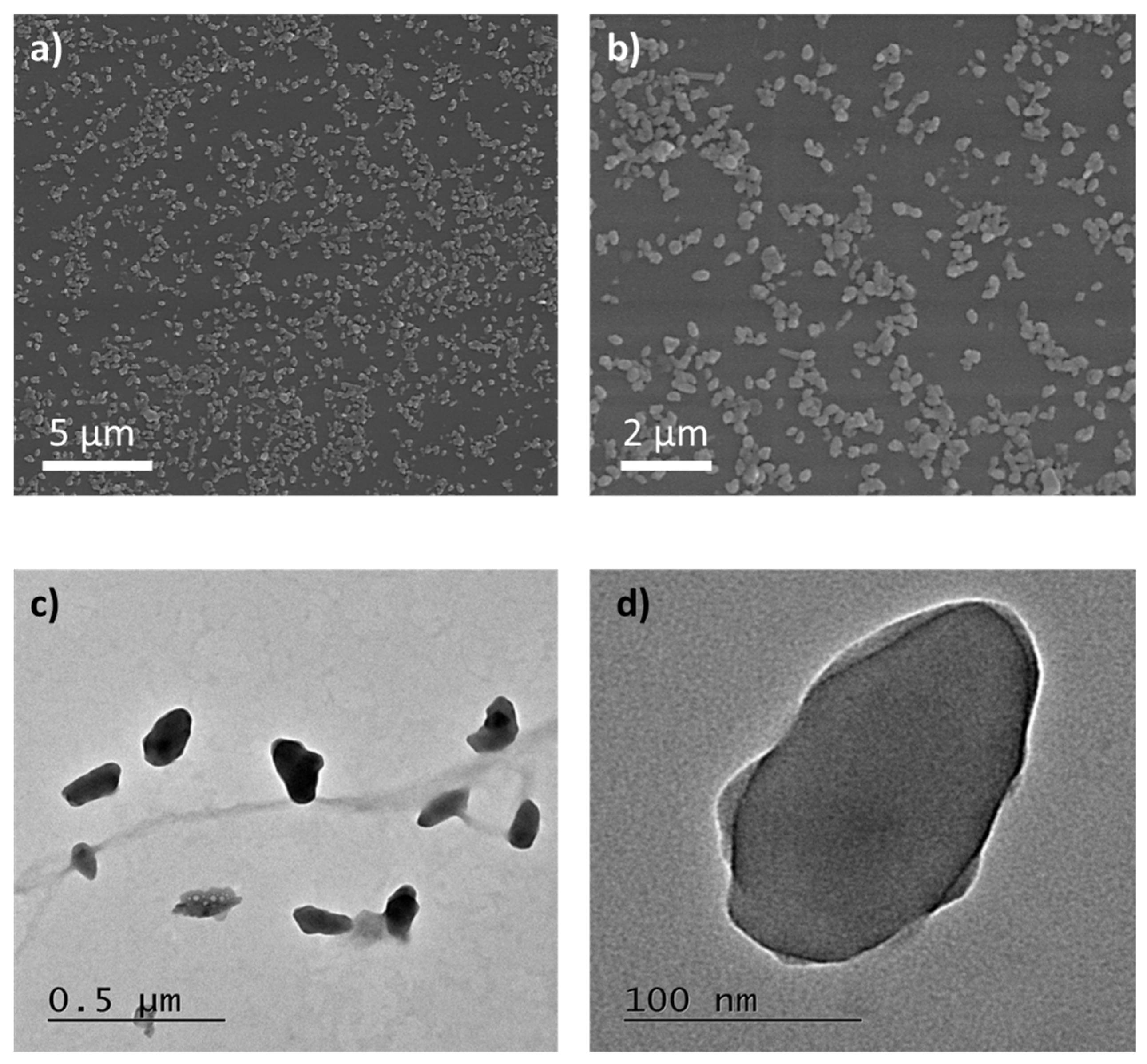
PANI-NP were characterized by electronic microscopy to confirm their successful formation of nanoparticles and assess their morphological features. SEM micrographs (
Figure 1a,b) reveal a relatively homogeneous particle distribution, with a slight degree of agglomeration also observed. The nanoparticles display a quasi-spherical to irregular shape, consistent with PANI-NP synthesized under analogous conditions. In addition, TEM images (
Figure 1c,d) corroborate these findings, revealing particles in the nanometric scale with slightly elongated and non-regular spherical shape. The observed morphology and moderate polydispersity are not expected to adversely affect the subsequent incorporation of PANI-NP into the PVA matrix or the structural integrity of the resulting composite hydrogels.
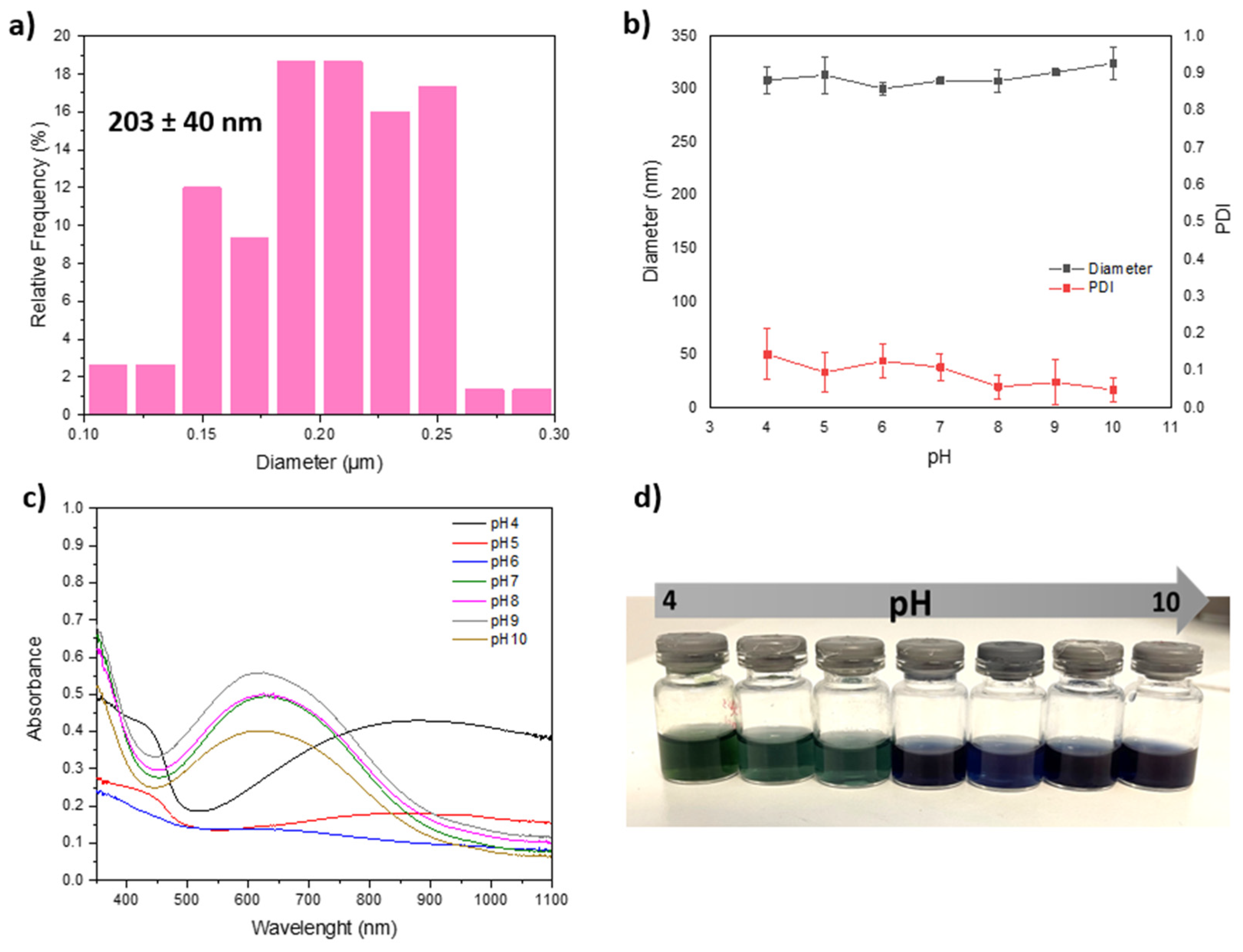
Particle size analysis from SEM images yielded a size distribution (
Figure 2a) with a mean particle diameter of 203 ± 40 nm. The hydrodynamic diameter and polydispersity index (PDI) of PANI-NP were further evaluated by DLS as a function of pH over a range of 4–10 (
Figure 2b). No significant variation in the hydrodynamic diameter was observed across this pH range, indicating the protonation/deprotonation equilibria of the electroactive polymer backbone do not appreciably affect interparticle interactions in aqueous dispersion. As expected, the hydrodynamic diameter exceeded the value obtained from SEM, consistent with the contribution of the hydration shell and the difference between dry and solution-phase measurements. In all cases, PDI values remained below 0.2 confirming a narrow and a homogeneous particle size distribution. Given their proposed application as photothermal agents, the optical properties of PANI-NP were assessed by UV–Visible spectroscopy as a function of pH (
Figure 2c) [
24]. The spectra display the characteristic absorption features of PANI: a π–π* transition band in the 300–350 nm region and a broad polaron absorption band extending into the NIR region. The latter is most intense under acidic conditions and progressively diminishes with increasing pH, accompanied by a slight hypsochromic shift. This behavior is consistent with the electronic transition from the protonated PANI (emeraldine salt) to the deprotonated emeraldine base form, in agreement with previously reported results, confirming the capacity of these electroactive nanoparticles for efficient NIR absorption under acidic and near-neutral pH conditions [
28]. In addition, FTIR analysis of PANI-NP (
Figure S1) confirms the presence of the characteristic absorption bands of PANI-ES, including C=C stretching of quinoid (1560 cm
−1) and benzenoid (1480 cm
−1) rings, C-N stretching (region of 1300 cm
−1), and the characteristic polaron band at approximately 1140 cm
−1.
Figure 2d shows representative photographs of the PANI-NP dispersions corresponding to the samples analyzed by UV–Visible spectroscopy and DLS, illustrating the visible color changes associated with the pH-dependent oxidation state transitions. Finally, TGA analysis (
Figure S2) confirms the thermal stability of PANI-NP up to temperatures close to 200 °C, indicating that the nanofiller would not be affected during the crosslinking process employed for hydrogel fabrication.
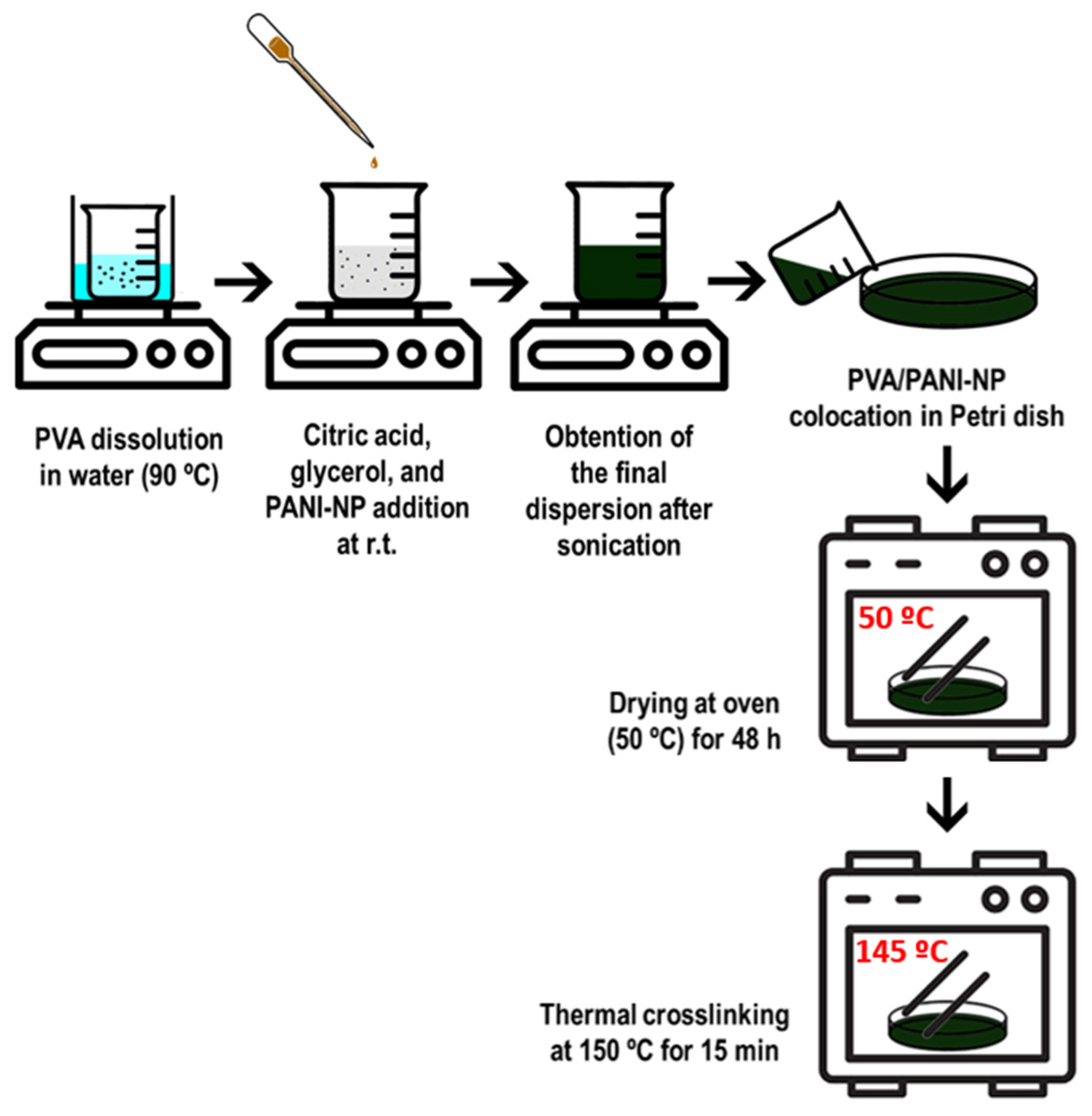
Building on the physicochemical characterization of PANI-NPs described above, PVA/PANI-NP composite hydrogels were fabricated at three nanoparticle loadings (2, 3, and 5%
w/
w) following the procedure outlined in
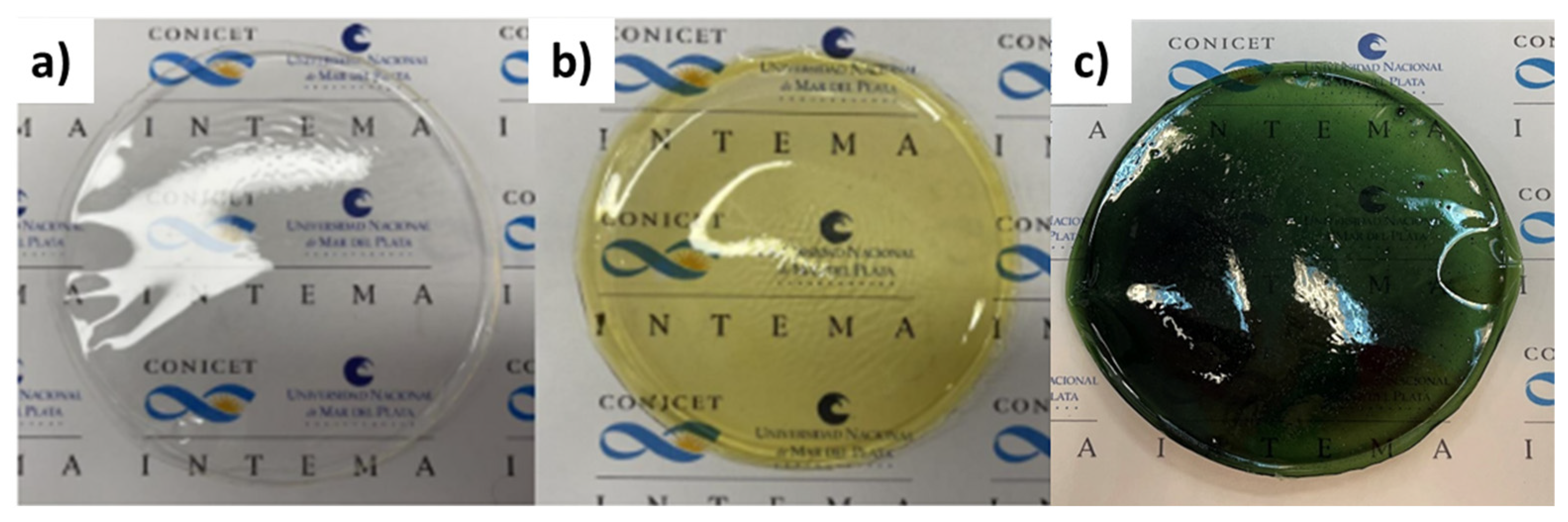
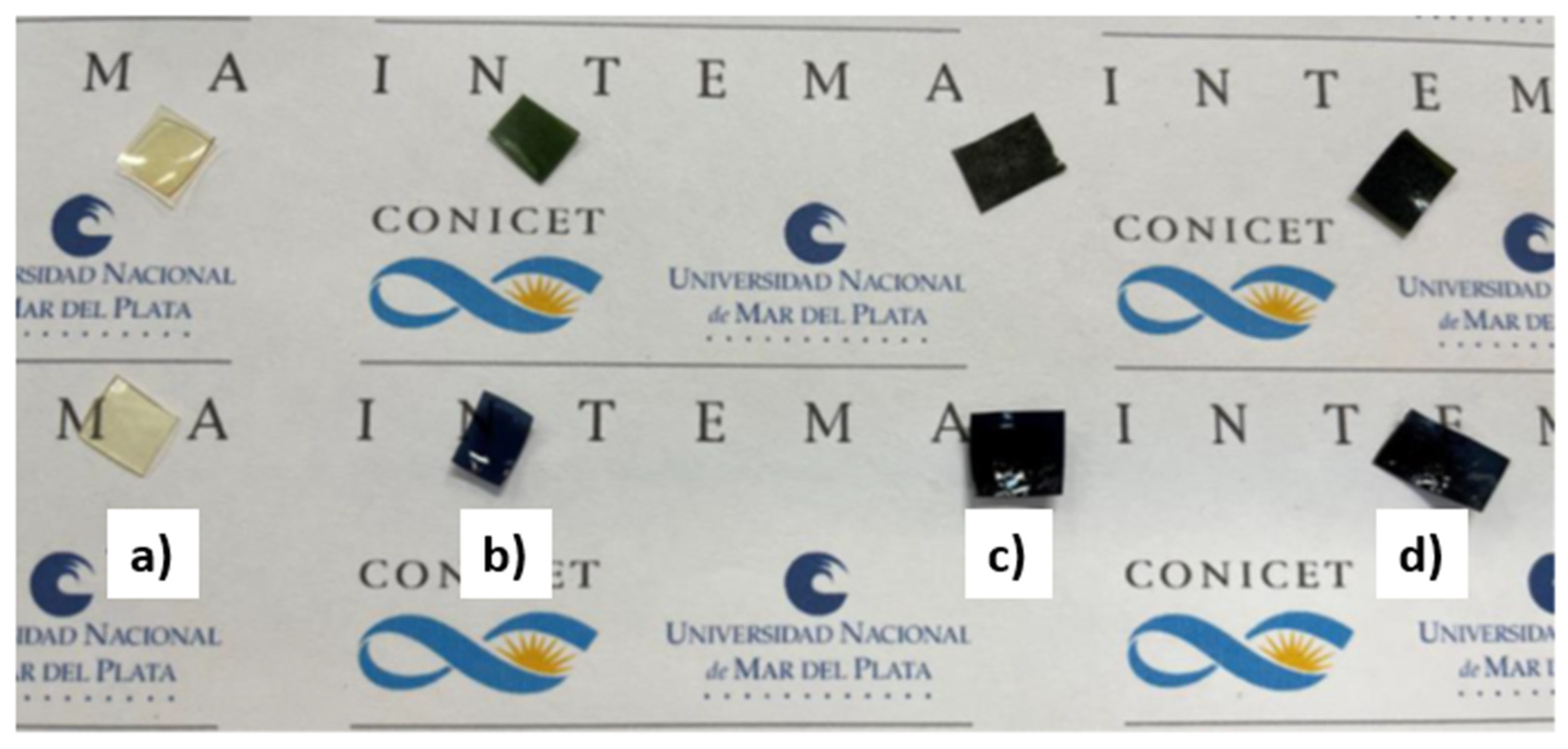
Section 2.1. Representative photographs of the neat PVA film prior to crosslinking (
Figure 3a), the crosslinked PVA hydrogel (
Figure 3b), and a PVA/PANI-NP composite hydrogel (
Figure 3c) are shown for comparison, illustrating clear macroscopic differences among the three systems. The thermal crosslinking process, which is necessary to prevent dissolution of the hydrophilic polymer in aqueous media, involves temperatures of approximately 150 °C and imparts a characteristic yellowish coloration to the neat PVA hydrogel, absent in the uncrosslinked film. This chromatic change is attributed to partial thermal degradation or dehydration of PVA side chains at elevated temperatures, consistent with previously reported observations. In contrast, the PVA/PANI-NP composite hydrogels display the characteristic green coloration of PANI in the emeraldine salt state, reflecting the acidic pH of the incorporated nanoparticle prior to crosslinking [
18].
The chemical nature of the crosslinking was confirmed by ATR-FTIR spectroscopy (
Figure S3). The reduction of the -OH stretching band (3200–3500 cm
−1) and the appearance of a new carbonyl band at approximately 1720 cm
−1, attributed to ester C=O stretching [
13], suggesting the formation of covalent ester linkages between the carboxylic groups of citric acid and the hydroxyl groups of PVA upon thermal treatment.
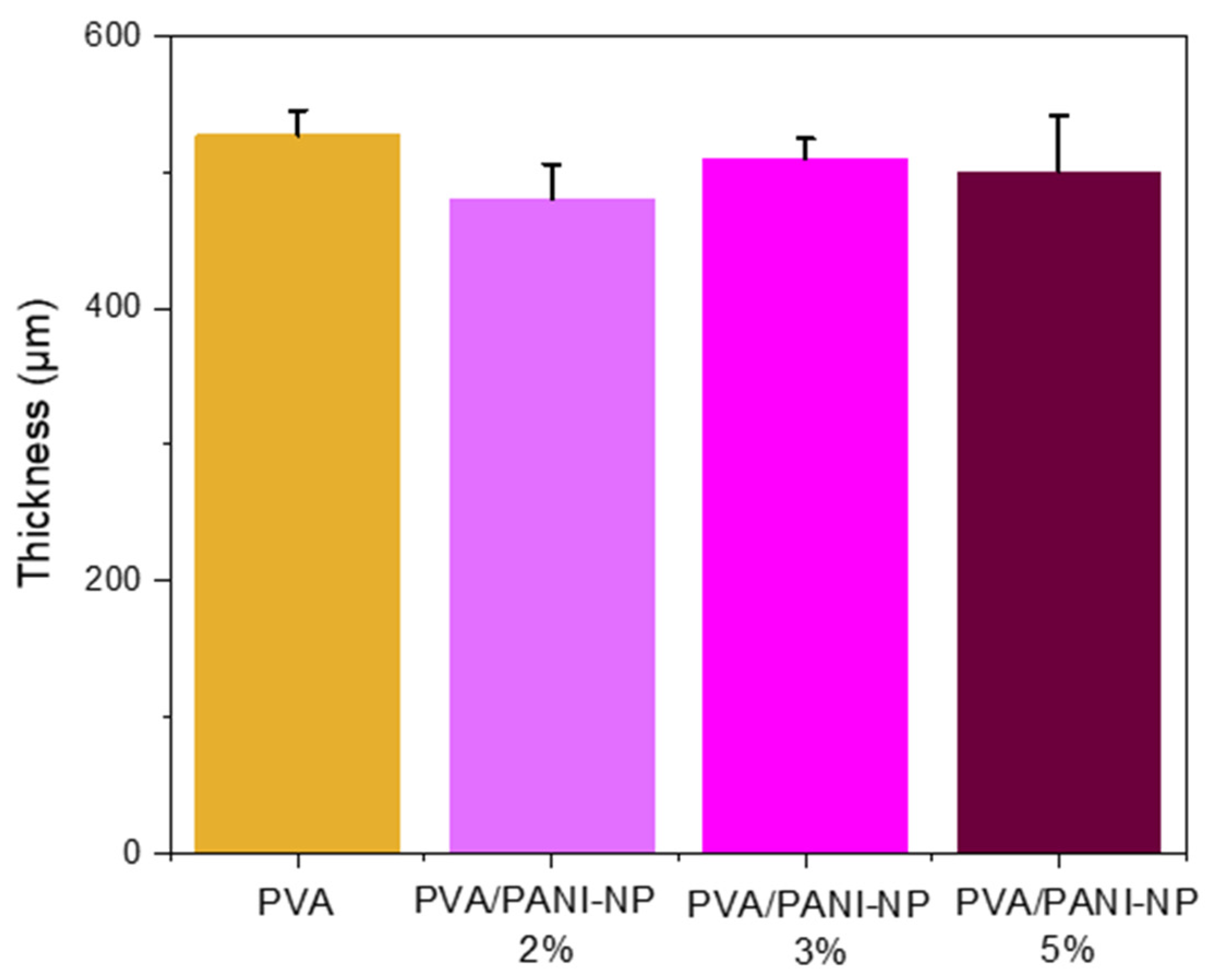
The reproducibility of the fabrication method is evidenced by the consistent thickness achieved across samples. Both the neat PVA and composite hydrogels present comparable thicknesses of approximately 500 µm (
Figure 4), confirming the PANI-NP incorporation does not significantly alter the film-forming process and that the resulting materials are of adequate thickness for easy handling and further characterization.
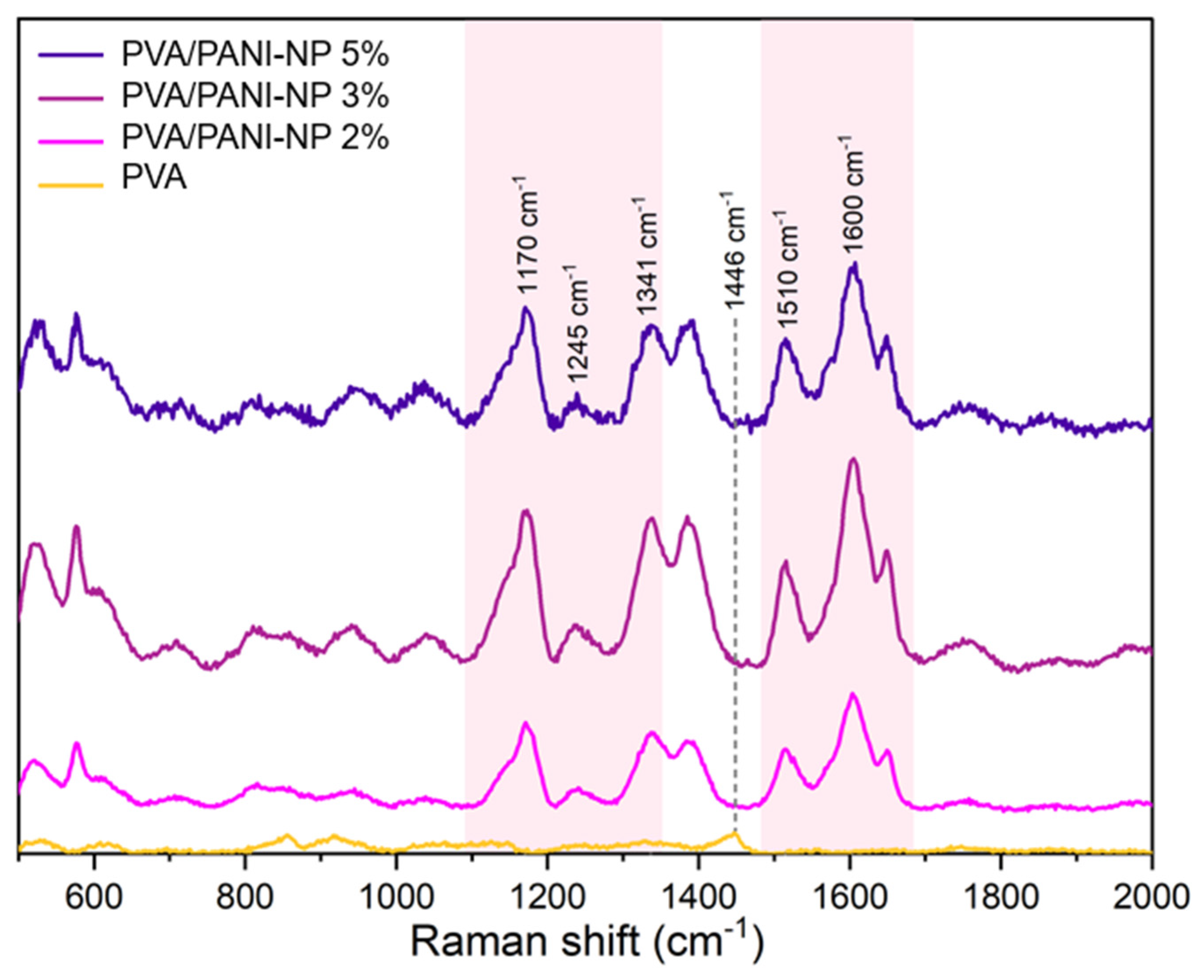
Raman spectra provided clear evidence for the incorporation of PANI-NP into the PVA matrix (
Figure 5). The spectrum of neat PVA showed only a weak, low-intensity band near 1430–1450 cm
−1 attributable to CH
2 deformation modes of the PVA backbone. In contrast, the PVA/PANI-NP composite hydrogels exhibited the characteristic vibrational fingerprint of polyaniline in the 1100–1700 cm
−1 region. Bands observed at approximately 1170, 1245, 1341, 1510, and 1600 cm
−1, are assigned to aromatic C–H vibrations, C–N stretching of polaronic units, C–N
+ polaronic vibrations, N–H deformation, and C–C stretching of benzenoid rings, respectively [
37,
38]. Their intensity increased systematically with PANI-NP loading from 2 to 5%
w/
w, confirming composition-dependent incorporation of the nanofiller into the polymer matrix. No new Raman bands were observed, and no clear, systematic peak shift could be unambiguously resolved from the spectra. Accordingly, the Raman data support progressive PANI-NP incorporation but do not provide direct evidence for the formation of new covalent bonds. Instead, the PVA/PANI-NP interaction is more consistent with weak forces, such as hydrogen bonding and dipolar association, rather than the formation of new covalent linkages.
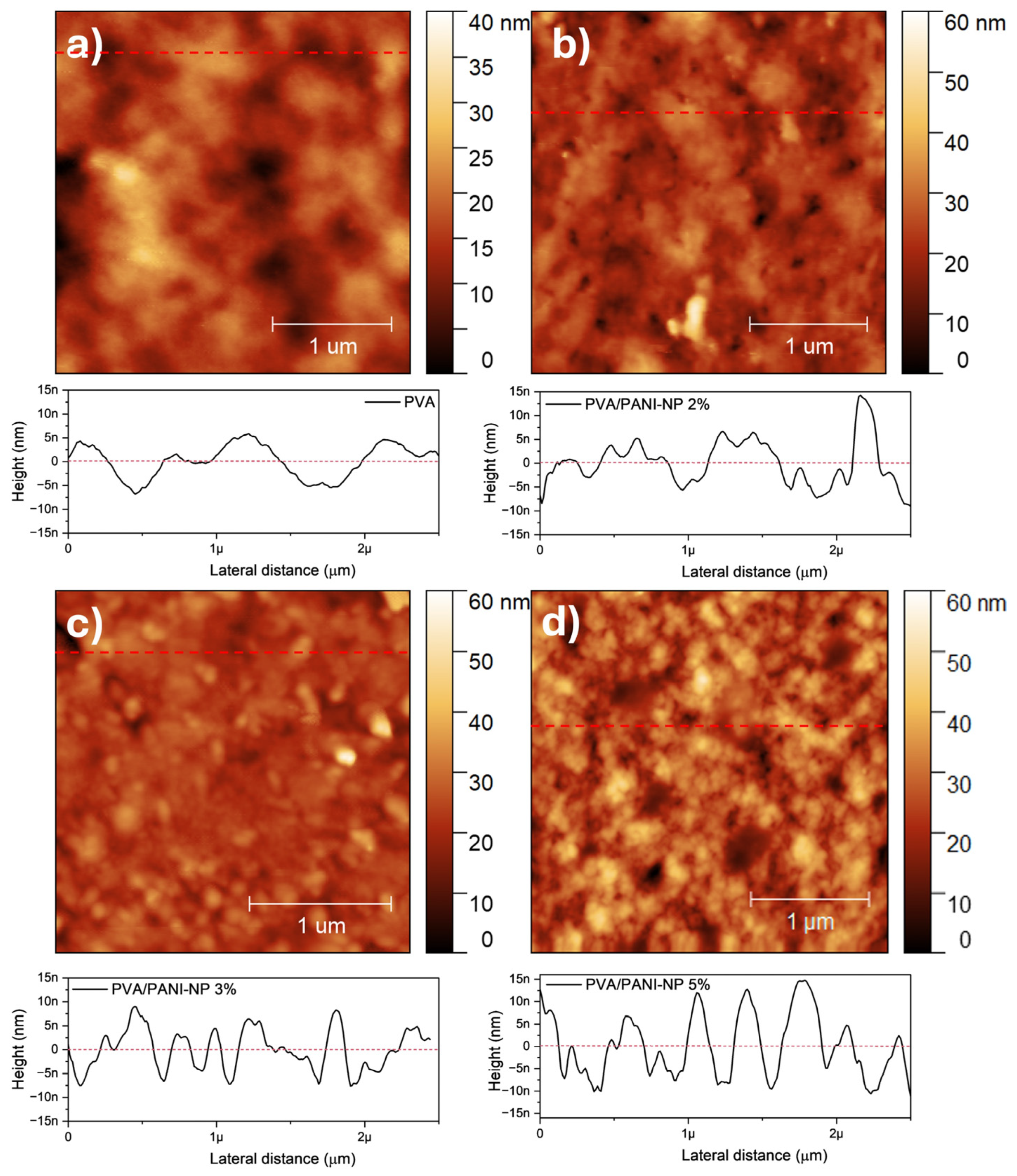
AFM characterization revealed that incorporation of PANI-NP progressively reorganized the PVA hydrogel surface at the nanoscale. PVA without PANI-NP displayed a relatively smooth and homogeneous topography, whereas the composite films developed increasingly structured and heterogeneous surface textures with increasing nanofiller content as shown in
Figure 6. Despite these differences, all samples remained within the nanometric roughness regime, with root-mean-square roughness (Sq) values ranging from 4.0 to 6.9 nm (
Figure S4). Specifically, Sq increased from 4.4 nm for PVA to 5.2 nm for PVA/PANI-NP 2%, decreased to 4.0 nm for PVA/PANI-NP 3%, and reached its maximum value at 6.9 nm for PVA/PANI-NP 5%. As Sq reflects the amplitude of vertical surface fluctuations relative to the mean plane, these results indicate that the PVA/PANI-NP 5% composite presented the most topographically heterogeneous surface, while the 3% film remained comparatively smooth despite exhibiting notable mechanical contrast, as discussed below. Surface topography alone is therefore insufficient to account for the mechanical trends observed across the composite series.
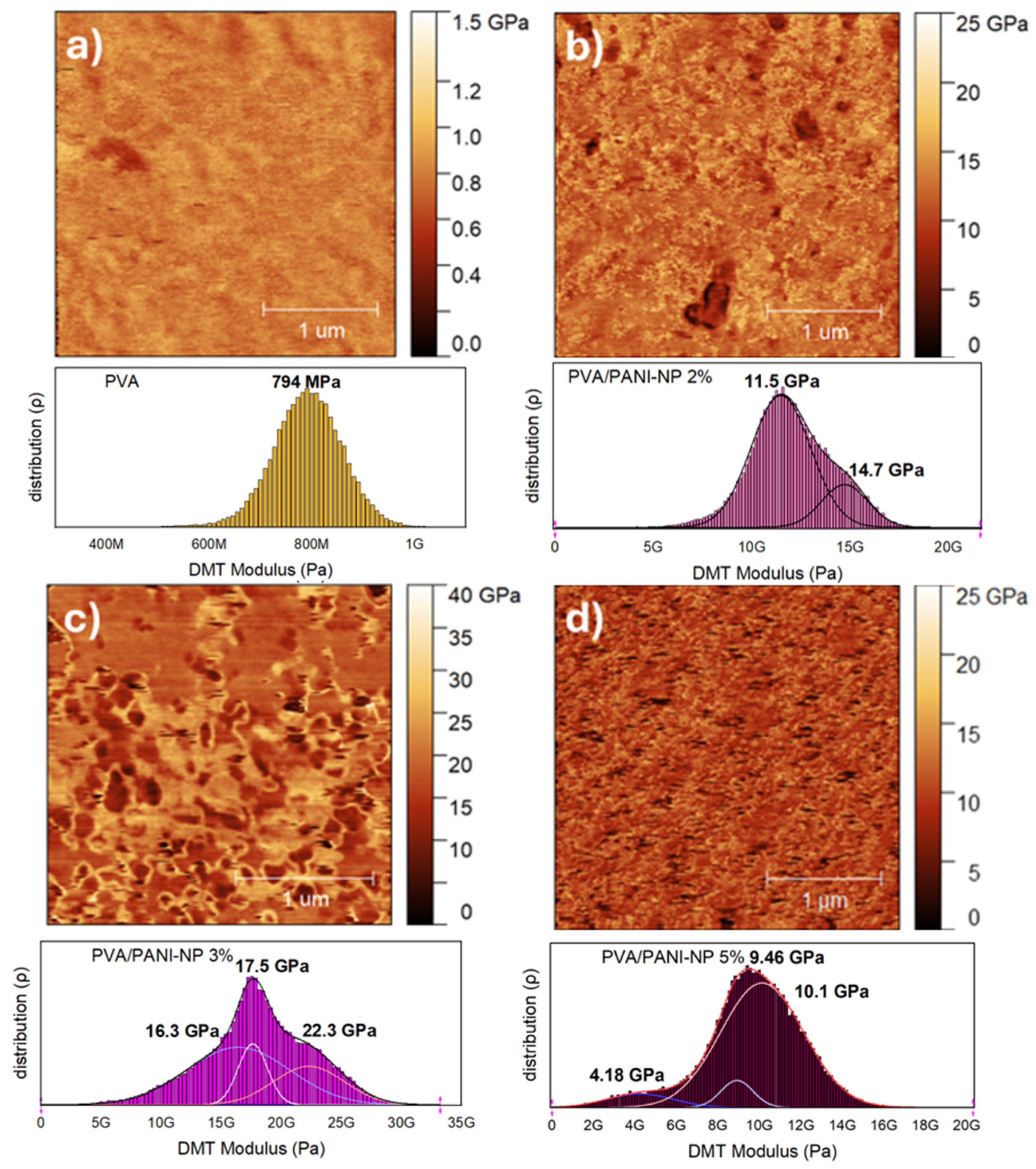
PF-QNM modulus maps revealed that the incorporation of PANI-NP exerted a substantially stronger influence on local stiffness than on surface roughness (
Figure 7). Neat PVA hydrogel exhibited a narrow, unimodal modulus distribution centered at 794 MPa, consistent with a mechanically uniform matrix. Upon addition of 2%
w/
w PANI-NP, the distribution shifted abruptly into the GPa range and became bimodal, with peaks at 11.1 and 14.7 GPa, reflecting the emergence of mechanically distinct nanoscale regions within the polymer matrix. This effect was most pronounced at 3%
w/
w PANI-NP, where the modulus distribution became clearly multimodal, with peaks at 16.3, 17.5, and 22.3 GPa, indicative of a highly heterogeneous nanomechanical landscape. At 5%
w/
w PANI-NP, the distribution shifted back toward lower values, with maxima at 4.18, 9.46, and 10.1 GPa, demonstrating that the highest nanoparticle loading did not yield the greatest local reinforcement, a result that may reflect nanofiller aggregation or a less efficient stress-transfer interphase at elevated PANI-NP concentrations [
38]. This non-monotonic trend is further corroborated by the RMS of the modulus channel (
Figure S4a,b), which quantifies the spatial heterogeneity of the nanomechanical response. The modulus RMS increased from approximately 0.1 GPa in neat PVA to 2.2 GPa in PVA/PANI-NP 2%, reached a maximum of 4.4 GPa in PVA/PANI-NP 3%, and decreased to 2.4 GPa in PVA/PANI-NP 5%. The formulation exhibiting the highest characteristic modulus values thus also displayed the greatest mechanical heterogeneity, confirming that the PVA/PANI-NP 3% hydrogel composite contains the strongest contrast between soft and stiff nanoscale regions. Taken together, the elevated local modulus and high modulus RMS observed at 3%
w/
w PANI-NP loading suggest the formation of a nanoscale interphase architecture that facilitates more efficient load transfer than that achieved at higher PANI-NP concentration, consistent with an optimal nanofiller dispersion regime.
The PeakForce error maps (
Figure S5) are consistent with this interpretation. Although included here primarily as supporting data, they reveal rapid local transitions in tip–sample interaction and become progressively more structured in the PANI-NP containing hydrogels, particularly at 3% and 5% loading. This confirms that nanoparticle addition increases the nanoscale surface complexity, both morphologically and mechanically. The adhesion response evolved in the opposite direction. The most probable adhesion force decreased monotonically with increasing PANI content, from approximately 80 nN for neat PVA to ~40 nN for PVA/PANI-NP 2%, ~33 nN for PVA/PANI-NP 3%, and ~15–17 nN for PVA/PANI-NP 5%. The RMS of the adhesion channel (
Figure S4c) followed the same trend, decreasing from ~10.3 nN to 9.2, 6.8, and 3.7 nN, respectively. Together, these results indicate that PANI-NP progressively reduces both the magnitude and spatial variability of tip–sample adhesion. Because adhesion in PF-QNM is governed by local surface chemistry, surface energy, and contact area, the observed reduction suggests that increasing nanoparticle loading alters the outermost interfacial character of the composites, rendering them less adhesive than the neat PVA hydrogel.
Given the electroactive properties of PANI-NP, particularly their pH-dependent redox switching, analogous behavior is expected in the developed composites [
28]. Beyond the Raman spectroscopy results confirming the nanoparticle incorporation into the PVA network, a simple visual test was performed to verify whether PANI-NP retain their electroactive behavior within the composite matrix. Upon immersion in 0.1 mol L
−1 NaOH, the PANI-ES converts to base emeraldine, as shown in
Figure 8. This transition is fully reversible: subsequent immersion in HCl solution (
Video S1) restores the characteristic green coloration of the emeraldine salt state. Notably, no particle leaching into the surrounding medium was observed throughout these experiments, supporting the existence of interfacial interactions between the nanoparticles and the polymer matrix. Taken together, these findings confirm the electroactive behavior of PANI is preserved in nanoparticulate form within the composite hydrogels.
Table 2 presents the equilibrium swelling values measured after 12 h for each system. Neat PVA hydrogel exhibited a maximum swelling of 247 ± 10%, whereas incorporation of PANI-NP significantly reduced this value to approximately 140% at loading of 2% and 3%. This reduction can be attributed to the interactions between PANI-NP and the PVA chains, which restrict chain mobility and decrease the free volume available for water uptake within the network. The PVP shell surrounding the nanoparticles, retained after synthesis and purification, may further contribute to these interfacial interactions through hydrogen bonding with the hydroxyl groups of PVA, thereby reinforcing the network structure. However, at 5% PANI-NP loading, swelling increased relative to the 2% and 3% composites, although it remained below the value recorded for neat PVA. This non-monotonic behavior is likely attributable to the less homogeneous nanoparticle organization at higher concentrations, leading to the formation of agglomerated domains, as suggested by the AFM analysis. Such aggregation would locally disrupt the network architecture and create regions of greater free volume, facilitating water uptake. Collectively, these results indicate that swelling behavior in these composites is governed primarily by bulk network structure rather than surface properties alone.
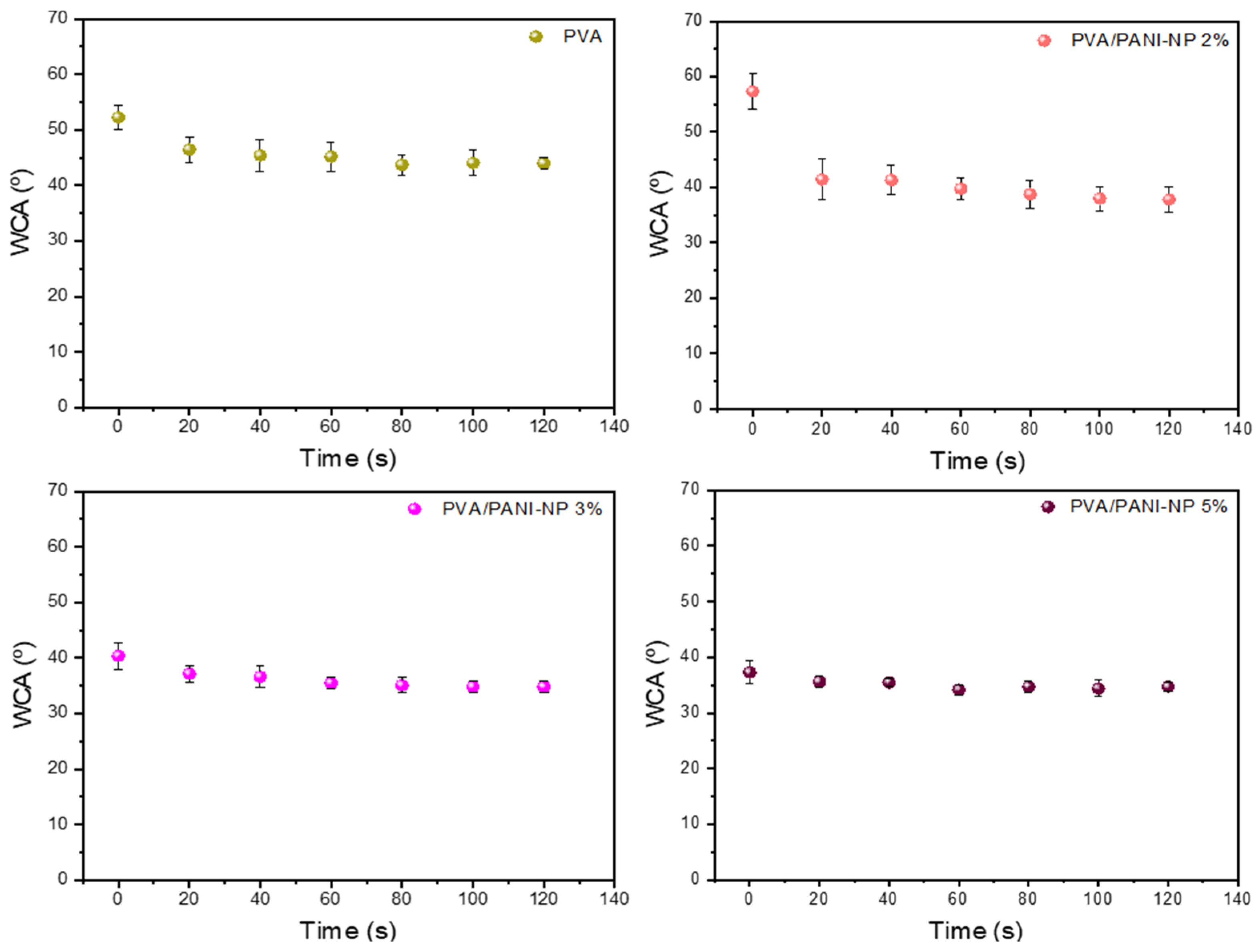
Surface hydrophilicity was evaluated by WCA measurements as a function of time as shown in
Figure 9. Although initial values (t = 0 s) showed some variability attributable to drop deposition dynamics, equilibrium was reached at approximately 120 s and these values were used for comparison. Neat PVA hydrogel presented a WCA of ~44°, confirming its hydrophilic character. Incorporation of PANI-NP produced a slight but consistent decrease in WCA across all composite formulations, with equilibrium values in the range of 35–38°, indicating enhanced surface hydrophilicity. This trend is attributed to the presence of functional groups in PANI that increase water affinity at the composite surface. In particular, the PVA/PANI-NP 3% and 5% composites displayed similar WCA values, suggesting a saturation effect at higher nanoparticle contents. The PVA/PANI-NP 2% composite presented an intermediate value, lower than neat PVA but marginally higher than the other composites. These surface findings appear, at first glance, to conflict with the swelling results, which showed that the 2% and 3% composites absorbed significantly less water than neat PVA despite their greater surface hydrophilicity. This apparent contradiction underscores that bulk water uptake is governed primarily by the internal polymer network architecture, crosslinking density, chain mobility and free volume, rather than by surface affinity alone, a distinction critical to the correct interpretation of hydrogel behavior. The WCA results are further consistent with the AFM analysis, which revealed a progressive reduction in tip-sample adhesion forces with increasing PANI-NP content alongside modifications in surface roughness, collectively reflecting the changes in surface physicochemical properties induced by nanoparticle incorporation.
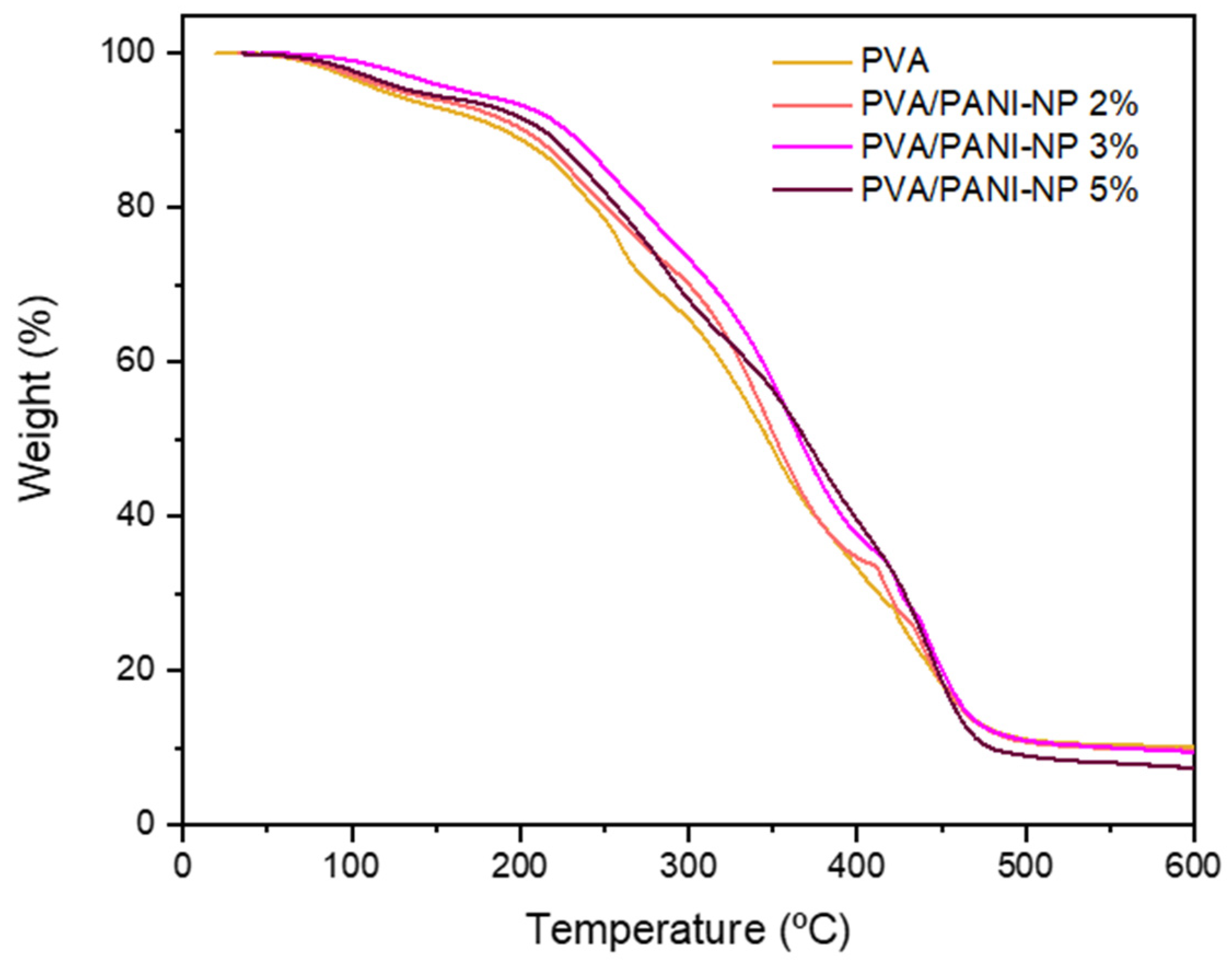
The thermal stability of the PVA/PANI-NP composite hydrogels and neat PVA hydrogel was assessed by TGA (
Figure 10). All systems displayed broadly similar degradation profile as function of temperature, suggesting that PANI-NP incorporation does not significantly alter the degradation mechanism of the PVA matrix, in agreement with previous reports for this polymer. The principal weight loss occurred in the 250–380 °C range, corresponding to degradation of the PVA chains [
11]. Although the typical degradation temperature of PVA is commonly reported at approximately 310–320 °C, a slight shift toward higher temperatures (~320–330 °C) was observed for PVA/PANI-NP 2% and 3% composites, indicative of improved thermal stability [
18]. This enhancement may also reflect the contribution of citric acid crosslinking to network cohesion. In contrast, the PVA/PANI-NP 5% composite did not exhibit a comparable shift, likely because the higher nanoparticle content reduces the efficiency of interfacial interactions within the network, consistent with the aggregation behavior inferred from AFM analysis. The residual mass at 600 °C remains within the 8–10% range for all formulations, indicating that the presence of electroactive particles does not significantly affect the char yield. The thermal results align well with the trends observed in the swelling experiments. The PVA/PANI-NP 2% and 3% composites, which exhibited both reduced water uptake and improved thermal stability, appear to benefit from efficient polymer–nanoparticle interfacial interactions that reinforce the network structure. The PVA/PANI-NP 5% composite, by contrast, shows neither enhanced thermal stability nor reduced swelling relative to these lower-loaded systems, further supporting the conclusion that excessive nanoparticle content disrupts network homogeneity and diminishes the beneficial effects of interfacial coupling.
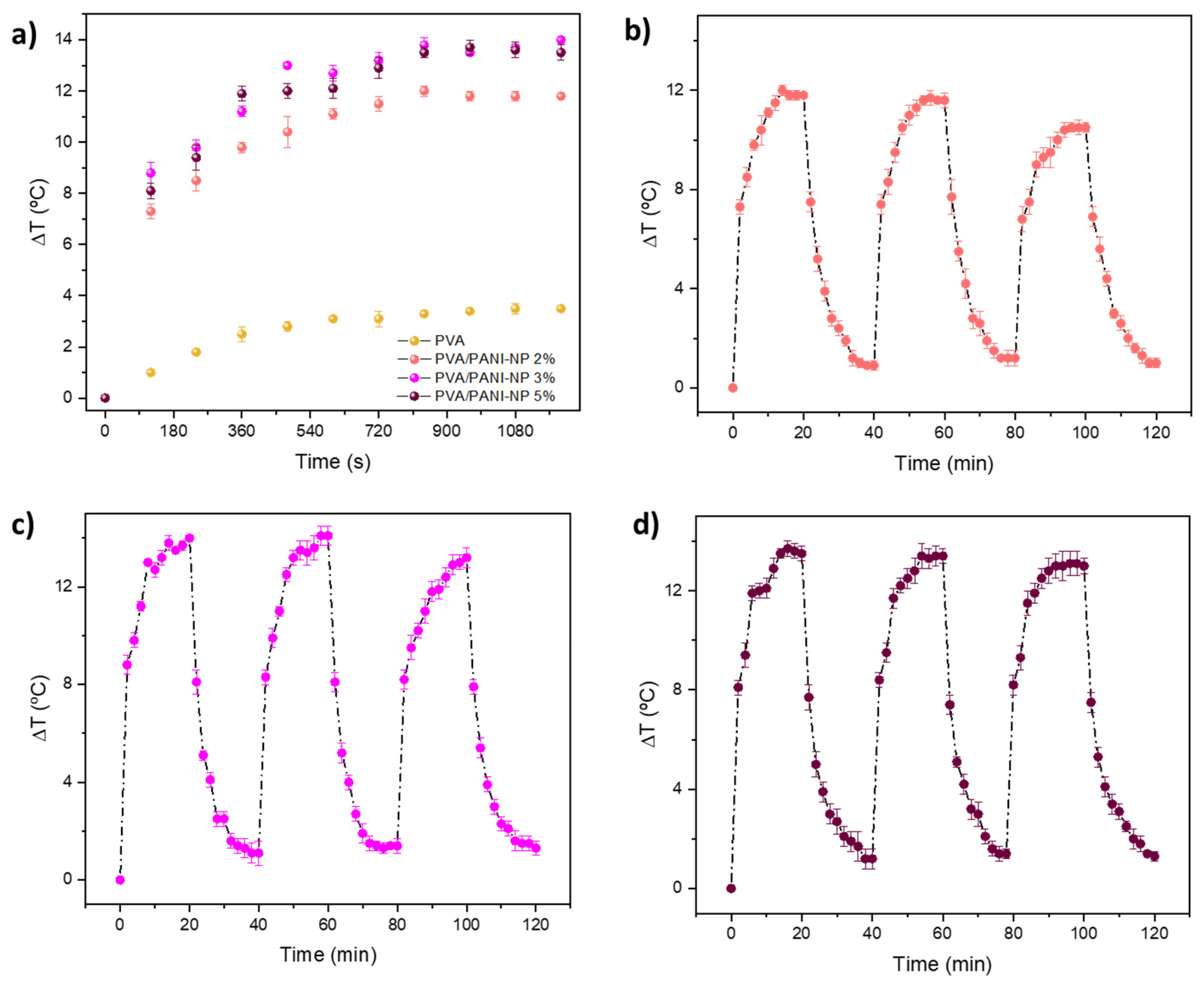
The photothermal response of the nanocomposites and PVA hydrogel under low-power NIR LED irradiation at 850 nm is presented in
Figure 11a. Upon irradiation, all three PANI-NP containing composites exhibited a progressive temperature increase that reached a plateau within approximately 15 min. Neat PVA, by contrast, showed a negligible temperature rise of ~3 °C, confirming that the photothermal behavior originates exclusively from the electroactive PANI-NP and not from the polymeric matrix itself. The maximum temperature increases recorded above the initial value were 11.5 °C for PVA/PANI-NP 2% and 13.7 °C for both PVA/PANI-NP 3% and 5%. Although all systems achieved substantial photothermal heating, the temperature profiles of the 3% and 5% systems overlapped closely throughout the irradiation period, with final values that were practically indistinguishable. This convergence suggests that beyond a certain nanoparticle loading, incremental photothermal gains become negligible, a finding consistent with the nanomechanical and thermal analyses, which similarly showed that the PVA/PANI-NP 5% composite did not outperform the PVA/PANI-NP 3% formulation in terms of interfacial efficiency or network organization. The stability and reproducibility of the photothermal response were assessed over three consecutive heating–cooling cycles for each composite formulation (
Figure 11b–d). All systems demonstrated a highly reproducible response with no significant loss in photothermal performance across cycles, indicating that PANI-NP retain their light-to-heat conversion activity within the PVA matrix without degradation under the applied irradiation conditions. Collectively, these results demonstrate the potential of PVA/PANI-NP composite hydrogels as stable and efficient photothermal platforms for light-responsive applications.




 ,
,