Harnessing Multi-Anchoring Effects for the Fabrication and Specific Recognition of Surface-Oriented Imprinted Nanospheres for Cytochrome C

 ,
,
Abstract
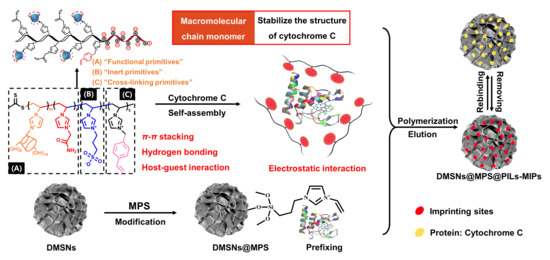
1. Introduction
2. Experimental Methods
2.1. Materials
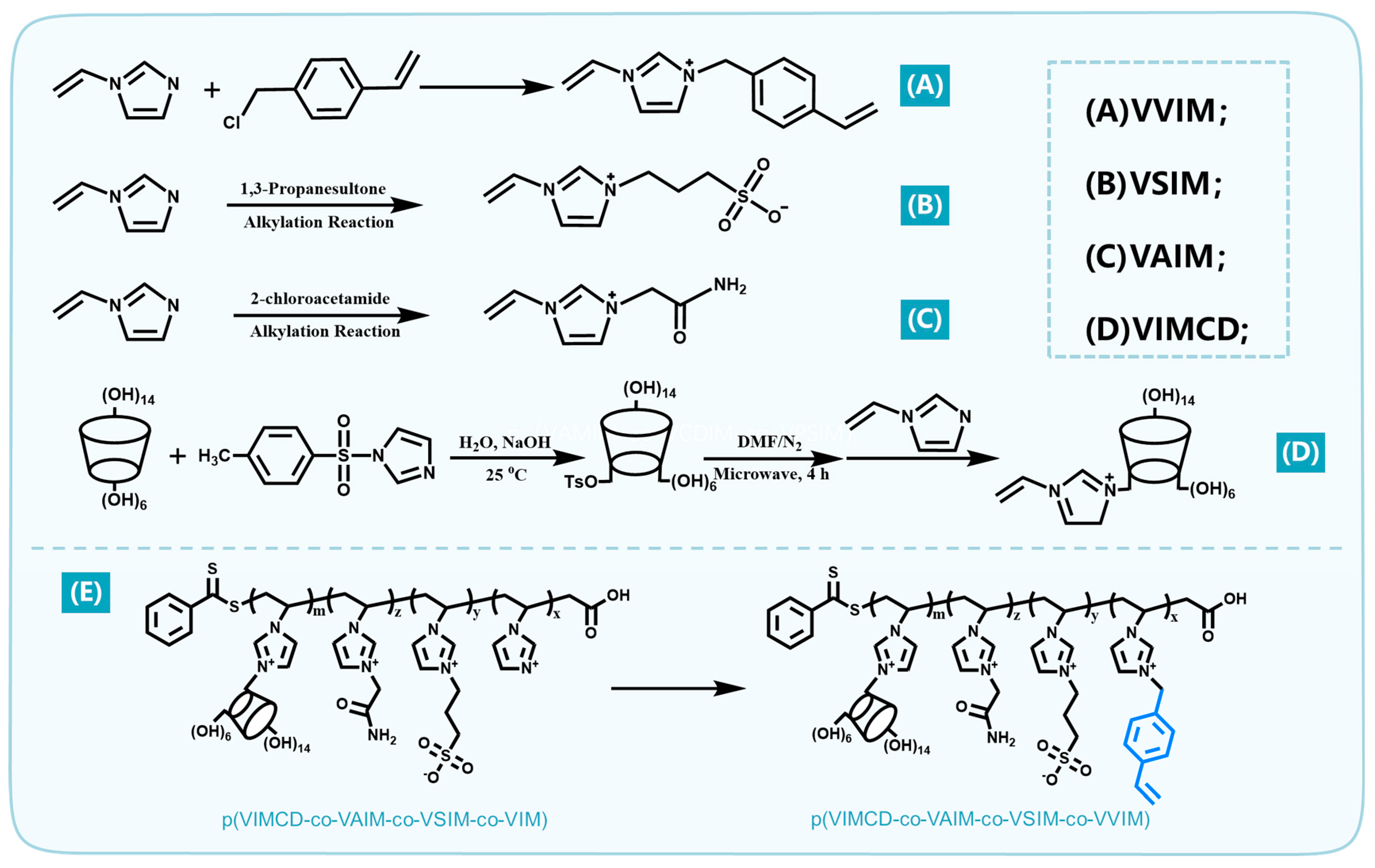
2.2. Design and Synthesis of Imidazolium-Based Ionic Liquid Monomers
2.3. Preparation of Poly(Ionic Liquid) Block Copolymer Macromonomers
2.4. Effect of p(VIMCD-co-VAIM-co-VSIM-co-VVIM) on the Structural Stability of Proteins
2.4.1. Spectroscopic Test of the Interaction Between p(VIMCD-co-VAIM-co-VSIM-co-VVIM) and Cyt-C
2.4.2. Molecular Dynamics Simulation Study on the Interaction Mechanism Between p(VIMCD-co-VAIM-co-VSIM-co-VVIM) and Cyt-C
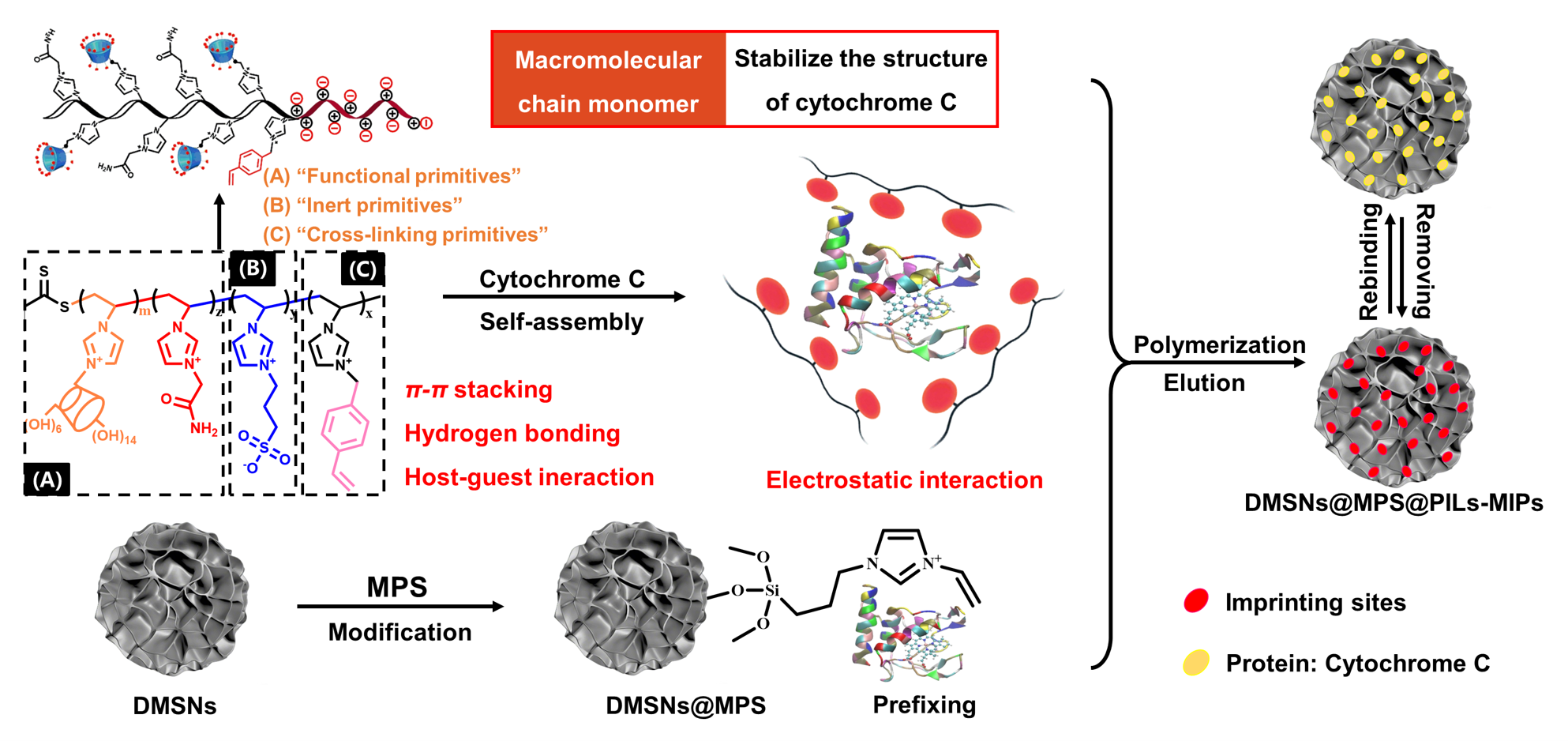
2.5. Fabrication of DMSNs@MPA@PILs-MIPs Nanospheres
2.5.1. Preparation of DMSNs@MPS
2.5.2. Preparation of DMSNs@MPS@PILs-MIPs Surface-Oriented Imprinted Nanospheres
2.6. Characterization of Physicochemical Properties and Adsorption Performance Tests of DMSNs@MPS@PILs-MIPs Nanospheres
2.7. Adsorption Performance of DMSNs@MPS@PILs-MIPs Nanospheres
2.8. Selective Recognition Performance of DMSNs@MPS@PILs-MIPs Nanospheres
2.9. Regeneration Performance of DMSNs@MPS@PILs-MIPs
3. Results and Discussion
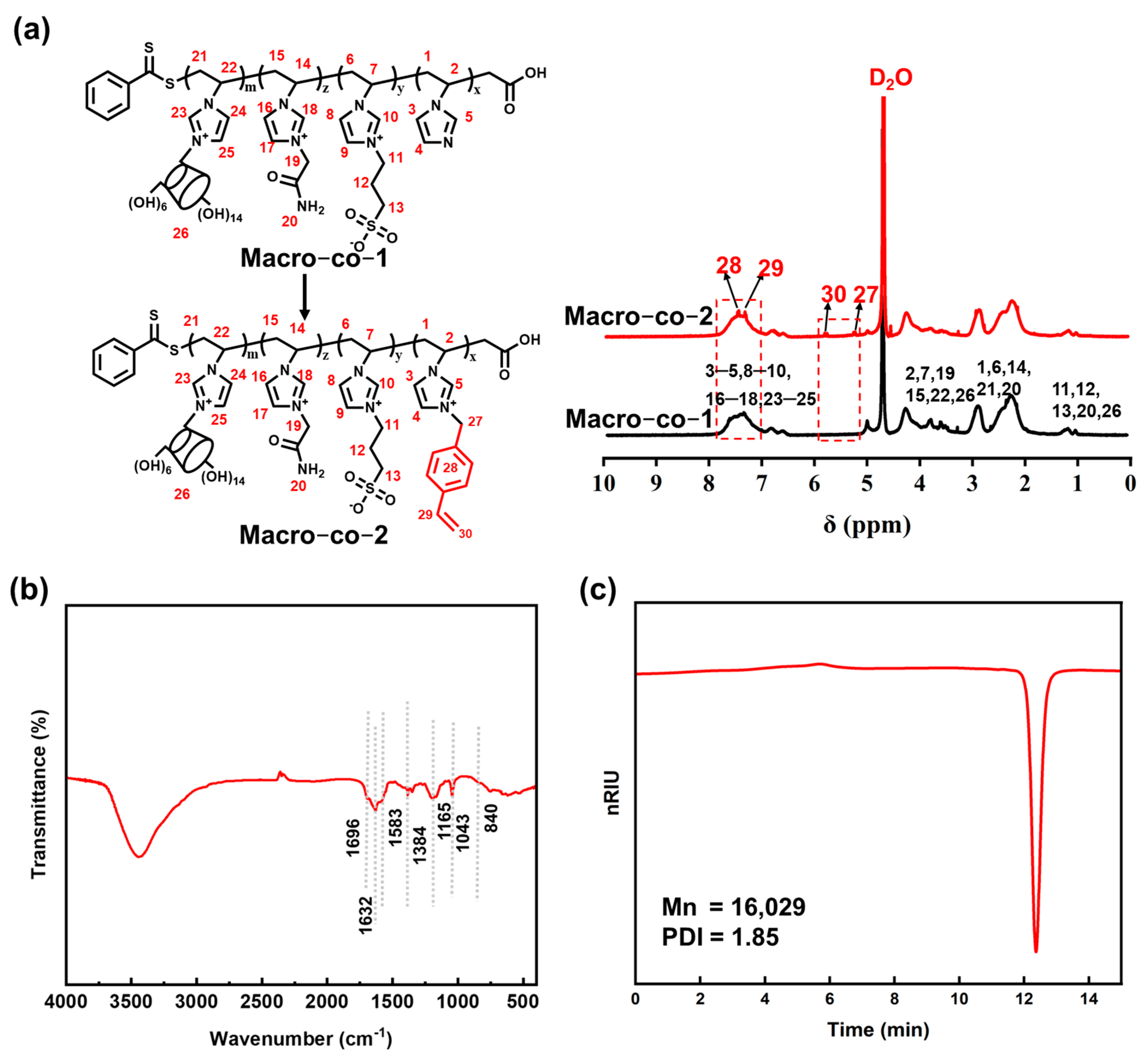
3.1. Synthesis and Characterization of a Series of Imidazolium Ionic Liquids and Poly(Ionic Liquid) Macromonomers
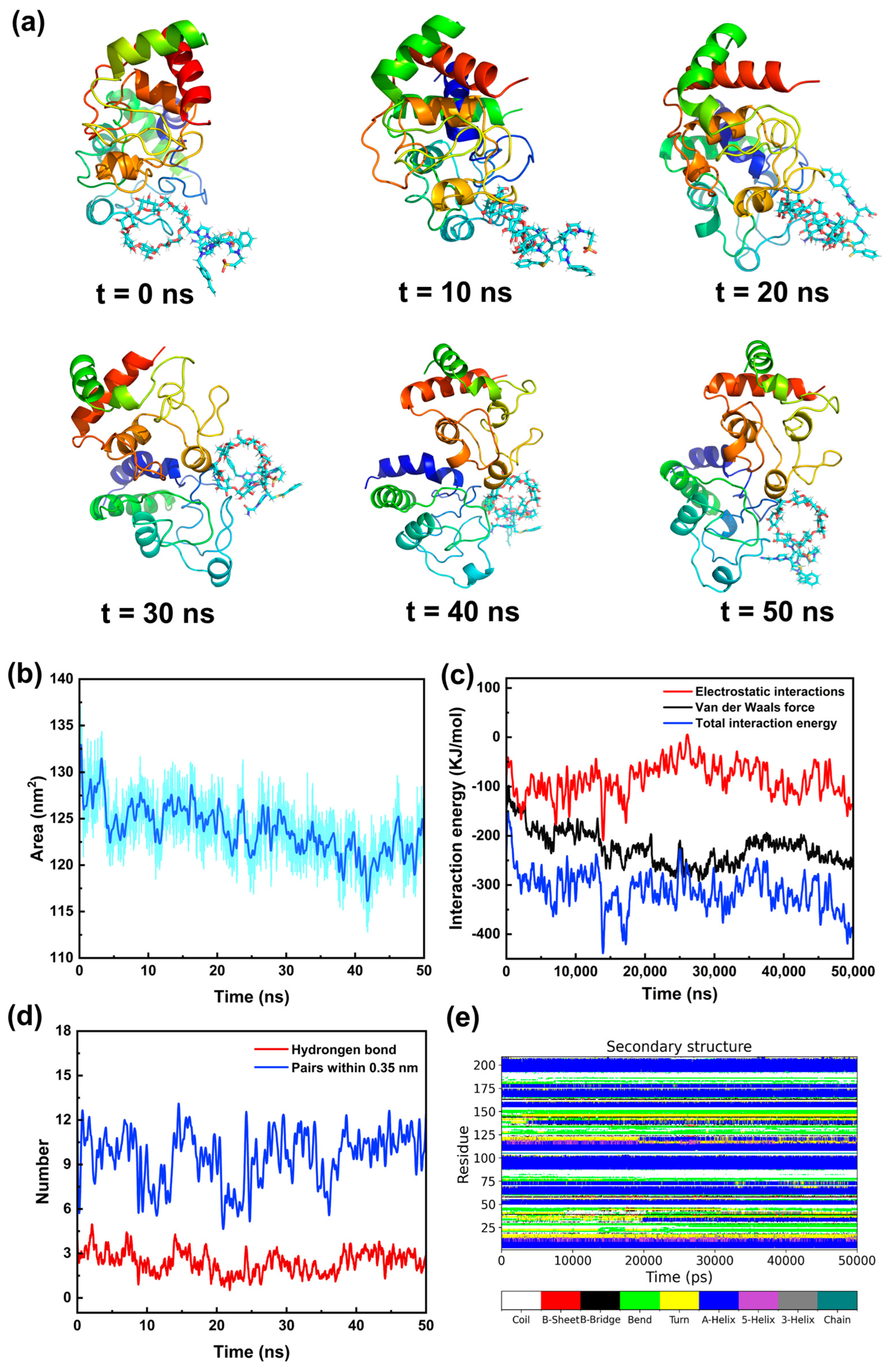
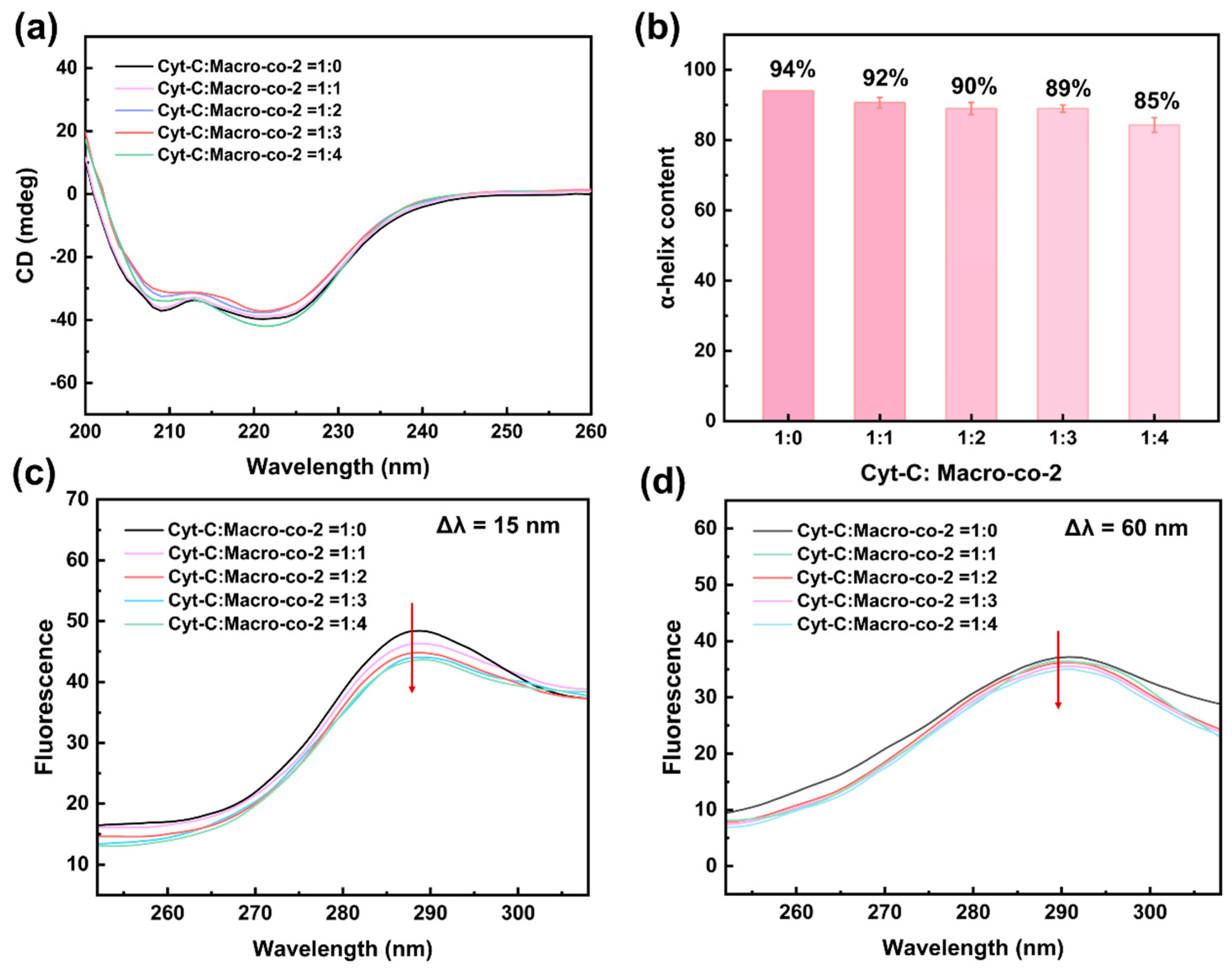
3.2. Regulatory Mechanism of p(VIMCD-co-VAIM-co-VSIM-co-VVIM) on the Structural Stability of Proteins
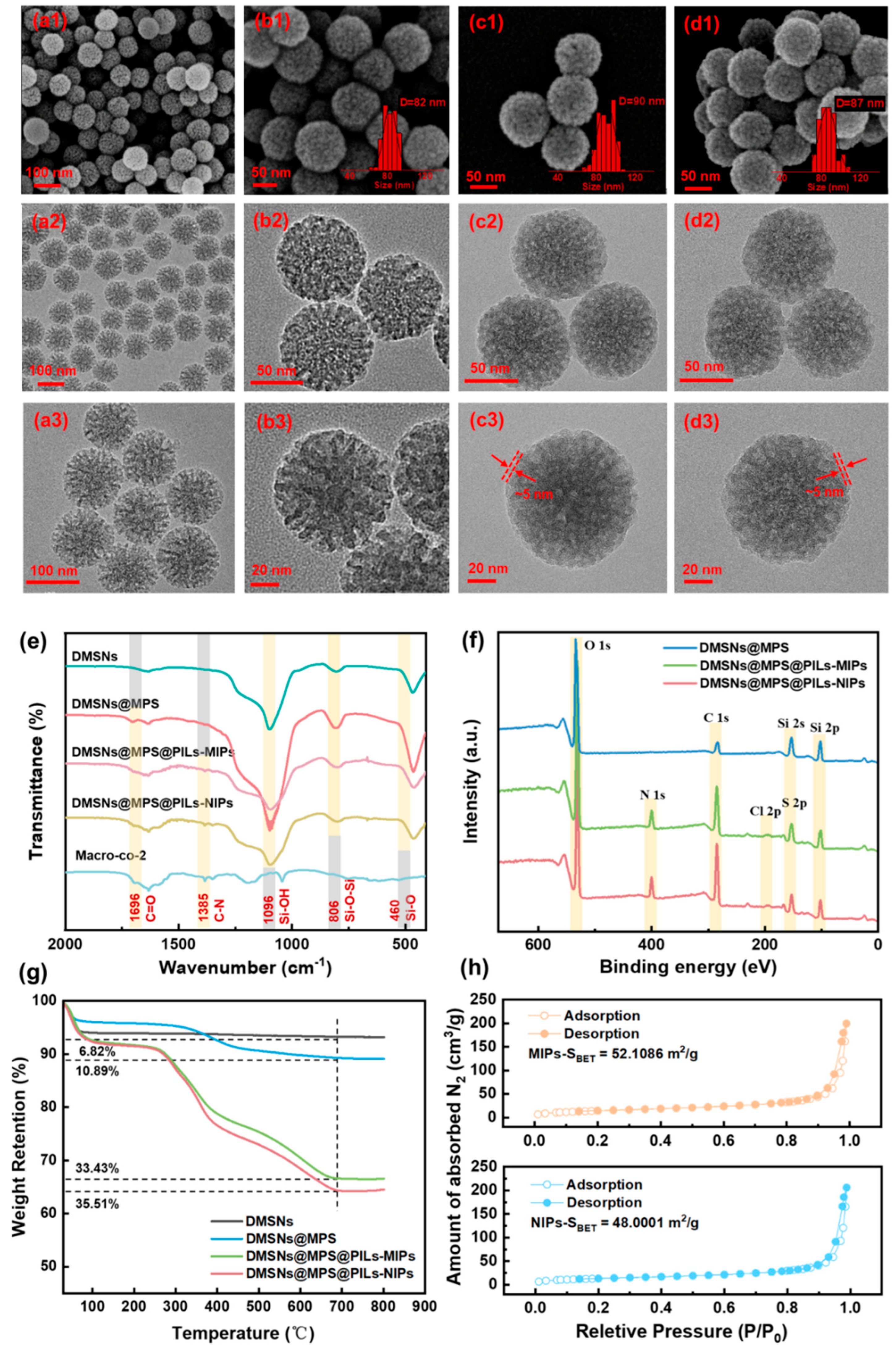
3.3. Preparation and Physicochemical Characterization of DMSNs@MPS @PILs-MIPs
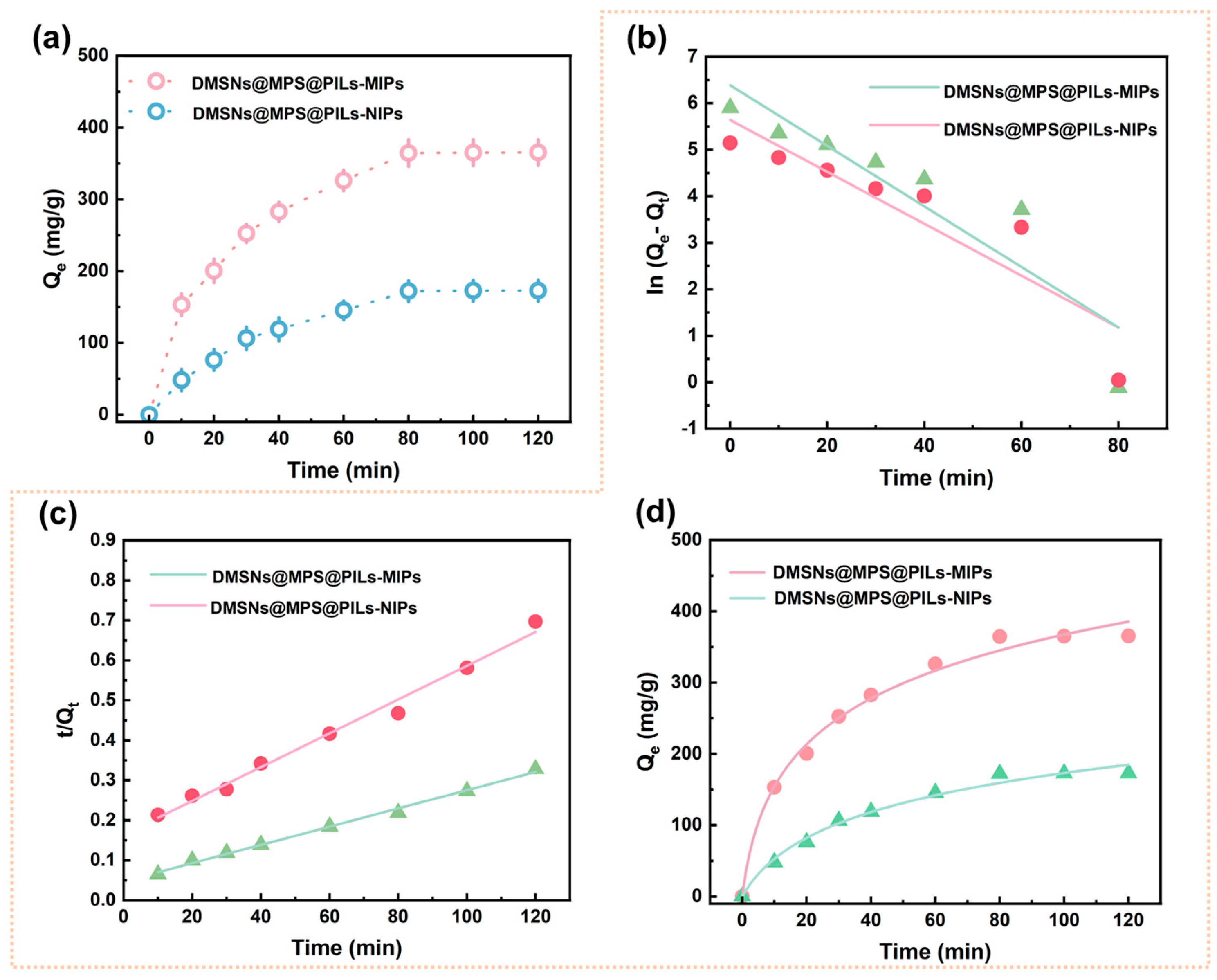
3.4. Investigation on the Adsorption Performance of DMSNsNs@MPS@ PILs-MIPs
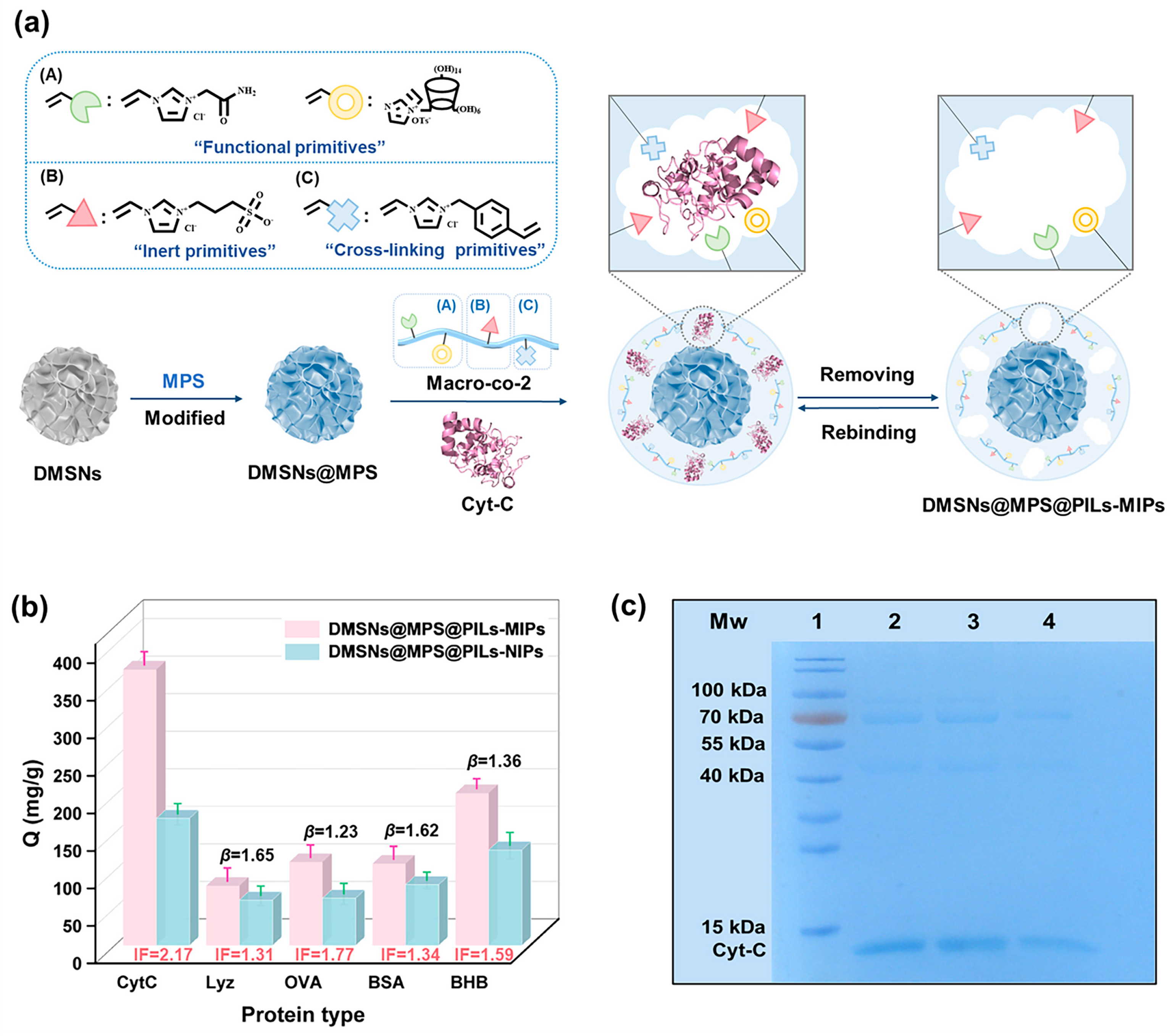
3.5. Investigation on the Selective Recognition Performance of DMSNs@MPS@ PILs-MIPs
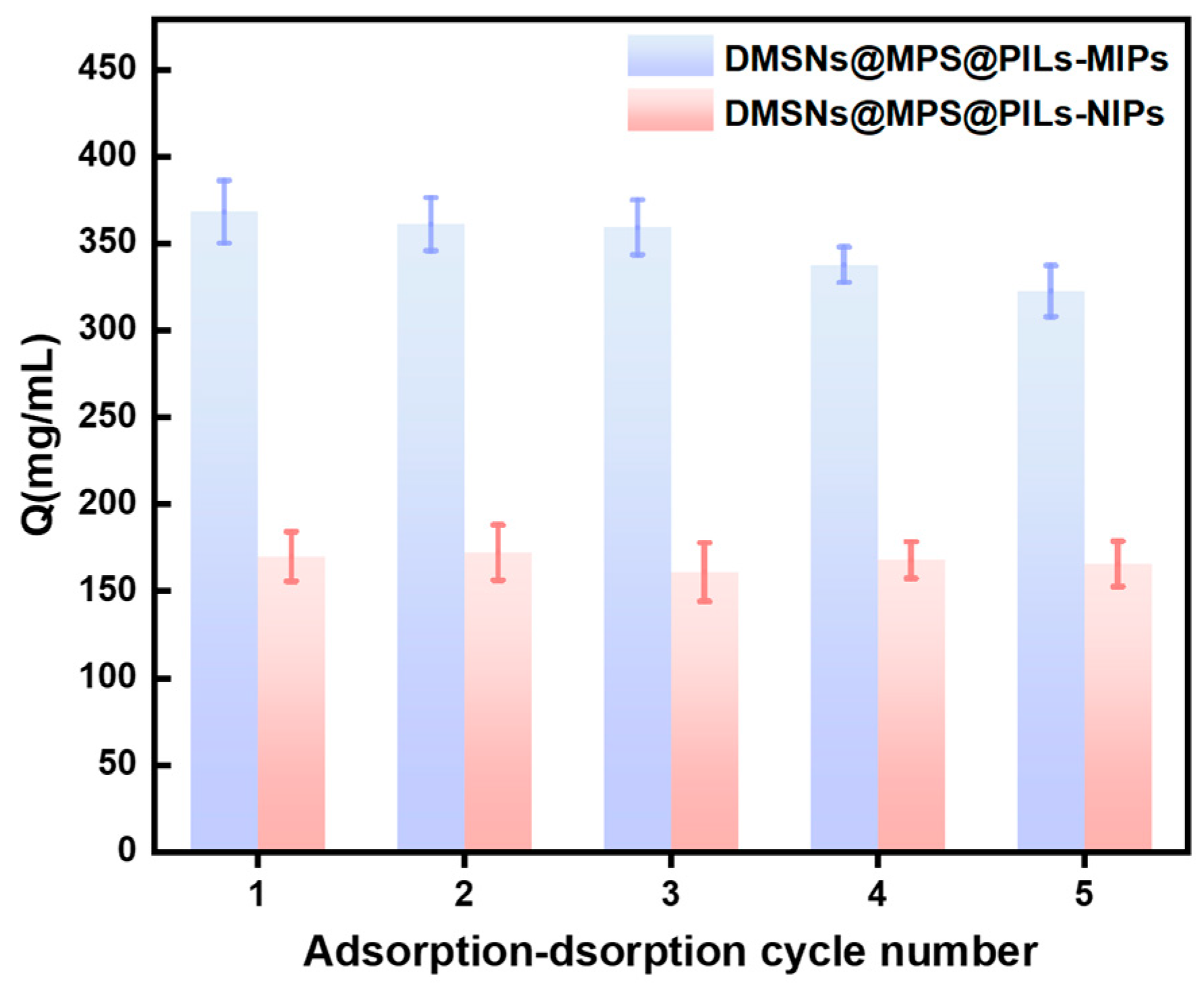
3.6. Investigation on the Regenerability and Reusability of DMSNs@MPS@ PILs-MIPs
3.7. Performance Evaluation of DMSNs@MPS@PILs-MIP
- The prepared DMSNs@MPS@PILs-MIPs will be applied to the analysis of actual samples to expand their practical application scenarios.
- Poly(ionic liquid) macromonomer with multi-responsive characteristics (e.g., pH, temperature, and light responsiveness) will be further designed to achieve the controllable adsorption and release of target proteins and optimize the comprehensive performance of materials.
- The structural design of functional groups will be directionally optimized to effectively reduce the cross-reactivity of structurally similar proteins, further strengthen the recognition specificity of materials, and provide theoretical and technical support for the development and practical application of high-performance protein-imprinted materials.
4. Conclusions
Supplementary Materials
Author Contributions
Funding
Data Availability Statement
Acknowledgments
Conflicts of Interest
References
- Kranz, R.G.; Sutherland, M.C. Mechanisms and Control of Heme Transport and Incorporation into Cytochrome c. Annu. Rev. Microbiol. 2025, 79, 23–43. [Google Scholar] [CrossRef]
- Bochkova, Z.V.; Semenova, M.A.; Smirnova, O.M.; Maksimov, G.V.; Rubin, A.B.; Kirpichnikov, M.P.; Dmitry, D.A.; Chertkova, R.V.; Brazhe, N.A. The molecular mechanism of redox interaction between neuroglobin and cytochrome c. Int. J. Biol. Macromol. 2025, 318, 145040. [Google Scholar] [CrossRef]
- Kalkavan, H.; Chen, M.J.; Crawford, J.C.; Quarato, G.; Fitzgerald, P.; Tait, S.W.; Goding, C.R.; Green, D.R. Sublethal cytochrome c release generates drug-tolerant persister cells. Cell 2022, 185, 3356–3374. [Google Scholar] [CrossRef]
- Ahmad, T.; Esposito, F.; Rauf, M.A.; Inam-ur-Raheem, M.; Cirillo, T.; Aadil, R.M. A Review on Recent Processing and Bioprocessing Developments in Alternative Proteins: Sources, Modification Methods, Economic Feasibility, and Future Challenges. Food Bioprocess Technol. 2026, 19, 54. [Google Scholar] [CrossRef]
- Du, M.; Hou, Z.; Liu, L.; Xuan, Y.; Chen, X.; Fan, L.; Li, Z.; Xu, B. 1Progress, applications, challenges and prospects of protein purification technology. Front. Bioeng. Biotechnol. 2022, 10, 1028691. [Google Scholar] [CrossRef]
- Bossi, A.; Bonini, F.; Turner, A.P.F.; Piletsky, S.A. Molecularly imprinted polymers for the recognition of proteins: The state of the art. Biosens. Bioelectron. 2007, 22, 1131–1137. [Google Scholar] [CrossRef] [PubMed]
- Katz, A.; Davis, M.E. Molecular imprinting of bulk, microporous silica. Nature 2000, 403, 286–289. [Google Scholar] [CrossRef] [PubMed]
- Jahanban-Esfahlan, A.; Amarowicz, R. Molecularly imprinted polymers for sensing/depleting human serum albumin (HSA): A critical review of recent advances and current challenges. Int. J. Biol. Macromol. 2024, 266, 131132. [Google Scholar] [CrossRef] [PubMed]
- Verheyen, E.; Schillemans, J.P.; Van Wijk, M.; Demeniex, M.A.; Hennink, W.E.; Van Nostrum, C.F. Challenges for the effective molecular imprinting of proteins. Biomaterials 2011, 32, 3008–3020. [Google Scholar] [CrossRef] [PubMed]
- He, Y.; Lin, Z. Recent advances in protein-imprinted polymers: Synthesis, applications and challenges. J. Mater. Chem. B 2022, 10, 6571–6589. [Google Scholar] [CrossRef]
- Cheng, D.; Chen, Y.; Feng, Y.; Zeng, Y.; Zhao, Z. Preparation of temperature-sensitive molecularly imprinted Cryogel for specific recognition of proteins. ACS Omega 2025, 10, 11312–11324. [Google Scholar] [CrossRef]
- Liu, D.; Ulbricht, M. A highly selective protein adsorber via two-step surface-initiated molecular imprinting utilizing a multi-functional polymeric scaffold on a macroporous cellulose membrane. RSC Adv. 2017, 7, 11012–11019. [Google Scholar] [CrossRef]
- Taniguchi, I.; Yoshimoto, S.; Yoshida, M.; Kobayashi, S.I.; Miyawaki, T.; Aono, Y.; Sunatsuki, Y.; Taira, H. Simple methods for preparation of a well-defined 4-pyridinethiol modified surface on Au (111) electrodes for cytochrome c electrochemistry. Electrochim. Acta 2000, 45, 2843–2853. [Google Scholar] [CrossRef]
- Taniguchi, I. Bio-electroanalytical Chemistry Research Footprint and the Future. Anal. Sci. 2025, 41, 1115–1120. [Google Scholar] [CrossRef] [PubMed]
- Fresco-Cala, B.; Gálvez-Vergara, A.; Baumgarten, D.; Zech, F.; Münch, J.; Mizaikoff, B. Dual surrogate imprinting: An innovative strategy for the preparation of virus-selective particles. Mater. Horiz. 2025, 12, 1486–1493. [Google Scholar] [CrossRef]
- Wang, Y.; Zhang, Y.; Zhao, Y.; Zhao, Z.; Yao, J.; Zou, L.; Zhang, Y.; Guan, Y.; Zhang, Y. Magnetite nanoparticles with high affinity toward target protein for efficient and facile bio-separation. Adv. Sci. 2025, 12, 2413605. [Google Scholar] [CrossRef]
- Kalecki, J.; Iskierko, Z.; Cieplak, M.; Sharma, P.S. Oriented immobilization of protein templates: A new trend in surface imprinting. ACS Sens. 2020, 5, 3710–3720. [Google Scholar] [CrossRef]
- Sirivibulkovit, K.; Voelkle, J.; Windisch, D.J.; Muttenthaler, M.; Lieberzeit, P.A.; Saetear, P. Electrochemical dengue sensor based on NS1 epitope-imprinted polymers. Biosens. Bioelectron. 2025, 289, 117915. [Google Scholar] [CrossRef]
- Dechtrirat, D.; Jetzschmann, K.J.; Stöcklein, W.F.; Scheller, F.W.; Gajovic-Eichelmann, N. Protein rebinding to a surface-confined imprint. Adv. Funct. Mater. 2012, 22, 5231–5237. [Google Scholar] [CrossRef]
- Tamahkar, E.; Kutsal, T.; Denizli, A. Surface imprinted bacterial cellulose nanofibers for cytochrome c purification. Process Biochem. 2015, 50, 2289–2297. [Google Scholar] [CrossRef]
- Qin, Y.P.; Li, D.Y.; He, X.W.; Li, W.Y.; Zhang, Y.K. Preparation of high-efficiency cytochrome c-imprinted polymer on the surface of magnetic carbon nanotubes by epitope approach via metal chelation and six-membered ring. ACS Appl. Mater. Interfaces 2016, 8, 10155–10163. [Google Scholar] [CrossRef]
- Ma, X.T.; He, X.W.; Li, W.Y.; Zhang, Y.K. Oriented surface epitope imprinted polymer-based quartz crystal microbalance sensor for cytochrome c. Talanta 2019, 191, 222–228. [Google Scholar] [CrossRef]
- Li, X.; Lin, M.; Zhang, H.; Ji, W.; Shi, Y.; Qi, Z.; Fu, T.; Li, Q.; Deng, Q. N-terminal epitope surface imprinted particles for high selective cytochrome c recognition prepared by reversible addition-fragmentation chain transfer strategy. Chem. Pap. 2022, 76, 3937–3947. [Google Scholar] [CrossRef]
- Genix, A.C.; Sharma, S.; Akkaya, C.; Alauzun, J.G.; Kohlbrecher, J.; Bizien, T.; Hesemann, P.; Oberdisse, J. Heterogeneous decoration of ionic mesopores by ionic and poly (ionic) liquids. ACS Appl. Mater. Interfaces 2025, 17, 47532–47542. [Google Scholar] [CrossRef]
- Frömbgen, T.; Drysch, K.; Tassaing, T.; Buffeteau, T.; Hollóczki, O.; Kirchner, B. Induced chirality and vibrational optical activity in an ionic-liquid anion. Angew. Chem. Int. Ed. 2025, 64, e202502885. [Google Scholar] [CrossRef]
- Peng, Y.; Wang, R.; Li, M.; Wen, X.; Ni, Y.; Lasrichan, S. Effects of Hofmeister cation series induced by different alkalizers on the production, structural and functional characteristics of low-sodium soy protein fractions. Food Hydrocoll. 2026, 176, 112556. [Google Scholar] [CrossRef]
- Uddin, M.N.; Kabir, S.; Khan, M.A.R.; Ullah, M.W.; Hoque, M.A.; Anis-Ul-Haque, K.M.; Gatasheh, M.K. Competitive micellization and host-guest complexation of sodium dodecyl sulfate with β-cyclodextrin: Insights from the Hofmeister series. Int. J. Biol. Macromol. 2025, 328, 147265. [Google Scholar] [CrossRef]
- Tarannum, A.; Jonnalagadda, R.R.; Nishter, N.F. Stability of collagen in ionic liquids: Ion specific Hofmeister series effect. Spectrochim. Acta Part A Mol. Biomol. Spectrosc. 2019, 212, 343–348. [Google Scholar] [CrossRef] [PubMed]
- Li, Z.; Guan, P.; Hu, X.; Ding, S.; Tian, Y.; Xu, Y.; Qian, L. Preparation of molecularly imprinted mesoporous materials for highly enhancing adsorption performance of cytochrome C. Polymers 2018, 10, 298. [Google Scholar] [CrossRef] [PubMed]
- Ding, S.; Li, Z.; Cheng, Y.; Du, C.; Gao, J.; Zhang, Y.W.; Zhang, N.; Li, Z.; Chang, N.; Hu, X. Enhancing adsorption capacity while maintaining specific recognition performance of mesoporous silica: A novel imprinting strategy with amphiphilic ionic liquid as surfactant. Nanotechnology 2018, 29, 375604. [Google Scholar] [CrossRef]
- Qian, L.; Hu, X.; Guan, P.; Gao, B.; Li, J.; Wang, C.; Tang, Y. Preparation of bovine serum albumin imprinting sensitive hydrogels using ionic liquid as co-monomer and stabilizer. Talanta 2014, 121, 56–64. [Google Scholar] [CrossRef]
- Qian, L.; Hu, X.; Guan, P.; Wang, D.; Li, J.; Du, C.; Song, R. An effective way to imprint protein with the preservation of template structure by using a macromolecule as the functional monomer. RSC Adv. 2015, 5, 59062–59069. [Google Scholar] [CrossRef]
- Du, C.; Hu, X.; Guan, P.; Gao, X.; Song, R.; Li, J.; Qian, L.; Zhang, N.; Guo, L. Preparation of Surface-Imprinted Microspheres Effectively Controlled by Orientated Template Immobilization Using Highly Cross-Linked Raspberry-Like Microspheres for the Selective Recognition of an Immunostimulating Peptide. J. Mater. Chem. B 2016, 4, 1510–1519. [Google Scholar] [CrossRef]
- Song, W.; Qian, L.; Yang, Y.; Zhao, Y.; Miao, Z.; Zhang, Q. Constructing high-recognition protein-imprinted materials using “specially designed” block macromolecular chains as functional monomers and crosslinkers. ACS Appl. Mater. Interfaces 2021, 13, 54428–54438. [Google Scholar] [CrossRef] [PubMed]
- Tien, S.; Kayser, V. Ionic liquids as stabilisers of therapeutic protein formulations: A review of insulin and monoclonal antibodies. Biophys. Rev. 2025, 17, 89–101. [Google Scholar] [CrossRef]
- Seo, Y.; Kim, Y.; Kim, J.; Jung, H.G.; Jang, J.W.; Kim, H.; Hwang, K.; Lee, D.; Lee, S.; Lee, J.; et al. Recent advances in molecularly imprinted polymers toward biomedical healthcare devices. Biosens. Bioelectron. 2025, 287, 117637. [Google Scholar] [CrossRef]
- Abdulsada, S.H.; Cruz, A.G.; Zaleski, C.; Piletska, E.; Piletsky, S.A. Molecularly imprinted polymer-integrated nanozymes for biosensing: Advances and prospects. J. Mater. Chem. B 2025, 13, 15213–15229. [Google Scholar] [CrossRef]
- Asliyuce, S.; Uzun, L.; Say, R.; Denizli, A. Immunoglobulin G recognition with Fab fragments imprinted monolithic cryogels: Evaluation of the effects of metal-ion assisted-coordination of template molecule. React. Funct. Polym. 2013, 73, 813–820. [Google Scholar] [CrossRef]
- Zhang, X.; Zhang, N.; Du, C.; Guan, P.; Gao, X.; Wang, C.; Du, Y.; Ding, S.; Hu, X. Preparation of magnetic epitope imprinted polymer microspheres using cyclodextrin-based ionic liquids as functional monomer for highly selective and effective enrichment of cytochrome c. Chem. Eng. J. 2017, 317, 988–998. [Google Scholar] [CrossRef]
- Tian, Y.; Jiang, X.; Fu, X.; He, Y.; Xia, Z.; Huang, Y. Synergistic multiple weak interactions enable precise recognition of glycoproteins via molecular imprinting. Anal. Chem. 2026, 98, 4112–4124. [Google Scholar] [CrossRef] [PubMed]
- Ghosh, A.; Sharma, M.; Zhao, Y. Cell-penetrating protein-recognizing polymeric nanoparticles through dynamic covalent chemistry and double imprinting. Nat. Commun. 2024, 15, 3731. [Google Scholar] [CrossRef]
- Mahmoudpour, M.; Karimzadeh, Z.; Zaheri, M.; Yekta, R.; Andishmand, H.; Dolatabadi, J.E.N. Exploring the interactions between bovine serum albumin and sodium propionate through multi-spectroscopic and molecular docking analyses. Int. J. Biol. Macromol. 2025, 306, 141723. [Google Scholar] [CrossRef]
- Xuan, S.; Ding, W.; Qiao, F.; Li, Y.; Wang, S.; Zhang, Z.; Ma, C.; Yi, H.; Souza, C.D.; Zhang, L.; et al. Theoretical simulation-guided design and fabrication of molecularly imprinted hydrogels for selective osteopontin separation. Food Res. Int. 2025, 219, 117054. [Google Scholar] [CrossRef]
- Huang, L.; Zhao, J.; Chen, Y.; Zhang, B.; Lei, J.; Wang, L. Fabrication of a wood-based molecularly imprinted composite with pH/temperature-response for specific recognition of OVA. Sep. Purif. Technol. 2024, 341, 126844. [Google Scholar] [CrossRef]
- Li, B.; Zhang, Y.; Xu, J.; Xie, Z.; Tang, J.; Li, X.; Fan, S. Simultaneous carbonization, activation, and magnetization for producing tea waste biochar and its application in tetracycline removal from the aquatic environment. J. Environ. Chem. Eng. 2021, 9, 105324. [Google Scholar] [CrossRef]
- Canpolat, G.; Dolak, İ.; Onat, R.; Keçili, R.; Baysal, Z.; Ziyadanoğulları, B.; Ersöz, A.; Say, R. Development of molecular imprinting-based smart cryogels for selective recognition and separation of serum cytochrome-c as a biochemical indicator. Process Biochem. 2021, 106, 112–119. [Google Scholar] [CrossRef]
- Zhang, W.; Li, Y.; Muntiza, N.; Ji, W.; Fan, Z.; Li, Q.; Zhao, J.; Zhang, H.; Deng, Q.; Sun, D. Preparation of dual-epitopes imprinted particles with γ-cyclodextrin host-guest interaction and reversible addition-fragmentation chain transfer strategy for cytochrome c collaborative recognition. J. Chromatogr. A 2025, 1746, 465782. [Google Scholar] [CrossRef] [PubMed]
- Cheng, D.; Han, X.; Zou, J.; Li, Z.; Wang, M.; Liu, Y.; Wang, K.; Li, Y. Enhancing Cytochrome C Recognition and Adsorption through Epitope-Imprinted Mesoporous Silica with a Tailored Pore Size. ACS Omega 2023, 9, 1134–1142. [Google Scholar] [CrossRef]
- Qian, L.; Liu, W.; Liu, H.; Nica, V.; Zhang, S.; Zhou, Q.; Song, W.; Zhang, Q. Fabrication of raspberry-like cytochrome C surface-imprinted nanoparticles based on MOF composites for high-performance protein separation. ACS Appl. Mater. Interfaces 2021, 13, 31010–31020. [Google Scholar] [CrossRef]
- Fan, J.P.; Li, X.; Lai, Z.T.; Feng, Y.T.; Chen, H.P.; Zhong, L.P.; Xie, C.F. Electro-spinning a calcium alginate based molecular imprinted nanofiber membrane for selectively adsorbing cytochrome c. Sep. Purif. Technol. 2025, 356, 129877. [Google Scholar] [CrossRef]


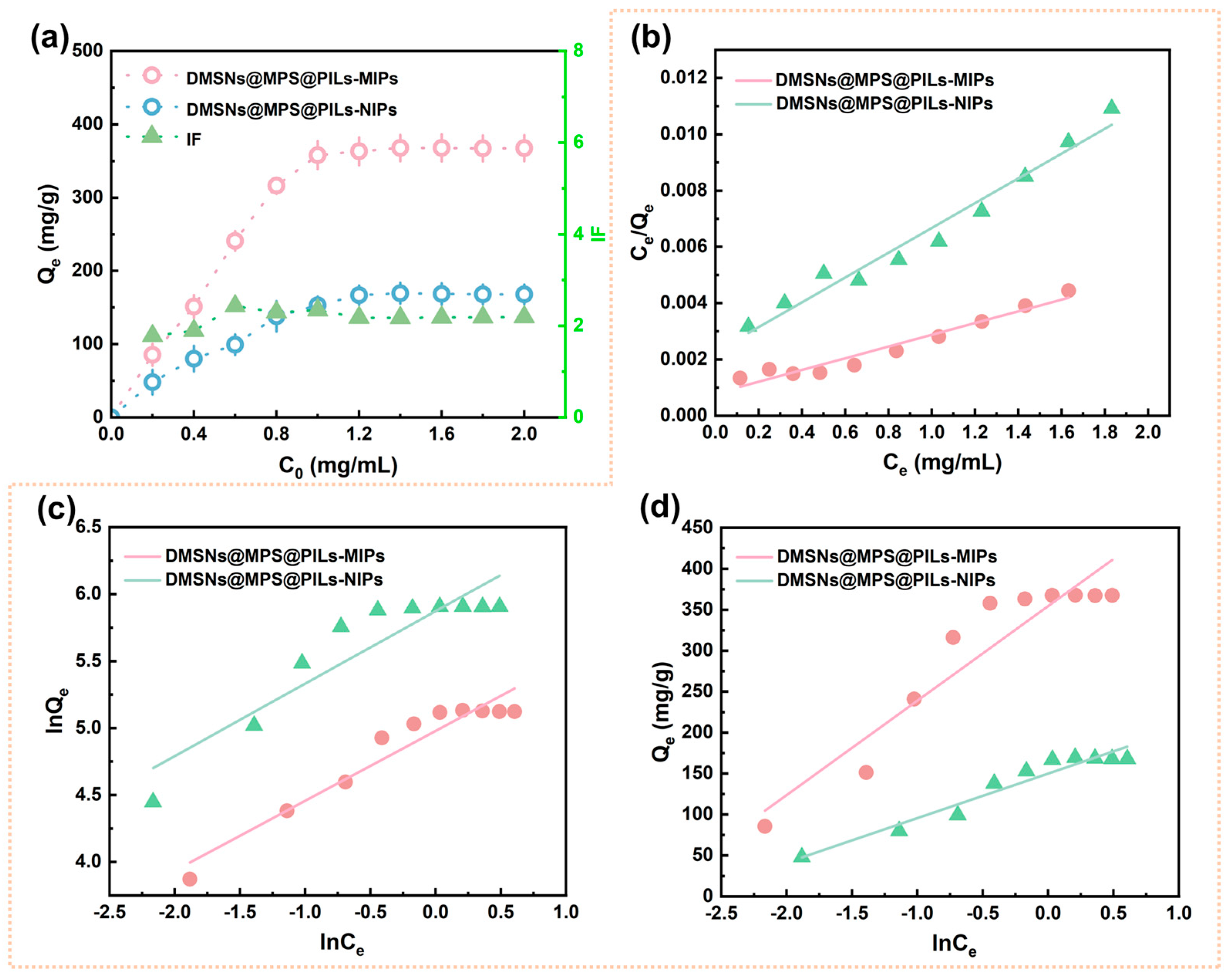



| Models | DMSNs@MPS@PILs-MIPs | DMSNs@MPS@PILs-NIPs | |
|---|---|---|---|
| Langmuir | Qm | 478.4688 | 227.2727 |
| Kd | 3.0900 × 10⁻⁵ | 4.1600 × 10⁻⁵ | |
| R2 | 0.9448 | 0.9645 | |
| Freundlich | 1/n | 0.5411 | 0.5222 |
| KF | 354.25 | 144.03 | |
| R2 | 0.8299 | 0.9175 | |
| Temkin | A | 21.5419 | 15.8000 |
| B | 115.2567 | 54.3094 | |
| R2 | 0.8725 | 0.9311 |
| Models | DMSNs@MPS@PILs-MIPs | DMSNs@MPS@PILs-NIPs | |
|---|---|---|---|
| Pseudo-first-order | Qm | 345.8478 | 270.4364 |
| K1 | 0.1502 | 0.1285 | |
| R2 | 0.8016 | 0.7940 | |
| Pseudo-second-orde | Qm | 427.1778 | 236.9768 |
| K2 | 0.0001 | 0.0001 | |
| R2 | 0.9949 | 0.9860 | |
| Elovich | A | 36.0266 | 7.9739 |
| B | 0.0098 | 0.0147 | |
| R2 | 0.9898 | 0.9852 |
| Carrier | Functional Monomer | Preparation Strategy | IF | Qe (mg/g) | Ref. |
|---|---|---|---|---|---|
| Cryogel | (MAAP)2-Ce(III) | Bulk Imprinting + Cryopolymerization | 4.46 | 98.33 | [46] |
| SiO2 | γ-CD | Epitope imprinting | 3.38 | 86.47 | [29] |
| SiO2 | γ-CD | Epitope imprinting | 3.27 | 79.56 | [47] |
| Mesoporous silica | Zwitterionic-IL | Epitope imprinting | 3.80 | 249.60 | [48] |
| CN@UIO-66 | Zwitterionic-IL | Surface imprinting | 6.10 | 815.00 | [49] |
| Calcium Alginate | Sodium Alginate | electro-spining + molecular imprinting | 1.66 | 3312.00 | [50] |
| DMSNs | PIL | Surface imprinting | 2.17 | 367.86 | this work |
Disclaimer/Publisher’s Note: The statements, opinions and data contained in all publications are solely those of the individual author(s) and contributor(s) and not of MDPI and/or the editor(s). MDPI and/or the editor(s) disclaim responsibility for any injury to people or property resulting from any ideas, methods, instructions or products referred to in the content. |
© 2026 by the authors. Licensee MDPI, Basel, Switzerland. This article is an open access article distributed under the terms and conditions of the Creative Commons Attribution (CC BY) license.
Share and Cite
Zhang, N.; Qiao, Y.; Yu, K.; Zhang, J.; Cui, P.; Yang, C.; Li, M. Harnessing Multi-Anchoring Effects for the Fabrication and Specific Recognition of Surface-Oriented Imprinted Nanospheres for Cytochrome C. Polymers 2026, 18, 1261. https://doi.org/10.3390/polym18101261
Zhang N, Qiao Y, Yu K, Zhang J, Cui P, Yang C, Li M. Harnessing Multi-Anchoring Effects for the Fabrication and Specific Recognition of Surface-Oriented Imprinted Nanospheres for Cytochrome C. Polymers. 2026; 18(10):1261. https://doi.org/10.3390/polym18101261
Chicago/Turabian StyleZhang, Nan, Yang Qiao, Kaishan Yu, Jinrong Zhang, Pengfei Cui, Chengzhao Yang, and Minglun Li. 2026. "Harnessing Multi-Anchoring Effects for the Fabrication and Specific Recognition of Surface-Oriented Imprinted Nanospheres for Cytochrome C" Polymers 18, no. 10: 1261. https://doi.org/10.3390/polym18101261
APA StyleZhang, N., Qiao, Y., Yu, K., Zhang, J., Cui, P., Yang, C., & Li, M. (2026). Harnessing Multi-Anchoring Effects for the Fabrication and Specific Recognition of Surface-Oriented Imprinted Nanospheres for Cytochrome C. Polymers, 18(10), 1261. https://doi.org/10.3390/polym18101261