3.1. Mechanical Response Under Hydrogen Exposure
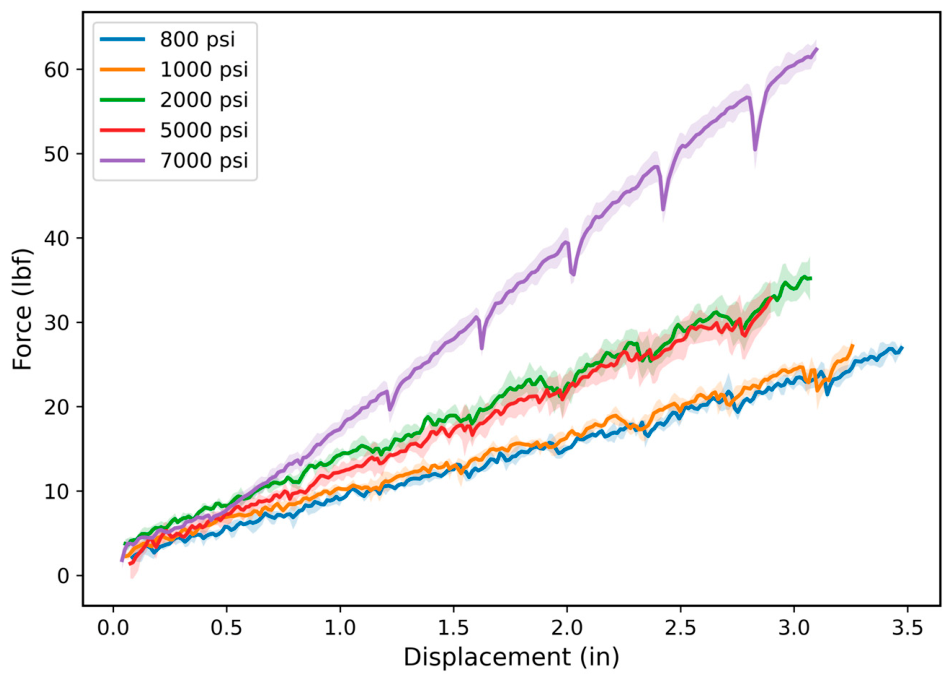
Figure 4 shows the force–displacement response of FKM (Viton
®) O-ring specimens after hydrogen exposure and is used to evaluate the effect of hydrogen pressure on tensile behavior.
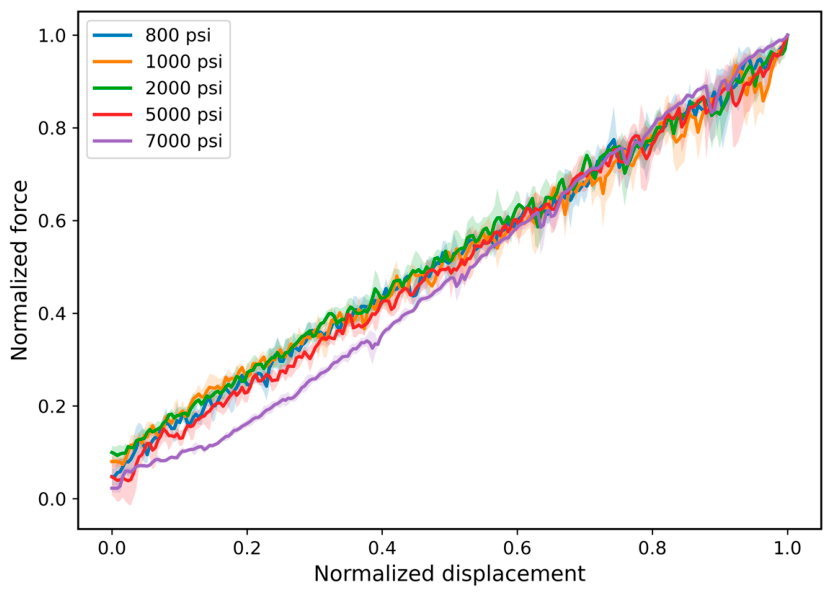
Figure 5 presents the corresponding normalized response. The results are shown using both raw and normalized representations, with shaded regions representing ±1 standard deviation across replicate tests. The tensile response exhibits a systematic increase in load-bearing capacity with increasing hydrogen pressure, with the 7000 psi condition showing the highest force response across the entire displacement range.
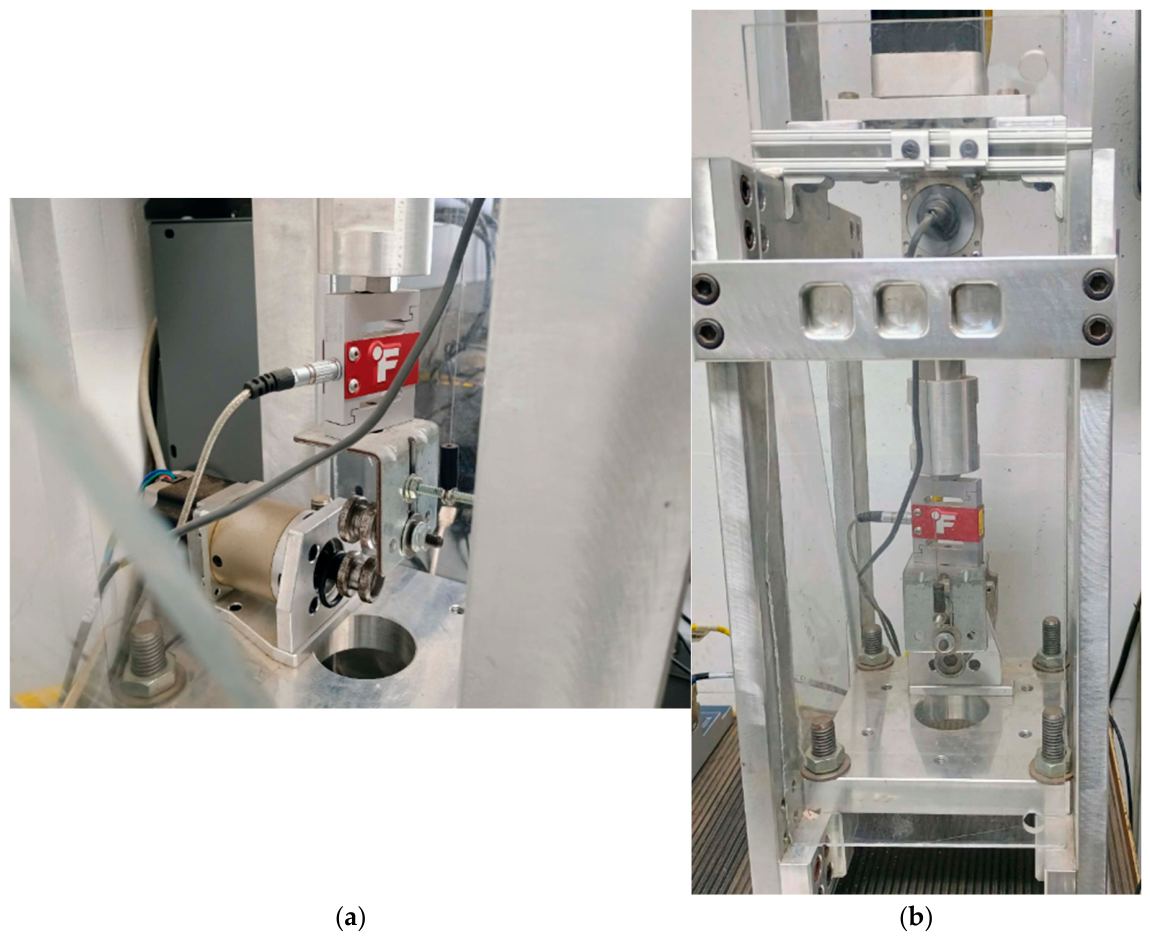
The force–displacement curves remain continuous without abrupt force drops, indicating the absence of brittle fracture or sudden structural failure. Minor fluctuations in force are observed, particularly at higher pressure conditions such as 7000 psi; these are attributed to localized deformation instabilities and may arise from microstructural damage evolution, local stress redistribution, or contact effects between the specimen and the spool fixtures. Such fluctuations are typical of elastomeric materials under large deformation and do not disrupt the overall load-bearing response.
An increase in stiffness at higher displacement levels is observed, particularly for the 7000 psi condition, consistent with strain-stiffening behavior commonly exhibited by elastomers. This suggests that FKM maintains structural integrity under hydrogen exposure. The increased force response at higher pressures may be associated with pressure-induced constraint effects, including reduced free volume and restricted chain mobility within the polymer network. However, this interpretation is based on observed mechanical trends and is presented as a plausible explanation rather than a definitive mechanism. Direct validation would require complementary characterization techniques such as dynamic mechanical analysis (DMA), gas sorption measurements, or free-volume analysis.
While the force–displacement response provides insight into load-bearing capacity, it does not distinguish whether the observed changes arise from differences in magnitude or from modifications in displacement response.
Figure 5 presents the normalized force–displacement response used to compare the relative shape of the mechanical behavior independent of absolute force and displacement magnitude. The normalized curves show broadly similar loading profiles across the investigated pressure conditions, suggesting that the relative progression of loading remains comparable after hydrogen exposure. However, this normalization is used only for comparative visualization and does not establish preservation of the deformation or failure mechanism. Mechanistic interpretation would require additional strain-based analysis, constitutive modeling, or complementary viscoelastic characterization.
Therefore,
Figure 5 should be interpreted as indicating similarity in normalized response profiles, while quantitative evaluation of pressure-dependent behavior is based on the measured force–displacement metrics, including peak force, energy absorption, secant stiffness, and displacement at peak force.
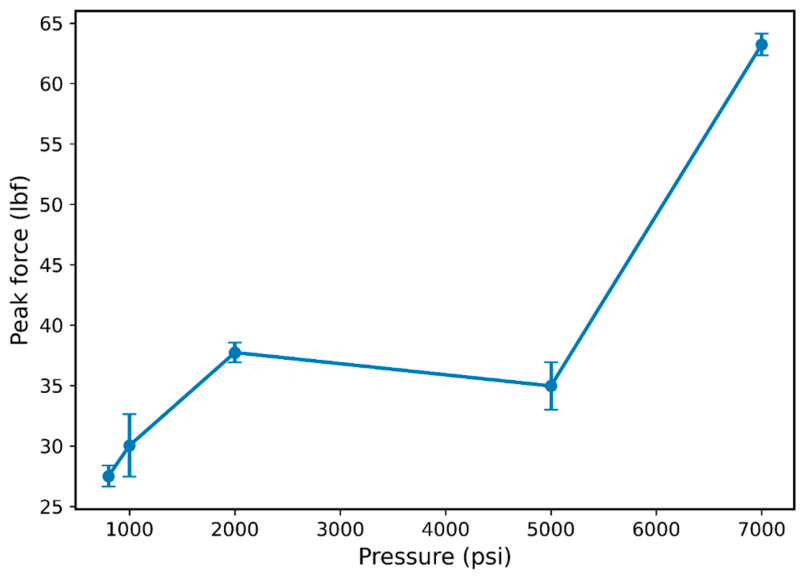
To further quantify the influence of hydrogen pressure on mechanical performance,
Figure 6 shows the variation in peak force with hydrogen pressure, providing a quantitative measure of tensile strength evolution. The mean peak force increased from approximately 27.5 lbf at 800 psi to 30.0 lbf at 1000 psi (≈9% increase) and further to 37.8 lbf at 2000 psi (≈37% increase relative to 800 psi). However, at 5000 psi, the peak force decreased slightly to approximately 35.0 lbf (≈7% reduction relative to 2000 psi), indicating a non-monotonic response. At 7000 psi, a pronounced increase in peak force was observed, reaching approximately 63.5 lbf, corresponding to an increase of about 131% relative to the 800 psi condition and approximately 81% relative to 5000 psi.
This non-monotonic trend, characterized by an intermediate reduction followed by a substantial increase at higher pressure, indicates that the behavior of FKM is governed by competing mechanisms rather than a simple monotonic trend. The pronounced increase at 7000 psi suggests a dominant stiffening or constraint-driven response at elevated hydrogen pressures.
However, peak force alone does not fully capture the material response, as it does not account for the deformation history prior to failure. These interpretations are based on observed mechanical trends and optical analysis; direct validation would require viscoelastic and transport measurements such as dynamic mechanical analysis (DMA) or hydrogen sorption analysis. Therefore, energy absorption was evaluated to provide a more comprehensive measure of mechanical performance.
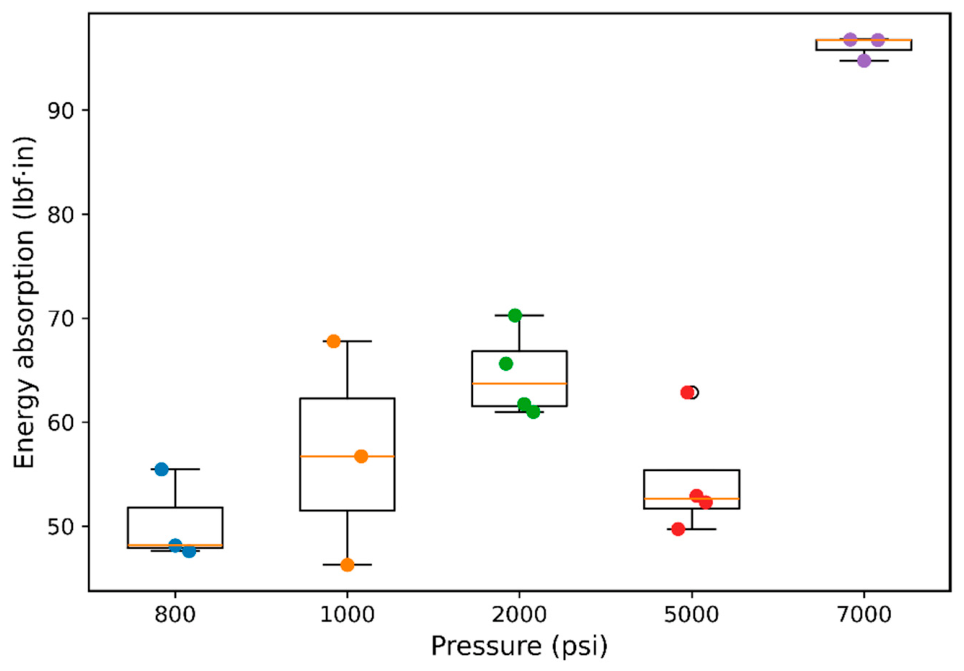
Because peak force alone does not capture the full deformation history,
Figure 7 shows the energy absorption behavior of FKM as a function of hydrogen pressure. The energy absorption increased from approximately 48.0 lbf·in at 800 psi to about 56.7 lbf·in at 1000 psi (≈18% increase) and further to approximately 63.8 lbf·in at 2000 psi (≈33% increase relative to 800 psi). However, at 5000 psi, the energy absorption decreased to approximately 52.4 lbf·in, indicating a non-monotonic trend consistent with the peak force behavior. At 7000 psi, a substantial increase in energy absorption was observed, reaching approximately 96.5 lbf·in, corresponding to nearly a 100% increase relative to the baseline condition. This pronounced increase indicates that the material exhibits significantly enhanced resistance to deformation and failure at elevated pressure.
The observed non-monotonic trend suggests the presence of competing mechanisms at intermediate pressures, while the strong increase at 7000 psi indicates a transition toward a more constrained and load-bearing network structure under high-pressure hydrogen exposure. The non-monotonic variation in energy absorption further indicates that the tensile response alone is insufficient to fully resolve the underlying deformation mechanisms, suggesting that additional time-dependent viscoelastic characterization is necessary. While energy absorption reflects the combined effects of strength and deformation, it does not explicitly describe the deformation capacity of the material. To further understand changes in extensibility, the peak displacement behavior was evaluated.
To further understand resistance to deformation across different strain levels,
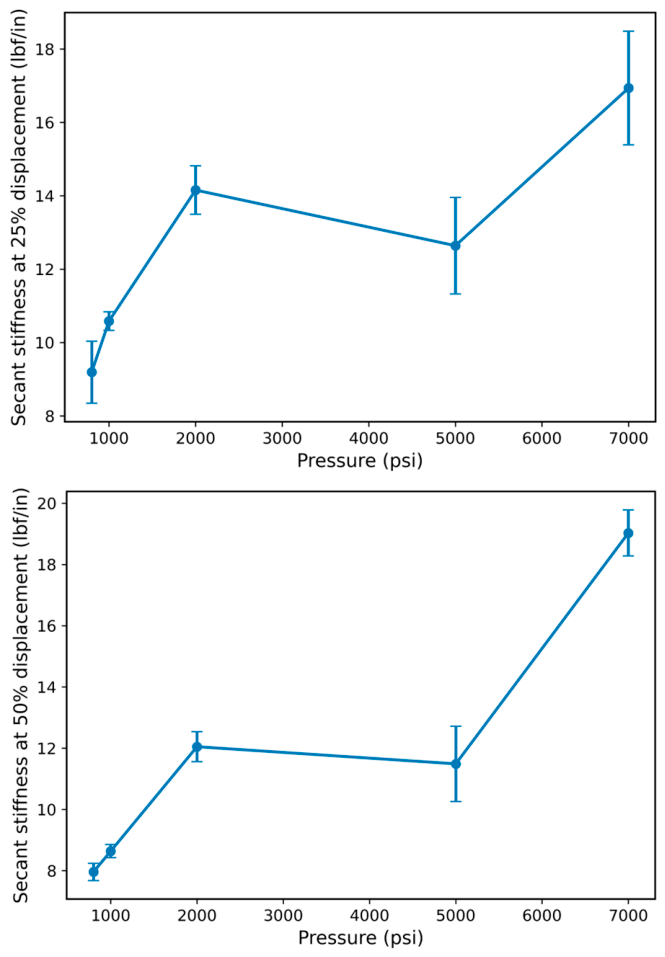
Figure 8 presents the secant stiffness variation with hydrogen pressure, where the secant stiffness is evaluated at 25% and 50% of peak displacement. Secant stiffness values are reported in units of lbf/in based on the force–displacement response. Both stiffness measures exhibit a similar non-monotonic trend with increasing pressure, indicating consistent mechanical behavior across different deformation levels. At lower pressures (800–1000 psi), a moderate increase in stiffness is observed relative to baseline, suggesting an initial increase in resistance to deformation. The stiffness reaches a local maximum at approximately 2000 psi, indicating enhanced load-bearing capability under intermediate pressure conditions. Beyond this point, a reduction in stiffness is observed at 5000 psi, followed by a pronounced increase at 7000 psi.
Importantly, the trends obtained at 25% and 50% of peak displacement remain consistent, indicating that the pressure-dependent mechanical response is not limited to a specific stage of loading but persists across both early-stage and intermediate response regimes. This agreement suggests that the observed changes in stiffness reflect intrinsic modifications to the material response rather than localized or strain-specific effects. The increase in stiffness at higher pressures is indicative of increased resistance to deformation, which may be associated with pressure-induced constraint effects and reduced chain mobility. Conversely, the reduction in stiffness observed at intermediate pressures suggests the presence of competing mechanisms that temporarily reduce the material’s resistance to deformation.
Overall, the non-monotonic stiffness response reinforces the trends observed in peak force and energy absorption, indicating that hydrogen exposure influences the mechanical behavior of FKM through a complex interplay of mechanisms rather than a simple monotonic degradation or softening process.
In contrast to strength-related metrics,
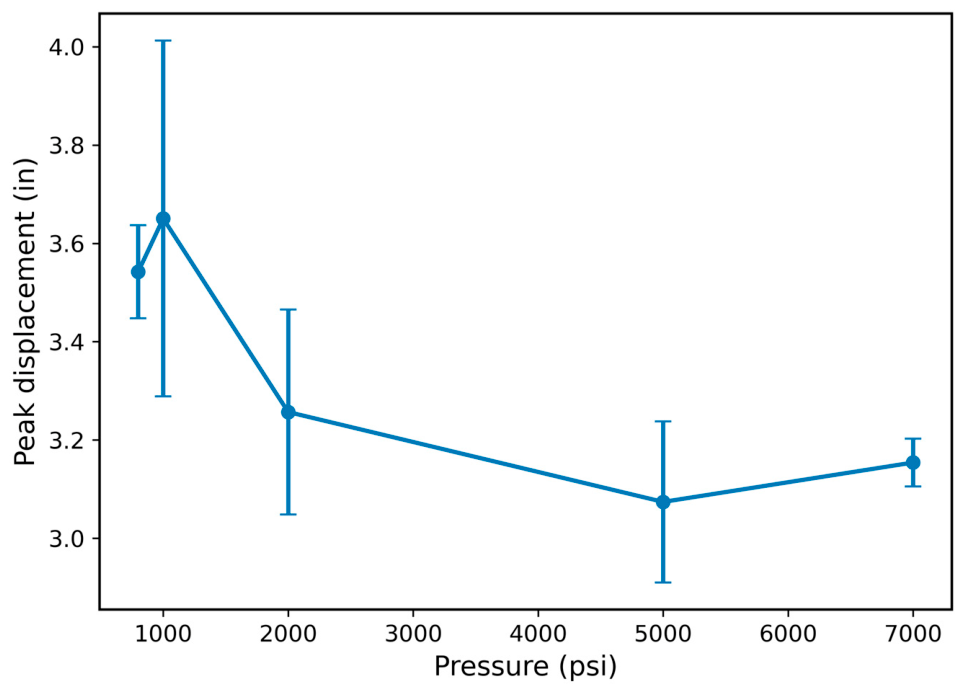
Figure 9 shows the variation in peak displacement with hydrogen pressure. The peak displacement increased slightly from approximately 3.54 in at 800 psi to about 3.66 in at 1000 psi (≈3% increase), indicating minimal influence of hydrogen at low pressure. However, a clear reduction in peak displacement was observed at higher pressures, decreasing to approximately 3.27 in at 2000 psi (≈8% decrease), 3.07 in at 5000 psi (≈13% decrease), and about 3.15 in at 7000 psi (≈11% decrease relative to 800 psi).
This reduction in displacement at elevated pressures indicates a decrease in material extensibility, suggesting that the polymer network becomes increasingly constrained under high-pressure hydrogen exposure. When considered together with the simultaneous increase in peak force and energy absorption at high pressure, the results indicate a transition toward a stiffer and more load-bearing network that resists displacement but reaches failure at lower displacement levels. The reduction in peak displacement at elevated pressures, combined with the non-monotonic variation in strength and energy absorption, suggests that the mechanical response is governed by competing mechanisms that cannot be fully resolved through monotonic tensile testing alone, highlighting the need for time-dependent viscoelastic characterization such as DMA.
Taken together, these results indicate that hydrogen exposure leads to a transition toward a stiffer and more constrained material response at high pressure, governed by competing mechanisms that cannot be fully resolved using monotonic tensile testing alone. This behavior motivates the need for time-dependent viscoelastic characterization in future work.
3.2. Quantitative Defect Analysis
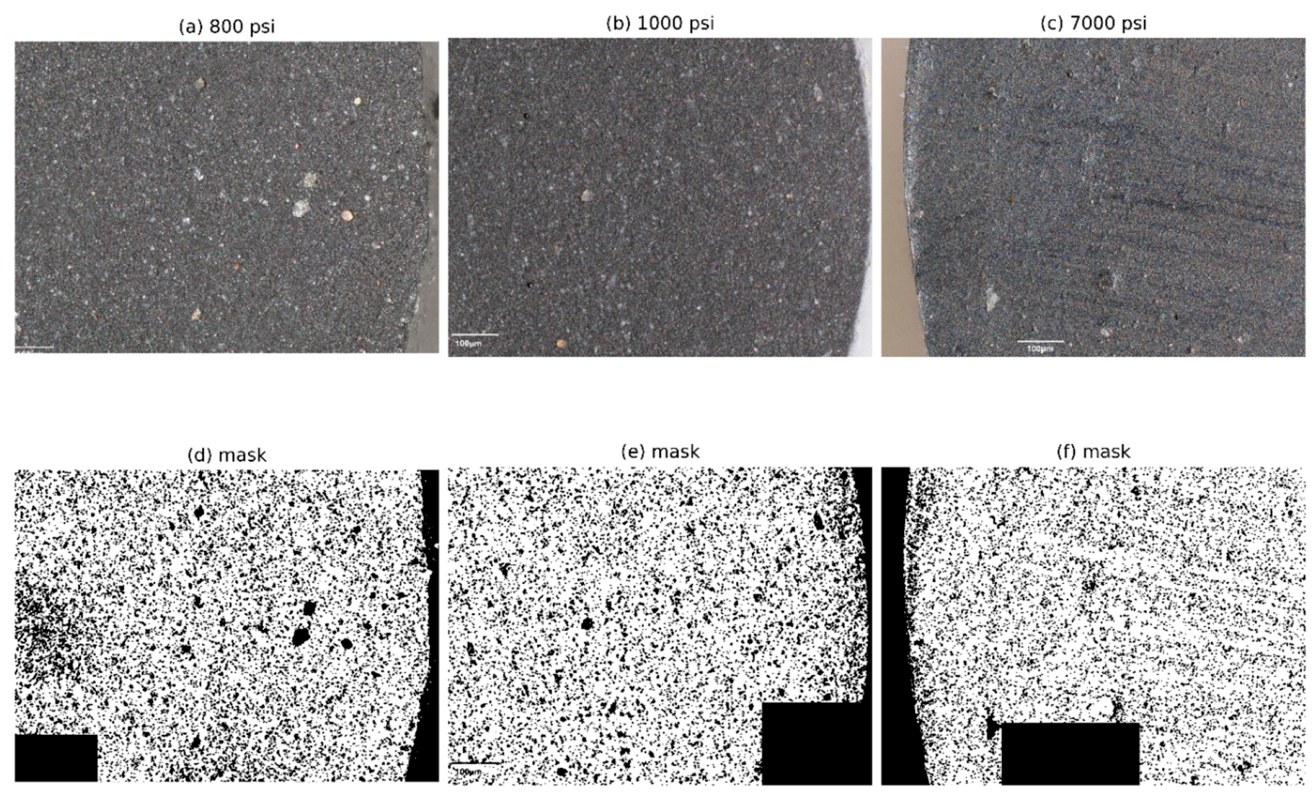
While tensile testing provides insight into the global mechanical response, it does not directly capture the microstructural changes associated with hydrogen exposure. To address this, representative optical micrographs, corresponding binary masks, and quantitative metrics derived from image segmentation were used to evaluate pressure-dependent surface damage.
Table 3 summarizes the quantitative image analysis results, showing an increase in micro-defect accumulation across the analyzed pressure conditions. Image analysis was performed for selected pressures (800, 1000, and 7000 psi) to provide representative comparison across low, intermediate, and high-pressure exposure levels. Although mechanical testing covered a broader pressure range, the absence of image-based data at intermediate pressures (2000 and 5000 psi) limits direct correlation between surface defect evolution and mechanical response across all conditions.
The variability in micro-defect metrics, particularly at higher pressures, is relatively large and reflects the heterogeneous and localized nature of surface damage in elastomeric materials. Defect formation occurs in discrete regions influenced by local microstructural features, leading to significant variation across individual fields of view. Accordingly, the quantitative results are interpreted as a comparative assessment across the analyzed pressure conditions rather than a strictly predictive trend, and the observed variability highlights the limitations of optical surface analysis in fully capturing damage evolution.
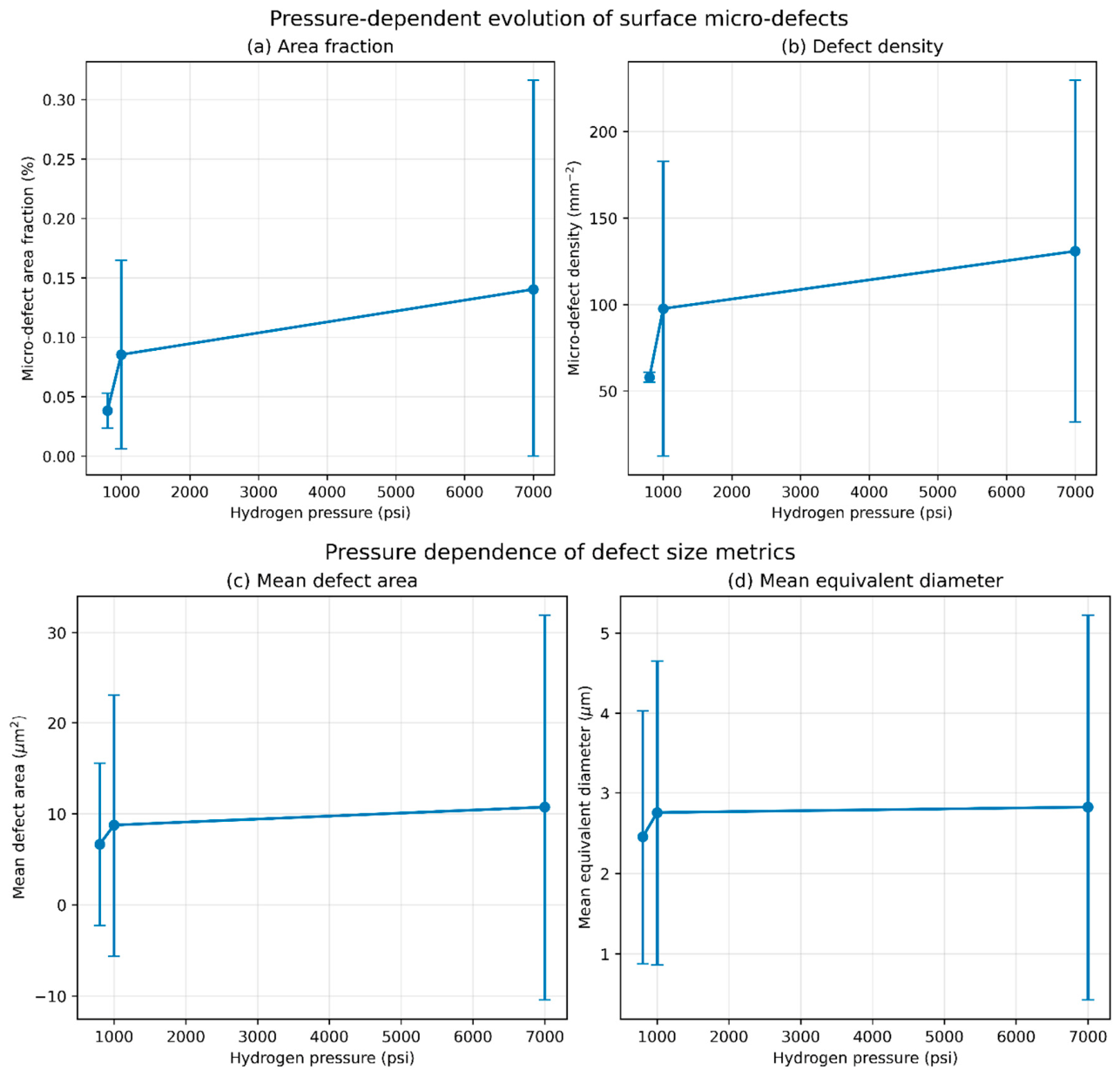
The mean micro-defect area fraction increased from approximately 0.038% at 800 psi to 0.085% at 1000 psi and 0.139% at 7000 psi, corresponding to about a 2.24-fold increase at 1000 psi and a 3.64-fold increase at 7000 psi relative to the 800 psi condition (
Table 3). A similar trend was observed in micro-defect density, which increased from approximately 57.5 defects/mm
2 at 800 psi to 98.6 defects/mm
2 at 1000 psi and 130.9 defects/mm
2 at 7000 psi. The increase in area fraction is consistent with the rise in defect density, indicating that surface degradation is primarily driven by the accumulation of multiple micro-scale defects rather than isolated growth events.
Despite this overall trend, the distribution of micro-defects was not uniform across all image fields. Variability increased substantially with pressure, as reflected by the coefficient of variation in micro-defect area fraction, which rose from approximately 38% at 800 psi to about 92% at 1000 psi and 125% at 7000 psi. This increase reflects the inherently heterogeneous and localized nature of surface damage in elastomeric materials, where defect formation occurs in discrete regions, leading to significant spatial variation across image fields. Consequently, the observed statistical dispersion is influenced by both the stochastic nature of defect formation and the limited number of analyzed fields of view. The quantitative results are therefore interpreted as indicative of general trends rather than precise deterministic relationships. Because the standard deviation is relatively large compared to the mean values, the graphical representation of mean ± standard deviation may extend toward non-physical ranges; however, the underlying measured defect metrics are strictly non-negative.
The increasing scatter suggests that damage becomes more spatially heterogeneous at higher pressures, with localized regions exhibiting elevated defect concentration. In particular, individual fields at 1000 psi and 7000 psi showed markedly higher area fraction and defect density, indicating the presence of localized damage regions.
The pressure-dependent behavior suggests that surface damage evolution may involve both enlargement of pre-existing weak regions and formation of new localized defects during hydrogen exposure, decompression, and subsequent mechanical loading. Under high-pressure exposure, hydrogen may diffuse into the elastomer network and accumulate near microstructural heterogeneities such as filler–matrix interfaces or regions of reduced constraint. During depressurization, the resulting pressure gradients may generate localized stresses that contribute to surface disruption and defect formation. Accordingly, the observed features are interpreted as post-exposure surface micro-defects influenced by coupled hydrogen sorption, decompression-induced effects, and mechanical loading, rather than direct evidence of a single damage mechanism.
Texture-based metrics provide additional supporting information. Surface roughness did not exhibit a consistent monotonic trend with pressure, indicating that it is not a reliable standalone indicator of hydrogen-induced damage in this dataset, even though image-based defect analysis indicates pressure-dependent surface changes.
The present analysis did not identify consistent blister-like features across the investigated pressure range. Accordingly, the observed changes are more appropriately interpreted as pressure-associated micro-defect accumulation and increasing surface heterogeneity rather than definitive evidence of macroscopic blister formation.
Overall, the microscopy results demonstrate a pressure-dependent increase in surface micro-damage in FKM elastomers, accompanied by a transition toward more heterogeneous and spatially localized degradation patterns. These observations provide independent microstructural evidence supporting the mechanical results and are consistent with the increased stiffness and load-bearing response observed at higher pressures. A quantitative correlation between defect density and mechanical response remains to be established. The quantitative trends summarized in
Table 3 provide a consolidated view of pressure-dependent surface degradation across the analyzed pressure conditions.
3.3. Qualitative Microstructural Observations
Figure 10 presents representative optical micrographs and corresponding binary masks used to visualize the spatial evolution of surface damage with increasing hydrogen pressure. The binarized images at 7000 psi reveal a substantial increase in defect density compared to lower-pressure conditions, along with a more widespread distribution of dark regions across the surface. In addition to increased density, elongated and directionally aligned features are observed, suggesting anisotropic damage evolution or preferential pathways within the material. Localized regions of high defect concentration are also evident, indicating non-uniform damage accumulation potentially influenced by stress or diffusion gradients. Furthermore, localized coalescence of smaller defects into larger irregular features is occasionally observed, reflecting a transition from isolated surface defect features to more interconnected damage structures at elevated pressure.
The identification of surface features in this study is based on optical contrast and image segmentation and does not provide direct confirmation of void formation or subsurface structural damage. The observed dark contrast regions may arise from a combination of surface roughness, microstructural disruption, illumination effects, or imaging artifacts. Accordingly, the results are interpreted as relative indicators of surface degradation rather than definitive evidence of specific defect morphology.
Figure 11 presents the quantitative variation in micro-defect characteristics as a function of hydrogen pressure. The mean defect size exhibited a moderate increase with hydrogen pressure. The average defect area increased from 6.64 µm
2 at 800 psi to 10.73 µm
2 at 7000 psi (≈60% increase), while the mean equivalent diameter increased from 2.45 µm to 2.82 µm over the same range. However, this increase in defect size is smaller than the corresponding increase in defect density and area fraction, suggesting that damage evolution is primarily associated with the formation of new micro-defects rather than extensive growth of existing ones. The large standard deviation at higher pressures further indicates the presence of localized larger features, potentially associated with coalescence or displacement-assisted processes.
Because the specimens were imaged after hydrogen exposure, depressurization, and tensile testing, the observed surface features may reflect combined effects of hydrogen-induced damage and mechanically assisted opening or growth of pre-existing defects. Based on optical surface observations alone, it is not possible to distinguish whether the features originate from enlargement of pre-existing regions, newly formed defects during exposure or decompression, or mechanically induced damage during testing.




 ,
,