1. Introduction
Medium-density fibreboard (MDF) is among the most chemically coupled engineered wood products because dry-process manufacture forces lignocellulosic polymers, wood extractives, water, inorganic additives, and thermosetting amino resins to interact under rapidly changing hydrothermal and aerodynamic conditions [
1,
2,
3,
4]. In a commercial line, chips are steamed and defibrated, fibres are blended in the blowline with urea–formaldehyde (UF) or melamine–urea–formaldehyde (MUF) adhesive and auxiliary chemicals; the resulting fibre–resin aerosol is exposed to short-residence flash-drying before dust separation and end-of-pipe treatment. The measured dryer-stack signal is therefore not a simple property of the finished board or the raw wood; it is the chemically integrated outcome of biomass thermochemistry, polymer curing and hydrolysis, gas-particle transfer, and compound-selective abatement. From an emission science perspective, the MDF dryer should be treated as a reactive multiphase system rather than as a single emission source.
The main volatile classes observed in MDF-related systems arise from distinct but interacting origins. Monoterpenes such as α-pinene, β-pinene, 3-carene, and limonene are governed largely by wood species, extractive inventory, storage history, and the extent to which these native compounds survive cooking and drying. Methanol is associated mainly with cleavage and deacetylation reactions in hemicelluloses; aldehydes and organic acids reflect thermo-hydrolytic and thermo-oxidative conversion of wood polymers and extractives; and formaldehyde is influenced not only by native wood chemistry but also by residual-free formaldehyde, curing chemistry, hydrolysis, and thermal stress in UF and MUF adhesive systems [
5,
6,
7,
8,
9,
10,
11,
12,
13,
14,
15,
16]. Because these pathways overlap in time and space, any operating change that modifies furnish composition, steaming severity, resin addition, scavenger dosage, fibre temperature, residence time, or gas-cleaning conditions can alter both the magnitude and the chemical fingerprint of emitted VOCs.
This problem has both technological and regulatory relevance. On the product side, low-emission panel development has advanced substantially through reduced-UF formulations, scavenger strategies, lignin-containing binders, and hybrid bio-based adhesive concepts. Antov et al., for example, demonstrated that HDF manufactured from industrial hardwood fibres with only 3% UF resin and ammonium lignosulfonate can reach very low formaldehyde contents, in the range of 0.7–1.0 mg/100 g, while retaining acceptable board performance [
17]. On the process side, however, emission control is increasingly driven by plant-level requirements. The German TA Luft framework and the European BAT reference document identify dryers, presses, and associated exhaust streams as critical sources of VOCs and formaldehyde in wood-based panel manufacture, making source apportionment and process–state control central industrial questions [
18,
19].
The available literature is informative but methodologically fragmented. Chamber and cell studies on finished boards have been indispensable for indoor-air assessment and for the derivation of formaldehyde and VOC emission parameters, while recent analytical reviews have clarified the benefits and limits of chambers, field and laboratory emission cells, perforator methods, TD-GC/MS, PTR-MS, and optical or online approaches for engineered wood products [
6,
7,
11]. A second group of studies has focused on manufacturing-stage transitions. He et al. showed that the VOC composition of wood-based panels changes substantially from wood chip to resin-coated fibre to finished board, and that formaldehyde is dominated by the resin side of the system, whereas much of the broader VOC spectrum originates from the wood itself [
13]. MDF-specific studies further showed that furnish composition, pulping route, and pressing conditions change the release of terpenes, aldehydes, volatile acids, and formaldehyde [
9,
10,
14]. Carbonyl-focused analysis of dry-process fibreboards has recently expanded this picture by resolving formaldehyde, acetaldehyde, acetone, and higher aldehydes in commercial MDF samples [
20], while PTR-MS studies have emphasized how wood species and finishing systems reshape VOC intensity and profile in commercial panels [
21].
A third body of literature, stemming more from drying science and air pollution control than from product testing, demonstrates that emission behaviour is strongly conditioned by moisture content, temperature, hydrothermal severity, and treatment technology. Wood-drying studies have shown sharp increases in VOC or HAP release as the moisture content approaches critical thresholds and as thermal severity increases [
22,
23,
24]. Complementary MDF-focused studies demonstrated that formaldehyde emission behaviour remains highly sensitive to temperature and humidity both in a full-scale experimental room and in controlled chamber tests, confirming that environmental and transport conditions substantially reshape the apparent emission response [
25,
26,
27,
28,
29,
30]. These findings are highly relevant to MDF dryer exhausts, because industrial measurements integrate source generation, convective transfer, and end-of-pipe conditioning simultaneously. Yet, a critical gap remains. Most published work either characterizes finished boards, isolates a single manufacturing stage, or examines untreated emissions before final abatement. Far fewer studies link compound-resolved stack chemistry to synchronized plant variables under full-scale commercial operation after scrubber treatment. That gap matters scientifically because the cleaned stack is the place where wood chemistry, amino resin chemistry, dryer operation, and abatement selectivity finally converge. The present study addresses this gap by analysing the cleaned exhaust of a full-scale MDF dryer operated under industrial conditions after wet scrubbing and biological wastewater treatment. The objectives were as follows: to identify the dominant FTIR-resolved compounds in the cleaned stack; to quantify the directional response of representative markers to screened process–state contrasts spanning furnish composition, hydrothermal severity, throughput-linked dosing, thermal load, and scrubber conditions; and to reduce the observed process interactions to a smaller set of mechanistically interpretable operational domains. The novelty of the work lies not in another chamber assessment of boards, but in the compound-resolved interpretation of a running industrial emission system in which wood polymers, extractives, amino resin binders, process control, and end-of-pipe treatments interact continuously.
The methodological novelty is therefore a scale-integrated process–emission analysis rather than another product–emission test. Earlier studies have provided essential knowledge on chamber emissions from finished boards, carbonyl or terpene profiles, adhesive-related formaldehyde release, and analytical approaches for engineered wood products; however, those designs generally decouple the emission source from the plant-control system and from end-of-pipe treatment. The present study couples four information layers that are rarely available in one dataset: (i) FID-based total-carbon tracking, (ii) FTIR-based molecular speciation, (iii) more than 20,000 synchronized records from a running MDF line, and (iv) interpretation of the post-scrubber cleaned stack, where source formation, gas-phase transport, wet absorption, and biological post-treatment have already interacted. This allows the paper to move from the question “which VOCs can MDF emit?” to the more industrially decisive question “which chemical markers and operating domains control the final regulated stack signature under full-scale production?”
The contribution is deliberately framed as a causal hypothesis and prioritization map. It does not overclaim that an observational campaign can replace an orthogonal experiment. Instead, it identifies the reduced set of emission markers and coupled operating domains that should be controlled, monitored, or deliberately varied in the next industrial factorial campaign. This is the central value of the work: it provides the missing bridge between laboratory emission chemistry and plant-scale emission-control engineering.
2. Materials and Methods
2.1. Industrial System and Study Design
The study was carried out during the first quarter of 2022 on an industrial MDF line operated by SWISS KRONO TEX GmbH & Co. KG in Heiligengrabe, Germany. The industrial emission-measurement campaign was documented by DIEFFENBACHER GmbH Maschinen- und Anlagenbau (Eppingen, Germany). The analysed system comprised a single-stage flash-tube fibre dryer supplied by secondary steam-heated registers, supplemental hot gas from the energy plant, and a gas-fired surface burner. The exhaust stream passed through a wet scrubber with biological wastewater post-treatment before release via the stack. Measurements were performed on the clean-gas side of the stack, i.e., after the integrated gas-cleaning step, so the reported values represent the final emission signature rather than raw dryer gas.
More than 20,000 synchronized plant records were available for evaluation. Because the production line was operated under commercial manufacturing conditions, the study design was observational: operating states were screened from historical process data and contrasted as lower-setting state A versus higher-setting state B. The purpose of this design was not to infer strict causality from a perfectly orthogonal experiment, but to identify which variables and compound classes deserved the highest priority for subsequent controlled testing. This distinction is crucial, because several variables co-varied through recipe logic and process-control architecture, especially around throughput and adhesive dosing.
Accordingly, the statistical language throughout the manuscript has been restricted to “process–state contrasts”, “directional responses”, and “operational associations”. This terminology is used intentionally: in a commercial MDF line, several variables are coupled by mass balance, recipe logic, energy demand, and control loops. The purpose of the analysis is therefore to reveal chemically interpretable control domains and high-priority hypotheses for confirmatory experimentation, not to present line-independent emission factors or isolated mechanistic coefficients.
The adhesive system was treated as a mechanistically important source term because aminoplastic resin chemistry can contribute to formaldehyde and other oxygenated compounds during blowline application, drying, curing, and hydrolytic stress. During the analysed campaign, the plant used commercial low–formaldehyde amino resin adhesives from the UF/MUF adhesive portfolio used for MDF/HDF manufacture. Production metadata identified UF-type DL-series grades and a MUF-type Me-series grade within the campaign-relevant adhesive system, with no resin formulation, resin batch, or adhesive recipe change that would affect the evaluated process–state contrasts. Supplier documentation for the relevant UF/MUF adhesive families describes aqueous urea–formaldehyde or melamine–urea–formaldehyde condensation products with solids contents typically around 63–66%, pH values around 7.8–9.2, densities around 1.27–1.30 g cm−3 at 20 °C, and fresh-resin free formaldehyde below 0.1%. The exact grade-by-grade assignments to product recipes, detailed molar ratios, and recipe-specific formulation variables are commercially sensitive and are therefore not disclosed.
For the transparency of the industrial dataset, the measurement campaign was defined as a discontinuous Q1 2022 industrial campaign covering the windows 5–27 January 2022, 15–16 February 2022, 24–25 February 2022, and 1–4 March 2022. The FTIR raw-data workbook contained 85,031 valid time-stamped concentration records acquired at intervals of approximately 22 s, whereas the process–state analysis used the subset of emission and plant-operating records that could be synchronized with stable production annotations. Start-up, shutdown, cleaning, maintenance, measurement failure, and product transition periods were excluded when they were identifiable from the plant records. Because each A/B contrast was defined separately for a specific process variable, the retained group sizes differed among contrasts; this imbalance is reported together with the corresponding process-state contrasts as the nB/nA ratio and is the reason why the analysis is interpreted as process–state screening rather than as a balanced factorial design. Non-confidential production metadata indicate that the campaign covered HDFFUB and HDFFUN fibreboard product families with nominal thicknesses from 5.7 to 7.7 mm. Exact recipes, densities, product-assignable setpoints, and resin-grade mapping data are commercially sensitive and are therefore not disclosed.
2.2. Analytical Measurements and Response Variables
TVOC at the humid and hot stationary source was evaluated as a propane-equivalent total-carbon/FID signal within the industrial emission-measurement campaign documented by DIEFFENBACHER GmbH Maschinen- und Anlagenbau (Eppingen, Germany). Compound-resolved analysis was performed by Fourier-transform infrared (FTIR) spectroscopy using a Gasmet DX4000 analyser operated with the manufacturer’s FTIR analysis software (Gasmet Technologies Oy, Vantaa, Finland) and a 5.0 m optical path length [
11,
31,
32,
33]. The combined use of FID-type total-carbon tracking and FTIR speciation was methodologically advantageous: the former provided a robust total-carbon indicator for plant-scale comparison, while the latter resolved the chemically distinct compounds needed to interpret the origin of the emission signal and its process sensitivity.
Analytes were selected from literature evidence, preliminary plant analyses, and empirical process knowledge. For the compositional analysis, the relative contribution of compound i to the resolved VOC sum was calculated as p_i = c_i/Σc_j × 100%. To facilitate comparison among heterogeneous process variables while protecting industrial confidentiality, graphical relationships were expressed in normalized units referenced to the maximum observed value within each variable. The interpretation of these normalized trends therefore focused on relative directionality, response magnitude, and clustering structure rather than on disclosure of absolute setpoints.
To improve analytical traceability, the available Q1 2022 FTIR concentration data are distinguished from proprietary spectral-processing information. The Q1 2022 dataset contains the time-stamped FTIR concentration outputs used for the compound-resolved analysis, and the target analyte set is documented in the Methods and
Supplementary Tables S1 and S2. However, the original Q1 2022 spectra, proprietary FTIR spectral libraries, and reference-spectrum fitting outputs are not available to the authors in a form suitable for public disclosure. Later plant measurements include illustrative spectra and fit checks, but these were not used as direct evidence for the Q1 2022 dataset and are therefore not presented as original Q1 supporting spectra. The article and
supplementary data-description package therefore provide the maximum publishable analytical transparency—instrument type, sampling location, target analytes, temporal resolution, raw concentration records, and dataset/filtering metadata—while explicitly avoiding disclosure of proprietary FTIR-library and absolute-emission information. Calculation of relative contributions, normalized process-state contrasts, response summaries, and exploratory decorrelation/principal-component analysis was performed in R software, version 4.5.3 (R Foundation for Statistical Computing, Vienna, Austria).
2.3. Screened Process Variables
Ten process variables were screened because they were expected, on mechanistic grounds, to influence either VOC generation, VOC transport, or gas-cleaning efficiency: hardwood share in the furnish, digester residence time, discharge screw speed, adhesive amount, urea amount, dryer inlet temperature, dryer fan power, additional flue-gas supply, scrubber–water pH, and scrubber–water temperature. Together, these variables span the three major physicochemical domains relevant to MDF dryer emissions: (i) raw material chemistry, (ii) thermo-reactive loading of the fibre/resin system, and (iii) conditioning of the gas stream during downstream wet cleaning. The screened variables and their expected emission relevance are summarized in
Table 1.
2.4. Selection of Representative Compounds and Exploratory Multivariate Analysis
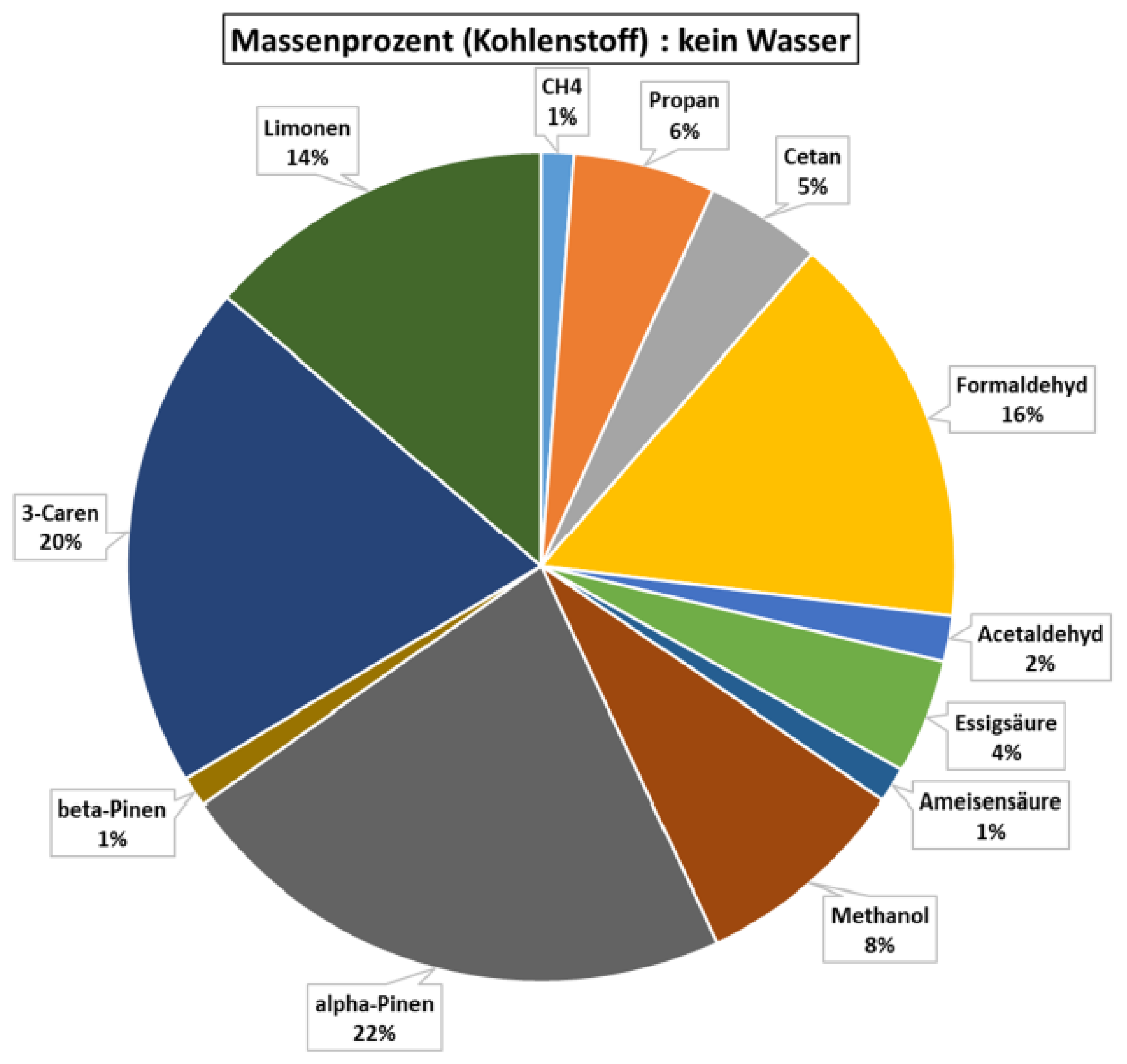
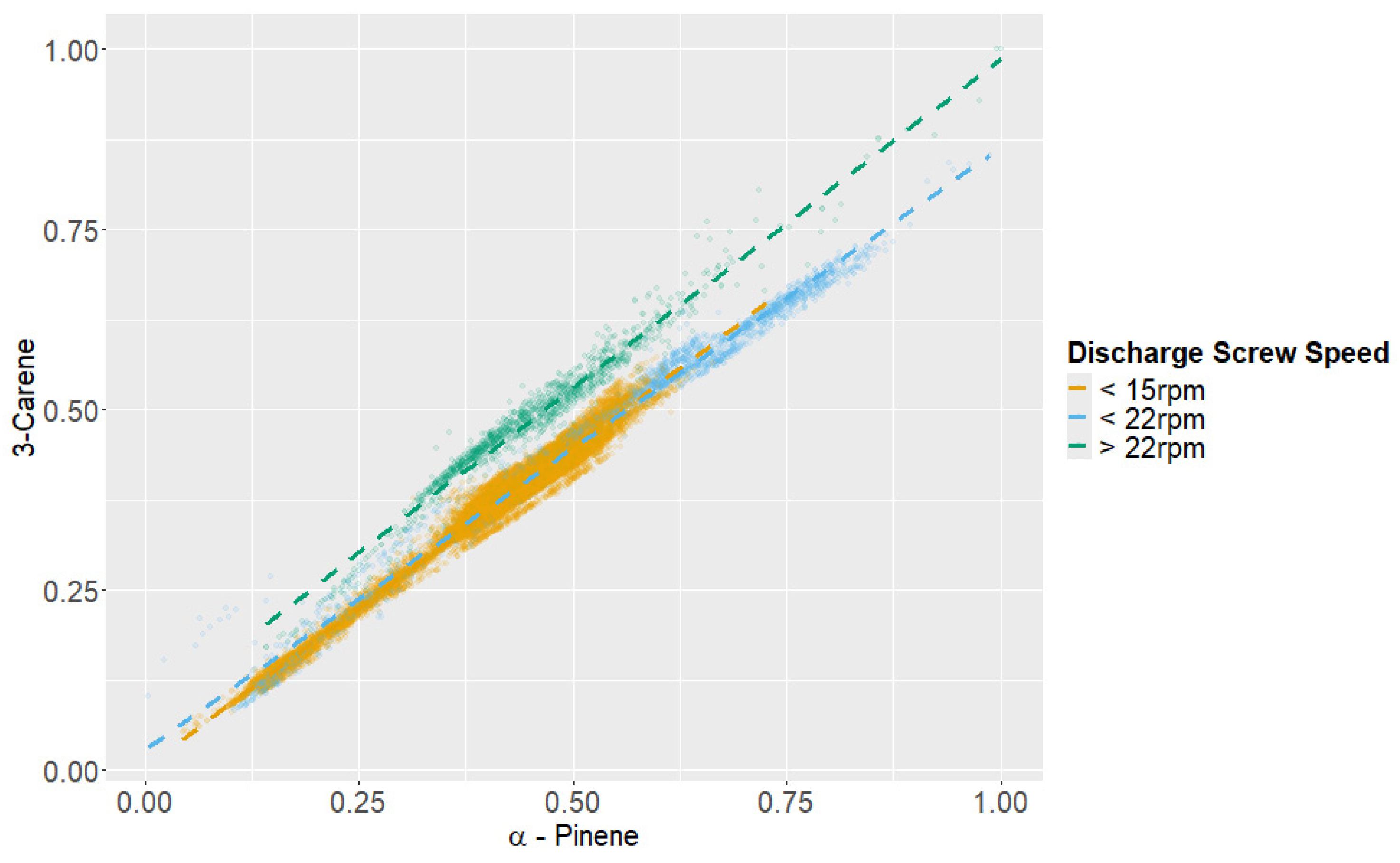
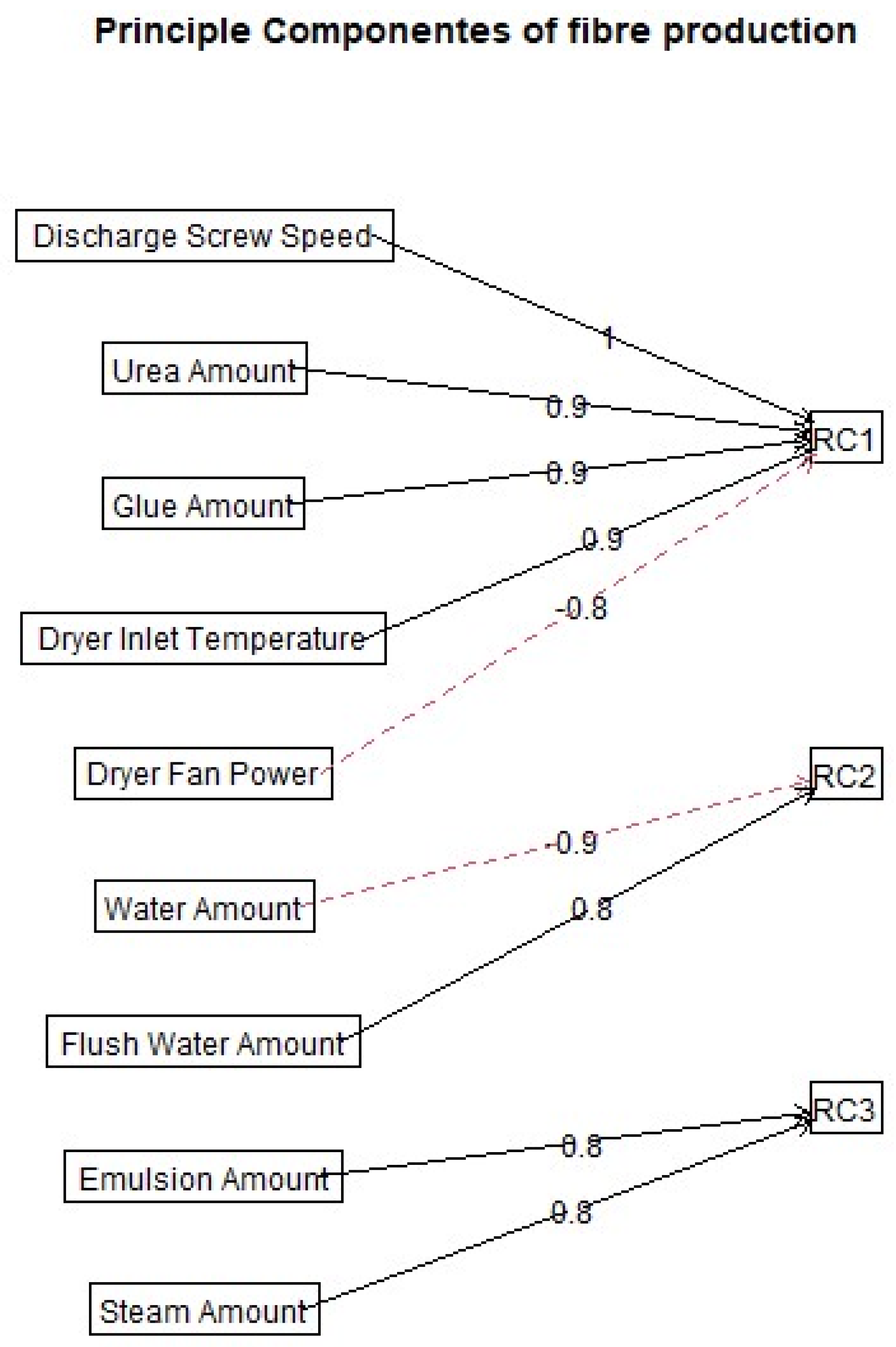
The initial compositional evaluation showed that α-pinene, 3-carene, limonene, formaldehyde, and methanol dominated the resolved VOC signal. Because α-pinene and 3-carene were strongly correlated, and because strong empirical relationships were also observed between limonene and propane and between formaldehyde and acetaldehyde, α-pinene, limonene, methanol, and formaldehyde were retained as representative compounds for the comparative screening. To explore the coupled structure of the process variables, an additional decorrelation/principal component step was used as an exploratory dimensionality-reduction tool. This step was intended to identify dominant operational domains, not to replace mechanistic interpretation.
2.5. Data Handling, Seasonal Context, and Interpretation of Process–State Effects
Because the dataset was acquired from a commercial production line, the analysis was designed as a process–state screening and not as an all-season emission factor study. The Q1 2022 period represented regular plant operation with representative production line KPIs and stable line speed, while the binder composition remained unchanged in a way relevant to the present contrasts. Incoming wood chips before thermomechanical pulping typically contained approximately 25–35% moisture, and the plant weather file for the actual measurement windows showed ambient temperatures from approximately −4.3 to 10.0 °C and relative humidity from approximately 36.5 to 93.9%. Later internal plant measurements in 2024 showed qualitatively repetitive directional behaviour for the relevant emission domains, including terpene behaviour, but these measurements were not an orthogonal multi-season validation of the Q1 2022 dataset. The observed responses are therefore reported as directional associations under the campaign conditions and should be used to prioritize causal experiments rather than to claim universal transferability across all seasons, furnish stocks, and product recipes.
Special caution was applied to process variables that can be affected by hidden co-variation, particularly scrubber–water temperature. A plant correlation check indicated that scrubber–water temperature co-varied with discharge screw speed/fibre throughput (r approximately 0.66) and dryer inlet temperature (r approximately 0.77), whereas no dominant independent effect of flue-gas supply or product type could be isolated from the available process records. The temperature was independently checked by handheld measurement, but under full-scale operation, it still reflected the coupled source-generation and abatement state of the line. Its effect is therefore described as an operational association involving gas–liquid partitioning, thermal load, and abatement conditions, not as an isolated causal coefficient.
4. Discussion
4.1. Scientific Meaning of the Dominant Emission Profile
The dominance of α-pinene, 3-carene, limonene, methanol, and formaldehyde is chemically coherent and consistent with the broader literature on wood and wood-based panels, which repeatedly identifies terpenes, carbonyls, alcohols, and related oxygenated compounds as the core VOC families in MDF-related systems [
6,
7,
13,
15,
20,
29,
30,
34]. Adamová et al. summarized monoterpenes and carbonyl compounds as recurrent major contributors in wood and panel emissions [
7], while Gonçalves et al. recently showed that dry-process fibreboard releases a structured carbonyl fraction including formaldehyde, acetaldehyde, and higher aldehydes rather than an undifferentiated VOC background [
20]. He et al. demonstrated that the species composition changes markedly between wood chip, resin-coated fibre, and finished panel [
13]. Our stack data extend these observations to the process scale: even after industrial cleaning, the emission signature collapses into a chemically interpretable marker set rather than a diffuse residual carbon signal.
At the same time, direct numerical comparison with most published values must be performed cautiously. Many reference studies report chamber concentrations, emission factors from finished boards, or emissions from untreated process stages, whereas the present dataset describes relative compound responses in the cleaned stack after wet scrubbing and biological wastewater treatment. The scientific comparison is therefore qualitative and mechanistic rather than absolute. What can be compared robustly is the rank order of dominant compound classes, the direction of response to process perturbation, and the persistence of source information after abatement. On that basis, the present results are fully consistent with the literature while adding a missing scale of observation: the real, abated industrial exhaust.
This distinction is central to the novelty of the study. Product–emission studies answer how a panel behaves under standardized or simulated use conditions; manufacturing-stage studies answer how individual materials or intermediate products emit before the full industrial chain is complete. The present cleaned stack dataset answers a different question: which chemical information survives the entire sequence of fibre preparation, aminoplastic resin addition, drying, particulate separation, wet scrubbing, and biological post-treatment, and remains visible at the regulated emission point? The persistence of a structured marker set after this chain is the key scientific observation.
4.2. Mechanistic Interpretation of the Screened Variables
The effect of hardwood share is one of the most interpretable results and is in agreement with MDF-specific species studies. In general, coniferous furnish has a higher monoterpene load, whereas hardwood-rich furnish tends to suppress terpene emissions and shift the oxygenated profile [
9,
15]. Gabriel et al. reported that lowering the hardwood fraction in MDF increased terpenes and aliphatic aldehydes [
9], and Jabbari et al. likewise showed that species choice strongly controls VOC intensity and profile in commercial panels [
21]. The hardwood furnish in the present plant—oak (
Quercus spp.), beech (
Fagus spp.), birch (
Betula spp.), and poplar (
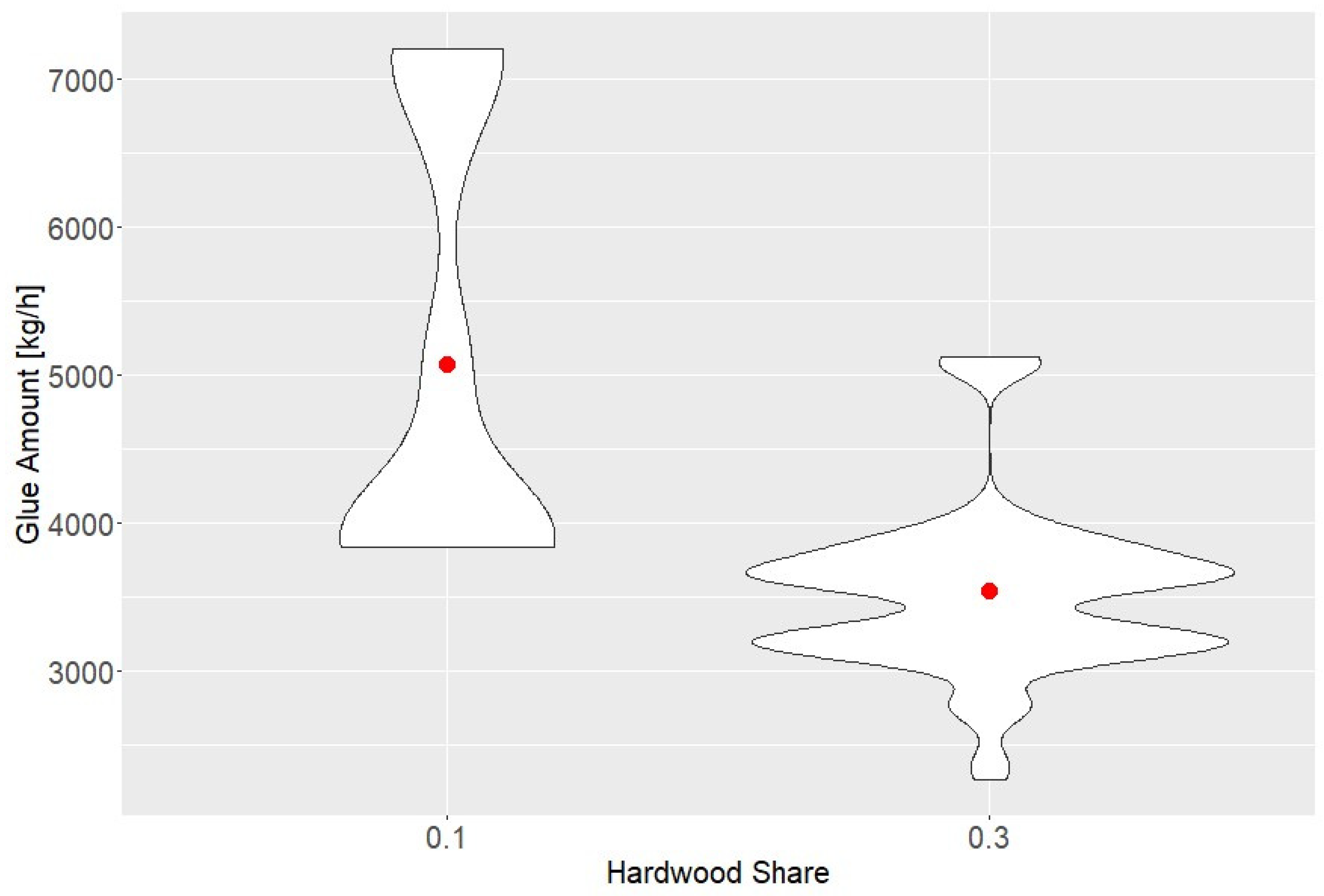
Populus spp.)—is therefore expected to reduce wood-derived terpene loading relative to softwood-rich furnish. The present dataset, however, also reveals why industrial interpretation must go beyond species chemistry alone: higher hardwood share coincided with lower adhesive demand. The observed reductions in methanol and formaldehyde are thus best interpreted as a combined furnish-composition and recipe-response effect, not as a purely botanical effect. This distinction matters because it shows that industrial furnish changes can propagate to emissions indirectly through formulation logic.
The strong positive responses to digester residence time and dryer inlet temperature support a severity-based interpretation of VOC generation. Longer hydrothermal pretreatment increases the time available for deacetylation, extractive release, cleavage of methylated wood structures, and formation of oxygenated volatiles, while higher dryer temperatures intensify volatilization and thermally promoted conversion reactions [
13,
14,
16,
22,
23,
24]. The wood-drying literature has long shown that emissions can rise sharply when thermal load increases or when moisture content approaches critical ranges during drying [
22,
23,
24]. MDF-specific chemistry studies point in the same direction. Roffael and co-workers showed that pulping route and pretreatment alter the balance between formaldehyde and volatile organic acids in fibres and MDF [
14], and He et al. showed that process stages reshape both the species distribution and the origin of emitted compounds [
13]. From the environmental-control side, Liang et al. demonstrated in a full-scale experimental room and in controlled chamber studies that temperature and humidity strongly affect formaldehyde emission behaviour from MDF [
25,
26,
27,
28]. Our results complement these product- and material-oriented studies by showing that hydrothermal severity and thermal load remain visible even at the level of the final cleaned industrial stack.
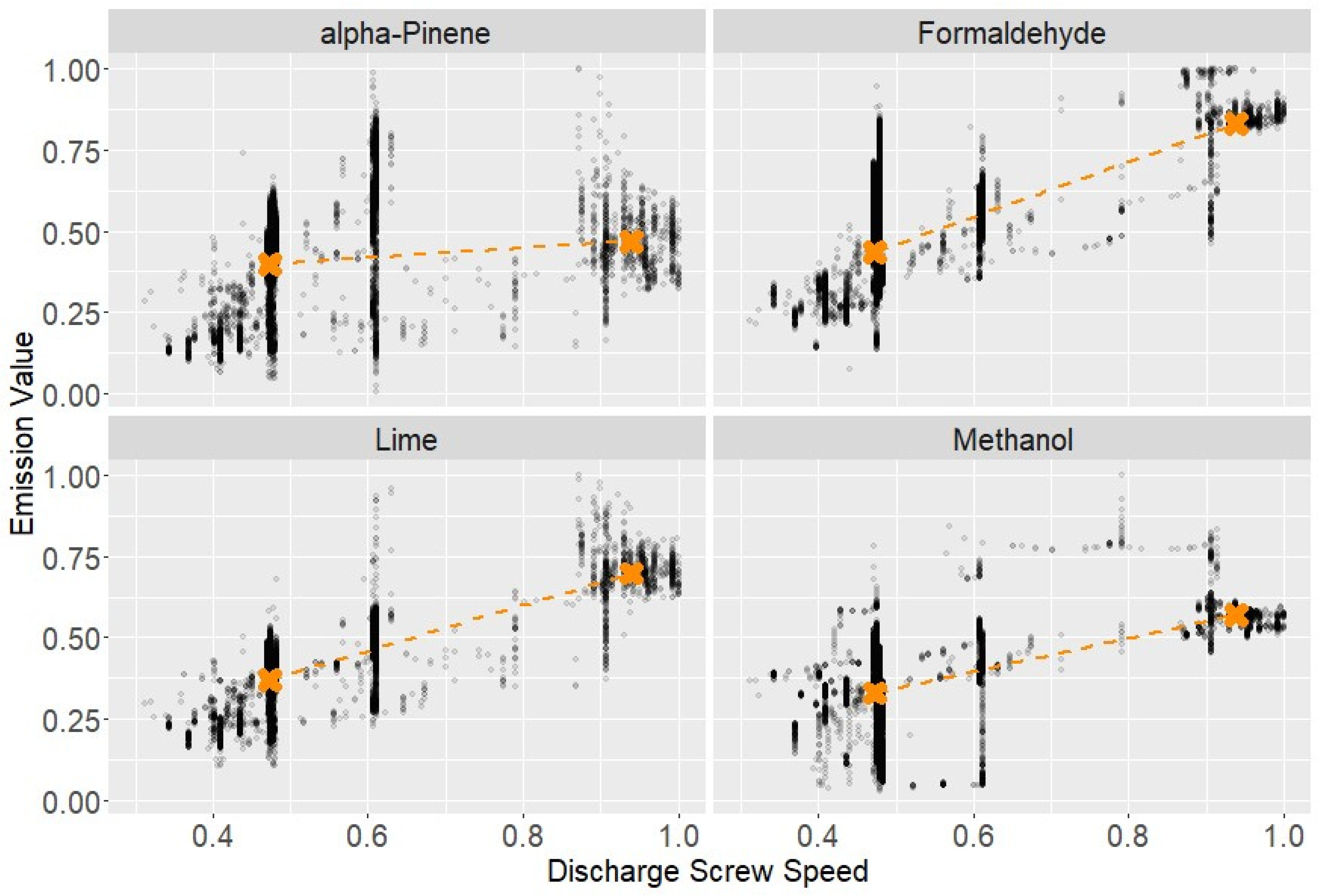
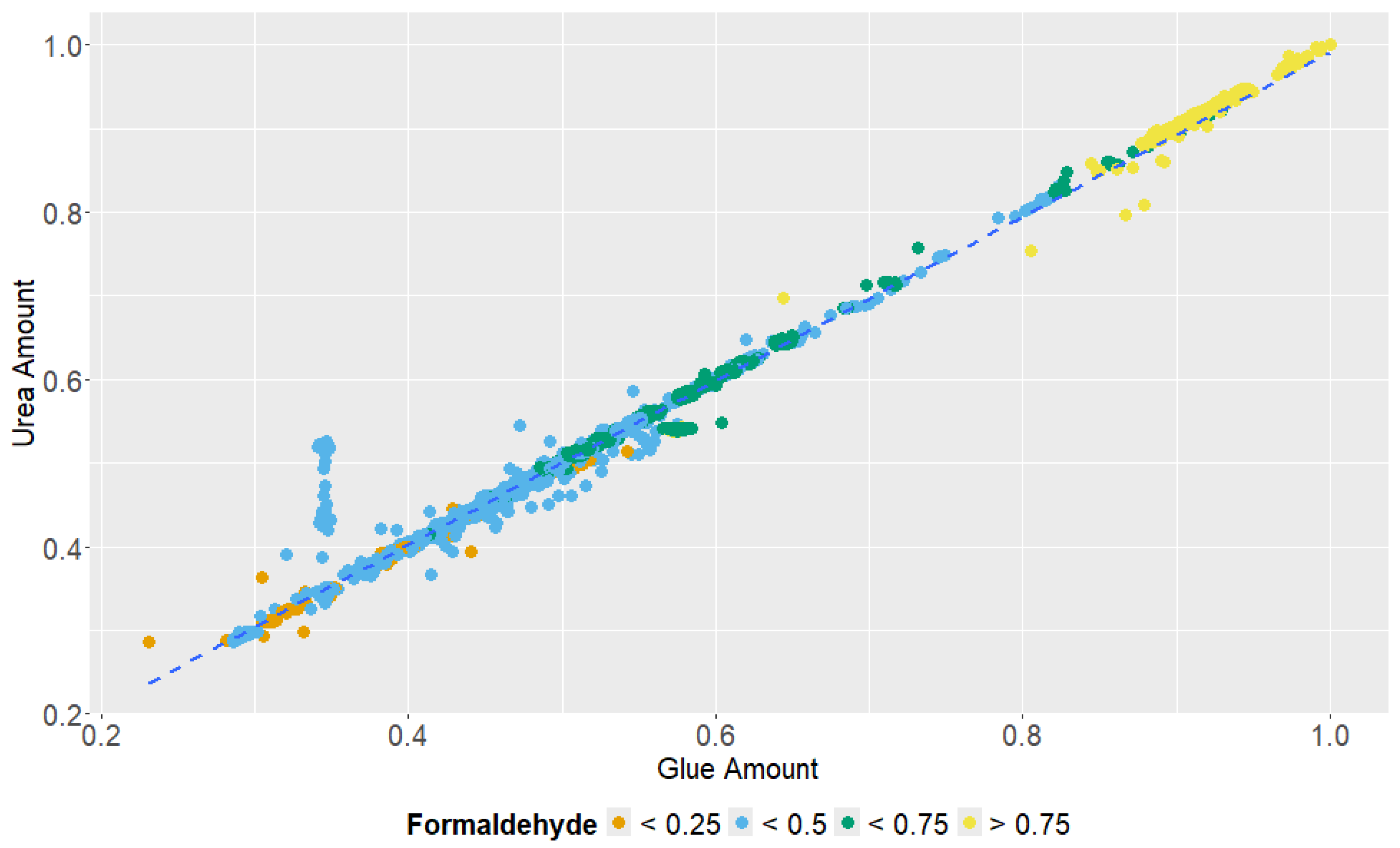
Discharge screw speed behaved as a master operational variable because it governs much more than fibre transport. Raising screw speed increases fibre throughput, elevates the mass of material entering drying, increases the demand for adhesive and urea addition, and forces the system toward higher thermal duty to maintain target outlet conditions. This integrated response explains why discharge screw speed produced clear positive shifts in the representative compounds. A similar logic applies to adhesive and urea amount. He et al. showed that formaldehyde in wood-based panels is dominated largely by UF-type resin rather than by wood chips [
13], and Kim et al. demonstrated that resin content strongly influences formaldehyde release in MDF pressing experiments even when its effect on TVOC can be weaker than that of temperature [
10]. Product-side work from Antov et al. further showed that reducing UF content and reformulating the binder system can drive board formaldehyde content toward near-natural-wood levels [
17]. The present industrial data add the process-scale complement to these findings: under commercial operation, resin dose and urea dose are not only formulation variables but also high-leverage emission state variables.
From a polymer chemistry perspective, this result is particularly relevant for a journal focused on polymeric materials. UF and MUF adhesives are not inert process additives: they are reactive aminoplastic networks, the final structure of which depends on resin formulation, molar ratio, curing environment, moisture, pH, and thermal history. Under blowline and dryer conditions, residual-free formaldehyde, reversible methylol and methylene-ether chemistry, hydrolysis of incompletely cured structures, and scavenger reactions can all contribute to the oxygenated VOC signature. The observed sensitivity of formaldehyde to adhesive amount, urea amount, and dryer inlet temperature is therefore consistent with a coupled wood–polymer/resin chemistry origin rather than with a purely botanical emission source.
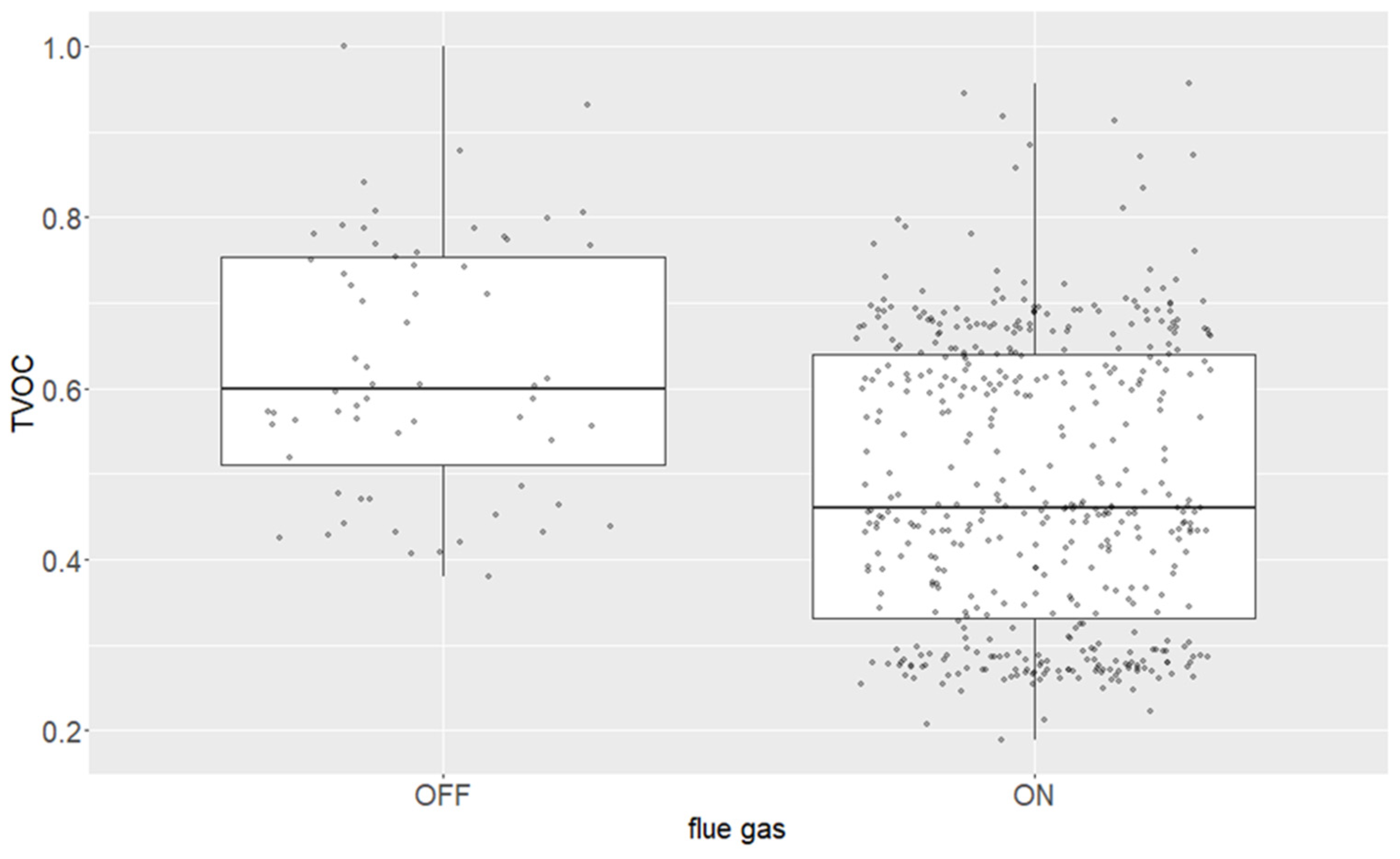
Additionally, flue-gas supply, scrubber–water temperature, and scrubber–water pH illustrate that end-of-pipe conditioning is not a passive background factor but part of the emission system itself. In the screened operating states, additional flue-gas supply lowered TVOC and the representative compounds, whereas warmer scrubber–water increased them and higher pH slightly decreased them. At least three mechanisms are plausible and not mutually exclusive: dilution by higher gas volume, altered effective drying intensity upstream, and compound-selective absorption or transformation in the scrubber/biological treatment train. Reviews of wood panel VOC control emphasize that abatement performance depends on compound class, treatment principle, mass-transfer characteristics, and economic constraints [
29,
30]. That framework fits the present data well because terpenes, methanol, and formaldehyde differ substantially in water solubility, reactivity, and biodegradability. The weak effect of dryer fan power, by contrast, suggests that within the observed operating range bulk airflow alone was less decisive than chemistry and phase partitioning. In practical terms, the data argue that industrial VOC mitigation must treat source generation and gas cleaning as a coupled control problem.
4.3. Differential Compound Sensitivity and Implications for Monitoring
The unequal responsiveness of the marker compounds is scientifically useful. α-Pinene represented a major fraction of the stack profile yet showed the smallest average response span, whereas limonene, methanol, and formaldehyde responded much more strongly to process–state shifts. This separation between abundance and responsiveness is important because it means that the largest compound is not automatically the best process indicator. α-Pinene behaves mainly as a background tracer of softwood/extractive loading, while limonene appears more sensitive to operational perturbation within the terpene class. Methanol and formaldehyde act as higher-gain markers of hydrothermal severity, thermal load, and adhesive-related chemistry. This hierarchy is consistent with prior mechanistic understanding: native extractive markers are buffered by furnish inventory, whereas methanol and formaldehyde are strongly influenced by reactive conversion pathways and amino resin chemistry [
6,
7,
8,
12,
13,
16,
27,
28].
The analytical implication is that advanced industrial monitoring should combine a total-carbon indicator with a targeted compound panel rather than relying on TVOC alone. The recent methodological review by Perera et al. makes the same point in broader engineered wood terms: method choice determines which scientific question can be answered, and process diagnosis benefits from fast or online compound-resolved strategies [
11]. The present results suggest a practical marker set for MDF dryer control: α-pinene or 3-carene for wood-derived extractive loading, limonene for responsive terpene-class behaviour, methanol for hydrothermal wood conversion, and formaldehyde for amino-resin-related and thermally intensified oxygenated chemistry. Cross-checking such a marker set with periodic TD-GC/MS or PTR-MS campaigns would provide both operational speed and analytical specificity [
11,
20,
21].
4.4. Practical Guidance for Industrial Monitoring and Mitigation Design
The value of the present dataset is not that it repeats the well-established observation that wood-based panels emit terpenes, alcohols, carbonyls, and organic acids. Its value is that it identifies which of these chemical families remain process-diagnostic at the final cleaned stack after the complete industrial chain of defibration, blowline resin addition, flash-drying, dust separation, wet scrubbing, and biological wastewater treatment. This changes the interpretation from descriptive emission profiling to operational decision support.
Three practical outputs follow. First, routine monitoring should combine TVOC with a deliberately small marker panel: α-pinene or 3-carene for wood-extractive loading, limonene for a more process-sensitive terpene response, methanol for hydrothermal wood conversion, and formaldehyde for aminoplastic resin chemistry and thermal stress. This panel would provide more diagnostic resolution than TVOC alone while remaining realistic for industrial use.
Second, mitigation experiments should be prioritized according to the ranked operational domains identified here. The highest-priority domain is the coupled drying/throughput/resin domain, especially digester residence time, discharge screw speed, adhesive amount, urea amount, and dryer inlet temperature. These variables jointly control source generation and mass loading and should therefore be orthogonalized in the next designed campaign. Dryer fan power, by contrast, was a lower-priority lever within the studied operating range.
Third, candidate attenuation and abatement-state levers—higher hardwood share, additional flue-gas supply, scrubber–water pH, and the scrubber–water temperature response—should be evaluated under controlled conditions to separate true mitigation from dilution, recipe logic, or correlated operating states. In this sense, the study does not merely describe a plant-specific dataset; it provides a ranked experimental roadmap for developing lower-emission MDF dryer operation while preserving industrial feasibility.
4.5. Limitations and Future Work
The major limitation of the present study is the observational character of the dataset. The production line was operated under commercial conditions, not under an orthogonal experimental matrix, and several contrasts were imbalanced or structurally coupled through recipe logic and control architecture. In addition, the measured signal was the cleaned stack after scrubbing and biological treatment, so upstream generation, gas-phase transport, liquid-phase absorption, and biological removal could not be experimentally disentangled within one campaign. For that reason, the reported magnitudes should be interpreted as robust industrial effect sizes for prioritization, not as pure causal coefficients or universally transferable emission factors. Yet this limitation is inseparable from the main strength of the study: the data capture the real coupled complexity that laboratory boards and chamber studies necessarily simplify.
Seasonal effects require particular caution. The analysed campaign was conducted under winter-to-early-spring Q1 conditions, with incoming wood-chip moisture typically around 25–35% before thermomechanical pulping and ambient temperatures during the actual measurement windows ranging from approximately −4.3 to 10.0 °C. The period reflected regular line operation and no relevant seasonal change of binder composition was present; however, operating modes can still adapt marginally throughout the year in response to wood temperature, wood moisture, ambient conditions, and raw material properties. Subsequent internal plant measurements indicated qualitatively repetitive directional behaviour, but a formally controlled multi-season validation was not part of the present dataset. The study therefore treats multi-season confirmation as a necessary next step rather than as an already completed validation.
The scrubber–water temperature response should also be interpreted conservatively. Warmer circulating water can reduce absorption efficiency for soluble or semi-soluble compounds and can affect phase partitioning; however, the available plant correlation check showed that this variable co-varied with throughput-related and dryer temperature variables. Consequently, scrubber–water temperature is not interpreted as a fully isolated control lever. Instead, it is treated as a high-priority operational marker for the coupled source-generation/abatement state and as a candidate variable for a deliberately controlled follow-up experiment.
The next research step should therefore be a designed industrial campaign rather than a broader observational one. A factorial or D-optimal programme should focus first on the dominant RC1 variables—especially discharge screw speed, adhesive dose, urea dose, digester severity, and dryer inlet temperature—while controlling furnish and recipe confounders as tightly as commercial operation permits. In parallel, stage-wise mass balancing should be introduced so that digester condensate or steam, blowline aerosol, dryer inlet, dryer outlet, scrubber liquor, and final stack are sampled within the same campaigns. Only that type of coordinated design can separate source formation, partitioning, and abatement. Finally, the FTIR/FID framework should be cross-validated against orthogonal methods such as TD-GC/MS or PTR-MS for selected transient states and marker compounds [
11,
20,
21]. Such a programme would move the field from industrial screening toward predictive, mitigation-oriented process science.
This interpretation also makes the limits of transferability explicit. The relative trends are intended for ranking and hypothesis generation under the investigated industrial conditions. Absolute emission factors, all-season stability, and independently controlled abatement effects require deliberately designed validation campaigns with extended operational metadata and, where industrial confidentiality permits, stage-wise mass-balance information.
5. Conclusions
This study provides compound-resolved evidence from a full-scale industrial MDF dryer and shows that the cleaned stack signature is concentrated in a small number of chemically meaningful marker compounds. α-Pinene, 3-carene, limonene, methanol, and formaldehyde together represented more than 80% of the resolved VOC mixture, demonstrating that even a complex industrial emission profile can be interpreted through a limited chemotype.
The most influential process–state contrasts were associated with hydrothermal severity, throughput-linked loading, adhesive/urea dosing, and thermal operating intensity. Higher digester residence time, discharge screw speed, adhesive amount, urea amount, dryer inlet temperature, and scrubber–water temperature increased one or more representative compounds, whereas higher hardwood share, additional flue-gas supply, and higher scrubber–water pH decreased them. Limonene, methanol, and formaldehyde were the most sensitive reporters of these changes.
For industrial implementation, the results indicate that MDF dryer emission control can be approached through a reduced set of chemically meaningful markers and coupled operational domains, rather than through undifferentiated TVOC values alone. The work therefore provides a defensible scientific basis for moving from compliance monitoring toward targeted, experimentally testable emission-mitigation strategies in full-scale MDF manufacture.