Extracellular Polymers from Nitzschia sp. for Removing Clay Minerals from Water in Mining

 ,
,  ,
,  ,
,  ,
, 
Abstract
1. Introduction
2. Materials and Methods
2.1. Isolation, Selection, and Controlled Cultivation of Microalgae
2.2. Extraction of Total DNA, Amplification of 18S rDNA, Phylogenetic Analysis and Sequencing
2.3. Growth Measurements
2.4. Biochemical Characterization of Microalgae
2.5. Determination of Culture Viscosity over Time
2.6. Extraction, Characterization, and Identification of EPS
2.7. Monosaccharide Composition
2.8. Assays for Optimization of EPS
2.9. Analysis Using Fourier Transform Infrared Spectroscopy (FT-IR)
2.10. Zeta Potential Analysis
2.11. Clay Flocculation and Sedimentation Tests
2.12. Scanning Electron Microscopy (SEM)
2.13. Statistical Analysis
3. Results
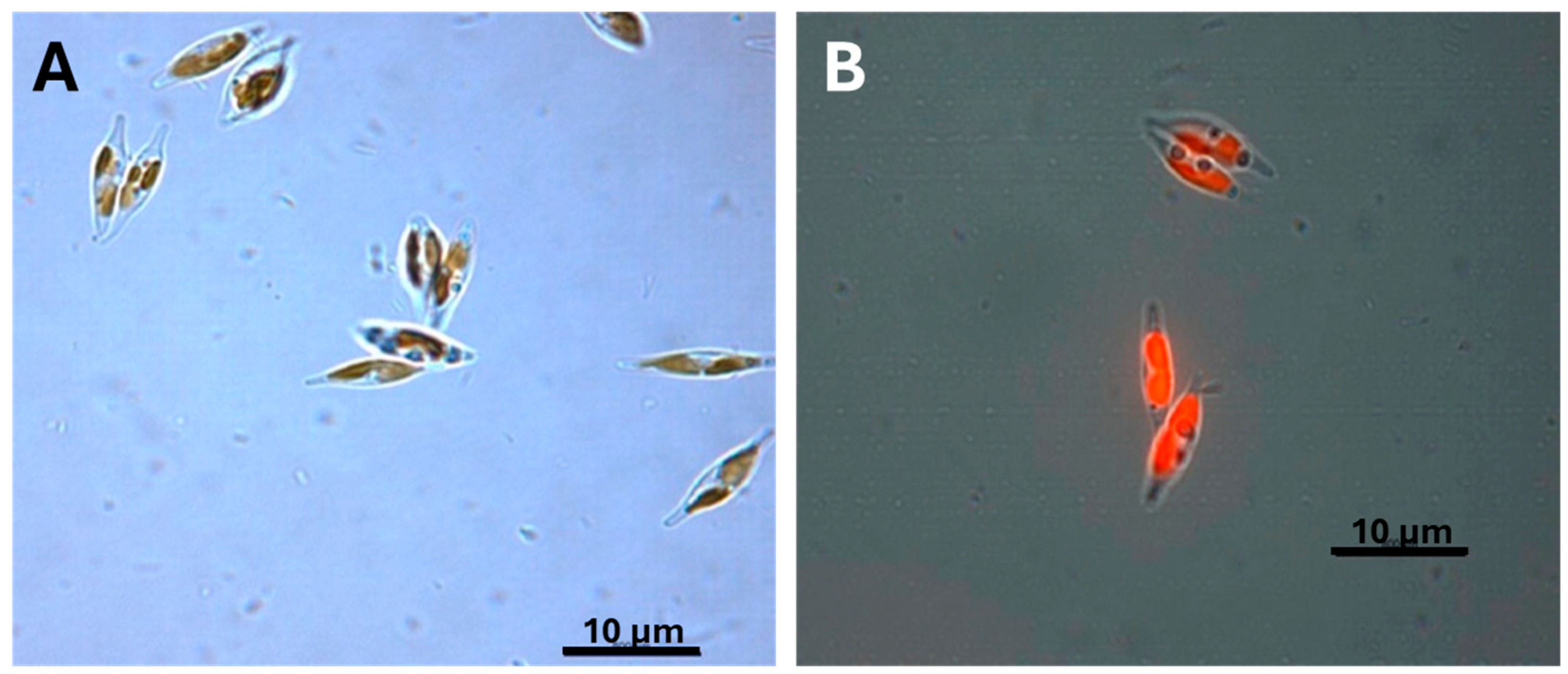
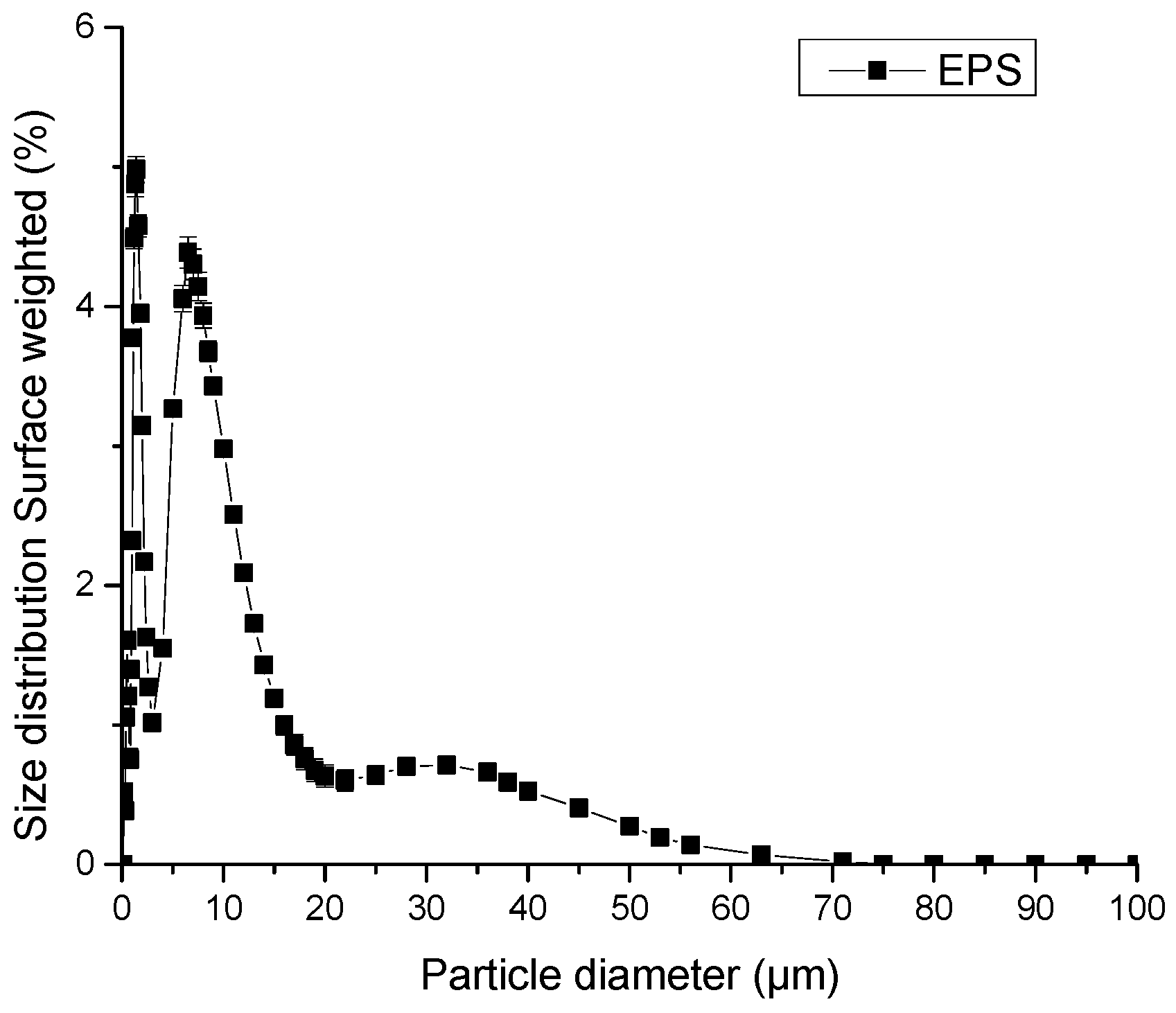
3.1. Identification and Characterization of Nitzschia sp. Strain 53.3 and Its EPS
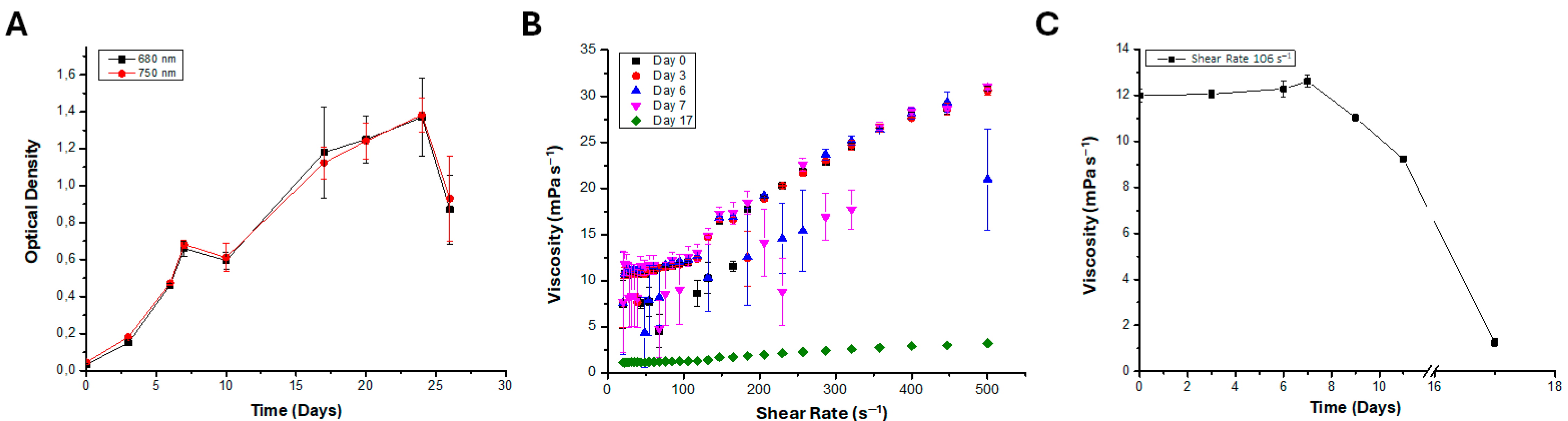
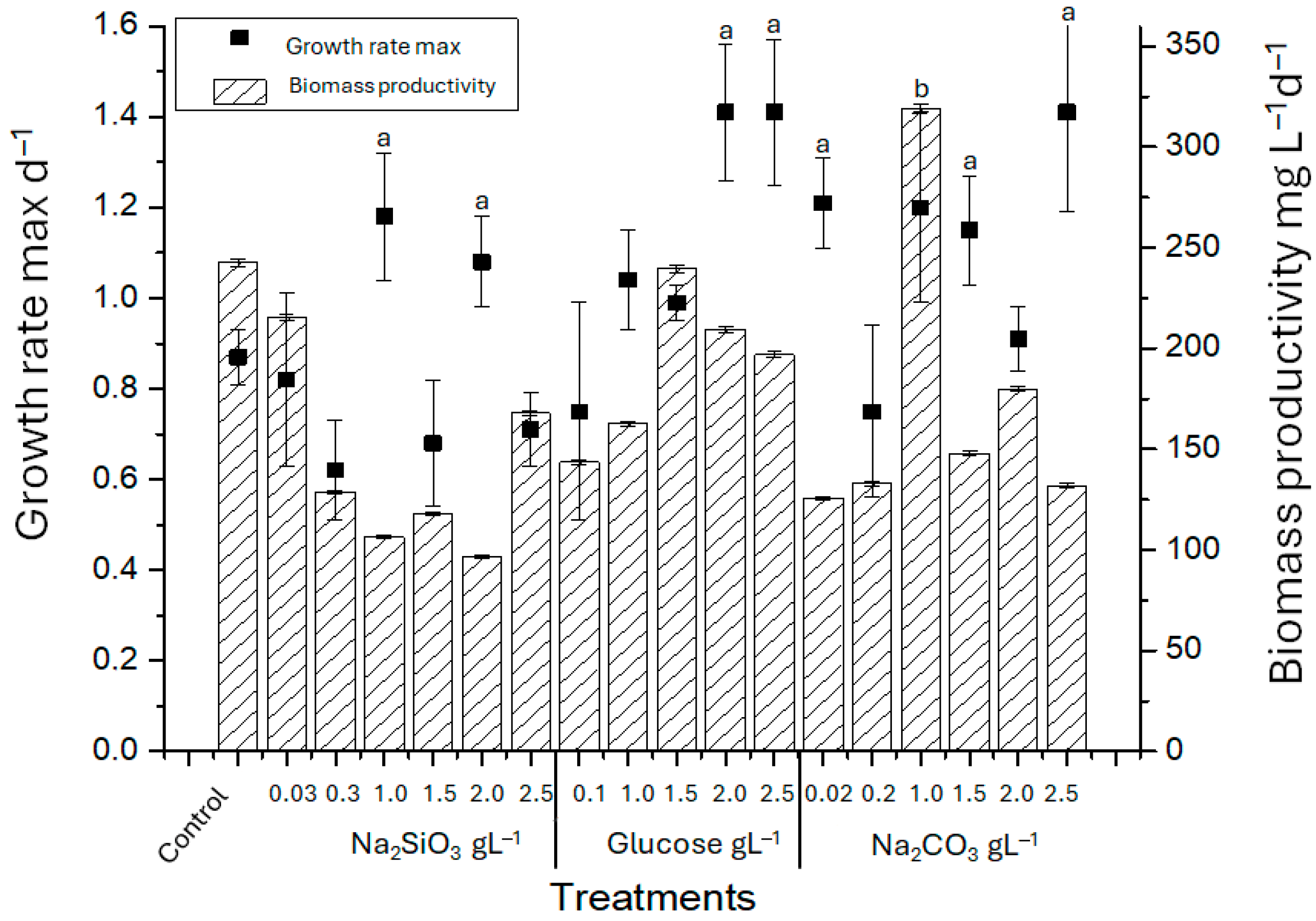
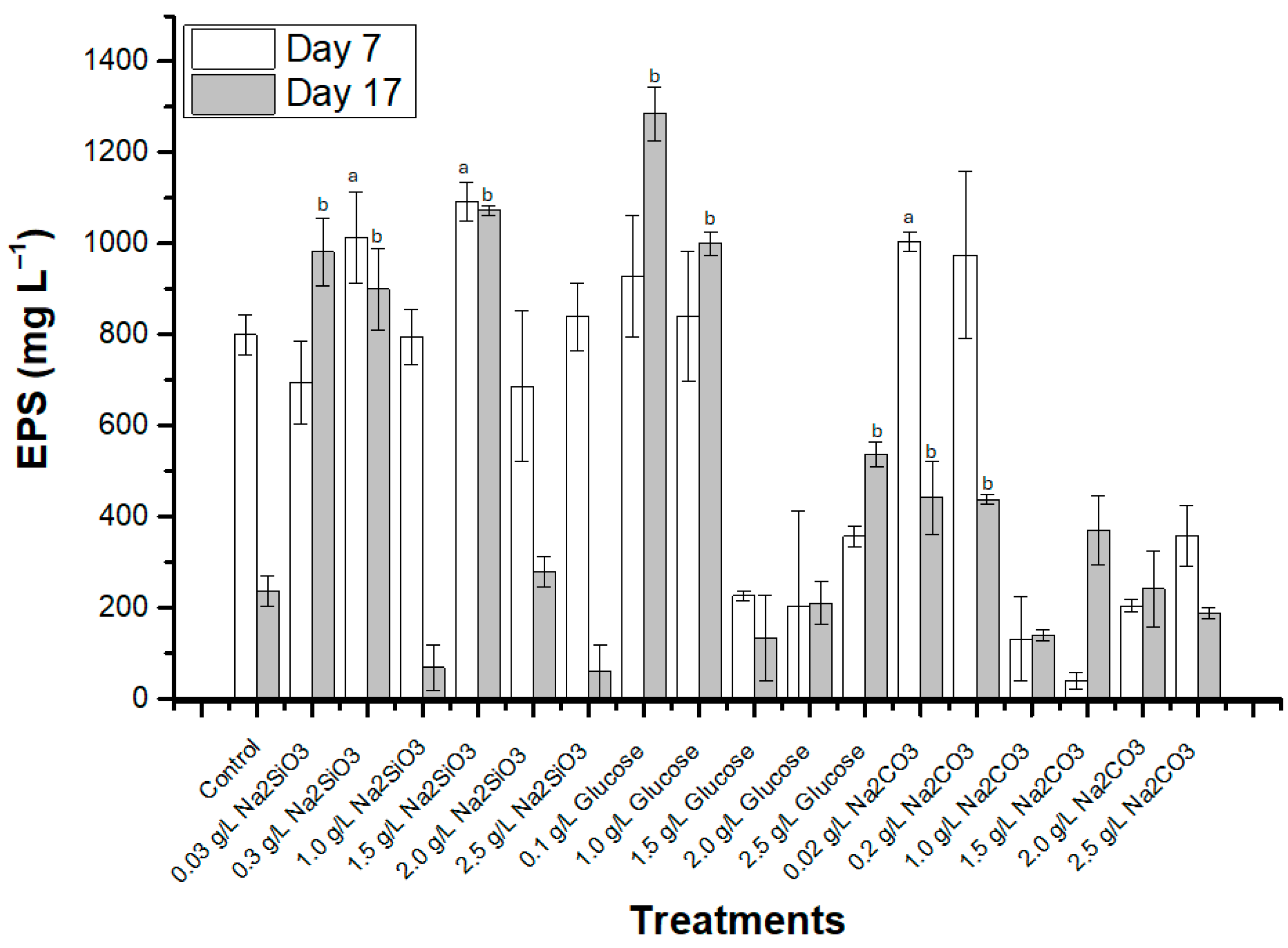
3.2. Growth and Production of EPS Under Different Growth Conditions
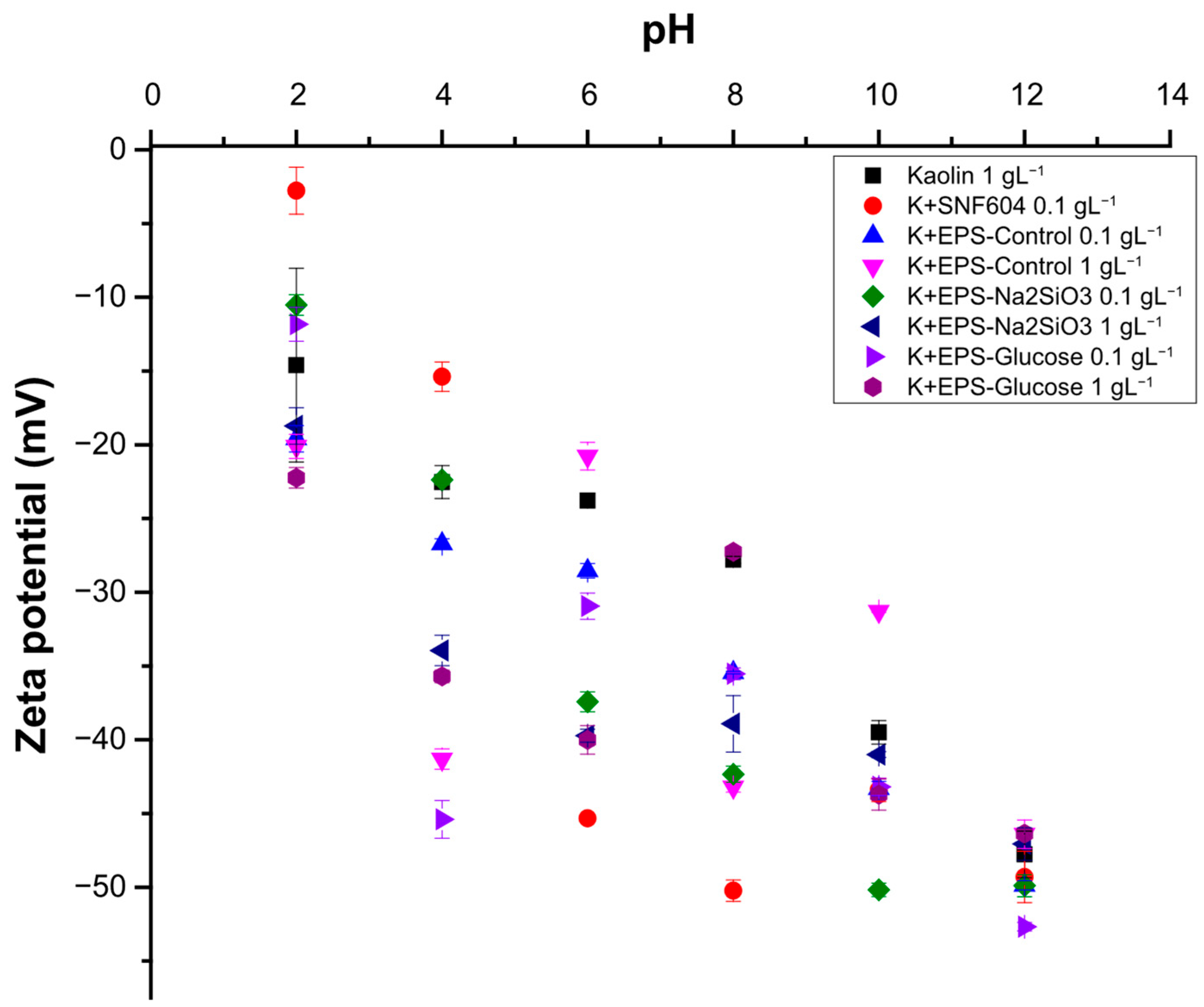
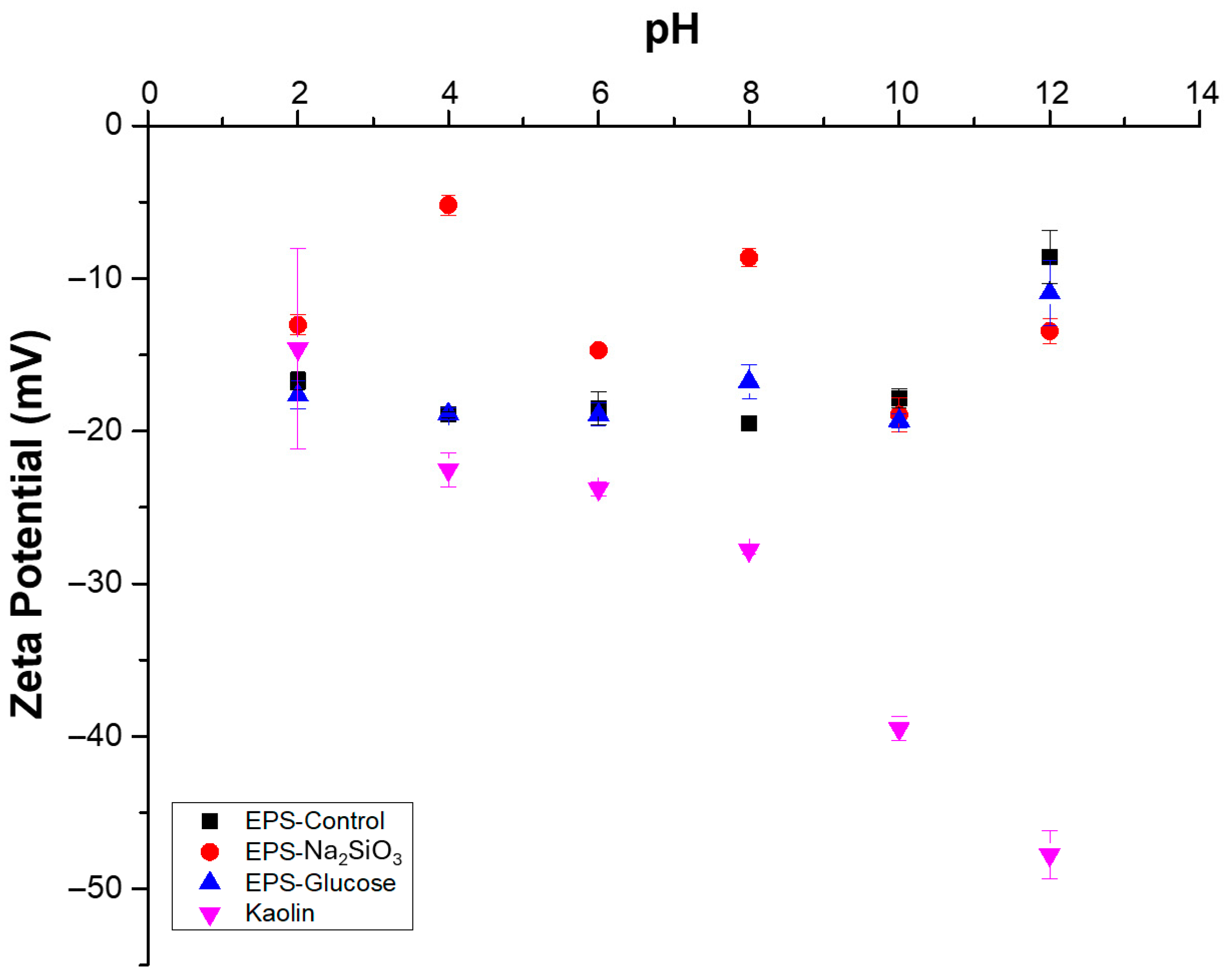
3.3. Analysis of Zeta Potential of EPS
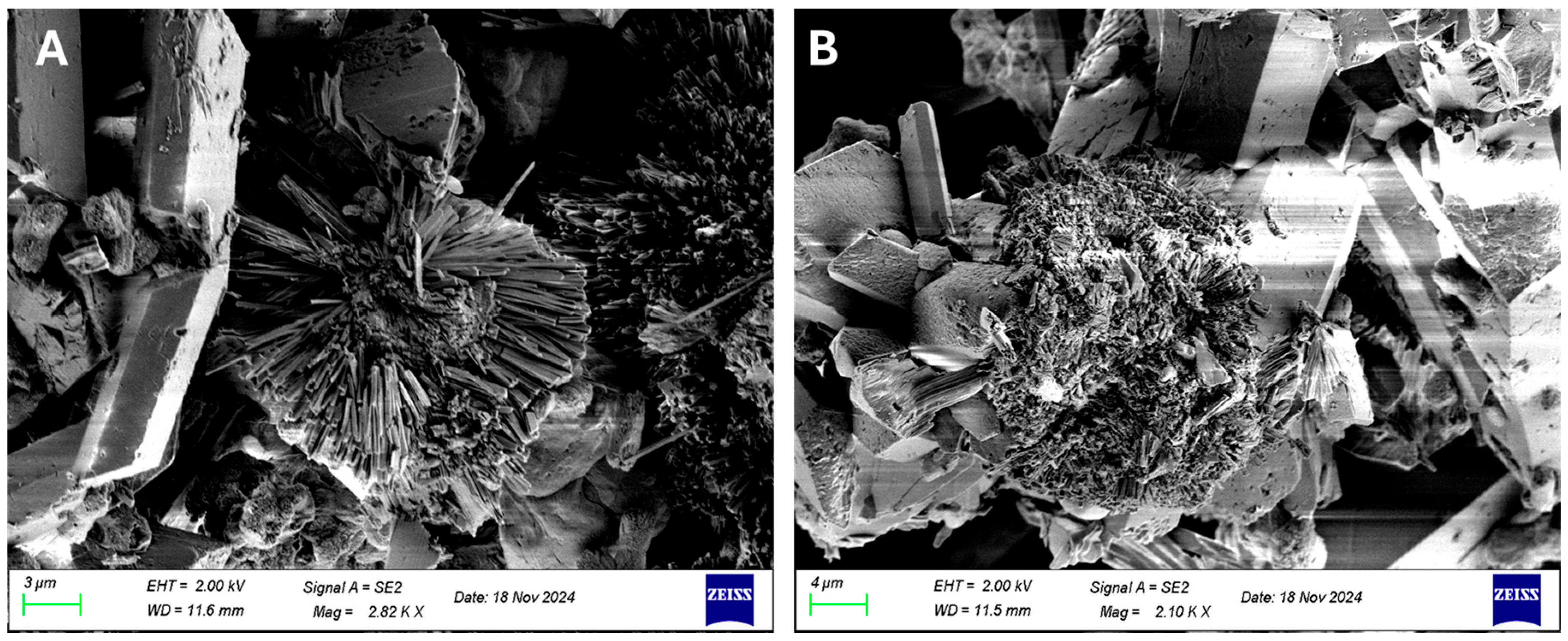
3.4. Sedimentation and Flocculation Tests of EPS with Clays
4. Discussion
5. Conclusions
Supplementary Materials
Author Contributions
Funding
Institutional Review Board Statement
Data Availability Statement
Acknowledgments
Conflicts of Interest
References
- Northey, S.A.; Mudd, G.M.; Werner, T.T.; Jowitt, S.M.; Haque, N.; Yellishetty, M.; Weng, Z. The exposure of global base metal resources to water criticality, scarcity and climate change. Glob. Environ. Change 2017, 44, 109–124. [Google Scholar] [CrossRef]
- Cochilco. Informe Consumo de Agua en la Minería del Cobre año 2023. Comisión Chilena Del Cobre. 2023. Available online: https://www.cochilco.cl/web/informe-consumo-de-agua-en-la-mineria-del-cobre-ano-2023/ (accessed on 15 August 2025).
- Ihle, C.F.; Kracht, W. The relevance of water recirculation in large scale mineral processing plants with a remote water supply. J. Clean. Prod. 2018, 177, 34–51. [Google Scholar] [CrossRef]
- Jeldres, R.I.; Uribe, L.; Cisternas, L.A.; Gutierrez, L.; Leiva, W.H.; Valenzuela, J. The effect of clay minerals on the process of flotation of copper ores—A critical review. Appl. Clay Sci. 2019, 170, 57–69. [Google Scholar] [CrossRef]
- Ortiz Matamala, D.I. Estudio Exploratorio del Efecto de la Caolinita en el Comportamiento Electroquimico de la Calcopirita en el Proceso de Flotacion. Bachelor’s Thesis, University of Concepcion, Chile, 2017. Available online: https://repositorio.udec.cl/items/fd52011d-d7a6-4f15-b1f1-392f5f366732.
- Chen, X.; Peng, Y. Managing clay minerals in froth flotation—A critical review. Min. Proc. Extr. Metall. Rev. 2018, 39, 289–307. [Google Scholar] [CrossRef]
- Jeldres, R.I.; Jeldres, M. Rheological perspectives of clay-based tailings in the mining industry. In Clay Science and Technology; Intech Open: London, UK, 2020. [Google Scholar] [CrossRef]
- Cisternas, L.A.; Gálvez, E.; Rivas, M.; Valderrama, J. Economía Circular en Procesos Mineros; RIL Editores: Santiago, Chile, 2021; p. 330. [Google Scholar]
- Bahniuk, M.S.; Alidina, F.; Tan, X.; Unsworth, L.D. The last 25 years of research on bioflocculants for kaolinite flocculation with recent trends and technical challenges for the future. Front. Bioeng. Biotechnol. 2022, 10, 1048755. [Google Scholar] [CrossRef]
- Zhang, L.; Min, F.; Wang, L.; Shu, Q. Polymeric flocculants based on the interfacial characteristics of fine clay minerals: A review. Physicochem. Probl. Miner. Process. 2022, 58, 149652. [Google Scholar] [CrossRef]
- Jeldres, M.; Piceros, E.C.; Toro, N.; Robles, P.; Nieto, S.; Quezada, G.R.; Jeldres, R.I. Enhancing the sedimentation of clay-based tailings in seawater by magnesium removal treatment. Sep. Purif. Technol. 2020, 242, 116762. [Google Scholar] [CrossRef]
- López Espejo, C.A. Estudio Experimental de Procesos de Sedimentación Secundaria de Ultrafinos de Relaves Mineros Chilenos. Bachelor’s Thesis, University of Chile, Santiago, Chile, 2021. Available online: https://repositorio.uchile.cl/handle/2250/184258 (accessed on 1 August 2025).
- Guo, K.; Gao, B.; Wang, W.; Yue, Q.; Xu, X. Evaluation of molecular weight, chain architectures and charge densities of various lignin-based flocculants for dye wastewater treatment. Chemosphere 2019, 215, 214–226. [Google Scholar] [CrossRef]
- Jeldres, R.I.; Piceros, E.C.; Wong, L.-S.; Leiva, W.H.; Herrera, N.; Toledo, P.G. Dynamic moduli of flocculated kaolinite sediments: Effect of salinity, flocculant dose, and settling time. Colloid Polym. Sci. 2018, 296, 1935–1943. [Google Scholar] [CrossRef]
- Deng, X.; Davé, R.N. Breakage of fractal agglomerates. Chem. Eng. Sci. 2022, 161, 117–126. [Google Scholar] [CrossRef]
- Costa, R.; Pereira, J.L.; Gomes, J.; Gonçalves, F.; Hunkeler, D.; Rasteiro, M.G. The effects of acrylamide polyelectrolytes on aquatic organisms: Relating toxicity to chain architecture. Chemosphere 2014, 112, 177–184. [Google Scholar] [CrossRef] [PubMed]
- Xiong, B.; Loss, R.D.; Shields, D.; Pawlik, T.; Hochreiter, R.; Zydney, A.L.; Kumar, M. Polyacrilamide degradation and its implications in environmental systems. npj Clean Water 2018, 1, 17. [Google Scholar] [CrossRef]
- Tepe, Y.; Çebi, A. Acrylamide in environmental water: A review on sources, exposure, and public health risks. Expo. Health 2019, 11, 3–12. [Google Scholar] [CrossRef]
- Farkas, J.; Altin, D.; Hansen, B.H.; Øverjordet, I.B.; Nordtug, T. Acute and long-term effects of anionic polyacrylamide (APAM) on different developmental stages of two marine copepod species. Chemosphere 2020, 257, 127259. [Google Scholar] [CrossRef]
- Silva-Benavides, A.M.; Torzillo, G.; Kopecký, J.; Masojídek, J. Productivity and biochemical composition of Phaeodactylum tricornutum (Bacillariophyceae) cultures grown outdoors in tubular photobioreactors and open ponds. Biomass Bioenergy 2013, 54, 115–122. [Google Scholar] [CrossRef]
- Javaheri, N.; Dries, R.; Burson, A.; Stal, L.J.; Sloot, P.M.A.; Kaandorp, J.A. Temperature affects the silicate morphology in a diatom. Sci. Rep. 2015, 5, 11652. [Google Scholar] [CrossRef]
- Smith, S.R.; Dupont, C.L.; McCarthy, J.K.; Broddrick, J.T.; Oborník, M.; Horák, A.; Füssy, Z.; Cihlář, J.; Kleessen, S.; Zheng, H.; et al. Evolution and regulation of nitrogen flux through compartmentalized metabolic networks in a marine diatom. Nat. Commun. 2019, 10, 4552. [Google Scholar] [CrossRef]
- Middelburg, J.J.; Barranguet, C.; Boschker, H.T.S.; Herman, P.M.J.; Moens, T.; Heip, C.H.R. The fate of intertidal microphytobenthos carbon: An in situ 13C-labeling study. Limnol. Oceanogr. 2000, 45, 1224–1234. [Google Scholar] [CrossRef]
- Goto, N.; Mitamura, O.; Terai, H. Biodegradation of photosynthetically produced extracellular organic carbon from intertidal benthic algae. J. Exp. Mar. Biol. Ecol. 2001, 257, 73–86. [Google Scholar] [CrossRef] [PubMed]
- Hildebrand, M. Diatoms, biomineralization processes, and genomics. Chem. Rev. 2008, 108, 4855–4874. [Google Scholar] [CrossRef] [PubMed]
- Sutherland, T.F.; Grant, J.; Amos, C.L. The effect of carbohydrate production by the diatom Nitzschia curvilineata on the erodibility of sediment. Limnol. Oceanogr. 1998, 43, 65–72. [Google Scholar] [CrossRef]
- de Brouwer, J.F.C.; Bjelic, S.; de Deckere, E.M.G.T.; Stal, L.J. Interplay between biology and sedimentology in an intertidal mudflat (Biezelingse Ham, Westerschelde, The Netherlands). Cont. Shelf. Res. 2000, 20, 1159–1177. [Google Scholar] [CrossRef]
- de Brouwer, J.F.C.; Wolfstein, K.; Ruddy, J.K.; Jones, T.E.R.; Stal, L.J. Biogenic stabilization of intertidal sediments: The importance of extracellular polymeric substances produced by benthic diatoms. Microb. Ecol. 2005, 49, 501–512. [Google Scholar] [CrossRef] [PubMed]
- Momin, S.C.; Pradhan, R.B.; Nath, J.; Lalmuanzeli, R.; Kar, A.; Mehta, S.K. Metal sequestration by Microcystis extracellular polymers: A promising path to greener water treatment. Environ. Sci. Pollut. Res. 2024, 31, 11192–11213. [Google Scholar] [CrossRef] [PubMed]
- Lin, D.; Ma, W.; Jin, Z.; Wang, Y.; Huang, Q.; Cai, P. Interactions of EPS with soil minerals: A combination study by ITC and CLSM. Colloids Surf. B Biointerfaces 2016, 138, 10–16. [Google Scholar] [CrossRef]
- Vimalnath, S.; Subramanian, S. Studies on the biosorption of Pb(II) ions from aqueous solution using extracellular polymeric substances (EPS) of Pseudomonas aeruginosa. Colloids Surf. B 2018, 172, 60–67. [Google Scholar] [CrossRef]
- Ye, T.; Yang, A.; Wang, Y.; Song, N.; Wang, P.; Xu, H. Changes of the physicochemical properties of extracellular polymeric substances (EPS) from Microcystis aeruginosa in response to microplastics. Environ. Pollut. 2022, 315, 120354. [Google Scholar] [CrossRef]
- Yallop, M.L.; de Winder, B.; Paterson, D.M.; Stal, L.J. Comparative structure, primary production and biogenic stabilization of cohesive and non-cohesive marine sediments inhabited by microphytobenthos. Estuar. Coast. Shelf Sci. 1994, 39, 565–582. [Google Scholar] [CrossRef]
- Paterson, D.M.; Black, K.S. Water flow, sediment dynamics and benthic ecology. Adv. Ecol. Res. 1999, 29, 155–193. [Google Scholar]
- de Deckere, E.; Tolhurst, T.J.; de Brouwer, J.F.C. Destabilization of cohesive intertidal sediments by infauna. Estuar. Coast. Shelf Sci. 2001, 53, 665–669. [Google Scholar] [CrossRef]
- Hasan, H.A.; Rahim, N.F.M.; Alias, J.; Ahmad, J.; Said, N.S.M.; Ramli, N.N.; Buhari, J.; Abdullah, S.R.S.; Othman, A.R.; Jusoh, H.H.W.; et al. A Review on the roles of extracellular polymeric substances (EPSs) in wastewater treatment: Source, mechanism study, bioproducts, limitations, and future challenges. Water 2024, 16, 2812. [Google Scholar] [CrossRef]
- Wang, X.; Wen, X.; Li, Y.; Zhang, Y.; Zhao, Y.; Tang, Z.; Yu, D.; Li, J.; Ge, B. The response of extracellular polymeric substances (EPS) in Spirulina platensis to environmental stresses: Salt, light and heavy metal. Environ. Res. 2025, 285, 122513. [Google Scholar] [CrossRef] [PubMed]
- Andersen, R.A. (Ed.) Traditional microalgae isolation techniques. In Algal Culturing Techniques; Chapter 6; Elsevier Academic Press: Amsterdam, The Netherlands, 2005. [Google Scholar]
- Moreno, R. Identification of Algal Strains by PCR Amplification and Evaluation of Their Fatty Acid Profiles for Biodiesel Production. Master’s Thesis, Louisiana State University, Baton Rouge, LA, USA, 2012. Available online: https://repository.lsu.edu/cgi/viewcontent.cgi?article=3478&context=gradschool_theses.
- Khaw, Y.S.; Tan, H.T.; Sopawong, A.; Shaharuddin, N.A.; Omar, A.R.; Yusoff, F.M. A Recommendation for a pre-standardized marine microalgal dry weight determination protocol for laboratory scale culture using ammonium formate as a washing agent. Biology 2021, 10, 799. [Google Scholar] [CrossRef]
- Griffiths, M.J.; Garcin, C.; Van Hille, R.P.; Harrison, S.T.L. Interference by pigment in the estimation of microalgal biomass concentration by optical density. J. Microbiol. Methods 2011, 85, 119–123. [Google Scholar] [CrossRef]
- Lowry, O.H.; Rosebrough, N.J.; Farr, A.L.; Randall, R.J. Protein measurement with the Folin phenol reagent. J. Biol. Chem. 1951, 193, 265–275. [Google Scholar] [CrossRef] [PubMed]
- Janknegt, P.; Rijstenbil, J.; van de Poll, W.; Gechev, T.; Buma, A. A comparison of quantitative and qualitative superoxide dismutase assays for application to low temperature microalgae. J. Photochem. Photobiol. 2007, 87, 218–226. [Google Scholar] [CrossRef]
- Dubois, M.; Gilles, K.A.; Hamilton, J.K.; Rebers, P.A.; Smith, F. Colorimetric method for determination of sugars and related substances. Anal. Chem. 1956, 28, 350–356. [Google Scholar] [CrossRef]
- Liu, L.; Xu, J.; Na, R.; Du, R.; Ping, W.; Ge, J.; Zhao, D. Purification, characterization and partial biological activities of exopolysaccharide produced by Saccharomyces cerevisiae Y3. Int. J. Biol. Macromol. 2022, 206, 777–787. [Google Scholar] [CrossRef]
- Bafana, A. Characterization and optimization of production of exopolysaccharide from Chlamydomonas reinhardtii. Carbohydr. Polym. 2013, 95, 746–752. [Google Scholar] [CrossRef]
- Kumar Patel, A.; Laroche, C.; Marcati, A.; Ursu, A.V.; Jubeau, S.; Marchal, L.; Petit, E.; Djelveh, G.; Michaud, P. Separation and fractionation of exopolysaccharides from Porphyridium cruentum. Bioresour. Technol. 2013, 145, 345–350. [Google Scholar] [CrossRef]
- Hamdi, A.; Córdova-Rojano, M.A.; Monje-Moreno, J.M.; Guillén-Izquierdo, E.; Rodríguez-Arcos, R.; Jiménez-Araujo, A.; Guillén-Bejarano, R. Harnessing the potential of walnut leaves from Nerpio: Unveiling extraction techniques and bioactivity through Caenorhabditis elegans studies. Foods 2025, 14, 1048. [Google Scholar] [CrossRef]
- Ai, Y.; Yu, Z.; Chen, Y.; Zhu, X.; Ai, Z.; Liu, S.; Ni, D. Rapid determination of the monosaccharide composition and contents in tea polysaccharides from Yingshuang green tea by pre-column derivatization HPLC. J. Chem. 2016, 2016, 6065813. [Google Scholar] [CrossRef]
- Lilo, T.; Morais, C.L.M.; Shenton, C.; Ray, A.; Gurusinghe, N. Revising Fourier transform infrared (FT-IR) and Raman spectroscopy towards brain cancer detection. Photodiagnosis Photodyn. Ther. 2022, 38, 102785. [Google Scholar] [CrossRef]
- Ho, Q.N.; Fettweis, M.; Hur, J.; Desmit, X.; Kim, J.I.; Jung, D.W.; Lee, S.D.; Lee, S.; Choi, Y.Y.; Lee, B.J. Flocculation kinetics and mechanisms of microalgae- and clay containing suspensions in different microalgal growth phases. Water Res. 2022, 226, 119300. [Google Scholar] [CrossRef] [PubMed]
- Huapaya, K.; Grisales, J.; Botero, Y.; Salamanca, A.; Lara, P.; Cisternas, L.A.; Jeldres, R.; Jeison, D.; Panico, A.; Zapata, M.; et al. Clays tailings flocculation using bio-based flocculants from Nannochloropsis gaditana. J. Appl. Phycol. 2025, 37, 3501–3512. [Google Scholar] [CrossRef]
- Gómez-Ordóñez, E.; Rupérez, P. FTIR-ATR spectroscopy as a tool for polysaccharide identification in edible brown and red seaweeds. Food Hydrocoll. 2011, 25, 1514–1520. [Google Scholar] [CrossRef]
- Singh, R.P.; Shukla, M.K.; Mishra, A.; Kumari, P.; Reddy, C.R.K.; Jha, B. Isolation and characterization of exopolysaccharides from seaweed associated bacteria Bacillus licheniformis. Carbohydr. Polym. 2011, 84, 1019–1026. [Google Scholar] [CrossRef]
- Borjas Esqueda, A.; Gardarin, C.; Laroche, C. Exploring the diversity of red microalgae for exopolysaccharide production. Mar. Drugs 2022, 20, 246. [Google Scholar] [CrossRef] [PubMed]
- Aljuboori, A.H.R.; Uemura, Y.; Thanh, N.T. Flocculation and mechanism of self-flocculating lipid producer microalga Scenedesmus quadricauda for biomass harvesting. Biomass Bioenergy 2016, 93, 38–42. [Google Scholar] [CrossRef]
- Gawryluk, R.M.R.; Tikhonenkov, D.V.; Hehenberger, E.; Husnik, F.; Mylnikov, A.P.; Keeling, P.J. Non-photosynthetic predators are sister to red algae. Nature 2019, 572, 240–243. [Google Scholar] [CrossRef]
- Ye, L.; Wu, J.; Huang, M.; Yan, J. The role of suspended extracellular polymeric substance (EPS) on equilibrium flocculation of clay minerals in high salinity water. Water Res. 2023, 244, 120451. [Google Scholar] [CrossRef] [PubMed]
- Laroche, C. Exopolysaccharides from microalgae and cyanobacteria: Diversity of strains, production strategies, and applications. Mar. Drugs 2022, 20, 336. [Google Scholar] [CrossRef] [PubMed]
- Madrid, F.M.G.; Arancibia-Bravo, M.P.; Sepúlveda, F.D.; Lucay, F.A.; Soliz, A.; Cáceres, L. Ultrafine kaolinite removal in recycled water from the overflow of thickener using electroflotation: A novel application of salineWater Splitting in Mineral Processing. Molecules 2023, 28, 3954. [Google Scholar] [CrossRef]
- Luo, Y.; Ekanayake, N.I.K.; Amini, N.; Moon, E.; Hapgood, K.; Scales, P.J.; Stickland, A.D. Quantifying the effects of clays on mineral tailings filtration. Miner. Eng. 2024, 216, 108830. [Google Scholar] [CrossRef]




| Variable | Level 1 gL−1 | Level 2 gL−1 | Level 3 gL−1 | Level 4 gL−1 | Level 5 gL−1 | Level 6 gL−1 |
|---|---|---|---|---|---|---|
| Sodium carbonate | 0.03 | 0.3 | 1.0 | 1.5 | 2.0 | 2.5 |
| Glucose | 0.1 | 1.0 | 1.5 | 2.0 | 2.5 | - |
| Sodium metasilicate | 0.02 | 0.2 | 1.0 | 1.5 | 2.0 | 2.5 |
Disclaimer/Publisher’s Note: The statements, opinions and data contained in all publications are solely those of the individual author(s) and contributor(s) and not of MDPI and/or the editor(s). MDPI and/or the editor(s) disclaim responsibility for any injury to people or property resulting from any ideas, methods, instructions or products referred to in the content. |
© 2026 by the authors. Licensee MDPI, Basel, Switzerland. This article is an open access article distributed under the terms and conditions of the Creative Commons Attribution (CC BY) license.
Share and Cite
Grisales, J.; Huapaya, K.; Silva-Zamora, G.; Cisternas, L.A.; Lavin, P.; Jeison, D.; Zapata, M.; Rivas, M. Extracellular Polymers from Nitzschia sp. for Removing Clay Minerals from Water in Mining. Polymers 2026, 18, 1221. https://doi.org/10.3390/polym18101221
Grisales J, Huapaya K, Silva-Zamora G, Cisternas LA, Lavin P, Jeison D, Zapata M, Rivas M. Extracellular Polymers from Nitzschia sp. for Removing Clay Minerals from Water in Mining. Polymers. 2026; 18(10):1221. https://doi.org/10.3390/polym18101221
Chicago/Turabian StyleGrisales, Jeferson, Katiuska Huapaya, Gabriela Silva-Zamora, Luis A. Cisternas, Paris Lavin, David Jeison, Manuel Zapata, and Mariella Rivas. 2026. "Extracellular Polymers from Nitzschia sp. for Removing Clay Minerals from Water in Mining" Polymers 18, no. 10: 1221. https://doi.org/10.3390/polym18101221
APA StyleGrisales, J., Huapaya, K., Silva-Zamora, G., Cisternas, L. A., Lavin, P., Jeison, D., Zapata, M., & Rivas, M. (2026). Extracellular Polymers from Nitzschia sp. for Removing Clay Minerals from Water in Mining. Polymers, 18(10), 1221. https://doi.org/10.3390/polym18101221