Recycled Thermoplastics for 3D Printing Filament Production: A Review of Circular Economy Drivers, Material Behavior, and Current Research Gaps

Abstract
1. Introduction
- Extension of product life cycles—on-demand production of spare parts eliminating the need for inventory storage);
- (Topological) design/lightweighting → reduction in material consumption;
- Reduction of transport-related emissions—enabling localized production closer to the end user/decentralization of manufacturing;
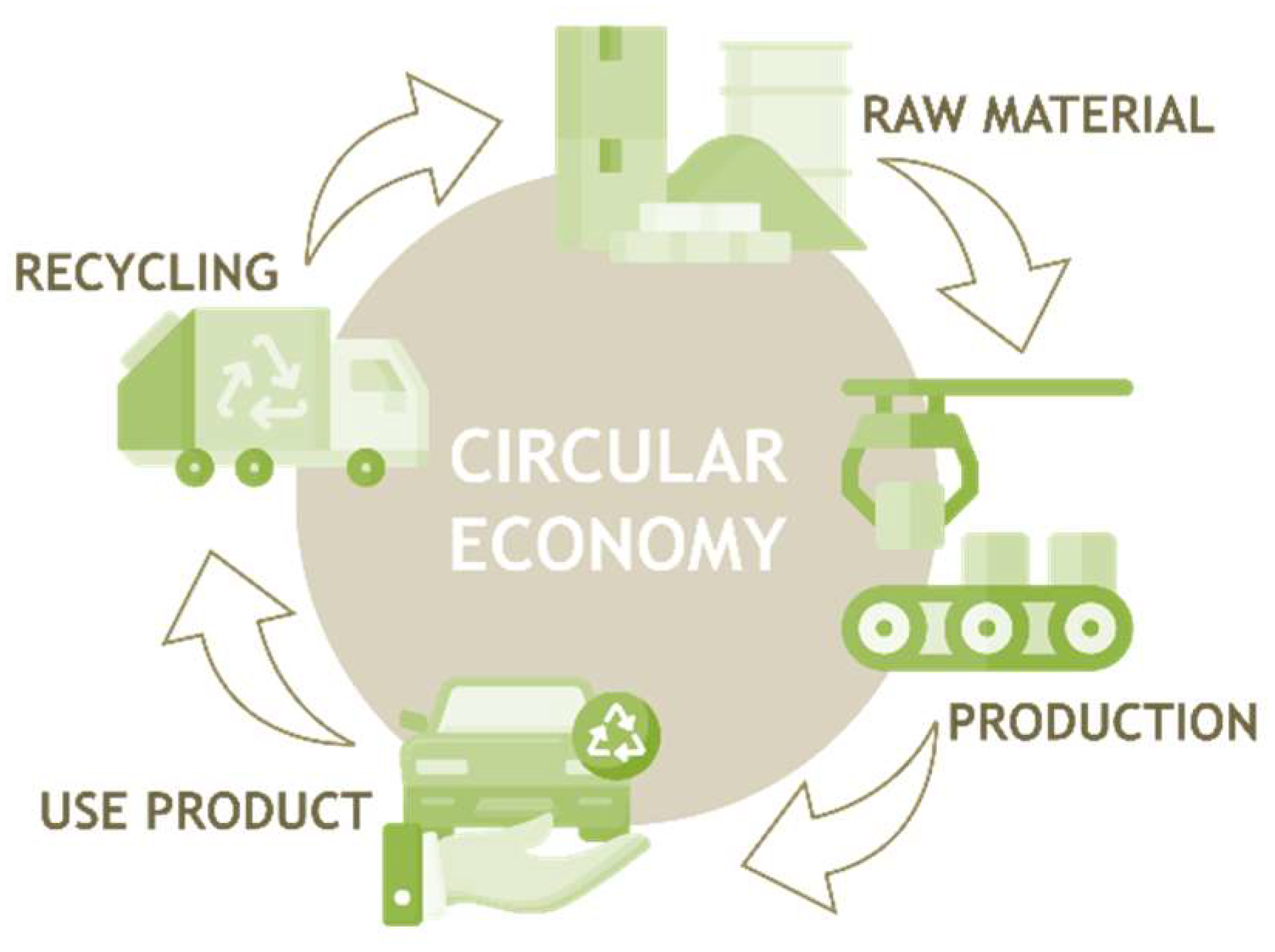
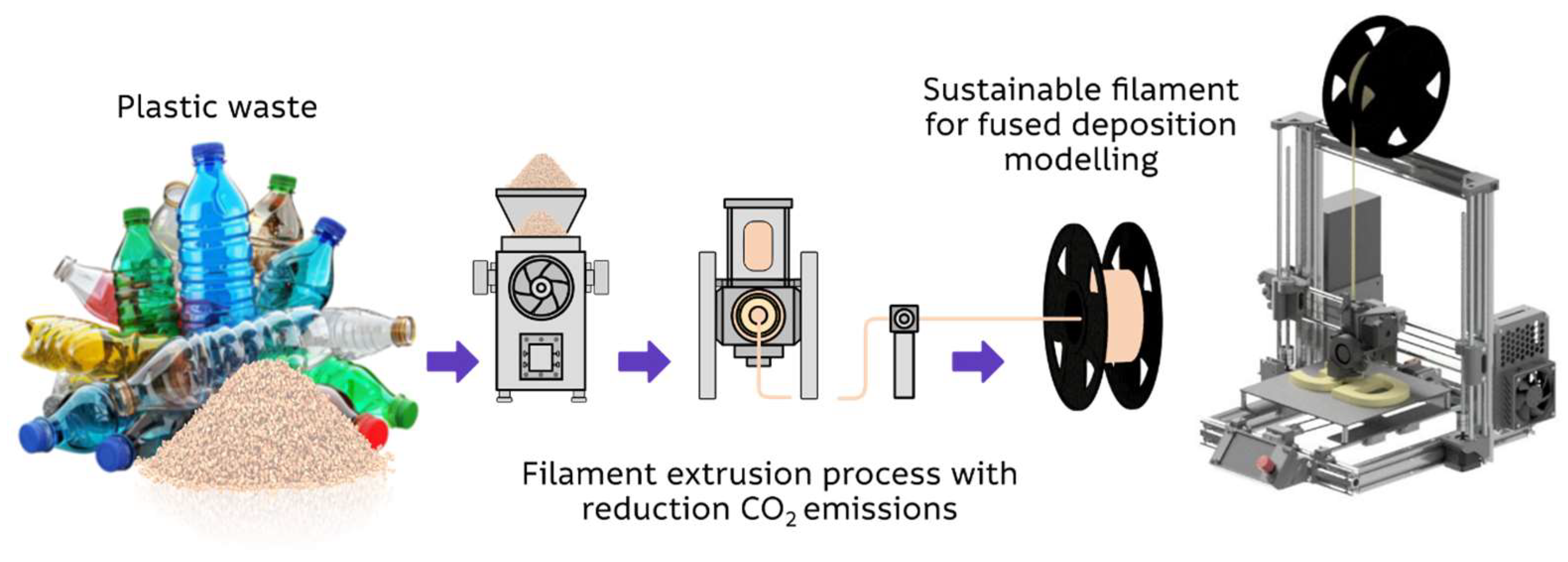
- Utilization of recycled materials as feedstock for 3D printing (closed-loop systems).
2. Secondary Raw Materials for 3D Printing in the Context of Sustainability
3. Recycled Polymers for 3D Printing
3.1. Recyclate Acrylonitrile Butadiene Styrene
3.2. Recyclate Polycarbonate
3.3. Recyclate Polyamide/Nylon
3.4. Recyclate Acrylonitrile Styrene Acrylate
3.5. Recyclate Polyethylene Terephthalate
3.6. Recyclate Polypropylene
3.7. Recyclate High-Density Polyethylene
3.8. Recyclate Poly Methyl Methacrylate
3.9. Recyclate Polyether Ether Ketone and Polyetherimide
- Preservation of molecular integrity;
- Minimal energy consumption;
- Zero chemical waste (compared with solvent-, or pyrolysis-based methods).
3.10. Description of Degradation Mechanisms in the Process of Mechanical Recycling
- Temperature → thermal degradation;
- ○
- Mechanisms of thermal degradation include:
- ○
- (1) Depolymerization—typical for PMMA; the decrease in the degree of polymerization is initially negligible, and consequently the mechanical properties do not deteriorate rapidly. (2) Random chain scission—chain rupture occurs at random points along the polymer backbone, leading to a noticeable reduction in molecular weight (Mw) and a corresponding rapid deterioration of mechanical properties, typical for polymers such as PP and PE. (3) Degradation via substituent reactions—involving modification or elimination of substituent groups attached to the polymer backbone. Mechanisms (1) and (2) may occur independently or simultaneously.
- Temperature/mechanical stresses → thermal-mechanical degradation;
- ○
- Polymers are exposed to thermo-mechanical degradation within the confined flow of the extruder, where oxygen access is limited. In addition to heat, the material is subjected to shear forces. The most common mechanisms in commercial polymers are chain scission and chain branching, depending on the polymer type, Mw, and processing temperature. A typical example of chain scission is PP, whereas certain types of PE tend to exhibit chain branching. Changes in Mw significantly affect rheological properties and mechanical behavior; for instance, a decrease in Mw in PET results in reduced elongation. Thermo-mechanical degradation directly affects elongation and impact resistance.
- Temperature/oxygen → thermal-oxidative degradation;
- ○
- This degradation mechanism occurs due to the combined effect of heat and oxygen. The main polymer chain bonds are progressively cleaved, resulting in a decrease in Mw. The degradation pathway is influenced by structural heterogeneities and the weakest points in the polymer chain, which act as initiation sites for degradation reactions.
- Moisture → hydrolysis;
- ○
- Hydrolysis is caused by excess moisture; reactions with H2O lead to cleavage of chemical bonds and a reduction in Mw. Moisture-sensitive polymers include polyesters, polyamides (PA), and polycarbonates (PC); therefore, pre-drying of the granulate prior to extrusion is required.
4. Discussion
- Mechanical properties (recycling cycles):
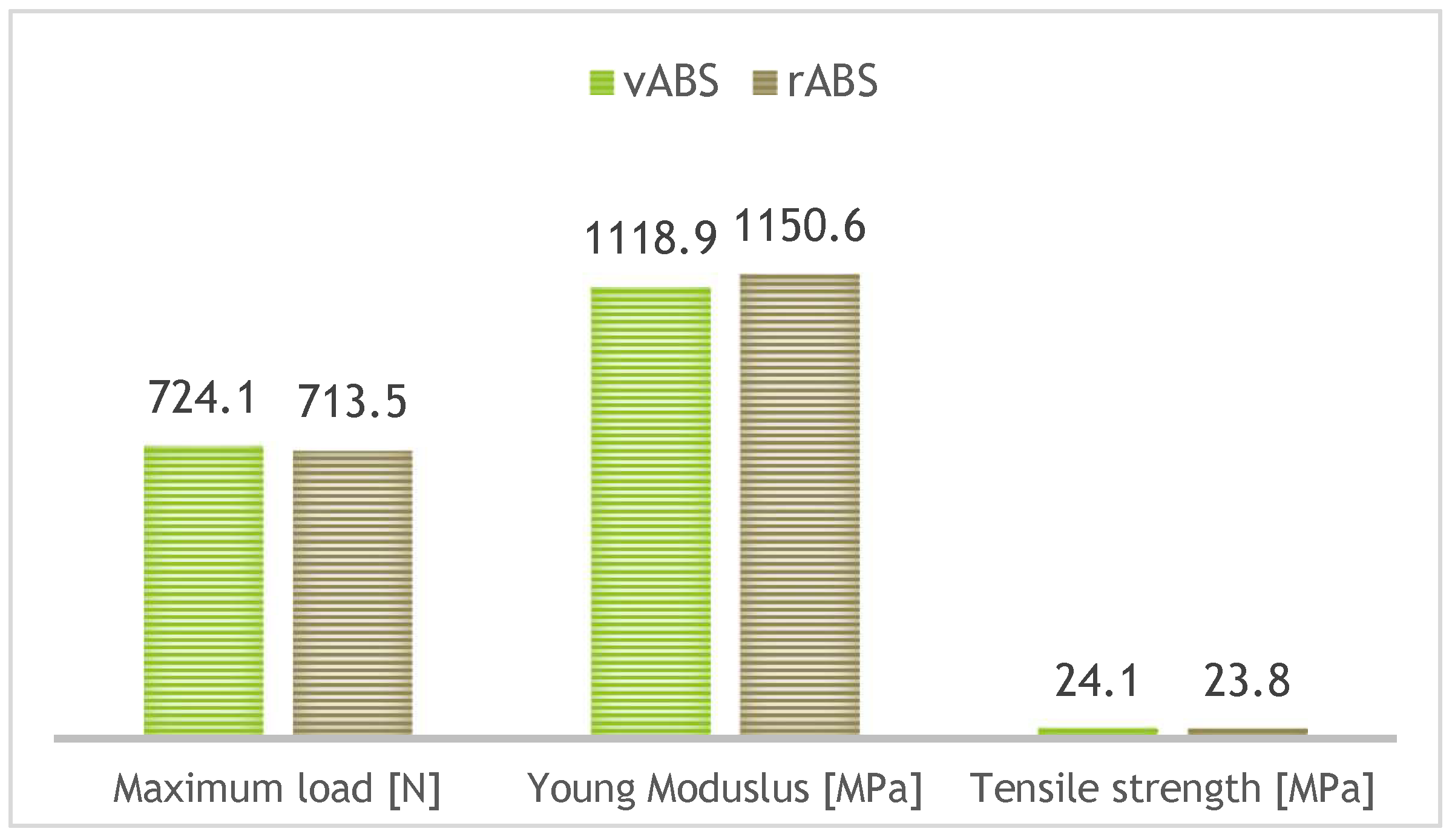
- rABS—most studies report minimal changes compared to virgin ABS (vABS), particularly at lower numbers of recycling cycles; in blends, the properties of the recyclate tend to stabilize (approximately up to 5 cycles without significant degradation);
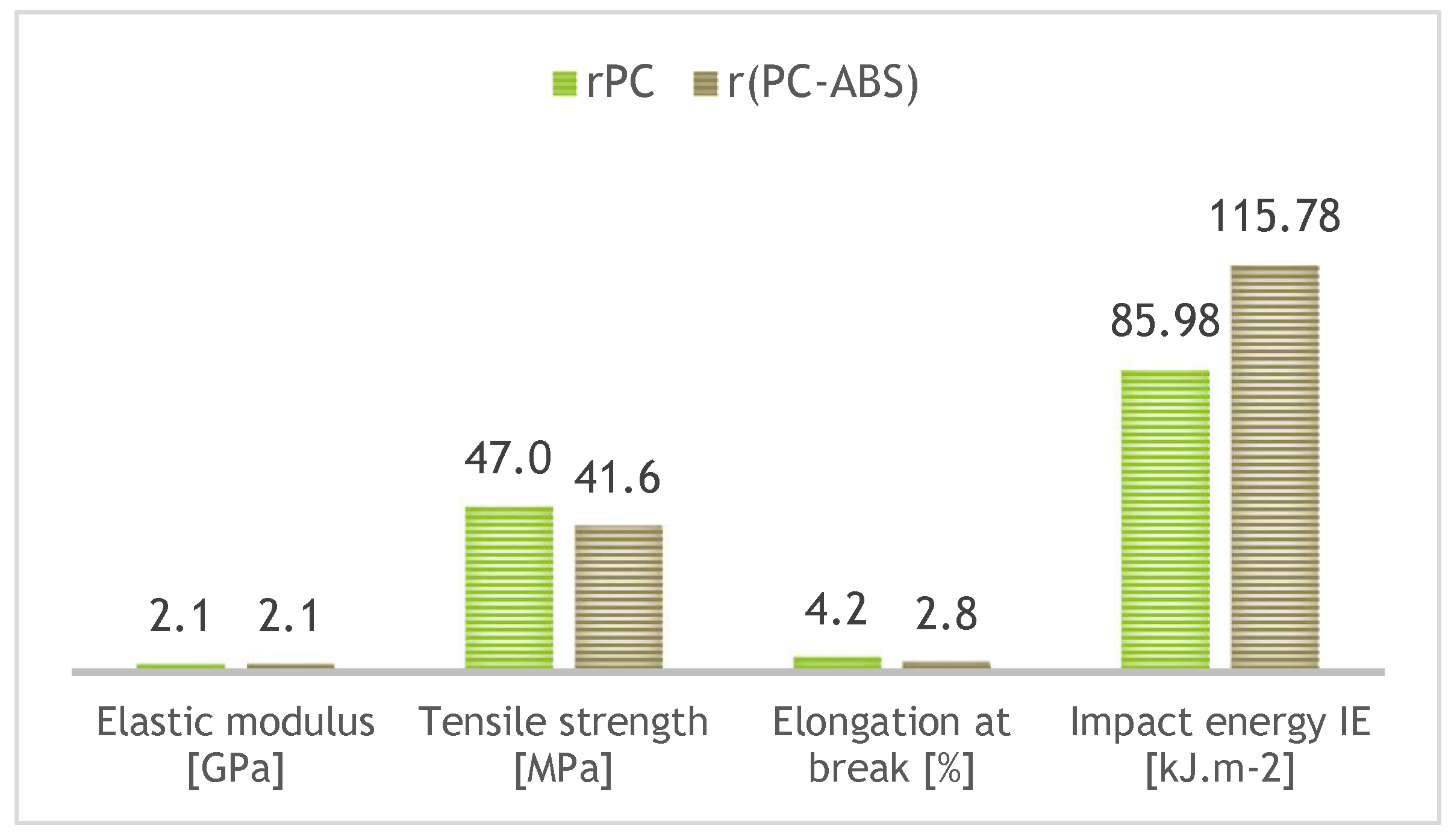
- rPC/PC-ABS—in the case of recycled polycarbonate (rPC), a decline in mechanical properties is observed; PC-ABS blends represent a compromise between performance and processability;
- rPA—properties are nearly identical to those of the virgin material at lower numbers of recycling cycles; thermal stability can be improved by the addition of Al2O3 (typically after 1–3 recycling cycles);
- rASA—repeated recyclability is reported up to approximately 3–5 cycles, at around 6 cycles, a significant change in viscosity is observed;
- rPET—the third recycling cycle is critical due to the significant decrease in elongation at break;
- rPP/rHDPE—rPP can typically be processed up to approximately 4 cycles (with property modification achievable through the addition of natural fillers); for rHDPE, maintaining optimal properties is generally feasible within 2–5 recycling cycles;
- rPMMA—mechanical properties remain relatively stable up to approximately 4 cycles, followed by a noticeable decline;
- rPEEK—preservation of complete structural integrity over 3 recycling cycles.
- Rheological properties—MFI (viscosity):
- rABS—MFI shows minimal variation with increasing number of recycling cycles (1.44–1.51 g/10 min between cycles 1 and 5) → indicating stable processability;
- rPC—an increase in MFI of approximately 35% is reported (after the first recycle process);
- rASA—significant increase in MFI of approximately 98% is observed at the sixth recycling;
- rPP/rHDPE—rheological properties of rPP improve in the presence of talc in recycled products; for rHDPE, an increase in MFI of approximately 4% is observed after the first-repeated thermal processing;
- rPMMA—MFI decreases significantly at the sixth recycling cycle, reaching approximately one-third of its original value.
- Printability (technological property):
- rABS—good printability; however, deformation must be controlled;
- PC-ABS—good printability;
- rPET/rPA—sensitive to moisture; pre-processing drying is required;
- rPP/rHDPE—susceptible to deformation and poor adhesion;
- rASA—tendency for pores and voids formation.
5. Conclusions
Author Contributions
Funding
Institutional Review Board Statement
Data Availability Statement
Conflicts of Interest
Abbreviations
| ABS | Acrylonitrile butadiene styrene |
| ASA | Acrylonitrile styrene acrylate |
| CE | Circular economy |
| EBA-GMA | Ethylene butyl acrylate glycidyl methacrylate |
| EU | European union |
| FDM | Fused deposition modeling |
| HDPE | High-density polyethylene |
| LDPE | Low-density polyethylene |
| MFI | Melt flow index |
| Mw | Molecular weight |
| PA | Polyamide |
| PC | Polycarbonate |
| PEI | Polyetherimide |
| PEEK | Polyether ether ketone |
| PET | Polyethylene terephthalate |
| PETG | Polyethylene terephthalate glycol-modified |
| PLA | Polylactic acid |
| PMMA | Poly methyl methacrylate |
| PP | Polypropylene |
| PS | Polystyrene |
| PVC | Polyvinylchloride |
| RH | Relative humidity |
| Tg | Glass transition temperature |
| UV | Ultraviolet |
| VOC | Volatile organic compound |
References
- Mitaľová, Z.; Kaščak, J.; Kočiško, M.; Pollák, M.; Sopko, G. Utilization of Recyclates in Filament Manufacturing. In Proceedings of the 2026 IEEE 24th World Symposium on Applied Machine Intelligence and Informatics (SAMI), Stará Lesná, Slovakia, 29 January 2026. [Google Scholar]
- A Circular Economy in The Netherlands by 2050. Available online: https://knowledge-hub.circle-economy.com/article/6900?n=A-Circular-Economy-in-the-Netherlands-by-2050 (accessed on 25 February 2026).
- Winans, K.; Kendall, A.; Deng, H. The history and current applications of the circular economy concept. Renew. Sustain. Energy Rev. 2017, 68, 825–833. [Google Scholar] [CrossRef]
- Jawahir, I.S.; Bradley, R. Technological Elements of Circular Economy and the Principles of 6R-Based Closed-loop Material Flow in Sustainable Manufacturing. Procedia Cirp 2016, 40, 103–108. [Google Scholar] [CrossRef]
- Pearce, D.W.; Turner, R.K. Economics of Natural Resources and the Environment; John Hopkins University Press: Baltimore, MD, USA, 1989. [Google Scholar]
- Aggeri, F. From waste to urban mines: A historical perspective on the circular economy. Field Actions Sci. Rep. J. Field Actions 2021, 23, 10–13. [Google Scholar]
- Asante, R.; Faibil, D.; Agyemang, M.; Ahmed Khan, S. Life cycle stage practices and strategies for circular economy: Assessment in construction and demolition industry of an emerging economy. Environ. Sci. Pollut. Res. 2022, 29, 82110–82121. [Google Scholar] [CrossRef] [PubMed]
- Stahel, W.R. The Performance Economy, 2nd ed.; Palgrave Macmillan: Basingstoke, UK, 2010. [Google Scholar]
- 2024 World Plastic Production. Available online: https://www.kitechrecyclingmachine.com/in-2024-the-global-plastic-production-will-exceed-400-million-tons.html (accessed on 17 April 2026).
- Reduce CO2 Emissions by 3D Printing with Recycled Materials. Available online: https://www.filamentive.com/reduce-co2-emissions-by-3d-printing-with-recycled-materials/ (accessed on 25 September 2025).
- Fishy Filaments. Available online: https://fillamentum.com/collections/fishy-filaments-by-fillamentum/ (accessed on 25 September 2025).
- Join the Movement That Turns Plastic into Prosperity. Available online: https://www.plasticbank.com (accessed on 13 December 2025).
- Interactive Recycling Installation for Events. Available online: https://betterfuturefactory.com/project/perpetual-plastic-project/ (accessed on 20 December 2025).
- Liptáková, T.; Alexy, P.; Gondár, E.; Khunová, V. Polymérne Konštrukčné Materiály; UNIZA: Žilina, Slovenská Republika, 2012; pp. 125–126. [Google Scholar]
- Lamtai, A.; Elkoun, S.; Robert, M.; Mighri, F.; Diez, C. Mechanical Recycling of Thermoplastics: A Review of Key Issues. Waste 2023, 1, 860–883. [Google Scholar] [CrossRef]
- Izdebska-Podsiadły, J. Polymers for 3D Printing; Wiliam Andrew: Oxford, UK, 2022. [Google Scholar]
- Madaj, R.; Kohár, R. Aditívne Technológie; UNIZA: Žilina, Slovenská Republika, 2020; pp. 154–196. [Google Scholar]
- Mishra, V.; Kapil Ror, C.; Negi, S.; Kar, S.; Nandan Bohar, L. Development of sustainable 3D printing filaments using recycled/virgin ABS blends: Processing and characterization. J. Polym. Sci. Eng. 2023, 63, 1890–1899. [Google Scholar] [CrossRef]
- Aminur, M.; Mat, S.; Sam, M.S.; Fais, R.; Alkahari, M.R.; Kudus, S.I.A. Design and development of 3D printer filament extruder. In Proceedings of the Mechanical Engineering Research Day, Melaka, Malaysia, 16 December 2020. [Google Scholar]
- Recycled ABS Filament Benefits for Sustainable 3D Printing. Available online: https://plastic-recycled.com/recycled-abs-filament-benefits-for-sustainable-3d-printing/ (accessed on 25 January 2026).
- Stefaniak, A.B.; Bowers, L.N.; Cottrel, G.; Erdem, E.; Knepp, A.K.; Stephen, B.M.; Pretty, J.; Duling, M.G.; Arnold, E.D.; Wilson, Z.; et al. Towards sustainable additive manufacturing: The need for awareness of particle and vapor releases during polymer recycling, making filament, and fused filament fabrication 3-D printing. Resour. Conserv. Recycl. 2022, 176, 105911. [Google Scholar] [CrossRef]
- Karahaliou, E.K.; Tarantili, P.A. Stability of ABS compound subjected to repeated cycles of extrusion processing. Polym. Eng. Sci. 2009, 49, 2269–2275. [Google Scholar] [CrossRef]
- Romani, A.; Levi, M.; Pearce, J.M. Recycled polycarbonate and polycarbonate/acrylonitrile butadiene styrene feedstocks for circular economy product applications with fused granular fabrication-based additive manufacturing. Sustain. Mater. Technol. 2023, 38, e00730. [Google Scholar] [CrossRef]
- Klein, R. Laser Welding of Plastics, 1st ed.; Wiley-VCH: Verlag, Germany, 2011; pp. 3–66. [Google Scholar]
- Elvers, B. Ullmann’s Polymers and Plastics: Products and Processes; Wiley-VCH: Weinheim, Germany, 2016. [Google Scholar]
- Hauenstein, O.; Agarwal, S.; Greiner, A. Bio-based polycarbonate as synthetic toolbox. Nat. Commun. 2016, 15, 11862. [Google Scholar] [CrossRef]
- Yu, N.; Yuan, Y.; Zhu, Z.; Melenitiev, R.; Ye, L.; Tinkler, J.; Raddatz, L.; Newman, S.T. Sustainability of polycarbonate recycling via additive manufacturing. CIRP Ann. 2025, 74, 61–65. [Google Scholar] [CrossRef]
- Gaikwad, V.; Ghose, A.; Cholake, S.; Rawal, A.; Iwato, M.; Sahajwalla, V. Transformation of E-Waste Plastics into Sustainable Filaments for 3D Printing. ACS Sustain. Chem. Eng. 2018, 6, 14432–14440. [Google Scholar] [CrossRef]
- 10 Applications of Nylon That You Should Know. Available online: https://europlas.com.vn/en-US/blog-1/10-applications-of-nylon-that-you-should-know (accessed on 15 February 2026).
- Reyes-Flores, B.; Dáiz-Rodrigues, J.G.; Uribe-Beas, E.; López-Mena, E.R.; Guajardo-Cuéllar, A. The Effect of Humidity and UV Light Exposure on the Mechanical Properties of PA6 Matrix Reinforced with Short Carbon Fibers and Built by Additive Manufacturing. Polymers 2026, 18, 164. [Google Scholar] [CrossRef]
- OrCa. Available online: https://0rca.co.uk/ (accessed on 13 January 2026).
- 3D Printing from Recycled Material from Fishing Nets. Available online: https://www.3dwasp.com/en/3d-printing-with-a-recycled-material-from-fishing-nets/ (accessed on 23 January 2026).
- Recycled Nylon from Fishing Nets: A Sustainable Frontier in 3D Printing Materials. Available online: https://www.zeal3dprinting.com.au/recycled-nylon-from-fishing-nets-a-sustainable-frontier-in-3d-printing-materials/ (accessed on 23 January 2026).
- Farina, I.; Singh, N.; Colangelo, F.; Luciano, R.; Bonazzi, G.; Fraternali, F. High-Performance Nylon-6 Sustainable Filaments for Additive Manufacturing. Materials 2019, 12, 3955. [Google Scholar] [CrossRef]
- Lozano-González, M.J.; Rodriguez-Hernandez, M.T.; Gonzalez-De Los Santos, E.A.; Villalpando-Olmos, J. Physical–mechanical properties and morphological study on nylon-6 recycling by injection molding. J. Appl. Polym. Sci. 2000, 76, 851–858. [Google Scholar] [CrossRef]
- Boparai, K.S.; Singh, R.; Fabbrocino, F.; Fraternali, F. Thermal characterization of recycled polymer for additive manufacturing applications. Compos. Part B Eng. 2016, 106, 42–47. [Google Scholar] [CrossRef]
- Maspoch, M.L.; Ferrando, H.E.; Velasco, J.I. Characterisation of filled and recycled PA6. Macromol. Symp. 2003, 194, 295–303. [Google Scholar] [CrossRef]
- Vidakis, N.; Petousis, M.; Michailidis, N.; Sagris, D.; David, C.; Papadakis, V.; Spyridaki, E.; Argyros, A.; Valsamos, I.; Dimitriou, E.; et al. Thermomechanical recyclability of acrylonitrile styrene acrylate (ASA) for cyclic economy-driven MEX additive manufacturing. Clean. Eng. Technol. 2025, 25, 100925. [Google Scholar] [CrossRef]
- Lobo, H.; Bonilla, J.V. Handbook of Plastic Analysis; Marcel Dekker: New York, NY, USA, 2003; pp. 254–264. [Google Scholar]
- Rakshit, R.; Kalvettukaran, P.; Acharyya, S.K.; Panja, S.C.; Misra, D. Development of high specific strength acrylonitrile styrene acrylate (ASA) structure using fused filament fabrication. Prog. Addit. Manuf. 2023, 8, 1543–1553. [Google Scholar] [CrossRef]
- Johnson, G.A.; French, J.J. Evaluation of infill effect on mechanical properties of consumer 3D printing materials. Adv. Technol. Innov. 2018, 3, 179–184. [Google Scholar]
- Zisopol, D.G.; Minescu, M.; Iacob, D.V. A Technical–Economic Study on Optimizing FDM Parameters to Manufacture Pieces Using Recycled PETG and ASA Materials in the Context of the Circular Economy Transition. Polymers 2025, 17, 122. [Google Scholar] [CrossRef]
- Innovate Thermoplastics. Available online: https://www.innovatethermoplastics.com/inglese/risorse.htm (accessed on 15 February 2026).
- Polyethylene Terephthalate (PET): How to Select the Right Grade? Available online: https://www.specialchem.com/plastics/guide/polyethylene-terephthalate-pet-plastic (accessed on 29 January 2026).
- La Mantia, F.P.; Titone, V.; Botta, L.; Glerean, P. Mechanical Recycling Processes of Polyethylene Terephthalate (PET) in the Framework of Circular Bottle-To-Bottle Manufacturing. J. Appl. Polym. Sci. 2026, 143, e57954. [Google Scholar] [CrossRef]
- Vidakis, N.; Petousis, M.; Tzounis, L.; Grammatikos, S.A.; Porfyrakis, E.; Maniadi, A.; Mountakis, N. Sustainable additive manufacturing: Mechanical response of polyethylene terephthalate glycol over multiple recycling processes. Materials 2021, 14, 1162. [Google Scholar] [CrossRef]
- Seibert, M.B.; Mazzei Capote, G.A.; Gruber, M.; Volk, W.; Osswald, T.A. Manufacturing of a PET Filament from Recycled Material for Material Extrusion (MEX). Recycling 2022, 7, 69. [Google Scholar] [CrossRef]
- Van de Voorde, B.; Katalagarianakis, A.; Huysman, S.; Toncheva, A.; Raquez, J.M.; Duretek, I.; Holzer, C.; Cardon, L.; Bernaerts, K.V.; Van Hemelrijck, D.; et al. Effect of extrusion and fused filament fabrication processing parameters of recycled poly(ethylene terephthalate) on the crystallinity and mechanical properties. Addit. Manuf. 2022, 50, 102518. [Google Scholar] [CrossRef]
- Kapil Ror, C.; Negi, S.; Mishra, V. Development and characterization of sustainable 3D printing filaments using post-consumer recycled PET: Processing and characterization. J. Polym. Res. 2023, 30, 350. [Google Scholar] [CrossRef]
- Nikam, M.; Pawar, P.; Patil, A.; Patil, A.; Mokal, K.; Jadhav, S. Sustainable fabrication of 3D printing filament from recycled PET plastic. Mater. Today Proc. 2024, 103, 115–125. [Google Scholar] [CrossRef]
- Toth, L.; Slezák, E.; Bocz, K.; Ronkay, F. Progress in 3D printing of recycled PET. Mater. Today Sustain. 2024, 26, 100757. [Google Scholar] [CrossRef]
- O’Driscoll, C.; Owodunni, O.; Asghar, U. Optimization of 3D printer settings for recycled PET filament using analysis of variance (ANOVA). Heliyon 2024, 10, e26777. [Google Scholar] [CrossRef]
- Pepek, E.S.; Hanan, J.C. 3D Printing with Recycled PET as a Sustainable Thermoplastic Alternative Comparing Printed and Filament Material Properties. Polym.-Plast. Technol. Mater. 2025, 64, 2238–2252. [Google Scholar] [CrossRef]
- Mishra, V.; Kapil Ror, C.; Negi, S.; Veeman, D. Recycling PET Waste into Functional 3D Printing Material: Effect of Printing Temperature on Physio-mechanical Properties of PET Parts. J. Mater. Eng. Perform. 2025, 34, 26778–26790. [Google Scholar] [CrossRef]
- Amor, R.B.; Souissi, S.; Elloumi, A.; Bentaher, H. Parametric optimization and modeling of fused filament fabrication (FFF) using recycled PET from water bottles: A comparative study with virgin PET. Int. J. Interact. Des. Manuf. 2025, 20, 561–580. [Google Scholar] [CrossRef]
- Aly, R.; Vijay, S.; Shyju, V.; Sharfuddin, M.; Samad, A.W. Recycling plastic water bottles into high quality filaments for sustainable 3D printing. Discov. Mech. Eng. 2025, 4, 71. [Google Scholar] [CrossRef]
- Kónya, G.; Tóth, L.; Gerse, P.; Palásti, F.; Hansághy, P.; Ronkay, F. Cutting tests and performance evaluation of recycled PET in fused filament fabrication. Mater. Today Sustain. 2025, 31, 101126. [Google Scholar] [CrossRef]
- Berladir, K.; Mitaľová, Z.; Ivanov, V. Materials for the Automotive Industry; Springer: Cham, Switzerland, 2026; pp. 116–119. [Google Scholar]
- Chu, J.S.; Koay, S.C.H.; Chan, M.Y.; Choo, H.L.; Ong, T.K. Recycled plastic filament made from post-consumer expanded polystyrene and polypropylene for fused filament fabrication. Polym. Eng. Sci. 2022, 62, 26144. [Google Scholar] [CrossRef]
- Iunolainen, E. Sustainability of Recycled PP for 3d Printing Filament; Arcada: Helsinki, Finland, 2017. [Google Scholar]
- Arrigo, R.; Battegazzore, G.; Bernagozzi, G.; Cravero, F.; Pedraza, D.N.R.; Frache, A. Recycled PP for 3D Printing: Material and Processing Optimization through Design of Experiment. Appl. Sci. 2022, 12, 10840. [Google Scholar] [CrossRef]
- Pickering, K.; Stoof, D. Sustainable Composite Fused Deposition Modelling Filament Using Post-Consumer Recycled Polypropylene. J. Compos. Sci. 2017, 1, 17. [Google Scholar] [CrossRef]
- Stoof, D.; Pickering, K. Sustainable composite fused deposition modelling filament using recycled pre-consumer polypropylene. Compos. Part B Eng. 2018, 135, 110–118. [Google Scholar] [CrossRef]
- Morales, M.A.; Atencio Martinez, C.L.; Maranon, A.; Hernandez, C.; Michaud, V.; Porras, A. Development and Characterization of Rice Husk and Recycled Polypropylene Composite Filaments for 3D Printing. Polymers 2021, 13, 1067. [Google Scholar] [CrossRef]
- Spirio, A.; Arrigo, R.; Frache, A.; Tuccinardi, L.; Tuffi, R. Plastic waste recycling in additive manufacturing: Recovery of polypropylene from WEEE for the production of 3D printing filaments. J. Environ. Chem. Eng. 2024, 12, 112474. [Google Scholar] [CrossRef]
- Alias, N.N.; Fatah, I.Y.A.; Seok, I.B.; Abdullah, S.; Bhat, A.H.; Diah, S.B.M. Material characterizations of the polymers reinforced with recycled flexible plastic blends as filament for 3D printing. J. Adv. Res. Appl. Sci. Eng. Technol. 2024, 37, 1–15. [Google Scholar] [CrossRef]
- Baechler, C.; DeVuono, M.; Perce, J.M. Distributed recycling of waste polymer into RepRap feedstock. Rapid Prototyp. J. 2023, 19, 118–125. [Google Scholar] [CrossRef]
- Nguyen, K.Q.; Vuillaume, P.Y.; Hu, L.; López-Becerio, J.; Cousin, P.; Elkoun, S.; Robert, M. Recycled, Bio-Based, and Blended Composite Materials for 3D Printing Filament: Pros and Cons—A Review. Mater. Sci. Appl. 2023, 14, 148–185. [Google Scholar] [CrossRef]
- Harper, C.A. Handbook of Plastics Technologies: The Complete Guide to Properties and Performance; McGraw Hill: New York, NY, USA, 2006; pp. 154–196. [Google Scholar]
- Ahmed, J.; Noon, A.; Muhammad, A.; Naveed, M.; Khan, A.; Suhaib, M.M.; Sharit, A. Mechanical properties evaluation of recycled high-density polyethylene via additive manufacturing. J. Mater. Manuf. 2023, 2, 1–9. [Google Scholar]
- Quek, C.Y.; Calista, N.H.T.; Chai, J.Y.; Lee, Z.Y.; Khaw, M.Y.; Ting, C.; Koay, S.C.; Chan, M.Y. A Comparative Study in Fused Filament Fabrication Using Commercial and Recycled High-Density Polyethylene. J. Phys. Sci. 2025, 36, 1–14. [Google Scholar] [CrossRef]
- Chong, S.; Pan, G.T.; Khalid, M.T.; Yang, C.K.; Hung, S.T.; Huang, C.M. Physical Characterization and Pre-assessment of Recycled High-Density Polyethylene as 3D Printing Material. J. Polym. Environ. 2017, 25, 136–145. [Google Scholar] [CrossRef]
- Vidakis, N.; Petousis, M.; Michailidis, N.; Papadakis, V.; Mountakis, N.; Argyros, A.; Spiridaki, M.; Valsamos, J. Cyclic economy driven additive manufacturing: Valorization of mechanically recycled poly(methyl methacrylate) scrap in material extrusion 3D printing. J. Clean. Prod. 2025, 486, 144639. [Google Scholar] [CrossRef]
- De Tommaso, J. Chemical Recycling of Poly Methyl Methacrylate (PMMA), Process and Economics. Ph.D. Thesis, Polytechnique Montréal, Montreal, QC, Canada, 2024. [Google Scholar]
- Edo, G.I.; Ndudi, W.; Ali, A.B.B.; Yousif, E.; Onyibe, P.N.; Akpoghelie, P.O.; Isoje, E.F.; Igbuku, U.A.; Essaghah, A.E.A.; Shmed, D.S.; et al. An updated review on the modifications, recycling, polymerization, and applications of polymethyl methacrylate (PMMA). J. Mater. Sci. Technol. 2024, 59, 20496–20539. [Google Scholar] [CrossRef]
- Coskun, S.; Prado, L.A.S.A.; Das, T.S.G.; Kötter, A.; Sterk, S.; Halm, J. Circularity studies on high performance thermoplastic demonstrators for the aircraft industry—End-of-Life concepts for PEKK/carbon fiber. J. Phys. Conf. Ser. 2022, 2526, 012051. [Google Scholar] [CrossRef]
- Mitaľová, Z.; Duplák, J.; Dupláková, D.; Mitaľ, D.; Litecká, J. PEEK-Polymer for Dental Implants: A Concise Review. Mater. Plast. 2024, 61, 185–192. [Google Scholar] [CrossRef]
- Dua, R.; Rashad, Z.; Spears, J.; Dunn, G.; Maxwell, M. Applications of 3D-Printed PEEK via Fused Filament Fabrication: A Systematic Review. Polymers 2021, 13, 4046. [Google Scholar] [CrossRef] [PubMed]
- Malekpour, F.; Hojjati, M. On the resistance of PEKK to degradation during multiple recycling cycles for additive manufacturing. Polym. Degrad. Stab. 2026, 246, 111951. [Google Scholar] [CrossRef]
- Yang, H.-R.; Gao, D.-T.; Liu, G.; Chen, C.-H.; Yao, J.-N. Characterization of the thermomechanical and aging behavior of PAEK and CF/PAEK composites under long-term high-temperatures. Polym. Degrad. Stab. 2024, 230, 111043. [Google Scholar] [CrossRef]
- Gijsman, P. Review on the thermo-oxidative degradation of polymers during processing and in service. e-Polymers 2008, 8, 727. [Google Scholar] [CrossRef]
- Ceretti, D.V.A.; Edeleva, M.; Cardon, L.; D’hooge, D.R. Molecular Pathways for Polymer Degradation during Conventional Processing, Additive Manufacturing, and Mechanical Recycling. Molecules 2023, 28, 2344. [Google Scholar] [CrossRef] [PubMed]
- Van Krevelen, D.W. Properties of Polymers; Elsevier: Oxford, UK; Amsterdam, The Netherland, 2009. [Google Scholar]
- Sova, M.; Krebs, J.; Šuba, O. Termoplasty v Praxi; Verlag Dashöfer: Praha, Czech Republic, 2000. [Google Scholar]
- Ragaert, K.; Delva, L.; Van Geem, K. Mechanical and chemical recycling of solid plastic waste. Waste Manag. 2017, 69, 24–58. [Google Scholar] [CrossRef]
- La Mantia, F.P.; Vinci, M. Recycling poly(ethyleneterephthalate). Polym. Degrad. Stab. 1994, 45, 121–125. [Google Scholar] [CrossRef]
- Vert, M.; Li, S.; Garreau, H.; Mauduit, J.; Boustta, M.; Schwach, G.; Engel, R.; Coudane, J. Complexity of the hydrolytic degradation of aliphatic polyesters. Angew. Makromol. Chem. 1997, 247, 239–253. [Google Scholar] [CrossRef]
- Thermal Degradation of Polymers During Their Mechanical. Available online: https://sam.ensam.eu/bitstream/handle/10985/18678/PIMM_RTSMPEI_2013_COLIN.pdf?sequence=3&isAllowed=y (accessed on 2 May 2026).
- Pasquini, N.; Addeo, A. Polypropylene Handbook; Hanser: Cincinnati, OH, USA, 2005. [Google Scholar]
- Kadlecová, Z. Vliv Alternativních Činidel na Řízenou Degradaci Polypropylenu. Bachelor’s thesis, Brno University Technology, Czech Republic, 2019. [Google Scholar]



| Type/Year | 2020 | 2021 | 2022 | 2023 | 2024 |
|---|---|---|---|---|---|
| Fossil-based | 347.3 | 359.8 | 362.3 | 374.2 | 387.0 |
| Mechanically recycled (post-consumer) | 31.6 | 32.5 | 35.5 | 36.2 | 40.8 |
| Bio-based (including bio-attributed since 2022) | 1.5 | 1.7 | 2.3 | 3.0 | 2.6 |
| Chemically recycled (post-consumer) | 0.2 | 0.2 | 0.2 | 0.3 | 0.4 |
| Carbon-captured | - | - | 0.1 | 0.1 | 0.1 |
| Parameter | Recommended Value | Notes |
|---|---|---|
| Nozzle temperature [°C] | 230–260 | Adjust based on printer and filament brand |
| Bed temperature [°C] | 90–110 | Essential for adhesion |
| Heated bed | Required | Prevents warping |
| Enclosure | Recommended | Minimize drafts and cooling issues |
| Print speed [mm·s−1] | 40–60 | Balanced speed and quality |
| Cooling fan | Off or minimal | Reduces layer separation |
| Ventilation | Well-ventilated area | Use enclosure with filtration if available |
| Storage | Airtight, dry container | Prevents moisture absorption |
| Property | PA6 Dry (50% R. H.) 1 | PA6.6 Dry (50% R. H.) 1 | PA12 Dry (50% R. H.) 1 |
|---|---|---|---|
| Tensile strength [MPa] (ASTM D638) | 81 (69) | 83 (77) | 49 (47) |
| Ultimate elongation [%] (ASTM D638) | 200 (300) | 60 (≥300) | 250 (250) |
| Flexural modulus [MPa] (ASTM D790) | 2700 (900) | 2830 (1210) | 1410 (1030) |
| Izod impact strength [J·m−1] (ASTM D256) | 58 (215) | 53 (112) | 58 (64) |
| Characteristics | Value (1st Recycling Cycle) | Percentage Increase/ the Highest Achieved Value |
|---|---|---|
| Tensile strength [MPa] (ASTM D638) | 39.6 | +20.0%/max. value 47.5 (2nd recycling cycle) |
| Tensile modulus of elasticity [MPa] (ASTM D638) | 146.4 | +37.3%/max. value 201 (2nd recycling cycle) |
| Flexural strength [MPa] (ASTM D790) | 73.6 | +24.5%/max. value 91.6 (4th recycling cycle) |
| Flexural modulus of elasticity [GPa] (ASTM D790) | 2.09 | +26.7%/max. value 2.64 (4th recycling cycle) |
| MFI [g/10 min] (ASTM D1238-13) | 8.86 | +98.8%/max. value 17.61 (6th recycling cycle) |
| Area of Interest | Recommendations (Directions for Further Study)/References |
|---|---|
| Ovality/filament diameter in extrusion from rPET. MFI and viscosity of vPET/rPET/vPETG (Polyethylene terephthalate glycol-modified) with different moisture contents. Thermogravimetric, DSC analysis, mechanical properties. | The material is moisture-sensitive, ensures effective moisture removal. Seibert et al. (2022) [47] |
| Chemical/thermal characterization (molar mass, Tg, Tcc, Tm,1, Tm,2, etc.) Optimal extrusion parameters and mechanical properties. 3D printing—temperature, shrinkage, effect of printing direction on mechanical properties, and effect of build orientation on cohesion between tracks. | – Van De Voorde et al. (2022) [48] |
| Extrusion/degradation temperature (set depending on the PET grade). Mechanical properties of rPET/vPET → comparable. Only a limited effect of crystallinity on the material was observed due to thermal processing, as evidenced by XRD. | – Kapil Ror et al. (2023) [49] |
| Recycling PET bottles, sustainability. Mechanical properties of rPET/PLA → comparable. | – Nikam et al. (2023) [50] |
| Modification of rPET filament by the addition of EBA-GMA. Study of physical properties and thermal characterization (Tg) + SEM micrographs of fractures after the tests. | – Toth et al. (2024) [51] |
| Effect of nozzle temperature, print speed, infill density, and layer thickness of 3D-printed rPET specimens on their strength characteristics. | (Degradation of material properties after multiple recycling cycles). O’Driscoll et al. (2024) [52] |
| Comparison of the strength characteristics of filament. | Includes remarks on further testing of samples. Pepek & Hanan (2025) [53] |
| The effect of different printing temperatures on the physio-mechanical properties of 3D-printed samples produced from vPET and rPET filament (recyclate form—pellets, flakes). | – Mishra et al. (2025) [54] |
| The crystallinity and Tg of rPET and vPET filaments. The need for a circular economy was emphasized. | – Amor et al. (2025) [55] |
| Mechanical testing of specimens manufactured from rPET, PLA, and PETG. | The use of rPET is recommended for low-load prototypes and for applications in academic environments. Alyr et al. (2025) [56] |
| Surface roughness parameters of turned workpieces manufactured by 3D printing from rPET modified by the addition of EBA-GMA (0–20 wt%). | (The effect of the modifier on the base material in relation to machining). Kónya et al. (2025) [57] |
Disclaimer/Publisher’s Note: The statements, opinions and data contained in all publications are solely those of the individual author(s) and contributor(s) and not of MDPI and/or the editor(s). MDPI and/or the editor(s) disclaim responsibility for any injury to people or property resulting from any ideas, methods, instructions or products referred to in the content. |
© 2026 by the authors. Licensee MDPI, Basel, Switzerland. This article is an open access article distributed under the terms and conditions of the Creative Commons Attribution (CC BY) license.
Share and Cite
Mitaľová, Z.; Kaščak, J.; Kočiško, M.; Litecká, J. Recycled Thermoplastics for 3D Printing Filament Production: A Review of Circular Economy Drivers, Material Behavior, and Current Research Gaps. Polymers 2026, 18, 1174. https://doi.org/10.3390/polym18101174
Mitaľová Z, Kaščak J, Kočiško M, Litecká J. Recycled Thermoplastics for 3D Printing Filament Production: A Review of Circular Economy Drivers, Material Behavior, and Current Research Gaps. Polymers. 2026; 18(10):1174. https://doi.org/10.3390/polym18101174
Chicago/Turabian StyleMitaľová, Zuzana, Jakub Kaščak, Marek Kočiško, and Juliána Litecká. 2026. "Recycled Thermoplastics for 3D Printing Filament Production: A Review of Circular Economy Drivers, Material Behavior, and Current Research Gaps" Polymers 18, no. 10: 1174. https://doi.org/10.3390/polym18101174
APA StyleMitaľová, Z., Kaščak, J., Kočiško, M., & Litecká, J. (2026). Recycled Thermoplastics for 3D Printing Filament Production: A Review of Circular Economy Drivers, Material Behavior, and Current Research Gaps. Polymers, 18(10), 1174. https://doi.org/10.3390/polym18101174