


Synthesis and Characterization of Biodegradable Polymer Blends Based on Chitosan
 , , , , ,
Abstract
1. Introduction
2. Materials and Methods
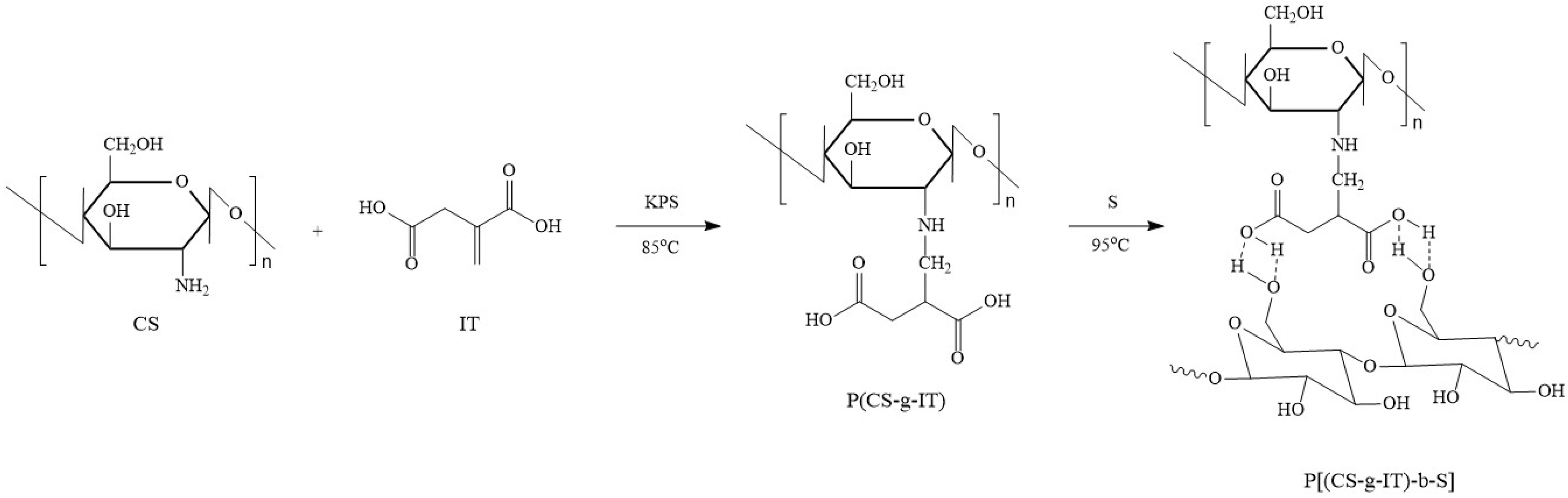
2.1. Synthesis of Chitosan-g-Itaconic Acid (CS-g-IT)
2.2. Synthesis of the Blend Copolymer P[(CS-g-IT)-b-S]
2.3. Film Formation
2.4. Measurements
2.4.1. Fourier-Transform Infrared (FTIR) Spectroscopy
2.4.2. Viscosity Analysis
2.4.3. Water Contact Angle Measurements
2.4.4. Scanning Electron Microscopy Analysis (SEM)
2.4.5. Thermogravimetric Analysis (TGA)
2.4.6. The Tensile Strength and Elongation at Break
2.5. Biodegradable Tests
3. Results and Discussion
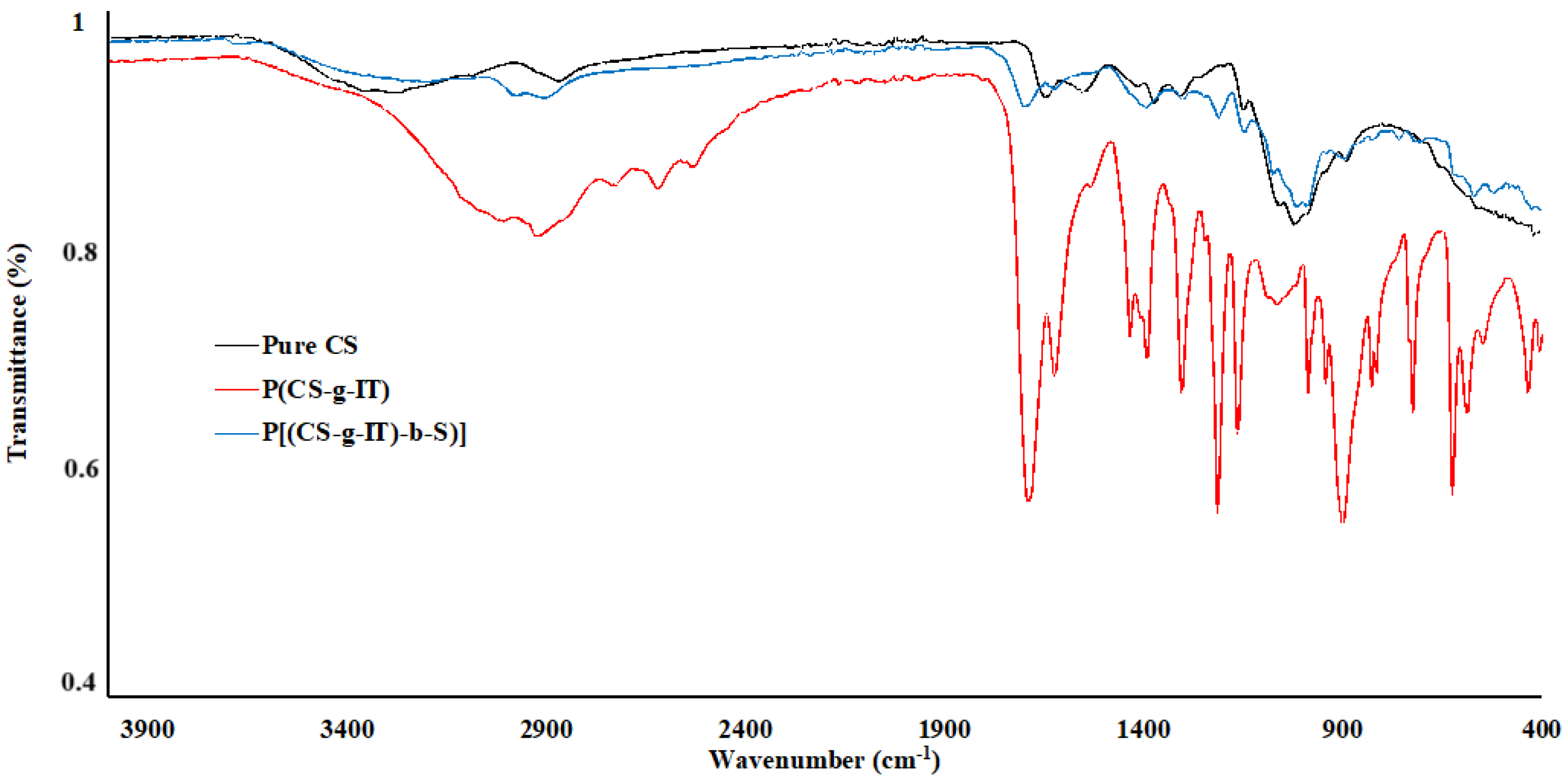
3.1. FTIR Spectra
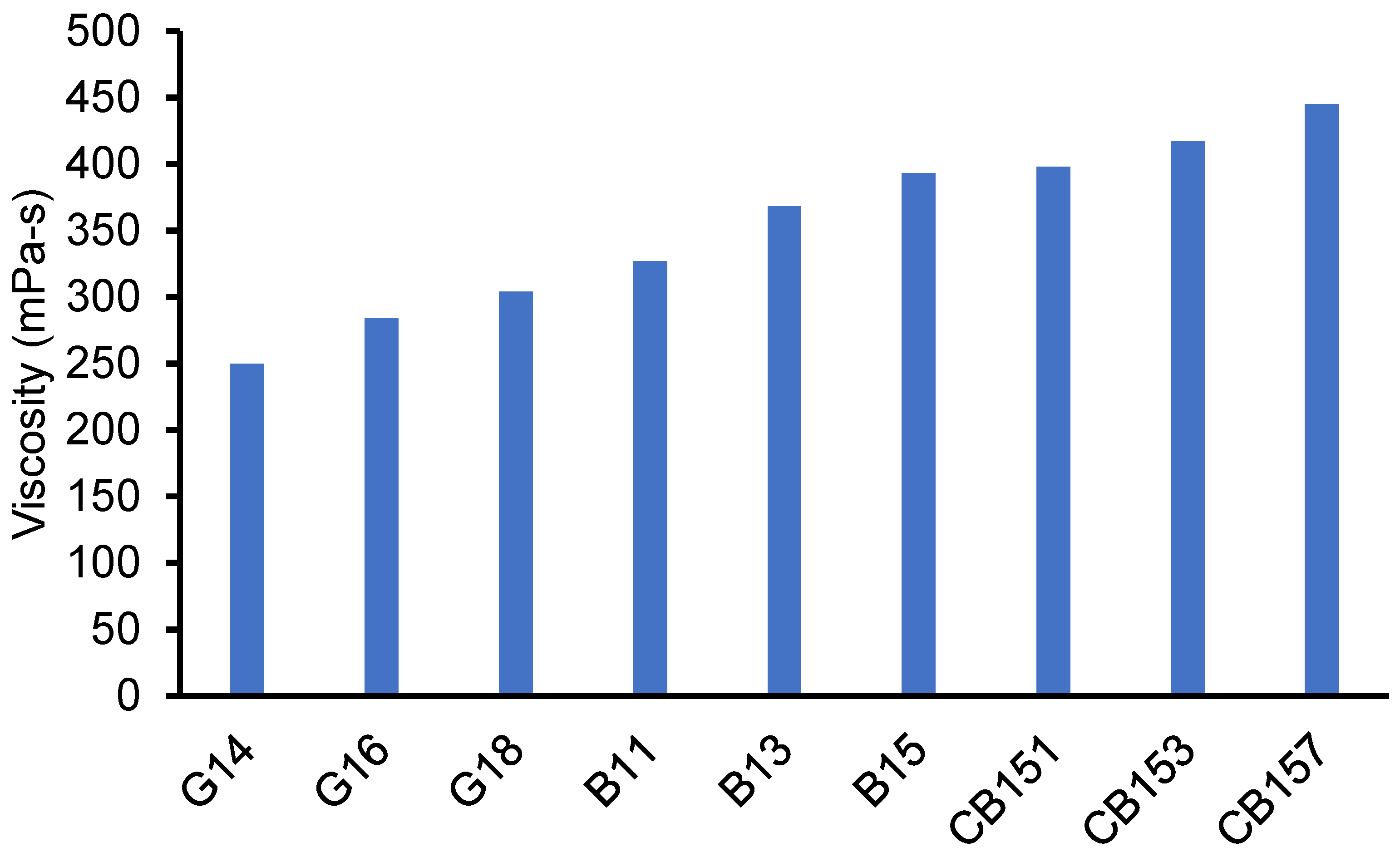
3.2. Viscosity
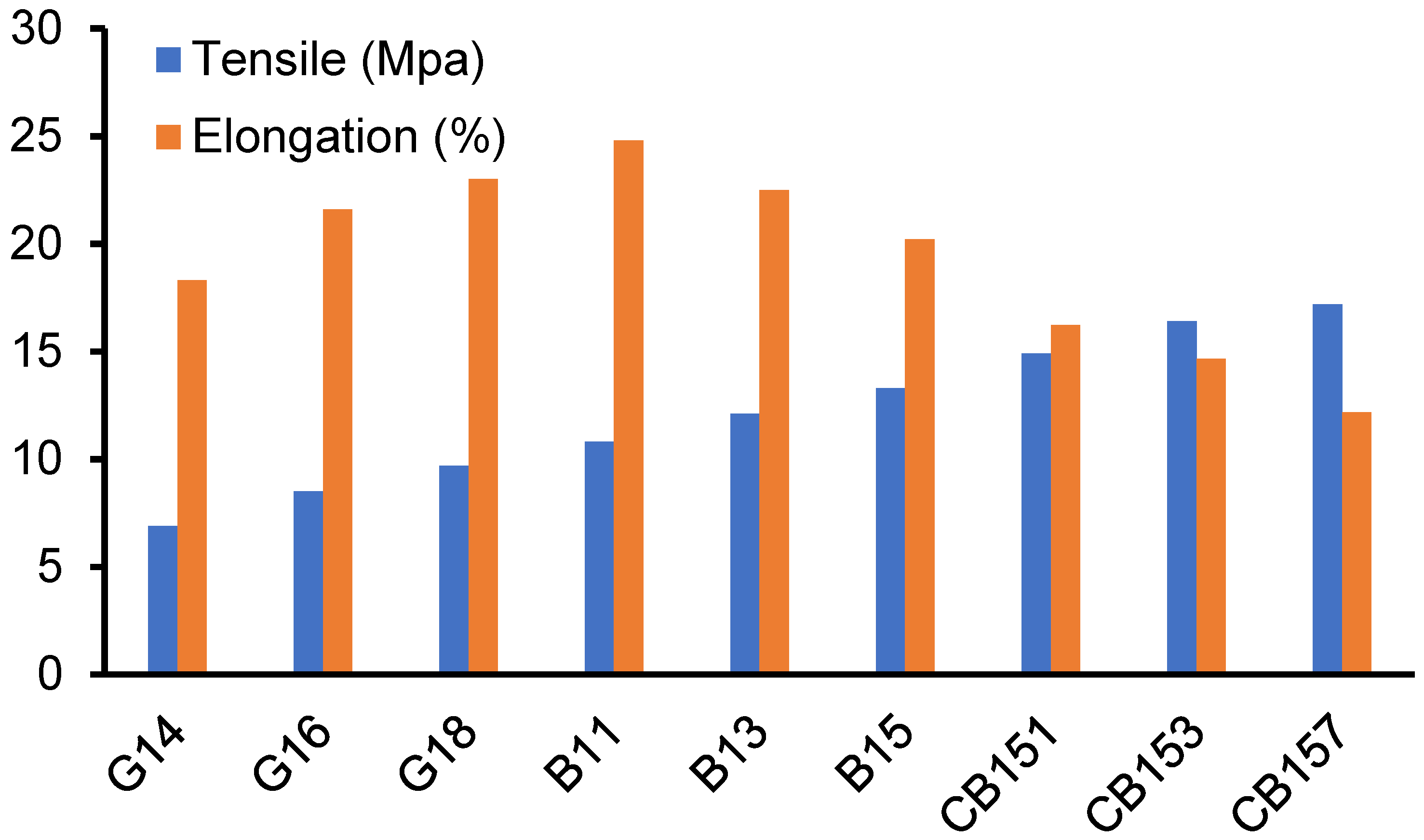
3.3. Mechanical Properties
3.4. Biodegradability Properties of P(CS-g-IT) and P[(CS-g-IT)-b-S)] Films
3.5. Thermogravimetric Analysis (TGA)
3.6. Scanning Electron Microscopy (SEM)
4. Conclusions
Author Contributions
Funding
Institutional Review Board Statement
Informed Consent Statement
Data Availability Statement
Conflicts of Interest
References
- Jha, K.; Kataria, R.; Verma, J.; Pradhan, S. Potential biodegradable matrices and fiber treatment for green composites: A review. AIMS Mater. Sci. 2019, 6, 119–138. [Google Scholar] [CrossRef]
- Samir, A.; Ashour, F.H.; Hakim, A.A.A.; Bassyouni, M. Recent advances in biodegradable polymers for sustainable applications. npj Mater. Degrad. 2022, 6, 68. [Google Scholar] [CrossRef]
- Samy, M.; Abd El-Alim, S.H.; Rabia, A.E.G.; Amin, A.; Ayoub, M.M.H. Formulation, characterization and in vitro release study of 5-fluorouracil loaded chitosan nanoparticles. Int. J. Biol. Macromol. 2020, 156, 783–791. [Google Scholar] [CrossRef] [PubMed]
- Lednev, I.; Salomatina, E.; Ilyina, S.; Zaitsev, S.; Kovylin, R.; Smirnova, L. Development of Biodegradable Polymer Blends Based on Chitosan and Polylactide and Study of Their Properties. Materials 2021, 14, 4900. [Google Scholar] [CrossRef] [PubMed]
- Garavand, Y.; Taheri-Garavand, A.; Garavand, F.; Shahbazi, F.; Khodaei, D.; Cacciotti, I. Starch-Polyvinyl Alcohol-Based Films Reinforced with Chitosan Nanoparticles: Physical, Mechanical, Structural, Thermal and Antimicrobial Properties. Appl. Sci. 2022, 12, 1111. [Google Scholar] [CrossRef]
- El-Hefian, E.A.; Nasef, M.M.; Yahaya, A.H. Chitosan-Based Polymer Blends: Current Status and Applications. J. Chem. Soc. Pak. 2014, 36, 11–27. Available online: https://www.researchgate.net/profile/Esam-Elhefian/publication/260870123_Chitosan-Based_Polymer_Blends_Current_Status_and_Applications/links/0f317536c5473d87dc000000/Chitosan-Based-Polymer-Blends-Current-Status-and-Applications.pdf (accessed on 5 March 2025).
- Saheed, I.O.; Oh, W.D.; Suah, F.B.M. Chitosan modifications for adsorption of pollutants—A review. J. Hazard. Mater. 2021, 408, 124889. [Google Scholar] [CrossRef]
- Wang, J.; Zhuang, S. Chitosan-based materials: Preparation, modification and application. J. Clean. Prod. 2022, 355, 131825. [Google Scholar] [CrossRef]
- Sharma, S.; Sudhakara, P.; Singh, J.; Ilyas, R.A.; Asyraf, M.R.M.; Razman, M.R. Critical Review of Biodegradable and Bioactive Polymer Composites for Bone Tissue Engineering and Drug Delivery Applications. Polymers 2021, 13, 2623. [Google Scholar] [CrossRef]
- Javaid, M.A.; Zia, K.M.; Zafar, K.; Khosa, M.K.; Akram, N.; Ajmal, M.; Imran, M.; Iqbal, M.N. Synthesis and molecular characterization of chitosan/starch blends-based polyurethanes. Int. J. Biol. Macromol. 2020, 146, 243–252. [Google Scholar] [CrossRef]
- Tanase, E.E.; Popa, M.E.; Rapa, M.; Popa, O. Preparation and characterization of biopolymer blends based on polyvinyl alcohol and starch. Rom. Biotechnol. Lett. 2015, 20, 10306–10315. Available online: https://www.researchgate.net/profile/Mona-Popa/publication/275582605_Preparation_and_characterization_of_biopolymer_blends_based_on_polyvinyl_alcohol_and_starch/links/553fcde40cf2736761c25912/Preparation-and-characterization-of-biopolymer-blends-based-on-polyvinyl-alcohol-and-starch.pdf (accessed on 5 March 2025).
- Rhowell, N.T., Jr.; Bonto, A.P.; Sreenivasulu, N. Enhancing the functional properties of rice starch through biopolymer blending for industrial applications: A review. Int. J. Biol. Macromol. 2021, 192, 100–117. [Google Scholar] [CrossRef]
- Lu, D.R.; Xiao, C.M.; Xu, S.J. Starch-based completely biodegradable polymer materials. Express Polym. Lett. 2009, 3, 366–375. [Google Scholar] [CrossRef]
- Karua, C.S.; Sahoo, A. Synthesis and characterization of starch/chitosan composites. Mater. Today Proc. 2020, 33, 5179–5183. [Google Scholar] [CrossRef]
- Soto, D.; Urdaneta, J.; Pernía, K.; León, O.; Muñoz-Bonilla, A.; Fernández-García, M. Heavy metal (Cd2+, Ni2+, Pb2+ and Ni2+) adsorption in aqueous solutions by oxidized starches. Polym. Adv. Technol. 2015, 26, 147–152. [Google Scholar] [CrossRef]
- Soto, D.; Urdaneta, J.; Pernía, K.; León, O.; Muñoz-Bonilla, A.; Fernandez-García, M. Removal of heavy metal ions in water by starch esters. Starch 2016, 68, 37–46. [Google Scholar] [CrossRef]
- Soto, D.; Urdaneta, J.; Pernia, K.; León, O.; Munoz-Bonilla, A.; Fernández-García, M. Itaconic acid grafted starch hydrogels as metal remover: Capacity, selectivity and adsorption kinetics. J. Polym. Environ. 2016, 24, 343–355. [Google Scholar] [CrossRef]
- Milosavljević, N.B.; Ristić, M.Đ.; Perić-Grujić, A.A.; Filipović, J.M.; Štrbac, S.B.; Rakočević, Z.L.; Krušić, M.T.K. Hydrogel based on chitosan, itaconic acid and methacrylic acid as adsorbent of Cd2+ ions from aqueous solution. Chem. Eng. J. 2010, 165, 554–562. [Google Scholar] [CrossRef]
- Işıklan, N.; Kurşun, F.; İnal, M. Graft copolymerization of itaconic acid onto sodium alginate using benzoyl peroxide. Carbohydr. Polym. 2010, 79, 665–672. [Google Scholar] [CrossRef]
- Garcia, P.S.; Baron, A.M.; Yamashita, F.; Mali, S.; Eiras, D.; Grossmann, M.V.E. Compatibilization of starch/poly (butylene adipate-co-terephthalate) blown films using itaconic acid and sodium hypophosphite. J. Appl. Polym. Sci. 2018, 135, 46629. [Google Scholar] [CrossRef]
- Devi, N.; Singh, S.; Manickam, S.; Cruz-Martins, N.; Kumar, V.; Verma, R.; Kumar, D. Itaconic Acid and Its Applications for Textile, Pharma and Agro-Industrial Purposes. Sustainability 2022, 14, 13777. [Google Scholar] [CrossRef]
- da Cruz, J.C.; de Castro, A.M.; Sérvulo, E.F.C. World market and biotechnological production of itaconic acid. 3 Biotech 2018, 8, 138. [Google Scholar] [CrossRef] [PubMed]
- Robert, T.; Friebel, S. Itaconic acid–A versatile building block for renewable polyesters with enhanced functionality. Green Chem. 2016, 18, 2922–2934. [Google Scholar] [CrossRef]
- Kumar, B.; Kumar, P. Synthesis and characterization of pH-sensitive nanocarrier based chitosan-g-poly (itaconic acid) for ciprofloxacin delivery for anti-bacterial application. Int. J. Biol. Macromol. 2024, 268, 131604. [Google Scholar] [CrossRef]
- Yusof, W.R.W.; Sabar, S.; Zailani, M.A. Starch-chitosan blends: A comprehensive review on the preparation, physicochemical properties and applications. Biopolymers 2024, 115, e23602. [Google Scholar] [CrossRef]
- Duquette, D.; Nzediegwu, C.; Portillo-Perez, G.; Dumont, M.; Prasher, S. Eco-Friendly Synthesis of Hydrogels from Starch, Citric Acid, and Itaconic Acid: Swelling Capacity and Metal Chelation Properties. Starch 2020, 72, 1900008. [Google Scholar] [CrossRef]
- Teleky, B.-E.; Vodnar, D.C. Recent advances in biotechnological itaconic acid production, and application for a sustainable approach. Polymers 2021, 13, 3574. [Google Scholar] [CrossRef]
- ASTM D882; Standard Test Method for Tensile Properties of Thin Plastic Sheeting. ASTM International (ASTM): West Conshohocken, PA, USA, 2018.
- Dharmalingam, S.; Hayes, D.G.; Wadsworth, L.C.; Dunlap, R.N. Analysis of the time course of degradation for fully biobased nonwoven agricultural mulches in compost-enriched soil. Text. Res. J. 2015, 86, 1343–1355. [Google Scholar] [CrossRef]
- Dai, F.; Zhuang, Q.; Huang, G.; Deng, H.; Zhang, X. Infrared Spectrum Characteristics and Quantification of OH Groups in Coal. ACS Omega 2023, 8, 17064–17076. [Google Scholar] [CrossRef]
- Melo-Silveira, R.F.; Fidelis, G.P.; Costa, M.S.S.P.; Telles, C.B.S.; Dantas-Santos, N.; Elias, S.d.O.; Ribeiro, V.B.; Barth, A.L.; Macedo, A.J.; Leite, E.L.; et al. In Vitro Antioxidant, Anticoagulant and Antimicrobial Activity and in Inhibition of Cancer Cell Proliferation by Xylan Extracted from Corn Cobs. Int. J. Mol. Sci. 2011, 13, 409–426. [Google Scholar] [CrossRef]
- Silva, F.R.F.; Dore, C.M.P.G.; Marques, C.T.; Nascimento, M.S.; Benevides, N.M.B.; Rocha, H.A.O.; Chavante, S.F.; Leite, E.L. Anticoagulant activity, paw edema and pleurisy induced carrageenan: Action of major types of commercial carrageenans. Carbohydr. Polym. 2010, 79, 26–33. [Google Scholar] [CrossRef]
- Vino, A.B.; Ramasamy, P.; Shanmugam, V.; Shanmugam, A. Extraction, characterization and in vitro antioxidative potential of chitosan and sulfated chitosan from Cuttlebone of Sepia aculeata Orbigny, 1848. Asian Pac. J. Trop. Biomed. 2012, 2, S334–S341. [Google Scholar] [CrossRef]
- Song, C.; Yu, H.; Zhang, M.; Yang, Y.; Zhang, G. Physicochemical properties and antioxidant activity of chitosan from the blowfly Chrysomya megacephala larvae. Int. J. Biol. Macromol. 2013, 60, 347–354. [Google Scholar] [CrossRef] [PubMed]
- Ngwabebhoh, F.A.; Gazi, M.; Oladipo, A.A. Adsorptive removal of multi-azo dye from aqueous phase using a semi-IPN superabsorbent chitosan-starch hydrogel. Chem. Eng. Res. Des. 2016, 112, 274–288. [Google Scholar] [CrossRef]
- Lozano-Navarro, J.; Díaz-Zavala, N.; Velasco-Santos, C.; Melo-Banda, J.; Páramo-García, U.; Paraguay-Delgado, F.; García-Alamilla, R.; Martínez-Hernández, A.; Zapién-Castillo, S. Chitosan-Starch Films with Natural Extracts: Physical, Chemical, Morphological and Thermal Properties. Materials 2018, 11, 120. [Google Scholar] [CrossRef]
- Gao, Y.; Wu, J.; Feng, Y.; Han, J.; Fang, H. Effects of Hydrogen Bond Networks on Viscosity in Aqueous Solutions. J. Phys. Chem. B 2024, 128, 8984–8996. [Google Scholar] [CrossRef]
- Shah, N.; Mewada, R.K.; Mehta, T. Crosslinking of starch and its effect on viscosity behaviour. Rev. Chem. Eng. 2016, 32, 265–270. [Google Scholar] [CrossRef]
- Li, H.-Z.; Chen, S.-C.; Wang, Y.-Z. Thermoplastic PVA/PLA Blends with Improved Processability and Hydrophobicity. Ind. Eng. Chem. Res. 2014, 53, 17355–17361. [Google Scholar] [CrossRef]
- Olzhabay, A.T.; Urkimayeva, P.I.; Kenessova, Z.A.; Yespenbetova, S.O.; Negim, E.-S. Development of a technology for processing waste plastic bottles and bags to obtain various types of biodegradable polymer films. Int. J. Biol. Chem. 2022, 15, 107–116. [Google Scholar] [CrossRef]
- Tavares, K.M.; de Campos, A.; Mitsuyuki, M.C.; Luchesi, B.R.; Marconcini, J.M. Corn and cassava starch with carboxymethyl cellulose films and its mechanical and hydrophobic properties. Carbohydr. Polym. 2019, 223, 115055. [Google Scholar] [CrossRef]
- Menzel, C.; González-Martínez, C.; Vilaplana, F.; Diretto, G.; Chiralt, A. Incorporation of natural antioxidants from rice straw into renewable starch films. Int. J. Biol. Macromol. 2020, 146, 976–986. [Google Scholar] [CrossRef] [PubMed]
- Wei, D.; Li, X.; Heng, W.; Koizumi, Y.; He, F.; Choi, W.-M.; Lee, B.-J.; Kim, H.S.; Kato, H.; Chiba, A. Novel Co-rich high entropy alloys with superior tensile properties. Mater. Res. Lett. 2018, 7, 82–88. [Google Scholar] [CrossRef]
- Derkowski, A.; Kuligiewicz, A. Thermal Analysis and Thermal Reactions of Smectites: A Review of Methodology, Mechanisms, and Kinetics. Clays Clay Miner. 2022, 70, 946–972. [Google Scholar] [CrossRef]
- Liu, J.; Jia, C.; He, C. Rice Straw and Cornstarch Biodegradable Composites. AASRI Procedia 2012, 3, 83–88. [Google Scholar] [CrossRef]
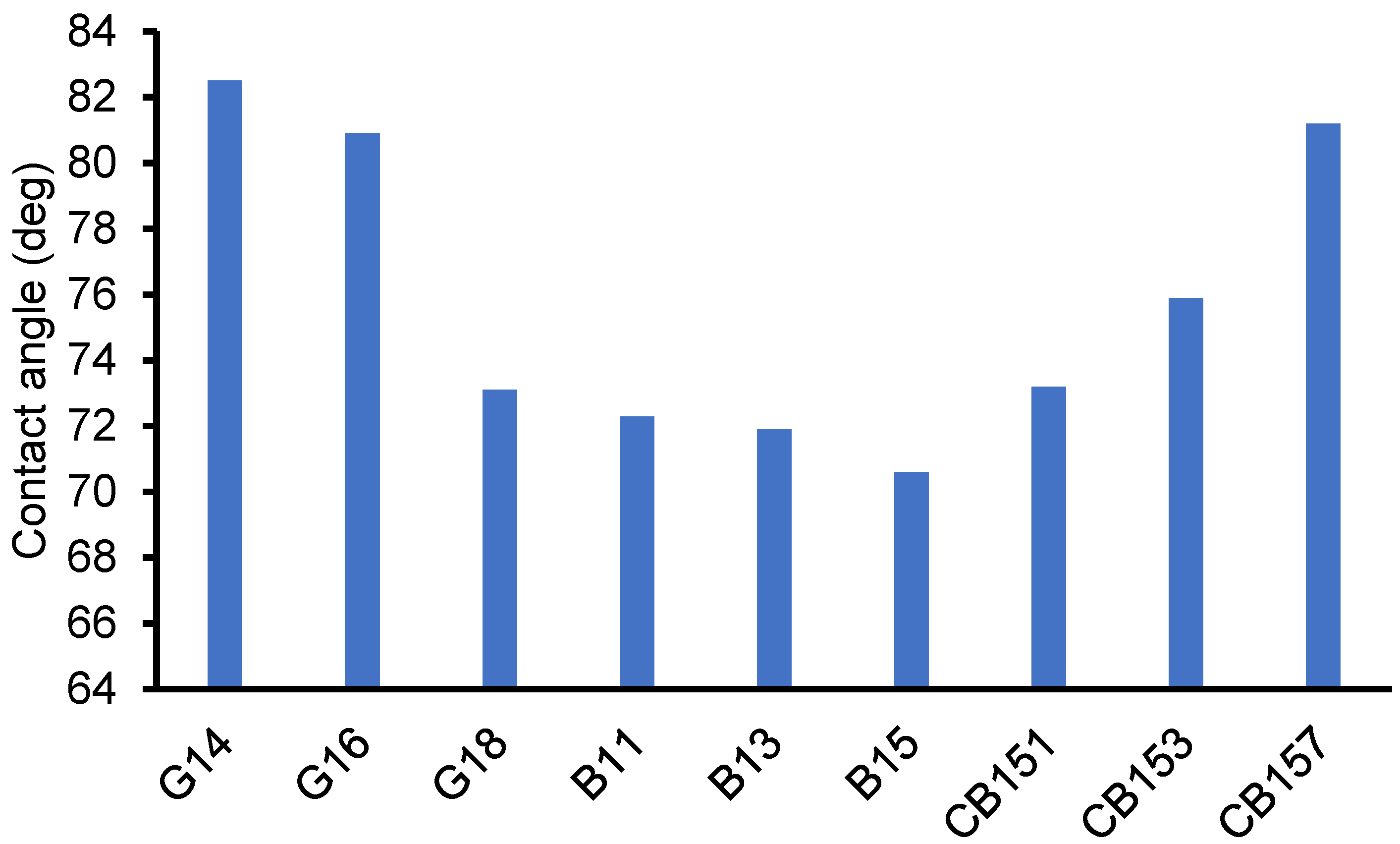
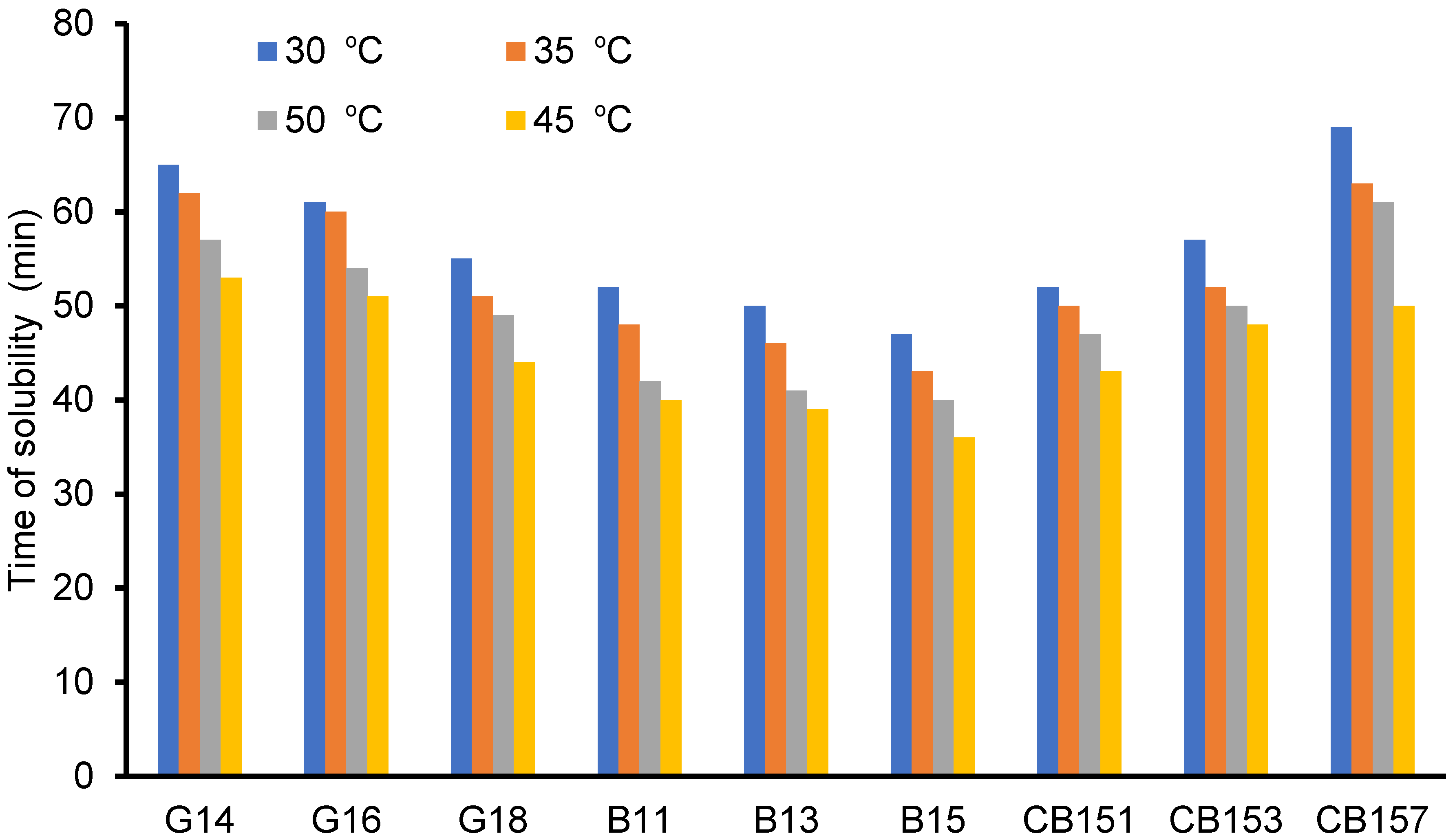
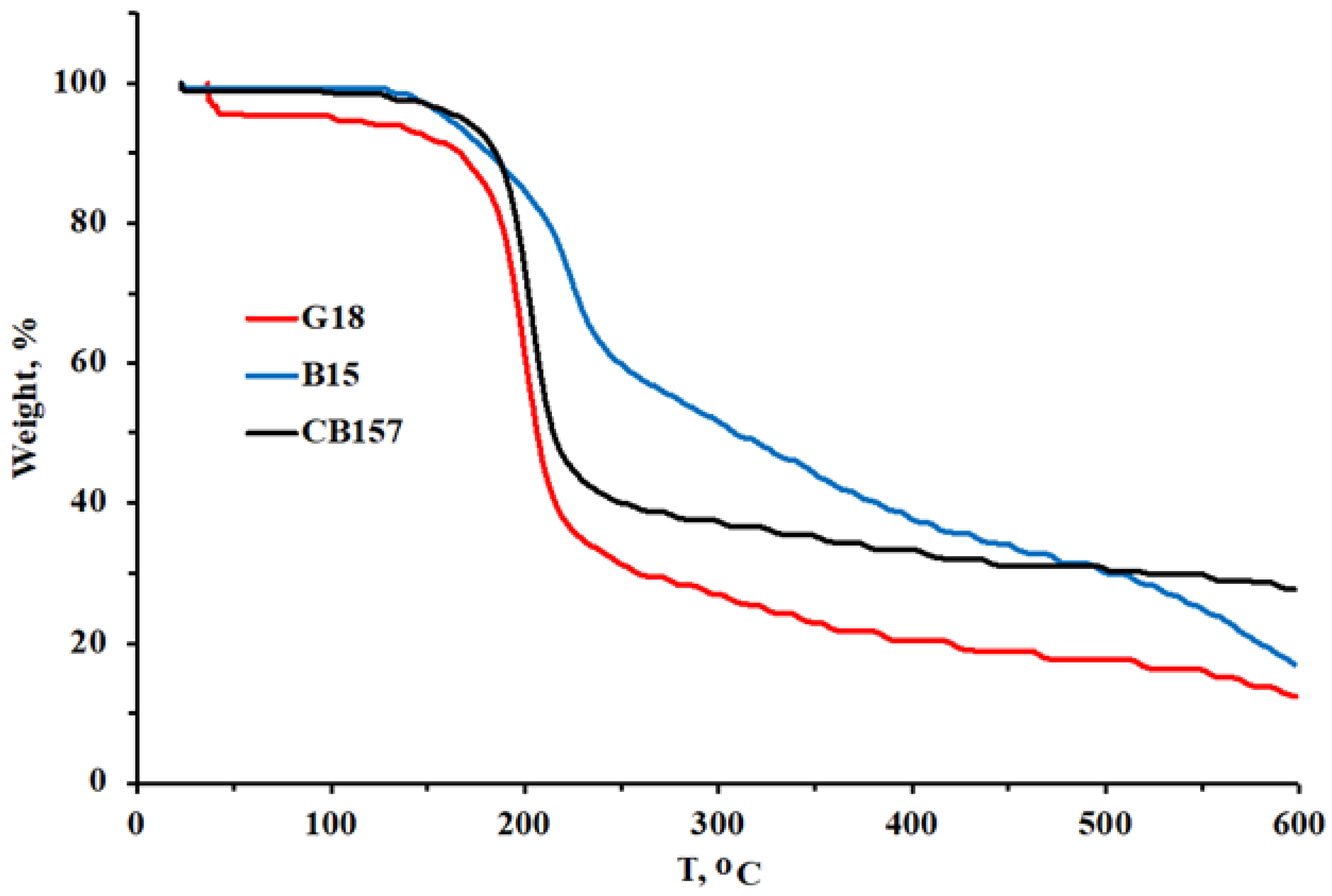
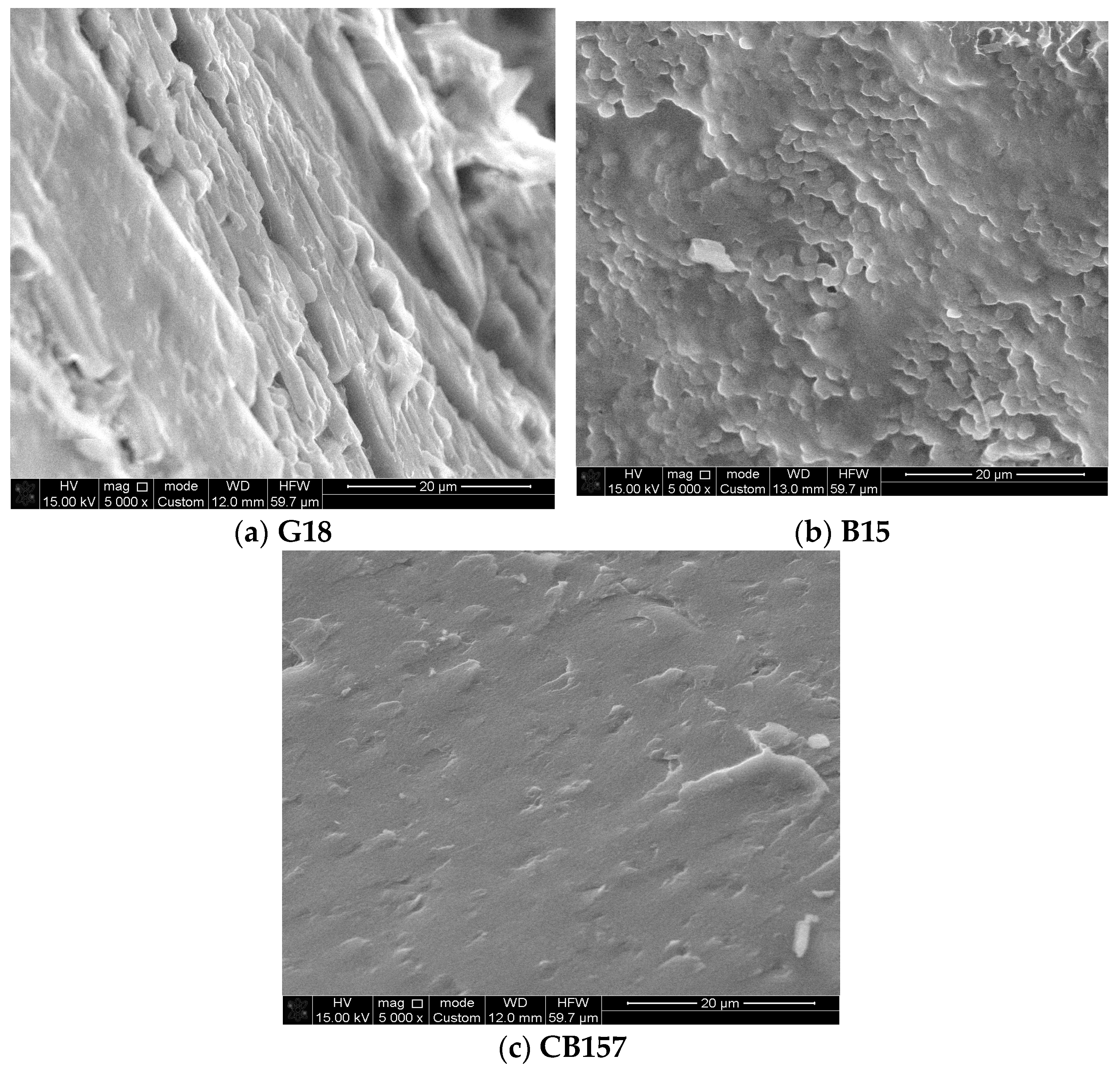

| Samples/ Ingredients | P(CS-g-IT) Wt. % | Samples/ Ingredients | P[(G18)-b-S] Wt. % | Samples/ Ingredients | P[(B15)-b-S] + Carbon Black (C), Wt. % | |||
|---|---|---|---|---|---|---|---|---|
| CS | IT | G18 | S | B15 | C | |||
| G14 | 1 | 4 | B11 | 1 | 1 | CB151 | 1 | 1 |
| G16 | 1 | 6 | B13 | 1 | 3 | CB153 | 1 | 3 |
| G18 | 1 | 8 | B15 | 1 | 5 | CB157 | 1 | 7 |
| Time of Film Weight Until 90% (Days) | |||||
|---|---|---|---|---|---|
| Samples | P(CS-g-IT) | Samples | P[(G18)-b-S] | Samples | CB (B15 + C) |
| G14 | 39 | B11 | 32 | CB151 | 33 |
| G16 | 34 | B13 | 30 | CB153 | 38 |
| G18 | 32 | B15 | 27 | CB157 | 41 |
| Samples No. | Ingredients | Weight Loss (%) | Temperature, °C |
|---|---|---|---|
| G18 | P(CS-g-IT) (1:8) | 7.69 | 36.7–161.59 |
| 65.88 | 161.59–323.1 | ||
| 23.86 | 323.1–598.1 | ||
| B15 | P[(G18)-b-S] (1:5) | 3.4 | 23.27–153.11 |
| 48.89 | 153.11–327.41 | ||
| 19.39 | 327.41–597.89 | ||
| CB157 | P[(B15) + C] (1:7) | 5.56 | 23.75–174.63 |
| 57.36 | 174.63–325.27 | ||
| 8.58 | 325.27–597.57 |
Disclaimer/Publisher’s Note: The statements, opinions and data contained in all publications are solely those of the individual author(s) and contributor(s) and not of MDPI and/or the editor(s). MDPI and/or the editor(s) disclaim responsibility for any injury to people or property resulting from any ideas, methods, instructions or products referred to in the content. |
© 2025 by the authors. Licensee MDPI, Basel, Switzerland. This article is an open access article distributed under the terms and conditions of the Creative Commons Attribution (CC BY) license (https://creativecommons.org/licenses/by/4.0/).
Share and Cite
Bekbayeva, L.; Mun, G.A.; Yermukhambetova, B.B.; Negim, E.-S.; Irmukhametova, G.; Al Azzam, K.M.; Nechipurenko, S.V.; Efremov, S.A.; Yermaganbetov, M.; Samy, M. Synthesis and Characterization of Biodegradable Polymer Blends Based on Chitosan. Polymers 2025, 17, 1853. https://doi.org/10.3390/polym17131853
Bekbayeva L, Mun GA, Yermukhambetova BB, Negim E-S, Irmukhametova G, Al Azzam KM, Nechipurenko SV, Efremov SA, Yermaganbetov M, Samy M. Synthesis and Characterization of Biodegradable Polymer Blends Based on Chitosan. Polymers. 2025; 17(13):1853. https://doi.org/10.3390/polym17131853
Chicago/Turabian StyleBekbayeva, Lyazzat, Grigoriy A. Mun, Bayana B. Yermukhambetova, El-Sayed Negim, Galiya Irmukhametova, Khaldun M. Al Azzam, Sergey V. Nechipurenko, Sergey A. Efremov, Mubarak Yermaganbetov, and Moshera Samy. 2025. "Synthesis and Characterization of Biodegradable Polymer Blends Based on Chitosan" Polymers 17, no. 13: 1853. https://doi.org/10.3390/polym17131853
APA StyleBekbayeva, L., Mun, G. A., Yermukhambetova, B. B., Negim, E.-S., Irmukhametova, G., Al Azzam, K. M., Nechipurenko, S. V., Efremov, S. A., Yermaganbetov, M., & Samy, M. (2025). Synthesis and Characterization of Biodegradable Polymer Blends Based on Chitosan. Polymers, 17(13), 1853. https://doi.org/10.3390/polym17131853

