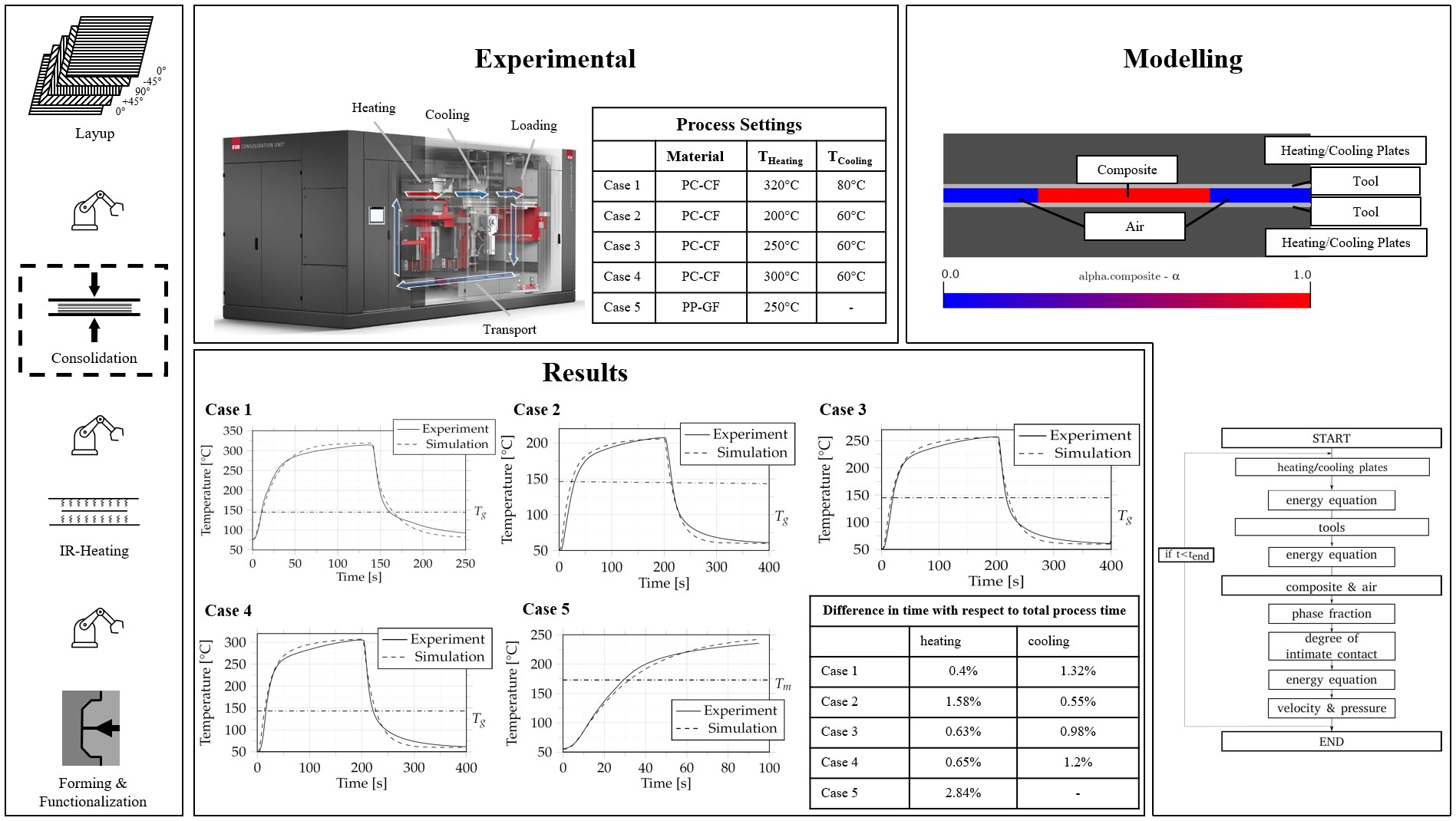
A Novel Multi-Region, Multi-Phase, Multi-Component-Mixture Modeling Approach to Predicting the Thermodynamic Behaviour of Thermoplastic Composites during the Consolidation Process


 ,
, Abstract
Share and Cite
Kobler, E.; Birtha, J.; Marschik, C.; Straka, K.; Steinbichler, G.; Zwicklhuber, P.; Schlecht, S. A Novel Multi-Region, Multi-Phase, Multi-Component-Mixture Modeling Approach to Predicting the Thermodynamic Behaviour of Thermoplastic Composites during the Consolidation Process. Polymers 2022, 14, 4785. https://doi.org/10.3390/polym14214785
Kobler E, Birtha J, Marschik C, Straka K, Steinbichler G, Zwicklhuber P, Schlecht S. A Novel Multi-Region, Multi-Phase, Multi-Component-Mixture Modeling Approach to Predicting the Thermodynamic Behaviour of Thermoplastic Composites during the Consolidation Process. Polymers. 2022; 14(21):4785. https://doi.org/10.3390/polym14214785
Chicago/Turabian StyleKobler, Eva, Janos Birtha, Christian Marschik, Klaus Straka, Georg Steinbichler, Paul Zwicklhuber, and Sven Schlecht. 2022. "A Novel Multi-Region, Multi-Phase, Multi-Component-Mixture Modeling Approach to Predicting the Thermodynamic Behaviour of Thermoplastic Composites during the Consolidation Process" Polymers 14, no. 21: 4785. https://doi.org/10.3390/polym14214785
APA StyleKobler, E., Birtha, J., Marschik, C., Straka, K., Steinbichler, G., Zwicklhuber, P., & Schlecht, S. (2022). A Novel Multi-Region, Multi-Phase, Multi-Component-Mixture Modeling Approach to Predicting the Thermodynamic Behaviour of Thermoplastic Composites during the Consolidation Process. Polymers, 14(21), 4785. https://doi.org/10.3390/polym14214785