Article

Volume Change during Creep and Micromechanical Deformation Processes in PLA–PBSA Binary Blends

by
Laura Aliotta
1,2,*,
Vito Gigante
1,2,
Maria-Beatrice Coltelli
1,2 and
Andrea Lazzeri
1,2,*
1
Department of Civil and Industrial Engineering, University of Pisa, 56122 Pisa, Italy
2
National Interuniversity Consortium of Materials Science and Technology (INSTM), 50121 Florence, Italy
*
Authors to whom correspondence should be addressed.
Polymers 2021, 13(14), 2379; https://doi.org/10.3390/polym13142379
Submission received: 29 June 2021 / Revised: 14 July 2021 / Accepted: 16 July 2021 / Published: 20 July 2021
(This article belongs to the Special Issue Biobased Polymers for Environmental Applications)

Abstract

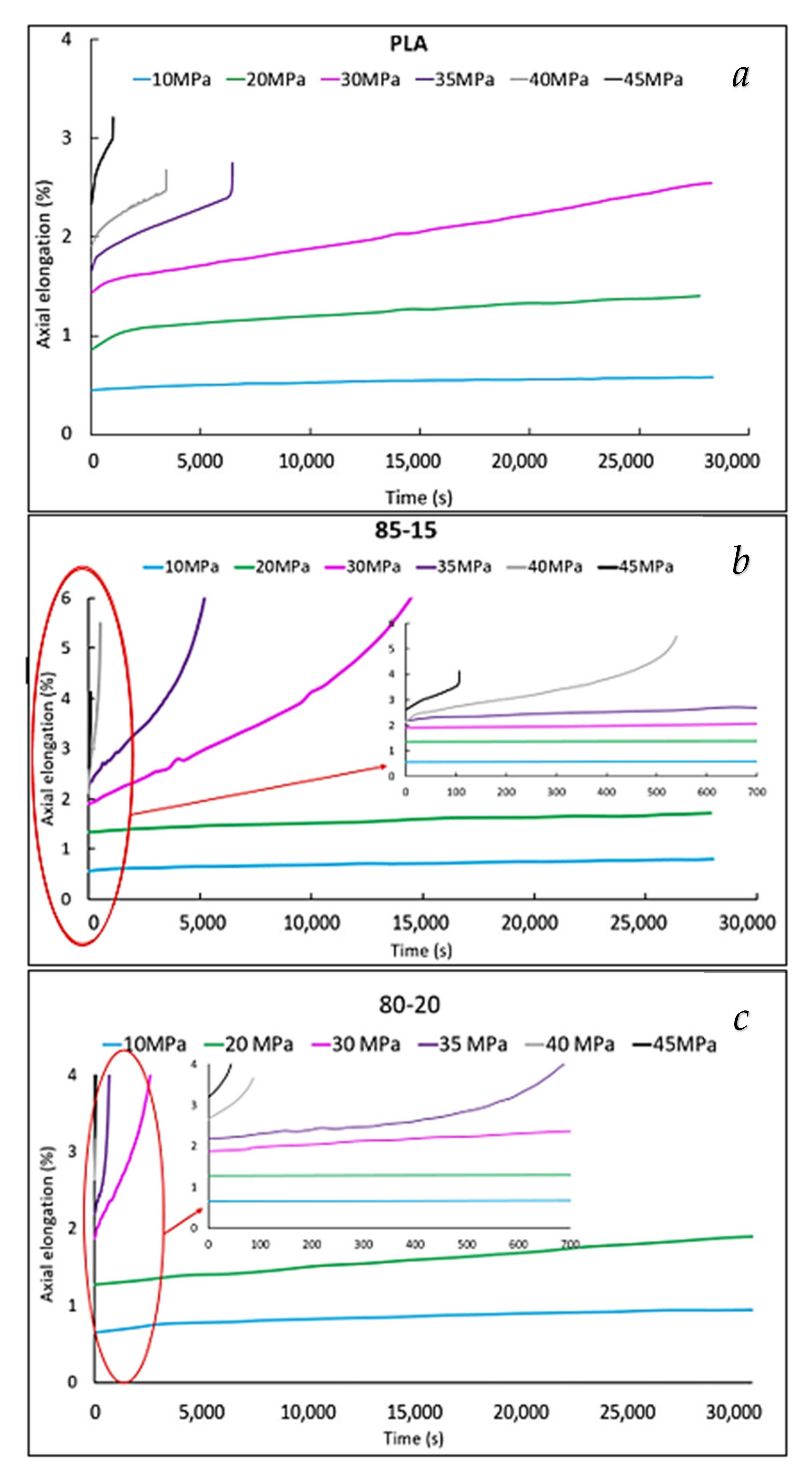
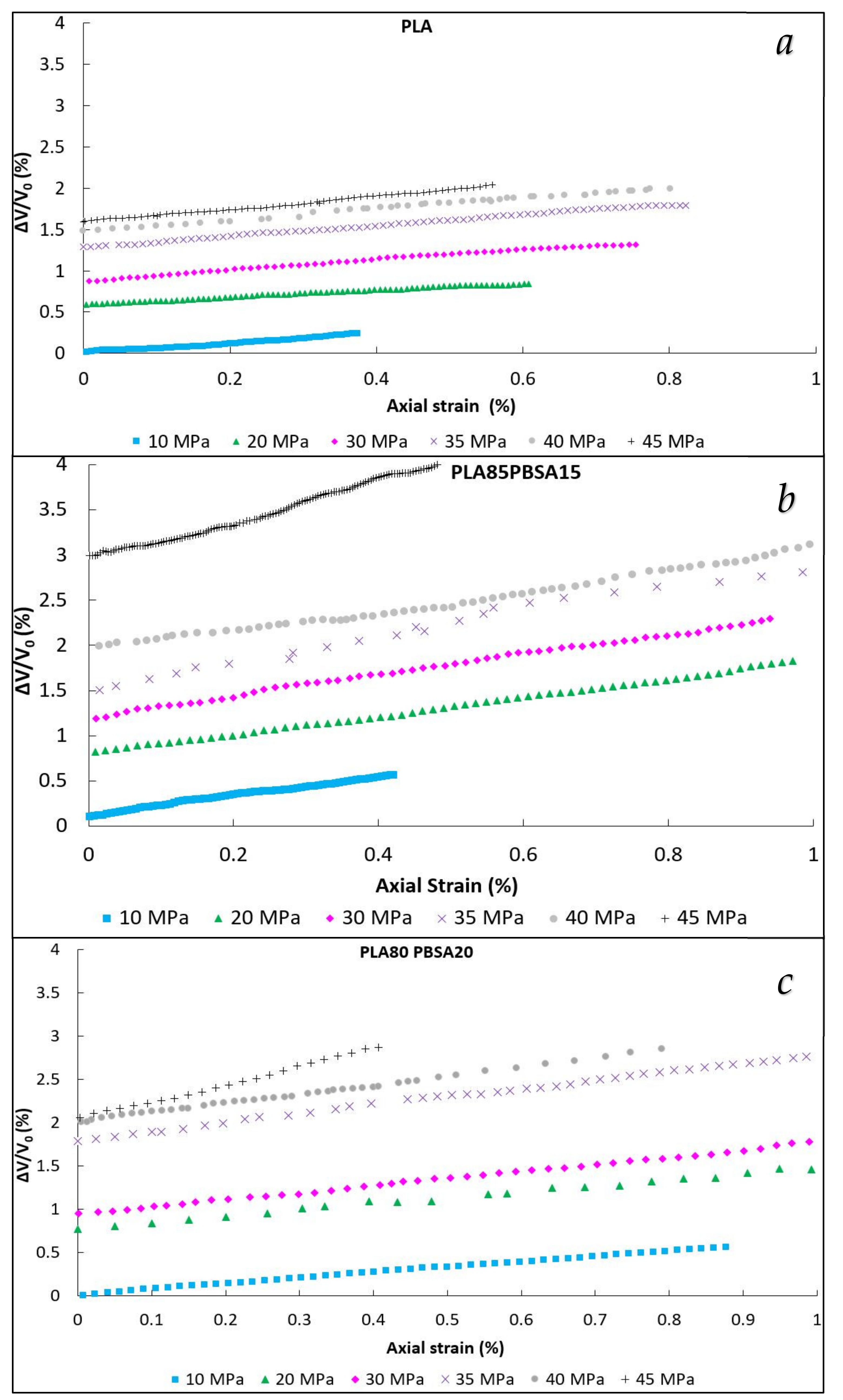
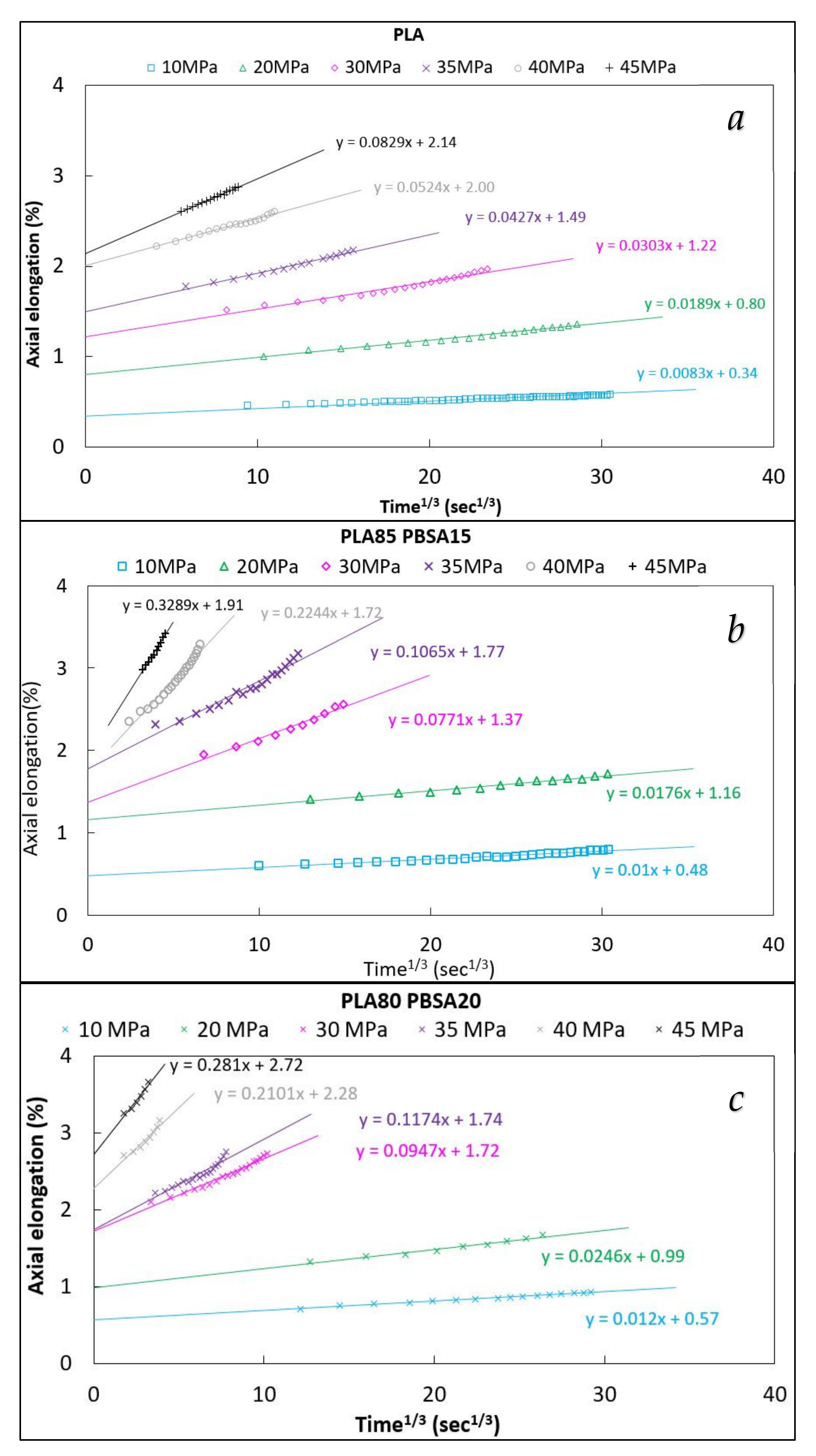
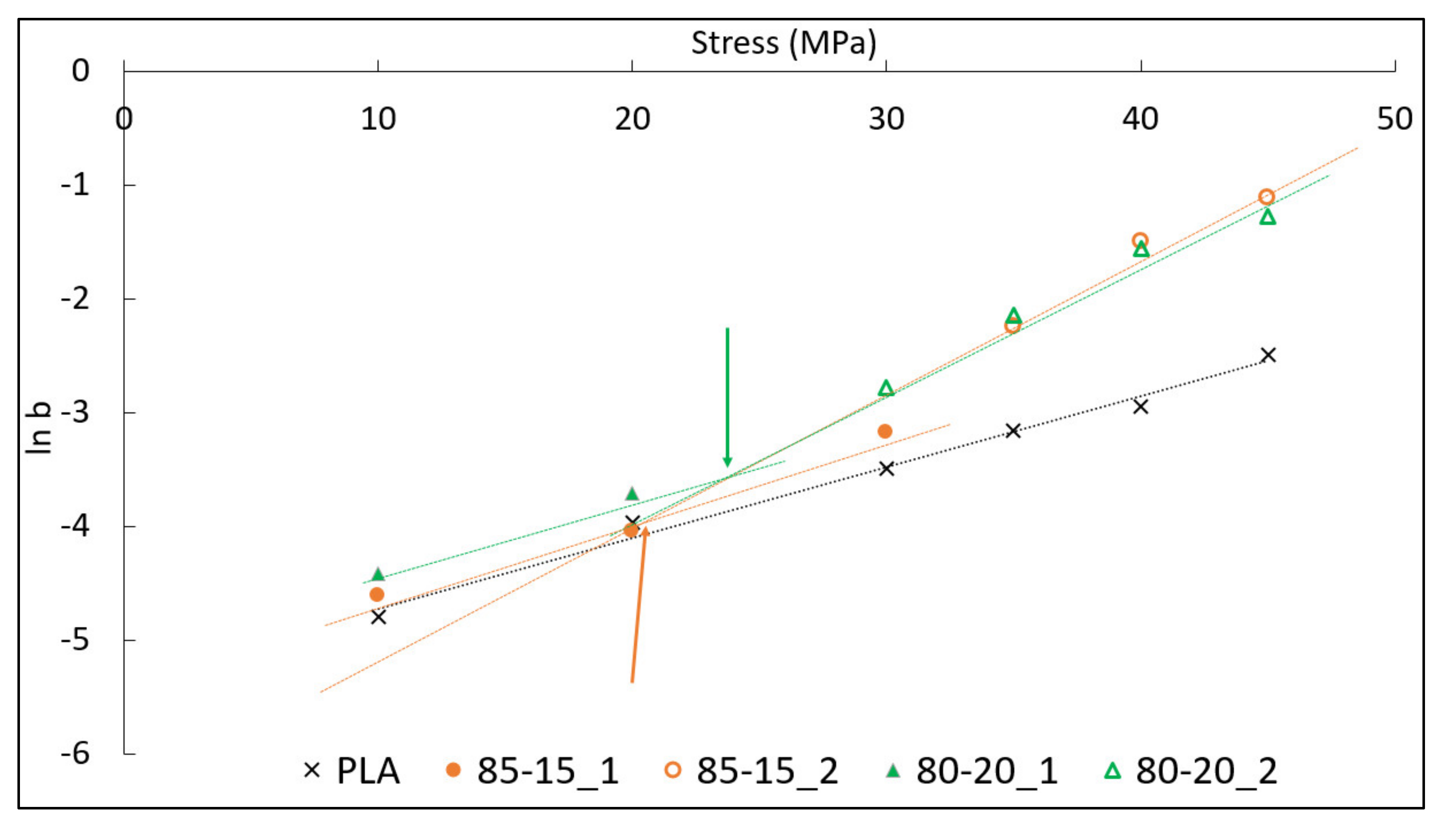
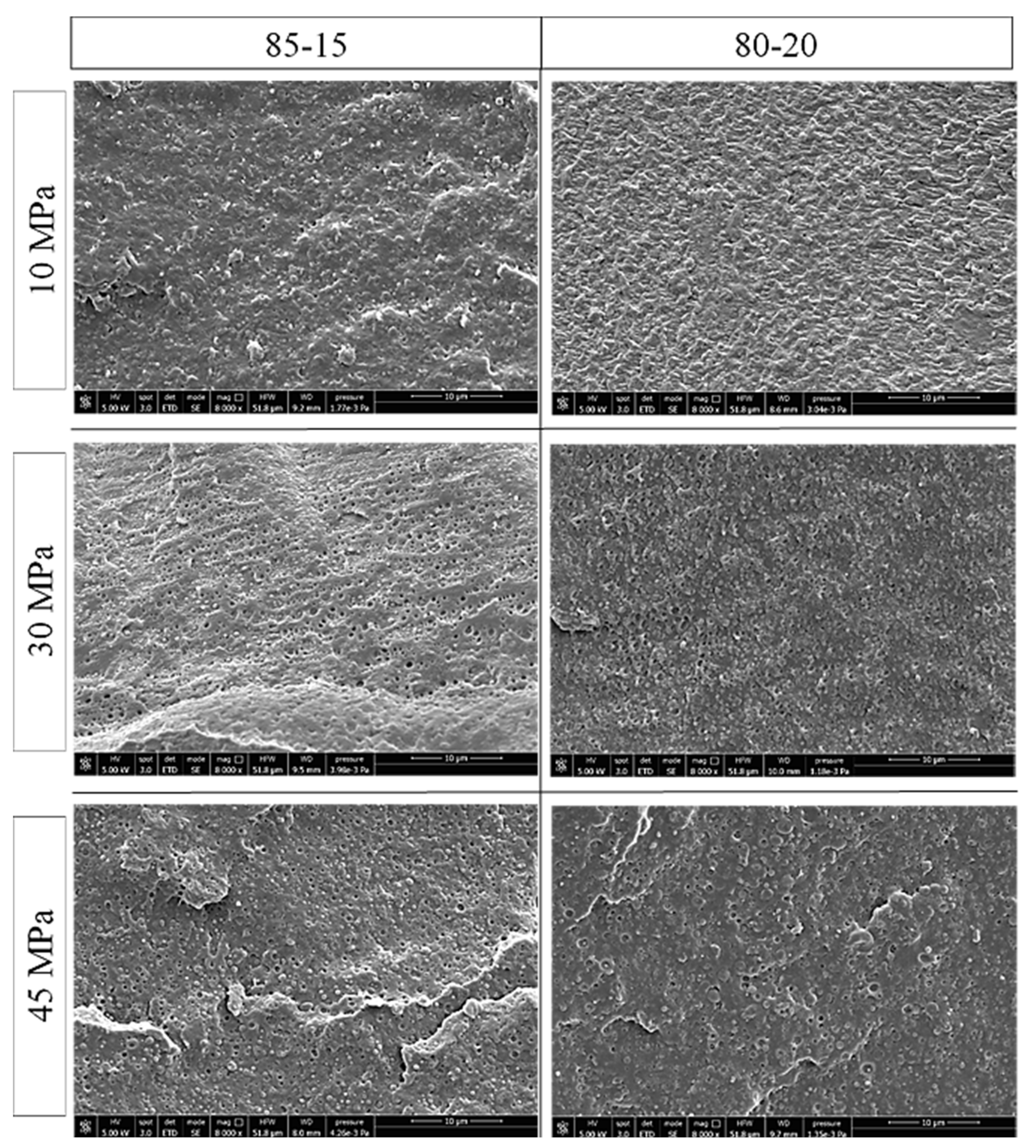
In this paper, creep measurements were carried out on poly(lactic acid) (PLA) and its blends with poly(butylene succinate-adipate) (PBSA) to investigate the specific micromechanical behavior of these materials, which are promising for replacing fossil-based plastics in several applications. Two different PBSA contents at 15 and 20 wt.% were investigated, and the binary blends were named 85-15 and 80-20, respectively. Measurements of the volume strain, using an optical extensometer, were carried out with a universal testing machine in creep configuration to determine, accompanied by SEM images, the deformation processes occurring in a biopolymeric blend. With the aim of correlating the creep and the dilatation variation, analytical models were applied for the first time in biopolymeric binary blends. By using an Eyring plot, a significant change in the curves was found, and it coincided with the onset of the cavitation/debonding mechanism. Furthermore, starting from the data of the pure PLA matrix, using the Eyring relationship, an apparent stress concentration factor was calculated for PLA-PBSA systems. From this study, it emerged that the introduction of PBSA particles causes an increment in the apparent stress intensity factor, and this can be ascribed to the lower adhesion between the two biopolymers. Furthermore, as also confirmed by SEM analysis, it was found that debonding was the main micromechanical mechanism responsible for the volume variation under creep configuration; it was found that debonding starts earlier (at a lower stress level) for the 85-15 blend.
Keywords: binary blends; creep; micromechanics binary blends; creep; micromechanics