1. Introduction
Costruzioni Motori Diesel (CMD) developed a wooden biomass pyro-gasification plant, the CMD ECO 20, for the combined production of electrical and thermal energy via thermo-chemical decomposition or molecular dissociation of green wastes at high temperature (from 600 to 1000 °C), in complete absence or minimum quantities of oxygen. This emerging technology improves the efficient use of energy and reduces the environmental impact, by containing the consumption of primary energy and emission of the associated greenhouse gas; in addition, it complies with social aims to decentralize the energy supplied in rural area [
1,
2]. However, the CMD ECO 20 system produces carbon-based waste, in the form of ashes, the disposal of which constitutes an economic and environmental burden for the company. This paper proposes an original and advantageous re-use of these carbon ashes.
Currently, the potential uses of carbon-based ashes mostly include soil amendment and fertilization methods, followed by the production of construction materials and sorbents, and the synthesis and production of ceramics and other materials [
3]. Several studies [
4,
5,
6,
7,
8] reported the application of the carbon-based ashes, generated mostly via the combustion of biomass, as fertilizer of forest and agricultural soils. However, some ashes should be avoided for soil application because they are commonly highly contaminated with hazardous trace elements such as As, B, Ba, Cd, Cr, Cu, Hg, Mn, Mo, Ni, Pb, Se, Zn, and others. The production of construction materials (especially cement and concrete) currently offers the most valuable opportunities to recycle carbon-based ashes [
9,
10,
11,
12]. Carbon-based ashes also possess remarkable adsorption capacity, and some of them, such as those produced via the combustion of wooden biomass, were used and tested as innovative and effective adsorbents for the removal of different elements and compounds from gas emissions and/or wastewater [
13,
14]. Furthermore, some carbon-based ashes were studied for the potential production of different ceramics [
15,
16], mineral fibers, and zeolites [
15].
In this work, an innovative reutilization of carbon-based ashes as catalysts for the crosslinking reaction of epoxy resins with amines is explored. In References [
17,
18,
19,
20], the catalytic activities of non-recycled oxidized carbon black (oCB) and graphene oxide (eGO) samples on the kinetics of a reaction of diglycidyl ether of bisphenol A (DGEBA) with a diamine were already deeply analyzed with promising results. Nevertheless, the purpose of this study is to recycle carbon-based waste, produced from wooden biomass pyro-gasification, and to use those fillers as possible catalysts for the crosslinking reaction of the diglycidyl ether of bisphenol A (DGEBA) resin with amines. To the knowledge of the authors, the use of such a filler for the described purpose is not reported in the literature. Given the particular nature and variable composition of this recycled component (i.e., C, K, Ca, O), a number of preparation steps are necessary. The synthesis of catalysts from waste materials became increasingly popular over the past two decades. Recycling waste materials is highly advantageous, since financial and environmental costs are associated with their disposal. Therefore, the conversion of this residue into a valuable catalyst product could significantly reduce these expenses.
Carbon-based ashes, generated from wooden biomass combustion, are used as catalysts mainly for oxidation applications [
21]. The wood ashes catalytically oxidize hydrogen sulfide (H
2S) and methanethiol (CH
3SH) at low temperature (23–25 °C). They have a significantly higher surface area compared to coal ashes, resulting in a higher initial H
2S removal rate under similar conditions [
22]. The wood ashes also catalytically oxidize H
2S using O
2, and oxidize volatile organic sulfur compounds and propanol in the presence of ozone [
23,
24]. Additionally, the wood ashes are low-cost catalysts for the oxidation of 2-methylbutanal and hexane vapors at low temperature (15–160 °C) using oxygen and ozone as oxidants [
25].
A sulfonated green carbon catalyst was also produced from in situ carbonization and sulfonation of lignocellulosic biomass for the tertiary butylation of phenol, exhibiting comparable catalytic performance up to five reaction cycles [
26]. A by-product of the fast pyrolysis of the woody biomass, i.e., biochar, was investigated as a solid acid catalyst for the simultaneous transesterification and esterification of a mixture of canola oil and oleic acid for the production of biodiesel [
27].
In this study, two fillers were prepared from the carbon-based waste ashes of the CMD ECO 20 pyro-gasification plant. The carbon ashes were firstly ball-milled in dry conditions and then oxidized with a simple and eco-friendly procedure, i.e., by using H2O2. The oxidized and un-oxidized wastes samples were then characterized via wide-angle x-ray diffraction (WAXD), Fourier-transform infrared (FTIR) spectroscopy, and thermogravimetric analysis (TGA), before being tested as possible catalysts for the crosslinking reaction of a diclycidyl ether of bisphenol A (DGEBA) with a diamine. The neat epoxy and carbon-based ash epoxy, filled with oxidized and un-oxidized fillers, were cured, and the flexural properties of all the samples were measured and compared each other.
Since the possibility to both reinforce and catalyze an epoxy resin by means of carbon-based waste ashes was not yet fully investigated, the biomass waste recycling for this application assumed a primary importance, allowing the reinforcement of the matrix, the decrease of the curing time of the epoxy resin, and the increase of the efficiency of waste management with the reduction of its negative effects on the environment and on the population.
4. Conclusions
The effect of the un-oxidized (DBA) and oxidized (oDBA) carbon waste ashes as possible catalysts of the crosslinking reaction of the diglycidyl ether of bisphenol A (DGEBA) resin with amines was studied.
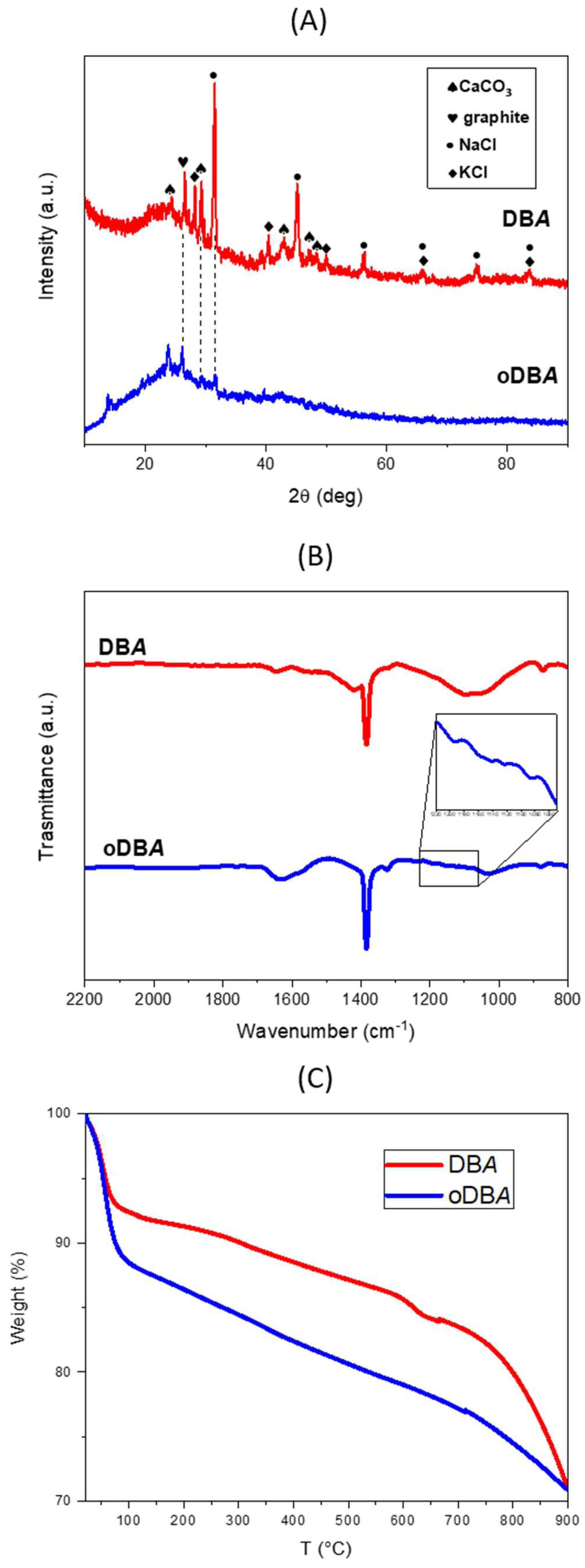
The oxidation of DBA was obtained with a simple and eco-friendly procedure using H2O2, and the FTIR and TGA results confirmed the successful DBA oxidation reaction.
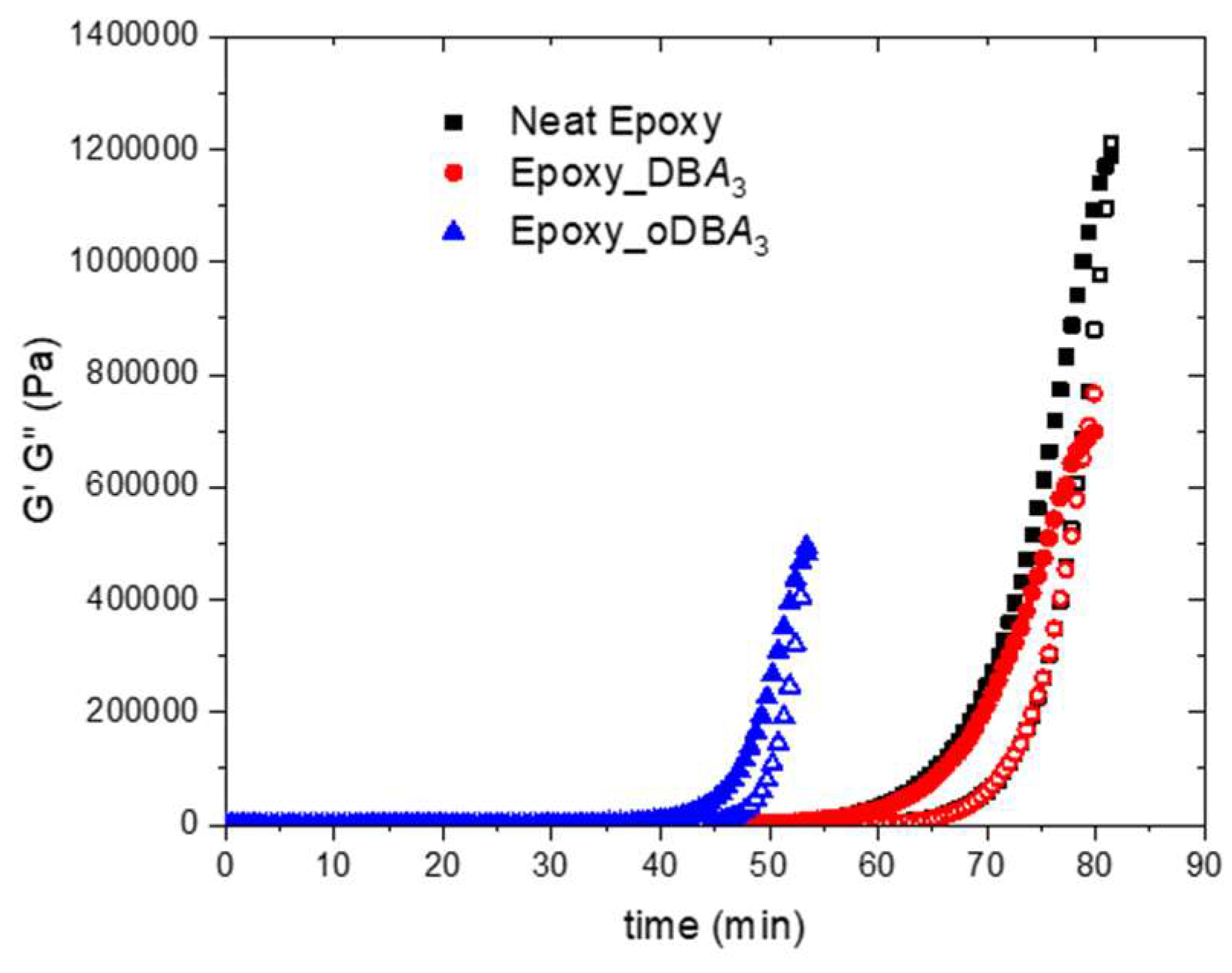
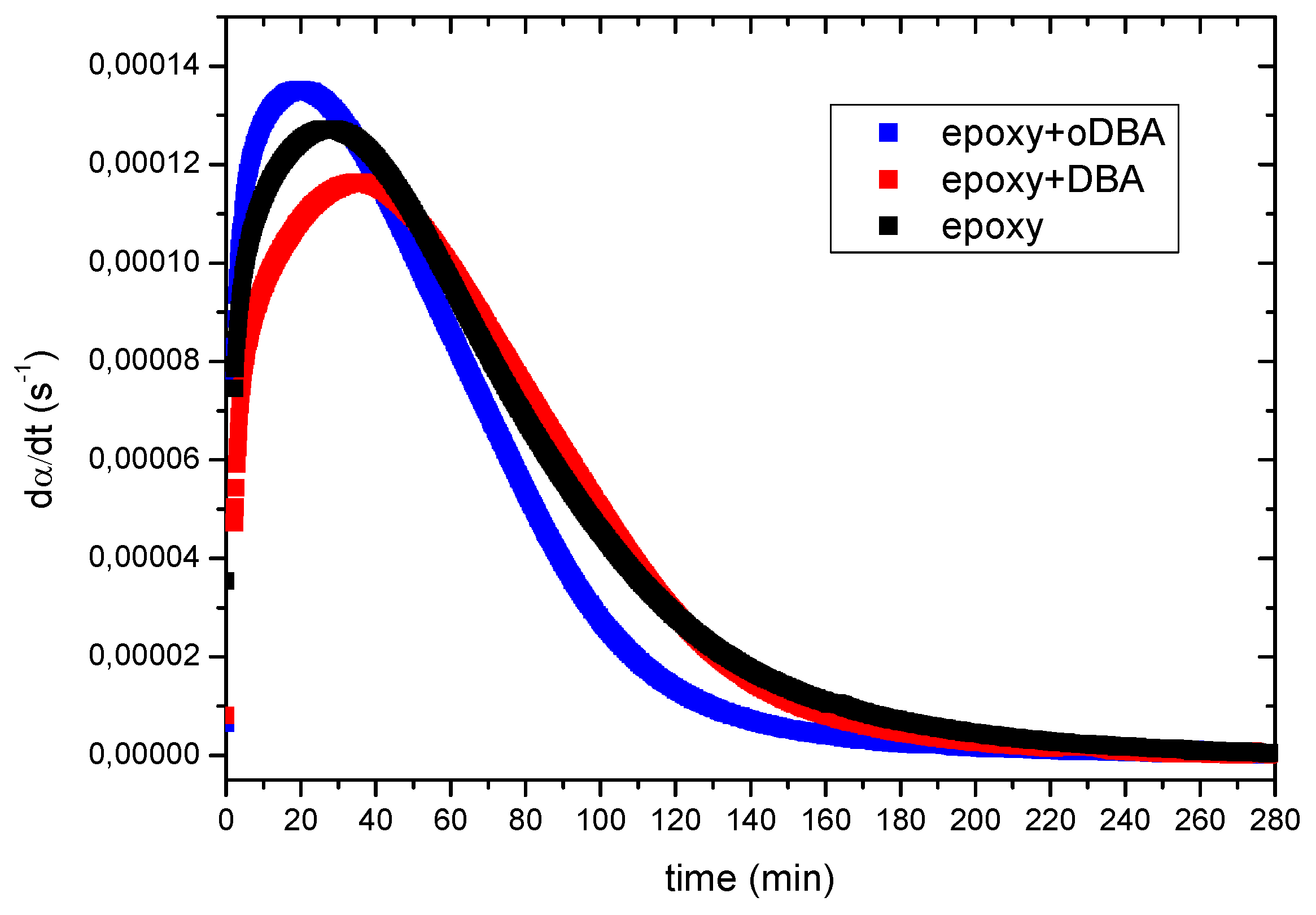
The rheological data at 50 °C attest to the occurrence of a catalytic effect of the oxidized waste sample toward the epoxy curing reaction. In fact, the gel time of the neat epoxy resin was reduced by 52% in the presence of 3 wt.% oDBA.
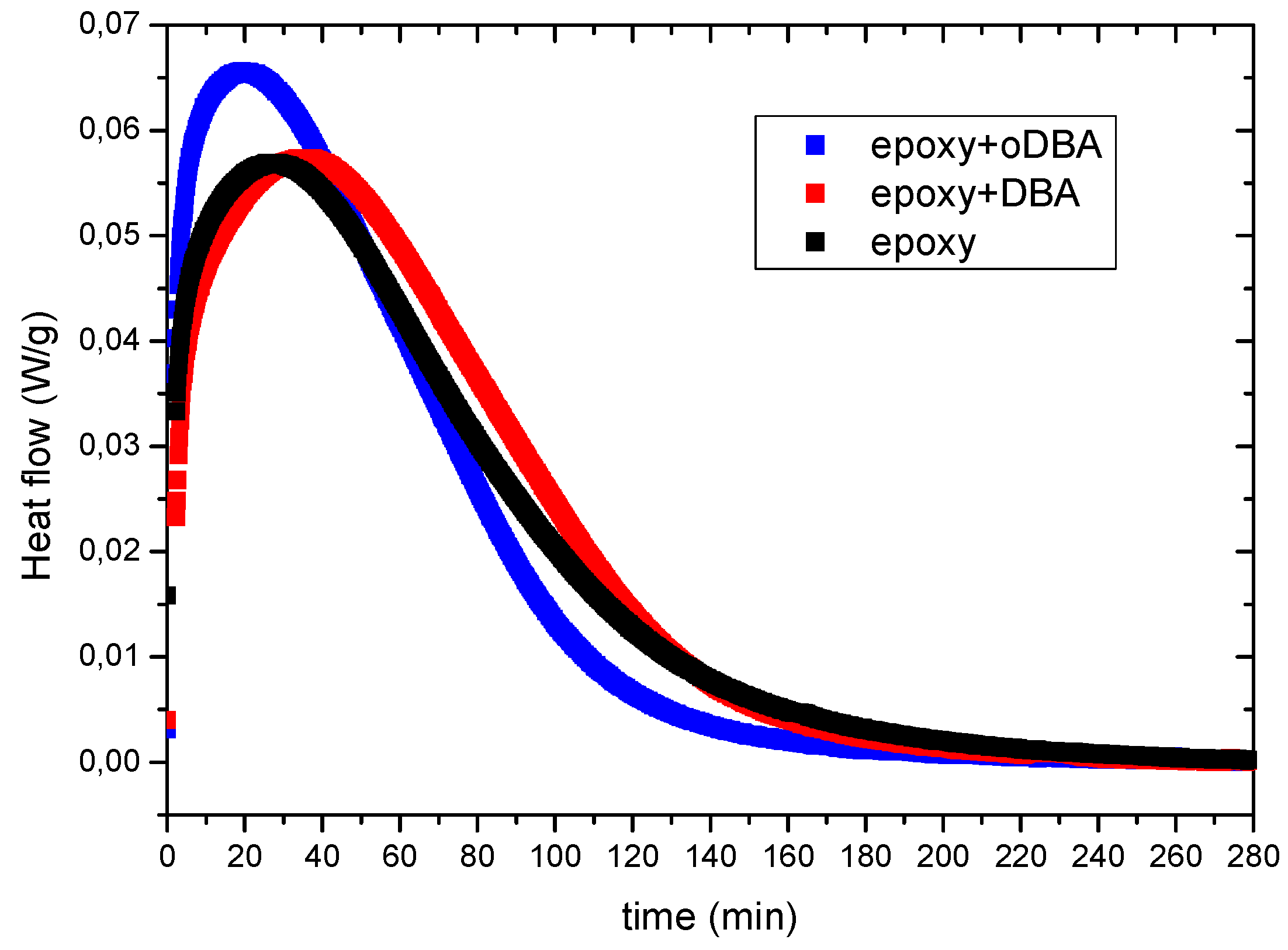
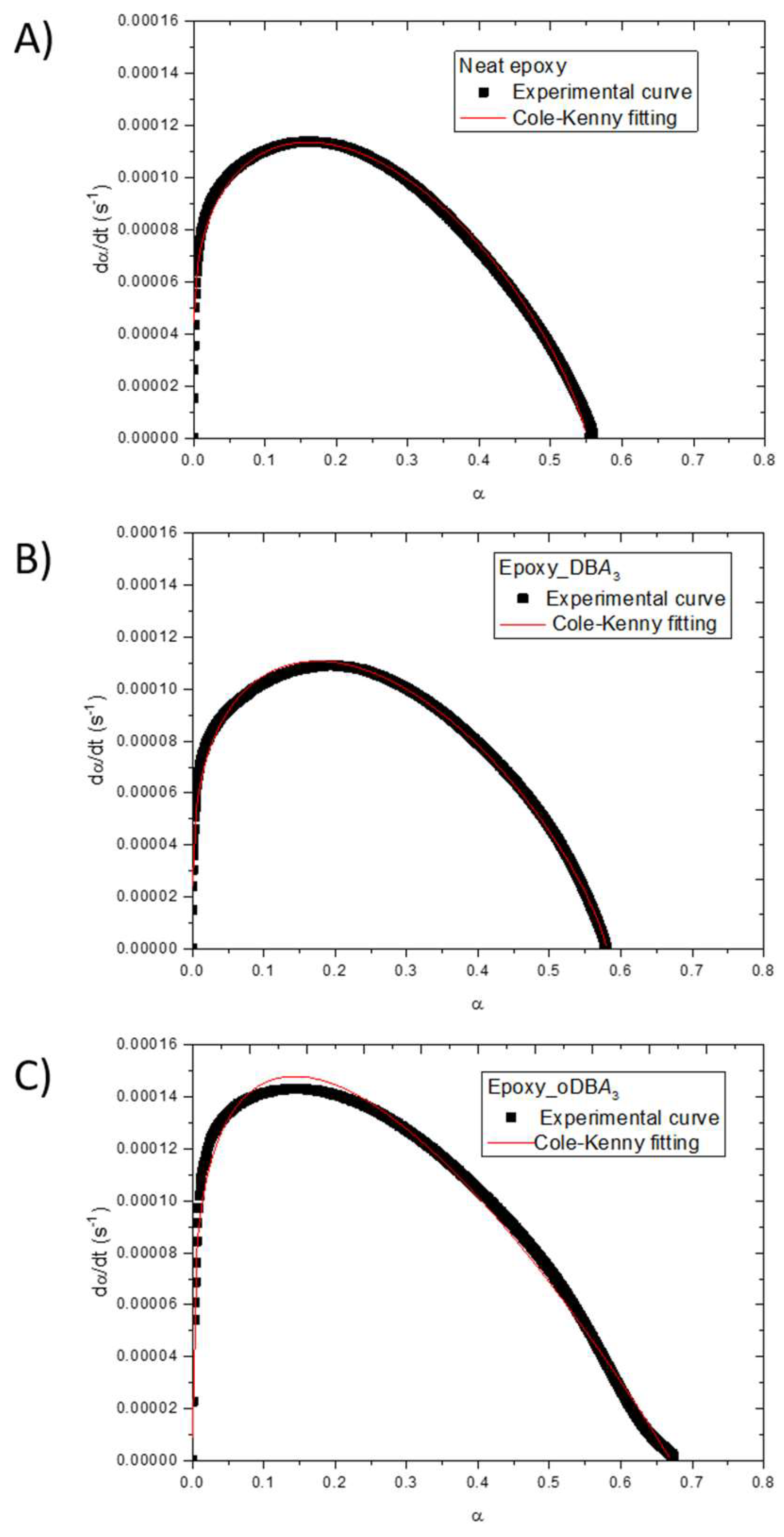
Similarly, the isothermal DSC studies at 50 °C show that the peak time is reduced by 40% when oDBA is added. The application of an autocatalytic model to the experimental DSC data of the unfilled and filled epoxy resin led to kinetics parameters which are coherent with the predicted catalyzed reaction.
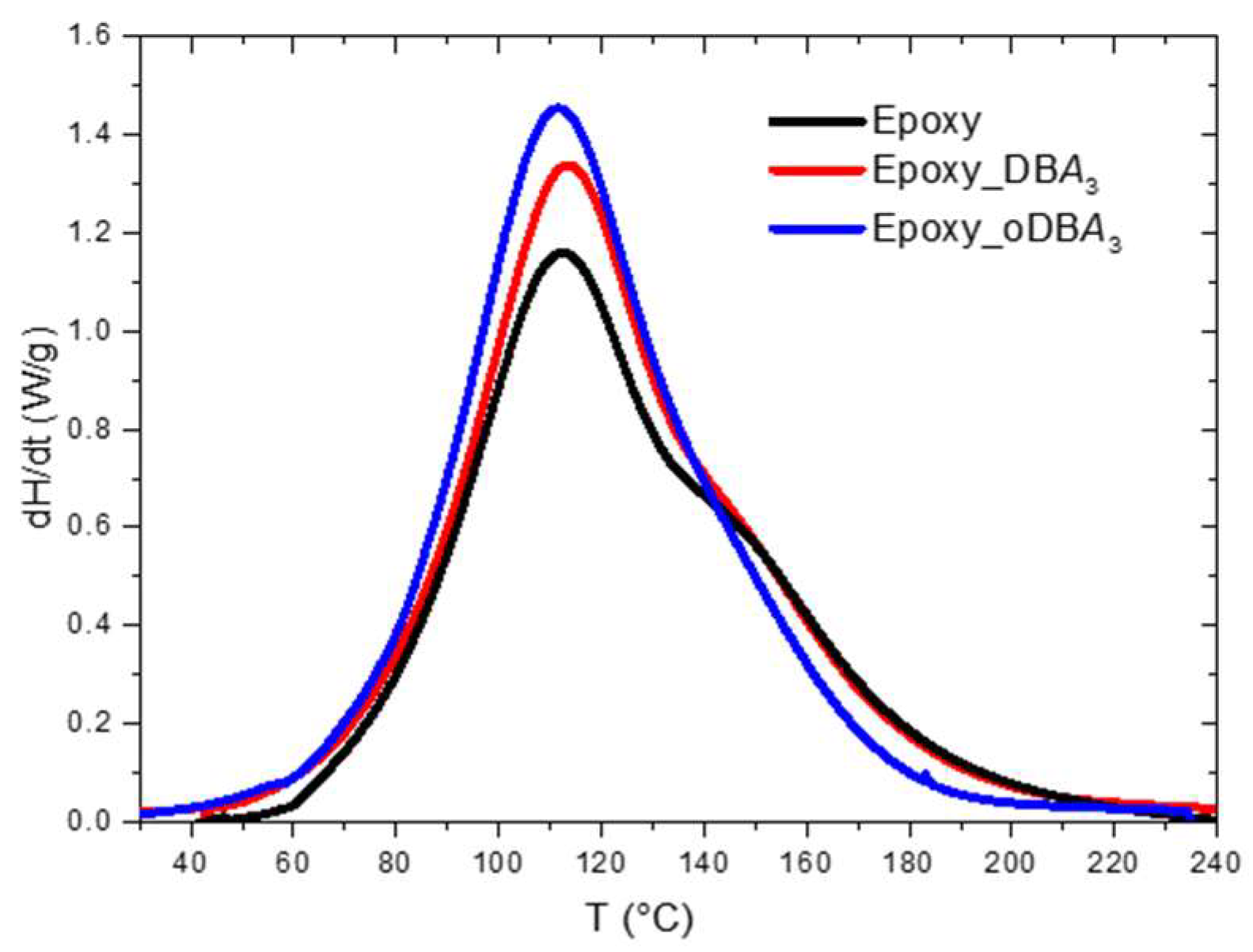
The obtained results confirm that the oxidized ash filler in the epoxy composites acts as a catalyst, reducing the crosslinking (curing) time of the thermoset matrix. These results are comparable with those reported in Reference [
20] relative to the catalytic activity of oxidized carbon black (oCB) and graphene oxide (eGO) for the crosslinking of epoxy resin. In detail, the gel time of the composite epoxy resin decreases in the presence of the same amount of the oDBA filler. Furthermore, the curing time of the epoxy matrix was strongly reduced when 3 wt.% oDBA was added, and this result is similar to that obtained for the epoxy resin containing the same amount of oCB (125 m
2/g) and eGO [
20]. On the other hand, the carbon-based waste filler used in this paper, unlike the other carbon-based fillers previously used, showed a doubly important role, i.e., reinforcing and catalyzing the crosslinking reaction of the diglycidyl ether of bisphenol A (DGEBA) resin with amines, evidencing, in turn, a further advantage in addition that of being a low-cost recycled material, in comparison to other kinds of carbon-based fillers.
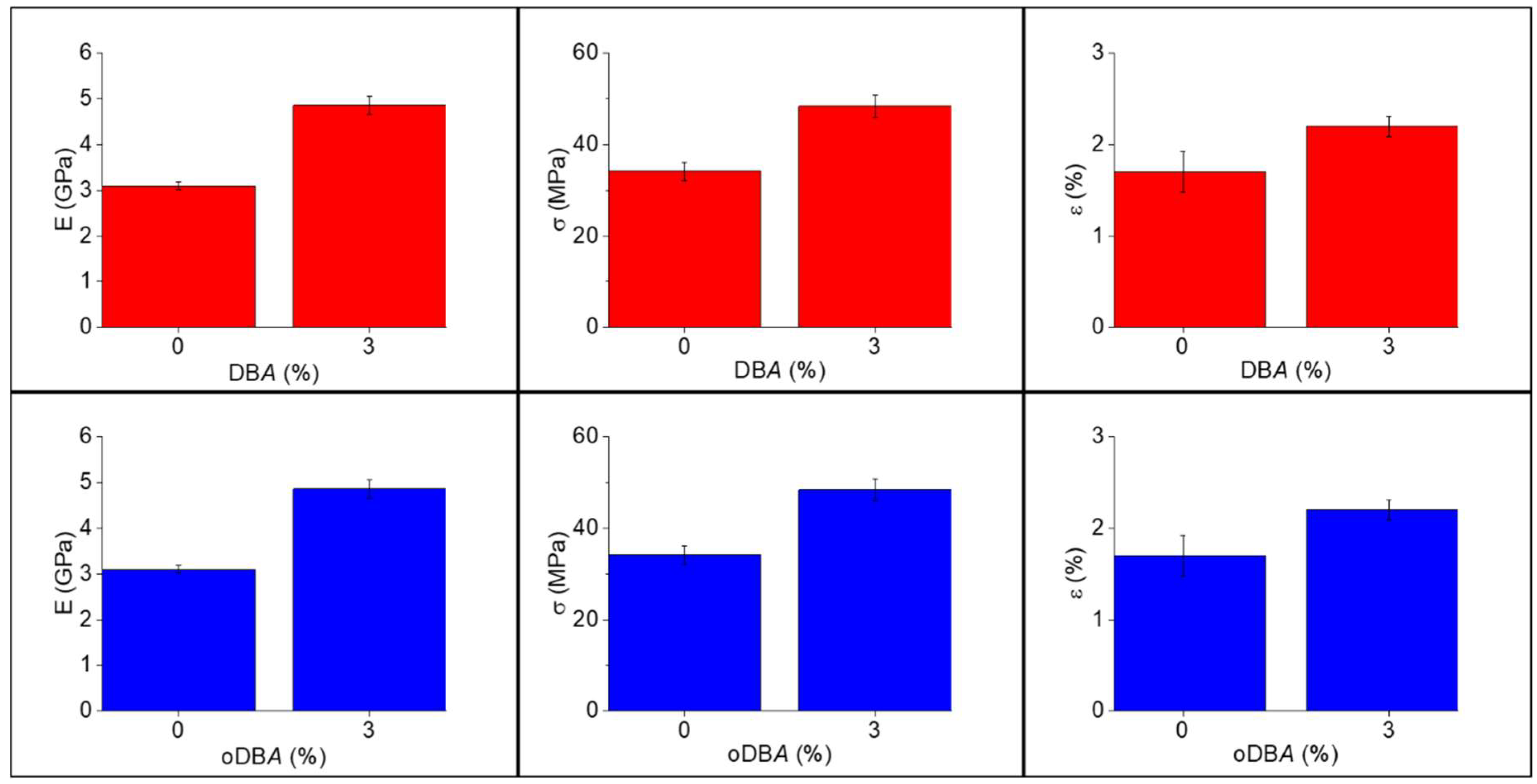
In conclusion, the experimental results obtained in this paper show the potential of the developed approach for the recycling of waste carbon-based ashes, by producing epoxy composite samples characterized by higher mechanical properties compared to epoxy resin, as well as a cost reduction and an increase in the efficiency of waste management, with the reduction of its negative effects on the environment and on the population.




 ,
,