Surface Modification of PET Fiber with Hybrid Coating and Its Effect on the Properties of PP Composites


Abstract
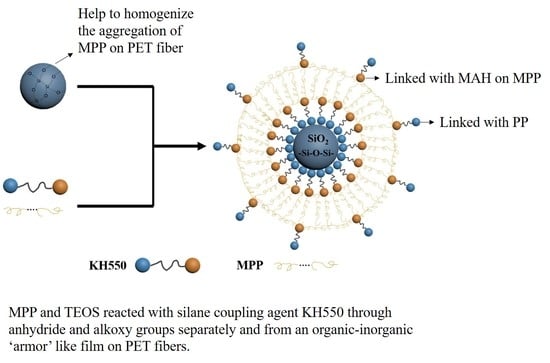
1. Introduction
2. Experiments
2.1. Materials
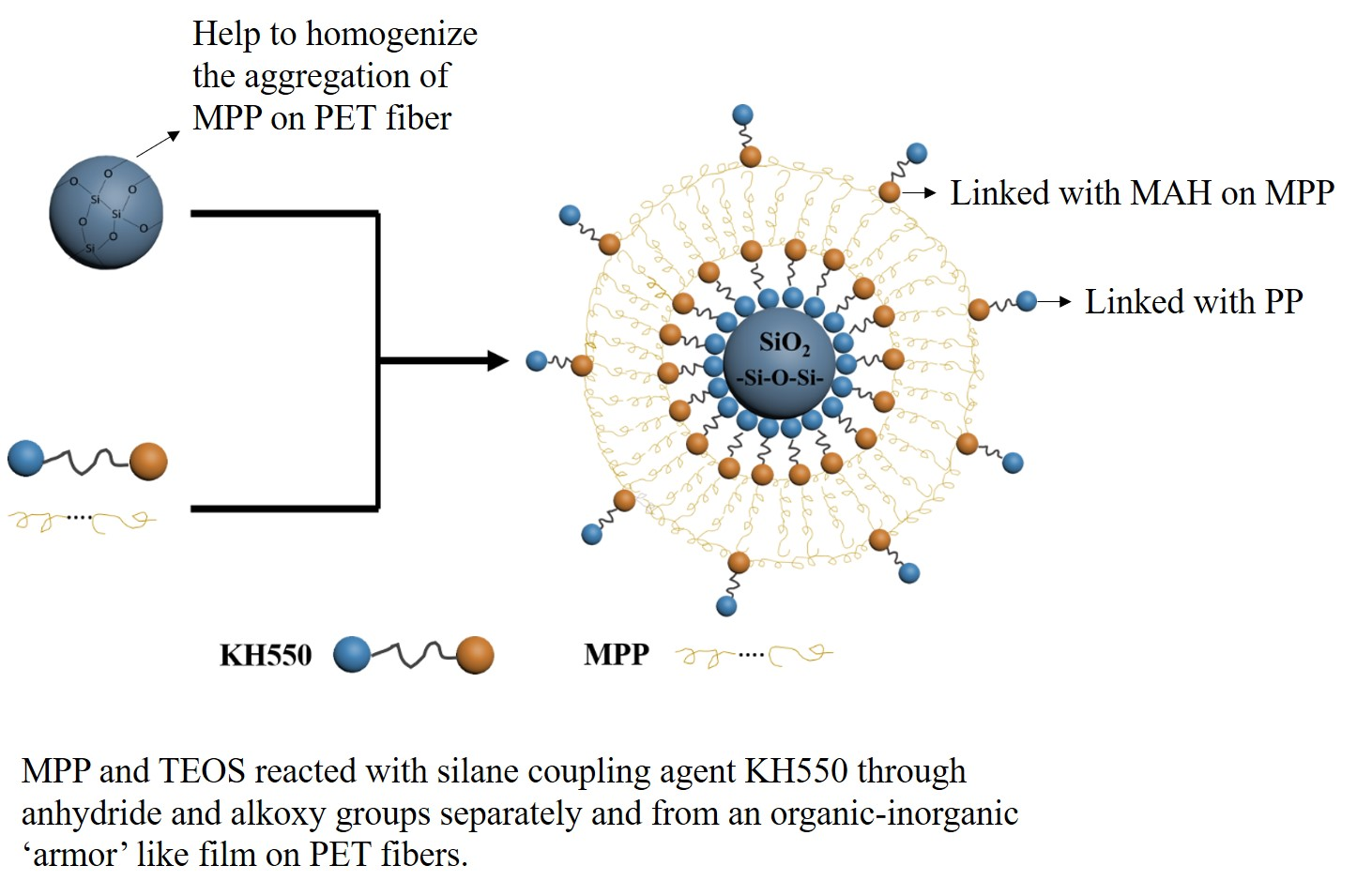
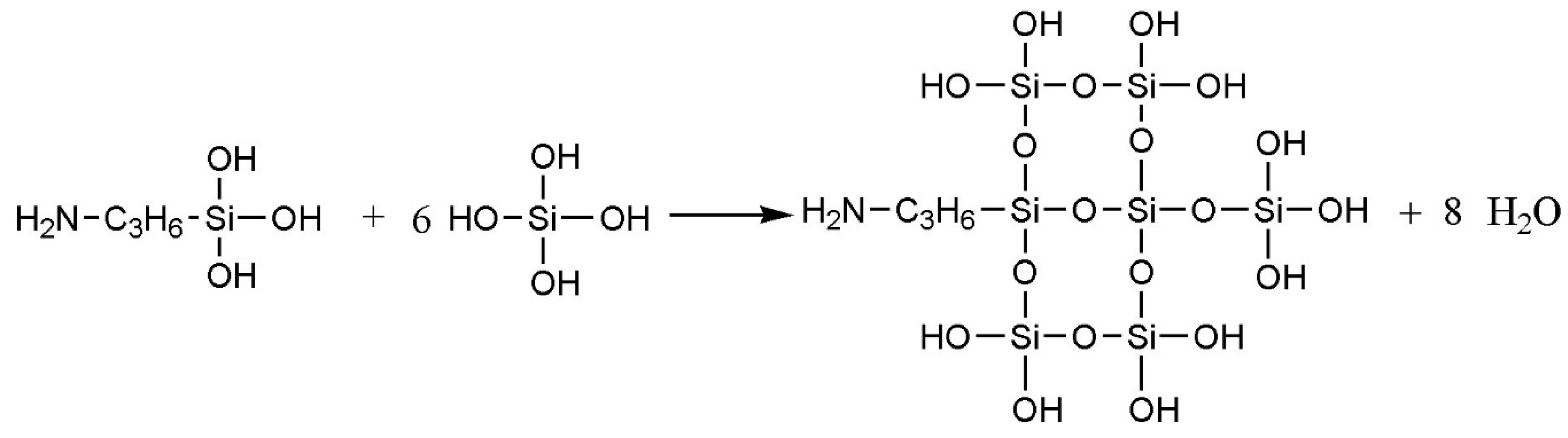
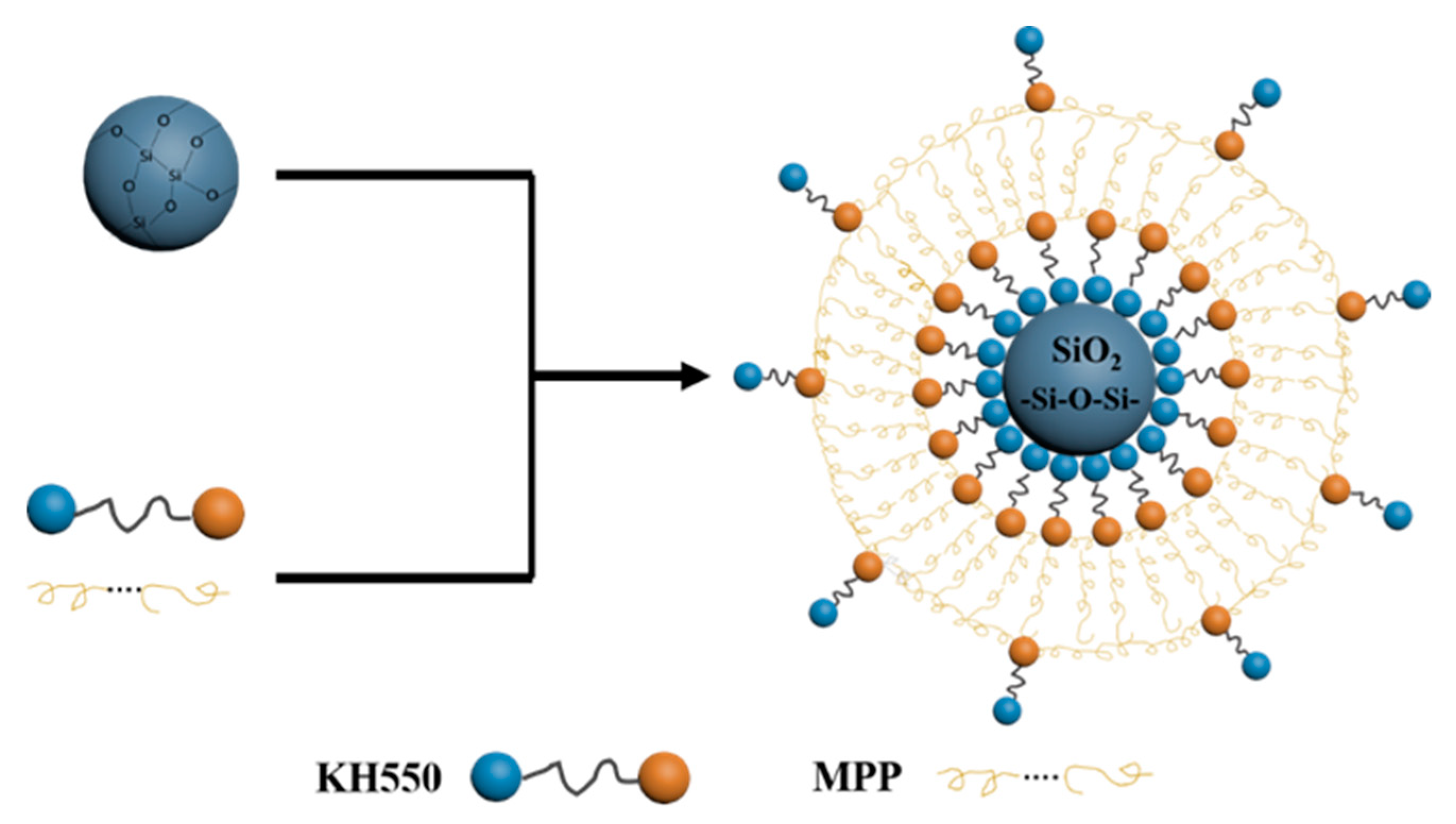
2.2. Synthesis of Fiber Modifier
2.3. Surface Treatment of Polyethylene Terephthalate (PET) Fiber
2.4. Preparation of PET/Polypropylene (PP) Composites
2.5. Characterization
2.5.1. Scanning Electron Microscopy
2.5.2. Fourier Transform Infrared Spectroscopy
2.5.3. Thermogravimetric Analysis
2.5.4. X-ray Scattering Analysis
2.5.5. Measurements of Interfacial Properties
2.5.6. Mechanical Properties
2.5.7. Dynamic Mechanical Analysis
3. Results and Discussion
3.1. Modifier Powder
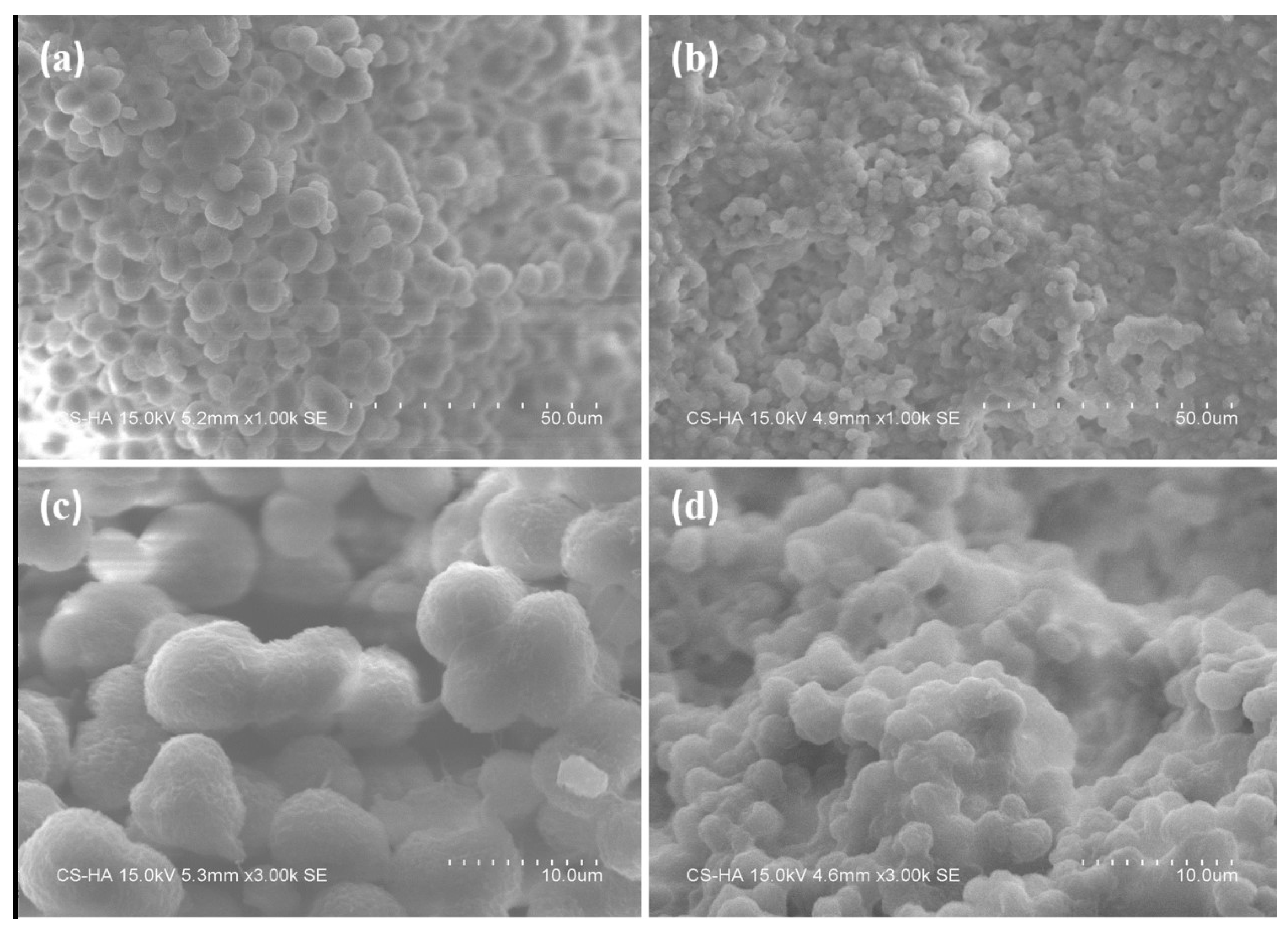
3.1.1. Aggregation Morphology and Size of Modifier Powder
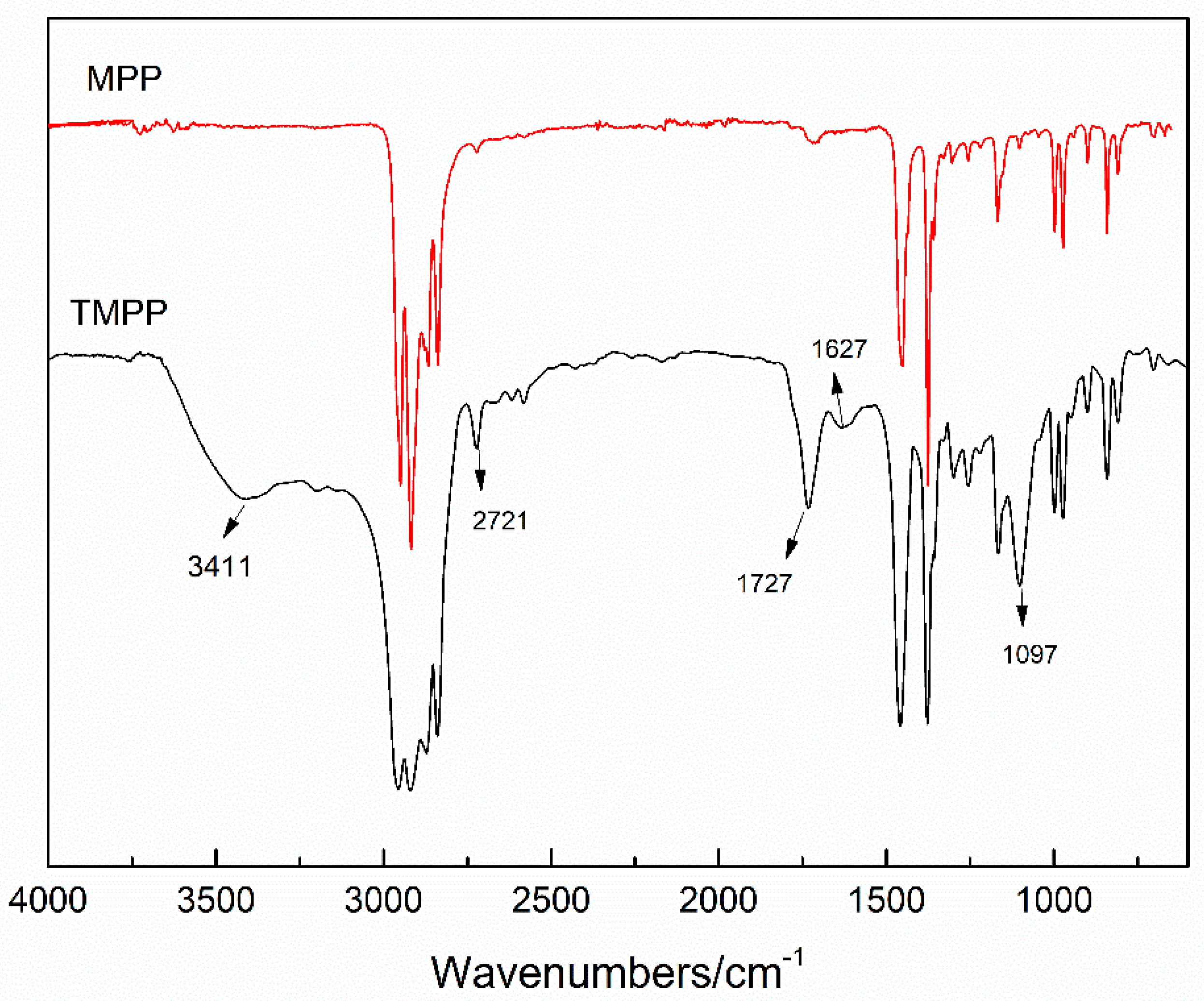
3.1.2. Fourier Transform Infrared (FTIR) spectra of MPP and TMPP
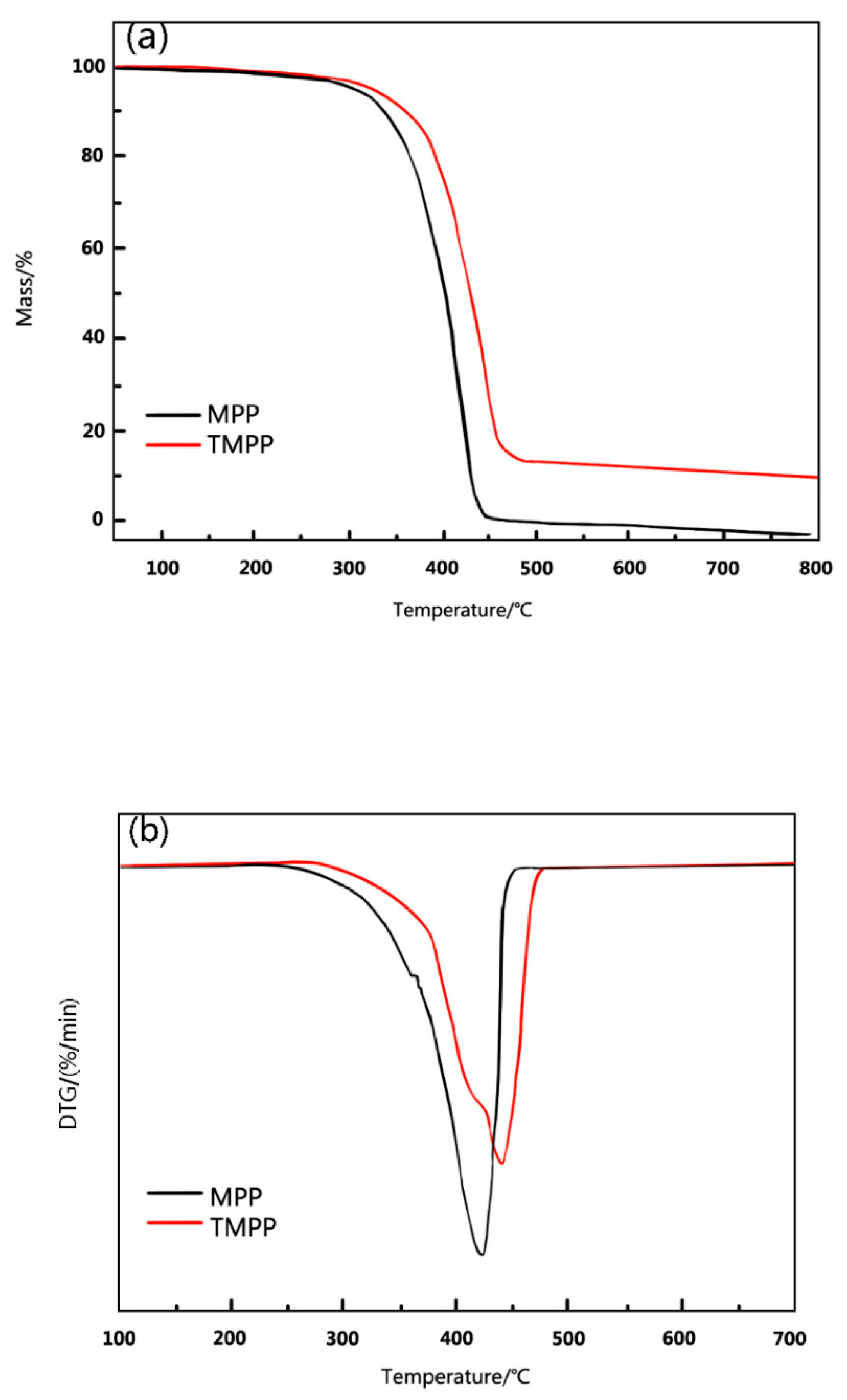
3.1.3. Thermal Stability of MPP and TMPP Powders
3.2. Fiber
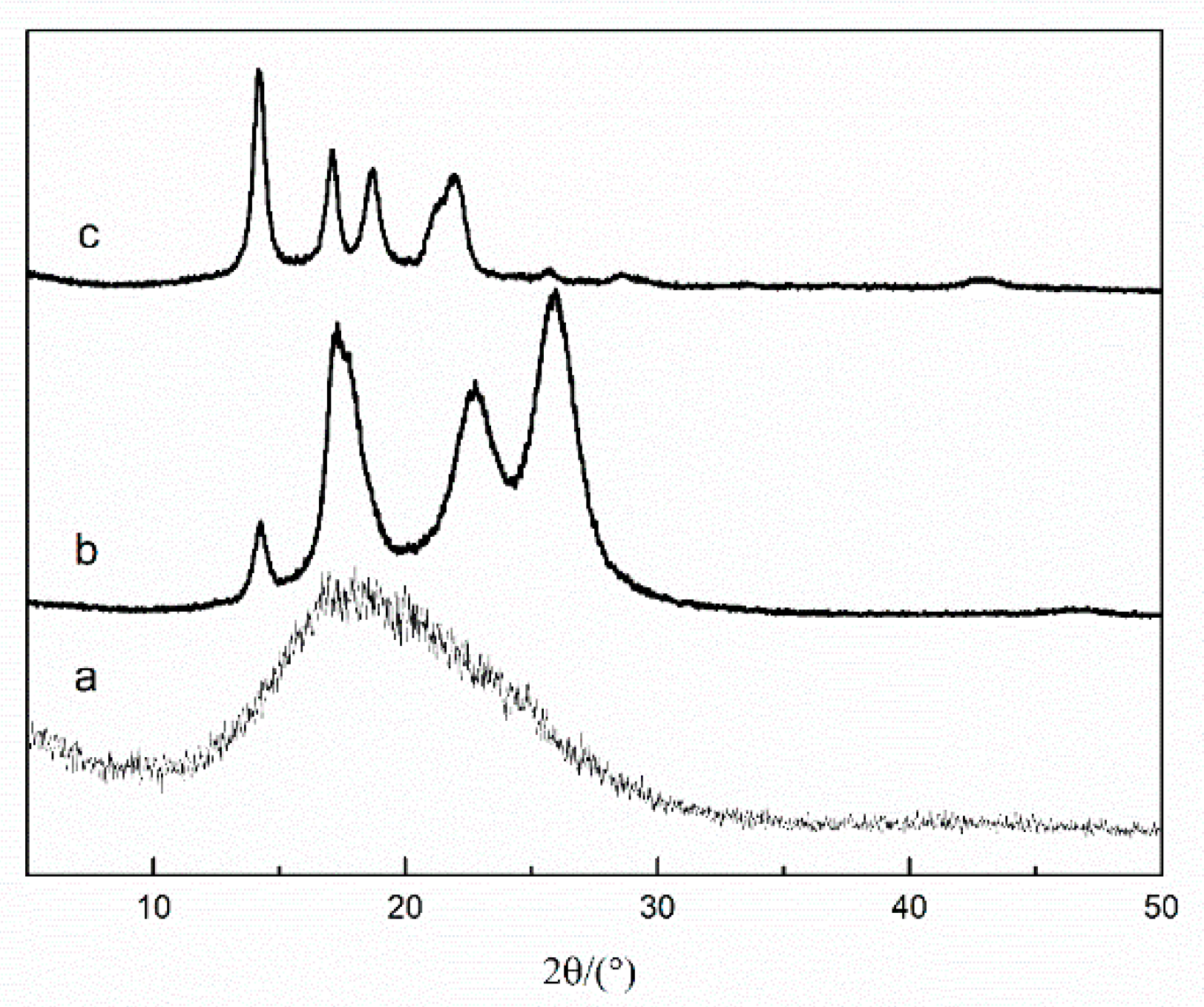
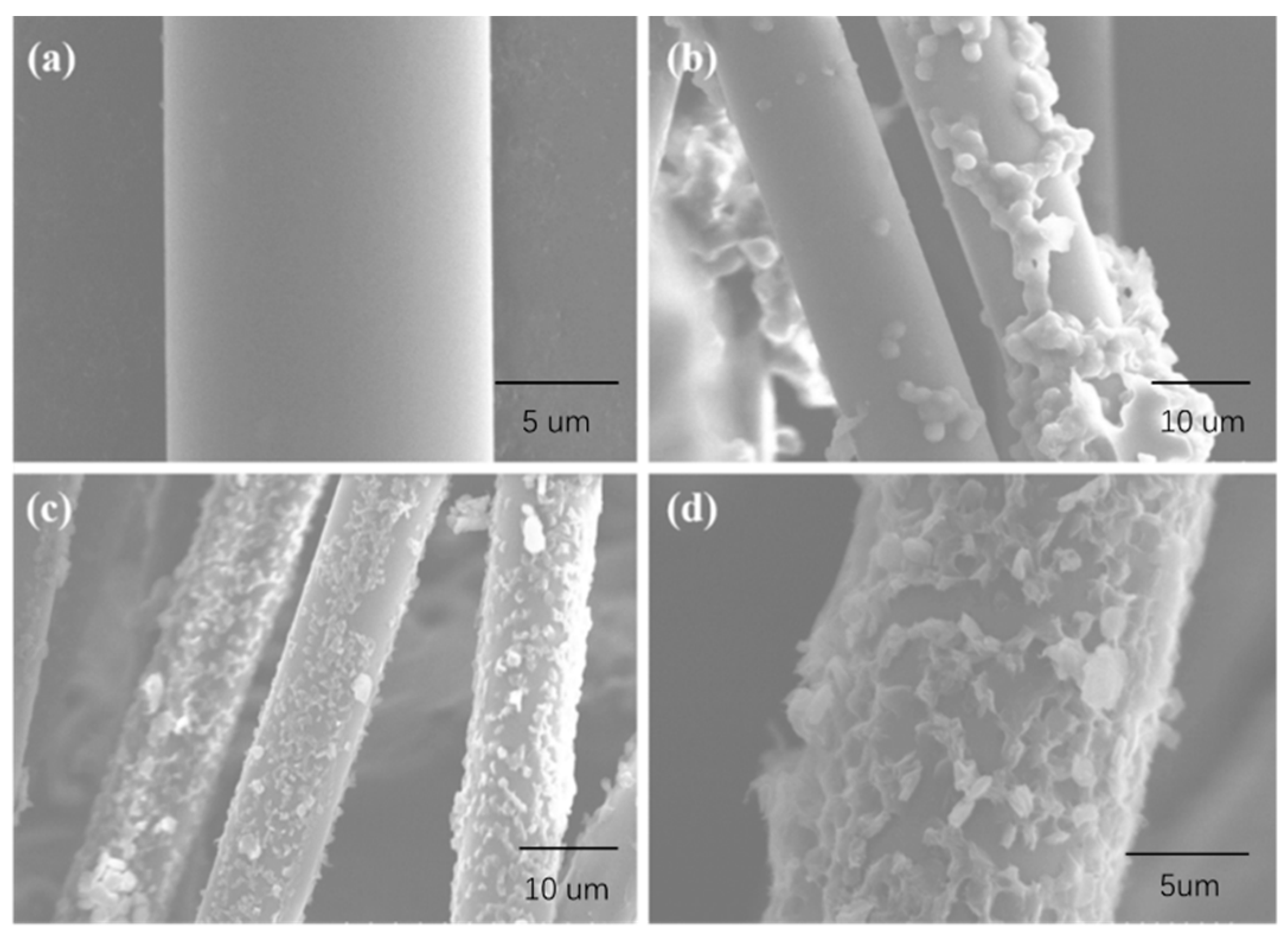
3.2.1. Crystal Properties and Surface Microstructure of PET Fiber
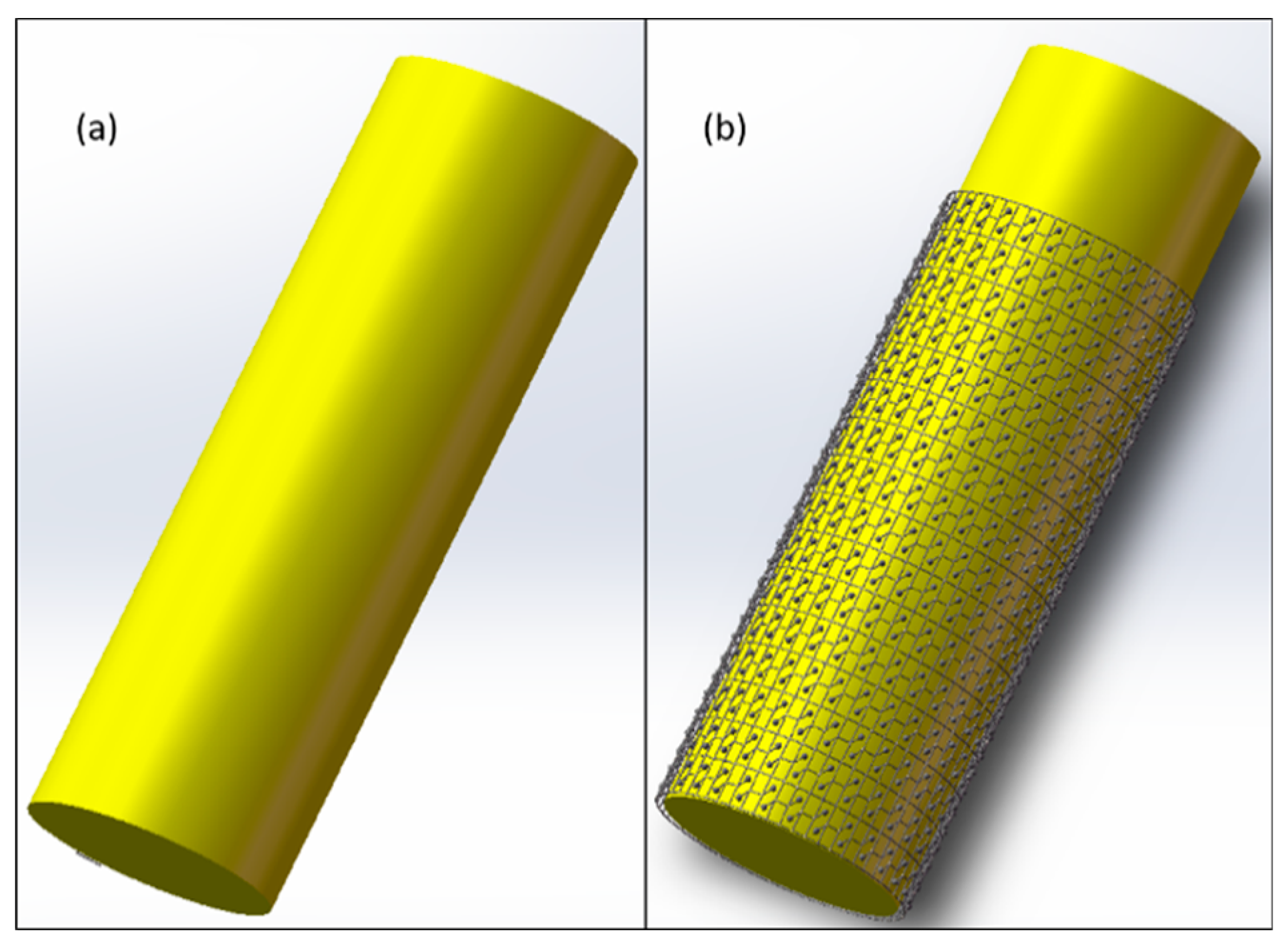
3.2.2. Microstructure of MPP- and TMPP-modified PET Fiber
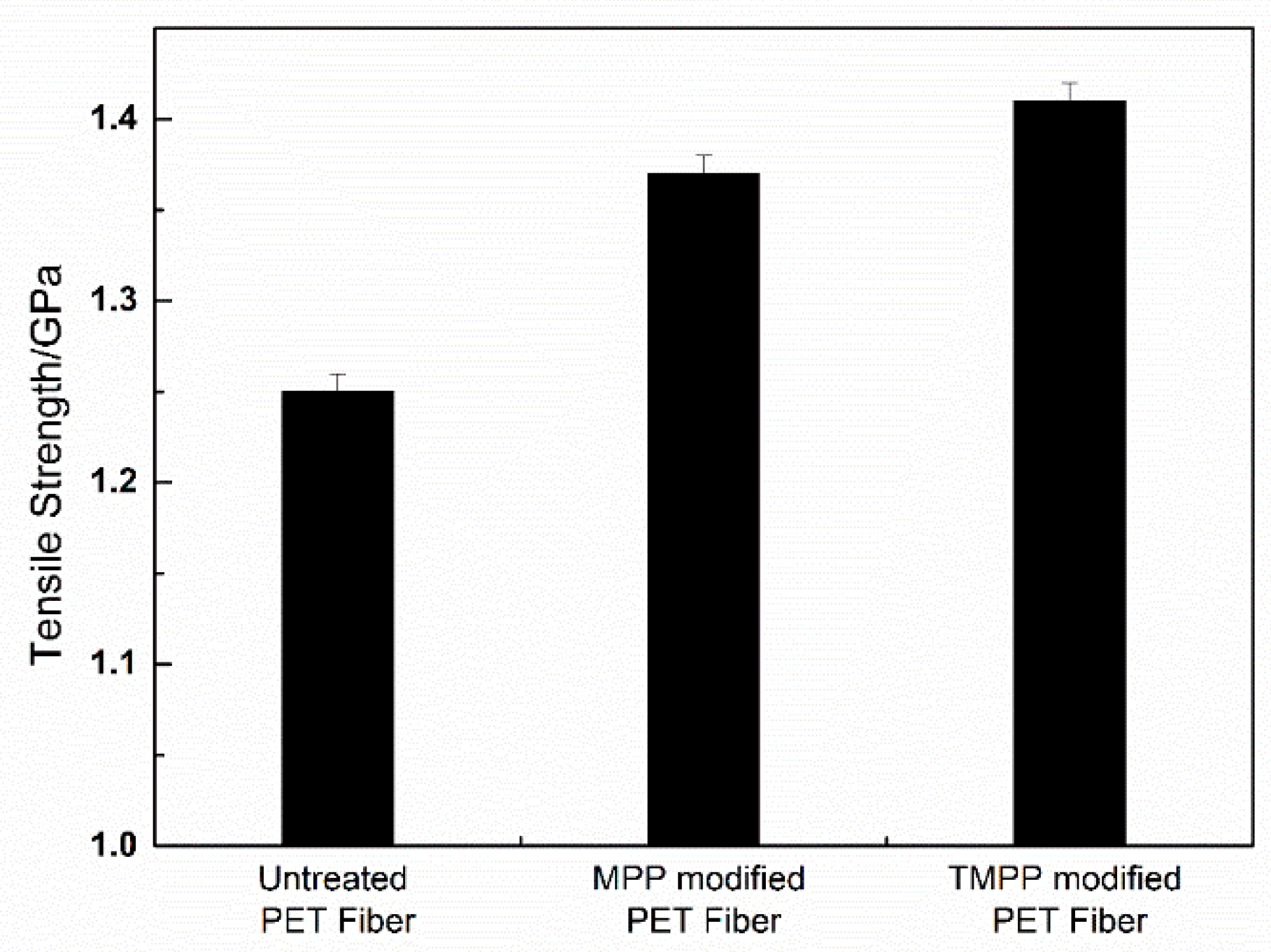
3.2.3. Tensile Test for Single Fiber
3.3. Composites
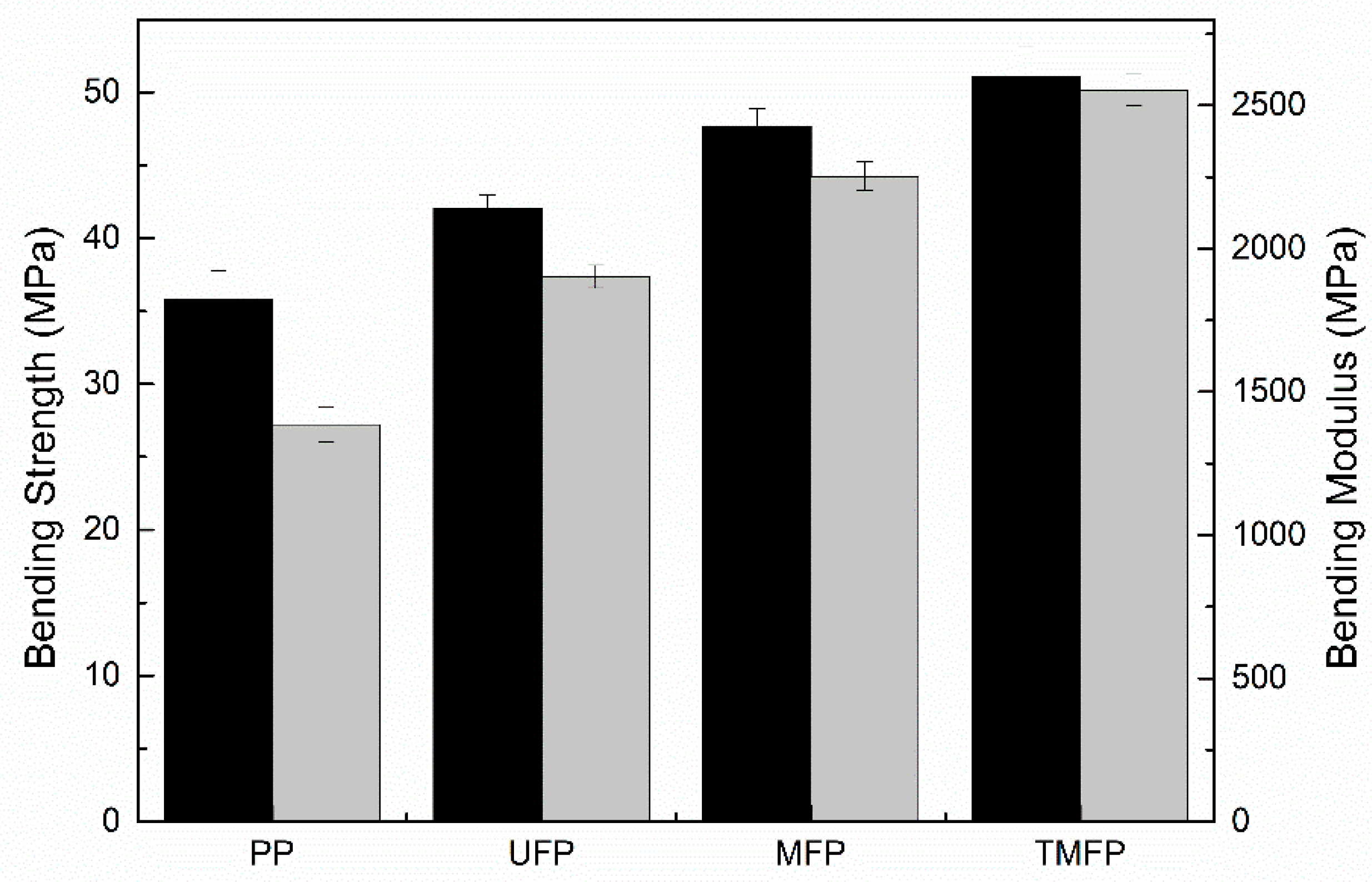
3.3.1. Interfacial Properties
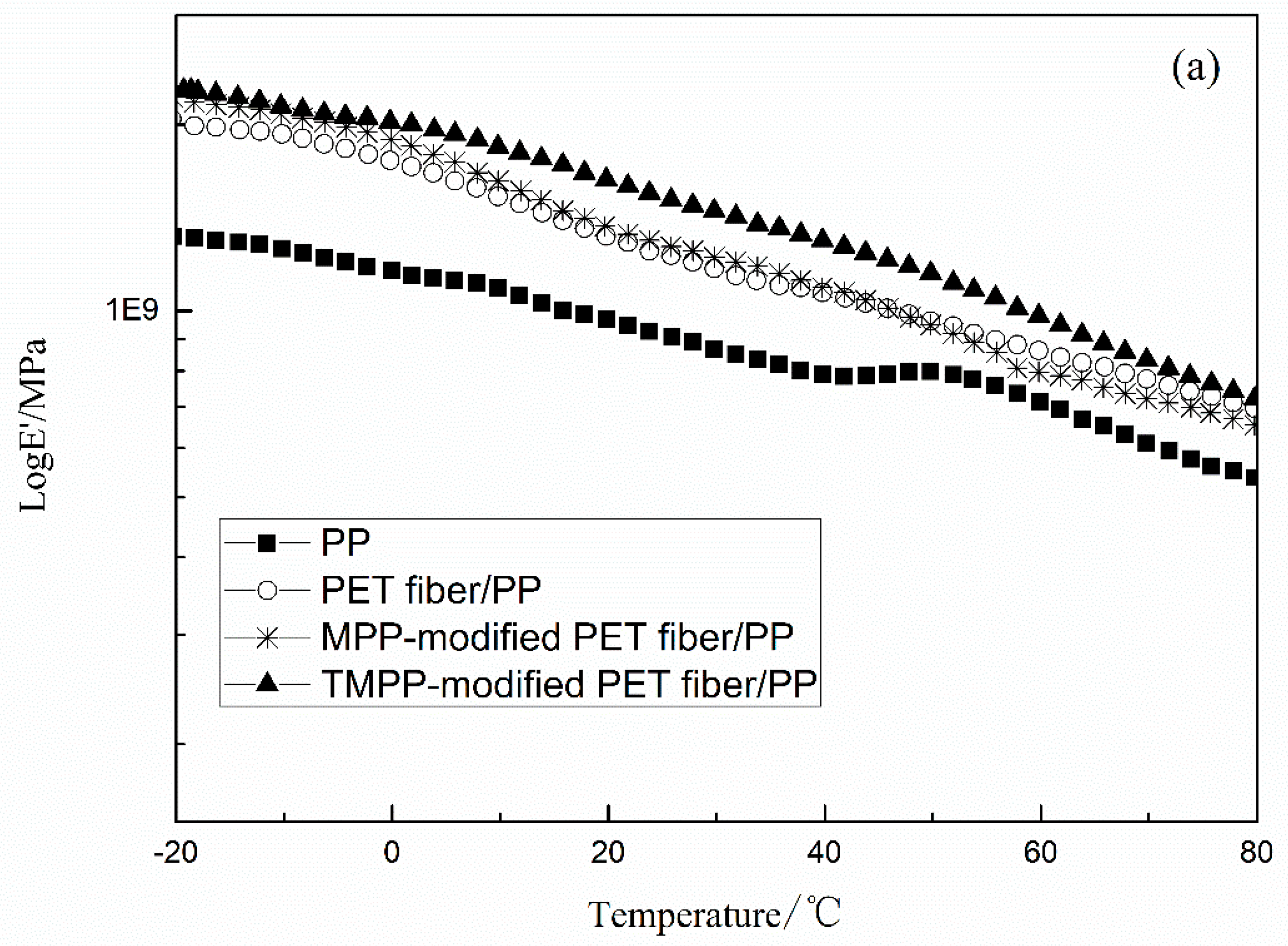
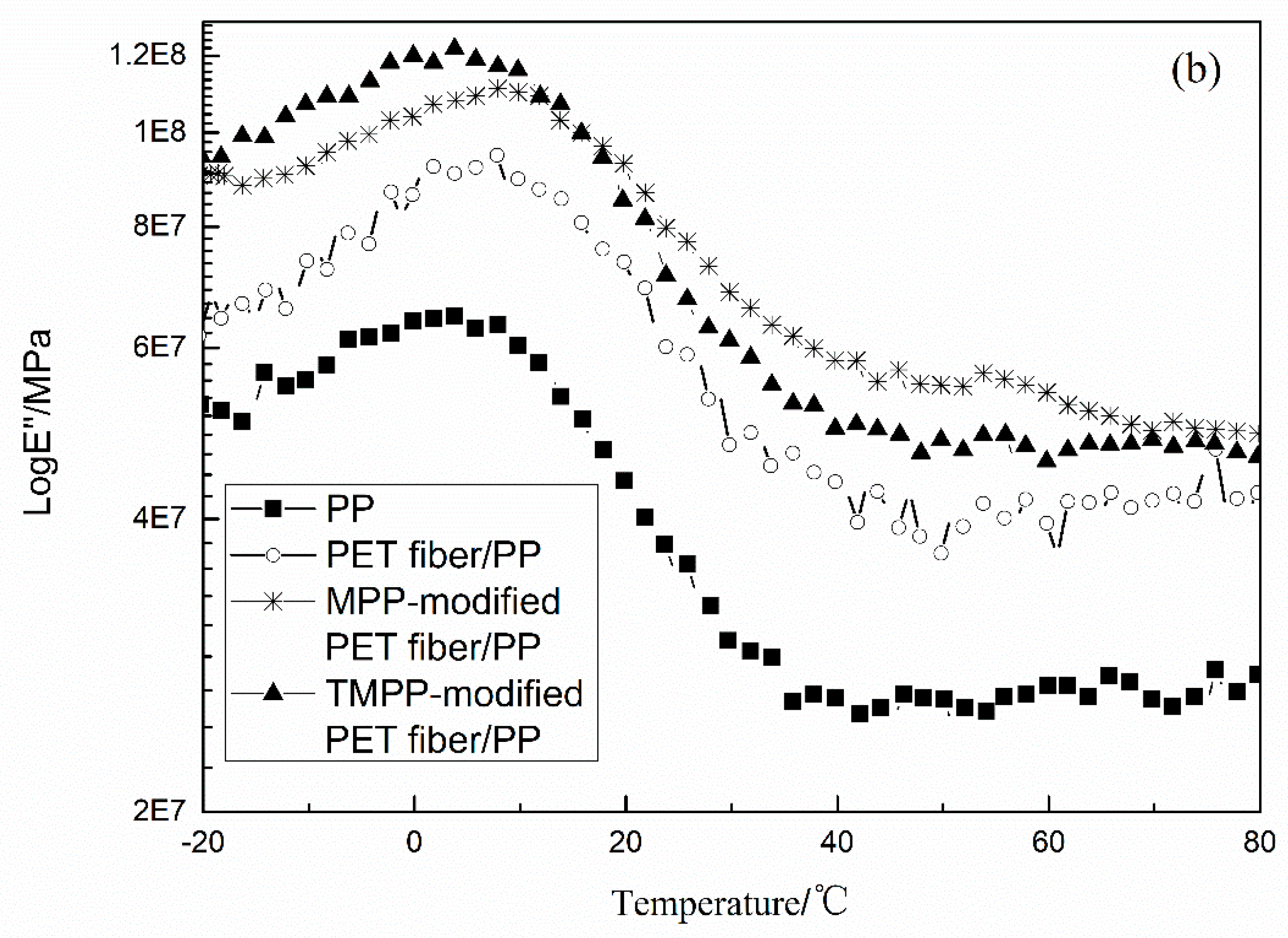
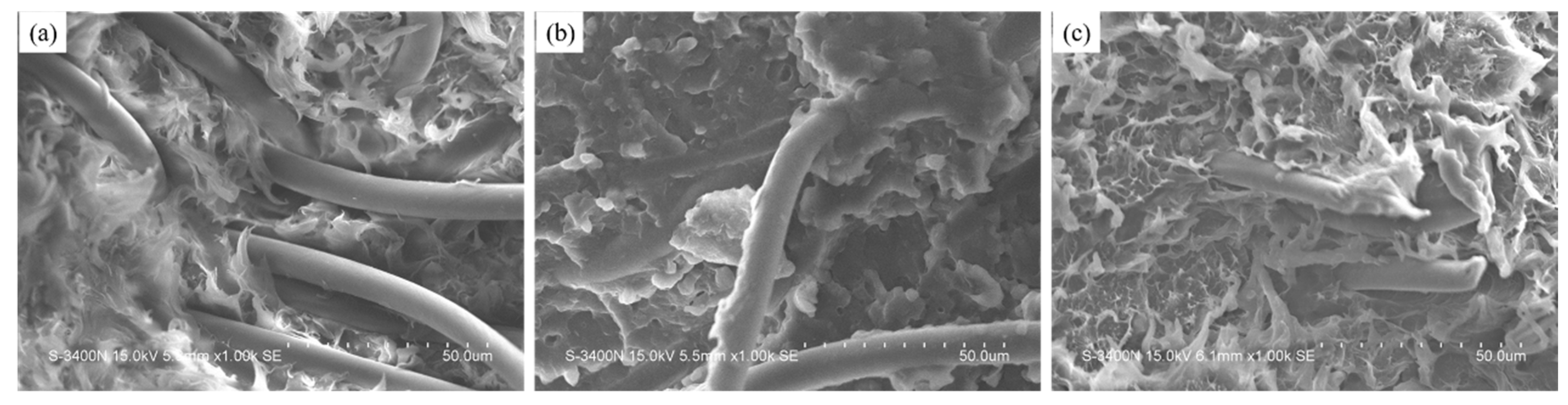
3.3.2. Interface Compatibility of Composite Materials
4. Conclusions
Author Contributions
Funding
Conflicts of Interest
References
- He, H.Z.; Yao, Z.; Wang, K.X.; Xi, H.; Zhou, H.Q.; Yao, Y.D. Modification of sisal fiber by in situ coating steam explosion and electromagnetic interference shielding effectiveness of sisal fiber/pp composites. Polym. Compos. 2014, 35, 1038–1043. [Google Scholar] [CrossRef]
- Yousfi, M.; Soulestin, J.; Vergnes, B.; Lacrampe, M.F.; Krawczak, P. Morphology and mechanical properties of PET/PE blends compatibilized by nanoclays: Effect of thermal stability of nanofiller organic modifier. J. Appl. Polym. Sci. 2013, 128, 2766–2778. [Google Scholar] [CrossRef]
- Zhang, Y.; Zhang, H.; Guo, W.; Wu, C. Effects of different types of polyethylene on the morphology and properties of recycled poly(ethylene terephthalate)/polyethylene compatibilized blends. Polym. Adv. Technol. 2011, 22, 1851–1858. [Google Scholar] [CrossRef]
- Mamun Kabir, S.M.; Koh, J. Alkaline weight reduction and dyeing properties of black dope-dyed poly(ethylene terephthalate) microfibre fabrics. Color. Technol. 2017, 133, 209–217. [Google Scholar] [CrossRef]
- Popescu, V.; Muresan, A.; Constandache, O.; Lisa, G.; Muresan, E.I.; Munteanu, C.; Sandu, I. Tinctorial response of recycled pet fibers to chemical modifications during saponification and aminolysis reactions. Ind. Eng. Chem. Res. 2014, 53, 16652–16663. [Google Scholar] [CrossRef]
- Hwang, Y.J.; McCord, M.G.; Kang, B.C. Helium/Oxygen Atmospheric Pressure Plasma Treatment on Poly(ethylene terephthalate) and Poly(trimethylene terephthalate) Knitted Fabrics: Comparison of Low-stress Mechanical/Surface Chemical Properties. Fibers Polym. 2005, 6, 113–120. [Google Scholar] [CrossRef]
- Cioffi, M.O.H.; Voorwald, H.J.C.; Ambrogi, V.; Monetta, T.; Bellucci, F.; Nicolais, L. Mechanical strength of PET fibers treated in cold plasma and thermal exposed. J. Mater. Eng. Perform. 2003, 12, 279–287. [Google Scholar] [CrossRef]
- Fang, Y.; Liu, X.; Tao, X. Intumescent flame retardant and anti-dripping of PET fabrics through layer-by-layer assembly of chitosan and ammonium polyphosphate. Prog. Org. Coatings 2019, 134, 162–168. [Google Scholar] [CrossRef]
- Munirah Abdullah, N.; Ahmad, I. Effect of Chemical Treatment on Mechanical and Water-Sorption Properties Coconut Fiber-Unsaturated Polyester from Recycled PET. ISRN Mater. Sci. 2012, 2012, 1–8. [Google Scholar] [CrossRef]
- Kwak, W.G.; Oh, M.H.; Son, S.Y.; Gong, M.S. Silver loading on poly(ethylene terephthalate) fabrics using silver carbamate via thermal reduction. Macromol. Res. 2015, 23, 509–517. [Google Scholar] [CrossRef]
- Kwak, W.G.; Oh, M.H.; Gong, M.S. Preparation of silver-coated cotton fabrics using silver carbamate via thermal reduction and their properties. Carbohydr. Polym. 2015, 115, 317–324. [Google Scholar] [CrossRef] [PubMed]
- Kwak, W.G.; Cha, J.R.; Gong, M.S. Surface modification of polyester fibers by thermal reduction with silver carbamate complexes. Fibers Polym. 2016, 17, 1146–1153. [Google Scholar] [CrossRef]
- Jiang, X.; Fan, Y.; Li, F. Preparation and properties of dynamically cured polypropylene (PP)/maleic anhydride-grafted polypropylene (MAH-g-PP)/calcium carbonate (CaCO3)/epoxy composites. J. Thermoplast. Compos. Mater. 2013, 26, 1192–1205. [Google Scholar] [CrossRef]
- Novak, B.M. Hybrid Nanocomposite Materials—between inorganic glasses and organic polymers. Adv. Mater. 1993, 5, 422–433. [Google Scholar] [CrossRef]
- Wang, B.; Wilkes, G.L. Novel hybrid inorganic-organic abrasion-resistant coatings prepared by a sol-gel process. J. Macromol. Sci. Part A 1994, 31, 249–260. [Google Scholar] [CrossRef]
- Dikobe, D.G.; Luyt, A.S. Investigation of the morphology and properties of the polypropylene/low-density polyethylene/wood powder and the maleic anhydride grafted polypropylene/low-density polyethylene/wood powder polymer blend composites. J. Compos. Mater. 2017, 51, 2045–2059. [Google Scholar] [CrossRef]
- Chen, J.; Zhu, Y.; Ni, Q.; Fu, Y.; Fu, X. Surface modification and characterization of aramid fibers with hybrid coating. Appl. Surf. Sci. 2014, 321, 103–108. [Google Scholar] [CrossRef]
- Jeon, H.T.; Jang, M.K.; Kim, B.K.; Kim, K.H. Synthesis and characterizations of waterborne polyurethane-silica hybrids using sol-gel process. Colloids Surf. A 2007, 302, 559–567. [Google Scholar] [CrossRef]
- Bal, S.; Behera, R.C. Structural Investigation of Chemical Treated Polyester Fibers Using Saxs and Other Techniques. J. Miner. Mater. Charact. Eng. 2006, 05, 179–198. [Google Scholar] [CrossRef]
- Jiang, H.L.; Kwon, J.T.; Kim, E.M.; Kim, Y.K.; Arote, R.; Jere, D.; Jeong, H.J.; Jang, M.K.; Nah, J.W.; Xu, C.X.; et al. Galactosylated poly(ethylene glycol)-chitosan-graft-polyethylenimine as a gene carrier for hepatocyte-targeting. J. Control. Release 2008, 131, 150–157. [Google Scholar] [CrossRef]
- Ramesh, M.; Deepa, C.; Aswin, U.S.; Eashwar, H.; Mahadevan, B.; Murugan, D. Effect of Alkalization on Mechanical and Moisture Absorption Properties of Azadirachta indica (Neem Tree) Fiber Reinforced Green Composites. Trans. Indian Inst. Met. 2017, 70, 187–199. [Google Scholar] [CrossRef]
- Han, H.; Li, H.Q.; Liu, M.; Xu, L.; Xu, J.; Wang, S.; Ni, H.; Wang, Z. Effect of “bridge” on the performance of organic-inorganic crosslinked hybrid proton exchange membranes via KH550. J. Power Sources 2017, 340, 126–138. [Google Scholar] [CrossRef]
- Yang, C.H.; Pan, Y.W.; Guo, J.J.; Young, T.H.; Chiu, W.Y.; Hsieh, K.H. Synthesis and application of polyurethane basic organic-inorganic hybrid materials as highly hydrophobic coatings. J. Polym. Res. 2016, 23, 1–7. [Google Scholar] [CrossRef]
- De Lange, P.J.; Mäder, E.; Mai, K.; Young, R.J.; Ahmad, I. Characterization and micromechanical testing of the interphase of aramid-reinforced epoxy composites. Compos. Part A Appl. Sci. Manuf. 2001, 32, 331–342. [Google Scholar] [CrossRef]
- Li, G.; Zhang, C.; Wang, Y.; Li, P.; Yu, Y.; Jia, X.; Liu, H.; Yang, X.; Xue, Z.; Ryu, S. Interface correlation and toughness matching of phosphoric acid functionalized Kevlar fiber and epoxy matrix for filament winding composites. Compos. Sci. Technol. 2008, 68, 3208–3214. [Google Scholar] [CrossRef]
- He, X.; Shi, J.; Wu, L.; Jiang, P.; Liu, B. Study on synergistic toughening of polypropylene with high-density polyethylene and elastomer-olefin block copolymers under ultrasonic application. Compos. Sci. Technol. 2018, 161, 115–123. [Google Scholar] [CrossRef]
- Subasinghe, A.D.L.; Das, R.; Bhattacharyya, D. Fiber dispersion during compounding/injection molding of PP/kenaf composites: Flammability and mechanical properties. Mater. Des. 2015, 86, 500–507. [Google Scholar] [CrossRef]
- Zhang, X.; Liu, Y.; Gao, J.; Huang, F.; Song, Z.; Wei, G.; Qiao, J. Crystallization behavior of nylon-6 confined among ultra-fine full-vulcanized rubber particles. Polymer 2004, 45, 6959–6965. [Google Scholar] [CrossRef]







| Sample Code | Peak NO. | 2θ(o) | (À) | (À) |
|---|---|---|---|---|
| PET fiber | 1 | 17.92 | 4.95 | 53.63 |
| MPP-modified PET fiber | 1 | 14.24 | 6.22 | 54.26 |
| 2 | 17.86 | 4.97 | 53.28 | |
| 3 | 22.12 | 4.02 | 51.66 | |
| 4 | 25.20 | 3.53 | 62.77 | |
| TMPP-modified PET fiber | 1 | 14.24 | 6.22 | 54.35 |
| 2 | 17.18 | 5.16 | 52.88 | |
| 3 | 18.69 | 4.75 | 52.16 | |
| 4 | 21.98 | 4.04 | 51.24 |
| Sample | Contact Angle θH2O (o) | Contact Angle θC3H8O3(o) | Surface Energy γ (mN/m) | Dispersion Component γd (mN/m) | Polar Component γp (mN/m) |
|---|---|---|---|---|---|
| MPP | 107.49 | 97.99 | 15.59 | 6.50 | 9.09 |
| TMPP | 97.99 | 81.99 | 22.75 | 14.86 | 7.89 |
| PP | 97.50 | 85.74 | 22.26 | 13.49 | 8.77 |
| H2O | - | - | 72.80 | 21.80 | 51.00 |
| C3H8O3 | - | - | 63.40 | 37.00 | 26.40 |
| Sample | Interfacial Tension | Adhesive Energy |
|---|---|---|
| MPP/PP | 2.45 | 36.59 |
| TMPP/PP | 0.11 | 44.95 |
© 2019 by the authors. Licensee MDPI, Basel, Switzerland. This article is an open access article distributed under the terms and conditions of the Creative Commons Attribution (CC BY) license (http://creativecommons.org/licenses/by/4.0/).
Share and Cite
Mao, Y.; Li, Q.; Wu, C. Surface Modification of PET Fiber with Hybrid Coating and Its Effect on the Properties of PP Composites. Polymers 2019, 11, 1726. https://doi.org/10.3390/polym11101726
Mao Y, Li Q, Wu C. Surface Modification of PET Fiber with Hybrid Coating and Its Effect on the Properties of PP Composites. Polymers. 2019; 11(10):1726. https://doi.org/10.3390/polym11101726
Chicago/Turabian StyleMao, Yapeng, Qiuying Li, and Chifei Wu. 2019. "Surface Modification of PET Fiber with Hybrid Coating and Its Effect on the Properties of PP Composites" Polymers 11, no. 10: 1726. https://doi.org/10.3390/polym11101726
APA StyleMao, Y., Li, Q., & Wu, C. (2019). Surface Modification of PET Fiber with Hybrid Coating and Its Effect on the Properties of PP Composites. Polymers, 11(10), 1726. https://doi.org/10.3390/polym11101726