
Article

Effect of Dispersants on the Properties of Ni Nanopowders Prepared by Liquid Phase Reduction Method

1
Key Laboratory of Inorganic Nonmetallic Crystalline and Energy Conversion Materials, College of Materials and Chemical Engineering, China Three Gorges University, Yichang 443002, China
2
Hubei Three Gorges Laboratory, Yichang 443007, China
3
College of Mechanical and Power Engineering, Hubei Engineering Research Center for Graphite Additive Manufacturing Technology and Equipment, China Three Gorges University, Yichang 443002, China
*
Authors to whom correspondence should be addressed.
Crystals 2026, 16(5), 307; https://doi.org/10.3390/cryst16050307
Submission received: 6 March 2026 / Revised: 29 April 2026 / Accepted: 29 April 2026 / Published: 5 May 2026
(This article belongs to the Section Crystalline Metals and Alloys)

Abstract

Nickel nanoparticles were synthesized via liquid-phase reduction of NiCl2·6H2O with N2H4·H2O. The efficacy of different dispersing agents in preventing agglomeration was systematically compared, establishing a clear processing-dispersion correlation. Four different types of dispersants were selected to compare their effects on the microstructure and dispersibility of nano nickel powder. Among them, Ni nanoparticles prepared using sodium dodecyl sulfate (SDS) as dispersants exhibit superior microscopic morphology and dispersion. And then, the mass ratio between the precursor and dispersant was systematically optimized, resulting in spherical nickel nanoparticles with controllable particle size and favorable physical properties. When the mass ratio of SDS to Ni salt reached 150%, the prepared spherical Ni nanoparticles had the optimal dispersion and a minimum average particle size of 79 ± 12 nm. By estimating Nv, the concentration of nickel nanoparticles is about 2.15 × 10¹⁷ particles cm−3 at this ratio. After thermal treatment, the quality of the samples became stable beyond 415 °C with a maximum weight reduction of 6.75% at 150% SDS/Ni-salt ratio, and no residual surface sulfur was detected. The saturation magnetization of Ni nanopowders gently decreased with decreasing dispersant content from 35.3 emu·g−1 to 31.6 emu·g−1 at 300 K, while soft ferromagnetic behavior was maintained, which is more beneficial for the stability of multilayer ceramic capacitor performance.

1. Introduction

Multilayer ceramic capacitors (MLCCs) are critical components in modern electronics, particularly in aerospace, defense, and consumer sectors, due to their compact size, low loss, high breakdown strength, and high capacitance density. Structurally, MLCCs comprise alternating stacks of ceramic dielectric material and metallic electrodes [1,2]. Driven by the need for cost reduction and performance optimization, ultrafine nickel powder has emerged as the material of choice for these internal electrodes. However, the fabrication of reliable nickel pastes and electrodes demands nickel powders that are uniform, fine, well-crystallized, and highly dispersible. Consequently, the development of high-performance Ni nanopowders is pivotal for enhancing the overall stability and reliability of MLCCs [3,4,5].
Both physical and chemical routes have been employed to synthesize nickel nanopowders. Representative physical methods included high-energy ball milling, thermal evaporation, and condensation, whereas chemical methods encompass covered solution-phase (liquid-phase) reduction, plasma approaches, and microemulsion techniques [6,7]. Among these, the liquid-phase reduction method is favored for its operational simplicity, typically employing hydrazine hydrate as the reducing agent in an alkaline environment (Equation (1)). Previous studies have shown that hydrazine reduction in alkaline media provides a simple and effective route for preparing Ni nanopowders, and that the phase composition and particle size are strongly affected by parameters such as solution pH, reaction temperature, and stabilizing agents such as PVP [8,9].
2Ni2+ +N2H4 + 4OH = 2Ni + N2↑ + 4H2O
However, it is noteworthy that during synthesis process, the high surface energy and pronounced surface activity drive nickel particles to coalesce to minimize their total surface area, leading to agglomeration [10]. Once hard agglomerates form, the dimensions far exceed the mean particle size, resulting in the degraded performance of the MLCCs and a scratch in the tape-cast films. Therefore, the use of dispersants is essential during the preparation of nickel particles [5]. In the liquid-phase reduction process, dispersants can adsorb on the surface of the newly formed nanoparticle surfaces, reducing their surface energy and regulating particle interactions to suppress aggregation [11,12]. Depending on the molecular structure of the dispersants, the stabilization may arise from steric hindrance, electrostatic double-layer repulsion, or a combination of both [13,14]. Meanwhile, owing to the strong magnetic dipole–dipole interactions among Ni nanoparticles, excessive magnetic response may aggravate particle agglomeration, thereby deteriorating slurry stability and the uniformity of internal electrode layers in MLCCs fabrication. Therefore, obtaining Ni raw materials with low magnetic response is particularly important during the preparation process [15].
In recent years, considerable research has focused on the use of dispersants to improve the morphology and properties of Ni nanopowders. It is widely established that appropriate dispersants can effectively refine grain size and enhance electrochemical properties [16,17,18,19,20]. Lavanya Jothi et al. employed three different surfactants to regulate the microstructure of Ni nanoparticles and improve their dispersibility [16]. Wang et al. reported that while PEG-600 yields nickel films with grain sizes ranging from 78 to 118 nm, the use of high molecular weight PEG-10000 stabilizes the grain size at approximately 10 nm [17]. It suggests that high molecular weight PEG molecules can form a thicker and more effective repulsive layer to effectively reduce the nano-particle size. In NiFe2O4 nanoparticle system, Muhammad et al. prepared powders with high dispersibility and high specific capacitance by comparing two different dispersants [18]. However, it can be found that existing studies predominantly focus on improving dispersion. Less attention is given to different types of dispersants in the same system. Previous studies have demonstrated that the size, morphology, and dispersion behavior of Ni nanoparticles are highly dependent on synthesis parameters and surfactant-assisted interfacial control [19,20]. Meanwhile, systematic investigation into the effect of dispersant dosage on the comprehensive performance of Ni nanopowders remains insufficient. The research on using dispersant to reduce the magnetic properties of Ni powder also needs to be supplemented.
In this study, highly dispersed Ni nanopowders were successfully synthesized by a liquid-phase reduction method after screening different ionic dispersants and optimizing the SDS mass ratio. Meanwhile, the saturation magnetization was effectively reduced. The dispersants used include a coordinating anionic dispersant (sodium citrate), an amphiphilic anionic dispersant (SDS), a cationic dispersant (CTAB), and a nonionic dispersant (PEG-300). In addition, no residual surface sulfur was detected after heat treatment for the samples prepared at different mass ratios of SDS to Ni salt. This study provides a valuable processing window for MLCCs.

2. Materials and Methods

2.1. Materials

Nickel(II) chloride hexahydrate (NiCl2·6H2O), sodium hydroxide (NaOH), ethylene glycol (C2H6O2), deionized water, sodium citrate (C6H5Na3O7), polyethylene glycol-300 (PEG-300), cetyltrimethylammonium bromide (CTAB), sodium dodecyl sulfate (SDS), 80% monohydric hydrazine solution (N2H4·H2O). All chemicals were used without further purification.

2.2. Preparation of Ni Nanopowders

In the preparation stage, five groups of experimental groups were set up. A total of 1.19 g NiCl2·6H2O was dissolved in 500 mL ethylene glycol under magnetic stirring (500 rpm) at ambient temperature. After fully dissolving, the solution was poured into five beakers, the volume of each solution was 100 mL. For comparison, one control sample was prepared without any dispersant. Subsequently, 1.19 g C6H5Na3O7, PEG-300, CTAB, and SDS were added to four other beakers, respectively. The mixture was stirred magnetically (500 rpm) at room temperature until completely dissolved. Then, 6.07 mL of hydrazine hydrate solution and 5 mL of ethylene glycol was mixed to prepare a reducing agent solution—for a total of five groups. Subsequently, 10 mL of 1.0 M NaOH solution was added to each nickel precursor solution. The reducing solution was then added dropwise to the NiCl2 solution at a rate of 0.2 mL·min−1 under continuous stirring (500 rpm). The total reaction volume was approximately 120 mL. The reaction mixture was maintained at 60 °C in a water bath for 40 min, resulting in the formation of a black precipitate. After completion of the reaction, the suspension was aged for 30 min at room temperature and then collected by filtration. The obtained product was washed three times with ethanol and deionized water respectively, followed by drying in an oven at 60 °C 12 h. The dried powder was ground to obtain the final product. Some detailed parameters are shown in Table 1.
Nickel powders incorporating sodium dodecyl sulfate (SDS) as a dispersant were synthesized via the solution-phase reduction method following the same protocol described above. The initial mass ratios of SDS to Ni salt (NiCl2·6H2O) were varied as 25%, 50%, 100%, 150%, and 200%. The detailed experimental preparation conditions for these samples are concisely presented in Table 2.

2.3. Characterization

The crystal structure of the samples was determined by X-ray diffraction (XRD, XtaLAB Synergy-i, Rigaku Corporation, Tokyo, Japan) with a Cu-Kα radiation source (λ = 1.54184 Å) at a scanning rate of 8° min−1. The XRD patterns were collected in the 2θ range of 5–80° with a step size of 0.02° and a counting time of 1 s. The surface functional groups of the samples were characterized by Fourier-transform infrared spectroscopy (FT-IR, VERTEX 80, Bruker Optik GmbH, Ettlingen, Germany). The microstructures and particle sizes were characterized through the scanning electron microscope (SEM, JSM-7500F, Rigaku Corporation, Tokyo, Japan). The specific surface area and N2 adsorption desorption curve of nickel nanoparticles were obtained using specific surface area and pore size analyzer (BET, Novatouch, Quantachrome, Boynton Beach, FL, USA). The elemental composition of the heat-treated samples were characterized by field-emission scanning electron microscopy (EDX, JSM-IT800, Shimadzu Corporation, Kyoto, Japan). The mass variation in the samples from 0 °C to 800 °C was analyzed using a Thermogravimetric Analyzer (TG, STA 449 F5, NETZSCH-Gerätebau GmbH, Selb, Germany) under a nitrogen atmosphere. Furthermore, magnetic properties of the synthesized nickel nanoparticles were determined within a magnetic field of 10 kOe employing a Physical Property Measurement System (VSM, PPMS, DynaCool-9T, Quantum Design, Inc., San Diego, CA, USA).

3. Results and Discussion

3.1. Effect of Different Dispersants on the Dispersibility of Ni Nanopowders

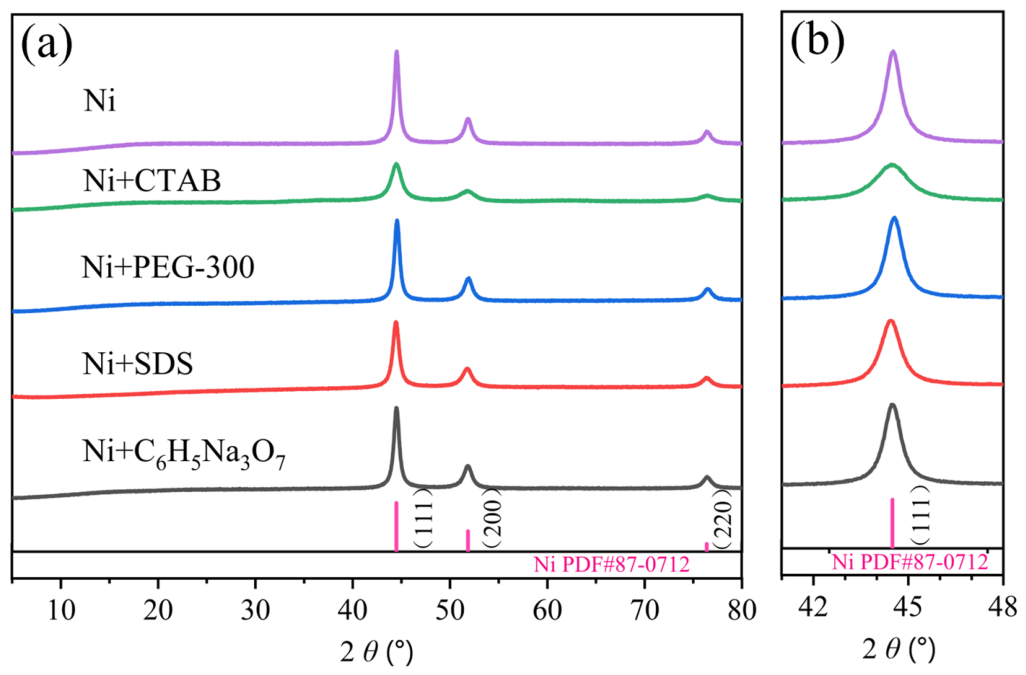
Figure 1 presents the X-ray diffraction patterns of Ni nanopowders synthesized with different dispersants. All five samples exhibit identical diffraction peaks near 2θ ≈ 44.4°, 51.8°, and 76.4°. These peaks can be indexed to the (111), (200), and (220) crystallographic planes of face-centered cubic (FCC) nickel, which are consistent with the standard reference pattern (JCPDS No. 87-0712). This confirms that the synthesized products possess a pure FCC structure [15]. Notably, the (111) peak is the most intense in all samples, indicating a preferred growth orientation along this plane, likely attributed to its lower surface energy. Meanwhile, the absence of additional diffraction peaks associated with impurities or oxides verifies the successful synthesis of high-purity metallic nickel.
The average grain size (D), full width at half maximum (β, FWHM), and microstrain (ε) for the five sample groups are presented in Table 3. D and ε were calculated using Scherrer formula (Equation (2)) and Williamson-Hall formula (Equation (3)), respectively. It is noteworthy that compared to the other four groups, the sample prepared by hexadecyl trimethyl ammonium bromide (CTAB) exhibited significantly lower intensity in the (111) diffraction peak, indicating lower crystallinity in the synthesized sample. Furthermore, Sample 5 possessed the smallest average crystallite size (23.3 nm) and the highest ε (0.995 × 10⁻³). The elevated ε implies a high density of lattice defects and distortions within the nanoparticles. It is postulated that these defects effectively inhibit grain growth during synthesis, thereby facilitating the formation of the ultrafine nanocrystalline structure [21].
D = k λ β cos θ
β cos   θ = k λ D + 4 ε sin   θ
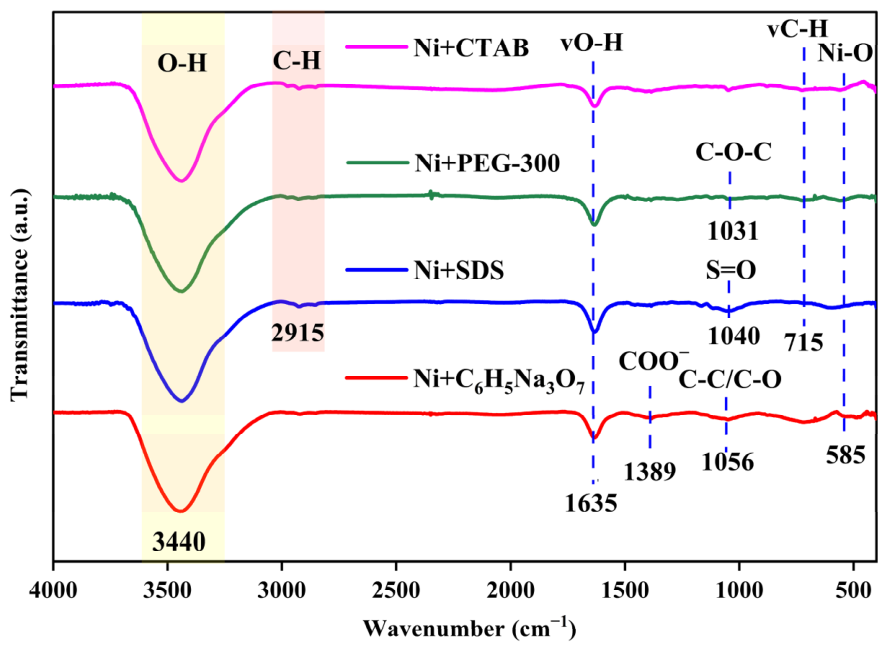
Figure 2 shows the FT-IR spectra of the Ni nanopowders prepared with different dispersants. The broad absorption band at 3440 cm−1 and the peak at 1635 cm−1 are assigned to the stretching and bending vibrations of O–H, respectively, which generally originate from adsorbed water or surface hydroxyl species. The weak peak at 2915 cm−1 corresponds to the C–H stretching vibration of organic groups. For the citrate-assisted sample, the peaks at 1389 cm−1 and 1056 cm−1 are attributed to COO and C–O–C/C–O vibrations, respectively. The characteristic peak at 1040 cm−1 in the SDS-assisted sample is assigned to the S=O stretching vibration. The peak at 1031 cm−1 for PEG-300 assisted sample corresponds to the C–O–C stretching vibration, while the peak at 1385 cm−1 for the CTAB-assisted sample is related to C–N+ vibration. In addition, the absorption band around 545–715 cm−1 is associated with Ni–O stretching, indicating slight surface oxidation of the Ni nanoparticles. The presence of these characteristic peaks confirms that the dispersant molecules are successfully adsorbed onto the surface of the synthesized Ni nanopowders.
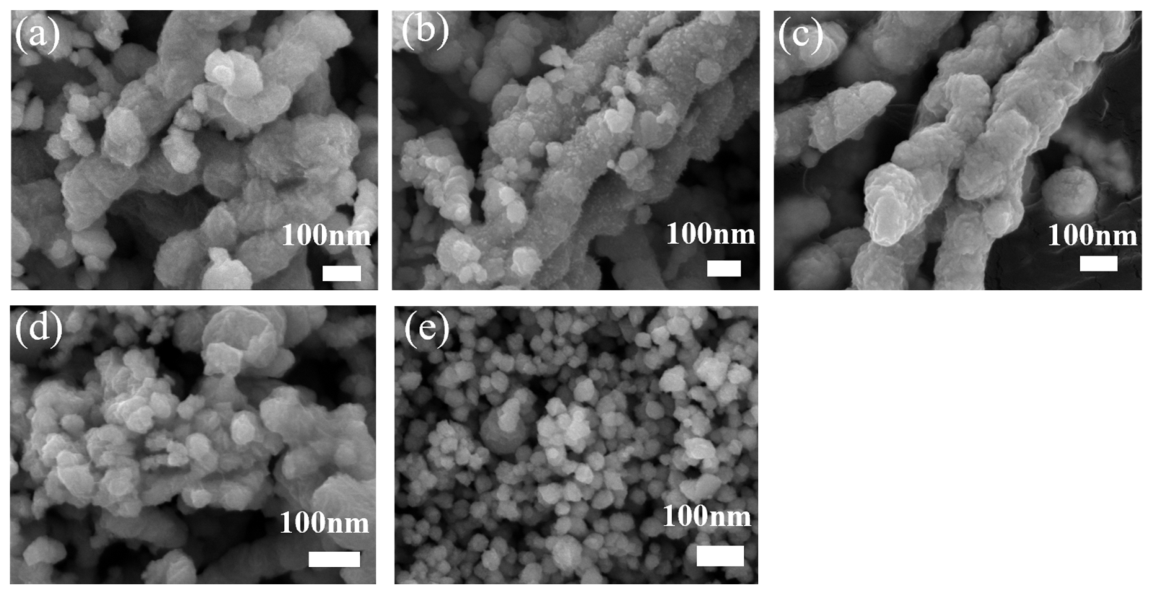
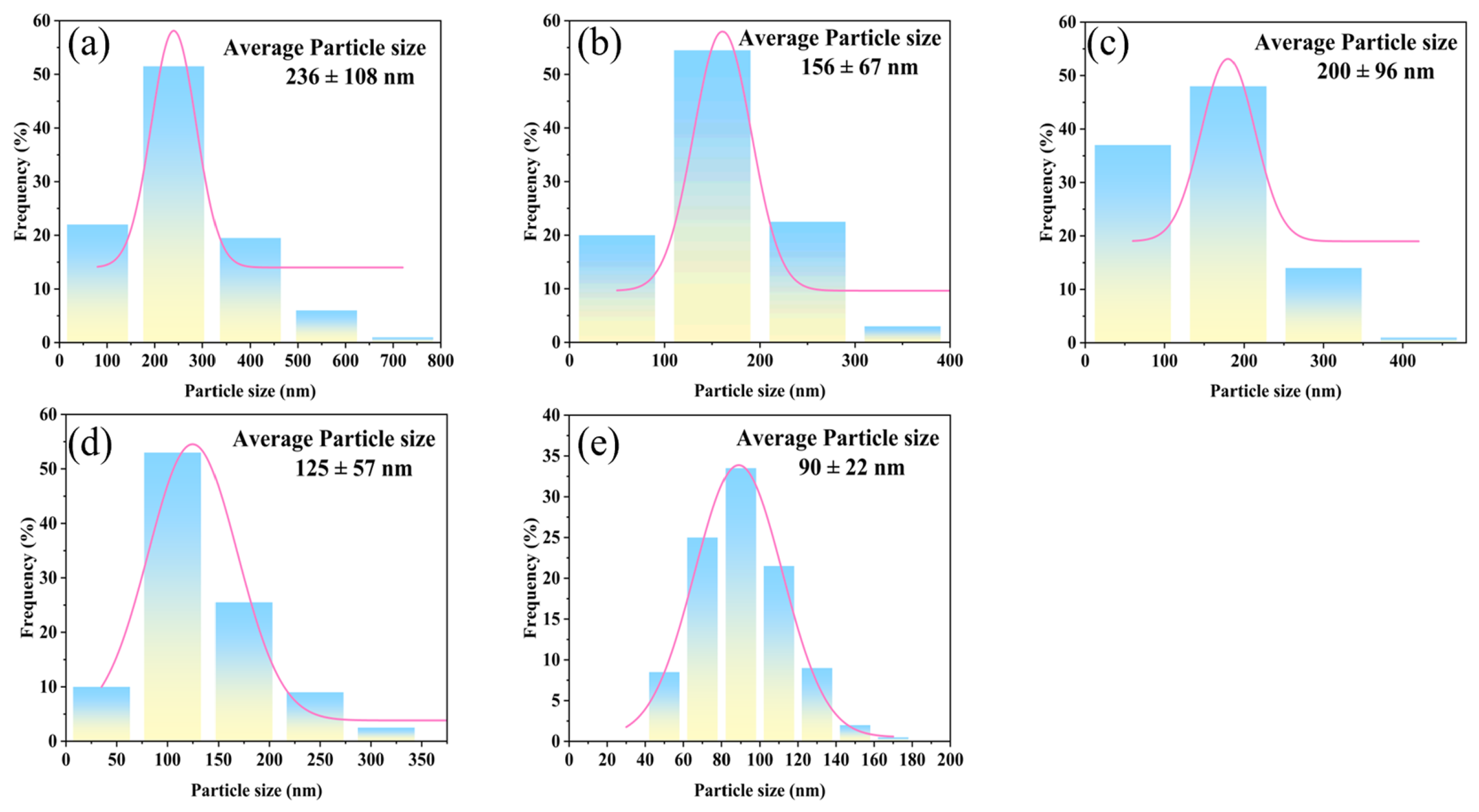
Scanning electron microscopy (SEM) was employed to investigate the influence of various dispersants on the morphology of the Ni nanopowders, as illustrated in Figure 3. And the average nanoparticle sizes of nickel nanoparticles are shown in Figure 4. The samples synthesized without an effective dispersant exhibit a chain-like agglomeration structure, composed of irregular polyhedral particles and a small proportion of spherical shapes, as shown in Figure 3a–c. The average particle size of Samples 2 and 3 was larger than Sample 1. Specifically, for the sample utilizing sodium citrate (C6H5Na3O7), the pH value of the reaction system was measured to be 14. Some studies reported that OH- ions in the strong alkaline environment would compete with C6H5Na3O7 to occupy the adsorption site [22]. Compared with sample 1, the addition of PEG-300 resulted in a slight reduction in particle size. Regarding the cationic surfactant CTAB (Figure 3d), the majority of the Ni nanopowders exhibited a spherical morphology with significantly reduced agglomeration The average size of the particles decreased to 125 ± 57 nm. As a result, this indicates that CTAB exhibits a moderate degree of mitigation effect on the agglomeration phenomenon. Conversely, Figure 3e reveals that the Ni nanopowders synthesized with SDS is spherical and uniform, with an average particle size decreased to 90 ± 22 nm compared with the control group 1 (236 ± 108 nm). This indicates the superior dispersion performance of the anionic surfactant SDS. Consequently, SDS was selected as the optimal dispersant for further investigation. Notably, the average particle sizes of the nanoparticles observed by SEM are larger than the crystallite sizes calculated using the Scherrer formula. This discrepancy has been documented in previous relevant investigations [23], and is primarily attributed to the differing scales of grain size (the coherent diffraction regime) and particle size; individual polycrystalline particles typically comprise multiple grains.
Sample 5, using SDS as a dispersant, exhibits sharp and distinct diffraction peaks without phase impurities. It can be seen from the SEM analyses and histograms that sample 5 uniquely achieves a highly uniform spherical morphology, the best dispersibility, and the smallest average primary particle size. The next step is to research the effect of different mass ratios of SDS to nickel salt on the properties and microstructure of nano-nickel powder.

3.2. Effect of SDS Dispersant on the Dispersibility of Ni Nanopowders

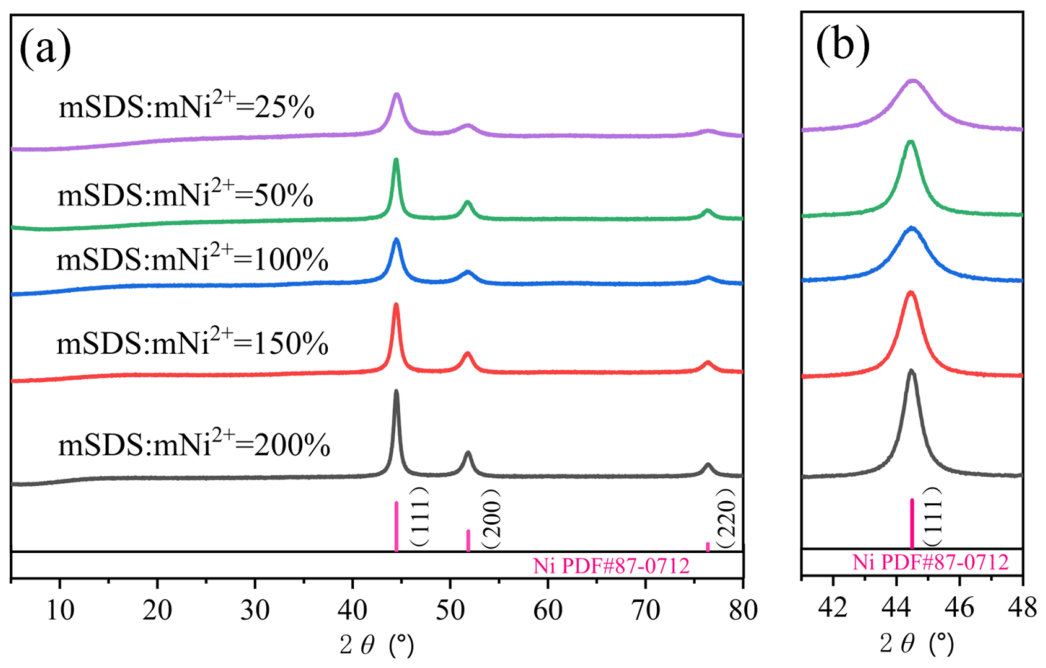
Figure 5 illustrates the X-ray diffraction patterns of Ni nanopowders prepared using SDS with different initial mass ratios. The XRD characteristic diffraction peaks of the Ni nanopowders are similar to those observed in Figure 1, which are in agreement with the standard Ni phase diagram (PDF#87-0712), confirming that FCC Ni have been successfully synthesized.
A detailed view of the (111) diffraction peak of Ni nanoparticles is presented in Figure 5b. The peak intensity presents an upward trend, reaching a maximum when the mass ratio of SDS to Ni salt reaches 200%. This enhancement in intensity implies that higher SDS dosages may facilitate the formation of a more ordered crystal structure [24].
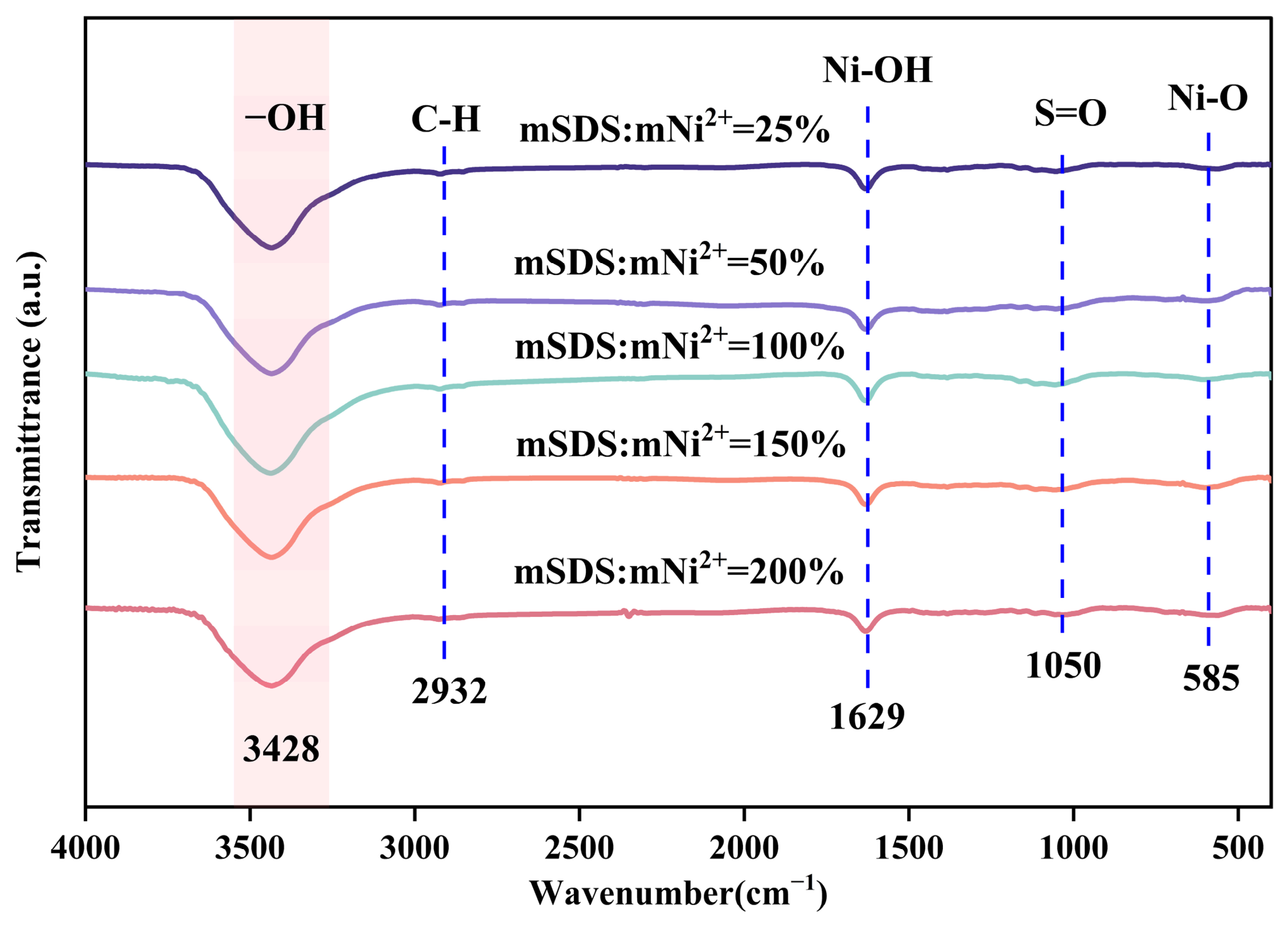
Figure 6 shows the FT-IR spectrum of the Ni nanopowders prepared with different mass ratios of SDS to Ni salt. All samples exhibit similar absorption profiles. The broad absorption band at 3428 cm−1 and the peak at 1629 cm−1 are assigned to the stretching and bending vibrations of -OH groups, respectively, which generally originate from adsorbed water or Ni-OH. The weak absorption peak at 2932 cm−1 corresponds to the C-H stretching vibration of the alkyl chain. The peak located at 1055 cm−1 is attributed to the S=O stretching vibration from the sulfate groups. Additionally, the absorption band around 585 cm−1 is associated with the Ni-O stretching vibration, suggesting a slight oxidation on the surface of the Ni nanoparticles. The distinct presence of C-H and S=O characteristic peaks in all samples confirms that the SDS molecules are successfully adsorbed onto the surface of the synthesized Ni nanoparticles.
The average grain size (D), full width at half maximum (β, FWHM), and the elevated microstrain (ε) for the five sample groups are presented in Table 4. As the SDS mass increased, the grain size, FWHM and ε of nanocrystalline nickel powder exhibited a non-monotonic variation. When the mass ratio of SDS to Ni salt increased from 25% to 100%, there was a reduction in the grain size from 47 nm to 23.3 nm, FWHM increased from 0.552° to 0.836° and ε increased from 0.511 × 10⁻³ to 0.995× 10⁻³. This trend indicates that the growth of the crystal is effectively inhibited at lower SDS concentrations. The enhanced nucleation and non-equilibrium growth introduce a higher density of crystal defect and surface stress [25]. Upon increasing the mass ratio to 150%, the grain size increased to 35.7 nm, FWHM decreased to 0.675° and ε decreased to 0.591 × 10⁻³. We believe that this non-monotonic change may be related to a gradual saturation of surface adsorption together with the increasing contribution of micelle-dominated organization at higher SDS concentration [26,27]. Such a transition may alter the local growth environment and mass-transport behavior, thereby partially relieving lattice distortion and allowing crystallites to grow larger [27]. Consequently, the (111) peak becomes sharper and the ε is lower, indicating improved crystallinity. When the mass ratio of SDS to Ni salt is further increased to 200%, the grain size decreased to 20.7 nm, FWHM increased to 0.913° and ε increased to 1.192 × 10⁻³. Excessive dispersant concentration increases FWHM and ε, leading to a reduction in particle size.
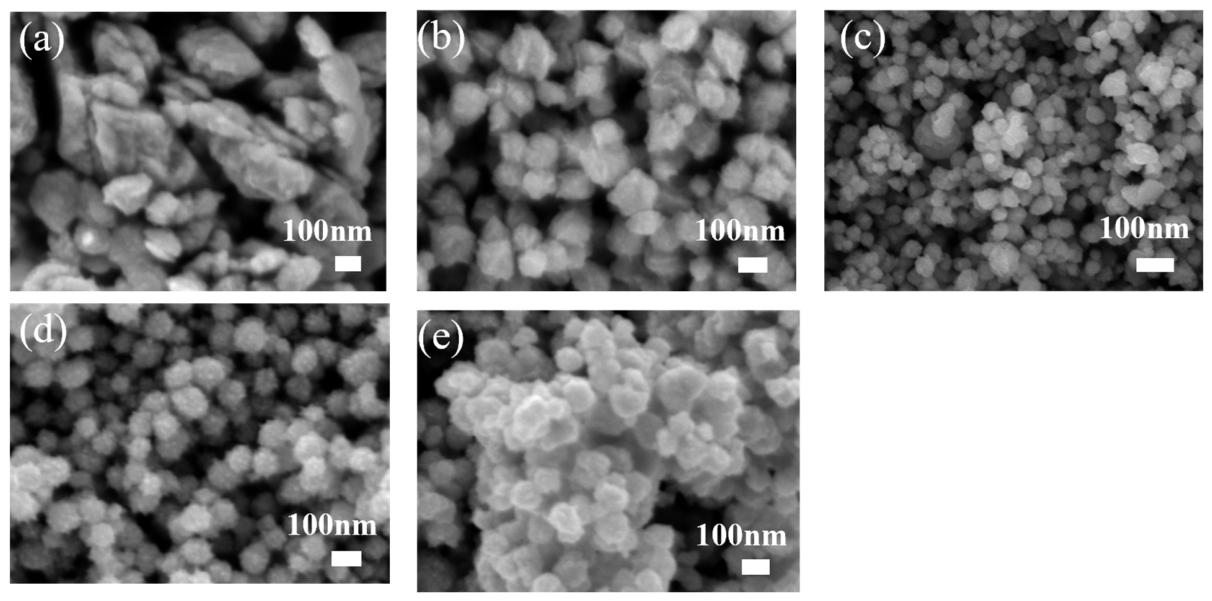
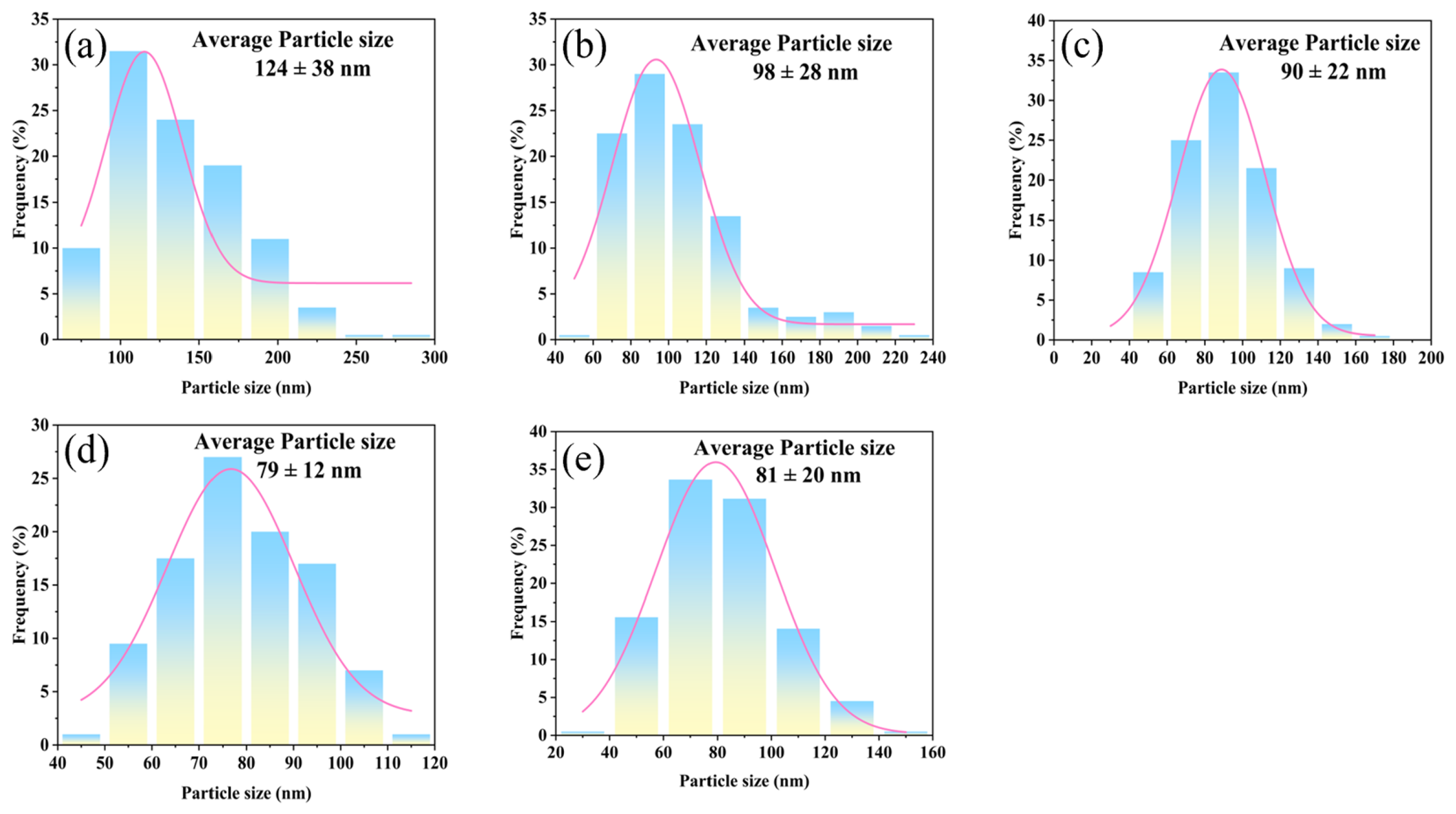
The microscopic morphology of the nickel nanoparticles is characterized by SEM as shown in Figure 7. And the average nanoparticle sizes of nickel nanoparticles are shown in Figure 8. Ni nanopowders with small particle and superior dispersibility are successfully synthesized by regulating the mass ratio of SDS to Ni salt. When the mass ratio ranged from 25% to 50%, the average particle sizes determined via statistical image analysis, ranged from approximately 124 ± 38 nm to 98 ± 28 nm. The nickel nanoparticles exhibited an irregular polyhedral morphology with non-uniform particle sizes and significant agglomeration, caused by the van der Waals force and magnetic attraction [28,29]. At a mass ratio of 100%, the average particle size decreased to 90 ± 22 nm. Although the particles became more spherical, the size distribution remained broad, and significant agglomeration persisted. This suggests that the SDS may not fully encapsulate the surface of nanoparticles. When the mass ratio of SDS to Ni salt reached 150%, the average particle size is further reduced to a minimum of 79 ± 12 nm. The nanoparticles exhibit uniform sizes and spherical morphologies. The agglomeration are gradually reduced, suggesting that sufficient electrostatic repulsion was generated by the adsorbed SDS layers, effectively counteracting van der Waals forces and magnetic attraction between particles [30,31]. Upon increasing the mass ratio to 200%, the average particle size decreased to 81 ± 20 nm, and but the morphology, while spherical, is more agglomerated. This phenomenon may due to the excessive free micelles in the bulk solution, it could induce depletion flocculation as the mass ratio reached 200% [30].
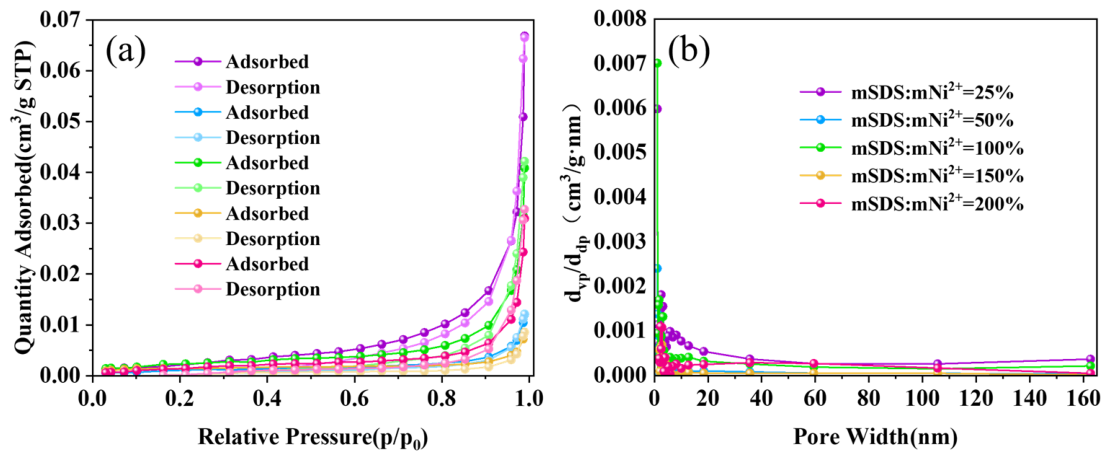
To further characterize the porosity of the Ni nanopowders, nitrogen-adsorption experiments are performed at 77 K. N2 adsorption–desorption isotherms and pore size distribution curves of nickel powder prepared with different mass ratios of SDS to Ni salt are shown in Figure 9a,b, respectively. Key characterization parameters, including specific surface area (ABET), pore volume (Vp) and pore size (Dp), are listed in Table 5. All samples exhibited Type IV isotherms with obvious hysteresis loops in the relative pressure range of P/P0 = 0.6–1. The Type IV isotherm with a hysteresis loop indicates the presence of mesopores [32,33]. The observed hysteresis loops are of H3 type, suggesting the presence of slit-like interparticle pores, which are commonly generated by particle aggregation and packing. Significant variations in specific surface area are observed among samples subjected to different SDS ratios, suggesting that the concentration of SDS critically influences grain growth behavior. Notably, the highest specific surface area is achieved at a mass ratio of 25%, but the sample did not yield the smallest grain size, a deviation from the expected inverse correlation. According to previous studies, the discrepancy may be attributed to secondary nucleation of nickel precursors under low-concentration dispersant conditions, leading to the formation of multi-sized small particles and consequently increased specific surface area [34,35]. Subsequently, the specific surface area showed an initial increasing trend and then decreasing. At the ratio of 150%, it reached a larger value of 8.86 m2·g−1. This result is consistent with the XRD and SEM findings, further confirming that the Ni nanopowders under this ratio possess optimal dispersibility and a favorable reduction in secondary agglomeration.
(111) diffraction peak of exhibits sharp and distinct diffraction peaks without phase impurities. A comprehensive evaluation combining both XRD and SEM analyses confirms the optimal quality of this sample. As shown in the SEM images, the 150% SDS sample uniquely achieves a highly uniform spherical morphology, the best dispersibility, and the smallest average particle size among all tested groups.
To quantitatively analyze the influence of different mass ratios of SDS on the dispersion characteristics of Ni nanopowders, an estimated particle number density, N v , was calculated from the average particle diameter. In this calculation, the Ni particles were approximated as spherical particles with an average diameter of d . Accordingly, the volume of a single particle is π d 3 / 6 , and the corresponding particle number density can be expressed as Equation (4):
N v   =   N V   =   6 π d 3
N is the number of particles, V is the true solid volume of Ni particles normalized to unit volume, and d is the average particle diameter. It should be emphasized that Equation (4) provides an approximate geometric estimate based on the mean particle size and an idealized spherical-particle model. Therefore, interparticle voids, packing effects, and deviations from ideal sphericity are not explicitly considered. In the present work, N v is thus used as a comparative descriptor for samples prepared under identical conditions, rather than as an absolute measure of the true nucleation density. This treatment is reasonable for evaluating relative changes in particle refinement and dispersion among the investigated samples [36,37].
Upon increasing the mass ratio of SDS to Ni salt increases from 25% to 150%, Nv increases significantly from 1.84 × 10¹⁶ to 2.15 × 10¹⁷ particles cm−3. This increase suggests that the average particle size decreased and that the particles became more finely dispersed within this composition range. When the mass ratio of SDS to Ni salt increases to 200%, Nv decreases to 4.20 × 10¹⁶ particles cm−3, which is likely associated with enhanced agglomeration under excessive SDS addition. Consequently, the 150% mass ratio is identified as optimal, corresponding to the highest estimated particle number density and the most favorable dispersion state.

3.3. Thermal Analysis of the Powder

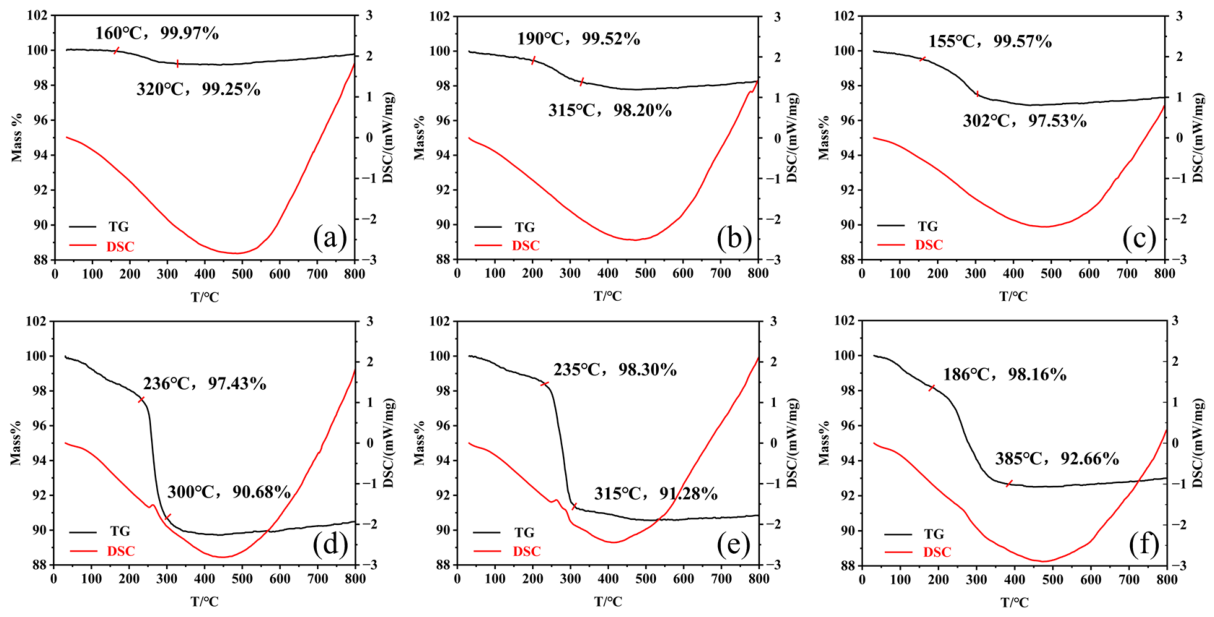
The thermal stability of the Ni nanopowders is analyzed through thermogravimetric (TG) analysis. Figure 10 illustrates the thermogravimetric curves of Ni nanopowders synthesized with different ratios of SDS to Ni salt in a nitrogen atmosphere. The thermal degradation behavior of nickel powder is divided into two stages [29]. In the first stage (0–200 °C) is characterized by a minor weight loss, attributed to the evaporation of physically adsorbed water [38]. In the second stage (200–400 °C), the weights of Ni nanopowders show obvious decreases. The weight losses of the Ni nanopowders are 0.72%, 1.32%, 2.04%, 6.75%, 7.02% and 5.50%, which correspond to the thermal decomposition of the SDS. The last three groups exhibit much greater weight loss peaks, which coincided with the endothermic peaks on the DSC curve. As shown in Figure 10e, the maximum weight loss is observed at an SDS-to-Ni salt ratio of 150%, which may indicate that the Ni nanopowders achieve a large amount of SDS coverage under this condition. Above 415°C, the mass stabilizes and no exothermic peaks are detected in the DSC curves, implying a higher thermal stability of the nano-nickel particles [39].
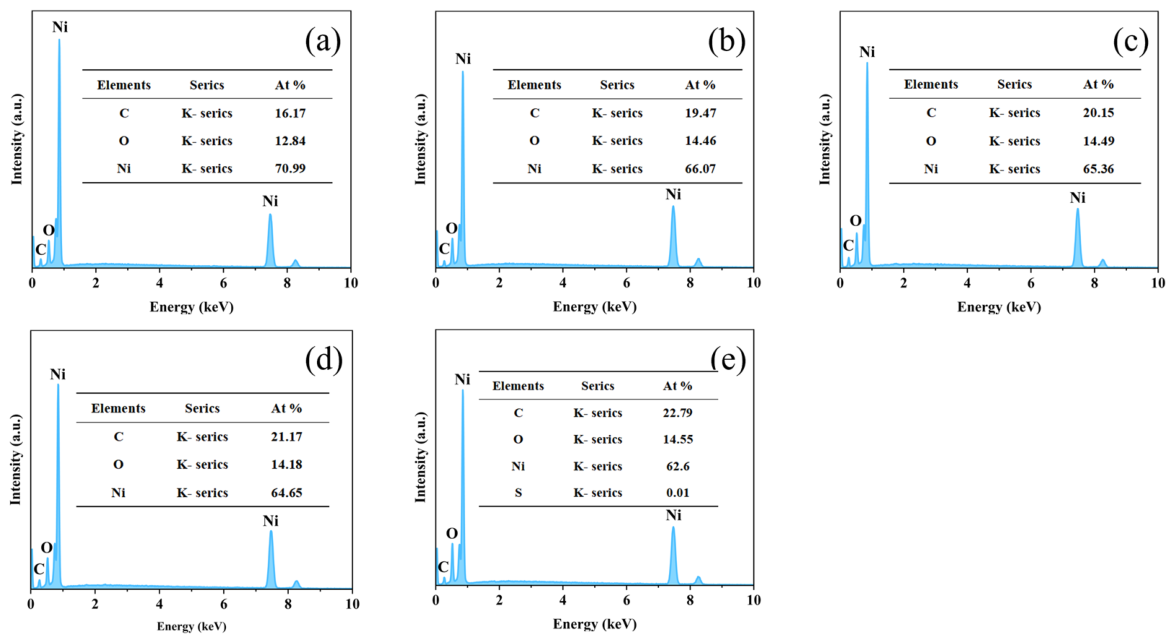
To evaluate the possible sulfur residue introduced by SDS, EDX analysis was conducted on the samples after heat treatment in N2 at 415 °C. As shown in Figure 11, the heat-treated samples with different mass ratios of SDS to Ni salt between 25 and 200% are mainly composed of Ni, accompanied by minor amounts of C and O. No obvious sulfur signal was detected in the samples with SDS/Ni-salt mass ratios of 25%, 50%, 100%, and 150%, while only a trace amount of S (0.01%) was detected in the 200% sample. These results suggest that sulfur-containing species from SDS were largely removed after heat treatment at 415 °C, and residual sulfur was negligible under the present conditions.

3.4. Magnetic Analysis of Powder

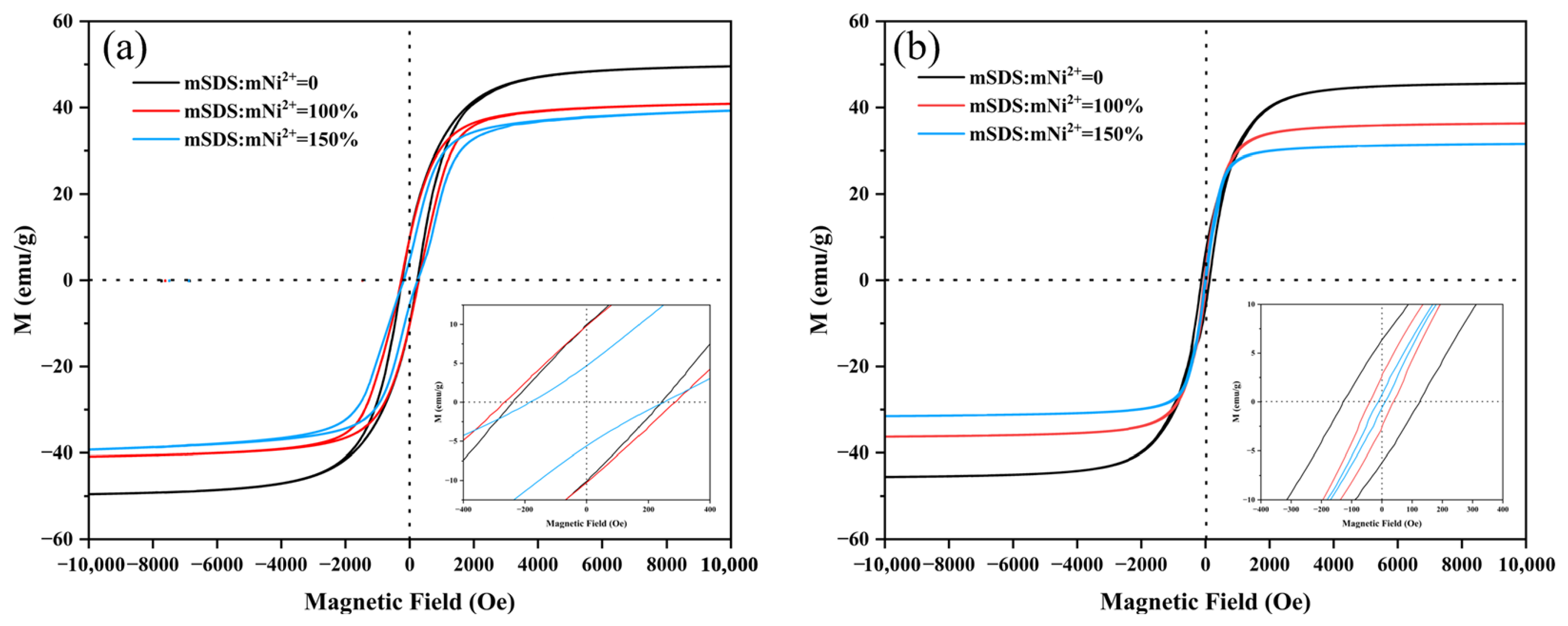
Nickel is one of the most important magnetic materials [40]. To further investigate the magnetic properties of Ni nanopowders, three typical samples with ratios of SDS to Ni salt of 0, 100% and 150% were selected for magnetic characterization.
The hysteresis loops of the Ni nanopowders are measured at 5 K and 300 K respectively, as shown in Figure 12. At 5 K, all samples demonstrate obvious hysteresis, confirming the ferromagnetic blocking state. When the mass ratio of SDS to Ni salt reached 150%, coercivity (Hc) increased from 186.7 Oe to 266.7 Oe and magnetic remanence (Mr) decreased from 9.9 emu·g−1 to 4.8 emu g−1, respectively [41]. The saturation magnetization values (Ms) of the Ni nanopowders measured at 10 kOe are 49.5 emu·g−1, 41.0 emu·g−1 and 39.2 emu·g−1, respectively. At 300 K, Ms decreased from 35.3 emu·g−1 to 31.6 emu·g−1 and SDS increased. Some studies reported that the lower Ms of Ni nanopowders relative to bulk nickel (55 emu·g−1) could be due to the surface spin [41,42]. The hysteresis effect is strongly suppressed, Hc decreased from 127.1 Oe to 9.0 Oe and Mr decreased from 6.3 emu·g−1 to 0.7 emu·g−1.
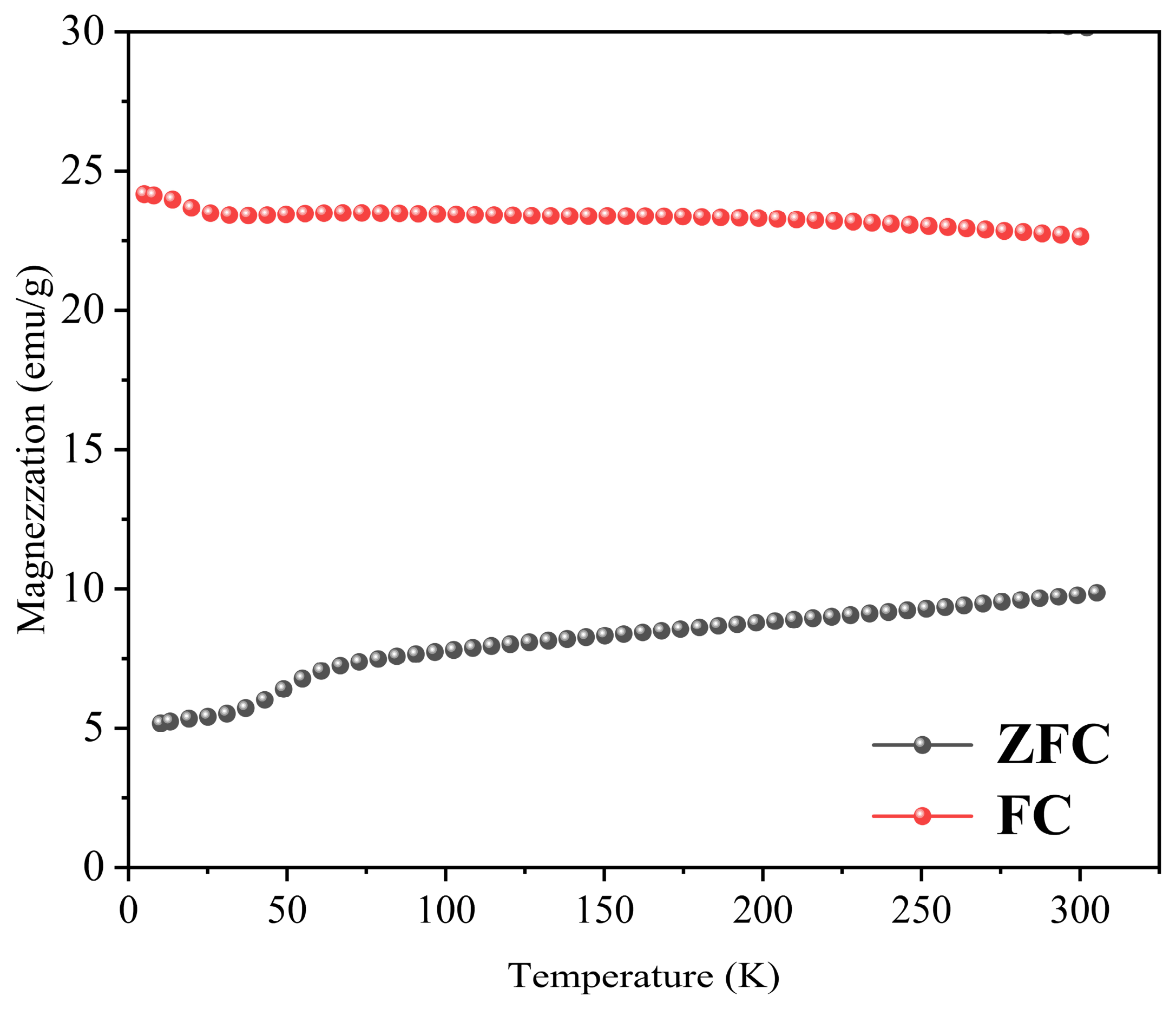
The zero-field-cooled (ZFC) and field-cooled (FC) magnetization curves of the sample 9 were measured over the investigated temperature range. As shown in Figure 13, no obvious maximum or turning point corresponding to the blocking temperature (TB) is observed in the ZFC curve, which exhibits ferromagnetic characteristics. The sample synthesized with the 150% mass ratio of SDS to Ni salt exhibits negligible remanence. Low magnetization is beneficial to suppress secondary agglomeration caused by magnetic forces, thereby improving the dispersion uniformity of the slurry and the printing of the electrodes. This suggests significant potential for application in multilayer ceramic capacitors [3,15].

4. Conclusions

In this work, nickel nanoparticles are successfully synthesized via a liquid-phase reduction method, with four distinct dispersants employed to systematically optimize dispersion. Subsequently, the magnetic properties of nickel nanoparticles were reduced by adjusting the mass ratio of SDS to nickel salt. In the absence of dispersants, the nickel nanopowders displayed severe agglomeration characterized by linear chain structures. Conversely, the incorporation of dispersants substantially alleviated this behavior. Among these, SDS is the most effective dispersant, resulting in a minimum average particle size of 90 ± 22 nm with a spherical morphology. When the mass ratio of SDS to precursors reached 150%, spherical nanoparticles with a minimum average diameter of 79 ± 12 nm were yielded. It also resulted in a high particle concentration of 2.15 × 1017 cm−3. After thermal treatment, the quality of the Ni nanopowders remained stable beyond 415 °C and there was no residual sulfur on the surface. As the SDS concentration increased, the saturation magnetization decreased. The coercivity of 266.7 Oe is obtained at 5 K because the agglomeration of nickel nanoparticles markedly reduced. Meanwhile, the effective content of ferromagnetic nickel per unit mass in the sample is decreased due to the SDS coating on the surface of the nickel particles, leading to a decrease in Ms to 31.6 emu·g−1 at 300 K. The combination of spherical morphology, uniform dispersion, and reduced magnetization positions this Ni nanopowder as a highly promising candidate for internal electrodes, supporting its potential deployment in the fabrication of multilayer ceramic capacitors.

Author Contributions

Methodology, Y.Y.; Writing—Original Draft, Y.Y.; Writing—Review and Editing, Y.S. and D.Z.; Funding Acquisition Y.S. Data Curation, Y.Y. and S.L.; Investigation, L.L. and X.J.; Software, H.L. and H.Z.; All authors have read and agreed to the published version of the manuscript.

Funding

This work was supported by the National Key Research and Development Program of China (No. 2023YFB3812200) from Yihua Sun.

Data Availability Statement

The original contributions presented in this study are included in the article.

Conflicts of Interest

The authors declare no conflicts of interest.

References

  1. Chen, S.; Ding, Y.; Mu, H.; Tian, W.; Deng, X.; Gao, R.; Cai, W.; Fu, C. Research progress on multilayer ceramic capacitors for energy storage: Review. J. Mater. Sci. Mater. Electron. 2025, 36, 77. [Google Scholar] [CrossRef]
  2. Legada, K.J.B.; Han, C. Optimization of MLCC Bar Design to Minimize Failure Rates Under Isostatic Pressing Using Numerical Analysis and Homogenization Technique. IEEE Access 2025, 13, 76058–76071. [Google Scholar] [CrossRef]
  3. Jerng, S.E.; Song, J.; Cha, K.; Ahn, B.; Kim, T.; Lee, J.H. Ni particle surface descriptor to enhance roughness of Ni internal electrode in MLCCs. J. Korean Ceram. Soc. 2020, 58, 307–313. [Google Scholar] [CrossRef]
  4. Jung, Y.; Joo, W.; Lee, K.R.; Kim, C.; Choi, M.-J.; Joo, Y.-C.; Lee, S.-Y. In-situ Stress Analysis of Nickel Nanoparticle Sintering with Metal Additive in Multi-Layer Ceramic Capacitors. Electron. Mater. Lett. 2025, 21, 464–472. [Google Scholar] [CrossRef]
  5. Im, T.; Pyo, J.; Lee, J.-s.; Lee, C.S. Fabrication of homogeneous nanosized nickel powders using a planetary ball mill: Applications to multilayer ceramic capacitors (MLCCs). Powder Technol. 2021, 382, 118–125. [Google Scholar] [CrossRef]
  6. Wu, S.-H.; Chen, D.-H. Synthesis and characterization of nickel nanoparticles by hydrazine reduction in ethylene glycol. J. Colloid Interface Sci. 2003, 259, 282–286. [Google Scholar] [CrossRef]
  7. Li, H.; He, J.; Sun, Q.; Wang, S. Effect of the environment on the morphology of Ni powder during high-energy ball milling. Mater. Today Commun. 2020, 25, 101288. [Google Scholar] [CrossRef]
  8. Tientong, J.; Garcia, S.; Thurber, C.R.; Golden, T.D. Synthesis of Nickel and Nickel Hydroxide Nanopowders by Simplified Chemical Reduction. J. Nanotechnol. 2014, 2014, 193162. [Google Scholar] [CrossRef]
  9. Hou, Y.; Kondoh, H.; Ohta, T.; Gao, S. Size-controlled synthesis of nickel nanoparticles. Appl. Surf. Sci. 2005, 241, 218–222. [Google Scholar] [CrossRef]
  10. Shrestha, S.; Wang, B.; Dutta, P. Nanoparticle processing: Understanding and controlling aggregation. Adv. Colloid Interface Sci. 2020, 279, 102162. [Google Scholar] [CrossRef] [PubMed]
  11. Guo, G.; Gan, W.; Luo, J.; Xiang, F.; Zhang, J.; Zhou, H.; Liu, H. Preparation and dispersive mechanism of highly dispersive ultrafine silver powder. Appl. Surf. Sci. 2010, 256, 6683–6687. [Google Scholar] [CrossRef]
  12. Wang, T.; Wang, Z.; Hu, C.; Li, X.; Huang, Z.; Hu, X.; Li, Y. Dispersant-assisted preparation of ultra-fine HfB2 powder. Appl. Surf. Sci. 2022, 606, 154995. [Google Scholar] [CrossRef]
  13. Shen, H.; Li, X.; Hu, C.; Wang, Z.; Hu, X.; Li, Y.; Yan, J. Effect of dispersants on the physicochemical properties of ultra-fine ZrB2 powder in Sol-gel synthesis. Surf. Interfaces 2021, 25, 101162. [Google Scholar] [CrossRef]
  14. Ran, Q.; Qiao, M.; Liu, J.; Miao, C. SMA-g-MPEG comb-like polymer as a dispersant for Al2O3 suspensions. Appl. Surf. Sci. 2012, 258, 2447–2453. [Google Scholar] [CrossRef]
  15. Liu, S.; Mei, J.; Zhang, C.; Zhang, J.; Shi, R. Synthesis and magnetic properties of shuriken-like nickel nanoparticles. J. Mater. Sci. Technol. 2018, 34, 836–841. [Google Scholar] [CrossRef]
  16. Lavanya, J.; Ravi Sankar, A.; Santhoshkumar, M. Surfactant-assisted hydrothermal synthesis of large surface area nickel nanoparticles for electrochemical applications. Mater. Lett. 2023, 346, 134527. [Google Scholar] [CrossRef]
  17. Wang, Y.; Zheng, X.; Li, X. Effect of polyethylene glycol molecular weight on the electrodeposition of nanostructured nickel. Appl. Surf. Sci. 2023, 623. [Google Scholar] [CrossRef]
  18. Mushtaq, M.W.; Shahbaz, M.; Naeem, R.; Bashir, S.; Sharif, S.; Ali, K.; Dogar, N.A. Synthesis of surfactant-assisted nickel ferrite nanoparticles (NFNPs@surfactant) to amplify their application as an advanced electrode material for high-performance supercapacitors. RSC Adv. 2024, 14, 20230–20239. [Google Scholar] [CrossRef]
  19. Silva, F.A.e.; Salim, V.M.M.; Rodrigues, T.S. Controlled Nickel Nanoparticles: A Review on How Parameters of Synthesis Can Modulate Their Features and Properties. AppliedChem 2024, 4, 86–106. [Google Scholar] [CrossRef]
  20. Chen, D.; Hsieh, C. Synthesis of nickel nanoparticles in aqueous cationic surfactant solutions. J. Mater. Chem. 2002, 12, 2412–2415. [Google Scholar] [CrossRef]
  21. Rane, G.K.; Welzel, U.; Mittemeijer, E.J. Grain growth studies on nanocrystalline Ni powder. Acta Mater. 2012, 60, 7011–7023. [Google Scholar] [CrossRef]
  22. Floate, S.; Hosseini, M.g.; Arshadi, M.R.; Ritson, D.M.; Young, K.L.; Nichols, R.J. An in-situ infrared spectroscopic study of the adsorption of citrate on Au(111) electrodes. J. Electroanal. Chem. 2003, 542, 67–74. [Google Scholar] [CrossRef]
  23. Holzwarth, U.; Gibson, N. The Scherrer equation versus the ‘Debye-Scherrer equation’. Nat. Nanotechnol. 2011, 6, 534. [Google Scholar] [CrossRef] [PubMed]
  24. Huang, L.; Sun, Y.; Li, M.; Yi, Y.; Jiang, L.; Fang, L. Sol-gel derived Al and Ga co-doped ZnO nanoparticles: Structural, morphological and optical investigation. Optik 2019, 192, 162942. [Google Scholar] [CrossRef]
  25. Song, T.; Gao, F.; Guo, S.; Zhang, Y.; Li, S.; You, H.; Du, Y. A review of the role and mechanism of surfactants in the morphology control of metal nanoparticles. Nanoscale 2021, 13, 3895–3910. [Google Scholar] [CrossRef] [PubMed]
  26. Xia, Y.; Xiong, Y.; Lim, B.; Skrabalak, S.E. Shape-Controlled Synthesis of Metal Nanocrystals: Simple Chemistry Meets Complex Physics? Angew. Chem. Int. Ed. 2008, 48, 60–103. [Google Scholar] [CrossRef]
  27. An, K.; Somorjai, G.A. Size and Shape Control of Metal Nanoparticles for Reaction Selectivity in Catalysis. ChemCatChem 2012, 4, 1512–1524. [Google Scholar] [CrossRef]
  28. Ghimire, P.P.; Gao, M.; Jaroniec, M. Amino acid-assisted synthesis of porous graphitic carbon spheres with highly dispersed Ni nanoparticles. Carbon 2019, 153, 206–216. [Google Scholar] [CrossRef]
  29. Huang, G.-Y.; Xu, S.-M.; Li, L.-Y.; Wang, X.-J. Effect of surfactants on dispersion property and morphology of nano-sized nickel powders. Trans. Nonferrous Met. Soc. China 2014, 24, 3739–3746. [Google Scholar] [CrossRef]
  30. Yang, Y.-J.; Kelkar, A.V.; Zhu, X.; Bai, G.; Ng, H.T.; Corti, D.S.; Franses, E.I. Effect of sodium dodecylsulfate monomers and micelles on the stability of aqueous dispersions of titanium dioxide pigment nanoparticles against agglomeration and sedimentation. J. Colloid Interface Sci. 2015, 450, 434–445. [Google Scholar] [CrossRef]
  31. Chin, C.-J.; Yiacoumi, S.; Tsouris, C. Agglomeration of magnetic particles and breakup of magnetic chains in surfactant solutions. Colloids Surf. A Physicochem. Eng. Asp. 2002, 204, 63–72. [Google Scholar] [CrossRef]
  32. Mortada-Hamid, H.; Umran, N.M.; Mohamad Alosfur, F.K. Hydrothermal synthesis of mesoporous nanocrystalline Y2O3: Structural, optical properties and UV/visible photocatalytic kinetics for methylene blue. Appl. Phys. A 2026, 132, 412. [Google Scholar] [CrossRef]
  33. Thommes, M.; Kaneko, K.; Neimark, A.V.; Olivier, J.P.; Rodriguez-Reinoso, F.; Rouquerol, J.; Sing, K.S.W. Physisorption of gases, with special reference to the evaluation of surface area and pore size distribution (IUPAC Technical Report). Pure Appl. Chem. 2015, 87, 1051–1069. [Google Scholar] [CrossRef]
  34. Threlfall, T.L.; Coles, S.J. A perspective on the growth-only zone, the secondary nucleation threshold and crystal size distribution in solution crystallisation. CrystEngComm 2016, 18, 369–378. [Google Scholar] [CrossRef]
  35. Li, S.; Liu, W.; Wu, Z.; Li, K.; Yuan, Y.; Cui, J. Synthesis of ultrafine nickel powder by solution reduction technique and effect of the dispersant. Powder Metall. Technol. 2006, 24, 345–348,378. [Google Scholar] [CrossRef]
  36. Merkus, H.G. Particle Size, Size Distributions and Shape. In Particle Size Measurements: Fundamentals, Practice, Quality; Merkus, H.G., Ed.; Springer: Dordrecht, The Netherlands, 2009; pp. 13–42. [Google Scholar]
  37. Farkas, N.; Kramar, J.A.; Montoro Bustos, A.R.; Caceres, G.; Johnson, M.; Roesslein, M.; Petersen, E.J. Derivation of Particle Number Concentration from the Size Distribution: Theory and Applications. Anal. Chem. 2025, 97, 10999–11006. [Google Scholar] [CrossRef] [PubMed]
  38. Uchikoshi, T.; Sakka, Y.; Yoshitake, M.; Yoshihara, K. A study of the passivating oxide layer on fine nickel particles. Nanostructured Mater. 1994, 4, 199–206. [Google Scholar] [CrossRef]
  39. Şişman, İ.; Tütünoğlu, Ç.; Aydın, A. Surfactant-assisted polyol preparation of nickel powders with different morphologies. Open Chem. 2008, 6, 253–257. [Google Scholar] [CrossRef]
  40. Mishra, S.; Yadav, M.D. Magnetic Nanoparticles: A Comprehensive Review from Synthesis to Biomedical Frontiers. Langmuir 2024, 40, 17239–17269. [Google Scholar] [CrossRef]
  41. He, X.; Shi, H. Size and shape effects on magnetic properties of Ni nanoparticles. Particuology 2012, 10, 497–502. [Google Scholar] [CrossRef]
  42. Park, J.; Kang, E.; Son, S.U.; Park, H.M.; Lee, M.K.; Kim, J.; Kim, K.W.; Noh, H.J.; Park, J.H.; Bae, C.J.; et al. Monodisperse Nanoparticles of Ni and NiO: Synthesis, Characterization, Self-Assembled Superlattices, and Catalytic Applications in the Suzuki Coupling Reaction. Adv. Mater. 2005, 17, 429–434. [Google Scholar] [CrossRef]
Figure 1. (a) XRD patterns of Ni nanoparticles prepared with different dispersants; (b) The magnified peak of the (111) plane in (a) of Ni nanoparticles.
Crystals 16 00307 g001
Figure 2. FT-IR spectrum of Ni nanoparticles prepared with different dispersants.
Crystals 16 00307 g002
Figure 3. SEM images of nickel nanoparticles prepared using dispersants: (a) no dispersant; (b) C6H5Na3O7; (c) PEG-300; (d) CTAB; (e) SDS.
Crystals 16 00307 g003
Figure 4. Average nanoparticle sizes with its standard deviation of nickel nanoparticles prepared using dispersants: (a) no dispersant; (b) C6H5Na3O7; (c) PEG-300; (d) CTAB; (e) SDS.
Crystals 16 00307 g004
Figure 5. (a) XRD patterns of Ni nanoparticles prepared with different initial mass ratios of SDS as dispersant; (b) XRD data of (111) surface reflection of Ni nanoparticles.
Crystals 16 00307 g005
Figure 6. FT-IR spectrum of Ni nanoparticles prepared with different ratios of SDS to Ni salt.
Crystals 16 00307 g006
Figure 7. SEM images of Ni nanopowders prepared by the mass ratio of SDS to nickel salt is (a) 25%; (b) 50%; (c) 100%; (d) 150%; (e) 200%.
Crystals 16 00307 g007
Figure 8. Average nanoparticle sizes with its standard deviation of Ni nanopowders prepared by the mass ratio of SDS to nickel salt is (a) 25%; (b) 50%; (c) 100%; (d) 150%; (e) 200%.
Crystals 16 00307 g008
Figure 9. (a) N2 adsorption–desorption isotherms; (b) pore size distribution curves at different initial SDS mass ratios.
Crystals 16 00307 g009
Figure 10. TG-DSC curves of Ni nanopowders prepared with the mass ratio of SDS to Ni salt is (a) 0; (b) 25%; (c) 50%; (d) 100%; (e) 150%; (f) 200%.
Crystals 16 00307 g010
Figure 11. EDX spectra of the samples after heat treatment at 415 °C under N2 with different SDS/Ni-salt mass ratios: (a) 25%; (b) 50%; (c) 100%; (d) 150% and (e) 200%.
Crystals 16 00307 g011
Figure 12. Hysteresis loops of Ni nanopowders measured (a) at 5 K; (b) at 300 K.
Crystals 16 00307 g012
Figure 13. Zero-field-cooled (ZFC) and field-cooled (FC) magnetization curves of the Ni sample synthesized at an SDS/Ni ratio of 150%.
Crystals 16 00307 g013
Table 1. Reaction conditions for Ni particles with different dispersants.
GroupDispersantnNi2+:nN2H4Dropwise Addition Rate (Hydrazine)Stirring SpeedYield
1
(Control group)
/1:200.2 mL·min−1500 rpm86%
2C6H5Na3O783%
3PEG-30075%
4CTAB84%
5SDS88%
Table 2. Reaction conditions for Ni particles with vary content of SDS.
GroupThe Mass Ratio of SDS to Ni Salt (%)nNi2+:nN2H4Dropwise Addition Rate (Hydrazine)Stirring SpeedYield
6251:200.2 mL·min−1500 rpm84%
75085%
810087%
915088%
1020085%
Table 3. Changes in average grain size (D), full width at half maximum (β, FWHM), and microstrain (ε) of Ni nanopowders prepared using different dispersants.
GroupDispersantD (nm) (°)ε (10−3)
1 (Control group)/48.20.5960.493
2C6H5Na3O749.50.5560.454
3PEG-30047.80.5800.484
4CTAB40.00.6560.586
5SDS23.30.8360.995
Table 4. Changes in average grain size (D), full width at half maximum (β), and microstrain (ε) for Ni nanopowders prepared at varying SDS to Ni salt mass ratios.
GroupThe Mass Ratio of SDS to Ni Salt (%)D (nm) (°)ε (10−3)
125%47.00.5520.511
250%35.50.7060.660
3100%23.30.8360.995
4150%35.70.6750.591
5200%20.70.9131.192
Table 5. Specific surface area (ABET), pore volume (Vp) and pore size (Dp) of as-synthesized nickel NPs at different SDS ratios.
The Mass Ratio of SDS to Ni Salt (%)ABET (m2·g−1)Vp (cm3·g−1)Dp (nm)
2511.680.06694222.925
502.66150.01873917.642
1007.13850.04142323.211
1508.85550.07824516.868
2005.43010.03109622.906
Disclaimer/Publisher’s Note: The statements, opinions and data contained in all publications are solely those of the individual author(s) and contributor(s) and not of MDPI and/or the editor(s). MDPI and/or the editor(s) disclaim responsibility for any injury to people or property resulting from any ideas, methods, instructions or products referred to in the content.