Article

Pyridine Complexes of Iodobismuthate(III) Anions

1
Department of Chemistry, William & Mary, Williamsburg, VA 23187, USA
2
Department of Chemistry, Georgetown University, Washington, DC 20057, USA
3
Institute of Chemistry, Universidade São Paulo, São Paulo 05508-220, Brazil
4
National Security Directorate, Pacific Northwest National Laboratory, Richland, WA 99354, USA
*
Author to whom correspondence should be addressed.
Crystals 2026, 16(4), 216; https://doi.org/10.3390/cryst16040216
Submission received: 7 March 2026 / Accepted: 19 March 2026 / Published: 24 March 2026

Abstract

We report a rare family of pyridine-coordinated iodobismuthate(III) salts supported by alkyltriphenylphosphonium and tetraphenylphosphonium cations. Reactions of BiI3 with Ph3PR+I (R = Me, Et, nPr, nBu, Ph) in neat pyridine, followed by crystallization, yield structurally tunable bismuth-halide-pyridine anions dictated by reagent stoichiometry. Combination of BiI3 and Ph3PR+I in 2:1 ratio produced [Ph3PR]2[BiI5Py], 1 (R = Me, Et, nPr, Ph), while combination in 1:1 ratio resulted in three compounds: [Ph3PR][cis-BiI4Py2], 2 (R = nPr, Ph), [Ph3PR][trans-BiI4Py2], 3 (R = Me, Et, Ph), and [Ph3PR]2[transoid-Bi2I8Py2], 4 (R = Me, Et, nPr, nBu, Ph). In many cases, the compounds were isolated as Py or Et2O solvates, and in some cases, multiple degrees of solvation or polymorphism were encountered. Hirshfeld analysis of 14 showed the major anion–cation/anion/solvent interactions to be H⋯I, H⋯H, and C⋯H. Diffuse reflectance measurements of representative compounds, all of which were yellow-orange to red-orange, revealed bandgaps in the range of 1.9–2.2 eV, where density-of-states KS-DFT calculations attribute the absorption to metal-centered charge transfer within the anionic unit. NLMO and QTAIM analyses further indicate predominantly ionic Bi(III)–I/pyridine bonding with robust inner-sphere coordination that is insensitive to anion speciation.

1. Introduction

Halometallate anions are attracting attention for their interesting photophysical properties, which make them potentially useful in applications such as emissive materials, sensors, and electronics [1,2,3,4]. Iodobismuthates(III), in particular, represent potential alternatives to iodoplumbates(II) in next-generation photovoltaic devices, owing to their relatively narrow bandgap energies [5,6,7,8]. Moreover, a wide range of iodobismuthate stoichiometries and coordination geometries are recognized [1,2,3,4].
Less well-studied is the ability to tune the behavior of these compounds through the addition of neutral donor ligands. Neutral bismuth(III) halides (BiX3) are known to form adducts with pyridine (Py), including mer-[BiI3Py3] and [BiCl3Py4] [9,10]. A few examples of the pentahalobismuthate anion with a single donor ligand coordinated, [BiX5L]2− (1), have been described [11,12,13,14,15], see Scheme 1, as has the 4,4′-bipyridyl (4,4′-Bpy) bridged dimer, [Cl5Bi(4,4′-Bpy)BiCl5]4− [16]. Only one of these previously reported compounds is an iodobismuthate, (Ph3PMe)2[BiI5Py] [14]. Anions of type [BiX4(LL)] (2, 3) are better recognized, where LL is a bidentate donor such as Bpy or a related ligand [17,18,19,20,21,22,23,24,25]. Most of these compounds utilize chelating LL, such as 2,2′-Bpy, 1,10-phenanthroline, etc., and therefore necessarily adopt cis stereochemistry (2). Some of these complexes, having X = Cl, Br, have shown emissive behaviors, including solventochromism. Far less common are [BiX4(LL)] species for which LL = bidentate bridging ligands produce a trans-bridged ionomer, type 3. Only two such compounds are known: {[trans-BiX4(4,4′-Bpy)]}n (X = Br, I) [20,26].
The dimeric octahalodibismuthate anion of type 4 is known by way of a few examples. In all cases, the pyridine-type donors adopt a transoid arrangement with one such ligand coordinated at each Bi center. We reported the ionomer 1[Bi2I8(LL)]2− (LL = pyrazine, 2-methylpyrazine) with the transoid LL arrangement of the bridging ligand, knitting together Bi2I82− units to form chains [20]. A similar compound employed LL = 4,4′-Bpy coordinated at both transoid positions of the Bi2I82− dimer, but in monodentate fashion with the second N in both Bpy ligands remaining non-coordinated [27]. Three neutral transoid octaiododibismuthate dimers have been produced using alkylated monodentate 4,4′-Bpy or 1,2-bis(4-pyridyl)ethylene cations, which acted both as a ligand and “counterion” [28,29]. Finally, two neutral polymorphs having ladder-like structures and the formula 1[Bi2X6(4,4′-Bpy)2] have been reported [30]. In these interesting compounds, all four trans ligand positions in the Bi dimer (rather than just two) are coordinated by Bpy.
In the above work, there has been almost no study of monodentate ligands, particularly Py, nor have iodobismuthates(III) been as well-studied as their chloride and bromide congeners. In this report, we examine the simple Py adducts of pentaiodobismuthate dianion (1), tetraiodobismuthate monoanion (2, 3), and octaiododibismuthate dianion (4) through the reactions of BiI3 with triphenylphosphonium iodide salts, Ph3PR+I (R = Me, Et, nPr, nBu, and Ph). We isolated multiple examples of all four structural types shown in Scheme 1 with robust Bi–Py bonding and a diverse range of anion–cation interactions. We also looked at the diffuse reflectance of these compounds and supported our results with computational studies.

2. Materials and Methods

2.1. General

BiI3 was purchased from Sigma-Aldrich (St. Louis, MO, USA) and used without purification. Pyridine was purchased from Sigma-Aldrich and was distilled before use. Ph3PR+I salts were prepared from PPh3 and RI as previously described [31,32]. Syntheses were carried out in the open air. Analyses for C, H, and N were carried out by Atlantic Microlabs, Norcross, GA, USA.

2.2. Syntheses

(Ph3PMe)2[BiI5Py] (1•Py). BiI3 (55 mg, 0.093 mmol) and Ph3PMe+I (75 mg, 0.186 mmol) were combined in 5.0 mL of Py. The mixture was stirred for 30 min. at r.t. The resulting orange solution was filtered and layered with ethyl ether. Orange crystals formed overnight. The solvent was removed, and the crystals were washed with ethyl ether and dried under vacuum. Other compounds 1 were prepared analogously. See Table S1 (Supporting Information, SI) for yields and analysis results.
(Ph3PMe)[trans-BiI4Py2] and (Ph3PMe)2[Bi2I8Py2] (3a, 3a•Et2O, 4a•2Py). BiI3 (55 mg, 0.093 mmol) and Ph3PMe+I (38 mg, 0.094 mmol) were combined in 5.0 mL of pyridine. The mixture was stirred for 30 min. at r.t. The resulting orange solution was filtered and layered with ethyl ether. Orange crystals formed overnight. The solvent was removed, and the crystals were washed with ethyl ether and dried under vacuum. Other compounds 24 were prepared analogously. See Table S1 for yields and analysis results.
Concentration Study of 2c•2Py, 4c, 4c•2Py products. Ph3PnPr+I (40 mg, 0.093 mmol) and BiI3 (55 mg, 0.093 mmol) were dissolved in 1.0, 2.0, 3.0, 4.0, and 5.0 mL Py, producing (monomer) concentrations of 93, 47, 31, 23, and 19 mM. Each orange solution was crystallized by layering with ethyl ether, producing orange crystals.

2.3. X-Ray Data Collection, Structure Solutions, and Refinements

X-ray measurements were made using a Bruker-AXS D8 Venture four-circle diffractometer, equipped with a microfocus Mo tube and a Photon 3 CPAD detector (Bruker AXS, Madison, WI, USA). Initial space group determination was based on fast scans with 180 frames. The data were reduced using SAINT+, and empirical absorption correction was applied using SADABS (both part of APEX5 software package v. 2023.9-4) [33]. Structures were solved using intrinsic phasing. Least-squares refinement for all structures was carried out on F2. The non-hydrogen atoms were refined anisotropically. Hydrogen atoms were placed in riding positions and refined isotropically. Structure solution, refinement, and the calculation of derived results were performed using the SHELXTL package of computer programs (APEX5 v. 2023.9-4) [33] and ShelXle (rev. 2585, Qt vers. 5.15.2) [34]. Disorder in the cation alkyl group and/or solvent molecule was modeled in several of the structures. In 4a•2Py, in addition to the pyridine solvent molecules, there appeared to be a trace of an ethyl ether molecule. Since this low-occupancy molecule could not be successfully modeled, it was removed from the data using Platon SQUEEZE. Powder X-ray diffraction (PXRD) traces were collected on a Thermo Scientific ARL Equinox 100 (Thermo Fisher, Waltham, MA, USA) with Co radiation. Data were subsequently converted to Cu wavelength.

2.4. Computational Details

Inner sphere chemical bonding was investigated using the Quantum Theory of Atoms in Molecules (QTAIM) and Natural Localized Molecular Orbital (NLMO) based on the Natural Bond Orbital (NBO) in order to understand and rationalize atomic orbital hybridization and involvement. Models included in the SI were built from crystallographic subunits in their experimental structures and used with and without previous optimization based on the KS-DFT ωB97X with an all-electron triple-ζ polarization (TZP) Slater-type basis set and scalar relativistic ZORA Hamiltonian. Calculations were performed using the Amsterdam Density Functional (ADF) program, version 2025.105 [35]. The NLMO analysis was obtained with the NBO program [36] v6.0 [37] included in the ADF package. For each compound, the anionic fragment was geometry-optimized prior to the QTAIM calculations. NLMO calculations were initially carried out on unoptimized models that included both the organic cation(s) and the corresponding anionic unit; these models were subsequently reduced to the geometry-optimized anionic units for compounds 14. The reduced and full models produced no appreciable differences in the bonding descriptors. Accordingly, results and discussion are reported for the optimized anion-only models, while the preliminary full-model data are provided in the SI.

2.5. Diffuse Reflectance Spectroscopy

Diffuse reflectance spectra were collected on solid samples of the title compounds at 298 K. The light source was a HL-2000-LL tungsten halogen (Ocean Optics, Orlando, FL, USA) source coupled with an Ocean Optics Flame detector. Scattered light was collected with a fiber-optic cable. Spectra were referenced with BaSO4. Data were processed using OceanView spectroscopy software (version 2.0.20).

3. Results and Discussion

3.1. Synthesis and Characterization

To date, very few iodobismuthates(III) ligated with monodentate ligands (L) have been reported. We now show that L = Py compounds are prepared with relative ease by combining a mixture of an organic iodide salt and bismuth(III) iodide in pyridine solution. Iodobismuthate-forming reactions can be carried out using either a 2:1 or 1:1 ratio of Ph3PR+I to BiI3, reactions (1) and (2). In all cases, an orange solution is produced. Crystals are readily grown from these solutions by layering them with ethyl ether. The 2:1 reactions (1) produce a single orange product, 1, although in one case, three solventomorphs of 1 were isolated. In contrast, the 1:1 ratio solutions from reaction (2) each produced more than one orange crystalline product. Each of these product mixtures proved to be a combination of three different compounds, viz., geometric isomers 2, 3, and dimer 4, as well as isomorphs and solventomorphs of these species, see Table 1. All synthetic yields and elemental analysis details are provided in Table S1.
2 Ph3PR+I + BiI3 + xs Py → (Ph3PR)2[BiI5Py] (1)
Ph3PR+I + BiI3 + xs Py → (Ph3PR)[cis-BiI4Py2] (2) + (Ph3PR)[trans-BiI4Py2] (3) + ½ (Ph3PR)2[Bi2I8Py2] (4)
While each of the Ph3PR+I salts produced dimer products 4, monomer 2 and 3 formation was found to be more variable, with R = Me, Et forming 3, R = nPr forming 2, R = nBu forming neither, and R = Ph forming both. A detailed study of the 1:1 R = nPr crystallization was carried out to examine the product distribution in this case. Equimolar mixtures of Ph3PnPrI and BiI3 were combined in Py in concentrations of 19–93 mM, and the solutions were crystallized via layering with ethyl ether. The crystalline products were then examined both by determination of unit cells for selected crystals and by running powder X-ray diffraction (PXRD) on the ground samples, see Figures S1–S3. Along with some product crystals, the 93 mM solution showed evidence of nearly colorless Ph3PnPrI crystals and was rejected. The 19, 23, 31, and 47 mM solutions formed product crystals only. The PXRD traces and the unit cells from these samples showed nearly exclusive formation of solvent-containing dimer 4c•2Py. The PXRD data revealed only traces of other diffraction peaks, probably owing to the solvent-free dimer 4c and/or monomer 2c•2Py. This preference proved to be the case irrespective of the concentration of the solute in Py across the studied concentration range.

3.2. Description of X-Ray Structures

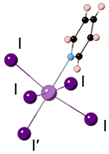
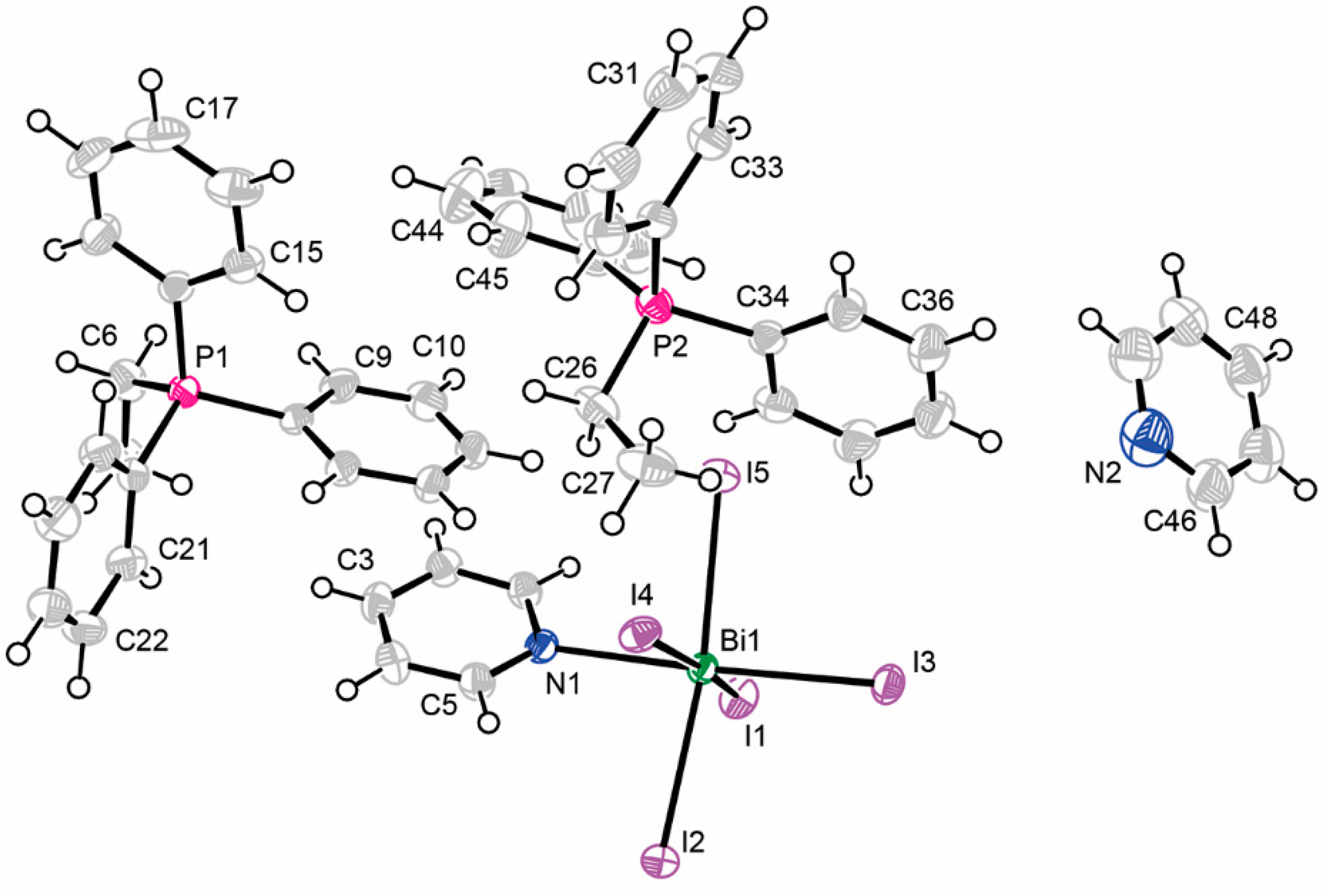
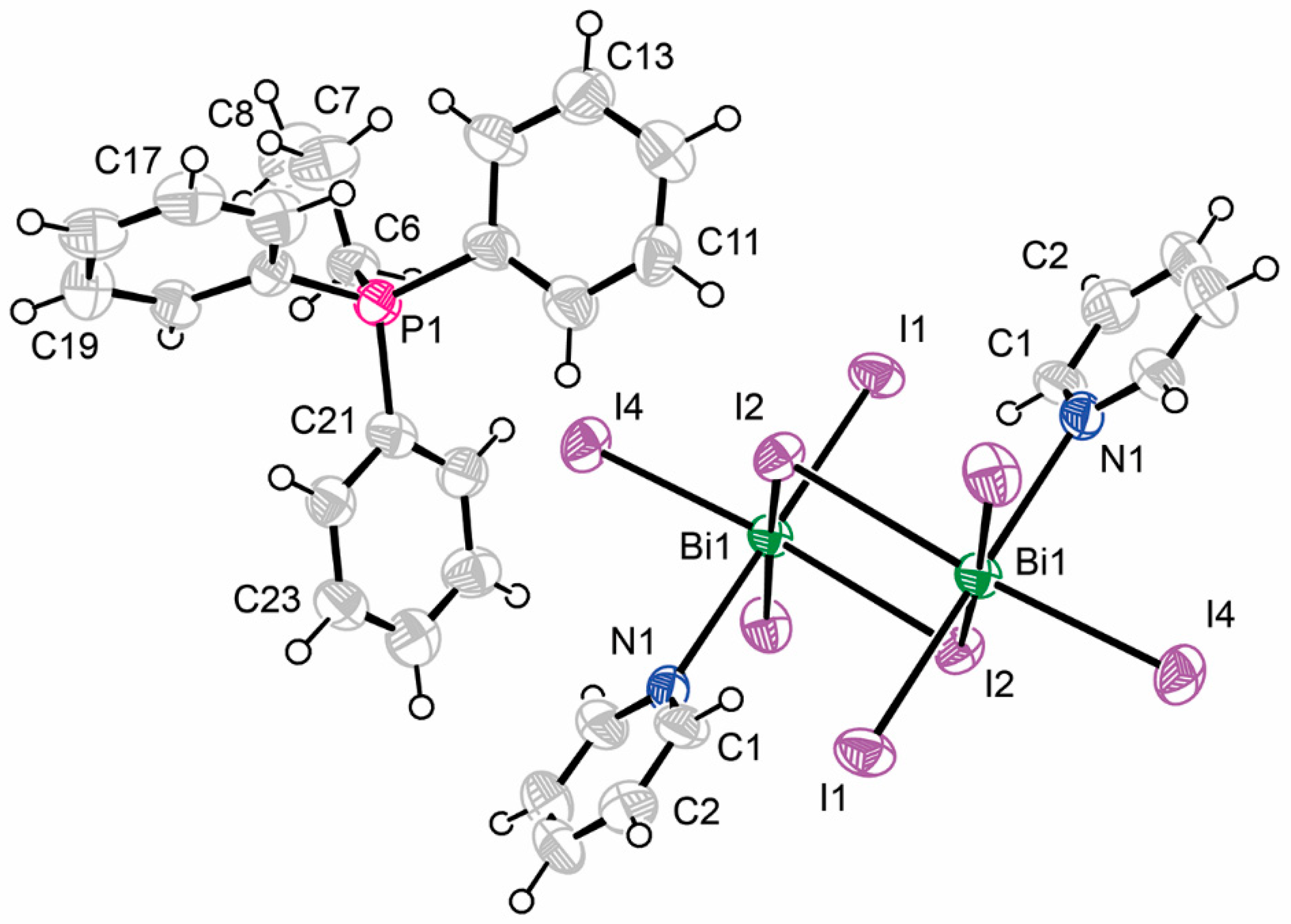
For each of the four compound types, multiple X-ray crystal structures were solved, in many cases revealing polymorphic and/or solventomorphic results. All X-ray crystal structures reported herein were determined at 100 K (see Table S1 for crystallographic details and Tables S3–S6 for selected bond lengths and angles). At least one 2:1 salt product (1) was crystallized for R = Me (1a•Py), Et (1b•Py), nPr (1c•Py), and Ph (1e, 1e•Py, 1e″•1.5Py). The R = nBu salt product invariably formed an oil. Solvated compounds 1a•Py, 1b•Py, and 1c•Py were found to be crystallographically isomorphic to one another. An ambient-temperature determination of compound 1a•Py was previously reported [14]. Here, it is redetermined at low temperature, giving the same unit cell (with slight differences in cell parameters owing to the lower temperature). Interestingly, the Ph4P+ salt of 1 yielded three different solventomorphs from the same crystallization mixture: 1e, 1e•Py, 1e″•1.5Py. None of these unit cells was isomorphic to any of the other 1 products. Py solvate 1e•1.5Py was the only type 1 structure exhibiting disorder, that being general-position two-part disorder in the half Py. A representative type 1 compound structure, 1b•Py, is shown in Figure 1. All structures described herein (including other type 1 structures) are depicted in the SI. The roughly octahedral [BiI5Py]2− anion showed a modest amount of distortion in all cases. Bi–N bond lengths for type 1 anions varied in the range of 2.624(4)–2.675(6) Å. Bi–I distances across the six anions were 2.9887(6)–3.1211(7) Å. In all cases, axial I atoms were canted slightly toward the Py ligand, resulting in generally larger cis I–Bi–I bond angles (85.456(12)–98.132(15)°) than cis N–Bi–I angles (82.26(11)° to 91.77(6)°).
The products of 1:1 crystallization of Ph3PR+I with BiI3 invariably resulted in mixtures of crystalline products based on anions of type 2 (cis-[BiI4Py2]), 3 (trans-[BiI4Py2]), and 4 (transoid-[Bi2I8Py2]2−). Two cis monomers (2c•2Py and 2e•Py) were structurally characterized, while four trans monomers (3a, 3a•Py, 3b•1.5Py, and 3e•0.5Py) were determined. None of the 1:1 monomer structures (2, 3) was isomorphic to any of the others. Cis compound 2c•2Py was crystallographically half-independent and showed both cation and solvent molecules to be disordered about an inversion center. In the two disordered positions, the Py molecules and phenyl groups occupied similar spaces on either side of the inversion center. The other cis monomer, 2e•Py, showed two independent molecules in the unit cell, and no disorder (Figure 2). Looking at all three anions (one for 2c•2Py and two for 2e•Py), the Bi–N and Bi–I distances were similar to those in compounds 1, 2.602(6)–2.717(8) Å and 2.9693(12)–3.0783(13), respectively. Angles within the roughly octahedral anions were smallest for N–Bi–N (78.9(3), 84.2(2), 86.4(2)°) and largest for the cis I–Bi–I situated trans to the two Bi–N bonds (97.93(4), 99.40(4), 102.96(2)°). The two iodides situated cis to both Py ligands were canted toward them, with these I–Bi–N angles all being acute (84.33(15)–89.86(15)°). Overall, the N–Bi–N in 2c•2Py and 2e•Py were larger than those of the known cis-[BiI4(LL)] compounds, all of which contain LL chelate ligands [17,18,19,20,21,22,23,24,25], while I–Bi–I and I–Bi–N angles were comparable.
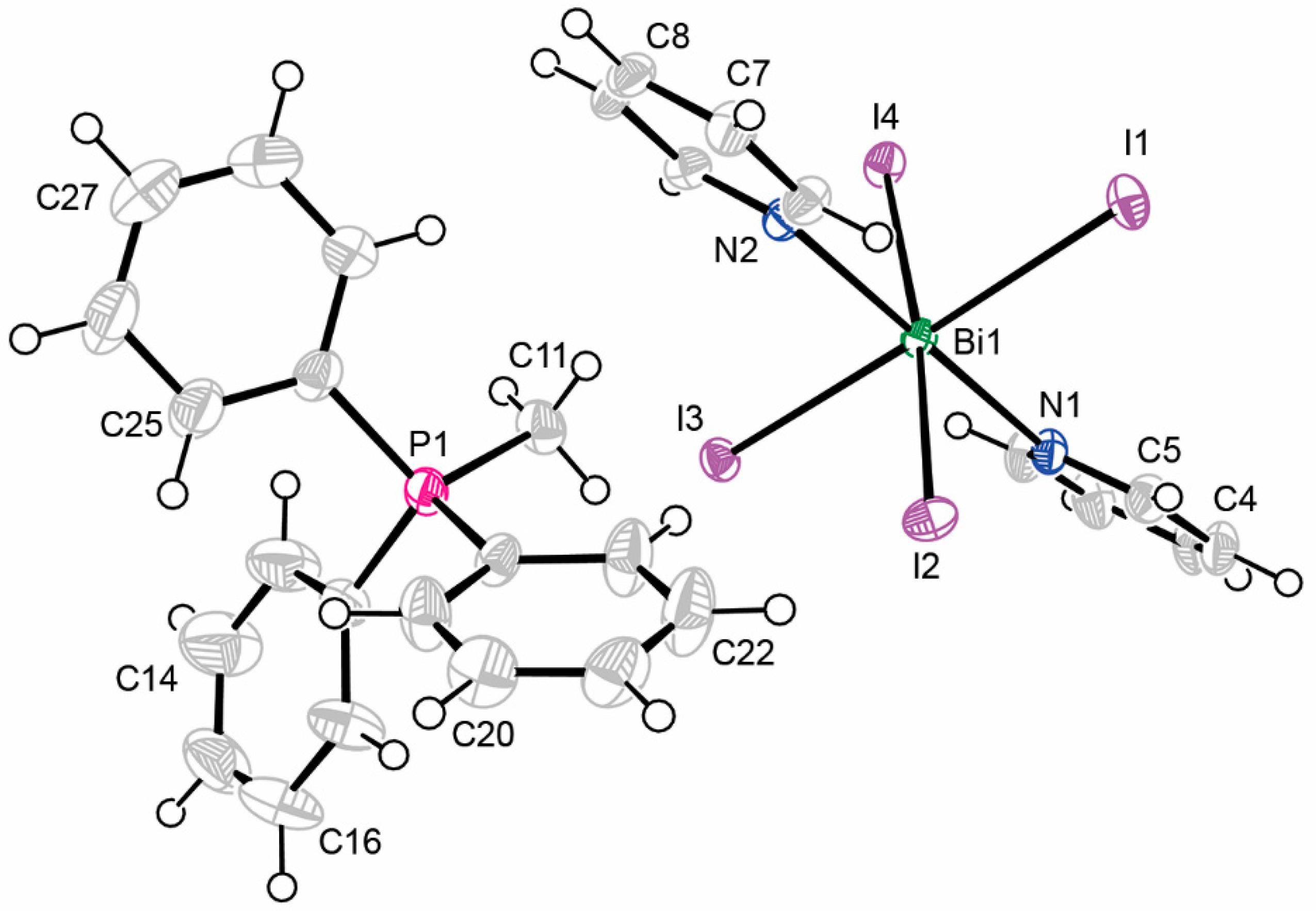
The four type 3 compounds (trans-BiI4Py2) determined through crystallography were 3a, 3a•Et2O, 3b•1.5Py, and 3e•0.5Py. All of these, except 3a (see Figure 3), showed disorder associated with solvent molecules and/or cations. Compound 3a•Et2O was one of only two products identified herein that was an ethyl ether solvate and, like 2c•2Py, was found to be half crystallographically independent. The solvent molecules and cations in 3a•Et2O, like those in 2c•2Py, were disordered around a crystallographic inversion center. Compound 3b•1.5Py showed significant Py disorder, although not associated with special positions, and no cation disorder. The half Py was disordered over two positions and the full Py over three positions. Compound 3e•0.5Py showed two-part inversion disorder in Py only. Each type 3 structure revealed more nearly octahedral anions than those of 1, 2, or indeed 4, due to the more symmetrical trans arrangement of the smaller Py ligands, with trans-N–Bi–N = 177.91(13)–180°. The cis-I–Bi–I angles ranged narrowly between 87.058(18)° and 92.068(16)°. Bond lengths Bi–N and Bi–I were in the ranges 2.493(4)–2.565(4) Å and 2.9780(10)–3.1249(12) Å, respectively. This relatively regular geometry is consistent with the behavior seen in the known bridging LL anions {[trans-BiX4(4,4′-Bpy)]}n (X = Br, I) [20,26].
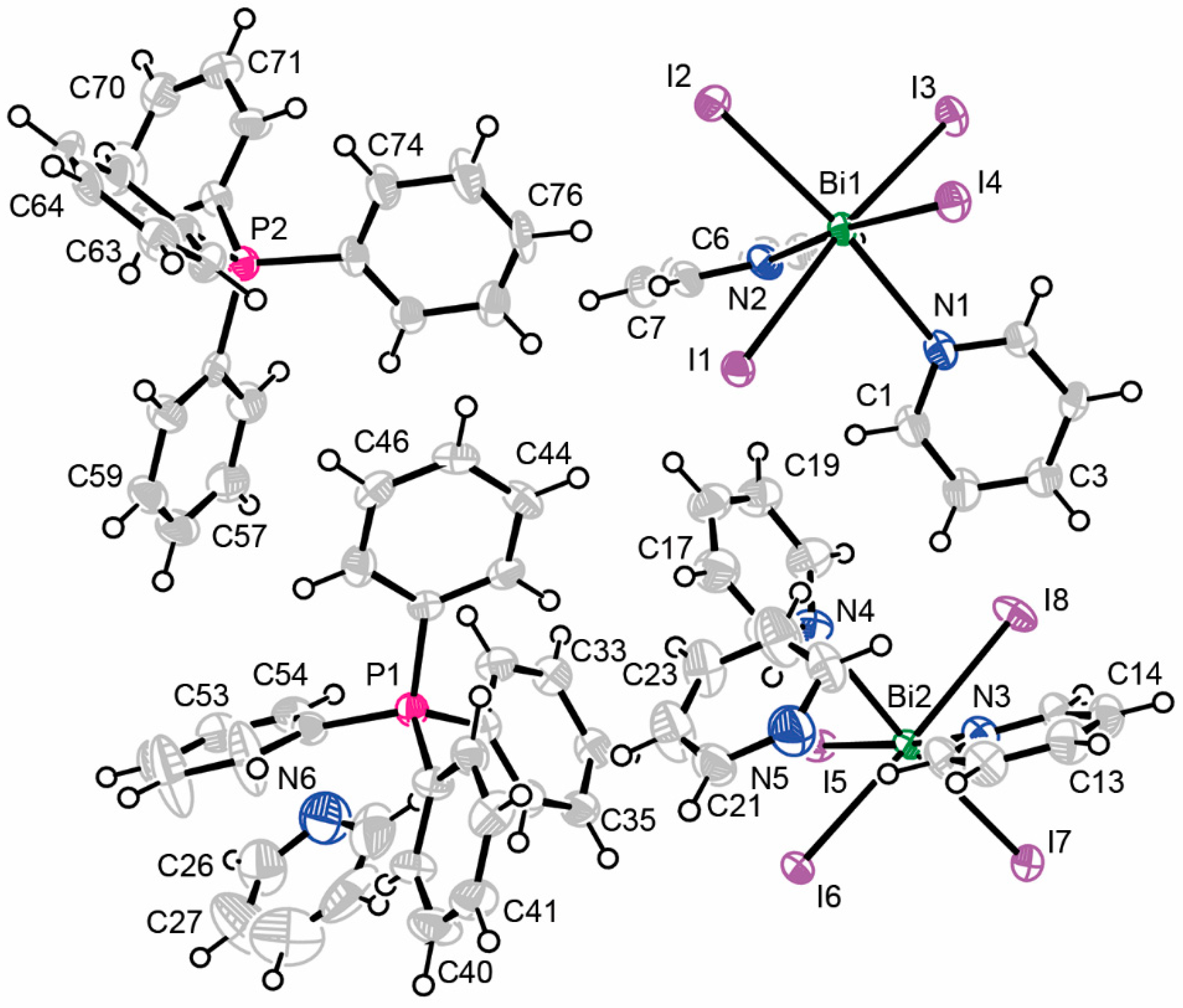
Present as the major product in all 1:1 reaction products were crystals of [Bi2I8Py2]2− dimers, 4. Owing to multiple polymorphs and solventomorphs, a total of eight such structures were determined: 4a•2Py, 4b, 4b′, 4c (Figure 4), 4c•2Py, 4d, 4d′, and 4e•Et2O. Compounds 4c and 4d′ were crystallographic isomorphs. The anions in each of the eight structures were found to be crystallographically half-independent, and each showed a transoid arrangement of Py ligands in which one Py was bonded to each Bi, and the pair of Py ligands lay on opposite sides of the I2Bi(μ-I)2BiI2 plane. Compound 4a•2Py showed cation/Py disorder akin to that seen for 2c•2Py and 3a•Et2O. As in those cases, cation and solvent molecules were disordered on opposite sides of an inversion center, producing a near coincidence of a phenyl ring and Py associated with the disordered positions. Additionally, a trace of badly disordered solvent, probably Et2O, was also present in 4a•2Py and was removed using Platon SQUEEZE. Compound 4d′ revealed two-part disorder between the nBu group and a phenyl on the cation, as well as some minor positional disorder in the Py and a terminal I ligand. Finally, 4e•Et2O showed minor disorder about an inversion center in the solvent molecule. Overall, the centrosymmetric dimers and their counterions were found to be generally more orderly than the other 1:1 salts discussed herein. Bi–N bond lengths were in the range: 2.594(15)–2.715(9) Å. As is typically the case for iodobismuthates, terminal B–I bonds (2.9022(6)–3.0191(5) Å) were significantly shorter than bridging bonds (3.1955(4)–3.3163(7) Å). In all cases, the I–Bi–I angle associated with the crystallographically identical bridging iodides in the Bi2(μ-I)2 ring was the most acute such angle (81.680(12)–84.257(9)°). Otherwise, the range of I–Bi–I angles (85.771(10)–99.580(6)°) and I–Bi–N angles (82.48(6)–91.87(7)°) in the eight anions were relatively close to the expected 90° octahedral value, but as was the case for the monomeric anions, they showed slight contraction around the Py ligands. The Bi–I–Bi angles internal to the Bi2(μ-I)2 rings were quite consistent amongst the eight species: 95.744(8)–98.319(12)°.

3.3. Intermolecular Interactions by Hirshfeld and X-Ray

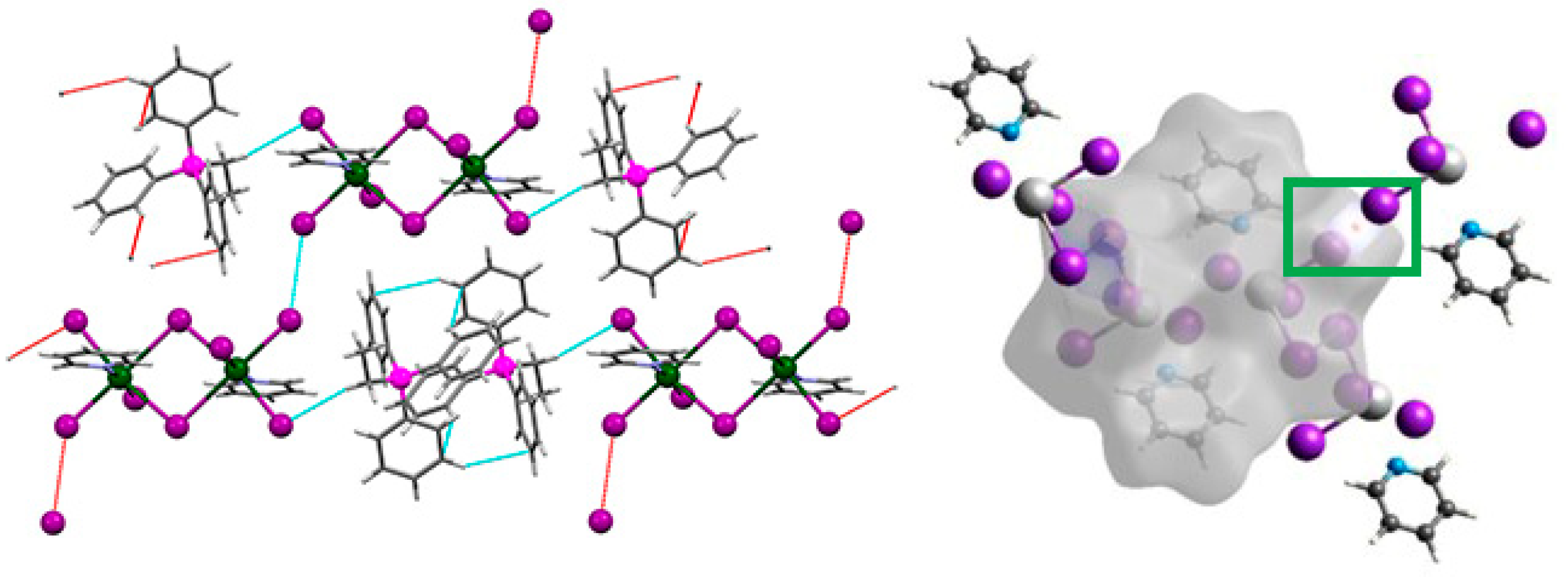
Hirshfeld calculations were carried out on most of the synthesized compounds. Since the focus of the current study was interactions of the anions, only anion–other (i.e., including anion–cation, anion–solvent, and anion–anion, but excluding cation–cation interactions) was included in this study, see Table 2. The largest proportion of anion–other interactions (35–70%) was I⋯H/H⋯I (anion–other). Virtually all of these were I⋯H, although there were a few anion–anion H⋯I interactions. Other significant interactions included H⋯H (15–36%) and C⋯H/H⋯C (6–22%). Significantly rarer were C⋯C, N⋯H/H⋯N interactions. The C⋯H and N⋯H contacts did not particularly favor either the anion–other or other–anion direction. Anion–anion I⋯I interactions were relatively rare, occurring only in four compounds, but three of these were dimers 4, with a significant amount of interaction noted in 4b (5.9%, see Figure 5, below). Of the remaining contacts (X⋯X in Table 2), most were nearly insignificant in number, except for I⋯C in compound 2c•2Py, which stood out at 7.7%. These I⋯C appeared to be associated with close contacts between the pair of trans-I atoms in cis-[BiI4Py2] with the disordered cation/solvent Py. Of particular interest for these bismuthate salts were cation–anion interactions that could potentially be involved in charge transfer. Hirshfeld results suggest that such behavior would likely be mediated through I⋯H interactions, of which there are a great many, spanning all the compounds studied.
Turning to the contacts evident in the crystal structures, all compounds of type 1 showed relatively close contacts from the I atoms in the [BiI5Py]2− anion to cation (Ph3PR+) phenyl hydrogen atoms, ranging between two and seven such interactions per crystallographically independent unit. Additionally, the Py ligand in the anion showed C⋯H and/or NPy⋯H–C contacts to the cations in some cases. Interestingly, compound 1e showed a rare anion–anion interaction via CPy⋯HPy.
Compound 2e•Py, the more orderly of the two cis-[BiI4Py2] structures, showed two I⋯Hcation interactions and one C⋯H π-stacking-type contact between cations. It additionally showed a strong H⋯H interaction between the cation and the Py solvent molecule. Disordered compound 2c•2Py also showed multiple anion–cation interactions via I⋯H, as well as two through C⋯HPy associated with the anion-bound Py ligand. The trans-[BiI4Py2] anions in type 3 compounds revealed multiple I⋯Hcation contacts, and also, in the case of 3b•1.5Py, an I⋯Pysolvent contact. Unusually, 3a contained a pair of I⋯Hanion interactions. These were the only anion–anion interactions noted in the X-ray structures of the monomeric 1:1 compounds, and were not indicated in the Hirshfeld calculations. There were no cation–cation interactions noted in type 3 compounds, although cation–solvent interactions were indicated in both 3b•1.5Py and 3e•0.5Py.
Generally speaking, Hirshfeld results for type 4 compounds revealed more close interactions with iodine atoms, both with hydrogen (still the vast majority of such interactions) and iodine and carbon atoms, interactions that were nearly absent in compounds 13. Crystallographic examination of the anions in all 4 species reveals multiple I⋯Hcation close contacts, as well as anion⋯Pysolvent interactions where possible. The X-ray structure of compound 4b showed close I⋯I interactions between anions (Figure 5), in agreement with the Hirshfeld results. As was the case for 13, a few structures (e.g., 4a) showed C⋯H π-stacking-type contacts between cations. Cations also interacted with solvent Py molecules where possible.

3.4. Intermolecular Bonding

As a family of semiconductor candidates with photovoltaic relevance, these pyridine-coordinated iodobismuthates motivate a closer look at the intrinsic bonding within the iodobismuthate anion. In particular, we sought to quantify how the N-donor pyridine ligand perturbs the Bi–I bonding network within the anionic unit, since ligand-induced changes in bond strength and coordination geometry are directly tied to polyhedral distortion, electron affinity, and downstream ferroelectric, piezoelectric, and optoelectronic responses [38,39,40,41]. Because lowered symmetry in Bi–I coordination environments is frequently associated with degraded optical performance, establishing whether pyridine coordination stabilizes or destabilizes specific Bi–I linkages is an important step toward structure–property understanding. To interrogate these effects, we applied QTAIM in conjunction with NLMO analyses.
QTAIM is a computational method that analyzes a molecule’s topological electron density to define atomic basins, bonds, and interactions. It partitions molecular space based on the gradient of electron density, identifying critical points (BCP, RCP, and CCP) and providing quantitative descriptors for bonding, charge distribution, and stability, essential for studying chemical bonding and intermolecular interactions. Collectively, these metrics provide an internally consistent basis for comparing bond strength trends, charge concentration/depletion, and the degree of π-character across chemically distinct contacts. QTAIM analyses were performed for the four unique anionic units present in 14; for clarity, Table 3 contains averaged values over symmetry-equivalent (or structurally equivalent) bonds, with full per-bond values provided in the SI.
Across 13, QTAIM reveals a clear ligand-field dependence in Bi–I bonding: Bi–I and Bi–N bonds trans to Py exhibit elevated electron density relative to analogous bonds cis to Py. This trend is consistent with an expected trans influence from the N-donor ligand, wherein pyridine coordination increases electron density within the Bi coordination sphere and strengthens the opposing (trans) Bi–I linkage. In this framework, higher electron density serves as a practical proxy for increased bond strength within this family, supporting the conclusion that pyridine coordination generally reinforces select Bi–I interactions by donating electron density into the anionic unit. Compound 4 anion deviates from the behavior observed for 13 anions. The highest electron density values in 4 occur for terminal, planar Bi–I bonds, even though these bonds are cis to Py, indicating that the bonding hierarchy in 4 is governed less by a simple trans donation. In particular, the bridging Bi–I contacts in 4 display substantially reduced electron density, consistent with sharing of the I electrons between the cationic metal centers; correspondingly, the remaining non-bridging Bi–I bonds (trans to Py) fall at intermediate electron densities. Taken together, these data indicate that incorporation of bridging iodides redistributes electron density away from the Bi–I bridges and into terminal Bi–I bonds, overriding the trans-directing trends that dominate the mononuclear anions in 13. Despite these differences in electron density magnitudes, the qualitative bonding descriptors are uniform across the series. For all Bi–I and Bi–N bonds examined, the Laplacian (∇2ρ) value is positive and the ellipticity (ε) is near zero, consistent with predominantly closed-shell (ionic) interactions that are largely σ-type, even in the presence of pyridine coordination. Thus, Py primarily modulates bond strength through electron-density redistribution within a closed-shell bonding regime rather than introducing appreciable covalency or directional π-bonding.
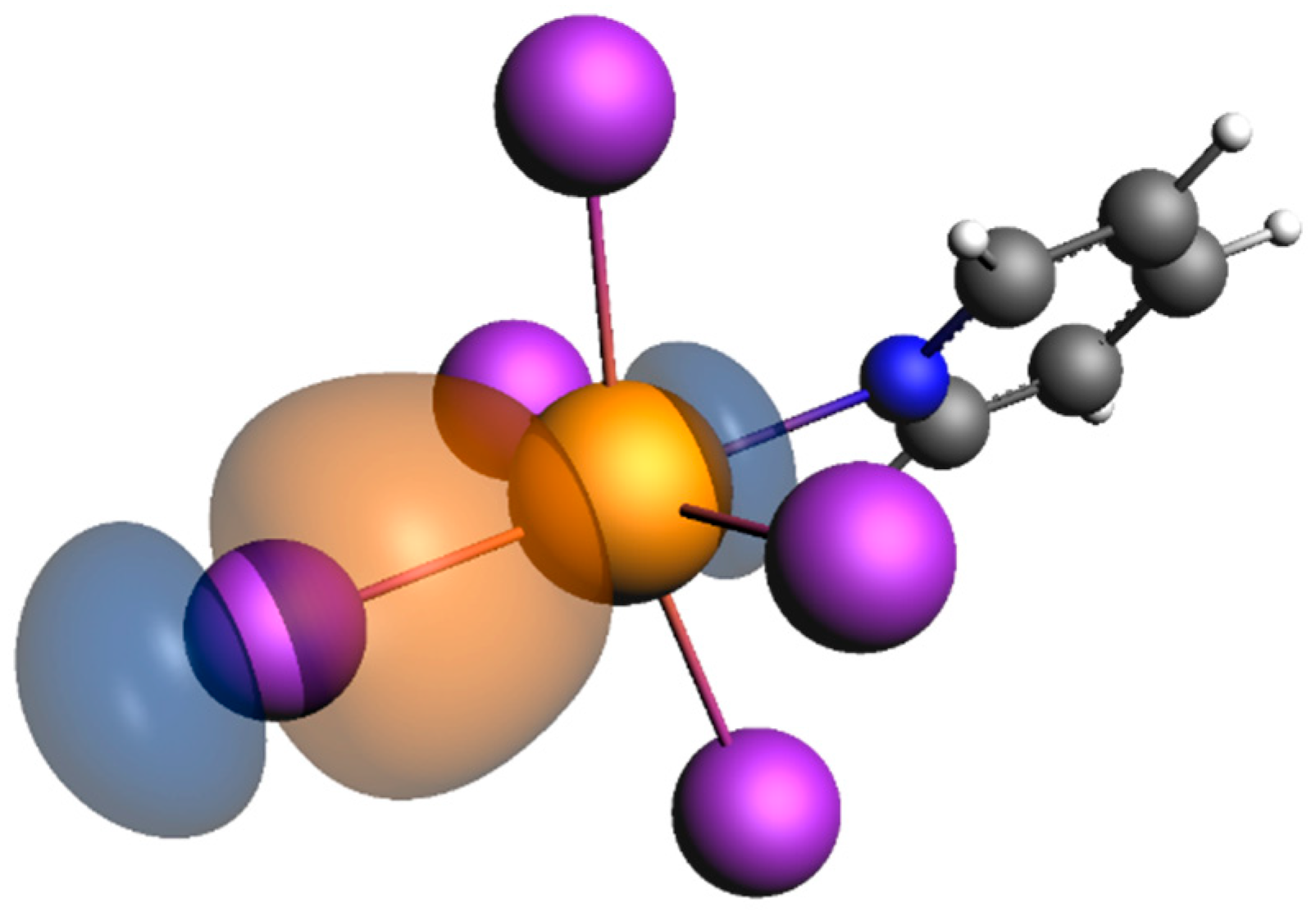
Natural localized molecular orbitals (NLMOs) provide a complementary orbital-based description of bonding that retains a Lewis-like interpretability while explicitly capturing the delocalization “tails” absent from strictly localized NBO treatments. As such, NLMOs are well suited for quantifying resonance- or hyperconjugation-like mixing and for dissecting the atomic-orbital makeup of the Bi–I interactions within these iodobismuthate anions. Consistent with the QTAIM trends and the observed structural metrics, NLMO analyses of 14 show that terminal, non-bridging Bi–I bonds are dominated by an overlap between iodide-centered hybridized (approximately sp2) orbitals and largely unhybridized Bi p orbitals (Figure 6), forming a strictly σ bond. The resulting bonds are strongly polarized: iodide accounts for the majority of the orbital composition (typically ~75–85%), whereas bismuth contributes a smaller fraction (~13–16%), reinforcing a predominantly ionic bonding picture. In all cases, the Bi s atomic orbitals remain unhybridized and unbound, in agreement with a stereochemical inactive metal center. In 13, when the Bi–I bond is trans to Py, a similar atomic orbital hybridization about the I atom is observed as with the terminal positioning, consisting of two unhybridized p and two hybridized sp2 atomic orbitals. However, in this case, a small but noticeable degree of π-back-bonding is observed with the Bi p orbitals, as indicated by a 1–2% contribution to an I unhybridized p orbital interaction. Furthermore, the bond, although still ionic, becomes slightly more covalent, as observed by a modest increase in Bi p orbital contribution. The dimeric [Bi2I8Py2]2− unit in 4 follows the same overall bonding motif but displays subtle differences: the terminal Bi–I bonds show slightly reduced polarization and diminished π-type mixing relative to the mononuclear anions, indicating that electron-density redistribution within the dimer moderates the trans-associated effects seen in 13. By contrast, the bridging Bi–I interactions in 4 are distinctly more ionic. The bridging iodides contribute primarily one unhybridized p and one sp2-like hybrid toward each Bi–I bond, leaving the remaining p/sp2 orbitals to house lone-pair electrons, while the Bi contribution drops to <7% per bond. This pronounced polarization is consistent with both the reduced QTAIM electron densities at the BCPs and the elongated Bi–I distances for the bridging contacts. Overall, the NLMO analysis supports a closed-shell description of Bi–I bonding throughout 14, while indicating that pyridine selectively strengthens trans Bi–I interactions through a small but measurable increase in Bi orbital participation and weak π-type back-bonding.

3.5. Diffuse Reflectance Spectroscopy

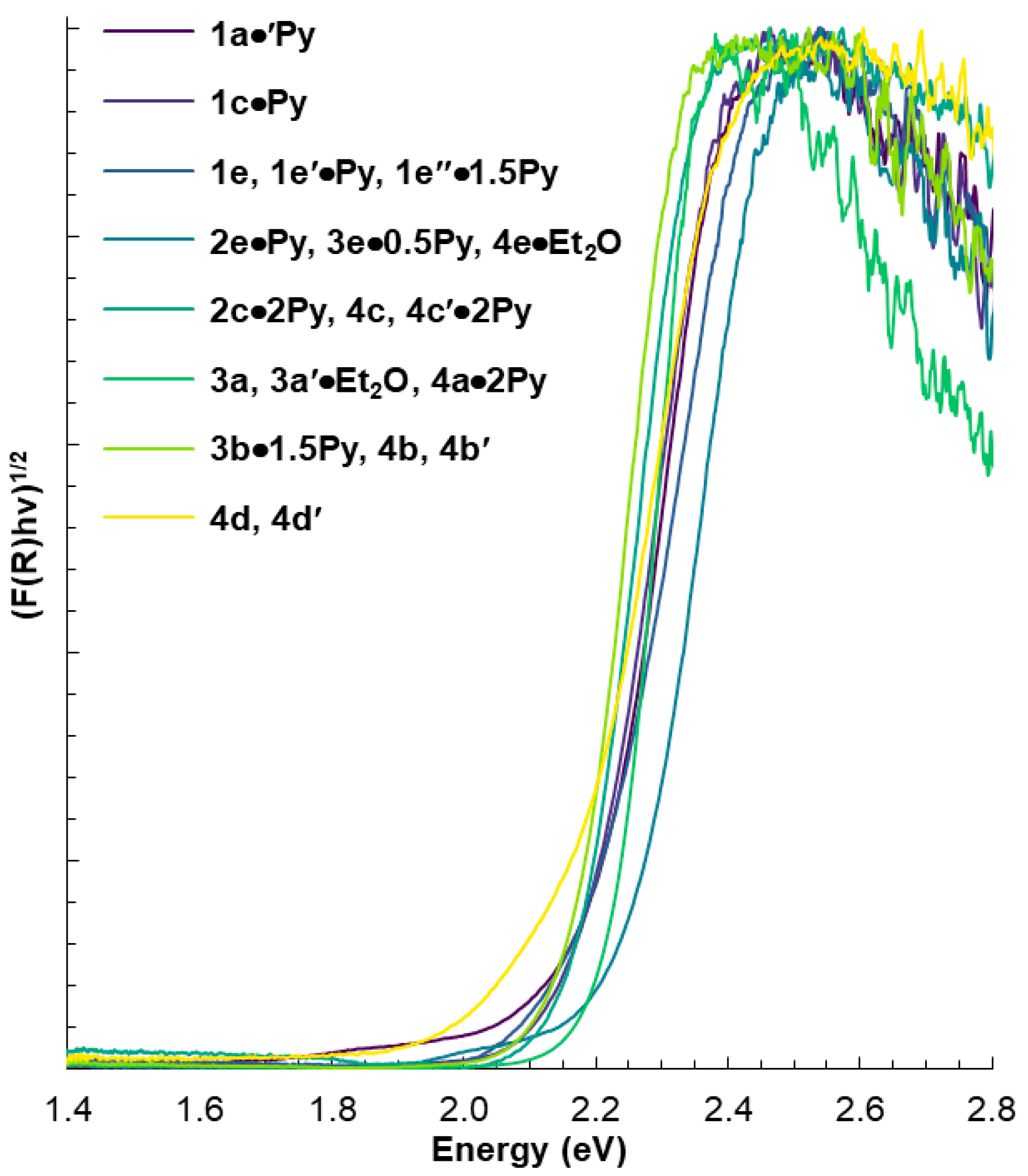
Diffuse reflectance spectroscopy was used to assess the optical absorption of the pyridine-iodobismuthates 14, which present as deep yellow and orange in color (SI). Because bulk reactions in this system can yield mixed microcrystalline powders (often comprising multiple crystalline products), we report diffuse reflectance data for the as-isolated solids to best estimate optical properties (Figure 7). In all cases, the spectra are dominated by a single broad absorption feature with an onset above ~2.2 eV. The absorption edges vary only modestly across the series, despite changes in the Ph3PR+ counter-cation. This lack of cation dependence indicates that the optical properties are not meaningfully tuned by the cation environment and instead are governed primarily by the electronic structure of the iodobismuthate–pyridine anionic unit.
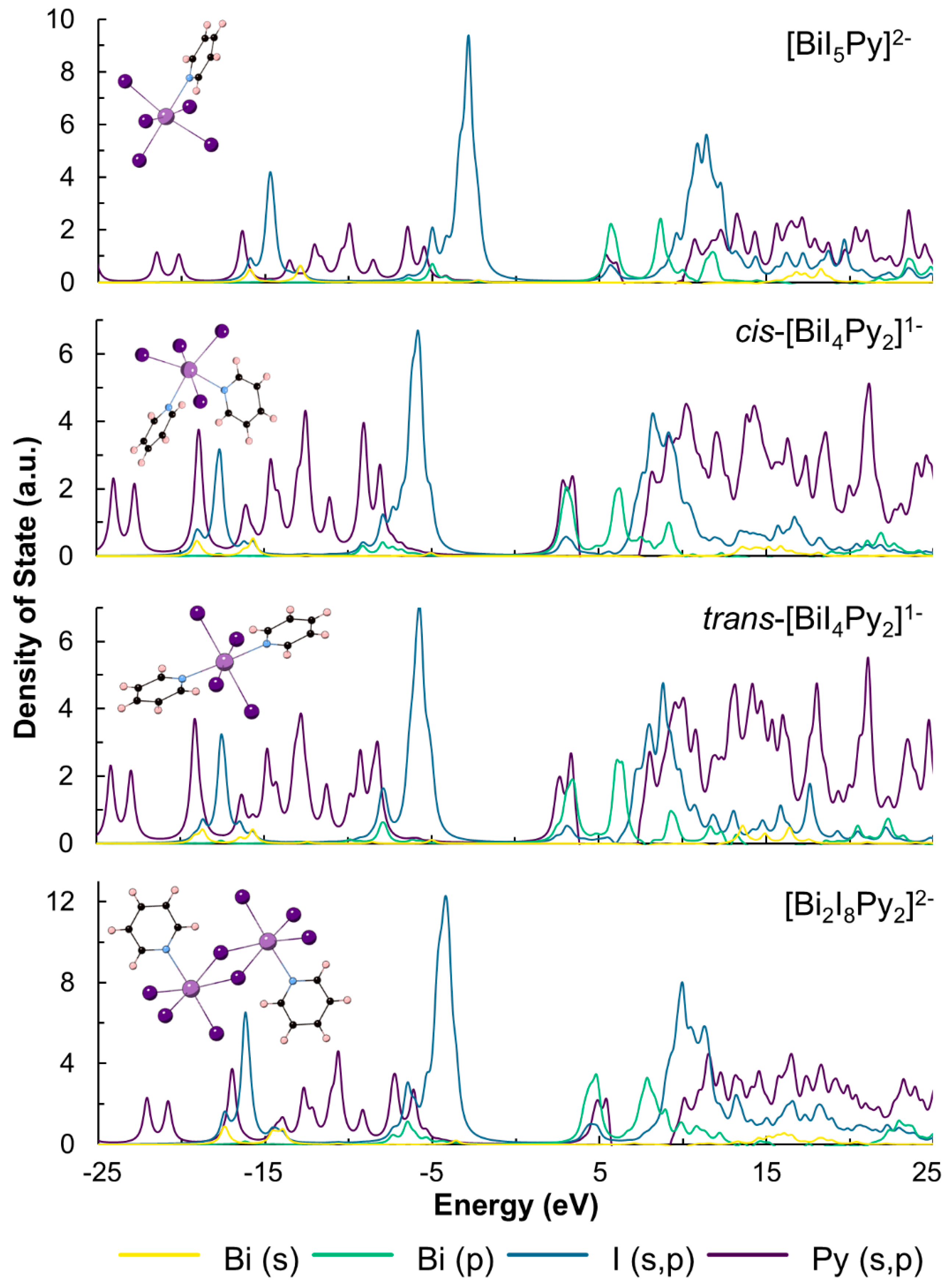
To interrogate the origin of this anion-controlled band edge, we computed partial densities of states (PDOS) for the four anionic motifs present in 14 (Figure 8). The valence–edge states are dominated by iodine-derived orbitals, primarily I 5p (with minor 5s contribution). Bi-centered nonbonding 6s character and lower-lying Bi–I bonding states reside lower in energy and do not participate in the valence-band edge. The pyridine π molecular orbitals are calculated to sit below the iodine-derived valence edge, indicating minimal contribution to the highest occupied states. In contrast, the lower unoccupied states exhibit mixed acceptor character, comprising Bi/I antibonding contributions (predominantly Bi 6p with halide 5s/p) alongside pyridine π* molecular orbitals. This distribution supports assignment of the absorption to a predominantly halide-to-metal/ligand charge-transfer transition, involving excitation from iodine lone-pair (5p) states into a hybrid manifold with Bi–I σ* and pyridine π* character.

4. Conclusions

We have shown that there is a rich array of iodobismuthate-pyridine anions that can be prepared from bismuth(III) iodide with triphenylalkylphosphonium and tetraphenylphosponium iodides. The products encompass both anions of [BiI5Py]2− (1), cis-[BiI4Py2] (2), trans-[BiI4Py2] (3), and transoid dimers [Bi2I8Py2]2− (4), and include many solventomorphs and polymorphs. While compound 1 is the unique product of a 1:1 reaction of BiI3 and Ph3PR+I, compounds 24 co-crystallize as mixtures from 2:1 ratio reaction mixtures. Structurally, all anions show roughly octahedral Bi(III) coordination geometry. Hirshfeld surface analysis shows extensive anion–cation interactions, largely through I⋯H and H⋯H contacts. These are reflected in the crystal structures. Additionally, some complexes show contacts to the cation or solvent through Py ligands, and a few exhibit anion–anion I⋯I interactions. QTAIM shows that Bi–I and Bi–N interactions in 14 are predominantly closed-shell, with positive ∇2ρ and near-zero ellipticity consistent with largely ionic, σ-type bonding. In 13, increased electron density at the BCP for Bi–I bonds trans to pyridine indicates a modest trans strengthening driven by ligand donation. NLMO analyses corroborate strongly polarized Bi–I σ bonds dominated by iodide character, with a small increase in Bi orbital contribution and weak π-type mixing for trans Bi–I contacts. In 4, both methods identify especially weak, highly ionic bridging Bi–I bonds accompanied by enhanced electron density in terminal Bi–I linkages. The single broad absorption band observed in all compounds shows a low optical band edge with minimal variation in the band edge across the series, indicating limited sensitivity to cation identity. Consistent with this, the PDOS analyses attribute the frontier electronic structure primarily to the iodobismuthate anion unit (dominated by iodide-based states), aligning the optical response with anion-centered bonding and electronic structure. Despite the ease of synthesis and structural similarities to the more common iodoplumbates, these compounds remain woefully underreported, and we are aiming to expand examples with a focus on unraveling their underlying bonding and optical properties.

Supplementary Materials

The following supporting information can be downloaded at: https://www.mdpi.com/article/10.3390/cryst16040216/s1, detailed synthetic results, crystal and refinement data, bond lengths and angles, QTAIM results, NLMO results, PXRD data, ORTEP diagrams, Hirshfeld tables, fingerprints and surfaces, computational models, and sample photographs, Tables S1–S16 and Figures S1–S42.

Author Contributions

R.D.P. designed and oversaw the project. H.A., A.D.N., M.P. and L.B.R. carried out the experimental work. H.A., R.D.P. and T.M.R. carried out crystallographic data collection and refinement. L.C.D. and L.B.R. carried out computational work. R.D.P., L.C.D. and A.D.N. wrote the manuscript and prepared all figures. All authors have read and agreed to the published version of the manuscript.

Funding

We acknowledge the National Laboratory for Scientific Computing (LNCC/MCTI, Brazil, SDumont supercomputer). This study was financed in part by the Coordenação de Aperfeiçoamento de Pessoal de Nível Superior—Brasil (CAPES)—Finance Code 001. L.C.D. acknowledges São Paulo Research Foundation (FAPESP) grant #2024/17236-1 and CNPq #304653/2023-3.

Data Availability Statement

CCDC 2533894–2533913 contains the supplementary crystallographic data for twenty structures of types 14. These data can be obtained free of charge via http://www.ccdc.cam.ac.uk/structures (accessed on 1 March 2026), or from the Cambridge Crystallographic Data Centre, 12 Union Road, Cambridge CB2 1EZ, UK; fax: (+44) 1223-336-033; or e-mail: deposit@ccdc.cam.ac.uk.

Acknowledgments

We are grateful to William & Mary for the purchase of the X-ray equipment. We thank the Roy R. Charles Center for Academic Excellence at William & Mary for student support.

Conflicts of Interest

The authors declare no conflicts of interest.

Abbreviations

The following abbreviations are used in this manuscript:
BpyBipyridyl
DRSDiffuse Reflectance Spectroscopy
NMLONatural Localized Molecular Orbital
PDOSPartial Density of States
PXRDPowder X-ray diffraction
PyPyridine
QTAIMQuantum Theory of Atoms in Molecules

References

  1. Adonin, S.A.; Sokolova, M.N.; Fedin, V.P. Polynuclear Halide Complexes of Bi(III): From Structural Diversity to the New Properties. Coord. Chem. Rev. 2016, 312, 1–21. [Google Scholar] [CrossRef]
  2. Mercier, N. The Templating Effect and Photochemistry of Viologens in Halometalate Hybrid Crystals. Eur. J. Inorg. Chem. 2013, 2013, 19–31. [Google Scholar] [CrossRef] [PubMed]
  3. Mercier, N.; Louvain, N.; Bi, W. Structural Diversity and Retro-Crystal Engineering Analysis of Iodometalate Hybrids. CrystEngComm 2009, 11, 720–734. [Google Scholar] [CrossRef]
  4. Wu, L.-M.; Wu, X.-T.; Chen, L. Structural Overview and Structure–Property Relationships of Iodoplumbate and Iodobismuthate. Coord. Chem. Rev. 2009, 253, 2787–2804. [Google Scholar] [CrossRef]
  5. Alibi, A.; Elleuch, N.; Khdhiri, E.; Hassen, M.B.; Shova, S.; Chabchoub, F.; Boujelbene, M. Structural Characterization, Vibrational, Optical Properties, and DFT Investigation of a Novel Lead-Free Hydrothermally Synthesized 1D Iodobismuthate (III) Organic-Inorganic Perovskite Hybrid Material, (C9H10N3)[BiI4]•H2O. Mat. Chem. Phys. 2026, 348, 131617. [Google Scholar] [CrossRef]
  6. Li, J.; Xie, S.-Y.; Dong, J.-J.; Zhao, H.-H.; Yang, Y.; Wu, Y.; Zhang, B. A Halobismuthate Hybrid Characteristic of a T-Shaped Cation: Structure, Band Gap, Photocurrent Response, and Theoretical Study. Inorg. Chem. 2025, 64, 9790–9797. [Google Scholar] [CrossRef] [PubMed]
  7. Elhaj, Y.B.; Hajlaoui, F.; Karoui, K.; Allain, M.; Mercier, N.; Kozma, E.; Bottae, C.; Zouari, N. Novel Lead-Free Bismuth-Based Perovskite-Like (BrC5H13N)3Bi2Br9: Synthesis, Structural Investigations and Optoelectronic Properties. RSC Adv. 2025, 15, 12834–12842. [Google Scholar] [CrossRef]
  8. Xie, S.-Y.; Li, J.-Q.; Dong, J.-J.; Zhang, X.-M.; Yang, Y.; Li, J.; Zhang, B. Two Halobismuthates Decorated by Cesium and N-Methylated Isonicotinato: Crystal Architectures, Optical/Photoelectrical Performances, and Theoretical Insights. Inorg. Chem. 2025, 64, 15280–15291. [Google Scholar] [CrossRef]
  9. James, S.C.; Norman, N.C.; Orpen, A.G. Pyridine Adducts of Arylbismuth(III) Halides. J. Chem. Soc. Dalton Trans. 1999, 16, 2837–2843. [Google Scholar] [CrossRef]
  10. Murphy, J.N.; Kerton, F.M.; Dawe, L.N. Single Crystal Structural Characterization of Trichlorotetrapyridylbismuth(III) and Its Pyridine Solvate. J. Chem. Crystallogr. 2014, 44, 108–114. [Google Scholar] [CrossRef]
  11. Raston, C.L.; Rowbottom, G.L.; White, A.H. Structural Studies of Group 5B-Halide-dithio-ligand Complexes. Part 8. Crystal Structure of N′,N′-Diethylthiocarbamoylpyridinium Pentachloropyridinebismuthate(III). J. Chem. Soc. Dalton Trans. 1981, 6, 1389–1391. [Google Scholar] [CrossRef]
  12. Bharadwaj, P.K.; Lee, A.M.; Skelton, B.W.; Srinivasan, B.R.; White, A.H. Single Crystal X-Ray Structural Characterization of [BiX2(S2CNEt2), X=Cl, Br. Aust. J. Chem. 1994, 47, 405–410. [Google Scholar] [CrossRef]
  13. James, S.C.; Orpen, A.G.; Quayle, M.J. Salts of Two Pentahalo(N-donor)bismuthate(III) Anions: [BiX5L]2− (X = Cl, Br; L = Pyridine, 4-Picoline). Acta Cryst. 2000, C56, 427–429. [Google Scholar] [CrossRef]
  14. Sharutin, V.V.; Egorova, I.V.; Sharutina, O.K.; Boyarkina, E.A. Synthesis and Structure of Bismuth-Containing Complexes [Ph3PMe]+2[BiI5]2− and [Ph3PMe]+2[BiI5•C5H5N]2−•C5H5N. Russ. J. Coord. Chem. 2008, 34, 461–465. [Google Scholar] [CrossRef]
  15. Sharutin, V.V.; Egorova, I.V.; Klepikov, N.N.; Boyarkina, E.A.; Sharutina, O.K. Synthesis of Bismuth Complexes from Bismuth Iodide and Ammonium and Phosphonium Salts. Russ. J. Gen. Chem. 2008, 78, 1326–1329. [Google Scholar] [CrossRef]
  16. Soltanzadeh, N.; Morsali, A. Syntheses and Characterization Nanostructured Bismuth(III) Oxide from a New Nano-sized Bismuth(III) Supramolecular Compound. Polyhedron 2009, 28, 1343–1347. [Google Scholar] [CrossRef]
  17. Bowmaker, G.A.; Harrowfield, J.M.; Lee, A.M.; Skelton, B.W.; White, A.H. Synthetic, Structural and Vibrational Spectroscopic Studies in Bismuth(III) Halide/N,N′-Aromatic Bidentate Base Systems. II Bipyridinium (2,2′ Bipyridine) Tetrahalobismuthate (III) (Halogen = Chloride or Bromide). Aust. J. Chem. 1998, 51, 311–315. [Google Scholar] [CrossRef]
  18. Li, F.; Yin, H.-D.; Zhai, J.; Wang, D.-Q. 1,10-Phenthrolinium Tetraiodo{1,10-phenanthroline-k2N,Nʹ}bismuthate(III) 1,10-Phenanthroline. Acta Cryst. 2006, E62, m1170–m1172. [Google Scholar] [CrossRef]
  19. Li, H.-H.; Wang, M.; Huang, S.-W.; Liu, J.-B.; Lin, X.; Chen, Z.-R. Preparation and Characterization of Two Bismuth(III) Iodide Inorganic/Organic Hybrid Solids. Synth. React. Inorg. Met.-Org. Nano-Met. Chem. 2011, 41, 1351–1357. [Google Scholar] [CrossRef]
  20. Kelly, A.W.; Wheaton, A.M.; Nicholas, A.D.; Barnes, F.H.; Patterson, H.H.; Pike, R.D. Iodobismuthate(III) and Iodobismuthate(III)/Iodocuprate(I) Complexes with Organic Ligands. Eur. J. Inorg. Chem. 2017, 2017, 4990–5000. [Google Scholar] [CrossRef]
  21. Shen, N.; Li, J.; Wu, Z.; Hu, B.; Cheng, C.; Wang, Z.; Gong, L.; Huang, X. a and b-[Bmim][BiCl4(2,2′-bpy)]: Two Polymorphic Bismuth-Containing Ionic Liquids with Crystallization-Induced Phosphorescence. Chem. Eur. J. 2017, 23, 15795–15804. [Google Scholar] [CrossRef]
  22. Shen, N.; Li, J.; Li, G.; Hu, B.; Li, J.; Liu, T.; Gong, L.; Huang, F.; Wang, Z.; Huang, X. Designing Polymorphic Bi3+-Containing Ionic Liquids for Stimuli-Responsive Luminescent Materials. Inorg. Chem. 2019, 58, 8079–8085. [Google Scholar] [CrossRef]
  23. Zhuang, T.-H.; Lin, Y.-M.; Lin, H.-W.; Guo, Y.-L.; Li, Z.-W.; Du, K.-Z.; Wang, Z.-P.; Huang, X.-Y. Luminescence Enhancement and Temperature Sensing Properties of Hybrid Bismuth Halides Achieved via Tuning Organic Cations. Molecules 2023, 28, 2380. [Google Scholar] [CrossRef] [PubMed]
  24. Zhang, B.-L.; Song, W.-T.; Zhang, J.-J.; Chen, J.; Miao, L.; Shi, W.-J.; Wang, R.-H.; Cai, M.; Ni, J.; Zhao, Z. Awakening of High-energy Phosphorescence by Enhanced Weak Interactions for Ratiometric Detection of Trichloromethane Vapor. Chem. Commun. 2025, 61, 8560–8563. [Google Scholar] [CrossRef] [PubMed]
  25. Cechosz, E.; Abdi, G.; Sławek, A.; Gryl, M.; Szaciłowski, K. Structure and Spectroscopic Characterisation of Phenanthroline-Based Iodobismuthate(III) Complexes Utilised for Raw Acoustic Signal Classification. Adv. Intel. Discov. 2025, e2500076. [Google Scholar] [CrossRef]
  26. Morsali, A. The 4,4′-Bipyridine Bi3+ Coordination Polymer Involving Simultaneous of Two Different 1D Chains in One System, [4,4′-BipyH]nn+ [Bi(4,4′-Bipy)Br4]nn−, Thermal and Structural Studies. Solid State Sci. 2006, 8, 82–85. [Google Scholar] [CrossRef]
  27. Charmant, J.P.H.; Norman, N.C.; Orpen, A.G.; Starbuck, J. 4,4′-Bipyridyl Adduct of an Iodobismuthate Anion Linked by a 4,4′-Bipyridinium Cation. Acta Cryst. 2003, E59, m1000–m1001. [Google Scholar] [CrossRef]
  28. Chen, Y.; Yang, Z.; Wu, X.-Y.; Ni, C.-Y.; Ren, Z.-G.; Wang, H.-F.; Lang, J.-P. Iodobismuthates with N-Alkyl- or N,N′-Dialkyl-4,4′-bipyridinium: Syntheses, Structures and Dielectric Properties. Phys. Chem. Chem. Phys. 2011, 13, 5659–5667. [Google Scholar] [CrossRef]
  29. Usoltsev, A.N.; Adonin, S.A.; Abramov, P.A.; Korolkov, I.V.; Yushina, I.V.; Antonova, O.V.; Sokolov, M.N.; Fedin, V.P. Polymeric Hybrid Iodoplumbates and Iodobismuthates Containing Mono- and Bisalkylated Derivatives of 1,2-Bis(4-pyridyl)ethylene: Structural and Optical Features. Inorg. Chim. Acta 2017, 462, 323–328. [Google Scholar] [CrossRef]
  30. Sorg, J.R.; Wehner, T.; Matthes, P.R.; Sure, R.; Grimme, S.; Heine, J.; Müller-Busch, K. Bismuth as a Versatile Cation for Luminescence in Coordination Polymers from BiX3/4,4′-bipy: Understanding of Photophysics by Quantum Chemical Calculations and Structural Parallels to Lanthanides. Dalton Trans. 2018, 47, 7669–7681. [Google Scholar] [CrossRef]
  31. Zhao, Y.; Feng, T.; Li, G.; Liu, F.; Dai, X.; Dong, Z.; Qiu, X. Synthesis and Properties of Novel Polyimide Fibers Containing Phosphorus Groups in the Main Chain. RSC Adv. 2016, 6, 42482–42494. [Google Scholar] [CrossRef]
  32. Marcoux, D.; Charette, B. Nickel-Catalyzed Synthesis of Phosphonium Salts from Aryl Halides and Triphenylphosphine. Adv. Synth. Catal. 2008, 350, 2967–2974. [Google Scholar] [CrossRef]
  33. Sheldrick, G.M. A Short History of SHELX. Acta Crystallogr. Sect. A 2008, 64, 112–122. [Google Scholar] [CrossRef]
  34. Hubschle, C.B.; Sheldrick, G.M.; Dittick, B.; Cryst, J.A. ShelXle: A Qt graphical user interface for SHELXL. J. Appl. Cryst. 2011, 44, 1281–1284. [Google Scholar] [CrossRef]
  35. Baerends, E.J.; Aguirre, N.F.; Austin, N.D.; Autschbach, J.; Bickelhaupt, F.M.; Bulo, R.; Cappelli, C.; van Duin, A.C.T.; Egidi, F.; Guerra, C.F.; et al. The Amsterdam Modeling Suite. J. Chem. Phys. 2025, 162, 162501. [Google Scholar] [CrossRef]
  36. Glendening, E.D.; Landis, C.R.; Weinhold, F. Natural Bond Orbital Methods. Wiley Interdiscip. Rev. Comput. Mol. Sci. 2012, 2, 1–42. [Google Scholar] [CrossRef]
  37. Glendening, E.D.; Landis, C.R.; Weinhold, F. NBO 6.0: Natural Bond Order Analysis Program. J. Comput. Chem. 2013, 34, 1429–1437. [Google Scholar] [CrossRef]
  38. Ghosh, D.; Aziz, A.; Dawson, J.A.; Walker, A.B.; Islam, M.S. Putting the Squeeze on Lead Iodide Perovskites: Pressure-Induced Effects to Tune Their Structural and Optoelectronic Behavior. Chem. Mater. 2019, 31, 4063–4071. [Google Scholar] [CrossRef]
  39. Han, X.B. Coupled Kite-to-Square Distortion Transition and Physical Properties in 2D Lead Halide Perovskite. Phys. Chem. Lett. 2024, 15, 7979–7991. [Google Scholar] [CrossRef]
  40. Li, X.; Traoré, B.; Kepenekian, M.; Li, L.; Stoumpos, C.C.; Guo, P.; Even, J.; Katan, C.; Kanatzidis, M.G. Bismuth/Silver-Based Two-Dimensional Iodide Double and One-Dimensional Bi Perovskites: Interplay between Structural and Electronic Dimensions. Chem. Mater. 2021, 33, 6206–6216. [Google Scholar] [CrossRef]
  41. Mondal, A.; Ubaid, M.; Gupta, S.; Pal, K.; Bhattacharyya, S. Visible-Light Photodetection by Zero-Dimensional Hybrid Indium-Halide with Minimal Structural Distortion and Reduced Band Gap. Angew. Chem. 2025, 64, e202412779. [Google Scholar] [CrossRef] [PubMed]
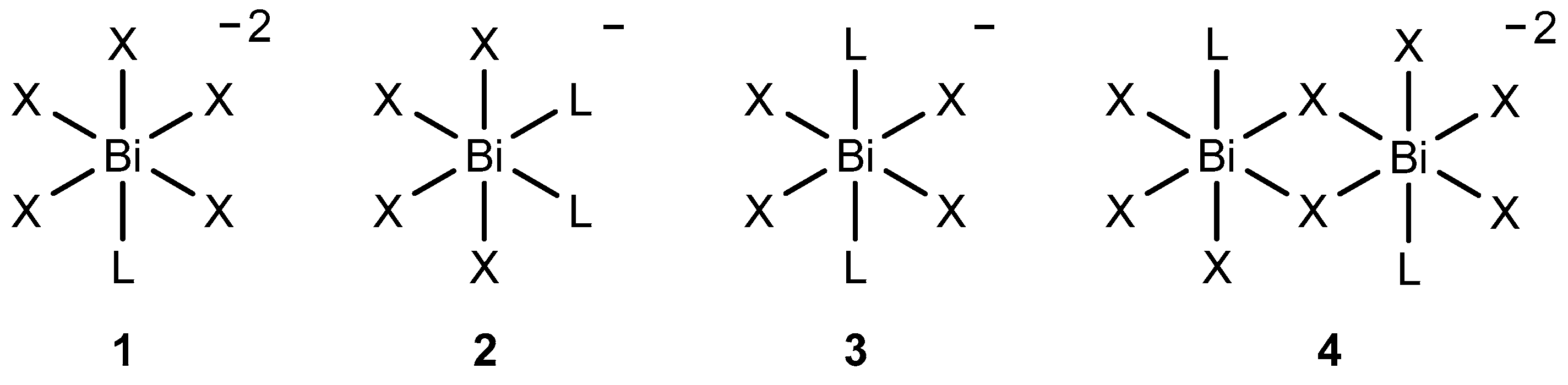
Scheme 1. Halobismuthate(III) species discussed herein.
Crystals 16 00216 sch001
Figure 1. Thermal ellipsoid drawing of 1b•Py. Ellipsoids at 50% probability. Color scheme for all structures: green = Bi, pink = P, purple = I, blue = N, and gray = C.
Crystals 16 00216 g001
Figure 2. Thermal ellipsoid drawing of 2e•Py. Ellipsoids at 50% probability.
Crystals 16 00216 g002
Figure 3. Thermal ellipsoid drawing of 3a. Ellipsoids at 50% probability.
Crystals 16 00216 g003
Figure 4. Thermal ellipsoid drawing of 4c. Ellipsoids at 50% probability.
Crystals 16 00216 g004
Figure 5. (Left) Close contacts between Ianion⋯Ianion and Ianion⋯Hcation in the crystal structure of 4b. (Right) Hirshfeld surface for 4b anion with I⋯I contact highlighted.
Crystals 16 00216 g005
Figure 6. NLMO rendering for the [BiI5Py]2− anion showing a representative cis Bi–I σ bond depicting overlap of an iodide sp2-like hybrid with a Bi p orbital. Color scheme for structure: orange = Bi, purple = I, blue = N, white = H, and gray = C.
Crystals 16 00216 g006
Figure 7. Tauc plots of select samples utilizing the Kubelka–Munk function showing broad absorption bands at >2.2 eV.
Crystals 16 00216 g007
Figure 8. Partial Density of State (DOS) calculation results for the iodobismuthate-pyridine anionic unit found in 14.
Crystals 16 00216 g008
Table 1. Reaction Products.
2:1 Ph3PR+I to BiI31:1 Ph3PR+I to BiI3
R = Me(Ph3PMe)2[BiI5Py]•Py (1a•Py)(Ph3PMe)trans-[BiI4Py2] (3a),
(Ph3PMe)trans-[BiI4Py2]•Et2O (3a•Et2O), (Ph3PMe)2[Bi2I8Py2]•2Py (4a•2Py)
R = Et(Ph3PEt)2[BiI5Py]•Py (1b•Py)(Ph3PEt)trans-[BiI4Py2]•1.5Py (3b•1.5Py),
(Ph3PEt)2[Bi2I8Py2] (4b),
(Ph3PEt)2[Bi2I8Py2] (4b′)
R = Pr(Ph3PPr)2[BiI5Py]•Py (1c•Py)(Ph3PPr)cis-[BiI4Py2]•2Py (2c•2Py),
(Ph3PPr)2[Bi2I8Py2] (4c),
(Ph3PPr)2[Bi2I8Py2]•2Py (4c•2Py)
R = Bu(Ph3PBu)2[Bi2I8Py2] (4d),
(Ph3PBu)2[Bi2I8Py2] (4d′)
R = Ph(Ph4P)2[BiI5Py] (1e), (Ph4P)2[BiI5Py]•Py (1e•Py), (Ph4P)2[BiI5Py]•1.5Py (1e•1.5Py)(Ph4P)cis-[BiI4Py2]•Py (2e•Py),
(Ph4P)trans-[BiI4Py2]•0.5Py (3e•0.5Py),
(Ph4P)2[Bi2I8Py2]•Et2O (4e•Et2O)
Table 2. Selected close anion–other a contacts with corresponding contribution (%).
CompoundI⋯H/H⋯IH⋯HC⋯H/H⋯CC⋯CN⋯H/H⋯NI⋯IX⋯X b
1a•Py68.718.87.21.71.402.2
1b•Py69.719.27.11.81.400.8
1c•Py67.522.16.11.61.40.11.2
1e•Py67.415.011.80.33.102.4
1e•1.5Py35.135.622.11.63.801.8
2c•2Py40.427.115.14.50012.9
3a51.829.29.84.63.401.2
3b•1.5Py47.334.87.65.33.401.6
3e•0.5Py49.928.811.04.53.602.2
4a•2Py63.120.78.43.02.602.2
4b53.821.014.30.62.15.92.3
4b56.024.211.31.42.00.94.2
4c58.823.712.402.003.1
4c•2Py64.518.210.23.02.701.4
4d61.323.18.03.02.102.5
4d58.624.212.402.202.6
4e•Et2O59.520.713.80.42.30.52.8
a Other indicates cation, solvent, or anion. b X⋯X = Bi⋯Bi, Bi⋯H, I⋯C, N⋯C, C⋯N.
Table 3. QTAIM calculated results showing average values for structurally equivalent Bi–I and Bi–N bonds.
[BiI5Py]2−
Crystals 16 00216 i001
[BiI4Py2]1−
Crystals 16 00216 i002
Bondρ(r)2ρεBondρ(r)2ρε
Bi-I0.03180.04220.0122Bi-I0.03390.04480.0062
Bi-I′0.04000.04750.0008Bi-I′0.04440.04890.0037
Bi-N0.03100.08390.0583Bi-N0.02850.07570.0656
[BiI4Py2]1−
Crystals 16 00216 i003
[Bi2I8Py2]2−
Crystals 16 00216 i004
Bondρ(r)2ρεBondρ(r)2ρε
Bi-I0.03550.04580.0181Bi-I0.04220.04610.0135
Bi-N0.04390.11740.0613Bi-I′0.03980.04770.0026
Bi-I″0.02330.03720.0043
Bi-N0.03400.08910.0622
Disclaimer/Publisher’s Note: The statements, opinions and data contained in all publications are solely those of the individual author(s) and contributor(s) and not of MDPI and/or the editor(s). MDPI and/or the editor(s) disclaim responsibility for any injury to people or property resulting from any ideas, methods, instructions or products referred to in the content.