1. Introduction
Silicon carbide (SiC), as a third-generation semiconductor material, possesses characteristics such as high critical breakdown field (3~5 mV/cm), high thermal conductivity (490 W/(m·K)), and high saturated electron drift velocity (2 × 10
7 cm/s) [
1,
2]. 4H-SiC substrates are widely used in the design and manufacture of high-performance SiC devices for the aerospace industry [
3,
4]. Therefore, for the large-scale and industrial application of 4H-SiC substrates, relying solely on their excellent physical and chemical properties is insufficient; superior surface quality (lattice integrity and flatness) is a prerequisite. Chemical mechanical polishing (CMP) is currently the widely accepted global planarization process [
5], typically employing a polishing slurry composed of abrasives and chemical reagents.
The components of the polishing slurry significantly affect the material removal rate (MRR) and surface roughness (Sa) of 4H-SiC substrates. Neslen et al. [
6] used a colloidal silica slurry to polish the C-face of 4H-SiC and investigated the effect of pH on MRR, finding that pH variation did not significantly affect MRR. Chen et al. [
7] explored the optimal pH for polishing 4H-SiC using colloidal silica and ceria abrasives with KMnO
4 as the oxidant. For the ceria-based slurry, particularly in a strongly acidic KMnO
4 environment, a higher MRR was achieved; using a slurry containing 2 wt% colloidal ceria, 0.05 M KMnO
4 at pH = 2, a maximum MRR of 1089 nm/h and a smoother surface with an average roughness Ra of 0.11 nm were obtained. In contrast, when using a slurry containing 6 wt% colloidal silica, 0.05 M KMnO
4 at pH = 6, the maximum MRR for the silica-based slurry was only 185 nm/h with Ra of 0.254 nm, attributed to the attraction between negatively charged silica particles and the positively charged SiC surface at pH below 5. The different surface charges, i.e., Zeta potentials, of different abrasives affect the contact between the oxidant and the 4H-SiC surface as well as the oxidation. Chen et al. [
8] used K
2S
2O
8 and Al
2O
3 abrasives as the oxidant and abrasive respectively to polish single-crystal SiC. At pH = 6, the Si-face achieved an optimal MRR of 349 nm/h, while the C-face reached 1184 nm/h at pH = 2. This was attributed to the different steric hindrance for oxidant molecules attacking the Si-face and C-face. Lagudu et al. [
9] used H
2O
2 as the oxidant and colloidal silica as the abrasive to polish SiC films, studying the effect of pH variation on polishing efficiency. The results showed that the MRR of SiC reached a maximum of 500 nm/h at pH = 10. They suggested that using KOH to adjust pH not only increased the OH
− concentration but also increased the ionic strength of the slurry. Furthermore, ionic strength affects both the stability of the colloidal silica abrasive itself and its electrostatic interaction with the SiC surface, thereby further influencing the MRR. Ohnishi et al. [
10] used colloidal silica abrasive and KMnO
4 oxidant at pH 7 to study the effect of KMnO
4 concentration on the polishing removal rate of 4H-SiC. They found that the MRR of SiC increased with increasing KMnO
4 concentration. Additionally, they investigated the effect of pH ranging from 3 to 12 on the polishing efficiency of the Si-face and C-face, finding that the C-face achieved the best MRR of 1695 nm/h at pH = 3, while the Si-face reached a maximum of 51 nm/h under neutral conditions at pH = 7. They attributed the high CMP removal rate for the C-face at pH = 3 primarily to the strong oxidizing power of KMnO
4 oxidizing the C-face. For the Si-face, the low MRR at pH = 3 was due to a layer of SiO
2 film generated after the reaction between the slurry and the SiC surface, hindering further oxidation.
As a “green” strong oxidant, the hydroxyl radical (·OH) possesses high chemical reactivity and low selectivity, with a redox potential in aqueous solution as high as 2.73–2.8 V [
11], second only to fluorine. Shi et al. [
12] proposed that the local high-temperature and high-pressure state formed by high-speed rotational friction between the substrate and the polishing pad promotes the decomposition of H
2O
2 in the slurry into highly oxidative ·OH, which penetrates into SiC and preferentially reacts with Si atoms to form a loose silica layer, finally removed mechanically by colloidal silica abrasives. Furthermore, Fenton or Fenton-like reactions provide an effective means to generate large amounts of highly reactive ·OH [
13]. The traditional homogeneous Fenton reaction uses Fe
2+/Fe
3+ or compounds containing transition metals to catalyze the decomposition of H
2O
2 producing ·OH under acidic conditions. Kubota et al. [
14] used an iron rod as a catalyst in H
2O
2 to generate ·OH to remove material from the 4H-SiC surface. They found that ·OH was only generated on the surface of the iron catalyst, and the chemical corrosion reaction only occurred on the 4H-SiC surface in direct contact with the iron catalyst. This was the first discovery that ·OH could effectively corrode the hard-to-process C-face of 4H-SiC substrates. However, compared to the C-face, the obtained MRR for the Si-face was extremely low, which they attributed to different oxidation mechanisms, where the oxidation process proceeds via exchange of C-site with O atoms. The difference in the number of C–Si bonds around surface C-sites leads to the MRR difference between the Si-face and C-face. Kubota et al. [
15] proposed a method for surface planarization of the C-face of 4H-SiC substrates using iron abrasive particles and H
2O
2 solution. The results showed that this method could improve removal efficiency while maintaining high surface quality. They suggested that Fe abrasive particles not only act to frictionally remove surface material but also play a role in catalyzing H
2O
2 to generate ·OH that effectively corrodes the SiC surface. Zhou et al. [
16] used Fe and Pt/C particles as catalysts for Fenton-like reactions, comparing their catalytic effects in the CMP process of the Si-face of single-crystal SiC. The results indicated that Fe particles could generate sufficient ·OH to oxidize the SiC surface, thereby accelerating the polishing efficiency of SiC and achieving an extremely low surface roughness of Sa = 0.5 nm.
The principle of the Fenton reaction involves the catalytic decomposition of hydrogen peroxide by Fe
2+ or transition metal compounds to produce ·OH. Since iron compounds are unstable under alkaline conditions and easily form Fe(OH)
3 precipitate, reducing their catalytic performance, the traditional homogeneous Fenton reaction has a narrow applicable pH range, severely limiting its development [
13]. However, in the CMP process of SiC, the pH of the polishing slurry is an important factor affecting the polishing efficiency and surface quality of SiC. Furthermore, few attempts have been made to expand the pH to alkaline conditions when applying Fenton reactions or strongly oxidative ·OH to CMP, and the stability and reaction mechanism of the Fenton reaction system in alkaline polishing slurries are rarely discussed. For example, Kang et al. [
17] pointed out that although conventional Fenton systems typically exhibit higher reactivity under acidic conditions, the acidic environment may induce agglomeration of abrasive particles, thereby weakening the effectiveness of mechanical action and adversely affecting the final surface quality. In their study, better polishing performance was instead achieved under alkaline conditions. However, excessive alkalinity may lead to the softening or dissolution of silica abrasives, reducing the material removal rate, which suggests that there is a reasonable operational window for alkaline conditions. Similarly, Liang et al. [
18] argued that acidic media are favorable for the Fenton reaction, while under alkaline conditions, surface oxide layers may further transform into silicate species that are more easily removed. In their chemical magnetorheological polishing system, the lowest surface roughness was obtained at pH 9. For instance, in an alumina-based abrasive system, the introduction of the Fenton reaction at pH 4 significantly enhanced the material removal rate. In contrast, within a colloidal silica system, the highest removal rate was achieved at pH 9, albeit with some trade-offs in surface quality. These findings further demonstrate that the effect of pH cannot be generalized without considering the specific slurry formulation and the quenching behavior of reactive species. Yan team [
19,
20,
21] investigated the effects of Fenton/Fenton-like/electro-Fenton reactions formed by Fe
2+ or Fe
3O
4 and H
2O
2, as well as pH, on polishing the C-face of SiC substrates. They found that an increase in ·OH concentration enhanced the polishing efficiency of SiC wafers. They suggested that excessively high Fe
2+ concentration and pH value lead to precipitate formation during the reaction, and excess H
2O
2 might cause quenching reactions in the system, resulting in poor polishing quality of the SiC surface.
In this study, we selected pH 9 as a representative alkaline condition, aiming to balance slurry stability and efficient removal of reaction products, while mitigating the risk of side reactions and abrasive degradation potentially caused by overly strong alkalinity. Iron-based solid-phase catalysts, due to their wide applicable pH range, high enrichment, ease of separation and recovery, are widely used as heterogeneous Fenton catalysts, among which Fe3O4 is considered a promising candidate material. This study investigates the effects of colloidal silica abrasive particle size and content, the concentrations of H2O2 oxidant and Fe3O4 catalyst in the CMP slurry on the MRR, surface morphology, and surface roughness of the C-face of 4H-SiC substrates, and elucidates the oxidation mechanism of the heterogeneous Fenton reaction on the C-face of 4H-SiC substrates.
2. Materials and Methods
Before the experiment, standard laboratory cleaning procedures were followed using deionized water. The initial polishing slurry contained 4 wt% nano-silica sol, 5 wt% H
2O
2, and 0.03 wt% Fe
3O
4 particles (average particle size 200 nm). After mixing uniformly, the slurry pH was adjusted to 9 by adding 1 M HCl or KOH aqueous solution, as OH
− promotes the generation of ·OH [
22]. Experimental raw materials and reagents are listed in
Table 1, and main instruments are listed in
Table 2.
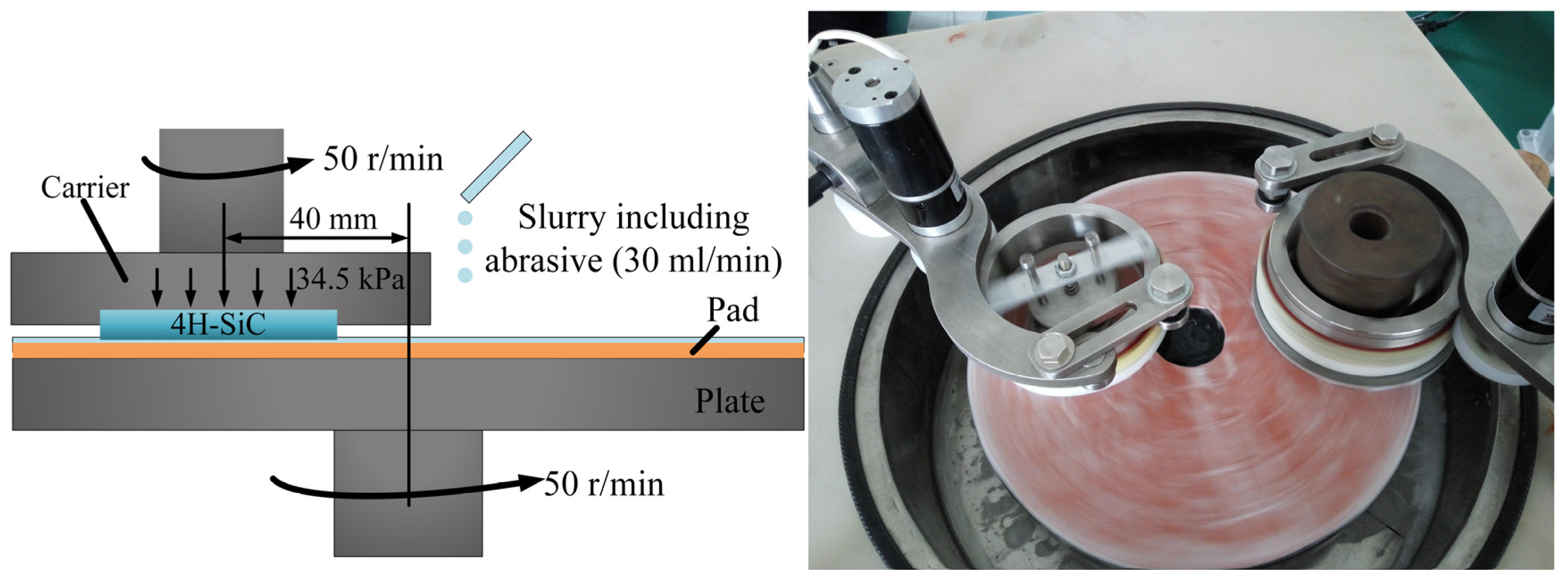
CMP experiments were completed on an SK-610A polishing machine, as shown in
Figure 1. Specific polishing parameters for each experiment are shown in
Table 3, and each polishing group was repeated at least three times. Additionally, a high-shear mixer was used to stir the polishing slurry to prevent aggregation of Fe
3O
4 due to its strong magnetism, which could cause scratches on the C-face of the 4H-SiC substrate. After polishing, the substrates were sequentially ultrasonically cleaned with ethanol and deionized water for 10 min. The mass of the substrates before and after polishing was weighed using a precision balance, repeated three times each, and the average value was taken. The MRR (nm/h) was calculated according to Equation (1) [
22].
where Δ
m is the mass loss of the 4H-SiC substrate before and after polishing (g),
ρSiC is the density of 4H-SiC (g/cm
3),
r is the substrate radius (cm), and
t is the polishing time (min).
4H-SiC surface morphology and roughness (Sa, the arithmetic mean height of the 4H-SiC surface area) were measured using an atomic force microscope (AFM, CSPM 4000, Beijing Nano Instrument Co., Ltd.) operating in tapping mode. Silicon tips with a nominal tip radius of <10 nm and a resonance frequency of ~300 kHz were used. Scanning areas of 10 μm × 10 μm were randomly selected on three different locations of each polished sample, and the average value was reported. The scan rate was 0.8 Hz with 512 × 512 pixel resolution. Image processing and roughness analysis were performed using the instrument’s proprietary software (V1.0).
3. Results and Discussion
This study systematically investigates the influence mechanisms of key components in the CMP slurry (including colloidal silica abrasive particle size and concentration, H2O2 oxidant concentration, and Fe3O4 catalyst concentration) based on the Fenton reaction on the MRR and surface morphology of the C-face of 4H-SiC substrates. Through comprehensive analysis of the experimental results, the aim is to elucidate the synergistic effect between chemical and mechanical actions and determine the optimal slurry formulation.
3.1. Effect of Abrasive Size on Material Removal and Surface Morphology of 4H-SiC C Faces
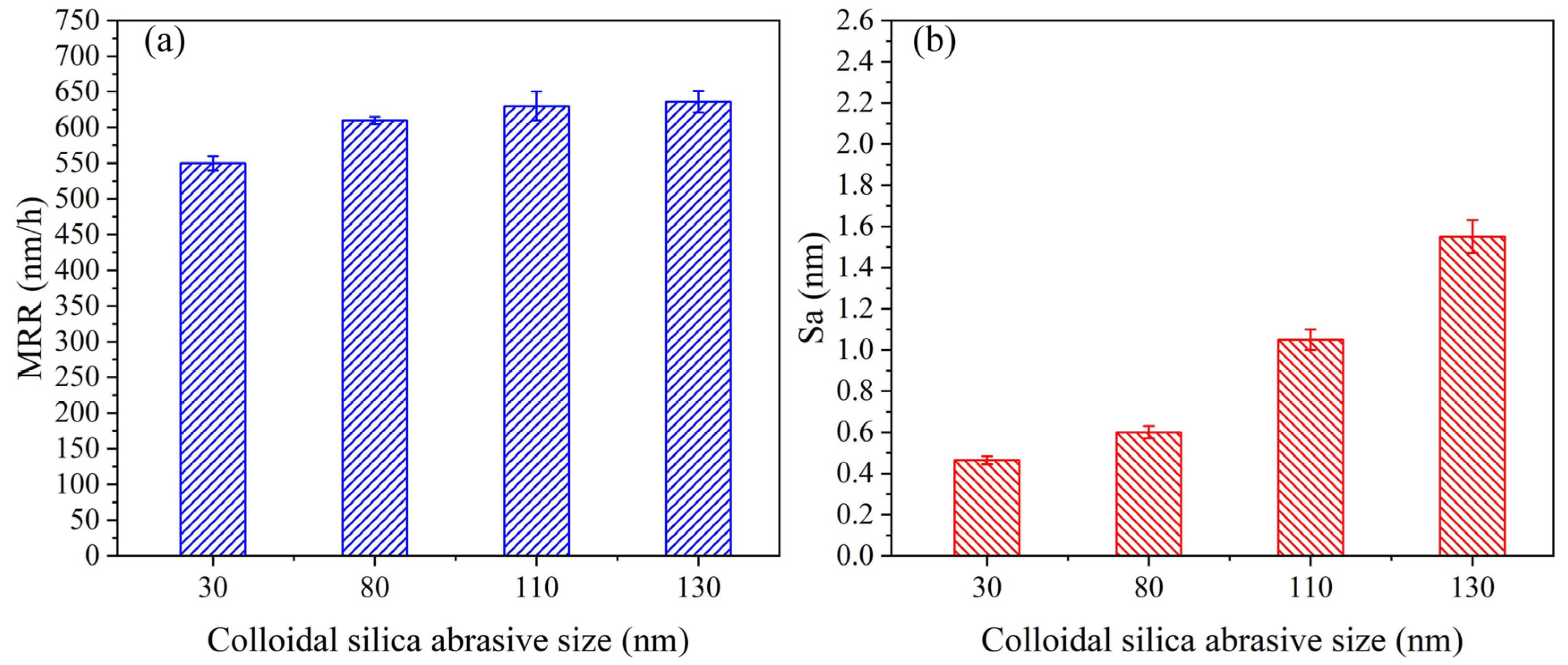
The polishing slurry contained 4 wt% colloidal silica with different average particle sizes (30 nm, 80 nm, 110 nm, 130 nm), 5 wt% H
2O
2, and 0.03 wt% Fe
3O
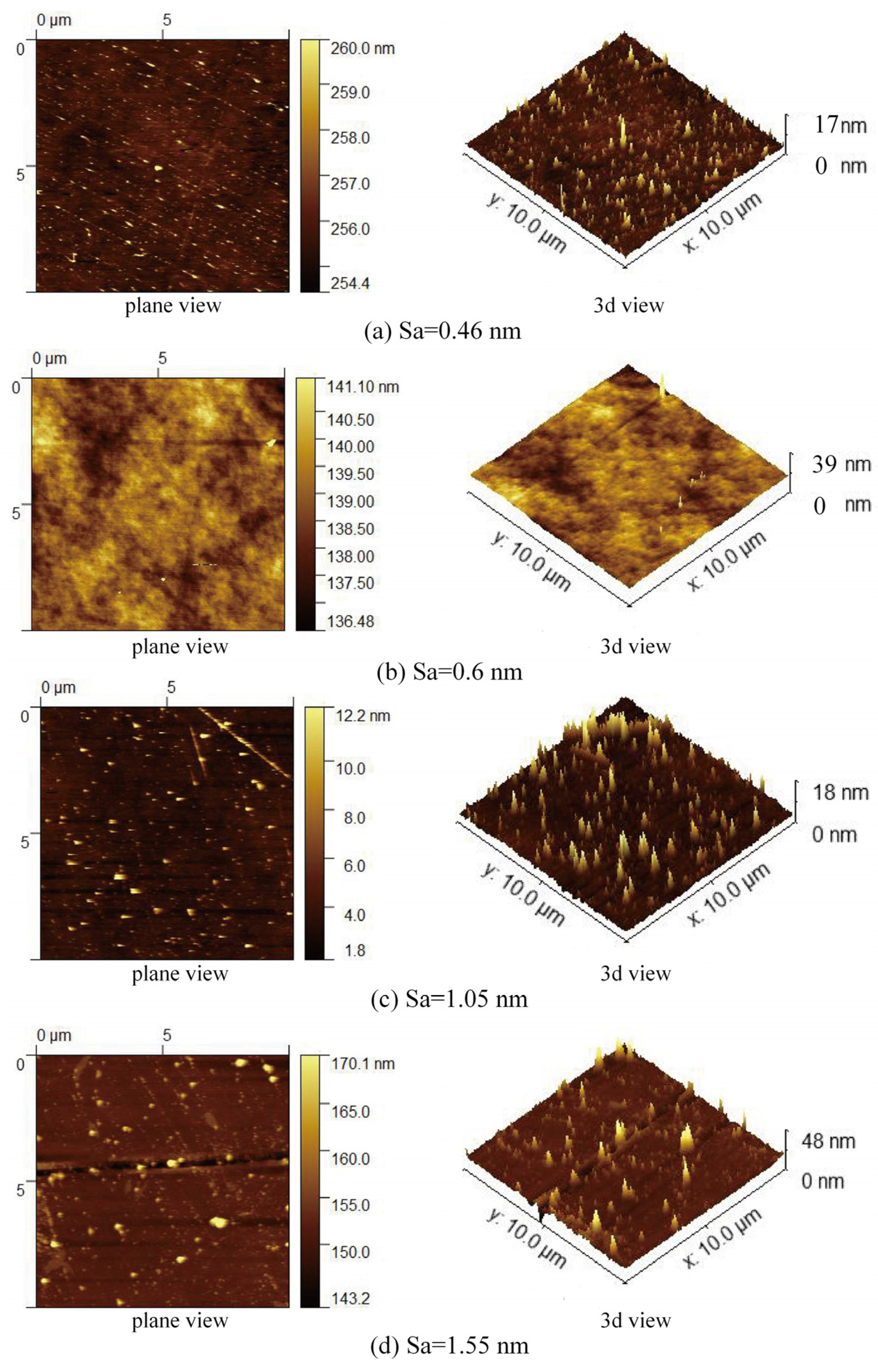
4 particles. The MRR and surface roughness Sa of the 4H-SiC substrate C-face are shown in
Figure 2 and
Figure 3.
Abrasives play a key role in the mechanical removal of the softened oxide layer in CMP, and their particle size directly determines the indentation depth and cutting ability. As shown in
Figure 2a, as the average particle size of the colloidal silica abrasive increased from 30 nm to 130 nm, the MRR of the 4H-SiC C-face significantly increased from a relatively low level to 648 nm/h. This trend is consistent with the findings of Shi et al. [
12], who discovered that larger abrasive particles can more effectively disrupt and remove the oxide layer on the 4H-SiC surface, thereby exposing fresh surface for continuous chemical reaction, ultimately enhancing MRR.
However, the enhancement of mechanical action, while improving MRR, also poses challenges to surface quality. As shown in
Figure 2b, the surface roughness (Sa) increased monotonically with increasing abrasive size. When using abrasives with an average size of 30 nm, the optimal surface quality was obtained, with Sa as low as 0.46 nm (
Figure 3a). In contrast, after using 130 nm abrasives, Sa sharply increased to 1.55 nm, and obvious scratches and plastic deformation grooves were observed in AFM images (
Figure 3b). This phenomenon can be attributed to the transition from plastic deformation to brittle fracture caused by large-sized abrasives on the material surface under high pressure, where the depth of damage exceeds the critical ductile-to-brittle transition depth [
22]. Smaller-sized abrasives, due to their lower load per particle, can remove material in a “gentler” manner, making it easier to achieve an atomically smooth surface.
In summary, the selection of abrasive size requires a trade-off between material removal efficiency and surface quality. Although a smaller particle size (30 nm) is beneficial for obtaining an ultra-smooth surface, its MRR is too low. Considering that subsequent processes might compensate for the lower MRR by extending polishing time or optimizing chemical action, and to obtain acceptable surface quality, selecting an abrasive size of 110 nm is a more balanced solution. It provides a relatively high MRR (close to the level at 130 nm) while keeping surface damage within a relatively low range.
3.2. Effect of Abrasive Mass Fraction on Material Removal and Surface Morphology of 4H-SiC C Faces
This section mainly investigates the effects of the mass fraction of colloidal silica abrasives in the CMP slurry on the material removal rate (MRR) and surface roughness (Sa) of the C-face of 4H-SiC, and analyzes the results in conjunction with the corresponding changes in surface morphology. The polishing slurry contained colloidal silica with an average particle size of 110 nm, 5 wt% H
2O
2, and 0.03 wt% Fe
3O
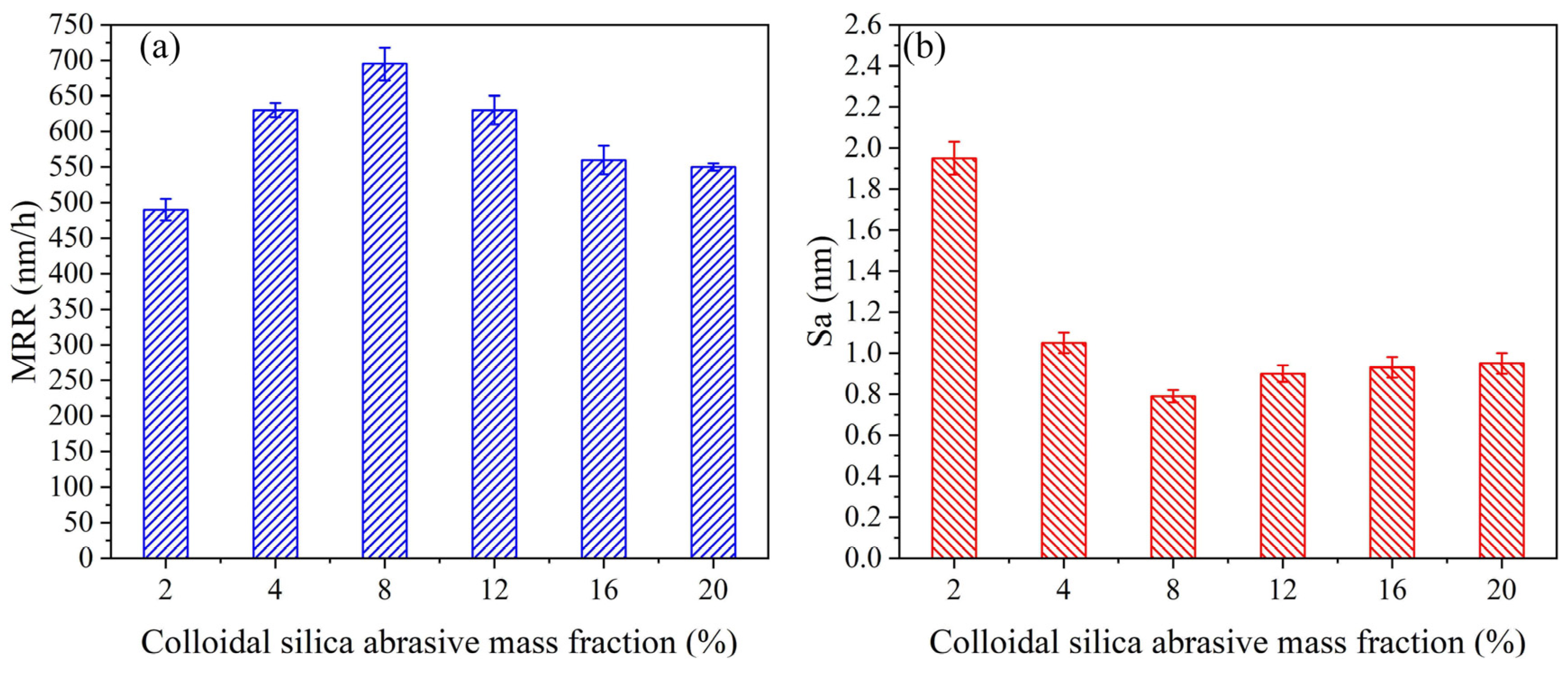
4 particles. The MRR and surface roughness Sa of the 4H-SiC substrate C-face are shown in
Figure 4. Under the condition of fixed abrasive size (110 nm), the abrasive concentration determines the number of abrasive particles participating in the mechanical action per unit time, directly affecting the consistency and efficiency of polishing. As shown in
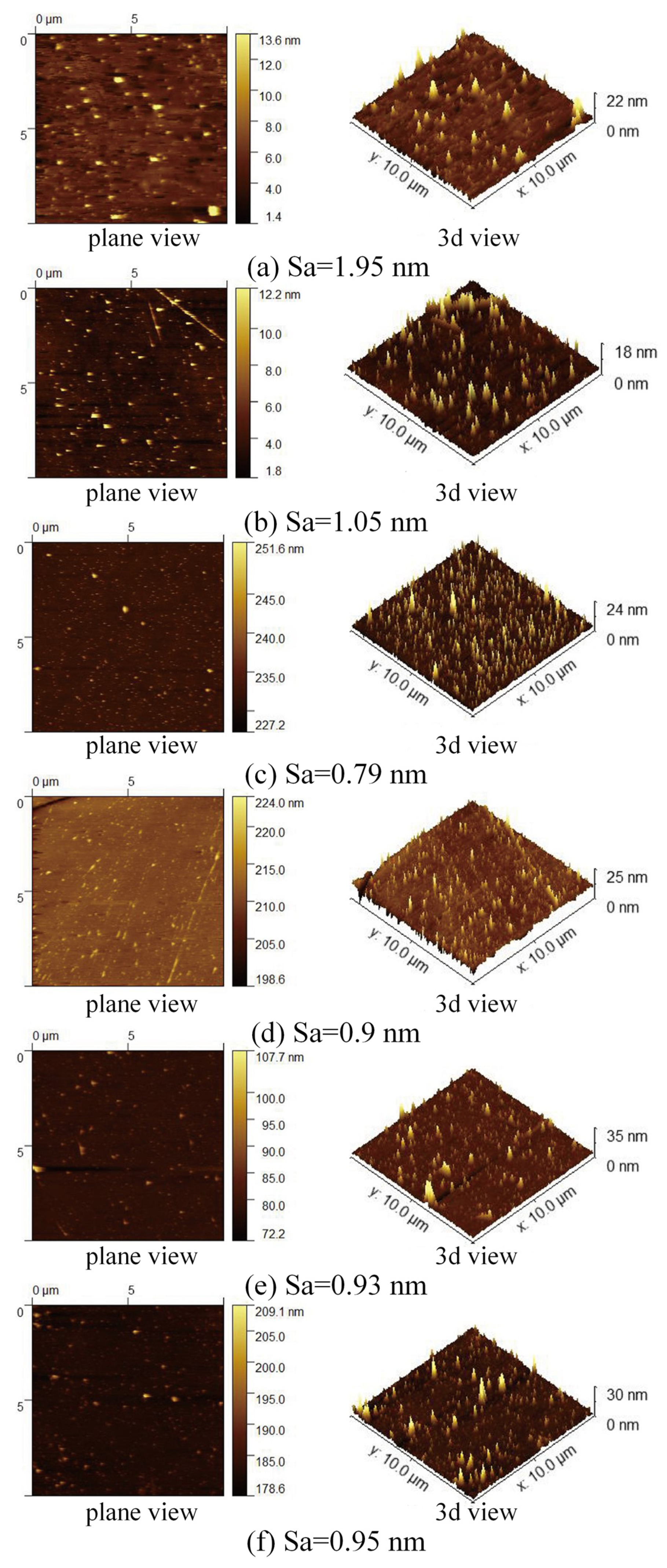
Figure 4a, as the colloidal silica concentration increased from 2 wt% to 8 wt%, the MRR gradually rose to a maximum value of 701 nm/h. Meanwhile, the Sa showed a trend of first decreasing and then increasing, reaching the lowest value of 0.79 nm at 8 wt% (
Figure 4b and
Figure 5a).
The simultaneous improvement in MRR and surface quality of the 4H-SiC C-face in the initial stage can be attributed to the increase in the number of effective abrasive particles. Sufficient abrasives ensure that the surface oxide layer is uniformly and promptly removed, avoiding “over-corrosion” or surface undulations caused by insufficient local removal (
Figure 5b shows the rough surface formed due to insufficient mechanical action at 2 wt%). When chemical oxidation and mechanical removal reach a dynamic balance, synergistic optimization of high MRR and low Sa can be achieved [
5].
However, when the concentration exceeded 8 wt% and continued to increase to 10 wt%, the MRR decreased instead of increasing, and Sa also deteriorated to about 1.95 nm. This is mainly due to the following two negative effects caused by excessively high abrasive concentration: (1) The gap between the polishing pad and the substrate is occupied by excessive abrasives, hindering the sufficient transport of the oxidant- and catalyst-containing slurry to the reaction interface, thus weakening the contribution of chemical action [
9]; and (2) abrasive particles are more prone to agglomeration, reducing the number of actually effective cutting particles and causing uneven scratching on the substrate surface.
Therefore, the optimal concentration of colloidal silica abrasive was determined to be 8 wt%. At this concentration, the chemo-mechanical synergistic effect is optimal, achieving a unity of high material removal rate and good surface morphology.
3.3. Effect of H2O2 Mass Fraction on Material Removal and Surface Morphology of 4H-SiC C Faces
The polishing slurry contained 8 wt% colloidal silica with an average particle size of 110 nm and 0.03 wt% Fe
3O
4 particles. CMP experiments were conducted on 4H-SiC substrates by adding different concentrations of H
2O
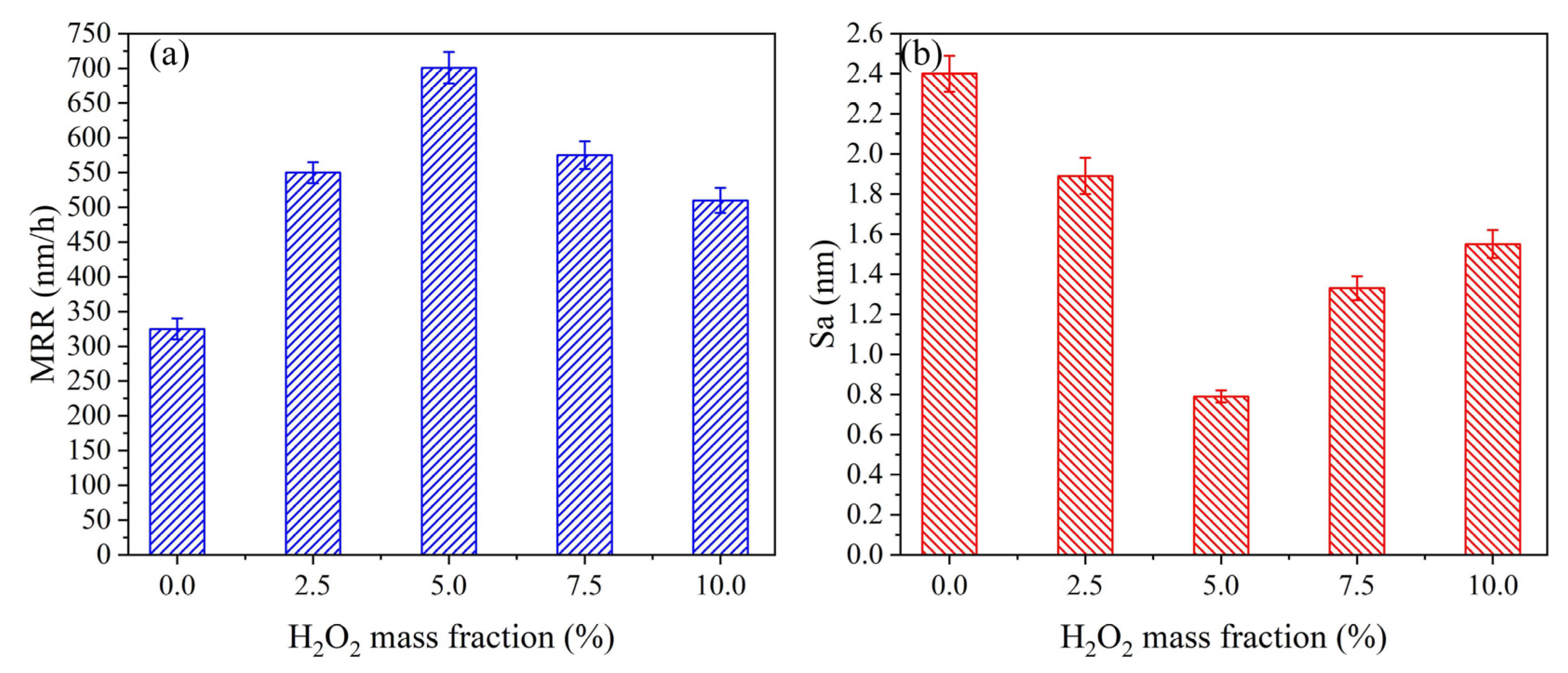
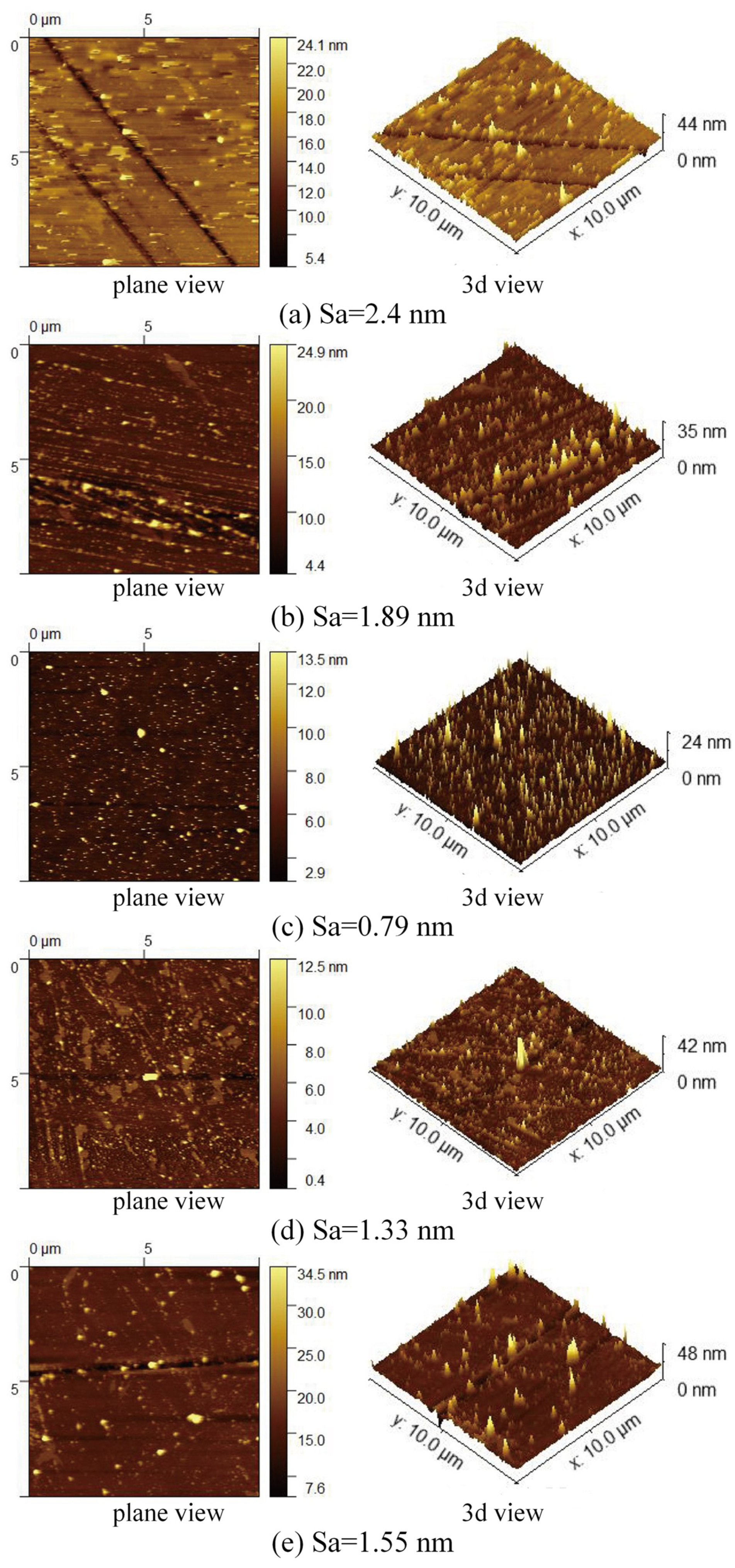
2 to observe its impact. The MRR and surface roughness Sa of the 4H-SiC substrate C-face are shown in
Figure 6 and
Figure 7.
H
2O
2, as the precursor of ·OH radicals, its concentration directly determines the strength of the Fenton reaction and is key to controlling the chemical action. As shown in
Figure 6a, in the presence of the Fe
3O
4 catalyst, the MRR first increased and then decreased with increasing H
2O
2 concentration, reaching a peak of 701 nm/h at 5 wt%.
This phenomenon can be explained by Fenton reaction kinetics and the competition from side reactions. Before the optimal concentration (5 wt%), increasing the H
2O
2 concentration effectively promoted the rate of ·OH generation catalyzed by Fe
3O
4 (Equation (2)), thereby enhancing the oxidation of the 4H-SiC surface (Equation (3)), generating a softer SiO
2 layer more easily removed mechanically, thus increasing MRR [
13].
The reaction mechanism for Fe
3O
4 catalyzing H
2O
2 to produce ·OH is summarized by Equation (2) [
23].
The reaction mechanism between ·OH and SiC is summarized by Equation (3), where C in SiC is oxidized to CO
2.
However, when the H
2O
2 concentration exceeded 5 wt%, excess H
2O
2 and ·OH triggered severe quenching reactions (Equations (4) and (5)), consuming the effective ·OH that should have been used to oxidize SiC, leading to a decrease in MRR [
19,
21]. This efficiency decay due to excess oxidant has been widely reported in Fenton and Fenton-like reaction systems.
Excessive H
2O
2 can trigger severe quenching reactions with ·OH, as described by the following equations:
In summary, 5 wt% was determined as the optimal concentration for H2O2, maximizing the effective utilization rate of ·OH under these experimental conditions, thereby achieving the highest material removal rate.
3.4. Effect of Fe3O4 Mass Fraction on Material Removal and Surface Morphology of 4H-SiC C Faces
The polishing slurry contained 8 wt% colloidal silica with an average particle size of 110 nm and 5 wt% H
2O
2. The MRR and surface roughness Sa of the 4H-SiC substrate C-face are shown in
Figure 8 and
Figure 9. Fe
3O
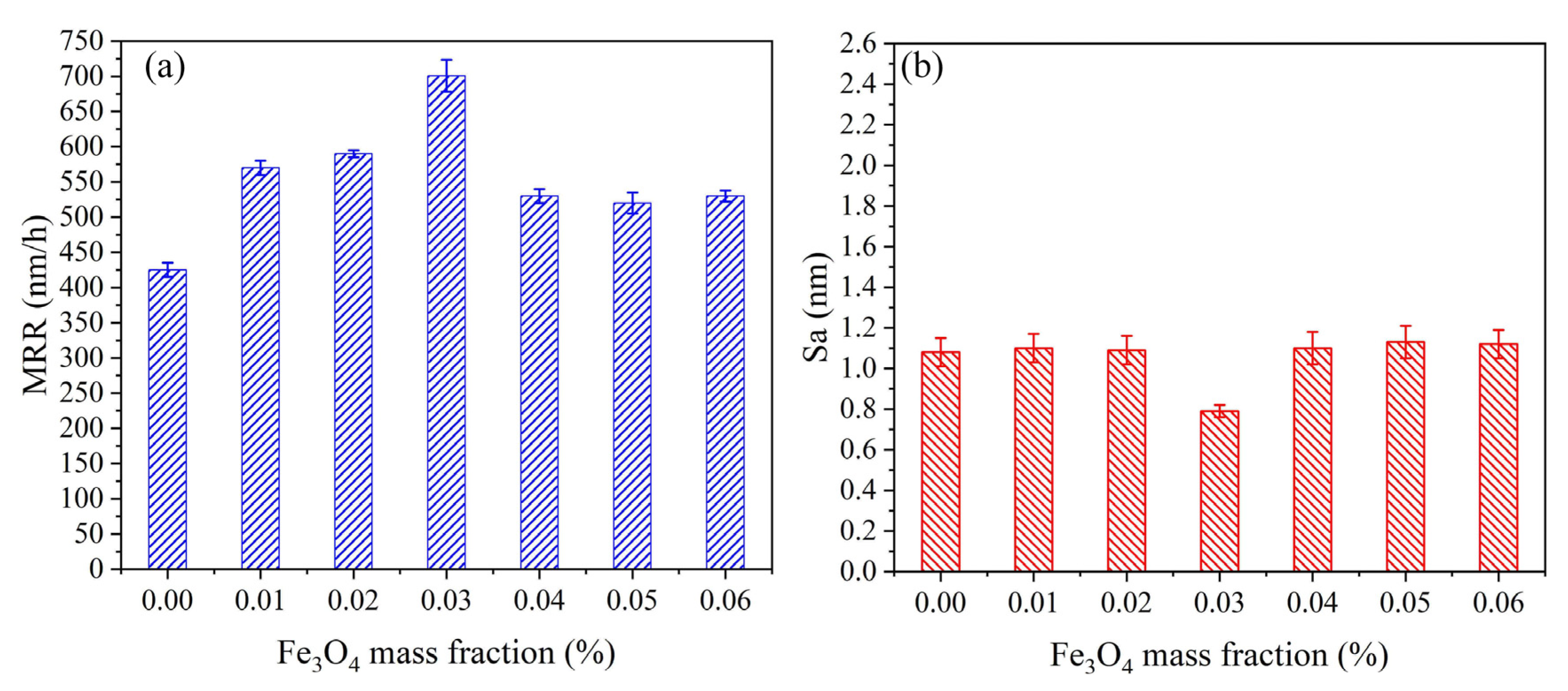
4 is a catalyst for the heterogeneous Fenton reaction, and its concentration directly affects the release rate of Fe
2+ and the kinetics of ·OH generation.
From
Figure 8a, it can be seen that MRR is extremely sensitive to changes in Fe
3O
4 concentration. When the concentration increased from 0.01 wt% to 0.03 wt%, the MRR rapidly climbed to a maximum value of 701 nm/h. This conforms to the basic principle of the Fenton reaction: an increase in catalyst concentration provides more active sites, accelerating the decomposition of H
2O
2 to generate ·OH, thereby strengthening the chemical oxidation [
23].
However, it is noteworthy that when the Fe3O4 concentration further increased to 0.05 wt%, the MRR significantly decreased by about 15% and stabilized around 550 nm/h. This contradicts the common perception in homogeneous Fenton systems that “more catalyst is better.” The reasons mainly lie in the particularity of the heterogeneous system:
(1) Imbalance in reaction kinetics: Excess Fe3O4 instantaneously ionizes excessively high concentrations of Fe2+, causing H2O2 to decompose too rapidly, unable to supply ·OH continuously and stably throughout the polishing cycle.
(2) Particle agglomeration effect: Fe
3O
4 itself has strong magnetism and is prone to magnetic-induced agglomeration and steric hindrance agglomeration at high concentrations [
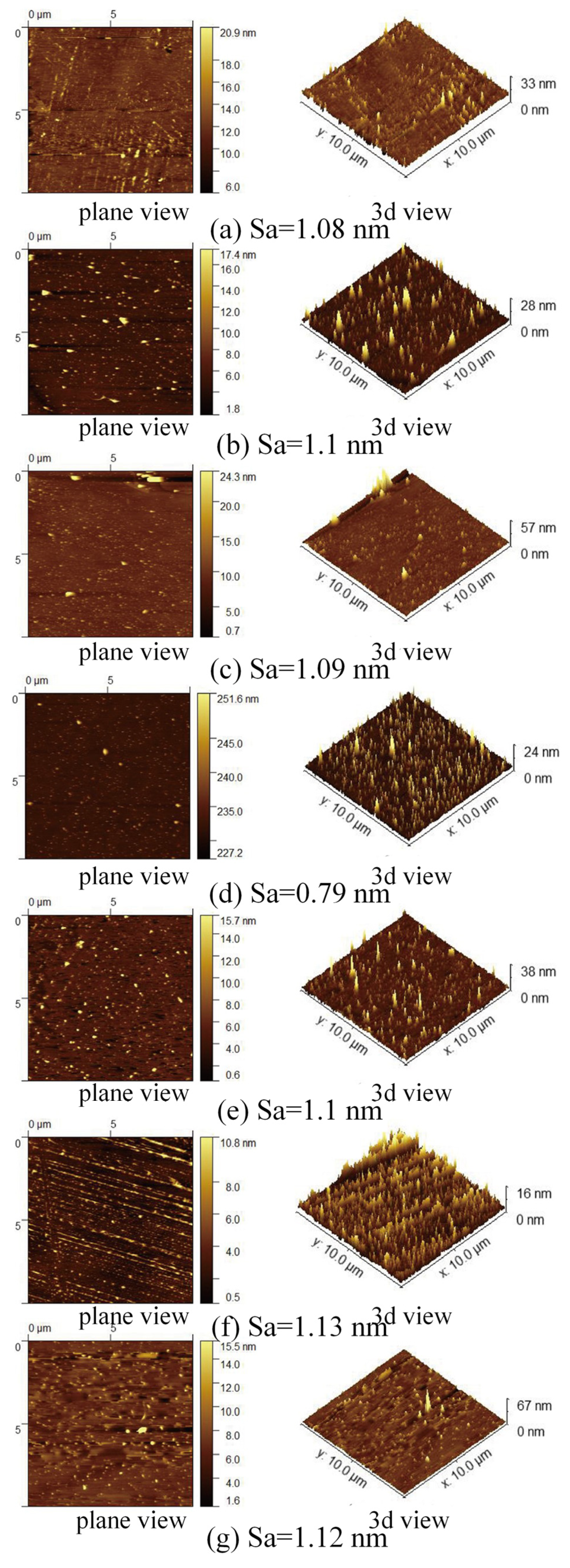
24]. These agglomerates not only reduce their own catalytic specific surface area but also interfere with the uniform dispersion of colloidal silica abrasives, leading to decreased stability of the polishing slurry and causing scratches on the polished surface (compare
Figure 9a with
Figure 9b).
The surface roughness data (
Figure 8b) also confirm this point; the surface quality obtained at an Fe
3O
4 concentration of 0.03 wt% is superior to that at 0.05 wt%.
3.5. Influences of Polishing Slurry Components on Heterogeneous Fenton Reaction CMP for 4H-SiC C-Face
The high-efficiency material removal primarily relies on the strong oxidation of the SiC surface by hydroxyl radicals (·OH). As shown in
Figure 6 and
Figure 8, both the H
2O
2 concentration (5 wt%) and the Fe
3O
4 concentration (0.03 wt%) exhibit an optimal value that yields the peak MRR (701 nm/h), demonstrating a non-linear relationship characteristic of Fenton reaction kinetics. Fe
3O
4, as a heterogeneous catalyst, provides active sites for the stable generation of ·OH (Equation (2)). However, as indicated by Equations (4) and (5), quenching reactions occur when the concentration of H
2O
2 or ·OH itself is too high, leading to the dissipation of effective oxidizing species. Therefore, the optimal concentration essentially represents the best balance point between the generation rate of ·OH and its effective utilization rate. Under the conditions of 5 wt% H
2O
2 and 0.03 wt% Fe
3O
4, the system can continuously and stably generate sufficient ·OH to oxidize the SiC surface into a soft SiO
2 layer that is easily removable (Equation (3)), while avoiding the decline in oxidation efficiency caused by excessive quenching.
The efficiency and quality of the mechanical removal process are jointly determined by the particle size and concentration of the colloidal silica abrasives.
Figure 2 indicates that increasing the abrasive size significantly enhances the MRR, but excessively large particles (130 nm) lead to severe surface scratches (Sa increases to 1.55 nm,
Figure 3). This stems from the plastic or even brittle damage inflicted on the material surface by large abrasives under high pressure. In contrast, the 110 nm particle size provides relatively high cutting capability (MRR close to the peak) while keeping surface damage at a relatively low level.
Figure 4 further shows that there is an optimal window for abrasive concentration (8 wt%). When the concentration is too low (2 wt%), the mechanical action is insufficient to remove the oxide layer promptly and uniformly, leading to surface undulations (
Figure 5b). When the concentration is too high (>8 wt%), particle crowding hinders slurry transport and easily induces abrasive agglomeration, which instead reduces the number of effective cutting points and may introduce scratches. Therefore, the combination of 110 nm and 8 wt% ensures the optimal configuration of mechanical action in terms of intensity, uniformity, and sustainability.
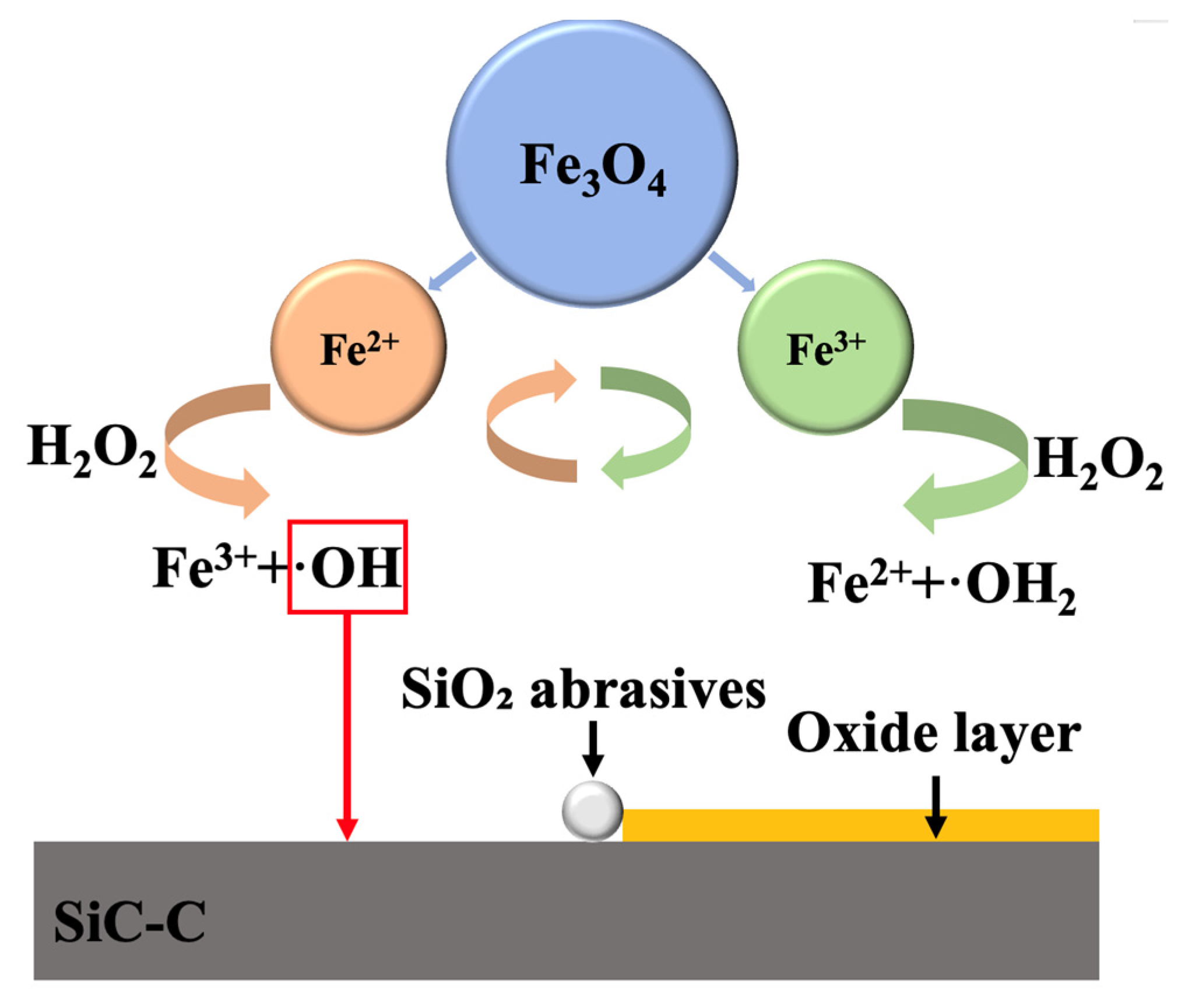
The efficient CMP process is not a simple superposition of chemical and mechanical actions, but rather a dynamic cycle where the two promote each other. Based on the above analysis, this study proposes a synergistic mechanism model as illustrated in
Figure 10:
Initiation of Catalytic Oxidation: At the polishing interface, Fe3O4 particles catalyze the decomposition of H2O2, generating a high concentration of ·OH in situ near the SiC surface.
Selective Surface Oxidation: ·OH preferentially attacks the Si atoms on the SiC surface, forming a loose hydrated SiO2 layer with significantly reduced hardness.
Mechanical Stripping: The colloidal silica abrasives, optimized in both size and concentration, efficiently “shear” and remove this softened layer at the nanoscale under shear forces, exposing the underlying fresh SiC crystal.
Cycle Regeneration: The newly exposed SiC surface immediately becomes the target for the next round of ·OH oxidation, thereby forming a self-sustaining dynamic closed loop of “oxidation-softening-removal”.
In this cycle, chemical oxidation creates a “softened target” for mechanical removal, while efficient mechanical removal exposes a “fresh interface” for sustained chemical reactions. Their rates must be matched: excessively fast oxidation with insufficient removal leads to surface over-corrosion, while excessively strong mechanical cutting with insufficient oxidation leads to crystal damage. The optimized slurry formulation in this study precisely achieves this critical rate matching, thereby simultaneously attaining high MRR and low Sa under alkaline conditions.
The relationship between the introduced colloidal silica abrasives and the Fenton-generated SiO2 layer is critical to the CMP mechanism. The introduced SiO2 abrasives (with controlled particle size of 110 nm) serve as the mechanical cutting tools that remove the chemically softened layer. The Fenton-generated SiO2 is a hydrated, amorphous layer (typically 1–3 nm thick) formed on the SiC surface through ·OH oxidation. This layer has significantly lower mechanical strength compared to bulk SiC, making it susceptible to removal by the silica abrasives. Importantly, there is a synergistic interaction: the silica abrasives not only mechanically remove the oxidized layer but also may participate in tribochemical reactions at the asperity contacts, further enhancing material removal. The particle size of the introduced SiO2 determines the contact pressure and cutting efficiency, while the thickness and uniformity of the Fenton-generated SiO2 layer determine the chemical contribution to material removal. The optimal slurry formulation achieves a balance where the rate of oxidation matches the rate of mechanical removal.
In addition, it is noteworthy that the efficient material removal in this work was achieved under alkaline conditions (pH = 9), which deviates from the conventional acidic preference of homogeneous Fenton systems. The sustained catalytic activity and high oxidation efficiency observed here can be attributed to three key factors inherent to the heterogeneous Fenton reaction using Fe3O4:
First, the structural stability of solid Fe
3O
4 catalyst in alkaline media plays a fundamental role. Unlike free Fe
2+ ions that readily precipitate as Fe(OH)
3 at high pH, the Fe(II) and Fe(III) sites in Fe
3O
4 are immobilized within the spinel lattice, preventing direct complexation with OH
− [
25]. This intrinsic stability enables continuous surface-mediated generation of reactive oxygen species (ROS) even at pH 9, overcoming the pH limitation of traditional Fenton chemistry.
Second, the dominant ROS shift from hydroxyl radicals (·OH) to superoxide radicals (O
2−·) under alkaline conditions, creating a synergistic oxidation effect. In heterogeneous Fenton systems, the decomposition pathway of H
2O
2 on Fe
3O
4 surfaces is pH-dependent [
26]. While ·OH generation may be partially suppressed at high pH due to quenching reactions (Equations (4) and (5)), the formation of O
2−· is significantly enhanced. O
2−· possesses strong oxidizing potential (E
0 = −0.33 V vs. NHE) and can effectively attack the SiC surface, contributing to the formation of a soft oxide layer [
26]. Therefore, the peak MRR observed at pH 9 likely results from the combined action of ·OH and O
2−·, representing an optimal balance between different radical pathways.
Third, the alkaline environment facilitates the removal of the oxidized SiO
2 layer. At pH 9, the silica layer formed on the SiC surface undergoes partial dissolution via reaction with OH
−, generating soluble silicate species [
22]. This chemical dissolution accelerates the mechanical abrasion process by preventing the accumulation of a compact oxide film, thereby maintaining a dynamic “oxidation–removal” cycle. Additionally, the colloidal silica abrasives in the slurry may interact with the Fe
3O
4 surface, potentially creating localized acidic microenvironments that protect active catalytic sites from the bulk alkaline condition. This synergistic interplay between chemical oxidation, radical speciation, and product removal underpins the success of the alkaline heterogeneous Fenton CMP strategy.




 ,
,