
Article

Cadmium-Doped ZnS Thin Films via SILAR for Buffer-Layer Applications: An Experimental and mBJ-DFT Study


1
Materials Physics and Subatomic Laboratory, Ibn Tofail University, Kenitra 14000, Morocco
2
LCS, Faculty of Sciences, Mohamed V University, Rabat B.P. 1014, Morocco
3
Laboratory of Spectroscopy, Molecular Modeling, Materials, Nanomaterials, Water and Environment, Faculty of Sciences, Mohammed V, University in Rabat, Rabat 10090, Morocco
4
Materials, Systems and Energy Engineering Laboratory, Faculty of Sciences and Techniques of Tangier, Abdelmalek Essaâdi University; Tangier 90000, Morocco
*
Authors to whom correspondence should be addressed.
Crystals 2026, 16(3), 161; https://doi.org/10.3390/cryst16030161
Submission received: 25 December 2025 / Revised: 19 January 2026 / Accepted: 11 February 2026 / Published: 26 February 2026
(This article belongs to the Special Issue Advances in Thin-Film Materials and Their Applications)

Abstract

Cd-doped ZnS thin films (0–6 at.%) were deposited by SILAR and assessed as buffer layers for thin-film solar cells. XRD shows a single zinc-blende phase, with a small lattice expansion after Cd incorporation. As the Cd content increases, transmittance decreases and the direct band gap narrows, pushing absorption further into the visible. DFT with mBJ reproduces this redshift and attributes it to Cd-related states near the band edges. Hall measurements indicate stronger n-type transport at higher Cd levels, with lower resistivity, higher mobility, and a larger electron concentration. Overall, about 6% Cd provides a workable balance between transparency, absorption, and conductivity, making ZnS:Cd a suitable buffer-layer candidate.

1. Introduction

Zinc sulfide (ZnS) is a highly versatile semiconductor that has attracted significant interest due to its notable features in optoelectronics, photonics, energy storage, and optical coatings [1]. Thanks to its thermal stability, non-toxic nature, and efficient charge transfer, ZnS is considered a promising candidate for various advanced technologies, particularly for next-generation solar energy conversion [2,3]. Thin-film solar cells, also known as second-generation photovoltaics, offer a cost-effective and flexible approach to solar energy conversion. These devices employ thin semiconductor layers—such as amorphous silicon, CdTe, CIGS, and CZTS to convert sunlight into electricity. Their ability to be deposited on flexible substrates makes them suitable for a wide range of applications [4,5]. In these devices, the buffer layer plays a critical role by forming a high-quality interface between the absorber and the window layer. It helps minimize interfacial defects and improves material compatibility, which enhances charge carrier collection—an essential factor for improving photovoltaic efficiency [6,7]. ZnS is often selected as a buffer layer due to its favorable structural, optical, and electrical characteristics. These properties can be tailored through doping, depending on the application [8]. Many studies have investigated ZnS doping to enhance specific functionalities for instance, doping with Fe2+ to improve photocatalytic activity under visible light, or with Al3+, Sn2+, and Sb3+ for photodetection, as well as Mn2+ and Cd2+ co-doping for luminescent applications [9,10,11].
In this work, we chose to study the doping of ZnS with cadmium (Cd2+) with the aim of improving its performance for use as a buffer layer in thin-film solar cells. Although cadmium is known for its toxicity, it is still used in several photovoltaic devices, particularly in CdTe cells, due to its good optoelectronic properties [12,13]. Cd2+ has an ionic radius close to that of Zn2+, which facilitates its integration into the ZnS crystal lattice without causing major distortions. Several studies have shown that this doping can improve light absorption and electrical conduction, which can be beneficial for cell performance [14]. Through this study, we therefore seek to observe how the introduction of Cd2+ influences the structural, optical, and electrical properties of ZnS in order to evaluate its effectiveness as a buffer layer.
To support and interpret the experimental trends, we performed density-functional theory (DFT) calculations on ZnS and Cd-doped ZnS. Calculations were carried out with WIEN2k (full-potential LAPW). Crystal structures were first relaxed using PBE-GGA until forces < 10−3 Ry/bohr and total-energy changes < 10−5 Ry. Electronic properties were then refined with the mBJ exchange potential to obtain realistic band gaps. Cd doping was modeled by substituting one or more Zn atoms in a 2 × 2 × 1 zinc-blende supercell (Cd contents ≈ 2–6 at.%). Brillouin-zone sampling used a Γ-centered k-mesh (≥6 × 6 × 6 for the supercell) and RKmax ≈ 7. We extracted band structures, total/partial DOS, and band-edge charge densities to identify Cd-induced states near the conduction and valence edges. The complex dielectric function ε(ω) was computed within the independent-particle approximation to estimate the optical gap and the absorption onset. This protocol allows us to link lattice expansion and local strain to band-edge modifications, quantify the redshift of the optical transition with Cd incorporation, and rationalize the measured trends in transmittance, band gap narrowing, and n-type transport reported in this work.

2. Materials and Methods

Undoped and Cd-doped ZnS thin films were deposited using the SILAR method. All chemical reagents were purchased from Sigma-Aldrich (St. Louis, MO, USA) and used as received, without any further purification. The cationic solution was prepared by dissolving 0.015 M zinc acetate (Zn(CH3COO)2) in 60 mL of distilled water, with the pH adjusted to 10. Cadmium acetate was added as a dopant at concentrations of 2%, 4%, and 6%, while keeping the total metal ion concentration fixed at 0.015 M. The anionic solution was prepared by dissolving 0.04 M sodium sulfide (Na2S) in 60 mL of distilled water, with the pH adjusted to 12. The glass substrates were cleaned in an ultrasonic bath using ethanol at 30 °C for 20 min, followed by rinsing with distilled water. A sulfurization step was performed at 400 °C in air for 2 h to increase the sulfur content and reduce structural defects.
X-ray diffraction (XRD) was used to examine the structure of the films using a PANalytical diffractometer (Malvern Panalytical, Almelo, The Netherlands) (Cu Kα, λ = 1.5406 Å, 45 kV, 40 mA) over a 2θ range of 20° to 80°. The surface morphology and composition were analyzed by ESEM-EDS (FEI Company, Hillsboro, OR, USA). Optical measurements were performed using SHIMADZU UV–Vis–NIR (Shimadzu Corporation, Kyoto, Japan) and Electrical properties such as resistivity and carrier type were measured using a LINSEIS Hall Effect setup (Linseis Messgeräte GmbH, Selb, Germany). under ambient conditions.

3. Results

3.1. Structural Characterization

Figure 1 shows the XRD patterns of ZnS thin films doped with cadmium (Cd2+) at atomic concentrations of 2%, 4%, and 6%, along with the undoped ZnS sample. All films exhibit diffraction peaks corresponding to a cubic zinc blende structure, in good agreement with JCPDS card no. 05-0566 [15,16,17]. No secondary phases were detected, confirming the phase purity of the synthesized films. As illustrated in Figure 1b, a clear shift in the (111) diffraction peak toward lower 2θ angles is observed with increasing Cd concentration. This shift indicates a slight expansion of the ZnS lattice, attributed to the substitution of Zn2+ ions (74 pm) by larger Cd2+ ions (95 pm) [18,19]. The observed trend suggests successful incorporation of Cd into the ZnS crystal structure without disrupting its overall phase.
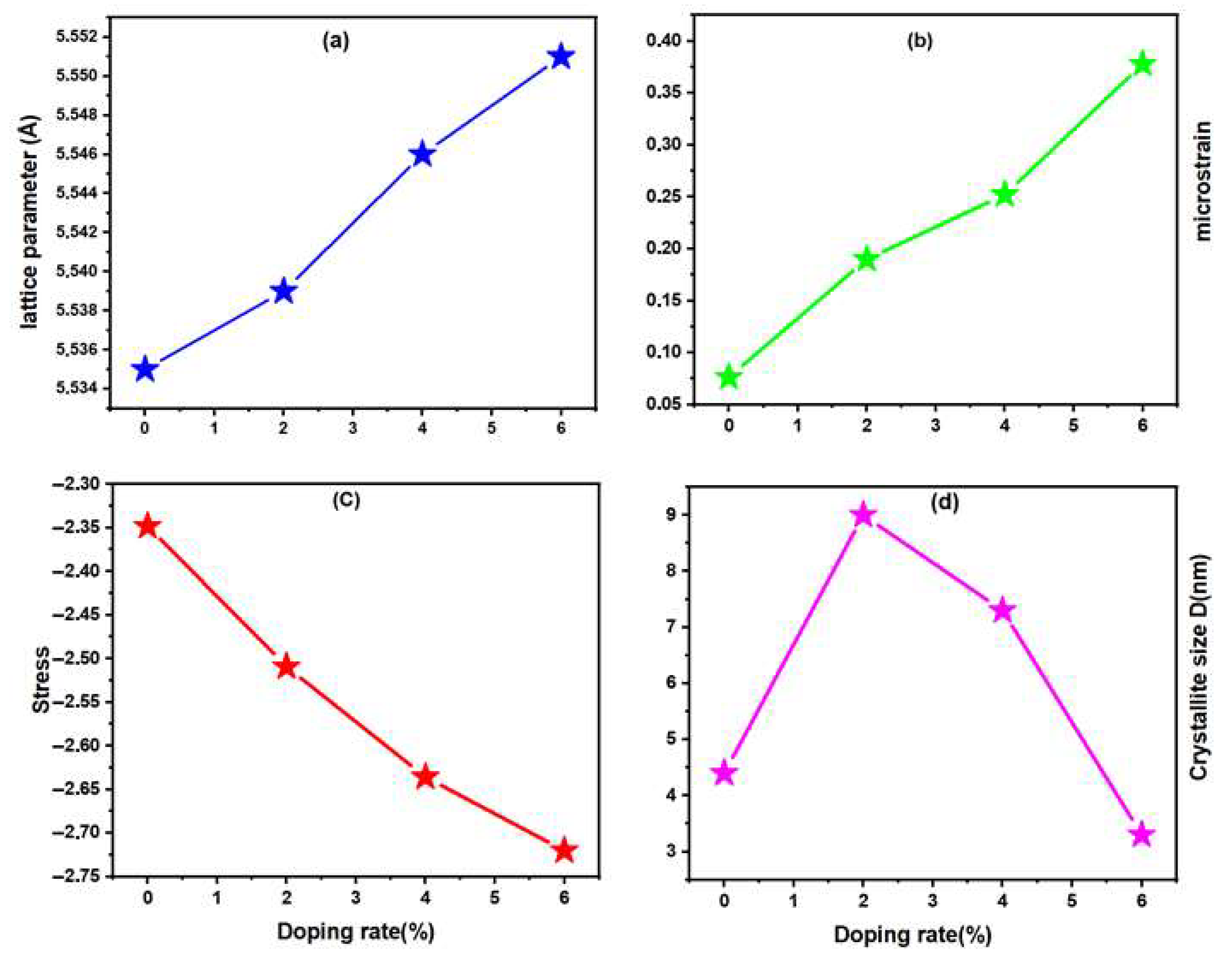
Figure 2 presents the evolution of structural parameters in undoped and Cd-doped ZnS thin films with varying cadmium concentrations (2%, 4%, and 6%). In Figure 2a, the lattice parameter is seen to increase progressively with Cd doping. This expansion is attributed to the substitution of Zn2+ ions (74 pm) by larger Cd2+ ions (95 pm), which leads to a slight expansion of the crystal lattice. This trend confirms the effective incorporation of Cd2+ into the ZnS crystal structure [20,21]. As shown in Figure 2b, microstrain increases with Cd concentration, indicating a growing distortion in the lattice. This also suggests that the doping process is uniform and well-controlled within the films. In Figure 2c, a decrease in internal stress is observed as the Cd content increases. This reduction may be related to a relaxation of internal lattice constraints, contributing to improved structural stability. Lastly, Figure 2d shows that crystallite size slightly increases up to 4% Cd, followed by a decrease at 6%. This drop is likely due to local lattice distortions that limit grain growth. Overall, these structural variations are expected to influence the optical and electrical properties of the films, which is critical for their application in optoelectronic and photovoltaic devices [22,23].
The lattice parameter was determined utilizing the following equation [1]:
1 d h k l 2 = h 2 + k 2 + l 2 a 2
The crystallite size (D) was determined using the Scherrer formula [24]:
D = 0.9 λ β c o s θ
The residual stress is calculated via the next equation [25]:
ε x x = a 0 a a × 100
The lattice strain (ϵ) is determined using the following formula [26]:
ε = β h k l cos θ h k l 4

3.2. Morphological Characterization

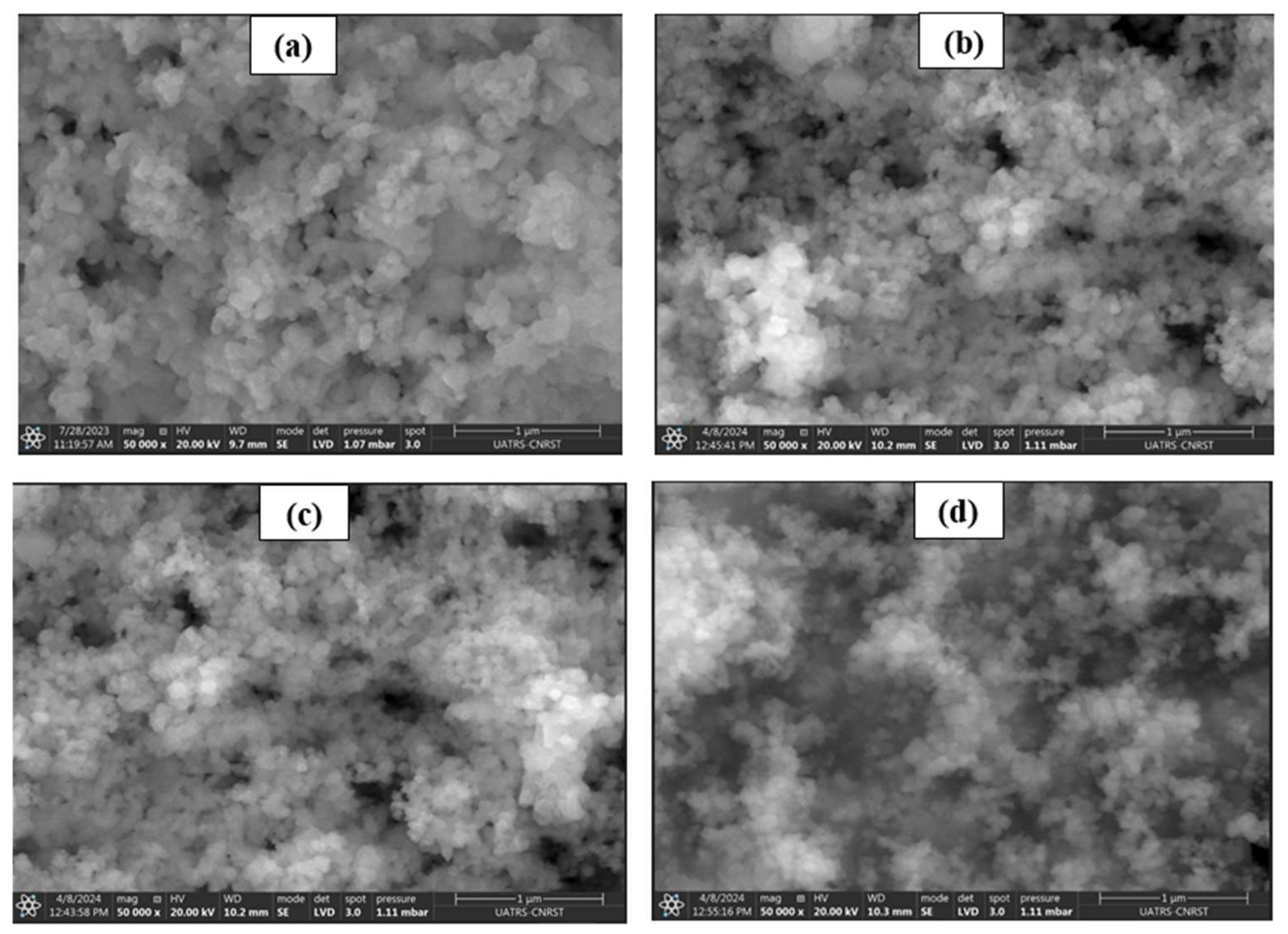
The SEM images presented in Figure 3 illustrate the morphological evolution of ZnS thin films as a function of Cd doping concentration. The undoped film (Figure 3a) shows a relatively granular surface with moderately sized grains. Upon introducing 2% Cd (Figure 3b), the grains appear more uniform and better coalesced, indicating improved film growth. At 4% Cd (Figure 3c), the grain distribution becomes more homogeneous, suggesting enhanced crystallinity. However, when the Cd content reaches 6% (Figure 3d), a slight reduction in grain size is observed, along with a more compact and denser film structure. These changes can be attributed to the incorporation of Cd2+ ions into the ZnS lattice, which alters the nucleation and growth dynamics during film formation [27].
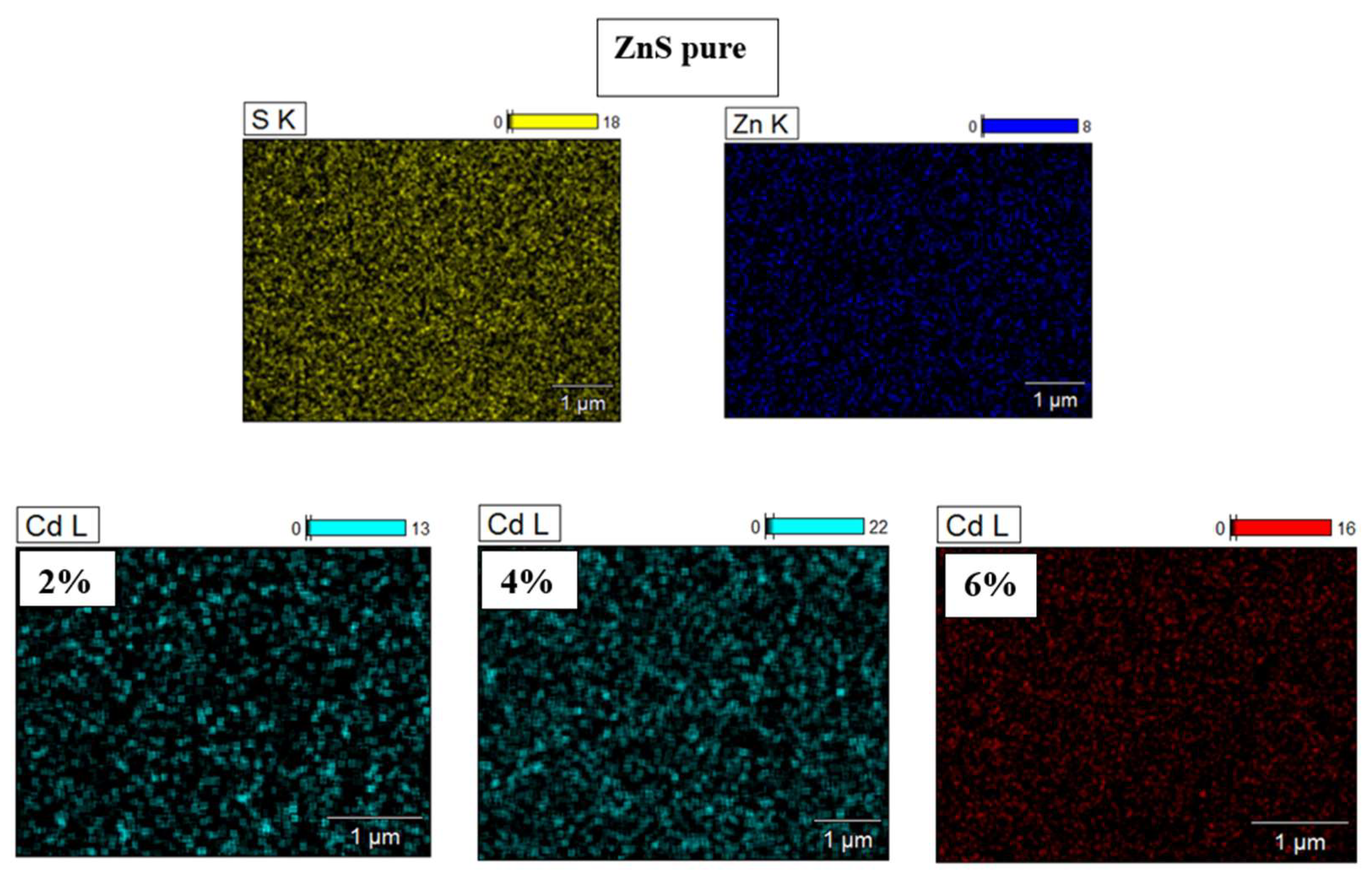
Elemental mapping by EDS (Figure 4) confirms the uniform distribution of Zn and S in the undoped sample, while Cd is homogeneously dispersed throughout the doped films, regardless of the concentration. This homogeneous distribution suggests efficient integration of Cd within the ZnS matrix, which is essential for achieving high-quality films.
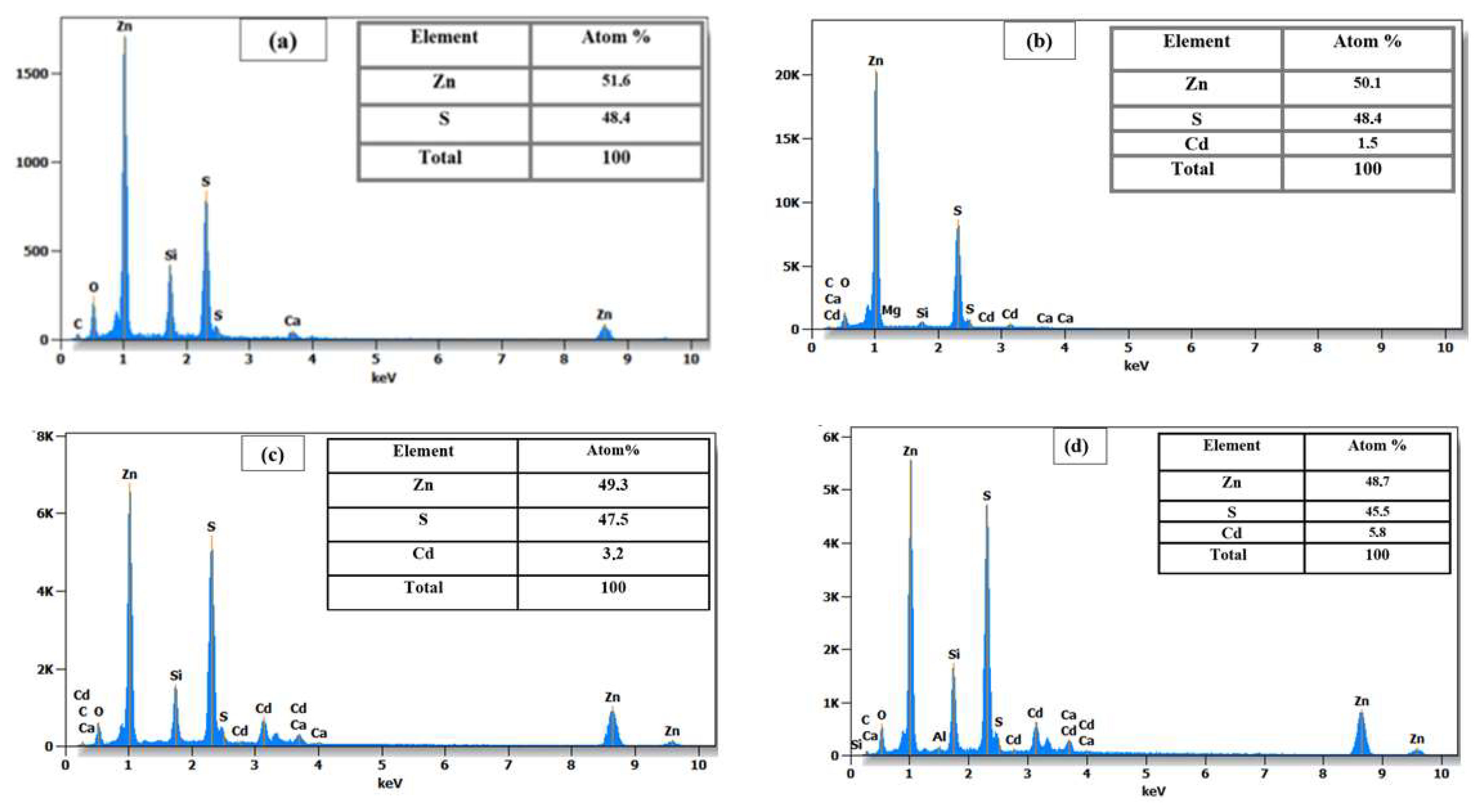
The EDS spectra and corresponding elemental compositions (Figure 5) provide further evidence of successful Cd incorporation. The atomic percentage of Cd increases from 1.5% to 5.8% as the doping level rises, while the Zn and S contents slightly decrease. This trend indicates that Cd likely substitutes Zn in the crystal lattice via cationic substitution. Such substitution may introduce local lattice distortions, potentially affecting the structural parameters observed in XRD analyses. These morphological and compositional modifications are expected to influence the functional properties of the films, particularly their optical absorption and charge carrier transport behavior, which will be discussed in the following sections.

3.3. Optical Properties

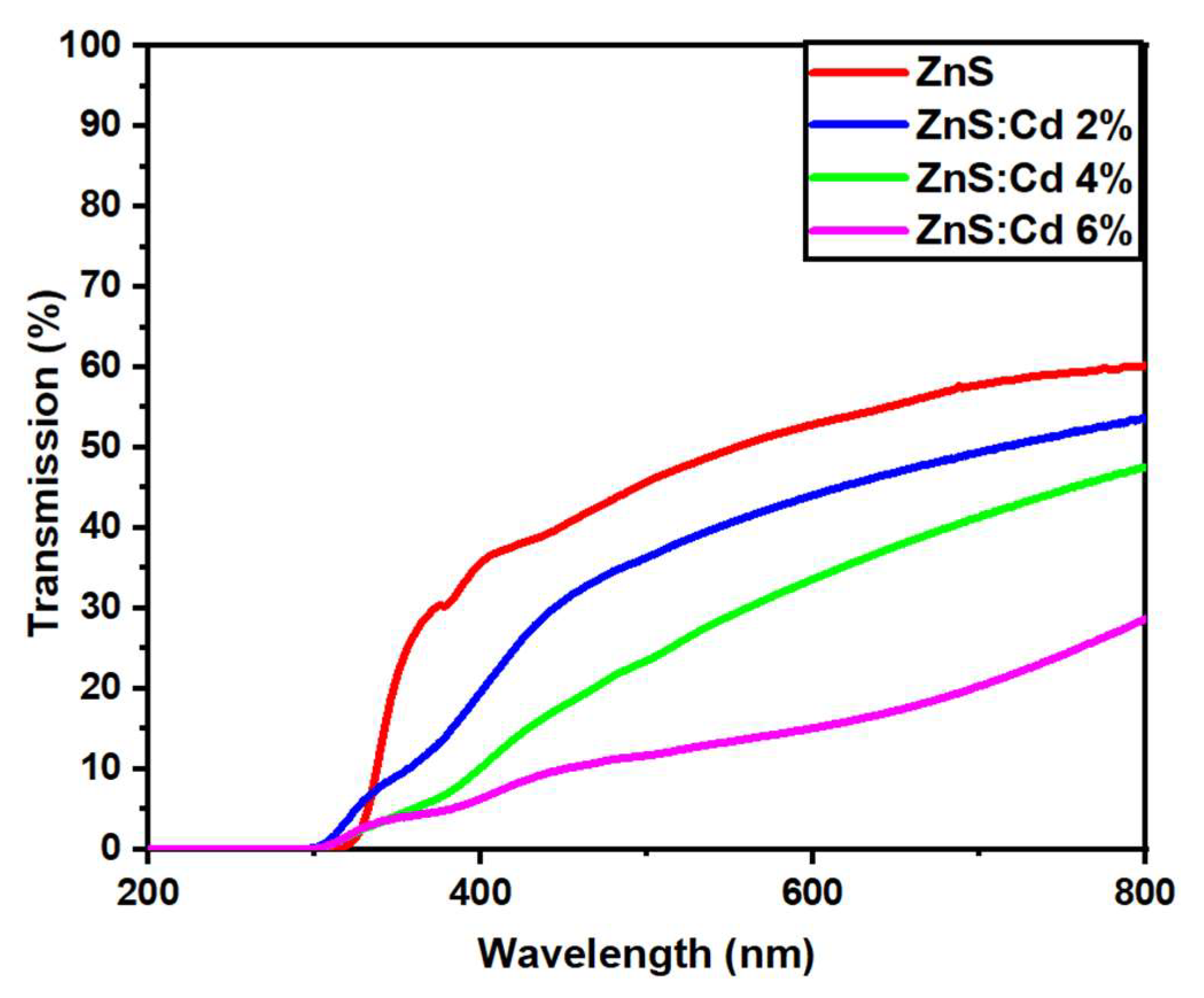
Figure 6 shows the transmittance spectra of ZnS thin films doped with various concentrations of Cd. The undoped ZnS sample exhibits the highest transmittance, reaching around 55% in the visible range. As Cd content increases, a significant reduction in transmittance is observed, particularly for the 6% Cd-doped film, which displays a value below 35%. This decrease may be attributed to increased light scattering and defect-related absorption caused by Cd incorporation, which can introduce localized states in the band structure and enhance photon absorption [28].
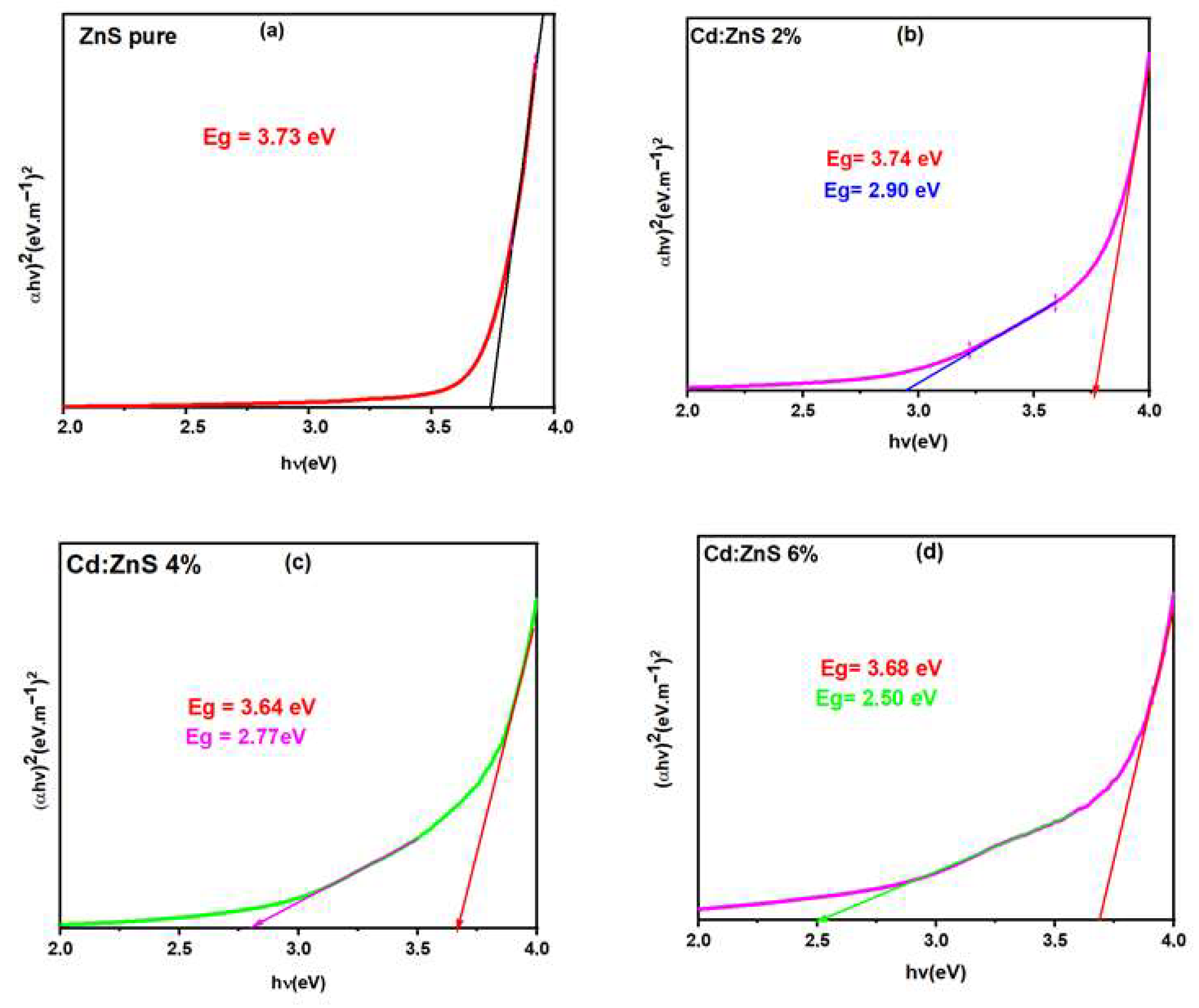
The corresponding optical band gaps were determined using Tauc plots (Equation (5)) [29], as shown in Figure 7. Pure ZnS exhibits a direct band gap of 3.73 eV, which is consistent with previously reported values for ZnS films prepared by chemical methods [30,31]. Upon doping with Cd, two distinct transitions appear: one in the UV range (around 3.6–3.7 eV) and another lower energy transition (2.90 eV for 2% Cd, 2.77 eV for 4% Cd, and 2.50 eV for 6% Cd). The emergence of this second transition is attributed to the formation of impurity energy levels within the band gap due to Cd2+ ions.
Cd2+ has a larger ionic radius (0.95 Å) compared to Zn2+ (0.74 Å), and its substitution introduces local strain and modifies the electronic potential landscape within the ZnS lattice. This can result in band tailing or the appearance of intermediate energy levels, which facilitate electronic transitions at lower energies [32,33]. Such defect or impurity states effectively reduce the optical band gap, particularly evident at higher doping levels.
Moreover, the continuous redshift of the absorption edge and the narrowing of the band gap with increasing Cd content are indicative of band structure modifications. Similar observations have been reported by Sharma et al. [34] and Hassanien et al. [35], where Cd-doping in ZnS films was shown to cause partial delocalization of the conduction band states, thereby reducing the energy gap. These trends are also consistent with the Burstein-Moss effect being ruled out, since we observe a decrease in Eg instead of an increase.
In contrast to transition metal (TM) dopants like Co or Ni, which tend to introduce deep-level intra-gap states associated with their partially filled 3d orbitals [36], Cd acts more as a band-edge modifier due to its closed-shell configuration (4d10). This explains why Cd doping causes a smoother and more systematic reduction in the band gap, rather than strong defect-related absorption as seen in Co or Ni-doped samples.
α h ν 2 = A h ν E g
In summary, the observed reduction in the optical band gap with increasing Cd concentration is a result of both lattice distortion and the formation of localized states, facilitating lower-energy optical transitions. These modifications can be beneficial for photovoltaic and optoelectronic applications where enhanced visible light absorption is desired.
The selection of the Cd doping range (0–6%) was guided by the specific requirements of buffer layers in thin-film solar cells, namely a tunable wide band gap, sufficient optical transparency, and electrical properties favorable for charge transport at the absorber/buffer interface. While undoped ZnS exhibits high transparency and a wide band gap (~3.7 eV), its low electrical conductivity may limit efficient carrier extraction. Progressive Cd incorporation leads to controlled band-gap narrowing and enhanced electrical properties. For intermediate Cd contents (2–4%), these improvements remain moderate, whereas at 6% Cd a significant band-gap reduction to ~2.5 eV is achieved, accompanied by a marked increase in carrier concentration (~1018 cm−3) and conductivity (~182 S/cm). These values become comparable to those of widely used buffer layers such as CdS, Zn(O,S), and ZnSe, while maintaining an acceptable optical transmittance (~35%). Although Cd doping results in reduced transparency, this trade-off is acceptable from a device-integration perspective, since buffer layers in practical solar cells are typically deposited with very small thicknesses (50–100 nm), thereby minimizing optical losses while benefiting from improved band alignment and reduced interfacial recombination.
After analyzing the structural and optical properties of the Cd-doped ZnS films, the sample with 6% Cd stood out due to noticeable improvements in morphology and a significant reduction in band gap energy (down to 2.50 eV). These results suggest that this doping level may also have an effect on the electrical behavior of the material. For that reason, electrical measurements were carried out specifically on this sample to see how Cd incorporation at this concentration influences parameters like resistivity and carrier transport.

3.4. Electrical Properties

The electrical properties of ZnS thin films were evaluated for both undoped and 6% Cd-doped samples, using Hall effect measurements under standard conditions (room temperature, fixed film thickness of 0.7 µm). The results, summarized in Table 1, show a clear improvement in conductivity upon Cd incorporation. Specifically, the resistivity decreased from 8.899 × 10⁻³ Ω·cm for the pure ZnS film to 5.486 × 10⁻³ Ω·cm at 6% Cd, while the conductivity increased from 112.37 to 182 S/cm. These changes are associated with a significant rise in carrier concentration, from 1.23 × 1017 cm−3 to 1.14 × 1018 cm−3, confirming the n-type character of the films. This increase in free carriers is likely due to the substitution of Zn2+ by Cd2+, which induces defect states or shallow donor levels that act as additional electron sources. Moreover, a noticeable enhancement in carrier mobility was recorded, rising from 803.85 cm2/V·s to 994.96 cm2/V·s after doping. This trend could be linked to a better crystallinity or reduced defect scattering, which is consistent with the improved morphology observed in the structural analysis of the same sample.
A broader comparison with other doped ZnS systems (Table 2) suggests that Cd doping at 6% yields competitive electrical behavior. While Al-doped ZnS shows higher values of mobility and conductivity, its synthesis often requires more sophisticated methods like sol–gel. In contrast, the SILAR-deposited Cd-doped films provide a simpler and more accessible route with relatively good performance. Compared to Ni-doped films, ZnS:Cd (6%) shows slightly lower mobility but much higher carrier concentration, which could be advantageous depending on the targeted application (e.g., buffer layers or window materials in solar cells). Overall, Cd doping appears to be an effective strategy for enhancing the electrical properties of ZnS thin films, offering a good balance between carrier density, mobility, and fabrication simplicity.

3.5. Energy Band Alignment and Buffer-Layer Relevance

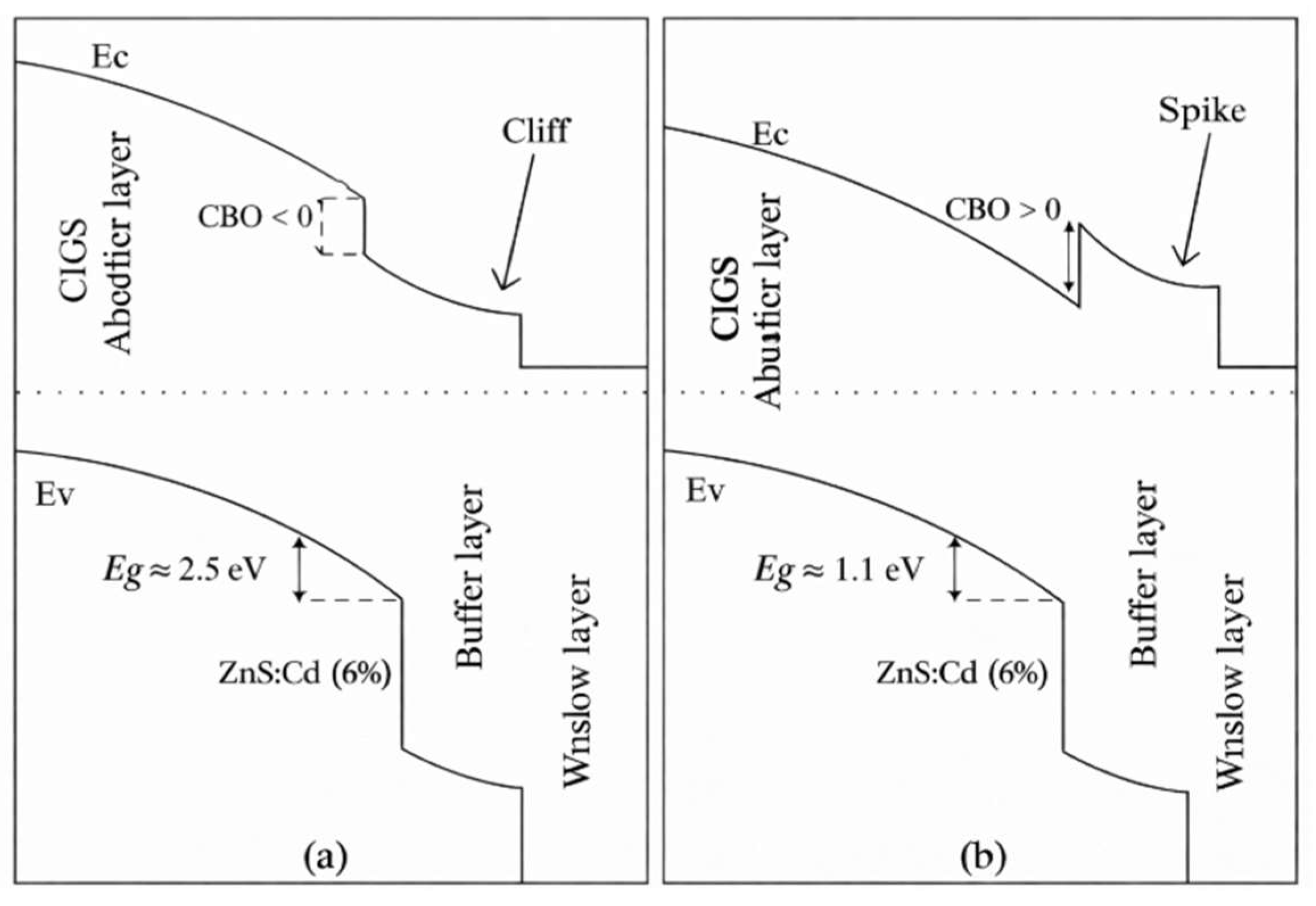
To further assess the suitability of ZnS:Cd (6%) as a buffer layer for CIGS-based solar cells, the energy band alignment at the absorber/buffer interface is discussed. Figure 8 illustrates two possible energy band alignment scenarios at the CIGS/ZnS:Cd (6%) interface. In the case of a cliff-type alignment (CBO < 0), the conduction band minimum of ZnS:Cd lies below that of CIGS, which promotes interfacial charge recombination and can lead to degraded photovoltaic performance. In contrast, the spike-type alignment (CBO > 0) corresponds to a small positive conduction-band offset, where the conduction band of ZnS:Cd is slightly higher than that of CIGS. This small energy barrier suppresses interfacial recombination while still allowing efficient electron transport. Such a spike-type alignment is generally considered optimal for high-performance CIGS solar cells. Considering the reduced optical band gap of ZnS:Cd (6%) (~2.5 eV) and its improved electrical properties, this material is likely to form a favorable spike-type band alignment with the CIGS absorber, confirming its strong potential as a buffer layer for thin-film photovoltaic applications.

3.6. Theoretical and Computational Results

3.6.1. Simulation Details

To complement the experimental results and clarify the microscopic origin of the observed properties, a density-functional theory (DFT) study was carried out for pure ZnS and ZnS doped with Cd (6%). Calculations used the full-potential linearized augmented plane wave (FP-LAPW) method in the WIEN2k code, which provides accurate descriptions of electronic and optical properties in semiconductors.
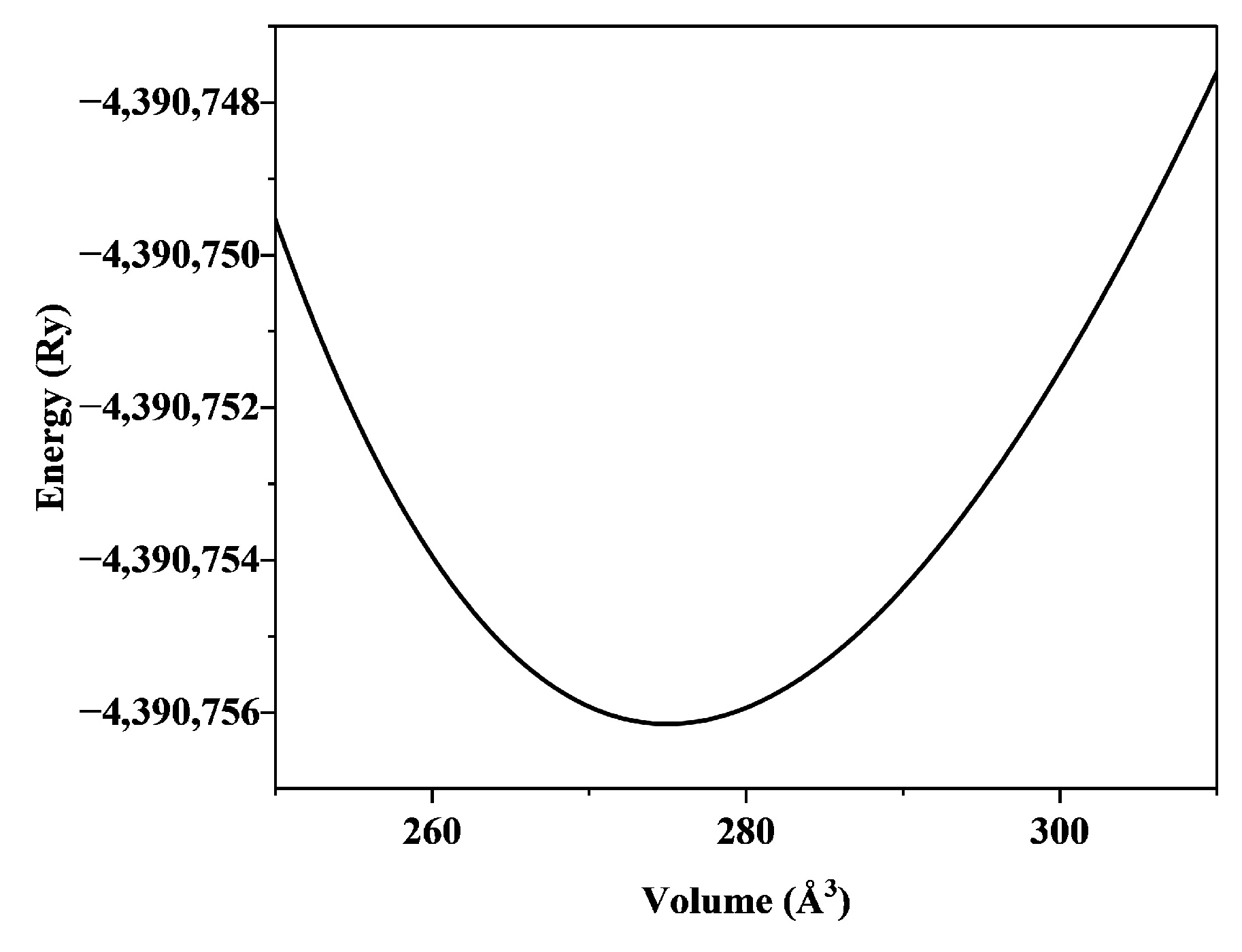
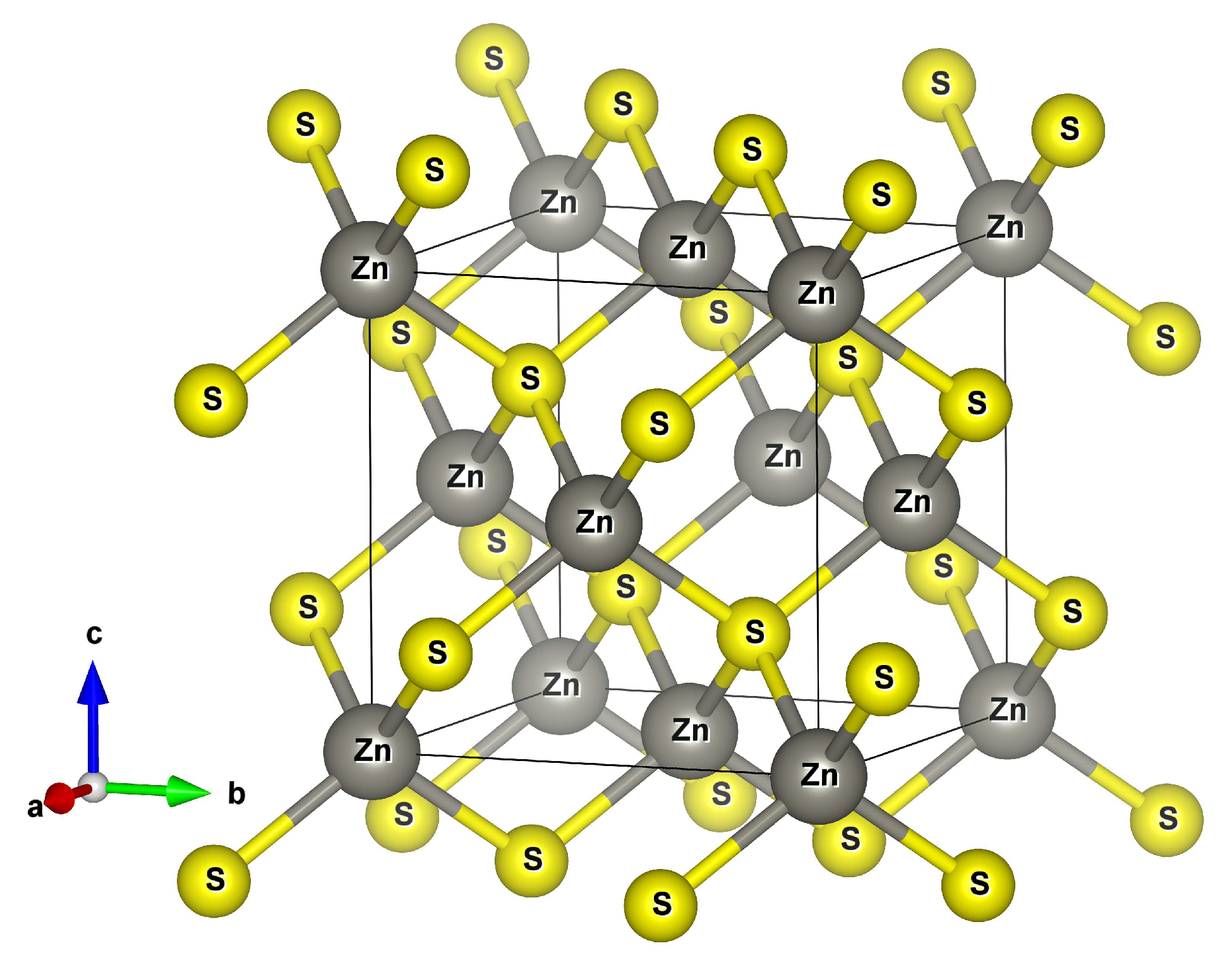
First, we treated undoped ZnS, which crystallizes in the cubic zinc-blende structure (space group F-43m, No. 216). The atomic geometry was optimized within the generalized-gradient approximation (GGA-PBE) to reach the minimum-energy configuration. The total-energy versus volume curve was fitted with the Murnaghan equation of state to extract the equilibrium lattice constant (a), the unit-cell volume, and the bulk modulus (B), summarized in Table 3. The calculated lattice parameter (a = 5.4626 Å) agrees well with the experimental value (a⁎ = 5.3764 Å), supporting the reliability of the computational setup. To improve the band-gap estimate, we applied the modified Becke–Johnson (mBJ) exchange potential to the electronic and optical calculations. Convergence was ensured with RMT × Kmax = 8, an energy cutoff Ecutoff = −6 Ry, and a 10 × 10 × 10 Monkhorst–Pack k-point mesh. Structural results are shown in Figure 9 (conventional ZnS cell) and Figure 10 (optimized energy–volume curve), and the numerical values are listed in Table 3.
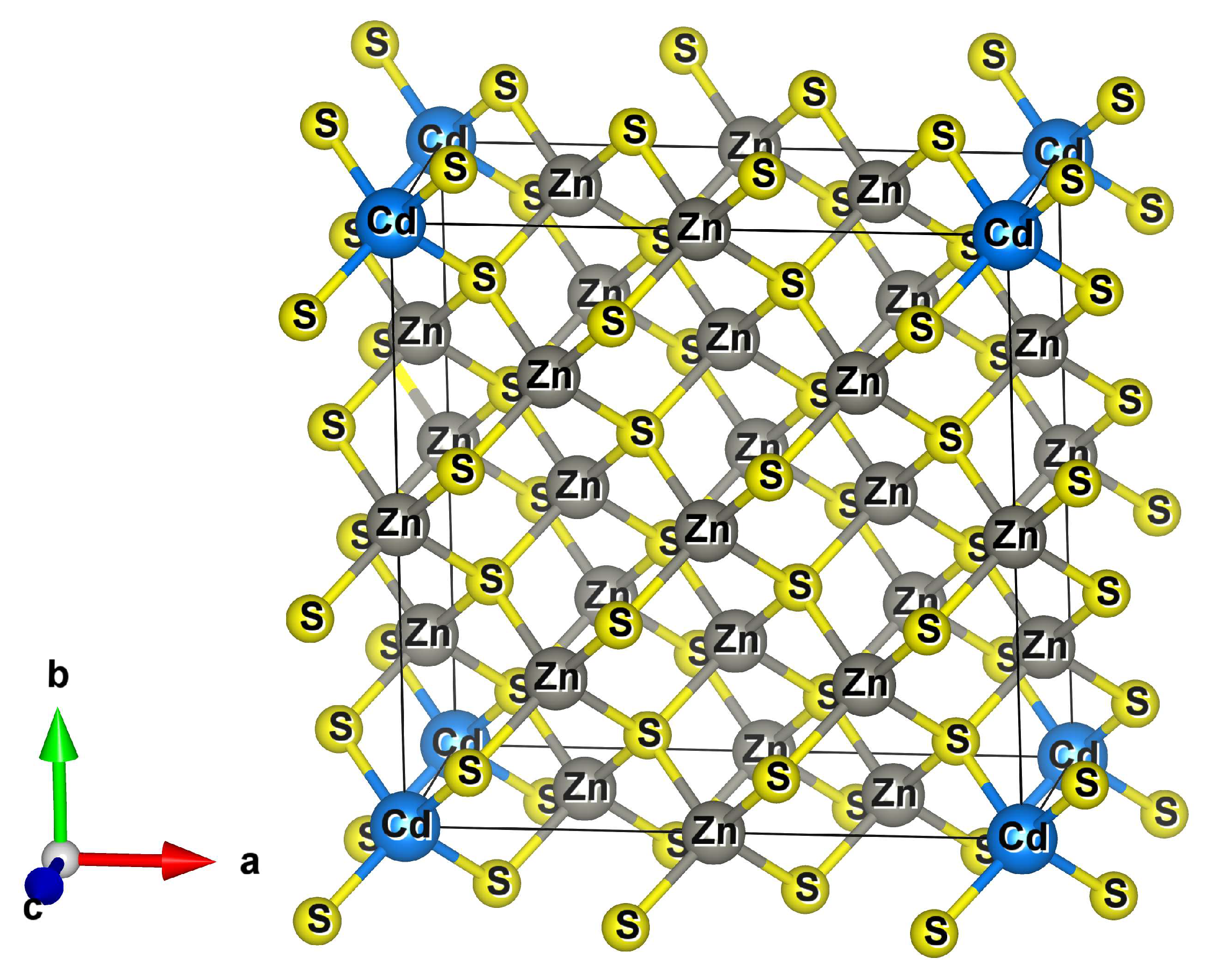
Next, a 2 × 2 × 1 supercell of ZnS was built to model the incorporation of Cd2+ ions (Figure 11), corresponding to about 6% doping and consistent with the experimental optimum. We kept the same base settings, with Ecutoff = −6 Ry and a k-point sampling of comparable density (≈300 k-points) to secure convergence of total energies and densities of states. This configuration allowed a detailed analysis of the Cd impact on the electronic structure and the associated optical response, in direct agreement with the experimental trends.

3.6.2. Electronic Structure of Pure and Cd-Doped ZnS (6%)

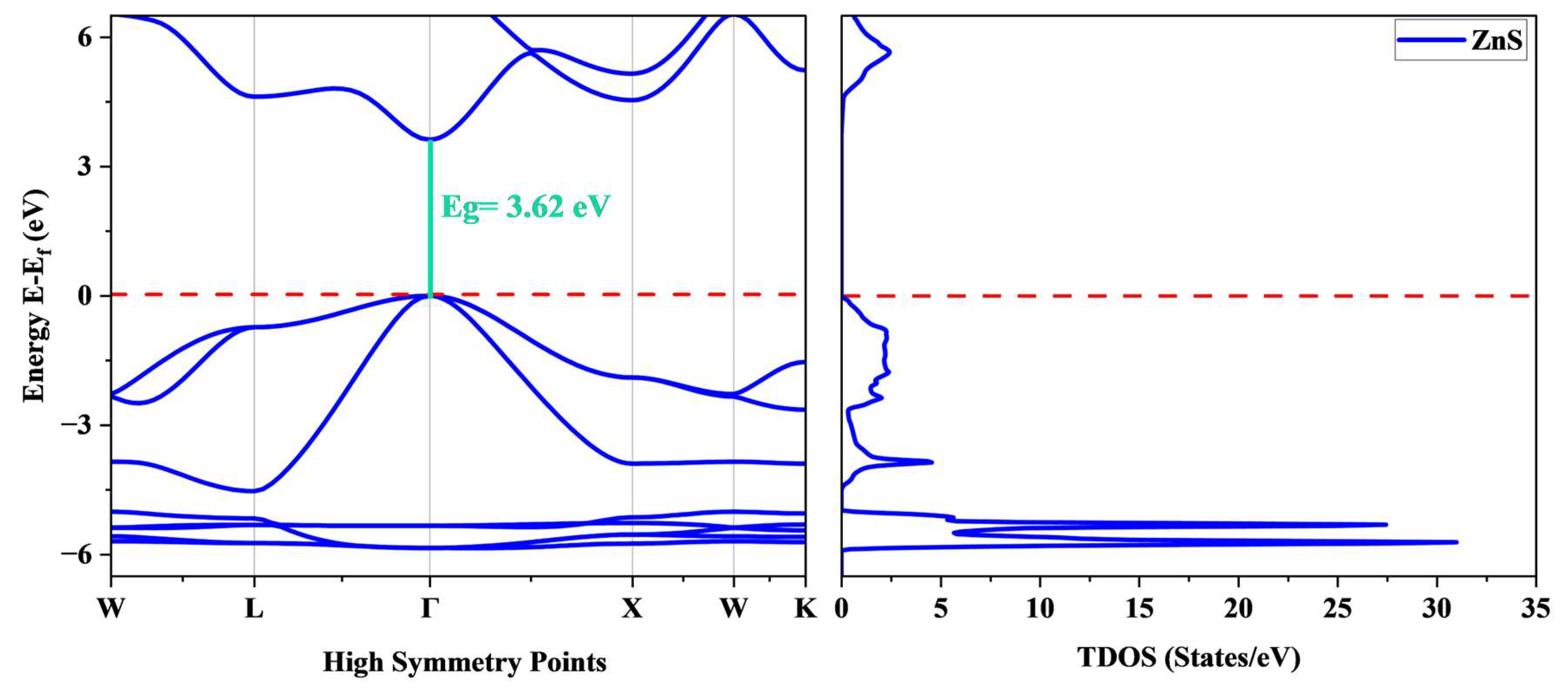
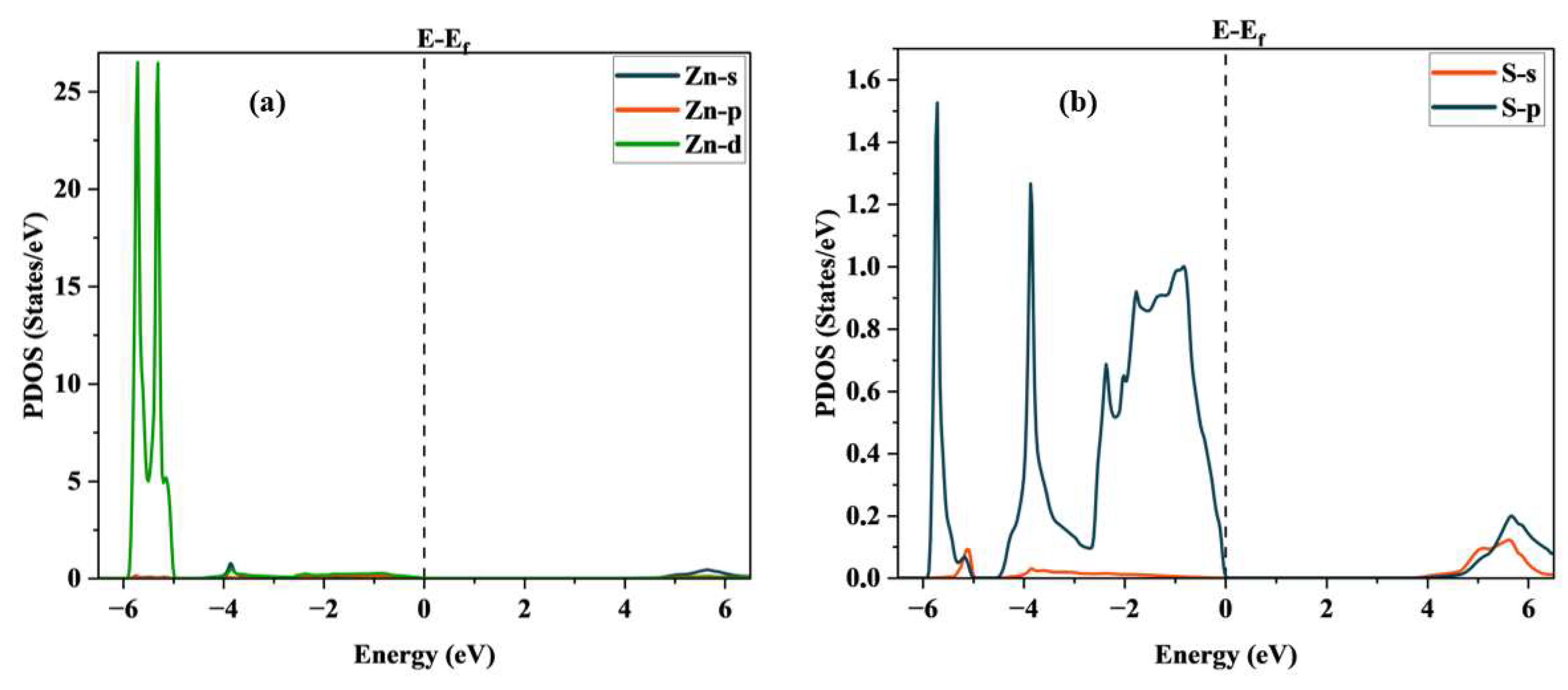
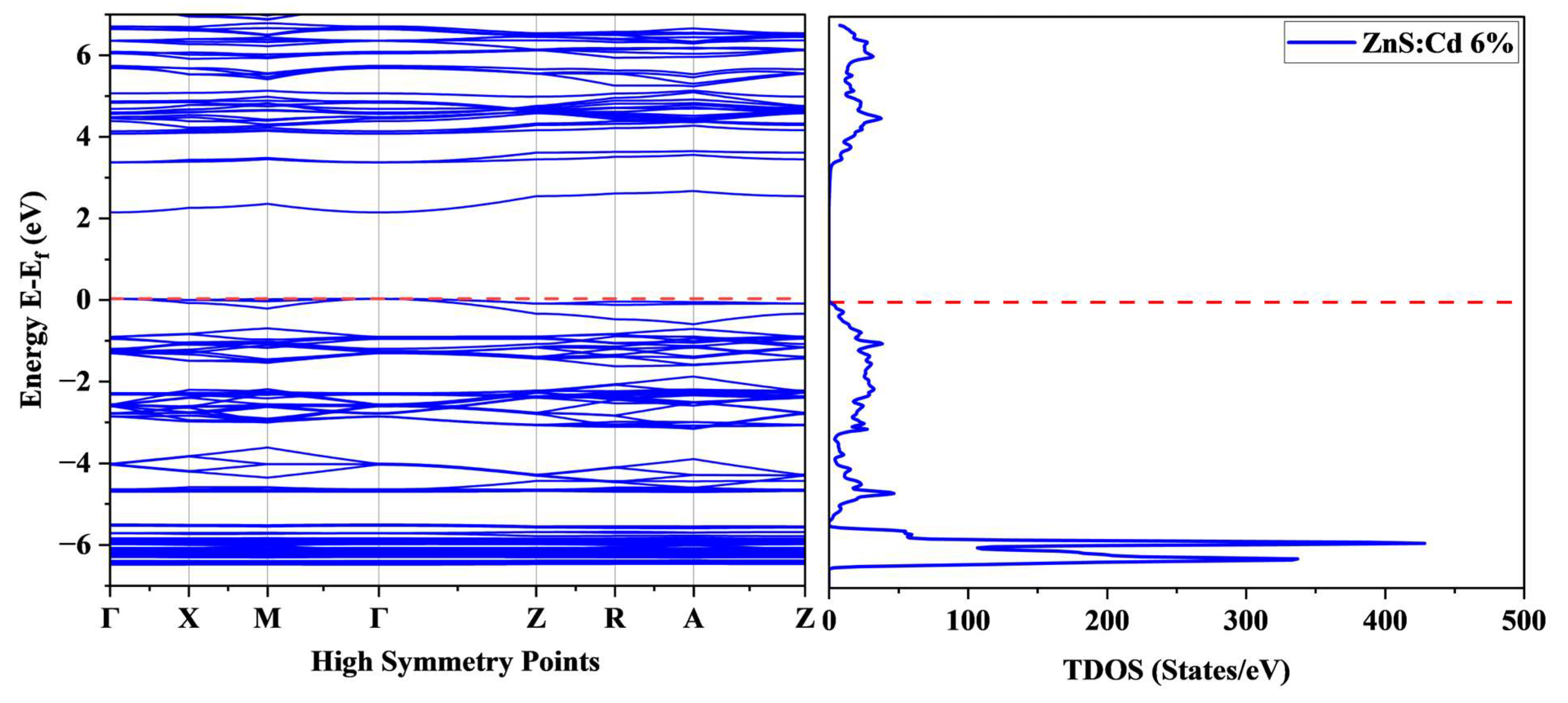
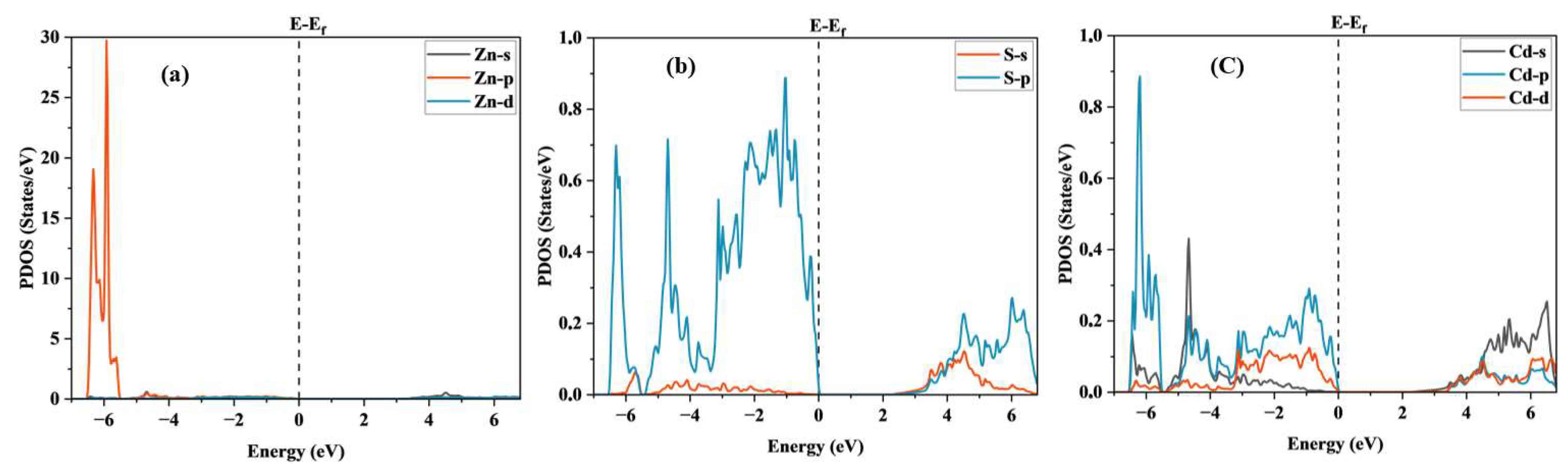
The total and partial density of states (DOS/PDOS) and the calculated band structures of pure ZnS and Cd-doped ZnS (6%) are shown in Figure 12, Figure 13, Figure 14 and Figure 15.
For undoped ZnS (Figure 12 and Figure 13), the total DOS shows a well-organized distribution, typical of a crystalline semiconductor. The valence band is mainly formed by S-3p orbitals, with a noticeable contribution from Zn-3d states located between −10 eV and −7 eV. These states strongly interact with the sulfur orbitals, indicating a Zn–S hybridization that provides good chemical stability to the structure. The conduction band is mainly dominated by Zn-4s states with a small contribution from S-3p, confirming the direct band gap at the Γ point, which is characteristic of the cubic zinc-blende structure of ZnS [32]. The band gap calculated using the mBJ potential is 3.62 eV, which agrees well with the experimental value of 3.73 eV obtained from UV–Vis spectroscopy (Table 4). This close agreement confirms the reliability of the DFT approach for describing pure ZnS.
For Cd-doped ZnS (6%) (Figure 14 and Figure 15), the DOS profile shows clear modifications compared to the pure sample. New electronic states appear close to the Fermi level, mainly near the top of the valence band. These additional states result from the hybridization between Cd-4d and S-3p orbitals, which increases the electronic density near the valence-band edge and leads to the formation of impurity energy levels responsible for the band-gap reduction. Experimentally, this effect is confirmed by the redshift of the absorption edge and the decrease in the optical band gap to about 2.50 eV at 6% Cd (Table 4, [38]).
At the microscopic level, these impurity levels are caused by the substitution of Zn2+ (0.74 Å) by larger Cd2+ (0.95 Å) ions, which slightly expand the lattice and modify the local crystal potential. This change favors the formation of shallow localized states that allow electronic transitions at lower photon energies. Similar results were reported by Hassanien and Akl [35] and Sharma et al. [34], who found that Cd doping in ZnS or ZnSe creates impurity levels that reduce the band gap and improve light absorption in the visible range.
In summary, both theoretical and experimental results show a strong agreement: the incorporation of Cd2+ ions changes the electronic distribution in ZnS by creating impurity states close to the valence band, which explains the observed reduction in the band gap. The cubic structure and direct transition nature of ZnS remain preserved, confirming that Cd doping does not alter the overall stability of the material.

3.6.3. Optical Properties of Pure and Cd-Doped ZnS (6%)

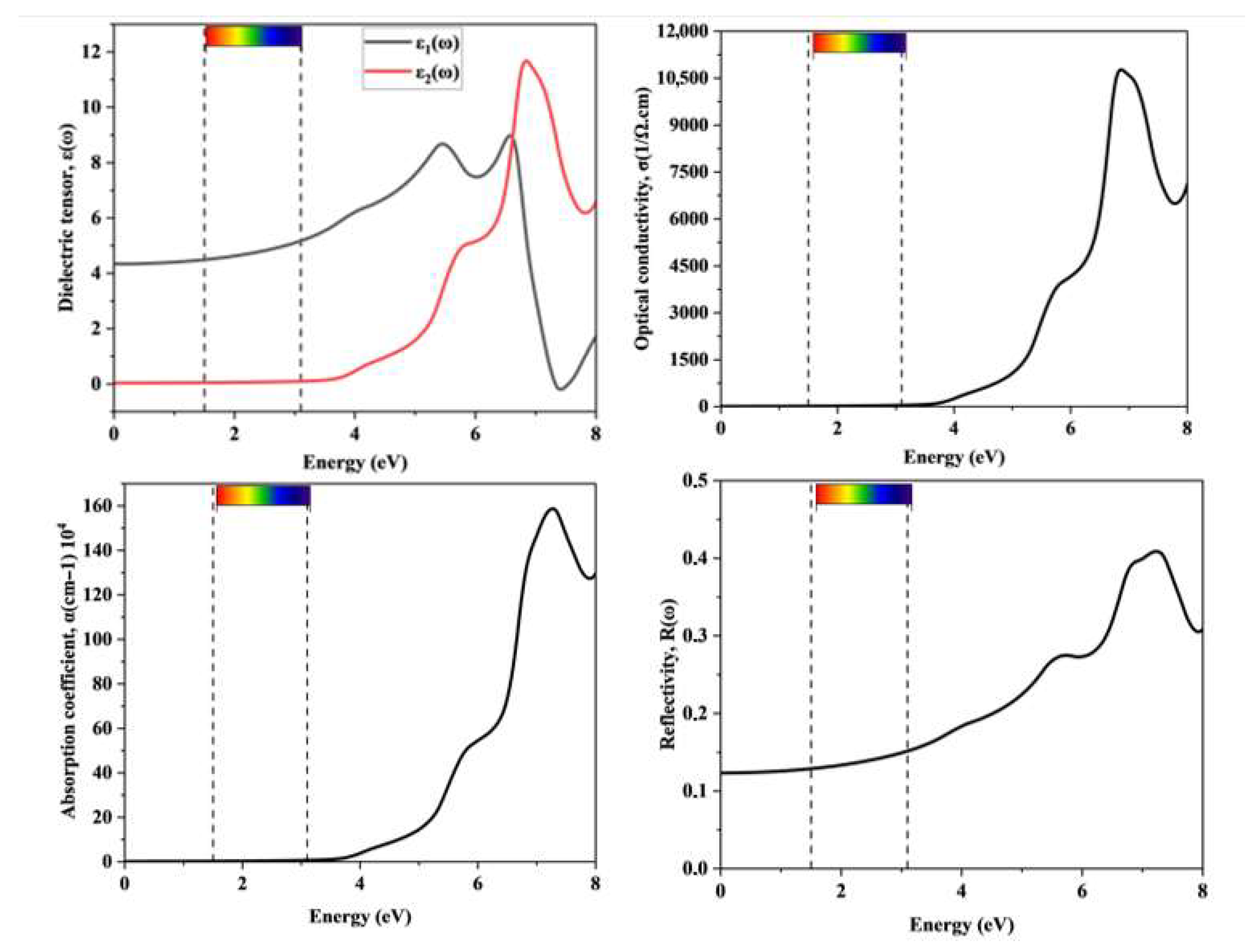
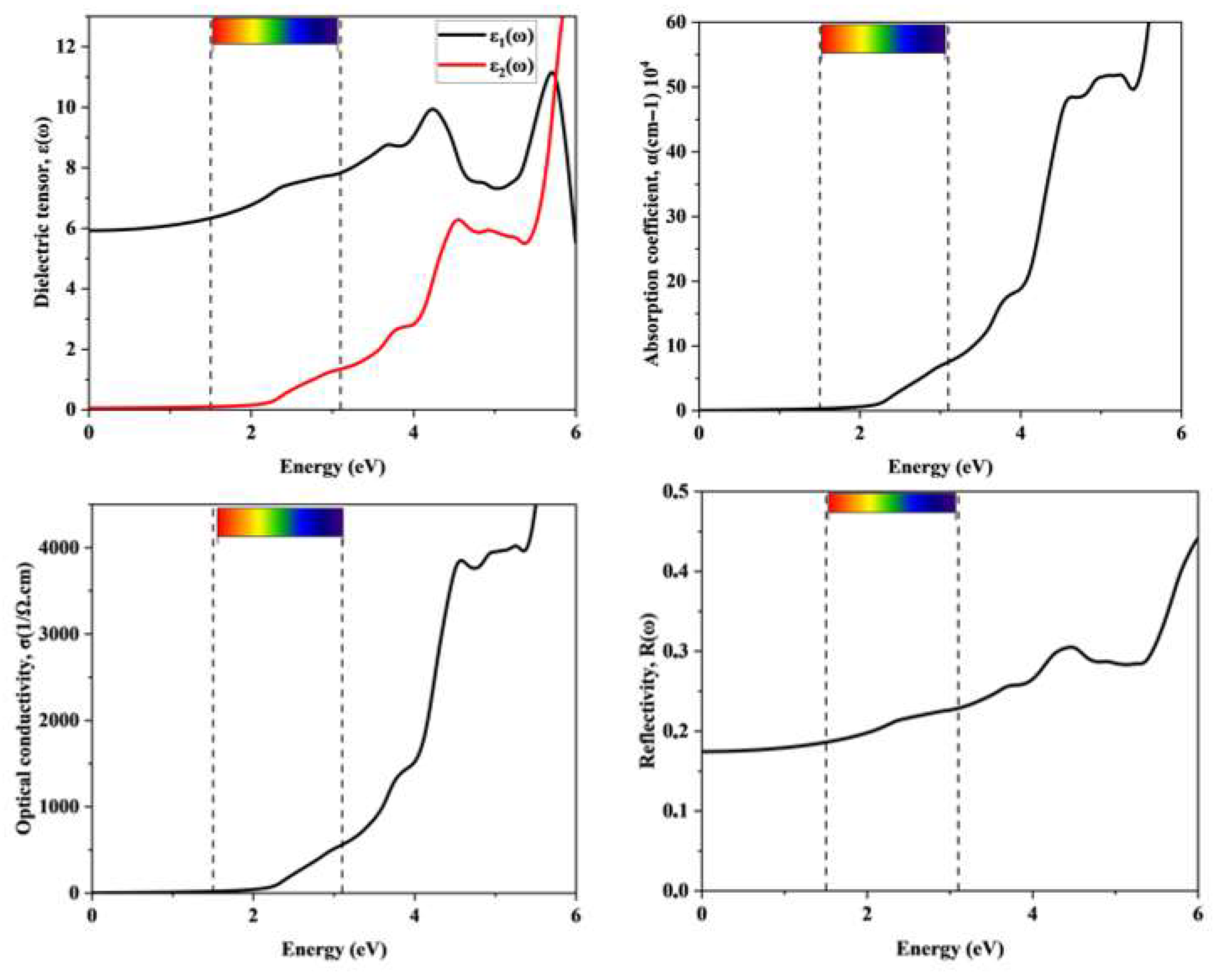
The calculated optical functions of pure ZnS and Cd-doped ZnS (6%), the complex dielectric function ε(ω), the absorption coefficient α(ω), the optical conductivity σ(ω), and the reflectivity R(ω) are shown in Figure 16 and Figure 17 (mBJ potential).
Pure ZnS (Figure 16). The real part ε1(ω) is positive in the visible range and turns negative in the deep-UV, marking the transition from transparent to metallic optical response. The main peak of the imaginary part ε2(ω) occurs near ≈6.2 eV, assigned to direct S-3p → Zn-4s interband transitions, consistent with a zinc-blende semiconductor. The absorption coefficient α(ω) rises sharply from ≈3.6 eV, matching the calculated band gap (Eg = 3.62 eV) and reaching a maximum around ≈6.5 eV. The optical conductivity σ(ω) follows the same onset, increasing strongly above the gap. The reflectivity R(ω) remains low in the visible (typically <20%), indicating good transparency favorable for buffer-layer applications.
ZnS:Cd (6%) (Figure 17). All optical functions shift to lower photon energies, in line with the gap reduction seen in DOS/PDOS. The main ε2(ω) peak moves to ≈5.4 eV, evidencing a redshift of the dominant interband transition. The absorption edge in α(ω) starts near ≈2.5 eV (vs. ≈3.6 eV for pure ZnS), demonstrating the extended absorption into the visible range. The optical conductivity σ(ω) shows an earlier onset and a peak shifted to lower energy, reflecting easier excitation of carriers. The reflectivity R(ω) increases slightly in the visible but stays moderate (generally <25%), preserving acceptable transparency.
Comparison with experiment. The DFT trends agree with the measurements in Figure 6 and Figure 7: the absorption edge shifts to lower energies and the optical band gap decreases from ≈3.74 eV (undoped) to ≈2.50 eV at 6% Cd. This is consistent with the calculated mBJ values (3.62 eV → 2.47 eV, Table 4). The agreement supports the reliability of the mBJ-based description for both compositions.
The redshift in ε2(ω) and the earlier onsets of α(ω) and σ(ω) arise from impurity-related electronic states created by Cd incorporation. Hybridization between Cd-4d and S-3p states produces shallow levels near the valence band, enabling interband transitions at lower photon energies and enhancing visible-range absorption, as also reported for Cd-modified II–VI systems in the literature [34,35].

4. Conclusions

This study demonstrates that controlled Cd incorporation in ZnS via SILAR preserves the zinc-blende phase while slightly expanding the lattice and modulating microstrain, as indicated by the (111) peak shift and derived structural parameters. Optically, Cd doping introduces impurity-related states that drive a redshift of the absorption edge and reduce the direct band gap to ~2.50 eV at 6% Cd, extending absorption toward the visible. DFT using mBJ reproduces this reduction (3.62 → 2.47 eV) and attributes it to Cd-4d/S-3p hybridization near the band edges. Electrically, 6% Cd enhances n-type transport by simultaneously lowering resistivity and raising mobility and carrier density, consistent with the improved morphology observed. Taken together, the structural integrity, broadened optical response, and better carrier transport position ZnS:Cd—particularly at 6%—as a credible buffer-layer option for thin-film solar cells. Future efforts should integrate these films into complete devices and explore thermal treatments/parameter windows to fine-tune transparency–conductivity trade-offs.

Author Contributions

The authors confirm contribution to the paper as follows: Study conception and experimental preparations: A.Y.; Data collection: A.Y., M.E.B., Y.N., H.E.F., A.E.-H., M.F., A.F., A.R. and K.N.; Analysis and interpretation of results: A.Y., I.L., A.E.-H., K.O., M.S. and S.A.; Manuscript write out: A.Y., A.E.-H. and L.A. All authors have read and agreed to the published version of the manuscript.

Funding

This research received no external funding.

Data Availability Statement

The original contributions presented in this study are included in the article. Further inquiries can be directed to the corresponding authors.

Acknowledgments

The authors would like to thank the National Centre for Scientific and Technical Research of Morocco (CNRST) for providing technical facilities for characterization. Generative-AI disclosure: ChatGPT (OpenAI, GPT-5) was used to improve sentence flow, grammar, and spelling; all scientific content, analyses, and conclusions are the authors’ own.

Conflicts of Interest

The authors declare no conflicts of interest.

References

  1. Yousfi, A.; El Farri, H.; Fahoume, M. Adsorption and reaction time effects on the properties of ZnS films grown by SILAR: An experimental study and DFT calculation. Opt. Quantum Electron. 2024, 57, 70. [Google Scholar] [CrossRef]
  2. El Farri, H.; Yousfi, A.; Fahoume, M.; El Gana, L.; Znaidi, L. An experimental investigation of deposition of ZnS materials on glass substrate with SILAR. Int. J. Nanosci. Nanotechnol. 2023, 19, 3. [Google Scholar]
  3. Laghchim, E.; Raidou, A.; Fahmi, A.; Fahoume, M. The effect of ZnS buffer layer on Cu2SnS3 thin film solar cells performance: Numerical approach. Micro Nanostruct. 2022, 165, 207198. [Google Scholar] [CrossRef]
  4. Kumar, K.C.; Kaleemulla, S. Effect of Ni incorporation on structural, optical and magnetic properties of electron beam evaporated ZnS thin films. J. Phys. Chem. Solids 2019, 135, 109028. [Google Scholar] [CrossRef]
  5. Ennaoui, A.; Eisele, W.; Lux-Steiner, M.; Niesen, T.P.; Karg, F. Highly efficient Cu(Ga,In)(S,Se)2 thin film solar cells with zinc-compound buffer layers. Thin Solid Film. 2003, 431–432, 335–339. [Google Scholar] [CrossRef]
  6. Kaushalya; Patel, S.L.; Purohit, A.; Chander, S.; Dhaka, M.S. Thermal annealing evolution to physical properties of ZnS thin films as buffer layer for solar cell applications. Phys. E 2018, 101, 174–177. [Google Scholar] [CrossRef]
  7. Islam, M.M. CIGS solar cell with MBE-grown ZnS buffer layer. Sol. Energy Mater. Sol. Cells 2009, 93, 970–972. [Google Scholar] [CrossRef]
  8. Nagamani, K.; Revathi, N.; Prathap, P.; Lingappa, Y.; Reddy, K.T.R. Al-doped ZnS layers synthesized by solution growth method. Curr. Appl. Phys. 2012, 12, 380–384. [Google Scholar] [CrossRef]
  9. Zafar, S. Effect of Fe doping on the structural and optical properties of ZnS macrospheres. Optik 2022, 262, 169342. [Google Scholar] [CrossRef]
  10. Murugadoss, G. Luminescence properties of co-doped ZnS:Ni, Mn and ZnS:Cu, Cd nanoparticles. J. Lumin. 2012, 132, 2043–2048. [Google Scholar] [CrossRef]
  11. Mall, M.; Kumar, L. Optical studies of Cd2+ and Mn2+ co-doped ZnS nanocrystals. J. Lumin. 2010, 130, 660–665. [Google Scholar] [CrossRef]
  12. Kamble, P.V.; Ghule, A.V. Effect of Cd doping on the structural, morphological and optical properties of ZnS thin films. Mater. Today Proc. 2017, 4, 11633–11638. [Google Scholar]
  13. Charlesbabu, J.; Gopalakrishnan, K.; Elango, M.; Vasudevan, K. Preparation and Characterization of Cd-Doped ZnO Thin Films by Spin Coating Method. Inorg. Nano-Met. Chem. 2017, 47, 1298–1303. [Google Scholar] [CrossRef]
  14. Mosavi, S.M.; Kafashan, H. Physical Properties of Cd-Doped ZnS Thin Films. Superlattices Microstruct. 2019, 126, 139–149. [Google Scholar] [CrossRef]
  15. Heiba, Z.K.; Mohamed, M.B.; Badawi, A. Effect of preparation temperature on the structural, optical and electronic properties of co-doped ZnS nanostructures. Chem. Phys. Lett. 2021, 775, 138653. [Google Scholar] [CrossRef]
  16. Nasrin, R.; Khan, L.; Haq, M.O.; Mohiuddin, M.; Kabir, H. Surface topography, structural, optical and DC electrical behaviors of pristine and Co-doped ZnS thin films. Heliyon 2024, 10, e29337. [Google Scholar] [CrossRef]
  17. Ramasamy, V.; Praba, K.; Murugadoss, G. Synthesis and study of optical properties of transition metals doped ZnS nanoparticles. Spectrochim. Acta A 2012, 96, 963–971. [Google Scholar] [CrossRef]
  18. Molaei, M. Synthesis of ZnS:Ni nanocrystals using a thermochemical approach and investigation of photoluminescence properties. J. Lumin. 2013, 136, 38–41. [Google Scholar] [CrossRef]
  19. Poornaprakash, B.; Sambasivam, S.; Reddy, D.A.; Murali, G.; Vijayalakshmi, R.P.; Reddy, B.K. Dopant induced RTFM and enhancement of fluorescence efficiencies in ZnS:Ni nanoparticles. Ceram. Int. 2014, 40, 2677–2684. [Google Scholar] [CrossRef]
  20. Alhassan, S.; Alshammari, A.H.; Alotibi, S.; Alshammari, K.; Mohamed, W.S.; Hadia, N.M.A. Structural and optical properties of nickel-doped zinc sulfide. Nanomaterials 2024, 14, 1599. [Google Scholar] [CrossRef]
  21. Sabitha, C.; Kumar, K.D.A.; Valanarasu, S.; Saranya, A.; Joe, I.H. Cu:ZnS and Al:ZnS thin films prepared on FTO substrate by nebulized spray pyrolysis technique. J. Mater. Sci. Mater. Electron. 2018, 29, 3142–3151. [Google Scholar] [CrossRef]
  22. Ashith, V.K.; Moger, S.N. Influence of magnesium dopant on ZnS thin films by low-cost chemical bath deposition technique. Optik 2023, 284, 170934. [Google Scholar]
  23. Amritha, V.K.; Reddy, K.S.; Badhulika, S. Fabrication of cobalt-doped ZnS thin films by successive ionic layer adsorption and reaction for UV–visible photodetectors on flexible substrate. Opt. Mater. 2024, 153, 115546. [Google Scholar]
  24. Emegha, J.O.; Onyenike, K.; Jolayemi, R.O.; Ejelonu, C.A.; Efe, F.; Ojo, O.T. Synthesis and characterization of zinc cobalt sulphide nanofilms for optoelectronic applications. Chem. Inorg. Mater. 2024, 4, 100068. [Google Scholar] [CrossRef]
  25. Jebathew, A.J. Optical manipulation of nebulizer spray pyrolysed ZnS thin films for photodetector applications: Effect of Al, Sn and Sb doping. Opt. Mater. 2021, 117, 111177. [Google Scholar] [CrossRef]
  26. Zimou, J. Investigation of physical and electrochemical properties of Ni-doped CeO2 thin films: DFT calculation. Curr. Appl. Phys. 2021, 31, 171–181. [Google Scholar] [CrossRef]
  27. Mote, V.; Purushotham, Y.; Dole, B. Williamson–Hall analysis in estimation of lattice strain in nanometer-sized ZnO particles. J. Theor. Appl. Phys. 2012, 6, 6. [Google Scholar] [CrossRef]
  28. Akhtar, M.S.; Alghamdi, Y.G.; Malik, M.A.; Khalil, R.M.A.; Riaz, S.; Naseem, S. Structural, optical, magnetic and half-metallic studies of cobalt doped ZnS thin films deposited via chemical bath deposition. J. Mater. Chem. C 2015, 3, 6755–6763. [Google Scholar] [CrossRef]
  29. Shobana, M.; Meher, S.R. Effect of cobalt doping on the structural, optical and magnetic properties of sol–gel derived ZnS nanocrystalline thin films and ab initio studies. Thin Solid Film. 2019, 683, 97–110. [Google Scholar] [CrossRef]
  30. Boukhoubza, I. Graphene oxide coated flower-shaped ZnO nanorods: Optoelectronic properties. J. Alloys Compd. 2020, 831, 154874. [Google Scholar] [CrossRef]
  31. Arsad, A.Z.; Bahrudin, M.S.; Arzaee, N.A.; Abd Rahman, M.N.; Chau, C.F.; Abdullah, S.F.; Zuhdi, A.W.M. Zinc Sulfide Thin Films Deposited by Chemical Bath: Tuning Consideration of Structural, Optical Band Gap, and Electrical Properties for CIGS Solar Cells Application. Ceram. Int. 2024, 50, 11776–11786. [Google Scholar] [CrossRef]
  32. Joishy, S.; Antony, A.; Poornesh, P.; Choudhary, R.J.; Rajendra, B.V. Influence of Cd on Structure, Surface Morphology, Optical and Electrical Properties of Nano Crystalline ZnS Films. Sens. Actuators A Phys. 2020, 303, 111719. [Google Scholar] [CrossRef]
  33. Pandey, T.; Singh, A.; Kaundal, R.S.; Pandey, V. Cation exchange doping by transition and non-transition metals: Embracing luminescence for band gap tunability in a ZnS lattice. New J. Chem. 2024, 48, 1009–1035. [Google Scholar] [CrossRef]
  34. Kuddus, A.; Mostaque, S.K.; Mouri, S.; Hossain, J. Emerging II–VI Wide Bandgap Semiconductor Device Technologies. Phys. Scr. 2024, 99, 022001. [Google Scholar] [CrossRef]
  35. Jabeen, U.; Shah, S.M.; Hussain, N.; Fakhr-e-Alam; Ali, A.; Khan, A.; Khan, S.U. Synthesis, Characterization, Band Gap Tuning and Applications of Cd-Doped ZnS Nanoparticles in Hybrid Solar Cells. J. Photochem. Photobiol. A Chem. 2016, 325, 29–38. [Google Scholar] [CrossRef]
  36. Hassanien, A.S.; Akl, M.A. Influence of composition on optical and electrical properties of (CdS)x(ZnS)1−x films. J. Alloys Compd. 2015, 648, 280–290. [Google Scholar] [CrossRef]
  37. Mote, V.D.; Dole, B.N. Structural, Optical, and Magnetic Properties of Mn-Doped ZnS Nanoparticles. J. Mater. Sci.: Mater. Electron. 2021, 32, 420–429. [Google Scholar] [CrossRef]
  38. Mohamed, S.H. Influence of Cd on Structural, Morphological, Optical, and Electrical Properties of ZnS Thin Films. J. Mater. Sci. Mater. Electron. 2025, 36, 887. [Google Scholar] [CrossRef]
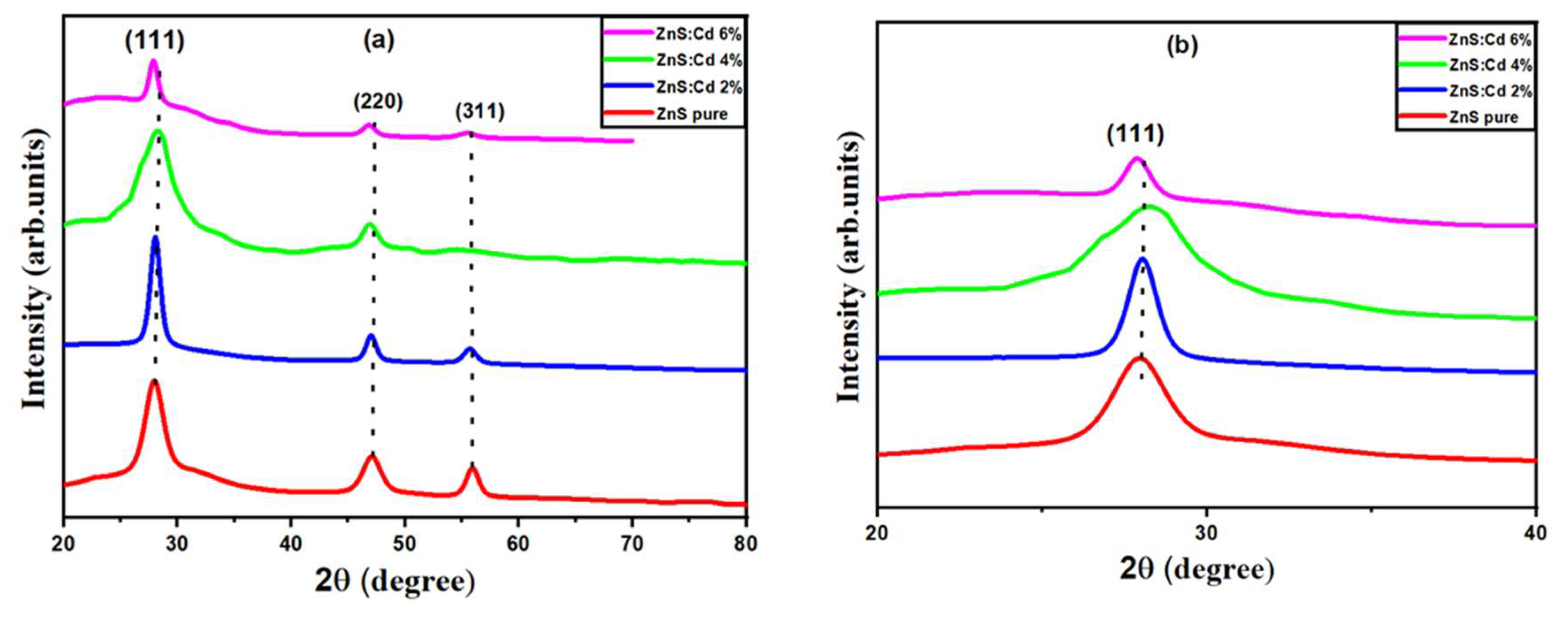
Figure 1. (a) XRD patterns of ZnS films doped with 0–6% Cd. (b) Shift in the (111) peak with increasing Cd content.
Crystals 16 00161 g001
Figure 2. Variation of (a) lattice parameter, (b) microstrain, (c) stress, and (d) crystallite size for undoped and Cd-doped ZnS thin films with 0%, 2%, 4%, and 6% Cd content.
Crystals 16 00161 g002
Figure 3. SEM images of ZnS thin films: (a) undoped, (b) 2% Cd-doped, (c) 4% Cd-doped, and (d) 6% Cd-doped.
Crystals 16 00161 g003
Figure 4. Elemental mapping of ZnS thin films showing the spatial distribution of S and Zn in undoped ZnS, and Cd in films doped with 2%, 4%, and 6% Cd.
Crystals 16 00161 g004
Figure 5. EDX spectra and atomic percentages of Zn, S, and Cd for ZnS thin films: (a) undoped, (b) 2% Cd-doped, (c) 4% Cd-doped, and (d) 6% Cd-doped.
Crystals 16 00161 g005
Figure 6. Optical transmittance spectra of undoped and Cd-doped ZnS thin films (2%, 4%, and 6%), measured as a function of wavelength.
Crystals 16 00161 g006
Figure 7. Tauc plots (αhν)2 versus photon energy () for ZnS thin films: (a) undoped, (b) doped with 2% Cd, (c) doped with 4% Cd, and (d) doped with 6% Cd, respectively.
Crystals 16 00161 g007
Figure 8. Schematic energy band alignment at the CIGS/ZnS:Cd (6%) interface: (a) cliff-type alignment (CBO < 0) and (b) spike-type alignment (CBO > 0).
Crystals 16 00161 g008
Figure 9. Conventional unit cell of pure ZnS.
Crystals 16 00161 g009
Figure 10. Calculated energy versus volume optimizations of ZnS using GGA-PBE.
Crystals 16 00161 g010
Figure 11. 2 × 2 × 1 Supercell of Cd-doped ZnS (6%).
Crystals 16 00161 g011
Figure 12. Total DOS and band structure of pure ZnS along the high-symmetry points (W–L–Γ–X–W–K) of the Brillouin zone.
Crystals 16 00161 g012
Figure 13. Partial density of states (PDOS) of (a) Zn atoms (s, p, and d orbitals) and (b) S atoms (s and p orbitals).
Crystals 16 00161 g013
Figure 14. Total DOS and Band Structure of Cd-doped ZnS (6%).
Crystals 16 00161 g014
Figure 15. Partial density of states (PDOS) of (a) Zn atoms (s, p, and d orbitals), (b) S atoms (s and p orbitals), and (c) Cd atoms (s, p, and d orbitals).
Crystals 16 00161 g015
Figure 16. The calculated ε ( ω ) , σ ( ω ) , α ( ω ) and R ( ω ) of pure ZnS using mBJ approximation.
Crystals 16 00161 g016
Figure 17. The calculated ε ( ω ) , σ ( ω ) , α ( ω ) and R ( ω ) of Cd-doped ZnS (6%) using the Bmj approximation.
Crystals 16 00161 g017
Table 1. Electrical properties of ZnS thin films with various Cd doping concentrations.
ZnS: (Cd %)Resistivity (Ω·cm)Conductivity (Ω·cm)−1Mobility (cm2/V·s)Concentration (cm−3)
0%8.899 × 10−3112.37803.851.235 × 1017
6%5.486 × 10−3182994.9591.143 × 1018
Table 2. Comparative electrical properties of doped ZnS thin films.
Dopant (Concentration)Conductivity (S/cm)Mobility (cm2/V·s)Carrier Concentration (cm−3)ReferenceDeposition Method
Pure ZnS112.0803.851.23 × 1017This workSILAR
Cd (6%)182.0994.9591.143 × 1018This workSILAR
Ni (4%)135.01120.563.60 × 1017[37]Hydrothermal
Al (5%)210.01800.07.40 × 1017[38]Sol–gel
Table 3. The calculated structural parameters of ZnS using GGA approximation.
Experimental Cell Parameter a (Å)Optimized Lattice Parameter a (Å)Calculated Unit Cell Volume V03)Calculated Bulk Modulus B (GPa)Experimental Cell Parameter a (Å)
5.37645.4626275.008170.75395.3764
Table 4. Comparison between Theoretical and Experimental Band Gap Energies of Pure and Cd-Doped ZnS (6%).
CompoundCalculated Bandgap Using mBJ Approach (eV)Experimental Bandgap (eV)
ZnS3.623.74
ZnS:Cd 6%2.473.68/2.50
Disclaimer/Publisher’s Note: The statements, opinions and data contained in all publications are solely those of the individual author(s) and contributor(s) and not of MDPI and/or the editor(s). MDPI and/or the editor(s) disclaim responsibility for any injury to people or property resulting from any ideas, methods, instructions or products referred to in the content.