
To Study the Impact of Ultrasound-Assisted Antisolvent Crystallization on Aprepitant Crystal Habits



Abstract
1. Introduction
2. Materials and Methodology
2.1. Materials
2.2. Methodology
2.2.1. Solvent Screening and Solubility Studies
2.2.2. Crystallization with Screened Solvents
2.2.3. Particle Size Distribution and Shape Analysis
2.2.4. Scanning Electron Microscopy
2.2.5. Fourier-Transform Infrared Spectroscopy
2.2.6. Thermal Characterization
2.2.7. Powder X-Ray Diffraction Spectroscopy
2.2.8. Micromeritics
2.2.9. Contact Angle Measurement and Surface Free Energy Analysis
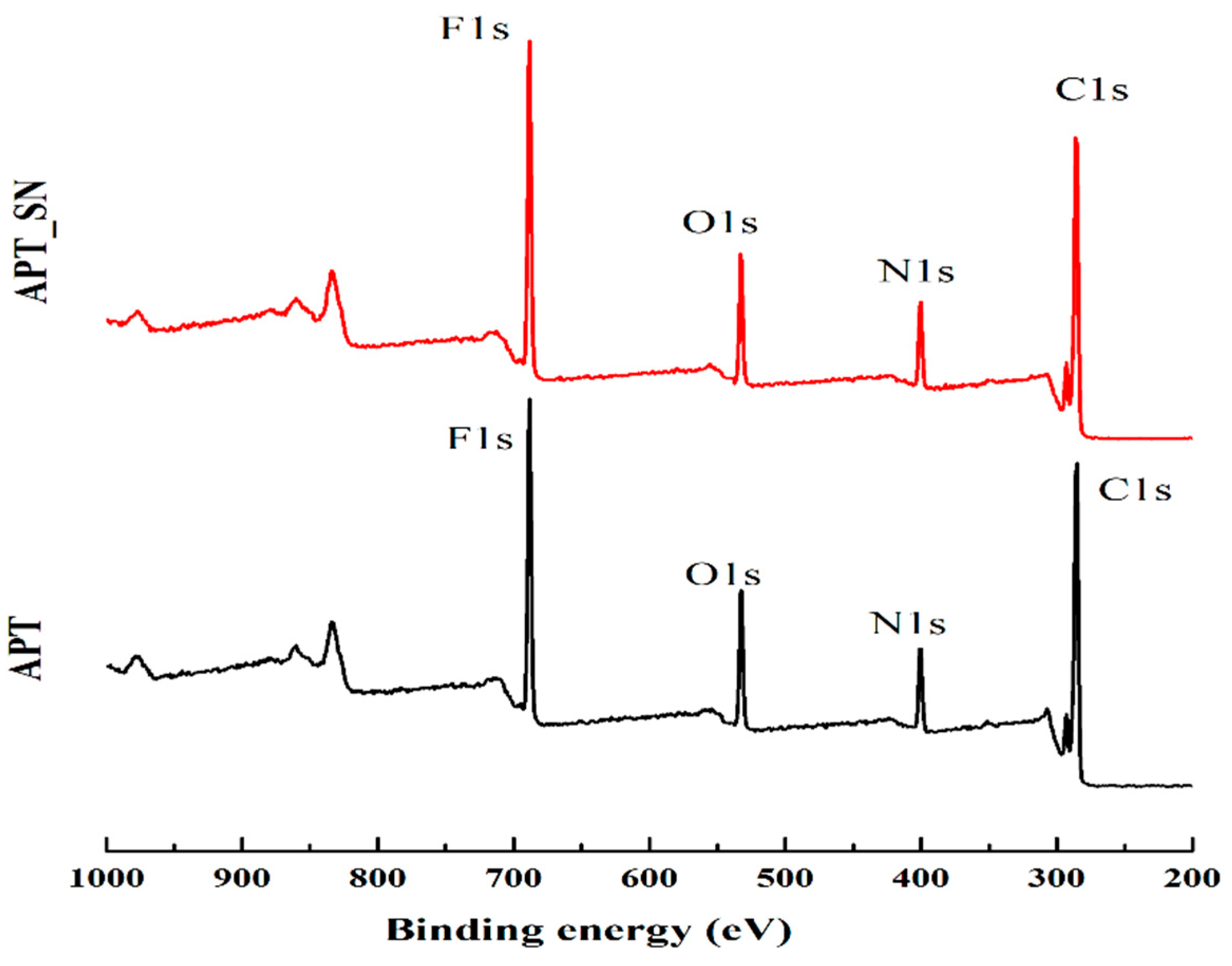
2.2.10. X-Ray Photon Spectroscopy (XPS)
2.2.11. Compressibility, Tabletability, and Compactability (CTC) Profiling
2.2.12. Surface Area Analysis
2.2.13. Intrinsic Dissolution Rate
2.2.14. Statistical Analysis
3. Results and Discussion
3.1. Solubility Analysis
3.2. Crystallization for Screened Solvents
3.3. Crystal Size Distribution Analysis (CSD)
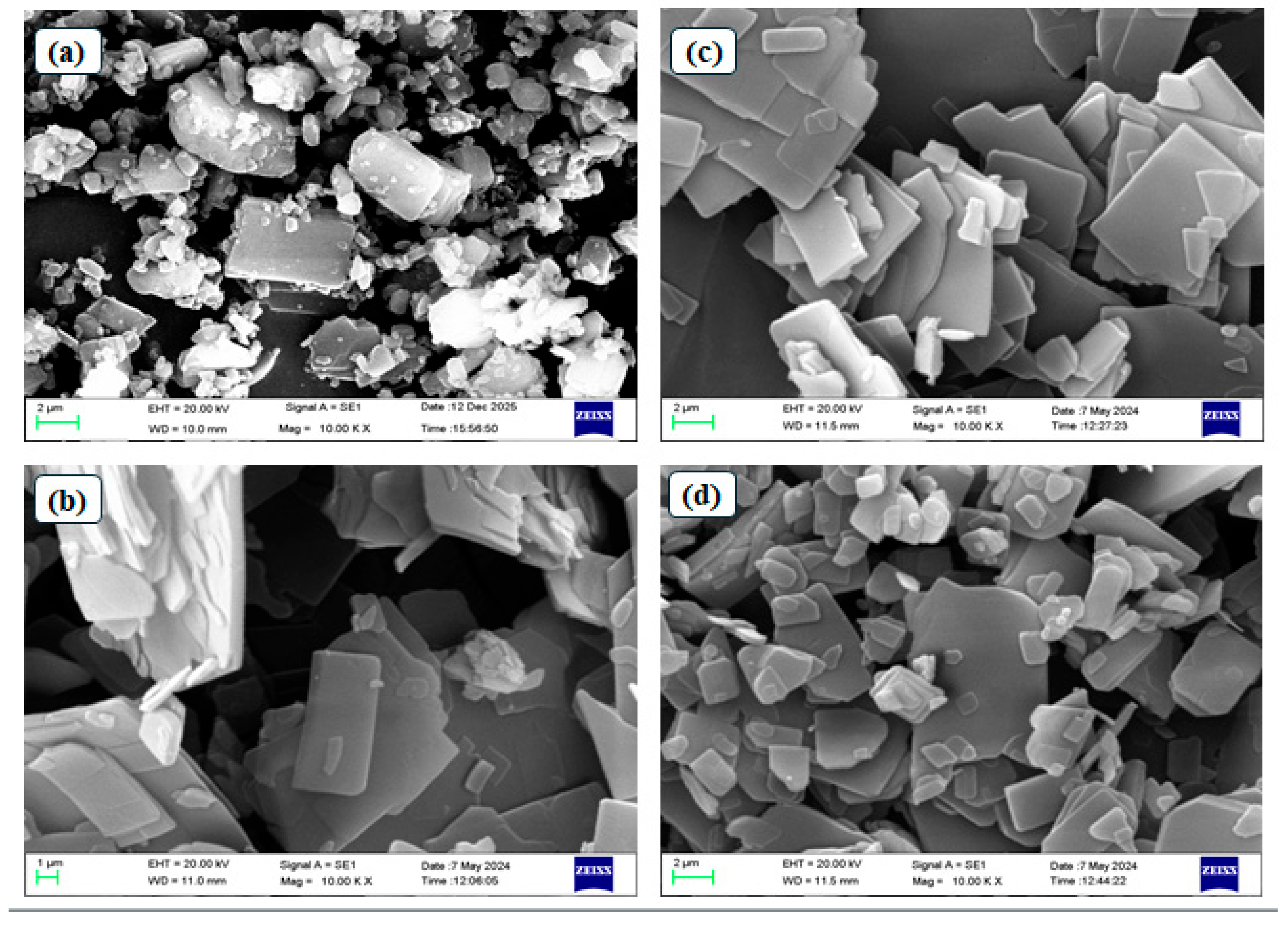
3.4. Scanning Electron Microscopy
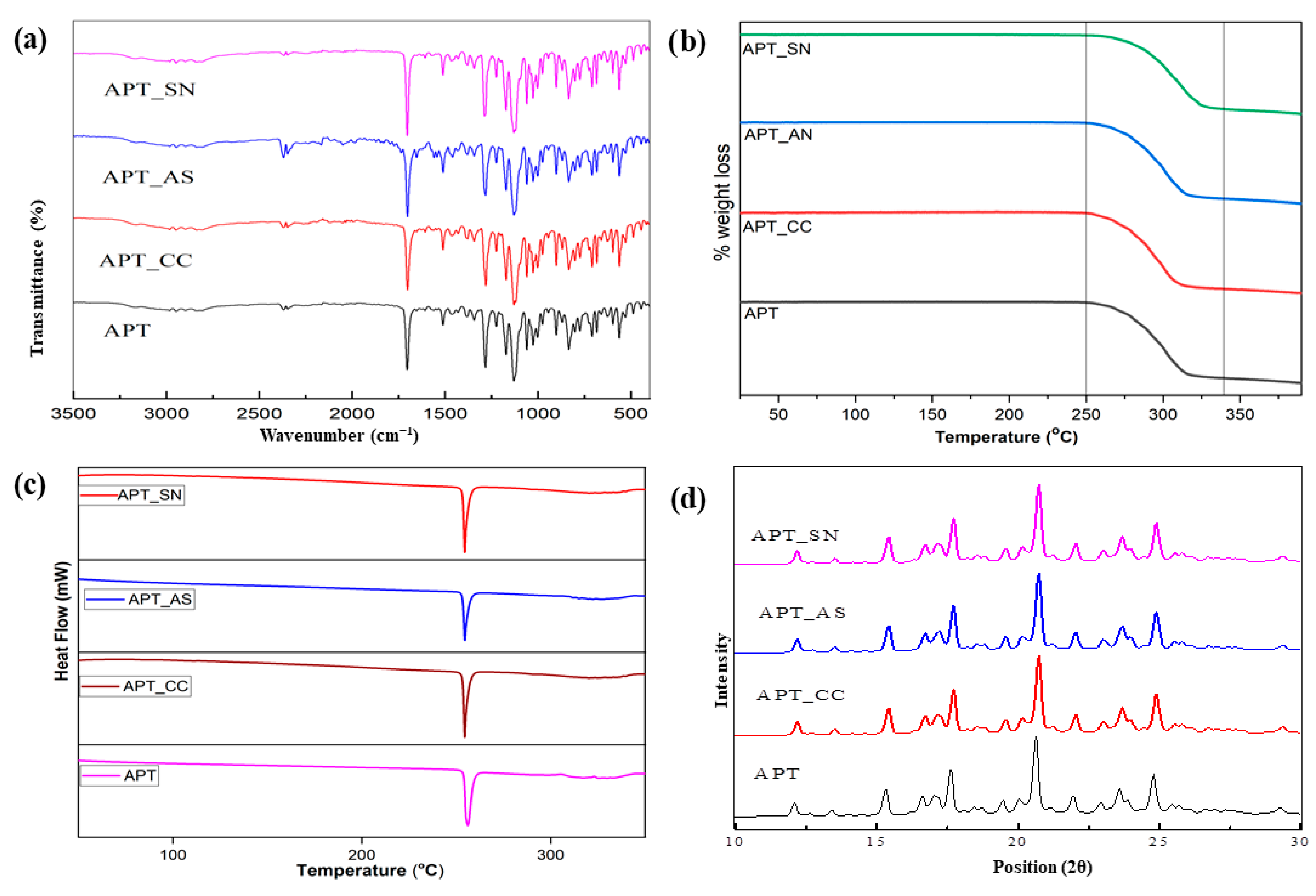
3.5. Solid-State Characterization
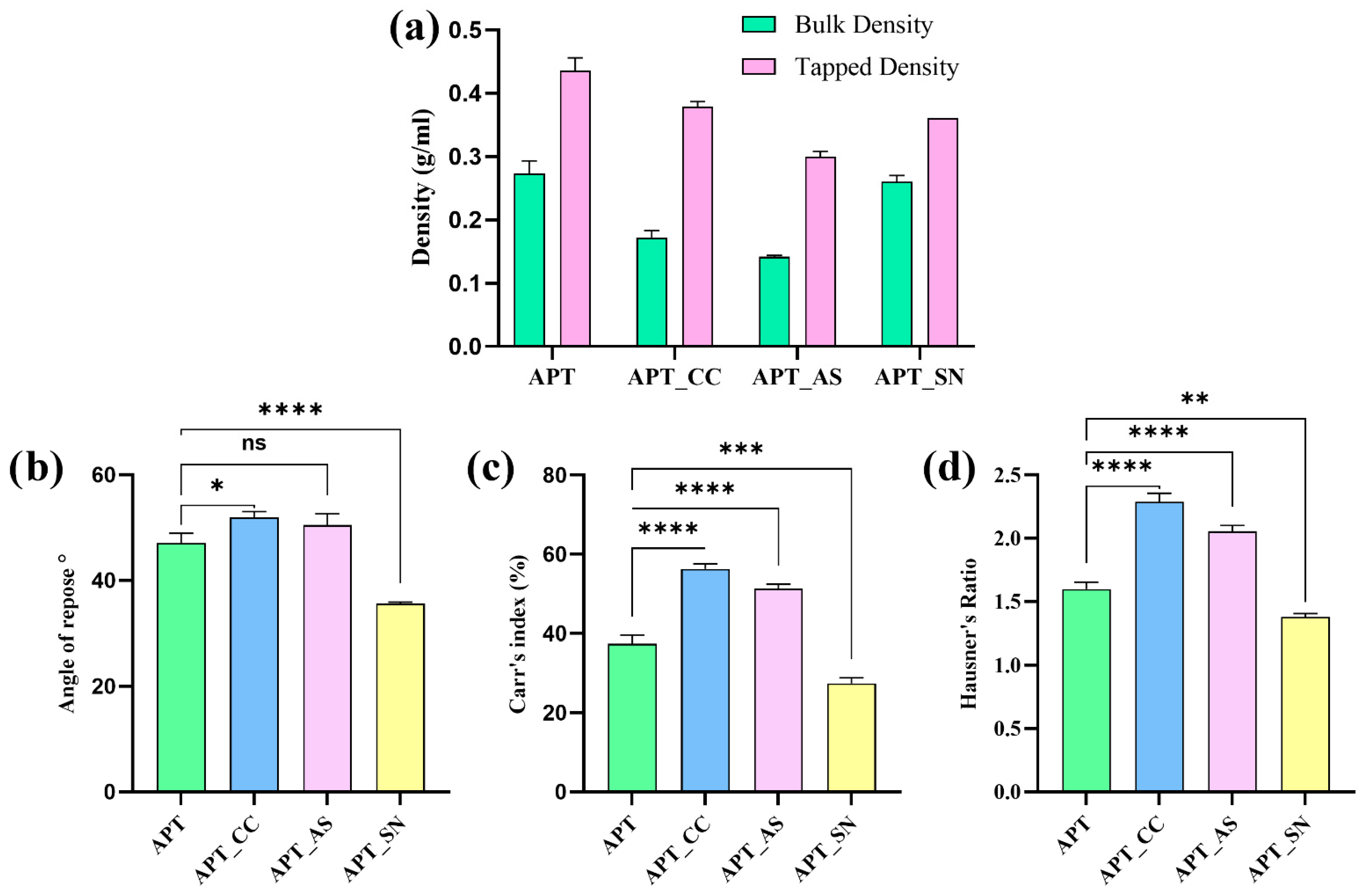
3.6. Micromeritic Properties
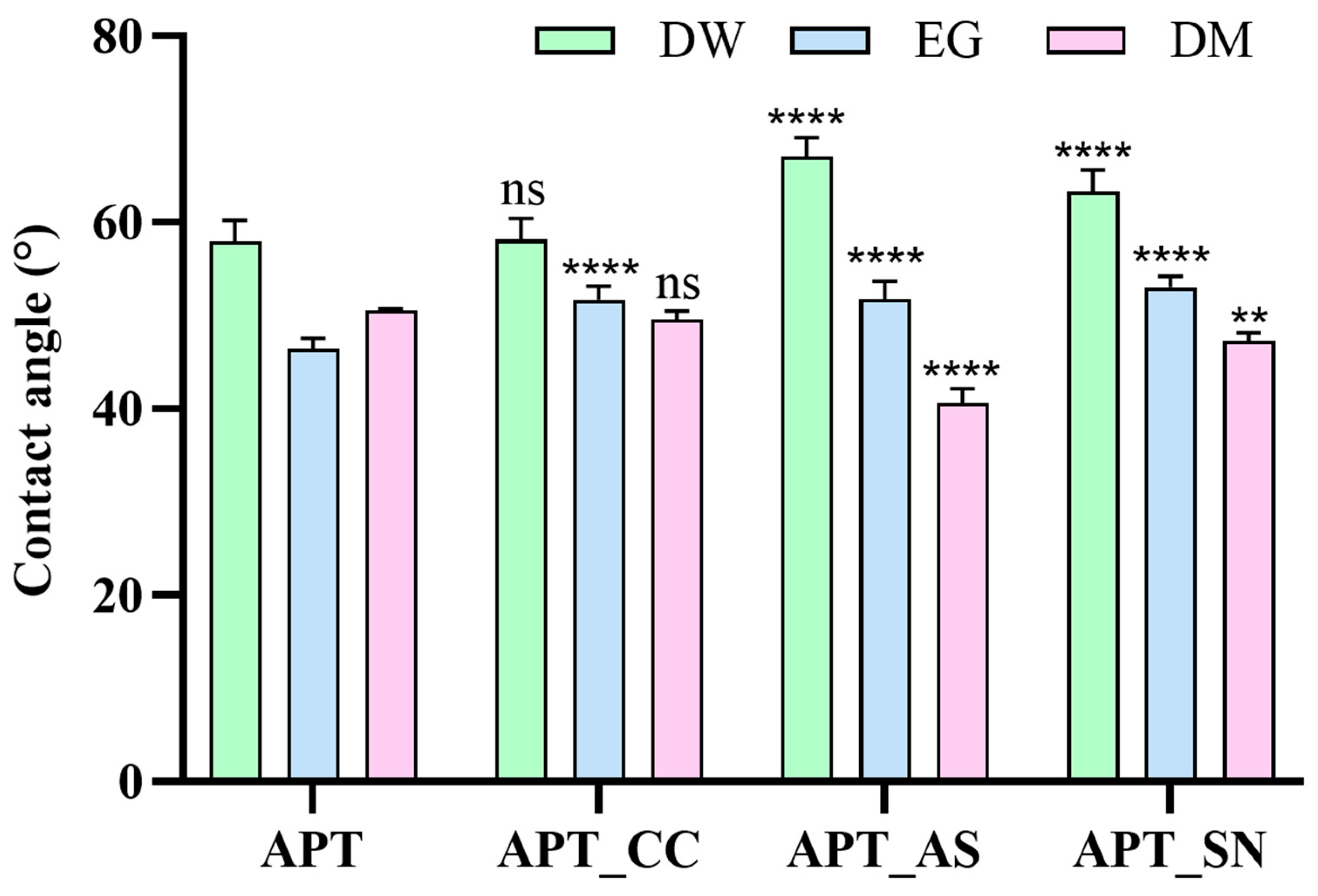
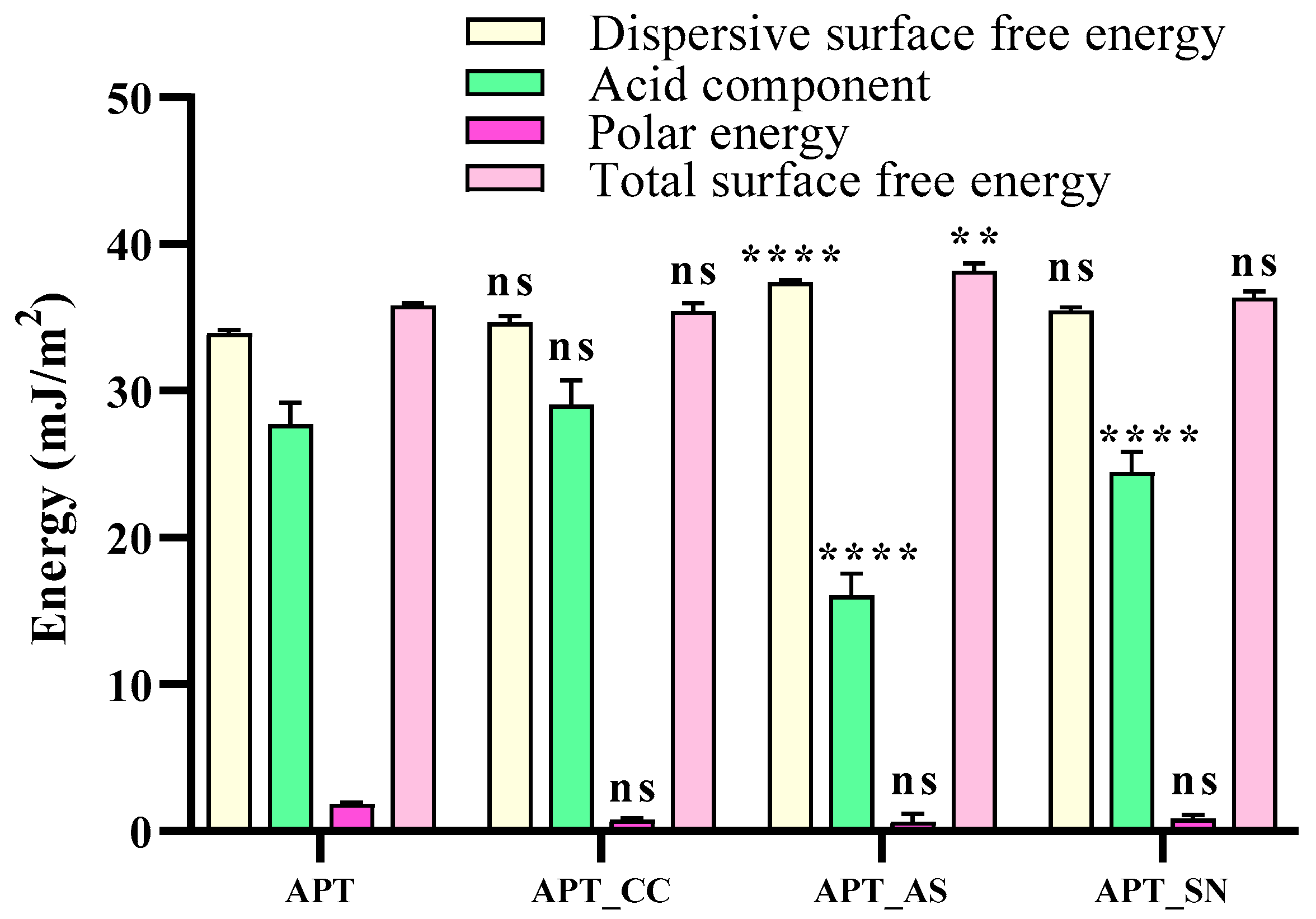
3.7. Contact Angle Measurement and Surface Free Energy Analysis
3.8. X-Ray Photoelectron Spectroscopy Analysis
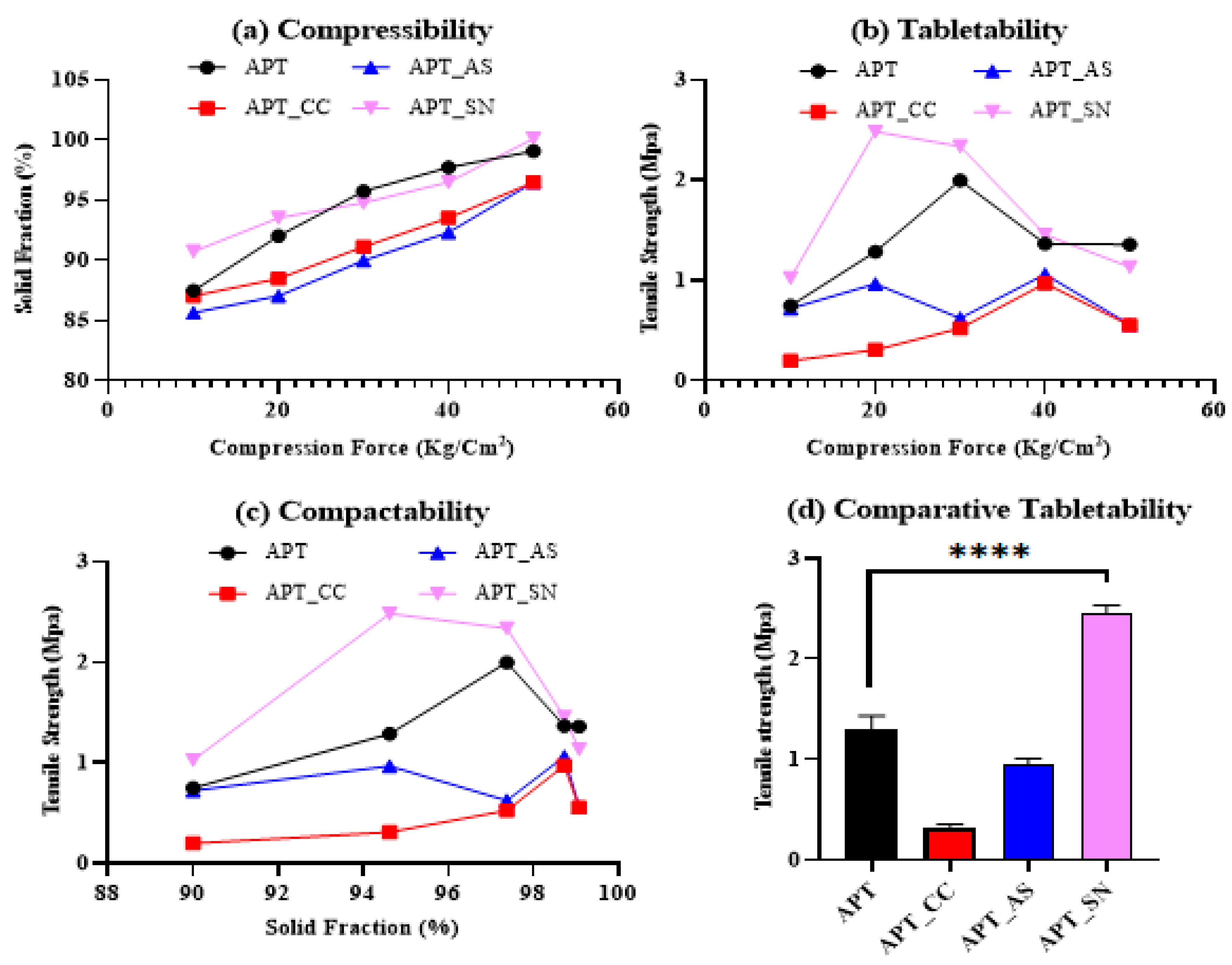
3.9. Compressibility, Tabletability, and Compactability Profiling
3.10. Surface Area Analysis
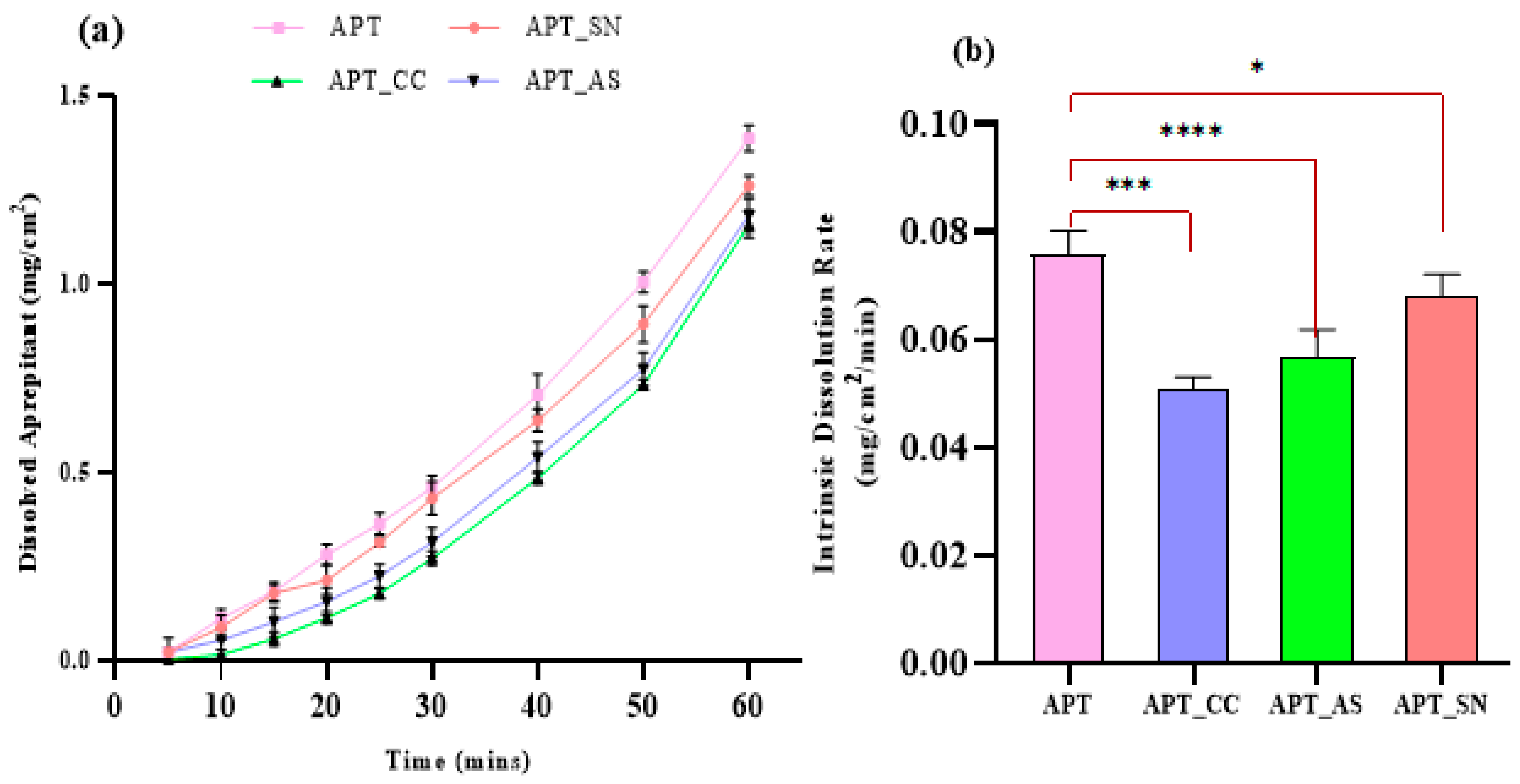
3.11. Intrinsic Dissolution Rate
4. Conclusions
Supplementary Materials
Author Contributions
Funding
Data Availability Statement
Acknowledgments
Conflicts of Interest
References
- Aapro, M.; Carides, A.; Rapoport, B.L.; Schmoll, H.-J.; Zhang, L.; Warr, D. Aprepitant and Fosaprepitant: A 10-Year Review of Efficacy and Safety. Oncologist 2015, 20, 450–458. [Google Scholar] [CrossRef]
- Lindley, C.; Hirsch, J.; O’Neill, C.; Transau, M.; Gilbert, C.; Osterhaus, J. Quality of life consequences of chemotherapy-induced emesis. Qual. Life Res. 1992, 1, 331–340. [Google Scholar] [CrossRef] [PubMed]
- Grunberg, S.M.; Boutin, N.; Ireland, A.; Miner, S.; Silveira, J.; Ashikaga, T. Impact of nausea/vomiting on quality of life as a visual analogue scale-derived utility score. Support. Care Cancer 1996, 4, 435–439. [Google Scholar] [CrossRef] [PubMed]
- Osoba, D.; Zee, B.; Warr, D.; Latreille, J.; Kaizer, L.; Pater, J. Effect of postchemotherapy nausea and vomiting on health-related quality of life. Support. Care Cancer 1997, 5, 307–313. [Google Scholar] [CrossRef]
- Curran, M.P.; Robinson, D.M. Aprepitant. Drugs 2009, 69, 1853–1878. [Google Scholar] [CrossRef] [PubMed]
- Di Maio, M.; Bria, E.; Banna, G.L.; Puglisi, F.; Garassino, M.C.; Lorusso, D.; Perrone, F. Prevention of chemotherapy-induced nausea and vomiting and the role of neurokinin 1 inhibitors: From guidelines to clinical practice in solid tumors. Anti-Cancer Drugs 2013, 24, 99–111. [Google Scholar] [CrossRef]
- Nazlı, H.; Mesut, B.; Akbal-Dağıstan, Ö.; Özsoy, Y. A Novel Semi-Solid Self-Emulsifying Formulation of Aprepitant for Oral Delivery: An In Vitro Evaluation. Pharmaceutics 2023, 15, 1509. [Google Scholar] [CrossRef]
- National Center for Biotechnology Information. PubChem CID 135413536, Aprepitant. 2024. Available online: https://pubchem.ncbi.nlm.nih.gov/compound/Aprepitant (accessed on 24 December 2024).
- Aapro, M.S.; Walko, C.M. Aprepitant: Drug–drug interactions in perspective. Ann. Oncol. 2010, 21, 2316–2323. [Google Scholar] [CrossRef]
- Alruwaili, N.K.; Ameeduzzafar, Z.; Sarim, I.S.; Saad, A.K.; Sultan, A.; Tilal, E.; Ahmed, A.F.; Sultan, A.; Fahmyi, U.A.; Alhakamyi, N.A.; et al. Formulation of amorphous ternary solid dispersions of dapagliflozin using PEG 6000 and Poloxamer 188: Solid-state characterization, ex vivo study, and molecular simulation assessment. Drug Dev. Ind. Pharm. 2020, 46, 1458–1467. [Google Scholar] [CrossRef]
- Aguiar, G.P.S.; Arcari, B.D.; Chaves, L.M.; Dal Magro, C.; Boschetto, D.L.; Piato, A.L.; Lanza, M.; Oliveira, J.V. Micronization of trans-resveratrol by supercritical fluid: Dissolution, solubility and in vitro antioxidant activity. Ind. Crops Prod. 2018, 112, 1–5. [Google Scholar] [CrossRef]
- Serajuddin, A.T.M. Salt formation to improve drug solubility. Adv. Drug Deliv. Rev. 2007, 59, 603–616. [Google Scholar] [CrossRef]
- Rubino, J.T. Cosolvents and cosolvency. Encycl. Pharm. Technol. 1988, 3, 375–398. [Google Scholar]
- Huang, Y.; Dai, W.G. Fundamental aspects of solid dispersion technology for poorly soluble drugs. Acta Pharm. Sin. B 2014, 4, 18–25. [Google Scholar] [CrossRef]
- De Castro, M.L.; Priego-Capote, F. Ultrasound-assisted crystallization (sonocrystallization). Ultrason. Sonochem. 2007, 14, 717–724. [Google Scholar] [CrossRef]
- Bund, R.; Pandit, A. Sonocrystallization: Effect on lactose recovery and crystal habit. Ultrason. Sonochem. 2007, 14, 143–152. [Google Scholar] [CrossRef] [PubMed]
- Li, H.; Wang, J.; Bao, Y.; Guo, Z.; Zhang, M. Rapid sonocrystallization in the salting-out process. J. Cryst. Growth 2003, 247, 192–198. [Google Scholar] [CrossRef]
- Park, M.-W.; Yeo, S.-D. Antisolvent crystallization of carbamazepine from organic solutions. Chem. Eng. Res. Des. 2012, 90, 2202–2208. [Google Scholar] [CrossRef]
- Kim, H.N.; Suslick, K.S. The Effects of Ultrasound on Crystals: Sonocrystallization and Sonofragmentation. Crystals 2018, 8, 280. [Google Scholar] [CrossRef]
- Sander, J.R.; Zeiger, B.W.; Suslick, K.S. Sonocrystallization and sonofragmentation. Ultrason. Sonochem. 2014, 21, 1908–1915. [Google Scholar] [CrossRef]
- Mullin, J.W. Crystallization, 4th ed.; World Publishing Corporation Beijing: Beijing, China, 2015. [Google Scholar]
- Sangwal, K. Effect of impurities on the metastable zone width of solute–solvent systems. J. Cryst. Growth 2009, 311, 4050–4061. [Google Scholar] [CrossRef]
- Singh, M.; Dhondale, M.R.; Agrawal, A.K.; Panda, S.; Kumar, D. The potential of sonocrystallization in crystal habit modification for improving micromeritic and physicochemical properties of Dapagliflozin. Chem. Eng. Res. Des. 2024, 207, 308–319. [Google Scholar] [CrossRef]
- Jagtap, V.A.; Vidyasagar, G.; Dvivedi, S.C. Solubility enhancement of rosiglitazone by using melt sonocrystallization technique. J. Ultrasound 2014, 17, 27–32. [Google Scholar] [CrossRef]
- Shamma, R.N.; Latif, R. The potential of synergism between ultrasonic energy and Soluplus® as a tool for solubilization and dissolution enhancement of a poorly water soluble drug. A statistically based process optimization. J. Drug Deliv. Sci. Technol. 2018, 43, 343–352. [Google Scholar] [CrossRef]
- Belkacem, N.; Sheikh Salem, M.A.; AlKhatib, H.S. Effect of ultrasound on the physico-chemical properties of poorly soluble drugs: Antisolvent sonocrystallization of ketoprofen. Powder Technol. 2015, 285, 16–24. [Google Scholar] [CrossRef]
- Bučar, D.K.; Elliott, J.A.; Eddleston, M.D.; Cockcroft, J.K.; Jones, W. Sonocrystallization yields monoclinic paracetamol with significantly improved compaction behavior. Angew. Chem. Int. Ed. 2015, 54, 249–253. [Google Scholar] [CrossRef]
- Dewes, R.M.; Mendoza, H.R.; Pereira, M.V.L.; Lutz, C.; Van Gerven, T. Experimental and numerical investigation of the effect of ultrasound on the growth kinetics of zeolite A. Ultrason. Sonochem. 2022, 82, 105909. [Google Scholar] [CrossRef] [PubMed]
- Patel, S.; Kaushal, A.M.; Bansal, A.K. Compression Physics in the Formulation Development of Tablets. Crit. Rev. Ther. Drug Carr. Syst. 2006, 23, 1–66. [Google Scholar] [CrossRef] [PubMed]
- Prime, R.B.; Bair, H.E.; Vyazovkin, S.; Gallagher, P.K.; Riga, A. Thermogravimetric analysis (TGA). In Thermal Analysis of Polymers: Fundamentals and Applications; Wiley: Hoboken, NJ, USA, 2009; pp. 241–317. [Google Scholar]
- U.S.P. Bulk Density and Tapped Density of Powders. 2023. Available online: https://www.usp.org/sites/default/files/usp/document/harmonization/gen-chapter/bulk_density.pdf (accessed on 21 April 2025).
- Datir, S.R.; Kumar, D.; Kumar, P.; Jain, S.; Bansal, A.K.; Nallamothu, B.; Thakore, S.D.; Bele, M.H. Study of Different Crystal Habits of Aprepitant: Dissolution and Material Attributes. Appl. Sci. 2021, 11, 5604. [Google Scholar] [CrossRef]
- Hebbar, R.S.; Isloor, A.M.; Ismail, A.F. Contact Angle Measurements. In Membrane Characterization; Elsevier: Amsterdam, The Netherlands, 2017; pp. 219–255. [Google Scholar]
- Kumar, D.; Thipparaboina, R.; Modi, S.R.; Bansal, A.K.; Shastri, N.R. Effect of HPMC concentration on crystal habit of nifedipine. CrystEngComm 2015, 17, 1615–1624. [Google Scholar] [CrossRef]
- Owens, D.K.; Wendt, R.C. Estimation of the Surface Free Energy of Polymers. J. Appl. Polym. Sci. 1969, 13, 1741–1747. [Google Scholar] [CrossRef]
- Van Oss, C.J.; Ju, L.; Chaudhury, M.K.; Good, R.J. Estimation of the polar parameters of the surface tension of liquids by contact angle measurements on gels. J. Colloid Interface Sci. 1989, 128, 313–319. [Google Scholar] [CrossRef]
- Katz, J.M.; Buckner, I.S. Full Out-of-Die Compressibility and Compactibility Profiles From Two Tablets. J. Pharm. Sci. 2017, 106, 843–849. [Google Scholar] [CrossRef] [PubMed]
- United States Pharmacopoeia (U.S.P.). General Chapter 〈1087〉 Intrinsic Dissolution—Dissolution Testing Procedures for Rotating Disk and Stationary Disk. In United States Pharmacopeia–National Formulary (USP–NF); United States Pharmacopeial Convention: Rockville, MD, USA, 2020. [Google Scholar] [CrossRef]
- Ridhurkar, D.N.; Ansari, K.A.; Kumar, D.; Kaul, N.S.; Krishnamurthy, T.; Dhawan, S.; Pillai, R. Inclusion complex of aprepitant with cyclodextrin: Evaluation of physico-chemical and pharmacokinetic properties. Drug Dev. Ind. Pharm. 2013, 39, 1783–1792. [Google Scholar] [CrossRef] [PubMed]
- Nanaki, S.; Eleftheriou, R.M.; Barmpalexis, P.; Kostoglou, M.; Karavas, E.; Bikiaris, D. Evaluation of Dissolution Enhancement of Aprepitant Drug in Ternary Pharmaceutical Solid Dispersions with Soluplus® and Poloxamer 188 Prepared by Melt Mixing. Science 2019, 1, 48. [Google Scholar] [CrossRef]
- Liu, J.; Li, Y.; Ao, W.; Xiao, Y.; Bai, M.; Li, S. Preparation and Characterization of Aprepitant Solid Dispersion with HPMCAS-LF. ACS Omega 2022, 7, 39907–39912. [Google Scholar] [CrossRef] [PubMed]
- Horio, T.; Yasuda, M.; Matsusaka, S. Effect of particle shape on powder flowability of microcrystalline cellulose as determined using the vibration shear tube method. Int. J. Pharm. 2014, 473, 572–578. [Google Scholar] [CrossRef]
- Prasad, R.; Dalvi, S.V. Sonocrystallization: Monitoring and controlling crystallization using ultrasound. Chem. Eng. Sci. 2020, 226, 115911. [Google Scholar] [CrossRef]
- Beck, C.; Dalvi, S.V.; Dave, R.N. Controlled liquid antisolvent precipitation using a rapid mixing device. Chem. Eng. Sci. 2010, 65, 5669–5675. [Google Scholar] [CrossRef]
- Dalvi, S.V.; Dave, R.N. Analysis of nucleation kinetics of poorly water-soluble drugs in presence of ultrasound and hydroxypropyl methyl cellulose during antisolvent precipitation. Int. J. Pharm. 2010, 387, 172–179. [Google Scholar] [CrossRef]
- Pitt, K.G.; Webber, R.J.; Hill, K.A.; Dey, D.; Gamlen, M.J. Compression prediction accuracy from small scale compaction studies to production presses. Powder Technol. 2015, 270, 490–493. [Google Scholar] [CrossRef]
- Rasenack, N.; Müller, B. Crystal habit and tableting behavior. Int. J. Pharm. 2002, 244, 45–57. [Google Scholar] [CrossRef] [PubMed]
- Bhale, N.A.; Shah, S.; Jahnavi, A.S.; Vishwakarma, A.; Thakur, T.S.; Thomas, S.P.; Srivastava, S.; Dikundwar, A.G. Three Strikingly Different Crystal Habits of Tadalafil: Design, Characterization, Pharmaceutical Performance, and Computational Studies. Mol. Pharm. 2024, 21, 6234–6244. [Google Scholar] [CrossRef] [PubMed]
- Pudasaini, N.; Upadhyay, P.; Parker, C.; Hagen, S.; Bond, A.; Rantanen, J. Downstream Processability of Crystal Habit-Modified Active Pharmaceutical Ingredient. Org. Process Res. Dev. 2017, 21, 571–577. [Google Scholar] [CrossRef]



| Sr. No. | Solvent | Average Solubility (mg/mL) |
|---|---|---|
| 1 | Ethanol | 28.43 ± 1.40 |
| 2 | Methanol | 55.58 ± 1.93 |
| 3 | Acetone | 60.45 ±1.73 |
| 4 | Hexane | 2.66 ± 0.57 |
| 5 | Cyclohexane | 1.16 ± 0.28 |
| 6 | Acetonitrile | 3.5 ± 0.50 |
| Sample | D10 (µm) | D50 (µm) | D90 (µm) | Span Value | Aspect Ratio Mean ± SD |
|---|---|---|---|---|---|
| APT | 0.112 | 0.155 | 0.213 | 0.65 | 1.41 ± 0.08 |
| APT_CC | 0.340 | 1.143 | 3.502 | 2.76 | 1.48 ± 0.04 |
| APT_AS | 0.258 | 0.737 | 1.456 | 1.62 | 1.59 ± 0.03 |
| APT_SN | 0.162 | 0.264 | 0.441 | 1.06 | 1.35 ± 0.04 |
| Sample | Bulk Density (g/mL) | Tapped Density (g/mL) | Carr’s Index (%) | Housner’s Ratio | Angle of Repose (°) (g/mL) |
|---|---|---|---|---|---|
| APT | 0.273 ± 0.020 | 0.436 ± 0.020 | 37.41 ± 2.14 | 1.60 ± 0.05 | 47.10 ± 1.85 |
| APT_CC | 0.172 ± 0.011 | 0.379 ± 0.008 | 54.65 ± 3.03 | 2.21 ± 0.14 | 51.92 ± 1.12 |
| APT_AS | 0.142 ± 0.002 | 0.300 ± 0.008 | 51.32 ± 1.07 | 2.06 ± 0.04 | 50.43 ± 2.12 |
| APT_SN | 0.260 ± 0.010 | 0.361 ± 0.001 | 27.40 ± 1.42 | 1.37 ± 0.03 | 35.65 ± 0.30 |
| Tested Pellets | Atomic Concentrations (%) | ||||
|---|---|---|---|---|---|
| C1s | O1s | N1s | F1s | (O/C + F) | |
| APT | 63.31 | 9.91 | 9.33 | 17.44 | 12.27 |
| APT_SN | 62.03 | 9.67 | 9.57 | 18.73 | 11.97 |
Disclaimer/Publisher’s Note: The statements, opinions and data contained in all publications are solely those of the individual author(s) and contributor(s) and not of MDPI and/or the editor(s). MDPI and/or the editor(s) disclaim responsibility for any injury to people or property resulting from any ideas, methods, instructions or products referred to in the content. |
© 2026 by the authors. Licensee MDPI, Basel, Switzerland. This article is an open access article distributed under the terms and conditions of the Creative Commons Attribution (CC BY) license.
Share and Cite
Pandhare, A.; Bhimrao, L.S.; Agrawal, A.K.; Kumar, D. To Study the Impact of Ultrasound-Assisted Antisolvent Crystallization on Aprepitant Crystal Habits. Crystals 2026, 16, 96. https://doi.org/10.3390/cryst16020096
Pandhare A, Bhimrao LS, Agrawal AK, Kumar D. To Study the Impact of Ultrasound-Assisted Antisolvent Crystallization on Aprepitant Crystal Habits. Crystals. 2026; 16(2):96. https://doi.org/10.3390/cryst16020096
Chicago/Turabian StylePandhare, Aditya, Londhe Sachin Bhimrao, Ashish Kumar Agrawal, and Dinesh Kumar. 2026. "To Study the Impact of Ultrasound-Assisted Antisolvent Crystallization on Aprepitant Crystal Habits" Crystals 16, no. 2: 96. https://doi.org/10.3390/cryst16020096
APA StylePandhare, A., Bhimrao, L. S., Agrawal, A. K., & Kumar, D. (2026). To Study the Impact of Ultrasound-Assisted Antisolvent Crystallization on Aprepitant Crystal Habits. Crystals, 16(2), 96. https://doi.org/10.3390/cryst16020096