


Abstract
Nucleation remains one of the least understood steps during protein crystallization, although it strongly impacts product quality attributes, including total crystal numbers, final crystal size distributions, and thus downstream processing. In this work, the nucleation behavior of Lactobacillus brevis alcohol dehydrogenase (LbADH) wild type (WT) and five mutants (Q207D, Q126H, K32A, D54F, and T102E) is investigated in a stirred 7 mL crystallizer monitored by in situ multi-angle dynamic light scattering (MADLS). Nucleation was studied with highly pure homotetrameric LbADHs by establishing a crystallization, lyophilization, and re-solubilization protocol combined with size exclusion chromatography (SEC) and size exclusion high-performance liquid chromatography (SE-HPLC), yielding tetramer purities above 94% and removing low molecular weight impurities. During stirred batch crystallizations initiated by the addition of polyethyleneglycol 550 monomethyl ether (PEG 550 MME), SEC and SE-HPLC revealed decreasing tetramer peak areas but essentially constant peak apex positions, indicating that no long-lasting oligomeric intermediates accumulate at detectable levels. Time-resolved MADLS measurements using a custom-made flow-through cuvette in a bypass to the stirred crystallizer uncovered transient cluster populations. All protein variants exhibited an initial tetramer peak, followed by the formation of larger aggregates and a rapid rise in signal above a hydrodynamic diameter of 1000 nm, coinciding with the onset of macroscopic turbidity. A simple mesoscale nucleation model was formulated, yielding end-of-nucleation times, crystallized fractions, critical soluble concentrations, and apparent nucleation rate constants. The crystal contact mutations modulate both the timing and magnitude of the nucleation burst (rapid build-up of nuclei/cluster populations). The mutant Q207D showed strongly attenuated nucleation compared to the WT, whereas the other mutants (K32A, D54F, and particularly T102E) display markedly accelerated nucleation at nearly invariant critical concentrations. The combined workflow demonstrates how in situ MADLS, together with a tailored kinetic description, can provide mechanistic insight into protein nucleation in stirred batch crystallizers.
1. Introduction
Protein crystallization is an elementary key process step in structural biology, biopharmaceutical manufacturing, and industrial biotechnology, where it enables both high-resolution structure determination and large-scale protein purification and formulation [1,2,3]. Technical protein crystallization in stirred crystallizers has emerged as an attractive alternative to preparative chromatography, offering lower operating costs, reduced use of consumables, and high product stability in the crystalline state [4,5]. In particular, alcohol dehydrogenases and other oxidoreductases have been studied to explore the potential of protein crystallization as a capture and purification step in downstream processing [6,7,8,9].
Mechanistically, crystallization can be separated into two coupled stages: the formation of new crystalline nuclei and the subsequent growth of these nuclei into macroscopic crystals. The first of these stages, nucleation, is commonly rationalized by classical nucleation theory (CNT), which describes the formation of critical nuclei driven by supersaturation and opposed by the interfacial free energy [10]. In contrast, numerous experimental and theoretical studies have shown that protein nucleation can also follow non-classical or multistep pathways that involve dense liquid-like clusters or heterogeneous interfaces [10,11,12]. For technical protein crystallization in stirred crystallizers, nucleation is additionally influenced by hydrodynamics, homogenization, and the presence of impurities, which can either promote or inhibit nucleation by modifying local supersaturation and interfacial properties [13,14,15]. Despite the central role of nucleation in shortening induction times until the first appearance of protein crystals, increasing total crystal numbers, and narrowing final crystal size distributions in batch crystallizations, the understanding of the nucleation phenomena remains incomplete [10,11].
The alcohol dehydrogenase from Lactobacillus brevis (LbADH) has been extensively studied for technical protein crystallization and rational crystal contact engineering [16,17,18,19,20]. Single and combined amino acid substitutions at crystal contacts have been shown to enhance crystallizability by increasing the number of nucleation events, shortening induction times, and reducing the time to reach the thermodynamic equilibrium, in static µL batch, stirred mL, and 1 L crystallizers [16,17,18,21]. Furthermore, these engineering strategies have been successfully transferred to homologous and even non-homologous enzymes, underlining the generality of crystal contact engineering for improving technical protein crystallization [6,7,8,9]. However, while previous work focused primarily on macroscopic crystallization indicators such as yield, crystal size distributions, and total counts, the early stages of nucleation in stirred crystallizers have not yet been resolved in detail for the LbADH and its variants [16,17,18,21].
One important reason for this gap is that the process analytical technologies (PATs) most commonly applied in technical protein crystallization—such as in situ microscopy with automated image analysis, focused beam reflectance measurement (FBRM), and UV/Vis or IR spectroscopy—are optimized to quantify growth kinetics, crystal size distributions, and overall process performance, but are largely insensitive to the very early, nanoscale stages of nucleation [7,22,23,24]. In this context, dynamic light scattering (DLS) has long been recognized as a sensitive technique to follow protein aggregation and crystallization, allowing the detection of pre-nucleation clusters and early aggregates in crystallization droplets and capillaries [25,26,27]. However, in stirred crystallizers, the early emergence of highly polydisperse populations and the onset of turbidity can reduce correlation contrast and complicate the interpretation of conventional single-angle DLS [28], where the analysis relies on a single scattering vector. In comparison, multi-angle dynamic light scattering (MADLS) extends conventional single-angle DLS by combining scattering information from several detection angles to yield improved size resolution and more accurate particle size distributions over a broad range of hydrodynamic diameters [29]. Although MADLS has been applied to characterize protein aggregation and biopharmaceutical formulations, its use for time-resolved monitoring of nucleation in stirred protein crystallization processes has not yet been systematically explored [29,30,31].
In addition to suitable analytical tools, a well-defined and homogeneous protein solution is required to study the nucleation mechanism. The LbADH is a homotetrameric enzyme with a molecular mass of approximately 111 kDa, and previous work has shown that the recombinant production and standard chromatographic purification may leave residual low molecular weight impurities and oligomeric by-products in solution [9,18]. Crystallization followed by re-solubilization can therefore be used as an efficient polishing step to obtain a highly pure, homogeneous tetrameric LbADH preparation that is well suited for nucleation studies [18,32]. Once such well-defined homotetrameric LbADH solution is available, size exclusion chromatography (SEC) and size exclusion high-performance liquid chromatography (SE-HPLC) can be employed to probe potential oligomerization or clustering processes during stirred crystallization, while in situ techniques such as MADLS can be used to resolve the time evolution of particle size distributions and nucleation bursts (rapid early build-up of detectable nuclei/cluster populations) directly in the crystallizer.
In this study, we investigate the nucleation behavior of the wild-type LbADH and selected crystal contact variants (T102E, Q126H, K32A, D54F, and Q207D) in stirred batch crystallizations using a combination of protein isolation, chromatographic characterization, and in situ MADLS monitoring. The variants were selected to probe targeted modifications of dominant crystal contact interactions, including the introduction of a salt bridge (T102E), a salt bridge motivated redesign with additional hydrogen bonding contributions at the interface (Q126H), a substitution inspired by surface-entropy reduction (SER) and associated with enhanced ion-mediated electrostatic stabilization at the contact (K32A), an aromatic substitution at a symmetric contact (D54F), and an attenuated crystallizability reference variant used as a low nucleation control (Q207D). First, we produce highly pure homotetrameric LbADH solutions by combining recombinant production, chromatographic purification, and crystallization-based polishing. Second, we compare the apparent oligomeric state of the LbADH and its variants in solution over time during stirred batch crystallization after the addition of PEG 550 MME by SEC and SE-HPLC. Finally, we implement a stirred 7 mL crystallizer equipped with a flow-through cuvette for intermittent MADLS measurements to monitor nucleation in situ and develop a kinetic model that links the MADLS-derived nucleation dynamics to previously established crystal growth descriptions for the LbADH in stirred crystallizers [21]. This integrated approach aims (i) to provide new insight into nucleation mechanisms of a homotetrameric protein under technically relevant, stirred crystallization conditions, and (ii) to support the rational design and control of technical protein crystallization processes.
2. Materials and Methods
2.1. Recombinant Production and Purification of LbADH and Crystal Contact Mutants
In this study, the wild-type alcohol dehydrogenase from Lactobacillus brevis (LbADH, PDB ID: 6H07) and the crystal contact mutants Q207D (PDB ID not published), Q126H (PDB ID: 6Y10), K32A (PDB ID: 6HLF), D54F (PDB ID 6Y1C) and T102E (PDB ID: 6Y0S) [17] were investigated. The expression construct pET28a_LbADH_GSG_His6 (LbADH WT) was obtained from Grob et al. [17], whereas the plasmids encoding the LbADH mutants Q207D, Q126H, K32A, D54F, and T102E were generated by site-directed mutagenesis using a modified QuickChange PCR protocol [18]. All constructs carry the same N-terminal His6 tag preceded by a short GSG linker, and the tag was not removed prior to crystallization experiments. The influence of the N-terminal His6 tag on LbADH crystallization was previously assessed and found to be not significant [18]. Structural depictions of the targeted crystal contact regions and the corresponding mutation sites are available in prior structural analysis and are referenced for orientation [18,20].
Chemically competent E. coli BL21(DE3) cells were transformed with the respective plasmids by heat shock and plated on lysogeny broth (LB) agar supplemented with kanamycin (35 µg·mL−1). Single colonies were used to inoculate 13 mL culture tubes containing 5 mL LB medium with 35 μg mL−1 kanamycin and grown as first precultures for 24 h at 30 °C and 180 rpm. Subsequently, the first preculture was used to inoculate eight 2 L shake flasks without baffles (1 mL inoculum per flask), each containing 250 mL LB medium with kanamycin (35 μg·mL−1), to establish a second preculture stage (16 h, 37 °C, 250 rpm). For high-cell-density production, a 50 L stirred-tank reactor (LP75; Bioengineering AG, Wald, Switzerland) was inoculated with the second precultures to an initial OD600 of 0.5 in 34 L (initial working volume) of a defined mineral medium [33]. The cultivation strategy comprised an initial batch phase (5 g·L−1 glucose, 4 h, 37 °C), followed by an exponential fed-batch phase using a feed containing 500 g·L−1 glucose and 12.5 g·L−1 MgSO4 (μset = 0.15 h−1, 22 h, 37 °C), and a subsequent production phase. Protein expression was induced by adding 500 μM isopropyl β-D-1-thiogalactopyranoside (IPTG), while glucose was continuously supplied at 2.7 g·L−1·h−1 for 24 h at 30 °C, according to Schmideder et al. [34]. The pH was maintained at pH 6.8 by automated addition of 25% (v/v) NH4OH. A cascade control of stirrer speed, aeration, and pressure was used to maintain the dissolved oxygen level at 30% air saturation, starting from 400 rpm, 25 L·h−1 aeration, and 0.2 bar overpressure. Under these conditions, a maximum cell dry weight concentration of approximately 120 g·L−1 was achieved after 50 h process time.
The harvested cell suspension was directly processed using a high-pressure homogenizer (Variete NS3015H; GEA Niro Soavi, Parma, Italy) operated at 900 bar and a flow rate of 100 L·h−1. The resulting cell lysate was adjusted to pH 7.5 and supplemented with 500 mM NaCl, 20 mM imidazole, 10 mM NaH2PO4, and 10 mM Na2HPO4. Microfiltration and diafiltration of the lysate were then carried out using a gravimetric tangential flow filtration (SpectrumLabs KMPi TFF System, Waltham, MA, USA) equipped with a 750 kDa MWCO hollow fiber module (UFP-750-E-4X2MA; Cytiva, Marlborough, MA, USA). A concentration factor (Cf) of 2, a diafiltration factor (D) of 1.5, and a constant transmembrane pressure of 0.3 bar were applied.
For affinity purification, the pretreated protein solution was loaded onto a 1 L His-tag affinity column (PureCube 100 Ni-NTA Agarose; Cube Biotech, Monheim, Germany) pre-equilibrated with binding buffer (500 mM NaCl, 20 mM imidazole, 10 mM NaH2PO4, 10 mM Na2HPO4, pH 7.5). After washing with binding buffer to remove non-specifically bound proteins, the LbADH and its mutants were eluted using an elution buffer containing 500 mM NaCl, 500 mM imidazole, 10 mM NaH2PO4, and 10 mM Na2HPO4 at pH 7.5. As the eluate was subjected to a subsequent concentration step, no further fractionation of elution peaks was performed. Approximately 2 L of purified protein solution were obtained and stored at –20 °C with 5% (v/v) glycerol until use.
Prior to crystallization experiments, thawed protein solutions were dialyzed on ice against the protein buffer (20 mM HEPES-NaOH, 1 mM MgCl2, pH 7.0) using a tangential flow filtration unit (Sartoflow Beta plus; Sartorius Stedim, Göttingen, Germany) equipped with a 10 kDa MWCO membrane cassette (Sartocon Hydrosart; Sartorius Stedim, Göttingen, Germany), following the procedure described by Hebel et al. [35].
Finally, the dialyzed protein solutions were sterile-filtered through 0.22 μm polyethersulfone membranes (Steritop MILLIPORE Express; Merck Chemicals GmbH, Darmstadt, Germany). Based on the 50 L fed-batch high-cell-density cultivation and the applied concentration and diafiltration steps, overall product recoveries of approximately 50% were achieved for the LbADH WT and its variants, as described previously [21].
2.2. Crystallization, Lyophilization, and Re-Solubilization Procedure
Stirred crystallization experiments on the mL-scale were carried out in two different 7 mL set-ups. In the first configuration, a custom-made rounded-bottom glass crystallizer with a working volume of 7 mL was mounted on a stepper-motor-driven shaft equipped with a pitched-blade impeller and placed in a temperature-controlled water bath (1157P, VWR, Darmstadt, Germany) at 20 °C, analogous to the stirred mL-scale crystallizers described previously for the LbADH and related alcohol dehydrogenases [6,17,18]. The impeller speed was set to 150 rpm for all experiments, which had previously been identified as a suitable compromise between homogeneous suspension and moderate local energy dissipation in this mL-scale crystallizer configuration [6,17,18,21,36].
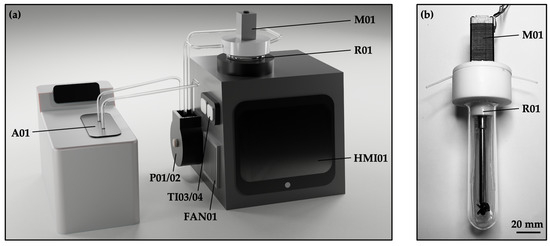
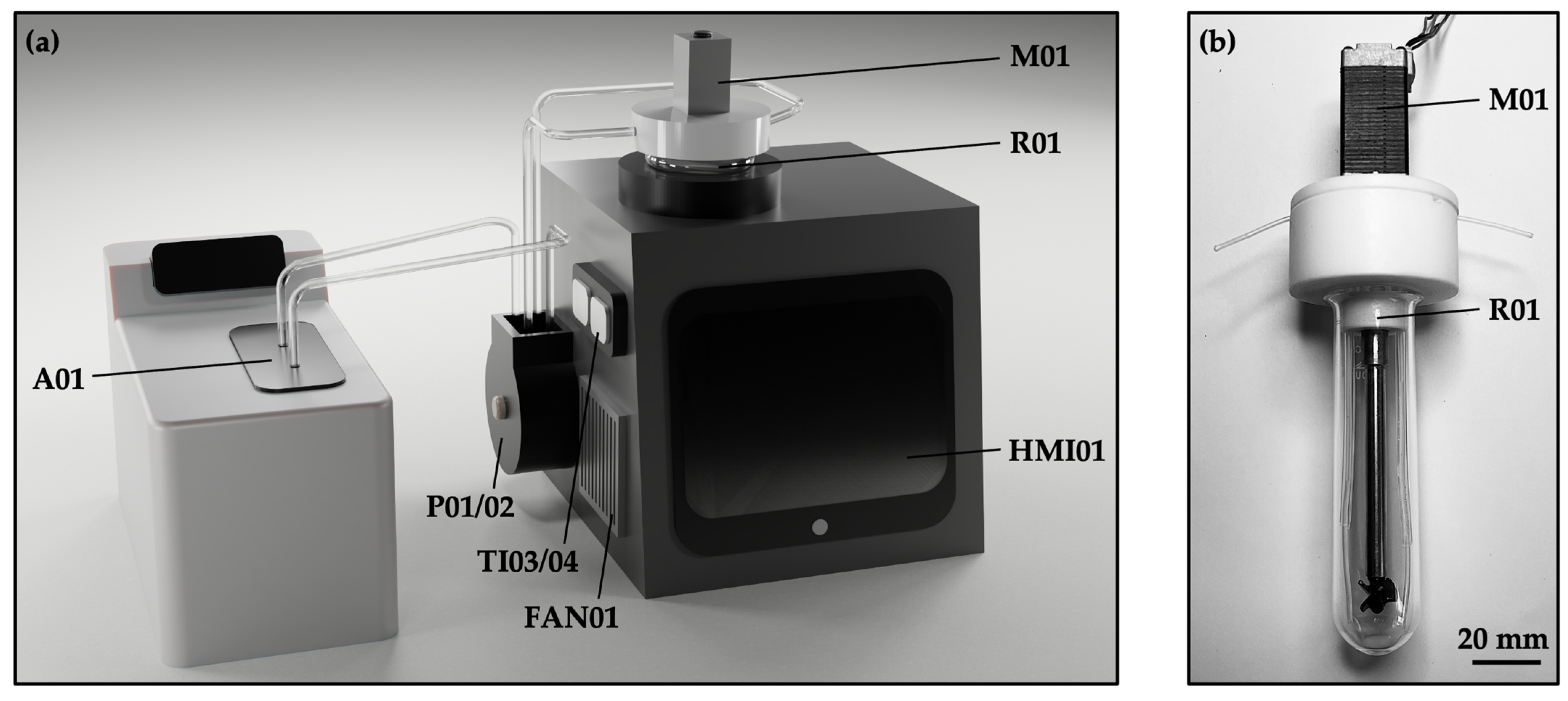
For nucleation studies with in situ MADLS monitoring, the same type of 7 mL glass crystallizer was connected to a closed tubing circuit configured for intermittent flow-through measurements (Figure 1). The crystallizer was immersed in a custom-built copper water bath whose temperature was controlled at 20 °C by a Peltier element (TEC1-12706, AZ-Delivery GmbH, Deggendorf, Germany) using an external negative temperature coefficient (NTC) thermistor sensor connected to a digital temperature controller (XH-W1308, Xinghe Electronic Materials Manufacturing Co., Ltd., Suzhou, China).
Figure 1.
Experimental setup for intermittent bypass MADLS measurements in the 7 mL stirred crystallizer. (a) Schematic CAD representation showing the crystallizer drive motor M01 and the glass batch reactor R01, the human machine interface HMI01, the peristaltic pumps P01/02, the temperature indicators TI03/04, and the cooling fan FAN01 used for tempering. The Zetasizer Ultra instrument is shown on the left and houses the analysis cuvette A01. (b) Photograph of the batch reactor R01 with mounted motor M01 and the inlet and outlet tubing of the bypass circuit. Component identifiers correspond to the piping and instrumentation diagram shown in Figure 2.
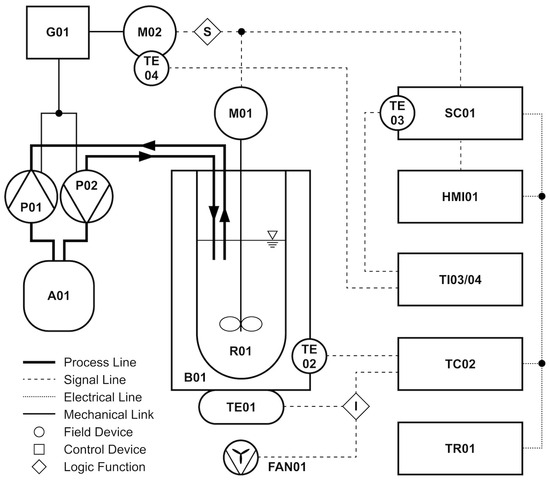
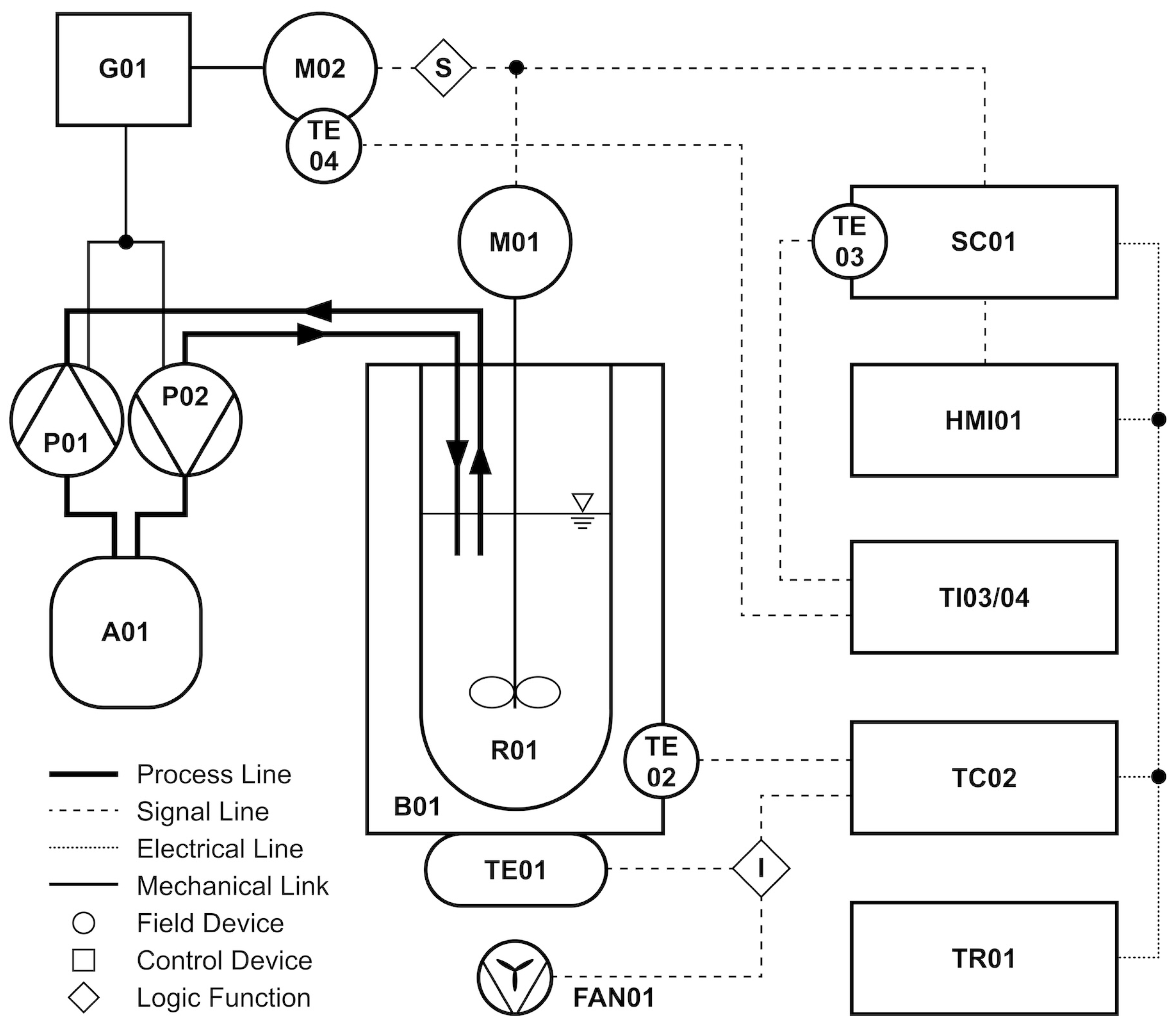
Two tubing lines for withdrawal and return were positioned on opposing sides of the crystallizer and guided down to the reactor bottom, terminating in close proximity to, but below, the impeller. The crystal suspension was periodically pumped from the crystallizer through a quartz cuvette (UV-Micro Cuvette 759220, BRAND GmbH + Co KG, Wertheim, Germany) with an internal volume of 200 µL and back into the vessel using two synchronized peristaltic pumps driven by a stepper motor via a planetary gearbox (8HS15-0604S-PG19, Stepperonline Inc., New York, NY, USA). Within the cuvette, the inlet and outlet tubing were fixed at the liquid surface at the maximum possible opposite position to promote a complete exchange of the 200 µL by simultaneous inflow and outflow. The total volume of the bypass, including all tubing and the cuvette, was 1.41 mL. Flexible tubing with an inner diameter of 0.5 mm was used throughout the bypass. Stirrer and pump motors were controlled by a custom-built control unit based on a multi-axis stepper motor driver module (TMCM-6110, Trinamic, Hamburg, Germany) with an external tablet as human–machine interface, allowing independent adjustment of stirrer speed and flow rate. In this context, Figure 1 provides a schematic overview of the experimental bypass MADLS setup, while Figure 2 presents the corresponding piping and instrumentation diagram.
Figure 2.
Piping and instrumentation diagram of the 7 mL stirred crystallization setup with an external flow-through cuvette for in situ MADLS measurements. The crystallization suspension is stirred in the glass crystallizer R01, which is immersed in the thermostated copper water bath B01. The bath temperature is controlled by the Peltier element TE01 and cooling fan FAN01 under the control of the temperature controller TC02, based on the signal from the NTC temperature sensor TE02. For intermittent MADLS measurements, the suspension is conveyed by the peristaltic pumps P01 and P02, driven via the planetary gearbox G01 by motor M02, through the external quartz cuvette A01 and returned to the crystallizer. Stirrer motor M01 and pump motor M02 are operated by the multi-axis speed controller SC01, with the tablet HMI01 serving as the operator interface and TR01 providing the electrical power supply. Additional temperature sensors TE03 and TE04 monitor the electronics and pump temperature and are displayed via the temperature indicators TI03/04. The interlock (I) couples the fan and Peltier operation, while the sequence control (S) enables intermittent pumping. Solid lines indicate process lines, dashed lines signal lines, dotted lines electrical connections, and thin solid lines mechanical links.
For all 7 mL crystallization experiments, the protein buffer (20 mM HEPES-NaOH, 1 mM MgCl2, pH 7.0) containing dissolved LbADH and the crystallization buffer (0.1 M Tris–HCl, pH 7.0, 50 mM MgCl2, 200 g·L−1 PEG 550 monomethyl ether) were pre-equilibrated to 20 °C. Equal volumes of protein solution and crystallization buffer were then combined in a 25 mL glass cylinder equipped with a small magnetic stir bar and mixed (800 rpm) to obtain a homogeneous crystallization solution with an LbADH concentration of 5 g·L−1. The mixed solution was subsequently passed through a 0.22 µm polyethersulfone membrane sterile filter (CHROMAFIL® RC-20/15 MS, MACHEREY-NAGEL GmbH & Co.KG, Düren, Germany) and immediately transferred into the 7 mL crystallizer.
A qualitative comparison of stirred crystallization experiments performed in the 7 mL batch crystallizer and in the 7 mL flow-through setup is provided in Supplementary Figure S1. Under identical conditions, no systematic differences in crystallization behavior, such as the onset of nucleation, macroscopic crystal morphology, or overall crystal yield, were observed between the two configurations.
For the preparative production of crystalline LbADH used in the lyophilization and re-solubilization experiments, batch crystallization was additionally performed in a round-bottom 1 L double-jacketed glass stirred tank reactor equipped with a three-bladed segment impeller, as described previously [21]. The reactor was operated at 20 °C with an initial soluble LbADH concentration of 5 g·L−1 in protein buffer and the same crystallization buffer composition as used for the mL-scale experiments. Equal volumes of protein solution and crystallization buffer were filtered together through a 0.22 µm polyethersulfone membrane (Steritop MILLIPORE Express; Merck Chemicals GmbH, Darmstadt, Germany) and added to the stirred reactor to obtain a total crystallization volume of 1 L. After the crystallization process had reached thermodynamic equilibrium (within 24 h), the crystal suspension was harvested by centrifugation (Rotixa 50RS Andreas Hettich GmbH & Co.KG, Tuttlingen, Germany) for 10 min at 4000 rpm and 4 °C. The supernatant was discarded, and the crystal pellet was resuspended in deionized water. This washing step was repeated twice with 100 mL deionized water each to remove residual buffer salts and PEG 550 MME, while introducing only volatile components that are fully removed during subsequent freeze-drying. The washed crystals were transferred to flasks and freeze-dried in a laboratory-scale freeze dryer (Lyophilizer ALPHA 1–2 LDplus, Martin Christ Gefriertrocknungsanlagen GmbH, Osterode am Harz, Germany) for 24 h at −80 °C and 0.12 mbar until constant mass was obtained. The resulting LbADH crystal cakes were stored at 4 °C. For resolubilization, the lyophilized crystals were dissolved in protein buffer (20 mM HEPES-NaOH, 1 mM MgCl2, pH 7.0) to the desired concentration under gentle stirring on ice until complete dissolution, followed by a final 0.22 µm filtration to remove any residual particulates. These highly pure homotetrameric LbADH stock solutions were used for the nucleation experiments described in the following sections.
2.3. Protein Analytics and Size Exclusion Chromatography
The soluble LbADH concentration was determined spectrophotometrically at 280 nm (N120 NanoPhotometer, Implen GmbH, Munich, Germany) from the supernatant after centrifugation of crystallization samples (40 µL, 10 min, 15,000 g; 5415R, Eppendorf AG, Hamburg, Germany). The corresponding protein buffer served as a blank, and concentrations were calculated using the previously reported molar extinction coefficient of 19,940 M−1·cm−1 (ProtParam) [37].
For selected purification steps, overall protein yield and concentration were additionally estimated by densitometric analysis of calibrated sodium dodecyl sulfate–polyacrylamide gel electrophoresis (SDS-PAGE) using ImageJ (Version 1.54g, National Institutes of Health, Bethesda, MD, USA).
Size exclusion chromatography was employed both as a polishing step and for analytical characterization of the oligomeric state of the LbADH and its variants. Chromatographic separations were carried out on a standard liquid chromatography system operated in isocratic mode (ÄKTA pure, Cytiva, Chicago, IL, USA) equipped with 24 mL size exclusion columns with different separation ranges for globular proteins (Superdex® 200 Increase 10/300 GL, 10–200 kDa, and Superdex® 75 Increase 10/300 GL, 3–75 kDa; Cytiva, Chicago, IL, USA). The protein buffer (20 mM HEPES-NaOH, 1 mM MgCl2, pH 7.0) was used as running buffer in all cases. Before each chromatographic run, the columns were conditioned with 2 column volumes (CV) of deionized water followed by 2 CV of running buffer. The volumetric flow rate was set to 0.75 mL·min−1, corresponding to a total run time of approximately 32 min for a column volume of 24 mL. Protein samples were filtered through 0.22 µm membrane filters prior to injection and applied in volumes of 300 µL at a protein concentration of 10 g·L−1.
To further resolve oligomeric and potentially higher-molecular-mass species at shorter analysis times, size exclusion high-performance liquid chromatography (SE-HPLC) was performed using a short analytical column with 50 mm length and 4.6 mm internal diameter packed with 5 µm diol-functionalized particles and a resolution of 10–650 kDa (Inertsil WP300, GE HealthCare Technologies, Chicago, IL, USA) mounted on the same chromatography system. The protein buffer described above was used as the mobile phase. The column was operated at a flow rate of 0.20 mL·min−1 and a system pressure of approximately 3 bar, resulting in a total analysis time of about 5 min per run. All solutions were filtered through 0.22 µm membrane filters before injection.
For all SEC-based methods, the columns were calibrated using a low molecular weight gel filtration calibration kit containing proteins of known molecular mass (Gel Filtration LMW Calibration Kit 28-4038-41, Cytiva, Chicago, IL, USA), and the SE-HPLC column was calibrated with a defined protein standard mixture (H2899 Protein Standard Mixture, Merck KGaA, Darmstadt, Germany). For each column, the distribution coefficient Kav was calculated from the elution volume Ve, the void volume V0, and the total column volume Vt according to
Kav = (Ve − V0) ∙ (Vt − V0)−1
Plots of log Mr versus Kav were then fitted by linear regression to obtain calibration curves, where Mr is the apparent relative molecular mass. The resulting calibration curves are shown in Supplementary Figure S2. In the Section 3, all apparent molecular masses reported for SEC and SE-HPLC peaks refer to the molecular masses assigned to the corresponding peak apex positions using these calibration functions, based on the elution volume at the peak maximum.
2.4. Calculation and Empirical Modeling of Non-Soluble Protein Concentrations
To quantify crystallization kinetics, the time-dependent non-soluble protein concentration cX(t) was obtained from a mass balance of the stirred batch crystallization processes.
where c0 denotes the initial soluble protein concentration and c(t) the soluble concentration at time t, determined by offline A280 measurements after removal of the solid phase by centrifugation. The resulting cX(t) trajectories were described empirically using logistic functions of the form
where cX,max is the maximum non-soluble protein concentration, kX is the apparent crystallization rate constant, and t1/2,X is the inflection time. The logistic formulation was implemented such that cX(0) = 0 by construction and cX(t) approaches cX,max, ensuring a physically consistent description of the crystallization progress. Parameters were estimated by non-linear regression with a custom Python script (Version 3.12, Python Software Foundation, Wilmington, DE, USA). These fitted curves were subsequently used to derive characteristic crystallization times and rates for comparison between LbADH variants. The resulting parameters of the 7 mL stirred batch and 7 mL stirred bypass crystallizations, such as the starting concentration c0, the equilibrium concentrations ceq, and the corresponding logistic fit variables are summarized in Table S1.
cX(t) = c0 − c(t)
cX(t) = cX,max · {1 + exp[−kX · (t − t1/2,X)]}−1
2.5. Dynamic Viscosity Determination and In Situ MADLS Measurements
The dynamic viscosity of the crystallization medium (50 mM Tris-HCl, 25 mM MgCl2, 10 mM HEPES-NaOH, pH 7.0) containing 100 g·L−1 PEG 550 MME was determined at 20 °C using a rotational rheometer (RheolabQC, Anton Paar GmbH, Graz, Austria). The measurements were performed in controlled shear mode, appropriate for low-viscosity Newtonian liquids, over a shear-rate range of 0–2000 s−1.
Time-resolved multi-angle dynamic light scattering (MADLS) measurements were carried out with a Zetasizer Ultra instrument (Malvern Panalytical Ltd., Malvern, UK) equipped with a 633 nm He-Ne laser and three detection angles at 173° (backscatter), 90° (side scatter), and 13° (forward scatter). For all measurements, the sample material was defined as protein with a refractive index of 1.450 and an absorption coefficient of 0.001, while the dispersant was defined as PEG 550 MME with a refractive index of 1.429 and a dielectric constant εᵣ (relative permittivity) of 80 [38]. The dynamic viscosity of the dispersant at 20 °C was set to the value determined by the independent rheological measurements described above (0.0018 Pa·s).
For MADLS measurements, the crystallization suspension was intermittently withdrawn from the stirred 7 mL crystallizer, passed through an external flow-through cuvette positioned in the optical path of the instrument, and then returned to the reactor. The measurement position inside the cuvette was set to the optical center of the cell using the instrument’s position optimization routine, and the measurement device temperature was maintained at 20 °C for all experiments. Each MADLS acquisition was carried out in cycles of 3 min total duration, comprising an effective correlation time of approximately 90 s and additional handling steps to ensure reproducible hydrodynamic conditions. Before each subsequent measurement, 1.5 times the total volume of the bypass (tubing plus cuvette, 1.41 mL; corresponding to a flow rate of 1.82 mL min−1) was pumped through the bypass so that each acquisition probed freshly exchanged crystallization suspension from the reactor. After the cuvette (200 µL) had been freshly filled, the suspension was allowed to equilibrate for 20 s in the stationary state to minimize flow-induced disturbances of the intensity autocorrelation function.
Data acquisition and evaluation were performed using the manufacturer’s software (ZS Xplorer, version 1.02.042, Malvern Panalytical Ltd., Malvern, UK). For each MADLS acquisition, the instrument sequentially recorded intensity autocorrelation functions at 173°, 90°, and 13°. The software then combined the angle-resolved data to obtain high-resolution hydrodynamic particle size distributions and corresponding hydrodynamic diameters in nm. The resulting time series of intensity-weighted size distributions were used to identify the onset of the nucleation burst, to quantify cluster populations, and to provide the experimental basis for the kinetic nucleation model described in Section 2.6.
To relate the MADLS-derived peak positions to the expected size of the soluble LbADH tetramer, a theoretical hydrodynamic diameter dH,theo was estimated from the X-ray structure of tetrameric LbADH (PDB ID: 6H07). The molecular volume of a single tetramer was calculated as
where MTetramer represents the molar mass of the tetramer (111.2 kDa) and ρCrystal the crystal density (0.69 g·cm−3). Assuming a compact, approximately globular shape, this volume was converted into an equivalent spherical diameter via
VTetramer = MTetramer/ρCrystal
dH,theo = (6 ∙ VTetramer/π)1/3 ≈ 8 nm
This theoretical value is expected to slightly underestimate the hydrodynamic diameter of the soluble tetramer, because the crystallographic density refers to the protein volume within the crystal lattice and does not explicitly account for the hydrated shell present in aqueous solution.
2.6. Mathematical Description of MADLS-Based Nucleation Kinetics
For the kinetic analysis, the crystallization progress was expressed in terms of the normalized non-soluble protein fraction,
where cX(t) denotes the time-dependent non-soluble protein concentration obtained from the mass balance in Section 2.4, and c0 is the initial soluble protein concentration. The logistic fits to cX(t) (Equation (3)) were used as smooth representations of X(t) for all LbADH variants.
X(t) = cX(t)/c0
The end of the nucleation burst tnuc,end was identified from the MADLS time series of the largest detected hydrodynamic diameter dH,max(t). For each experiment, the discrete time derivative ΔdH,max/Δt between successive measurements was evaluated, and the sampling time associated with the largest positive increase in dH,max was taken as the end of the nucleation burst tnuc,end. The corresponding crystallized (non-soluble) fraction was then obtained as X(tnuc,end) from the fitted X(t) progression. The remaining soluble fraction θ and the corresponding critical soluble protein concentration ccrit at the end of the nucleation burst are given by
θ = 1 − X(tnuc,end) = 1 − (cX(tnuc,end)/c0)
ccrit = c0 ∙ θ = c0 − cX(tnuc,end)
Within a mesoscale kinetic model, the contribution of primary nucleation to the evolution of X(t) is represented by an effective rate term that captures, in a lumped way, the dependence on the available crystal-liquid interfacial area and on the remaining supersaturation. The nucleation term is written as
where knuc is an effective primary nucleation rate constant, (1 − X) represents the decrease in the driving force with decreasing soluble fraction, and H(z) denotes the Heaviside step function [39], defined as H(z) = 1 for z > 0 and H(z) = 0 for z < 0 (with H(0) = 0 by convention), that switches nucleation off once the soluble fraction has dropped below the critical value θ (Equation (7)), i.e., by setting z = (1 − X) − θ. Furthermore, the parameter knuc should be interpreted as an effective quantity that combines a microscopic nucleation rate constant, geometric factors relating the non-soluble volume fraction to the available interfacial area, and any additional dependencies on local supersaturation or mixing conditions. Consequently, only this combined apparent rate constant can be identified from the present batch data. For each variant, knuc was obtained by fitting the nucleation term to the early-time evolution of X(t) up to tnuc,end, using the smoothed logistic representation of X(t) as reference.
(dX/dt)nuc = knuc ∙ (1 − X) ∙ H((1 − X) − θ)
3. Results and Discussion
3.1. Isolation of Homotetrameric LbADH for Nucleation Studies
For nucleation-focused crystallization experiments, it is preferable to use a well-defined, highly pure protein solution in its native, homogeneous oligomeric state, as low molecular weight impurities and alternative oligomeric species may bias the observed kinetics [9,18,31].
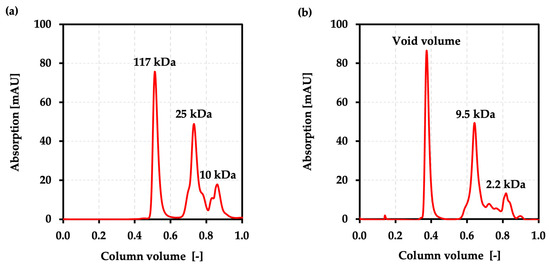
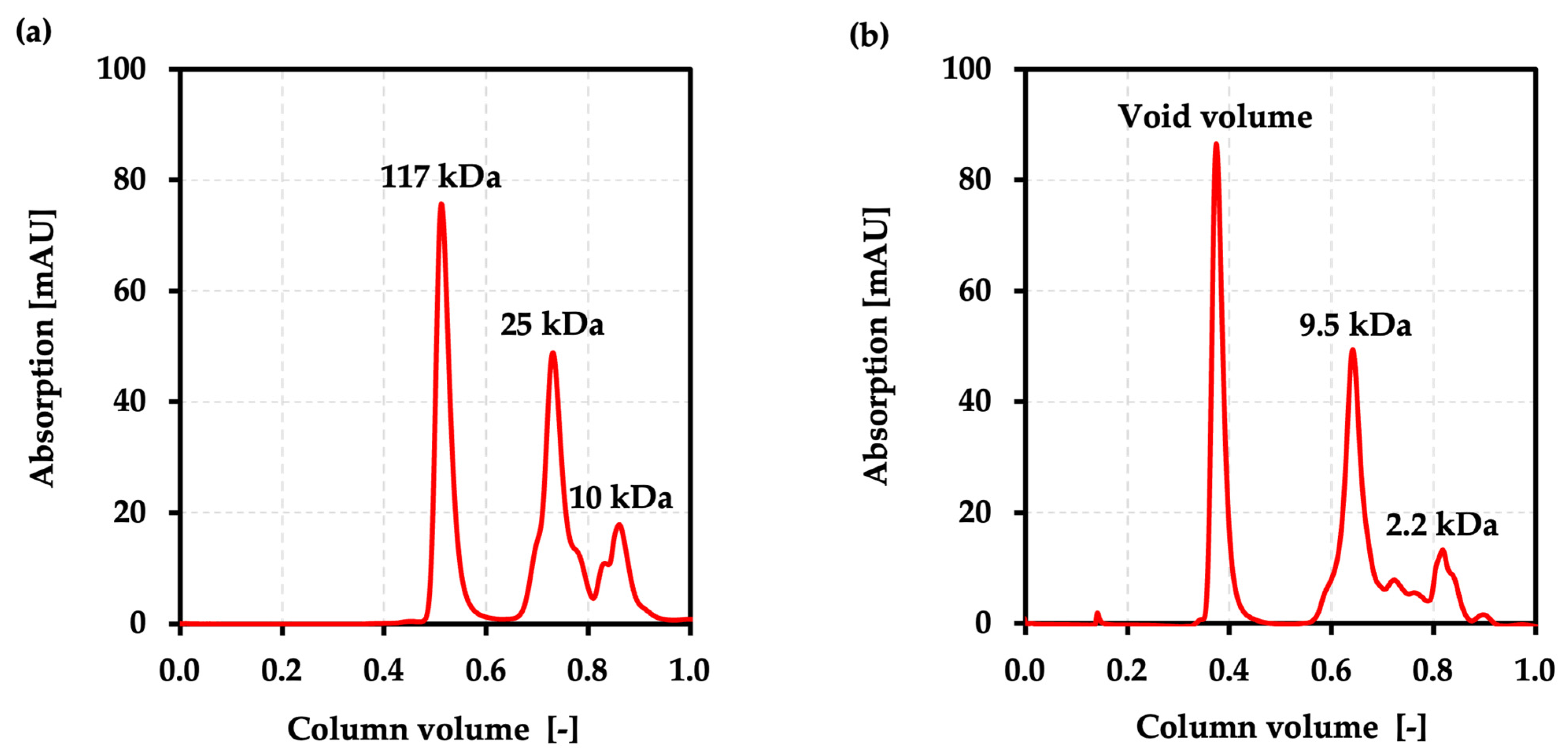
Therefore, the oligomeric composition of IMAC-purified LbADH preparations was analyzed by size exclusion chromatography for the wild type and all crystal contact variants. The LbADH T102E variant is shown as a representative example in Figure 3.
Figure 3.
Exemplary size exclusion chromatograms of IMAC-purified LbADH T102E before additional polishing. Shown is the UV absorbance at 280 nm as a function of the column volume. (a) Chromatogram recorded on a size exclusion column with a separation range of 10–200 kDa for globular proteins (Superdex® 200 Increase 10/300 GL), displaying a main peak corresponding to homotetrameric LbADH (~117 kDa) together with additional peaks at around 25 kDa and 10 kDa originating from low molecular weight impurities. (b) Higher-resolution size exclusion chromatogram of the same sample obtained on a column with a separation range of 3–75 kDa (Superdex® 75 Increase 10/300 GL), which resolves the low molecular weight species more clearly and reveals distinct impurity peaks at 9.5 kDa and 2.2 kDa. (c0 = 10 g·L−1, 20 mM HEPES-NaOH, 1 mM MgCl2, pH 7.0, T = 20 °C).
In this case, SEC on a column with a separation range of 10–200 kDa for globular proteins showed a dominant peak corresponding to homotetrameric LbADH T102E at ~117 kDa, while additional peaks at around 25 kDa and 10 kDa indicated the presence of low molecular weight impurities (Figure 3a). When the same sample was analyzed on a column with a separation range of 3–75 kDa, these species were resolved more clearly and could be assigned to distinct impurity peaks at 9.5 kDa and 2.2 kDa (Figure 3b). Thus, standard IMAC purification alone does not provide a sufficiently homogeneous homotetrameric preparation of the LbADH for nucleation studies.
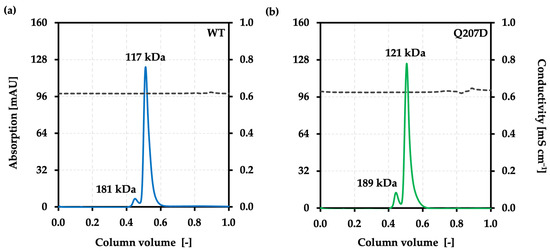
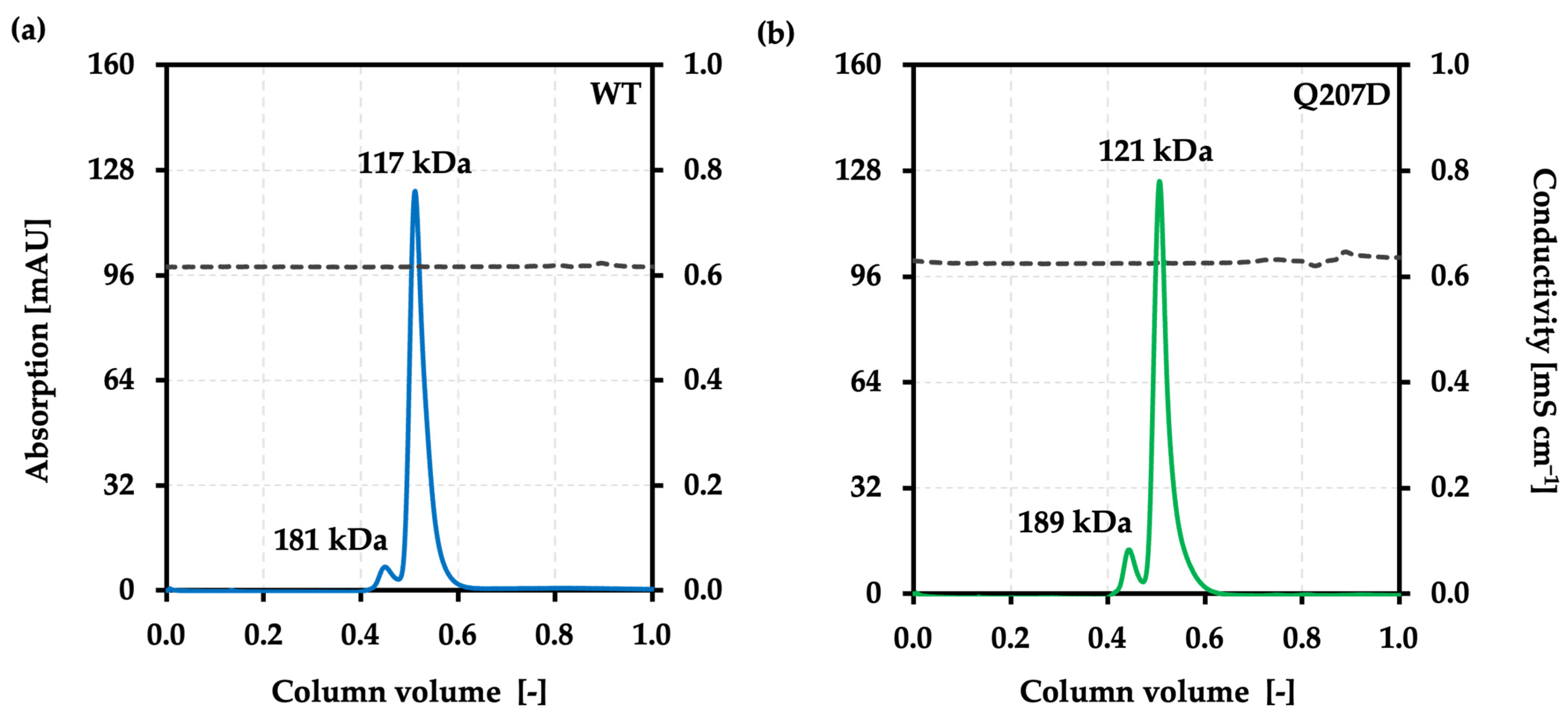
To remove these residual species, LbADH WT and the crystal contact variants were crystallized on a 1 L scale, washed, lyophilized, and re-solubilized in protein buffer before use. For all investigated LbADH variants, SEC chromatograms recorded on the 10–200 kDa column were dominated by a single major peak in the range 117–121 kDa, consistent with homotetrameric LbADH. Representative chromatograms for the WT and Q207D (Figure 4) show that, in addition to this predominant tetramer peak, only a minor high-molecular-weight oligomer peak at approximately 181–189 kDa remains, accounting for less than 5% of the total SEC peak areas. Since SEC yields apparent molecular masses that can be biased by hydrodynamic effects and non-ideal column interactions, we refrain from assigning this species to a specific oligomeric stoichiometry [18]. Moreover, no low molecular weight impurities are detectable above baseline.
Figure 4.
Size exclusion chromatograms of LbADH after crystallization, washing, lyophilization, and re-solubilization in protein buffer. Shown is the UV absorbance at 280 nm (solid lines) and the conductivity (gray traces) as a function of column volume for (a) the wild type (blue) and (b) the Q207D variant (green). In both cases, the chromatograms are dominated by a single major peak corresponding to homotetrameric LbADH (~117 kDa for WT and ~121 kDa for Q207D), while only minor high-molecular-weight oligomer peaks at 181 kDa and 189 kDa remain. Data were recorded on a size exclusion chromatography column with a separation range of approximately 10–200 kDa for globular proteins (Superdex® 200 Increase 10/300 GL; c0 = 10 g·L−1, 50 mM Tris-HCl, 25 mM MgCl2, 10 mM HEPES-NaOH, pH 7.0, T = 20 °C).
Quantitatively, the purity after re-solubilization determined from spectrophotometric measurements at 280 nm was between 97.6% and 98.4% for all investigated variants, and the homotetramer peak accounted for 95.2–97.9% of the total SEC peak area (Table 1). Combining both measures yields an overall homotetramer purity between 93.7% and 96.3% (Table 1). These results demonstrate that crystallization followed by lyophilization and re-solubilization provides highly pure, predominantly homotetrameric LbADH preparations that are suitable as starting solutions for the nucleation studies described below.
Table 1.
Purity metrics of Lactobacillus brevis alcohol dehydrogenase (LbADH) wild type and variants after crystallization, lyophilization, and re-solubilization. The ‘purity after re-solubilization’ denotes the fraction of dissolved protein determined from A280-based concentration measurements. The ‘homotetramer fraction (SEC peak area)’ corresponds to the relative area of the ~111 kDa tetramer peak in the size exclusion chromatograms as described in Section 2.3. The ‘homotetramer purity’ represents the resulting percentage of homogeneous tetrameric LbADH obtained by combining these two measures; all reported values are given in %.
3.2. Evaluation of Oligomerization and Nucleation Behavior via SEC and SE-HPLC
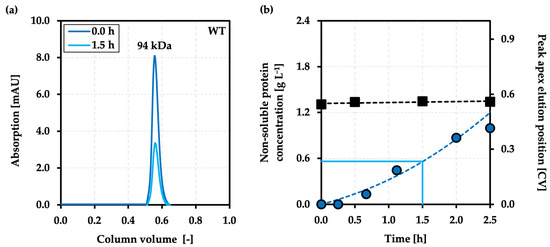
To examine whether stirred crystallization of LbADH involves detectable oligomeric intermediates, samples were withdrawn from 7 mL batch crystallizations, which were started from an initial soluble LbADH concentration of 5 g·L−1 and analyzed by SEC and SE-HPLC. Figure 5 illustrates the evolution of the oligomeric state of the LbADH WT during a stirred 7 mL crystallization, exemplarily shown for two sampling times.
Figure 5.
Analysis of oligomerization and crystallization batch progress of LbADH WT in a stirred 7 mL crystallizer by SEC and mass-balance evaluation. (a) Size exclusion chromatograms (A280 versus column volume) recorded on a column with a resolution range of 10–200 kDa for globular proteins (Superdex® 200 Increase 10/300 GL) for samples withdrawn at the start of the experiment (t = 0.0 h, dark blue) and after 1.5 h (light blue). Samples were diluted 1:10 in protein buffer prior to injection. (b) Time course of the non-soluble protein concentration cx(t) (blue circles) obtained from the crystallization mass balance, together with the corresponding logistic fit (blue dashed line), and evolution of the peak apex elution position expressed in column volumes (CV, black squares with linear connecting line) derived from the SEC chromatograms. The vertical and horizontal light-blue line marks the sampling time at t = 1.5 h shown in panel (a). (c0 = 5 g·L−1, 100 g·L−1 PEG 550 MME, ns = 150 rpm, 50 mM Tris-HCl, 25 mM MgCl2, 10 mM HEPES-NaOH, pH 7.0, T = 20 °C).
Samples were withdrawn only during the early part of the process, up to the point where the first LbADH crystals were detected by microscopy, in order to focus on nucleation and early crystal growth. Size exclusion analysis was performed on a column with a separation range of approximately 10–200 kDa for globular proteins (Superdex® 200 Increase 10/300 GL), enabling potentially higher- or lower-molecular-weight oligomers to be resolved from the homotetrameric species.
Figure 5 shows SEC chromatograms of the wild-type enzyme at the beginning of the crystallization (0.0 h) and after 1.5 h, together with the corresponding evolution of the non-soluble protein concentration and the peak apex elution position.
Despite the ten-fold dilution applied before loading the column, a pronounced homotetrameric peak was observed at all times at approximately 94 kDa, noting that the calibrated mass can be biased by the sample matrix (residual PEG/crystallization broth components) and thus should be interpreted as an apparent SEC value. Furthermore, no additional peaks corresponding to higher oligomeric species appeared (Figure 5a). Between 0.0 h and 1.5 h, the non-soluble protein concentration increased from 0.00 g·L−1 to 0.56 g·L−1 (Figure 5b), indicating substantial crystal formation. Over the same period, the peak apex elution position remained constant within the experimental resolution, whereas the homotetramer peak area decreased progressively, reflecting the transfer of protein from the soluble into the crystalline phase. Thus, within the size and sensitivity limits of the SEC method, no stable oligomeric precursors or aggregates were detected during nucleation and early growth of the LbADH WT.
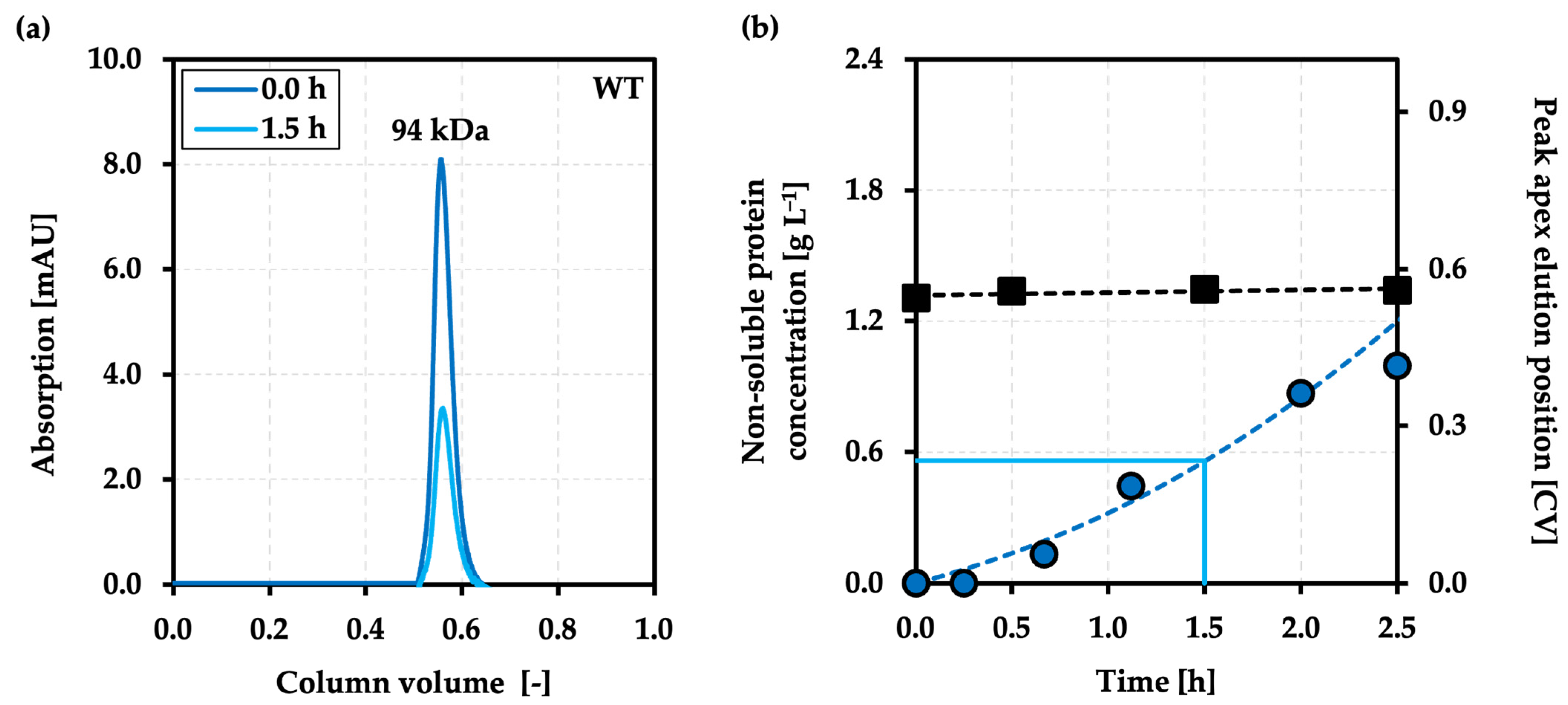
To increase size resolution and shorten analysis times, stirred 7 mL batch crystallization experiments of the LbADH WT, the Q207D, and T102E variants were additionally monitored by SE-HPLC using a size exclusion column with a nominal separation range of approximately 10–650 kDa for globular proteins (Inertsil WP300 Diol). For each variant, chromatograms were recorded at the start of the crystallization and at an early time point at which crystals had already been detected by microscopy (4.0 h with WT and Q207D, 1.5 h with T102E; Figure 6a,c,e). In all cases, the SE-HPLC chromatograms were dominated by a single major peak whose calibrated apex corresponded to apparent molecular masses between 118 kDa and 132 kDa, consistent with homotetrameric LbADH, and no additional well-separated peaks attributable to higher oligomers or low molecular weight fragments appeared within the accessible size range of the column. The chromatograms exhibited characteristic peak tailing due to the relatively high extra-column dead volume of the chromatography setup compared to conventional HPLC systems, but this tailing did not change systematically over time and therefore does not indicate the formation of discrete additional species.
Figure 6.
Size exclusion high-performance liquid chromatography (SE-HPLC) analysis of stirred 7 mL batch crystallization experiments with LbADH WT, the Q207D, and T102E variants. In panels (a,c,e), the absorbance at 280 nm is shown as a function of the column volume for samples taken at the beginning (0.0 h) and after a defined crystallization time (4.0 h with WT and Q207D, 1.5 h with T102E) using an SEC-HPLC column with a resolution range of 10–650 kDa (Inertsil WP300 Diol). Panels (b,d,f) display the corresponding time-dependent non-soluble protein concentration (circles) together with logistic fits (dashed lines), as well as the peak apex elution position expressed in column volumes (black squares with linear connecting line). The vertical and horizontal light lines mark the sampling times at 4 h (WT, Q207D) and 1.5 h (T102E), shown in panels (a,c,e). The error bars result from carrying out the experiments twice. (c0 = 5 g·L−1, 100 g·L−1 PEG 550 MME, ns = 150 rpm, 50 mM Tris-HCl, 25 mM MgCl2, 10 mM HEPES-NaOH, pH 7.0, T = 20 °C).
Offline mass-balance analysis of the same crystallization experiments showed that, at the times sampled for SE-HPLC, substantial amounts of protein had already been crystallized, with non-soluble protein concentrations of 2.38 g·L−1 (WT), 0.49 g·L−1 (Q207D), and 4.82 g·L−1 (T102E), see Figure 6b,d,f. Over the corresponding time intervals, the tetramer peak areas decreased in accordance with the increasing non-soluble fractions, whereas the peak apex elution positions remained essentially constant within the experimental resolution for all three variants. Taken together with the SEC results, these SE-HPLC data demonstrate that under the stirred crystallization conditions investigated here, nucleation and early crystal growth of LbADH proceed without the accumulation of long-lasting oligomeric intermediates that could be resolved by size-based chromatographic methods.
3.3. Time-Resolved MADLS Analysis of Nucleation Kinetics
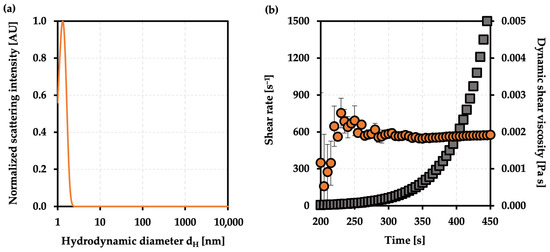
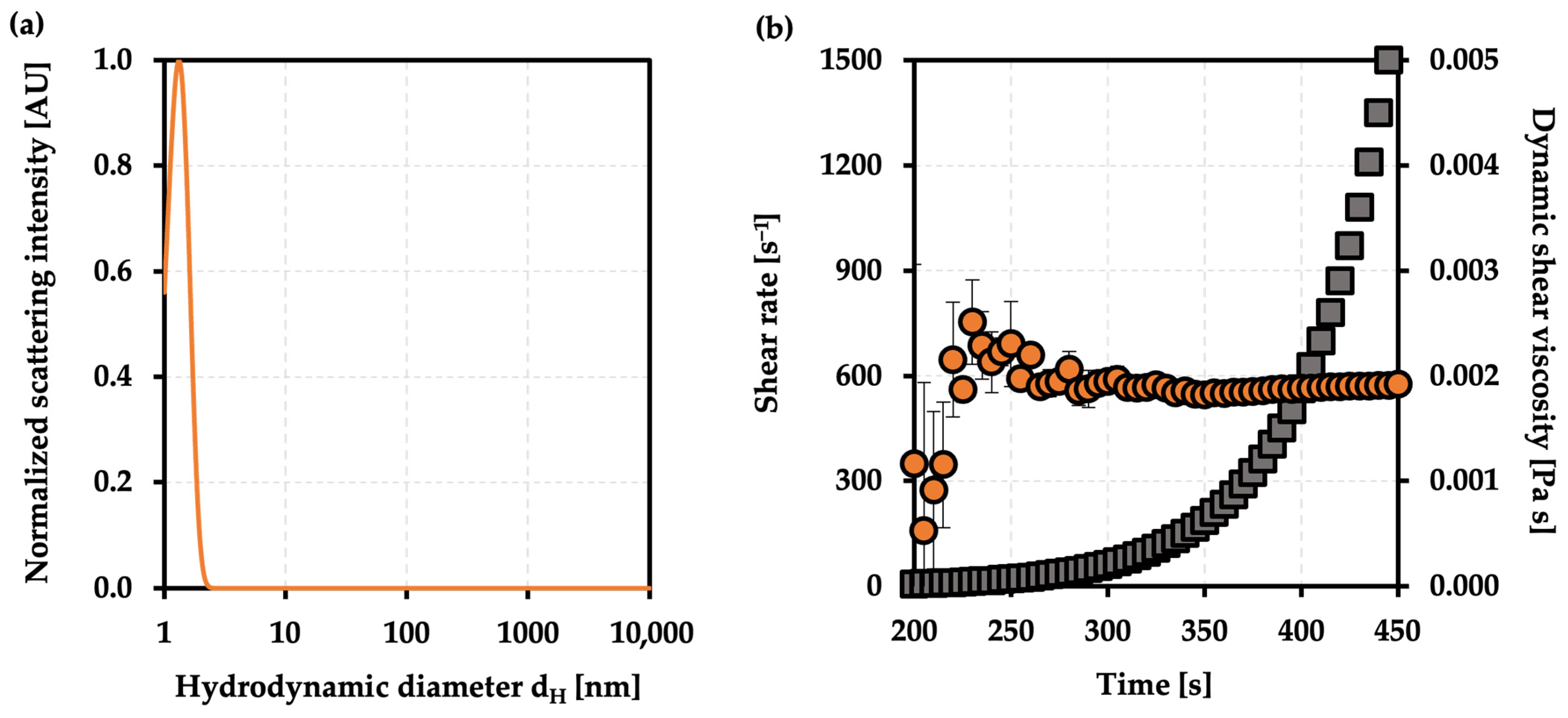
For the rheological and light-scattering characterization of the crystallization medium, a solution containing 100 g·L−1 PEG 550 MME in protein buffer was first analyzed in the absence of protein. MADLS revealed a narrow intensity-weighted size distribution with a single peak at a hydrodynamic diameter of dH = 1.7 ± 0.4 nm, shown exemplarily in Figure 7a, indicating that the dissolved PEG contributes only a small, well-defined background signal to subsequent measurements. This hydrodynamic size is consistent with literature data for short polyethylene glycol chains with molar masses of 400–600 g·mol−1, which report hydrodynamic diameters on the order of 1.2–1.4 nm in aqueous solution (81.5 mM NaCl, 25 °C) [40]. Independent rheological measurements of the same solution with a rotational rheometer showed a constant dynamic shear viscosity of η ≈ 1.8 × 10⁻³ Pa·s over a shear-rate range of 0–1500 s−1, confirming Newtonian behavior of the crystallization medium under the conditions used for the MADLS experiments (Figure 7b) [41].
Figure 7.
Multi-angle dynamic light scattering and rheological characterization of the crystallization medium containing 100 g·L−1 PEG 550 monomethyl ether (MME). (a) Normalized scattering intensity (I/Imax) as a function of the hydrodynamic diameter dH obtained from MADLS, where the intensity was scaled to the maximum value of each distribution (I/Imax = 1) and an apex peak position of dH = 1.32 nm. (b) Applied shear rate in s−1 (gray squares) and dynamic shear viscosity in Pa s (orange circles) as a function of time. The error bars result from carrying out the experiments twice. (100 g·L−1 PEG 550 MME, 50 mM Tris-HCl, 25 mM MgCl2, 10 mM HEPES-NaOH, pH 7.0, T = 20 °C).
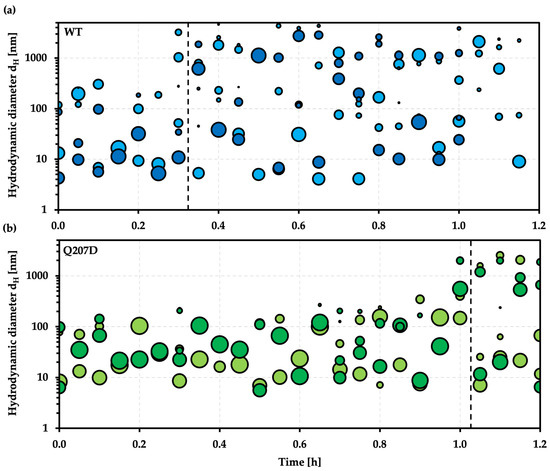
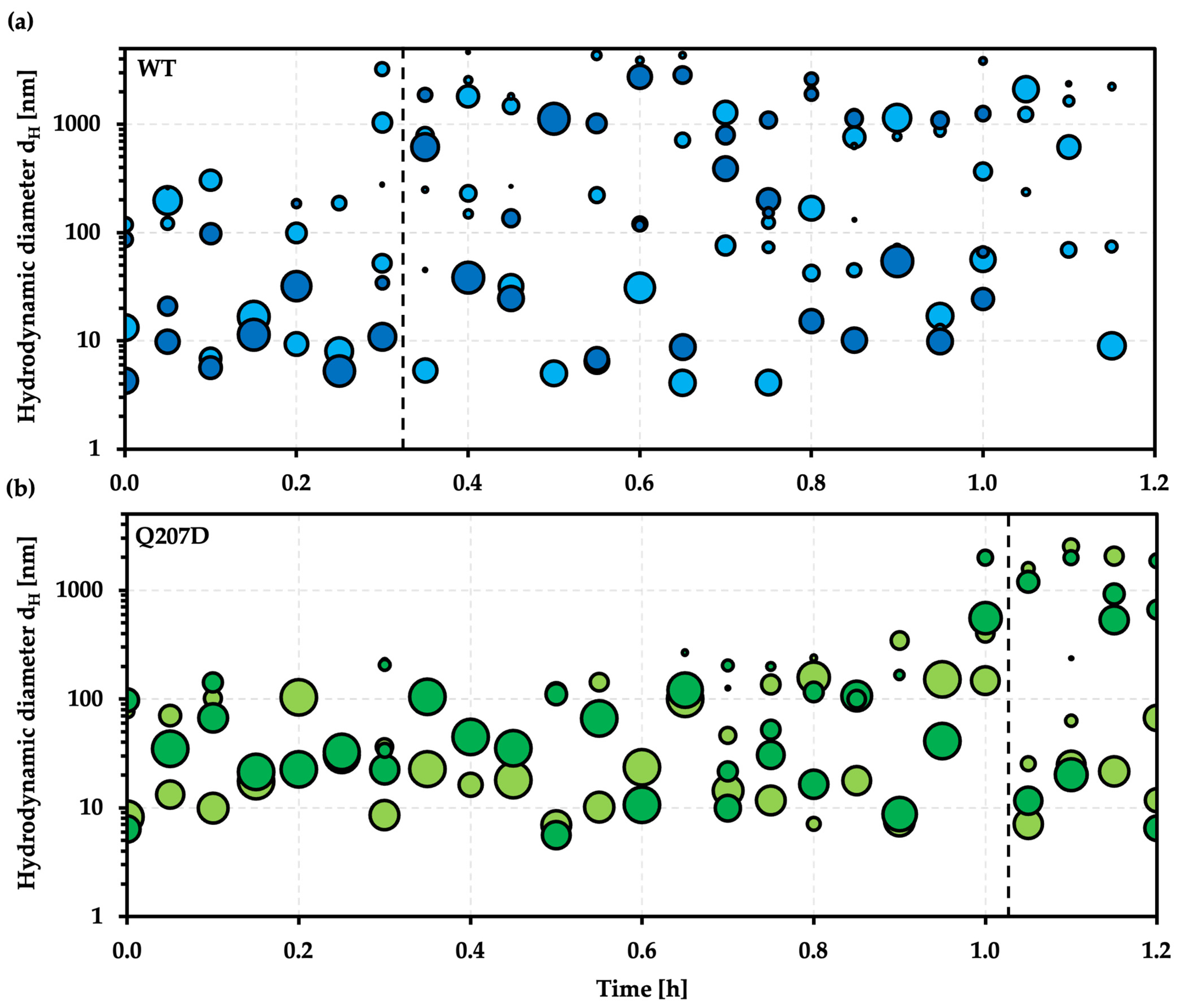
Time-resolved MADLS measurements were then performed during stirred 7 mL batch crystallizations of LbADH at an initial soluble protein concentration of c0 = 5 g·L−1. For the WT and the Q207D mutant, the evolution of the intensity-weighted hydrodynamic diameter distributions is summarized as bubble plots, where the bubble positions represent peak diameters and sampling times, and the bubble areas represent the normalized peak areas (Figure 8). At the beginning of the experiments, both variants showed dominant peaks at dH = 8.8 ± 6.4 nm (WT) and dH = 7.3 ± 1.3 nm (Q207D), in good agreement with the expected hydrodynamic size of tetrameric LbADH estimated from the crystal structure and density-based volume calculation (Equation (5)), together with much weaker peaks at 102.1 ± 22.1 nm for the WT and 87.2 ± 14.2 nm for the Q207D. The latter fluctuated in intensity and sometimes disappeared completely, and is therefore most likely caused by trace, non-reactive impurities or dust particles [29,31]. Because the scattered intensity in DLS scales approximately with the sixth power of the hydrodynamic diameter (I ∝ dH6), even such rare larger contaminants appear strongly amplified in the intensity-weighted representation, while their actual mass fraction in solution is negligible [31]. As crystallization proceeded, additional peaks in the range of roughly 4–300 nm appeared and disappeared transiently, indicating the formation of dynamic cluster populations and small oligomeric species alongside the predominant tetramer without allowing an unambiguous assignment of specific aggregation numbers from MADLS alone. The nucleation burst, as defined in Section 2.6, coincided in all cases with a rapid build-up of intensity at dH ≳ 1000 nm and the onset of visible turbidity in the crystallizer, marking the transition from nanometer clusters to a coarse suspension of crystalline particles. Compared to the WT (tnuc,end = 0.325 ± 0.035 h), Q207D (tnuc,end = 1.025 ± 0.035 h) showed a delayed appearance and weaker growth of the large-diameter peaks. This is consistent with Q207D introducing an acidic side chain at a crystal contact region and thereby changing the local electrostatic environment, which has been reported to attenuate crystallizability at position 207. In line with this, nucleation-associated clustering is delayed and less pronounced compared to the WT.
Figure 8.
Time-resolved hydrodynamic diameter distributions during stirred 7 mL batch crystallization of LbADH measured with the flow-through MADLS setup. (a) Bubble plot of the LbADH WT (light and dark blue), where each bubble represents a peak in the intensity-weighted size distribution at its hydrodynamic diameter dH and sampling time. (b) Corresponding data for the LbADH Q207D variant (light and dark green). Bubble areas were defined from the normalized intensity peak areas, providing a qualitative measure of the relative contribution of each size population at a given time. The light and dark colors indicate two independent experimental repeats and the black dotted vertical lines indicate tnuc,end. (c0 = 5 g·L−1, 100 g·L−1 PEG 550 MME, ns = 150 rpm, 50 mM Tris-HCl, 25 mM MgCl2, 10 mM HEPES-NaOH, pH 7.0, T = 20 °C).
The comparison of the two independent repetitions for each system (light and dark bubbles in Figure 8) reveals noticeable variability in the detailed cluster size distributions between runs, underlining the inherently stochastic nature of cluster formation and indicating that MADLS-derived cluster populations should be interpreted in a primarily qualitative manner.
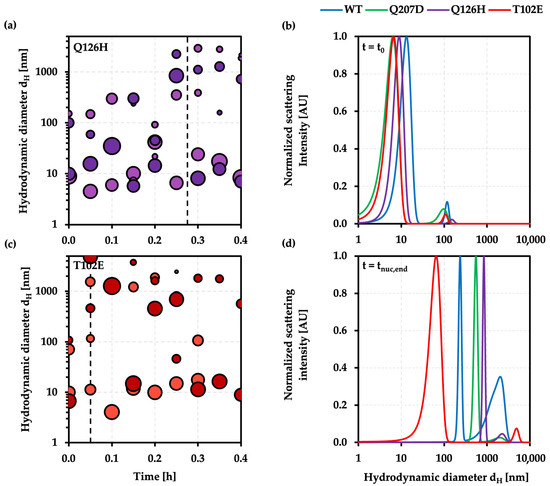
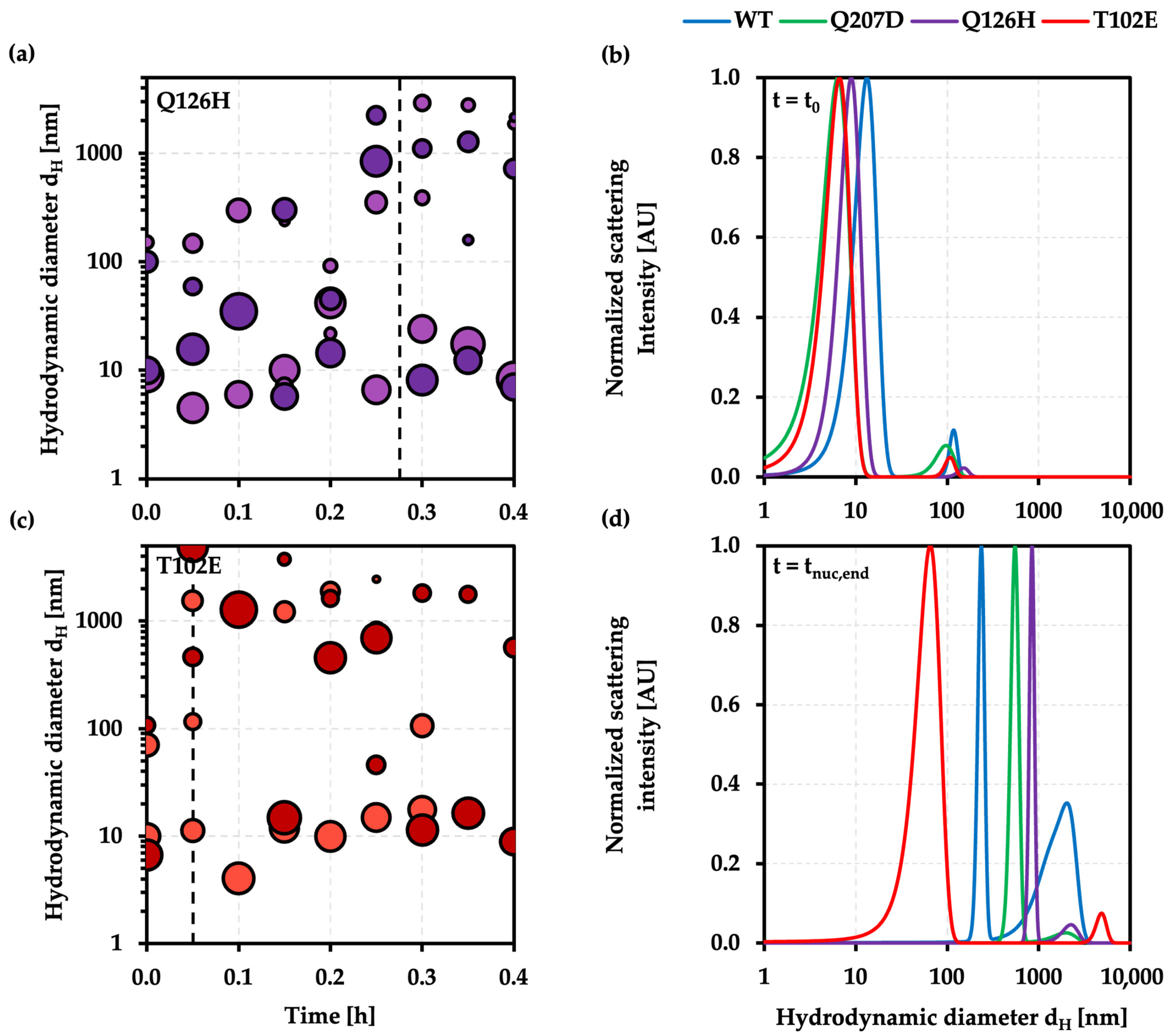
An analogous MADLS analysis was performed for the crystal contact variants Q126H and T102E (Figure 9a,c), selected as crystal contact variants with enhanced crystallizability in which structural analyses suggest electrostatic interface strengthening via salt-bridge formation (T102E) or predominantly polar/hydrogen-bonding contributions (Q126H). Both proteins started from bimodal size distributions dominated by the tetrameric species, with initial intensity maxima at dH = 9.8 ± 1.3 nm and 125.9 ± 36.6 nm (Q126H), and at dH = 7.3 ± 1.3 nm and 87.2 ± 14.2 nm (T102E). The normalized intensity distributions at t = 0 h (Figure 9b) confirm this behavior for all four variants, showing dominant tetramer peaks at dH = 13.3 nm (WT), 6.4 nm (Q207D), 10.7 nm (Q126H), and 6.7 nm (T102E), accompanied by much weaker peaks at larger hydrodynamic diameters of 117.7, 97.2, 98.6, and 107.7 nm, respectively. During crystallization, Q126H developed pronounced transient cluster populations in the range of several tens to a few hundred nanometers, consistent with its relatively fast nucleation, with tnuc,end = 0.275 ± 0.035 h. With the even faster-nucleating T102E variant (tnuc,end = 0.050 h), large-diameter contributions appeared already at the earliest sampling times and rapidly shifted towards and beyond the upper end of the accessible MADLS size window, so that intermediate cluster sizes could only be captured to a limited extent. The normalized intensity distributions at t = tnuc,end (Figure 9d) are dominated by broad peaks at high hydrodynamic diameters with all variants, illustrating the build-up of large cluster and crystal populations by the end of the nucleation burst.
Figure 9.
MADLS characterization of nucleation behavior of the LbADH Q126H and T102E variants. (a) Bubble plot of the time-resolved, intensity-weighted hydrodynamic diameter distributions of the Q126H mutant, where each bubble marks a peak at its hydrodynamic diameter dH and sampling time. Bubble areas are proportional to the normalized intensity peak areas and thus reflect the relative contribution of each size population. (c) Corresponding bubble plot of the T102E mutant. (b) Exemplary normalized scattering intensity distributions I/Imax as a function of dH at the start of crystallization (t = 0) of the WT (blue), Q207D (green), Q126H (purple), and T102E (red) mutants. (d) Normalized intensity distributions at the end of the nucleation burst (t = tnuc,end) of the same protein variants, highlighting the build-up of larger cluster populations during nucleation. The light and dark bubble colors indicate two independent experimental repeats and the black dotted vertical lines indicate tnuc,end. (c0 = 5 g·L−1, 100 g·L−1 PEG 550 MME, ns = 150 rpm, 50 mM Tris-HCl, 25 mM MgCl2, 10 mM HEPES-NaOH, pH 7.0, T = 20 °C).
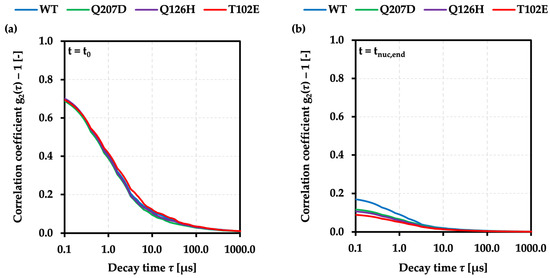
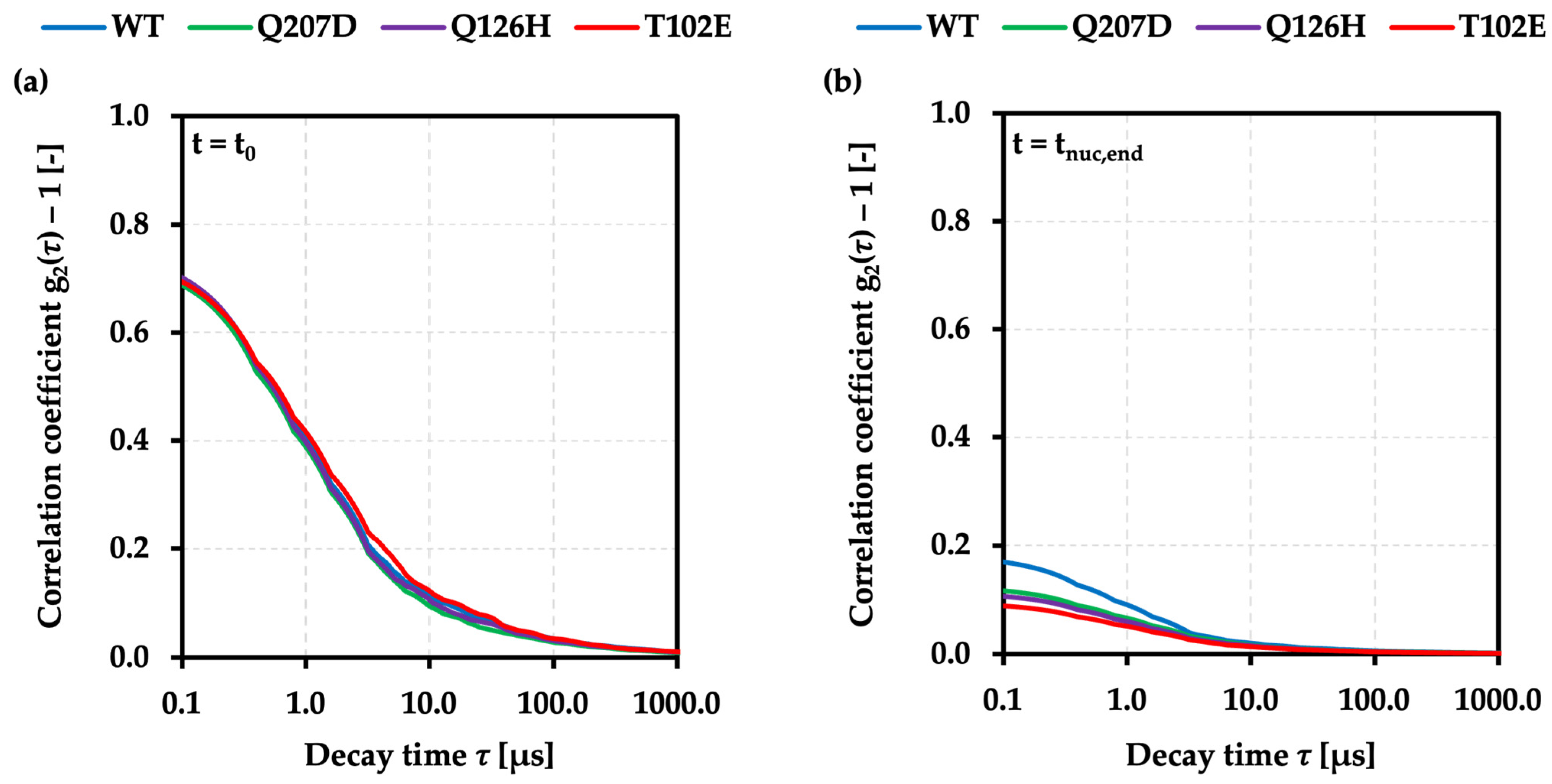
To illustrate how the onset of turbidity affects the primary correlation signal, Figure 10 compares representative backscatter autocorrelation functions g2(τ) − 1 recorded at t = 0 h and at t = tnuc,end. At t = tnuc,end, the reduced intercept and the visibly flatter decay are consistent with a loss of correlation contrast due to increasing turbidity and the onset of multiple scattering, which can distort autocorrelation functions even for weakly turbid samples [28].
Figure 10.
Backscatter intensity autocorrelation functions g2(τ) − 1 during intermittent MADLS monitoring of stirred 7 mL LbADH crystallizations. (a) Autocorrelation functions at t = t0. (b) Autocorrelation functions at t = tnuc,end, corresponding to the onset of visible turbidity in the crystallizer. Curves are shown for the LbADH WT (blue), Q207D (green), Q126H (purple), and T102E (red). (c0 = 5 g·L−1, 100 g·L−1 PEG 550 MME, ns = 150 rpm, 50 mM Tris-HCl, 25 mM MgCl2, 10 mM HEPES-NaOH, pH 7.0, T = 20 °C).
To relate these qualitative observations to kinetic descriptors, the MADLS time series were evaluated with the nucleation model described in Section 2.6, and the resulting model parameters are summarized in Table 2.
Table 2.
Comparison of the nucleation model parameter results of Lactobacillus brevis alcohol dehydrogenase WT and variants obtained from MADLS-based kinetic analysis, listing the end of the nucleation burst tnuc,end in h, the crystallized fraction X(tnuc,end) in % of the total protein, the critical soluble protein concentration ccrit in g·L−1 and the apparent primary nucleation rate constant knuc in h−1.
The crystallized fractions X(tnuc,end) of WT, Q126H, K32A, and D54F lie in a comparable range between 1.68 ± 0.20% and 3.77 ± 0.88%, indicating that these variants transfer a similar proportion of protein into the non-soluble phase during the nucleation burst. In contrast, T102E stands out with a much higher crystallized fraction of 12.28%; however, this value should be interpreted in the context of the experimental timing, as the first MADLS sampling point for T102E already corresponds to a state in which a substantial fraction of the protein has left the soluble phase. The crystallized fraction of the mutant Q207D, on the other hand, remains at only 0.04%, even though the MADLS data also show the formation of cluster populations comparable to the WT, which is, although in line with its generally poor crystallization tendency, and suggests that a substantial fraction of the protein accumulates in slowly converting pre-crystalline states during nucleation.
The critical soluble protein concentrations ccrit are confined to a narrow window between 4.81 ± 0.04 and 4.99 g·L−1 with all protein variants except T102E, which reaches a slightly lower value of 4.39 g·L−1.
The apparent primary nucleation rate constants knuc increase systematically from 0.13 h−1 (Q207D) to 1.34 ± 0.09 h−1 (WT), to 1.70 ± 0.15 h−1 (Q126H), to 3.42 ± 0.44 h−1 (K32A), to 5.45 h−1 (D54F), and to 21.57 h−1 (T102E), mirroring the previously reported trends in crystallization behavior of these crystal contact variants [16,17,18,20,21]. Furthermore, this ordering is consistent with the ΔΔG values calculated by Hermann et al. [20] for the same variants, where ΔΔG denotes the free energy difference between mutant and wild-type crystallization, providing a quantitative thermodynamic explanation for the observed contact-dependent trends.
Additionally, the resulting ordering of knuc can be explained by the strengthening or weakening of intermolecular interactions at the crystal contacts. Variants designed to introduce or enhance attractive electrostatic (T102E), polar and hydrogen-bonding (Q126H), ion-mediated electrostatic (K32A), or aromatic contact interactions (D54F) are expected to promote persistent early protein–protein interactions and thereby facilitate the formation of stable nuclei, accelerating primary nucleation. Conversely, the introduction of an acidic side chain in the contact region (Q207D) alters the local electrostatic environment in a way that makes productive association less favorable, consistent with the significantly reduced knuc. Since many DLS nucleation studies are conducted in quiescent microliter droplets or capillaries [42], the absolute kinetics reported here should be understood as stirred crystallizer specific. However, the mutation-dependent trends remain directly comparable.
4. Conclusions
In this work, we combined preparative crystallization, SEC/SE-HPLC analytics, and in situ MADLS to resolve the early stages of stirred protein crystallization with Lactobacillus brevis alcohol dehydrogenases. A first key result is that crystallization preceded by lyophilization and re-solubilization yields highly pure, predominantly homotetrameric LbADH preparations that are well suited as starting points for mechanistic nucleation studies, while standard IMAC purification alone leaves low molecular weight impurities and minor oligomeric by-products. The SEC and SE-HPLC data show that, under the conditions studied, nucleation proceeds without the accumulation of long-lasting oligomeric intermediates that are resolvable by chromatographic methods.
Time-resolved MADLS, interpreted with a dedicated mesoscale nucleation model, bridges this gap by providing access to the transient build-up and decay of cluster populations and by yielding quantitative descriptors such as the end of the nucleation burst, the crystallized fraction, the critical soluble protein concentration, and an apparent primary nucleation rate constant for each variant. All LbADH variants were found to nucleate from a narrow, tetramer-dominated size distribution, while the crystal contact mutations modulate the timing and intensity of the nucleation burst without strongly affecting the critical soluble concentration. Moreover, the ordering of the primary nucleation rate constants can be rationalized by the modification of crystal contact interactions. In particular, electrostatic strengthening through salt-bridge formation (T102E) yields the fastest nucleation, whereas polar and hydrogen-bonding enhancement (Q126H), ion-mediated electrostatic stabilization (K32A), and aromatic contact modification (D54F) lead to intermediate acceleration. By contrast, introducing an acidic side chain in the contact region (Q207D) attenuates nucleation and delays the emergence of large-diameter populations. This demonstrates that combining in situ multi-angle DLS with a simple kinetic framework is a powerful strategy to compare nucleation properties of engineered protein variants and to link crystal contact design to nucleation behavior in technically relevant, stirred crystallizers.
Supplementary Materials
The following supporting information can be downloaded at: https://www.mdpi.com/article/10.3390/cryst16020148/s1, Figure S1. Comparison of stirred 7 mL batch and 7 mL flow-through crystallizers for LbADH WT and crystal contact variants. Time evolution of the non-soluble protein concentration during crystallization of (a) WT, (b) Q207D, (c) K32A, (d) Q126H, (e) D54F and (f) T102E. Green symbols denote experiments performed in the standard stirred 7 mL batch crystallizer, red symbols denote experiments in the stirred 7 mL crystallizer integrated into the external MADLS flow-through setup. Solid lines represent logistic fits according to Equation (3). (c0 = 5 g·L−1, 100 g·L−1 PEG 550 MME, ns = 150 rpm, 50 mM Tris-HCl, 25 mM MgCl2, 10 mM HEPES-NaOH, pH 7.0, T = 20 °C). Figure S2. Calibration of the chromatographic columns used for SEC and SE-HPLC analysis of the LbADH. (a) Calibration curve for the size exclusion column with a separation range of approximately 10–200 kDa for globular proteins (Superdex® 200 Increase 10/300 GL), obtained from injections of the low molecular weight gel filtration standard. (b) Corresponding calibration for the column with a separation range of approximately 3–75 kDa (Superdex® 75 Increase 10/300 GL). (c) Calibration of the SE-HPLC column with an effective separation range up to about 650 kDa (Inertsil WP300 Diol) using a protein standard mixture. Symbols denote experimental data points and solid lines the linear regression fits. The respective fit equations and coefficients of determination are indicated in each panel and were used to convert elution positions into apparent molecular masses in the main text. Table S1. Comparison of the crystallization variables and results with the starting concentration c0, the equilibrium concentration ceq after 24 h, and the yields Y of the LbADH WT and crystal contact variants obtained from 7 mL stirred batch reactor and 7 mL stirred bypass reactor crystallizations. The values are calculated from the mass balance using Equation (2). The parameters of the logistic fit functions of Equation (3) are also shown (maximum concentration cmax,X, crystal growth factors kX, and inflection points t1/2,X). Furthermore, the coefficient of determination R2 and the calculated root mean square deviations (RMSD) between the fitted functions are given to illustrate the deviations. (c0 = 5 g·L−1, 100 g·L−1 PEG 550 MME, ns = 150 rpm, 50 mM Tris-HCl, 25 mM MgCl2, 10 mM HEPES-NaOH, pH 7.0, T = 20 °C).
Author Contributions
Conceptualization, J.M. and D.W.-B.; methodology, J.M. and D.B.; validation, J.M.; investigation, J.M.; writing—original draft preparation, J.M.; visualization, J.M.; writing—review and editing, D.B. and D.W.-B.; supervision, project administration, and funding acquisition, D.W.-B. All authors have read and agreed to the published version of the manuscript.
Funding
This research was funded by the German Research Foundation (DFG); research project number WE 2715/22-1.
Data Availability Statement
All data generated or analyzed during this study are included in this article, and the Supplementary Materials are available from the corresponding author upon request.
Acknowledgments
The authors thank Lumatix Biotech GmbH, Garching, for providing protein downstream equipment and expertise. Many thanks for having the possibility to use the dynamic light scattering equipment at the Analytic Core Facility of the Catalysis Research Center (TUM, Garching). Support of J.M. and D.B. from the TUM Graduate School is gratefully acknowledged.
Conflicts of Interest
The authors declare no conflicts of interest.
References
- Chayen, N.E.; Saridakis, E. Protein Crystallization: From Purified Protein to Diffraction-Quality Crystal. Nat. Methods 2008, 5, 147–153. [Google Scholar] [CrossRef] [Scilit]
- Ghosh, R. Membrane-Based Micro-Volume Dialysis Method for Rapid and High-Throughput Protein Crystallization. Processes 2023, 11, 2148. [Google Scholar] [CrossRef] [Scilit]
- Yang, X.-Z.; Zhang, C.-Y.; Wang, Q.-J.; Guo, Y.-Z.; Dong, C.; Yan, E.-K.; Liu, W.-J.; Zheng, X.-W.; Yin, D.-C. Utilization of Cyclodextrins and Its Derivative Particles as Nucleants for Protein Crystallization. Cryst. Growth Des. 2017, 17, 6189–6200. [Google Scholar] [CrossRef] [Scilit]
- Hubbuch, J.; Kind, M.; Nirschl, H. Preparative Protein Crystallization. Chem. Eng. Technol. 2019, 42, 2275–2281. [Google Scholar] [CrossRef] [Scilit]
- Gottschalk, U. Bioseparation in Antibody Manufacturing: The Good, The Bad and The Ugly. Biotechnol. Prog. 2008, 24, 496–503. [Google Scholar] [CrossRef] [Scilit]
- Walla, B.; Bischoff, D.; Janowski, R.; Von Den Eichen, N.; Niessing, D.; Weuster-Botz, D. Transfer of a Rational Crystal Contact Engineering Strategy between Diverse Alcohol Dehydrogenases. Crystals 2021, 11, 975. [Google Scholar] [CrossRef] [Scilit]
- Walla, B.; Bischoff, D.; Corona Viramontes, I.; Montes Figueredo, S.; Weuster-Botz, D. Recent Advances in the Monitoring of Protein Crystallization Processes in Downstream Processing. Crystals 2023, 13, 773. [Google Scholar] [CrossRef] [Scilit]
- Walla, B.; Maslakova, A.; Bischoff, D.; Janowski, R.; Niessing, D.; Weuster-Botz, D. Rational Introduction of Electrostatic Interactions at Crystal Contacts to Enhance Protein Crystallization of an Ene Reductase. Biomolecules 2025, 15, 467. [Google Scholar] [CrossRef] [Scilit]
- Walla, B.; Dietrich, A.-M.; Brames, E.; Bischoff, D.; Fritzsche, S.; Castiglione, K.; Janowski, R.; Niessing, D.; Weuster-Botz, D. Application of a Rational Crystal Contact Engineering Strategy on a Poly(Ethylene Terephthalate)-Degrading Cutinase. Bioengineering 2025, 12, 561. [Google Scholar] [CrossRef] [Scilit] [PubMed]
- Erdemir, D.; Lee, A.Y.; Myerson, A.S. Nucleation of Crystals from Solution: Classical and Two-Step Models. Acc. Chem. Res. 2009, 42, 621–629. [Google Scholar] [CrossRef] [Scilit]
- Smeets, P.J.M.; Finney, A.R.; Habraken, W.J.E.M.; Nudelman, F.; Friedrich, H.; Laven, J.; De Yoreo, J.J.; Rodger, P.M.; Sommerdijk, N.A.J.M. A Classical View on Nonclassical Nucleation. Proc. Natl. Acad. Sci. USA 2017, 114, E7882–E7890. [Google Scholar] [CrossRef] [Scilit]
- Zahn, D. Thermodynamics and Kinetics of Prenucleation Clusters, Classical and Non-Classical Nucleation. ChemPhysChem 2015, 16, 2069–2075. [Google Scholar] [CrossRef] [Scilit]
- Nikolić, D.D.; Frawley, P.J. Application of the Lagrangian Meshfree Approach to Modelling of Batch Crystallisation: Part I—Modelling of Stirred Tank Hydrodynamics. Chem. Eng. Sci. 2016, 145, 317–328. [Google Scholar] [CrossRef] [Scilit]
- Lee, I.S.; Evans, J.M.B.; Erdemir, D.; Lee, A.Y.; Garetz, B.A.; Myerson, A.S. Nonphotochemical Laser Induced Nucleation of Hen Egg White Lysozyme Crystals. Cryst. Growth Des. 2008, 8, 4255–4261. [Google Scholar] [CrossRef] [Scilit]
- Castro, F.; Ferreira, A.; Teixeira, J.A.; Rocha, F. Protein Crystallization As a Process Step in a Novel Meso Oscillatory Flow Reactor: Study of Lysozyme Phase Behavior. Cryst. Growth Des. 2016, 16, 3748–3755. [Google Scholar] [CrossRef] [Scilit]
- Nowotny, P.; Hermann, J.; Li, J.; Krautenbacher, A.; Klöpfer, K.; Hekmat, D.; Weuster-Botz, D. Rational Crystal Contact Engineering of Lactobacillus Brevis Alcohol Dehydrogenase To Promote Technical Protein Crystallization. Cryst. Growth Des. 2019, 19, 2380–2387. [Google Scholar] [CrossRef] [Scilit]
- Grob, P.; Huber, M.; Walla, B.; Hermann, J.; Janowski, R.; Niessing, D.; Hekmat, D.; Weuster-Botz, D. Crystal Contact Engineering Enables Efficient Capture and Purification of an Oxidoreductase by Technical Crystallization. Biotechnol. J. 2020, 15, 2000010. [Google Scholar] [CrossRef] [Scilit] [PubMed]
- Grob, P. Crystal Contact Engineering to Enhance Protein Crystallization Processes. Ph.D. Thesis, Technical University Munich, Munich, Germany, 2020. [Google Scholar]
- Hermann, J.; Nowotny, P.; Schrader, T.E.; Biggel, P.; Hekmat, D.; Weuster-Botz, D. Neutron and X-Ray Crystal Structures of Lactobacillus Brevis Alcohol Dehydrogenase Reveal New Insights into Hydrogen-Bonding Pathways. Acta Crystallogr. F Struct. Biol. Commun. 2018, 74, 754–764. [Google Scholar] [CrossRef] [Scilit]
- Hermann, J.; Bischoff, D.; Grob, P.; Janowski, R.; Hekmat, D.; Niessing, D.; Zacharias, M.; Weuster-Botz, D. Controlling Protein Crystallization by Free Energy Guided Design of Interactions at Crystal Contacts. Crystals 2021, 11, 588. [Google Scholar] [CrossRef] [Scilit]
- Mentges, J.; Bischoff, D.; Walla, B.; Weuster-Botz, D. In Situ Microscopy with Real-Time Image Analysis Enables Online Monitoring of Technical Protein Crystallization Kinetics in Stirred Crystallizers. Crystals 2024, 14, 1009. [Google Scholar] [CrossRef] [Scilit]
- Tian, W.; Li, W.; Yang, H. Protein Nucleation and Crystallization Process with Process Analytical Technologies in a Batch Crystallizer. Cryst. Growth Des. 2023, 23, 5181–5193. [Google Scholar] [CrossRef] [Scilit]
- Li, M.; Wilkinson, D.; Patchigolla, K.; Mougin, P.; Roberts, K.J.; Tweedie, R. On-Line Crystallization Process Parameter Measurements Using Ultrasonic Attenuation Spectroscopy. Cryst. Growth Des. 2004, 4, 955–963. [Google Scholar] [CrossRef] [Scilit]
- Kim, H.-J.; Kim, K.-J. Quantitative Study on Polymorphic Form in Solution Crystallization of Clopidogrel Hydrogen Sulfate. Ind. Eng. Chem. Res. 2009, 48, 11133–11139. [Google Scholar] [CrossRef] [Scilit]
- Crutzen, J.; Zeng, L.; Svärd, M. Mesoscale Clusters in Multicomponent Systems: The Effect of Solution Preparation and Pre-Treatment on Primary Nucleation of a Carbamazepine-Saccharin Cocrystal. CrystEngComm 2023, 25, 4048–4057. [Google Scholar] [CrossRef] [Scilit]
- Yu, Y.; Wang, X.; Oberthür, D.; Meyer, A.; Perbandt, M.; Duan, L.; Kang, Q. Design and Application of a Microfluidic Device for Protein Crystallization Using an Evaporation-Based Crystallization Technique. J. Appl. Crystallogr. 2012, 45, 53–60. [Google Scholar] [CrossRef] [Scilit]
- Malkin, A.J.; McPherson, A. Light-Scattering Investigations of Nucleation Processes and Kinetics of Crystallization in Macromolecular Systems. Acta Crystallogr. D Biol. Crystallogr. 1994, 50, 385–395. [Google Scholar] [CrossRef] [Scilit]
- Lomakin, A.; Teplow, D.B.; Benedek, G.B. Quasielastic Light Scattering for Protein Assembly Studies. In Amyloid Proteins; Humana Press: Totowa, NJ, USA, 2004; Volume 299, pp. 153–174. ISBN 978-1-59259-874-8. [Google Scholar]
- Sharma, A.; Beirne, J.; Khamar, D.; Maguire, C.; Hayden, A.; Hughes, H. Evaluation and Screening of Biopharmaceuticals Using Multi-Angle Dynamic Light Scattering. AAPS PharmSciTech 2023, 24, 84. [Google Scholar] [CrossRef] [Scilit] [PubMed]
- Schubert, R.; Meyer, A.; Baitan, D.; Dierks, K.; Perbandt, M.; Betzel, C. Real-Time Observation of Protein Dense Liquid Cluster Evolution during Nucleation in Protein Crystallization. Cryst. Growth Des. 2017, 17, 954–958. [Google Scholar] [CrossRef] [Scilit]
- Schmidt, R. Dynamic Light Scattering for Protein Characterization. In Encyclopedia of Analytical Chemistry; Meyers, R.A., Ed.; Wiley: Hoboken, NJ, USA, 2010; ISBN 978-0-471-97670-7. [Google Scholar]
- Yang, H.; Chen, W.; Peczulis, P.; Heng, J.Y.Y. Development and Workflow of a Continuous Protein Crystallization Process: A Case of Lysozyme. Cryst. Growth Des. 2019, 19, 983–991. [Google Scholar] [CrossRef] [Scilit]
- Riesenberg, D.; Schulz, V.; Knorre, W.A.; Pohl, H.-D.; Korz, D.; Sanders, E.A.; Roß, A.; Deckwer, W.-D. High Cell Density Cultivation of Escherichia Coli at Controlled Specific Growth Rate. J. Biotechnol. 1991, 20, 17–27. [Google Scholar] [CrossRef] [Scilit]
- Schmideder, A.; Cremer, J.H.; Weuster-Botz, D. Parallel Steady State Studies on a Milliliter Scale Accelerate Fed-batch Bioprocess Design for Recombinant Protein Production with Escherichia coli. Biotechnol. Prog. 2016, 32, 1426–1435. [Google Scholar] [CrossRef] [Scilit] [PubMed]
- Hebel, D.; Huber, S.; Stanislawski, B.; Hekmat, D. Stirred Batch Crystallization of a Therapeutic Antibody Fragment. J. Biotechnol. 2013, 166, 206–211. [Google Scholar] [CrossRef] [Scilit]
- Smejkal, B.; Helk, B.; Rondeau, J.; Anton, S.; Wilke, A.; Scheyerer, P.; Fries, J.; Hekmat, D.; Weuster-Botz, D. Protein Crystallization in Stirred Systems—Scale-up via the Maximum Local Energy Dissipation. Biotechnol. Bioeng. 2013, 110, 1956–1963. [Google Scholar] [CrossRef] [Scilit]
- Wilkins, M.R.; Gasteiger, E.; Bairoch, A.; Sanchez, J.-C.; Williams, K.L.; Appel, R.D.; Hochstrasser, D.F. Protein Identification and Analysis Tools in the ExPASy Server. In 2-D Proteome Analysis Protocols; Humana Press: Totowa, NJ, USA, 1998; Volume 112, pp. 531–552. ISBN 978-1-59259-584-6. [Google Scholar]
- Li, Z.; Cui, K.; Wang, H.; Liu, F.; Huang, K.; Duan, Z.; Wang, F.; Shi, D.; Liu, Q. A Milk-Based Self-Assemble Rotavirus VP6–Ferritin Nanoparticle Vaccine Elicited Protection against the Viral Infection. J. Nanobiotechnol. 2019, 17, 13. [Google Scholar] [CrossRef] [Scilit]
- Akkerman, I. Monotone Level-Sets on Arbitrary Meshes without Redistancing. Comput. Fluids 2017, 146, 74–85. [Google Scholar] [CrossRef] [Scilit]
- Ling, K.; Jiang, H.; Zhang, Q. A Colorimetric Method for the Molecular Weight Determination of Polyethylene Glycol Using Gold Nanoparticles. Nanoscale Res. Lett. 2013, 8, 538. [Google Scholar] [CrossRef] [Scilit]
- Tang, Z.; Fang, K.; Song, Y.; Sun, F. Jetting Performance of Polyethylene Glycol and Reactive Dye Solutions. Polymers 2019, 11, 739. [Google Scholar] [CrossRef] [Scilit] [PubMed]
- Saridakis, E.; Dierks, K.; Moreno, A.; Dieckmann, M.W.M.; Chayen, N.E. Separating Nucleation and Growth in Protein Crystallization Using Dynamic Light Scattering. Acta Crystallogr. D Biol. Crystallogr. 2002, 58, 1597–1600. [Google Scholar] [CrossRef] [Scilit]

Disclaimer/Publisher’s Note: The statements, opinions and data contained in all publications are solely those of the individual author(s) and contributor(s) and not of MDPI and/or the editor(s). MDPI and/or the editor(s) disclaim responsibility for any injury to people or property resulting from any ideas, methods, instructions or products referred to in the content. |
© 2026 by the authors. Licensee MDPI, Basel, Switzerland. This article is an open access article distributed under the terms and conditions of the Creative Commons Attribution (CC BY) license.