
Enhanced Dielectric Response and Electric Field-Sensing Properties of PDMS Composites by Graphene/Nitride Heterojunctions: Insights from Experiment and DFT

Abstract
1. Introduction
2. Experimental and DFT Calculation Methods
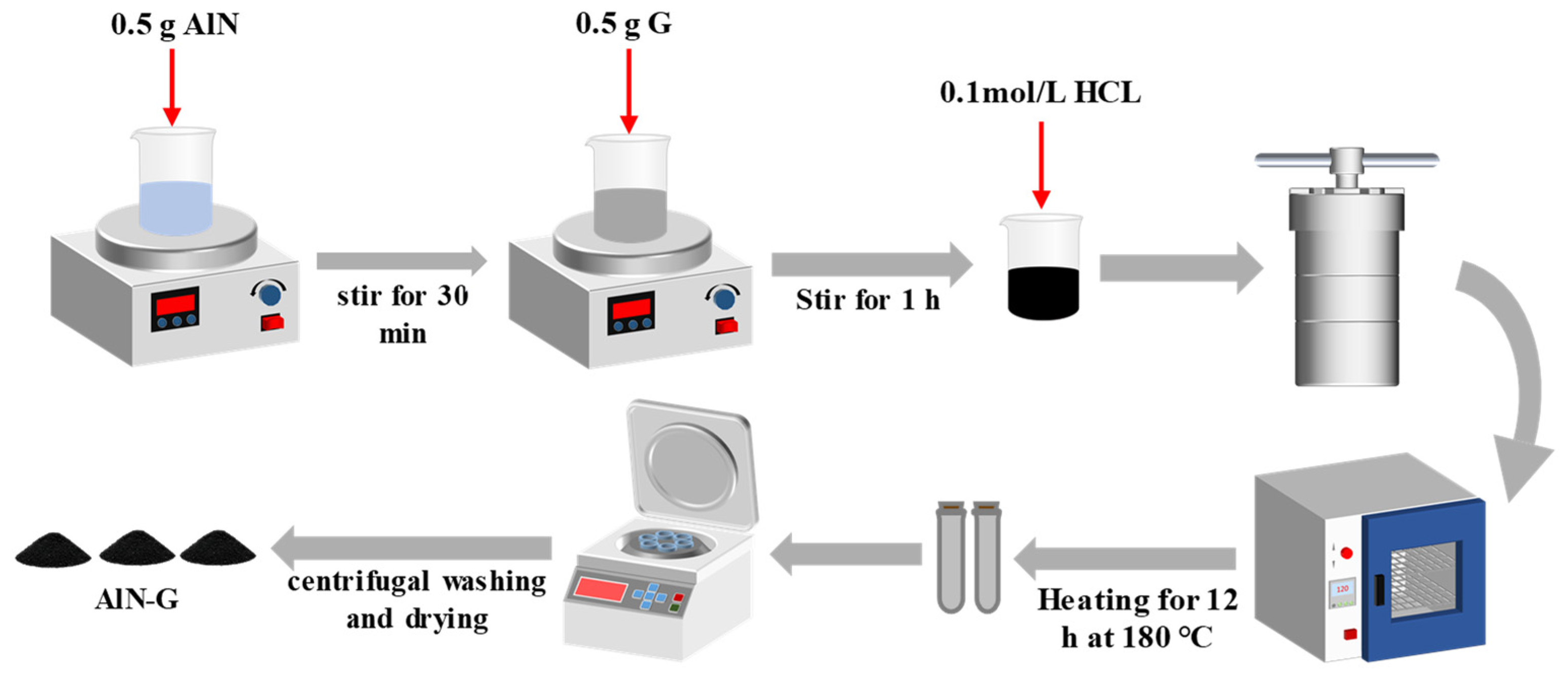
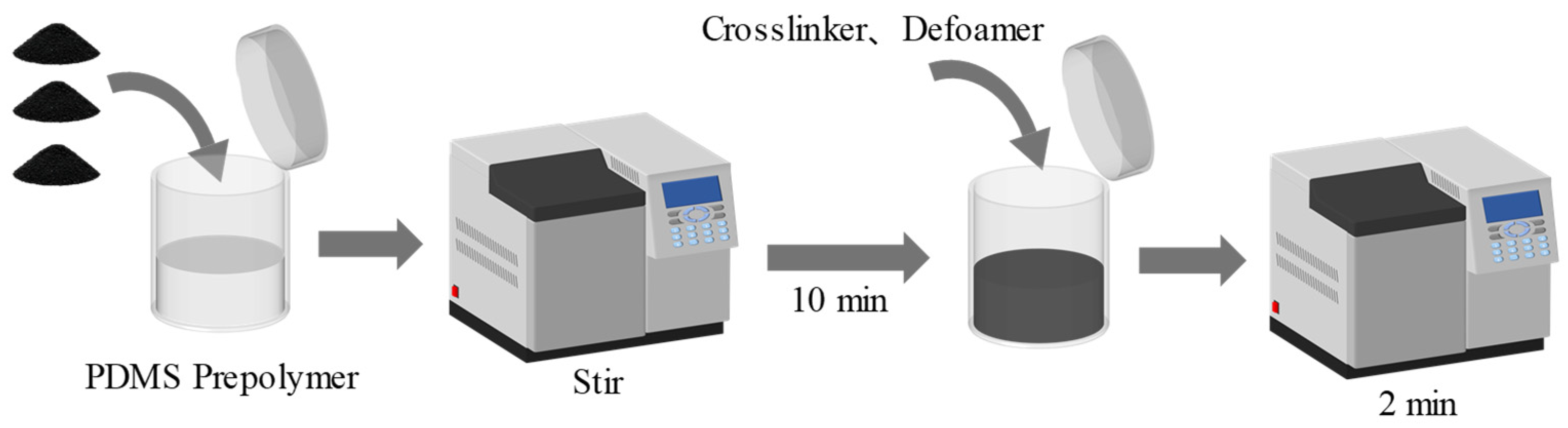
2.1. Material Synthesis
2.2. Materials Characterisation
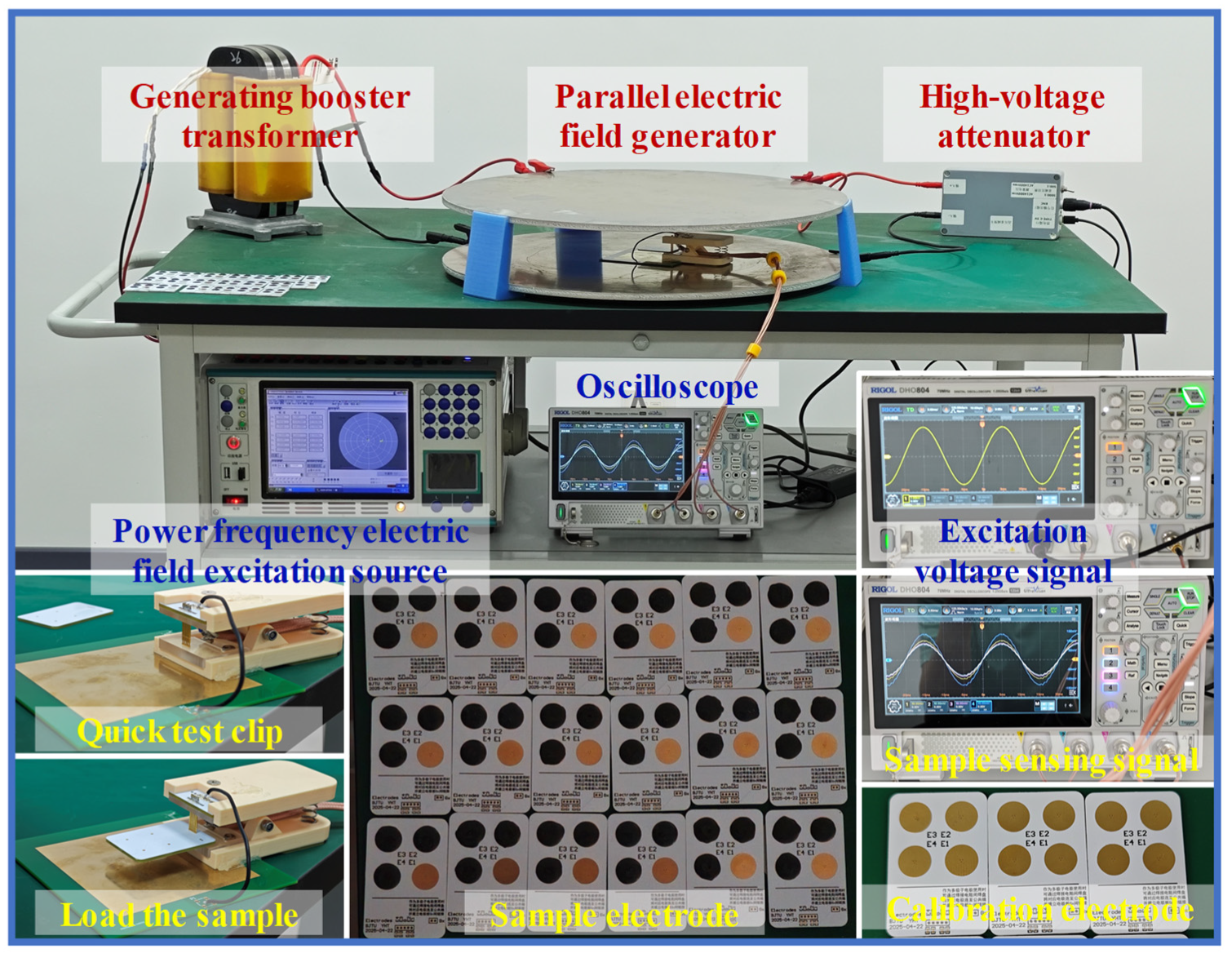
2.3. Dielectric Spectroscopy and Electric Field-Sensing Tests
2.4. DFT Calculations Method
3. Results and Analysis
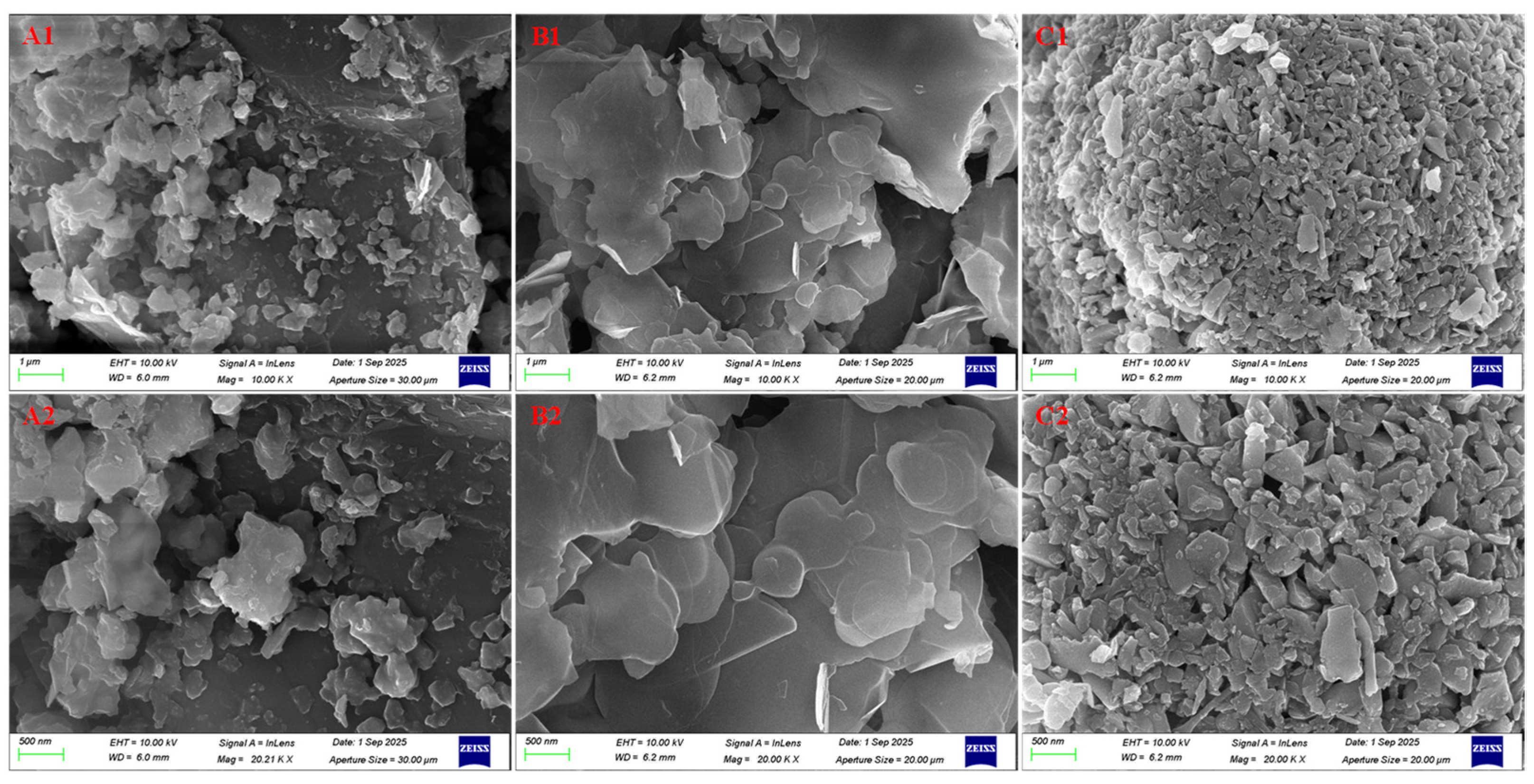
3.1. Characterization of Material Properties
3.2. Dielectric and Electric-Field Performance Test Results
3.3. Analysis of Computational Results
4. Conclusions
- (i)
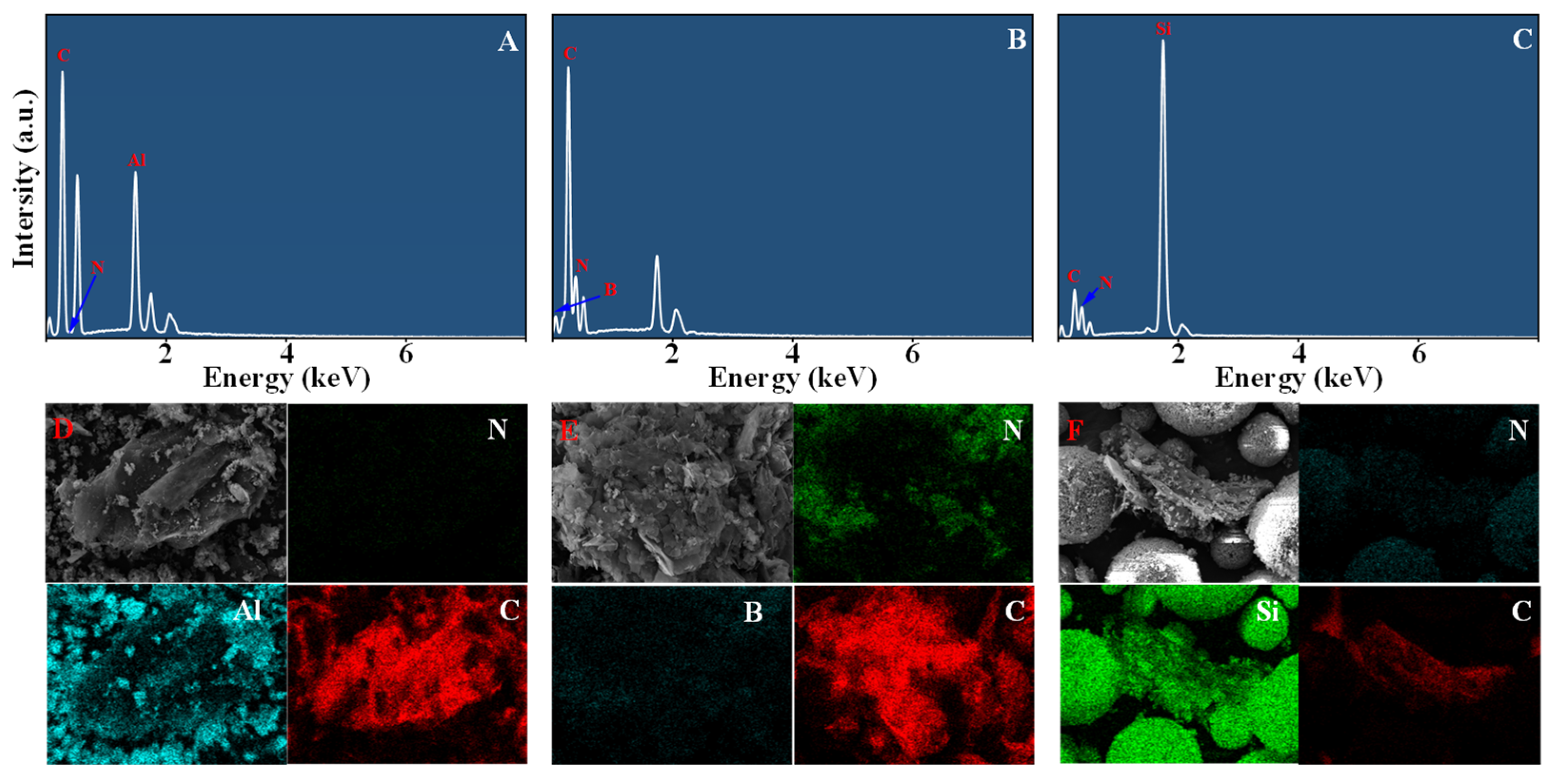
- Scanning electron microscopy (SEM) revealed that the three fillers exhibited different morphological characteristics, indicating different interfacial contact modes within the PDMS. EDS energy dispersive spectroscopy and elemental mapping further confirmed the coexistence and spatial co-distribution of carbon with the corresponding nitride elements (Al/B/Si and N), supporting the successful construction of the graphene-nitride heterojunction powders.
- (ii)
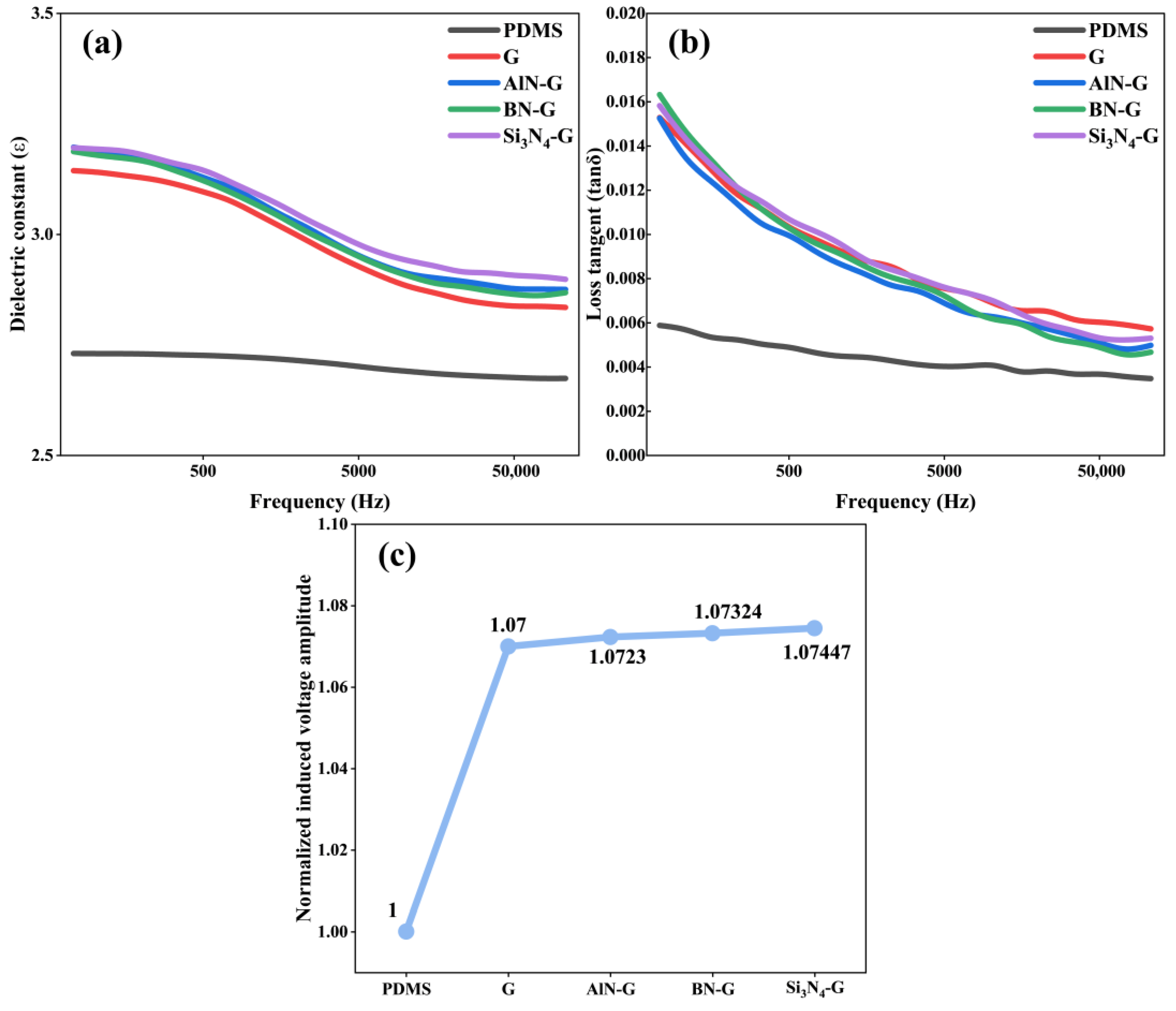
- Dielectric spectroscopy analysis showed that all samples exhibited typical dielectric dispersion characteristics of polymer composites. Compared with pure PDMS, the dielectric constant was significantly improved within the measured frequency range after the introduction of graphene and graphene/nitride heterojunction fillers. The loss tangent also decreased with increasing frequency, and the curve was smooth without any abnormal relaxation peaks. Notably, the tanδ trends of the introduced heterojunction composites remain similar, indicating that under the same loading and processing conditions, the overall dielectric loss is mainly determined by the PDMS matrix and common interfacial relaxation mechanisms, while the extracted dielectric descriptors reveal consistent trend-level differences dependent on the nitride species, confirming the distinct role of filler identity even within a matrix-dominated response.
- (iii)
- Under the same testing and normalization scheme (PDMS = 1.00), the introduction of graphene/nitride heterojunction fillers leads to further performance improvements, with Si3N4-G/PDMS showing the highest value among all tested systems, at 1.07447 (≈7.447%). Under the current composite formulation, heterojunction engineering can provide stable and repeatable performance improvements, and the systematic variations among the three nitrides confirm that the enhancement is tunable based on the specific microscopic mechanism (electronic vs. structural).
- (iv)
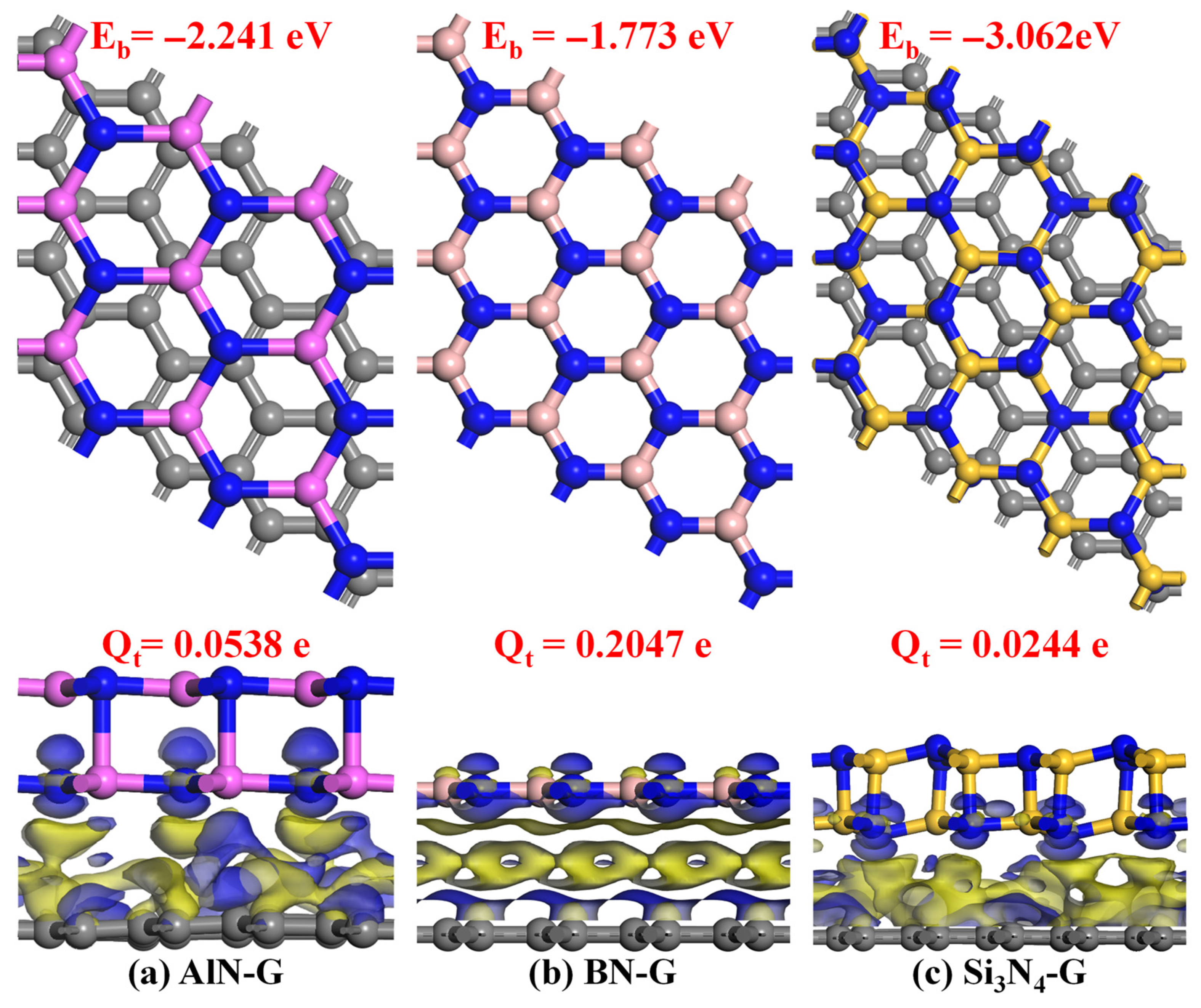
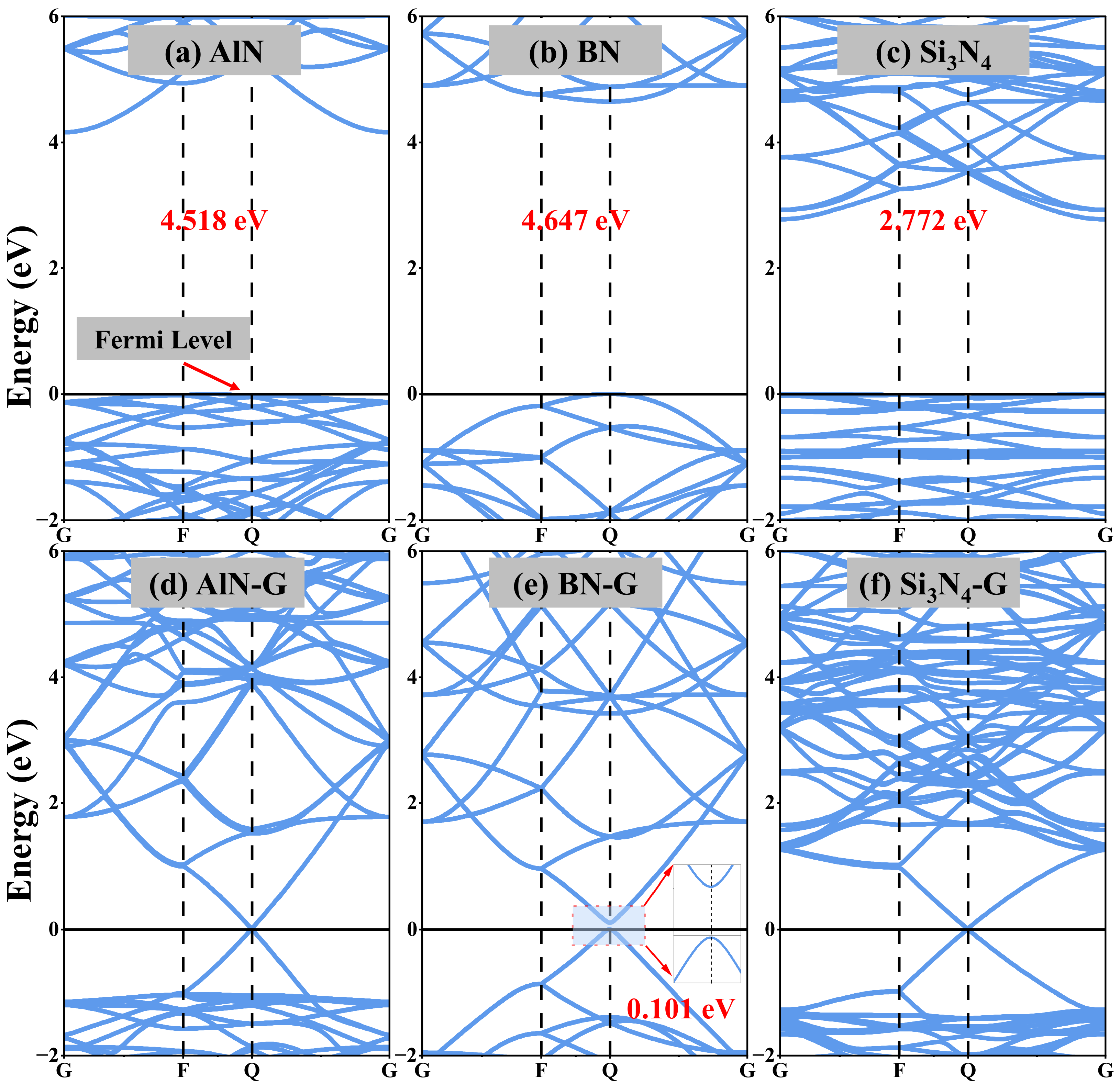
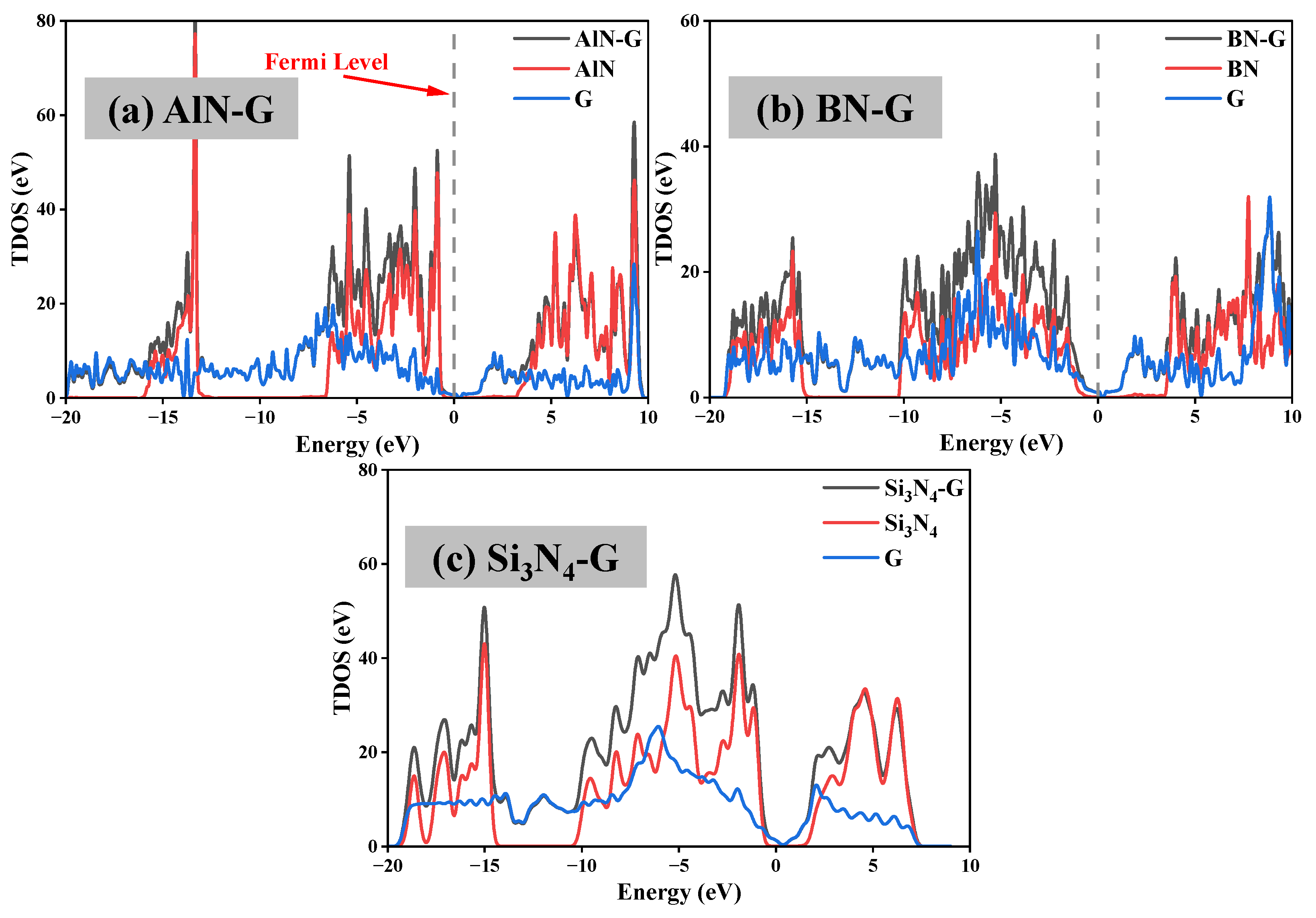
- Theoretical calculations show that all three nitrides and graphene can form stable heterojunction structures. The calculated binding energies indicate different coupling strengths: Si3N4-G ( = −3.062 eV) > AIN-G (−2.241 eV) > BN-G (−1.773 eV). Mulliken population analysis revealed charge transfer at the interface, with magnitudes following the order BN-G ( = 0.2047 e) > AlN-G (0.0538 e) > Si3N4-G (0.0244 e). The charge density difference and total density of states (TDOS) results together indicate that nitride stacking perturbs the electronic states of graphene near the Fermi level and promotes the formation of interfacial polarization centers, providing a microscopic explanation for the experimentally observed increase in dielectric constant and enhanced electric field-induced voltage response. In summary, the combination of dielectric spectroscopy, electric field-sensing measurements, and DFT analysis demonstrates that graphene/nitride heterojunction fillers can simultaneously improve the dielectric constant and enhance electric field-sensing output while keeping dielectric loss within a controllable range. This provides a practical and mechanistically explainable strategy for flexible dielectric layers in electric field-sensing applications.
Author Contributions
Funding
Data Availability Statement
Conflicts of Interest
References
- Tan, X.; Zhang, W.; He, M.; Li, W.; Ao, G.; Zhou, F. Non-Contact Adaptive Voltage Sensor Based on Electric Field Coupling Principle. Sensors 2023, 23, 8316. [Google Scholar] [CrossRef] [Scilit] [PubMed]
- Peng, H.; Liu, H.; Shang, K.; Li, G.; Zhao, L. Design and Simulation Test of Non-Contact Voltage Sensor. Sensors 2025, 25, 3118. [Google Scholar] [CrossRef] [Scilit] [PubMed]
- Shen, J.; Liu, L.; Li, X.; Tu, Y.; Liu, B.; Deng, S.; Yang, X. A novel non-contact voltage measurement based on distribution lines. IET Gener. Transm. Distrib. 2025, 19, e13336. [Google Scholar] [CrossRef] [Scilit]
- Xia, X.; Zhong, Z.; Weng, G.J. Maxwell–Wagner–Sillars mechanism in the frequency dependence of electrical conductivity and dielectric permittivity of graphene-polymer nanocomposites. Mech. Mater. 2017, 109, 42–50. [Google Scholar] [CrossRef] [Scilit]
- Samet, M.; Levchenko, V.; Boiteux, G.; Seytre, G.; Kallel, A.; Serghei, A. Electrode polarization vs. Maxwell-Wagner-Sillars interfacial polarization in dielectric spectra of materials: Characteristic frequencies and scaling laws. J. Chem. Phys. 2015, 142, 194703. [Google Scholar] [CrossRef] [Scilit]
- Samet, M.; Kallel, A.; Serghei, A. Maxwell-Wagner-Sillars interfacial polarization in dielectric spectra of composite materials: Scaling laws and applications. J. Compos. Mater. 2022, 56, 3197–3217. [Google Scholar] [CrossRef] [Scilit]
- Wang, H.; Yang, L. Dielectric constant, dielectric loss, conductivity, capacitance and model analysis of electronic electroactive polymers. Polym. Test. 2023, 120, 107965. [Google Scholar] [CrossRef] [Scilit]
- Ferrari, A.C.; Bonaccorso, F.; Fal’Ko, V.; Novoselov, K.S.; Roche, S.; Bøggild, P.; Borini, S.; Koppens, F.H.; Palermo, V.; Pugno, N.; et al. Science and technology roadmap for graphene, related two-dimensional crystals, and hybrid systems. Nanoscale 2015, 7, 4598–4810. [Google Scholar] [CrossRef] [Scilit]
- Lee, S.J.; Yoon, S.J.; Jeon, I.Y. Graphene/polymer nanocomposites: Preparation, mechanical properties, and application. Polymers 2022, 14, 4733. [Google Scholar] [CrossRef] [Scilit]
- Xiao, K.; Wang, W.; Wang, K.; Zhang, H.; Dong, S.; Li, J. Improving triboelectric nanogenerators performance via interface tribological optimization: A review. Adv. Funct. Mater. 2024, 34, 2404744. [Google Scholar] [CrossRef] [Scilit]
- Huang, X.; Jiang, P.; Tanaka, T. A review of dielectric polymer composites with high thermal conductivity. IEEE Electr. Insul. Mag. 2011, 27, 8–16. [Google Scholar] [CrossRef] [Scilit]
- Wang, Z.; Iizuka, T.; Kozako, M.; Ohki, Y.; Tanaka, T. Development of epoxy/BN composites with high thermal conductivity and sufficient dielectric breakdown strength partI-sample preparations and thermal conductivity. IEEE Trans. Dielectr. Electr. Insul. 2011, 18, 1963–1972. [Google Scholar] [CrossRef] [Scilit]
- Wang, Z.; Wang, X.; Wang, S.; He, J.; Zhang, T.; Wang, J.; Wu, G. Simultaneously enhanced thermal conductivity and dielectric breakdown strength in sandwich AlN/epoxy composites. Nanomaterials 2021, 11, 1898. [Google Scholar] [CrossRef] [Scilit] [PubMed]
- Chen, M.; Zhou, W.; Zhang, J.; Chen, Q. Dielectric property and space charge behavior of polyimide/silicon nitride nanocomposite films. Polymers 2020, 12, 322. [Google Scholar] [CrossRef] [Scilit]
- Zhi, C.; Bando, Y.; Tang, C.; Kuwahara, H.; Golberg, D. Large-scale fabrication of boron nitride nanosheets and their utilization in polymeric composites with improved thermal and mechanical properties. Adv. Mater. 2009, 21, 2889–2893. [Google Scholar] [CrossRef] [Scilit]
- Wang, E.; Lu, X.; Ding, S.; Yao, W.; Yan, M.; Wan, G.; Deng, K.; Wang, S.; Chen, G.; Ma, L.; et al. Gaps induced by inversion symmetry breaking and second-generation Dirac cones in graphene/hexagonal boron nitride. Nat. Phys. 2016, 12, 1111–1115. [Google Scholar] [CrossRef] [Scilit]
- Kharche, N.; Nayak, S.K. Quasiparticle band gap engineering of graphene and graphone on hexagonal boron nitride substrate. Nano Lett. 2011, 11, 5274–5278. [Google Scholar] [CrossRef] [Scilit]
- Ramasubramaniam, A.; Naveh, D.; Towe, E. Tunable band gaps in bilayer graphene− BN heterostructures. Nano Lett. 2011, 11, 1070–1075. [Google Scholar] [CrossRef] [Scilit]
- Zollner, K.; Cummings, A.W.; Roche, S.; Fabian, J. Graphene on two-dimensional hexagonal BN, AlN, and GaN: Electronic, spin-orbit, and spin relaxation properties. Phys. Rev. B 2021, 103, 075129. [Google Scholar] [CrossRef] [Scilit]
- Liu, X.; Zhang, Z.; Luo, Z.; Lv, B.; Ding, Z. Tunable electronic properties of graphene/g-AlN heterostructure: The effect of vacancy and strain engineering. Nanomaterials 2019, 9, 1674. [Google Scholar] [CrossRef] [Scilit]
- Liu, X.; Zhang, Z.; Lv, B.; Ding, Z.; Luo, Z. The external electric field-induced tunability of the Schottky barrier height in graphene/AlN interface: A study by first-principles. Nanomaterials 2020, 10, 1794. [Google Scholar] [CrossRef] [Scilit] [PubMed]
- Guo, Y.; Zhang, S.; Wang, Q. Electronic and optical properties of silicon based porous sheets. Phys. Chem. Chem. Phys. 2014, 16, 16832–16836. [Google Scholar] [CrossRef] [Scilit] [PubMed]
- Shivani, V.; Sriram, S. Ab Initio Study of Two-dimensional β-Si3N4 Monolayer as a Promising Anode for Sodium-ion Batteries. Surf. Interfaces 2025, 72, 107044. [Google Scholar] [CrossRef] [Scilit]
- Zhao, L.; Xu, S.; Wang, M.; Lin, S. Probing the thermodynamic stability and phonon transport in two-dimensional hexagonal aluminum nitride monolayer. J. Phys. Chem. C 2016, 120, 27675–27681. [Google Scholar] [CrossRef] [Scilit]
- Pakdel, A.; Zhi, C.; Bando, Y.; Golberg, D. Low-dimensional boron nitride nanomaterials. Mater. Today 2012, 15, 256–265. [Google Scholar] [CrossRef] [Scilit]
- Delley, B. An all-electron numerical method for solving the local density functional for polyatomic molecules. J. Chem. Phys. 1990, 92, 508–517. [Google Scholar] [CrossRef] [Scilit]
- Delley, B. From molecules to solids with the DMol3 approach. J. Chem. Phys. 2000, 113, 7756–7764. [Google Scholar] [CrossRef] [Scilit]
- Kohn, W.; Sham, L.J. Self-consistent equations including exchange and correlation effects. Phys. Rev. 1965, 140, A1133. [Google Scholar] [CrossRef] [Scilit]
- Perdew, J.P.; Burke, K.; Ernzerhof, M. Generalized gradient approximation made simple. Phys. Rev. Lett. 1996, 77, 3865. [Google Scholar] [CrossRef] [Scilit]
- Delley, B. Hardness conserving semilocal pseudopotentials. Phys. Rev. B 2002, 66, 155125. [Google Scholar] [CrossRef] [Scilit]
- Grimme, S. Semiempirical GGA-type density functional constructed with a long-range dispersion correction. J. Comput. Chem. 2006, 27, 1787–1799. [Google Scholar] [CrossRef] [Scilit]
- Grimme, S.; Antony, J.; Ehrlich, S.; Krieg, H. A consistent and accurate ab initio parametrization of density functional dispersion correction (DFT-D) for the 94 elements H-Pu. J. Chem. Phys. 2010, 132, 154104. [Google Scholar] [CrossRef] [Scilit]
- Monkhorst, H.J.; Pack, J.D. Special points for Brillouin-zone integrations. Phys. Rev. B 1976, 13, 5188. [Google Scholar] [CrossRef] [Scilit]
- Mermin, N.D. Thermal properties of the inhomogeneous electron gas. Phys. Rev. 1965, 137, A1441. [Google Scholar] [CrossRef] [Scilit]
- Giovannetti, G.; Khomyakov, P.A.; Brocks, G.; Kelly, P.J.; Van Den Brink, J. Substrate-induced band gap in graphene on hexagonal boron nitride: Ab initio density functional calculations. Phys. Rev. B—Condens. Matter Mater. Phys. 2007, 76, 073103. [Google Scholar] [CrossRef] [Scilit]
- Björkman, T.; Gulans, A.; Krasheninnikov, A.V.; Nieminen, R.M. van der Waals Bonding in Layered Compounds from Advanced Density-Functional First-Principles Calculations. Phys. Rev. Lett. 2012, 108, 235502. [Google Scholar] [CrossRef] [Scilit]
- Mulliken, R.S. Electronic population analysis on LCAO–MO molecular wave functions. I. J. Chem. Phys. 1955, 23, 1833–1840. [Google Scholar] [CrossRef] [Scilit]


Disclaimer/Publisher’s Note: The statements, opinions and data contained in all publications are solely those of the individual author(s) and contributor(s) and not of MDPI and/or the editor(s). MDPI and/or the editor(s) disclaim responsibility for any injury to people or property resulting from any ideas, methods, instructions or products referred to in the content. |
© 2026 by the authors. Licensee MDPI, Basel, Switzerland. This article is an open access article distributed under the terms and conditions of the Creative Commons Attribution (CC BY) license.
Share and Cite
Li, B.; Sun, J.; Lei, Y.; Jiang, T.; Yang, H. Enhanced Dielectric Response and Electric Field-Sensing Properties of PDMS Composites by Graphene/Nitride Heterojunctions: Insights from Experiment and DFT. Crystals 2026, 16, 132. https://doi.org/10.3390/cryst16020132
Li B, Sun J, Lei Y, Jiang T, Yang H. Enhanced Dielectric Response and Electric Field-Sensing Properties of PDMS Composites by Graphene/Nitride Heterojunctions: Insights from Experiment and DFT. Crystals. 2026; 16(2):132. https://doi.org/10.3390/cryst16020132
Chicago/Turabian StyleLi, Bo, Jiao Sun, Yuxing Lei, Tingting Jiang, and Haitao Yang. 2026. "Enhanced Dielectric Response and Electric Field-Sensing Properties of PDMS Composites by Graphene/Nitride Heterojunctions: Insights from Experiment and DFT" Crystals 16, no. 2: 132. https://doi.org/10.3390/cryst16020132
APA StyleLi, B., Sun, J., Lei, Y., Jiang, T., & Yang, H. (2026). Enhanced Dielectric Response and Electric Field-Sensing Properties of PDMS Composites by Graphene/Nitride Heterojunctions: Insights from Experiment and DFT. Crystals, 16(2), 132. https://doi.org/10.3390/cryst16020132