


Synergistic Integration of Drop-Casting with Sonication and Thermal Treatment for Fabrication of MWCNT-Coated Conductive Cotton Fabrics



Abstract
1. Introduction
2. Materials and Methods
2.1. Materials
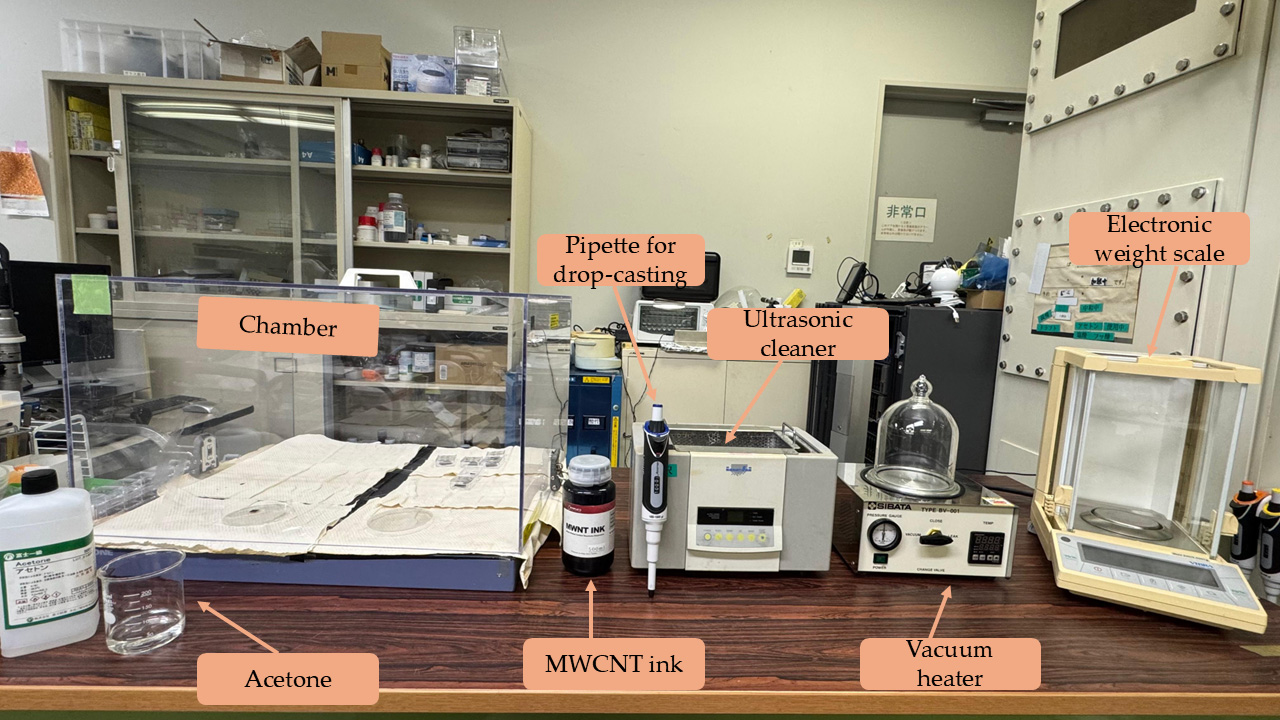
2.2. Fabrication of MWCNT-Coated Conductive Cotton Fabrics
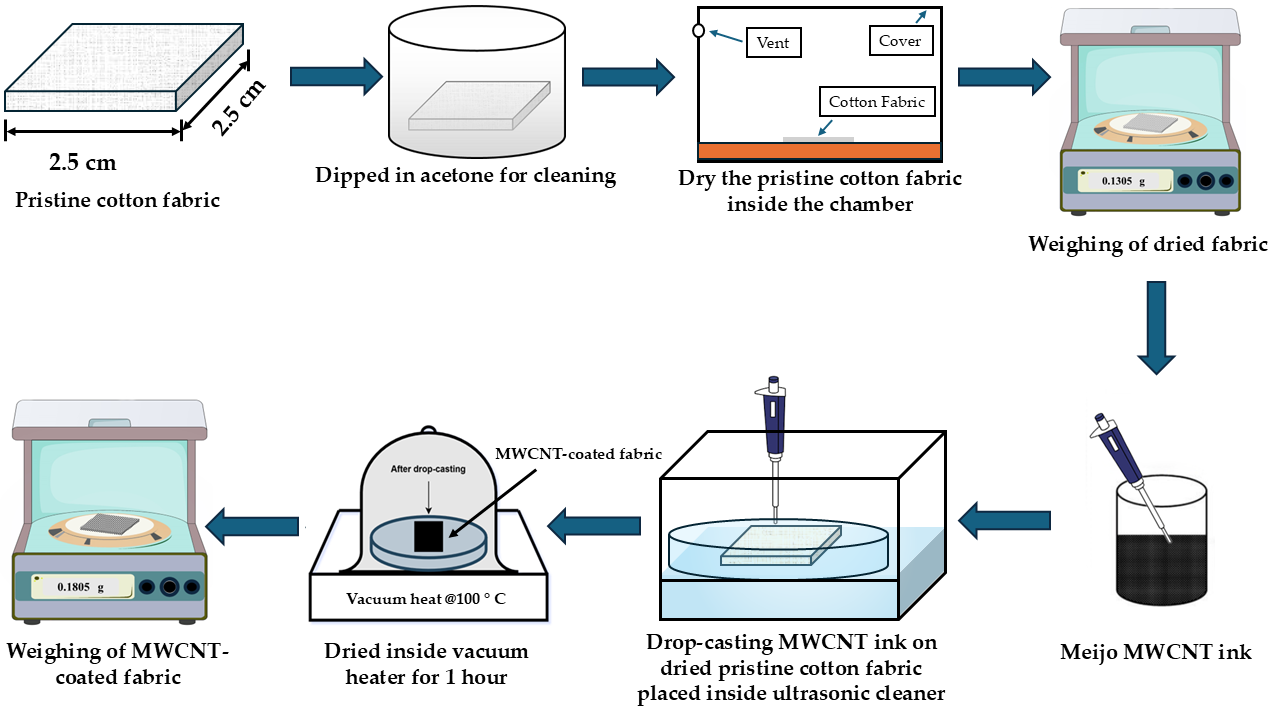
2.2.1. DSTT Method
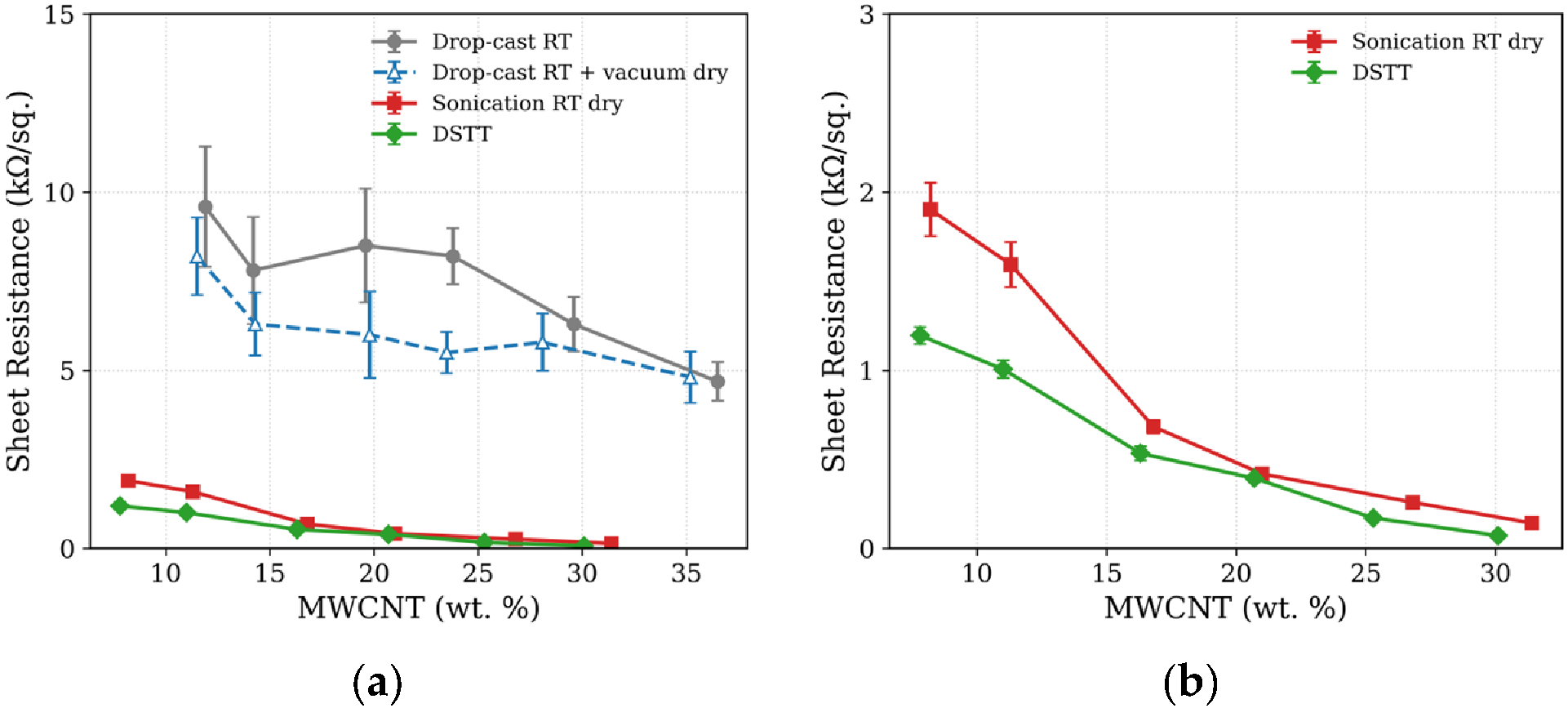
2.2.2. Comparative Fabrication Conditions
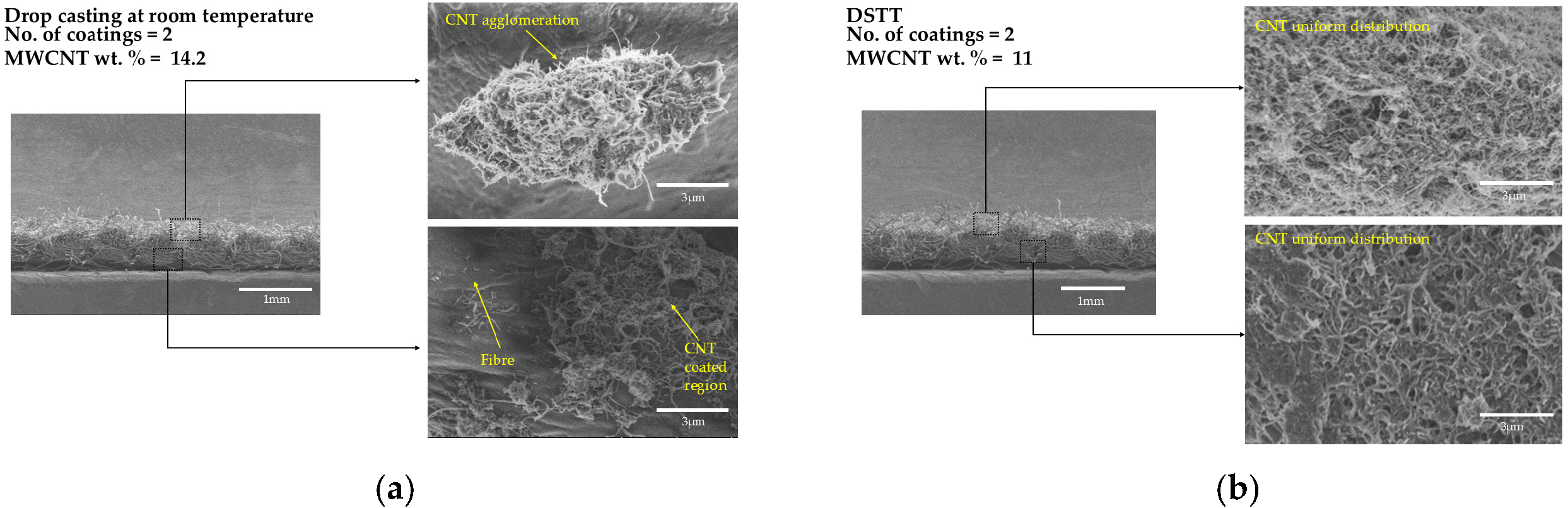
- Drop-casting at room temperature: CNT dispersion was drop-cast onto the cotton fabric, which was then dried naturally under ambient conditions.
- Drop-casting with vacuum drying: After drop casting, the coated fabric was placed in a vacuum heater at 100 °C for 1 h.
- Drop-casting with sonication: The CNT dispersion was drop-cast onto the fabric placed in a Petri dish on a stainless steel support inside the ultrasonic cleaner (38 kHz). Following deposition, sonication was maintained for 30 min, and the fabric was subsequently dried at room temperature.
2.3. Characterization Techniques
3. Results and Discussion
3.1. Electrical Performance of MWCNT-Coated Fabrics
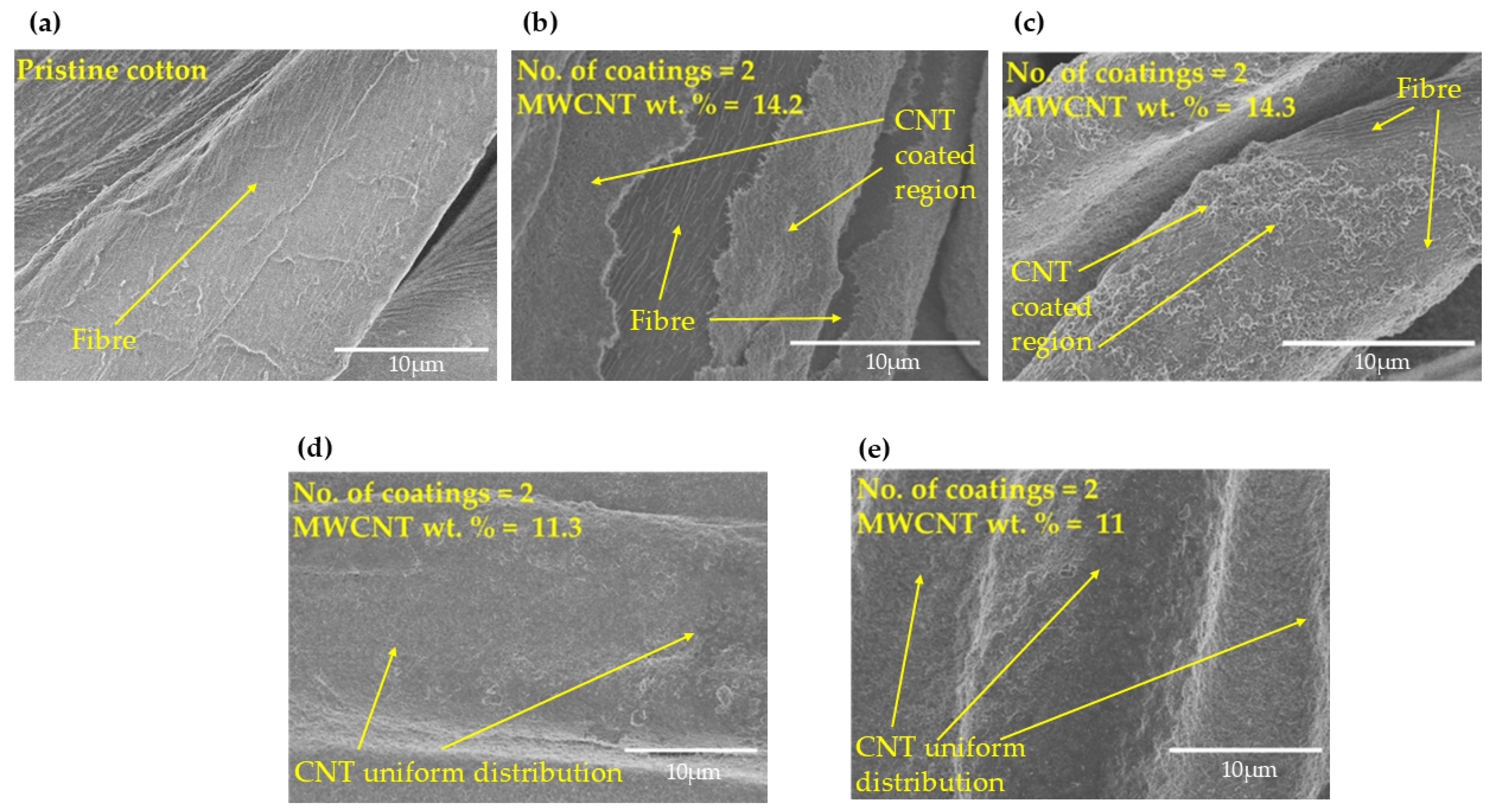
3.2. Morphological Analysis
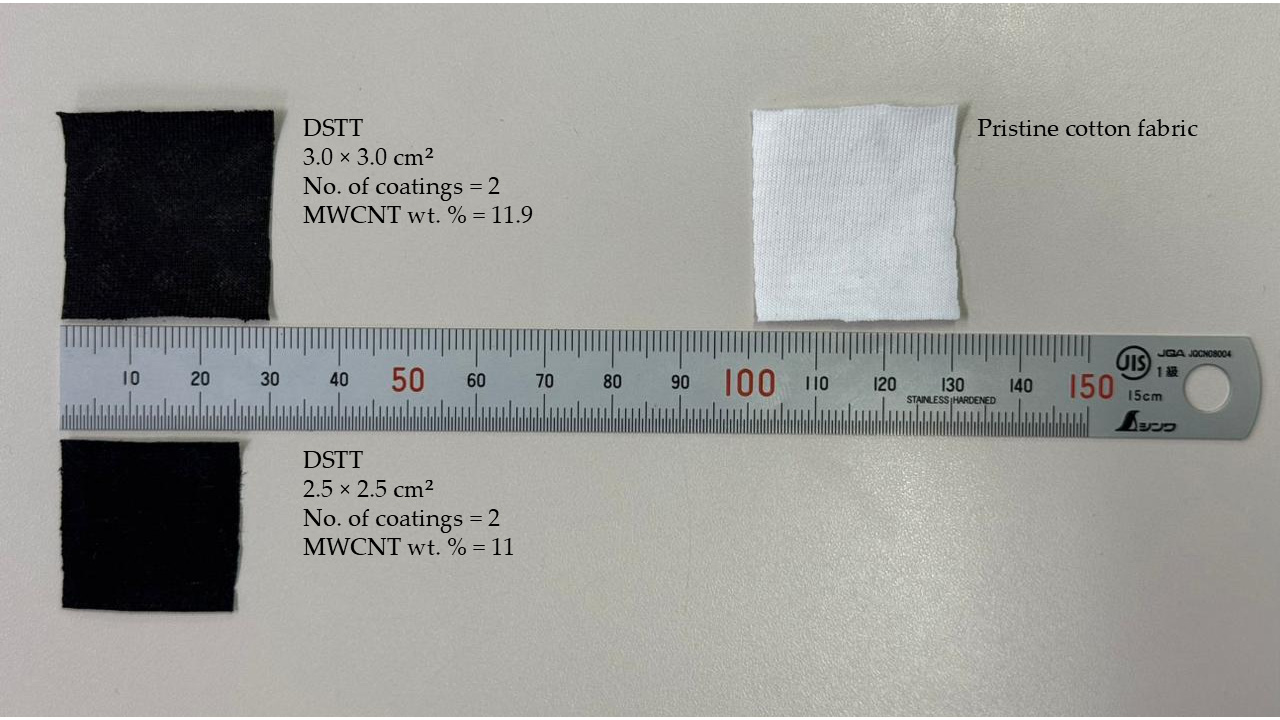
3.3. Size Consistency of Electrical Performance in DSTT-Coated Fabrics
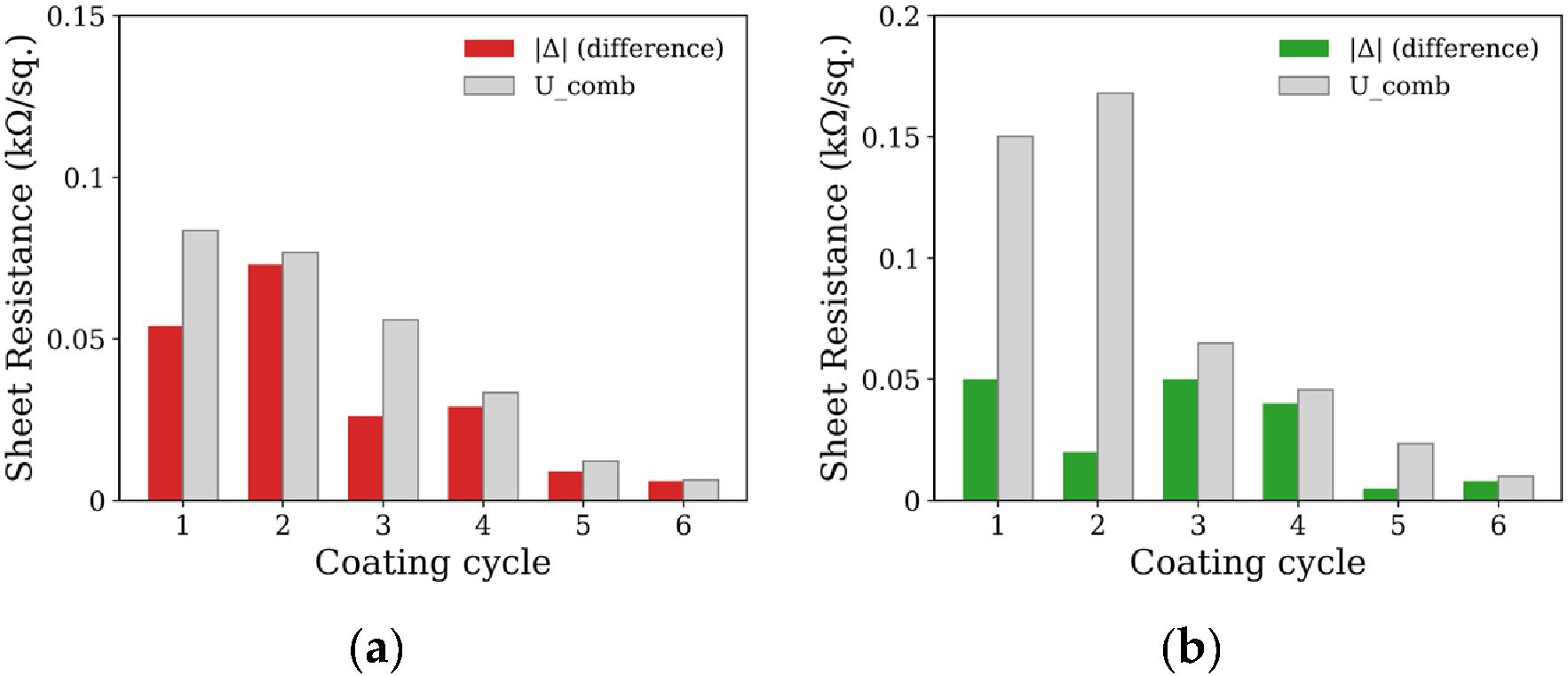
3.4. Stability of Sheet Resistance in MWCNT-Coated Cotton Fabrics
3.5. Discussion
4. Conclusions
Supplementary Materials
Author Contributions
Funding
Data Availability Statement
Acknowledgments
Conflicts of Interest
Abbreviations
| DSTT | Drop-casting, Sonication, and Thermal Treatment |
| MWCNT | Multi-Walled Carbon Nanotube |
| CNT | Carbon Nanotube |
| SEM | Scanning Electron Microscopy |
| PEDOT | Poly(3,4-ethylenedioxythiophene) |
| DMF | N,N-Dimethylformamide |
| SDS | Sodium dodecyl sulfate |
References
- Sonil, N.I.; Ullah, Z.; Chen, J.; Wang, G.P. Wearable strain sensors for human motion detection and health monitoring based on hybrid graphite–textile flexible electrodes. J. Mater. Res. Technol. 2023, 26, 764–774. [Google Scholar] [CrossRef]
- Rashid, I.A.; Saif, I.; Usama, M.; Umer, M.; Javid, A.; Rehan, Z.A.; Zubair, U. Highly resilient and responsive fabric strain sensors: Their effective integration into textiles and wireless communication for wearable applications. Sens. Actuators A Phys. 2022, 346, 113836. [Google Scholar] [CrossRef]
- Daware, V.; Jadhav, J. A review on wearable antennas. Eng. Proc. 2023, 56, 133. [Google Scholar] [CrossRef]
- Khair, N.; Islam, R.; Shahariar, H. Carbon-based electronic textiles: Materials, fabrication processes and applications. J. Mater. Sci. 2019, 54, 10079–10101. [Google Scholar] [CrossRef]
- Wang, Z.; Cai, G.; Xia, Y.; Li, P.; Shi, S.; Wang, B.; Gao, W.; Liu, Y.; Xu, Z.; Gao, C. Highly conductive graphene fibre textile for electromagnetic interference shielding. Carbon 2024, 222, 118996. [Google Scholar] [CrossRef]
- Pandey, M.; Anju, C.; Praveen, B.; Dashan, A.; Verma, R.K.; Ramezanzadeh, B. Fabrication, progress and future perspective of MXene/polymeric nano composites for electromagnetic shielding application—A review. Compos. Part A Appl. Sci. Manuf. 2025, 190, 108682. [Google Scholar] [CrossRef]
- Nechiyil, D.; Mor, J.; Alexander, R.; Sharma, S.K.; Dasgupta, K.; Prakash, J. Superior energy storage and stability realized in flexible carbon nanotube aerogel-metal organic framework based supercapacitor via interface engineering. J. Energy Storage 2024, 85, 111207. [Google Scholar] [CrossRef]
- Lv, Y.; Qi, C.; Bai, Y.; Li, L.; Chen, S.; He, Z.; Wu, P.; Zhang, S. One-step self-assembled biomass carbon aerogel/carbon nanotube/cellulose nanofibre composite for supercapacitor flexible electrode. Diam. Relat. Mater. 2024, 149, 111530. [Google Scholar] [CrossRef]
- Joseph, K.M.; Kasparian, H.J.; Shanov, V. Carbon nanotube fibre-based wearable supercapacitors—A review on recent advances. Energies 2022, 15, 6506. [Google Scholar] [CrossRef]
- Aznar, P.R.D.; Junior, H.L.O. Advances and applications of graphene-enhanced textiles: A 10-year review of functionalization strategies and smart fabric technologies. Textiles 2025, 5, 28. [Google Scholar] [CrossRef]
- Improta, I.; Rollo, G.; Buonocore, G.G.; Del Ferraro, S.; Molinaro, V.; D’addio, G.; De Rosa, A.; Lavorgna, M. On the enhancement of the long-term washability of e-textile realized with electrically conductive graphene-based inks. Polymers 2025, 17, 904. [Google Scholar] [CrossRef] [PubMed]
- Navidfar, A.; Saad, S.A.S.; Caylak, S.; Trabzon, L. A green approach to prepare graphene-coated flexible and conductive cotton fabrics for motion sensing. J. Mater. Sci. 2025, 60, 2878–2888. [Google Scholar] [CrossRef]
- Zhu, Y.; Jiang, S.; Liu, Y.; Zhang, X.; Wang, P.; Lv, Z.; Hu, D.; Zhang, Y. Construction of carbon nanotube/graphene composite fibres with excellent dynamic mechanical properties. Carbon 2025, 244, 120632. [Google Scholar] [CrossRef]
- Zhou, H.-L.; Hu, K.; Geng, W.-H.; Bao, Z.-L.; Qian, P.-F.; Li, T.-Y.; Guo, Y.-L.; Sun, W.-Y.; Wang, Y.-H.; Zhang, D.; et al. Single-walled carbon nanotube/Ag nanowire fabric-reinforced polyester composites via impregnation and spraying. Mater. Chem. Phys. 2025, 346, 131360. [Google Scholar] [CrossRef]
- Peng, Q.; Tan, X.; Stempień, Z.; Venkataraman, M.; Militky, J.; Kejzlar, P.; Korzeniewska, E. Inkjet printing of silver/graphene flexible composite electrodes for high-performance supercapacitors. Mater. Charact. 2024, 218, 114505. [Google Scholar] [CrossRef]
- Htwe, Y.; Mariatti, M. Printed graphene and hybrid conductive inks for flexible, stretchable, and wearable electronics: Progress, opportunities, and challenges. J. Sci. Adv. Mater. Devices 2022, 7, 100435. [Google Scholar] [CrossRef]
- Praoboon, N.; Siriroj, S.; Padchasri, J.; Pakawanit, P.; Maitarad, P.; Kheawhom, S.; Kidkhunthod, P. Toward sustainable flexible energy storage: Green fabrication of screen-printed flexible Zn–MnO2/rGO/MWCNT battery. J. Alloys Compd. 2025, 1035, 181606. [Google Scholar] [CrossRef]
- Islam, S.; Furuta, H. Honeycomb Cell Structures Formed in Drop-Casting CNT Films for Highly Efficient Solar Absorber Applications. Nanomaterials 2024, 14, 1633. [Google Scholar] [CrossRef]
- Albuqami, M.H.; Kovalska, E.; Sadanandan, K.S.; Alghamdi, M.S.; Neves, A.I.S.; Russo, S.; Craciun, M.F. Integration of two-dimensional WS2 in flexible textile triboelectric nanogenerators via electronic dyeing for self-powered sensing. Nanoscale 2025, 17, 12080–12086. [Google Scholar] [CrossRef]
- Chen, W.; Luo, M.; Yang, K.; Liu, C.; Zhang, D.; Zhou, X. MXene loaded onto clean wiper by a dot-matrix drop-casting method as a free-standing electrode for stretchable and flexible supercapacitors. Chem. Eng. J. 2021, 423, 130242. [Google Scholar] [CrossRef]
- Duygun, I.K.; Küçükelyas, B.; Bedeloğlu, A. Structurally integrated Ti3C2Tx MXene/cotton fabric electrodes for supercapacitor applications. Mater. Res. Bull. 2024, 180, 113042. [Google Scholar] [CrossRef]
- Alamer, F.A.; Almalki, G.A. Fabrication of conductive fabrics based on SWCNTs, MWCNTs and graphene and their applications: A review. Polymers 2022, 14, 5376. [Google Scholar] [CrossRef] [PubMed]
- Park, S.; Kim, H.; Lee, S. Changes in characteristics of silver conductive fabrics owing to perspiration and washing. RSC Adv. 2023, 13, 28444–28461. [Google Scholar] [CrossRef]
- Ojstršek, A.; Plohl, O.; Gorgieva, S.; Kurečič, M.; Jančič, U.; Hribernik, S.; Fakin, D. Metallisation of textiles and protection of conductive layers: An overview of application techniques. Sensors 2021, 21, 3508. [Google Scholar] [CrossRef] [PubMed]
- Kawamura, R.; Michinobu, T. PEDOT: PSS versus polyaniline: A comparative study of conducting polymers for organic electrochemical transistors. Polymers 2023, 15, 4657. [Google Scholar] [CrossRef] [PubMed]
- Aizamddin, M.F.; Mahat, M.M. Enhancing the washing durability and electrical longevity of conductive polyaniline-grafted polyester Fabrics. ACS Omega 2023, 8, 37936–37947. [Google Scholar] [CrossRef]
- Zhang, X.; De Volder, M.; Zhou, W.; Issman, L.; Wei, X.; Kaniyoor, A.; Portas, J.T.; Smail, F.; Wang, Z.; Wang, Y.; et al. Simultaneously enhanced tenacity, rupture work, and thermal conductivity of carbon nanotube fibres by raising effective tube portion. Sci. Adv. 2022, 8, eabq3515. [Google Scholar] [CrossRef]
- Zhou, X.; Gu, Z.; Zhou, H.; Zhang, Y.; Wang, P.; Li, Y. Recent advances in the mechanical and electrical performance of carbon nanotube fibres under various strain-rate loadings. Mater. Today Chem. 2023, 24, 101763. [Google Scholar] [CrossRef]
- Ali, Z.; Yaqoob, S.; Yu, J.; D’AMore, A. Critical review on the characterization, preparation, and enhanced mechanical, thermal, and electrical properties of carbon nanotubes and their hybrid filler polymer composites for various applications. Compos. Part C Open Access 2024, 13, 100434. [Google Scholar] [CrossRef]
- Tortorich, R.P.; Aksak, B. Inkjet Printing of Carbon Nanotubes. Nanomaterials 2013, 3, 453–469. [Google Scholar] [CrossRef]
- Shin, S.R.; Farzad, R.; Tamayol, A.; Manoharan, V.; Mostafalu, P.; Zhang, Y.S.; Akbari, M.; Jung, S.M.; Kim, D.; Comotto, M.; et al. A Bioactive Carbon Nanotube-Based Ink for Printing 2D and 3D Flexible Electronic. Adv. Mater. 2016, 28, 3280–3289. [Google Scholar] [CrossRef]
- Kanoun, O.; Müller, C.; Benchirouf, A.; Sanli, A.; Dinh, T.N.; Al-Hamry, A.; Bu, L.; Gerlach, C.; Bouhamed, A. Flexible Carbon Nanotube Films for High Performance Strain Sensors. Sensors 2014, 14, 10042–10071. [Google Scholar] [CrossRef] [PubMed]
- Rennhofer, H.; Zanghellini, B. Dispersion State and Damage of Carbon Nanotubes and Carbon Nanofibers by Ultrasonic Dispersion: A Review. Nanomaterials 2021, 11, 1469. [Google Scholar] [CrossRef] [PubMed]
- Yang, H.; Ding, H. Chitosan-assisted dispersion of carbon nanotubes for high-performance conductive ink in wearable electronics. Int. J. Biol. Macromol. 2025, 320, 145984. [Google Scholar] [CrossRef] [PubMed]
- Menon, H.; Aiswarya, R.; Surendran, K.P. Screen printable MWCNT inks for printed electronics. RSC Adv. 2017, 7, 44076–44081. [Google Scholar] [CrossRef]
- Makowski, T.; Kowalczyk, D.; Fortuniak, W.; Jeziorska, D.; Brzezinski, S.; Tracz, A. Superhydrophobic properties of cotton woven fabrics with conducting 3D networks of multiwall carbon nanotubes, MWCNTs. Cellulose 2014, 21, 4659–4670. [Google Scholar] [CrossRef]
- Ikuno, T.; Takahashi, K.; Kadogawa, A. Light-Driven Flying Balloons Based on Hybrids of Carbon Nanotubes and Cellulose Nanofibers. Materials 2022, 15, 7739. [Google Scholar] [CrossRef]
- Fenta, E.W.; Mebratie, B.A. Advancements in carbon nanotube-polymer composites: Enhancing properties and applications through advanced manufacturing techniques. Heliyon 2024, 10, e36490. [Google Scholar] [CrossRef]
- Alamer, F.A.; Alnefaie, M.A.; Salam, M.A. Preparation and characterization of multi-walled carbon nanotubes-filled cotton fabrics. Results Phys. 2022, 33, 105205. [Google Scholar] [CrossRef]
- Xu, J.; Zhang, J.; Xu, J.; Chang, Y.; Shi, F.; Zhang, Z.; Zhang, H. Design of functional cotton fabric via modified carbon nanotubes. Pigment. Resin Technol. 2020, 49, 71–78. [Google Scholar] [CrossRef]
- Kumar, A.; Dalal, J.; Dahiya, S.; Chowdhury, A.; Khandual, A.; Ohlan, A.; Punia, R.; Maan, A.S. Coating of multi-walled carbon nanotubes on cotton fabric via conventional dyeing for enhanced electrical and mechanical properties. AIP Conf. Proc. 2019, 2142, 140019. [Google Scholar] [CrossRef]
- Rahman, M.J.; Mieno, T. Conductive cotton textile from safely functionalized carbon nanotubes. J. Nanomater. 2015, 2015, 858785. [Google Scholar] [CrossRef]
- Arrigo, R.; Teresi, R.; Gambarotti, C.; Parisi, F.; Lazzara, G.; Dintcheva, N.T. Sonication-Induced Modification of Carbon Nanotubes: Effect on the Rheological and Thermo-Oxidative Behaviour of Polymer-Based Nanocomposites. Materials 2018, 11, 383. [Google Scholar] [CrossRef] [PubMed]
- Abbas, A.; Zhao, Y.; Wang, X.; Lin, T. Cooling effect of MWCNT-containing composite coatings on cotton fabrics. J. Text. Inst. 2013, 104, 798–807. [Google Scholar] [CrossRef]
- Bharath, S.P.; Manjanna, J.; Javeed, A.; Yallappa, S. Multi-walled carbon nanotube-coated cotton fabric for possible energy storage devices. Bull. Mater. Sci. 2015, 38, 169–172. [Google Scholar] [CrossRef]
- Ouyang, Z.; Li, S.; Liu, J.; Yu, H.-Y.; Peng, L.; Zheng, S.; Xu, D.; Tam, K.C. Bottom-up reconstruction of smart textiles with hierarchical structures to assemble versatile wearable devices for multiple signals monitoring. Nano Energy 2022, 104, 107963. [Google Scholar] [CrossRef]
- Zhang, M.; Inoue, S.; Matsumura, Y. Difference in gas-sensing behavior of multi-walled carbon nanotube-paper-based gas sensor to polar and non-polar organic solvents. Chem. Phys. Lett. 2022, 798, 139596. [Google Scholar] [CrossRef]
- El-Hady, M.M.A.; Farouk, A.; Sharaf, S. Multiwalled-carbon-nanotubes (MWCNTs)–GPTMS/tannic-acid-nanocomposite-coated cotton fabric for sustainable antibacterial properties and electrical conductivity. Coatings 2022, 12, 178. [Google Scholar] [CrossRef]
- Zhang, Y.-X.; Li, Y.-D.; Du, A.-K.; Wu, Y.; Zeng, J.-B. Layer-by-layer assembly of chitosan and carbon nanotube on cotton fabric for strain and temperature sensing. J. Mater. Sci. Technol. 2024, 173, 114–120. [Google Scholar] [CrossRef]
- Bae, K.; Heo, B.; Hwang, K.; Jo, E.; Kang, Y.; Pyo, S.; Kim, J. Washable heat-resistant and inkjet-printed devices on cotton fabric for wearable applications. Nat. Commun. 2025, 16, 8615. [Google Scholar] [CrossRef]





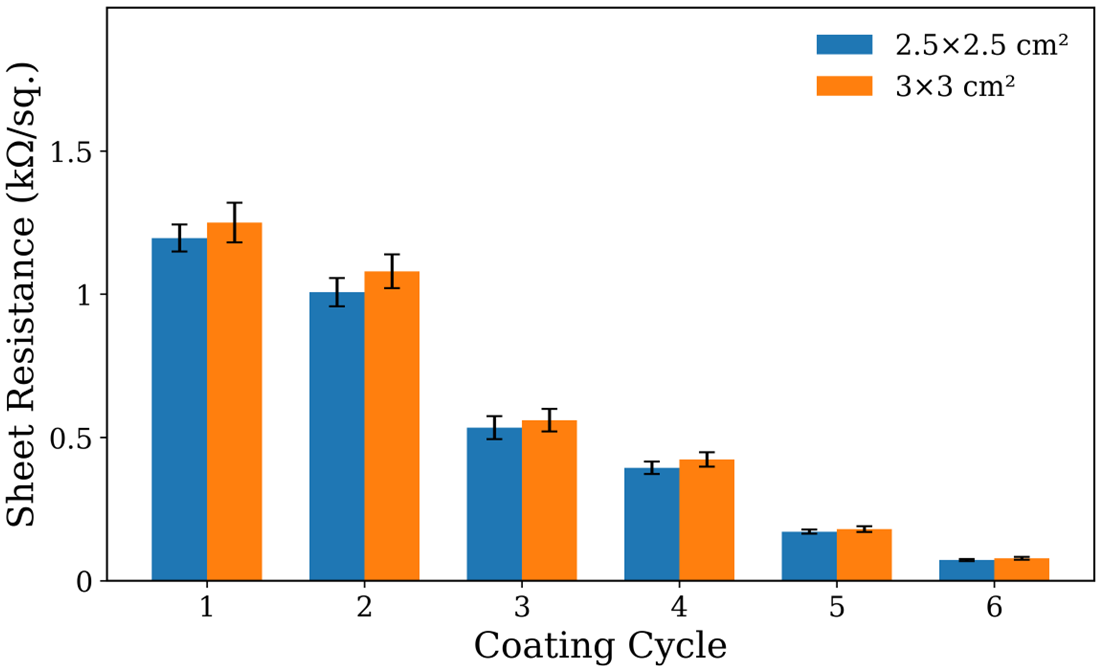
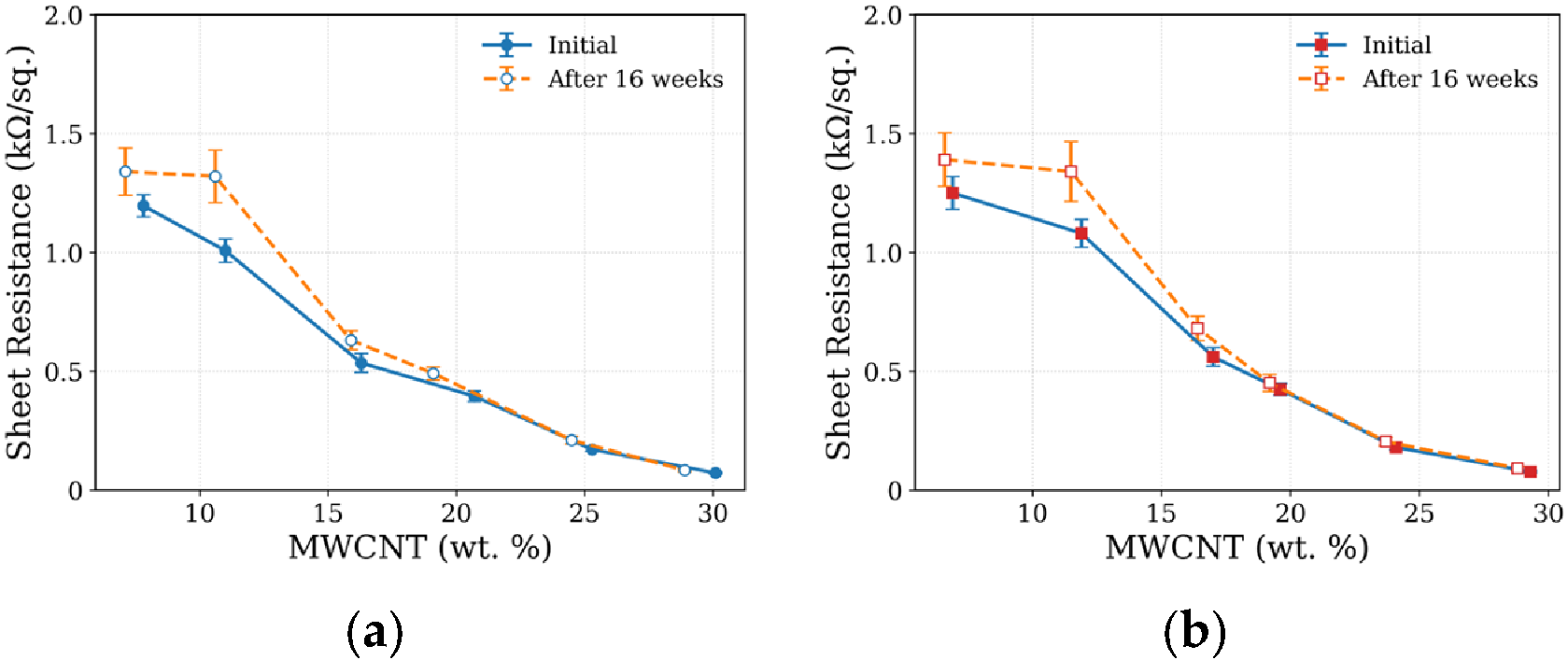
| Coating Cycle | MWCNT (wt.%) 2.5 × 2.5 cm2 | Sheet Resistance (kΩ/sq.) 2.5 × 2.5 cm2 | MWCNT (wt.%) 3.0 × 3.0 cm2 | Sheet Resistance (kΩ/sq.) 3.0 × 3.0 cm2 |
|---|---|---|---|---|
| 1 | 7.8% | 1.196 ± 0.047 | 6.9% | 1.25 ± 0.069 |
| 2 | 11.0% | 1.007 ± 0.049 | 11.9% | 1.08 ± 0.059 |
| 3 | 16.3% | 0.534 ± 0.04 | 17.0% | 0.56 ± 0.04 |
| 4 | 20.7% | 0.394 ± 0.022 | 19.6% | 0.423 ± 0.025 |
| 5 | 25.3% | 0.171 ± 0.007 | 24.1% | 0.18 ± 0.01 |
| 6 | 30.1% | 0.072 ± 0.004 | 29.3% | 0.078 ± 0.005 |
| Year | Substrate | Method/Dispersion (CNT wt.% in Solution; Solution Type) | CNT Loading | Sample Size | Electrical Performance (as Reported) | Measurement Method | Reference |
|---|---|---|---|---|---|---|---|
| 2015 | Cotton | Dip-dry coating (repeated cycles) using functionalized MWCNTs (citric-acid-assisted plasma treatment) in water (0.25–1.0 wt.% f-MWCNTs in solution) | ~18.5 wt.% (on fabric) | 5 × 5 cm2 | ~9.65 kΩ/sq. (sheet resistance) | Two-point probe (Ni mesh electrodes) | [42] |
| 2015 | Cotton | Dip-coating (20 cycles) with SDS-dispersed MWCNTs + HNO3 treatment (5%, 3 h) (1.2 wt./vol% MWCNTs with 0.1% SDS in water; 3.5 mol/L) | Not reported | 1 × 1 cm2 | 2.5–1.5 kΩ·cm−2 (area-normalized resistance) | Two-point probe (digital multimeter) | [45] |
| 2019 | Cotton | Conventional dyeing with reactive vinyl sulphone dye + MWCNTs in aqueous solution (1% dye; 1–5 mg/mL MWCNTs; varied: 1.0, 2.0, 3.0, 4.0, 5.0 mg/mL) | Varied (reported as mg/cm2; wt.% not reported) | Not reported | 5486–0.433 MΩ/sq. (5,486,000–433 kΩ/sq.) (sheet resistance) | Two-electrode system | [41] |
| 2020 | Cotton | Impregnation-drying (3 cycles) using chemically functionalized MWCNTs (dimethyl phosphite + perfluorohexyl iodine) in hexafluoroisopropanol (~28.6 mg/mL; ~1.8 wt.% in solution) | 11.9 wt.% (on fabric) | 2 × 8 cm2 | 225.6 kΩ/sq. (sheet resistance) | Four-probe tester | [40] |
| 2022 | Cotton | Dip-coating: GPTMS-stabilized MWCNTs + tannic acid (concentration not specified; 1-methylimidazol catalyst) | Not reported | Not reported | 115 Ω/cm (linear resistance; best: tannic acid/GPTMS/MWCNTs) | Multimeter | [48] |
| 2024 | Cotton | Layer-by-layer assembly: PSS-wrapped CNTs + chitosan (3 mg/mL CNTs; 0.3 wt.% equivalent) | Not reported | 50 × 20 × 0.6 mm3 (fabric) | 34.57 S/m (conductivity; 4 LBL cycles) | Four-probe | [49] |
| 2025 | Cotton | Inkjet printing: CNT ink (1 wt.%) + reactive silver ink (34 wt.% Ag) with PLL coating | Not reported | Not reported | 1.25 × 10⁵ S/m (conductivity) | Four-probe meter | [50] |
| This work | Cotton | DSTT (drop-casting, sonication, thermal treatment) (CNT 5 wt.% in ethanol dispersion) | ~7.8–~30 wt.% (on fabric) | 2.5 × 2.5 cm2 | 1.196–0.072 kΩ/sq. (sheet resistance; 1–6 coating cycles) | Four-point probe | This work |
Disclaimer/Publisher’s Note: The statements, opinions and data contained in all publications are solely those of the individual author(s) and contributor(s) and not of MDPI and/or the editor(s). MDPI and/or the editor(s) disclaim responsibility for any injury to people or property resulting from any ideas, methods, instructions or products referred to in the content. |
© 2026 by the authors. Licensee MDPI, Basel, Switzerland. This article is an open access article distributed under the terms and conditions of the Creative Commons Attribution (CC BY) license.
Share and Cite
Shahbaz, M.; Furuta, H. Synergistic Integration of Drop-Casting with Sonication and Thermal Treatment for Fabrication of MWCNT-Coated Conductive Cotton Fabrics. Crystals 2026, 16, 60. https://doi.org/10.3390/cryst16010060
Shahbaz M, Furuta H. Synergistic Integration of Drop-Casting with Sonication and Thermal Treatment for Fabrication of MWCNT-Coated Conductive Cotton Fabrics. Crystals. 2026; 16(1):60. https://doi.org/10.3390/cryst16010060
Chicago/Turabian StyleShahbaz, Muhammad, and Hiroshi Furuta. 2026. "Synergistic Integration of Drop-Casting with Sonication and Thermal Treatment for Fabrication of MWCNT-Coated Conductive Cotton Fabrics" Crystals 16, no. 1: 60. https://doi.org/10.3390/cryst16010060
APA StyleShahbaz, M., & Furuta, H. (2026). Synergistic Integration of Drop-Casting with Sonication and Thermal Treatment for Fabrication of MWCNT-Coated Conductive Cotton Fabrics. Crystals, 16(1), 60. https://doi.org/10.3390/cryst16010060