Article

Property Optimization of Al-5Si-Series Welding Wire via La-Ce-Ti Rare-Earth Microalloying

Ningbo Branch of Chinese Academy of Ordnance Science, Ningbo 315103, China
*
Author to whom correspondence should be addressed.
Crystals 2026, 16(1), 6; https://doi.org/10.3390/cryst16010006
Submission received: 28 November 2025 / Revised: 16 December 2025 / Accepted: 17 December 2025 / Published: 23 December 2025
(This article belongs to the Section Crystalline Metals and Alloys)

Abstract

The 6xxx-series Al alloys have been used for decades because of their favorable strength-to-weight ratio, corrosion resistance, and fatigue performance. However, conventional welding techniques often induce localized weakening, as thermal effects modify the microstructure and compromise structural integrity. For nearly 70 years, AA4043 welding wire has been the primary choice for joining 6xxx-series Al alloys. Nevertheless, microstructural and mechanical property mismatches between the base metal and weld region remain key factors contributing to premature failure, while welding-induced defects further increase rupture susceptibility. Microalloying has emerged as an effective strategy for enhancing both the mechanical and thermal properties of aluminum alloys. In this study, rare-earth (RE) elements La and Ce were introduced into the AA4043 system to exploit their grain refining and mechanical strengthening capabilities. In addition, the effects of Sr modification were examined and compared with La-Ce addition. This work aims to elucidate the strengthening mechanisms associated with La-Ce-Ti microalloying in AA4043 welding wire, a topic that has rarely been systematically investigated. With 0.019Ti-0.02La-0.03Ce additions, the modified wire exhibited significant performance improvements, achieving an UTS of 204 MPa and a YS of 191 MPa—representing increases of 10.3% and 18.6%, respectively.

1. Introduction

Aluminum alloys have been widely utilized in the aerospace, automotive, and emerging electromobility sectors due to their exceptional strength-to-weight ratio, corrosion resistance, favorable weldability, and broad service temperature range [1,2,3]. Among the various aluminum alloy systems, 6xxx-series (Al-Mg-Si) aluminum alloys offer distinct advantages, including enhanced mechanical properties, excellent formability, fine processing capabilities, and resistance to stress corrosion cracking (SCC) [3]. They also exhibit superior weldability compared with 2xxx- and 7xxx-series aluminum alloys. Although all of these alloys are susceptible to hot cracking [4,5], they have attracted considerable attention as structural materials. Furthermore, the low density and intrinsic corrosion resistance of Al-Mg-Si alloys contribute to weight reduction in large-scale infrastructure and extended service life in aggressive environments, thereby supporting energy conservation and emissions reduction efforts [2,6,7].
Within this alloy series, AA6061-T6 has become one of the most widely utilized grades due to its balanced combination of moderate strength, oxidation resistance, and great weldability, which are primarily derived from Mg and Si additions. Its applications now extend to automotive manufacturing, rail transportation, shipbuilding and military equipment [8]. Numerous studies have reported that 4xxx-series aluminum welding wires are more suitable for joining 6xxx-series alloys than 5xxx-series wires. This preference is attributed to the Si content in Al-Si filler wires, which improves weld pool fluidity while reducing susceptibility to hot cracking [9]. In addition, 4xxx-series filler wires generally exhibit lower porosity formation compared with commonly used AA5356 wire. Zhang et al. investigated the porosity behavior associated with two different 4xxx-series wires and found that AA4047 increased the frequency of keyhole opening and collapse in the upper region of the weld compared with AA4043. This instability promoted higher levels of keyhole-induced porosity [9]. Although AA4043 typically demonstrates better overall performance, challenges such as strength mismatch with the base metal, porosity formation, large acicular eutectic Si phases, and coarse grains remain, contributing to premature failure of welded joints and additively manufactured components [10].
Element addition was employed in this study to mitigate porosity in AA4043 wire used for joining 6061-T6 aluminum alloy, with the aim of reducing porosity susceptibility and improving weld mechanical performance. Microalloying has been widely applied to tailor both the mechanical and thermal properties of aluminum alloys. In particular, trace-element and rare-earth-element additions have been extensively reported across various alloy systems. For example, copper (Cu) has been investigated as an alloying addition for 6xxx-series aluminum alloys, where it increases precipitation density and volume fraction, modifies microstructure, and thereby enhances strength [6]. More recently, rare-earth (RE) additions have attracted significant attention as promising alloying strategies due to their ability to induce substantial microstructural and property modifications even at low concentrations [11]. Wei et al. reported that the addition of 0.4% Sc to an Al–0.5Mg–0.4Si alloy not only accelerated the formation of GP zones, but also refined grains, resulting in improved mechanical properties [12,13]. Further studies have shown that Sc promotes grain refinement through grain-boundary pinning and dislocation hindrance during solidification, while Al3Sc dispersoids effectively suppress grain growth at elevated temperatures (~300 °C) [14,15,16]. Despite these advantages, the large-scale industrial application of Sc remains limited due to its high cost.
Mahmoud et al. investigated the effect of Ce addition on Al-6063 and reported that, although Ce induced significant grain refinement, it was accompanied by a noticeable reduction in strength [17]. Other studies have shown that La can enhance the corrosion resistance of 6xxx-series aluminum alloys and reduce the volume fraction of Si particles at grain boundaries [18,19,20]. Rather than introducing a single element, Li et al. incorporated combined RE additions (La/Ce and La/Er) into 6xxx-series aluminum alloy and found that La/Ce addition increased tensile strength, whereas La/Er addition improved electrical conductivity. Meanwhile, Wang et al. investigated the effect of Ti and Sr addition on AA4043 welding wire and reported that Ti addition significantly altered the morphology of α -Al dendrites, while its influence on the eutectic Si phase was limited. However, the combined addition of Ti and Sr resulted in notable mechanical property enhancement. Since eutectic Si is a key factor influencing both mechanical properties and weldability, single-element Ti addition is insufficient to comprehensively modify the overall performance of AA4043 welding wire [10].
The mechanisms responsible for grain refinement and mechanical property enhancement are generally attributed to the ability of rare-earth elements to act as heterogeneous nucleation sites, thereby promoting additional phase precipitation from the matrix and hindering grain-boundary migration, which ultimately leads to increased strength [21,22,23]. However, systematic studies on the effects of single or combined rare-earth element additions to AA4043 welding wire remain scarce. Therefore, the present study investigates the effects of rare-earth elements, trace elements, and their combined additions on AA4043 welding wire, with the aim of elucidating the underlying mechanisms responsible for property enhancement in both the wire and the resulting weldments [10,24].
Processing methods also play a critical role in improving the mechanical and thermal performance of the welded joints. Hybrid laser–arc welding, which combines laser and arc heat sources, has been shown to significantly reduce porosity and enhance mechanical properties. By integrating the deep penetration and small focal area attainable with laser welding with the gap-bridging capability and improved performance in reflective materials offered by arc welding, the hybrid process compensates for the limitations of each individual technique while maximizing their advantages [25,26]. Accordingly, hybrid laser–arc welding was employed throughout this study. Detailed investigation of welding parameters, heat input, welding conditions, etc., will be discussed in another paper. Although microalloying has been widely used to improve the properties of aluminum alloys, systematic investigations focusing on AA4043 welding wire remain limited. As AA4043 is one of the primary filler metals for aluminum alloy welding and aluminum-based additive manufacturing, challenges such as property mismatch with the base metal, porosity formation, and residual stress-induced cracking remain major factors contributing to premature failure of weldments. Through the addition of rare-earth and trace elements, grain refinement, mechanical property enhancement, and improved weldment performance can be achieved. However, integrating microalloying strategies into welding wires to simultaneously improve weldments and additively manufactured components has rarely been reported, despite its strong industrial relevance. Therefore, this work focuses on elucidating the underlying strengthening mechanisms of microalloyed AA4043 welding wire.

2. Materials and Methods

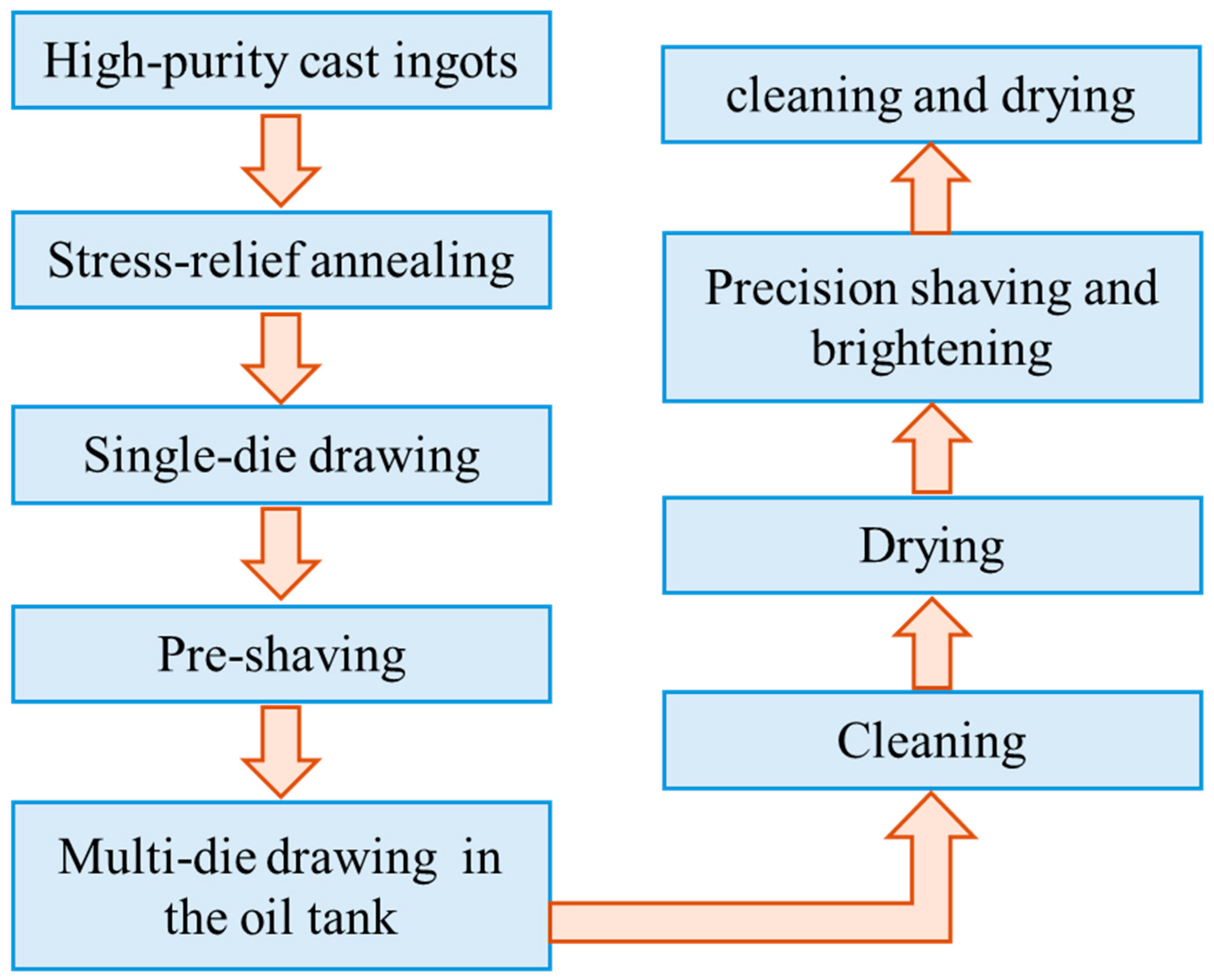
Commercial AA4043 welding wire was used as the base alloy. The chemical compositions of the seven welding wires investigated in this study are listed in Table 1, where sample 1# represents the unmodified AA4043 base wire. Among the alloying additions, Ti was introduced in the form of Al3Ti, while Sr, La, and Ce were added to the melts using Al-10%Sr, Al-10%La, and Al-11%Ce master alloys. High-purity cast ingots were processed into welding wire through the following procedure, as shown in Figure 1. Stress-relief annealing was conducted under a vacuum level of 5Pa, at an annealing temperature of 410 °C with a holding time of 6 h. This processing route produced welding wire with a final diameter of ∅1.2 mm. The as-fabricated wires were subsequently used for tensile tests. Samples for XRD (X-ray diffraction), EDS (energy-dispersive spectrometry), SEM (scanning electron microscopy) and EBSD (electron backscatter diffraction) analyses were prepared by welding Al-6061 plates using the seven different alloyed wires. The resulting weldments were then modified to the required dimensions via EDM (Electrical Discharged Machining).
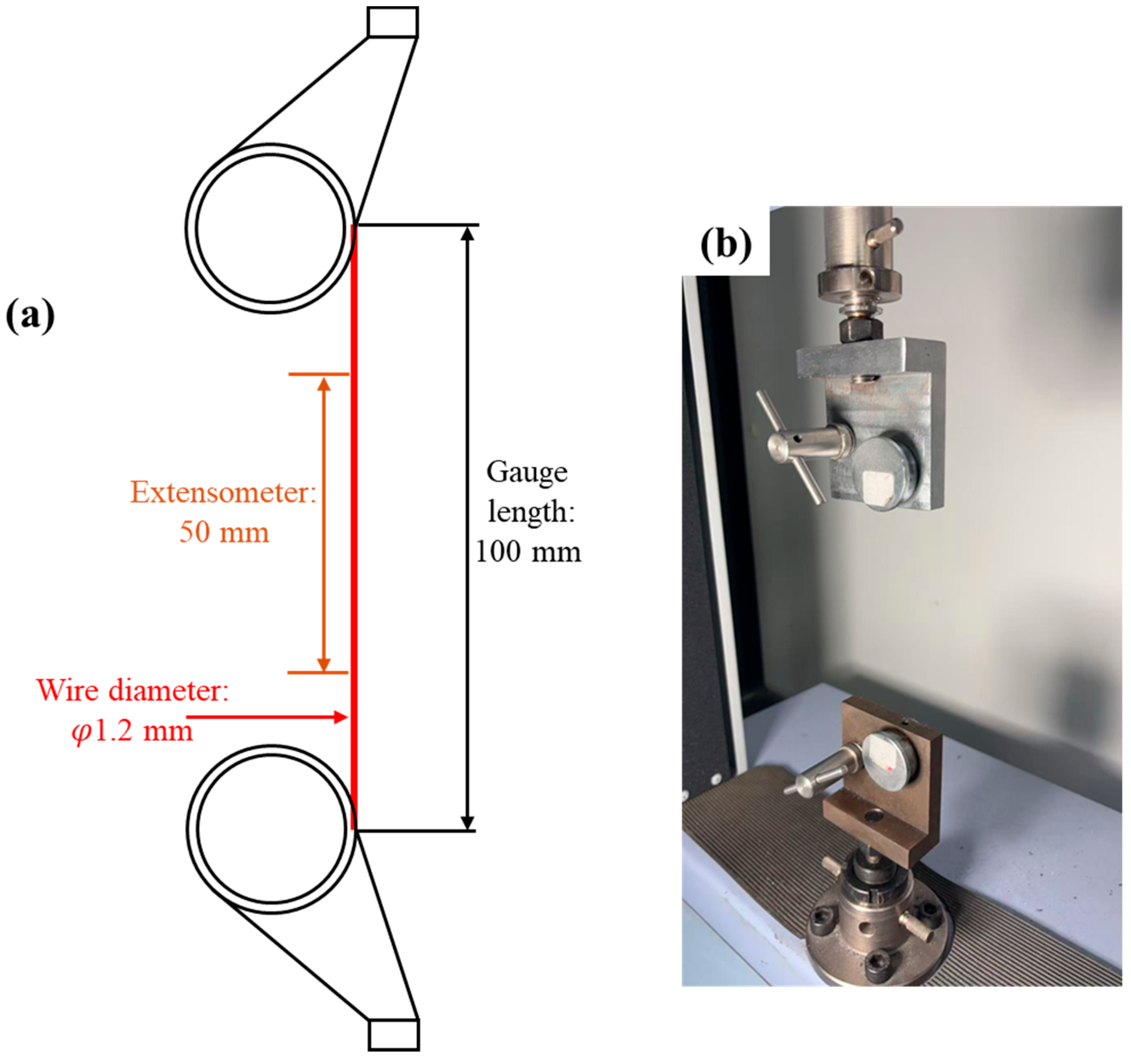
The sample preparation for SEM, EDS, and EBSD analyses followed standard metallographic procedures. Specimen surfaces were first mechanically ground using waterproof abrasive papers with grit sizes of 400#, 1000#, 2000# and 5000# until a flat surface with uniform scratches was obtained. The samples were then mechanically polished using a metallographic polishing machine to achieve a scratch-free and flat surface. Final surface preparation was performed using a Leica EM RES 102 argon ion polishing system. Polishing was conducted sequentially at voltages of 5 keV, 4 keV, and 3 keV, with each stage lasting approximately 1 h. Thess procedures ultimately produced a bright, flat surface with clearly visible microstructural details. SEM (Tescan MIRA 3 XMH, Brno, Czech Republic) was employed to characterize the microstructure and evaluate the effects of microalloying on grain size, eutectic Si morphology, and α -Al dendrite refinement. EDS (Bruker XFlash detector 7|60, Berlin, Germany) was used to analyze elemental distribution and assess the influence of rare-earth additions on elemental segregation. EBSD (Thermo Scientific Apreo 2C, Thermo Fisher Scientific, Waltham, MA, USA, at a 70° tilt) analysis was conducted to further examine grain size, grain-boundary characteristic distribution, and the influence of alloying additions on deformation-related boundary behavior. XRD analysis was performed using a Rigaku SmartLab diffractometer (Rigaku Corporation, Tokyo, Japan), which enables focused analysis of the narrow fusion zone to obtain localized phase information. Mechanical testing was carried out using a Shimadzu AGS-X 10 KN universal testing machine (Shimadzu Corporation, Kyoto, Japan). Tensile tests were conducted at room temperature on fine wire specimens at a strain rate of 10 mm/min, with a gauge length of 100 mm and an extensometer gauge length of 50 mm, in accordance with ASTM E8/E8M [27]. Figure 2 presents a schematic illustration of the wire tensile test setup, along with an image of the actual gripping configuration during testing.

3. Results and Discussion

3.1. Microstructure Evolution

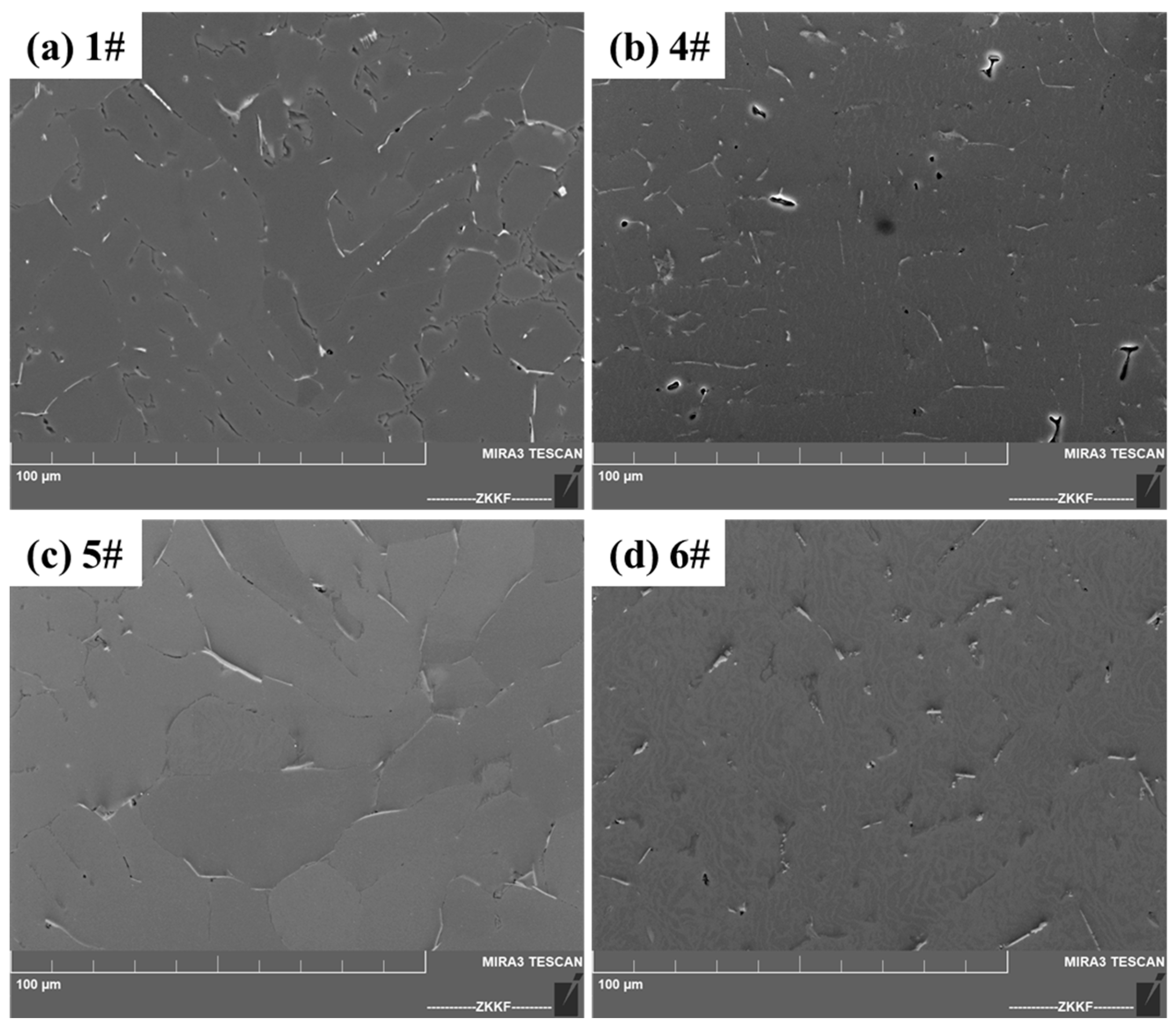
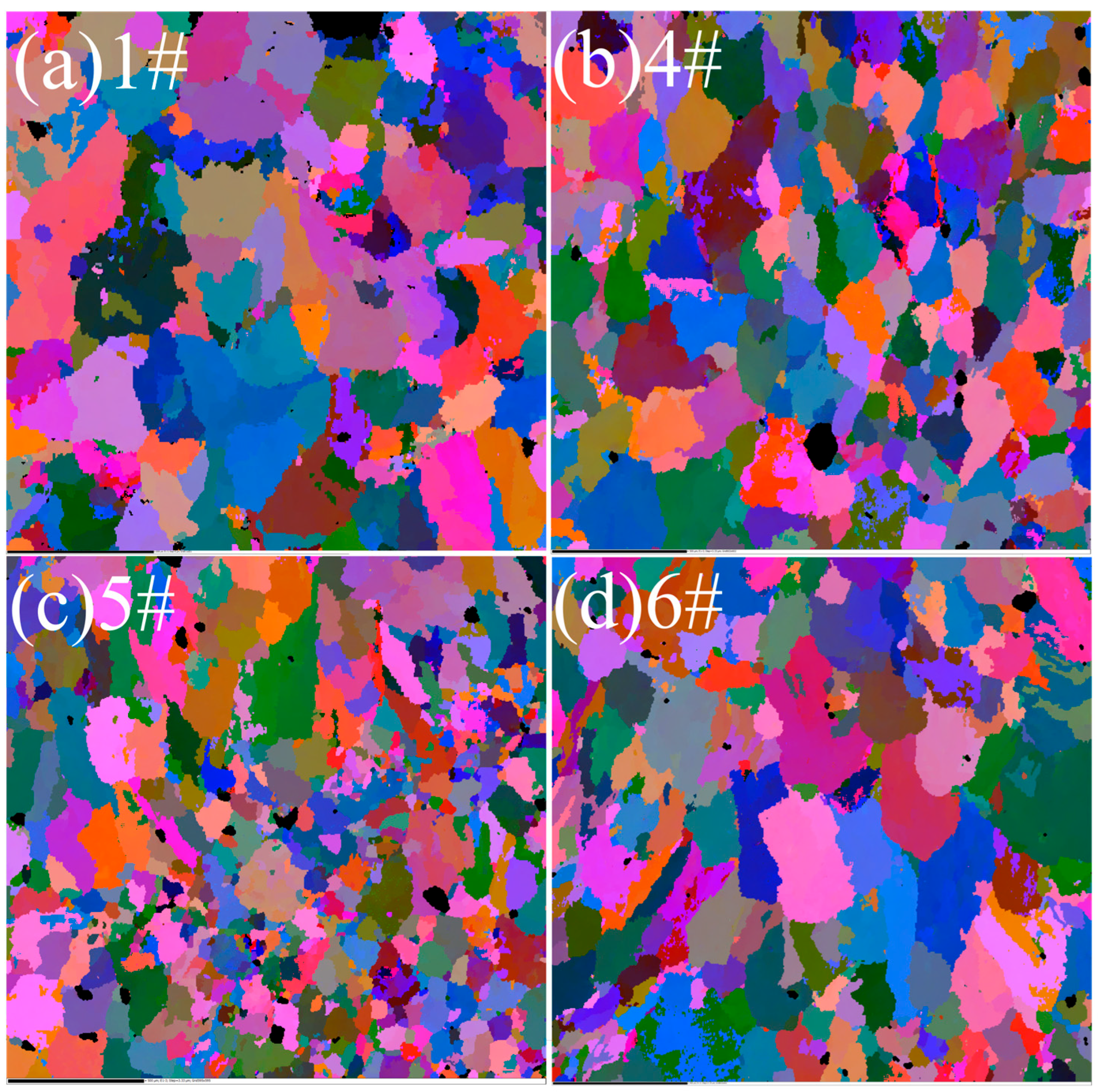
The microstructures of AA4043 alloys with different elemental additions are shown in Figure 3. Owing to the poor surface quality of the #2 and #3 compositions, together with their limited improvement in mechanical properties, as confirmed by tensile testing, SEM and EBSD analyses for these two samples are not presented in this study. Elemental additions had a pronounced effect on the average grain size. The unmodified 1# alloy exhibited an average grain size of approximately 311 μm, whereas the modified 4#, 5#, and 6# alloys showed reduced average grain sizes of 236 μm, 137 μm, and 272 μm, respectively. Overall, the introduction of alloying elements into the AA4043 system reduced the average grain size to below 300 μm, indicating an effective grain refinement effect. However, EBSD analysis reveals that different alloying additions produced distinct grain structure characteristics, as shown in Figure 4. The 1# alloy exhibited coarse and relatively uniform grains. In contrast, the 4# alloy showed finer and more uniformly distributed grains, while the 5# alloy displayed a heterogeneous grain size distribution. This non-uniformity is likely to promote stress concentration during deformation, leading to reduced ductility and strength, as further confirmed by tensile test results. Although the 6# alloy exhibited a relatively uniform grain structure with an average grain size of 272 μm, it remained coarser than that of the 4# sample.
The SEM and EBSD results indicate that elemental additions significantly modify both α -Al dendrite and eutectic Si phases. Single RE element addition combined with Ti (as in the 5# and 6# alloys) was insufficient to achieve synergistic refinement on both the α -Al dendrite and eutectic Si phases. The addition of Ti aims to contribute to improving ductility and strength, whereas La and Ce mainly promote grain refinement and modify the morphology of α -Al dendrites and eutectic Si. Although both La and Ce individually exert a microstructural refinement effect, their combined addition results in the most favorable microstructure and optimal eutectic Si phase morphology. Consequently, the 4# composition showed an average grain size reduction of approximately 24% compared with the unmodified 1# alloy.
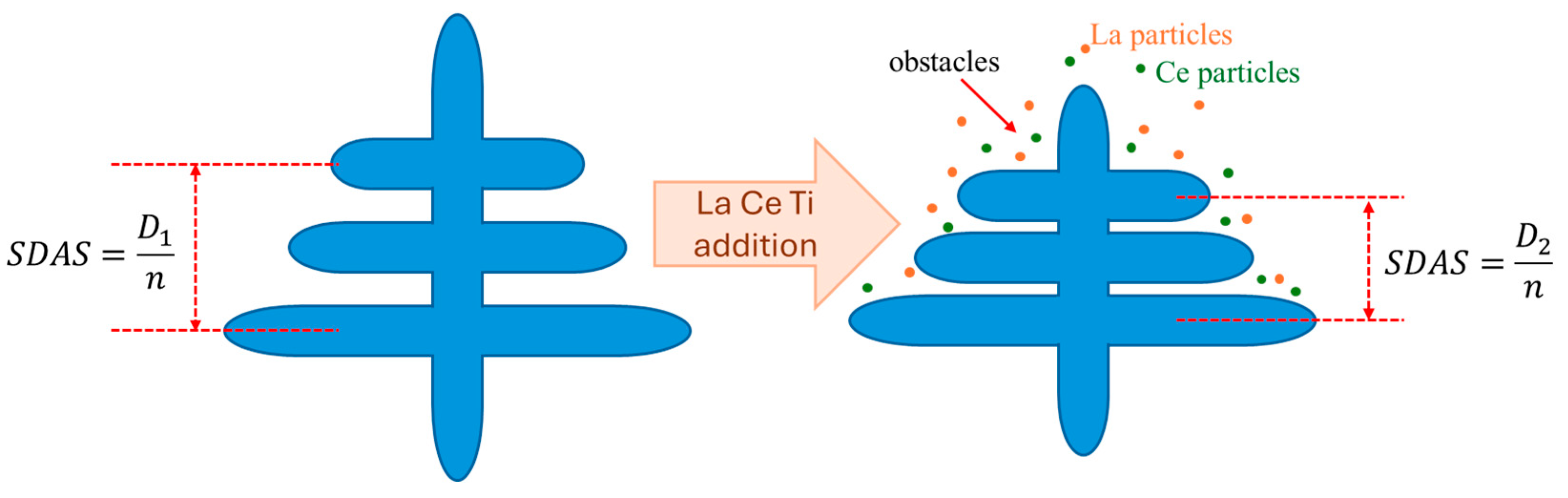
Secondary dendrite arm spacing (SDAS) is an important parameter for evaluating solidification behavior and correlating microstructure features with mechanical properties. Figure 5 illustrates the method used for SDAS measurement as well as the influence of elemental additions on SDAS reduction [28]. Due to their limited solubility in aluminum, La and Ce tend to segregate at dendrite arm interfaces during solidification. This segregation leads to the accumulation of RE solutes ahead of the solid–liquid interface, which hinders Si diffusion and contributes to a reduction in SDAS values [29,30,31]. Although La and Ce do not form stable intermetallic compounds with Al and Si during solidification, their presence still affects solute redistribution by blocking Si diffusion prior to eutectic formation. Meanwhile, La-Al and Ce-Al solutes segregate in front of the advancing solidification interface, resulting in local enrichment of La, Ce and Al. During eutectic Si growth, intermetallic phases such as Al2Si2La and Al2Si2Ce were not detected, as confirmed by XRD analysis. This observation indicates that solute adsorption was insufficient to initiate the formation of these intermetallic compounds, while still playing a role in modifying solidification behavior.
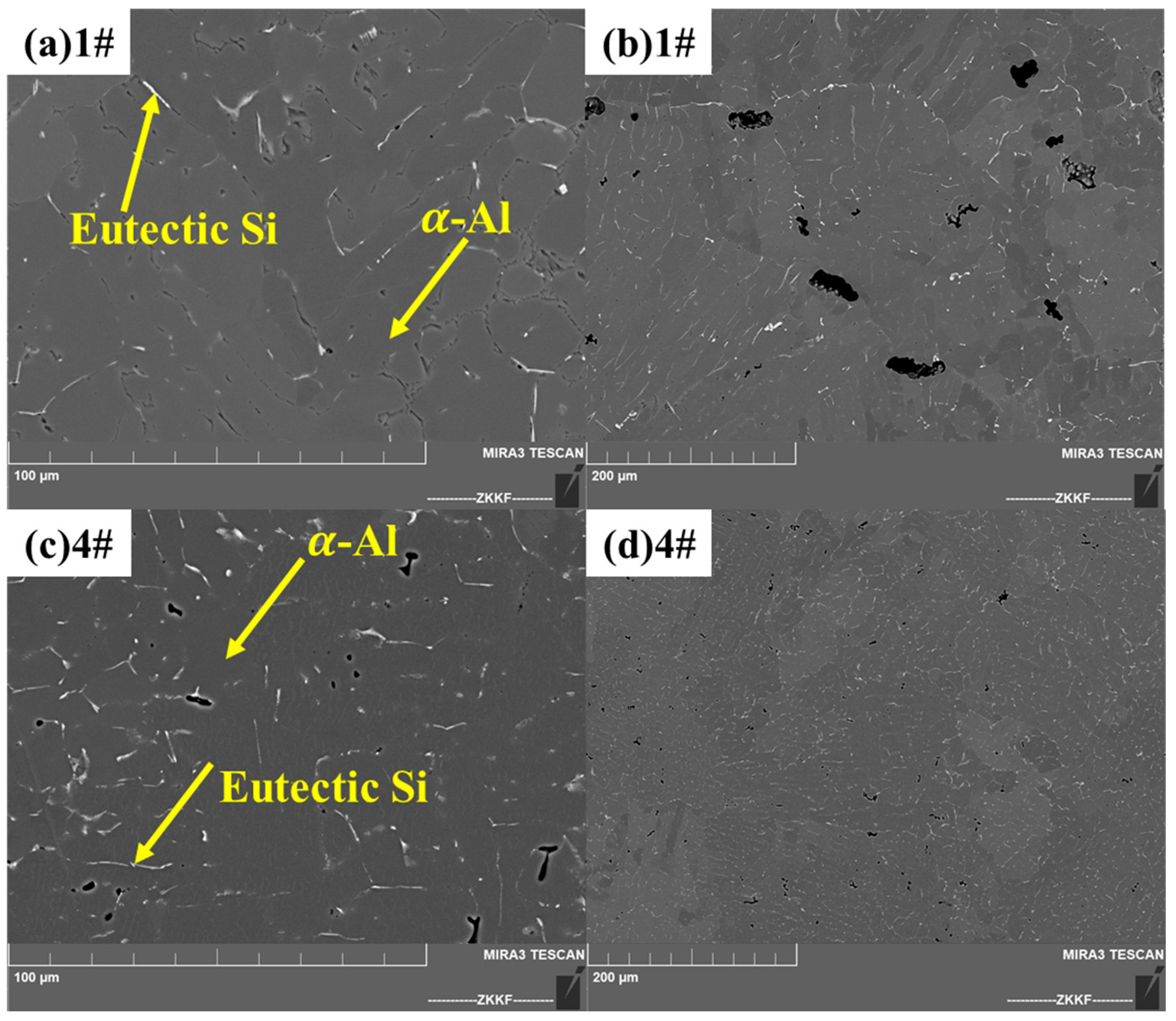
The influence of microalloying on microstructure and macrostructure can be observed in Figure 6. A comparison of the fusion zones of the 1# and 4# compositions provides direct evidence of the effect of elemental additions. The lower-magnification images in Figure 6b,d reveal that the combined addition of Ti and RE elements significantly reduces porosity compared with the unmodified 1# alloy. The higher-magnification images in Figure 6a,c further show pronounced changes in the morphology and distribution density of eutectic Si. In the 1# alloy, eutectic Si is primarily present in rod-like and acicular forms, whereas in the 4# alloy, it is transformed into a finer, fibrous morphology with a denser and more uniform distribution. Such morphological refinement reduces the number of stress concentration sites and, consequently, decreases the susceptibility to premature failure caused by localized stress accumulation.
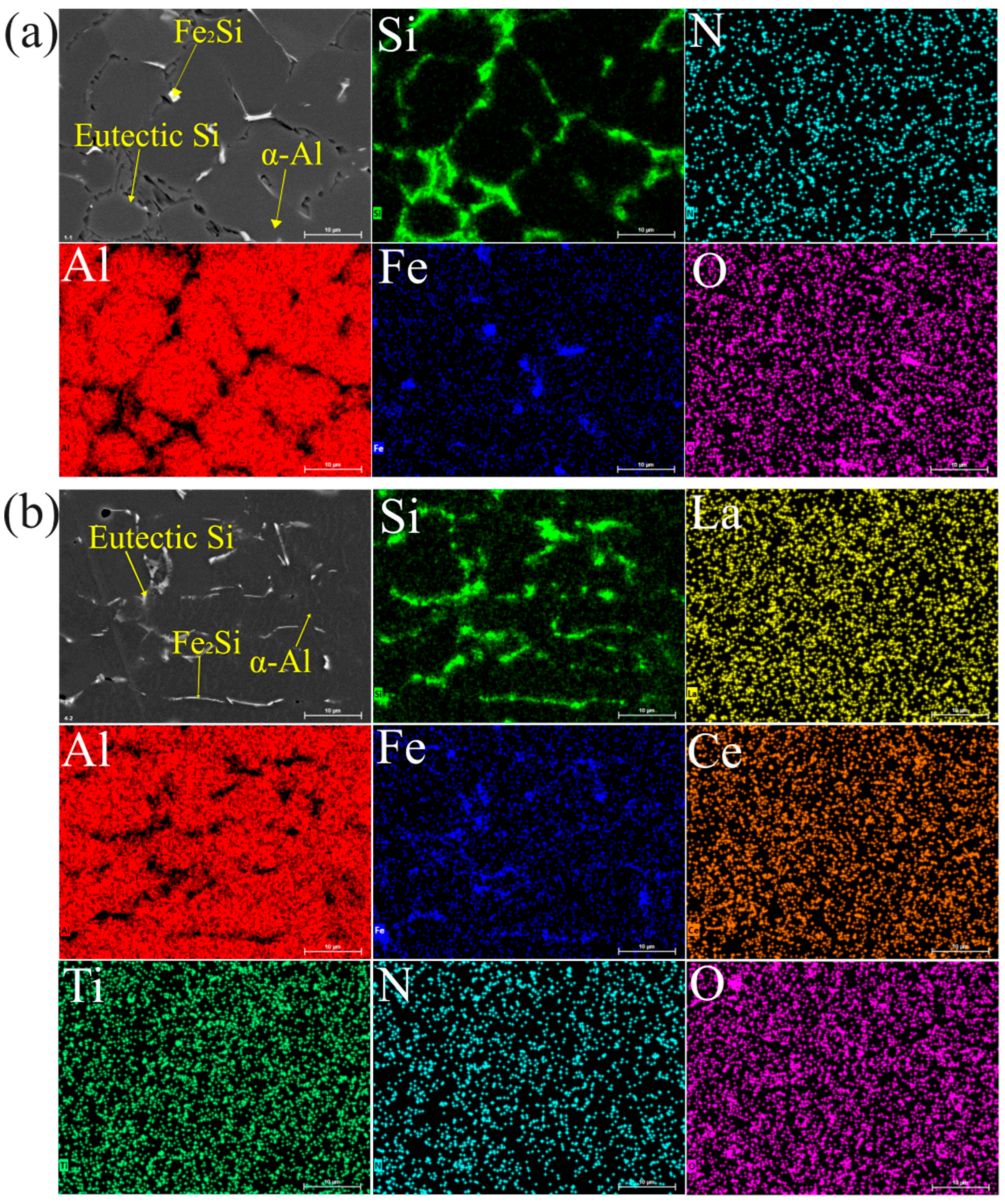
To further examine the effects of 0.019Ti-0.02La-0.03Ce addition on α -Al dendrite and eutectic Si phase refinement, EDS analysis was conducted. A comparison between the 1# and 4# alloys is presented in Figure 7. Due to the extreme addition levels of Ti, La, and Ce, their segregation or local enrichment could not be detected by EDS. In addition to α -Al dendrites and the eutectic Si phase, FeSi2 intermetallic phases were identified in both the 1# and 4# compositions. The formation of FeSi2 is attributed to impurities in the base AA4043 alloy, where Fe is combined with Si during the welding process. In the unmodified 1# alloy, FeSi2 appears as coarse rod-like particles preferentially located along grain boundaries, particularly at triple junctions. In contrast, in the 4# alloy containing Ti-La-Ce, FeSi2 is present as much finer, wire-like particles aligned with grain boundaries. This morphological refinement of the FeSi2 phase suggests reduced susceptibility to stress concentration at triple junctions and grain boundaries, especially considering the inherent brittleness of FeSi2. Meanwhile, clear variations in eutectic Si morphology are also evident in Figure 7. The combined Ti-La-Ce addition significantly modifies eutectic Si morphology, transforming it from a locally concentrated, coarse planar or rod-like structure in the 1# alloy into a more dispersed and fibrous morphology in the 4# alloy. The reduction in eutectic coarseness, along with the refinement of the FeSi2 phase, decreases the number of microcrack nucleation sites and promotes the refinement of the α -Al dendrite structure. Although the influence of Ti-La-Ce addition on microstructural refinement is clearly demonstrated by both SEM and EDS (Figure 6 and Figure 7), the spatial distribution of Ti, La, and Ce appears relatively uniform, with no detectable enrichment or depletion. Two main factors likely account for this observation: (i) the extremely low concentrations of the modifying elements limit their tendency to segregate and (ii) the short thermal cycles inherent to welding process do not provide sufficient time for long-range diffusion and accumulation, thereby preventing noticeable segregation.

3.2. Phase Distribution

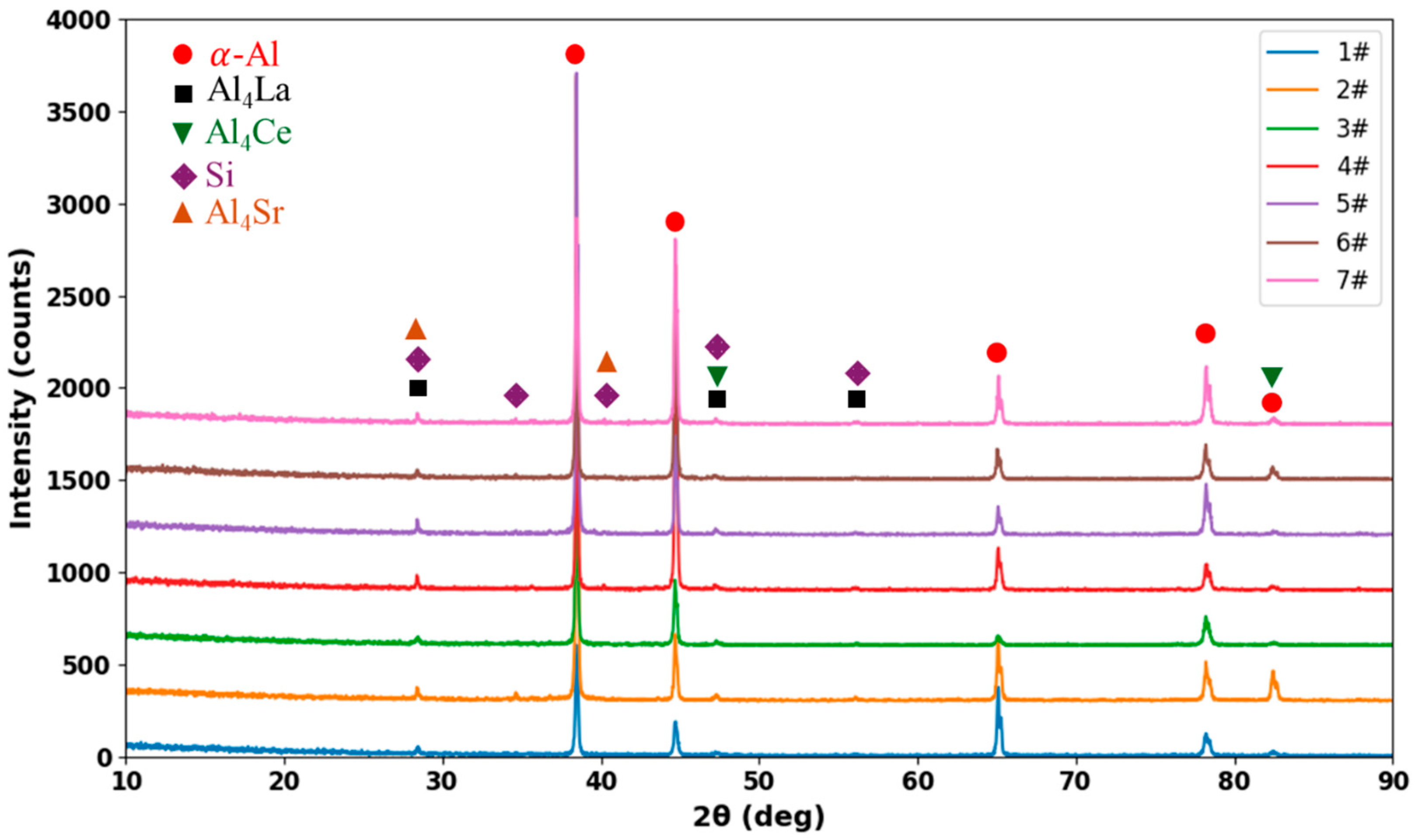
To further elucidate phase variations among the seven compositions, XRD analysis was performed. Figure 8 presents the XRD patterns of the AA4043-based alloy system with various elemental additions. In addition to the expected α -Al dendrite and eutectic Si phases, diffraction peaks corresponding to Al4La, Al4Ce, and Al4Sr can be identified. Although these RE-related intermetallic elements and Al4Sr are present, several of their diffraction peaks overlap with those of α -Al and eutectic Si. Moreover, because Ti, Sr, and RE elements were added at low concentrations, the overall diffraction pattern exhibits only subtle changes, and variations in peak intensity are not pronounced. Nevertheless, by comparing the unmodified 1# alloy with the other six compositions, the influence of alloying additions can still be discerned. The appearance of additional diffraction peaks at 2θ values of approximately 35.6°, 40.2°, and 43.4° provides direct evidence of the formation of Al–xRE (or Sr-containing) intermetallic compounds. These phases are formed during solidification after welding, indicating that the added elements actively participated in the evolution of both the α -Al dendrites and the eutectic Si phase. No measurable peak shifts were observed among the different compositions, suggesting that the microstrain introduced by the alloying additions did not significantly affect the solidification process. When considered together with the microstructural observations in Figure 7, the refinement of the α -Al dendrites and eutectic Si can be attributed to the effects of the added elements. The presence of Al–xRE intermetallic peaks in the XRD patterns, combined with the relatively uniform distribution of La and Ce observed in the EDS maps, confirms the grain-refining capability of the RE additions. Although the low concentrations of these elements limit their direct detection by EDS, the intermetallic compounds identified by XRD provide definitive verification of their presence in the alloy.

3.3. Mechanical Properties and Fracture Analysis

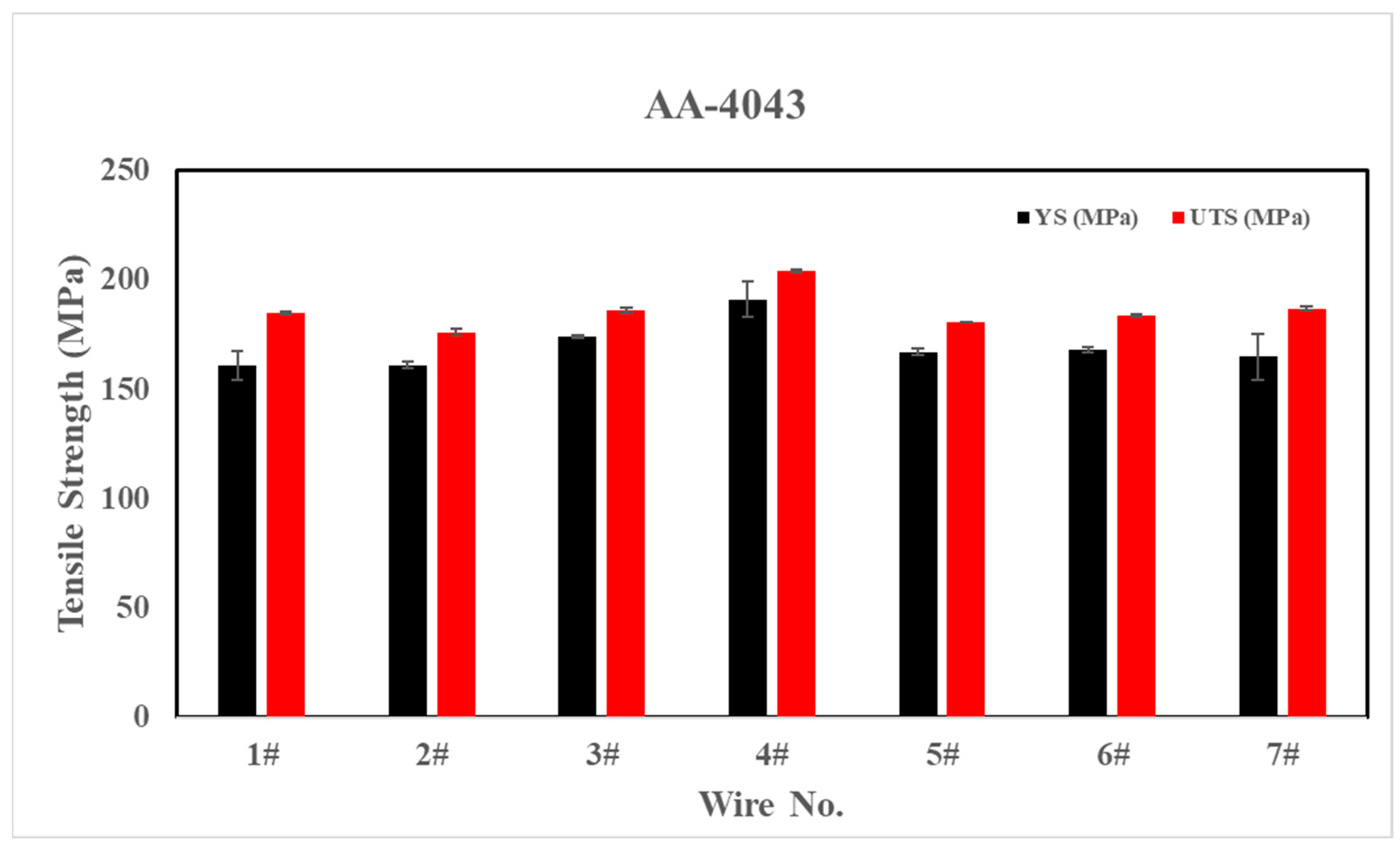
Figure 9 shows the YS (yield strength) and UTS (ultimate tensile strength) of the ∅1.2 mm AA4043 welding wires with various elemental additions. As shown in Figure 9, the tensile properties are strongly dependent on chemical composition. Sample 1# represents the unmodified AA4043 base alloy, while sample 4# corresponds to AA4043-0.019Ti-0Sr-0.02La-0.03Ce. Compared with the base alloy, sample 4# exhibits a pronounced improvement in mechanical properties, with increases of approximately 18.6% in YS and 10.3% in UTS, reaching values of 191 MPa and 204 MPa, respectively. Relative to the baseline AA4043 wire (UTS ≈ 185 MPa; YS ≈ 161 MPa), the 4# composition markedly reduces the strength mismatch between the filler wire and the AA6061-T6 base metal (YS: 240–275 MPa, UTS: 290–340 MPa), which is beneficial for weld integrity. In contrast, the single Ti addition in sample 2# results in a reduction in UTS, indicating that Ti alone provides limited strengthening in this alloy system at the present addition level. The limited strengthening observed for the single Ti addition is likely due to its extremely low concentration, as the addition of Ti tends to contribute to the mechanical properties [10,31].
Samples 5# and 6#, containing dual additions of Ti-Ce and Ti-La, show slight improvements in YS but negligible changes in UTS. Similarly, the single addition of Sr or the combined addition of Ti-Sr leads to minimal enhancement of tensile properties. Among all seven compositions, sample 2# exhibits the lowest tensile strength, with an approximately 5% decrease in UTS compared with the base alloy. Overall, the hybrid addition of 0.019Ti-0Sr-0.02La-0.03Ce (sample 4#) provides the most effective strengthening among all modified compositions. Considering the refined α -Al dendrites and eutectic Si morphology observed in the microstructure of the 4# alloy, the enhancement in tensile properties can be attributed primarily to microstructural refinement. These results establish a clear correlation between elemental additions, microstructure evolution, and mechanical property improvement. The limited strengthening observed for the single Ti addition is likely due to its extremely low concentration.
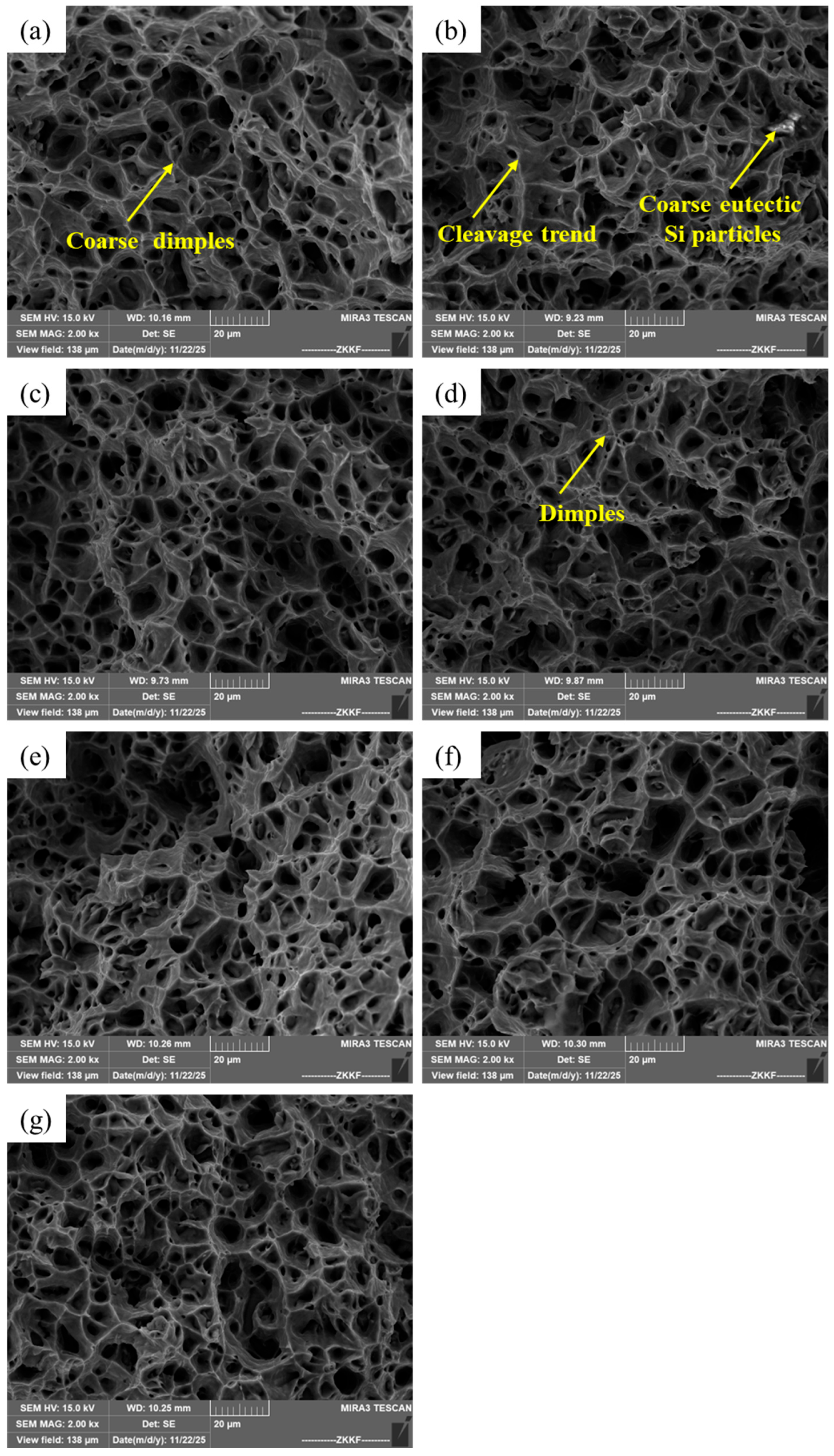
Figure 10 presents the SEM fracture morphologies of AA4043-based welding wires with various additions of Ti, Sr, La, and Ce. The fracture surface of the unmodified 1# alloy, as shown in Figure 10a, exhibits large and coarse dimples, which are characteristic of a ductile failure mode. The large dimple size further reflects the presence of coarse eutectic Si particles, particularly at triple junctions. In contrast, the reduced tensile strength observed in the 2# alloy is consistent with its fracture morphology, as shown in Figure 10b, where coarse eutectic Si particles and the presence of cleavage facets indicate that the single Ti addition fails to achieve effective microstructural refinement. For the 4# alloy, the fracture surface shown in Figure 10d displays noticeably finer dimples, suggesting a refined dendritic structure within the fusion zone [28,31]. The presence of small sub-dimples is further consistent with the transformation of eutectic Si into a fibrous-like morphology resulting from the combined addition of 0.019Ti-0Sr-0.02La-0.03Ce. Among all compositions, the fractographic characteristics of the 4# alloy show the strongest correlation with its superior mechanical performance, as also demonstrated by the tensile test results.

4. Conclusions

In this work, the effects of trace-element and rare-earth (RE) additions on the microstructure, mechanical properties, and weldability of AA4043 welding wire were systematically investigated. Various combinations of Ti, Sr, La, and Ce were evaluated to determine the optimal alloying strategy. Among all compositions, the combined addition of 0.019Ti-0Sr-0.02La-0.03Ce was identified as the most effective modification for AA4043.
  • The incorporation of RE elements (La, Ce) significantly refined the α -Al dendrites and eutectic Si phase and reduced the secondary dendrite arm spacing (SDAS). The eutectic Si phase morphology transformed from coarse rod-like and acicular-like structures into fine, fibrous-like forms, effectively reducing stress concentration sites and suppressing microvoid nucleation.
  • These microstructural improvements led to measurable mechanical enhancements. The yield strength and ultimate tensile strength increased from 161 MPa to 191 MPa and 185 MPa to 204 MPa, corresponding to 18.6% and 10.3% increases, respectively. In addition, the strength mismatch between the welding wire and the AA6061-T6 base metal decreased by 6.5–12.5%, contributing to improved weldability and enhanced joint strength.
  • Furthermore, the minor addition of 0.019Ti-0Sr-0.02La-0.03Ce not only refined the fusion zone microstructure but also significantly reduced weld porosity. This demonstrates that microalloying provides an effective pathway to simultaneously improve weld microstructure, mechanical performance, and weldability. The findings of this work not only offer guidance for designing improved filler wires but also present a promising approach for enhancing material quality in additive manufacturing applications.

Author Contributions

Conceptualization, Y.Y. and D.W.; Methodology, Y.Y., D.W. and T.J.;. Validation, Y.Y. and T.J.; Formal analysis, Y.Y.; Investigation, Y.Y., T.J. and Z.D.; Resources, D.W.; Data curation, Y.Y., W.Z. and L.Z.; Writing—original draft preparation, Y.Y.; Writing—review and editing, Y.Y. and D.W.; Visualization, Y.Y.; Supervision, D.W., B.M. and D.C.; Project administration, D.W.; Funding acquisition, D.W. All authors have read and agreed to the published version of the manuscript.

Funding

This research was funded by Key Research and Development Program of Ningbo, grant numbers 2023Z098, 2024Z170, 2025Z188.

Data Availability Statement

The original contributions presented in this study are included in the article. Further inquiries can be directed to the corresponding author.

Conflicts of Interest

The authors declare no conflicts of interest.

References

  1. Gao, Y.C.; Dong, B.X.; Yang, H.Y.; Yao, X.Y.; Shu, S.L.; Kang, J.; Meng, J.; Luo, C.J.; Wang, C.G.; Gao, K.; et al. Research progress, application and development of high performance 6000 series aluminum alloys for new energy vehicles. J. Mater. Res. Technol. 2024, 32, 1868–1900. [Google Scholar] [CrossRef]
  2. Liu, T.; Dong, Q.; Fu, Y.N.; Yang, J.; Zhang, J.; Sun, B.D. Effect of addition of La and Ce on solidification behavior of Al-Cu alloys. Mater. Lett. 2022, 324, 132653. [Google Scholar] [CrossRef]
  3. Chong, Y.F.; Du, Z.X.; Gong, T.H.; Wang, W.Y.; Pan, Z.R.; Qi, L.L.; Sun, B.A.; Liu, J.S. Microstructure and mechanical properties of Ce-La mixed rare earths modified Al-Mg-Si alloy under cold rolling and heat treatment. J. Alloys Compd. 2025, 1021, 179773. [Google Scholar] [CrossRef]
  4. Qi, L.; Zhang, Q.X.; Ma, Y.W.; Xu, Y.; Han, X.H.; Li, Y.B. A comparative study on mechanical performance of traditional and magnetically assisted resistance spot welds of A7N01 aluminum alloy. J. Manuf. Process. 2021, 66, 133–144. [Google Scholar] [CrossRef]
  5. Kalinenko, A.; Zuiko, I.; Malopheyev, S.; Mironov, S.; Kaibyshev, R. Dissimilar friction-stir welding of aluminum alloys 2519, 6061, and 7050 using an additively-manufactured tool. Eng. Fail. Anal. 2024, 156, 107851. [Google Scholar] [CrossRef]
  6. Li, N.; Ge, F.B.; Wu, S.Y.; Tan, H.J.; Hu, Z.G. Effect of La-Ce additions on microstructure and mechanical properties of cast Al-3Si-0.5Cu-0.7Fe alloy with high thermal conductivity. J. Alloys Compd. 2025, 1024, 180249. [Google Scholar] [CrossRef]
  7. Liao, H.C.; Lu, L.Z.; Li, G.J.; Huang, Y.L.; Yang, L.L.; Guo, H.T.; Wu, F. Influence of minor addition of La and Ce on the ageing precipitation behavior of Sr-modified Al-7Si-0.6Mg alloy. Mater. Today Commun. 2024, 39, 108825. [Google Scholar] [CrossRef]
  8. Cai, J.S.; Ouyang, Z.P.; Jin, H.X.; Kong, Y.J.; Wei, Y.H. Study on oscillating laser welding of 6061-T6 aluminum alloy medium-thick plate: Energy distribution, joint forming, texture evolution, and mechanical properties. Opt. Laser Technol. 2025, 188, 112910. [Google Scholar] [CrossRef]
  9. Zhang, B.X.; Chen, H.; Liu, Y.; Meng, Y.F.; Deng, A.L.; Wu, X. Study on the influence of Al-Si welding wire on porosity sensitivity in laser welding and process optimization. Opt. Laser Technol. 2024, 170, 110261. [Google Scholar] [CrossRef]
  10. Wang, B.; Xue, S.B.; Ma, C.L.; Han, Y.L.; Lin, Z.Q. Effect of combinative addition of Ti and Sr on modification of AA4043 welding wire and mechanical properties of AA6082 welded by TIG welding. Trans. Nonferrous Met. Soc. China 2017, 27, 272–281. [Google Scholar] [CrossRef]
  11. Xu, X.D.; Jiang, F.; Zhang, Q.; Li, J.X.; Jiang, C.L.; Huang, H.F. Effect of La and Ce alloying on microstructure and the thermal deformation mechanism of commercial Al-Mg-Si alloy. J. Mater. Res. Technol. 2025, 36, 1613–1624. [Google Scholar] [CrossRef]
  12. Wei, B.; Pan, S.; Liao, G.Z.; Ali, A.; Wang, S.B. Sc-containing hierarchical phase structures to improve the mechanical and corrosion resistant properties of Al-Mg-Si alloy. Mater. Des. 2022, 218, 110699. [Google Scholar] [CrossRef]
  13. Haghayeghi, R.; Timelli, G. An investigation on primary Si refinement by Sr and Sb additions in a hypereutectic Al-Si alloy. Mater. Lett. 2021, 283, 128779. [Google Scholar] [CrossRef]
  14. Vijayan, V.; Ravi, M.; Prabhu, K.N. Effect of Ni and Sr additions on the microstructure, mechanical properties, and coefficient of thermal expansion of Al-23%Si alloy. Mater. Today Proc. 2021, 46, 2732–2736. [Google Scholar] [CrossRef]
  15. Che, H.M.; Jiang, X.Q.; Qiao, N.; Liu, X.K. Effects of Er/Sr/Cu additions on the microstructure and mechanical properties of Al-Mg alloy during hot extrusion. J. Alloys Compd. 2017, 708, 662–670. [Google Scholar] [CrossRef]
  16. Yang, Q.; Bu, F.Q.; Zheng, T.; Meng, F.Z.; Liu, X.J.; Zhang, D.P.; Qiu, X.; Meng, J. Influence of trace Sr additions on the microstructures and the mechanical properties of Mg–Al–La-based alloy. Mater. Sci. Eng. A 2014, 619, 256–264. [Google Scholar] [CrossRef]
  17. Mahmoud, M.G.; Mosleh, A.O.; Mohamed, M.S.; El-Moayed, M.H.; Khalifa, W.; Pozdniakov, A.V.; Salem, S. The impact of Ce-containing precipitates on the solidification behavior, microstructure, and mechanical properties of Al-6063. J. Alloys Compd. 2023, 948, 169805. [Google Scholar] [CrossRef]
  18. Zheng, Q.J.; Wu, J.; Jiang, H.X.; Zhang, L.L.; Zhao, J.Z.; He, J. Effect of micro-alloying element La on corrosion behavior of Al-Mg-Si alloys. Corros. Sci. 2021, 179, 109113. [Google Scholar] [CrossRef]
  19. Zheng, Q.J.; Zhang, L.L.; Jiang, H.X.; Zhao, J.Z.; He, J. Effect mechanisms of micro-alloying element La on microstructure and mechanical properties of hypoeutectic Al-Si alloys. J. Mater. Sci. Technol. 2020, 47, 142–151. [Google Scholar] [CrossRef]
  20. Wang, S.H.; Zhou, H.P.; Kang, Y.P. The influence of rare earth elements on microstructures and properties of 6061 aluminum alloy vacuum-brazed joints. J. Alloys Compd. 2003, 352, 79–83. [Google Scholar] [CrossRef]
  21. Li, D.Q.; Cai, S.L.; Gu, J.; Liu, S.C.; Si, J.J. Co-doping of La/Ce and La/Er induced precipitation strengthening for designing high strength Al-Mg-Si electrical conductive alloys. Mater. Today Commun. 2023, 36, 106666. [Google Scholar] [CrossRef]
  22. Jiang, H.X.; Li, S.X.; Zheng, Q.J.; Zhang, L.L.; He, J.; Song, Y.; Deng, C.K.; Zhao, J.Z. Effect of minor lanthanum on the microstructures, tensile and electrical properties of Al-Fe alloys. Mater. Des. 2020, 19, 108991. [Google Scholar] [CrossRef]
  23. Pandee, P.; Gourlay, C.M.; Belyakov, S.A.; Patakham, U.; Zeng, G.; Limmaneevichitr, C. AlSi2Sc2 intermetallic formation in Al-7Si-0.3Mg-xSc alloys and their effects on as-cast properties. J. Alloys Compd. 2018, 731, 1159–1170. [Google Scholar] [CrossRef]
  24. Elgallad, E.M.; Doty, H.W.; Alkahtani, S.A.; Samuel, F.H. Effects of La and Ce Addition on the Modification of Al-Si Based Alloys. Adv. Mater. Sci. Eng. 2016, 5928, 5027243. [Google Scholar] [CrossRef]
  25. Acherjee, B. Hybrid laser arc welding: State-of-art review. Opt. Laser Technol. 2018, 99, 60–71. [Google Scholar] [CrossRef]
  26. Zhang, L.; Chen, D.G.; Wang, D.F.; Ma, B.; Ma, L.C.; Xin, H.Y.; Zhang, Y.Y.; Dai, Y. Research on Laser-MIG Composite Welding of TC4 Titanium Alloy. Ordnance Mater. Sci. Eng. 2019, 42, 73–77. [Google Scholar]
  27. ASTM E8/E8M-13a; Standard Test Methods for Tension Testing of Metallic Materials. ASTM International: West Conshohocken, PA, USA, 2013.
  28. Liu, Y.; Yu, Z.C.; Zhang, M.; Feng, Q.S.; Zhang, D.; Gao, P.Y.; Li, C.H. The Influence of the Combined Addition of La–Ce Mixed Rare Earths and Sr on the Microstructure and Mechanical Properties of AlSi10MnMg Alloy. Metals 2024, 14, 1050. [Google Scholar] [CrossRef]
  29. Wu, X.Y.; Zhang, H.R.; Jiang, H.T.; Mi, Z.L.; Zhang, H. Multi-Refinement Effect of Rare Earth Lanthanum on α-Al and Eutectic Si Phase in Hypoeutectic Al-7Si Alloy. Metals 2020, 10, 621. [Google Scholar] [CrossRef]
  30. Hosseinifar, M.; Malakhov, D.V. The Sequence of Intermetallics Formation during the Solidification of an Al-Mg-Si Alloy Containing La. Met. Mater. Trans. A 2010, 42, 825–833. [Google Scholar] [CrossRef]
  31. Jiang, W.M.; Fan, Z.T.; Dai, Y.C.; Li, C. Effects of rare earth elements addition on microstructures, tensile properties and fractography of A357 alloy. Mater. Sci. Eng. A 2014, 597, 237–244. [Google Scholar] [CrossRef]
Figure 1. Flow chart of wire-making process.
Crystals 16 00006 g001
Figure 2. (a) Schematic drawing of wire tensile test setup; (b) grip picture.
Crystals 16 00006 g002
Figure 3. Microstructure of AA4043 alloy with different combinations of elements added: (a) 1#; (b) 4#; (c) 5#; (d) 6#.
Crystals 16 00006 g003
Figure 4. The EBSD images of AA4043 welding wire with addition of Ti, La, and Ce; (a) 1#; (b) 4#; (c) 5#; (d) 6#.
Crystals 16 00006 g004
Figure 5. Schematic drawing of secondary dendrite arm spacing calculation method and the effect of element addition on reduction in SDAS.
Crystals 16 00006 g005
Figure 6. Representative microstructure of fusion zone in 1# and 4# samples at two different magnifications: (a) 1# at 2 K; (b) 1# at 0.5 K; (c) 4# at 2 K; (d) 4# at 0.5 K.
Crystals 16 00006 g006
Figure 7. Elemental distribution maps for (a) 1# and (b) 4# alloys.
Crystals 16 00006 g007
Figure 8. XRD patterns of the microalloyed welding wire of all 7 compositions.
Crystals 16 00006 g008
Figure 9. Effect of elemental addition on yield strength (YS) and ultimate tensile strength (UTS) of AA4043 welding wire: 1#; 2#; 3#; 4#; 5#; 6#; 7#.
Crystals 16 00006 g009
Figure 10. SEM images of fracture surface of AA4043 base welding wire modified with different elements combination: (a) 1#; (b) 2#; (c) 3#; (d) 4#; (e) 5#; (f) 6#; (g) 7#.
Crystals 16 00006 g010
Table 1. Studied alloy composition (wt.%).
ElementsAlSiFeTiSrLaCe
Alloy Number
1#Rem 15.140.16\\\\
2#Rem5.190.170.017\\\
3#Rem5.170.170.0180.01\\
4#Rem5.090.160.019\0.020.03
5#Rem5.100.160.020\\0.05
6#Rem5.080.160.020\0.05\
7#Rem5.110.17\0.02\\
1 Rem represents reminder; this note applies to the entire table.
Disclaimer/Publisher’s Note: The statements, opinions and data contained in all publications are solely those of the individual author(s) and contributor(s) and not of MDPI and/or the editor(s). MDPI and/or the editor(s) disclaim responsibility for any injury to people or property resulting from any ideas, methods, instructions or products referred to in the content.