
Communication

Effect of Biomimetic Structures on the Tensile Fracture Behavior of TLP Joints for GH4169

1
AVIC Manufacturing Technology Institute, Beijing 100024, China
2
Mechanical and Intelligent Manufacturing College, Chongqing University of Science and Technology, Chongqing 401331, China
*
Authors to whom correspondence should be addressed.
Crystals 2025, 15(12), 1026; https://doi.org/10.3390/cryst15121026
Submission received: 13 October 2025 / Revised: 28 October 2025 / Accepted: 30 October 2025 / Published: 29 November 2025
(This article belongs to the Section Inorganic Crystalline Materials)

Abstract

The mechanical interlocking structure design was applied to the transient liquid phase bonding of GH4169 based on the bionic structure of the beetle’s exoskeleton. The microstructures and tensile fracture behaviors of the joints with circular, elliptical, and isosceles-trapezoid interlocking structures were investigated. The results show that the mechanical properties of the joint can be improved through bio-inspired structural design. Among them, the elliptical interlocking structure exhibits the most significant strengthening effect. The elliptical interlocking structure can effectively hinder crack propagation, resulting in the highest strength, plasticity, and stress-rupture lifetimes of the joint. The tensile strength of the joint with elliptical interlocking structure at room temperature and 923 K was 1006 MPa and 905 MPa, respectively. Under 690 MPa/923 K, the stress-rupture lifetime of the joint with elliptical structure reached 28.93 h.

1. Introduction

Superalloys possess excellent high-temperature properties and are the key materials for manufacturing the critical hot-section components of aircraft [1,2,3]. To satisfy lightweight and multifunctional requirements, the hot-section components increasingly adopt hollow configurations, necessitating bonding-based fabrication methodologies [4,5,6]. As low-stress joining methods, brazing and transient liquid-phase bonding (TLP) are widely used in the bonding of hot-section components [7,8,9,10]. In the brazing and TLP bonding of superalloys, filling materials containing melting-point depressant elements such as Si and B are often used [11]. Brittle compounds and diffusion-affect zones are prone to form in the joints, resulting in poor high-temperature durability and fatigue performance of the joints [12]. Consequently, the joints become a weak point and are classified as structural flaws in component design in terms of mechanical properties. To achieve durable bonding structures for superalloys, it is urgent to develop innovative fabrication methods. Currently, high-performance bonding of superalloys is achieved mainly by modifying the filling materials and regulating the processes. In addition, optimizing the structural design of the joints is regarded as a promising strategy.
Drawing inspiration from the structural characteristics of biological systems, biomimetic engineering offers innovative approaches for developing advanced technological equipment [13,14,15,16,17]. Utilizing the superhydrophobic properties of lotus leaves and insect wings, researchers have developed surface treatment technologies for corrosion and ice prevention on metals by creating micro–nano-structures on the surfaces [18]. Leveraging the hierarchical structure of abalone shells, graphene and ceramic composite materials have been manufactured [19,20,21]. For structural design, researchers modeled beetle elytra to engineer a lightweight yet impact-resistant structure [22]. Based on biomimetic design, the mechanical interlocking structure can significantly enhance the strength and toughness of mechanical connections [23]. By constructing mortise–tenon grain boundaries in the joints, high-performance joining of single-crystal superalloys was achieved [8]. And the strengthening and toughening mechanisms of interconnected and sutured structures in animal organs were investigated by developing a theoretical model [23].
In this study, we applied interconnected and sutured biological structures into the macroscopic design of welding structures. The mechanical interlocking structure design was applied to the TLP bonding of GH4169 based on the bionic structure of the beetle’s exoskeleton. The microstructure and mechanical properties of the TLP joints with biomimetic structure were studied. The tensile deformation behaviors of the joints with different bionic structures were tested by using digital image correlation technology (DIC), and combined with fracture analysis, the influence mechanism of bionic structural forms on deformation and fracture behaviors of the joint was studied.

2. Materials and Methods

The superalloy GH4169 was selected as the base material to be bonded, whose chemical composition is shown in Table 1. As shown in Figure 1a, three interlocking structures of circular, elliptical, and isosceles-trapezoid structures were designed based on the bionic structure of the beetle’s exoskeleton. The center of the circular structure is the geometric center of the assembly structure. And the circular structure has a diameter of 20 mm, with the neck’s concave arc matching the same diameter. For the elliptical structure, the geometric center of the assembly structure is set at the center of the ellipse. The major axis of the elliptical structure measures 20 mm in length, while the minor axis is 10 mm in length. The concave arcs on both sides of the neck are quarter-elliptical arcs. The isosceles trapezoid structure has a lower base length of 20 mm, and the angle between the legs and the base is 25°. And the half-stock dimension was 60 × 60 mm2.
The GH4169 was cut into tenons and mortises according to the geometric dimensions of the mechanical interlocking structure described above. Before assembly, the bonding surfaces were sanded with sandpaper and ultrasonically cleaned in an alcohol solution for 30 min to remove oxides and oil stains. The BNi2 amorphous foils (produced by Changsha Tianjiu Metal Materials Co., Ltd. Changsha, China) were used as the filling material. The BNi2 amorphous foil with a thickness of 100 μm was placed between the tenon and mortise, then assembled as shown in Figure 1b. The gaps of both parts of the structures were controlled by tungsten wire with a diameter of 100 μm. The bonding processes were carried out in a vacuum brazing furnace. After the furnace vacuum reached a level higher than 5 × 10⁻³ Pa, the assemblies were heated to 1453 K at a rate of 288 K/min, followed by a 60 min holding period.
After bonding, metallographic specimens were extracted from the joints using wire-electrode cutting, then specimens were mounted and sequentially ground with abrasive papers followed by mechanical polishing. The polished specimens were etched by a solution of 10 mL HCl + 10 mL alcohol + 5 g CuCl2. Microstructural characterizations of the post-etching specimens were carried out using a LEO scanning electron microscope (Zeiss, 1525 FE-SEM, Aubergen City, Baden-Württemberg State, Germany). An electronic universal testing machine (MTS-E 45.105, MTS, Shanghai, China) was used to test the tensile properties of the joints at room temperature and 923 K with a strain rate of 10−3/s. A high-temperature electron-creep testing machine (RDL 50, Changchun Institute of Mechanical Science Co., Ltd., Changchun, China) was used to test the stress-rupture lifetimes of the joints. The average value of three samples’ properties was taken as the mechanical property data of the joint. The joints were subjected to digital image correlation (DIC, Shimadzu Japan AG-X plus 100 KN. Kyoto, Japan) testing to quantitatively map the full-field strain distribution during tensile deformation. During the experiment, the specimen was loaded with a displacement rate of 1 mm/min, and the speckle images were captured with a time interval of 1 s.

3. Results

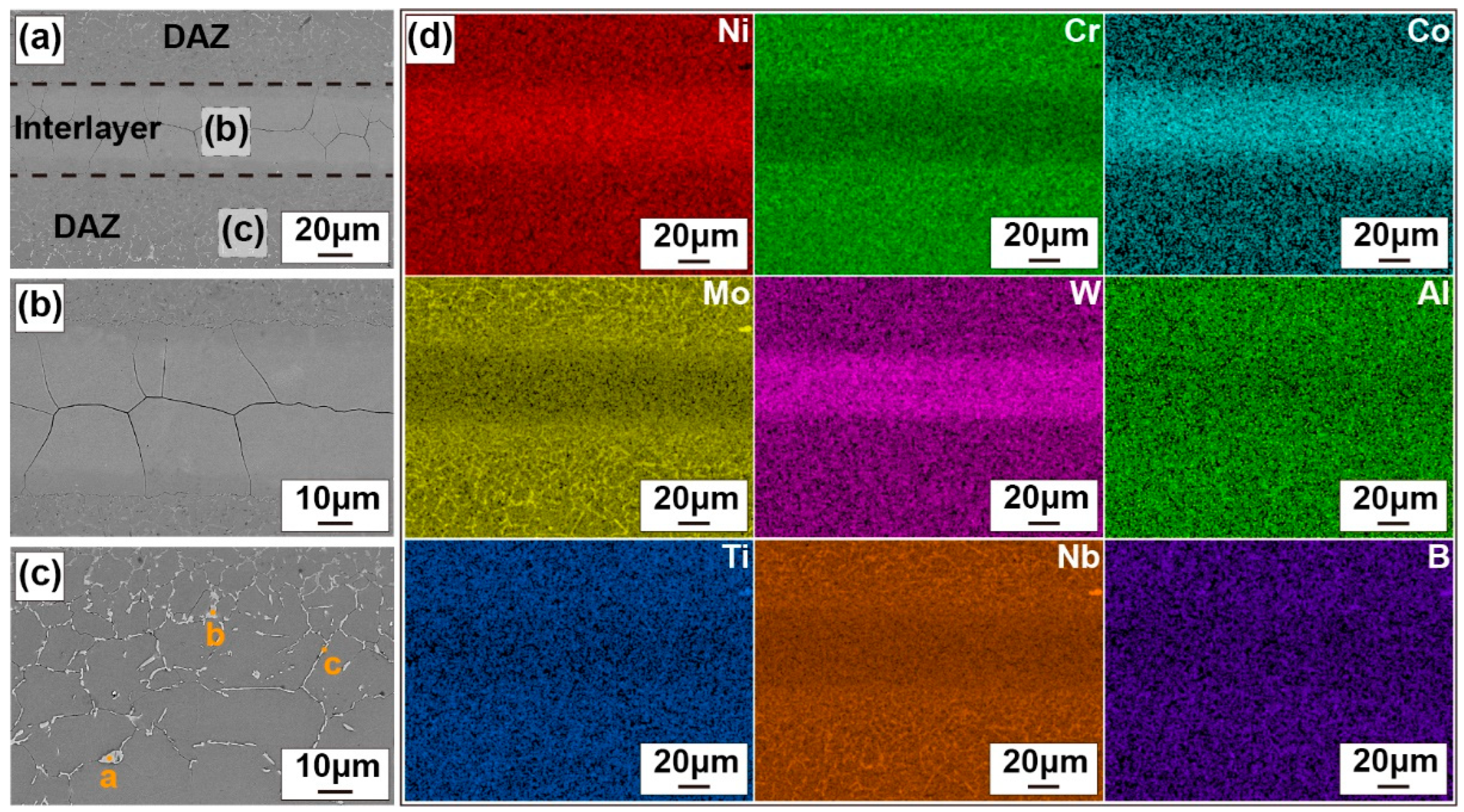
The microstructure of the joints is shown in Figure 2. All joints with different interlocking structures have no defects such as holes. The entire joint is composed of the central interlayer and diffusion-affected zones (DAZs) on both sides, as shown in Figure 2a. The central interlayer is constituted by two layers of grains (Figure 2b). During the bonding process, the melting-point depression element B in the liquid of the filling material diffused into the base material, forming the DAZ. The diffusion of element B led to the precipitation of a large number of borides at the grain boundaries of the base material (Figure 2c). Based on the energy dispersion spectrum (EDS) analysis results in Table 2 at the marked points in Figure 2c, the precipitates are borides containing abundant Nb elements [24]. The distribution of elements of the joint is shown in Figure 2d. Since the base material does not contain elements such as W and Co, these elements are enriched in the interlayer.
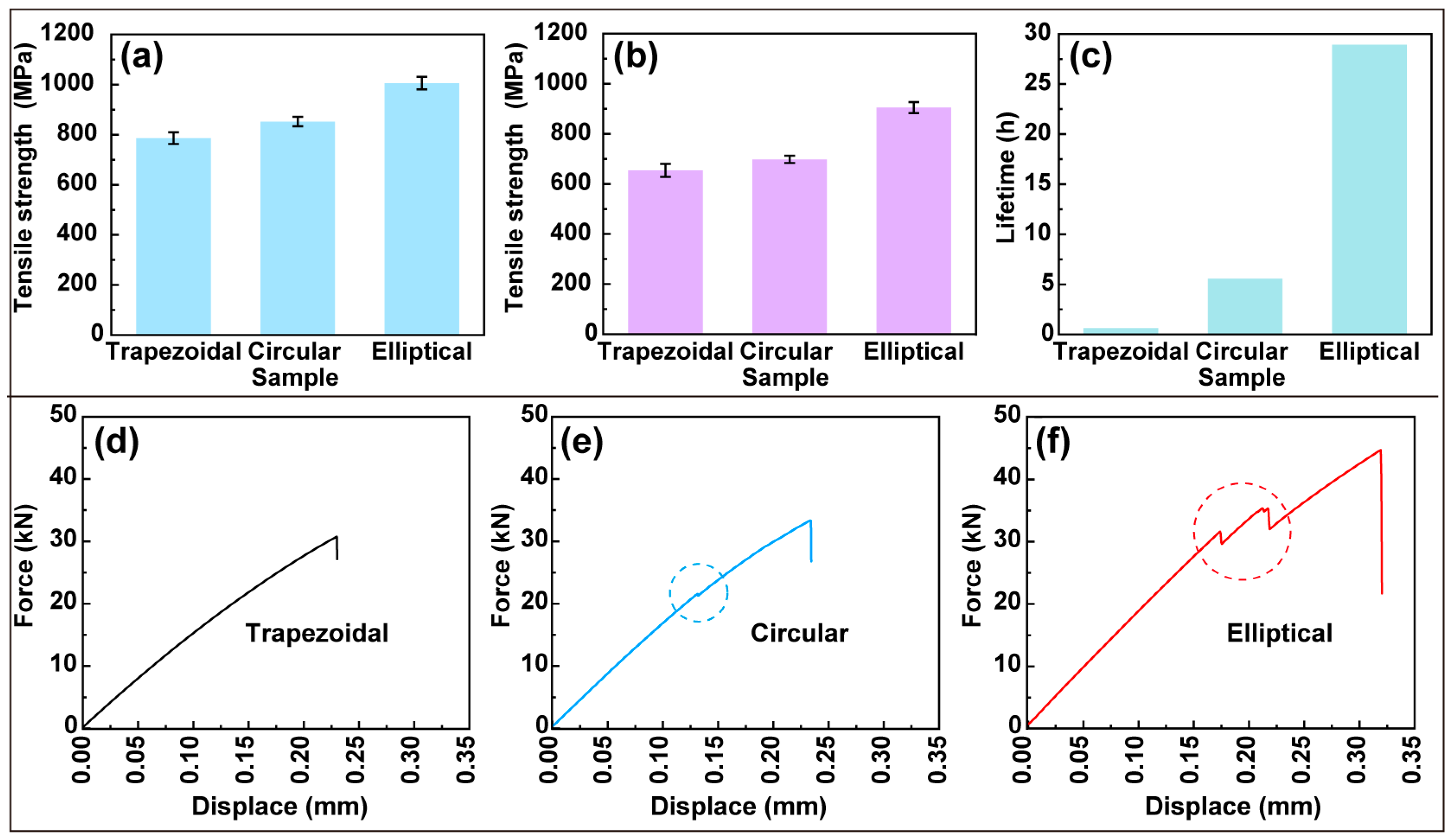
The mechanical properties of the joints with different interlocking structures are shown in Figure 3. As shown in Figure 3a, the joint with the elliptical interlocking structure has the highest tensile strength at room temperature and 923 K, reaching 1006 MPa and 905 MPa, respectively. The interlocking structure has a significant impact on the stress-rupture properties of the joint. The stress-rupture lifetimes under 690 MPa/923 K of the joints with circular, elliptical, and isosceles-trapezoid structures are shown in Figure 3c. Under 690 MPa/923 K, the stress-rupture lifetime of the joint with the trapezoid structure was only 0.65 h. The stress-rupture lifetime of the joint with circular structure significantly increased, reaching 5.56 h. The elliptical structure was the most effective in enhancing the stress-rupture lifetime of the joint. Under 690 MPa/923 K, the stress-rupture lifetime of the joint with the elliptical structure reached 28.93 h.
The results of the joint mechanical properties show that, compared with the isosceles-trapezoidal and circular structures, the elliptical structure has the best strengthening effect on the joint’s mechanical properties.
DIC tests were conducted on joints with different interlocking structures. Figure 3d–f show the force–displacement curves of the joints obtained from the DIC tests. Compared with the joint with isosceles-trapezoidal and circular interlocking structures, the joint with the elliptical interlocking structure can withstand greater tensile force and deformation. As the deformation increased, the force of the joint with the circular interlocking structure underwent slight fluctuations, as shown by the blue circles in Figure 3e. As shown by the red circles in Figure 3f, the force fluctuations of the joint with the elliptical interlocking structure were very significant, and the number and magnitude of the fluctuations were also large with the increase in deformation. The force–displacement curve characteristics indicate that the elliptical interlocking structure can significantly enhance the plastic deformation capacity and strength of the joint.
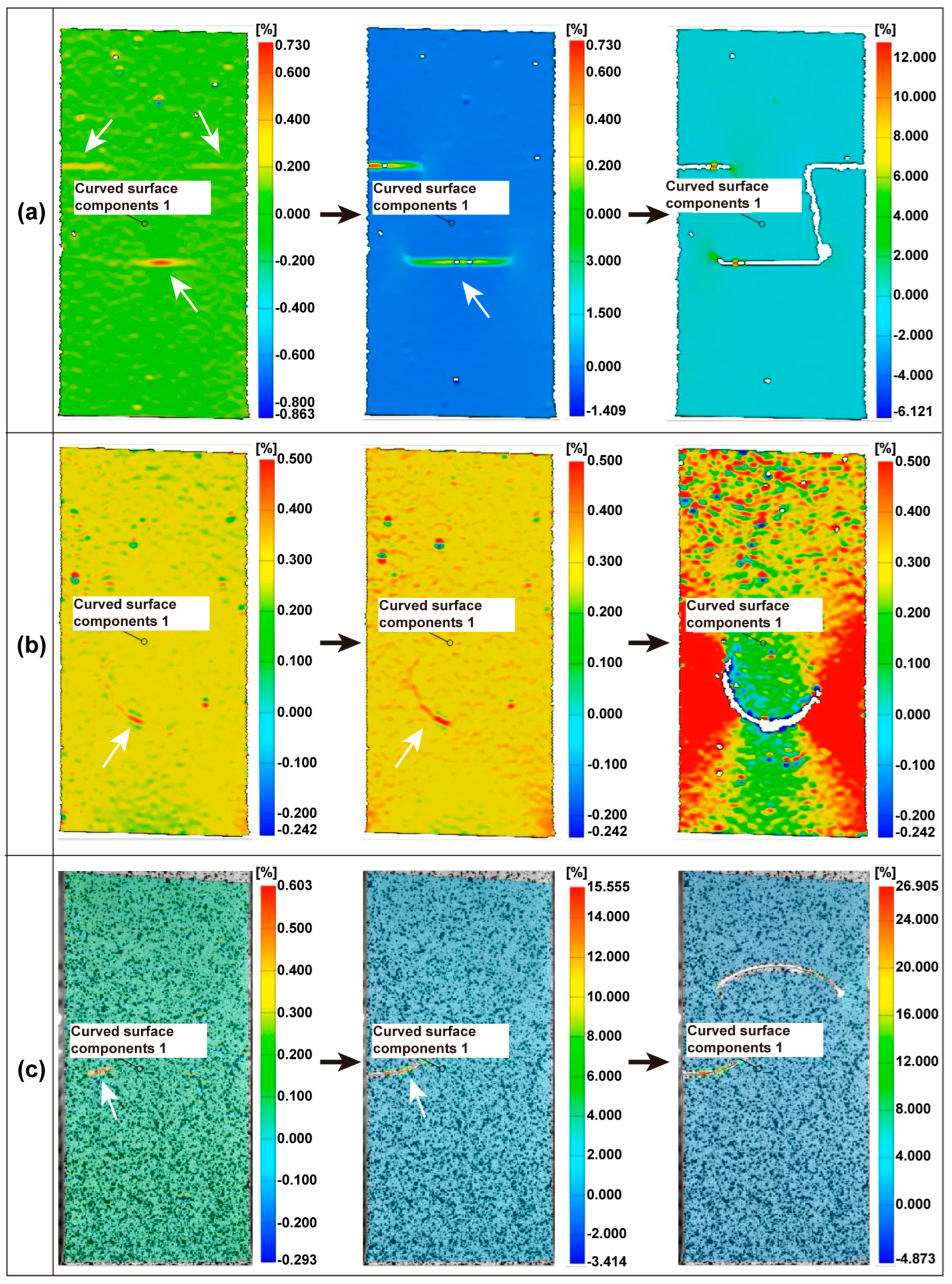
The stress distribution maps of the joints with different interlocking structures during DIC tests are shown in Figure 4. As shown in Figure 4a, the stress concentration of the joint with the isosceles-trapezoidal interlocking structure occurred at the upper and lower parallel-end positions perpendicular to the tensile direction during deformation. The fracture of the joint with the isosceles trapezoid structure was a brittle fracture. The crack initiated at the location of the stress concentration and extended along the interlayer. During the process of crack propagation, stress concentration occurred at the rounded corner of the mortise. Therefore, the strength and plasticity of the joint with the isosceles trapezoid structure were both relatively low.
For the joint with the circular interlocking structure, the stress concentration occurred at the protruding section of the mortise during deformation (Figure 4b). The crack was initiated at the stress concentration zone and propagated along the interlayer, resulting in the brittle fracture of the joint with the circular interlocking structure. For the joint with the elliptical structure, the stress concentration also occurred at the protruding section of the mortise during deformation (Figure 4c). It is impressive that the elliptical interlocking structure can effectively inhibit crack propagation. The inhibiting effect of crack propagation resulted in the stress fluctuations of the joint with the elliptical interlocking structure (Figure 3c). And the strength and plasticity of the joint with the isosceles trapezoid structure were enhanced significantly.
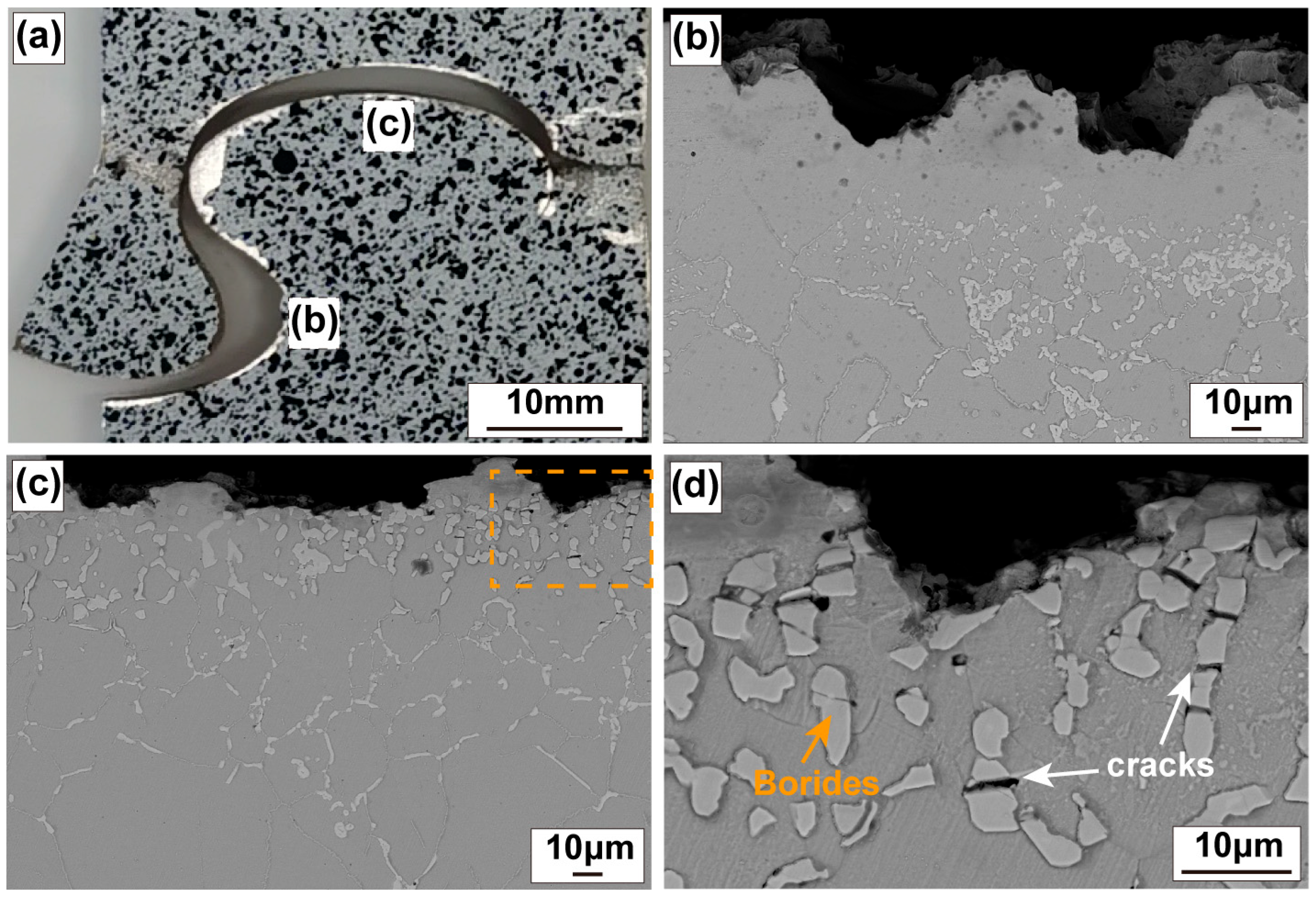
Figure 5 shows the scanning electron microscopy (SEM) images of the fracture cross-sections at various points of the joint with an elliptical structure. As revealed in Figure 5b,c, the joint fractured transversely along the interlayer during the tensile process. Under applied stress, cracks nucleated at the brittle boride sites and extended, resulting in a primary failure mode of brittle fracture for the joint (Figure 5d). Owing to its larger contact area, the elliptical structure facilitates more efficient stress transfer and dispersion. As a result, the degree of stress concentration within the joint with elliptical structure is reduced, thereby inhibiting crack propagation. Therefore, the joint with the elliptical structure possesses superior strength.

4. Conclusions

Inspired by the exoskeletal structure of beetles, interlocking structures were implemented in the transient liquid-phase (TLP) bonding of GH4169 superalloy. This study systematically evaluated the microstructure and tensile fracture behavior of joints featuring circular, elliptical, and isosceles-trapezoid interlocking structures. The results demonstrate the elliptical interlocking structure delivering the most pronounced improvement. The elliptical interlocking structure effectively suppresses crack propagation, endowing the joint with superior mechanical properties, including strength, plasticity, and stress-rupture resistance. The tensile strength at room temperature and 923 K of the joint with the elliptical interlocking structure reached 1006 MPa and 905 MPa, respectively. Furthermore, under 690 MPa/923 K, the stress-rupture lifetime of the joint with the elliptical interlocking structure achieved 28.93 h. Therefore, the bio-inspired structural design can significantly enhance the mechanical properties of TLP-bonded superalloy joints, providing a novel strategy for high-performance material joining.

Author Contributions

Z.L.: Writing—Original Draft, Visualization, Methodology, Investigation, Formal Analysis, and Conceptualization. B.P.: Supervision, Project Administration, and Conceptualization. X.W.: Investigation. J.T.: Investigation and Formal Analysis. W.Y.: Formal Analysis. T.Z.: Writing—Review and Editing. L.C.: Writing—Review and Editing. All authors have read and agreed to the published version of the manuscript.

Funding

This research received no external funding.

Data Availability Statement

The raw data supporting the conclusions of this article will be made available by the authors on request.

Acknowledgments

The authors thank ZKKF (Beijing) Science & Technology Company for supporting the characterizations of the materials.

Conflicts of Interest

The authors declare no conflicts of interest.

References

  1. Kulawik, K.; Buffat, P.A.; Kruk, A.; Wusatowska-Sarnek, A.M.; Czyrska-Filemonowicz, A. Imaging and characterizationnanoparticles of γ′ and γ″ in Inconel 718 by EDX elemental mapping and FIB–SEM tomography. Mater. Charact. 2015, 100, 74–80. [Google Scholar] [CrossRef]
  2. Yang, J.Y.; Song, W.; Wang, P.; Hao, M.S.; Shi, L.; Lei, L.M.; Zhou, Y.Z.; Sun, X.F.; Liang, J.J.; Li, J.G. A novel high-performance Co-Al-W-based superalloy for additive manufacturing. Scr. Mater. 2025, 266, 116771. [Google Scholar] [CrossRef]
  3. Ouyang, G.; Palasyuk, O.; Singh, P.; Ray, P.K.; Deodeshmukh, V.; Cui, J.; Johnson, D.D.; Kramer, M.J. Predictive design of novel nickel-based superalloys beyond Haynes 282. Acta Mater. 2024, 275, 120045. [Google Scholar] [CrossRef]
  4. Yuan, L.; Yang, Y.Z.; Gan, J.; Chou, T.H.; Zhao, Y.M.; Hao, D.; Zhang, J.Y.; Li, J.L.; Xiong, J.T.; Yang, T. Extraordinary strength-ductility synergy in superalloy joints via a high-entropy-alloy modified multi-interlayer composite bonding strategy. Acta Mater. 2025, 295, 121186. [Google Scholar] [CrossRef]
  5. Wang, J.L.; Wang, Y.C.; Qin, Z.W.; Li, P.; Ding, Z.J.; Sun, Y.T.; Li, T.Y.; Jiang, X.; Li, C.; Dong, H.G. Co element gradient character toward achieving high strength diffusion bonding of FGH98 superalloy at low temperature. J. Manuf. Process. 2025, 149, 1126–1137. [Google Scholar] [CrossRef]
  6. Zhang, S.H.; Qu, W.Q.; Teng, J.F.; Lyu, Y.L.; Zhao, H.Y.; Zhuang, H.S. Development of the interlayer alloy using for TLP diffusion bonding of GH3230 superalloy based on the CALPHAD method. Mater. Sci. Eng. A 2024, 918, 147434. [Google Scholar] [CrossRef]
  7. Zou, T.Y.; Lang, Z.Q.; Chen, H.P.; Ye, Z.; Wu, T.; Wang, W.L.; Yang, J.; Huang, J.H. Rapidly achieving high-performance joining of single crystal superalloy and powder metallurgy superalloy via partial transient liquid phase diffusion bonding. J. Manuf. Process. 2024, 109, 79–88. [Google Scholar] [CrossRef]
  8. Zou, T.Y.; Ye, Z.; Lang, Z.Q.; Wu, T.; Wang, W.L.; Liu, Q.M.; Yang, J.; Chen, S.H.; Huang, J.H. A strong joint for single crystal superalloys by constructing mortise-tenon boundaries with interlocking effect. J. Mater. Sci. Technol. 2025, 233, 210–222. [Google Scholar] [CrossRef]
  9. Yuan, L.; Jiang, F.Y.; Hao, D.; Yang, Y.Z.; Chou, T.H.; Zhang, J.X.; Gan, J.; Li, J.L.; Xiong, J.T.; Yang, T. Ultrastrong and ductile superalloy joints bonded with a novel composite interlayer modified by high entropy alloy. J. Mater. Sci. Technol. 2025, 222, 152–163. [Google Scholar] [CrossRef]
  10. Xie, C.L.; Deng, K.Y.; Teng, J.F.; Fu, J.Y.; Li, R.; Zhang, T. Microstructural evolution and mechanical properties of Ni-based superalloy joints brazed using a ternary Ni-W-B amorphous brazing filler metal. J. Alloys Compd. 2023, 960, 170663. [Google Scholar] [CrossRef]
  11. Reeks, W.; Davies, H.; Marchisio, S. A review: Interlayer joining of nickel base alloys. J. Adv. Join. Process. 2020, 2, 100030. [Google Scholar] [CrossRef]
  12. Jiao, Y.J.; Sheng, G.M.; Zhang, Y.T.; Xu, C.; Yuan, X.J. Transient liquid phase bonding of Inconel 625 with Mar-M247 superalloy using Ni–Cr–B interlayer: Microstructure and mechanical properties. Mater. Sci. Eng. A 2022, 831, 142204. [Google Scholar] [CrossRef]
  13. Siddiqui, M.A.S.; Rabbi, M.S.; Ahmed, R.U.; Fahad, A.; Hossain, M.A.M.; Ahsan, S.; Miah, N.M. Bioinspired composite structures: A comprehensive review of natural materials, fabrication methods, and engineering applications. Compos. Part C Open Access 2025, 17, 100578. [Google Scholar] [CrossRef]
  14. Pichard, P.L.; Maheo, L.; Dirrenberger, J.; Castro, M.; Lafont, U.; Le Duigou, A. Efficient energy-dissipative bioinspired architectured composite materials with high mechanical properties. Addit. Manuf. 2025, 109, 104875. [Google Scholar] [CrossRef]
  15. Rahimizadeh, A.; Yazdani Sarvestani, H.; Li, L.; Barroeta Robles, J.; Backman, D.; Lessard, L.; Ashrafi, B. Engineering toughening mechanisms in architectured ceramic-based bioinspired materials. Mater. Des. 2021, 198, 109375. [Google Scholar] [CrossRef]
  16. Altuntas, U.; Coker, D.; Yavas, D. Bioinspired soft-hard interfaces fabricated by multi-material additive manufacturing: A fracture mechanics investigation using essential work of fracture. Mech. Mater. 2024, 195, 105035. [Google Scholar] [CrossRef]
  17. Cheng, L.; Thomas, A.; Glancey, J.L.; Karlsson, A.M. Mechanical behavior of bio-inspired laminated composites. Compos. Part A 2011, 42, 211–220. [Google Scholar] [CrossRef]
  18. Bixler, G.D.; Theiss, A.; Bhushan, B.; Lee, S.C. Anti-fouling properties of microstructured surfaces bio-inspired by rice leaves and butterfly wings. J. Colloid Interface Sci. 2014, 419, 114–133. [Google Scholar] [CrossRef] [PubMed]
  19. Nazari, K.; Tran, P.; Tan, P.; Ghazlan, A.; Ngo, T.D.; Xie, Y.M. Advanced manufacturing methods for ceramic and bioinspired ceramic composites: A review. Open Ceram. 2023, 15, 100399. [Google Scholar] [CrossRef]
  20. Sharma, A.; Shukla, N.K.; Belarbi, M.O.; Abbas, M.; Garg, A.; Li, L.; Bhutto, J.A. Bhatia, Bio-inspired nacre and helicoidal composites: From structure to mechanical applications. Thin Wall. Struct. 2023, 192, 111146. [Google Scholar] [CrossRef]
  21. Zhang, X.; Zheng, J.; Fang, H.M.; Zhang, Y.F.; Bai, S.L.; He, G.S. Al2O3/graphene reinforced bio-inspired interlocking polyurethane composites with superior mechanical and thermal properties for solid propulsion fuel. Compos. Sci. Technol. 2018, 167, 42–52. [Google Scholar] [CrossRef]
  22. Lai, S.Y.; Zhao, C.Y.; Gong, L.P.; Liu, S.; Yang, J.J.; Wang, D.P.; Mei, G.L.; Li, W.H.; Gong, X.L. Beetle elytra-inspired shear-stiffening warp-knitted spacer fabric composites with enhanced impact resistance. Compos. Struct. 2025, 370, 119443. [Google Scholar] [CrossRef]
  23. Yang, C.; Xing, Y.; Feng, X.Q.; Yang, J.L.; Zhao, Z.-L. Interdigital interlocking suture: A strong, tough, and flexible biological design. Thin Wall. Struct. 2025, 215, 113595. [Google Scholar] [CrossRef]
  24. Zou, T.Y.; Lang, Z.Q.; Lu, R.L.; Liu, J.W.; Xu, X.L. Tensile deformation and fracture behavior at high temperature of the TLP joint for Hastelloy X superalloy with laminated interlayer. Eng. Fail. Anal. 2025, 171, 109363. [Google Scholar] [CrossRef]
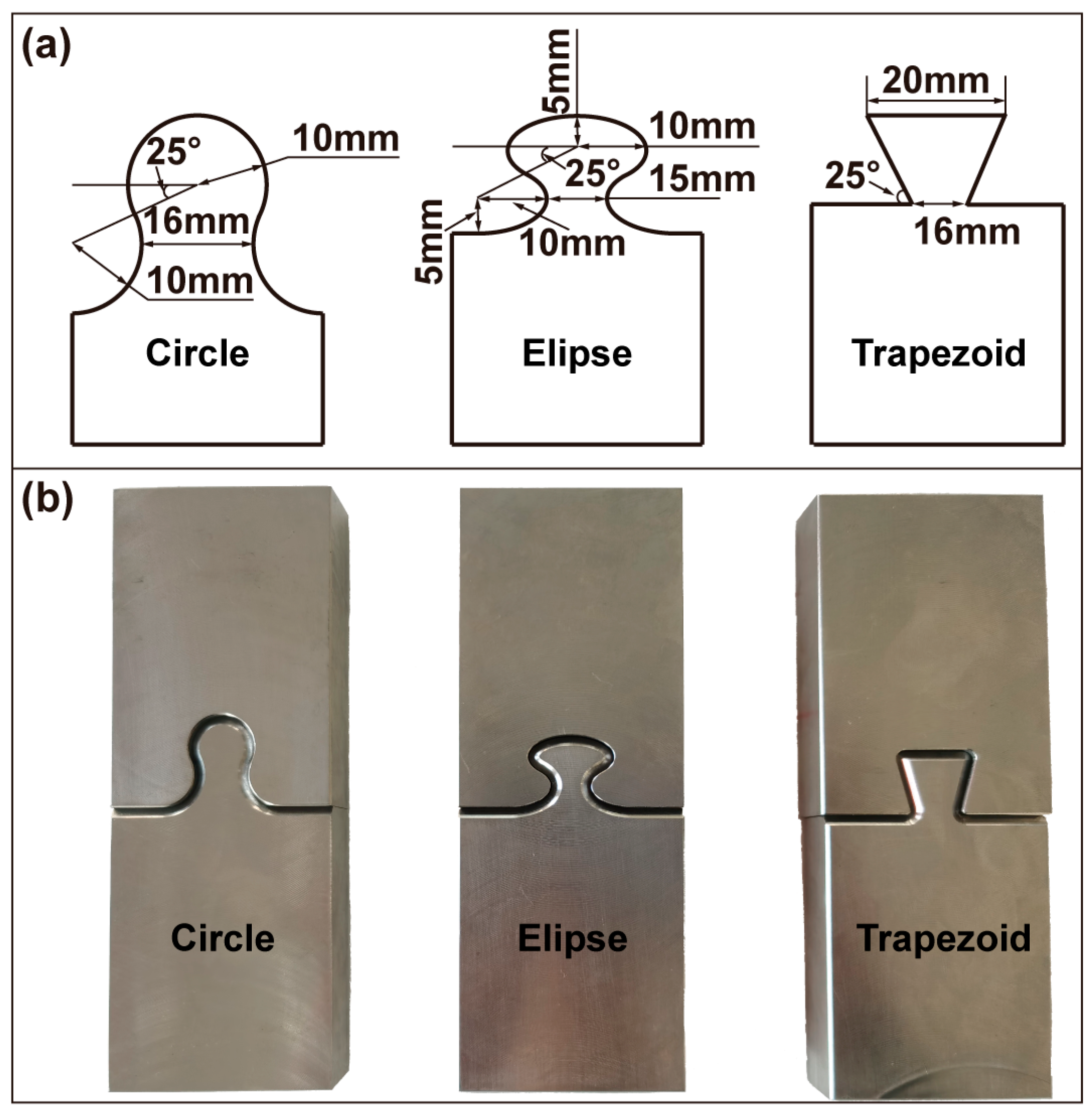
Figure 1. Design and assembly schematic diagram of mechanical interlocking structure joints with different structures. (a) The design of mechanical interlocking structure. (b) Assembly schematic diagram of the joints.
Crystals 15 01026 g001
Figure 2. The microstructure of segment of the joint with elliptical structure. (a) Overall structure of the joint. (b) Microstructure of the interlayer. (c) Diffusion-affected zones (DAZs). Points a, b, and c in the figure indicate the EDS point analysis locations in Table 2. (d) The distribution of elements of the joint.
Crystals 15 01026 g002
Figure 3. Mechanical properties of the joints. (a,b) Tensile strength at room temperature and 923 K. (c) Stress-rupture lifetimes under 690 MPa/923 K (The width and thickness of the parallel section of the tensile sample are 40 mm and 1 mm, respectively). (df) Force–displacement curves from the DIC tests (the specimen was loaded with a displacement rate of 1 mm/min) for the joints with an isosceles trapezoid structure, circular structure, and elliptical structure, respectively.
Crystals 15 01026 g003
Figure 4. Stress distribution maps of the joints during uniaxial tensile test (the specimens were loaded with a displacement rate of 1 mm/min, and the speckle images were captured with a loadtime interval of 1 s). The images depict, from left to right, the evolution of surface stress and crack propagation in the samples during the DIC tensile test. (a) The joint with isosceles trapezoid structure. (b) The joint with circular structure. (c) The joint with elliptical structure.
Crystals 15 01026 g004
Figure 5. SEM images of fracture cross-sections at various locations of the joint with elliptical structure. (a) The fractured sample. (b) Fracture cross-sections at the location of (b) in Figure 5a. (c) The fractured sample. (b) Fracture cross-sections at the location of (c) in Figure 5a. (d) A magnified view of the boxed region in Figure 5c.
Crystals 15 01026 g005
Table 1. The chemical composition of the base material and filling material (wt. %).
PointMoSiCrFeTiAlNbBCNi
Base material2.6-17.616.41.21.05.2-0.06Bal.
Filling material-4.57.03.0---3.5-Bal.
Table 2. The chemical composition of the positions in Figure 2c (at. %).
PointNiCrFeTiNb
a3.071.021.5310.2784.10
b2.431.020.9313.0582.57
c3.301.291.0016.3278.09
Disclaimer/Publisher’s Note: The statements, opinions and data contained in all publications are solely those of the individual author(s) and contributor(s) and not of MDPI and/or the editor(s). MDPI and/or the editor(s) disclaim responsibility for any injury to people or property resulting from any ideas, methods, instructions or products referred to in the content.