Article

Machine Learning-Based Prediction of Stability in High-Entropy Nitride Ceramics

1
School of Design, Kookmin University, Souel 02707, Republic of Korea
2
China Institute for Visual Studies, China Academy of Art, Hangzhou 310000, China
3
Xiamen Academy of Arts and Design, Fuzhou University, Fuzhou 350000, China
*
Author to whom correspondence should be addressed.
Crystals 2024, 14(5), 429; https://doi.org/10.3390/cryst14050429
Submission received: 2 April 2024 / Revised: 28 April 2024 / Accepted: 29 April 2024 / Published: 30 April 2024
(This article belongs to the Special Issue Advances in High Entropy Ceramics)

Abstract

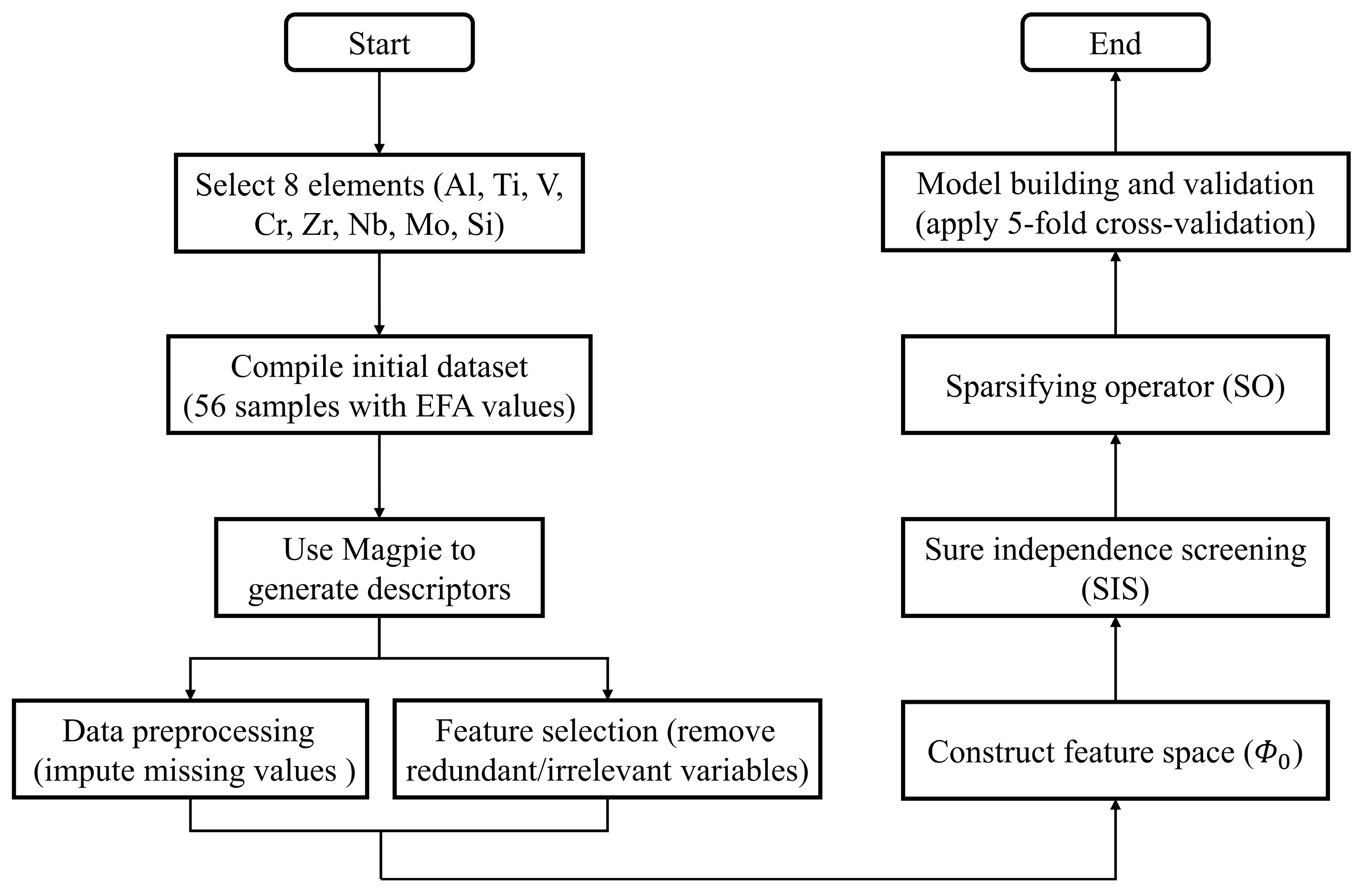
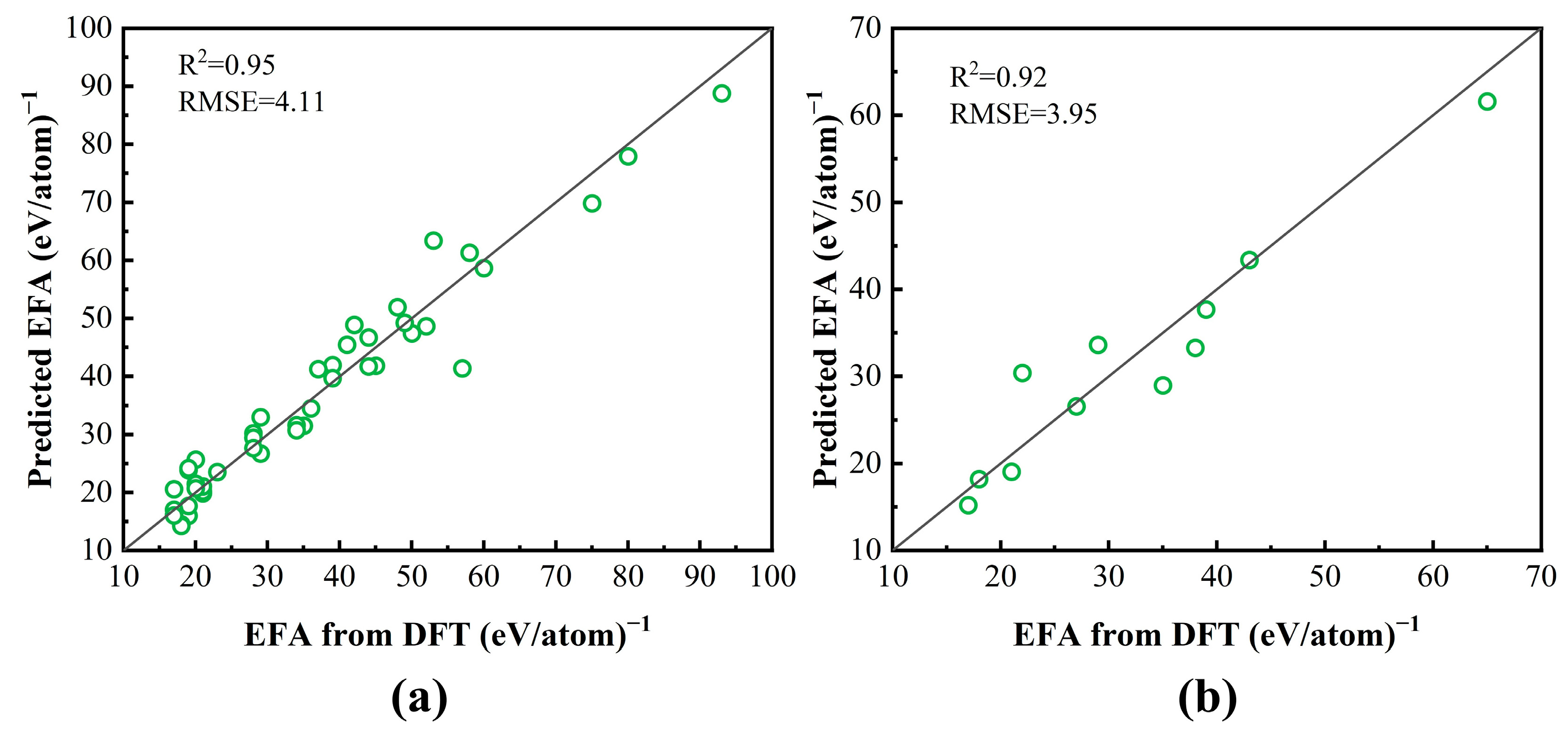
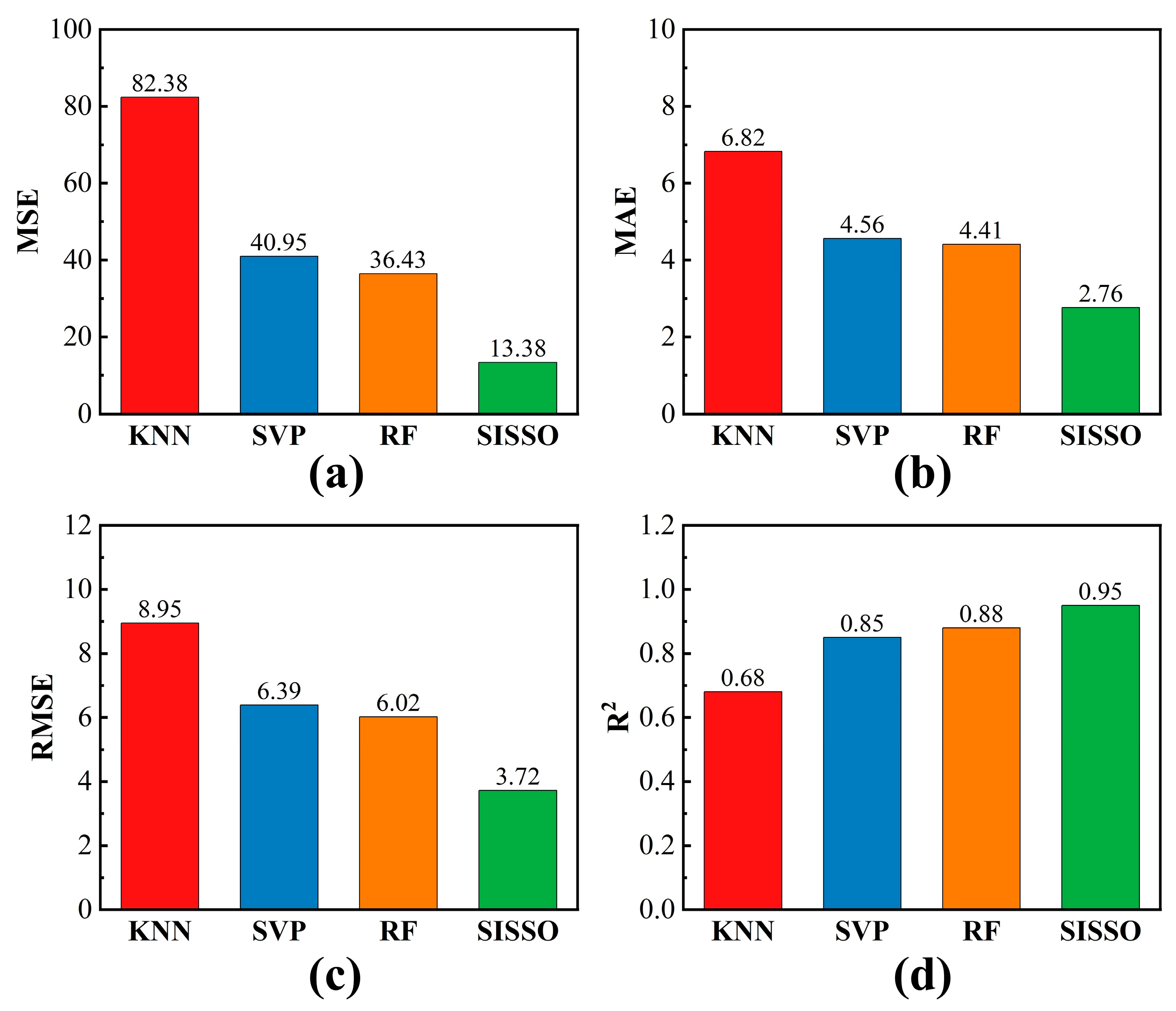
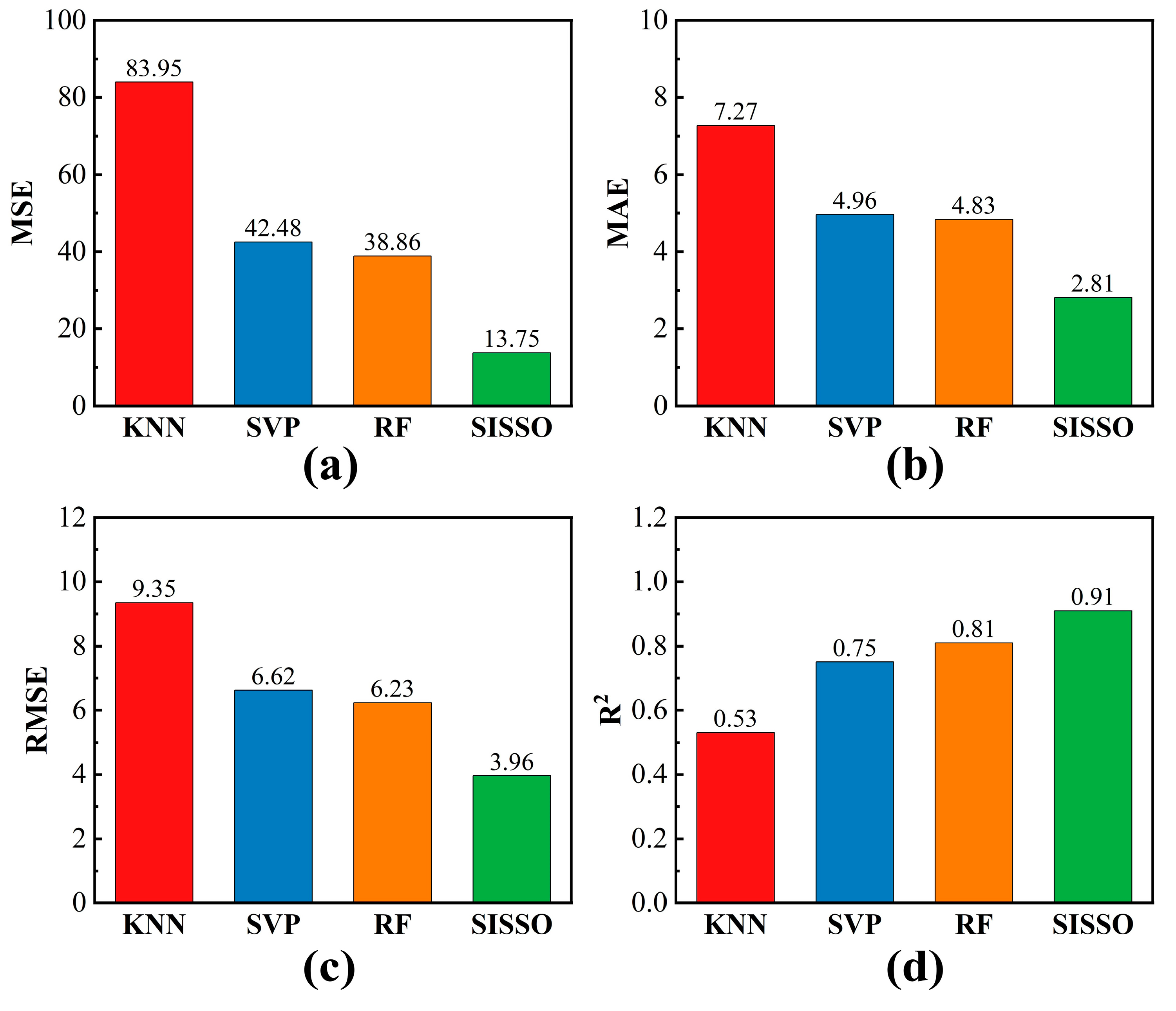
The field of materials science has experienced a transformative shift with the emergence of high-entropy materials (HEMs), which possess a unique combination of properties that traditional single-phase materials lack. Among these, high-entropy nitrides (HENs) stand out for their exceptional mechanical strength, thermal stability, and resistance to extreme environments, making them highly sought after for applications in aerospace, defense, and energy sectors. Central to the design of these materials is their entropy forming ability (EFA), a measure of a material’s propensity to form a single-phase, disordered structure. This study introduces the application of the sure independence screening and sparsifying operator (SISSO), a machine learning technique, to predict the EFA of HEN ceramics. By utilizing a rich dataset curated from theoretical computational data, SISSO has been trained to identify the most critical features contributing to EFA. The model’s strong interpretability allows for the extraction of complex mathematical expressions, providing deep insights into the material’s composition and its impact on EFA. The predictive performance of the SISSO model is meticulously validated against theoretical benchmarks and compared with other machine learning methodologies, demonstrating its superior accuracy and reliability. This research not only contributes to the growing body of knowledge on HEMs but also paves the way for the efficient discovery and development of new HEN materials with tailored properties for advanced technological applications.
Keywords: high-entropy materials; high-entropy nitride ceramics; entropy forming ability; machine learning; sure independence screening and sparsifying operator; material stability high-entropy materials; high-entropy nitride ceramics; entropy forming ability; machine learning; sure independence screening and sparsifying operator; material stability