Article

Study on Anti-Penetration Performance of Semi-Cylindrical Ceramic Composite Armor against 12.7 mm API Projectile

Department of Naval Architecture Engineering, Naval University of Engineering, Wuhan 430000, China
*
Author to whom correspondence should be addressed.
Crystals 2022, 12(10), 1343; https://doi.org/10.3390/cryst12101343
Submission received: 21 August 2022 / Revised: 8 September 2022 / Accepted: 17 September 2022 / Published: 22 September 2022
(This article belongs to the Special Issue Dynamic Behavior of Materials)

Abstract

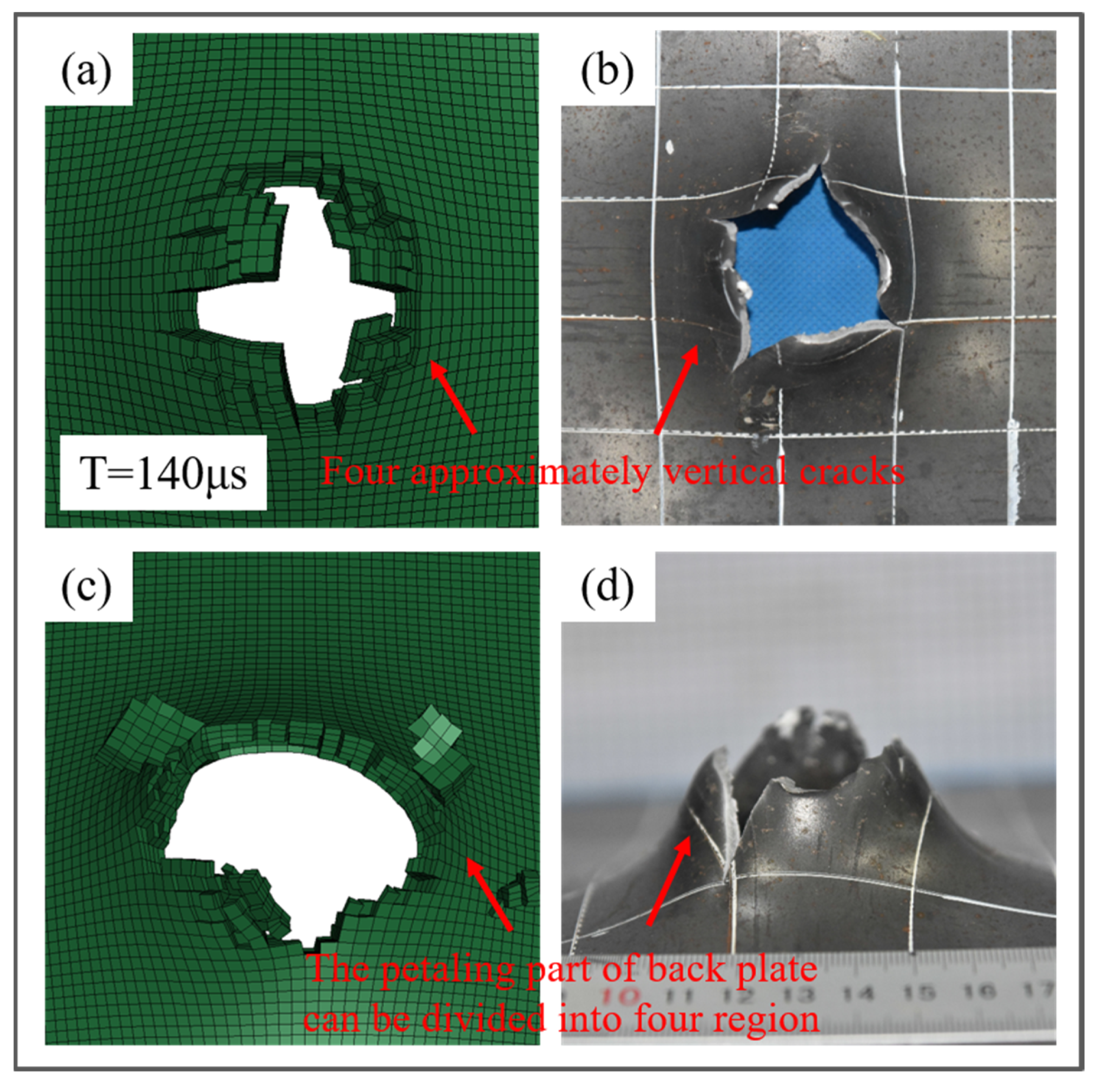
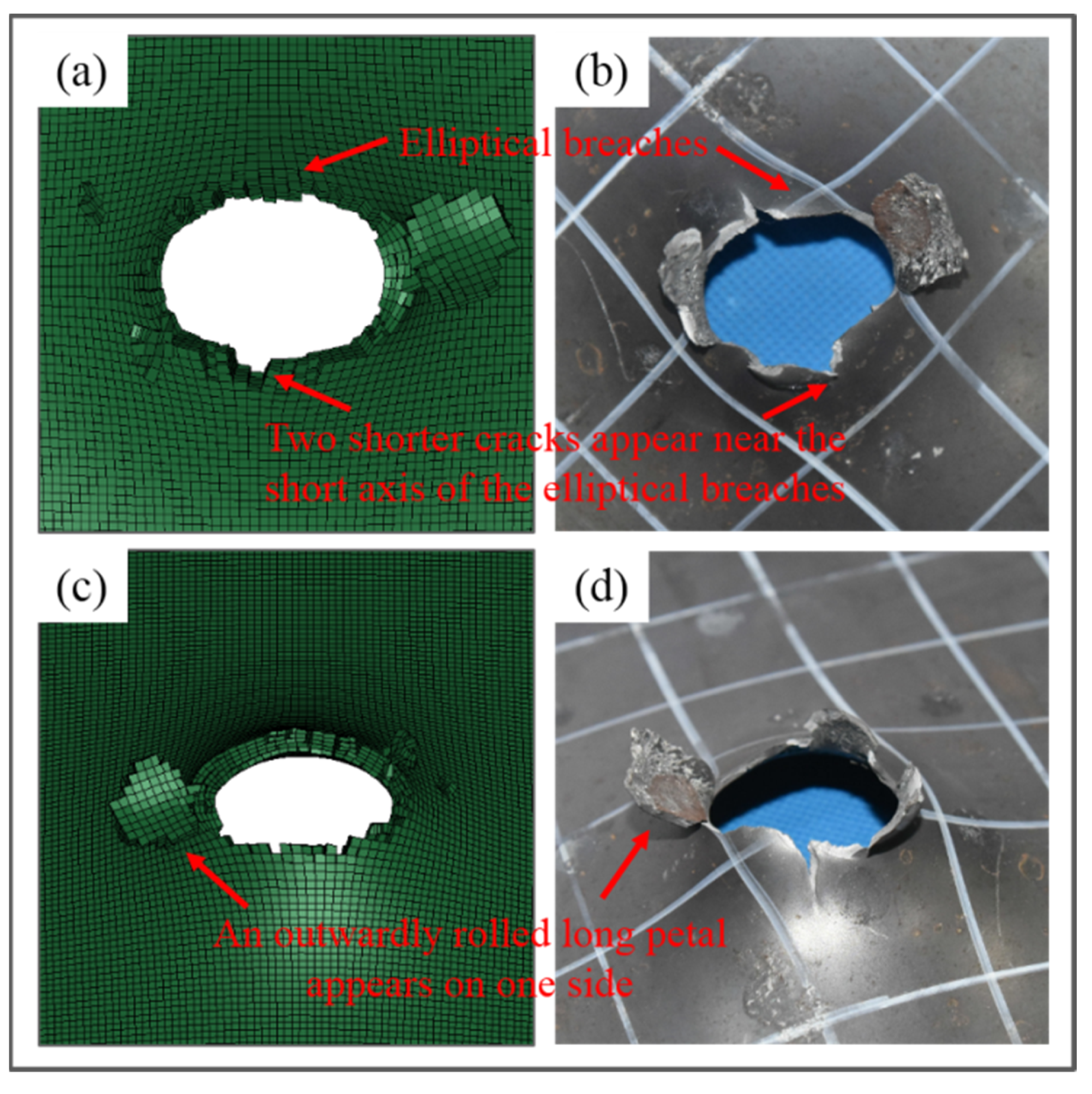
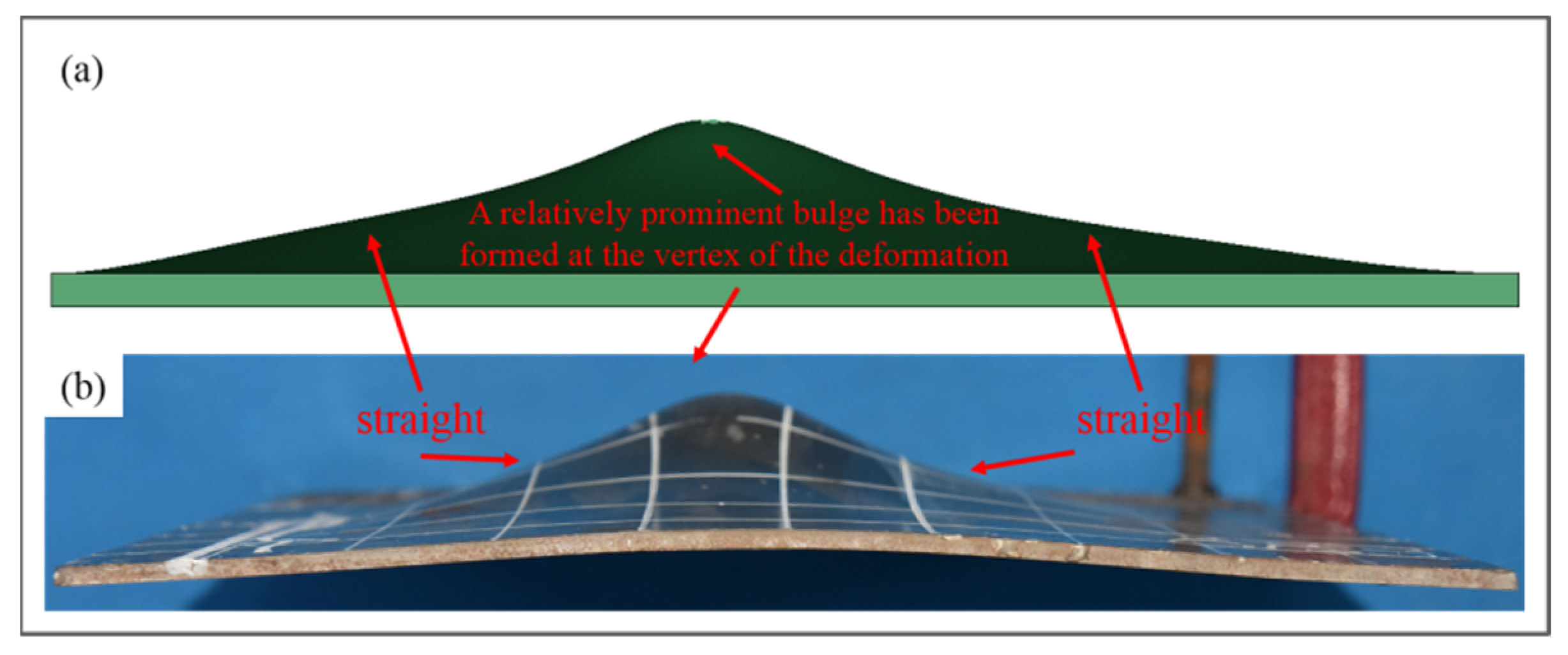
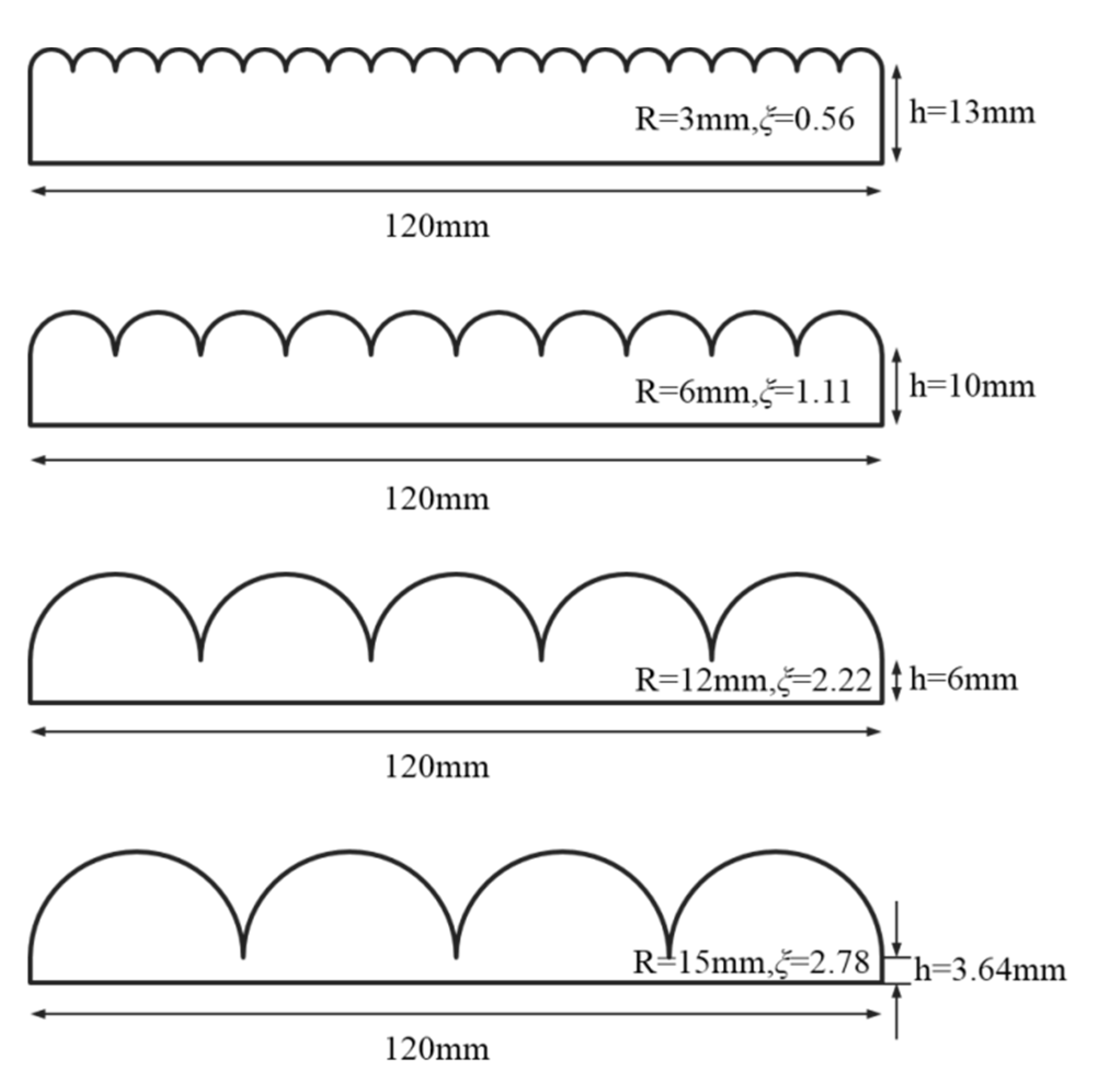
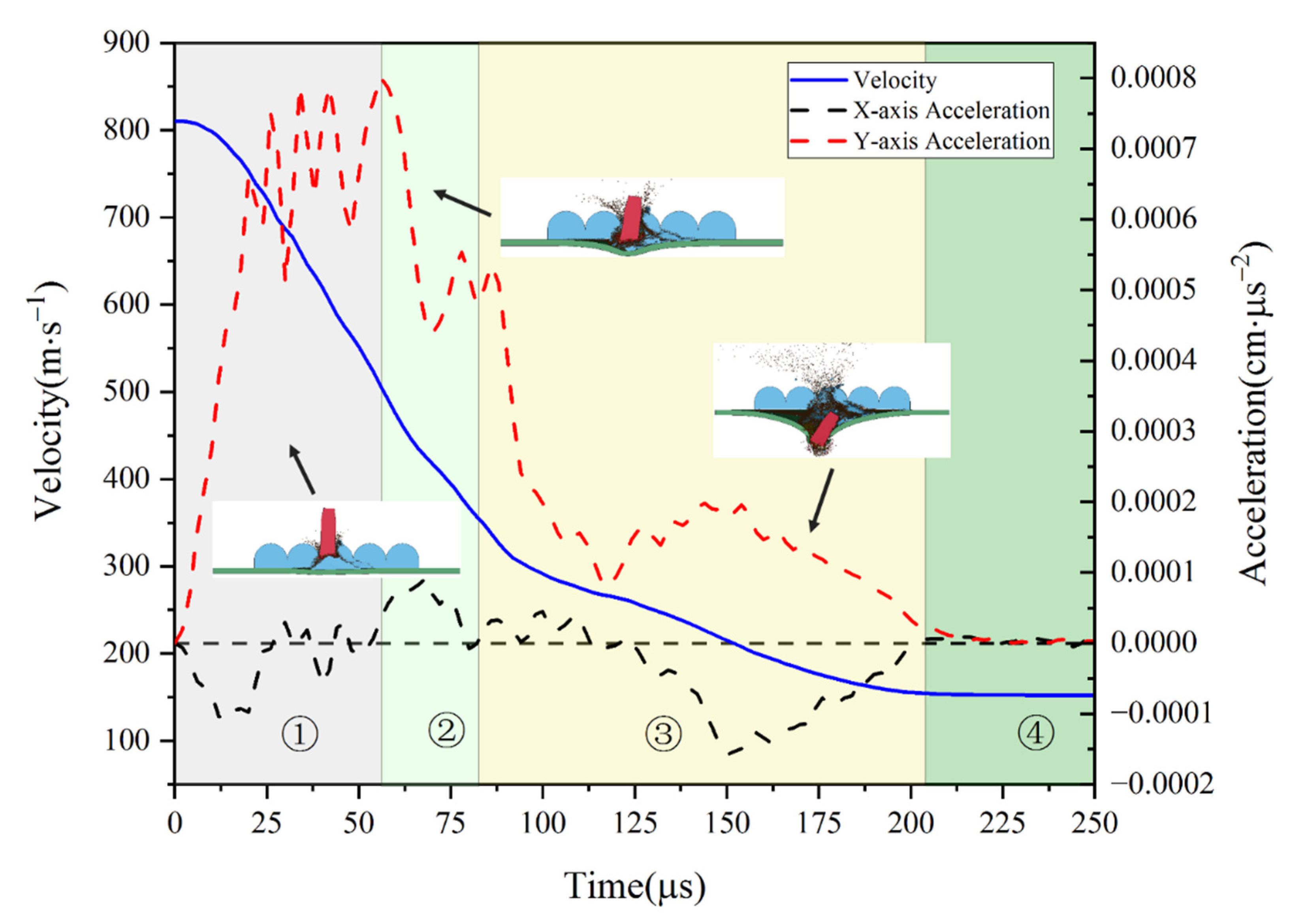
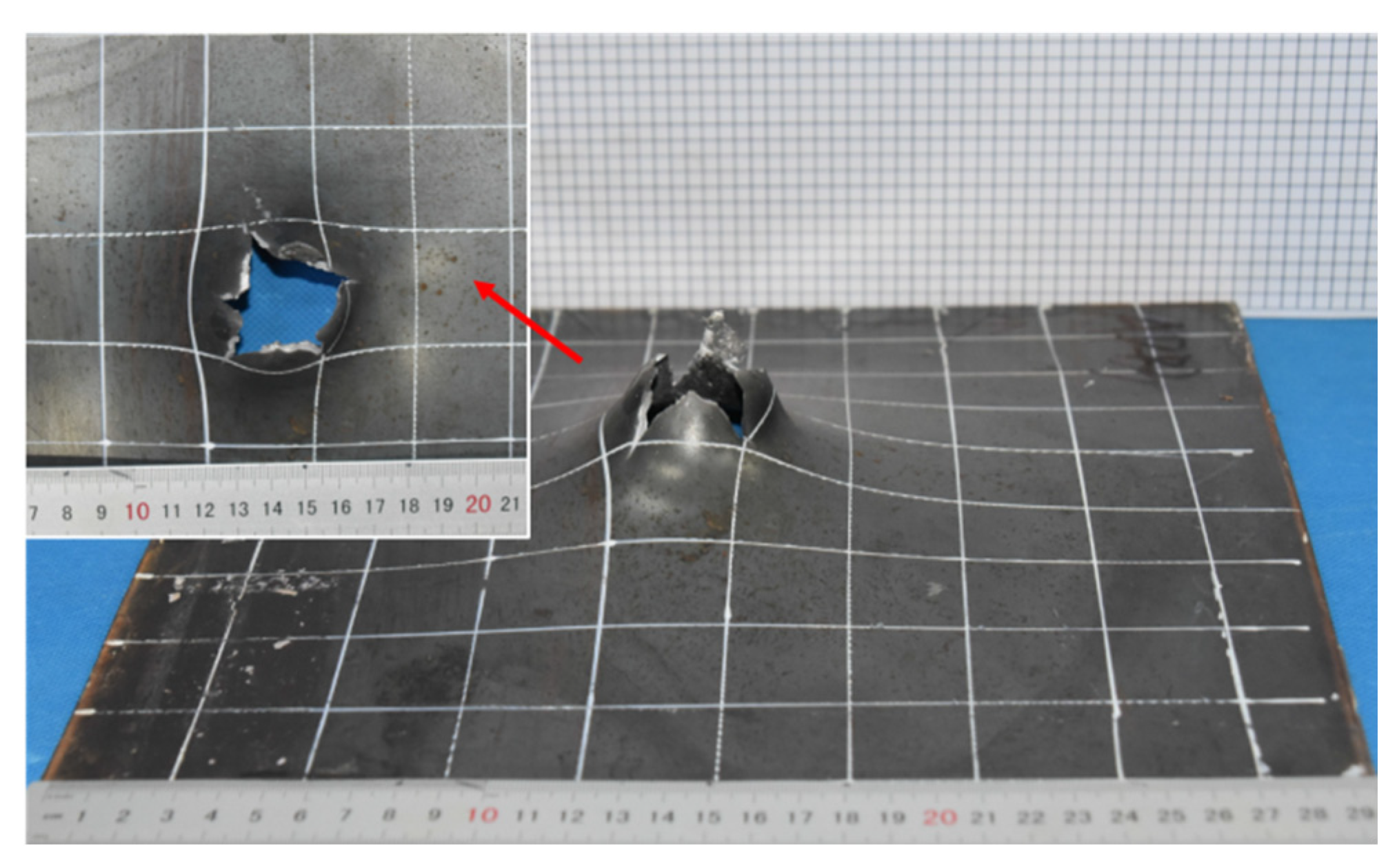
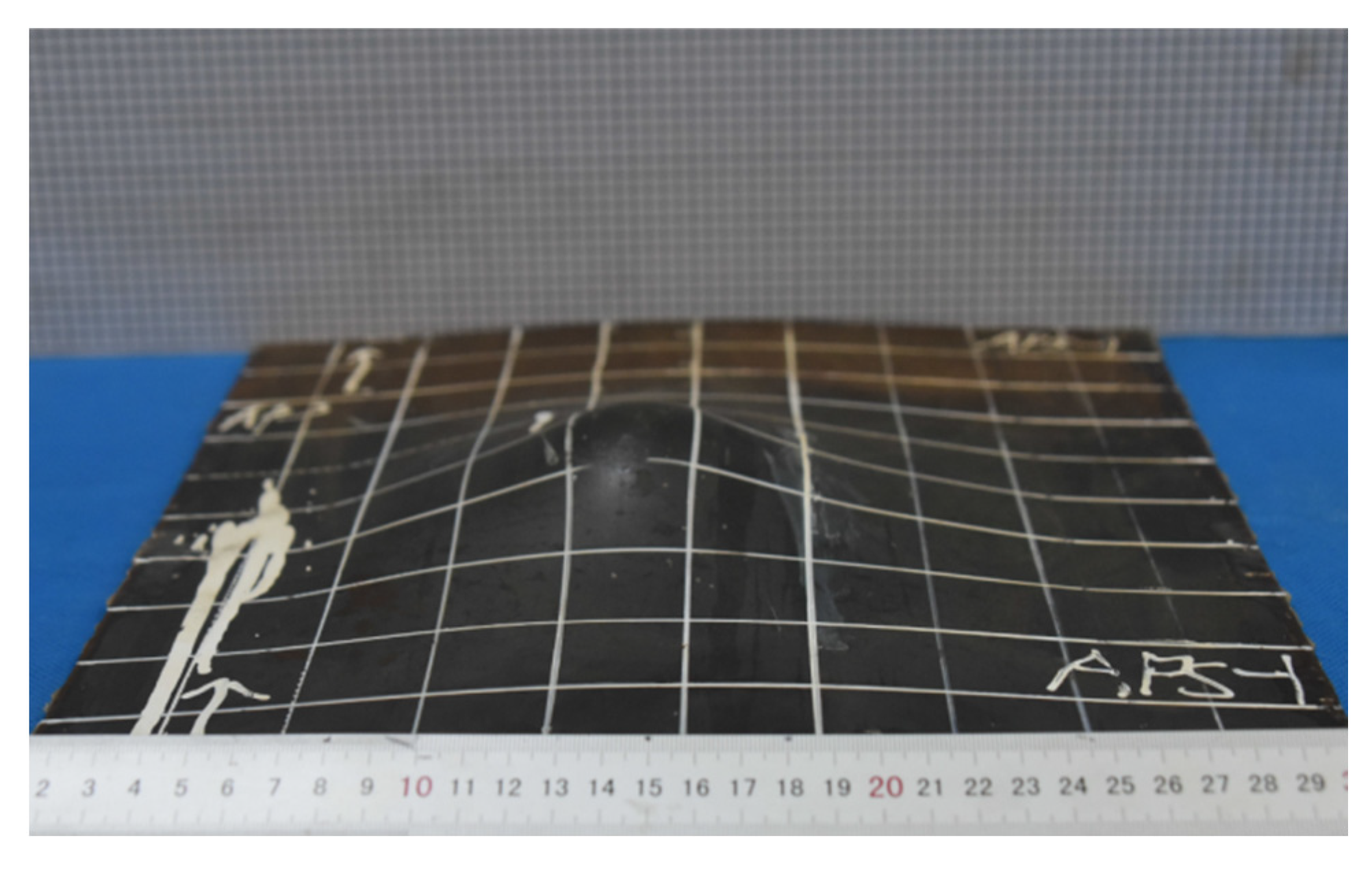
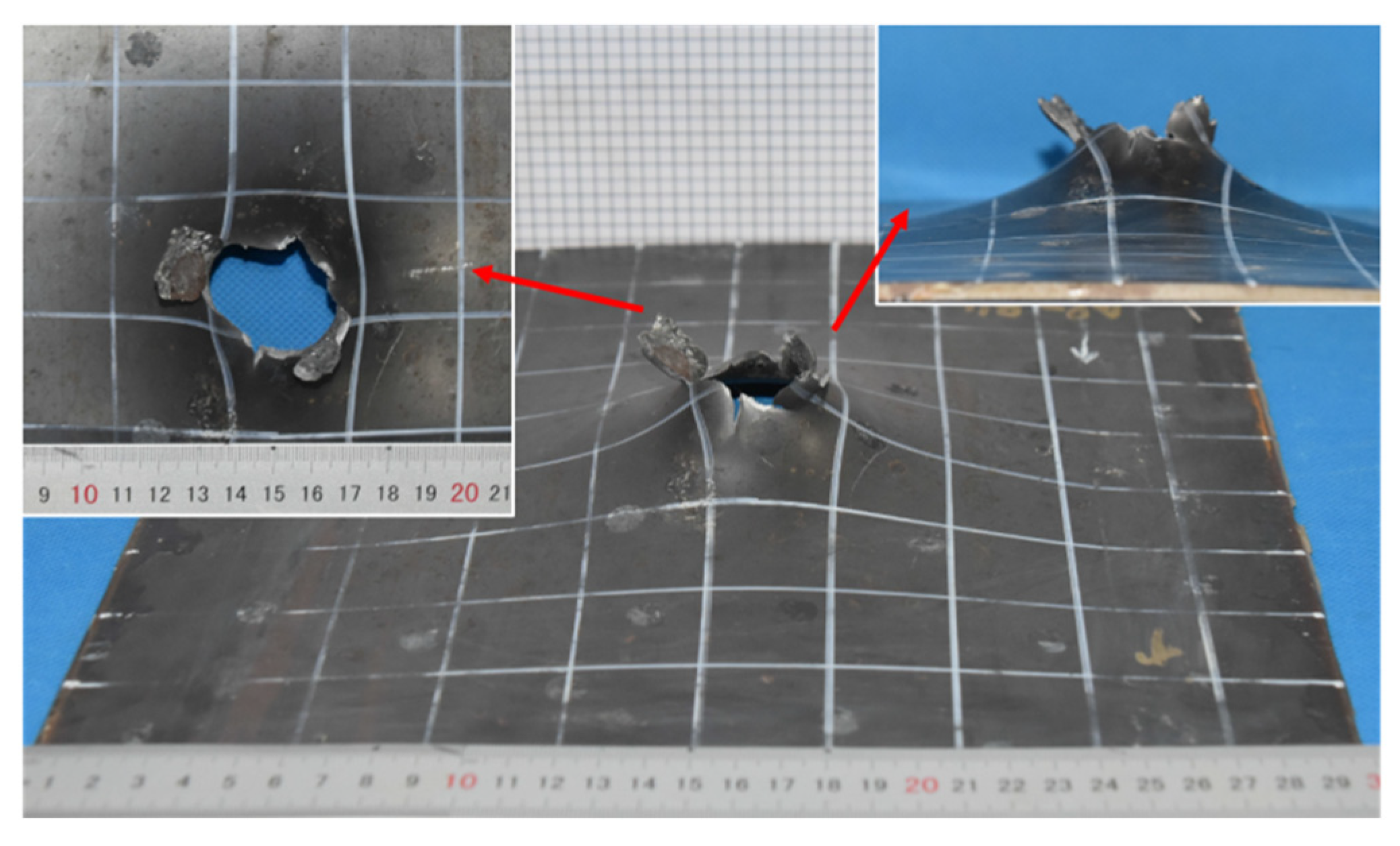
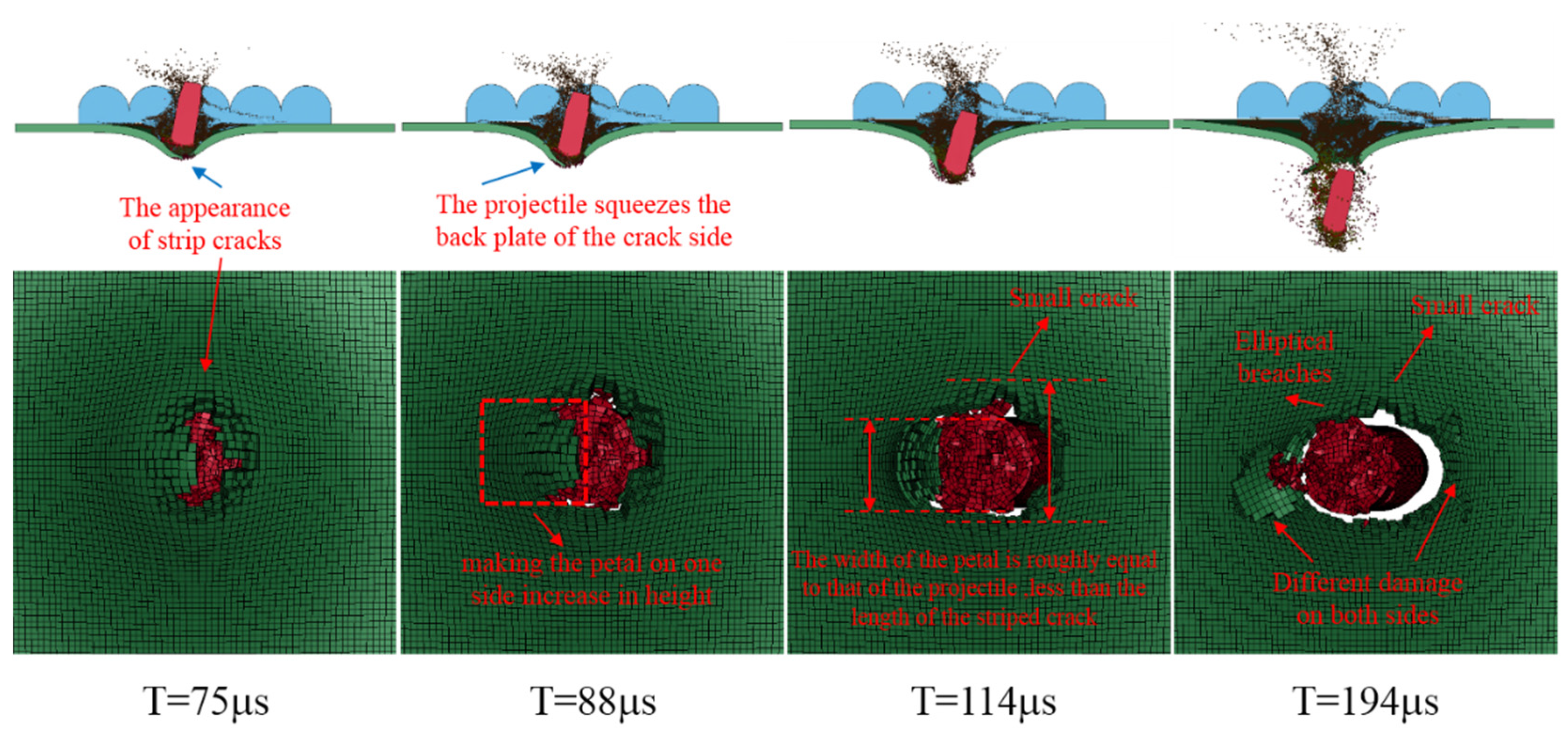
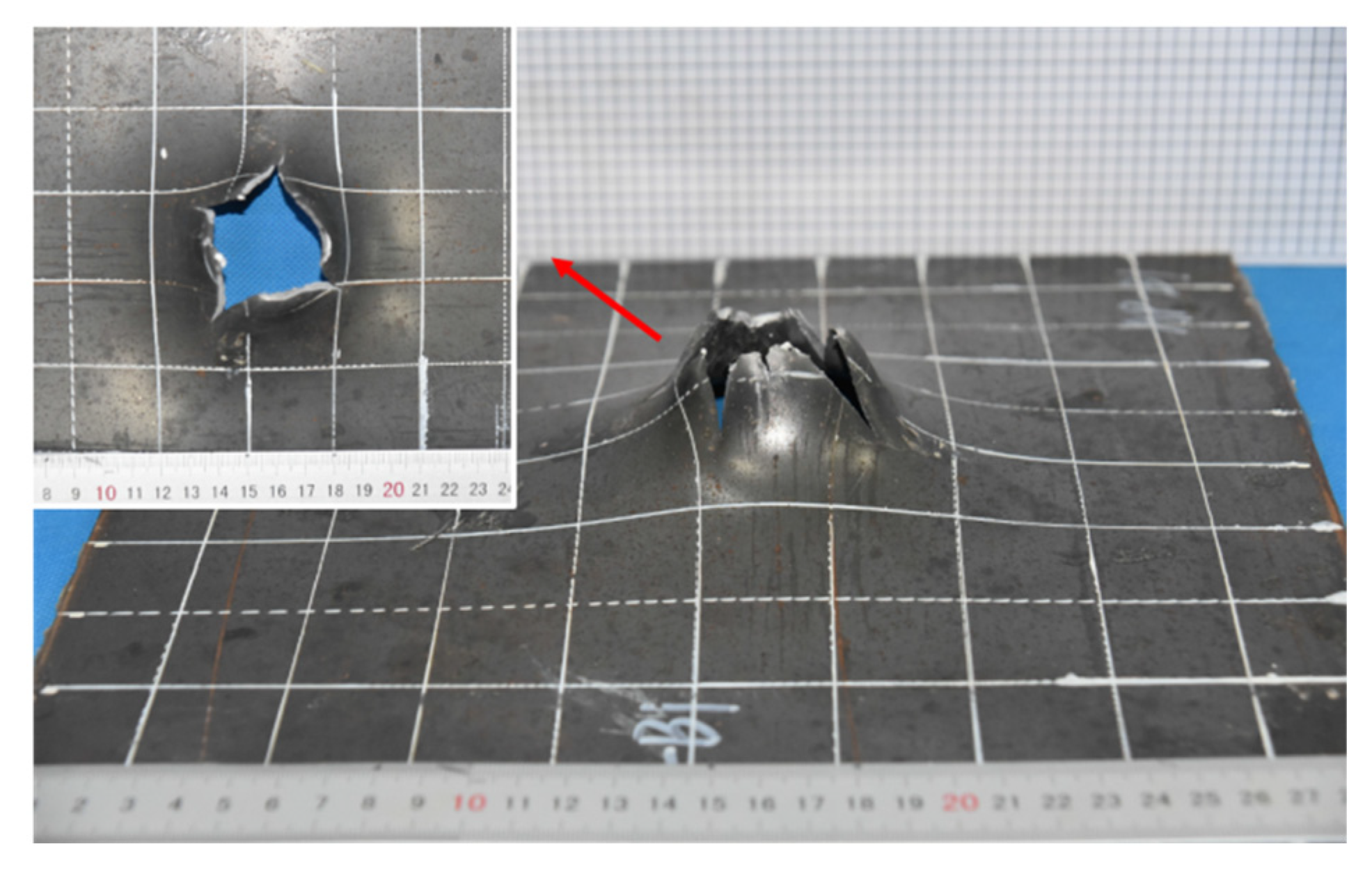
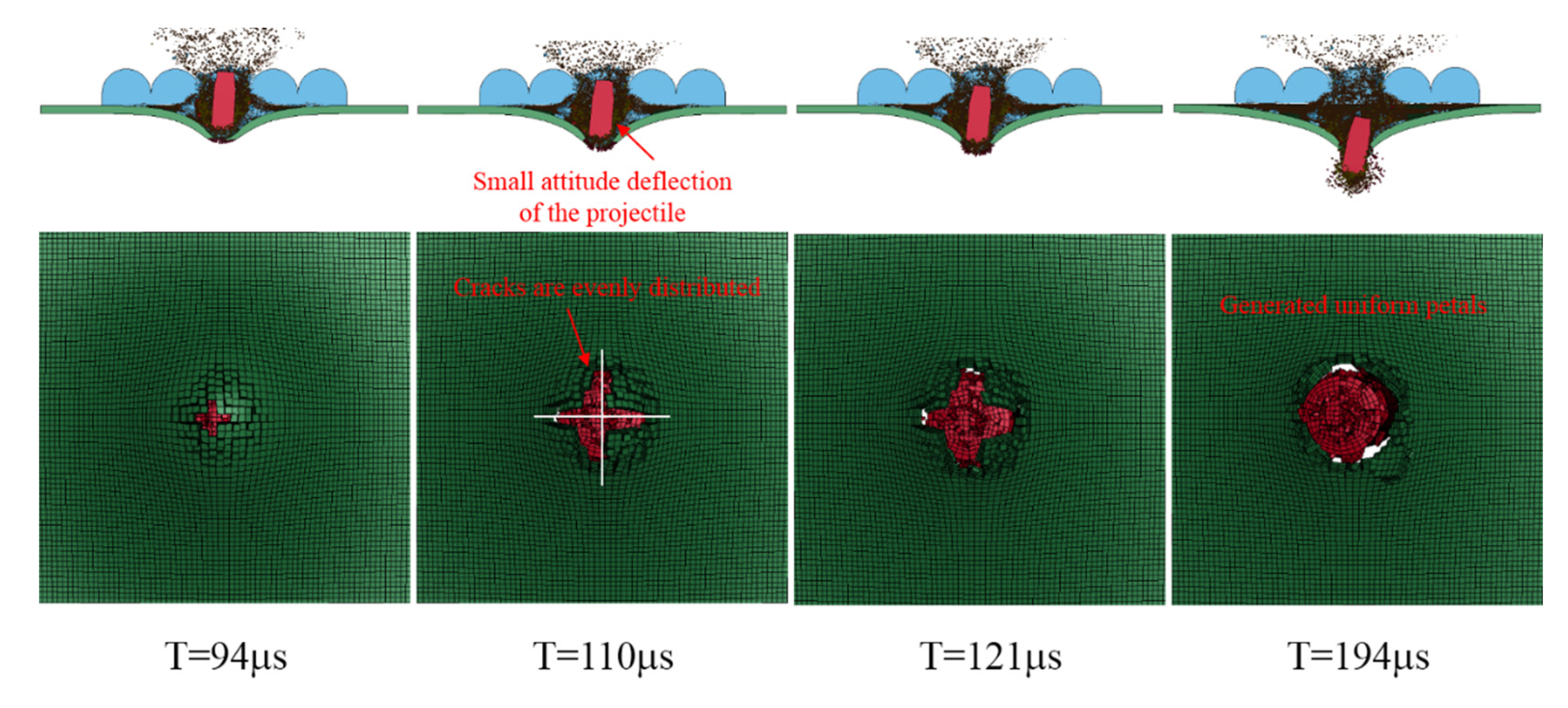
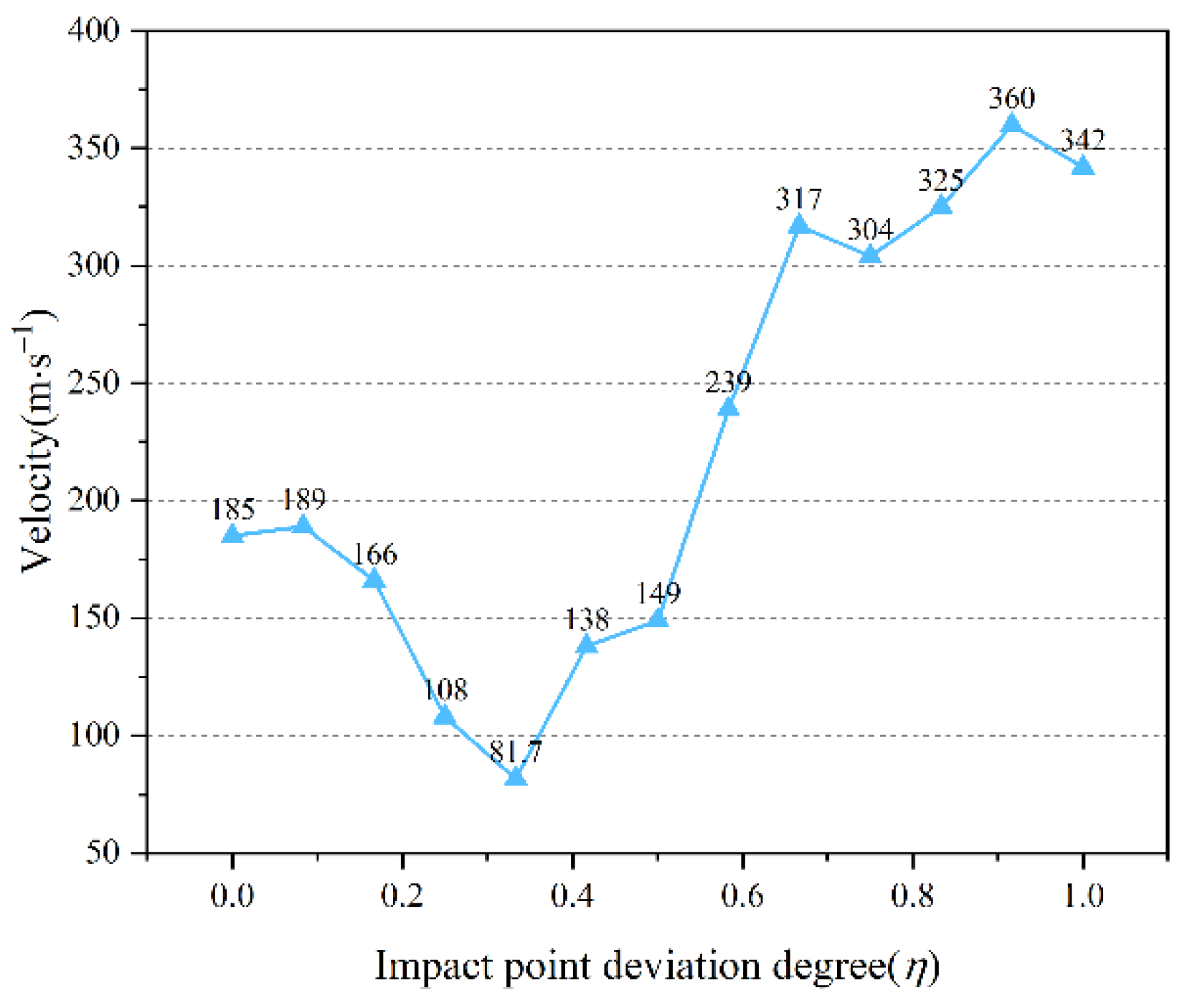
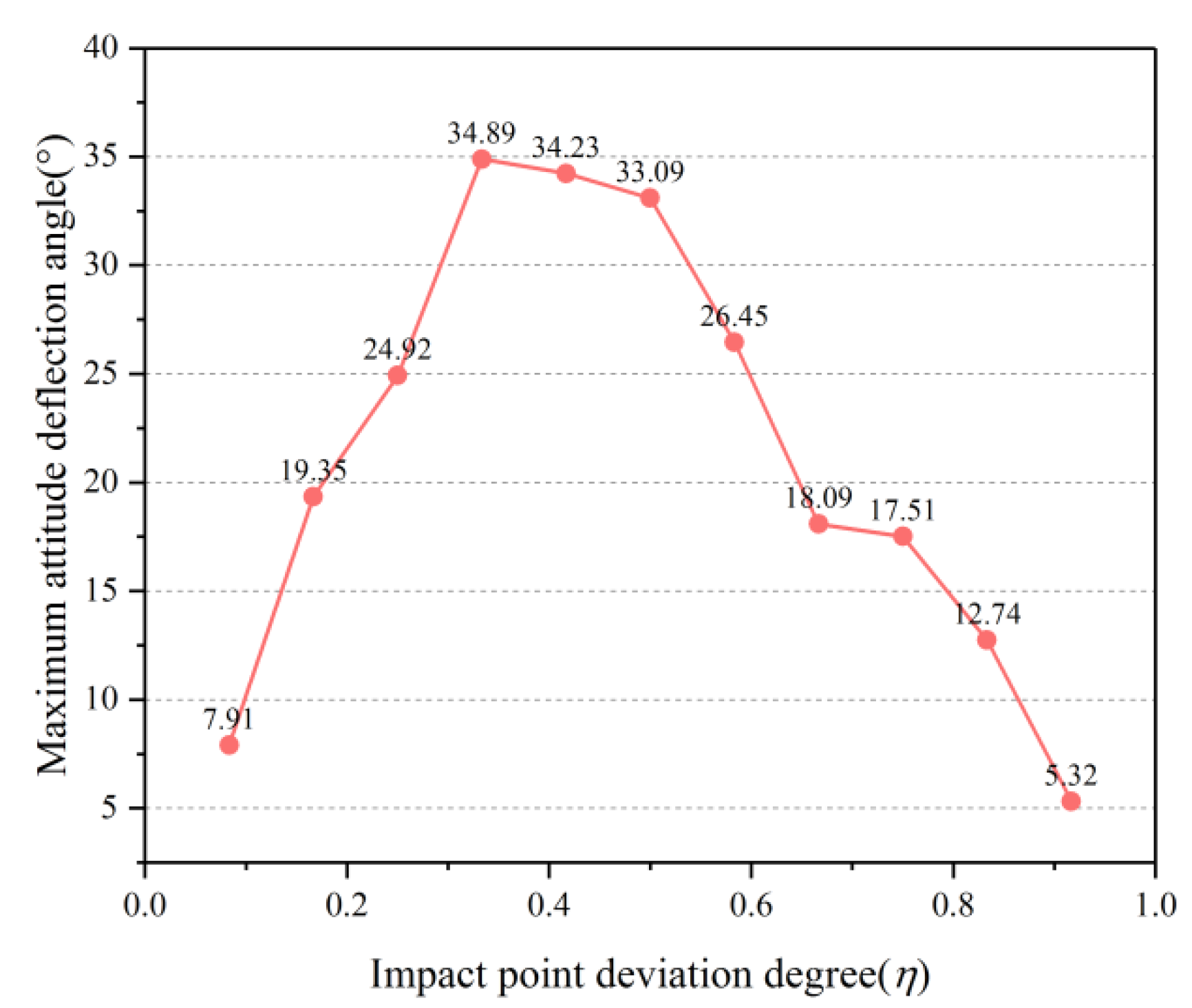
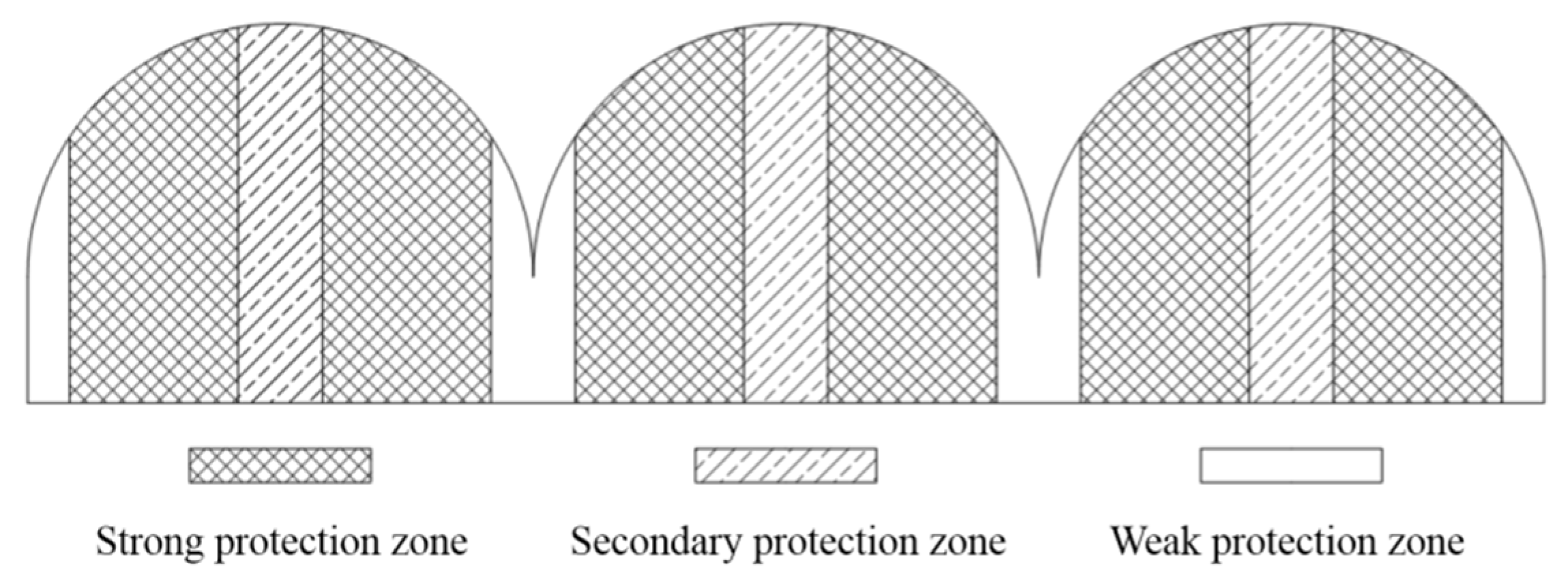
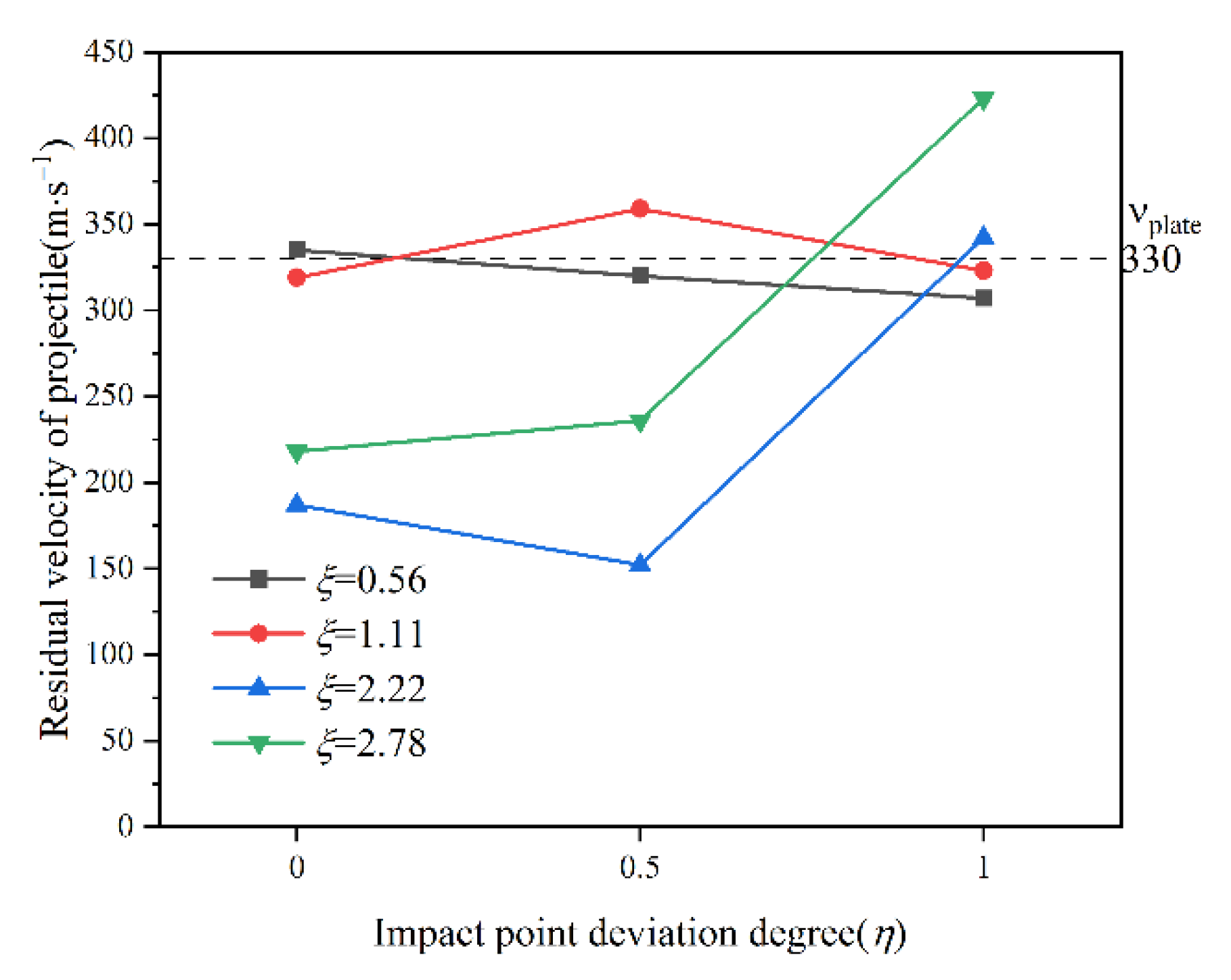
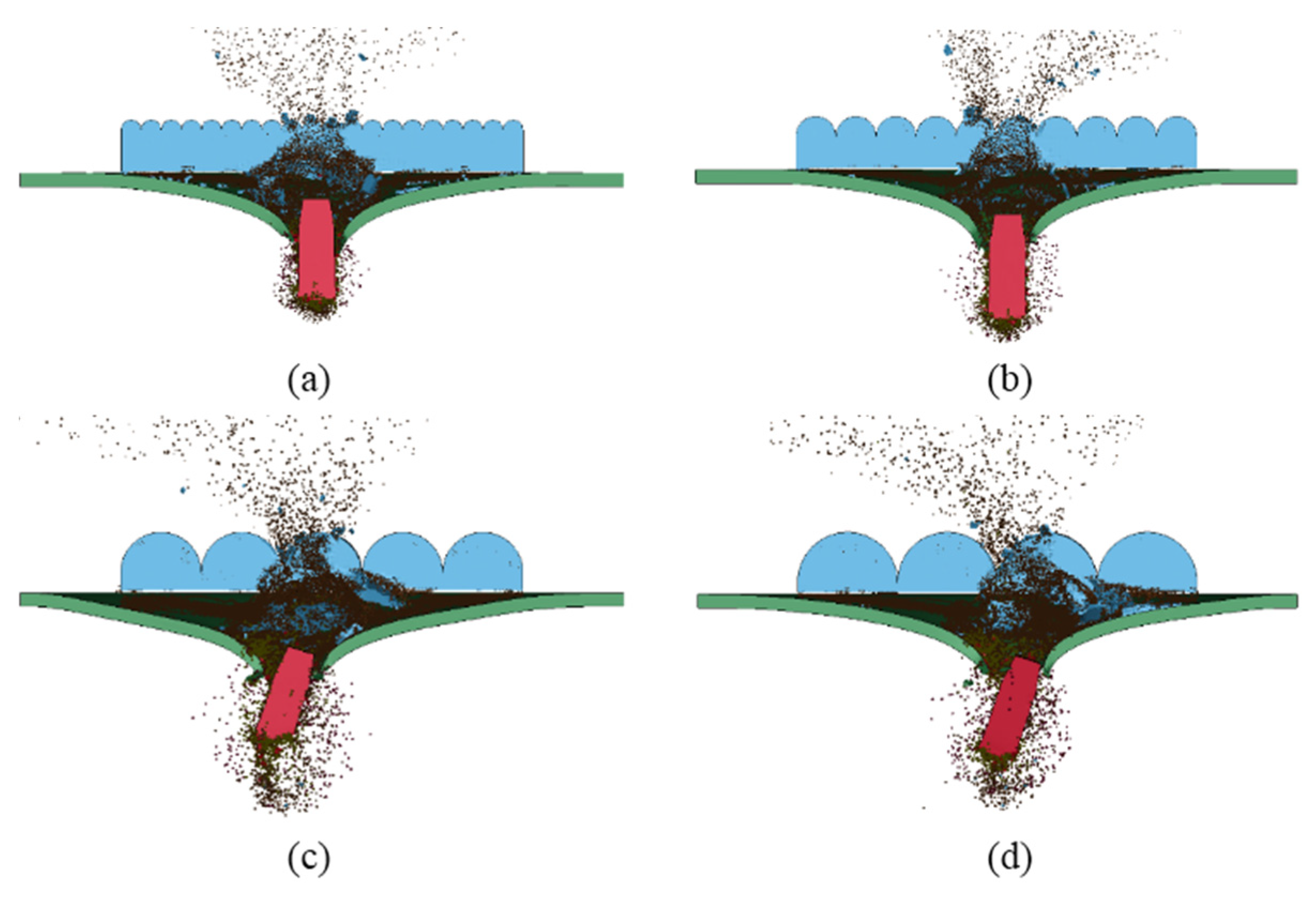
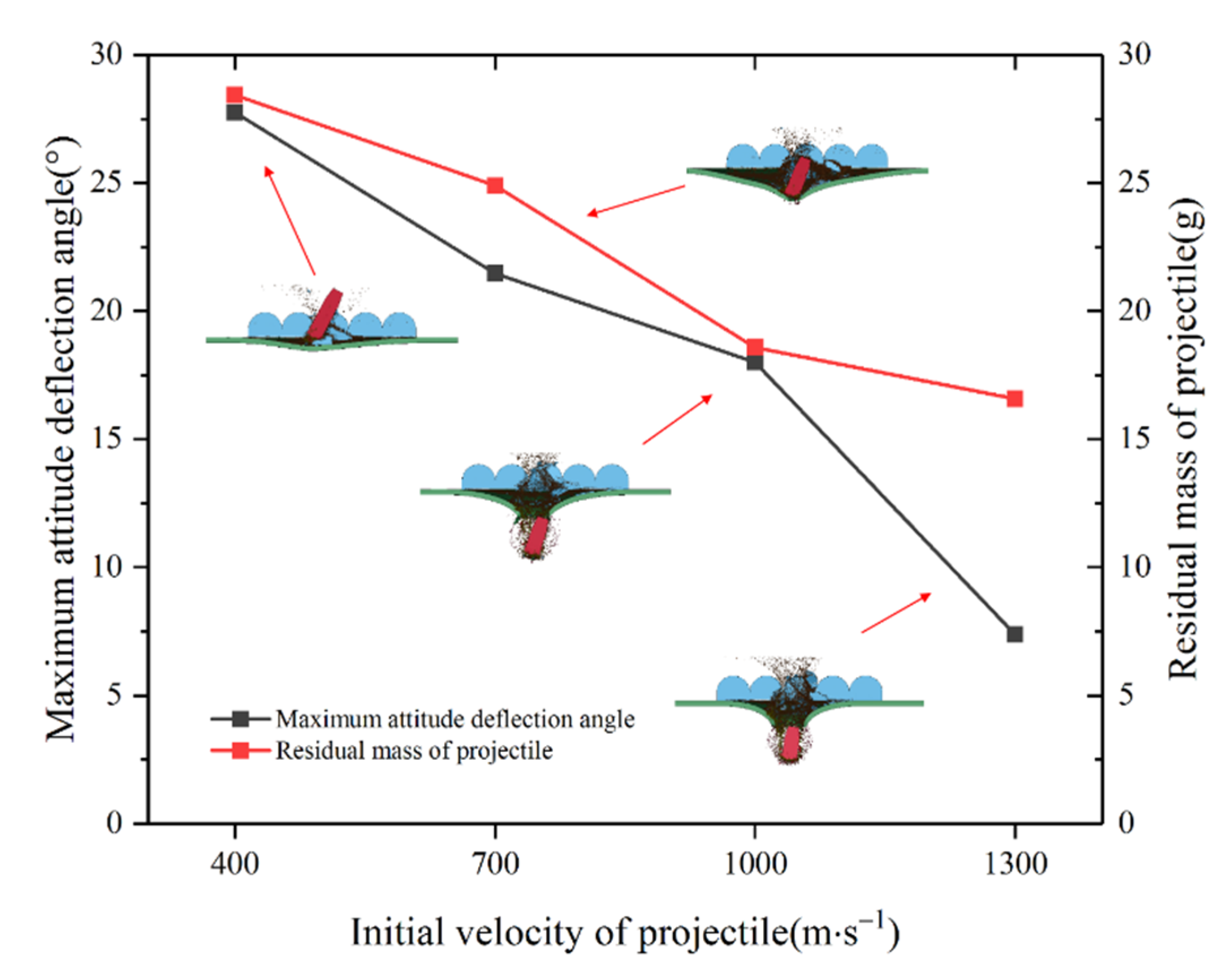
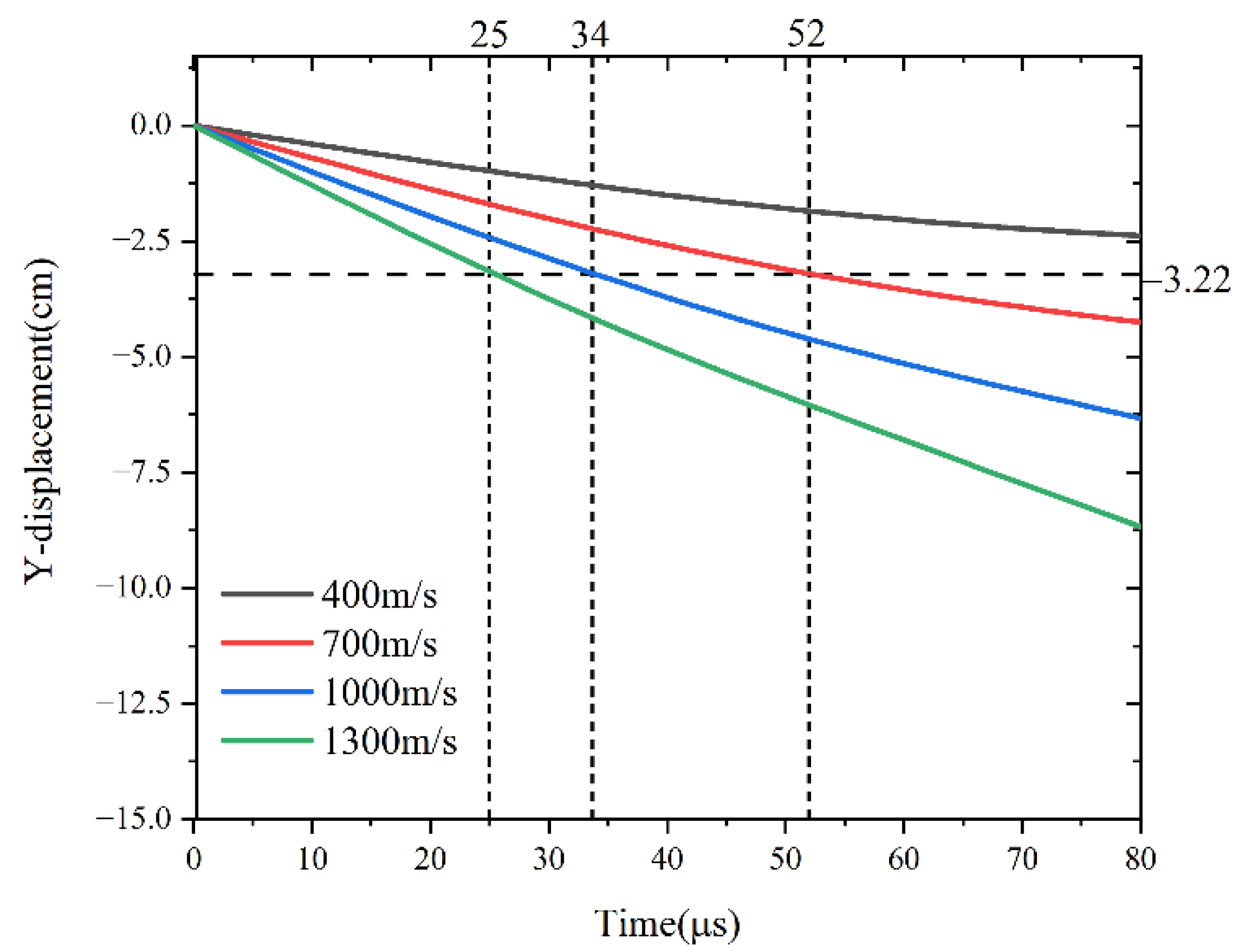
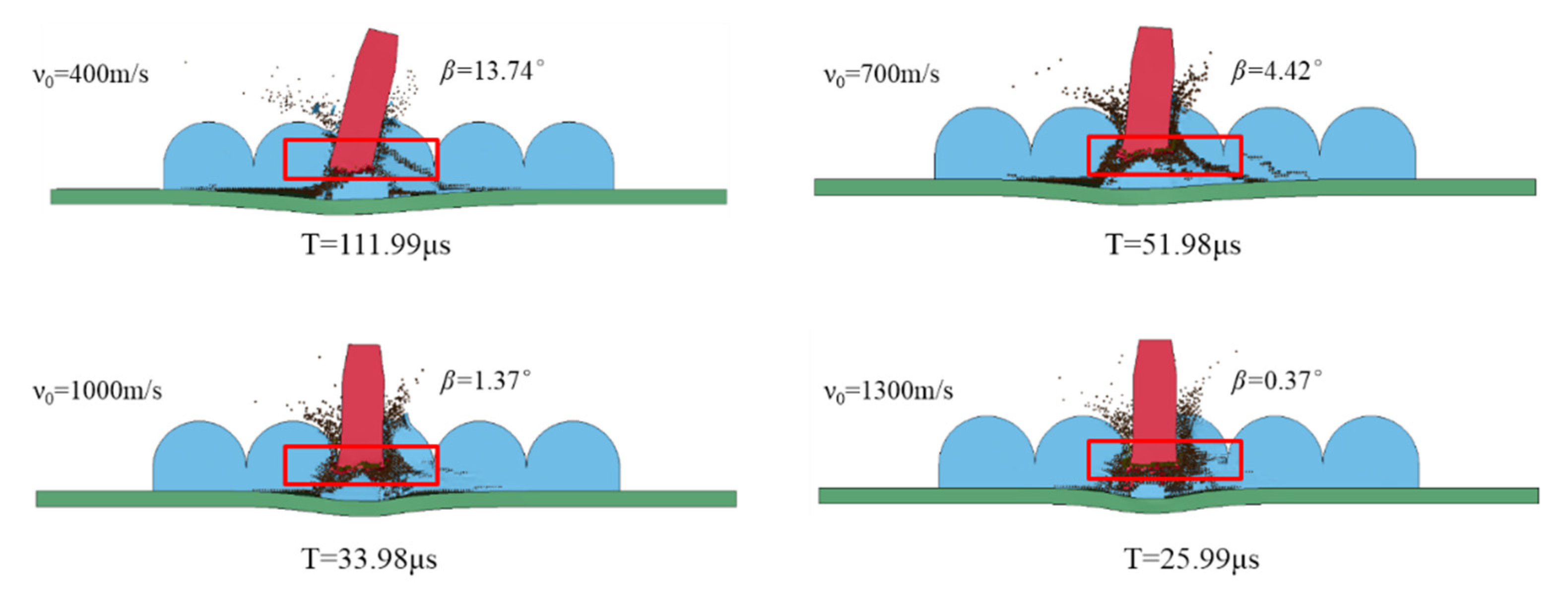
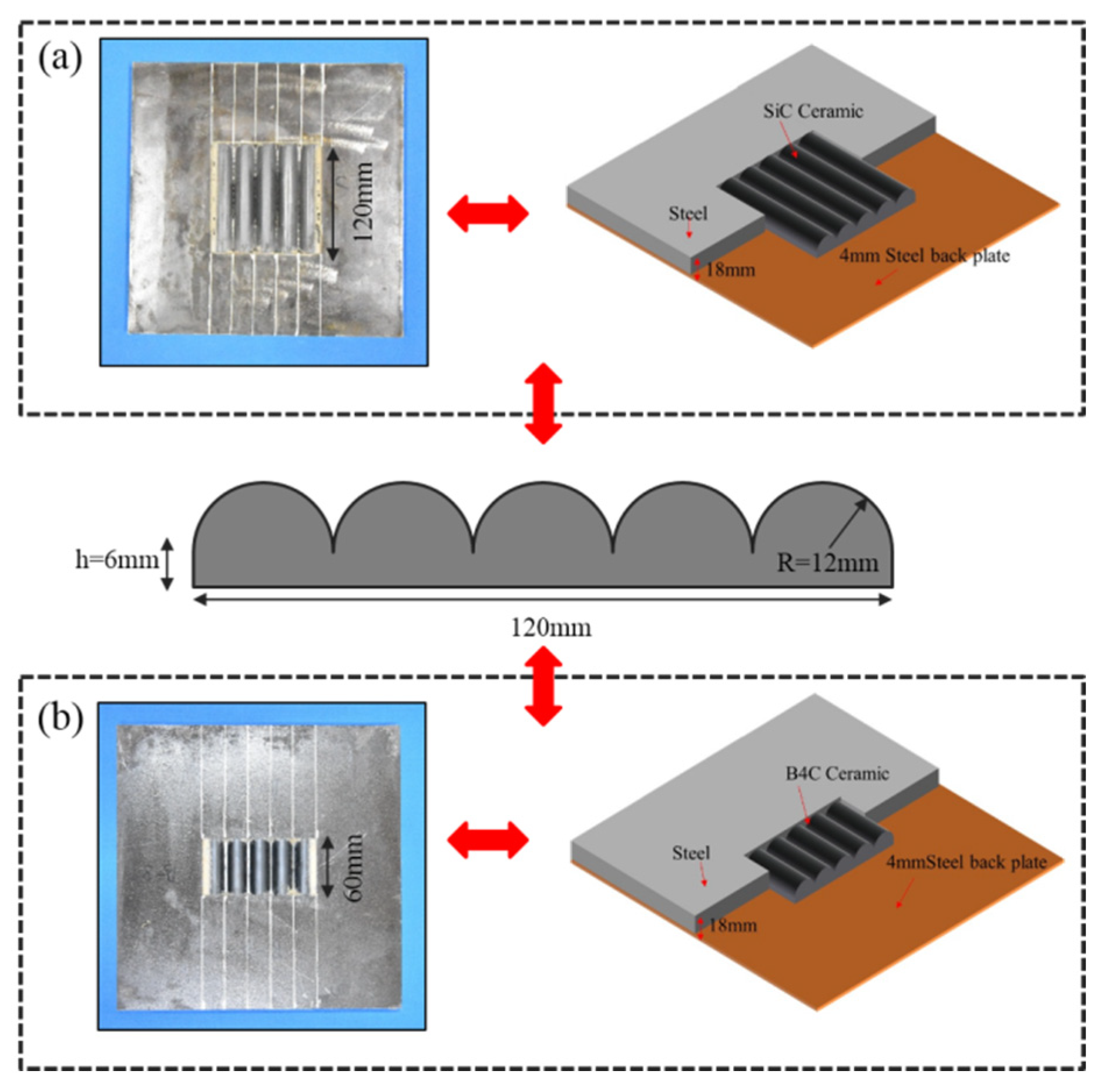
To explore the anti-penetration performance of the specially shaped ceramic/metal composite armor, such an armor is designed and fabricated using a semi-cylindrical projectile resistant ceramic and metal back plate, and its anti-penetration performance for the 12.7 mm armor-piercing incendiary (API) projectile (also known as the 0.50 caliber API projectile) is investigated experimentally and numerically. The results show that due to the significant attitude deflection during projectile penetration, the penetration into the designed ceramic composite armor is quite different from that into the conventional homogeneous ceramic/metal composite armor, which can be roughly divided into the following four stages: asymmetric erosion of the projectile, ceramic cone squeezing movement, back plate failure and projectile exit. The failure mode of the back plate is mainly dishing deformation and petaling failure. When obvious attitude deflection occurs to the projectile, the breaches in the back plate are elliptical in varying degrees, and the height and size of petals are apparently different. The area of the composite armor is divided into different zones according to its anti-penetration performance. The influence of the ratio of semi-cylindrical ceramic diameter to projectile core diameter ξ on the anti-penetration performance is studied under constant areal density. The results show that the deflection effect of the composite armor is small when the ratio ξ is less than 2, and the anti-penetration performance is the strongest when ξ is close to 2. With the increase in the initial velocity of the projectile, the deflection effect of the composite armor on the projectile gradually weakened, and the erosion effect gradually increased.
Keywords: ceramic composite armor; 12.7 mm API projectile; ballistic performance; deflection and yaw ceramic composite armor; 12.7 mm API projectile; ballistic performance; deflection and yaw