


Abstract
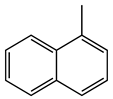
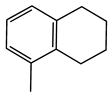
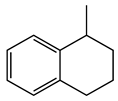
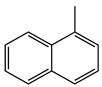
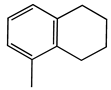
During the pre-hydrotreatment process, the hydrogen sulfide and ammonia present in the reaction atmosphere affect the conversion rate of bicyclic aromatics and the retention rate of monocyclic aromatic hydrocarbons (RRMA). In this study, 1-Methylnaphthalene (1-MN) is used to investigate hydrogenation behavior on Ni-Mo-S active sites. The results indicate that at low conversion rates, 1-MN is preferentially converted to 5-methyltetrahydronaphthalene (5-MTHN) on the S-edge, and can be simultaneously converted to 1-methyltetrahydronaphthalene (1-MTHN) and 5- MTHN on the Mo-edge. Additionally, the H2S in the reaction atmosphere significantly competes with 1-MN for adsorption on the S-edge, limiting the hydrogenation selectivity of 5-MTHN, whereas NH3 preferentially competes with 1-MN on the Mo-edge. At a high1-MN conversion rate, the competitive adsorption of 1-MN and MTHN is concentrated on the S-edge. Conversely, at a low bicyclic aromatic conversion rate, H2S increases the RRMA, whereas NH3 significantly lowers it.
1. Introduction
With the rapid development of new energy technology, the proportion of gasoline and diesel being utilized as vehicle fuel is gradually decreasing [1,2,3]. At present, converting excess fuel into raw chemical materials is an important and economically beneficial task for refineries [4,5]. Hydrocracking, using diesel as the feedstock, has developed rapidly in recent years [6,7,8]. One technical route by which to achieve this is to convert FCC light cycle oil, which is rich in bicyclic aromatic hydrocarbons, into high-value BTX [9,10,11]. However, the hydrogenation process of bicyclic aromatics is inevitably accompanied by the oversaturation of monocyclic aromatic hydrocarbons to cycloalkanes, which is not ideal for direct BTX production [12,13]. In the pretreatment process of diesel hydrocracking, maximum retention of monocyclic aromatics under deep hydrodenitrogenation and of polycyclic aromatics under hydrocarbon saturation is important for improving the economic efficiency of refineries [14].
Similarly to conventional hydrotreatment catalysts, the pretreatment catalyst for diesel hydrocracking uses sulfurized nickel and molybdenum nanoclusters as active sites [15,16,17,18,19]. These active sites have two types of edges: One, based on the nickel-modified (1,0,−1,0) plane of H-MoS2, is referred to as the S-edge. Under hydrogenation reaction conditions, narrow coordination-unsaturated sites (CUSs) expose the unoccupied d orbitals from two nickel atoms. The other edge, based on the (−1,0,1,0) plane of H-MoS, is referred to as the Mo-edge. At this edge, there are several flat CUSs consisting of multiple exposed Ni/Mo atoms [20,21,22,23]. These two types of CUSs exhibit significant differences in their molecular orbital composition, adsorption selectivity for hydrocarbons, and hydrogenation performance [24,25,26].
In this study, we found that the composition of the reaction atmosphere could affect the reaction behaviors of bicyclic aromatics on the two active sites. Notably, a certain concentration of hydrogen sulfide or ammonia affects the catalytic capacity of the S-edge and Mo-edge in different ways. By combining DFT calculations and hydrogenation experiments, we comparatively investigated the phenomena and mechanisms underlying the influence of H2S and NH3 on the hydrogenation of bicyclic aromatics. We hope that the results constitute a valuable reference for R&D and operation condition control for catalysts in diesel hydrocracking pretreatment.
2. Results and Discussion
2.1. Hydrogenation of 1-MN on Ni-Mo-S Active Sites
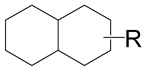
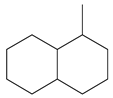
The hydrogenation products of 1-MN on sulfurized FF-73 between 260 °C and 290 °C are listed in Table 1. At 260–270 °C, the conversion rate of 1-MN is lower than 50%. The major products are monoaromatic saturated products, namely 5-MTHN and 1-MTHN. As the conversion rate rises with reaction temperature, double-saturated-ring products such as 1-Methyldecahydronaphthalene (abbreviated as 1-MDHN) and other isomeric bicyclic alkanes (abbreviated as IBAs) can be detected. The retention rate of monocyclic aromatic hydrocarbons (abbreviated as RRMA) is used to compare the hydrogenation selectivity of the reactions. The method for calculating the RRMA is as follows:
where PT1 stands for the mass fraction of 1-MTHN in the product;
RRMA = (PT1 + PT5)/(PT1 + PT5 + PI + PD1) × 100%
Table 1.
Hydrogenation products of 1-MN under H2 atmosphere.
PT5 is the mass fraction of 5-MTHN;
PI represents the mass fraction of IBAs;
PD1 denotes the mass fraction of 1−MDHN.
It was found that when the reaction temperature is 270 °C or lower, the RRMA is 100%, indicating that the conversion of bicyclic aromatics stops at monocyclic aromatics. Additionally, the RRMA decreases as the reaction temperature increases, with the RRMA being only 85.2% at a reaction temperature of 290 °C.
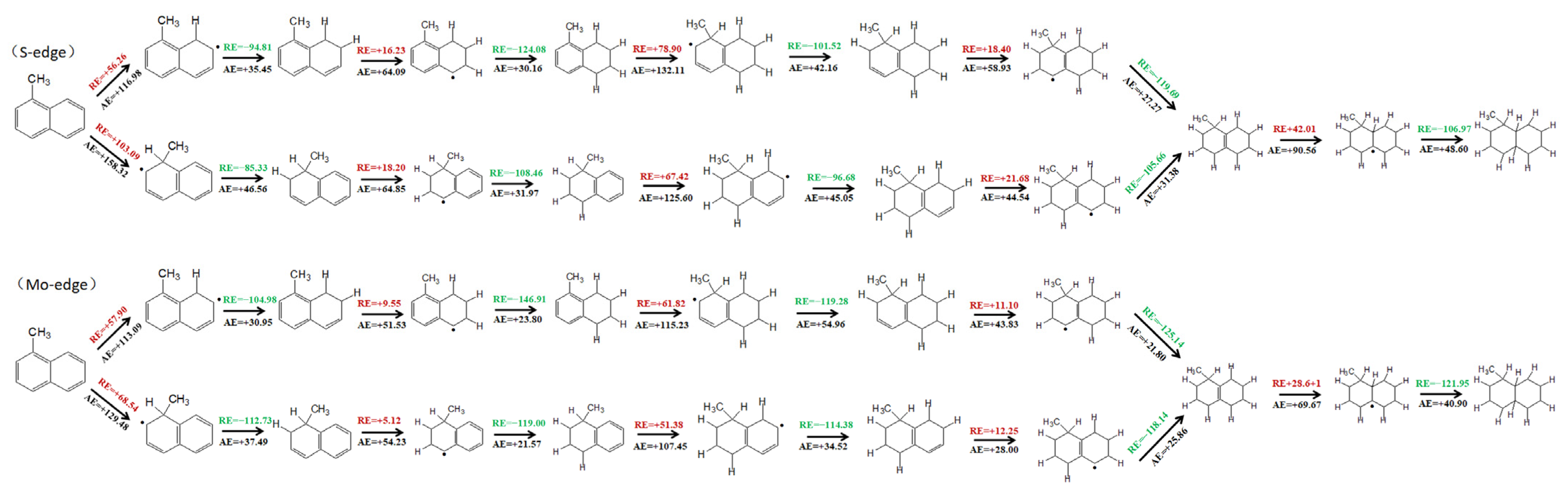
Notably, under a pure H2 atmosphere, the content of 5-MTHN in the product is approximately three times that of 1-MTHN across all conversion rates, indicating that on the Ni-Mo-S active sites, the aromatic ring without a methyl group is easier to saturate. The calculations outlined below focus on the conversion of 1-MN on the S-edge and Mo-edge of Ni-Mo-S active sites. The catalytic reaction cycle of 1-MN on two active centers of Ni-Mo-S is shown in Figure 1. According to the calculation results, the hydrogenation saturation of the aromatics comprises two reaction pathways. In each reaction pathway, endothermic and exothermic elementary reactions occur alternately. Endothermic reactions occur when the hydrocarbon contains an odd number of hydrogen atoms and one free radical, whereas exothermic reactions occur when the hydrocarbon molecule contains an even number of hydrogen atoms and no free radicals. The activation energy of the endothermic reaction is higher, while that of the exothermic reaction is lower. In comparing the hydrogenation process of 1-MN on two different reaction active centers, the main differences lie in the first step, which involves breaking of the conjugated aromatic structures and an increase in the system energy.
Figure 1.
Reaction pathway and energy change in 1-MN hydrogenation saturation.
In Figure 1, RE stands for the reaction energy of each elementary reaction and AE stands for the activation energy.
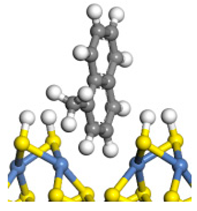
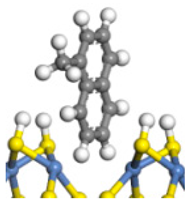
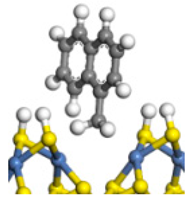
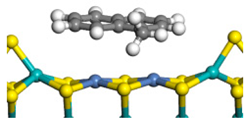
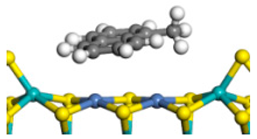
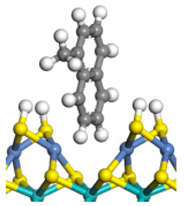
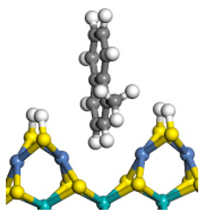
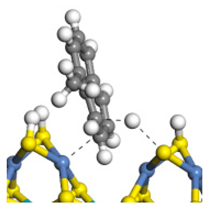
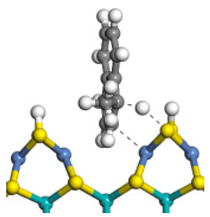
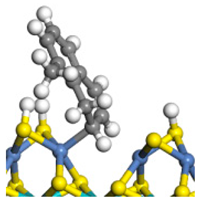
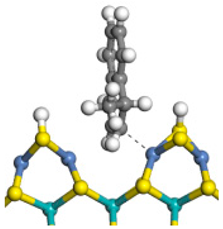
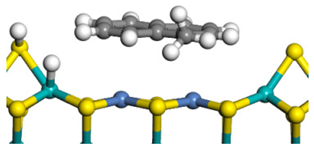
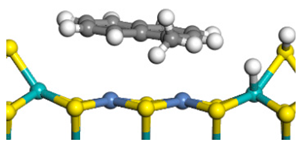
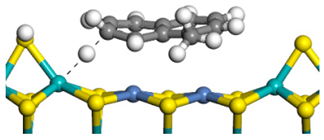
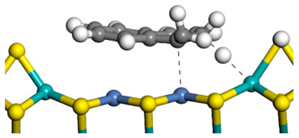
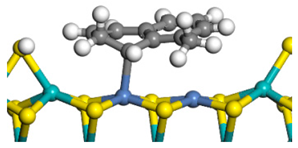
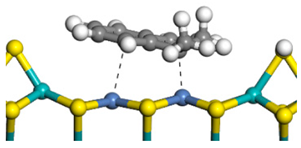
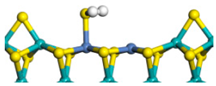
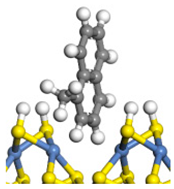
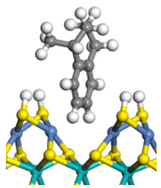
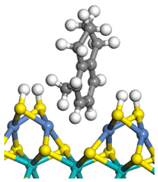
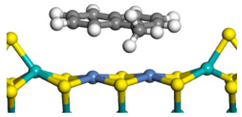
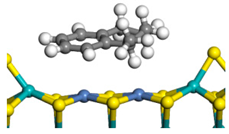
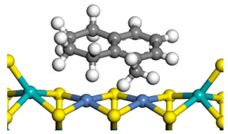
Several stable adsorption states of 1-MN on the Ni-Mo-S active sites have been calculated and are listed in Table 2. On the S-edge, the major adsorption form of 1-MN constitutes being upright and inserted into the narrow CUS. The main interaction involves the two exposed Ni atoms and the hydrocarbons. The adsorption and charge transfer change as the functional groups come into contact with the exposed Ni atoms. When the aromatic ring comes into contact with the Ni atoms, the adsorption enthalpy and charge transfer reach their maximum values. On the Mo-edge, there are two 1-MN adsorption forms. When the two aromatic rings of 1-MN adsorb parallel to the Mo-edge, their centers can both be attached to Ni atoms, resulting in a high adsorption enthalpy and charge transfer capacity. On the contrary, when the two aromatic rings adsorb perpendicularly to the Mo-edge, only the bridge bond can come into full contact with the active sites, leading to comparatively weaker adsorption. The changes in hydrogenation behavior caused by competitive adsorption between 1-MN and other reactants or additives on these two edges will be discussed later.
Table 2.
Adsorption of 1-MN on Ni-Mo-S active sites.
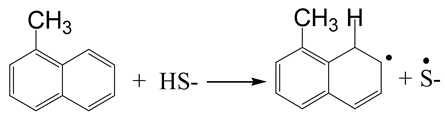
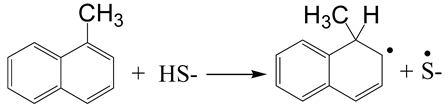
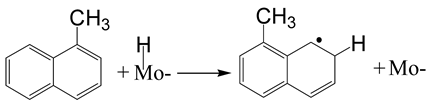
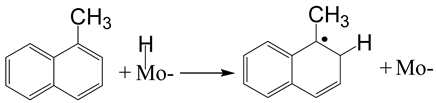
The breaking of the double-aromatic-ring structure of 1-MN by the active hydrogen on the S-edge, which is the key rate control step in 1-MN hydrogenation, was observed, with the results listed in Table 3. When the active hydrogen approaches the aromatic ring, the hybridization of the carbon atom transitions from sp2 to sp3, resulting in bending of the aromatic ring and an exclusion effect on the CUS of the S-edge. This situation becomes more serious when the aromatic ring has a methyl substituent, because the methyl groups will stick out with the bends in the aromatic ring. The bending constitutes a shift from the original two-dimensional molecular configuration to a three-dimensional configuration that requires more space. The reaction energy and activation energy for the hydrogenation of the aromatic ring with methyl groups are much higher than for that without methyl groups. This is a likely explanation for why 1-MN is easier to convert into 5-MTHN than 1-MTHN on the Ni-Mo-S-based hydrotreatment catalyst, as observed in the experiments.
Table 3.
Hydrogenation saturation of 1-MN on Ni-S-edge.
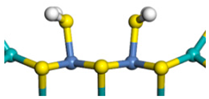
Based on the most stable adsorption form of 1-MN, namely flat adsorption in parallel, the rate control step of the conversion of 1-MN on the Mo-edge is calculated, with the results listed in Table 4. On the Mo-edge, the active hydrogen could approach 1-MN from both exposed metal atoms. As the aromatic carbon receives the active hydrogen, the adjacent carbon atom simultaneously bonds with or approaches the exposed Ni atom. The newly generated chemical bond or the enhanced adsorption could lower the system energy of the transition state, which determines the activation energy of the hydrogenation saturation of the bicyclic aromatics. Moreover, the CUS on the Mo-edge is a relatively more open space than that on the S-edge. Even if the methyl groups increase the space volume of the aromatic ring after bending, the space above the Mo-edge could accommodate the three-dimensional hydrocarbon in the transition state to avoid squeezing with atoms on the active sites. Therefore, on the Mo-edge, the activation energy increase brought about by the substituent group of the bicyclic aromatics is quite limited, meaning that the 1-MN could be converted into both 5-MTHN and 1-MTHN with similar selectivity.
Table 4.
Hydrogenation saturation process of 1-MN on Ni-Mo-edge.
According to the 1-MN hydrogenation experiments conducted under a H2 atmosphere, it can be concluded that the major product of 1-MN at a low conversion rate is 5-MTHN, with the content of 1-MTHN being only about one-third that of 5-MTHN. The calculation results indicate that 5-MTHN could be generated on both the narrow S-edge and the open Mo-edge, whereas 1-MTHN could only be generated on the latter.
2.2. Effects of Additives in Atmosphere on 1-MN Conversion
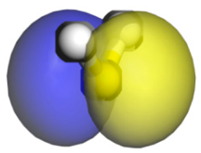
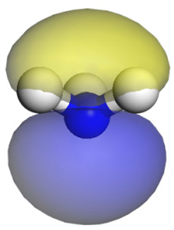
Some polar additive gas molecules in the H2 atmosphere could also adsorb on the CUS of the Ni-Mo-S active sites, leading to competitive adsorption with the aromatic hydrocarbons. H2S is a common component in a circulating hydrogen atmosphere. The adsorption of H2S on the S-edge and Mo-edge was calculated, with the results listed in Table 5. The sulfur atoms are relatively large, and the HOMO is distributed symmetrically on both sides of the H2S molecule. The HOMO space extension of the H2S molecule could effectively cover the two Ni atoms on both sides of the CUS on the S-edge. When the H2S molecule adsorbs on the S-edge, the S atom of the H2S could bond with two Ni atoms of the S-edge simultaneously, leading to a high adsorption enthalpy close to that of 1-MN. However, on the Mo-edge, the H2S molecule could only bond with a single exposed Ni atom. The adsorption enthalpy of H2S is only approximately −55 kJ/mol. Even when two H2S molecules adsorb on adjacent nickel atoms, the total adsorption enthalpy is only approximately −90 kJ/mol, still much lower than the flat adsorption enthalpy of one 1-MN molecule on the Mo-edge (approximately −150 kJ/mol). Based on the adsorption enthalpy difference, it could be predicted that a certain concentration of H2S will preferentially compete with 1-MN for adsorption, whereas on the S-edge, the adsorption of 1-MN will be favored.
Table 5.
Adsorption of H2S on S-edge and Mo-edge.
The distribution of 1-MN hydrogenation products under a mixed H2S and H2 atmosphere at different temperatures is presented in Table 6. Compared with a pure H2 atmosphere, the conversion rate of 1-MN decreases. At low concentrations of H2S, the selectivity of 5-MTHN reduces remarkably, while the conversion path of 1-MTHN is less affected. As the concentration of H2S rises, the content of 5-MTHN becomes close to that of 1-MTHN, indicating more severe inhibition of the conversion route to 5-MTHN. The experimental results verified the calculations indicating that competitive adsorption of H2S and 1-MN is mainly concentrated on the S-edge over the Mo-edge. Meanwhile, the H2S also hinders the further conversion of methyl-tetrahydronaphthalene (abbreviated as MTHN) to methyl-decahydronaphthalene (abbreviated as MDHN). The reason for this will be discussed in the next section.
Table 6.
Hydrogenation products of 1-MN under mixed H2S and H2 atmosphere.
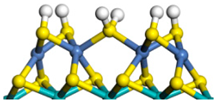
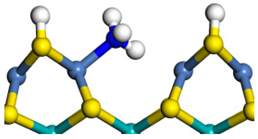
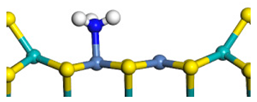
The calculation results for NH3 adsorption on the Ni-Mo-S active sites are listed in Table 7. Despite the polarity of the NH3 molecule being stronger than that of H2S, the NH3 molecule can only bond with one Ni atom on the S-edge. Owing to the adsorption morphology, the hydrogen atoms of NH3 will repel the Ni atoms on the S-edge, leading to slight deformation of the CUS, increasing the system energy. Therefore, the adsorption enthalpy of NH3 is close to that of H2S and 1-MN. On the Mo-edge, the adsorption of NH3 is free from the influence of steric hindrance, and the contribution of strong polarity to the adsorption enthalpy can be fully reflected. The adsorption enthalpy of a single NH3 molecule can exceed −110 kJ/mol, while the total adsorption enthalpy of two adjacent NH3 molecules can reach over −200 kJ/mol, which is much higher than the flat adsorption of one 1-MN molecule on the Mo-edge (approximately −140 kJ/mol). It can be predicted that the NH3 molecules in the reaction atmosphere will engage in more severe competitive adsorption with 1-MN on the Mo-edge than on the S-edge.
Table 7.
Adsorption of NH3 on S-edge and Mo-edge.
The distribution of 1-MN hydrogenation products under a mixed NH3 and H2 atmosphere at different temperatures is provided in Table 8. Although in some experiments, the partial pressure of NH3 is lower than that of H2S, the inhibition of 1-MN hydrogenation is even stronger. When the reaction atmosphere contains NH3, conversions to 5-MTHN and 1-MTHN are both hindered, with conversion from 1-MN to 1-MTHN more severely inhibited. These results support the calculated prediction that the competitive adsorption of NH3 is more likely to occur on the Mo-edge, the primary location of 1-MTHN generation. In addition, the inhibition of MTHN-to-MDHN conversion by NH3 is not as strong as that by H2S, leading to a lower content of monocyclic aromatics affected by NH3 at the low 1-MN conversion rate.
Table 8.
Hydrogenation products of 1-MN under mixed NH3 and H2 atmosphere.
2.3. Effects of Additive in Atmosphere on RRMA
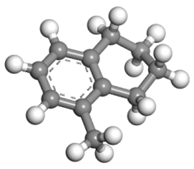
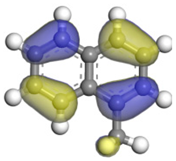
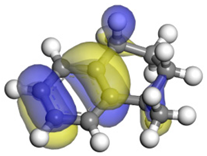
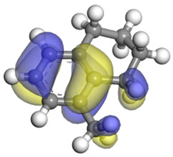
Compared to the position of the substituent groups, the RRMA in the hydrogenation of bicyclic aromatics is of greater relevance to pretreatment for diesel hydrocracking. In the deep conversion step of bicyclic aromatic hydrogenation, the competitive adsorption between the intermediate monocyclic aromatics and the unconverted monocyclic aromatics determines the RRMA. The adsorption of 1-NM, 5-MTHN, and 1-MTHN on the Ni-Mo-S active sites was calculated, with the results listed in Table 9. 1-MN is a planar-structure molecule with conjugated double aromatic rings. The HOMOs are homogenously distributed on the conjugated-double-ring plane. As both 1-MTHN and 5-MTHN consist of an aromatic ring and a cycloalkane ring, the HOMOs of MTHNs are concentrated on a single aromatic ring. On the S-edge, only one aromatic ring of the hydrocarbons could strongly interact with the narrow CUS, making the effective contact areas and the adsorption energies of 1-NM and MTHNs relatively close. On the Mo-edge, the double aromatic rings of 1-NM could both come into sufficient contact with the exposed Ni atoms of the CUS, whereas the single aromatic ring of MTHNs could not provide matching adsorption capacity alone. Therefore, it can be predicted that competitive adsorption of 1-MN and MTHNs is most likely to occur on the S-edge.
Table 9.
Adsorption of 1-MN, 1-MTHN, and 5-MTHN on S-edge and Mo-edge.
1-MN hydrogenation under different atmospheres at higher temperatures and reaction rates was conducted, and the product distributions are listed in Table 10. Under the pure H2 atmosphere, the conversion rate of 1-MN reaches 92.5% and the content of bicyclic cycloalkanes (sum of 1-MDHN and IBAs) reaches approximately 14% at 290 °C. When the reaction temperature reaches 300 °C, the conversion rate of 1-MN exceeds 99%, accompanied by approximately 40% of the bicyclic cycloalkanes. The H2S in the reaction atmosphere hinders the conversion of 1-MN and MTHN simultaneously, whereas the more significant inhibition is reflected in the deep hydrogenation saturation step of MTHN. From another perspective, at a low 1-MN conversion rate, the H2S increases the RRMA compared to the pure H2 atmosphere. Although NH3 could also hinder the entire reaction chain of 1-MN hydrogenation, its inhibition of the deep hydrogenation saturation of MTHN is less effective than that of H2S. Moreover, multiple NH3 molecules densely adsorbing on the Ni atoms could weaken the competitive adsorption advantages of bicyclic aromatics over monocyclic aromatics on the Mo-edge. At the same reaction temperature, the products in the NH3 mixed atmosphere consist mostly of unconverted 1-MN, with the sum of fully hydrogenated saturated cycloalkanes even exceeding that of H2S. The RRMA under the NH3 mixed atmosphere is lower than that of H2S.
Table 10.
Hydrogenation products of MN at high temperature.
Both the experimental and computational results indicate that the addition of H2S and NH3 to the reaction atmosphere could affect the product distribution of 1-MN. H2S preferentially affects the S-edge of the Ni-Mo-S active sites. Although H2S adsorption will hinder the conversion of 1-MN, the deep hydrogenation saturation of MTHN could also be effectively inhibited. In fact, H2S slightly increases the RRMA at a low conversion rate of the bicyclic aromatics. The inhibition of NH3 is stronger than that of H2S, and it preferentially affects competitive adsorption on the Mo-edge. NH3 less effectively inhibits the subsequent deep conversion of MTHN, so that the NH3 in the reaction atmosphere significantly lowers the RRMA relative to H2S at the low conversion rate.
3. Materials and Methods
3.1. Experimental Section
One commercialized diesel hydrocracking pretreatment catalyst from Sinopec (Beijing, China), branded as FF-73, is used for the hydrogenation experiments in this study. The properties of the catalyst are listed in Table 11.
Table 11.
Properties of hydrocracking pretreatment catalyst FF-73.
The hydrogenation reactions were carried out in a fixed-bed reactor with an inner diameter of 6 mm length of 200 mm, loaded with 5.0 g of the FF-73 catalyst. The catalyst is shaped into small, 20–40-mesh particles. Both ends of the reactor are blocked with inert 20-mesh–40-mesh silicon carbide particles. Firstly, the hydrogenation catalyst needs to be pre-sulfurized. A cyclohexane solution with 5.0 vol% dimethyl disulfide is used as the sulfurizing feedstock. The sulfurization is performed at 650 K with 5.0 MPa of hydrogen and a weight hourly space velocity (WHSV) of 2.0 h−1 for 10 h.
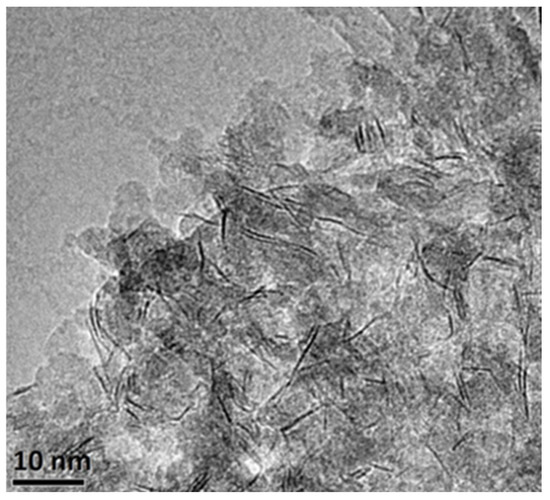
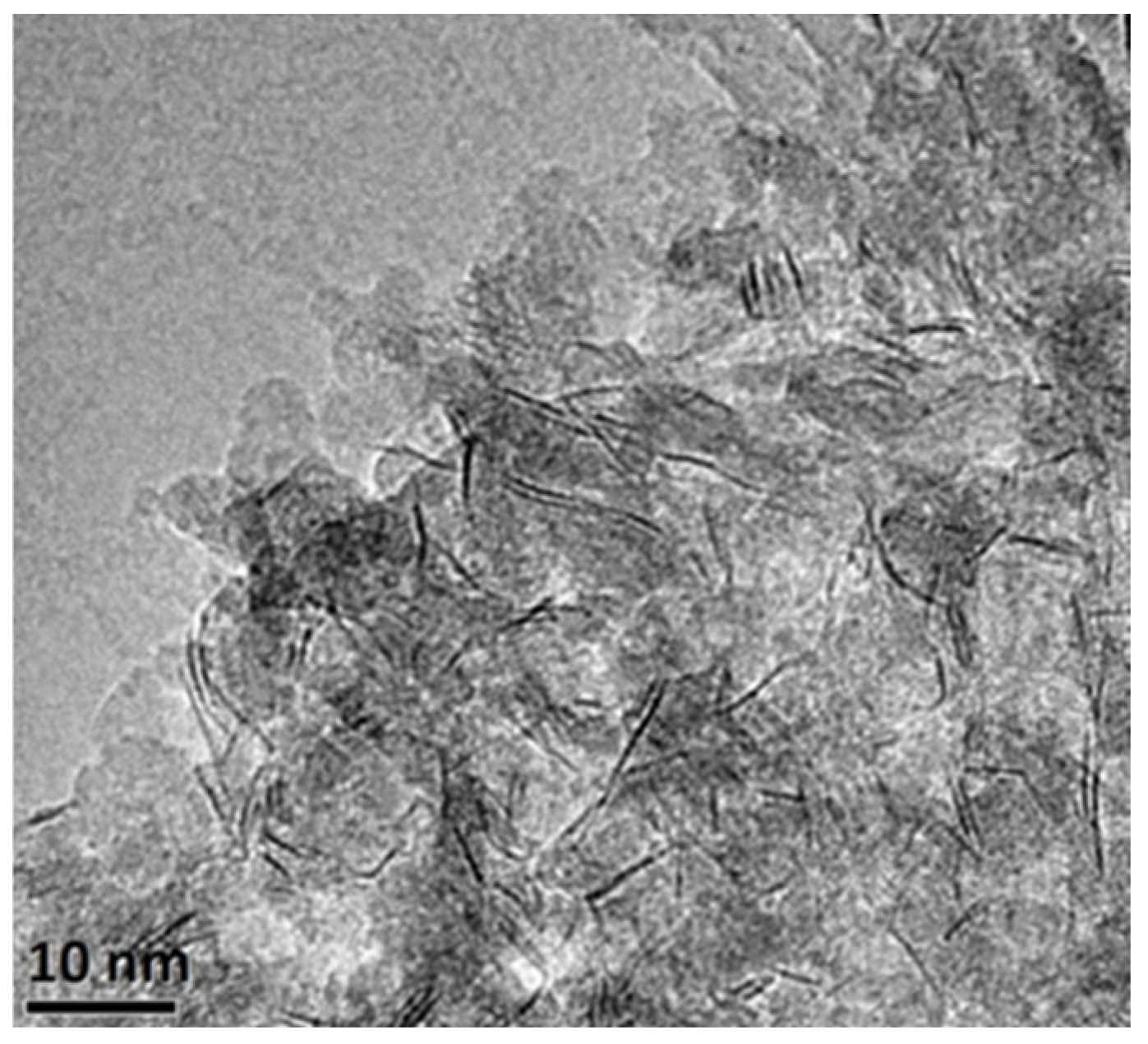
A transmission electron microscopy (TEM) image of the sulfurized FF-73 is shown in Figure 2, while the statistics of the geometric morphology of the Ni-Mo-S active sites according to 25 TEM images are listed in Table 12. The image and the statistics show that the Ni-Mo-S active sites are mainly composed of single-layer nanoclusters, with their length mostly in the range of 5.0 nm–8.0 nm.
Figure 2.
TEM image of sulfurized FF-73.
Table 12.
Geometric statistics of Ni-Mo-S active sites.
The average length of the active sites is calculated according to the following formula:
where LA is the average length of the active sites;
Li is the average length of each stack layer;
Pi is the proportion of each stack layer.
The average stack layer is calculated according to the following formula:
where SA is the average stack layer of the active sites;
Si is the number of each stack layer;
Pi is the proportion of each stack layer.
After sulfurization, the mixture of 20 wt.% 1-MN dissolved in cyclohexane is pumped into the reactor. The reactions are performed with different temperatures and WHSVs, whereas the gas/oil ratio is fixed at 600 (v/v) and the reaction pressure is set at 5.0 MPa. The reaction atmospheres are diverse, including pure H2, H2 mixed with H2S, and H2 mixed with NH3, with adjustable partial pressures. The liquid products are collected after a stabilization period of 4.0 h and analyzed offline on an Agilent 4890D gas chromatograph (Santa Clara, CA, USA) with a 60.0 m capillary Rtx-1 column (0.25 mm, RESREK, Bellefonte, PA, USA). A Finnigan TRACE gas chromatography/mass spectrometry (GC/MS) system consisting of a TRACE Ultra gas chromatograph (Thermo Fisher Scientific, Waltham, MA, USA) capillary column and an HP 5973 MS detector (Agilent, Santa Clara, CA, USA) is used to analyze the collected liquid products for further compound identification.
3.2. Computational Section
3.2.1. Modeling
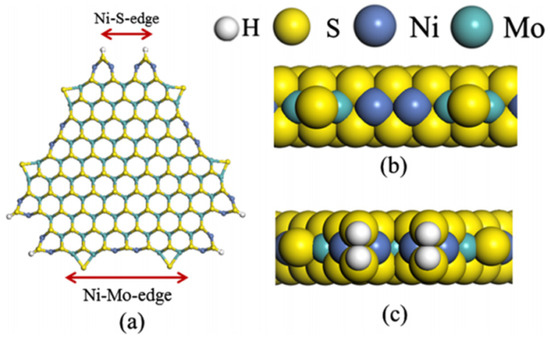
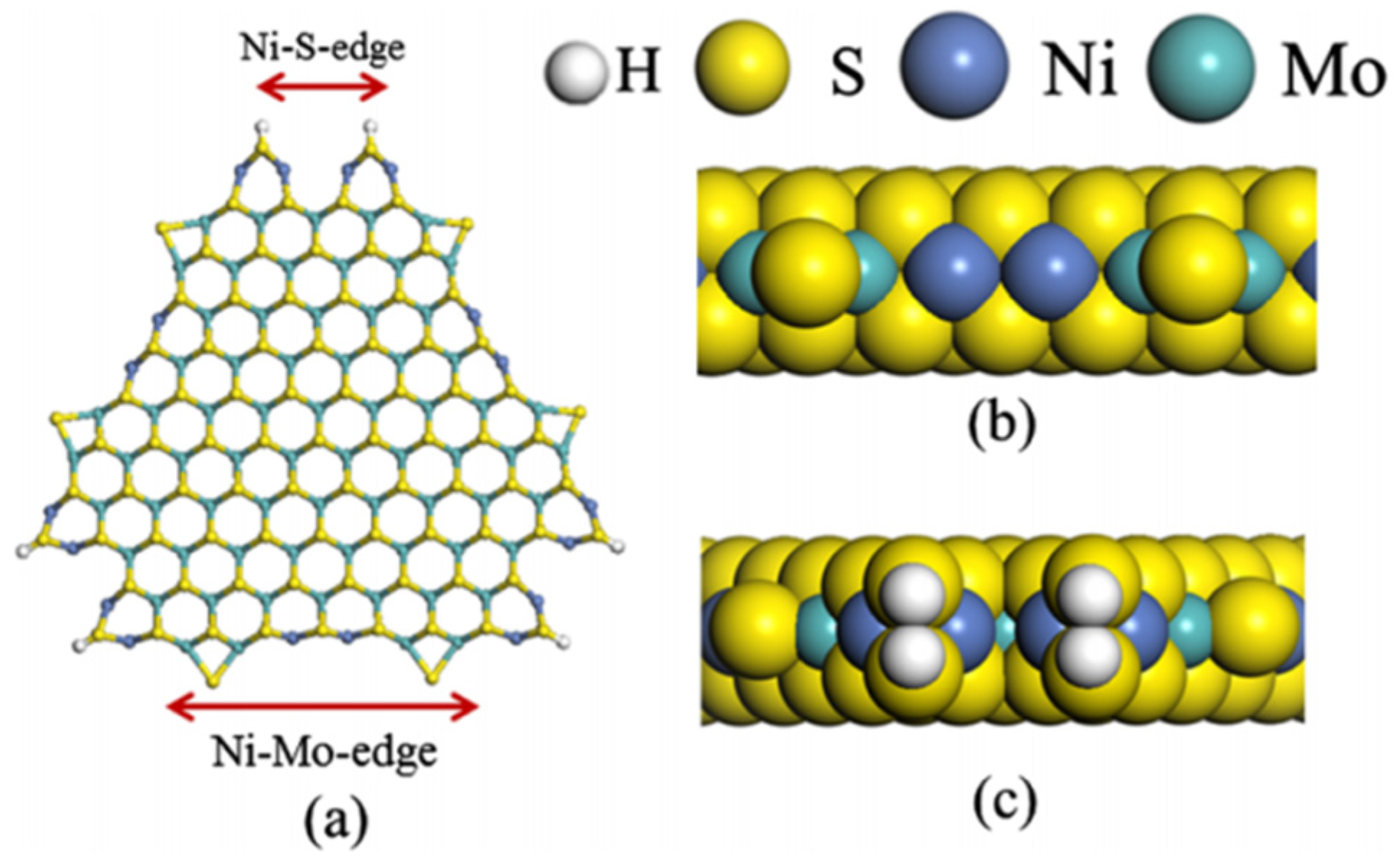
The computational model of the Ni-Mo-S single-layer active nanocluster is derived from our previous research [27,28,29,30]. The atomic structure diagram of the Ni-Mo-S nanocluster model is shown in Figure 3. A sufficient Ni atom concentration on the edges provides an environment that is prone to CUS formation under hydrogenation conditions [31,32].
Figure 3.
Atomic diagram of Ni-Mo-S nanocluster model. (a) 0001 plane; (b) Mo-edge; (c) S-edge.
3.2.2. Calculation Method
The DFT calculation are perfomed using the DMol3 code in Materials Studio 7.0 (Accelrys, San Diego, CA, USA). The calculation method used herein makes reference to relevant prior research conducted by us, though some parameters have been adjusted (as shown in Table 13). To simulate adsorption under reaction conditions, the temperature is set at 553 K (280 °C). In addition, the H2 pressure is set at 5.0 MPa, the partial pressure of H2S or NH3 at 0.1 MPa, and the partial pressure of the hydrocarbons at 0.25 MPa.
Table 13.
Calculation method.
4. Conclusions
According to the quantum chemistry calculations and experimental results obtained herein, it can be concluded that on the S-edge, 1-MN is more likely to convert to 5-MTHN, whereas on the Mo-edge, 1-MN can convert to 5-MTHN and 1-MTHN synchronously. H2S molecules and 1-MN preferentially compete for adsorption on the S-edge, while the NH3 molecules have an advantage on the Mo-edge. At a low 1-MN conversion rate, the H2S in the reaction atmosphere will reduce the selectivity of 5-MTHN, whereas the NH3 will reduce that of 1-MTHN. At a high 1-MN conversion rate, the competitive adsorption of 1-MN and MTHN will be concentrated on the S-edge. At a low conversion rate, H2S slightly increases the RRMA, whereas NH3 lowers it.
Author Contributions
Conceptualization, Z.Y. and S.P.; methodology S.D., T.W., H.G. and Q.J.; formal analysis, W.L., H.G. and Q.J.; resources, J.M., Z.J. and S.P.; investigation, J.M.; writing—original draft preparation, S.D.; supervision, J.W.; writing—review and editing, Z.J. and W.L.; funding acquisition, J.W. All authors have read and agreed to the published version of the manuscript.
Funding
This study was financially supported by the Scientific Research Fund of SINOPEC (Grant No. 124021).
Data Availability Statement
The authors confirm that the data supporting the findings of this study are available within the article.
Conflicts of Interest
Authors Sijia Ding, Tao Wang, Hang Gao, Wenduo Lu, Zixian Jia, Zhanlin Yang, Shaozhong Peng and Jifeng Wang were employed by the company SINOPEC Dalian Research Institute of Petroleum and Petrochemicals Co., Ltd. Author Jun Ma was employed by the company Petrochina Lanzhou Petrochemical Company. The remaining authors declare that the research was conducted in the absence of any commercial or financial relationships that could be construed as a potential conflict of interest.
Abbreviations
The following abbreviations are used in this manuscript:
| BTX | Benzene–Toluene–Xylene |
| 1-MN | 1-Methylnaphthalene |
| MTHN | Methyl-tetrahydronaphthalene |
| MDHN | Methyl-decahydronaphthalene |
| 5-MTHN | 5-Methyltetrahydronaphthalene |
| 1-MTHN | 1-Methyltetrahydronaphthalene |
| 1-MDHN | 1-Methyldecahydronaphthalene |
| IBAs | Isomeric bicyclic alkanes |
| CUSs | Coordination-unsaturated sites |
| WHSV | Weight hourly space velocity |
| TEM | Transmission electron microscopy |
References
- Skeer, J.; Boshell, F.; Ayuso, M. Technology Innovation Outlook for Advanced Liquid Biofuels in Transport. Acs Energy Lett. 2016, 1, 724–725. [Google Scholar] [CrossRef] [Scilit]
- Shafiei, E.; Thorkelsson, H.; Asgeirsson, E.I.; Davidsdottir, B.; Raberto, M.; Stefansson, H. An agent-based modeling approach to predict the evolution of market share of electric vehicles: A case study from Iceland. Technol. Forecast. Soc. 2024, 79, 1638–1653. [Google Scholar] [CrossRef] [Scilit]
- Giechaskiel, B.; Joshi, A.; Ntziachristos, L.; Dilara, P. European Regulatory Framework and Particulate Matter Emissions of Gasoline Light-Duty Vehicles: A Review. Catalysts 2019, 9, 586. [Google Scholar] [CrossRef] [Scilit]
- Li, D. Crucial technologies supporting future development of petroleum refining industry. Chin. J. Catal. 2013, 34, 48–60. [Google Scholar] [CrossRef] [Scilit]
- Wang, D.; Wei, X.; Shou, S.; Gong, J. Dealkylation in Fluid Catalytic Cracking Condition for Efficient Conversion of Heavy Aromatics to Benzene–Toluene–Xylene. ACS Omega 2023, 8, 10789–10795. [Google Scholar] [CrossRef] [Scilit]
- Shi, J.; Wu, X.; Yu, G.; Xi, L.; Zou, H.; Wu, W.; Zhou, Z.; Ren, Z. Study of aromatic extraction from light cycle oil from the viewpoint of industrial applications. Fuel 2024, 357, 130023. [Google Scholar] [CrossRef] [Scilit]
- Cao, Z.; Zhang, X.; Mei, J.; Guo, R.; Wu, Z.; Hou, S.; Peng, S.; Fan, S.; Peng, C.; Duan, A. Hydrocracking Straight-Run Diesel into High-Value Chemical Materials: The Effect of Acidity and Kinetic Study. Ind. Eng. Chem. Res. 2022, 61, 8685–8697. [Google Scholar] [CrossRef] [Scilit]
- Yang, P.; Yan, S.; He, N.; Nie, H.; Guo, L.; Xiong, G.; Wang, N.; Liu, J.; Li, M. The effect of accessibility to acid sites in Y zeolites on ring opening reaction in light cycle oil hydrocracking. Chem. Synth. 2025, 5, 15–24. [Google Scholar] [CrossRef] [Scilit]
- Chen, F.; Zhang, G.; Weng, X.Y.; Zhang, Y.; Gao, X. High value utilization of inferior diesel for BTX production: Mechanisms, Catalysts, Conditions and Challenges. Appl. Catal. A Gen. 2021, 616, 118095. [Google Scholar] [CrossRef] [Scilit]
- Laredo, G.C.; Pérez-Romo, P.; Escobar, J.; Garcia-Gutierrez, J.L.; Vega-Merino, P.M. Light cycle oil upgrading to benzene, toluene, and xylenes by hydrocracking: Studies using model mixtures. Ind. Eng. Chem. Res. 2017, 56, 10939–10948. [Google Scholar] [CrossRef] [Scilit]
- Youngseok, O.; Jaeuk, S.; Haeseong, N.; Chanwoo, K.; Yong, S.K.; Yong, K.L.; Jung, K.L. Selective hydrotreating and hydrocracking of FCC light cycle oil into high-value light aromatic hydrocarbons. Appl. Catal. A Gen. 2020, 577, 86–98. [Google Scholar] [CrossRef] [Scilit]
- Beltramone, A.R.; Resasco, D.E.; Alvarez, W.E.; Choudhary, T.V. Simultaneous Hydrogenation of Multiring Aromatic Compounds over NiMo Catalyst. Ind. Eng. Chem. Res. 2008, 47, 7161–7166. [Google Scholar] [CrossRef] [Scilit]
- Toulhoat, H. A perspective on the catalytic hydrogenation of aromatics by Co(Ni)MoS phases. J. Catal. 2021, 403, 121–130. [Google Scholar] [CrossRef] [Scilit]
- Wang, Z.; Yuan, X.; Guo, H.; Zhang, X.; Peng, J.; Pan, Y. Rational design principles of single-atom catalysts for hydrogen production and hydrogenation. Energy Environ. Sci. 2024, 17, 8019–8056. [Google Scholar] [CrossRef] [Scilit]
- Yang, Z.; Peng, S.; Jiang, H.; Zhou, L. Development and application of FF-46 catalyst for hydrocracking feedstocks pretreatment. Pet. Process. Petrochem. 2012, 43, 11–15. [Google Scholar] [CrossRef]
- Zhang, B.; Guan, M. Research Progress in Hydrocracking Pretreatment Catalysts at Home and Abroad. Contem. Chem. Ind. 2012, 41, 289–291. [Google Scholar] [CrossRef]
- Varga, Z.; Eller, Z.; Hancsok, J. Techno-economic evaluation of quality improvement of heavy gas oil with different processes. J. Clean. Prod. 2016, 111, 86–98. [Google Scholar] [CrossRef] [Scilit]
- Nikulshin, P.; Salnikov, V.; Mozhaev, A.; Minaev, P.; Kogan, V.; Pimerzin, A. Relationship between active phase morphology and catalytic properties of the carbon–alumina-supported Co (Ni) Mo catalysts in HDS and HYD reactions. J. Catal. 2014, 309, 386–396. [Google Scholar] [CrossRef] [Scilit]
- Peng, C.; Fang, X.; Zeng, R. Research and development of hydrocracking catalysts and technology. In Catalysis; Royal Society of Chemistry (RSC): London, UK, 2016; Volume 28, pp. 86–118. [Google Scholar] [CrossRef] [Scilit]
- Liu, X.; Zhou, J.; Zhou, Y.; Wei, Q.; Wei, Y.; Zhang, P. Substitution of Sulfur Atoms on Ni-Mo-S by Ammonia—A DFT Study. Catal. Today 2020, 353, 17–25. [Google Scholar] [CrossRef] [Scilit]
- Hong, S.T.; Park, D.R.; Yoo, S.J.; Kim, J.D.; Park, H.S. Characterization of the active phase of NiMo/Al2O3 hydrodesulfurization catalysts. Res. Chem. Intermed. 2006, 32, 857–870. [Google Scholar] [CrossRef] [Scilit]
- Schweiger, H.; Raybaud, P.; Toulhoat, H. Promoter sensitive shapes of Co (Ni) MoS nanocatalysts in sulfo-reductive conditions. J. Catal. 2002, 212, 33–38. [Google Scholar] [CrossRef] [Scilit]
- Krebs, E.; Silvi, B.; Daudin, A.; Raybaud, P. A DFT study of the origin of the HDS/HydO selectivity on Co(Ni)MoS active phases. J. Catal. 2008, 260, 276–287. [Google Scholar] [CrossRef] [Scilit]
- Krebs, E.; Daudin, A.; Raybaud, P. A DFT Study of CoMoS and NiMoS Catalysts: From Nano-Crystallite Morphology to Selective Hydrodesulfurization. Oil Gas Sci. Technol. 2009, 64, 707–718. [Google Scholar] [CrossRef] [Scilit]
- Ahadriansya, T.; Oemry, F.; Adilina, I.B.; Effendi, M.; Cahyanto, W.T. Oxygen-induced SO2 formation and desorption on NiMoS (1010) edge surface on NiMoS2 catalyst. AIP Confer. Proceed. 2024, 3003, 020017. [Google Scholar] [CrossRef] [Scilit]
- Qu, Y.K.; Zhao, X.G.; Wang, L.X.; Li, H.F. Study on Adsorption of Diesel Molecules on MoS2 and NiMoS Catalysts. Mater. Sci. Forum 2024, 1112, 159–174. [Google Scholar] [CrossRef] [Scilit]
- Ding, S.J.; Peng, S.Z.; Yan, Z.J.; Wang, J.F.; Jiang, S.J.; Yang, Z.L. Charge effects on quinoline hydrodenitrogenation catalyzed by Ni-Mo-S active sites-A theoretical study by DFT calculation. Petrol. Sci. 2022, 19, 339–344. [Google Scholar] [CrossRef] [Scilit]
- Wang, J.; Ding, S.; Peng, S.; Yang, Z.; Du, Y. Competitive and sequence reactions of typical hydrocarbon molecules in diesel fraction hydrocracking—A theoretical study by DFT calculations. RSC Adv. 2022, 12, 19537–19547. [Google Scholar] [CrossRef] [Scilit]
- Ding, S.; Zhou, Y.; Wei, Q.; Jiang, S.; Zhou, W. Substituent effects of 4,6-DMDBT on direct hydrodesulfurization routes catalyzed by Ni-Mo-S active nanocluster-A theoretical study. Catal. Today 2017, 305, 28–39. [Google Scholar] [CrossRef] [Scilit]
- Ding, S.; Jiang, S.; Wang, J.; Huang, X.; Yang, Z. Effects of the Ni-Mo ratio on olefin selective hydrogenation catalyzed on Ni-Mo-S active sites: A theoretical study by DFT calculation. Fuel 2020, 277, 118136. [Google Scholar] [CrossRef] [Scilit]
- Jiang, S.; Ding, S.; Zhou, Y.; Yuan, S.; Geng, X.; Cao, Z. Substituent Effects of the Nitrogen Heterocycle on Indole and Quinoline HDN Performance: A Combination of Experiments and Theoretical Study. Int. J. Mol. Sci. 2023, 24, 3044. [Google Scholar] [CrossRef] [Scilit] [PubMed]
- Krebs, E.; Silvi, B.; Raybaud, P. Mixed sites and promoter segregation: A DFT study of the manifestation of Le Chatelier’s principle for the Co(Ni)MoS active phase in reaction conditions. Catal. Today 2008, 130, 160–169. [Google Scholar] [CrossRef] [Scilit]
- Fabiano, E.; Constantin, L.A.; Della Sala, F. Erratum: Testing the broad applicability of the PBEint GGA functional and its one-parameter hybrid form. Int. J. Quantum. Chem. 2013, 113, 673–682. [Google Scholar] [CrossRef] [Scilit]
- Inada, Y.; Orita, H. Efficiency of numerical basis sets for predicting the binding energies of hydrogen bonded complexes: Evidence of small basis set superposition error compared to Gaussian basis sets. J. Comput. Chem. 2010, 29, 225–232. [Google Scholar] [CrossRef] [Scilit] [PubMed]
- Delley, B. Efficient and accurate expansion methods for molecules in local density models. J. Chem. Phys. 1982, 76, 1949–1960. [Google Scholar] [CrossRef] [Scilit]
- Chigo Anota, E.; Cocoletzi, G.H. GGA-based analysis of the metformin adsorption on BN nanotubes. Phys. E Low-Dimens. Syst. Nanostructures 2014, 56, 134–140. [Google Scholar] [CrossRef] [Scilit]
- Grimme, S. Semiempirical GGA-type density functional constructed with a long-range dispersion correction. J. Comput. Chem. 2010, 27, 1787–1799. [Google Scholar] [CrossRef] [Scilit] [PubMed]
- Grimme, S. Density functional theory with London dispersion correction. WIREs Comput. Moleclul. Sci. 2011, 1, 211–228. [Google Scholar] [CrossRef] [Scilit]
- Grimme, S.; Antony, J.; Ehrlich, S.; Krieg, H. A consistent and accurate ab initio parametrization of density functional dispersion correction (DFT-D) for the 94 elements H-Pu. J. Chem. Phys. 2010, 132, 154104. [Google Scholar] [CrossRef] [Scilit] [PubMed]
- Sun, M.; Nelson, A.E.; Adjaye, J. Ab initio DFT study of hydrogen dissociation on MoS 2, NiMoS, and CoMoS: Mechanism, kinetics, and vibrational frequencies. J. Catal. 2005, 233, 411–421. [Google Scholar] [CrossRef] [Scilit]
- Sheppard, D.; Xiao, P.; Chemelewski, W.; Johnson, D.D.; Henkelman, G. A generalized solid-state nudged elastic band method. J. Chem. Phys. 2012, 136, 074103. [Google Scholar] [CrossRef] [Scilit]
- Chu, J.W.; Trout, B.L.; Brooks, B.R. A super-linear minimization scheme for the nudged elastic band method. J. Chem. Phys. 2003, 119, 12708–12717. [Google Scholar] [CrossRef] [Scilit]








Disclaimer/Publisher’s Note: The statements, opinions and data contained in all publications are solely those of the individual author(s) and contributor(s) and not of MDPI and/or the editor(s). MDPI and/or the editor(s) disclaim responsibility for any injury to people or property resulting from any ideas, methods, instructions or products referred to in the content. |
© 2026 by the authors. Licensee MDPI, Basel, Switzerland. This article is an open access article distributed under the terms and conditions of the Creative Commons Attribution (CC BY) license.