Review

End-Functionalization in Coordination Chain Transfer Polymerization of Conjugated Dienes

State Key Laboratory of Advanced Optical Polymer and Manufacturing Technology, Key Laboratory of Rubber-Plastics, Ministry of Education, School of Polymer Science and Engineering, Qingdao University of Science & Technology, Qingdao 266042, China
*
Authors to whom correspondence should be addressed.
Catalysts 2026, 16(2), 121; https://doi.org/10.3390/catal16020121
Submission received: 12 December 2025 / Revised: 14 January 2026 / Accepted: 23 January 2026 / Published: 27 January 2026
(This article belongs to the Special Issue Feature Review Papers on Catalysis in Organic and Polymer Chemistry)

Abstract

Coordination chain transfer polymerization (CCTP) has emerged as an efficient and controllable polymerization strategy that also allows for efficient in situ end-functionalization of polydienes through the highly reactive metal–carbon bonds that are generated during the CCTP process. Despite substantial progress in CCTP chemistry, reviews focusing specifically on its application to diene monomers—and particularly on its effectiveness in producing end-functionalized polydiene elastomers—remain scarce. To address this gap, this review summarizes the advances achieved over the past decade in the end-functionalization of polydienes via CCTP. We begin with a brief overview of the fundamental principles and core mechanisms of CCTP, followed by a systematic discussion of functionalization strategies for key diene monomers, including isoprene and butadiene. Finally, we highlight the existing challenges in this field and provide our perspectives on future research directions.

1. Introduction

Polydiene rubbers (such as polybutadiene rubber (PB), polyisoprene rubber (PI), styrene-butadiene rubber (SBR), etc.) are indispensable core elastomeric materials in the industrial field. They possess excellent resilience and wear resistance and are widely used in key applications including tires, seals, and shock-absorbing materials. However, these polymers are inherently highly non-polar systems, lacking reactive sites both at the molecular chain ends and on the main chain. This results in poor compatibility with polar fillers (e.g., silica, carbon fiber) and polar polymers, directly leading to issues such as low mechanical strength of the materials and uneven dispersion during processing. The functional modification of conjugated diene rubbers by introducing specific functional groups (e.g., hydroxyl, amino, carboxyl groups) into the polymer chains can meet the demand for high-performance materials [1,2,3]. Nevertheless, although traditional living anionic polymerization can achieve terminal modification, it requires harsh, anhydrous, oxygen-free conditions. Additionally, each metal active center can only generate one polymer chain, leading to low catalytic efficiency [4,5]. Conventional free-radical polymerization is easy to operate but has poor controllability, and terminal active sites are prone to deactivation due to side reactions, resulting in low functionalization efficiency [6,7,8,9].
Coordination chain transfer polymerization (CCTP) is an efficiently controlled polymerization technology. Through rapid and reversible chain transfer reactions between transition-metal- or lanthanide-based precatalysts and chain transfer agents (CTAs), it can not only achieve precise regulation of the molecular weight of conjugated dienes but also retain the active sites (carbon–CTA bonds) at the ends of polymer chains, offering potential for further functionalization [10,11,12,13]. Compared with traditional polymerization methods, CCTP can be carried out under relatively mild conditions, and it is compatible with a variety of CTAs and functionalization reagents. Moreover, a single catalyst molecule can generate multiple functionalized polymer chains, significantly improve catalytic efficiency and cost effectiveness, and reveal great potential for industrial applications [14,15,16,17,18,19,20]. In previous reports, preliminary progress has been made in the terminal functionalization of conjugated dienes via CCTP systems: rare-earth catalysts (neodymium (Nd), gadolinium (Gd), lanthanum (La)) have become the mainstream catalytic systems due to their high stereoselectivity for conjugated dienes. Their combination with organometallic compounds and functional CTAs can realize the terminal functionalization of cis-1,4 or trans-1,4 polydienes, effectively improving the interfacial compatibility and functional properties of rubbers [12,21,22,23,24,25]. Therefore, this review will focus on the terminal functional modification of conjugated diene rubbers via CCTP systems, systematically summarizing the reaction mechanisms, catalytic systems, and synthetic strategies in this field. At the end of this review, we will elaborate on the importance and advantages of terminal functionalization modification of dienes by CCTP systems and point out the main challenges currently facing this field.

2. Coordination Chain Transfer Polymerization

2.1. Principle of Coordinative Chain Transfer Polymerization

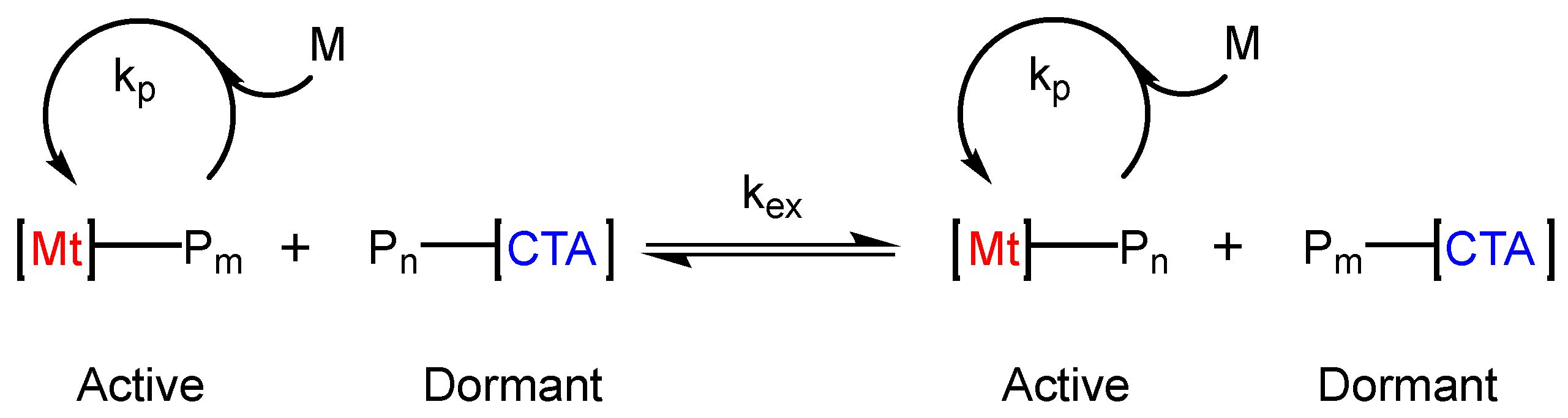
As a well-controlled polymerization technology, the core feature of CCTP systems lies in the rapid and reversible transfer of active chains between transition-metal- or lanthanide-based precatalysts and chain transfer agents. This not only ensures the controllability of polymer chain length, giving narrowly distributed products, but also significantly improves catalytic efficiency, with one transition metal or lanthanide metal generating multiple chains [26,27]. The mechanism of CCTP is mainly focused on the dynamic equilibrium between “active species” and “dormant species” (Scheme 1) [6,28], with the former being transition-metal- or lanthanide-based species and the latter being in the form of organo-main-group-metal compounds, among which alkylaluminums are the most widely used for diene polymerization. During the chain transfer process, the active species “Mt―P” in the growing chain undergoes exchange with the CTA, that is, the polymer chain P is transferred from the precatalyst metal center to the metal of the CTA, forming the dormant species “CTA―P”; meanwhile, the alkyl group in the CTA is transferred back to the metal center, regenerating the active species “Mt―R”, which continues to capture new monomers and initiates a new chain propagation process [18,29,30,31,32,33,34]. More importantly, this exchange is rapid and reversible, allowing for simultaneous chain growth on the active species. Furthermore, the chain transfer rate (kex) in CCTP is much higher than the chain propagation rate (kp). Frequent transfers achieve chain length homogenization, resulting in a narrow molecular weight distribution (PDI) that is usually <1.5. This dynamic equilibrium not only realizes the regulation of molecular weight and its distribution but also forms mainly carbon–main group metal bonds (e.g., C―Al) at the ends of polymer chains, providing active sites for subsequent functionalization.
The concept of the CCTP system can be traced back to the 1950s [35]. In subsequent studies, researchers further innovatively applied this system to the terminal functional modification of polymers, successfully achieving precise modification of polymer terminals. This pioneering breakthrough not only provides a new path for the functionalization of the general-purpose polymers such as polyolefins but also indicates its enormous application potential in the field of dienes [11,36,37,38,39,40,41,42,43]. Therefore, this review aims to focus on introducing the latest progress of the CCTP system in the terminal modification of polydiene polymers.

2.2. End-Functionalization Modification of Dienes via CCTP

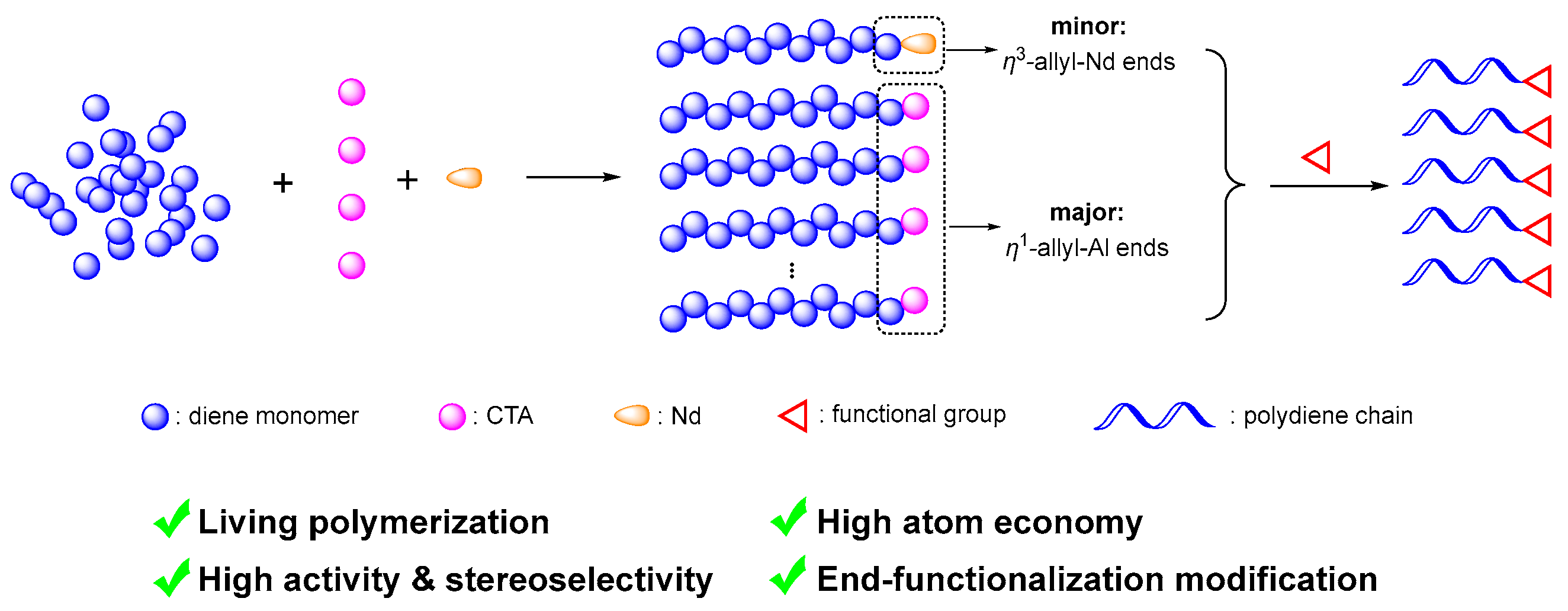
Unlike most rare-earth catalytic systems, in the CCTP of diene monomers catalyzed by neodymium-based catalysts, polymer chains can undergo rapid and reversible chain transfer between the catalytically active centers and chain transfer agents (mostly alkylaluminums) [41]. Since the amount of alkylaluminum in the polymerization system is much higher than that of the neodymium compound as the precatalyst, the predominant product obtained at the late stage of polymerization is growing chains with alkylaluminum bonds (C―Al bonds) as active chain ends, along with a small fraction of polymer chains terminated with Nd-based coordination moieties (Nd―C bonds) [44]. The functionalized capping of polydienes can be achieved through the reaction of these active chain ends with specific functionalizing reagents, ultimately realizing the end-functionalization of diene polymers (Scheme 2).
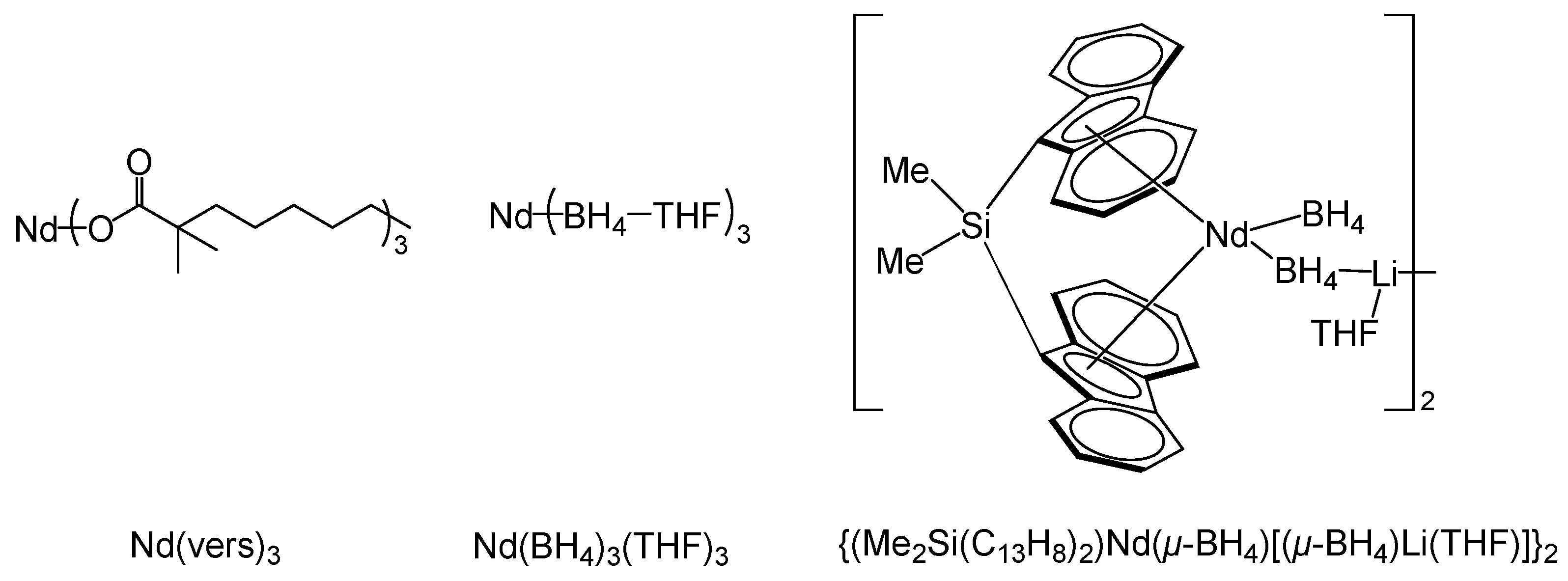
This end-functionalization process can be accomplished using two types of monomers: One is small-molecule monomers, including phosphorus compounds, epoxy (lactone) compounds, amides [21], and compounds containing C=X (X=O, N, S, etc.) bonds (e.g., isocyanates, carbodiimides, ketones, carbon dioxide) [25,45]. These monomers can achieve precise capping of polydiene chain ends through nucleophilic substitution or nucleophilic addition reactions with active chain terminals; the other type is special monomers with specific structures, such as polar diene derivatives and styrene derivatives. Functional segments are introduced into polydiene chain ends via copolymerization insertion or chain-end termination, thereby completing the functional modification. The typical neodymium-based catalysts are shown in Figure 1.

2.2.1. Polyisoprene

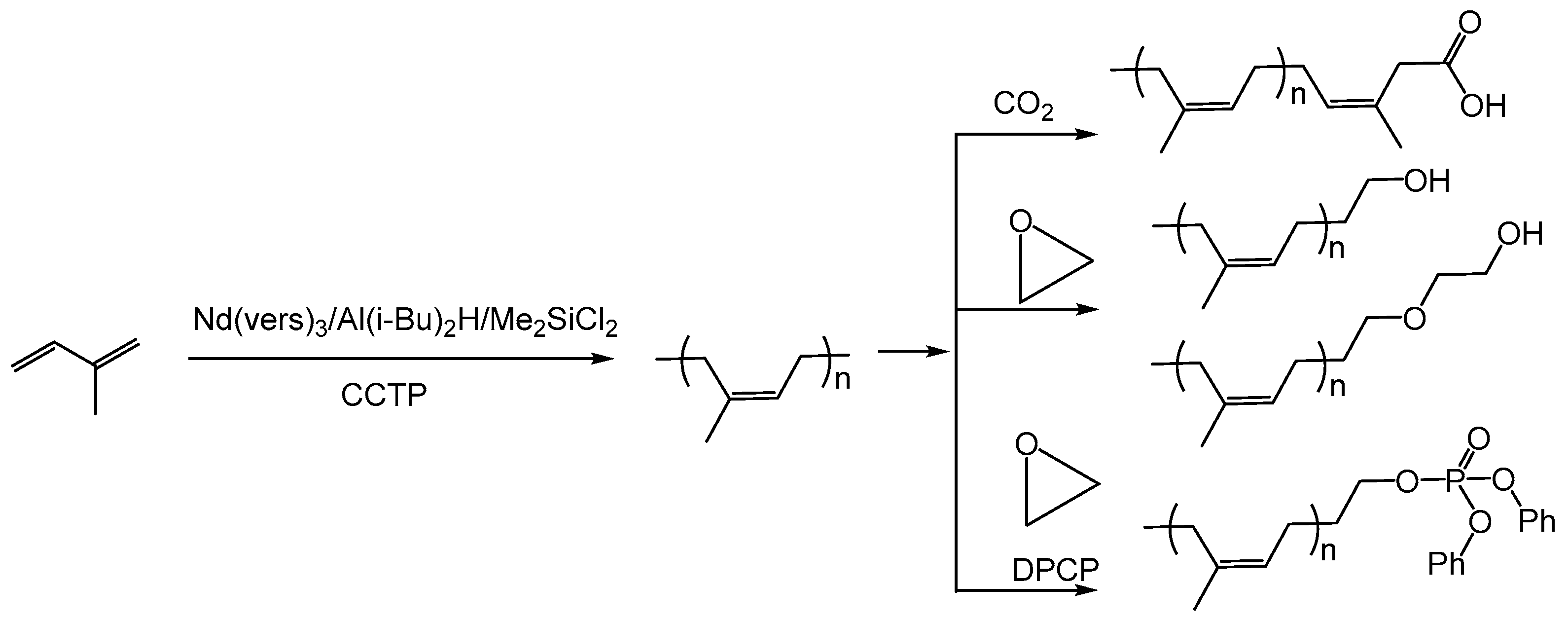
In 2010, Zhang’s group discovered the phenomenon of CCTP in diene monomers catalyzed by rare-earth carboxylate catalysts [45], wherein a catalytic system of Nd(vers)3/Al(i-Bu)2H/SiMe2Cl2 was utilized to promote the CCTP of isoprene, and eventually, polyisoprene with high cis-1,4-content (96.5%) and narrow molecular weight distribution (PDI ≈ 1.2) was obtained. In the whole polymerization process, the molecular weight (Mn) increased linearly with the polymer yield, no other chain termination behaviors were observed, and the process was consistent with the mechanism of CCTP. Furthermore, as shown in Table 1, the Mn observed is almost seven times smaller than that of calculated according to the [IP]/[Nd] ratio. This implies that each neodymium atom could produce ca. seven polymer chains, revealing a high atom economy. The active chain ends in the polymerization system were reacted in situ with CO2, followed by acidification with aqueous HCl solution to convert carboxylate groups into carboxyl groups (―COOH), ultimately achieving the terminal carboxyl functionalization of polyisoprene. Later on, the same research group further utilized the same catalytic system to perform terminal functional modification with propylene oxide after completing the CCTP of isoprene. The functionalization efficiency reached a maximum of 92.7%, and the product could be further reacted with diphenyl chlorophosphate (DPCP) to prepare phosphate-terminated functionalized polyisoprene rubber, affording a high functional diversity. Water contact angle results showed that the hydrophilicity of the modified polymer was significantly improved (Scheme 3) [46].
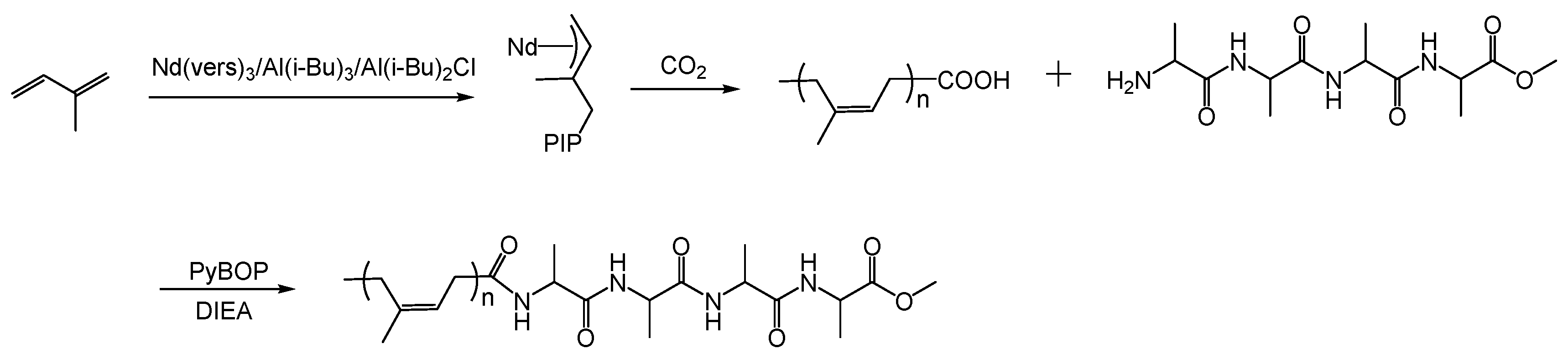
Xu et al. directly introduced CO2 into the isoprene polymerization system, which was catalyzed by Nd(vers)3/Al(i-Bu)3/Al(i-Bu)2Cl, obtaining carboxyl-capped polyisoprene rubber. Meanwhile, to simulate the composition and structure of natural rubber, the authors further reacted small tetrapeptide molecules with the carboxyl groups, yielding tetrapeptide-capped rare-earth isoprene rubber (Scheme 4). Rheological tests demonstrated that the hydrogen bonding interactions of the tetrapeptide molecules could significantly enhance the storage modulus of the isoprene rubber [47,48].
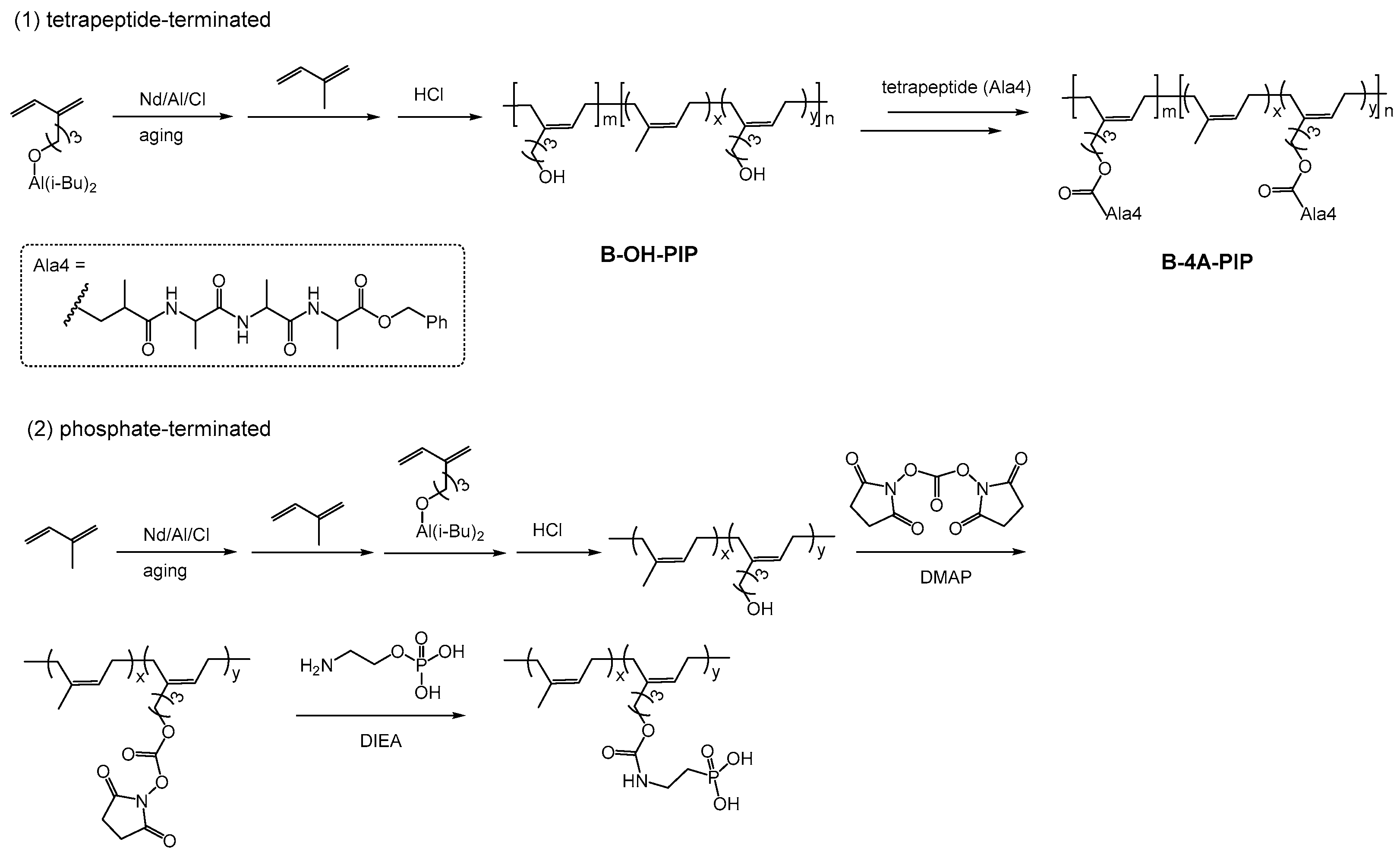
In addition to the modification of polyisoprene chain ends with a single functional group, the copolymerization of special polar monomers with isoprene to form microblock structures (serving as the initiating or capping segments of polymer chains) is also an important approach to achieve functionalization and regulate material properties [49]. The research groups of Xu and Huang carried out studies on microblock capping and random functionalization of Nd-catalyzed isoprene polymerization by adopting a copolymerization strategy with polar diene derivatives (Scheme 5(1)) [48,50]. Due to the poisoning effect of hydroxyl groups in these derivatives on the Nd active species, the polar monomers need to be pre-protected with alkylaluminum (denoted as Al―IP). After aging the Nd-based catalyst with Al―IP as a small monomer, the polymerization of isoprene is continuously initiated, yielding microblock-capped neodymium polyisoprene rubber. During the aging process, Al―IP does not fully participate in the reaction; the remaining monomers can further undergo copolymerization with isoprene, ultimately resulting in rare-earth isoprene rubber (B-OH-PIP) with both microblock capping and random functionalization sequences. Subsequent reaction of the hydroxyl groups with small tetrapeptide molecules affords tetrapeptide-capped and randomly functionalized rare-earth isoprene rubber (B-4A-PIP) [51]. Mechanical property tests later revealed that the small tetrapeptide molecules can significantly improve the tensile strength of the raw rubber. Notably, the tensile strength of the microblock-capped functionalized raw rubber B-4A-PIP reaches as high as 15 MPa, which is 1.5 times that of the randomly functionalized raw rubber R-4A-PIP. This is mainly attributed to the strong strain-induced crystallization phenomenon in B-4A-PIP.
In addition, the same research group prepared microblock-terminated functionalized polyisoprene containing phosphate groups using a similar strategy (Scheme 5(2)) [52]. Due to the hydrogen bonding interactions between phosphate groups, the rubber exhibits an aggregated morphology with a branched structure. This aggregated morphology can also be regulated by the addition of external metal ions. For example, the addition of Fe3+ significantly reduces the size of the aggregates and leads to a more complex branched structure.
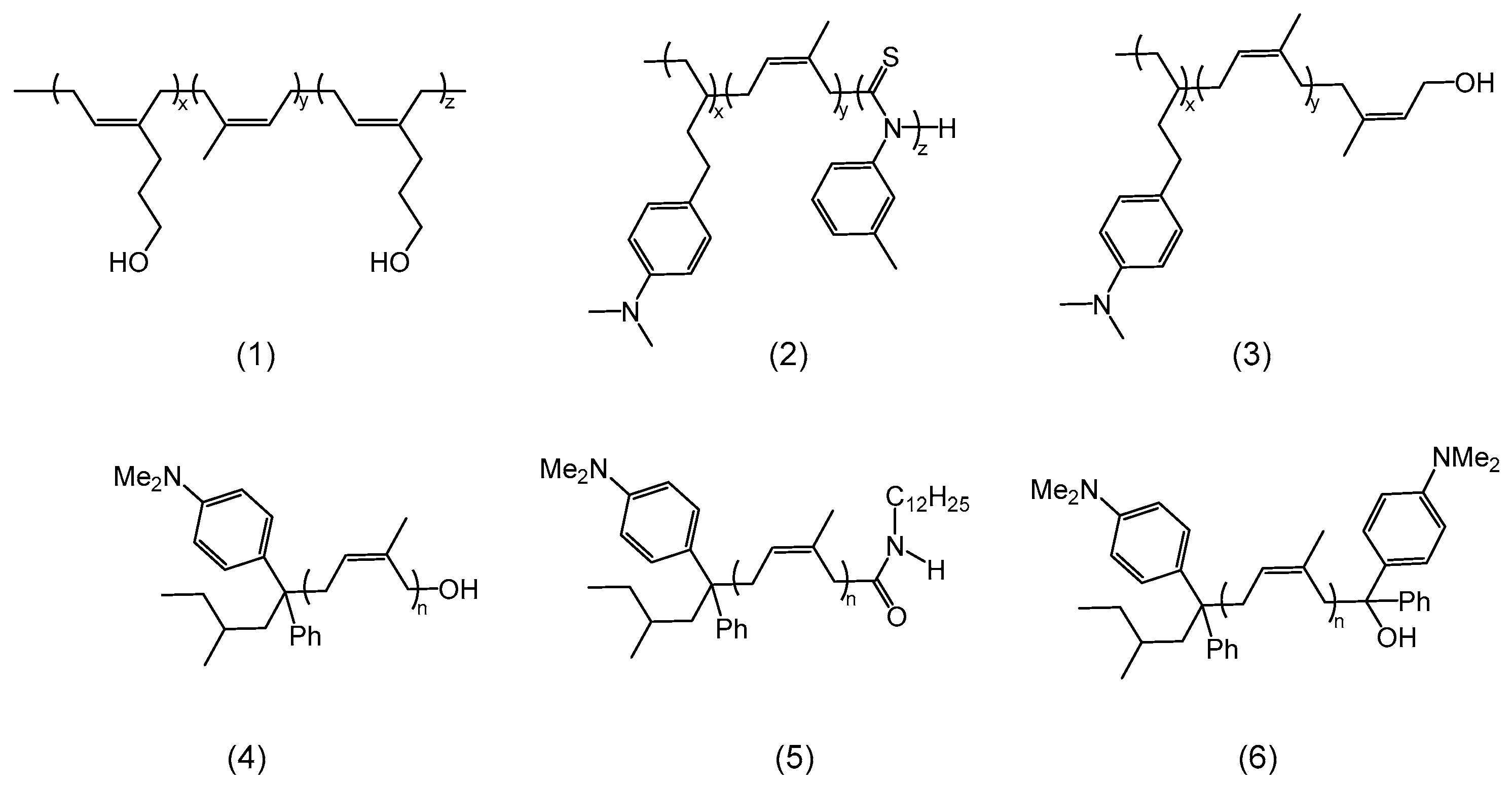
Based on the Nd(vers)3/Al(i-Bu)2H/Me2SiCl2 catalytic system, Zhang et al. also adopted a pre-protection strategy for hydroxyl-functionalized conjugated diene (Ip-OH) derivatives using alkylaluminum. Through coordination chain transfer copolymerization (CCTcoP), they achieved the functionalization of polyisoprene and prepared α,ω-dihydroxyl microblock polyisoprene rubber (Figure 2(1)) [53]. Notably, due to the abundant reactive hydroxyl groups at the chain ends of PIP, further modification of the chain ends can be realized by utilizing the reactivity of these terminal hydroxyl groups. The authors introduced three different types of functional groups at the polymer chain ends, i.e., phosphonate groups, amide groups, and 2-ureido-4[1H]-pyrimidinone (UPy), to simulate the polar chain end portion of phospholipids, the hydrogen bonding structure, and proteins in the chain ends of natural rubber, respectively. Consequently, phosphonate-terminated, amide-terminated, and UPy-terminated functionalized polyisoprene rubbers were prepared. In addition, the team investigated the copolymerization behavior of 1-substituted butadiene monomers (-NMe2, -OMe, -SMe) with isoprene. During the aging stage of the neodymium-based catalyst, the polar monomer copolymerized with a small amount of isoprene monomer to form short segments containing heteroatomic functional groups for α-terminal pre-functionalization. Subsequently, a large amount of isoprene was added to continue the polymerization while maintaining the main chain in a high-cis structure (cis-1,4 > 93%). After the completion of polymerization, functional groups such as -NCS and -OH were introduced via in situ terminal modification, ultimately obtaining α,ω-hetero-functionalized high-cis-1,4-polyisoprene (Figure 2(2,3)) [54].
In the coordination polymerization of diene monomers, the precatalyst is first alkylated by a cocatalyst (such as alkylaluminum) to generate a Mt―C bond as the chain-initiating end, after which the coordinatively activated diene monomer inserts into the Mt―C bond to initiate chain propagation. Therefore, introducing reactive functional groups (e.g., ester, amino, hydroxyl groups) into alkylaluminum molecules enables the preparation of diene polymers with functionalized chain-initiating ends. Recently, Hu and coworkers synthesized an allyl-derived alkylaluminum reagent (oligo―Al) and applied it to the CCTP of dienes catalyzed by the Nd(vers)3/oligo-Al/AlR2Cl system [55]. In this system, oligo―Al serves the dual function of an alkylating agent and a highly efficient chain transfer agent, enabling the preparation of amino-terminated functionalized polyisoprene homopolymers and copolymers. On this basis, the authors further achieved terminal functionalization (with efficiencies of 82.0–91.0%) by quenching the living Nd―polymer chains with polar reagents such as isocyanates, dimethylaminobenzophenone, and hydrogen peroxide/sodium hydroxide mixed systems (Figure 2(4–6)). SEM experiments demonstrated that, compared with non-functionalized samples, carbon black (CB) was more uniformly dispersed in composites of telechelic functionalized polyisoprene and CB, as the polar end groups significantly improved filler compatibility. This method involves initiating the controlled growth of active chains using a functional CTA, followed by introducing target functional groups via terminal modification reactions. It can avoid adverse effects on the stereoselectivity and polymerization activity of the catalytic system, thereby enabling the highly selective and high-yield synthesis of telechelic functionalized polydiene rubbers.
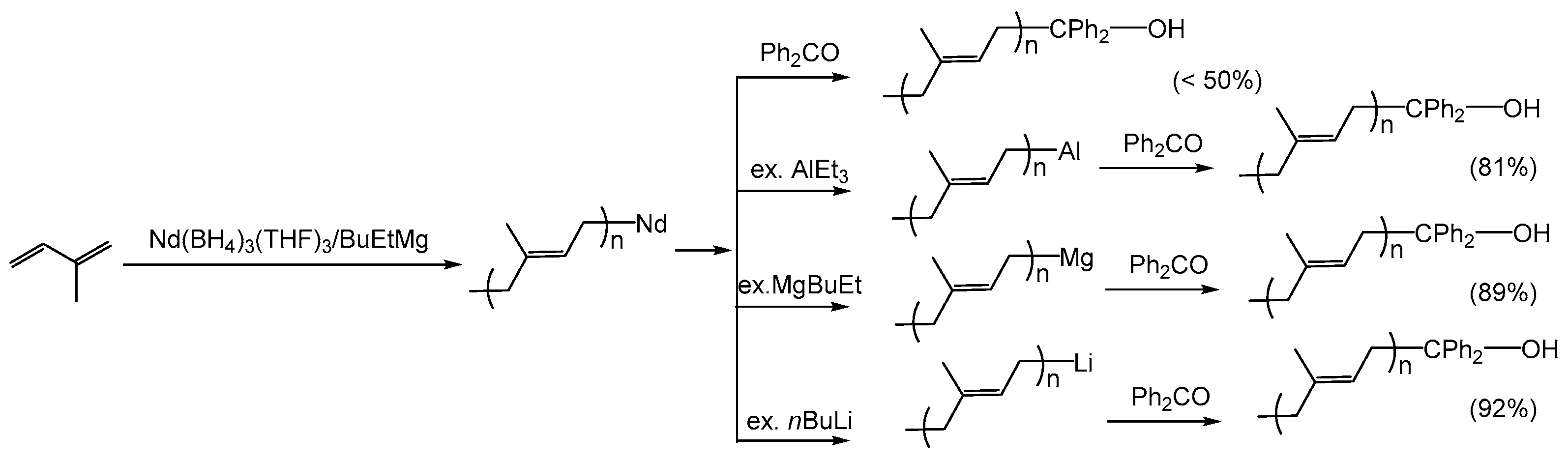
Unlike high-cis-1,4 diene rubbers, high-trans-1,4 polydienes are crystalline polymers with high hardness and high tensile strength, often exhibiting thermoplastic properties [56]. For most rare-earth catalytic systems, highly trans-1,4-selective polymerization of dienes can be achieved in the presence of alkylmagnesium compounds. M. Visseaux et al. utilized the Nd(BH4)3(THF)3/BuEtMg system to catalyze the highly trans-1,4-selective polymerization of isoprene, and added benzophenone in situ for functionalization at the end of polymerization (Scheme 6). Since the active chain ends in such systems are mainly in the form of Nd/Mg bimetallic bridged structures, the nucleophilicity of the terminal carbon is relatively poor, resulting in a functionalization efficiency of less than 50% [57]. However, after additionally introducing alkylaluminum, alkylmagnesium, or alkyllithium into the system though metal displacement reactions, the resulting PIP―Al, PIP―Mg, and PIP―Li ends exhibit higher reactivity. Under the same conditions, the functionalization efficiencies reach 81%, 89%, and 92%, respectively, with the lithium-capped polymer chains showing the best performance. Furthermore, the polymers after metal displacement with alkyllithium also display high reactivity towards other small-molecule substrates. When using benzaldehyde and styrene oxide as reaction substrates, the functionalization efficiencies can both exceed 95%.

2.2.2. Polybutadiene

Similar to polyisoprene, in the preparation of end-functionalized polybutadiene, capping active chains by introducing specific small-molecule reagents into the polymerization system is one of the core approaches to achieve precise modification [58]. Huang et al. investigated the end modification of polybutadiene in the polymerization process using phosphorus trichloride with the Nd(vers)3/Al(i-Bu)2H/Al(i-Bu)2Cl system [59]. The results showed that the coupling efficiency of polybutadiene gradually increased with the increase in the loading of PCl3, the extension of the coupling time, and the increment in modification temperature. When the molar ratio of PCl3 to Al(i-Bu)2H was 1.0 and the modification temperature was 50 °C, the coupling efficiency of polybutadiene reached the optimum, up to 38.6%. Inspired by such findings, Zhang and coworkers extended such a concept to CCTP of butadiene with the Nd(vers)3/Al(i-Bu)2H/Al2Et3Cl3 system, aiming to achieved well-controlled polymerization performances. Upon introducing CO2, CS2, N,N-diisopropylcarbodiimide (DIC), and hexamethylene diisocyanate (HDI) as functionalization substrates into the system, respectively, terminally functionalized butadiene rubbers with functionalization efficiencies of 6.5%, 8.1%, 22.8%, and 93.0%, respectively, were successfully obtained, among which HDI exhibited the best reaction efficiency. The end-functionalized polybutadiene (NdBR―NCO) significantly improved the surface properties, mechanical properties, and filler compatibility of the rubber [21,22].
For the terminal functionalization of polybutadiene, apart from employing simple polar small molecules as end groups, specific polar monomers are also applicable for microblock capping [23,60,61]. Additionally, among the various functional products, hydroxyl-terminated functionalization can be considered an important approach for polybutadiene to achieve chemical crosslinking or supramolecular self-assembly, because hydroxyl groups may develop ordered structures through covalent bonding or by means of any non-covalent interactions, exhibiting significant application prospects in such fields as elastomer materials and nanocomposites.
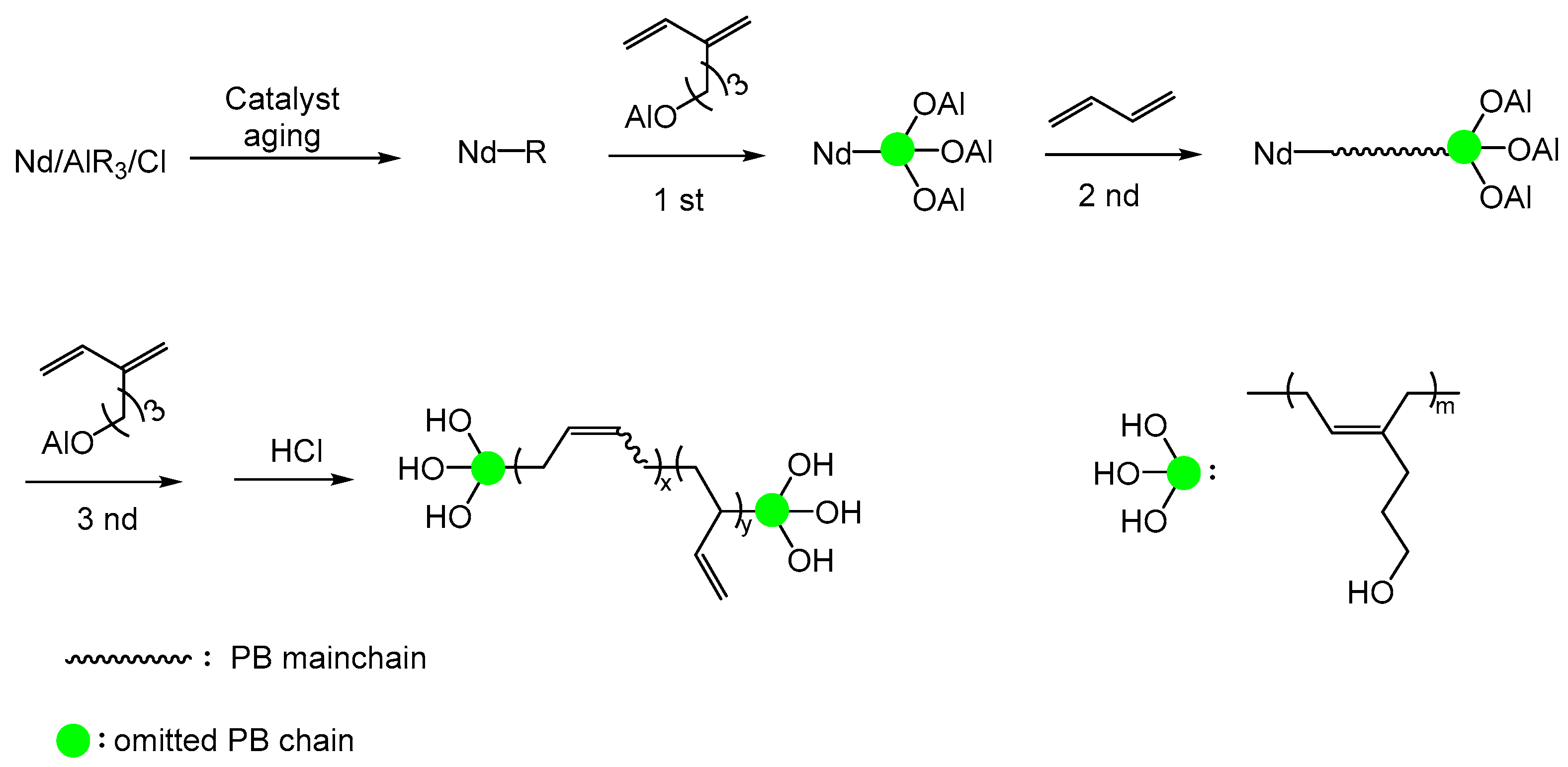
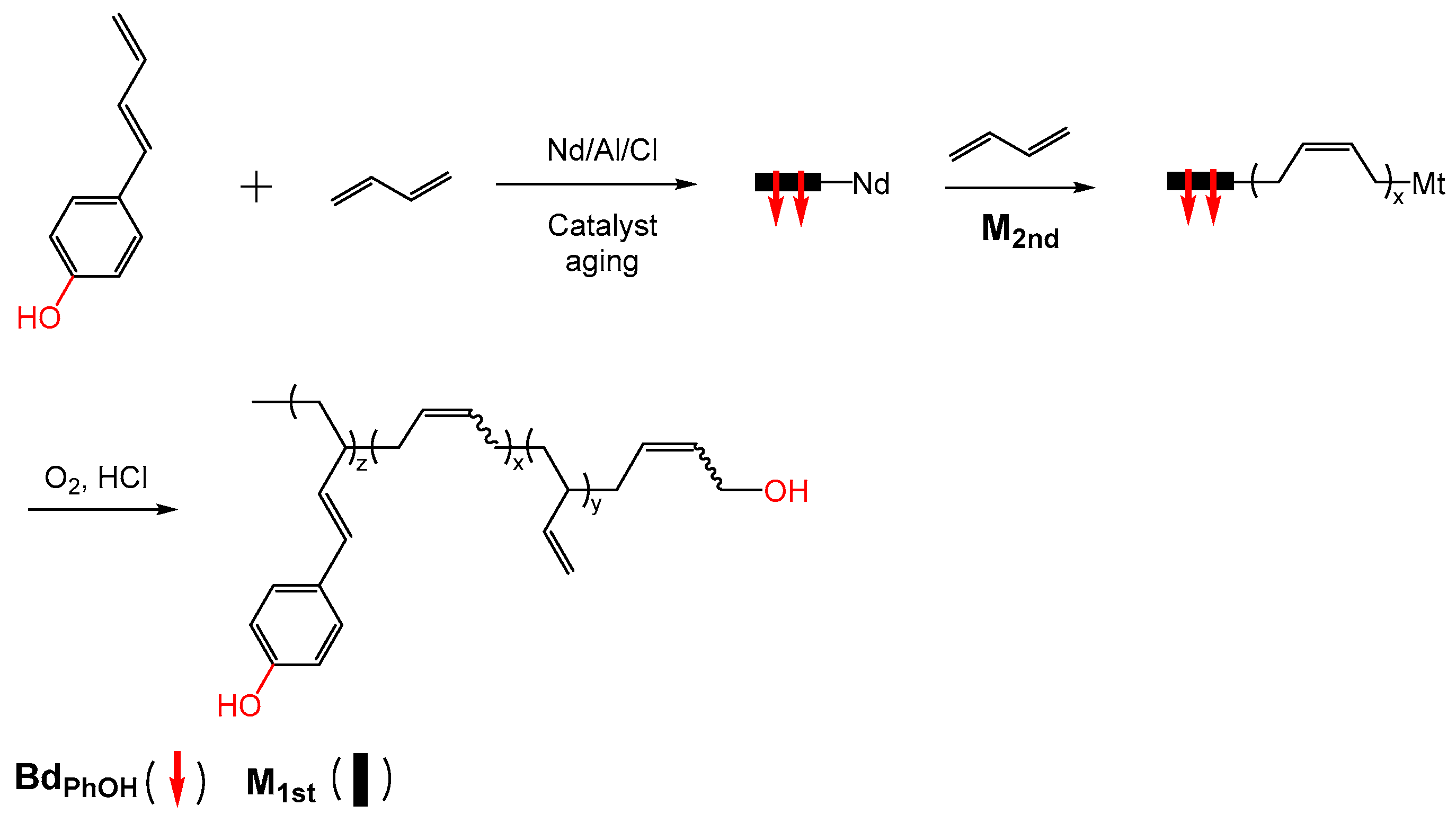
Based on the Nd(vers)3/Al(i-Bu)2H/Me2SiCl2 polymerization system, Wang et al. synthesized a series of hydroxyl-terminated polybutadiene (HTPB) liquid rubbers with controllable molecular weight, narrow distribution, and high content of 1,4-structure [24]. The authors adopted a “three-step sequential polymerization” strategy, in which the hydroxyl-containing monomer BdOAl → Bd → BdOAl was sequentially added into the polymerization system (Scheme 7). It was demonstrated that, by carefully handing the equivalent of BdOAl, the CCTP behavior of such a catalytic system can be successfully maintained, allowing the polymerization proceed in a well-controlled manner, giving functionalized PB bearing a regulated hydroxyl content in the α,ω-microblocks of the polymer chain. Additionally, different from traditional HTPB, the average hydroxyl functionality (f) of the HTPB obtained by this method is tunable by varying the amount of the comonomer BdOAl carrying the hydroxyl group. Furthermore, multi-hydroxyl-terminated HTPB with multiple terminal hydroxyl groups can be prepared, with the highest hydroxyl functionality (f) reaching 3.3 by using the Nd(vers)3/Al(i-Bu)2H/Me2SiCl2 system. In recent research, the same group extended the copolymerizable diene monomer to BdPhOH, and a monomer could be prepared more easily on a larger scale (Scheme 8). By adding such a monomer during the aging step and quenching the polymerization using oxygen, telechelic dihydroxyl-functionalized PB with controlled CCTP characteristics can be successfully prepared. In this report, during the aging step, a small amount of butadiene monomer was copolymerized with BdPhOH to create short sequences containing hydroxyl as the α-end of the polymer. The amount of integrated functional groups could be easily regulated by changing the BdPhOH/Bd ratio. Then, a large amount of butadiene monomer was added for CCTP to regulate the molecular weight through chain transfer reactions and ensure the main chain existed in high cis-1,4-selectivity. At the end of polymerization, utilizing the residual highly reactive allyl–aluminum links in this setup, oxygen was introduced for in situ oxidation to generate ω-terminal hydroxyl groups, ultimately obtaining telechelic dihydroxyl functional high-cis-polybutadiene [25].
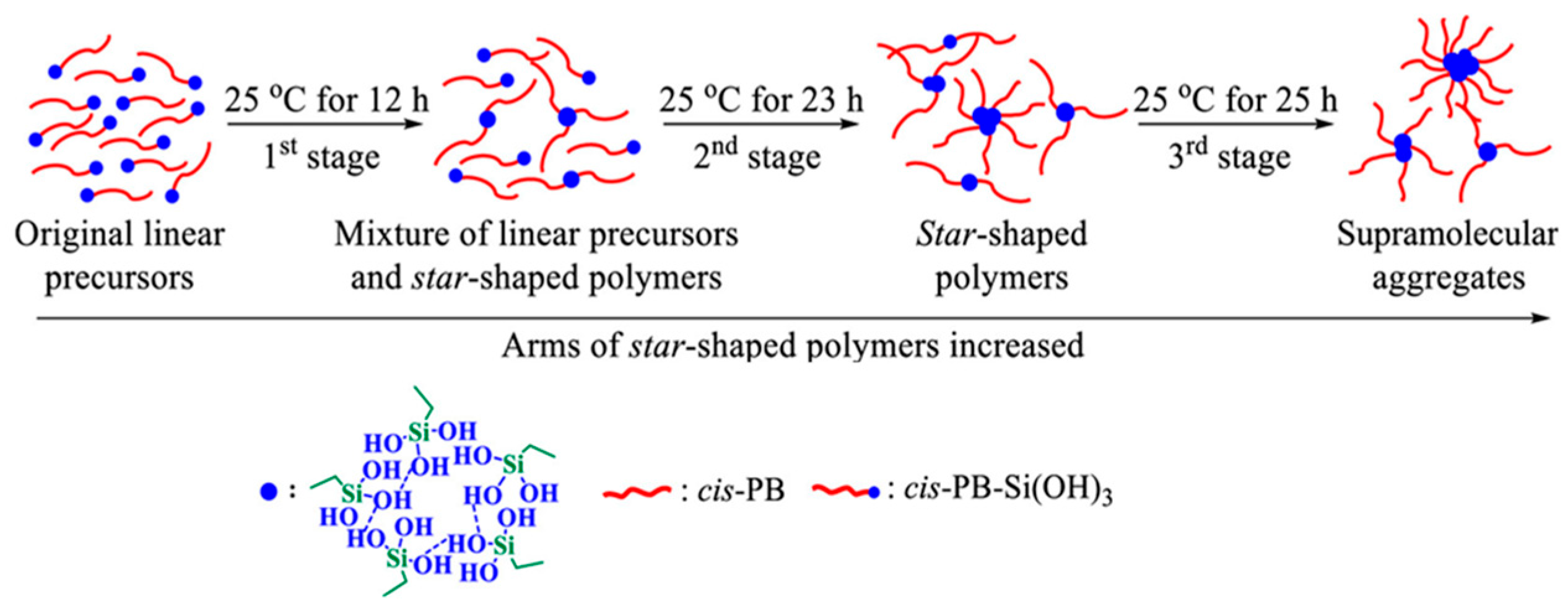
Wu achieved the living polymerization of butadiene with high cis-selectivity at 50–60 °C using the Nd/Al/Cl catalytic system. Subsequently, a vinyltrimethoxysilane-functionalized initiator (V-Si(OMe)3) was added to the active chains of cis-1,4-polybutadiene (cis-PB) to synthesize trimethoxysilane-functionalized cis-polybutadiene (cis-PB-Si(OMe)3) [62]. Afterwards, the above copolymer product of cis-PB-Si(OMe)3 was later subjected to hydrolysis at 70 °C to obtain silanol-functionalized cis-PB-Si(OH)3, without damaging the cis-configuration of the main chain. The silanol groups of cis-PB-Si(OH)3 can self-assemble through intermolecular hydrogen bonds. The linear precursor can gradually change into a star-shaped structure at 25 °C storage and subsequently undergo a secondary self-assembly into supramolecular aggregates (Figure 3).
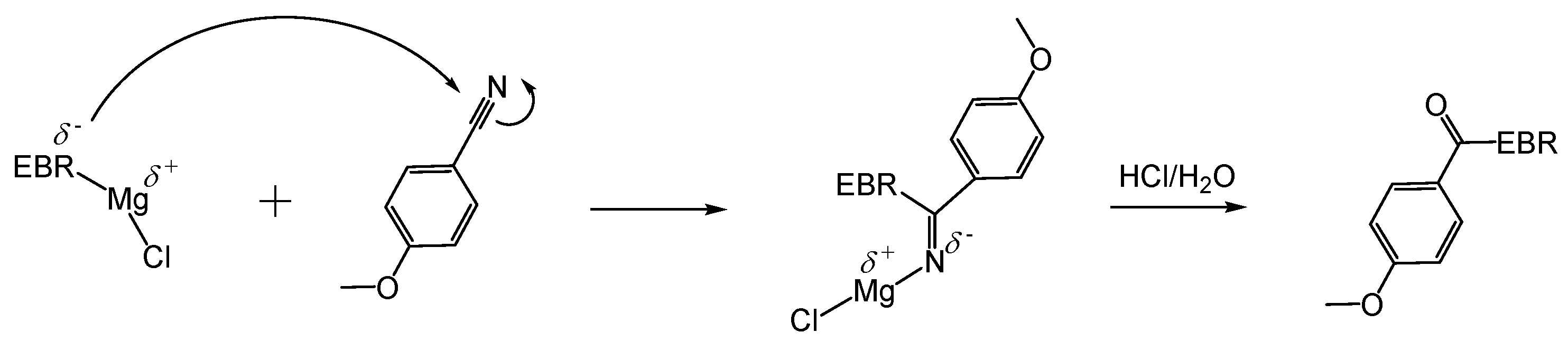
Besides classical choices for alkylaluminums in the traditional Nd-based CCTP system for diene polymerization, magnesium-based compounds also exhibit excellent chain transfer performance. Boisson et al. utilized the neodymium metallocene complex {(Me2Si(C13H8)2)Nd(μ-BH4)[(μ-BH4)Li(THF)]}2 as the precatalyst, combined with several organomagnesium compounds as CTAs (including dialkylmagnesiums such as n-butyl-n-octyl magnesium (BOMAG), alkyl-arylmagnesiums like n-BuMgMes, and Grignard reagents such as n-BuMgCl and n-C5H11MgBr) to investigate the CCTP homopolymerization and their CCTcoP copolymerization behavior of ethylene and butadiene. Terminal functionalization was carried out by in situ modification reactions of the Mg―C bonds on active polymer chains. When n-BuMgCl was applied as the CTA, benzonitrile and p-methoxybenzonitrile were employed as capping functionalization substrates, and terminally functionalized ethylene-butadiene rubber (EBR) was obtained with functionalization efficiencies of 74% and 80% (Scheme 9), respectively [39].

2.2.3. Other Polydienes

Compared with the CCTP of isoprene and butadiene, relatively few studies have been conducted on other diene monomers (such as 1,3-pentadiene and β-myrcene). Nevertheless, several representative explorations have demonstrated their application potential [27]. In the CCTP of β-myrcene, by using the catalytic system of Nd(vers)3/Al(i-Bu)2H/Me2SiCl2, Zhang and colleagues found that, when using 1,4-phenylene diisothiocyanate (PDITC) as the capping reagent, terminally functionalized products could be successfully obtained with a functionalization efficiency as high as 100% [63]. By using the Nd(vers)3/Al(i-Bu)2H/Al(i-Bu)2Cl catalytic system, Xu et al. successfully prepared microblock-capped functionalized polymyrcene containing hydroxyl groups through copolymerization modification with polar monomers, presenting an alternative synthetic strategy for myrcene-based functional materials [64].

3. Conclusions and Outlooks

In recent years, the synthesis of end-functionalized polydienes has witnessed a big advancement by using the CCTP strategy, owing to the unique properties it has demonstrated. Firstly, the π-allyl active chain ends generated during diene polymerization contain no β-hydrogens, inherently suppressing chain-termination pathways such as β-H elimination and thereby enabling highly efficient terminal functionalization. Secondly, CCTP offers a good atom economy, wherein CTAs can repeatedly participate in the transfer process, allowing each active center to generate multiple functionalized polymer chains, which substantially reduces catalyst loading and overall production costs. Thirdly, because end-functionalization typically occurs at the final stage of polymerization, it exerts minimal influence on polymerization kinetics, catalyst selectivity, or microstructural control, enabling preservation of the pristine polymer backbone.
Terminal functionalization of polydienes via CCTP provides a promising strategy for the value-added modification of polydiene-based materials. Nevertheless, large-scale development and deeper application of this technology still face several challenges. Although theoretical studies have begun exploring catalyst–CTA matching and the mechanisms of functionalization reactions, the current understanding remains incomplete. Most catalytic systems are still discovered through high-throughput screening or serendipity rather than rational design, and achieving efficient terminal functionalization remains difficult. Furthermore, many functionalization reagents are incompatible with CCTP systems, resulting in low functionalization efficiencies, and research in this area is still at an exploratory stage. The available precatalysts are also limited; currently, the application of the CCTP system is mainly limited to rare-earth catalysts, while early- and late-transition-metal systems remain largely underexplored, particularly for end-functionalization applications. This is perhaps because of the large ionic nature of rare-earth metals that have abundant vacant sites to allow the chain transfer agent to coordinate and thus undergo subsequent chain transfers. In contrast, for transition metals, the vacant sites are relatively limited. This may be why the current CCTP of diene is mainly focused on rare-earth metals.
These limitations highlight the need for the development of new precatalysts with enhanced polar group tolerance and precise reaction control capabilities, as well as multifunctional CTAs tailored to diverse functionalization requirements. In addition, establishing more comprehensive theoretical frameworks and data-driven models for CCTP will provide stronger foundations for rational system design. The authors firmly believe that, given its excellent atom economy and the broad utility of polydienes in modern materials, CCTP of dienes holds exceptional promise for future scientific and industrial advancement.

Author Contributions

Conceptualization, H.L.; writing—original draft preparation, L.L.; writing—review and editing, H.L., W.Z., F.W. and X.Z.; supervision, H.L.; funding acquisition, F.W. and H.L. All authors have read and agreed to the published version of the manuscript.

Funding

This work was supported by the National Key Research and Development Program 2022YFC2603502 and the projects ZR2024MB025 and ZR2024ME117 supported by the Shandong Provincial Natural Science Foundation, and H.L. gives thanks to the Taishan Scholars Program (No. tsqn202211165) for the financial support.

Data Availability Statement

Data will be available on request.

Conflicts of Interest

The authors declare no conflicts of interest.

Abbreviations

The following abbreviations are used in this manuscript:
PBPolybutadiene rubber
PIPolyisoprene rubber
SBRStyrene-butadiene rubber
CCTPCoordination chain transfer polymerization
CTAChain transfer agent
PDIMolecular weight distribution
CCTcoPCoordination chain transfer copolymerization
DPCPDiphenyl chlorophosphite
UPy2-Ureido-4[H]-pyrimidinone
CBCarbon black
SEMScanning electron microscope
DICN,N-diisopropylcarbodiimide
HDIHexamethylene diisocyanate
HTPBHydroxyl-terminated polybutadiene
BOMAGn-Butyl-n-octyl magnesium
EBREthylene-butadiene rubber
PDITC1,4-Phenylene diisothiocyanate
Nd(vers)3Neodymium versatate
DIEAN,N-Diisopropylethylamine
HClHydrochloric acid
DMAP4-(Dimethylamino) pyridine

References

  1. Xia, Z.; Feng, Z.; Wu, R.; Niu, Z.; He, J.; Bai, C. Tough, Hydrophobic, Pressure-Resistant, and Self-Cleaning Underwater Engineering Materials Based on Copolymerization of Butadiene and Trifluoroethyl Methacrylate. ACS Appl. Polym. Mater. 2023, 5, 8241–8249. [Google Scholar] [CrossRef]
  2. Robles-Hernandez, B.; Patelis, N.; Arbe, A.; Ntetsikas, K.; Bhaumik, S.; Hadjichristidis, N.; Alegria, A.; Colmenero, J. Chain dynamics in polyisoprene stars with arms linked by dynamic covalent bonds to the central core. Soft Matter 2025, 21, 3347–3360. [Google Scholar] [CrossRef]
  3. Brosse, J.C.; Campistron, I.; Derouet, D.; El Hamdaoui, A.; Houdayer, S.; Reyx, D.; Ritoit-Gillier, S. Chemical modifications of polydiene elastomers: A survey and some recent results. J. Appl. Polym. Sci. 2000, 78, 1461–1477. [Google Scholar] [CrossRef]
  4. Niu, A.Z.; Stellbrink, J.; Allgaier, J.; Willner, L.; Richter, D.; Koenig, B.W.; Gondorf, M.; Willbold, S.; Fetters, L.J.; May, R.P. A New View of the Anionic Diene Polymerization Mechanism. Macromol. Symp. 2004, 215, 1–15. [Google Scholar] [CrossRef]
  5. Glatzel, J.; Noack, S.; Schanzenbach, D.; Schlaad, H. Anionic polymerization of dienes in ‘green’ solvents. Polym. Int. 2020, 70, 181–184. [Google Scholar] [CrossRef]
  6. Mundil, R.; Bravo, C.; Merle, N.; Zinck, P. Coordinative Chain Transfer and Chain Shuttling Polymerization. Chem. Rev. 2024, 124, 210–244. [Google Scholar] [CrossRef]
  7. Gong, D.; Dong, W.; Hu, J.; Zhang, X.; Jiang, L. Living polymerization of 1,3-butadiene by a Ziegler–Natta type catalyst composed of iron(III) 2-ethylhexanoate, triisobutylaluminum and diethyl phosphite. Polymer 2009, 50, 2826–2829. [Google Scholar] [CrossRef]
  8. Wang, B.; Cui, D.; Lv, K. Highly 3,4-Selective Living Polymerization of Isoprene with Rare Earth Metal Fluorenyl N-Heterocyclic Carbene Precursors. Macromolecules 2008, 41, 1983–1988. [Google Scholar] [CrossRef]
  9. Coates, G.W.; Hustad, P.D.; Reinartz, S. Catalysts for the Living Insertion Polymerization of Alkenes: Access to New Polyolefin Architectures Using Ziegler–Natta Chemistry. Angew. Chem. Int. Ed. 2002, 41, 2236–2257. [Google Scholar] [CrossRef]
  10. Valente, A.; Mortreux, A.; Visseaux, M.; Zinck, P. Coordinative chain transfer polymerization. Chem. Rev. 2013, 113, 3836–3857. [Google Scholar] [CrossRef]
  11. Kempe, R. How to polymerize ethylene in a highly controlled fashion? Chemistry 2007, 13, 2764–2773. [Google Scholar] [CrossRef]
  12. Wang, F.; Liu, H.; Hu, Y.; Zhang, X. Lanthanide complexes mediated coordinative chain transfer polymerization of conjugated dienes. Sci. China Technol. Sci. 2018, 61, 1286–1294. [Google Scholar] [CrossRef]
  13. Wang, F.; Dong, B.; Liu, H.; Guo, J.; Zheng, W.; Zhang, C.; Zhao, L.; Bai, C.; Hu, Y.; Zhang, X. Synthesis of Block Copolymers Containing Polybutadiene Segments by Combination of Coordinative Chain Transfer Polymerization, Ring-Opening Polymerization, and Atom Transfer Radical Polymerization. Macromol. Chem. Phys. 2014, 216, 321–328. [Google Scholar] [CrossRef]
  14. Wei, J.; Zhang, W.; Sita, L.R. Aufbaureaktion redux: Scalable production of precision hydrocarbons from AlR3 (R = Et or iBu) by dialkyl zinc mediated ternary living coordinative chain-transfer polymerization. Angew. Chem. Int. Ed. Engl. 2010, 49, 1768–1772. [Google Scholar] [CrossRef]
  15. Valente, A.; Zinck, P.; Mortreux, A.; Bria, M.; Visseaux, M. Half-lanthanocene/dialkylmagnesium-mediated coordinative chain transfer copolymerization of styrene and hexene. J. Polym. Sci. Part A Polym. Chem. 2011, 49, 3778–3782. [Google Scholar] [CrossRef]
  16. Wei, J.; Duman, L.M.; Redman, D.W.; Yonke, B.L.; Zavalij, P.Y.; Sita, L.R. N-Substituted Iminocaprolactams as Versatile and Low Cost Ligands in Group 4 Metal Initiators for the Living Coordinative Chain Transfer Polymerization of α-Olefins. Organometallics 2017, 36, 4202–4207. [Google Scholar] [CrossRef]
  17. van Meurs, G.J.P.B.M.; Gibson, V.C.; Cohe, S.A. Polyethylene Chain Growth on Zinc Catalyzed by Olefin Polymerization Catalysts: A Comparative Investigation of Highly Active Catalyst Systems across the Transition Series. J. Am. Chem. Soc. 2005, 127, 9913–9923. [Google Scholar] [CrossRef] [PubMed]
  18. Zheng, W.; Yan, N.; Zhu, Y.; Zhao, W.; Zhang, C.; Zhang, H.; Bai, C.; Hu, Y.; Zhang, X. Highly trans-1,4-stereoselective coordination chain transfer polymerization of 1,3-butadiene and copolymerization with cyclic esters by a neodymium-based catalyst system. Polym. Chem. 2015, 6, 6088–6095. [Google Scholar] [CrossRef]
  19. Zhang, W.; Sita, L.R. Highly Efficient, Living Coordinative Chain-Transfer Polymerization of Propene with ZnEt2: Practical Production of Ultra high to Very Low Molecular Weight Amorphous Atactic Polypropenes of Extremely Narrow Polydispersity. J. Am. Chem. Soc. 2008, 130, 442–443. [Google Scholar] [CrossRef]
  20. Zinck, P.; Visseaux, M.; Mortreux, A. Borohydrido Rare Earth Complexes as Precatalysts for the Polymerisation of Styrene. Z. Anorg. Allg. Chem. 2006, 632, 1943–1944. [Google Scholar] [CrossRef]
  21. Zhang, X.; Ma, L.; Dong, J.; Li, W.; Li, X.; Liu, H.; Zhang, X.; Wang, F. Facile and efficient in-situ end-functionalization of neodymium-based polybutadiene by isocyanate via a coordinative chain transfer polymerization strategy. Polymer 2024, 305, 127166. [Google Scholar] [CrossRef]
  22. Zhang, J.D.X.; Li, W.; Li, X.; Wang, F.; Liu, H.; Zhang, X. Synthesis and Performance Study of High-molecular-weight Amide End-functionalized cis-Polybutadiene Rubber. Acta Polym. Sin. 2025, 56, 1633–1643. [Google Scholar]
  23. Baulu, N.; Langlais, M.; Ngo, R.; Thuilliez, J.; Jean-Baptiste-Dit-Dominique, F.; D’Agosto, F.; Boisson, C. Switch from Anionic Polymerization to Coordinative Chain Transfer Polymerization: A Valuable Strategy to Make Olefin Block Copolymers. Angew. Chem. Int. Ed. Engl. 2022, 61, e202204249. [Google Scholar] [CrossRef]
  24. Wang, W.; Zhao, W.; Dong, J.; Wang, F.; Zhang, X.; Liu, H. Synthesis of Multi-hydroxyl Terminated Polybutadiene Liquid Rubber Featuring High 1,4-Content. Acta Polym. Sin. 2025, 56, 457–464. [Google Scholar]
  25. Zheng, H.; Zhang, H.; Zhao, W.; Wang, F.; Zhang, X.; Liu, H. Controllable Preparation of Hydroxyl-Terminated Liquid Polydiene Rubber Featuring High 1,4-Content by Neodymium-Mediated Coordinative Chain Transfer Polymerizations Strategy. J. Appl. Polym. Sci. 2025, 142, e57602. [Google Scholar] [CrossRef]
  26. Jian, Z.; Cui, D.; Hou, Z.; Li, X. Living catalyzed-chain-growth polymerization and block copolymerization of isoprene by rare-earth metal allyl precursors bearing a constrained-geometry-conformation ligand. Chem. Commun. 2010, 46, 3022–3024. [Google Scholar] [CrossRef]
  27. Li, X.; Zhang, X.; Wang, F.; Liu, W.; Zhang, X.; Liu, H. Neodymium-Mediated Coordinative Chain Transfer Homopolymerization of Bio-Based Myrcene and Copolymerization With Butadiene and Isoprene. J. Appl. Polym. Sci. 2024, 142, e56557. [Google Scholar] [CrossRef]
  28. Pan, L.; Zhang, K.; Nishiura, M.; Hou, Z. Chain-shuttling polymerization at two different scandium sites: Regio- and stereospecific “one-pot” block copolymerization of styrene, isoprene, and butadiene. Angew. Chem. Int. Ed. Engl. 2011, 50, 12012–12015. [Google Scholar] [CrossRef]
  29. Zheng, W.; Yang, Q.; Dong, J.; Wang, F.; Luo, F.; Liu, H.; Zhang, X. Neodymium-based one-precatalyst/dual-cocatalyst system for chain shuttling polymerization to access cis-1,4/trans-1,4 multiblock polybutadienes. Mater. Today Commun. 2021, 27, 102453. [Google Scholar] [CrossRef]
  30. Bravo, C.; Merle, N.; Sauthier, M.; Bria, M.; De Winter, J.; Zinck, P. Coordinative Chain Transfer Polymerization of Butadiene Using Nickel(II) Allyl Systems: A Straightforward Route to Branched Polybutadiene. Macromolecules 2023, 56, 8106–8115. [Google Scholar] [CrossRef]
  31. Wang, F.; Zhang, M.; Liu, H.; Hu, Y.; Zhang, X. Randomly Coordinative Chain Transfer Copolymerization of 1,3-Butadiene and Isoprene: A Highly Atom-Economic Way for Accessing Butadiene/Isoprene Rubber. Ind. Eng. Chem. Res. 2020, 59, 10754–10762. [Google Scholar] [CrossRef]
  32. Wang, F.; Zhang, C.; Hu, Y.; Jia, X.; Bai, C.; Zhang, X. Reversible coordinative chain transfer polymerization of isoprene and copolymerization with ε-caprolactone by neodymium-based catalyst. Polymer 2012, 53, 6027–6032. [Google Scholar] [CrossRef]
  33. Wang, F.; Liu, H.; Zheng, W.; Guo, J.; Zhang, C.; Zhao, L.; Zhang, H.; Hu, Y.; Bai, C.; Zhang, X. Fully-reversible and semi-reversible coordinative chain transfer polymerizations of 1,3-butadiene with neodymium-based catalytic systems. Polymer 2013, 54, 6716–6724. [Google Scholar] [CrossRef]
  34. Zhang, M.; Liu, L.; Cong, R.; Dong, J.; Wu, G.; Wang, F.; Liu, H.; Zhang, X. In-situ block copolymerization of 1,3-butadiene with cyclohexene oxide and trimethylene carbonate via combination of coordinative chain transfer polymerization and ring opening polymerization by neodymium-based catalyst system. Eur. Polym. J. 2021, 148, 110355. [Google Scholar] [CrossRef]
  35. Natta, G. Properties of isotactic; atactic; stereoblock homopolymers, random and block copolymers of α-olefins. J. Polym. Sci. 2003, 34, 531–549. [Google Scholar] [CrossRef]
  36. Baulu, N.; Poradowski, M.-N.; Verrieux, L.; Thuilliez, J.; Jean-Baptiste-Dit-Dominique, F.; Perrin, L.; D’AGosto, F.; Boisson, C. Design of selective divalent chain transfer agents for coordinative chain transfer polymerization of ethylene and its copolymerization with butadiene. Polym. Chem. 2022, 13, 1970–1977. [Google Scholar] [CrossRef]
  37. Alioui, S.; Langlais, M.; Ngo, R.; Habhab, K.; Dronet, S.; Jean-Baptiste-Dit-Dominique, F.; Albertini, D.; D’AGosto, F.; Boisson, C.; Montarnal, D. New Thermoplastic Elastomers based on Ethylene-Butadiene-Rubber (EBR) by Switching from Anionic to Coordinative Chain Transfer Polymerization. Angew. Chem. Int. Ed. Engl. 2025, 64, e202420946. [Google Scholar] [CrossRef]
  38. Belaid, I.; Macqueron, B.; Poradowski, M.-N.; Bouaouli, S.; Thuilliez, J.; Cruz-Boisson, F.D.; Monteil, V.; D’Agosto, F.; Perrin, L.; Boisson, C. Identification of a Transient but Key Motif in the Living Coordinative Chain Transfer Cyclocopolymerization of Ethylene with Butadiene. ACS Catal. 2019, 9, 9298–9309. [Google Scholar] [CrossRef]
  39. Desgranges, A.; Jean-Baptiste-Dit-Dominique, F.; Ngo, R.; D’AGosto, F.; Boisson, C. Nitriles as Functionalization and Coupling Agents for Polyolefins Obtained by Coordinative Chain Transfer Polymerization. Macromol. Rapid Commun. 2024, 45, e2400226. [Google Scholar] [CrossRef] [PubMed]
  40. Resconi, L.; Piemontesi, F.; Camurati, I.; Balboni, D. Diastereoselective Synthesis, Molecular Structure, and Solution Dynamics of meso- and rac-[Ethylenebis(4,7-dimethyl-è5-1-indenyl)]zirconium Dichloride Isomers and Chain Transfer Reactions inPropene Polymerization with the rac Isomer. Organometallics 1996, 15, 5046–5059. [Google Scholar] [CrossRef]
  41. Alioui, S.; Montarnal, D.; D’AGosto, F.; Boisson, C. Block copolymers from coordinative chain transfer (co)polymerization (CCT(co)P) of olefins and 1,3-dienes and mechanical properties of the resulting thermoplastic elastomers. Polym. Chem. 2025, 16, 3761–3807. [Google Scholar] [CrossRef]
  42. Cordova, T.; Enriquez-Medrano, F.J.; Cartagena, E.M.; Villanueva, A.B.; Valencia, L.; Alvarez, E.N.C.; Gonzalez, R.L.; Diaz-de-Leon, R. Coordinative Chain Transfer Polymerization of Sustainable Terpene Monomers Using a Neodymium-Based Catalyst System. Polymers 2022, 14, 2907. [Google Scholar] [CrossRef]
  43. Li, X.; Wang, F.; Yang, Q.; Zhang, X.-Q.; Liu, H. Synthesis and Characterization of Terpenoid-derived Poly(6,10-dimethyl-1,3,9-undecatriene): A Biobased and Sustainable Polymer from Renewable Citronellal. Chin. J. Polym. Sci. 2025, 43, 1825–1836. [Google Scholar] [CrossRef]
  44. Magaña, I.; González Zapata, J.L.; Saade, H.; Córdova, T.; Castañeda Facio, A.; Díaz Elizondo, J.A.; Valencia, L.; López-González, H.R.; Díaz de León, R. Terpene-Derived Bioelastomers for Advanced Vulcanized Rubbers and High-Impact Acrylonitrile–Butadiene–Styrene. Processes 2025, 13, 3052. [Google Scholar] [CrossRef]
  45. Fan, C.; Bai, C.; Cai, H.; Dai, Q.; Zhang, X.; Wang, F. Preparation of high cis-1,4 polyisoprene with narrow molecular weight distribution via coordinative chain transfer polymerization. J. Polym. Sci. Part A Polym. Chem. 2010, 48, 4768–4774. [Google Scholar] [CrossRef]
  46. Zhang, X.; Dong, J.; Wang, F.; Zhang, X.; Liu, H. In Situ Efficient End Functionalization of Polyisoprene by Epoxide Compounds via Neodymium-Mediated Coordinative Chain Transfer Polymerization. Polymers 2024, 16, 2672. [Google Scholar] [CrossRef] [PubMed]
  47. Zhang, R.; Tang, M.; Li, S.; Xv, Y.; Huang, G. Effects of oligopeptides end-group on properties of polyisoprenewith different molecular weights. China Synth. Rubber Ind. 2018, 41, 266–270. [Google Scholar]
  48. Zeng, J.; Li, S.; Huang, G.; Xu, Y. Synthesis, Characterization and Rheological Properties of Tetrapepetide-Terminated Polyisoprene. Polym. Mater. Sci. Eng. 2017, 33, 1–5. [Google Scholar]
  49. Chen, M.-K.; Zhao, Y.-H.; Zhang, R.; Yang, Y.; Cao, J.; Tang, M.-Z.; Huang, G.; Xu, Y.-X. Carbonate nanophase guided by terminally functionalized polyisoprene leading to a super tough, recyclable and transparent rubber. Chem. Eng. J. 2023, 452, 139130. [Google Scholar] [CrossRef]
  50. Tang, M.; Bai, S.-J.; Xu, R.; Zhang, R.; Li, S.-Q.; Xu, Y.-X. Oligopeptide binding guided by spacer length lead to remarkably strong and stable network of polyisoprene elastomers. Polymer 2021, 233, 124185. [Google Scholar] [CrossRef]
  51. Tang, M.; Zhang, R.; Li, S.; Zeng, J.; Luo, M.; Xu, Y.; Huang, G. Towards a Supertough Thermoplastic Polyisoprene Elastomer Based on a Biomimic Strategy. Angew. Chem. Int. Ed. Engl. 2018, 57, 15836–15840. [Google Scholar] [CrossRef]
  52. Li, S.; Tang, M.; Huang, C.; Zhang, R.; Wu, J.; Ling, F.; Xu, Y.-X.; Huang, G. Branching function of terminal phosphate groups of polyisoprene chain. Polymer 2019, 174, 18–24. [Google Scholar] [CrossRef]
  53. Wang, W.; Zhao, W.; Dong, J.; Zhang, H.; Wang, F.; Liu, H.; Zhang, X. Polyisoprene Bearing Dual Functionalized Mini-Blocky Chain-Ends Prepared from Neodymium-mediated Coordinative Chain Transfer Polymerizations. Chin. J. Polym. Sci. 2023, 41, 720–727. [Google Scholar] [CrossRef]
  54. Zhang, H.; Zhang, X.; Zheng, H.; Wang, F.; Wei, X.; Zhang, X.; Liu, H. Synthesis of α,ω-end hetero-functionalized polyisoprene via neodymium-mediated coordinative chain transfer polymerization. Polym. Chem. 2025, 16, 1556–1567. [Google Scholar] [CrossRef]
  55. Liu, P.; Yang, X.; Li, H.; Zhang, S.; Hu, Y.; Zhou, G.; Hadjichristidis, N. Synthesis of alpha, omega-End Functionalized Polydienes: Allylic-Bearing Heteroleptic Aluminums for Selective Alkylation and Transalkylation in Coordinative Chain Transfer Polymerization. Angew. Chem. Int. Ed. Engl. 2024, 63, e202317494. [Google Scholar] [CrossRef]
  56. Dong, K.; Zhang, J.; He, A. Synthesis of amine-capped Trans-1,4-polyisoprene. Polymer 2021, 235, 124231. [Google Scholar] [CrossRef]
  57. Georges, S.; Hashmi, O.H.; Bria, M.; Zinck, P.; Champouret, Y.; Visseaux, M. Efficient One-Pot Synthesis of End-Functionalized trans-Stereoregular Polydiene Macromonomers. Macromolecules 2019, 52, 1210–1219. [Google Scholar] [CrossRef]
  58. Leicht, H.; Bauer, J.; Göttker-Schnetmann, I.; Mecking, S. Heterotelechelic and In-Chain Polar Functionalized Stereoregular Poly(dienes). Macromolecules 2018, 51, 763–770. [Google Scholar] [CrossRef]
  59. Huang, G. End-modification in course of Polymerization of Butadiene Intiated by Rare Earth Catalyst. Spec. Petrochem. 2012, 29, 21–24. [Google Scholar]
  60. Leicht, H.; Gottker-Schnetmann, I.; Mecking, S. Stereoselective Copolymerization of Butadiene and Functionalized 1,3-Dienes. ACS Macro Lett. 2016, 5, 777–780. [Google Scholar] [CrossRef]
  61. Gottker-Schnetmann, I.; Kenyon, P.; Mecking, S. Coordinative Chain Transfer Polymerization of Butadiene with Functionalized Aluminum Reagents. Angew. Chem. Int. Ed. Engl. 2019, 58, 17777–17781. [Google Scholar] [CrossRef]
  62. Zheng, Y.; Zhu, H.; Huang, X.; Wu, Y. Amphiphilic Silicon Hydroxyl-Functionalized cis-Polybutadiene: Synthesis, Characterization, and Properties. Macromolecules 2021, 54, 2427–2438. [Google Scholar] [CrossRef]
  63. Zhang, X.; Dong, J.; Wang, F.; Liu, H.; Zhang, X. Efficient in-situ end-functionalization of polydienes by isothiocyanate vianeodymium mediated coordinative chain transfer polymerization system. China Synth. Rubber Ind. 2024, 47, 347. [Google Scholar]
  64. Yao, Y.; Zhao, Y.; Xie, M.; Yang, Y.; Wang, X.; Xu, X.; Xu, Y. New Insights into the Strengthening Mechanism of Nanofillers in Terminally Functionalized Polyisoprene Rubbers. Ind. Eng. Chem. Res. 2025, 64, 4073–4084. [Google Scholar] [CrossRef]
Scheme 1. Proposed mechanism of CCTP.
Catalysts 16 00121 sch001
Scheme 2. Principle of end-functionalization in CCTP of dienes.
Catalysts 16 00121 sch002
Figure 1. Neodymium-based catalysts for CCTP of conjugated dienes.
Catalysts 16 00121 g001
Scheme 3. Structure of the active chain end in the Nd-based CCTP of isoprene.
Catalysts 16 00121 sch003
Scheme 4. The synthesis of tetrapeptide-terminated polyisoprene.
Catalysts 16 00121 sch004
Scheme 5. The synthesis of microblock-terminated functionalized polyisoprene.
Catalysts 16 00121 sch005
Figure 2. Chemical structure of α,ω-difunctionalization polyisoprene.
Catalysts 16 00121 g002
Scheme 6. Schematic illustration of metal displacement in the CCTP of isoprene catalyzed by the Nd(BH4)3(THF)3/BuEtMg system.
Catalysts 16 00121 sch006
Scheme 7. The synthesis of the multi-hydroxyl terminated HTPB featuring high 1,4-content.
Catalysts 16 00121 sch007
Scheme 8. Synthetic strategy for α,ω-dihydroxyl-functionalized HTPB via Nd-based mediated CCTP (M1st indicates the Bd monomer that is introduced in the aging step; M2nd indicates the Bd monomer that is introduced in the polymerization stage).
Catalysts 16 00121 sch008
Figure 3. Self-assembly process of linear silanol-functionalized cis-PB-Si(OH)3.
Catalysts 16 00121 g003
Scheme 9. Representation of p-methoxybenzonitrile end−capped functionalized EBR.
Catalysts 16 00121 sch009
Table 1. Mn and Mw/Mn of polyisoprenes by variation in [IP]/[Nd] ratios using Nd(vers)3/Me2SiCl2/Al(i-Bu)2H catalyst system.
Run[IP]/[Nd]Mn(obs) g/molMw/MnMn (cal) a g/molMn (cal) b g/mol
110012001.146800900
220020001.2113,6001800
330030001.2320,4002700
440040001.2027,2003600
580074001.2454,4007100
Polymerization conditions: in hexane at 50 °C, [IP] = 1.5 M, [Al]/[Nd] = 20, and [Cl]/[Nd] = 4. a Calculated according to Formula (1): Mn = 68   ×   [ I P ] [ N d ] . b According to Formula (2): Mn = 68   ×   [ I P ] N d   +   1 / 3 [ A l H ] .
Disclaimer/Publisher’s Note: The statements, opinions and data contained in all publications are solely those of the individual author(s) and contributor(s) and not of MDPI and/or the editor(s). MDPI and/or the editor(s) disclaim responsibility for any injury to people or property resulting from any ideas, methods, instructions or products referred to in the content.