Article

Optimization of the Acid Value Reduction in High Free Fatty Acid Crude Palm Oil via Esterification with Different Grades of Ethanol for Batch and Circulation Processes


by
Jarernporn Thawornprasert
1,2,
Kritsakon Pongraktham
3,
Thanansak Theppaya
1 and
Krit Somnuk
1,*
1
Department of Mechanical and Mechatronics Engineering, Faculty of Engineering, Prince of Songkla University, Hat Yai Campus, Songkhla 90110, Thailand
2
Faculty of Science and Industrial Technology, Prince of Songkla University, Surat Thani Campus, Surat Thani 84000, Thailand
3
Department of Mechanical Engineering, Faculty of Engineering, Khon Kaen University, Khon Kaen 40002, Thailand
*
Author to whom correspondence should be addressed.
Catalysts 2026, 16(1), 50; https://doi.org/10.3390/catal16010050
Submission received: 12 November 2025 / Revised: 18 December 2025 / Accepted: 23 December 2025 / Published: 2 January 2026

Abstract

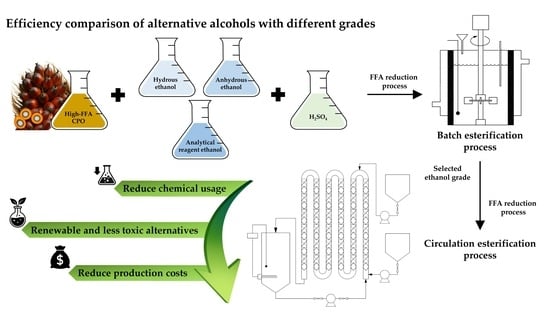
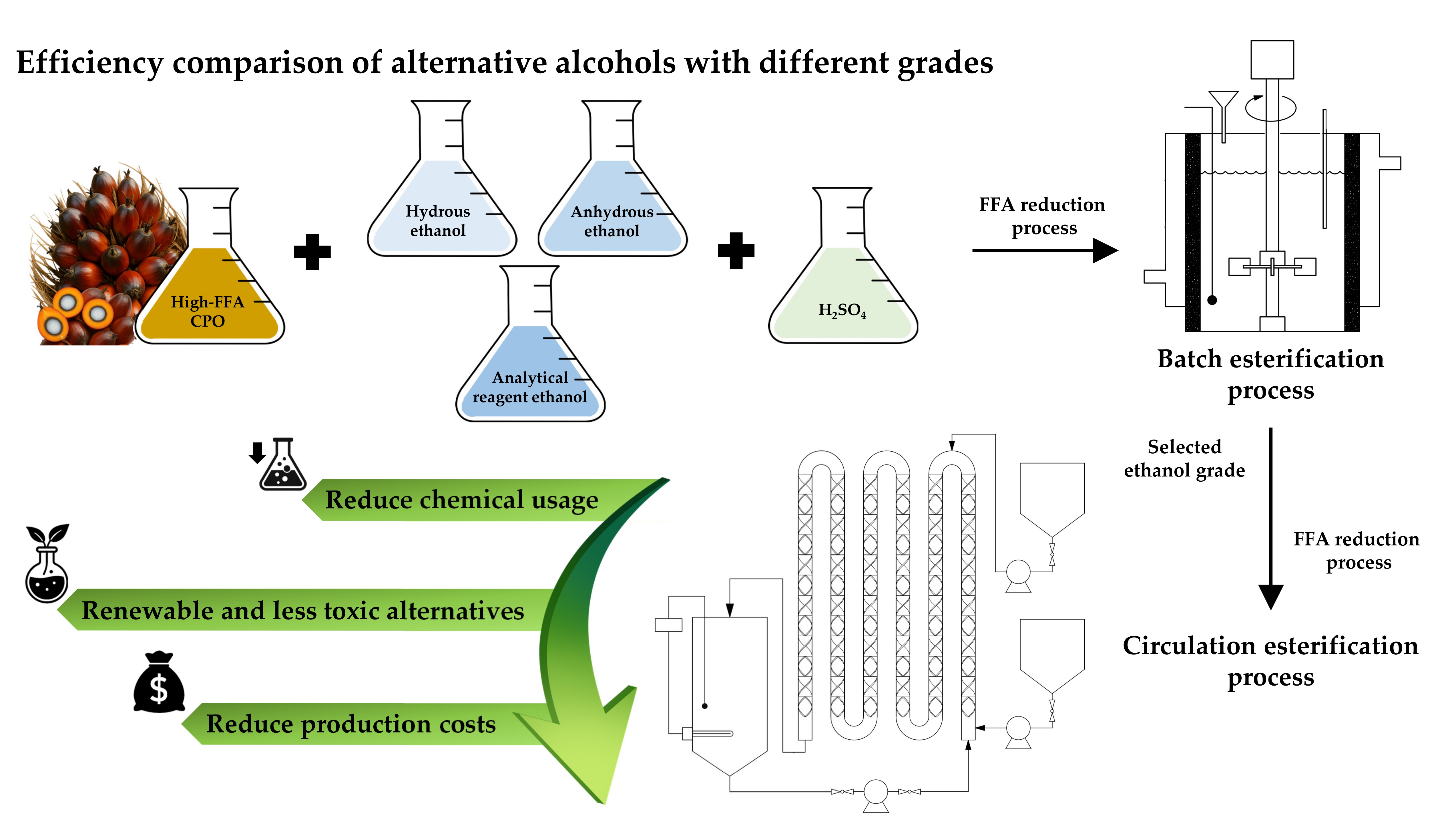
This research focuses on the acid value reduction in crude palm oil (CPO) achieved through an esterification process with different types of ethanol in batch and circulation processes. The esterification process was optimized by varying three independent variables, the ethanol content, sulfuric acid (H2SO4) concentration, and reaction time, using a response surface methodology to determine the optimal conditions for the acid value reduction in the esterified oil. Three grades of ethanol—95% hydrous ethanol, 99% anhydrous ethanol, and 99% analytical reagent (AR) ethanol—were used to study the batch esterification process. The optimal conditions for hydrous ethanol were 82.7 vol.% ethanol content, 10.6 vol.% H2SO4 concentration, and 25.4 min reaction time; for anhydrous ethanol, the optimal conditions were 78.1 vol.% ethanol content, 10.2 vol.% H2SO4 concentration, and 26.3 min reaction time; for AR-grade ethanol, the conditions were 77.7 vol.% ethanol content, 10.5 vol.% H2SO4 concentration, and 28.6 min reaction time. The experimental results indicate that the acid value of esterified oil could be reduced under optimal conditions using hydrous ethanol, anhydrous ethanol, and AR-grade ethanol at concentrations of 1.85 mg KOH/g, 0.97 mg KOH/g, and 0.95 mg KOH/g, respectively. Anhydrous ethanol had the most cost-effective production. Therefore, anhydrous ethanol was selected to study acid value reduction in esterified oil in a circulation esterification process to increase process efficiency. The results showed an acid value of 1.42 mg KOH/g under optimal conditions of 66.9 vol.% anhydrous ethanol content, 7.3 vol.% H2SO4 concentration, and 27.7 min circulation time, with a production cost of 0.460 USD/batch. The circulation esterification process can reduce ethanol content, H2SO4 concentration, and production costs by 14.34%, 28.43%, and 16.21%, respectively, compared to the batch esterification process, resulting in significant reductions in chemical and production costs.

Graphical Abstract

1. Introduction

The increasing demand for petroleum fuels in the power generation, transportation, manufacturing, and agriculture sectors has led to increased fuel costs and air pollution [1,2]. A significant push to find sustainable and renewable energy sources has emerged in response to growing environmental concerns and the need to reduce overall energy costs. Biodiesel has received significant attention as a sustainable alternative energy source to reduce dependence on petroleum fuels while offering several environmental benefits. Biodiesel can generally be produced from various feedstocks, including plant oils, animal fats, and waste cooking oils, making it a highly versatile energy source [3,4,5]. Moreover, biodiesel has environmental advantages over petroleum fuels in terms of reducing emissions of carbon dioxide (CO2), carbon monoxide (CO), nitrogen oxides (NOx), hydrocarbons (HC), and particulate matter (PM), which are the main causes of the greenhouse effect and air pollution [4,5,6,7,8]. In Thailand, crude palm oil (CPO) is considered a potential raw material for commercial-scale biodiesel production due to its high volume and oil yield. Most of the biodiesel produced from CPO is blended with petroleum diesel for use in transportation and various other sectors to reduce dependence on petroleum fuels. Biodiesel is chemically similar to conventional diesel, allowing it to be used in diesel engines without significant modifications [4,5,6,7,8]. However, a major challenge in using CPO for biodiesel production is its high free fatty acid (FFA) content, which hinders the transesterification process, leading to soap formation and a reduced yield [3,9]. FFA levels above 1% in oil can cause saponification reactions because lipids are converted into soaps during the transesterification process with base catalysts [10,11,12]. This not only reduces the overall biodiesel yield but also complicates the product separation and purification processes. In addition, high FFA levels can degrade fuel properties and potentially cause corrosion in engine components, resulting in reduced fuel efficiency [9]. To obtain high yield and purity, the feedstock’s high FFA content needs to be processed through a two-step process [3,9]. In the first step, FFA in the oil is converted into esters via esterification with an acid catalyst to reduce the FFA to below 1 wt.% [13,14,15]. To further improve the purity of the biodiesel, the esterified oil from the esterification process is used as a feedstock for the transesterification process. The triglycerides and remaining components are converted into esters and glycerol using a base catalyst [13,15,16]. Therefore, the esterification process is an important oil pretreatment step that reduces the FFA content in high-FFA oil before the transesterification process starts. The esterification process involves the reaction of FFA with alcohol in the presence of an acid catalyst, resulting in the formation of esters and water. Sulfuric acid (H2SO4) is generally used as the catalyst for the esterification process because of its cost-effectiveness and high catalytic efficiency in converting FFAs to esters [17,18,19]. In the evaluation of homogeneous acid catalysts, including hydrochloric, formic, acetic, and nitric acids, H2SO4 showed superior catalytic effectiveness to other homogeneous catalysts [20]. However, the presence of water in the reaction mixture can change the reaction equilibrium toward the reverse reaction, reducing the ester yield [9,21]. Therefore, the selection of an appropriate alcohol is another important factor affecting the efficiency of the esterification reaction.
Methanol is generally the most widely used alcohol for biodiesel production due to its low boiling point, low cost, and potential for biodiesel production [3,22,23]. However, methanol is highly toxic and poses significant health and environmental risks if not properly managed. In contrast, ethanol is considered a renewable and less toxic alternative that offers environmental and performance advantages, including reduced greenhouse gas emissions and the potential for sustainable production from biomass [23,24,25,26]. In Thailand, ethanol can be produced from a variety of waste and crops, such as cassava, molasses, and sugarcane [25,27]. Currently, in 2025, Thailand has 28 major ethanol producers, with a combined ethanol production capacity of 6.92 million liters/day [28]. However, the domestic ethanol industry is facing an excess production capacity of approximately 40% due to export restrictions and limited domestic consumption [27]. The use of ethanol in biodiesel production is an interesting option for addressing this issue, especially considering its properties and potential as a raw material derived from domestic agriculture. Moreover, the integration of ethanol with biodiesel production is in line with the principles of a circular economy, supports efforts to reduce greenhouse gas emissions, and enhances the value of the agricultural sector, thereby strengthening national energy security. Although ethanol offers several advantages over methanol, it also presents significant challenges in biodiesel production. The main challenge with ethanol is its higher polarity and boiling point than methanol, which can result in higher energy consumption and a longer time required for complete conversion [29]. In addition, there are many grades of ethanol, including hydrous ethanol, anhydrous ethanol, and AR-grade ethanol, with each differing in terms of purity, water content, and cost. However, the presence of water in ethanol can complicate biodiesel production [30]. Despite these challenges, ethanol remains an attractive alternative for biodiesel production, particularly when considering its sustainability and environmental benefits. Therefore, evaluating the performance of different ethanol grades in the esterification process is important for achieving cost-effective biodiesel production. Jyoti et al. studied the kinetics of the esterification reaction of acrylic acid with ethanol using homogeneous catalysts (H2SO4, hydrochloric acid, and hydroiodic acid). The parameters, including the catalyst loading (1–3 vol.%), reaction temperature (50–70 °C), initial reactant molar ratio (1:1–1:3), and water concentration in the feed (0–20 vol.%), were evaluated in a stirred batch reactor under atmospheric pressure. It was found that the highest conversion of acrylic acid was 83.99% at 70 °C, a catalyst concentration of 3%, and a molar ratio of acrylic acid to ethanol of 1:1. In addition, H2SO4 was found to be the most effective catalyst, achieving a 49.25% higher conversion compared to hydrochloric acid and hydroiodic acid [31]. Murad et al. studied the experimental kinetics of the acid-catalyzed esterification of different fatty acids (lauric, stearic, oleic, and an industrial mixture of fatty acids). The effects of the fatty acid to ethanol molar ratio (1:1–1:12), amount of H2SO4 (0.33–0.66 wt.%), and temperature (40–70 °C) were evaluated to model the reaction kinetics. They found that the fatty acid to ethanol molar ratio, H2SO4 dose, and temperature all significantly affected the esterification reaction kinetics. The kinetic model could optimize biodiesel production in terms of yield and sustainability for ethanol use [32].
Despite extensive research on biodiesel production, comprehensive research on the comparative effects of different ethanol grades and reactor conditions on the esterification efficiency of high-FFA CPO is still limited. Additionally, the cost impact of using different ethanol grades for biodiesel production has not been sufficiently explored. Therefore, this research aims to fill these gaps by evaluating the acidity reduction efficiency of high-FFA CPO using different ethanol grades in both batch and recirculation biodiesel production. The reaction efficiency of different grades of ethanol was evaluated through a batch esterification process, and the optimal conditions for FFA reduction were identified using response surface methodology (RSM) based on three independent variables: ethanol content, H2SO4 concentration, and reaction time. Moreover, optimal grades of ethanol were selected to study the capacity expansion, and the optimal conditions for the circular esterification process were identified. Finally, the production cost of each grade of ethanol was analyzed to determine the most cost-effective ethanol for large-scale biodiesel production.

2. Results and Discussion

2.1. Batch Esterification Process with Different Ethanol Types

2.1.1. Experimental Results and Statistical Analysis for Batch Process

A predictive model was developed to evaluate the optimal conditions for reducing the acid value in esterified oil from CPO via batch esterification using different types of ethanol. The relationships between the independent variables and the response were analyzed using multiple regression to identify the optimal conditions based on a thorough examination of the statistical data. The experimental results are presented in Table 1. The initial acid value of 34.5 mg KOH/g in CPO was reduced to a range of 2.21–8.71 mg KOH/g with hydrous ethanol, 1.08–6.82 mg KOH/g with anhydrous ethanol, and 1.09–6.59 mg KOH/g with AR-grade ethanol under the 18 experimental conditions summarized in Table 1. The predictive models were built using experimental results by describing the relationship between the acid value and three variables—the ethanol content, H2SO4 concentration, and reaction time—using multiple regression analysis with a 95% confidence level. Equations (1)–(3) were obtained from the results for the influence of hydrous ethanol, anhydrous ethanol, and AR-grade ethanol, respectively, using the acid value and three independent variables. Thus, the acid value of esterified oil could be predicted using various ethanol grades.
Furthermore, an analysis of variance (ANOVA) was performed for each predictive model to evaluate the significance of the variables that influence the acid value in esterified oil from CPO. The regression coefficients and p-values for the parameters of each predictive model are presented in Table 2. The statistical significance of each regression coefficient (β) was evaluated using its corresponding p-value. Coefficients with p-values less than 0.05 were considered statistically significant, indicating a strong influence of the corresponding variable on the predicted acid value. Lower p-values reflect a greater impact on FFA reduction in esterified oil. Therefore, the coefficients with p-values greater than 0.05 were considered statistically insignificant and were excluded from the final predictive models. The terms β1E and β6E2 in Equations (1)–(3) had the lowest p-values in the correlation prediction analysis, which confirms that ethanol content plays a key role in lowering the acid value. In addition, the reaction time and H2SO4 concentration terms in Equations (1)–(3) show a significant second-order influence on the acid values. During the esterification process, a longer reaction time enhances the conversion of FFA in the oil to esters, resulting in a lower acid value. Moreover, the H2SO4 concentration also showed a significant effect, especially in the anhydrous ethanol (Equation (2)) and AR-grade (Equation (3)) models, but its effect was relatively less important in the hydrous ethanol model (Equation (1)). The statistical evaluation results indicated that all models achieved a good fit. The coefficients of multiple determination (R2) were 0.995, 0.996, and 0.999, while the adjusted coefficients of multiple determination (R2adjusted) were 0.991, 0.993, and 0.997 for the models using hydrous ethanol, anhydrous ethanol, and AR-grade ethanol, respectively. These results indicate a strong predictive reliability in all cases. ANOVA was employed to evaluate the adequacy and statistical significance of the developed regression models, as presented in Table 3. The results of the F-test revealed that the F-values (F0) of 246.11, 292.46, and 800.51 for the models using hydrous ethanol, anhydrous ethanol, and AR-grade ethanol, respectively, were significantly higher than the critical F-value of 3.23 (F0.05,8,9) at a 95% confidence level. These results indicate that the overall regression terms have a statistically significant effect on the acid value and confirm the statistical validity of all three models. The accuracy and predictive performance of the models were further evaluated by comparing the predicted acid values with those obtained from the actual experiments, as shown in Figure 1. The plots and statistical analysis confirm that the models exhibit high accuracy and strong predictive capability in estimating acid values and identifying optimal conditions. Additionally, these correlation plots support the previously reported high R2 values, confirming the predictive reliability of the model. The AR-grade ethanol model (Figure 1c) showed the lowest data dispersion, indicating the lowest residual error and the highest F-value, thus providing the best model fit. Similarly, the anhydrous ethanol model (Figure 1b) also showed low data dispersion, confirming strong predictive accuracy. In contrast, the hydrous ethanol model (Figure 1a) showed slightly more dispersion, which may be due to the water content affecting the acid value during the reaction. These findings reinforce the suitability of the models and indicate that the developed second-order polynomial equations can reliably predict acid values under a wide range of process conditions.
A V h y d r o u s   e t h a n o l = β 0 + β 1 E + β 2 S + β 3 T + β 4 E S + β 5 E T + β 6 E 2 + β 7 S 2 + β 8 T 2
A V a n h y d r o u s   e t h a n o l = β 0 + β 1 E + β 2 S + β 3 T + β 4 E S + β 5 E T + β 6 E 2 + β 7 S 2 + β 8 T 2
A V A R g r a d e   e t h a n o l = β 0 + β 1 E + β 2 S + β 3 T + β 4 E S + β 5 E T + β 6 E 2 + β 7 S 2 + β 8 T 2
Above, AV refers to the acid value of the esterified oil derived from CPO (mg KOH/g), E corresponds to the ethanol content (vol.%), S represents the sulfuric acid concentration (vol.%), and T indicates the reaction time (min).

2.1.2. The Effect of Variables on Acid Value Reduction for Batch Process

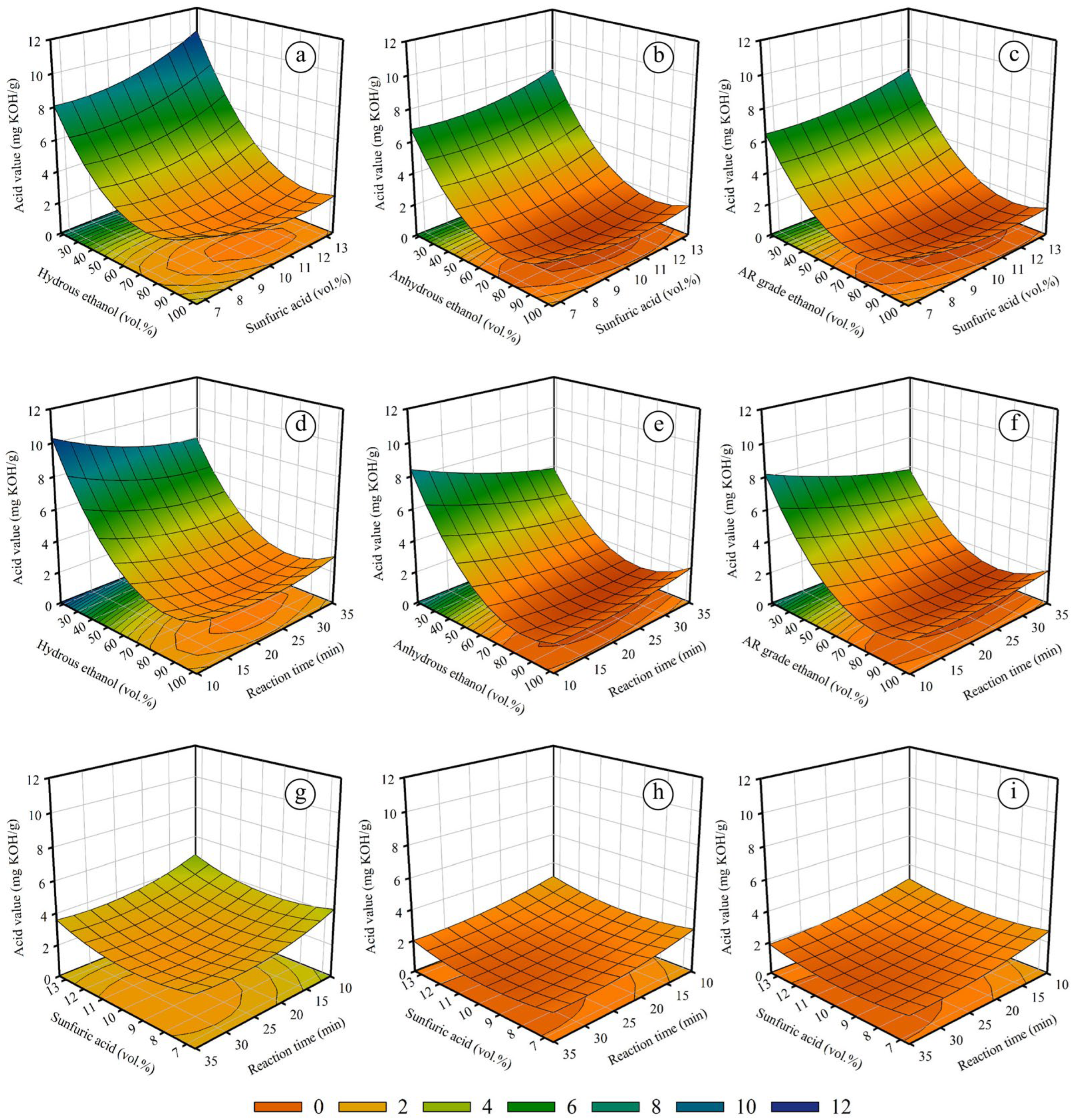
Figure 2 presents 3D response surface plots showing the effects of ethanol content (hydrous ethanol, anhydrous ethanol, and AR-grade ethanol), H2SO4 concentration, and reaction time on the acid value of esterified oil derived from CPO. In general, increasing ethanol content, catalyst concentration, and reaction time promotes acid value reduction by enhancing mass transfer and shifting the reaction equilibrium toward ester formation. An appropriate ethanol content can reduce oil viscosity, thereby improving mixing efficiency and mass transfer [22,33]. However, excessive ethanol or acid levels may dilute the reaction mixture or induce reverse reactions, resulting in diminishing improvements in conversion efficiency [21,34,35,36]. A clear trend is observed with respect to ethanol purity. The superior acid value reduction observed with high-purity ethanol can be mechanistically attributed to the inhibitory role of water in esterification [9]. Water shifts the reaction equilibrium toward hydrolysis, reduces the effective acidity of H2SO4, and decreases the mutual solubility of ethanol and oil, thereby limiting mass transfer and reaction kinetics. In addition, excess water promotes reverse ester hydrolysis, leading to higher residual acid values. Similarly, increasing H2SO4 concentration and reaction time generally enhances esterification performance [37,38]. However, saturation effects are observed at excessively high acid concentrations, particularly for hydrous ethanol. For anhydrous and AR-grade ethanol, optimal acid value reduction is achieved at moderate catalyst levels and appropriate reaction times. Overall, these results demonstrate that minimizing water content in the reaction system is critical for improving esterification efficiency. In contrast, careful optimization of ethanol purity, catalyst concentration, and reaction time is required to avoid unnecessary energy consumption and reverse reactions.

2.1.3. Optimal Conditions and Production Costs for Batch Process

Table 4 presents the optimal conditions and properties of the esterified oil produced through batch esterification using the different types of ethanol. The predictive models described in Equations (1)–(3) for hydrous ethanol, anhydrous ethanol, and AR-grade ethanol were optimized using Excel Solver. For hydrous ethanol, the minimum predicted acid value in esterified oil was 1.77 mg KOH/g under the optimal conditions of 82.7 vol.% ethanol, 10.6 vol.% H2SO4, and 25.4 min reaction time at a reaction temperature of 60 °C. For anhydrous ethanol, the minimum predicted acid value was 0.93 mg KOH/g under the optimal conditions of 78.1 vol.% ethanol, 10.2 vol.% H2SO4, and 26.3 min reaction time at 60 °C. For AR-grade ethanol, the minimum predicted acid value was 0.93 mg KOH/g under the optimal conditions of 77.7 vol.% ethanol, 10.5 vol.% H2SO4, 28.6 min reaction time, and 60 °C. To verify the accuracy and reliability of the model predictions, these optimal conditions were validated through actual experiments. The experimental results showed that the acid values in esterified oil were reduced to 1.85, 0.97, and 0.95 mg KOH/g for hydrous ethanol, anhydrous ethanol, and AR-grade ethanol, respectively, with deviations of only 4.52%, 4.30%, and 2.15% from the model predictions. These results indicate no significant difference in the acid values achieved using anhydrous ethanol and AR-grade ethanol in the batch esterification process.
Table 5 shows a cost comparison for batch esterification processes using different grades of ethanol. The cost analysis is based on the optimal process conditions for each ethanol type, using 1 L of CPO as the feedstock. For hydrous ethanol, the total production cost was 0.560 USD/batch, the lowest among the three ethanol types. This lower cost is primarily due to the relatively low price of hydrous ethanol despite the slightly higher volume required compared to other types of ethanol. Additionally, the use of hydrous ethanol requires slightly more H2SO4 than other types of ethanol, resulting in a slightly higher acid cost. However, the shorter reaction time associated with hydrous ethanol reduces overall operating costs, providing further savings. For anhydrous ethanol, the total production cost was 0.549 USD/batch, slightly lower than that of hydrous ethanol. This cost advantage is due to reduced acid requirements and shorter reaction times, despite the slightly higher unit price. Therefore, anhydrous ethanol is a cost-effective option for large-scale production. In contrast, the process using AR-grade ethanol was significantly more expensive, with a total production cost of 9.106 USD/batch. This substantial cost increase is primarily due to the very high price of AR-grade ethanol. Although AR-grade ethanol offers higher purity and superior esterification efficiency, its high cost makes it less suitable for commercial-scale production. These findings indicate that anhydrous ethanol performed most favorably under the controlled conditions of this study, providing a practical balance between cost and process efficiency.

2.2. Circulation Esterification Process with Anhydrous Ethanol

2.2.1. Experimental Results and Statistical Analysis for Circulation Process

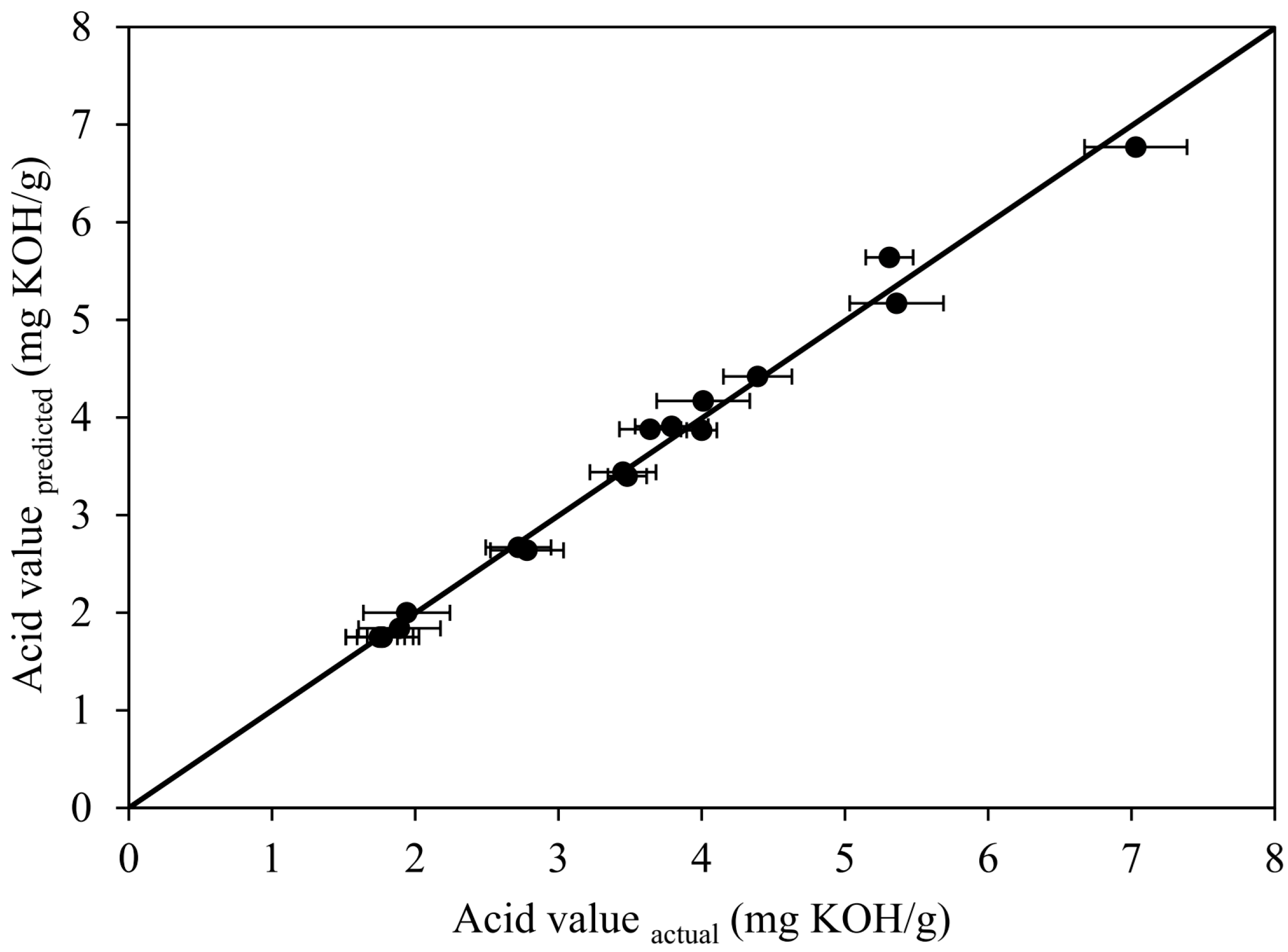
The experimental results for the acid value reduction achieved in esterified oil from CPO using anhydrous ethanol in the circulation esterification process are summarized in Table 6. The residual acid value of the esterified oil decreased from the initial value of 34.5 mg KOH/g to the range of 1.76–7.03 mg KOH/g under 18 sets of experimental conditions. Multiple regression analysis at a 95% confidence level was used to describe the relationship between the acid value and three key factors: the anhydrous ethanol content, H2SO4 concentration, and circulation time. The relationship between the acid value and the three independent variables was modeled using Equation (4). The regression coefficients and p-values for the parameters of the predictive model are presented in Table 7. All regression coefficients in the model have p-values less than 0.05, indicating that these factors significantly affect the acid value in the circulation esterification process. The terms β8S2 and β7E2 exhibited the lowest p-values, indicating a highly significant effect of H2SO4 concentration and anhydrous ethanol content on the acid value. An excessive H2SO4 concentration beyond the optimal level reduces the efficiency of esterification processes due to the occurrence of reverse reactions. Additionally, an excessively high ethanol content dilutes the reaction mixture, thereby decreasing the reaction rate and resulting in a slight reduction in the acid value of the esterified oil. The term associated with the circulation time was still significant in reducing the acid value during the circulation esterification process. A longer circulation time promoted the esterification reaction, increasing the conversion of FFA to esters and resulting in a lower acid value. The statistical evaluation results showed that the R2 and R2adjusted values for the model were 0.991 and 0.980, respectively. These results confirm the high predictive accuracy and strong reliability of the model. ANOVA was conducted to evaluate the statistical significance and adequacy of the predictive model for the circulation esterification process, as presented in Table 8. The F-test result revealed that the F-value (F0) of 94.23 was significantly higher than the critical F-value of 3.39 (F0.05,8,9) at the 95% confidence level, indicating that the model terms could explain the variation in the acid value. Therefore, these results indicate that the model is both suitable and sufficient for accurately describing the circulation esterification process. The model’s validity was assessed by comparing predicted acid values with actual experimental results, as shown in Figure 3. The predicted values were close to the actual experimental results, with all data being tightly distributed along the reference line. This result supports the predictive accuracy of the model, demonstrating only a slight deviation between the predicted and actual acid values.
A V c i r c u l a t i o n = β 0 + β 1 E + β 2 S + β 3 T + β 4 E S + β 5 E T + β 6 S T + β 7 E 2 + β 8 S 2 + β 9 T 2
Above, AV refers to the acid value of the esterified oil derived from CPO (mg KOH/g), E corresponds to the ethanol content (vol.%), S represents the sulfuric acid concentration (vol.%), and T indicates the reaction time (min).

2.2.2. The Effect of Variables on Acid Value Reduction for Circulation Process

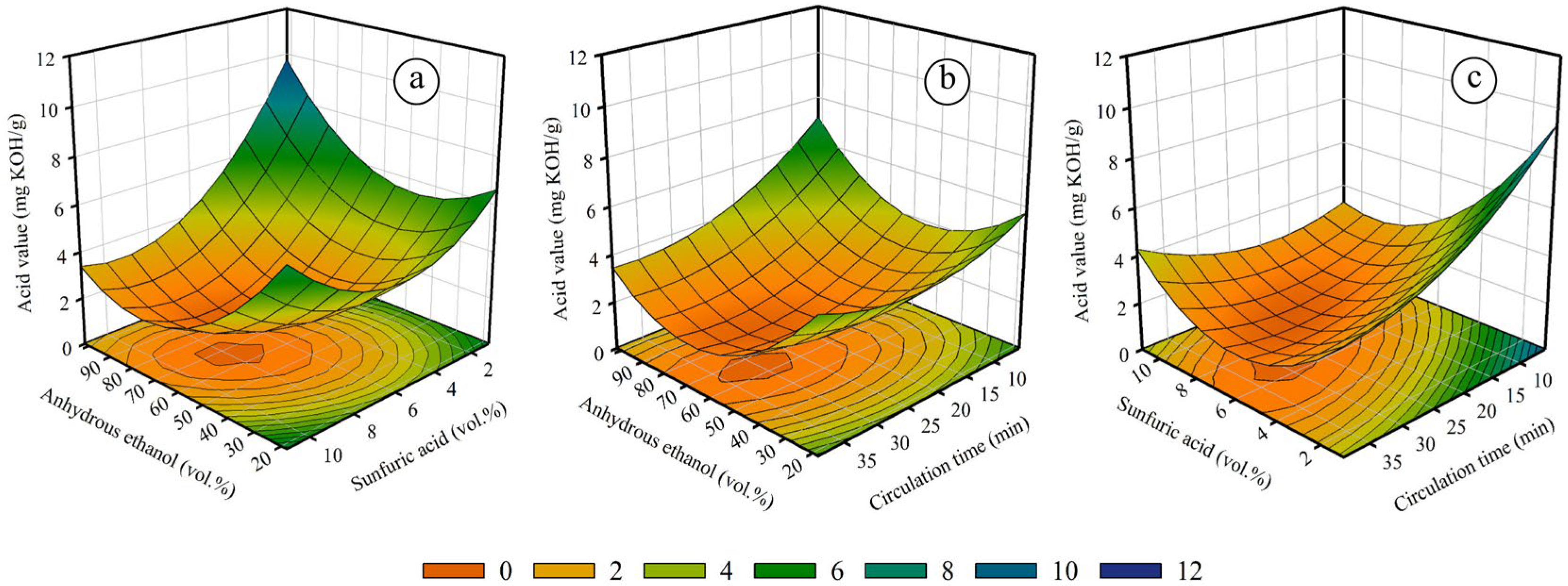
Figure 4 presents 3D response surface plots illustrating the effects of the anhydrous ethanol content, H2SO4 concentration, and circulation time on the acid value in esterified oil. Figure 4a shows the 3D interaction plot for the anhydrous ethanol content and H2SO4 concentration. The plot indicates a clear reduction in acid value as both the anhydrous ethanol content and H2SO4 concentration increase. Acid values of less than 2 mg KOH/g were observed at anhydrous ethanol contents within the range of 57.7–74.0 vol.% and H2SO4 concentrations within the range of 6.9–8.8 vol.%. A higher alcohol content reduces the viscosity of the oil, enhancing mass transfer during the reaction [23,33]. However, excessively high alcohol concentrations can dilute the mixture, reducing the reaction rate [34,35,36]. Similarly, higher acid concentrations above the optimal level did not significantly improve conversion, possibly due to catalyst saturation during the reaction. Figure 4b presents the 3D interaction plot between the anhydrous ethanol content and circulation time. The acid value decreased rapidly as both the anhydrous ethanol content and the circulation time increased. The optimum condition between alcohol content and reaction time improves mass transfer, thus accelerating the conversion of FFA during the process [33,37]. Acid values of less than 2 mg KOH/g were observed at anhydrous ethanol contents within the range of 57.7–71.7 vol.% and circulation times within the range of 25.8–35.1 min. However, extending the circulation time beyond 30 min resulted in diminishing returns, as a longer circulation time may lead to reverse reactions. Figure 4c shows the 3D interaction plot between the H2SO4 concentration and circulation time. Longer circulation times under high acid concentrations may lead to complete esterification, as the increased catalytic active area enhances reaction activity. However, excessively high acid concentrations may promote reverse reactions, reducing the efficiency of the process. Acid values of less than 2 mg KOH/g were observed at H2SO4 concentrations within the range of 5.7–8.3 vol.% and circulation times within the range of 20.1–33.7 min.
These results demonstrate that optimizing alcohol content, catalyst concentration, and circulation time can effectively reduce acid value. However, catalyst selection for large-scale applications must also consider practical, environmental, and economic factors. Although sulfuric acid has operational and environmental drawbacks, it remains attractive due to its low cost, wide availability, and high catalytic activity. For alternative catalyst types within safe environments, the application of a solid acid catalyst is recommended in biodiesel synthesis due to its benefits in reusability and waste minimization. However, it usually involves increased material costs and its cost-efficiency is dependent on durability and the ability to regenerate. Consequently, an additional comprehensive technical and economic evaluation is necessary to determine its cost-effectiveness.

2.2.3. Optimal Conditions and Production Costs for Circulation Process

Table 9 lists the optimal conditions and properties of esterified oil for the circulation esterification process using anhydrous ethanol. The predictive model described in Equation (4) was optimized using Excel Solver. The minimum predicted acid value in esterified oil was 1.38 mg KOH/g under the optimal conditions of 66.9 vol.% anhydrous ethanol, 7.3 vol.% H2SO4, 27.7 min circulation time, and 60 °C reaction temperature. To verify the accuracy and reliability of the model predictions, the optimal conditions were validated through actual experiments. The experimental results showed that the acid value in esterified oil was reduced to 1.42 mg KOH/g, representing a deviation of 2.90% from the model prediction. Table 10 shows the production cost for the esterification process using anhydrous ethanol. The total production cost under optimal conditions was 0.460 USD/batch.
The process of reducing the acid value of esterified oil using anhydrous ethanol was compared for the batch and circulation esterification processes. The results showed that the circulation process required 14.34% less ethanol and 28.43% less H2SO4 than the batch process. Additionally, the production cost of the circulation process was 16.21% lower than that of the batch process. Although the acid value and FFA content in the circulation process were slightly higher than those in the batch process, the FFA level remained below 1%, which is sufficient to prevent saponification during the transesterification reaction. Therefore, the circulation esterification process is more advantageous than the batch process in terms of both chemical efficiency and production cost savings.

3. Materials and Methods

3.1. Materials

The CPO was purchased from a small-scale palm oil mill in southern Thailand. It had a high acid value of 34.5 mg KOH/g, a density of 0.873 kg/L at 75 °C, and a viscosity of 13.72 cSt at 75 °C. Its main components were 15.23 wt.% FFA, 82.18 wt.% triglycerides (TGs), 2.35 wt.% diglycerides (DGs), and 0.24 wt.% monoglycerides (MGs). The FFA content in CPO was reduced by the acid-catalyzed esterification process before the base-catalyzed transesterification step to prevent saponification reactions. Equations (5) and (6) represent the esterification and transesterification reactions, respectively. The chemical reactants used in this experiment were 98% commercial grade H2SO4 and 95% hydrous, 99% anhydrous, and 99% analytical reagent (AR) grades of ethanol. Table 11 shows the properties of the three different grades of ethanol.
F F A + A l c o h o l   A c i d c a t a l y s t E s t e r + W a t e r
T r i g l y c e r i d e s + A l c o h o l   B a s e c a t a l y s t E s t e r + G l y c e r o l

3.2. Design of the Experiment for FFA Reduction in CPO

RSM with a five-level, three-factor central composite design (CCD) was used as a statistical method to find the optimal conditions for the reduction in FFA from high-FFA CPO using various types of ethanol. Each factor in the experimental design was coded with five rotatable levels of −α, −1, 0, +1, and +α. The parameters −α and +α represent the star points that correspond to the minimum and maximum values of each parameter, respectively. The star points (±α) were set up at a distance of α from the center point, where α can be determined by the number of factors (k) employed in the experimental design. This study investigated the optimal conditions for biodiesel production by analyzing the effects of three independent variables: catalyst concentration, ethanol content, and reaction time. The value of α for three factors (k = 3) was calculated as 1.682, as shown in Equation (7). Consequently, five coded levels (−1.682, −1, 0, +1, and +1.682) were set up for each factor, leading to a total of 18 sets of experimental conditions. After the experiments, the results under various conditions were modeled using multiple regression analysis based on a second-order polynomial equation, as presented in Equation (8).
α x = 2 k 4
Y = β 0 + i = 1 k β i x i + i = 1 k β i i x i 2 + i = 1 k j = i + 1 k β i j x i x j + ε
where Y denotes the response variable, xi and xj denote the factors, β0 denotes the constant coefficient, βi denotes the linear terms, βii denotes the quadratic term, βij denotes the interaction term, k denotes the number of factors, and ε denotes the prediction error.

3.3. Experimental Procedure for the Batch Esterification Process

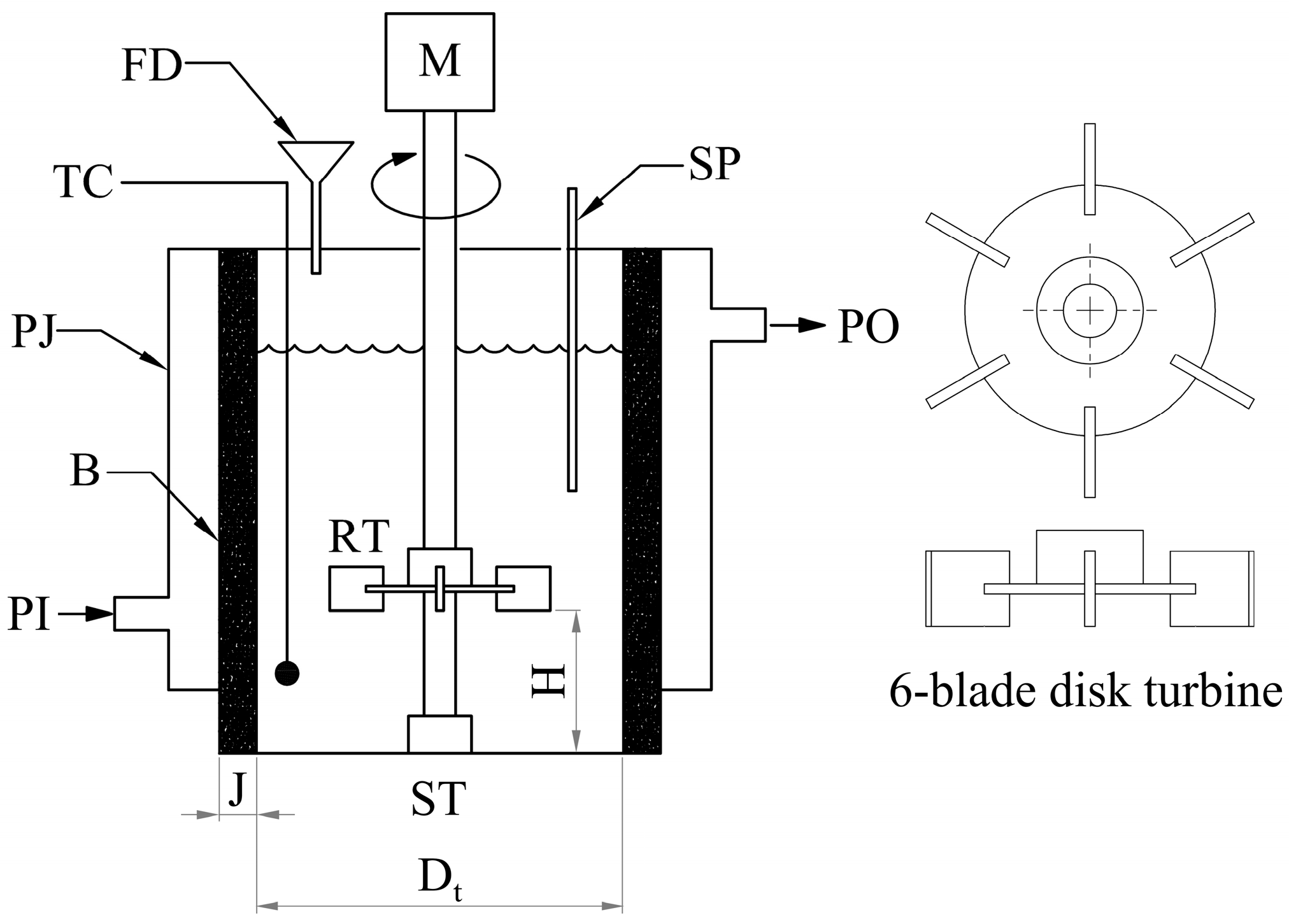
A 2500 mL stirred tank reactor with a six-blade disk turbine was used to mix the CPO, ethanol, and H2SO4 in the acid value reduction process, as shown in Figure 5. Heat transfer from circulating paraffin oil contained within the jacketed reactor preheated the mixture and controlled the reaction temperature inside the reactor. The stirred tank reactor had a tank diameter (Dt) of 140 mm and a baffle width (J) of 11.7 mm. The six-blade disk turbine impeller had the following dimensions: an impeller blade diameter of 70 mm, a disk diameter of 47 mm, a blade length of 17 mm, a blade width of 14 mm, and a gap from the tank bottom of 45 mm. The operating conditions included a reaction temperature of 75 °C, a stirring speed of 900 rpm, and a Reynolds number (Re) of about 5356, which was determined using the density and viscosity of CPO at 75 °C. These parameters were kept constant throughout all experiments.
The 1000 mL of CPO was heated and carefully controlled by the circulating paraffin oil in the jacket around the reactor to ensure it did not exceed 75 °C, in order to remain below the boiling point of ethanol. The CPO and ethanol were mixed with a stirrer (model: RW 20 digital, IKA-Werke GmbH & Co., KG, Staufen im Breisgau, Germany) at a constant speed of 900 rpm. The required concentrations of ethanol and H2SO4, as specified in Table 1, were added to the reactor. During chemical preparation, all reagents were stored in tightly sealed containers and used immediately after opening to minimize moisture absorption from ambient air and prevent solvent evaporation. Ethanol was poured into the reactor and mixed with CPO for 5 min. Subsequently, the reaction was initiated by slowly adding H2SO4 to the reactor and immediately starting the timer. When collecting experimental samples for testing the acid value in the esterified oil, the samples were collected at different reaction times, as shown in Table 1. Each sample was rapidly cooled with 0 °C water, which immediately stopped the reactions both forward and backward [41]. The sample was then washed with warm water to remove residual catalyst, ethanol, and impurities until the pH of the wastewater reached 7. The purified esterified oil was heated at 105 °C to minimize the residual moisture content in the sample. Subsequently, the acid value of the purified esterified oil using AOCS was calculated using Equation (9) [42]. Three repetitions of each experimental condition were conducted. After that, the accuracy and reliability of the three replicates were ensured by averaging the results. Finally, the esterified oil obtained under the optimal condition was analyzed for MEs, TGs, DGs, MGs, and FFA using thin-layer chromatography with flame ionization detection (TLC-FID, model: IATROSCAN MK-65; Mitsubishi Kagaku Iatron Inc., Tokyo, Japan).
A c i d   v a l u e = V × N × 56.1 W
where V is the volume of KOH used in titration (mL), N is the normality of KOH (mol/L), and W is the weight of the sample (g).

3.4. Experimental Procedure for the Circulation Esterification Process

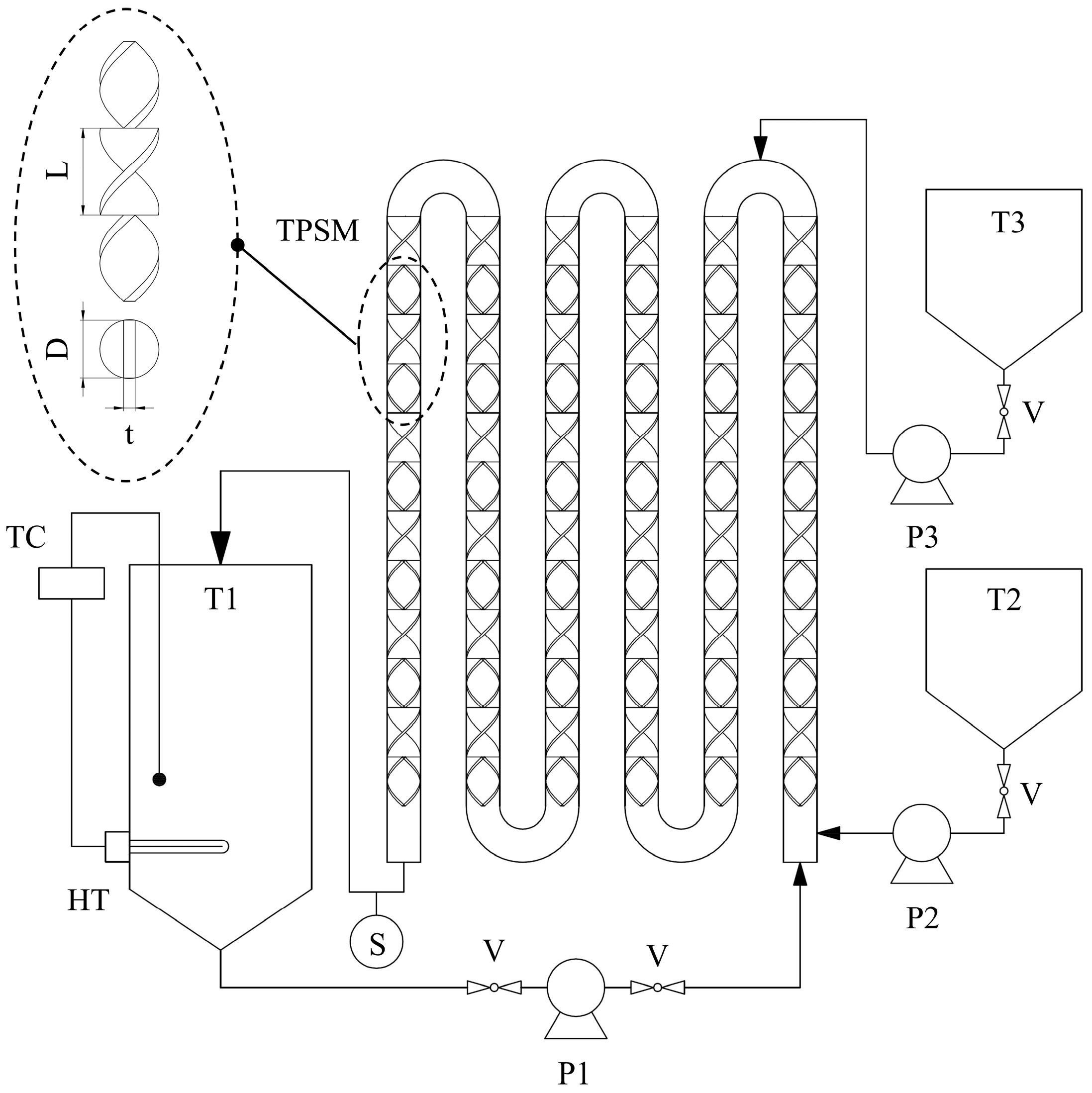
In order to increase the production of biodiesel, the most promising ethanol identified during the batch esterification experiments was selected for further investigation in a circulation esterification process. The primary objective was to identify the optimal operating conditions. Figure 6 shows the circulation process through the static mixer reactor, which consisted of a 15 L crude palm oil tank, a 60 L ethanol tank, and a 20 L H2SO4 tank. These tanks were coupled with a static mixer reactor consisting of six insulated stainless-steel pipes. Twisted plate static mixers (TPSMs) were inserted into the stainless-steel pipes, each with an inner diameter of 10 mm and a length of 1 m. The TPSM elements were 10 mm in width (D), 15 mm in length (L), and 1 mm in thickness (t), twisted at 180°. The TPSM elements were connected to the next element at a 90° angle along the length of the mixing pipe to enhance the mixing efficiency.
For the circulation esterification process, 5 L of CPO was poured into the CPO tank and heated using a heater, maintaining a temperature of 75 °C throughout the reaction. Then, CPO was circulated through the static mixer reactor using a circulation pump (DMX 50-10, Grundfos, Bjerringbro, Denmark) at a flow rate of 56 L/h. The circulation pump was kept running throughout the experiment to continuously circulate the mixture between the tank (T1) and the static mixer reactor. The ethanol contents and H2SO4 concentrations were studied under different conditions, as shown in Table 6. During chemical preparation, all reagents were stored in tightly sealed containers and used immediately after opening to minimize moisture absorption from ambient air and prevent solvent evaporation. Ethanol was pumped into the static mixer reactor for mixing with CPO using a dosing pump (DME 48-3, Grundfos, Bjerringbro, Denmark) at a constant flow rate of 37 L/h. The dosing pump was turned off immediately after all the ethanol had been fed into the static mixer reactor. The ethanol delivered to the static mixer reactor was circulated by a circulation pump at a constant flow rate to mix with CPO for 5 min. Subsequently, H2SO4 was pumped into the static mixer reactor using another dosing pump (DDC 6-10, Grundfos, Bjerringbro, Denmark) at a flow rate of 2.5 L/h. The dosing pump was turned off after all H2SO4 was completely fed into the reactor to accelerate the esterification reaction. Meanwhile, the reaction time was recorded immediately after the acid was fed into the static mixer reactor. Therefore, the mixture (CPO, ethanol, and H2SO4 was circulated through the static mixer reactor using a circulating pump at a flow rate of 56 L/h throughout the experiment. To evaluate the acid value of the esterified oil, oil samples were collected at different circulating reaction times, as listed in Table 6. Each sample was rapidly cooled using 0 °C water to immediately stop the reaction. Each experimental condition listed in Table 6 was repeated three times, following the procedure described above. The washing and analysis procedures for the oil samples in the circulation esterification process were the same as those previously described for the batch esterification process.

4. Conclusions

This work has evaluated the efficiency of reducing the acid value of esterified oil from high-FFA CPO using different grades of ethanol for batch and circulation esterification processes. CCD of the RSM was employed to determine the optimal conditions of the independent variables affecting the acid value. In the batch esterification process, it was found that hydrous ethanol could reduce the acid value of the esterified oil by 1.85 mg KOH/g under the optimum conditions of 82.7 vol.% ethanol content, 10.6 vol.% H2SO4 concentration, and reaction time of 25.4 min. For anhydrous ethanol, the acid value of 0.97 mg KOH/g was obtained under the optimum conditions of 78.1 vol.% ethanol content, 10.2 vol.% H2SO4 concentration, and reaction time of 26.3 min. For AR-grade ethanol, an acid value of 0.95 mg KOH/g was obtained under the optimum conditions of 77.7 vol.% ethanol content, 10.5 vol.% H2SO4 concentration, and reaction time of 28.6 min. For batch esterification, it was found that anhydrous ethanol had the lowest production cost, followed by hydrous ethanol and AR-grade ethanol. Therefore, anhydrous ethanol was selected for studying the reduction in acid values in esterified oil during the circulation esterification process. The experimental results showed that an acid value of 1.42 mg KOH/g was obtained under the optimum conditions of 66.9 vol.% anhydrous ethanol, 7.3 vol.% H2SO4, and 27.7 min circulation time, with a production cost of 0.460 USD/batch. The circulation esterification process can reduce the ethanol, H2SO4, and production costs by 14.34%, 28.43%, and 16.21%, respectively, representing a significant reduction compared to the batch esterification process. Water content significantly influences the efficiency of esterification reactions. Consequently, the effective removal of water produced during the reaction, such as through the application of adsorbents or membrane-based separation methods, constitutes an essential method for minimizing reverse reactions and achieving high conversion efficiency [43,44]. This study suggests using anhydrous ethanol to reduce the acid value in esterified oil from CPO through the circulation esterification process. The results of this study demonstrate the potential and economic feasibility of using ethanol in the esterification process to treat low-quality feedstocks with high FFA. Future research should focus on conducting further pilot and industrial-scale studies to enhance the efficiency and sustainability of biodiesel production. This includes investigating solid acid catalysts as potential alternatives to sulfuric acid, given their advantages in ease of recovery, lower corrosiveness, and improved environmental performance in ethanol-based esterification.

Author Contributions

Conceptualization, methodology, validation, formal analysis, writing—original draft, visualization, J.T.; methodology, investigation, data curation, K.P.; supervision, project administration, funding acquisition, T.T.; supervision, writing—review and editing, conceptualization, project administration, funding acquisition, K.S. All authors contributed to the final version. All authors have read and agreed to the published version of the manuscript.

Funding

This research was supported by the Prince of Songkla University, and by the Office of the Higher Education Commission; Prince of Songkla University [grant number ENG570123b].

Data Availability Statement

Data are contained within the article.

Acknowledgments

This research was supported by Prince of Songkla University under the Postdoctoral Fellowship Program.

Conflicts of Interest

The authors declare no conflicts of interest.

References

  1. Arshad, K.; Hussain, N.; Ashraf, M.H.; Saleem, M.Z. Air pollution and climate change as grand challenges to sustainability. Sci. Total Environ. 2024, 928, 172370. [Google Scholar]
  2. Wang, J.; Azam, W. Natural resource scarcity, fossil fuel energy consumption, and total greenhouse gas emissions in top emitting countries. Geosci. Front. 2024, 15, 101757. [Google Scholar] [CrossRef]
  3. Wan Osman, W.N.A.; Rosli, M.H.; Mazli, W.N.A.; Samsuri, S. Comparative review of biodiesel production and purification. Carbon Capture Sci. Technol. 2024, 14, 100264. [Google Scholar] [CrossRef]
  4. Banga, S.; Pathak, V.V. Biodiesel production from waste cooking oil: A comprehensive review on the application of heterogenous catalysts. Energy Nexus. 2023, 10, 100209. [Google Scholar]
  5. Ebadian, M.; van Dyk, S.; McMillan, J.D.; Saddler, J. Biofuels policies that have encouraged their production and use: An international perspective. Energy Policy 2020, 147, 111906. [Google Scholar] [CrossRef]
  6. O’Malley, J.; Searle, S. Air Quality Impacts of Biodiesel in the United States; ICCT: Washington, DC, USA, 2021; pp. 1–36. [Google Scholar]
  7. Ogunkunle, O.; Ahmed, N.A. Overview of biodiesel combustion in mitigating the adverse impacts of engine emissions on the sustainable human–environment scenario. Sustainability 2021, 13, 5465. [Google Scholar] [CrossRef]
  8. Reddy, S.N.K.; Wani, M.M. A comprehensive review on effects of nanoparticles–antioxidant additives–biodiesel blends on performance and emissions of diesel engine. Appl. Sci. Eng. Prog. 2020, 13, 285–298. [Google Scholar]
  9. Naseef, H.H.; Tulaimat, R.H. Transesterification and esterification for biodiesel production: A comprehensive review of catalysts and palm oil feedstocks. Energy Convers. Manag. X 2025, 26, 100931. [Google Scholar] [CrossRef]
  10. Gaurav, A.; Dumas, S.; Mai, C.T.Q.; Ng, F.T.T. A kinetic model for a single step biodiesel production from a high free fatty acid (FFA) biodiesel feedstock over a solid heteropolyacid catalyst. Green Energy Environ. 2019, 4, 328–341. [Google Scholar] [CrossRef]
  11. Nisar, S.; Hanif, M.A.; Rashid, U.; Hanif, A.; Akhtar, M.N.; Ngamcharussrivichai, C. Trends in widely used catalysts for fatty acid methyl esters (FAME) production: A review. Catalysts 2021, 11, 1085. [Google Scholar] [CrossRef]
  12. Elgharbawy, A.S.; Sadik, W.A.; Sadek, O.M.; Kasaby, M.A. A review on biodiesel feedstocks and production technologies. J. Chil. Chem. Soc. 2021, 66, 5098–5109. [Google Scholar] [CrossRef]
  13. Banchero, M.; Gozzelino, G. A simple pseudo-homogeneous reversible kinetic model for the esterification of different fatty acids with methanol in the presence of amberlyst-15. Energies 2018, 11, 1843. [Google Scholar] [CrossRef]
  14. Mandari, V.; Devarai, S.K. Biodiesel production using homogeneous, heterogeneous, and enzyme catalysts via transesterification and esterification reactions: A critical review. BioEnergy Res. 2022, 15, 935–961. [Google Scholar] [CrossRef] [PubMed]
  15. Litinas, A.; Geivanidis, S.; Faliakis, A.; Courouclis, Y.; Samaras, Z.; Keder, A.; Krasnoholovets, A.; Gandzha, I.; Zabulonov, Y.; Puhach, O.; et al. Biodiesel production from high FFA feedstocks with a novel chemical multifunctional process intensifier. Biofuel Res. J. 2020, 26, 1170–1177. [Google Scholar] [CrossRef]
  16. Kasirajan, R. Biodiesel production by two step process from an energy source of Chrysophyllum albidum oil using homogeneous catalyst. S. Afr. J. Chem. Eng. 2021, 37, 161–166. [Google Scholar] [CrossRef]
  17. Khan, Z.; Javed, F.; Shamair, Z.; Hafeez, A.; Fazal, T.; Aslam, A.; Zimmerman, W.B.; Rehman, F. Current developments in esterification reaction: A review on process and parameters. J. Ind. Eng. Chem. 2021, 103, 80–101. [Google Scholar] [CrossRef]
  18. Vitiello, R.; Taddeo, F.; Russo, V.; Turco, R.; Buonerba, A.; Grassi, A.; Di Serio, M.; Tesser, R. Production of sustainable biochemicals by means of esterification reaction and heterogeneous acid catalysts. ChemEngineering 2021, 5, 46. [Google Scholar] [CrossRef]
  19. Wang, B.; Wang, B.; Shukla, S.K.; Wang, R. Enabling catalysts for biodiesel production via transesterification. Catalysts 2023, 13, 740. [Google Scholar] [CrossRef]
  20. Gebremariam, S.N.; Marchetti, J.M. Biodiesel production through sulfuric acid catalyzed transesterification of acidic oil Techno economic feasibility of different process alternatives. Energy Convers. Manag. 2018, 174, 639–648. [Google Scholar] [CrossRef]
  21. Estiasih, T.; Ahmadi, K. Bioactive compounds from palm fatty acid distillate and crude palm oil. IOP Conf. Ser. Earth Environ. Sci. 2018, 65, 012040. [Google Scholar] [CrossRef]
  22. Brahma, S.; Nath, B.; Basumatary, B.; Das, B.; Saikia, P.; Patir, K.; Basumatary, S. Biodiesel production from mixed oils: A sustainable approach towards industrial biofuel production. Chem. Eng. J. Adv. 2022, 10, 100284. [Google Scholar] [CrossRef]
  23. Erchamo, Y.S.; Mamo, T.T.; Workneh, G.A.; Mekonnen, Y.S. Improved biodiesel production from waste cooking oil with mixed methanol–ethanol using enhanced eggshell-derived CaO nano-catalyst. Sci. Rep. 2021, 11, 6708. [Google Scholar] [CrossRef] [PubMed]
  24. Olukoya, I.A.; Bellmer, D.; Whiteley, J.R.; Aichele, C.P. Evaluation of the environmental impacts of ethanol production from sweet sorghum. Energy Sustain. Dev. 2015, 24, 1–8. [Google Scholar] [CrossRef]
  25. El-Araby, R. Biofuel production: Exploring renewable energy solutions for a greener future. Biotechnol. Biofuels Bioprod. 2024, 17, 129. [Google Scholar] [CrossRef]
  26. Larimi, A.; Harvey, A.P.; Phan, A.N.; Beshtar, M.; Wilson, K.; Lee, A.F. Aspects of reaction engineering for biodiesel production. Catalysts 2024, 14, 701. [Google Scholar] [CrossRef]
  27. Jirappapa, N.; Thanachanan, N.; Assarat, R. Thailand’s Fuel Ethanol Industry Outlook. KResearch. Home Page. Available online: https://media.settrade.com/settrade/Documents/2025/Feb/20250218-K-Research-Ethanol-Industry.pdf (accessed on 17 May 2025).
  28. Department of Alternative Energy Development and Efficiency. Promotion and Status of Ethanol and Biodiesel Use. Home Page. Available online: https://www.dede.go.th/sections?section_id=103 (accessed on 17 May 2025).
  29. Deus, M.S.; Deus, K.C.O.; Lira, D.S.; Oliveira, J.A.; Padilha, C.E.A.; Souza, D.F.S. Esterification of oleic acid for biodiesel production using a semibatch atomization apparatus. Int. J. Chem. Eng. 2023, 2023, 6957812. [Google Scholar] [CrossRef]
  30. Kokkinos, N.; Theochari, G.; Emmanouilidou, E.; Angelova, D.; Toteva, V.; Lazaridou, A.; Mitkidou, S. Biodiesel production from high free fatty acid by-product of bioethanol production process. IOP Conf. Ser. Earth Environ. Sci. 2022, 1123, 012009. [Google Scholar] [CrossRef]
  31. Jyoti, G.; Keshav, A.; Anandkumar, J. Experimental and kinetic study of esterification of acrylic acid with ethanol using homogeneous catalyst. Int. J. Chem. React. Eng. 2016, 14, 571–578. [Google Scholar] [CrossRef]
  32. Murad, P.C.; Hamerski, F.; Corazza, M.L.; Luz, L.F.L., Jr.; Voll, F.A.P. Acid-catalyzed esterification of free fatty acids with ethanol: An assessment of acid oil pretreatment, kinetic modeling and simulation. React. Kinet. Mech. Catal. 2018, 123, 505–515. [Google Scholar] [CrossRef]
  33. Chueluecha, N.; Kaewchada, A.; Jaree, A. Biodiesel synthesis using heterogeneous catalyst in a packed-microchannel. Energy Conv. Manag. 2017, 141, 145–154. [Google Scholar] [CrossRef]
  34. Hykkerud, A.; Marchetti, J.M. Esterification of oleic acid with ethanol in the presence of Amberlyst-15. Biomass Bioenergy 2016, 95, 340–343. [Google Scholar] [CrossRef]
  35. Li, H.; Wang, Y.; Ma, X.; Guo, M.; Li, Y.; Li, G.; Cui, P.; Zhou, S.; Yu, M. Synthesis of CaO/ZrO2 based catalyst by using UiO–66(Zr) and calcium acetate for biodiesel production. Renew. Energy 2022, 185, 970–977. [Google Scholar] [CrossRef]
  36. Binnal, P.; Amruth, A.; Basawaraj, M.P.; Chethan, T.S.; Murthy, K.R.S.; Rajashekhara, S. Microwave-assisted esterification and transesterification of dairy scum oil for biodiesel production: Kinetics and optimisation studies. Indian Chem. Eng. 2021, 63, 374–386. [Google Scholar] [CrossRef]
  37. Borah, M.J.; Das, A.; Das, V.; Bhuyan, N.; Deka, D. Transesterification of waste cooking oil for biodiesel production catalyzed by Zn substituted waste egg shell derived CaO nanocatalyst. Fuel 2019, 242, 345–354. [Google Scholar] [CrossRef]
  38. Ridwan, I.; Ghazali, M.; Kusmayadi, A.; Putra, R.D.; Marlina, N.; Andrijanto, E. The effect of co-solvent on esterification of oleic acid using Amberlyst 15 as solid acid catalyst in biodiesel production. MATEC Web Conf. 2018, 156, 03002. [Google Scholar] [CrossRef]
  39. U.S. Grains & BioProducts Council. Ethanol Market and Pricing Data—December 17, 2025. Home Page. Available online: https://grains.org/ethanol_report/ethanol-market-and-pricing-data-december-17-2025/ (accessed on 17 December 2025).
  40. Global Scientific Co., Ltd. Ethanol Absolute AR 4L., RCI-Labscan. Home Page. Available online: https://www.glabbioresearch.com/product/83/ethanol-absolute-เอทานอล-4l-rci-labscan?utm.com (accessed on 17 December 2025).
  41. Pavlović, S.; Šelo, G.; Marinković, D.; Planinić, M.; Tišma, M.; Stanković, M. Transesterification of sunflower oil over waste chicken eggshell-based catalyst in a microreactor: An optimization study. Micromachines 2021, 12, 120. [Google Scholar] [CrossRef]
  42. Zhang, J.; Lu, M.; Ren, F.; Knothe, G.; Tu, Q. A greener alternative titration method for measuring acid values of fats, oils, and grease. J. Am. Oil Chem. Soc. 2019, 96, 1083–1091. [Google Scholar] [CrossRef]
  43. Nguyen, H.C.; Nguyen, M.-L.; Su, C.-H.; Ong, H.C.; Juan, H.-Y.; Wu, S.-J. Bio-derived catalysts: A current trend of catalysts used in biodiesel production. Catalysts 2021, 11, 812. [Google Scholar] [CrossRef]
  44. Jyoti, G.; Keshav, A.; Anandkumar, J. Review on pervaporation: Theory, membrane performance, and application to intensification of esterification reaction. J. Eng. 2015, 2015, 927068. [Google Scholar] [CrossRef]
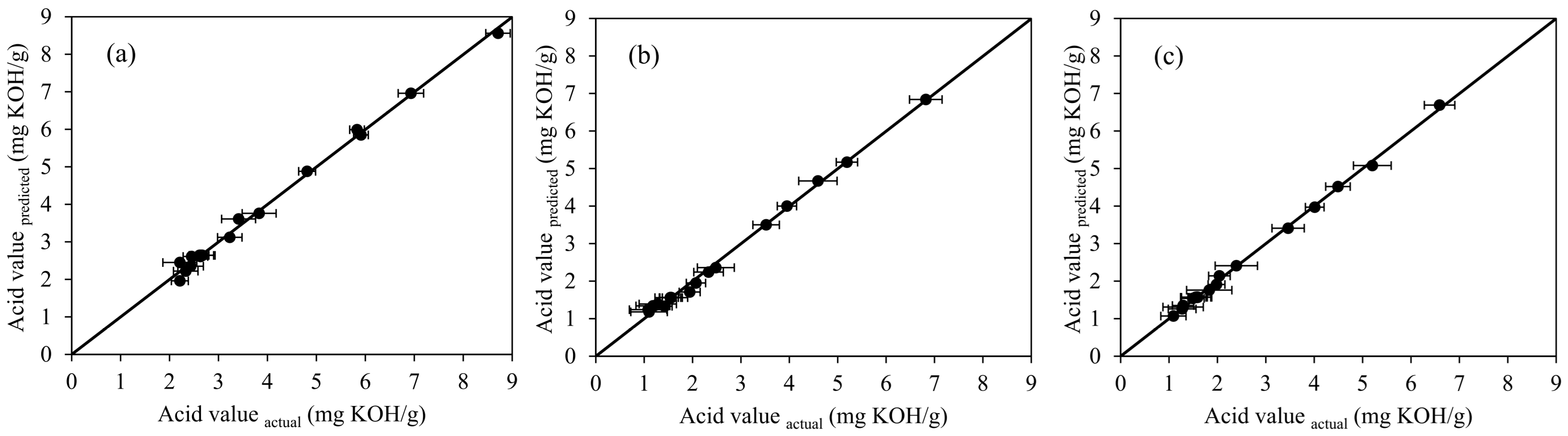
Figure 1. A comparison between predicted and experimental acid values for the batch esterification models using (a) hydrous ethanol, (b) anhydrous ethanol, and (c) AR-grade ethanol.
Catalysts 16 00050 g001
Figure 2. Three-dimensional response surface plots showing the effects of the ethanol content, sulfuric acid concentration, and reaction time on the acid value of CPO for ethanol and sulfuric acid (ac), ethanol and reaction time (df), and sulfuric acid and reaction time (gi), using hydrous ethanol (a,d,g), anhydrous ethanol (b,e,h), and AR-grade ethanol (c,f,i).
Catalysts 16 00050 g002
Figure 3. A comparison between the predicted and experimental acid values for the circulation batch esterification models using anhydrous ethanol.
Catalysts 16 00050 g003
Figure 4. Three-dimensional response surface plots showing the influence of three factors on the acid value of CPO: (a) the anhydrous ethanol content and sulfuric acid concentration, (b) the anhydrous ethanol content and circulation time, and (c) the sulfuric acid concentration and circulation time.
Catalysts 16 00050 g004
Figure 5. A schematic diagram of the experimental setup for the batch esterification process (M: digital overhead stirrer; FD: feeding port; PJ: paraffin oil jacket; SP: sampling port; PI: inlet of paraffin oil; PO: outlet of paraffin oil; ST: stirred tank reactor; RT: six-blade disk turbine; B: baffle; TC: temperature control).
Catalysts 16 00050 g005
Figure 6. A schematic diagram of the experimental setup for the circulation esterification process. (T1: CPO tank, T2: ethanol tank, T3: H2SO4 tank, P1: circulating pump, P2: dosing pump of ethanol, P3: dosing pump of H2SO4, HT: heater, V: valve, TC: temperature control, TPSM: twisted plate static mixer, S: sampling port).
Catalysts 16 00050 g006
Table 1. The design of the experiment, coded factor levels, and results of the batch esterification process.
RunEthanol
(vol.%)
H2SO4
(vol.%)
Reaction Time
(min)
Acid Value (mg KOH/g)
Hydrous EthanolAnhydrous EthanolAR-Grade Ethanol
ActualPredictedActualPredictedActualPredicted
118(−1.682)10(0)22.5(0)8.718.566.826.846.596.69
235(−1)8(−1)15(−1)5.835.994.594.674.494.52
335(−1)8(−1)30(+1)4.814.883.523.503.463.41
435(−1)12(+1)15(−1)6.936.965.195.175.205.08
535(−1)12(+1)30(+1)5.915.853.954.004.013.97
660(0)6.6(−1.682)22.5(0)3.233.122.071.951.981.91
760(0)10(0)9.9(−1.682)3.833.762.482.362.392.41
860(0)10(0)22.5(0)2.632.641.541.561.591.57
960(0)10(0)22.5(0)2.612.641.541.561.551.57
1060(0)10(0)22.5(0)2.672.641.561.561.591.57
1160(0)10(0)22.5(0)2.652.641.551.561.571.57
1260(0)10(0)35.1(+1.682)2.452.611.421.331.291.31
1360(0)13.4(+1.682)22.5(0)3.413.612.332.242.042.14
1485(+1)8(−1)15(−1)2.632.611.281.391.491.54
1585(+1)8(−1)30(+1)2.432.351.181.341.291.35
1685(+1)12(+1)15(−1)2.332.221.081.241.271.26
1785(+1)12(+1)30(+1)2.211.961.101.181.091.07
18102(+1.682)10(0)22.5(0)2.212.451.941.711.831.76
Table 2. Coefficients of the predictive model for the batch esterification process.
CoefficientHydrous Ethanol, Equation (1)Anhydrous Ethanol, Equation (2)AR-Grade Ethanol, Equation (3)
Valuep-ValueValuep-ValueValuep-Value
β018.80141.5679 × 10−616.95105.2389 × 10−715.19881.2853 × 10−8
β1−0.22564.1835 × 10−7−0.24662.5685 × 10−8−0.22485.0859 × 10−10
β2−0.80641.2733 × 10−2−0.71017.3474 × 10−3−0.51642.0561 × 10−3
β3−0.26952.0112 × 10−4−0.21122.1810 × 10−4−0.19745.5612 × 10−6
β4−0.00684.0607 × 10−4−0.00339.0598 × 10−3−0.00424.7931 × 10−5
β50.00117.3226 × 10−30.00153.1867 × 10−40.00122.3379 × 10−5
β60.00167.4724 × 10−90.00151.5385 × 10−90.00151.5960 × 10−11
β70.06445.7247 × 10−40.04759.2970 × 10−40.04016.4891 × 10−5
β80.00343.5846 × 10−30.00182.9433 × 10−20.00181.8079 × 10−3
R20.995 0.996 0.999
R2adjiusted0.9910.9930.997
Table 3. ANOVA results of the predictive model for the batch esterification process.
SourceSum of SquaresMean SquareF0FcriticalDegrees of Freedom
Hydrous ethanol, Equation (1)
Regression61.31857.6648246.113.238
Residual0.28030.0311 9
Total61.5988 17
Anhydrous ethanol, Equation (2)
Regression45.76315.7204292.463.238
Residual0.17600.0196 9
Total45.9391 17
AR-grade ethanol, Equation (3)
Regression42.93115.3664800.513.238
Residual0.06030.0067 9
Total42.9914 17
Table 4. Optimal conditions and esterified oil composition using three different solvents.
ParameterUnitHydrous
Ethanol
Anhydrous
Ethanol
AR-Grade
Ethanol
Ethyl esterwt.%11.1415.2615.96
Free fatty acidwt.%0.470.270.26
Triglyceridewt.%78.6774.5873.85
Diglyceridewt.%8.989.309.23
Monoglyceridewt.%0.740.590.70
Table 5. Comparison of the production cost of the batch esterification process for different ethanol grades.
ParameterUnitConditionVolume (L/Batch)Chemical Price (USD/L) 1Production Cost (USD/Batch) 2
Hydrous ethanolvol.%82.70.830.4950.411
H2SO4vol.%10.60.111.1530.127
Reaction timemin25.4 0.022
Total cost 0.560
Anhydrous ethanolvol.%78.10.780.5270.411
H2SO4vol.%10.20.101.1530.115
Reaction timemin26.3 0.023
Total cost 0.549
AR-grade ethanolvol.%77.70.7811.4808.954
H2SO4vol.%10.50.111.1530.127
Reaction timemin28.6 0.025
Total cost 9.106
Note: 1 Chemical prices are based on current market data and may vary with market size and demand. 2 The price calculation is based on 1 L of CPO as feedstock. Ethanol prices are based on current market data (USD/L): hydrous, 0.576 [39]; anhydrous, 0.602 [39]; AR-grade, 13.43 [40].
Table 6. The experimental design, coded factor levels, and results of the circulation esterification process.
RunAnhydrous Ethanol
(vol.%)
H2SO4
(vol.%)
Circulation Time
(min)
Acid Value (mg KOH/g)
ActualPredicted
118(−1.682)6(0)22(0)4.394.42
235(−1)3(−1)12(−1)5.365.17
335(−1)3(−1)32(+1)3.483.40
435(−1)9(+1)12(−1)3.453.44
535(−1)9(+1)32(+1)3.793.91
660(0)1(−1.682)22(0)5.315.64
760(0)6(0)5.2(−1.682)3.643.88
860(0)6(0)22(0)1.751.75
960(0)6(0)22(0)1.771.75
1060(0)6(0)22(0)1.761.75
1160(0)6(0)22(0)1.771.75
1260(0)6(0)38.8(+1.682)1.891.84
1360(0)11(+1.682)22(0)2.782.64
1485(+1)3(−1)12(−1)7.036.77
1585(+1)3(−1)32(+1)4.003.87
1685(+1)9(+1)12(−1)2.722.67
1785(+1)9(+1)32(+1)1.942.00
18102(+1.682)6(0)22(0)4.014.17
Table 7. Values of the coefficients of the predictive model for the circulation esterification process.
CoefficientValuep-Value
β013.68642.0517 × 10−7
β1−0.10321.1113 × 10−4
β2−1.37832.3496 × 10−6
β3−0.27685.4510 × 10−5
β4−0.00794.5896 × 10−5
β5−0.00115.3813 × 10−3
β60.01867.2979 × 10−5
β70.00143.7135 × 10−7
β80.09555.8862 × 10−7
β90.00391.7672 × 10−4
R20.991
R2adjiusted0.980
Table 8. ANOVA of the predictive model for the circulation esterification process.
SourceSum of SquaresMean SquareF0FcriticalDegrees of Freedom
Regression38.21414.246094.233.399
Residual0.36050.0451 8
Total38.5746 17
Table 9. Optimal conditions and esterified oil composition using anhydrous ethanol.
ParameterUnitValue
Ethyl esterwt.%15.00
Free fatty acidwt.%0.38
Triglyceridewt.%77.46
Diglyceridewt.%6.11
Monoglyceridewt.%1.05
Table 10. Production costs of the circulation esterification process for anhydrous ethanol.
ParameterUnitConditionVolume (L/Batch)Chemical Price (USD/L) 1Production Cost (USD/Batch) 2
Anhydrous ethanolvol.%66.90.670.5270.353
H2SO4vol.%7.30.071.1530.081
Circulation timemin27.7 0.026
Total cost 0.460
Note: 1 Chemical prices are based on current market data and may vary with market size and demand. 2 The price calculation is based on 1 L of CPO as feedstock. The current market price of anhydrous ethanol is 0.602 USD/L [39].
Table 11. Properties of three grades of ethanol.
PropertyHydrous
Ethanol
Anhydrous
Ethanol
AR-Grade
Ethanol
Ethanol content (vol.%) 95.0 99.9 99.9
Density (kg/L) at 20 °C0.8000.78920.790
Water content (by Coulometry, wt.%) 5.0 0.1 0.2
AlkalinityNot availableNot detected 0.0002
Color (Pt-Co) 15 10 10
Methanol (%) 0.01Not detected 0.05
Residue on evaporation (wt.%)Not available 0.002 0.001
Disclaimer/Publisher’s Note: The statements, opinions and data contained in all publications are solely those of the individual author(s) and contributor(s) and not of MDPI and/or the editor(s). MDPI and/or the editor(s) disclaim responsibility for any injury to people or property resulting from any ideas, methods, instructions or products referred to in the content.