Article

Selective Production of Hydrogen and Lactate from Glycerol Dehydrogenation Catalyzed by a Ruthenium PN3P Pincer Complex


1
Istituto di Chimica dei Composti Organometallici (ICCOM), Consiglio Nazionale delle Ricerche (CNR), Via Madonna del Piano 10, 50019 Sesto Fiorentino, Italy
2
Istituto di Chimica dei Composti Organometallici (ICCOM)-Sede Secondaria di Bari, Consiglio Nazionale delle Ricerche (CNR), c/o Università degli Studi di Bari “Aldo Moro”, Via Orabona 4, 70126 Bari, Italy
*
Author to whom correspondence should be addressed.
Catalysts 2026, 16(1), 48; https://doi.org/10.3390/catal16010048 (registering DOI)
Submission received: 26 November 2025 / Revised: 12 December 2025 / Accepted: 22 December 2025 / Published: 2 January 2026

Abstract

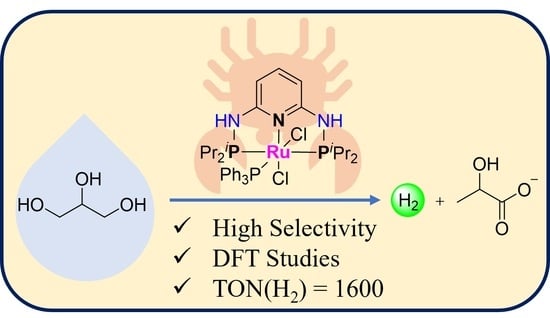
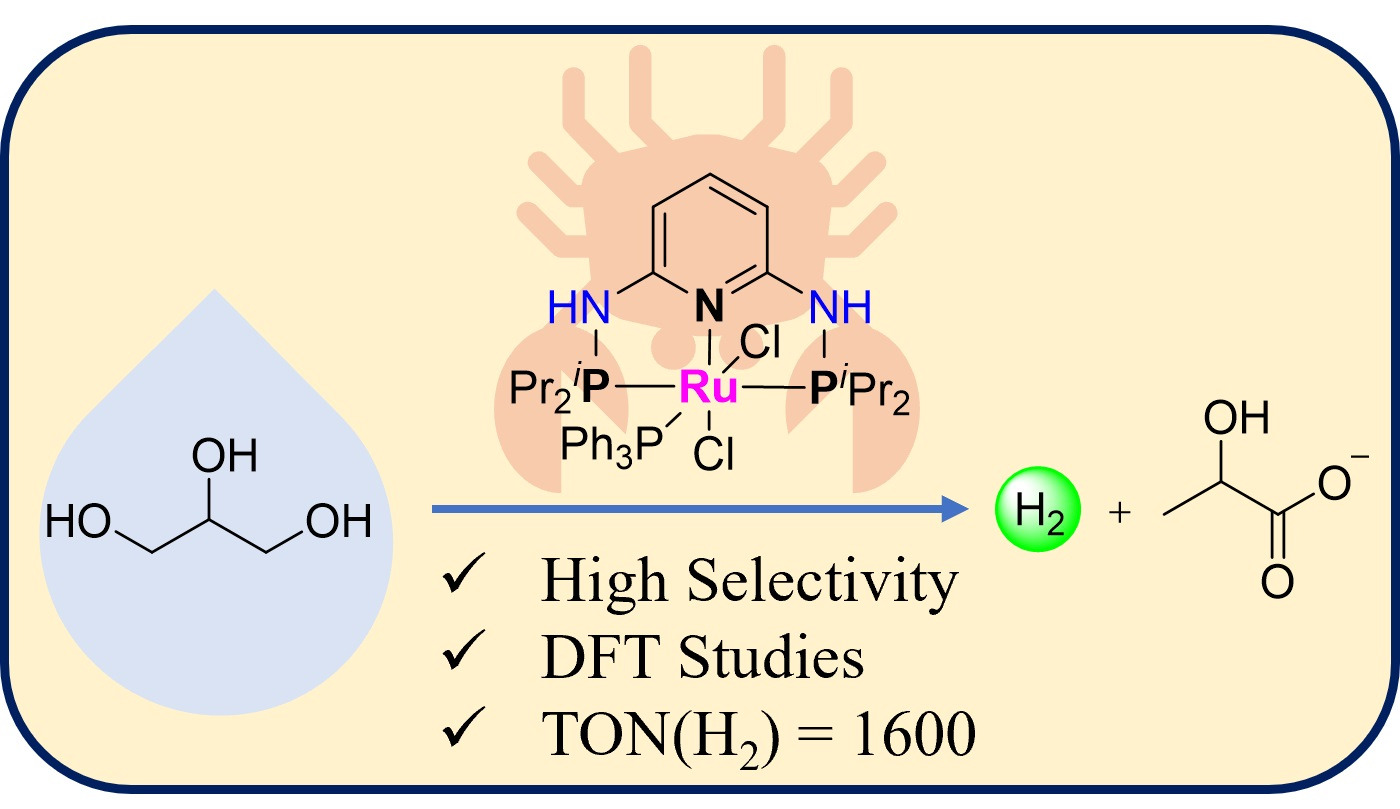
In the quest for cheap and abundant feedstocks for sustainable hydrogen production, glycerol is emerging as a cost-effective, promising liquid organic hydrogen-rich carrier (LOHC) that can be catalytically activated to produce hydrogen alongside valuable organic products. Selective catalytic acceptorless dehydrogenation of glycerol to lactate and hydrogen gas was achieved with a maximum turnover number (TONmax) of ca. 1600, using a pincer-type ruthenium(II) complex bearing a bis(aminophosphine)pyridine PN3P ligand as a homogeneous catalyst under moderate reaction conditions (24 h, 140 °C) in the presence of KOH as base. NMR experiments and DFT calculations provided insights into key steps of the catalytic process and the energetics of the proposed reaction pathway.

Graphical Abstract

1. Introduction

The generation of sustainable energy vectors is a topic of great interest to our society because of dwindling fossil fuel sources and rising energy consumption [1]. The use of hydrogen (H2) as fuel to feed PEM fuel cells for stationary and mobile applications has reached a mature stage of technological readiness, although critical bottlenecks still need to be overcome [2]. A critical issue is to find renewable, cost-effective and abundant sources for hydrogen production, among which water and non-edible biomass derivatives are the most promising. Although research in green hydrogen production from water electrolysis is prominent, a supply of renewable electricity (i.e., solar or wind power) is not always available [3,4,5]. Hydrogen generation from enzymatic biomass fermentation, gasification, supercritical water reforming and aqueous phase reforming by heterogeneous catalysts has been widely studied [6,7]; however, the practical use of these processes, in particular those based on lignocellulosic biomass, is still in its infancy and needs harsh reaction conditions. Thus, it is of interest to explore alternative methods for hydrogen production from renewables under milder conditions, such as those that can be achieved by homogeneous catalysis. Suitable simple hydrogen-rich organic molecules can be used as feedstocks to produce H2 and added-value organic products by selective bond-breaking and bond-making reactions promoted by homogeneous catalysts [8]. Among these molecules, glycerol, produced as waste by-product from biodiesel industry, is receiving attention as a suitable candidate [9,10,11]. Compared to other alcohols, such as methanol (MeOH) and ethanol (EtOH), glycerol has the advantages of higher boiling point, non-flammability and lower toxicity [12]. Many useful added-value products such as propanediol, dihydroxyacetone and lactic acid (LA) [13,14,15] can be obtained from glycerol, which can also be exploited as the LOHC (liquid organic hydrogen carrier) [16,17,18] for H2 generation. Lactic acid (LA), commonly obtained from fermentation of carbohydrates and alcohols, is a widely used chemical in food, pharmaceuticals, cosmetics, biodegradable polyethene, detergents and the manufacture of polylactic acid [19,20]. Traditional methods for the manufacturing of LA still require tedious purification and workup, leading to generally low yields and productivities [21].
Heterogeneous catalysis and biocatalysis [22] have been applied for hydrogen production from glycerol [23,24]. Heterogeneous catalysis is promising but generally requires temperature regimes above 350 °C at atmospheric pressure or over 220 °C at pressures > 2 MPa [25,26,27,28]. Recent efforts have been made to develop hydrogen from glycerol by homogeneous catalysis using acceptorless dehydrogenation (AD, Scheme 1), a cost-effective and oxidant-free method for converting (poly)alcohols into carbonyl compounds [29], releasing H2 as byproduct [30].
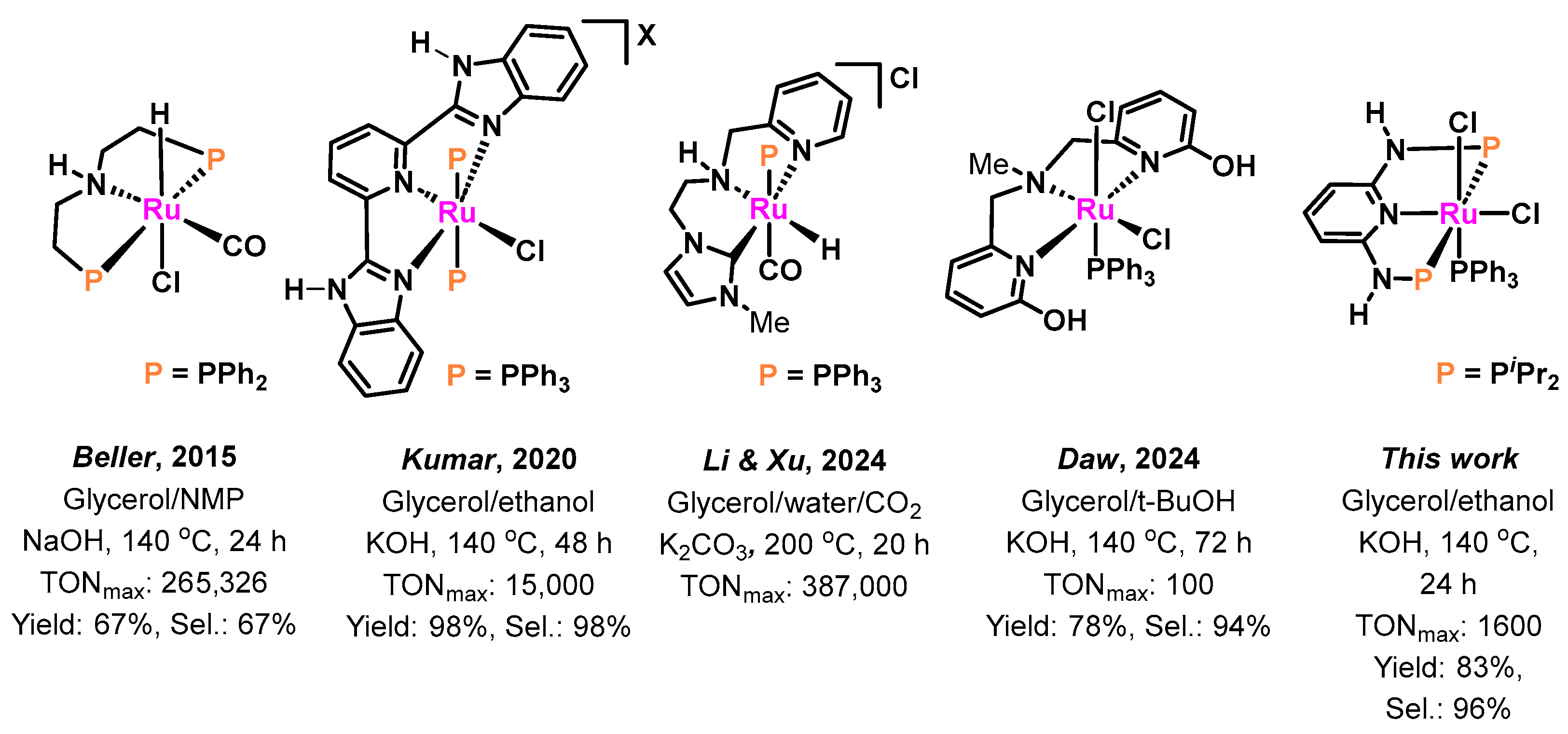
Recent reports demonstrated that, by subtle combinations of transition metals and functional ligands, efficient catalytic systems for glycerol AD to LA and H2 can be obtained [8,31,32]. Some of the most active ruthenium complexes for this reaction are shown in Figure 1 and Table S1 (Supporting Information). For example, Beller and coworkers applied the well-known MACHO-type pincer complex [RuH(Cl)(PNP)(CO)] [PNP = bis(2-(diphenylphosphino)ethyl)amine] for the selective conversion of glycerol to LA in up to 67% yield [33]. Kumar and co-workers synthesized Ru(NNN) complexes stabilized by bis(imino)pyridine and 2,6-bis(benzimidazol-2-yl)pyridine ligands, showing that trans-[RuCl(Bim2NNN)(PPh3)2)]Cl [Bim2NNN = 2,6-di(1H-benzo[d]imidazol-2-yl)pyridine] gave remarkable efficiency, reaching 90% yield of LA with 98% selectivity [34]. More recently, Li, Xu and coworkers utilized glycerol as an in situ hydrogen source for the transfer hydrogenation of CO2 to formate with co-generation of lactate, in the presence of [RuH(Cl)(CNN)(CO)], bearing a CNN pincer ligand based on N-heterocyclic carbene (NHC) moieties, reaching turnover numbers (TONs) up to 300,000 and 387,000 for formate and lactate, respectively [35]. Daw and coworkers reported the use of cis-[RuCl2(NNN)(PPh3)] catalyst [NNN = 6,6′-(methylazanediyl)bis(methylene)dipyridin-2-ol], achieving 73% yield of LA (96% selectivity) along with H2 [36]. Good conversions (99%) and TON = 409 were obtained in water as solvent by Li and coworkers using the Ru-arene complex [(p-cymene)Ru(2-OH-6-BzlmHpy)Cl]Cl bearing a bifunctional imidazolyl-pyridine ligand (2-OH-6-BzlmHpy = 6-(1H-benzo[d]imidazol-2-yl)pyridin-2-ol) [37].
Iridium complexes were also shown to be highly efficient for glycerol AD [32]. Among recent examples, Macchioni and coworkers showed a highly efficient catalytic protocol (TON = 2498) based on [Cp*Ir(pica-Lx)Cl] complexes, bearing glucose-tethered picolylamido ligands [pica = 2-picolinamidate, L1 = (methyl-3,4,6-tri-O-acetyl-β-D-glucopyranosid-2-yl); L2 = (methyl-β-D-glucopyranosid-2-yl)] [38]. Weller, Kumar and coworkers disclosed the use of [Ir(iPr-PNHP)(COD)]Cl [iPr-PNHP = (iPr2PCH2CH2)2NH], achieving high conversions (96% yield) with excellent selectivity (99%) at short reaction times (4 h) at moderate temperatures (140 °C) [39]. In recent years, complexes of 3d metals such as Fe and Mn bearing PNP pincer ligands have also been applied for glycerol AD [40,41,42,43]. In the last decade, we and others have been studying the use of an interesting class of pincer-type PN3P ligands based on bis(aminophosphine)pyridine cores, for successful hydrogenation and dehydrogenation reactions [44,45,46,47,48,49]. Some of their Ru, Fe and Mn complexes showed that low-energy reaction pathways can be triggered by metal-ligand cooperativity (MLC) exploiting (reversible) ligand deprotonation on the NH moiety and pyridine core dearomatization. Although formic acid dehydrogenation was previously demonstrated in the presence of Ru [50], Fe [51] and Mn [52] PN3P complexes, to the best of our knowledge their use in catalytic glycerol AD has not yet been reported. Thus, we studied the properties of two Ru(II) and one Mn(I) PN3P pincer complexes as catalysts for this reaction. The main catalytic results are hereby presented, along with mechanistic studies obtained through a combination of experimental techniques (Nuclear Magnetic Resonance, NMR) and Density Functional Theory (DFT) calculations.

2. Results and Discussion

2.1. Catalytic Tests

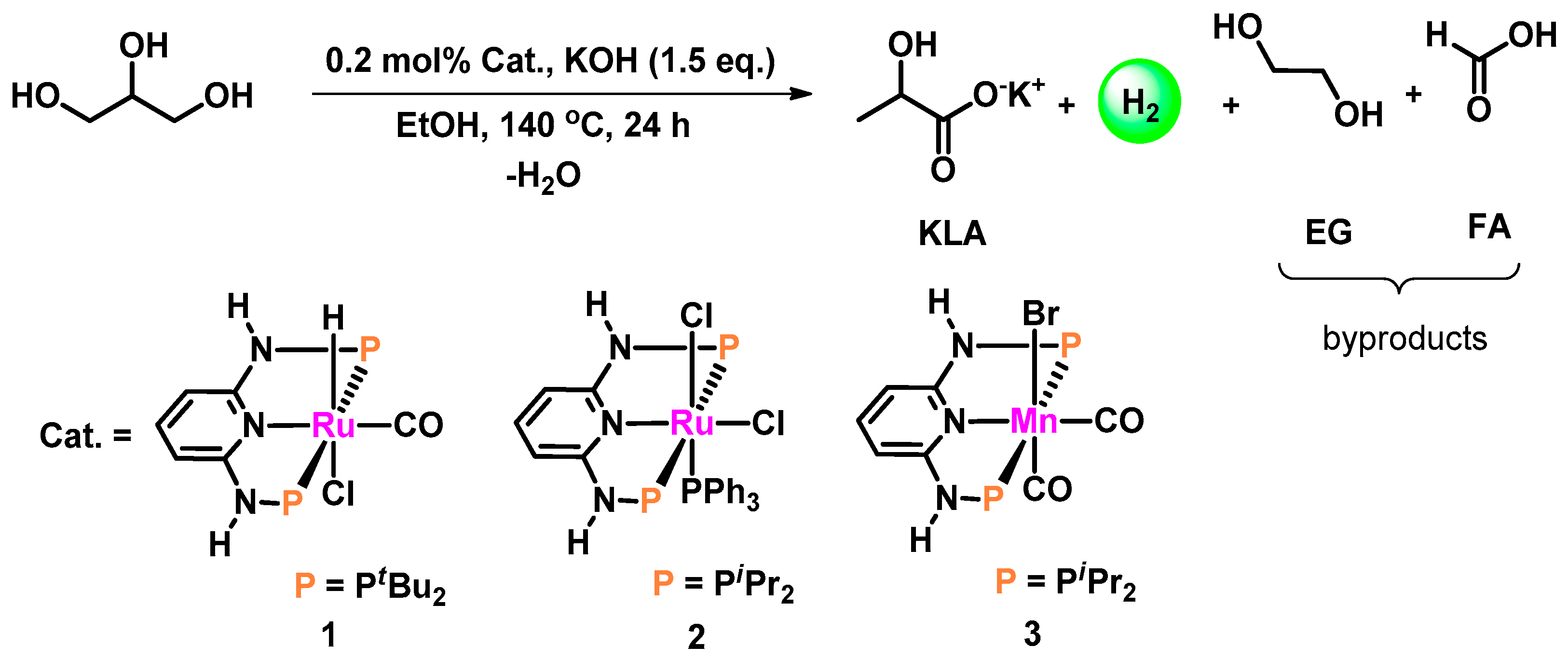
The PN3P pincer complexes [RuH(Cl)(CO)(PN3P-tBu)] (1), cis-[RuCl2(PN3P-iPr)(PPh3)] (2) and cis-[MnH(CO)2(PN3P-iPr)] (3) shown in Scheme 2 were synthesized according to literature methods [29,53] by reacting the PN3P ligands with 1 equiv. of [RuH(Cl)(CO)(PPh3)3] for 1, [RuCl2(PPh3)3] for 2 and [Mn(CO)5Br] for 3, respectively. The 1H, 31P{1H} NMR and Fourier Transform Infrared spectroscopy (FTIR) characterization of the products, obtained as a yellow or orange powders after workup, were consistent with the reported data.
Complexes 13 were initially tested for glycerol dehydrogenation under the conditions reported by Kumar and coworkers [34], i.e., in the presence of 1.5 equiv. of KOH, ethanol (2 mL), 140 °C, 24 h (Table 1). With complex 1, potassium lactate (KLA) was obtained in low yield (2%, entry 1), likely due to poor thermal stability of the precatalyst under these reaction conditions. To our delight, complex 2, having iPr substituents on the phosphorus donor atoms and different ancillary ligands (Cl, PPh3) compared to 1, catalyzed glycerol dehydrogenation giving KLA in 77% yield and >99% selectivity (entry 2). On the other hand, complex 3 was almost inactive (entry 3). Control experiments with either free PN3P-iPr ligand or the Ru precursor of 2, i.e., [RuCl2(PPh3)3], gave no conversion to KLA (entries 4 and 5). Similarly, this reaction did not occur in the absence of a catalyst (entry 6).
Next, the effects of reaction parameters such as the type of solvent and base were screened in detail to further improve the efficiency of the process. The results are summarized in Table 2 and Table 3, respectively. The choice of solvent had a significant effect on the conversion of glycerol and on the selectivity toward lactate (Table 2). Using N-methylpyrrolidone (NMP) as solvent and a 2/KOH ratio of 1:750, KLA was obtained in 73% yield with a corresponding TONH2 of 365 (entry 1). Interestingly, 1H NMR analysis of the post-catalytic reaction mixture revealed that under the described conditions NMP partially underwent ring opening to give sodium-4-N-methylaminobutanoate, suggesting a potential side reaction involving nucleophilic attack on NMP by hydroxide under basic reaction conditions [41]. When an NMP/H2O (1:1) mixture was used as the solvent, only 9% of lactate was produced (entry 2). The adverse effect of added water is unclear, maybe due to catalyst decomposition, as evidenced by the white-colored solution observed at the end of the reaction. Changing the solvent to toluene resulted in only 20% KLA yield at the end of the reaction (entry 3). Using dioxane produced only 13% lactate (entry 4), probably because in this solvent complex 2 is only partially soluble. Additionally, we attempted to perform the reaction under solvent-free conditions. Only a 20% yield of KLA was obtained (86% selectivity), likely due to the high viscosity of the reaction mixture, which hindered effective mixing of catalyst and substrate (entry 5). Similar results were observed when dry THF was used as solvent (entry 6). After several trials with aprotic solvents, alcohols were examined as protic solvents, and EtOH gave the best yield in KLA (77%, entry 7). In case of iPrOH, only 17% conversion was observed (entry 8), whereas in tBuOH a 57% yield of KLA was observed (entry 9). Based on the results of this screening, EtOH was chosen as the solvent for the rest of the study.
Next, different bases were tested, revealing that potassium hydroxide (KOH) produced the highest lactate yields and selectivities (Table 3). When replacing KOH with sodium methoxide (NaOMe), 31% KLA yield was obtained, with TONH2 = 155 (entry 1). Using NaOH and NaOtBu led to even lower yields of 17–18%, respectively (entries 2 and 3). Notably, employing KOtBu as base produced a higher yield of 80% lactate and a TONH2 of 400 (entry 4), indicating its superior performance among the tested bases. Conversely, utilizing K2CO3, a weaker base, resulted as expected in a lower yield and poor selectivity (entry 5). Organic bases such as DBU and NEt3 were ineffective, producing negligible amounts of lactate and volumes of hydrogen (entries 6 and 7). The effect of the reaction time and temperature were also examined to optimize the reaction protocol (entry 8). The results showed that, for reactions carried out at 140 °C, runs of 24–48 h were necessary to obtain high glycerol conversion. Lowering the temperature to 120 °C led to reduced yields but still maintained high selectivity, suggesting that higher temperatures accelerate the reaction without compromising selectivity.
Finally, the effect of catalyst amount was studied, and the results are shown in Table 4. Using 0.05 mol% of 2 yielded an 82% yield of KLA with 95% selectivity and a TONH2 of 1600 (entry 2). When the catalyst loading was reduced to 0.02 mol%, 18% yield was obtained with 99% selectivity after 24 h, with TONH2 = 900.
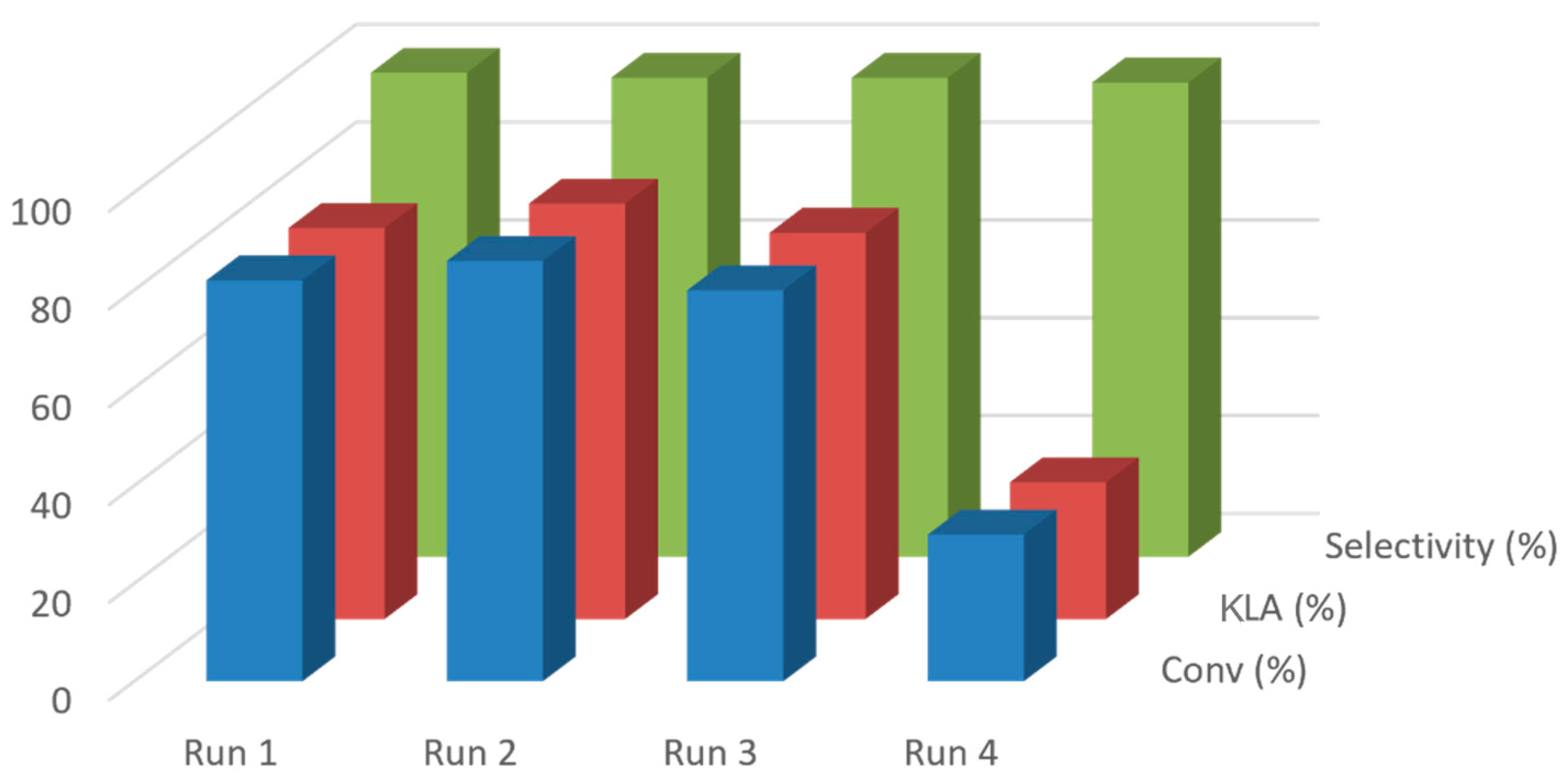
Catalyst recycling experiments were also carried out under the catalytic conditions reported for entry 1, Table 4, by adding new aliquots of substrate to the vessel after a set reaction time (Figure 1). In the first run, complex 2 gave an 82% conversion of glycerol with 99% selectivity for KLA, while in the second and third runs yields of 80% and 75% were obtained with 98% and 97% selectivities, respectively. In the fourth run, a marked decrease in conversion was observed, with a low 19% yield of KLA (Figure 2). No significant improvement was observed by extending the reaction time to 30 h. These data indicate that catalyst deactivation and/or decomposition may occur after three consecutive runs, hampering direct application for industrial use.

2.2. Mechanistic Studies

The mechanism of glycerol catalytic dehydrogenation in the presence of 2 was initially studied using NMR spectroscopy to understand the precatalyst activation step. In the first series of experiments (Figure S24a), complex 2 (5 mg) was dissolved in CD2Cl2 under nitrogen at room temperature and 1H NMR was collected. A sample of EtOH was analyzed by 1H NMR showing the presence of a signal at 4.39 ppm due to the OH group (Figure S24b). After the addition of EtOH (100 equivalents) to 2, the 1H NMR spectrum displayed a shift in the signal due to OH from 4.39 ppm to 2.52 ppm, indicative of coordination of EtOH to the Ru center, presumably by dissociation of one chloride ligand, now resulting as a counter ion in the putative [RuCl(PN3P-iPr)(PPh3)(EtOH)]Cl complex (Figure S24c). By addition of KOH or other strong bases to the sample, this complex then underwent deprotonation at one or more acidic sites, for example the metal-coordinated EtOH ligand, giving [RuCl(PN3P-iPr)(PPh3)(EtO)], or by PNP ligand N-H bond deprotonation to give [RuCl(PN3P-iPr)(PPh3)(EtOH)] (PN3P-iPr = monodeprotonated PNP ligand). As 1H NMR spectroscopy was not sufficient to clarify this point, we turned to Density Functional Theory (DFT) calculations to pinpoint details on precatalyst activation and to find out the lowest energy reaction pathway for the entire process.
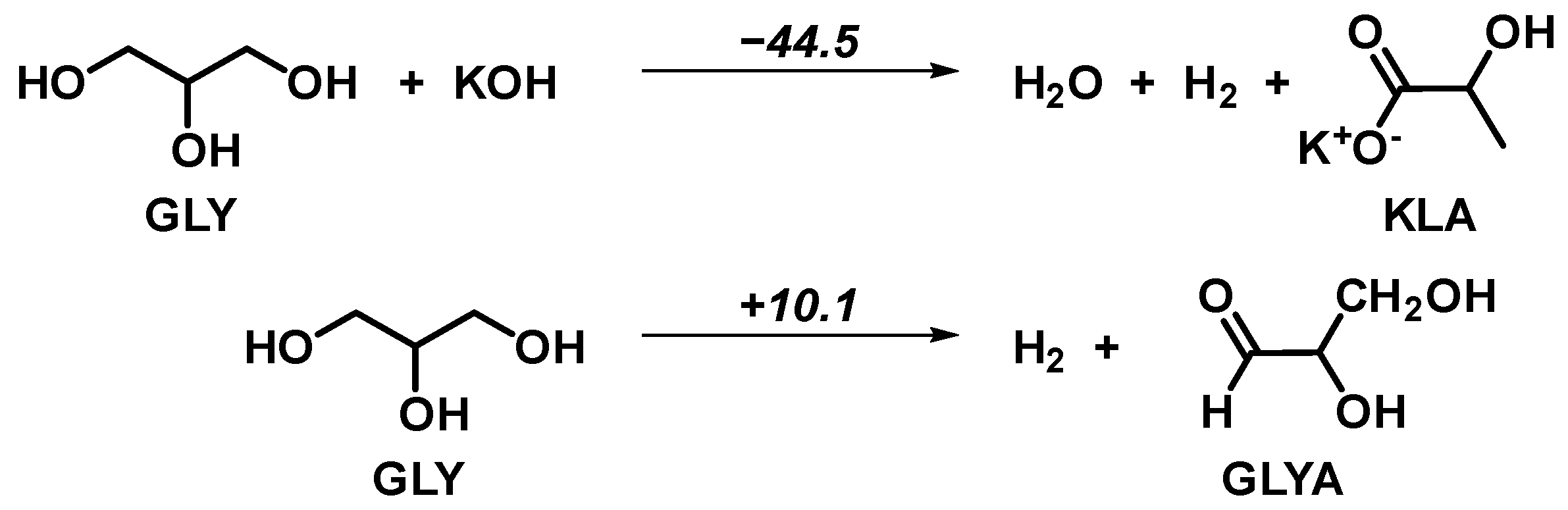
The DFT study was carried out at the M06-2X level of theory using the Gaussian 16 software package (for the full description see Supporting Information) [54,55,56,57,58,59,60]. Solvent effects were modeled using the CPCM solvent model for ethanol, the same employed in the experimental tests. All calculations were performed at 140 °C, the reaction temperature used in optimized experimental runs. First of all, the free energy change for the two possible overall reactions shown in Scheme 3 were evaluated. The neat reaction of glycerol (GLY) with KOH to give KLA, H2O and H2 was estimated to be strongly exergonic (−44.5 kcal·mol−1). In contrast, the conversion of glycerol to glyceraldehyde (GLYA) and H2 in the absence of base (bottom of Scheme 3) was calculated to be endergonic by +10.1 kcal·mol−1. This suggests that the driving force of the overall reaction resides in a substantial free energy gain in the (uncatalyzed) conversion of the glyceraldehyde, formed upon glycerol AD, to the final products.
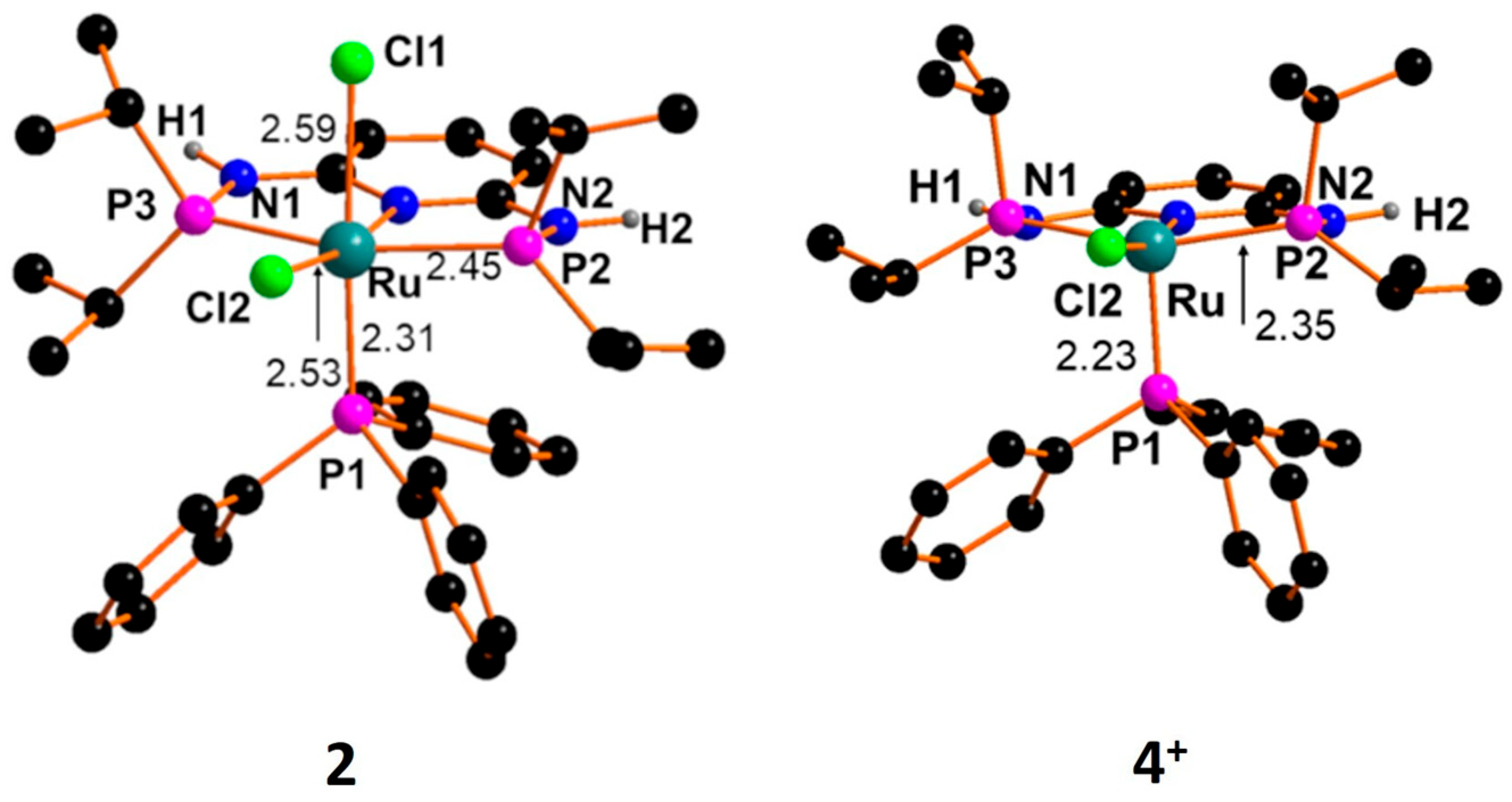
After structural optimization of complex 2 (Figure 3, left), the most favored precatalyst activation mechanism was assessed (full details in Supporting Information). The initial step involves the dissociation of a chloride ligand from the metal center. Calculations showed that the five-coordinate cationic complex 4+ (Figure 3, right) resulting from the dissociation of Cl1 trans to P1 with ΔG = −1.3 kcal·mol−1 is preferred over 5+ (removal of Cl2 cis to P1, Figure S26), a process with ΔG = +10.3 kcal·mol−1.
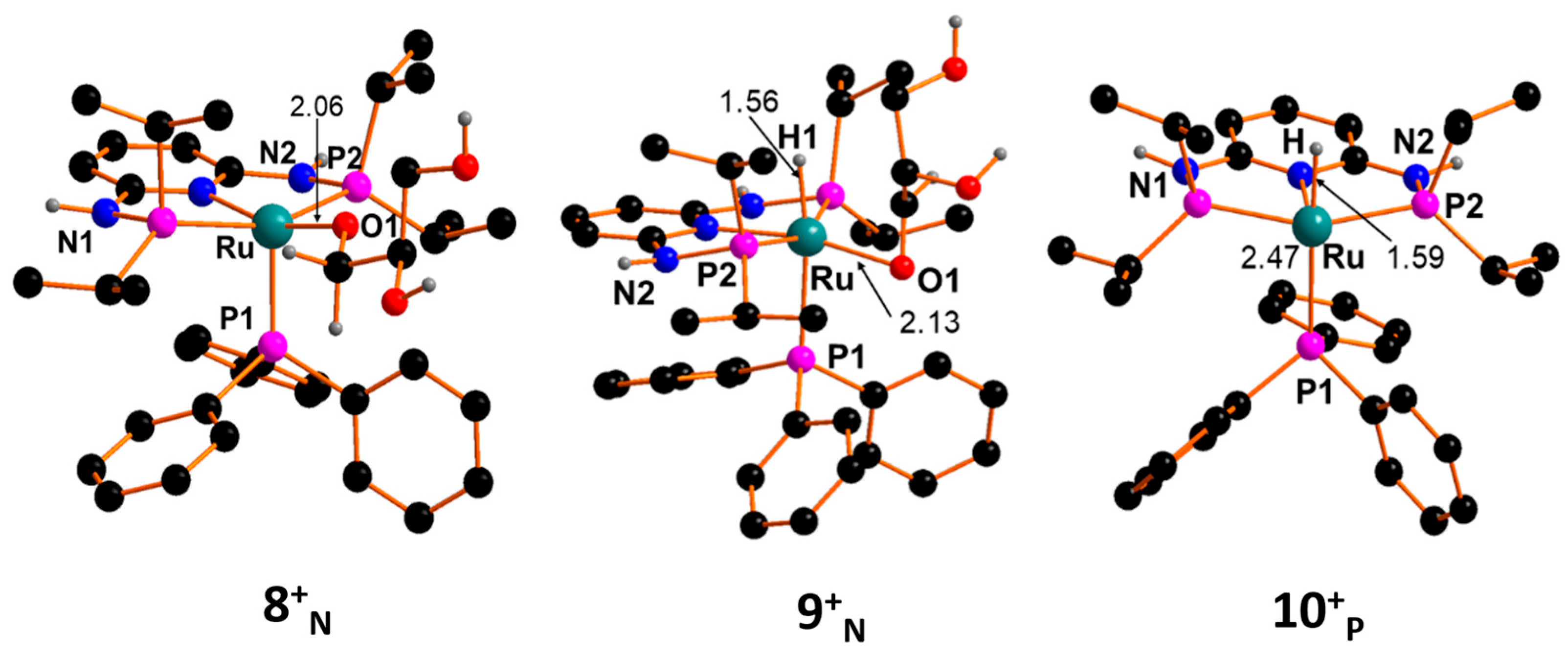
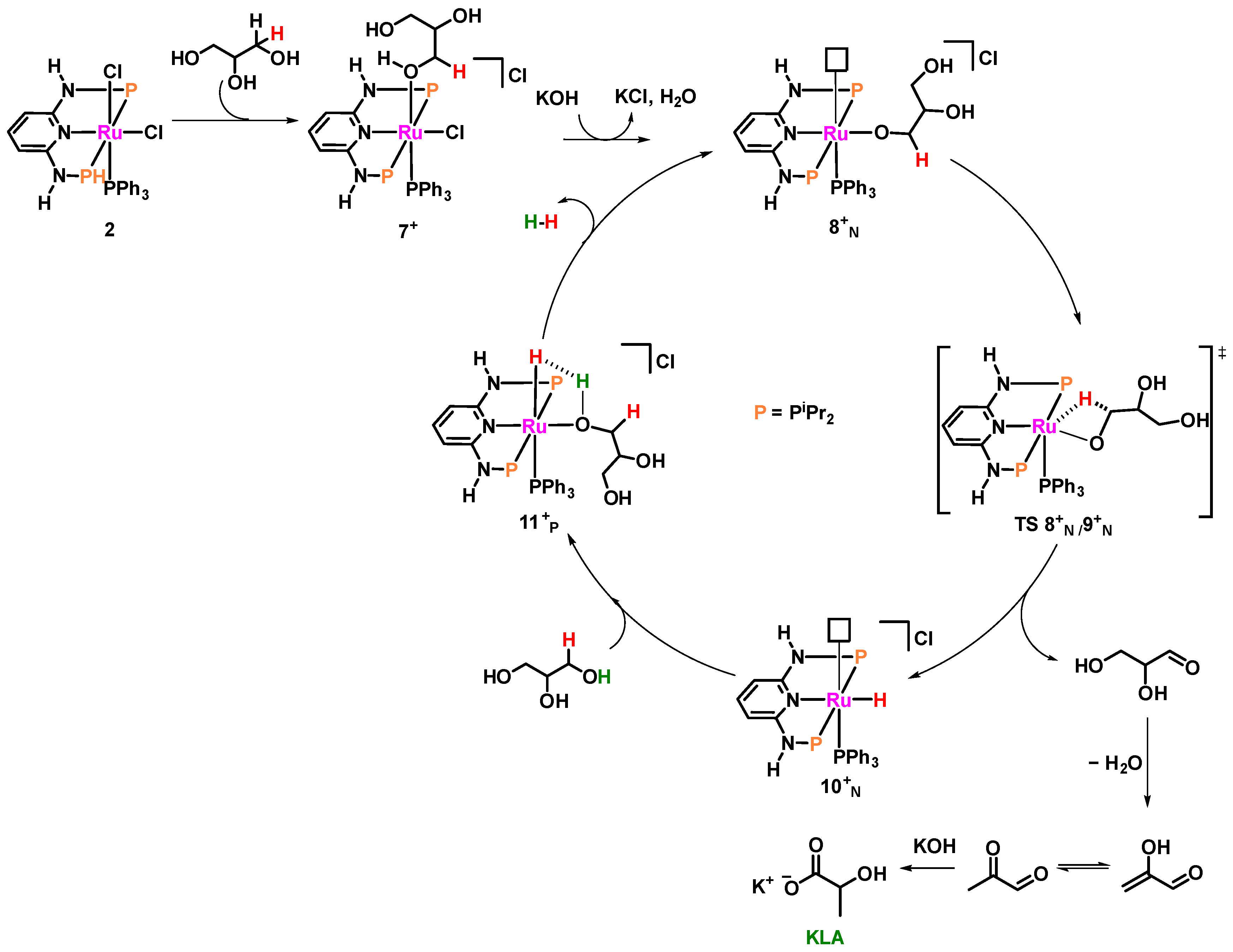
Complex 4+ may then coordinate either a molecule of EtOH (solvent) or GLY (substrate), yielding 6+ or 7+ respectively (Figure S27, Supporting Information), with only a slight preference for 7+ (7.5 kcal·mol−1 vs. 8.4 kcal·mol−1). Next, the effect of KOH in the preactivation step was studied. It was established that the favorite path (exergonic by −28.0 kcal·mol−1) is the deprotonation of coordinated glycerol in 7+, to provide neutral complex 7O (Figure S28, Supporting Information), whereas deprotonation of either EtOH in 6+ or the PN3P ligand in 7+ is less favored. After dissociation of the second Cl ligand in 7O, the active catalytic species 8+N, featuring a glycerate ligand trans to the pyridine N atom (Figure 4, left), is preferentially formed (full details in Supporting Information). The β-elimination step then occurs, overcoming a barrier of 23.0 kcal mol−1 followed by a free energy gain of −10.2 kcal mol−1, giving 9+N (Figure 4, center), bearing a hydrido ligand trans to PPh3 and glycerate trans to pyridine N atom. From 9+N, glyceraldehyde can then be released with a free energy gain of −6.5 kcal·mol−1, yielding the five-coordinate complex 10+P (Figure 4, right). By coordination of a second glycerol molecule in the vacant coordination site, the octahedral intermediate 11+N (Figure S33 left, Supporting Information) is formed with a free energy cost of only 4.0 kcal·mol−1.
At this point, formation of a η2-H2 ligand occurs by proton transfer from coordinated glycerol to the hydrido ligand, overcoming a calculated energy barrier of ca. 20.2 kcal mol−1, to give the most favored isomer 12+P (Figure S35, Supporting Information). Finally, H2 is released from 12+P, restoring the initial 8+N with a free energy gain of −12.1 kcal mol−1, and the system is ready to restart the catalytic cycle. The free energy pathway for H2 formation through glycerol activation (Figure S36, Supporting Information) has a free energy cost of 10.1 kcal mol−1. Glyceraldehyde undergoes an uncatalyzed, off-cycle organic reaction under alkaline conditions to give KLA with a free energy gain as large as −54.6 kcal mol−1. Based on these results, we propose the simplified catalytic mechanism shown in Scheme 4.

3. Experimental Section

General Procedure for Glycerol Catalytic Dehydrogenation

In a typical experiment, the catalytic mixture containing solvent, catalyst and base was prepared in a Schlenk tube under a nitrogen atmosphere. The tube was then placed into an oil bath preheated to the desired temperature and stirred at 500 rpm for the specified reaction time. After the run, the Schlenk tube was cooled to <10 °C using an ice bath. The pressure was gently released into a manual gas burette to measure hydrogen evolution, then the solvent was evaporated under reduced pressure. The Schlenk tube was thoroughly rinsed with H2O, and the washings were added to the rest of the mixture. Sodium acetate (1 equiv. to glycerol) was added as an internal standard, and the lactate content was determined by integration of the corresponding 1H NMR signal vs. NaOAc. D2O (ca. 0.7 mL) was added as a deuterated solvent. All tests were repeated at least twice to ensure reproducibility (average error ca. 6%).

4. Conclusions

In conclusion, complex [RuCl2(PN3P-iPr)(PPh3)] (2) showed high activity for glycerol dehydrogenation, reaching TON = 1600 in single batch runs, at a catalyst loading as low as 0.05 mol% under optimized conditions. Mechanistic studies suggest a fully inner-sphere mechanism centered on complex [Ru(GLY)(PN3P-iPr)(PPh3)]+ (8+N, GLY = glycerate) that represents the active form of the catalyst. These results demonstrate the potential of PN3P-type Ru(II) molecular complexes in glycerol dehydrogenation, that may contribute to greener chemical processes and the utilization of biomass-derived feedstocks. Further optimization of the catalysts by design of modified PN3P ligands is currently in progress in our laboratories.

Supplementary Materials

The following supporting information can be downloaded at: https://www.mdpi.com/article/10.3390/catal16010048/s1, General Methods and Materials; Literature data for selected, active Ru(II) catalysts for glycerol acceptorless dehydrogenation; 1H NMR Spectra of Catalytic Runs; NMR Spectra of Mechanistic Experiments; DFT Calculations Methods and Full Description; Cartesian coordinates and free energies (.xyz) of all the structures optimized in the computational analysis (M062X level of theory) in ethanol solution.

Author Contributions

Conceptualization, L.G. and G.M.; methodology, S.P. and S.K.; validation, S.K. and G.M.; investigation, S.P., S.K. and G.M.; data curation, S.P., G.M. and L.G.; writing—original draft preparation, S.P., S.K., G.M. and L.G.; writing—review and editing, L.G.; supervision, L.G.; project administration, L.G.; funding acquisition, L.G. All authors have read and agreed to the published version of the manuscript.

Funding

This research was funded by the European Union–NextGeneration EU under the National Recovery and Resilience Plan (NRRP), Mission 4, Component 2, Investment 1.1, Call for tender No. 104 published on 2 February 2022 by the Italian Ministry of University and Research (MUR), funded by the European Union–NextGenerationEU–Project PRIN 20225N5T5B “ALCOVAL”–CUP B53D23015120006-Grant Assignment Decree No. 1064 adopted on 18 July 2023 by the Italian Ministry of University and Research (MUR).

Data Availability Statement

Data is contained within the article or supplementary material.

Acknowledgments

G.M. acknowledges the CINECA award under the ISCRA initiative, for the availability of high-performance computing resources and support.

Conflicts of Interest

The authors declare no competing financial interests.

References

  1. Christopher, K.; Dimitrios, R. A review on exergy comparison of hydrogen production methods from renewable energy sources. Energy Environ. Sci. 2012, 5, 6640–6651. [Google Scholar] [CrossRef]
  2. Armaroli, N.; Balzani, V. The hydrogen issue. ChemSusChem 2011, 4, 21–36. [Google Scholar] [CrossRef]
  3. Chen, X.; Shen, S.; Guo, L.; Mao, S.S. Semiconductor-based photocatalytic hydrogen generation. Chem. Rev. 2010, 110, 6503–6570. [Google Scholar] [CrossRef] [PubMed]
  4. Maschmeyer, T.; Che, M. Catalytic Aspects of Light-Induced Hydrogen Generation in Water with TiO2 and Other Photocatalysts: A Simple and Practical Way Towards a Normalization? Angew. Chem. Int. Ed. 2010, 49, 1536–1539. [Google Scholar] [CrossRef]
  5. Artero, V.; Chavarot-Kerlidou, M.; Fontecave, M. Splitting water with cobalt. Angew. Chem. Int. Ed. 2011, 50, 7238–7266. [Google Scholar] [CrossRef]
  6. Cortright, R.D.; Davda, R.R.; Dumesic, J.A. Hydrogen from catalytic reforming of biomass-derived hydrocarbons in liquid water. Nature 2002, 418, 964–967. [Google Scholar] [CrossRef] [PubMed]
  7. Azadi, P.; Farnood, R. Review of heterogeneous catalysts for sub-and supercritical water gasification of biomass and wastes. Int. J. Hydrogen Energy 2011, 36, 9529–9541. [Google Scholar] [CrossRef]
  8. Ansari, M.F.; Anshika Sortais, J.B.; Elangovan, S. Transition-Metal-Catalysed Transfer Hydrogenation Reactions with Glycerol and Carbohydrates as Hydrogen Donors. Eur. J. Org. Chem. 2024, 27, 202301278. [Google Scholar] [CrossRef]
  9. Wendisch, V.F.; Lindner, S.N.; Meiswinkel, T.M. Use of Glycerol in Biotechnological Applications. In Biodiesel-Quality, Emissions and By-Products; Montero, G., Stoytcheva, M., Eds.; IntechOpen: London, UK, 2011; pp. 305–340. [Google Scholar]
  10. Rubianto, L.; Sudarminto, H.P.; Udjiana, S. Combination of biodiesel, glycerol, and methanol as liquid fuel. IOP Conf. Ser. Mater. Sci. Eng. 2021, 1073, 012005. [Google Scholar] [CrossRef]
  11. Attarbachi, T.; Kingsley, M.D.; Spallina, V. New trends on crude glycerol purification: A review. Fuel 2023, 340, 127485. [Google Scholar] [CrossRef]
  12. Vaidya, P.D.; Rodrigues, A.E. Glycerol reforming for hydrogen production: A review. Chem. Eng. Technol. 2009, 32, 1463–1469. [Google Scholar] [CrossRef]
  13. Lam, C.H.; Bloomfield, A.J.; Anastas, P.T. A switchable route to valuable commodity chemicals from glycerol via electrocatalytic oxidation with an earth abundant metal oxidation catalyst. Green Chem. 2017, 19, 1958–1968. [Google Scholar] [CrossRef]
  14. Ainembabazi, D.; Wang, K.; Finn, M.; Ridenour, J.; Voutchkova-Kostal, A. Efficient transfer hydrogenation of carbonate salts from glycerol using water-soluble iridium N-heterocyclic carbene catalysts. Green Chem. 2020, 22, 6093–6104. [Google Scholar] [CrossRef]
  15. Jiang, Z.; Zhang, Z.; Wu, T.; Zhang, P.; Song, J.; Xie, C.; Han, B. Efficient Generation of Lactic Acid from Glycerol over a Ru-Zn-CuI/Hydroxyapatite Catalyst. Chem. Asian J. 2017, 12, 1598–1604. [Google Scholar] [CrossRef]
  16. Kumar, A.; Daw, P.; Milstein, D. Homogeneous Catalysis for Sustainable Energy: Hydrogen and Methanol Economies, Fuels from Biomass, and Related Topics. Chem. Rev. 2022, 122, 385–441. [Google Scholar] [CrossRef]
  17. Yadav, V.; Sivakumar, G.; Gupta, V.; Balaraman, E. Recent Advances in Liquid Organic Hydrogen Carriers: An Alcohol-Based Hydrogen Economy. ACS Catal. 2021, 11, 14712–14726. [Google Scholar] [CrossRef]
  18. Bisarya, A.; Karim, S.; Narjinari, H.; Banerjee, A.; Arora, V.; Dhole, S.; Dutta, A.; Kumar, A. Production of hydrogen from alcohols via homogeneous catalytic transformations mediated by molecular transition-metal complexes. Chem. Commun. 2024, 60, 4148–4169. [Google Scholar] [CrossRef]
  19. Dusselier, M.; Van Wouwe, P.; Dewaele, A.; Makshina, E.; Sels, B.F. Lactic acid as a platform chemical in the biobased economy: The role of chemocatalysis. Energy Environ. Sci. 2013, 6, 1415–1442. [Google Scholar] [CrossRef]
  20. Komesu, A.; de Oliveira, J.A.R.; da Silva Martins, L.H.; Maciel, M.R.W.; Filho, R.M. Lactic Acid Production to Purification: A Review. BioResources 2017, 12, 4364–4383. [Google Scholar] [CrossRef]
  21. Abdel-Rahman, M.A.; Sonomoto, K. Opportunities to overcome the current limitations and challenges for efficient microbial production of optically pure lactic acid. J. Biotechnol. 2016, 236, 176–192. [Google Scholar] [CrossRef]
  22. Sarma, S.J.; Brar, S.K.; Sydney, E.B.; Le Bihan, Y.; Buelna, G.; Soccol, C.R. Microbial hydrogen production by bioconversion of crude glycerol: A review. Int. J. Hydrogen Energy 2012, 37, 6473–6490. [Google Scholar] [CrossRef]
  23. De Souza, A.C.C.; Silveira, J.L. Hydrogen production utilizing glycerol from renewable feedstocks—The case of Brazil. Renew. Sustain. Energy Rev. 2011, 15, 1835–1850. [Google Scholar] [CrossRef]
  24. Huber, G.W.; Shabaker, J.W.; Dumesic, J.A. Raney Ni-Sn Catalyst for H2 Production from Biomass-Derived Hydrocarbons. Science 2003, 300, 2075–2077. [Google Scholar] [CrossRef]
  25. Cho, S.H.; Moon, D.J. Aqueous phase reforming of glycerol over Ni-based catalysts for hydrogen production. J. Nanosci. Nanotechnol. 2011, 11, 7311–7314. [Google Scholar] [CrossRef]
  26. Tao, M.; Yi, X.; Delidovich, I.; Palkovits, R.; Shi, J.; Wang, X. Hetropolyacid-Catalyzed Oxidation of Glycerol into Lactic Acid under Mild Base-Free Conditions. ChemSusChem 2015, 8, 4195–4201. [Google Scholar] [CrossRef] [PubMed]
  27. Tang, Z.; Liu, P.; Cao, H.; Bals, S.; Heeres, H.J.; Pescarmona, P.P. Pt/ZrO2 Prepared by Atomic Trapping: An Efficient Catalyst for the Conversion of Glycerol to Lactic Acid with Concomitant Transfer Hydrogenation of Cyclohexene. ACS Catal. 2019, 9, 9953–9963. [Google Scholar] [CrossRef] [PubMed]
  28. Shen, Y.; Zhang, S.; Li, H.; Ren, Y.; Liu, H. Efficient synthesis of lactic acid by aerobic oxidation of glycerol on Au-Pt/TiO2 catalysts. Chem. Eur. J. 2010, 16, 7368–7371. [Google Scholar] [CrossRef] [PubMed]
  29. Mastalir, M.; Glatz, M.; Pittenauer, E.; Allmaier, G.; Kirchner, K. Sustainable Synthesis of Quinolines and Pyrimidines Catalyzed by Manganese PNP Pincer Complexes. J. Am. Chem. Soc. 2016, 138, 15543–15546. [Google Scholar] [CrossRef]
  30. Filonenko, G.A.; Van Putten, R.; Hensen, E.J.M.; Pidko, E.A. Catalytic (de)hydrogenation promoted by non-precious metals-Co, Fe and Mn: Recent advances in an emerging field. Chem. Soc. Rev. 2018, 47, 1459–1483. [Google Scholar] [CrossRef]
  31. Fasolini, A.; Martelli, G.; Piazzi, A.; Curcio, M.; De Maron, J.; Basile, F.; Mazzoni, R. Advances in the Homogeneously Catalyzed Hydrogen Production from Biomass Derived Feedstocks: A Review. ChemCatChem 2024, 16, e202400393. [Google Scholar] [CrossRef]
  32. Kostera, S.; Gonsalvi, L. Sustainable Hydrogen Production by Glycerol and Monosaccharides Catalytic Acceptorless Dehydrogenation (AD) in Homogeneous Phase. ChemSusChem 2024, 18, e202400639. [Google Scholar] [CrossRef] [PubMed]
  33. Li, Y.; Nielsen, M.; Li, B.; Dixneuf, P.H.; Junge, H.; Beller, M. Ruthenium-catalyzed hydrogen generation from glycerol and selective synthesis of lactic acid. Green Chem. 2015, 17, 193–198. [Google Scholar] [CrossRef]
  34. Dutta, M.; Das, K.; Prathapa, S.J.; Srivastava, H.K.; Kumar, A. Selective and high yield transformation of glycerol to lactic acid using NNN pincer ruthenium catalysts. Chem. Commun. 2020, 56, 9886–9889. [Google Scholar] [CrossRef] [PubMed]
  35. Cui, T.; Gong, H.; Ji, L.; Mao, J.; Xue, W.; Zheng, X.; Fu, H.; Chen, H.; Li, R.; Xu, J. Efficient co-upcycling of glycerol and CO2 into valuable products enabled by a bifunctional Ru-complex catalyst. Chem. Commun. 2024, 60, 12221–12224. [Google Scholar] [CrossRef]
  36. Sahoo, S.T.; Sinku, A.; Daw, P. A catalytic approach for the dehydrogenative upgradation of crude glycerol to lactate and hydrogen generation. RSC Adv. 2024, 14, 37082–37086. [Google Scholar] [CrossRef]
  37. Dong, B.; Ji, Y.; Zhou, F.; Tung, N.T.; Fan, Y.; Li, F. Selective conversion of glycerol to potassium lactate and hydrogen gas in water catalyzed by a ruthenium complex bearing a functional ligand [(p-cymene)Ru(2-OH-6-BzlmHpy)Cl][Cl]. J. Catal. 2026, 453, 116442. [Google Scholar] [CrossRef]
  38. Boccalon, E.; Menendez Rodriguez, G.; Trotta, C.; Ruffo, F.; Zuccaccia, C.; Macchioni, A. Acceptorless Dehydrogenation of Glycerol Catalysed by Ir(III) Complexes with Carbohydrate-Functionalised Ligands: A Sweet Pathway to Produce Hydrogen and Lactic Acid. Eur. J. Inorg. Chem. 2024, 27, 22–24. [Google Scholar] [CrossRef]
  39. Vikas, N.; Kathuria, L.; Brodie, C.N.; Cross, M.J.; Pasha, F.A.; Weller, A.S.; Kumar, A. Selective PNP Pincer-Ir-Promoted Acceptorless Transformation of Glycerol to Lactic Acid and Hydrogen. Inorg. Chem. 2025, 64, 3760–3770. [Google Scholar] [CrossRef]
  40. Bisarya, A.; Dhole, S.; Kumar, A. Efficient net transfer-dehydrogenation of glycerol: NNN pincer-Mn and manganese chloride as a catalyst unlocks the effortless production of lactic acid and isopropanol. Dalton Trans. 2024, 53, 12698–12709. [Google Scholar] [CrossRef]
  41. Venkateshappa, B.; Bisarya, A.; Nandi, P.G.; Dhole, S.; Kumar, A. Production of Lactic Acid via Catalytic Transfer Dehydrogenation of Glycerol Catalyzed by Base Metal Salt Ferrous Chloride and Its NNN Pincer-Iron Complexes. Inorg. Chem. 2024, 63, 15294–15310. [Google Scholar] [CrossRef]
  42. Sharninghausen, L.S.; Mercado, B.Q.; Crabtree, R.H.; Hazari, N. Selective conversion of glycerol to lactic acid with iron pincer precatalysts. Chem. Commun. 2015, 51, 16201–16204. [Google Scholar] [CrossRef]
  43. Deng, C.Q.; Deng, J.; Fu, Y. Manganese-catalysed dehydrogenative oxidation of glycerol to lactic acid. Green Chem. 2022, 24, 8477–8483. [Google Scholar] [CrossRef]
  44. Glatz, M.; Stöger, B.; Himmelbauer, D.; Veiros, L.F.; Kirchner, K. Chemoselective Hydrogenation of Aldehydes under Mild, Base-Free Conditions: Manganese Outperforms Rhenium. ACS Catal. 2018, 8, 4009–4016. [Google Scholar] [CrossRef]
  45. Gorgas, N.; Kirchner, K. Isoelectronic Manganese and Iron Hydrogenation/Dehydrogenation Catalysts: Similarities and Divergences. Acc. Chem. Res. 2018, 51, 1558–1569. [Google Scholar] [CrossRef]
  46. Bertini, F.; Gorgas, N.; Stöger, B.; Peruzzini, M.; Veiros, L.F.; Kirchner, K.; Gonsalvi, L. Efficient and Mild Carbon Dioxide Hydrogenation to Formate Catalyzed by Fe(II) Hydrido Carbonyl Complexes Bearing 2,6-(Diaminopyridyl)diphosphine Pincer Ligands. ACS Catal. 2016, 6, 2889–2893. [Google Scholar] [CrossRef]
  47. Bertini, F.; Glatz, M.; Gorgas, N.; Stöger, B.; Peruzzini, M.; Veiros, L.F.; Kirchner, K.; Gonsalvi, L. Carbon dioxide hydrogenation catalysed by well-defined Mn(I) PNP pincer hydride complexes. Chem. Sci. 2017, 8, 5024–5029. [Google Scholar] [CrossRef]
  48. Bertini, F.; Glatz, M.; Stöger, B.; Peruzzini, M.; Veiros, L.F.; Kirchner, K.; Gonsalvi, L. Carbon Dioxide Reduction to Methanol Catalyzed by Mn(I) PNP Pincer Complexes under Mild Reaction Conditions. ACS Catal. 2019, 9, 632–639. [Google Scholar] [CrossRef]
  49. Kostera, S.; Peruzzini, M.; Kirchner, K.; Gonsalvi, L. Mild and Selective Carbon Dioxide Hydroboration to Methoxyboranes Catalyzed by Mn(I) PNP Pincer Complexes. ChemCatChem 2020, 12, 4625–4631. [Google Scholar] [CrossRef]
  50. Ajitha, M.J.; Huang, K.-W. The Role of Substrate Acidity in PN3P–Ru Pincer Complex Catalyzed Formic Acid Dehydrogenation: Pseudo-Dearomatization vs Non-Dearomatization Pathways. Organometallics 2025, 44, 2099–2106. [Google Scholar] [CrossRef]
  51. Mellone, I.; Gorgas, N.; Bertini, F.; Peruzzini, M.; Kirchner, K.; Gonsalvi, L. Selective Formic Acid Dehydrogenation Catalyzed by Fe-PNP Pincer Complexes Based on the 2,6-Diaminopyridine Scaffold. Organometallics 2016, 35, 3344–3349. [Google Scholar] [CrossRef]
  52. Dutta, I.; Alobaid, N.A.; Menicucci, F.L.; Chakraborty, P.; Guan, C.; Han, D.; Huang, K.-W. Dehydrogenation of formic acid mediated by a Phosphorus–Nitrogen PN3P-manganese pincer complex: Catalytic performance and mechanistic insights. Int. J. Hydrogen Energy 2023, 48, 26559–26567. [Google Scholar] [CrossRef]
  53. Benito-Garagorri, D.; Becker, E.; Wiedermann, J.; Lackner, W.; Pollak, M.; Mereiter, K.; Kisala, J.; Kirchner, K. Achiral and chiral transition metal complexes with modularly designed tridentate PNP pincer-type ligands based on N-heterocyclic diamines. Organometallics 2006, 25, 1900–1913. [Google Scholar] [CrossRef]
  54. Zhao, Y.; Truhlar, D.G. The M06 suite of density functionals for main group thermochemistry, thermochemical kinetics, noncovalent interactions, excited states, and transition elements: Two new functionals and systematic testing of four M06-class functionals and 12 other functionals. Theor. Chem. Acc. 2008, 120, 215–241. [Google Scholar]
  55. Grimme, S.; Antony, J.; Ehrlich, S.; Krieg, H. A consistent and accurate ab initio parameterization of density functional dispersion correction (DFT-D) for the 94 elements H-Pu. J. Chem. Phys. 2010, 132, 154104. [Google Scholar] [CrossRef]
  56. Frisch, M.J.; Trucks, G.W.; Schlegel, H.B.; Scuseria, G.E.; Robb, M.A.; Cheeseman, J.R.; Scalmani, G.; Barone, V.; Petersson, G.A.; Nakatsuji, H.; et al. Gaussian 16, Revision C.01; Gaussian, Inc.: Wallingford, CT, USA, 2016. [Google Scholar]
  57. Barone, V.; Cossi, M. Quantum calculation of molecular energies and energy gradients in solution by a conductor solvent model. J. Phys. Chem. A 1998, 102, 1995–2001. [Google Scholar] [CrossRef]
  58. Cossi, M.; Rega, N.; Scalmani, G.; Barone, V. Energies, structures, and electronic properties of molecules in solution with the C-PCM solvation model. J. Comp. Chem. 2003, 24, 669–681. [Google Scholar] [CrossRef] [PubMed]
  59. Dolg, M.; Stoll, H.; Preuss, H.; Pitzer, R.M. Relativistic and correlation-effects for element 105 (Hahnium, Ha): A comparative-study of M and MO (M = Nb, Ta, Ha) using energy-adjusted ab initio pseudopotentials. J. Phys. Chem. 1993, 97, 5852–5859. [Google Scholar] [CrossRef]
  60. Weigend, F.; Ahlrichs, R. Balanced basis sets of split valence, triple zeta valence and quadruple zeta valence quality for H to Rn: Design and assessment of accuracy. Phys. Chem. Chem. Phys. 2005, 7, 3297–3305. [Google Scholar] [CrossRef]
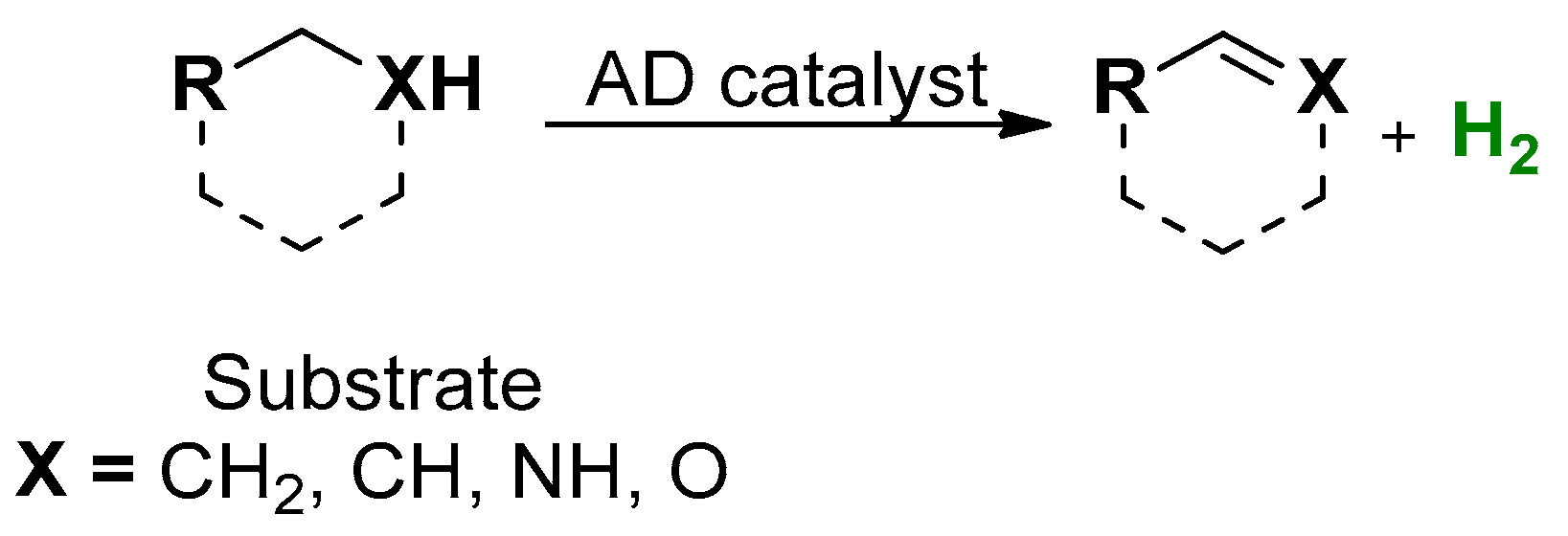
Scheme 1. General scheme for catalytic Acceptorless Dehydrogenation (AD).
Catalysts 16 00048 sch001
Figure 1. Selected Ru(II) complexes active for glycerol AD to LA and H2 [33,34,35,36].
Catalysts 16 00048 g001
Scheme 2. Glycerol AD and chemical drawings of catalysts 13 used in this study.
Catalysts 16 00048 sch002
Figure 2. Catalyst recycling experiment using 2 under optimized conditions.
Catalysts 16 00048 g002
Scheme 3. Reactions and overall energies for the formation of either potassium lactate (top) or glyceraldehyde (bottom) from glycerol.
Catalysts 16 00048 sch003
Figure 3. Optimized structures of 2 and 4+. For the sake of clarity, hydrogen atoms are omitted except those linked to N1 and N2.
Catalysts 16 00048 g003
Figure 4. Optimized structures of complexes 8+N (left), 9+N (center) and 10+P (right). For the sake of clarity, hydrogen atoms are omitted except those linked to Ru, N1, N2 and glycerate.
Catalysts 16 00048 g004
Scheme 4. Proposed simplified catalytic cycle starting from precatalyst 2.
Catalysts 16 00048 sch004
Table 1. Metal and ligand effects screening in glycerol dehydrogenation a.
EntryCat.Conv. b (%) KLA b (%)EG + FA b (%)H2 c (ml)TON d
(KLA)
TON e
(H2)
11220<11010
227777018385385
33110<155
4PN3P-iPr000000
5[RuCl2(PPh3)3]220<11010
6None000000
a Reaction conditions: glycerol (1 mmol), catalyst (0.2 mol%), KOH (1.5 eq. vs. glycerol), EtOH (2 mL), 140 °C, 24 h. b Conversions of GLY (%) and yields (%) of organic products were determined by 1H NMR analysis using sodium acetate as the internal standard. c Volumes (mL) were measured by gas burette with the removal of blank volumes. d Turnover number (TONKLA) = mmol KLA/mmol catalyst. e Turnover number (TONH2) = mmol H2/mmol catalyst (mmol H2 calculated from volumes of produced H2 using the Ideal Gas Law).
Table 2. Solvent screening for glycerol dehydrogenation catalyzed by 2 a.
EntrySolvent Conv. b (%)KLA (%)EG + FA
(%)
H2 c (ml)TON d
(KLA)
TON e
(H2)
1NMP7673318365365
2NMP/H2O2091124545
3Toluene232035100100
4Dioxane27131436565
5Neat232035100115
6THF261214360100
7EtOH7777018385374
8iPrOH1717048585
9tBuOH6057314285285
a Reaction conditions: glycerol (1 mmol), 2 (0.2 mol%), KOH (1.5 eq. vs. glycerol), Solvent (2 mL), 140 °C, 24 h. b Conversions of GLY (%) and yields (%) of organic products were determined by 1H NMR analysis using sodium acetate as the internal standard. c Volumes (mL) were measured by gas burette with the removal of blank volumes. d Turnover number (TONKLA) = mmol KLA/mmol catalyst. e Turnover number (TONH2) = mmol H2/mmol catalyst (mmol H2 calculated from volumes of produced H2 using the Ideal Gas Law).
Table 3. Base screening for glycerol dehydrogenation catalyzed by 2 a.
EntryBase Time (h)Temp. (°C)Conv. b
(%)
KLA (%)EG + FA
(%)
H2 c (ml)TON d
(KLA)
TON e
(H2)
1NaOMe24140373167155155
2NaOH241402117448585
3NaOtBu241401818049090
4KOtBu241408580519400400
5K2CO324140272707135135
6DBU24140000000
7Et3N24140000000
8KOH481408280218400374
a Reaction conditions: glycerol (1 mmol), 2 (0.2 mol%), base (1.5 eq. vs. glycerol), EtOH (2 mL), 140 °C, 24–48 h. b Conversions of GLY (%) and yields (%) of organic products were determined by 1H NMR analysis using sodium acetate as the internal standard. c Volumes (mL) were measured by gas burette with the removal of blank volumes. d Turnover number (TONKLA) = mmol KLA/mmol catalyst. e Turnover number (TONH2) = mmol H2/mmol catalyst (mmol H2 calculated from volumes of produced H2 using the Ideal Gas Law).
Table 4. Screening of catalyst loading for glycerol dehydrogenation catalyzed by 2 a.
Entry2 (mol%)Base Conv. b
(%)
KLA (%)EG + FA (%)H2 c (ml)TON d
(KLA)
TON e
(H2)
10.2KOH7777018385385
20.05KOH868061916001600
30.2KOtBu8580519400400
40.02KOH181804900900
50.05KOtBu9903180180
a Reaction conditions: glycerol (1 mmol), 2 (0.02–0.2 mol%), KOH (1.5 eq. vs. glycerol), EtOH (2 mL), 140 °C, 24 h. b Conversions of GLY (%) and yields (%) of organic products were determined by 1H NMR analysis using sodium acetate as the internal standard. c Volumes (mL) were measured by gas burette with the removal of blank volumes. d Turnover number (TONKLA) = mmol KLA/mmol catalyst. e Turnover number (TONH2) = mmol H2/mmol catalyst (mmol H2 calculated from volumes of produced H2 using the Ideal Gas Law).
Disclaimer/Publisher’s Note: The statements, opinions and data contained in all publications are solely those of the individual author(s) and contributor(s) and not of MDPI and/or the editor(s). MDPI and/or the editor(s) disclaim responsibility for any injury to people or property resulting from any ideas, methods, instructions or products referred to in the content.