Article

Promoted CO2 Desorption in N-(2-Hydroxyethyl)ethylenediamine Solutions Catalyzed by Histidine

1
Jiangsu Key Laboratory of Coal-Based Greenhouse Gas Control and Utilization, China University of Mining and Technology, Xuzhou 221008, China
2
Carbon Neutralization Institute, China University of Mining and Technology, Xuzhou 221008, China
3
School of Chemical Engineering, China University of Mining and Technology, Xuzhou 221008, China
4
China Tobacco Jiangsu Industry Co., Ltd., Xuzhou Cigarette Factory, Xuzhou 221000, China
5
China Special Equipment Inspection and Research Institute, Beijing 100029, China
6
Xinjiang Dunhua Green Carbon Technology Co., Ltd., Karamay 834099, China
7
State Key Laboratory of Fine Chemistry, School of Chemical Engineering, Dalian University of Technology, Dalian 116024, China
*
Authors to whom correspondence should be addressed.
Catalysts 2026, 16(1), 24; https://doi.org/10.3390/catal16010024
Submission received: 30 October 2025 / Revised: 1 December 2025 / Accepted: 10 December 2025 / Published: 29 December 2025
(This article belongs to the Special Issue Catalysis and Technology for CO2 Capture, Conversion and Utilization)

Abstract

This study systematically investigates the catalytic effect of histidine (HIS) on CO2 desorption in amine-based solvents, with a primary focus on 30 wt% N-(2-aminoethylamino)ethanol (AEEA) and its blends with N-methyldiethanolamine (MDEA). Experimental results show that the addition of 0.22 wt% HIS significantly enhances both the equilibrium desorption amount and the maximum desorption rate of CO2, particularly at elevated temperatures (e.g., 100 °C). Under optimal conditions, HIS increased the maximum desorption rate by 22.1% and reduced the heat duty to 71.7% compared to the non-catalytic benchmark. The catalytic performance was further confirmed in AEEA-MDEA mixed solvents, with the most pronounced effect observed in the 3:2 molar ratio system, where HIS enhanced both the equilibrium desorption amount and the maximum desorption rate by 15.3% and 20.8%, respectively. Through 13C NMR analysis and pH-dependent speciation monitoring, we revealed that HIS alters the reaction pathway by suppressing the formation of stable carbamate species (AEEA(a)COO). The protonated (HIS+) and neutral (HIS±) forms were identified as the active species that promote more direct CO2 release from carbamate, while the deprotonated (HIS) form facilitates proton transfer and amine regeneration. HIS also exhibited excellent catalytic stability over 10 absorption–desorption cycles. These findings highlight HIS as an efficient and stable organocatalyst for energy-efficient CO2 desorption processes.

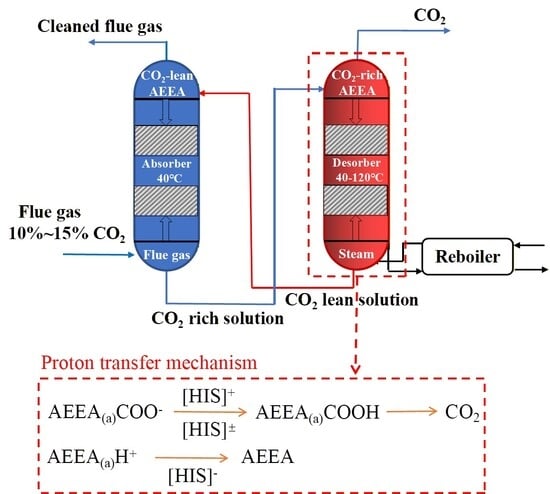
Graphical Abstract

1. Introduction

The alarming rate of CO2 release into the atmosphere is considered one of the key challenges of the 21st century due to its significant impacts on global warming [1,2,3]. According to the prediction of Intergovernmental Panel on Climate Change (IPCC), the CO2 level in the atmosphere could reach 570 ppmv by the year of 2100, which would in turn lead to a global temperature rise of 1.9 °C and a sea level rise of 3.8 m, respectively [4]. Although there are many sources of CO2 emissions, the combustion of fossil fuels remains the main contributor [5].
Carbon capture and storage (CCS) has been proven to be a strategic approach to mitigate global warming. Currently, several technologies have been used to capture CO2 from flue gases including absorption, adsorption, cryogenic separation, membrane separation, etc. [6,7,8,9,10]. Among these techniques, chemical absorption using aqueous alkanolamine solutions is widely adopted due to its high efficiency, economic feasibility, and relative reliability [11,12]. Various absorbents, including primary alkanolamine of monoethanolamine (MEA), sterically hindered alkanolamine of 2-amino-2-methyl-1-propanol (AMP), and diamine of N-(2-aminoethylamino)ethanol (AEEA) and piperazine (PZ), have been developed for CO2 capture [13,14]. However, their high regeneration energy requirements (e.g., 3.8 GJ·t−1 CO2 for aqueous MEA) remain prohibitive. As outlined by Shi et al. [15], solvent regeneration hinges on two endothermic steps (Equations (1) and (2)): deprotonation of protonated amines (e.g., MEAH+) and decomposition of carbamate species (e.g., MEACOO). The former is energetically demanding due to the unfavorable proton transfer from a strong base (amine) to neutral water.
M E A H + + H 2 O M E A + H 3 O +
M E A C O O + H 3 O + M E A + C O 2 + H 2 O
Over the past few decades, various efforts have been made to address the high energy consumption associated with CO2 desorption, particularly through solvent optimization [16]. Introducing solid acid catalysts into the solvent during CO2 desorption has become a promising alternative, owing to its remarkable effect of enhancing the desorption rate, promoting desorption efficiency, decreasing the desorption time, and lowering the regeneration temperature, thereby, reducing energy consumption [17,18]. Solid acid catalysts such as metal oxides, zeolites, and mesoporous silica have been widely investigated for their role in enhancing CO2 desorption [17,19,20]. Their activity originates from surface acidic sites, categorized as either Lewis acid sites (LASs), which accept electron pairs, or Brønsted acid sites (BASs), which donate protons. These sites facilitate carbamate decomposition, thereby accelerating CO2 release [19,21]. The first meta-analysis further confirms the efficacy of solid acids, ranking their performance as: carbon-rich materials > metal oxides > organic frameworks > molecular sieves > composite materials > clay minerals, and highlighting the B/L ratio and surface area as key factors in reducing regeneration energy [22].
While solid acid catalysts show remarkable potential in enhancing CO2 desorption performance, their practical application in liquid absorption systems involves several challenges. A key issue stems from their use as solid particles within liquid solvents, creating a solid–liquid heterogeneous system. This introduces complications related to catalyst handling, including potential issues with abrasion, clogging, and increased pressure drop in pipelines and equipment. Furthermore, implementing these catalysts in a stripper requires careful design regarding their physical form: they may be used as a suspended slurry, coated onto packing materials, or shaped into pellets, each of which impacts mass transfer, pressure drop, and long-term stability differently. Additionally, the acidic sites in these conventional catalysts are typically confined within rigid frameworks. While this structural rigidity helps preserve the active sites, it may also restrict their dynamic interaction with reaction intermediates and limit their adaptability during the CO2 desorption process. A critical question therefore arises: could the CO2 regeneration process be further enhanced by employing renewable, free acidic sites that are directly dissolved in the solution?
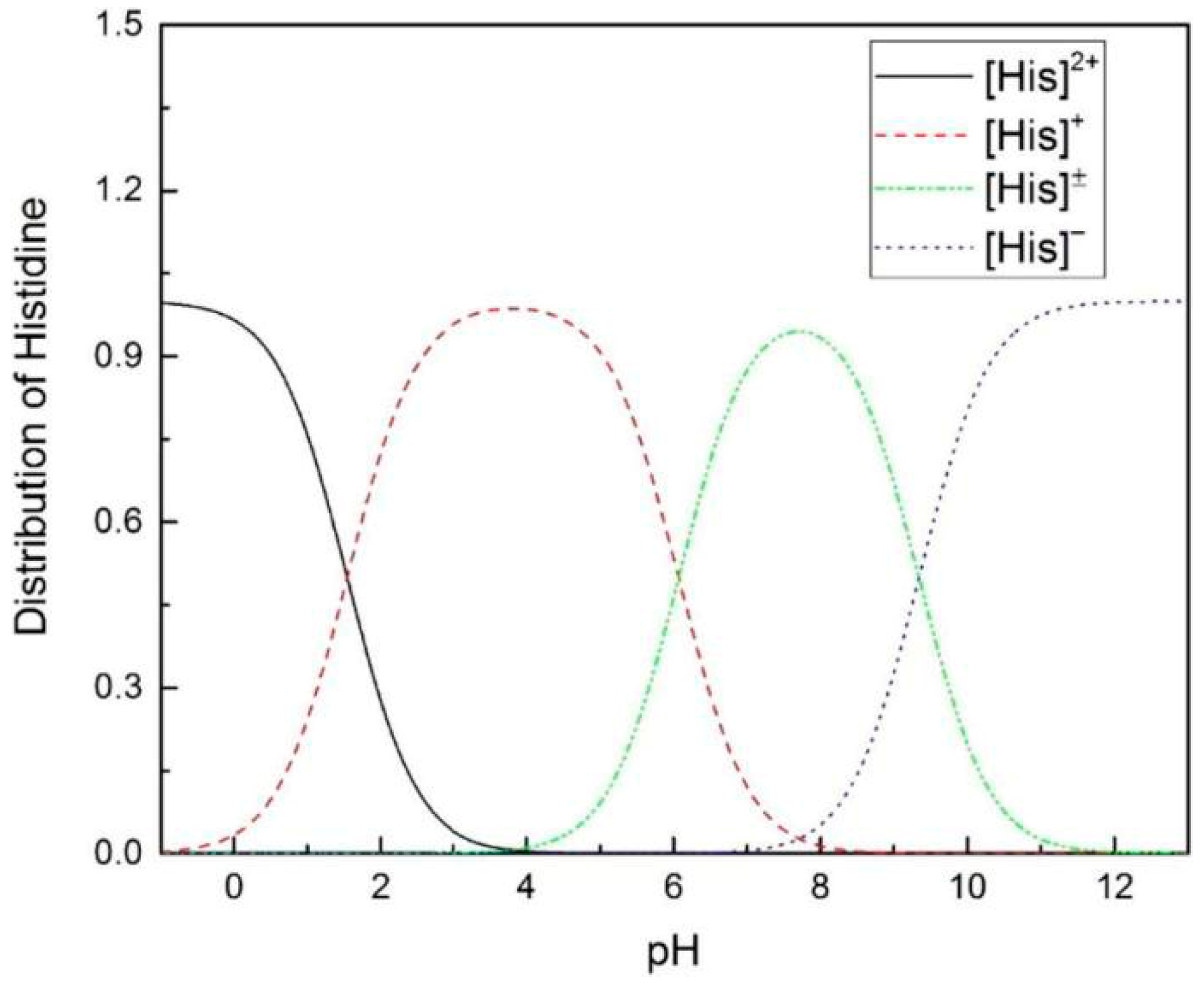
Previous studies suggest that amino acids, with their tunable acid-base properties, may offer a viable solution [23]. For instance, the amino acid salt, potassium glycinate, has been used for the reactive capture and electrocatalytic conversion of CO2 to CO under oxygen-rich conditions, achieving high faradaic efficiency and energy efficiency through integrated catalyst and system engineering [24]. Histidine, a key amino acid in proteins, possesses a unique chemical structure due to the imidazole moiety of its side chain, which endows it with great versatility in biochemical processes. The two nitrogen atoms of the imidazole ring can undergo protonation and deprotonation, resulting in four possible states as shown in Figure 1 [25]. Consequently, the equilibrium among these different states is exquisitely sensitive to factors such as pH, electrostatic interactions, and hydrogen bonding. Their distribution as a function of pH is shown in Figure 2 [26]. These features make histidine the most chemically versatile amino acid, and it is often engaged in catalysis [27,28].
Histidine exhibits diverse functions: it can act as a nucleophile and as an acid/base catalyst [29,30], such as in catalytic triads [31,32], and it can serve as a proton shuttle [33,34], a hydrogen bond donor and acceptor [35,36], and a metal-ion coordinator [37]. Hydrogen bonding involving histidine is of particular interest in protein structure, as it can serve as both a donor and an acceptor, making it a pivotal participant in intricate interaction networks within protein active sites. These hydrogen bonds not only stabilize the protonation state of the imidazole but also influence its pKa, thereby regulating its reactivity. The capacity of histidine to act as a proton shuttle, facilitating proton transfer between reactants during enzymatic catalysis, underscores its essential role in diverse biochemical pathways. Histidine-mediated hydrogen bonds can be of crucial functional relevance, as demonstrated in inphotosystemII [38,39] or Pin1 [40]. Furthermore, histidine plays a key role in regulating ion channels [41,42].
Building on this foundation, this study explores the use of histidine (HIS) as a catalyst to improve CO2 desorption in alkanolamine-based solvents. Although the kinetic properties of HIS as a CO2 absorbent have been investigated. For example, Hu et al. [26] measured the reaction kinetics between CO2 and aqueous potassium histidine solution using a wetted wall column, reporting an overall reaction order between 1.22 and 1.45 and employing the zwitterion mechanism to interpret their experimental data. However, it is crucial to distinguish this role from a catalytic one. To our knowledge, the use of free histidine as a homogeneous catalyst to promote CO2 desorption has not been previously reported. The benchmark solvents selected were aqueous N-(2-aminoethyl)ethanolamine (AEEA)—a widely studied polyamine—and its blend with the tertiary amine N-methyldiethanolamine (MDEA). Such blended amine systems combine the advantages of their constituents: the primary (or secondary) amine enhances the CO2 absorption rate and mass transfer, while the tertiary amine acts as a proton acceptor, improving desorption efficiency and lowering regeneration energy compared to single-amine solvents [43,44,45,46,47]. This work systematically evaluates the effect of HIS on CO2 absorption–desorption performance and solvent stability over multiple cycles, with particular emphasis on its role in promoting proton transfer to carbamate species.

2. Results and Discussion

2.1. Effect of HIS on CO2 Absorption and Desorption

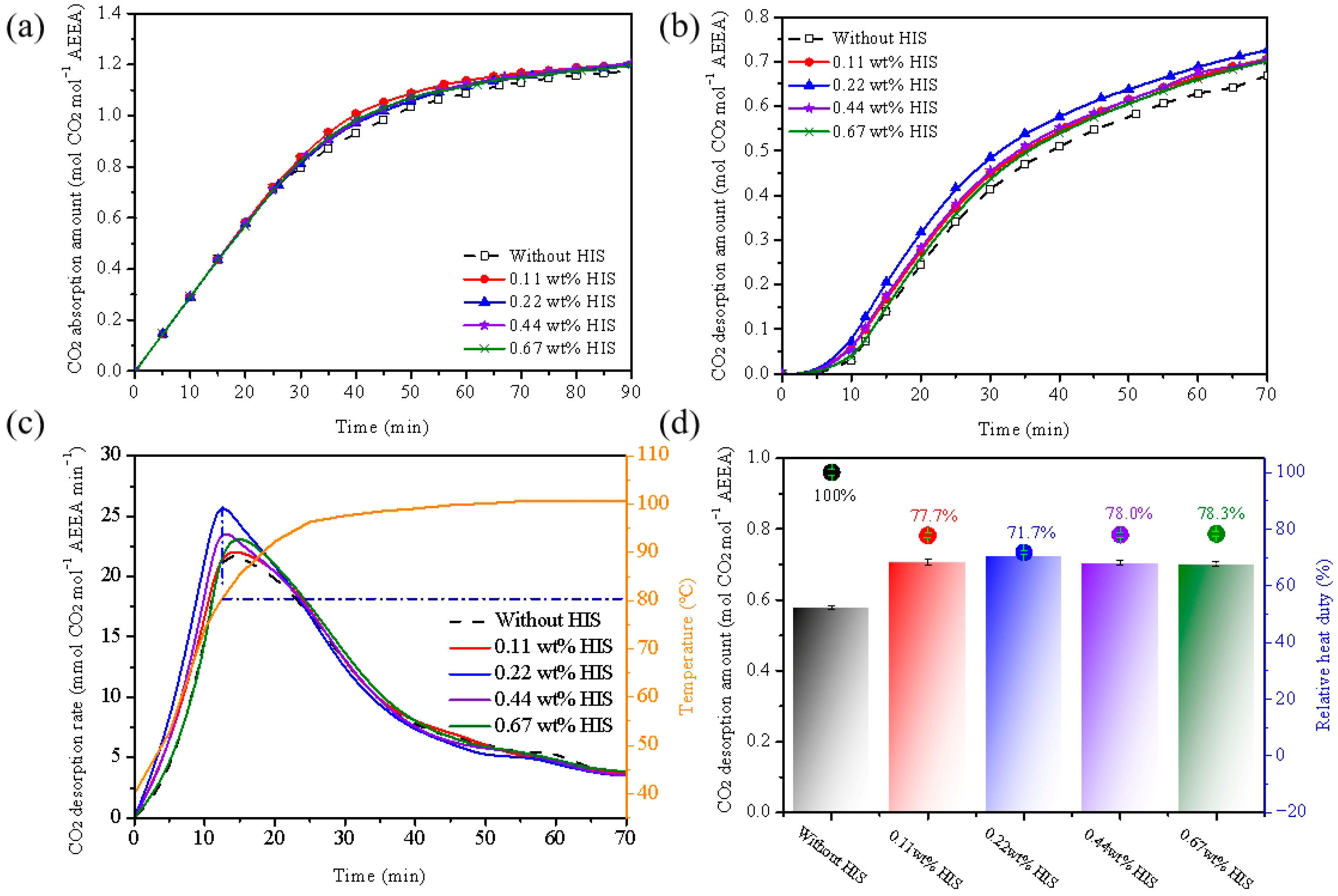
The effect of HIS on CO2 absorption and desorption was explored using a 30 wt% AEEA solution as the base solvent (refer to Supporting Figure S1 for the experimental setup). HIS with different adding amounts of 0.22 wt%, 0.44 wt%, and 0.67 wt% was added into the AEEA solution. The standard deviation was ±0.003 mol CO2/mol AEEA for both the CO2 absorption and desorption capacities, and ±0.05 mmol CO2/(mol AEEA·min) for the CO2 desorption rate. As shown in Figure 3a, the addition of HIS slightly improved the CO2 equilibrium absorption amount by 1.7% compared to the pure AEEA solution.
The effect of HIS on CO2 desorption was evaluated using an AEEA solution after 90 min of CO2 absorption. Desorption was initiated by heating the CO2-saturated AEEA solution to approximately 100 °C, following the temperature profile shown on the right y-axis of Figure 3c. Figure 3b illustrates the temporal changes in CO2 desorption amount from the AEEA solution, with and without HIS, under identical temperature conditions. Our findings indicate increases in CO2 equilibrium desorption amount with HIS. Specifically, the equilibrium desorption amounts for HIS with the addition amount of 0.22 wt%, 0.44 wt%, and 0.67 wt% were 0.726, 0.704, and 0.702 mol CO2/mol AEEA, respectively. Compared to the pure AEEA solution (0.707 mol CO2/mol AEEA), only the addition amount of 0.22 wt% has a positive effect on the CO2 equilibrium desorption amount. As shown in Figure 3c, the AEEA solution with 0.22 wt% HIS demonstrated a higher desorption rate at a lower temperature. Remarkably, the peak desorption rate reached 26.91 mmol CO2/(mol AEEA·min) within 12 min at approximately 80 °C. This value is 22.15% higher than the peak rate of 22.03 mmol CO2/(mol AEEA·min) observed for the HIS-free AEEA solution. For comparison, the peak desorption rates for solutions with 0.11 wt%, 0.44 wt%, and 0.67 wt% HIS were 21.93, 24.57, and 22.03 mmol CO2/(mol AEEA·min), respectively, measured over the same time interval. Furthermore, as illustrated in Figure 3d, the relative heat duty of the AEEA solution with 0.22 wt% HIS was reduced to 71.7% of that required for the pure AEEA solution.
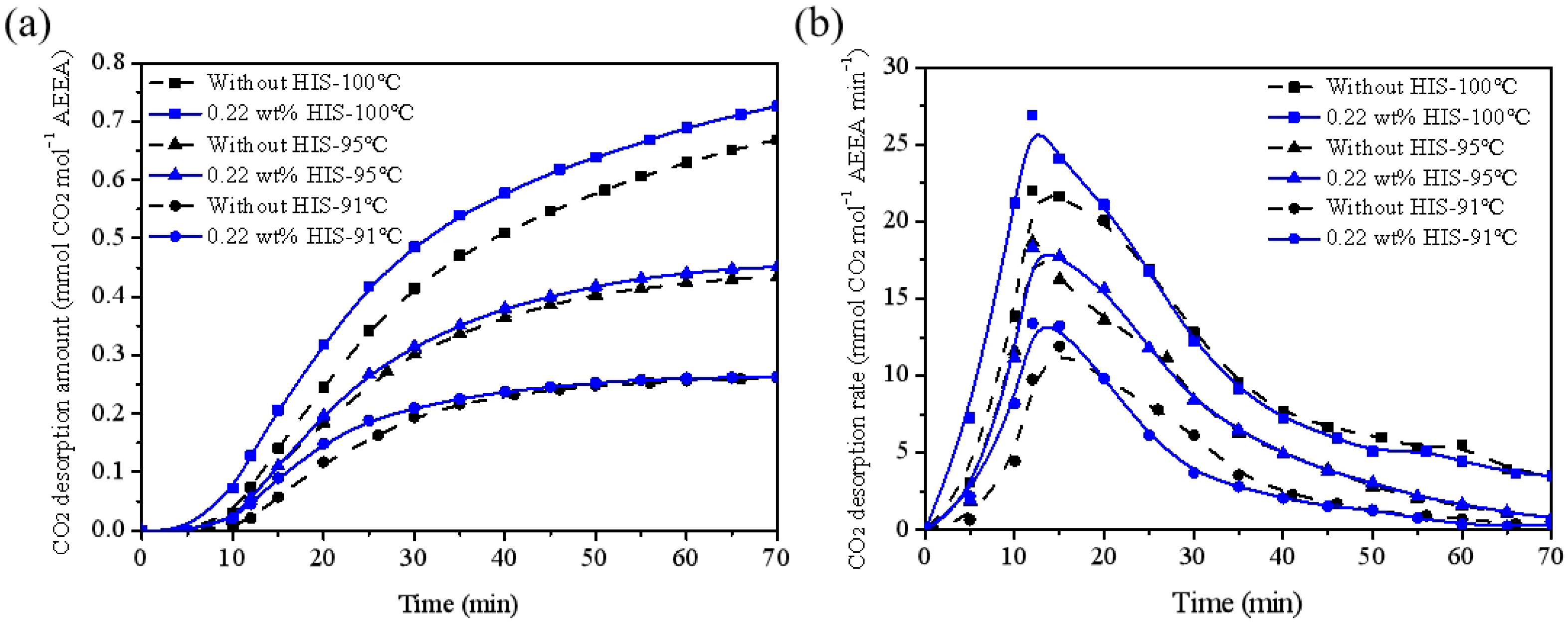
The catalytic performance of HIS was further examined at lower temperatures (~91 °C and ~95 °C) and compared with its performance at ~100 °C, as shown in Figure 4, with the experimental data shown in Table 1. The results indicate that the catalytic performance of HIS is strongly temperature-dependent. At the highest temperature tested (~100 °C), HIS significantly enhanced both the CO2 equilibrium desorption amount (from 0.669 to 0.726 mol CO2/mol AEEA) and the maximum desorption rate (from 22.03 to 26.91 mmol CO2/(mol AEEA min), corresponding to positive percentage increases of 8.5% and 22.1%, respectively. In contrast, at ~95 °C, the enhancement in desorption amount was smaller (from 0.434 to 0.451 mol CO2/mol AEEA), and the maximum desorption rate decreased slightly (from 18.70 to 18.33 mmol CO2/(mol AEEA min), leading to a negative εdes of −2.0%; a further reduction to ~91 °C results in a minimal change in desorption amount (from 0.260 to 0.263 mol CO2/mol AEEA) and a negative γdes of −1.1%, although the desorption rate shows an increase (from 11.91 to 13.21 mmol CO2/(mol AEEA min)) with a positive εdes of 10.9%. Therefore, HIS displayed a pronounced catalytic effect on CO2 desorption amount, particularly at elevated temperatures.
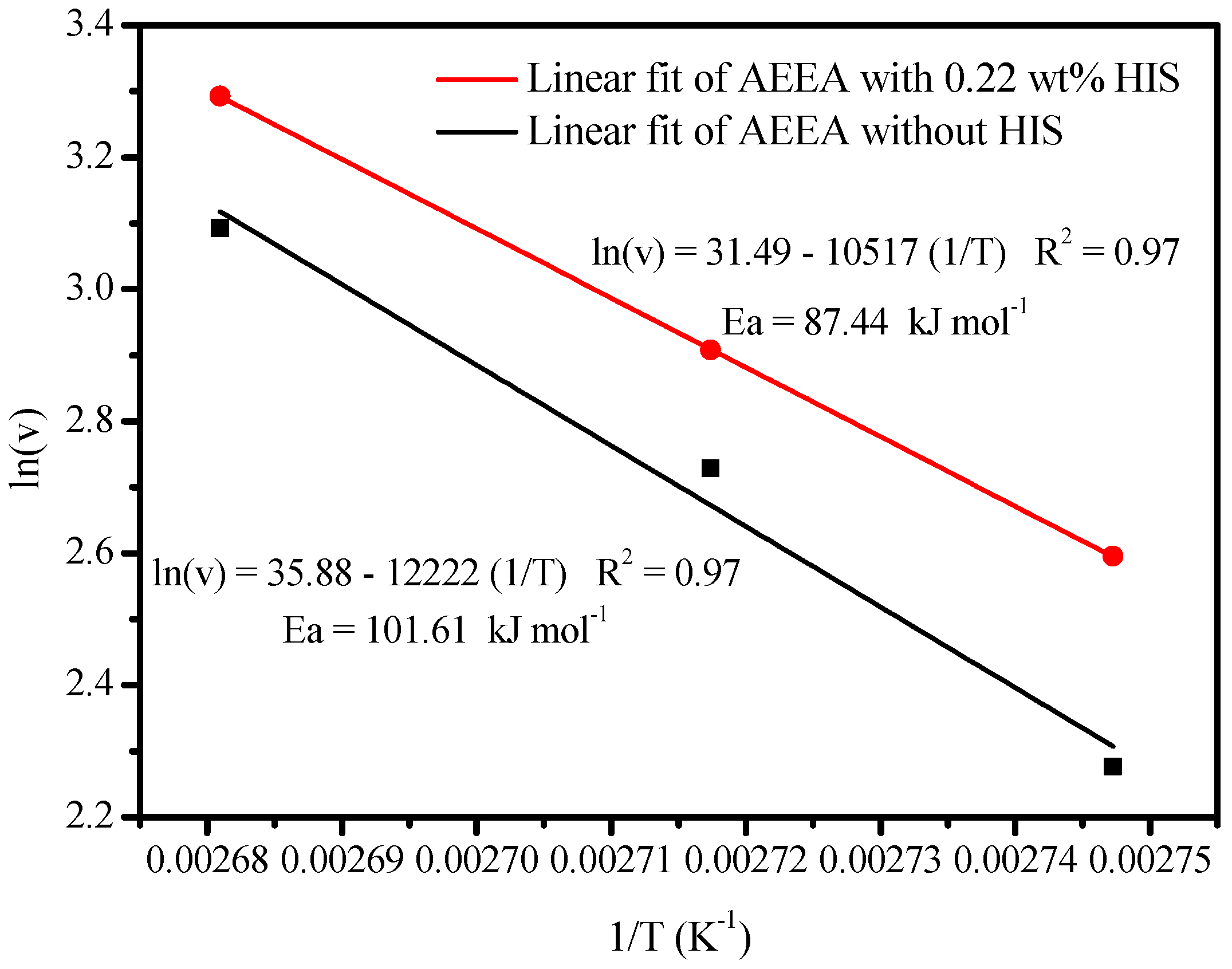
To quantitatively evaluate the catalytic efficacy of HIS, the apparent activation energy (Ea) for the CO2 regeneration process was determined via Arrhenius analysis. The initial CO2 desorption rate at a fixed time of 10 min was measured at 91, 95, and 100 °C. The natural logarithm of the reaction rate (lnv) was plotted against the reciprocal of the absolute temperature (1/T), and the apparent activation energy was calculated from the slope of the linear regression. As shown in Figure 5, the data exhibited a strong linear relationship. The Ea for the regeneration reaction in the absence of HIS was calculated to be 101.61 kJ mol−1. Remarkably, upon the addition of HIS, the activation energy was significantly lowered to 87.44 kJ mol−1. This reduction in the activation barrier by 14.17 kJ mol−1 provides key quantitative evidence that HIS functions as a genuine catalyst by offering an alternative pathway with a substantially lower energy requirement for the rate-determining step.
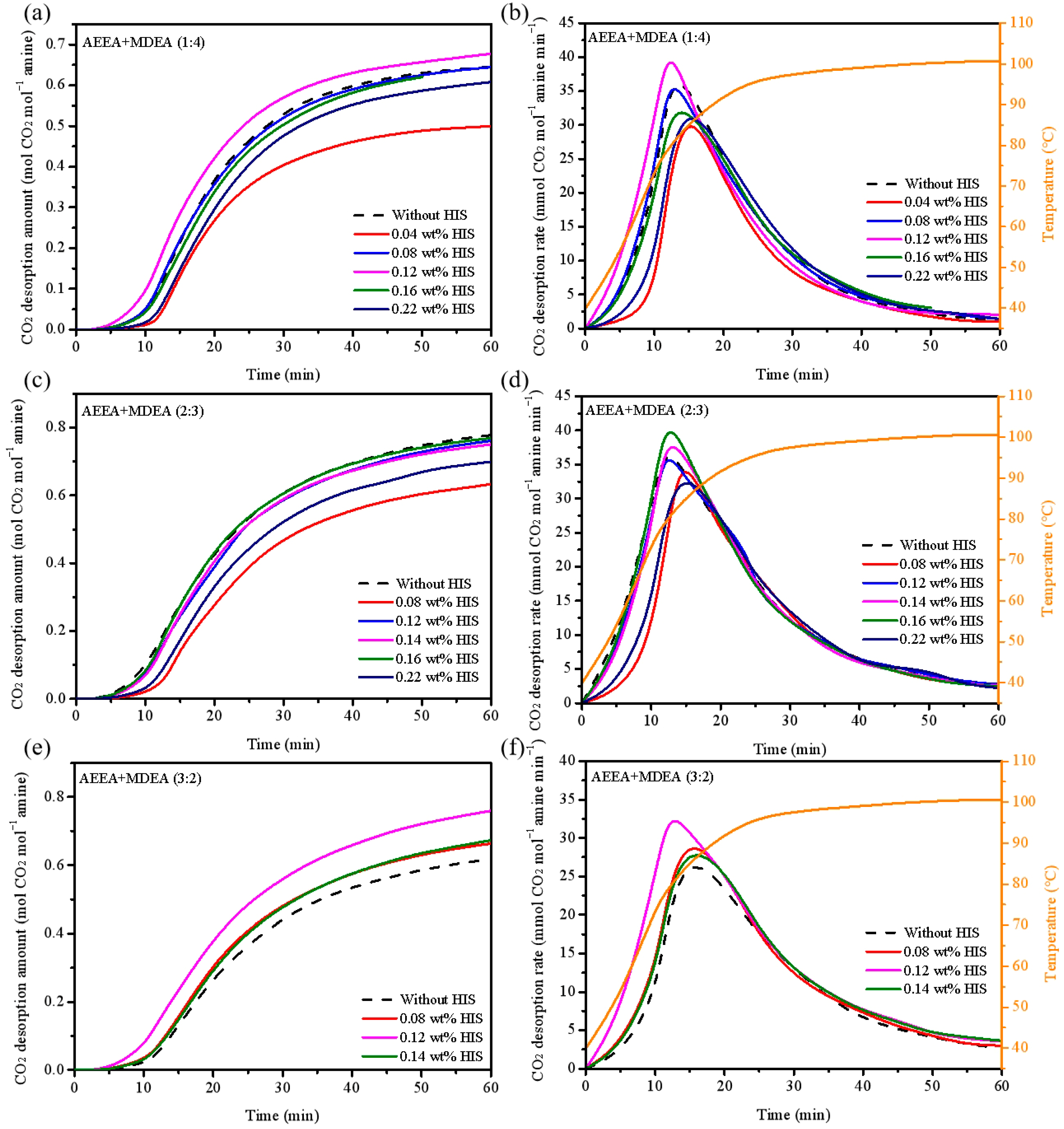
To further demonstrate that the catalytic enhancement induced by HIS is not restricted to pure aqueous AEEA, we systematically evaluated its efficacy in AEEA-MDEA mixed solutions at varying molar ratios (1:4, 2:3, and 3:2). All experiments were performed at a target desorption temperature of 100 °C. The results, which are summarized in Table 1 and graphically displayed in Figure 6, clearly show that the catalytic effect persists in these blended solvent systems. In the AEEA + MDEA (3:2) system, HIS exhibited the most pronounced catalytic effect, increasing the equilibrium desorption amount (αdes) from 0.618 to 0.713 mol CO2/mol amine, corresponding to a 15.3% increase (γdes). Moreover, the maximum desorption rate (δdes) rose from 28.04 to 33.87 mmol CO2/(mol amine min), reflecting a 20.8% enhancement (εdes). Notably, the time required to reach the maximum desorption rate (∆t) was reduced from 15 to 12 min, indicating accelerated desorption kinetics. In contrast to the pure AEEA and AEEA + MDEA (3:2) systems, the catalytic effect of HIS on the maximum CO2 desorption rate in the AEEA + MDEA (2:3) and (1:4) blends was less pronounced. These findings underscore that HIS is a particularly effective catalyst for promoting CO2 desorption in amine-based solvents with a high AEEA content and at elevated temperatures.

2.2. Sorbent Stability

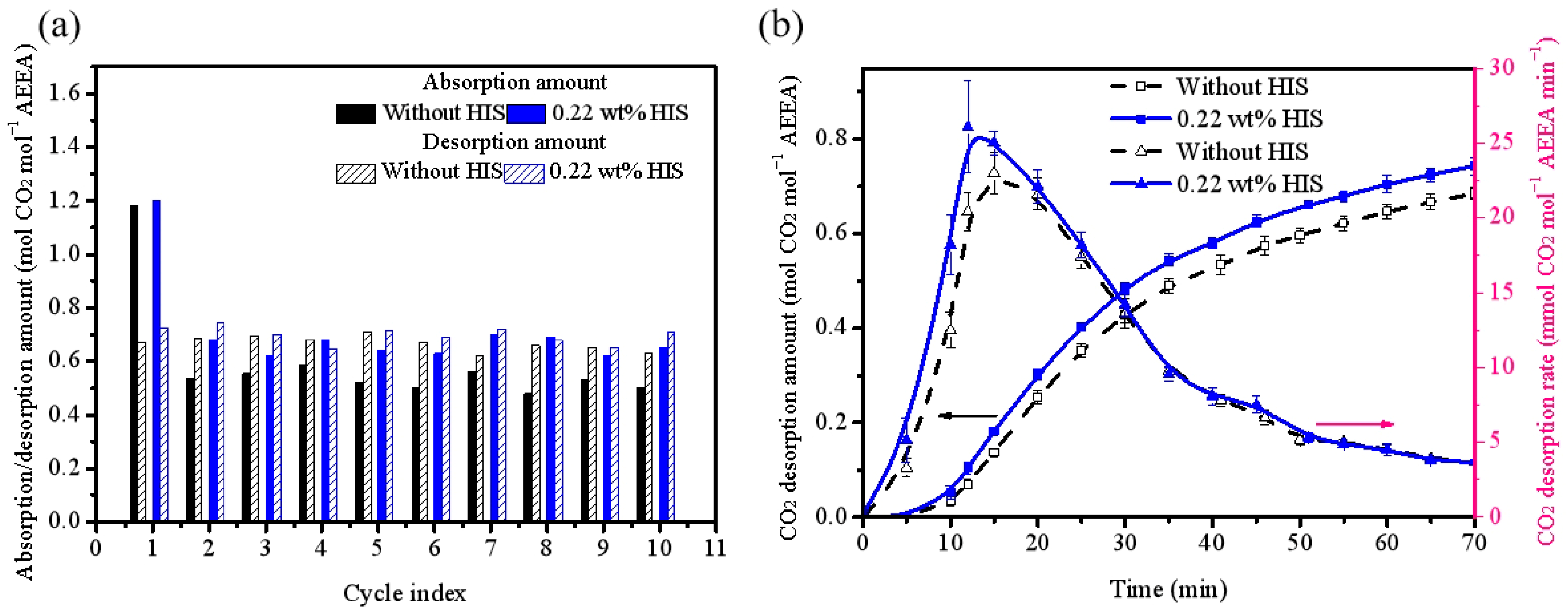
This study evaluated the stability of HIS over 10 cycles of CO2 absorption–desorption tests. As shown in Figure 7a, both the AEEA solutions with and without HIS exhibited no significant decline in CO2 absorption or desorption capacity, although minor fluctuations were observed across cycles. Notably, the HIS-catalyzed AEEA solution consistently demonstrated higher CO2 absorption and desorption amounts than the HIS-free AEEA solution in each cycle.
Figure 7b depicts the CO2 desorption profiles—both in terms of amount and rate—over time throughout the 10 cycles. Error bars represent the variability in desorption performance across cycles, underscoring the reproducibility and stability of the process. Importantly, both the total desorbed CO2 amount and the desorption rate for the HIS-catalyzed AEEA solution exceeded those of the HIS-free system throughout the desorption phase in all cycles. These results clearly highlight the catalytic role of HIS in promoting CO2 desorption and enhancing the cyclic performance of the absorption–desorption process.

2.3. Sorbent Characterization

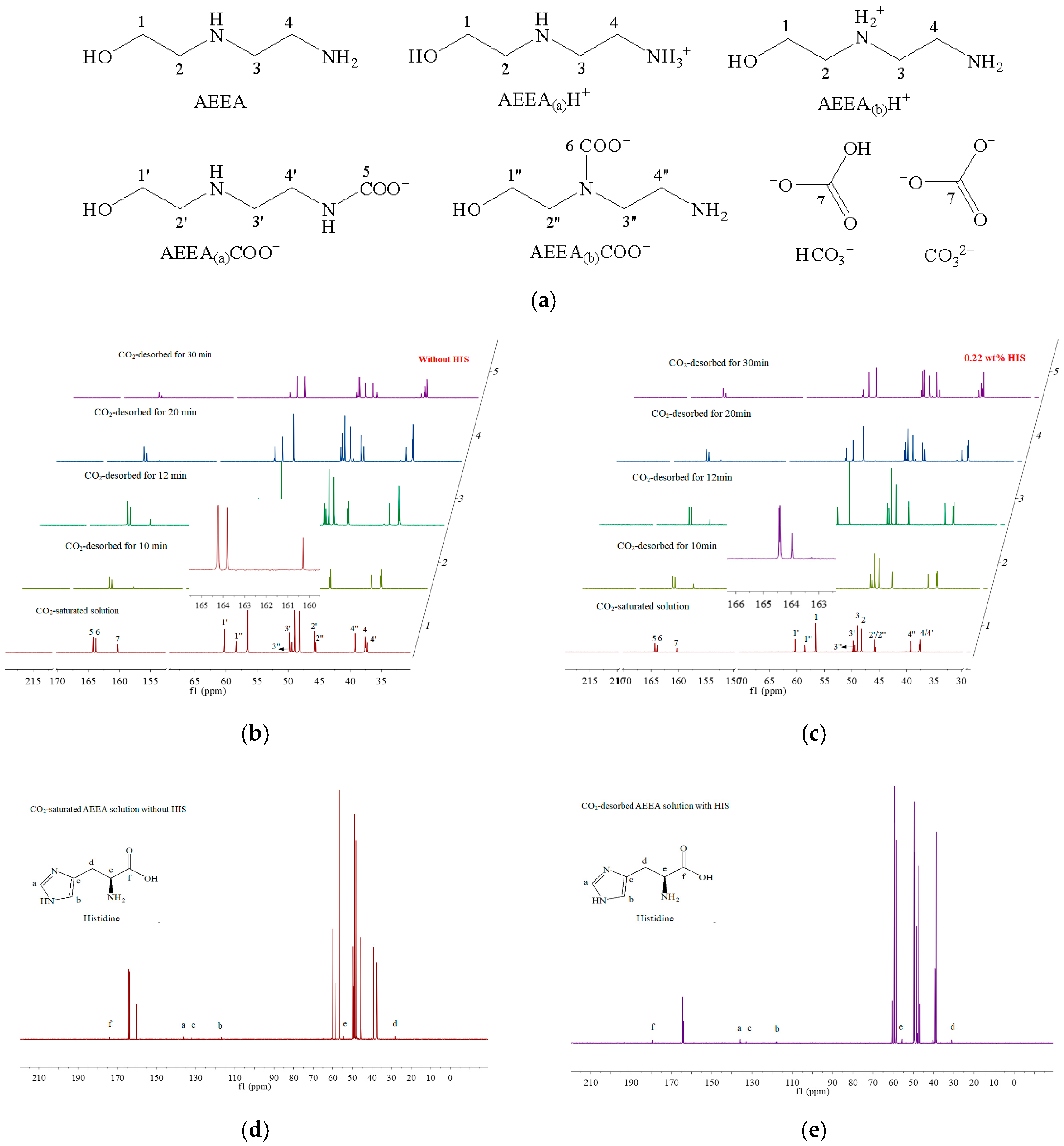
Carbon-13 nuclear magnetic resonance (13C NMR) spectroscopy was employed to quantitatively analyze species distribution during the CO2 desorption process over varying time frames at the desorption temperature of 100 °C. Comprehensive details of the characterization methods and the calculation method are provided in the Supporting Information. The 13C NMR spectra of the AEEA solutions with and without HIS with different CO2 loadings, and an interpretation of the peaks are shown in Figure 8. The 13C NMR analysis presented in Figure 8d provides direct evidence clarifying the role of HIS in the CO2 capture process. No corresponding carbamate signal derived from HIS is detected in the spectrum. This key finding demonstrates that HIS does not form a stable carbamate species under the experimental conditions and therefore does not act as a CO2 carrier in the system. The absence of HIS-carbamate formation confirms that the significantly enhanced desorption performance observed in HIS-promoted solutions (Figure 3) is not attributable to additional CO2 absorption by HIS but rather to its catalytic role in facilitating the regeneration of the AEEA solvent. Furthermore, the comparison with the spectrum of the completely regenerated solution after CO2 desorption (Figure 8e) reveals that all HIS-related carbon signals remain unchanged, with no detectable formation of new carbon-containing species. This observation provides direct evidence for the chemical stability of HIS under the applied regeneration conditions and confirms that HIS does not undergo significant degradation or form stable by-products during the thermal regeneration process.
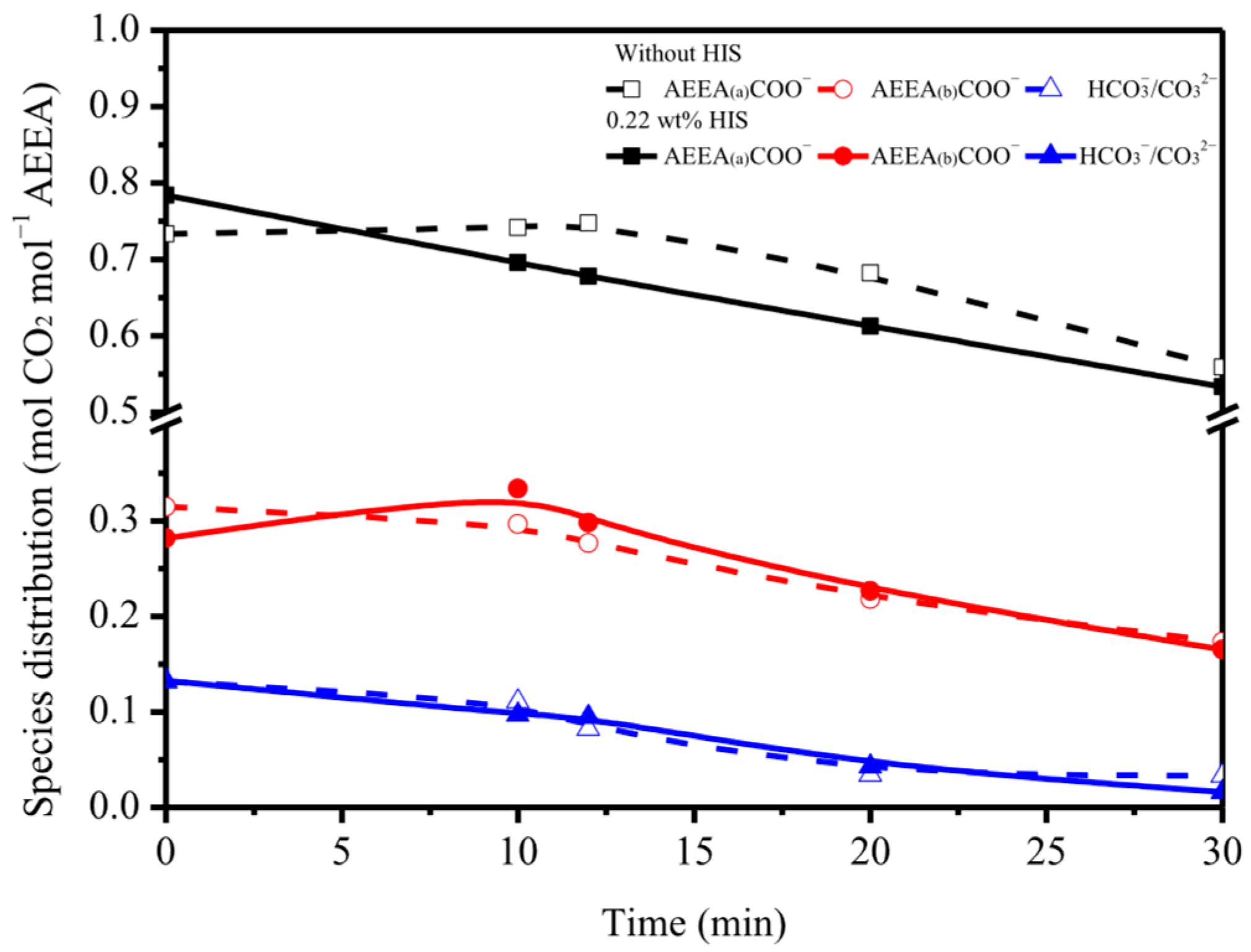
Figure 9 illustrates the temporal concentration profiles of key species during the desorption of a CO2-rich AEEA solution, comparing the non-catalytic baseline with the system catalyzed by 0.22 wt% HIS. The data reveals that HIS significantly alters the reaction pathway, steering it away from a parasitic side reaction and thereby enhancing the CO2 regeneration rate.
In the absence of HIS, the concentration of AEEA(a)COO initially increases, reaching a maximum at approximately 12 min before gradually declining, which can be explained by Equation (3), in which the AEEAH+ reacted with AEEA(a)COO to regenerate AEEA, and Equation (4), in which the AEEAH+ reacted with HCO3, where only half of the HCO3 was released as CO2 and the residual HCO3 transferred to the AEEA(a)COO that cannot be regenerated. Concurrently, the concentrations of both AEEA(b)COO and HCO3/CO32− decrease monotonically over the desorption time, which can be explained by Equations (4)–(6).
A E E A H + + A E E A ( a ) C O O 2 A E E A + C O 2
A E E A ( a ) H + + 2 H C O 3 A E E A ( a ) C O O + 2 H 2 O + C O 2
A E E A H + + A E E A ( b ) C O O 2 A E E A + C O 2
A E E A H + + H C O 3 A E E A + H 2 O + C O 2
The addition of HIS dramatically changes this profile. The formation of AEEA(a)COO is effectively suppressed; its concentration shows no initial increase and instead decreases directly from the onset of desorption. This critical observation is attributed to a steric-effect-governed kinetic preference: the ammonium group of AEEA(a)H+ is sterically less hindered, allowing it to be preferentially and rapidly deprotonated by the histidine imidazole ring. This HIS-mediated proton transfer outcompetes the parasitic reaction between AEEA(a)H+ and HCO3, thereby shutting down the primary channel for AEEA(a)COO formation (Equation (4)). Conversely, the distinct profile of AEEA(b)COO—a slight initial increase followed by a decrease—can be explained by the relative inaccessibility of the more sterically shielded AEEA(b)H+. Its hindered ammonium group makes proton transfer to HIS less kinetically favorable, allowing the parasitic reaction with HCO3 (Equation (7)) to proceed initially. This distinct shift indicates that HIS acts not merely as an accelerator but as a director of the reaction pathway. It primarily functions by hindering the parasitic reaction between AEEA(a)H+ and HCO3. By preventing the consumption of HCO3 into the kinetically slow AEEA(a)COO carbamate, HIS allows the HCO3 and AEEA(a)COO species to decompose and release CO2 more directly and rapidly. However, a fundamental difference lies in the stability of the resulting carbamate species. AEEA(b)COO exhibits lower stability than AEEA(a)COO, which translates directly into a significantly faster rate of decomposition and subsequent CO2 release. This divergence in stability originates from the nature of their parent amine functional groups. The secondary amine responsible for AEEA(b)COO is generally a weaker base than the primary amine that forms AEEA(a)COO. While lower basicity hinders the initial carbamate formation, it often results in a carbamate ion that is less stable, primarily due to increased steric strain. This inherent instability renders AEEA(b)COO more readily reversible.
A E E A ( b ) H + + 2 H C O 3 A E E A ( b ) C O O + 2 H 2 O + C O 2
In summary, the species distribution data confirm that the enhanced CO2 desorption rate in the presence of HIS is achieved not through a uniform acceleration of all steps but through a selective inhibition of a key parasitic side reaction, thereby channeling the reaction flux towards a more direct and faster CO2 release pathway.
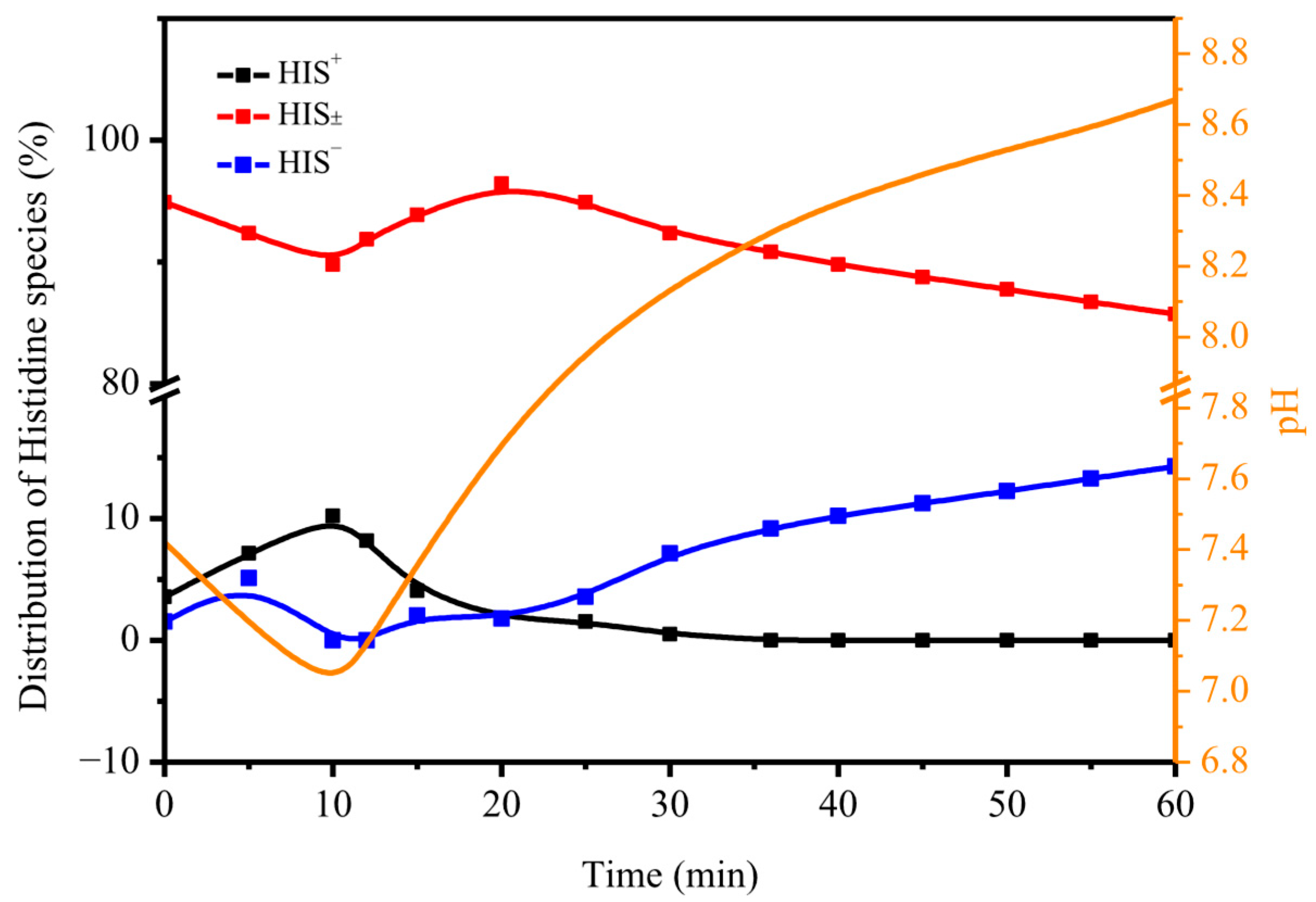
During the CO2 desorption process, the pH of the solution was monitored to track the speciation of HIS. As shown in Figure 10, the temporal variation in pH was recorded, and the corresponding distribution of HIS species was determined based on the literature-reported speciation diagram (Figure 2), which illustrates the distribution of HIS species as a function of acidity at 298K.
Based on the experimental results, the solution pH decreased from an initial value of 7.42 to around 7 and then increased to 8.67 as the desorption progressed. Throughout this process, HIS was present in three distinct forms: protonated (HIS+), neutral (HIS±), and deprotonated (HIS). The HIS± species accounted for the highest proportion, reaching a maximum of 96%. Its fraction initially decreased within the first 10 min, increased between 10 and 20 min, and then declined again after 20 min. The proportion of HIS+ increased during the first 10 min and gradually decreased thereafter, with a maximum contribution of 10%. In contrast, the HIS- exhibited slight fluctuations in the first 10 min, followed by a gradual increasing trend. By comparing these trends with the CO2 desorption rate over time, it was observed that the desorption rate increased firstly and then decreased, with the peak desorption rate occurred at approximately 12 min—earlier than that of the blank test (15 min). This shift aligns temporally with the variation patterns of both HIS+ and HIS±.
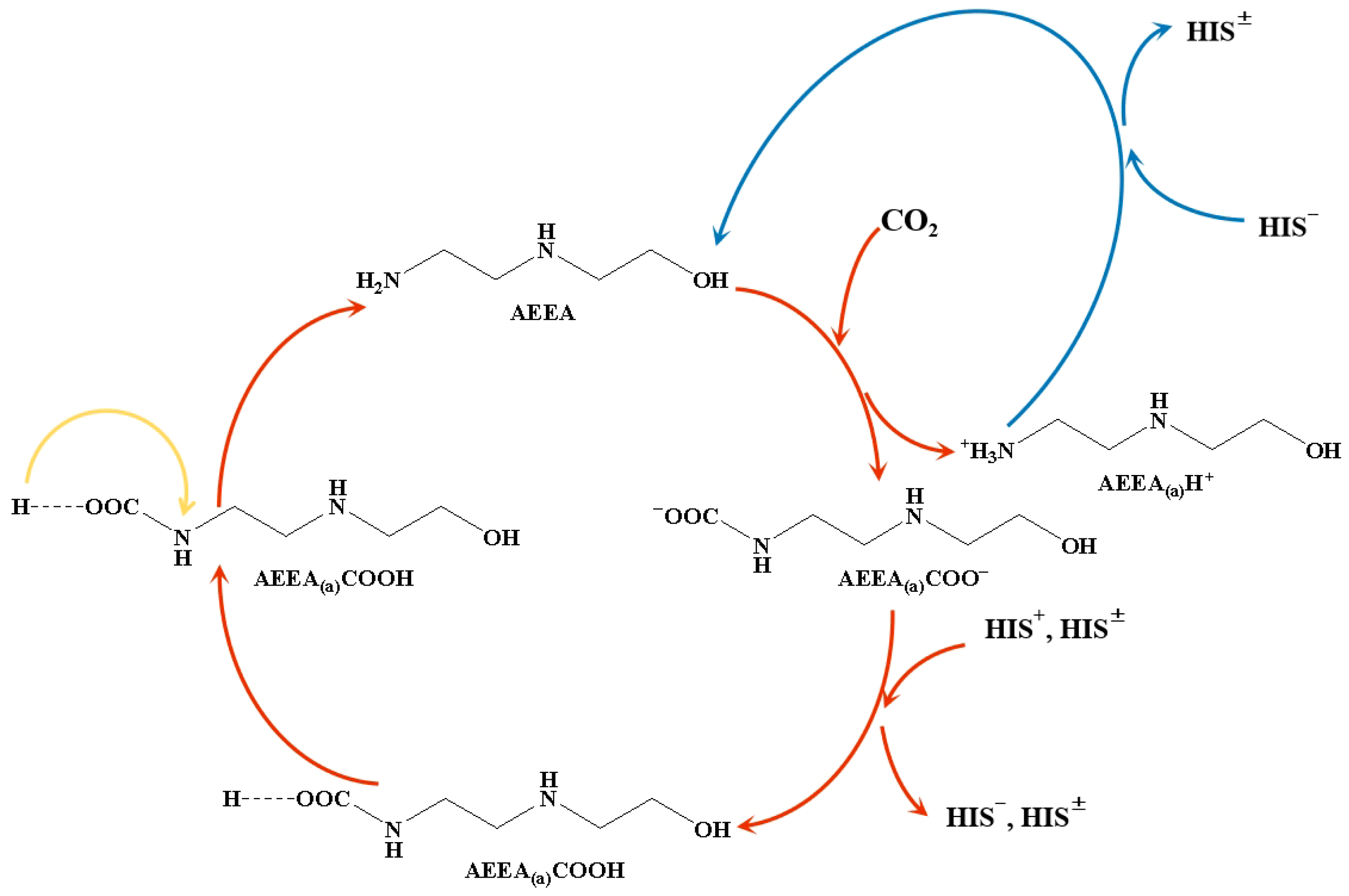
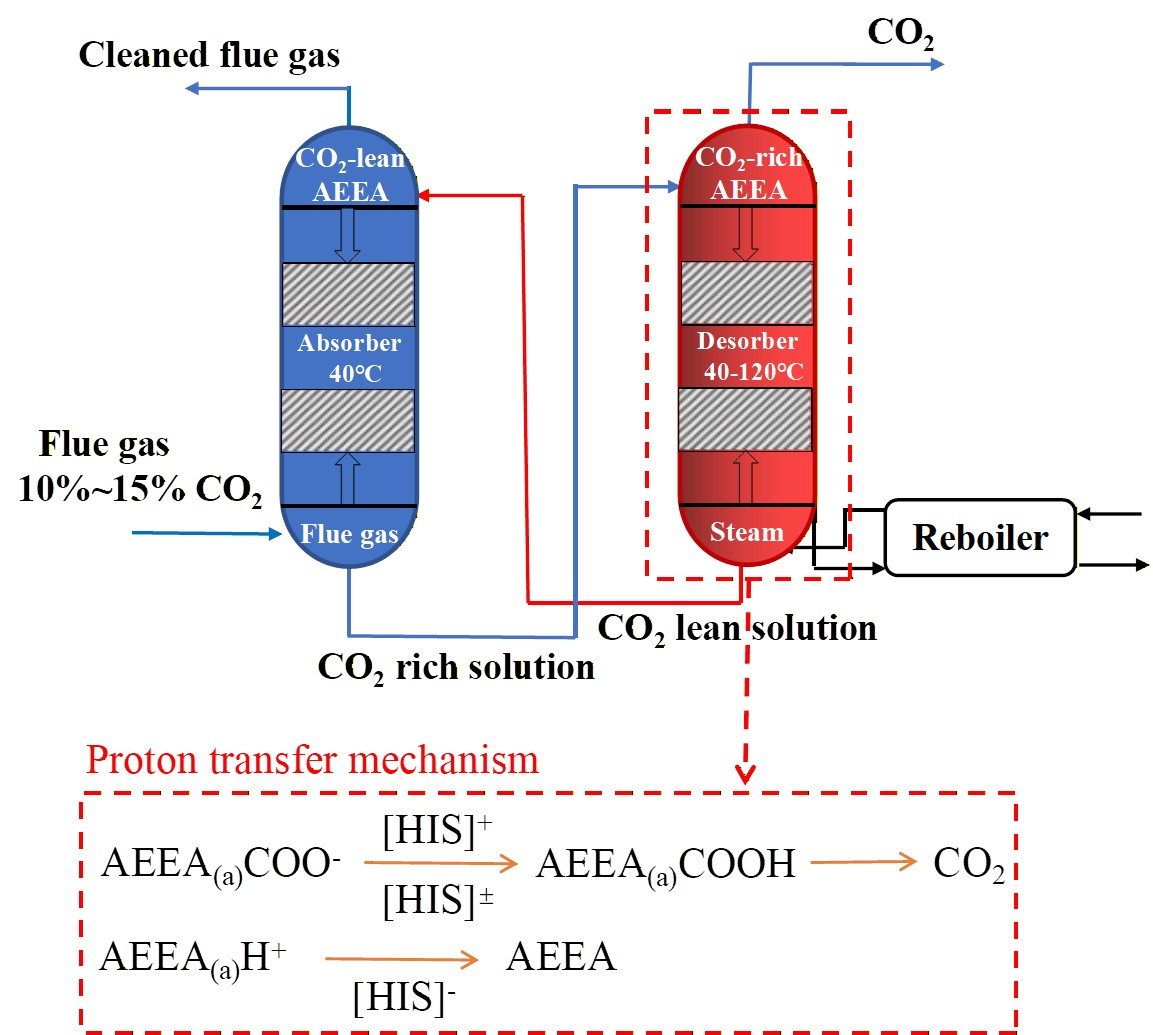
The catalytic mechanism of HIS is proposed as a dynamic proton-transfer cycle, the efficiency of which is governed by a stoichiometric balance between the catalyst and the reaction intermediates. This proposed catalytic role, rather than HIS acting as a CO2 carrier, is strongly supported by our new 13C NMR analysis (Figure 8), which shows no evidence of carbamate formation from HIS in the CO2-saturated AEEA-HIS solution. This mechanism is illustrated in Figure 11. The cycle begins with the proton-donation step, where the protonated HIS species (HIS+/HIS±) facilitate the breakdown of the carbamate (AEEA(a)COO) by transferring a proton, thereby releasing CO2 and regenerating the deprotonated catalyst (HIS). The cycle is completed in the amine-regeneration step, where HIS acts as a molecular bridge, interacting with the protonated amine (AEEA(a)H+) to significantly lower the high energy barrier for deprotonation. This critical interaction enables amine regeneration and concurrently re-protonates HIS- back to HIS+/HIS±, sustaining the catalytic loop.
Crucially, the efficiency of this entire cycle is not static but is highly dependent on the concentration of HIS relative to the carbamate load. This explains the observed optimal promoter concentration. At low HIS levels, the catalytic cycle is starved of participants, limiting the overall regeneration rate. Conversely, at excessively high concentrations, the system becomes unbalanced; an overabundance of both charged HIS species can cause kinetic mismatches that disrupt the proton-transfer chain, thus inhibiting the process.
The profound link between the catalyst and the substrate is definitively confirmed by the experimental finding, which demonstrate that the optimal concentration of HIS increases with a higher proportion of AEEA in the solvent blend. This trend arises because a greater AEEA content leads to increased formation of AEEA-carbamate upon CO2 absorption. The resulting elevation in carbamate load enhances regeneration efficiency by driving a higher flux through the catalytic cycle, which, in turn, necessitates a proportionally larger quantity of HIS molecules to sustain optimal stoichiometric turnover. Thus, the shifting optimum is not an arbitrary phenomenon but a direct reflection of the underlying mechanism: the catalytic cycle must be properly “sized” relative to the substrate quantity to maximize performance, establishing a fundamental principle for rational solvent and catalyst design.

2.4. Comparing with Other Amino Acid

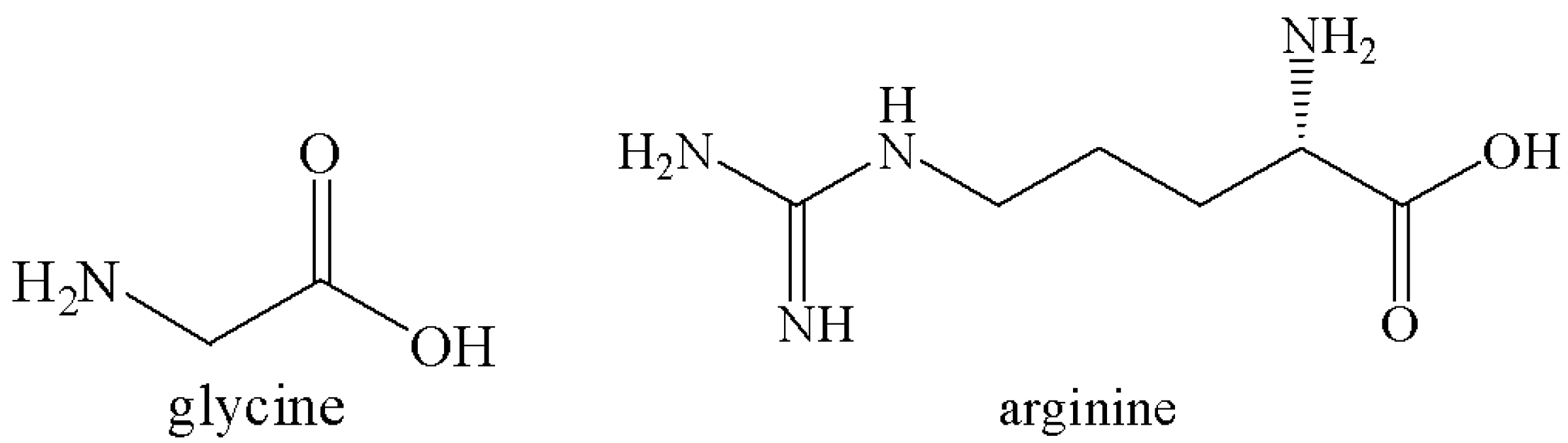
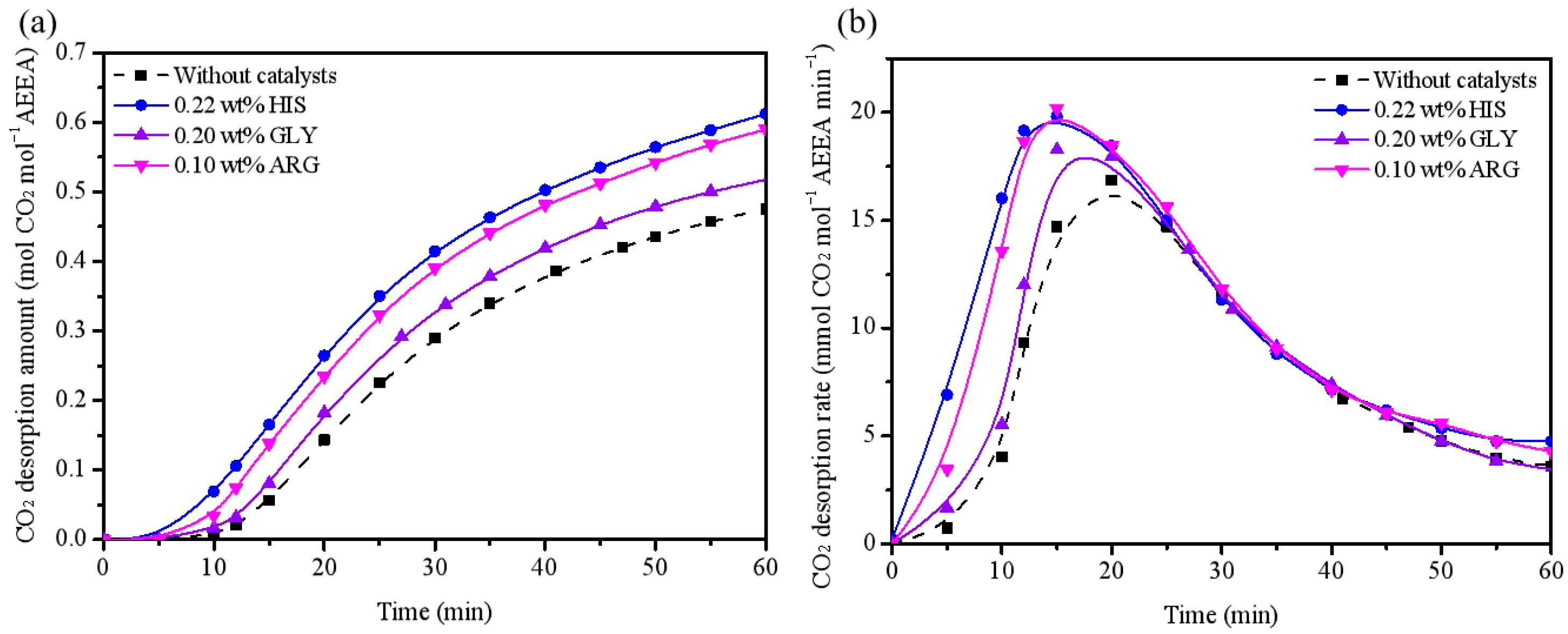
The catalytic CO2 desorption performance of HIS was compared with other amino acids including glycine (GLY) and arginine (ARG). Their chemical structures were shown in Figure 12. The selection of GLY and ARG as direct contrasts to the HIS is fundamentally based on their distinct side-chain architectures, which create a spectrum of chemical functionality. HIS itself possesses an imidazole ring—a heterocyclic structure that is moderately basic and amphoteric. In comparison, GLY provides the simplest possible structural contrast, as it entirely lacks a functional side chain, possessing only a single hydrogen atom. This allows it to define the catalytic baseline devoid of side-chain influence. Conversely, ARG offers a contrasting complex functionality with its aliphatic side chain terminating in a strongly basic guanidino group. This structure is fundamentally different from the aromatic imidazole of HIS, creating a direct comparison between a highly basic guanidino group and a heterocyclic, amphoteric imidazole. Therefore, this triad enables a structural comparison that spans from no side chain (GLY) to a complex, strongly basic one (ARG), against which the unique performance of the heterocyclic reference catalyst (HIS) can be precisely evaluated.
The CO2 desorption performance of the three structurally distinct amino acids of HIS, ARG, and GLY was evaluated at their respective optimal concentrations (Figure S2). As shown in Figure 13, HIS, featuring the imidazole side chain, yielded the highest total amount of CO2 desorbed from the 30 wt% AEEA solution, with the overall performance ranking as HIS > ARG > GLY > no catalyst. This result highlights the superior efficacy of the heterocyclic, amphoteric imidazole group over the strongly basic guanidino group of ARG and the minimal side chain of GLY. Furthermore, HIS achieved the highest desorption rate within the critical first 15 min, with its peak rate being comparable to that of ARG. These findings underscore the pivotal role of nitrogen atoms in the catalytic mechanism, indicating that their number and, more importantly, their chemical environment within the side chain are critical determinants of catalytic performance.

3. Materials and Methods

3.1. Chemicals

N-(2-Hydroxyethyl)ethylenediamine (AEEA, 99%), N-methyldiethanolamine (MDEA) and histidine (HIS) were purchased from Shanghai Macklin Technology Co., Ltd. (Shanghai, China). All amine solutions used in this study were aqueous blends with a fixed total amine concentration of 30 wt%. The AEEA-MDEA solvent blends were prepared at three distinct molar ratios of 3:2, 2:3, and 1:4 (AEEA:MDEA). The corresponding mass fractions for each component in the solution were calculated accordingly. For instance, for the 3:2 molar ratio blend, the composition is 17 wt% AEEA and 13 wt% MDEA, with the balance being water. Deuterium oxide (D2O, Adamas-beta, Shanghai, China) served as the lock solvent for NMR spectroscopy. High-purity CO2 (99.99%) and N2 (99.99%), supplied by Luyou Gas Co., Ltd. (Xuzhou, China), were employed as test gases for solvent performance evaluation.

3.2. CO2-Absorption–Desorption Experiments

The CO2 absorption and desorption performances of the AEEA solutions with the addition of HIS were evaluated using the apparatus reported in our previous work (Figure S1 in the Supporting Information) [48], following the experimental procedure detailed in Chapter I in the Supporting Information. The histidine catalyst, added at the beginning of the experiment, remained in the solution for all subsequent absorption–desorption cycles without replenishment. All desorption experiments were conducted under atmospheric pressure.
The CO2 absorption amount ( α a b s , mol·L−1) was determined according to Equation (8).
α a b s = ( Q i n t a b s V o u t , a b s ) T 0 P T P 0 1000 V m V s o l
where Q i n (mL·min−1) is the CO2 flow rate bubbled into the solution, t 1 (min) is the absorption time, V o u t , a b s (mL) is the cumulative outlet CO2 volume measured by the wet flow meter, V m (22.4 L·mol−1) is the standard molar volume of CO2 gas, and V s o l (mL) is the volume of the solution, T, T0 represent the experimental temperature (K), and standard temperature (273.15 K), while P and P0 denote the experimental pressure (kPa) and standard pressure (101.325 kPa), respectively.
The percentage increase in CO2 absorption amount (γabs, %) with the addition of HIS in the AEEA solutions were calculated according to Equation (9).
γ a b s = α a b s , c α a b s , 0 α a b s , 0 × 100 %
where the subscripts of c and 0 identify the states of the AEEA solutions with and without HIS, respectively.
The CO2 desorption amount α d e s (mol·L−1) of the solution can be calculated according to Equation (10).
α d e s = V o u t , d e s 1000 V l o w V m
where V o u t , d e s (mL) is the cumulative outlet CO2 volume measured by the wet flow meter. The desorption rate δ d e s (mol·L−1·min−1) is defined as the derivative of the CO2 desorption amount α d e s with respect to the desorption time t d e s , calculated from Equation (11).
δ d e s = d α d e s d t d e s
The regeneration efficiency η (%) of CO2 was calculated by Equation (12).
η = α d e s α a b s × 100 %
The percentage increase in CO2 desorption amount (γdes, %) and the rate (εdes, %) with the addition of HIS in the AEEA solutions were calculated according to Equations (13) and (14).
γ d e s = α d e s , c α d e s , 0 α d e s , 0 × 100 %
ε d e s = δ d e s , c δ d e s , 0 δ d e s , 0 × 100 %
The electricity consumption of oil bath was measured by an electrometer. The relative heat duty (RHD, 100%) was calculated using Equation (15).
R H D = α d e s , 0 E c α d e s , c E 0 × 100 %
where the subscript 0 and c identify the AEEA solutions without and with catalyst. E (kWh) represents the electricity consumption of AEEA regeneration, and αdes is the CO2 desorption amount in the same condition as E.
Throughout the CO2 desorption process, the solution pH was monitored using a digital pH meter (PHS-3E, Leici, Shanghai, China).

3.3. Characterization

The CO2-loaded AEEA solutions underwent species analysis via quantitative 13C NMR spectroscopy, with quantification methodology detailed in Chapter II of the Supporting Information. Spectra were acquired on a Bruker 400M spectrometer (Bruker, Rheinstetten, Germany) equipped with a 5 mm broadband probe, employing the following parameters: zgpg30 pulse program, 65536 sampling points (TD), 1500 scans, an acquisition time (AQ) of 1.363 s, a pulse interval time (DE) of 6.5 μs, a relaxation time (D1) of 2 s, and a pulse duration (P1) of 10 μs.

4. Conclusions

In this work, the role of histidine (HIS) as a catalytic promoter for CO2 desorption in AEEA and AEEA-MDEA solvents has been thoroughly elucidated. HIS, particularly at an optimal concentration of 0.22 wt%, significantly enhances CO2 desorption performance in 30 wt% AEEA solution at 100 °C, increasing the equilibrium desorption amount by 8.5% and the maximum desorption rate by 22.1%, while reducing the relative heat duty to 71.7%. The catalytic efficacy of HIS is strongly temperature-dependent, with the most notable improvements occurring at higher temperatures (~100 °C). HIS remains effective in AEEA-MDEA blends, showing the greatest enhancement in the AEEA-rich (3:2) system, where the desorption rate was boosted by 34.0%. HIS demonstrates remarkable stability over 10 consecutive absorption–desorption cycles, maintaining consistent catalytic activity without evident degradation. 13C NMR analysis indicates that HIS redirects the reaction mechanism by suppressing the formation of the stable and kinetically slow AEEA(a)COO carbamate, thereby favoring a more efficient CO2 release route primarily through AEEA(a)COO decomposition. In situ pH monitoring and species distribution analysis confirm that the protonated (HIS+) and neutral (HIS±) forms are the dominant active species responsible for direct CO2 release from carbamate, while the deprotonated (HIS) facilitates proton transfer and amine regeneration during the desorption process.
These insights not only confirm HIS as a promising green catalyst for reducing the energy penalty in CO2 capture processes but also provide a mechanistic understanding valuable for the future design of amino acid-based catalytic systems.
Nonetheless, we acknowledge that the primary limitation of this study is the absence of a detailed kinetic model and theoretical calculations, which precludes a more precise quantification of the catalytic effect and a definitive resolution of the transition states.
Therefore, we posit our mechanism as a robust and plausible framework that is consistent with all current experimental data. Future work will be directed towards comprehensive kinetic modeling and employing density functional theory (DFT) calculations to provide atomic-level validation of the steric and electronic rationales for the observed selectivity and to quantify the individual energy barriers.

Supplementary Materials

The following supporting information can be downloaded at https://www.mdpi.com/article/10.3390/catal16010024/s1. Figure S1. Schematic of CO2–absorption and desorption setup; Figure S2. Effect of catalyst adding amount on CO2 desorption performance from spent 30 wt% AEEA solution. a Catalytic effect of GLY on CO2 desorption amount. b Catalytic effect of GLY on CO2 desorption rate. c Catalytic effect of ARG on CO2 desorption amount. d Catalytic effect of ARG on CO2 desorption rate.

Author Contributions

Conceptualization, S.C.; methodology, S.C. and X.Z.; validation, G.X. and L.C.; investigation, S.C.; resources, S.C.; data curation, Y.X. and L.Z.; Writing—original draft preparation, S.C.; Writing—review and editing, Y.Z. All authors have read and agreed to the published version of the manuscript.

Funding

The authors appreciate the support from the Fundamental Research Funds for the Central Universities [grant number 2025QN1190].

Data Availability Statement

The data presented in this study are available on request from the corresponding author due to data security and confidentiality requirements.

Conflicts of Interest

Author Guangfei Xing was employed by China Tobacco Jiangsu Industry Co., Ltd. and Yubing Xu was employed by Xinjiang Dunhua Green Carbon Technology Co., Ltd. The remaining authors declare that the research was conducted in the absence of any commercial or financial relationships that could be construed as a potential conflict of interest.

References

  1. Belmabkhout, Y.; Sernaguerrero, R.; Sayari, A. Adsorption of CO2-Containing Gas Mixtures over Amine-Bearing Pore-Expanded MCM-41 Silica: Application for Gas Purification. Adsorpt. J. Int. Adsorpt. Soc. 2009, 49, 79–110. [Google Scholar] [CrossRef]
  2. Idem, R.; Wilson, M.; Tontiwachwuthikul, P.; Chakma, A.; Veawab, A.; Aroonwilas, A.; Gelowitz, D. Pilot Plant Studies of the CO2 Capture Performance of Aqueous MEA and Mixed MEA/MDEA Solvents at the University of Regina CO2 Capture Technology Development Plant and the Boundary Dam CO2 Capture Demonstration Plant. Ind. Eng. Chem. Res. 2005, 45, 2414–2420. [Google Scholar] [CrossRef]
  3. Rodríguez, N.; Mussati, S.; Scenna, N. Optimization of post-combustion CO2 process using DEA–MDEA mixtures. Chem. Eng. Res. Des. 2011, 89, 1763–1773. [Google Scholar] [CrossRef]
  4. Manabe, S.; Wetherald, R.T. On the Distribution of Climate Change Resulting from an Increase in CO2 Content of the Atmosphere. J. Atmos. Sci. 1980, 37, 99–118. [Google Scholar]
  5. Cui, M.; Chen, S.; Qi, T.; Zhang, Y. Investigation of CO2 Capture in Nonaqueous Ethylethanolamine Solution Mixed with Porous Solids. J. Chem. Eng. Data 2018, 63, 1198–1205. [Google Scholar] [CrossRef]
  6. Sze, L.L.; Pandey, S.; Ravula, S.; Pandey, S.; Zhao, H.; Baker, G.A.; Baker, S.N. Ternary Deep Eutectic Solvents Tasked for Carbon Dioxide Capture. Acs Sustain. Chem. Eng. 2014, 2, 2117–2123. [Google Scholar] [CrossRef]
  7. Quang, D.V.; Dindi, A.; Abu-Zahra, M.R.M. One-Step Process Using CO2 for the Preparation of Amino-Functionalized Mesoporous Silica for CO2 Capture Application. ACS Sustain. Chem. Eng. 2017, 5, 3170–3178. [Google Scholar] [CrossRef]
  8. Yan, F.; Jiang, J.; Li, K.; Tian, S.; Liu, Z.; Shi, J.; Chen, X.; Fei, J.; Lu, Y. Cyclic Performance of Waste-Derived SiO2 Stabilized, CaO-Based Sorbents for Fast CO2 Capture. ACS Sustain. Chem. Eng. 2016, 4, 7004–7012. [Google Scholar] [CrossRef]
  9. Mondal, M.K.; Balsora, H.K.; Varshney, P. Progress and trends in CO2 capture/separation technologies: A review. Energy 2012, 46, 431–441. [Google Scholar] [CrossRef]
  10. Shen, Y.; Wang, H.; Liu, J.; Zhang, Y. Enhanced Performance of a Novel Polyvinyl Amine/Chitosan/Graphene Oxide Mixed Matrix Membrane for CO2 Capture. ACS Sustain. Chem. Eng. 2015, 3, 1819–1829. [Google Scholar] [CrossRef]
  11. Ali, S.H.; Al-Rashed, O.; Merchant, S.Q. Opportunities for faster carbon dioxide removal: A kinetic study on the blending of methyl monoethanolamine and morpholine with 2-amino-2-methyl-1-propanol. Sep. Purif. Technol. 2010, 74, 64–72. [Google Scholar] [CrossRef]
  12. And, A.A.; Veawab, A. Characterization and Comparison of the CO2 Absorption Performance into Single and Blended Alkanolamines in a Packed Column. Ind. Eng. Chem. Res. 2004, 43, 2228–2237. [Google Scholar] [CrossRef]
  13. Luis, P. Use of monoethanolamine (MEA) for CO2 capture in a global scenario: Consequences and alternatives. Desalination 2016, 380, 93–99. [Google Scholar] [CrossRef]
  14. Kim, S.; Shi, H.; Lee, J.Y. CO2 absorption mechanism in amine solvents and enhancement of CO2 capture capability in blended amine solvent. Int. J. Greenh. Gas Control 2016, 45, 181–188. [Google Scholar] [CrossRef]
  15. Shi, H.; Naami, A.; Idem, R.; Tontiwachwuthikul, P. Catalytic and non catalytic solvent regeneration during absorption-based CO2 capture with single and blended reactive amine solvents. Int. J. Greenh. Gas Control 2014, 26, 39–50. [Google Scholar] [CrossRef]
  16. Zhang, Z.; Borhani, T.N.; Olabi, A.G. Status and perspective of CO2 absorption process. Energy 2020, 205, 118057. [Google Scholar] [CrossRef]
  17. Alivand, M.S.; Mazaheri, O.; Wu, Y.; Stevens, G.W.; Scholes, C.A.; Mumford, K.A. Catalytic Solvent Regeneration for Energy-Efficient CO2 Capture. ACS Sustain. Chem. Eng. 2020, 8, 18755–18788. [Google Scholar] [CrossRef]
  18. Bhatti, U.H.; Sivanesan, D.; Lim, D.H.; Nam, S.C.; Park, S.; Baek, I.H. Metal oxide catalyst-aided solvent regeneration: A promising method to economize post-combustion CO2 capture process. J. Taiwan Inst. Chem. Eng. 2018, 93, 150–157. [Google Scholar] [CrossRef]
  19. Zhang, X.; Zhu, Z.; Sun, X.; Yang, J.; Gao, H.; Huang, Y.; Luo, X.; Liang, Z.; Tontiwachwuthikul, P. Reducing Energy Penalty of CO2 Capture Using Fe Promoted SO42−/ZrO2/MCM-41 Catalyst. Environ. Sci. Technol. 2019, 53, 6094–6102. [Google Scholar] [CrossRef]
  20. Liu, H.; Xing, Y.; Zhao, D.; Lu, S.; Chen, Y.; Cui, S.; Song, X. Advancing energy-efficient CO2 capture with organic amine solutions using ionic liquid absorption promoters and zeolite molecular sieve desorption catalysts. Sep. Purif. Technol. 2025, 363, 132094. [Google Scholar] [CrossRef]
  21. Xing, L.; Wei, K.; Li, Q.; Wang, R.; Zhang, S.; Wang, L. One-Step Synthesized SO42−/ZrO2-HZSM-5 Solid Acid Catalyst for Carbamate Decomposition in CO2 Capture. Environ. Sci. Technol. 2020, 54, 13944–13952. [Google Scholar] [CrossRef]
  22. Imran-Shaukat, M.; Haghani, H.; Apaiyakul, R. Efficient catalytic regeneration of amine-based solvents in CO2 capture: A comprehensive meta-analysis. Sep. Purif. Technol. 2025, 359, 130434. [Google Scholar] [CrossRef]
  23. Tataru-Farmus, R.E.; Harja, M.; Tonucci, L.; Coccia, F.; Ciulla, M.; Lazar, L.; Soreanu, G.; Cretescu, I. Green CO2 Capture from Flue Gas Using Potassium Carbonate Solutions Promoted with Amino Acid Salts. Clean Technol. 2025, 7, 99. [Google Scholar] [CrossRef]
  24. Xiao, Y.C.; Sun, S.S.; Zhao, Y.; Miao, R.K.; Fan, M.; Lee, G.; Chen, Y.; Gabardo, C.M.; Yu, Y.; Qiu, C.; et al. Reactive capture of CO2 via amino acid. Nat. Commun. 2024, 15, 7849. [Google Scholar] [CrossRef]
  25. Li, S.; Hong, M. Protonation, tautomerization, and rotameric structure of histidine: A comprehensive study by magic-angle-spinning solid-state NMR. J. Am. Chem. Soc. 2011, 133, 1534. [Google Scholar] [CrossRef]
  26. Hu, G.; Smith, K.H.; Liu, L.; Kentish, S.E.; Stevens, G.W. Reaction kinetics and mechanism between histidine and carbon dioxide. Chem. Eng. J. 2017, 307, 56–62. [Google Scholar] [CrossRef]
  27. Bartlett, G.J.; Porter, C.T.; Borkakoti, N.; Thornton, J.M. Analysis of Catalytic Residues in Enzyme Active Sites. J. Mol. Biol. 2002, 324, 105–121. [Google Scholar] [CrossRef]
  28. Holliday, G.L.; Mitchell, J.B.O.; Thornton, J.M. Understanding the Functional Roles of Amino Acid Residues in Enzyme Catalysis. J. Mol. Biol. 2009, 390, 560–577. [Google Scholar] [CrossRef]
  29. Fersht, A. Enzyme Structure and Mechanism; W.H. Freeman and Company: New York City, NY, USA, 1977. [Google Scholar]
  30. Eigen, M. Proton Transfer, Acid-Base Catalysis, and Enzymatic Hydrolysis. Part I: ELEMENTARY PROCESSES. Angew. Chem. Int. Edition 2010, 3, 1–19. [Google Scholar] [CrossRef]
  31. Buller, A.R.; Townsend, C.A. Intrinsic evolutionary constraints on protease structure, enzyme acylation, and the identity of the catalytic triad. Proc. Natl. Acad. Sci. USA 2013, 110, E653–E661. [Google Scholar] [CrossRef]
  32. Rauwerdink, A.M.; Kazlauskas, R.J. How the Same Core Catalytic Machinery Catalyzes 17 Different Reactions: The Serine-Histidine-Aspartate Catalytic Triad of α/β-Hydrolase Fold Enzymes. Acs Catalysis 2015, 10, 6153. [Google Scholar] [CrossRef]
  33. Lindskog, S. Structure and mechanism of carbonic anhydrase. Pharmacol. Ther. 1997, 74, 1–20. [Google Scholar] [CrossRef]
  34. Raum, H.N.; Zo, F.S.; Ulrich, W. Energetics and dynamics of the proton shuttle of carbonic anhydrase II. Cell Mol. Life Sci. CMLS 2023, 80, 286. [Google Scholar] [CrossRef]
  35. Preimesberger, M.R.; Majumdar, A.; Rice, S.L.; Que, L.; Lecomte, J.T.J. Helix-Capping Histidines: Diversity of N–H···N Hydrogen Bond Strength Revealed by 2hJNN Scalar Couplings. Biochemistry 2015, 54, 6896–6908. [Google Scholar] [CrossRef]
  36. Krishna Deepak, R.N.; Sankararamakrishnan, R. N–H···N Hydrogen Bonds Involving Histidine Imidazole Nitrogen Atoms: A New Structural Role for Histidine Residues in Proteins. Biochemistry 2016, 55, 3774–3783. [Google Scholar] [CrossRef]
  37. Jensen, M.R.; Hass, M.A.S.; Hansen, D.F.; Led, J.J. Investigating metal-binding in proteins by nuclear magnetic resonance. Cell Mol. Life Sci. 2007, 64, 1085–1104. [Google Scholar] [CrossRef]
  38. Styring, S.; Sjoholm, J.; Mamedov, F. Two tyrosines that changed the world: Interfacing the oxidizing power of photochemistry to water splitting in photosystem II. Biochim. Biophys. Acta-Bioenerg. 2012, 1817, 76–87. [Google Scholar] [CrossRef]
  39. Pagba, C.V.; McCaslin, T.G.; Chi, S.H.; Perry, J.W.; Barry, B.A. Proton-Coupled Electron Transfer and a Tyrosine-Histidine Pair in a Photosystem II-Inspired β-Hairpin Maquette: Kinetics on the Picosecond Time Scale. J. Phys. Chem. B 2016, 120, 1259–1272. [Google Scholar] [CrossRef]
  40. Wang, J.; Tochio, N.; Kawasaki, R.; Tamari, Y.; Xu, N.; Uewaki, J.-I.; Utsunomiya-Tate, N.; Tate, S.-I. Allosteric Breakage of the Hydrogen Bond Within the Dual-Histidine Motif in the Active Site of Human Pin1 PPlase. Biochemistry 2015, 54, 5242–5253. [Google Scholar] [CrossRef]
  41. Hu, J.; Fu, R.; Nishimura, K.; Zhang, L.; Zhou, H.-X.; Busath, D.D.; Vijayvergiya, V.; Cross, T.A. Histidines, heart of the hydrogen ion channel from influenza A virus: Toward an understanding of conductance and proton selectivity. Proc. Natl. Acad. Sci. USA 2006, 103, 6865–6870. [Google Scholar] [CrossRef]
  42. Cohen, A.; Ben-Abu, Y.; Hen, S.; Zilberberg, N. A Novel Mechanism for Human K2P2.1 Channel Gating. J. Biol. Chem. 2008, 283, 19448–19455. [Google Scholar] [CrossRef] [PubMed]
  43. Weiland, R.H.; Dingman, J.C.; Cronin, D.B. Heat Capacity of Aqueous Monoethanolamine, Diethanolamine, N-Methyldiethanolamine, and N-Methyldiethanolamine-Based Blends with Carbon Dioxide. J. Chem. Eng. Data 1997, 42, 1004–1006. [Google Scholar] [CrossRef]
  44. Sema, T.; Naami, A.; Fu, K.; Edali, M.; Liu, H.; Shi, H.; Liang, Z.; Idem, R.; Tontiwachwuthikul, P. Comprehensive mass transfer and reaction kinetics studies of CO2 absorption into aqueous solutions of blended MDEA–MEA. Chem. Eng. J. 2012, 209, 501–512. [Google Scholar] [CrossRef]
  45. Conway, W.; Bruggink, S.; Beyad, Y.; Luo, W.; Melián-Cabrera, I.; Puxty, G.; Feron, P. CO2 absorption into aqueous amine blended solutions containing monoethanolamine (MEA), N,N-dimethylethanolamine (DMEA), N,N-diethylethanolamine (DEEA) and 2-amino-2-methyl-1-propanol (AMP) for post-combustion capture processes. Chem. Eng. Sci. 2015, 126, 446–454. [Google Scholar] [CrossRef]
  46. Zhang, R.; Liang, Z.; Liu, H.; Rongwong, W.; Luo, X.; Idem, R.; Yang, Q. Study of Formation of Bicarbonate Ions in CO2-Loaded Aqueous Single 1DMA2P and MDEA Tertiary Amines and Blended MEA–1DMA2P and MEA–MDEA Amines for Low Heat of Regeneration. Ind. Eng. Chem. Res. 2016, 55, 3710–3717. [Google Scholar] [CrossRef]
  47. Zhang, X.; Zhang, R.; Liu, H.; Gao, H.; Liang, Z. Evaluating CO2 desorption performance in CO2-loaded aqueous tri-solvent blend amines with and without solid acid catalysts. Appl. Energy 2018, 218, 417–429. [Google Scholar] [CrossRef]
  48. Bai, L.; Lu, S.; Zhao, Q.; Chen, L.; Jiang, Y.; Jia, C.; Chen, S. Low–energy–consuming CO2 capture by liquid–liquid biphasic absorbents of EMEA/DEEA/PX. Chem. Eng. J. 2022, 450, 138490. [Google Scholar] [CrossRef]
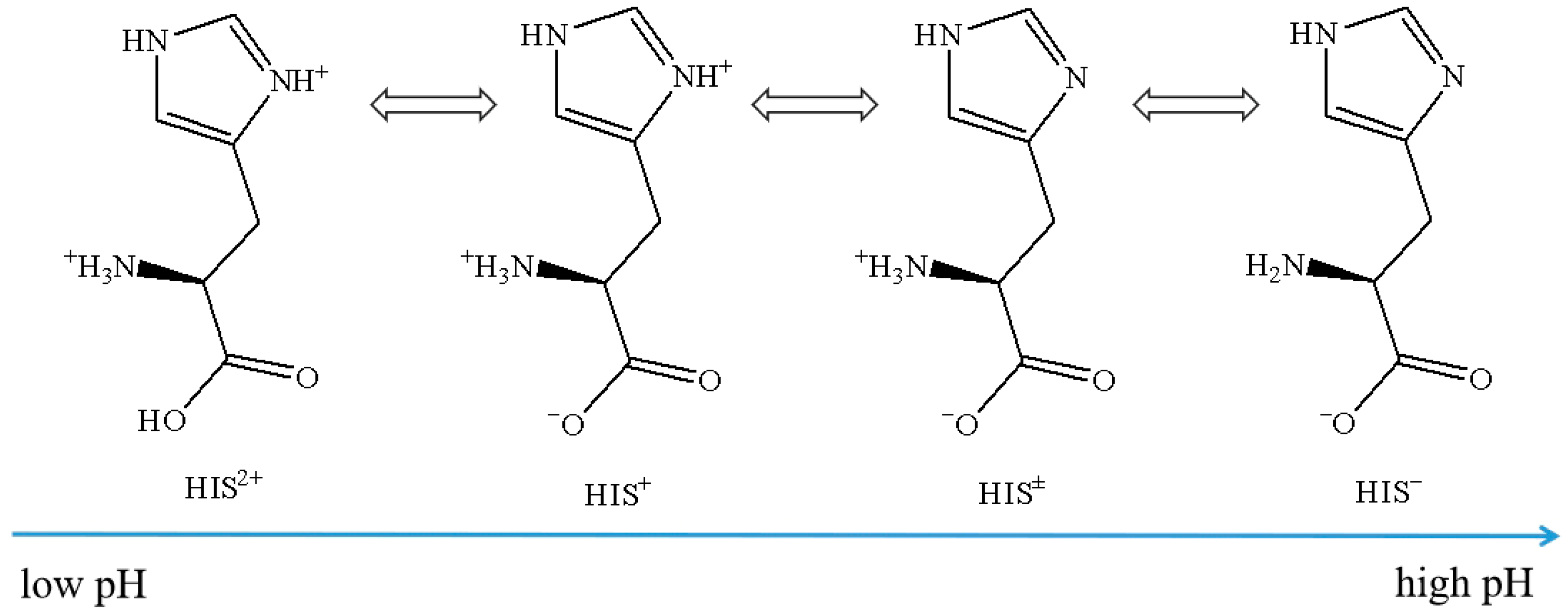
Figure 1. Histidine structure under different acidity.
Catalysts 16 00024 g001
Figure 2. Distribution of Histidine species under different acidity at 298 K [26]. Reprinted with permission from ref. [26]. 2016 Elsevier B.V.
Catalysts 16 00024 g002
Figure 3. Effect of HIS catalyst on CO2 absorption and desorption. (a) CO2 absorption amount versus time without and with uses of HIS; (b) CO2 desorption amount versus time without and with uses of HIS; (c) CO2 desorption rate versus time without and with uses of HIS; (d) CO2 equilibrium desorption amount and relative heat duty of the AEEA solutions without and with uses of HIS.
Catalysts 16 00024 g003
Figure 4. Catalytic performance of HIS on CO2 desorption at different temperature: (a) CO2 desorption amount; (b) CO2 desorption rate.
Catalysts 16 00024 g004
Figure 5. Arrhenius plot for the CO2 desorption from AEEA solution with and without HIS.
Catalysts 16 00024 g005
Figure 6. Catalytic performance of HIS on CO2 desorption at different solvent: (a) CO2 desorption amount in AEEA + MDEA (1:4); (b) CO2 desorption rate in AEEA + MDEA (1:4); (c) CO2 desorption amount in AEEA + MDEA (2:3); (d) CO2 desorption rate in AEEA + MDEA (2:3); (e) CO2 desorption amount in AEEA + MDEA (3:2); (f) CO2 desorption rate in AEEA + MDEA (3:2).
Catalysts 16 00024 g006
Figure 7. Stability of HIS over 10 cycles of CO2 absorption–desorption: (a) CO2 equilibrium absorption/desorption amount; (b) CO2 desorption amount/rate versus time in 10 cycles: Curves marked with blue and pink arrows correspond to the left and right Y-axes, respectively. Note: the error bar means the fluctuation of the CO2 desorption amount/rate in 10 cycles.
Catalysts 16 00024 g007
Figure 8. (a) Chemical structures of the species; 13C NMR spectra of the AEEA solutions (b) without and (c) with HIS with different CO2 loadings; (d) 13C NMR spectra of the CO2-saturated AEEA solution with HIS; (e) 13C NMR spectra of the CO2 completely desorbed AEEA solution with HIS. The letters refer to the labels for different carbon atoms in the histidine molecule.
Catalysts 16 00024 g008
Figure 9. Species distribution during the CO2 desorption process for AEEA solution with and without HIS.
Catalysts 16 00024 g009
Figure 10. Distribution of HIS during CO2 desorption process for the AEEA solution.
Catalysts 16 00024 g010
Figure 11. Catalytic mechanism of HIS.
Catalysts 16 00024 g011
Figure 12. Chemical structures of GLY and ARG.
Catalysts 16 00024 g012
Figure 13. Catalytic CO2 desorption performance of 30 wt% AEEA solution with different amino acids as catalysts: (a) CO2 desorption amount; (b) CO2 desorption rate.
Catalysts 16 00024 g013
Table 1. Catalytic performance of HIS on CO2 desorption at different temperatures and AEEA-based solvents.
ParameterBlank GroupControl GroupControl Group
AEEA Solvent at ~100 °CAEEA Solvent at Different TemperatureDifferent Solvent at ~100 °C
~95 °C~91 °CAEEA + MDEA
(3:2)
AEEA + MDEA
(2:3)
AEEA + MDEA
(1:4)
αdes0.669 → 0.7260.434 → 0.4510.260 → 0.2630.618 → 0.7130.780 → 0.7740.657 → 0.678
γdes8.53.9−1.115.3−0.73.2
δdes22.03 → 26.9118.70 → 18.3311.91 → 13.2128.04 → 33.8738.22 → 42.4836.86 → 42.58
εdes22.1−2.010.920.811.115.5
t12 → 1212 → 1215 → 1515 → 1212 → 1212 → 12
Note: αdes (mol CO2/mol amine), catalytic enhancement of HIS on CO2 equilibrium desorption amount; γdes (%), increase percentage of HIS on CO2 equilibrium desorption amount; δdes (mmol CO2/(mol amine min)), catalytic enhancement of HIS on CO2 maximum desorption rate; εdes (%), increase percentage of HIS on CO2 maximum desorption rate; ∆t (min), catalytic enhancement of time for maximum CO2 desorption rate.
Disclaimer/Publisher’s Note: The statements, opinions and data contained in all publications are solely those of the individual author(s) and contributor(s) and not of MDPI and/or the editor(s). MDPI and/or the editor(s) disclaim responsibility for any injury to people or property resulting from any ideas, methods, instructions or products referred to in the content.